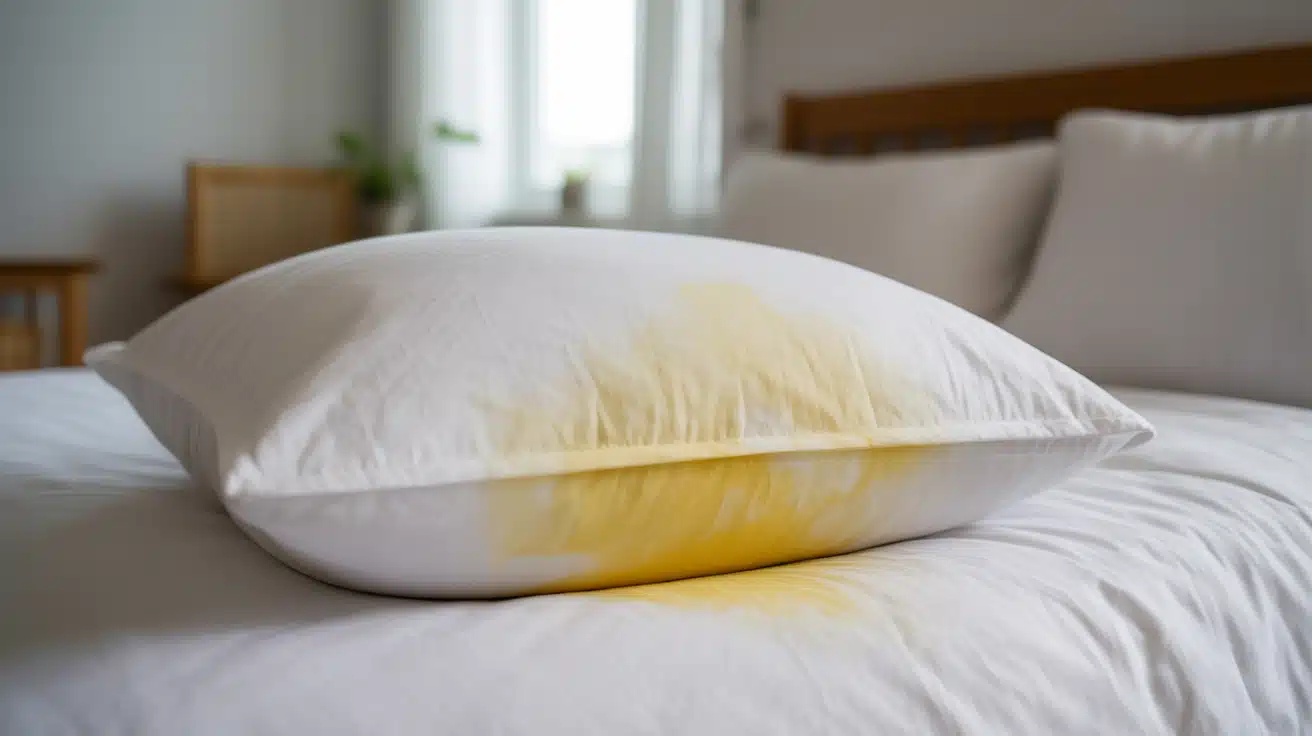
Ever notice yellow stains on your pillow and wonder what’s going on? You’re not alone. Most pillows turn yellow over time, and it’s completely normal.
The cause? Sweat, oils, and moisture from your body soak into the filling every night.
While it might look gross, understanding why it happens can help you prevent it and keep your pillows fresher longer.
In this guide, you’ll learn exactly what causes pillow yellowing, how to slow it down, and the best ways to clean those stubborn stains. You’ll also find out when it’s time to replace your pillow for good.
Let’s get started and give your pillows the care they deserve.
Why Do Pillows Turn Yellow?
Pillows turn yellow because your body releases moisture and natural oils while you sleep. These substances sink into the pillow’s filling and react with oxygen over time.
This process, called oxidation, creates those yellow stains you see. Sweat is usually the main cause, but drool, skincare products, and even the humidity in your room can speed it up.
It’s a natural part of using pillows, and it happens to everyone eventually.
The Science Behind Yellow Pillow Stains
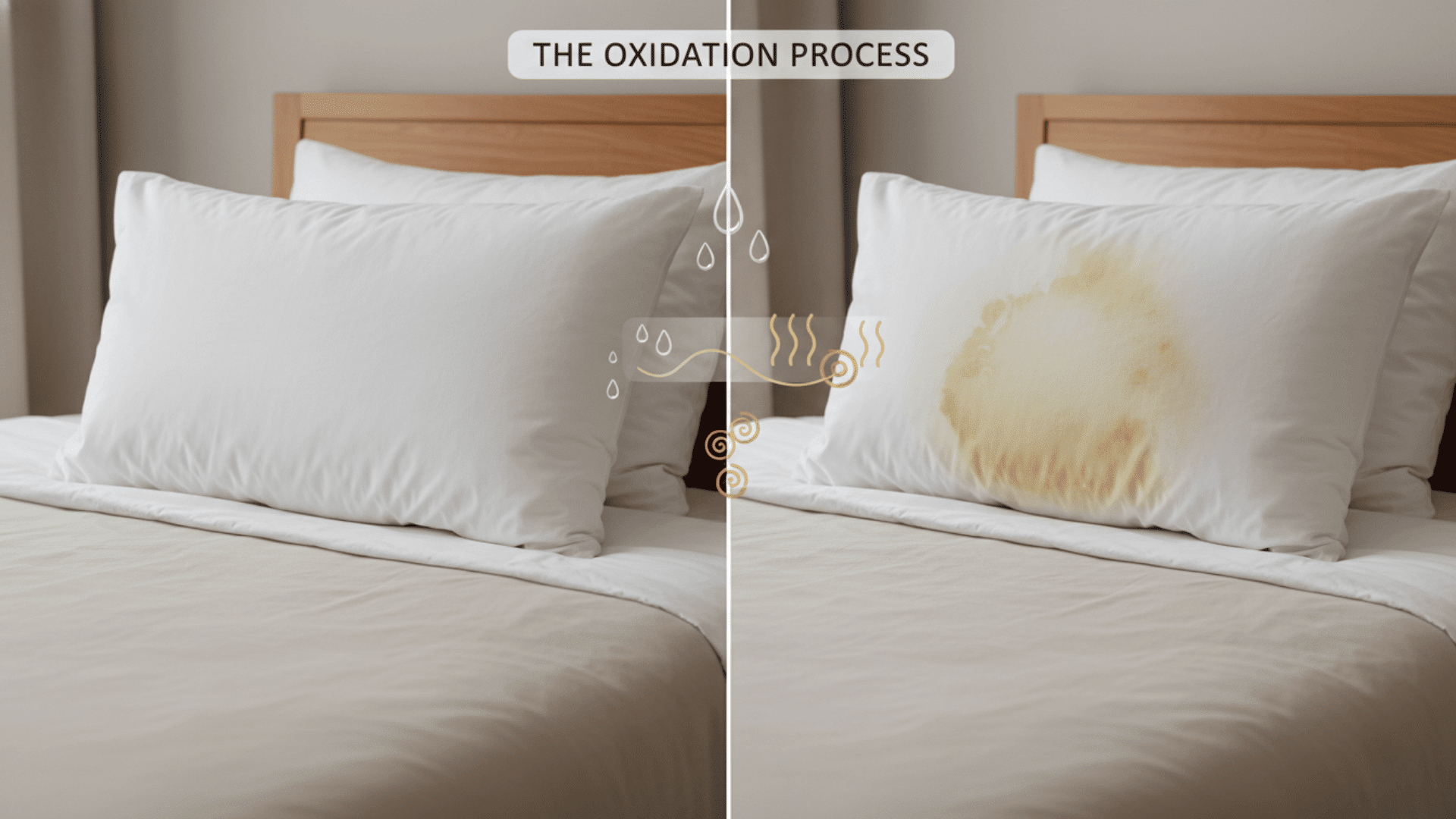
When sweat, natural oils, and dead skin cells soak into your pillow, they react with oxygen and heat. This chemical reaction is called oxidation, and it’s what causes those yellow stains.
Even if you wash your pillowcase every week, moisture still gets through to the filling underneath. Over time, this buildup becomes visible.
Main Causes of Yellowing
- Sweat: Night sweating is the biggest reason. When sweat dries, it leaves behind salts and minerals that create yellow patches.
- Body Oils: Your skin and hair produce natural oils that seep through the pillowcase and settle into the filling.
- Drool: Saliva contains enzymes that stain fabric as they dry.
- Humidity: Warm, damp rooms cause pillows to absorb moisture faster.
- Product Residue: Makeup, lotions, hair products, and sunscreen all transfer onto pillows and contribute to staining.
Are Yellow Pillows Normal?
Yes, yellow pillows are completely normal. Even if you shower every night, change your pillowcases regularly, and keep your bedroom cool, you’ll still see some yellowing over time. It’s just part of how pillows age with use.
However, yellow stains can become a problem in certain situations. You should consider replacing your pillow if:
- The stains look very dark or brown
- There’s a musty or unpleasant smell
- The pillow feels damp to the touch
- You see patches that look like mold
If any of these signs show up, it’s time to get a new pillow. Otherwise, light yellowing is nothing to worry about.
How to Prevent Your Pillows From Turning Yellow
You can’t completely stop yellowing, but you can slow it down a lot. These simple habits help keep your pillows looking cleaner for longer.
Prevention Tips
- Use a pillow protector – It creates a barrier that blocks moisture and oils from reaching the filling.
- Wash pillowcases weekly – Regular washing stops sweat and oils from building up and soaking through.
- Avoid heavy skincare at night – Skip thick creams and oily products before bed so they don’t transfer to your pillow.
- Air out pillows during the day – Let them breathe by removing covers for a few hours to release trapped moisture.
- Sleep in a cooler room – Lower temperatures reduce how much you sweat at night.
How to Remove Yellow Stains From Pillows
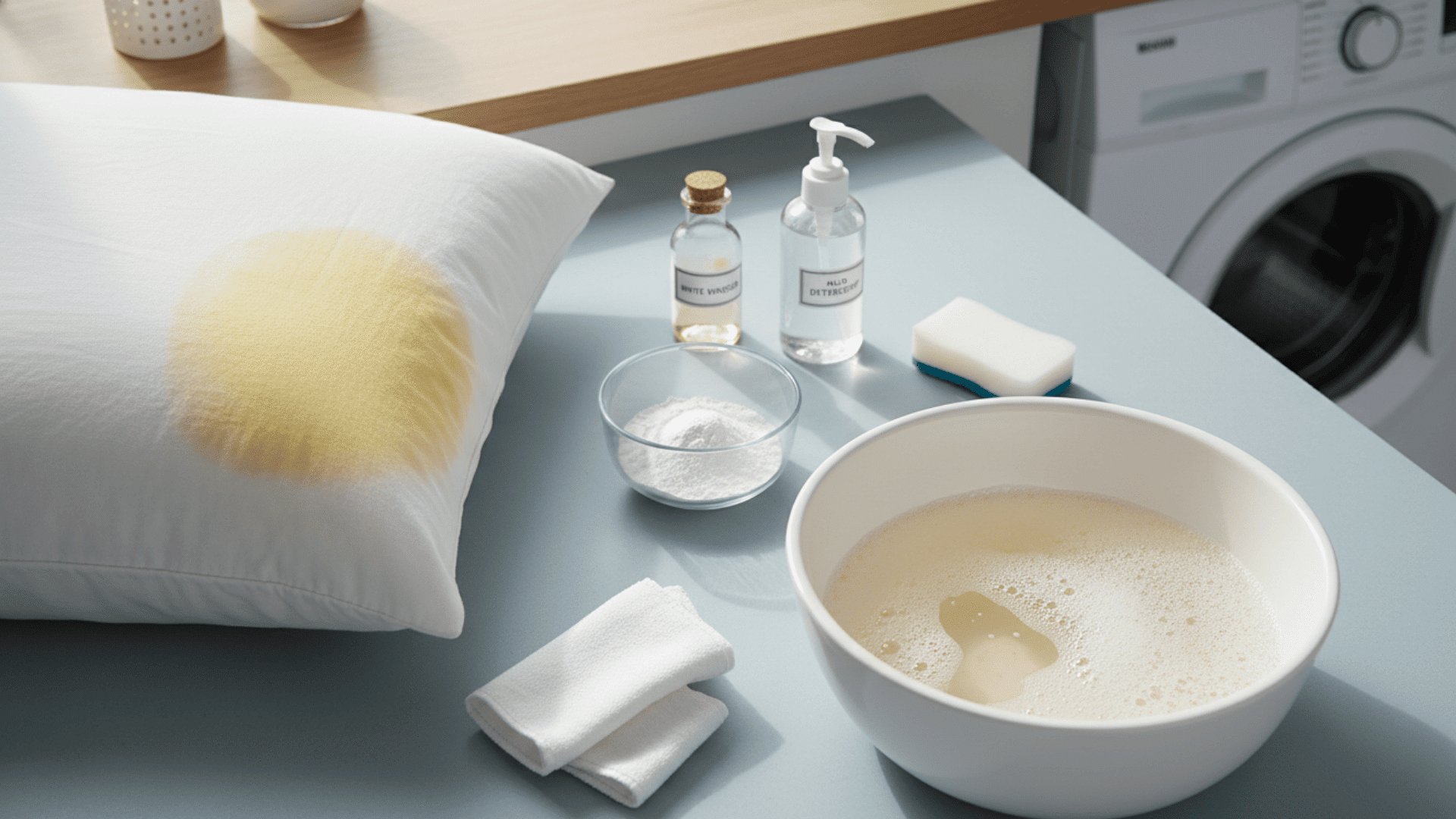
Removing yellow stains is definitely possible, especially when you treat them early. Different pillow types need different cleaning methods, so always check the care label before you start.
The right approach can make your pillows look fresh again without causing damage.
1. Machine-Washable Pillows (Down or Synthetic)
These pillows can handle a full wash cycle. Use warm water with a gentle detergent to protect the filling. Add baking soda or oxygen bleach to boost whitening power and break down stains.
Run an extra rinse cycle to ensure no detergent remains. Dry thoroughly on low heat and toss in wool dryer balls to keep the filling fluffy.
2. Foam Pillows (Memory Foam or Latex)
Never put foam pillows in the washing machine because it ruins their structure. Instead, spot-clean stained areas with a mild soap-and-water solution.
Gently dab the stain without soaking the foam. Allow the pillow to air dry completely before you use it again, as damp foam can develop mold.
3. Natural Whitening Soak (Safe for Non-Foam Pillows)
This method works well for stubborn stains on washable pillows. Mix 1 cup of baking soda, ½ cup of white vinegar, and ½ cup of hydrogen peroxide (optional) in a tub of water.
Soak the pillow for 30 to 60 minutes to let the solution break down the yellowing. After soaking, wash the pillow as you normally would.
Pillow Maintenance: Washing Schedule & Care Tips
Good washing habits make a huge difference in preventing discoloration. A consistent care routine keeps your pillows cleaner and helps them last longer.
Recommended Care Routine
- Wash pillowcases every 7 days – Weekly washing removes sweat, oils, and product buildup before they soak through.
- Wash pillow protectors every 2 to 3 weeks – Protectors catch moisture and oils, so they need regular cleaning too.
- Clean pillows every 3 to 6 months – how often depends on how much you sweat and how often you use skincare products at night.
- Always dry pillows completely – Damp pillows develop mildew and create more stains, so make sure they’re fully dry.
- Use gentle detergents – Harsh cleaners leave residue in the filling that can attract more dirt and oils over time.
Choosing the Right Pillowcase Material
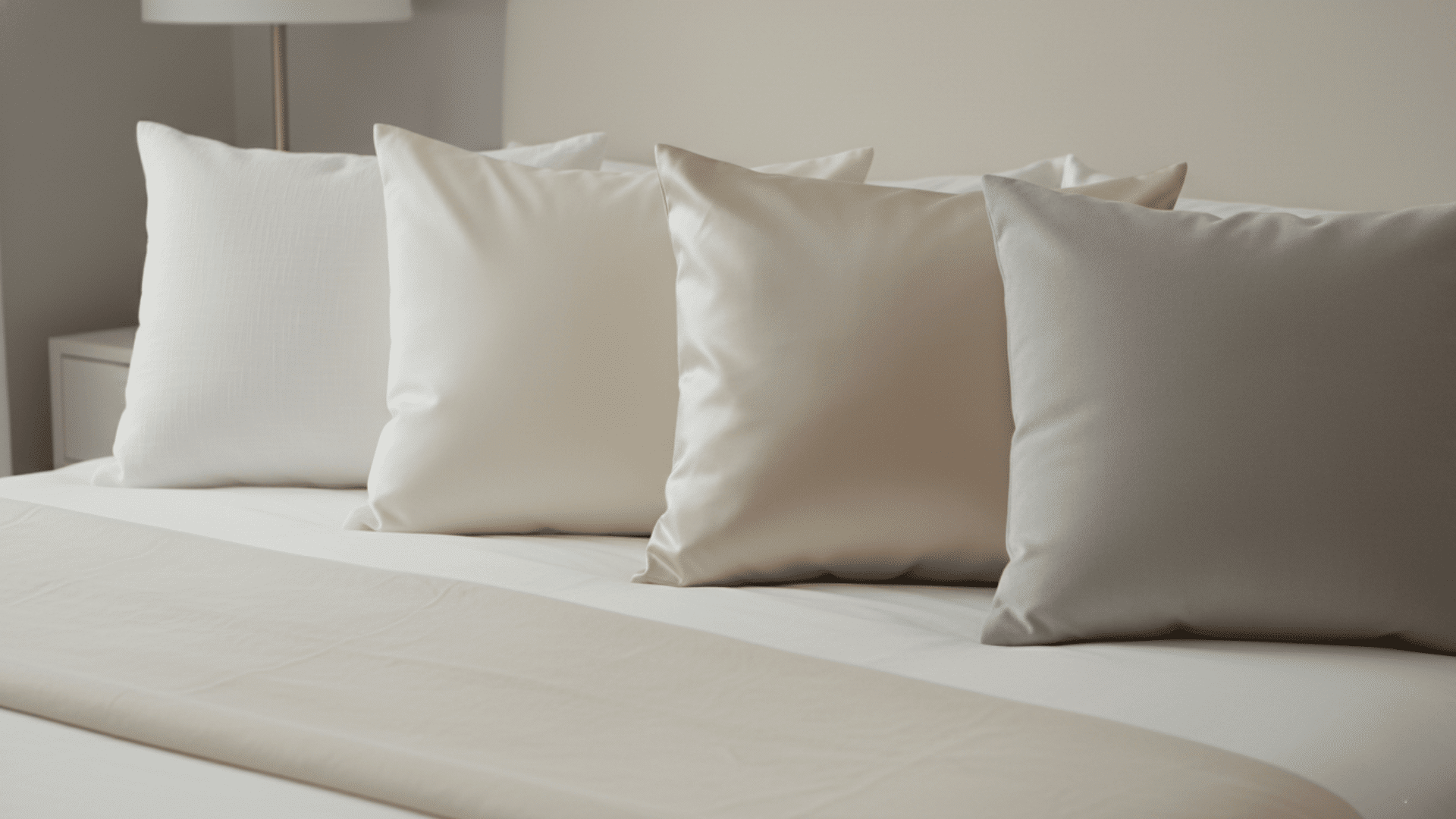
Some pillowcase fabrics hold onto moisture more than others. Choosing the right material helps reduce yellowing and keeps your pillows fresher longer.
| Pillowcase Material | Benefits | Considerations |
|---|---|---|
| Cotton | Breathable, soft, widely available | Can absorb oils quickly |
| Bamboo | Moisture-wicking, cooler to sleep on | More expensive |
| Silk or Satin | Minimizes product transfer, great for skin | Needs gentle washing |
| Microfiber | Affordable and durable | Traps heat, may increase sweating |
When to Replace Your Pillow?
A yellow pillow doesn’t always need to be thrown out, but certain signs tell you it’s time for a replacement.
You should get a new pillow if it stays flat or lumpy even after fluffing, releases bad odors after washing, or has stains that turned dark brown.
Waking up with neck pain or stiffness is another clear sign. Most pillows need replacing every 1 to 2 years, though this depends on the material and how well you care for them.
Final Thoughts
Yellow pillows are a normal part of life, and you don’t need to panic when you see those stains.
With the right habits like using pillow protectors, washing regularly, and choosing breathable pillowcase materials, you can keep your pillows looking cleaner for much longer.
When stains do appear, early treatment works best. Remember to check for signs that it’s time to replace your pillow, like bad odors or lack of support.
Taking care of your pillows means better sleep and a healthier bedroom environment. What’s your biggest challenge when it comes to keeping pillows clean?
Share your tips or questions in the comments below!