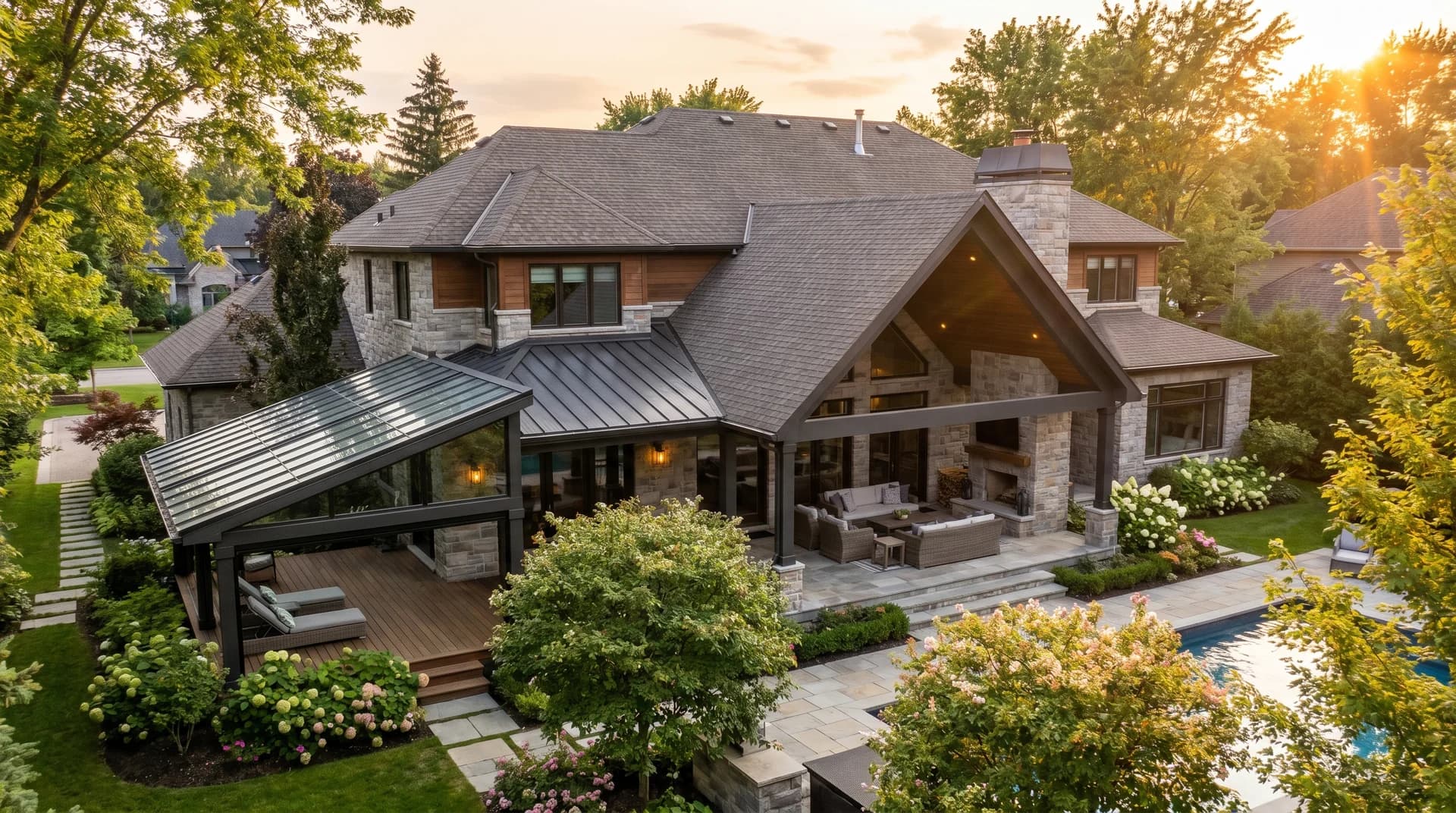
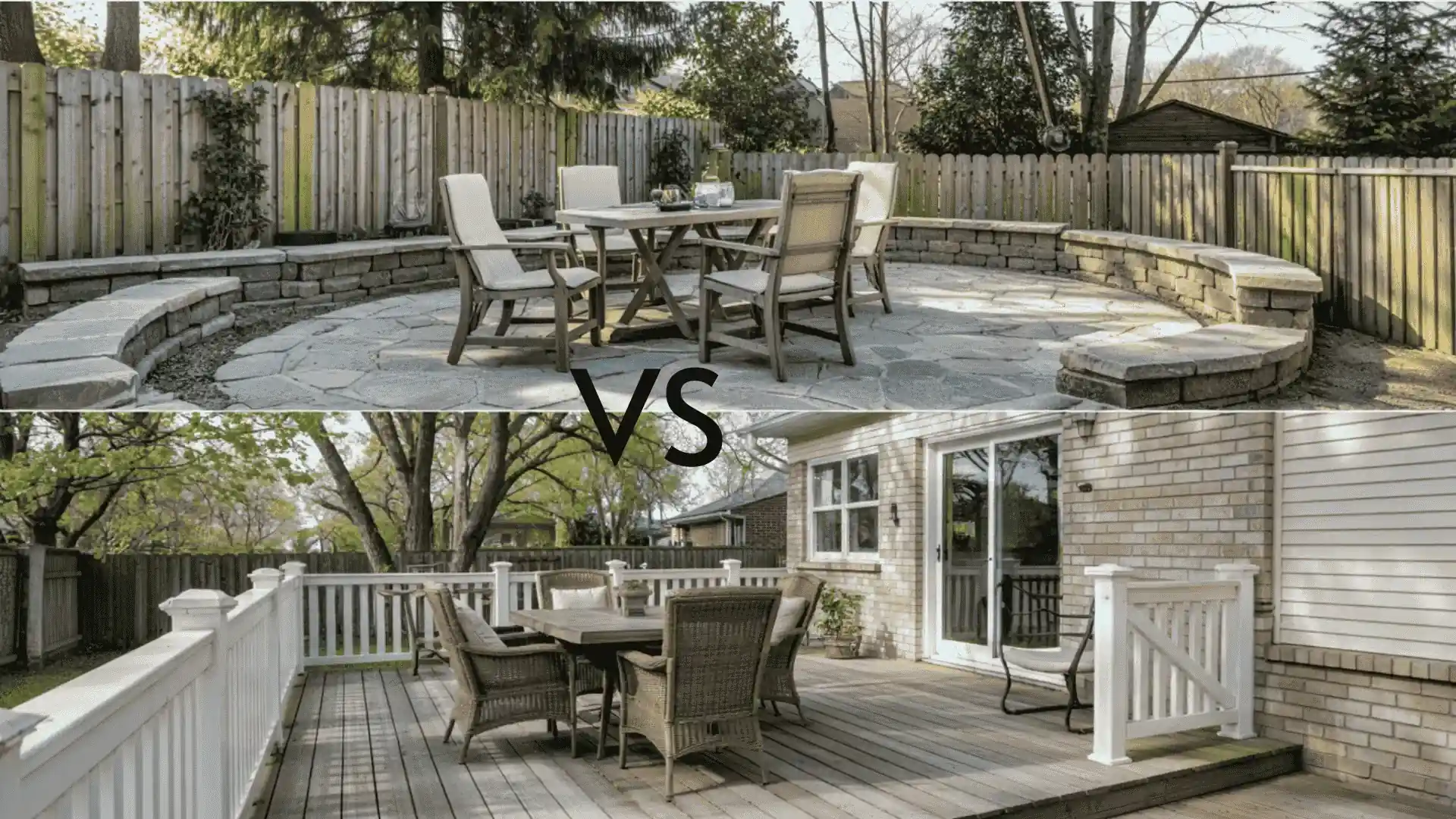
Think about stepping outside with your morning coffee. Where are you standing? On a deck with a view or a patio surrounded by garden blooms?
Outdoor living spaces have become an important part of American homes, turning backyards into extensions of daily life.
Whether you’re hosting friends or enjoying quiet weekends, choosing between a deck and a patio can shape how you spend your time outdoors.
Both add value and comfort, but they differ in cost, upkeep, and overall feel.
In this guide, I’ll compare deck vs patio options in detail so you can decide which one best fits your home, your budget, and the way you live.
What Is a Deck?
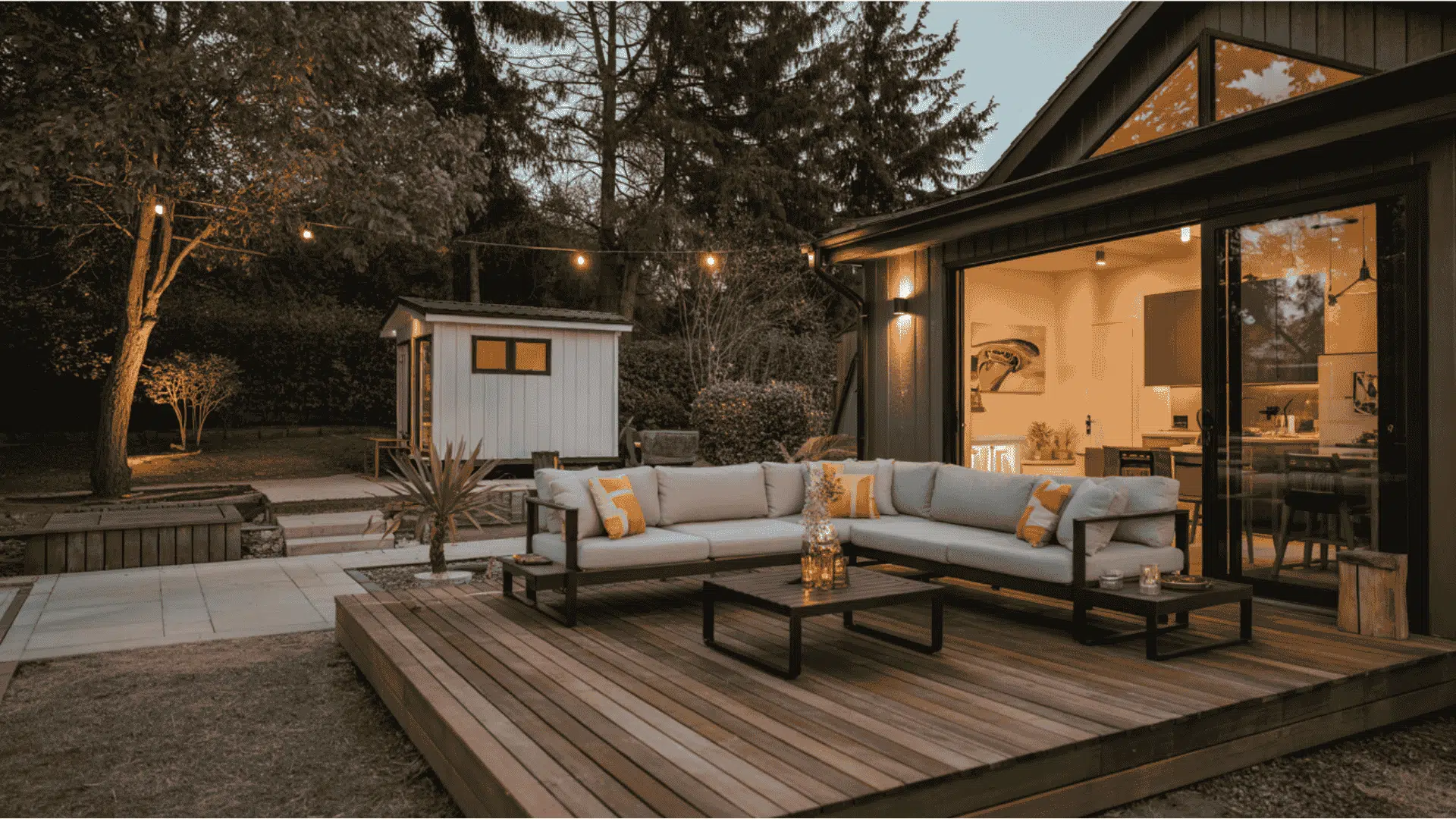
A deck is a raised outdoor platform supported by posts and beams, perfect for uneven or sloped yards. It extends living space, offers high views, and boosts home value.
Common materials include wood, composite, and PVC. Decks require permits, professional installation, and regular upkeep, such as sealing or cleaning, to maintain safety, beauty, and durability.
Types of Deck:
- Attached Deck: Connected directly to the home for easy indoor-outdoor flow.
- Detached (Floating) Deck: Built separately anywhere in the yard for flexible placement.
- Multi-Level Deck: Includes multiple tiers, perfect for sloped terrain or zoned outdoor areas.
- Rooftop Deck: Adds usable space on flat roofs, common in urban homes.
| Pros | Cons |
|---|---|
| Perfect for sloped or uneven yards | Higher upfront cost |
| Adds strong visual appeal and home value | Requires permits and inspections |
| Provides elevated views and airflow | Needs periodic maintenance |
| Customizable design and materials | Shorter lifespan for wood options |
A deck is perfect if you want height, a view, and an instant outdoor extension of your home, but it requires more maintenance and investment than a patio.
What Is a Patio?
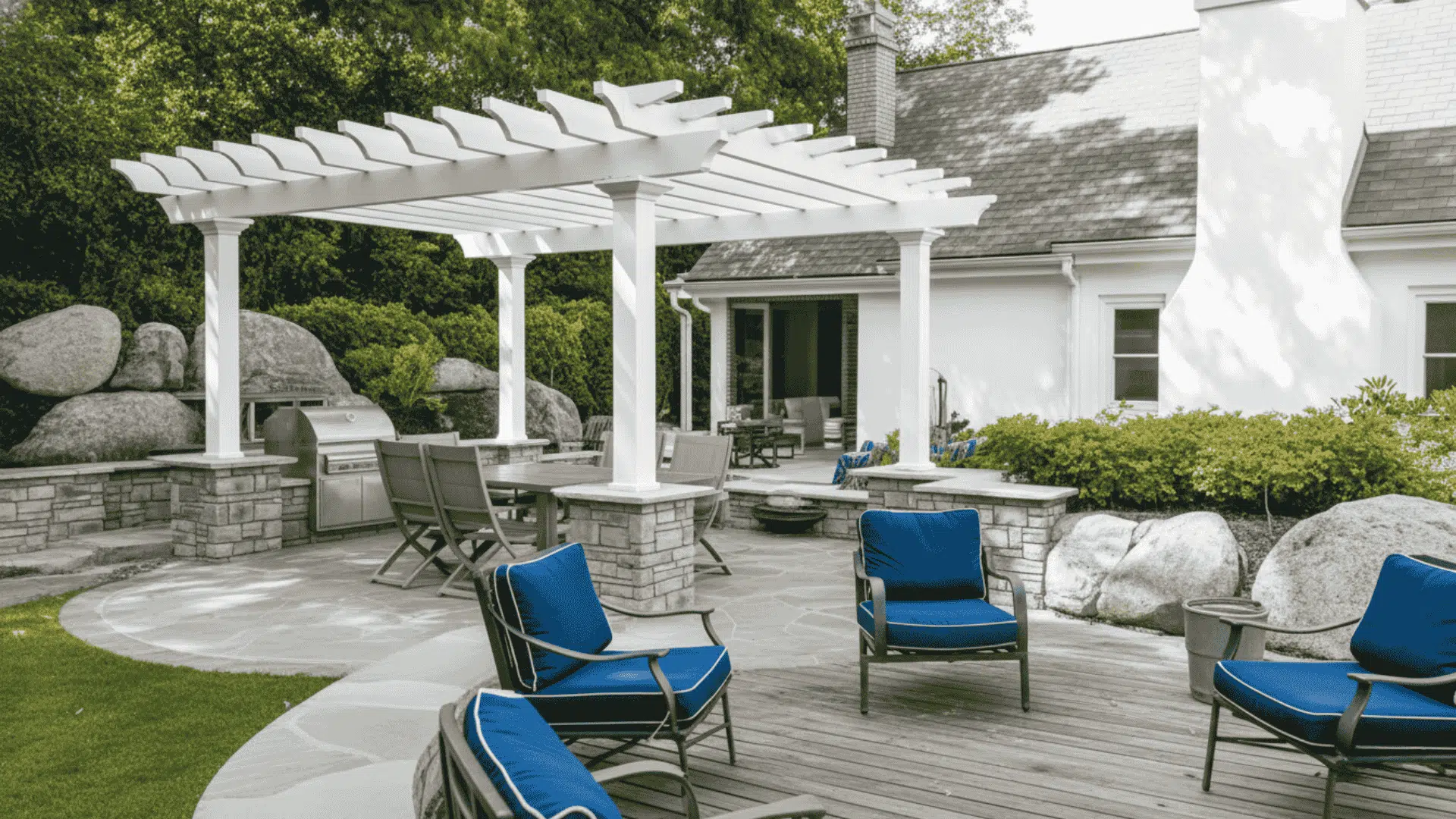
A patio is a ground-level outdoor space built directly on soil or a concrete slab. It suits flat, even yards and blends naturally into gardens or lawns.
Common materials include concrete, pavers, brick, and natural stone. Patios are versatile, easy to access, and need minimal maintenance, just cleaning and occasional joint repair.
Types of Patios:
- Concrete Patio: Affordable and durable, perfect for modern homes.
- Paver Patio: Made from interlocking pavers for easy repair and design flexibility.
- Stone Patio: Uses natural materials like flagstone or slate for a premium look.
- Brick Patio: Classic and timeless, perfect for traditional-style homes.
| Pros | Cons |
|---|---|
| Lower cost and simpler installation | Requires a flat, even ground |
| Low maintenance and long lifespan | It can crack if the base isn’t prepared properly |
| Safe, ground-level access for all ages | Fewer design levels and elevation options |
| Integrates well with landscaping | Can retain heat in sunny climates |
A patio is perfect if you want a budget-friendly, low-maintenance outdoor space that effortlessly connects with your yard.
Key Differences Between a Deck and a Patio
Understanding these core differences will help you choose the best fit for your home, lifestyle, and yard conditions.
1. Uplifted & Terrain
Deck: Built above ground on posts and beams, decks suit sloped or uneven yards. Their height provides great views and connects the upper floors to the outdoor areas.
Patio: Constructed directly on flat ground, patios are perfect for even terrain. They blend well into lawns and gardens without the need for raised structures.
2. Materials
Deck: Common materials include wood, composite, and PVC. Wood gives a warm, natural look, while composite and PVC offer low maintenance and a longer lifespan.
Patio: Often built from concrete, pavers, or natural stone. Material choice affects style, cost, and feel. Stone offers luxury, while concrete remains the most budget-friendly.
3. Maintenance & Lifespan
Deck: Requires regular sealing or staining, especially for wood. Composite decks last longer but still need periodic cleaning to prevent mold or fading.
Patio: Minimal upkeep, simple washing, and joint repairs keep it in shape. Durable materials like stone or pavers can last decades with little effort.
4. Accessibility & Usability
Deck: Elevated height requires stairs and railings. While stylish, this can limit accessibility for children, pets, or older family members.
Patio: Ground-level layout ensures easy, step-free movement for everyone. perfect for family gatherings, outdoor dining, and safe access across the yard.
Decks deliver height, views, and visual impact, while patios win in affordability, simplicity, and everyday usability. Your choice depends on terrain, budget, and lifestyle.
Cost Comparison of Deck vs Patio
Understanding costs helps you plan realistically. Here’s how decks and patios compare in installation, materials, maintenance, and long-term value:
| Category | Deck | Patio |
|---|---|---|
| Average Installation Cost | $7,900 – $18,000 total | $3,800 – $8,000 total |
| Cost per Sq. Ft. | $25 – $80 depending on material and design | $5 – $25 depending on material and finish |
| Common Material Costs | Pressure-treated lumber: $25–$50 Cedar/composite: $27–$80 | Concrete: $5–$25 Pavers: $10–$17 Stone/stamped concrete: higher end |
| Labor & Permits | Higher due to framing, railing, and code requirements | Lower, fewer permits, and simpler construction |
| Maintenance Costs | Wood decks: $500–$2,000 every 2–3 years for sealing/staining Composite: minimal cleaning only | Occasional cleaning and joint repair; low annual cost |
| Lifespan & Durability | 10–25 years for wood; 25–30+ for composite | 20–50+ years, depending on materials |
| Long-Term Value | Higher resale appeal but higher upkeep costs | Lower upfront and lifetime cost; excellent budget value |
Decks offer high aesthetic and resale value but come with steeper upfront and maintenance expenses. Patios cost up to 60% less to build, last longer, and deliver the lowest total ownership cost, making them the best choice for budget-conscious homeowners focused on long-term savings.
Deck vs Patio: Which Is Better for Different Home Scenarios?
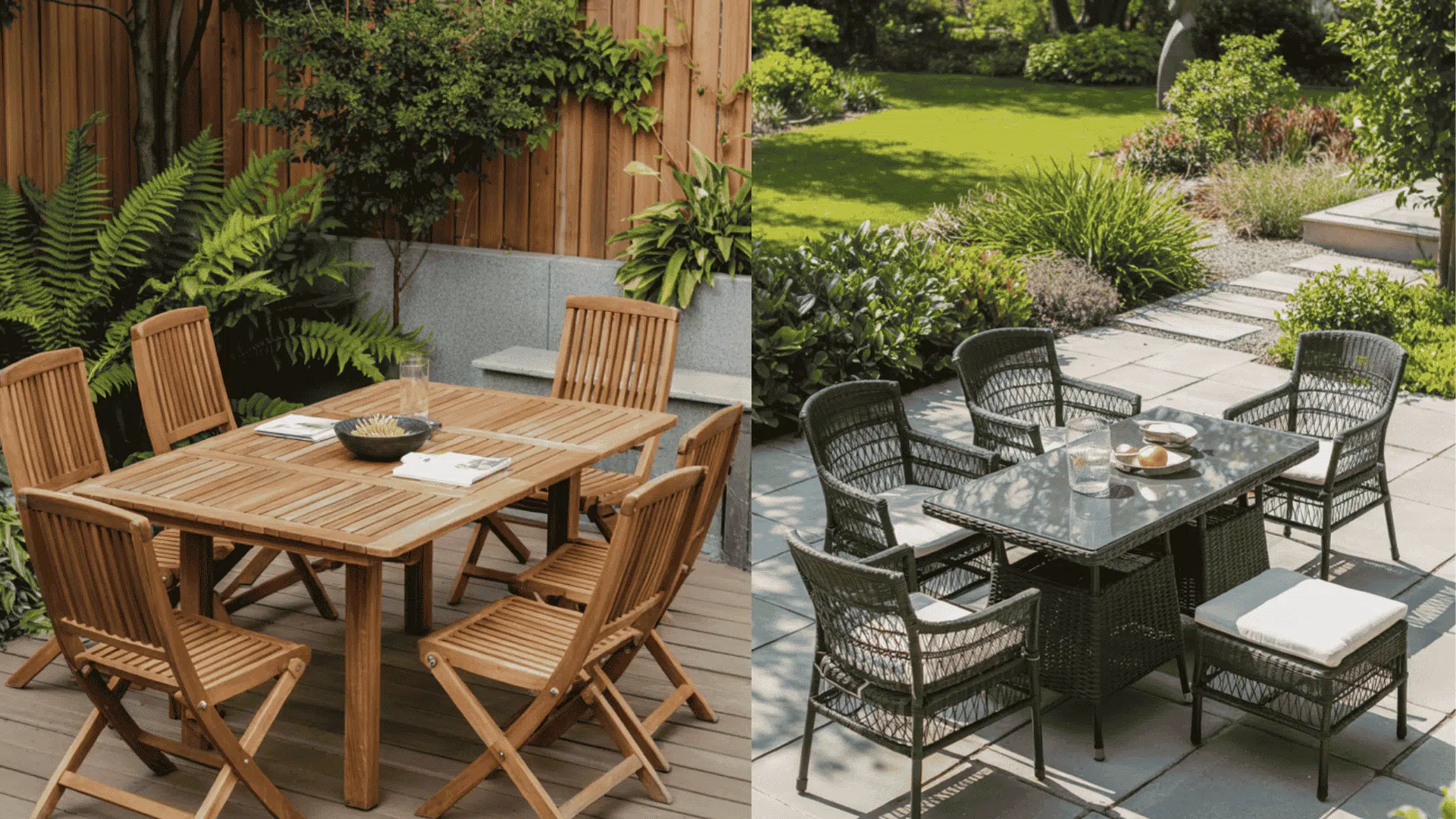
Choosing between a deck and patio depends on your yard, lifestyle, and long-term goals. Here’s how each option performs in common situations:
1. Sloped or Uneven Terrain
Best Choice: Deck
Decks excel on uneven ground, hillsides, or properties with drainage challenges. They sit above grade, preserving your yard’s natural slope. Patios, by contrast, need costly grading and soil work to stay level.
2. Flat, Wide Yards
Best Choice: Patio
Patios shine on flat backyards. They blend effortlessly with lawns and landscaping, creating open, cohesive outdoor spaces. Ground-level patios make large yards feel more connected and accessible.
3. Climate Considerations
Best Choice: Depends on the region
Warm climates (Florida, Texas, California): Both decks and patios work well. Decks add raised entertaining zones; patios pair beautifully with pools and gardens.
In cold climates (Minnesota, North Dakota), composite decks resist freeze-thaw damage better than wood decks. Paver patios outperform concrete by flexing with ground shifts during harsh winters.
4. Budget and Maintenance Preferences
Best Choice: Patio for savings, Deck for design appeal
If you’re budget-conscious and want low upkeep, patios win; they cost up to 60% less and require little maintenance. If you prefer elevated views, unique layouts, and don’t mind higher upkeep, decks are worth the investment.
5. Aging in Place & Accessibility
Best Choice: Patio
Patios offer safe, step-free access for all ages. No stairs or railings make movement easier for seniors, children, and guests using wheelchairs or walkers.
6. Entertaining & Outdoor Living Needs
Best Choice: Depends on activity
Decks suit elevated dining, second-story access, and scenic gatherings. Patios are perfect for casual cookouts, firepits, or outdoor kitchens that integrate with gardens.
7. Resale & Aesthetic Goals
Best Choice: Deck for visual impact, Patio for practicality
Decks create a “wow factor” and often feel more luxurious to buyers. Patios provide understated beauty, easier maintenance, and timeless appeal that still adds home value.
In the end, both decks and patios bring lasting comfort and value to your home. The right choice depends on your yard, lifestyle, and how you plan to enjoy the space every day.
What Is the Resale Value of Decks and Patios?
Adding a deck or patio isn’t just about outdoor comfort; it’s also a smart investment. Both can increase your home’s appeal and resale potential, though the return depends on materials, region, and buyer preferences.
Key Takeaways:
- Wood decks recoup around 83% of their cost at resale; in warm coastal areas, returns can exceed 100%.
- Composite decks recover about 68% of their cost but attract buyers seeking low maintenance.
- Patios often return close to their full cost, especially concrete, stone, or paver styles in moderate climates.
- Material quality and upkeep heavily influence ROI well-maintained surfaces always sell better.
- Location matters: decks perform best in warm regions, while patios appeal more in cooler climates.
Final Thoughts
Both decks and patios enhance home value, but their returns vary by lifestyle trends and geography.
Choose the option that aligns with your region, budget, and buyer expectations for the strongest long-term payoff.
The right choice depends on your yard’s terrain, your climate, and how much time and money you’re willing to invest in upkeep.
Decks impress with raised views and design flexibility, while patios win for affordability and long-lasting durability. No matter which you choose, you’ll gain a space that enhances outdoor living and adds real value to your property.
Thinking about an upgrade? Walk through your backyard, think about how you’ll use the space, and decide which option fits your vision best, then turn those plans into reality.