Want to give your home a fresh look without breaking the bank? Painting a room is one of the most affordable ways to transform your space. But figuring out the actual cost can feel confusing.
Most owners in the U.S. spend between $350 and $1,200 per room, but your project might cost more or less depending on size, paint quality, and whether you hire pros or do it yourself.
This guide breaks down everything you need to know. You’ll learn room-by-room pricing, hidden costs, exact formulas for estimates, and how to decide between DIY and professional painters.
By the end, you’ll know exactly what your project will cost.
Average Cost to Paint a Room
Painting a room costs between $350 and $1,200 on average in the United States. The final price depends on room size, paint quality, and whether you hire professionals or do it yourself.
Most homeowners pay around $2 to $6 per square foot for wall painting alone. Smaller rooms with simple layouts cost less, while larger spaces with high ceilings or detailed trim work push costs higher.
Here’s what you can expect to pay:
| Cost Category | Typical Price (USA) |
|---|---|
| Cost per sq ft (walls only) | $2 – $6 |
| Cost per room (average) | $350 – $1,200 |
| Ceiling painting | $1 – $2.50 per sq ft |
| Trim/baseboards | $1 – $3 per linear ft |
| Accent wall | $80 – $250 |
| Professional labor | $25 – $75/hr |
| DIY supplies | $25 – $75 |
These prices vary by room type, level of detail, and the paint you choose. Bathrooms and kitchens often require special paint, which can increase the total cost.
How Much Does It Cost to Paint Each Room?
Different rooms come with other challenges. Room size, prep work, and paint type all affect the final price. Here’s what you’ll pay for each room in your home, along with specific factors that drive costs up or down.
1. Bedroom Painting Cost
Bedrooms are usually mid-sized and simple to paint. Most bedrooms have standard 8-foot ceilings and a few windows, making them one of the more affordable rooms to paint.
Typical cost: $300 – $1,000
- Walls: $200 – $700
- Ceiling: $80 – $250
- Trim: $40 – $150
- Closet interior: $30 – $100
What affects the price:
- Room size matters most. A 10×10 bedroom costs less than a 14×16 master bedroom.
- Number of windows and doors. More openings mean more cutting in and edge work.
- Color changes. Going from dark to light colors (or vice versa) needs extra coats. This adds $50 to $150 to your total.
- Wall condition. Damaged walls need patching before painting begins.
Most homeowners choose flat or eggshell finishes for bedrooms. These hide imperfections better than glossy paints.
2. Living Room Painting Cost
Living rooms are larger and often have taller ceilings. This means more wall space and harder-to-reach areas. Many living rooms also feature accent walls, crown molding, or built-in shelving that takes extra time to paint around.
Typical cost: $600 – $2,000
Additional cost factors:
- Vaulted or high ceilings: +$150 – $400. Painters need special equipment, such as scaffolding or extension poles.
- Extra trim or windows that need precise cutting in. More trim means more detail work.
- Open floor plans require more careful edge work where walls meet different rooms.
- Accent walls add $80 to $250 if you want a different color.
Living rooms get the most traffic in your home. Many homeowners choose semi-gloss or satin finishes for easier cleaning. These finishes cost slightly more but last longer.
3. Kitchen Painting Cost
Kitchens have less wall space, but painters work around cabinets and appliances. This takes more time and precision. You can’t paint over grease or food splatters, so proper prep is critical.
Typical cost: $250 – $1,200
Cost drivers:
- Heat– and moisture-resistant paint: $10–$30 per gallon. Kitchens need paint that handles steam and temperature changes.
- Tight spaces behind appliances and between cabinets. Painters charge more for difficult access areas.
- Backsplash cutouts and edges. Working around tile requires steady hands and patience.
- Grease removal. Walls near stoves need thorough cleaning before painting. This adds $20 to $50.
Most painters recommend semi-gloss or satin finishes for kitchens. These finishes wipe clean easily when you get food splatters.
4. Bathroom Painting Cost
Bathrooms need special paint that resists mold and moisture. The rooms are small, but the paint is more expensive. Poor ventilation and constant humidity cause paint to peel quickly in bathrooms.
Typical cost: $150 – $600
Paint cost:
- Moisture/mildew-resistant paint: $45 – $80 per gallon
A small space means lower labor costs. But the special paint increases the price slightly. Bathrooms also have fixtures, mirrors, and medicine cabinets that painters must work around carefully.
Additional considerations:
- Ventilation matters. Bathrooms without exhaust fans may need a primer that better blocks moisture.
- Multiple fixtures, like towel bars and toilet paper holders, take extra time to tape off.
- Tile edges require precise cutting where walls meet tubs or showers.
Semi-gloss or satin finishes work best in bathrooms. They repel water and clean up easily.
5. Hallway and Entryway Painting Cost
Hallways have many doors, corners, and trim pieces. Painters spend more time on detail work than on actual rolling. Narrow spaces also make it harder to move equipment around.
Typical cost: $200 – $1,000
Additional charges:
- Stairway walls (for safety and height): $100 – $300. Painters need scaffolding or special ladders for stairs.
- Banister or railing painting: $50–$150. These need hand brushing, not rolling.
- Multiple doorways mean more trim work and cutting in.
Hallways show scuffs and marks easily because people often brush against the walls. Many homeowners here choose scuff-resistant paint, which costs $70 to $110 per gallon.
Key Factors That Affect Painting Costs
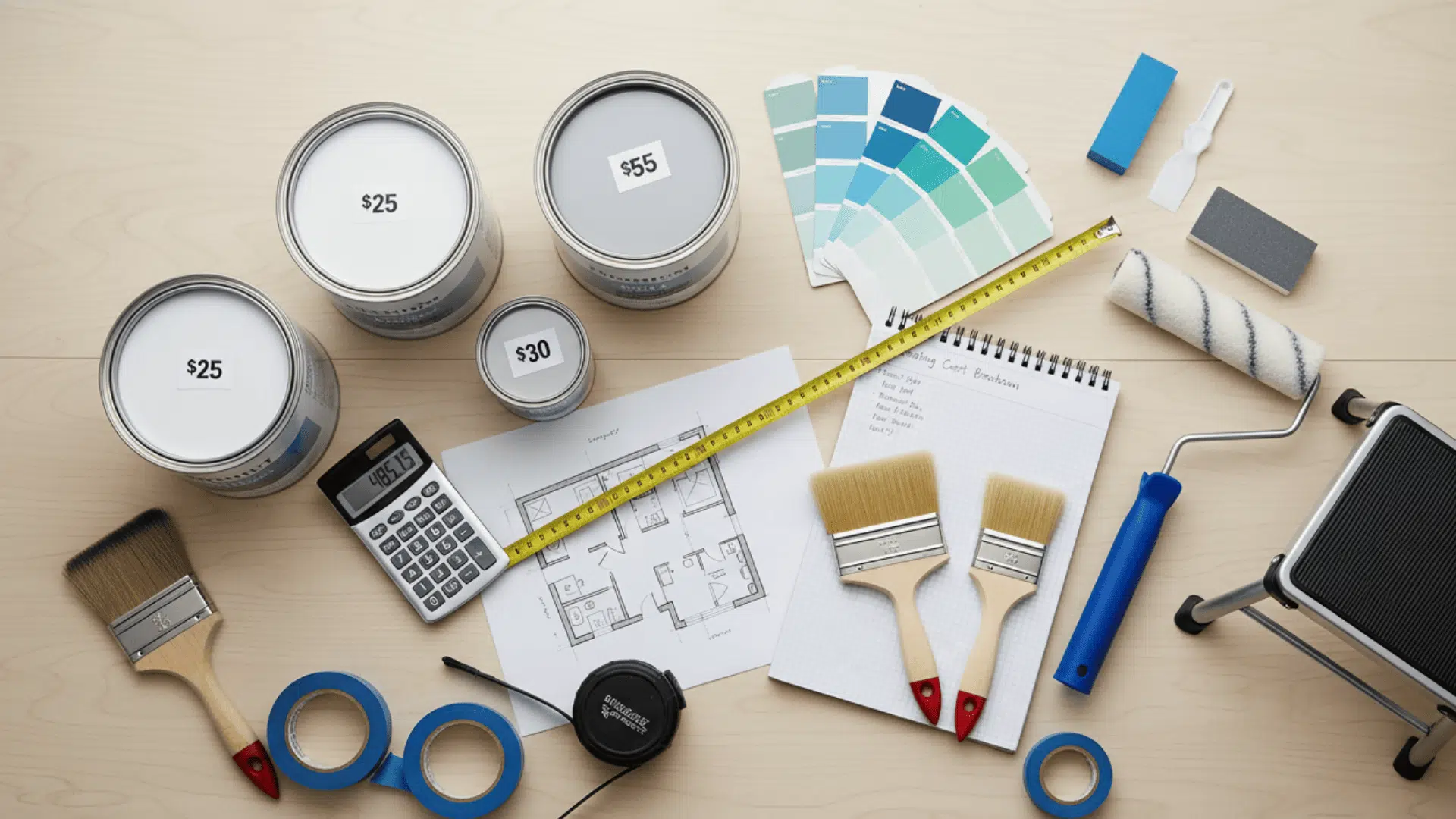
Understanding what drives painting costs helps you budget accurately. This section breaks down each cost factor with specific pricing so you can calculate your own estimate. From room size to paint quality to labor rates, every detail matters.
1. Room Size
Painters charge by square footage. Larger rooms need more paint and take longer to finish.
Cost per sq ft: $2 – $6
Here’s what you’ll pay for common room sizes:
| Room Size | Estimated Cost |
|---|---|
| 10×10 | $200 – $600 |
| 12×12 | $300 – $800 |
| 14×16 | $450 – $1,200 |
Ceilings higher than 9 ft add 20% to 30% to your total cost. Tall ceilings mean more wall area to paint. Painters also need ladders or scaffolding to reach higher sections safely.
How room size affects your budget:
- A 10×10 room has about 320 square feet of wall space (at 8-foot ceilings)
- A 12×12 room has about 384 square feet
- A 14×16 room has about 480 square feet
More square footage means more paint, more time, and higher labor costs. Calculate your room’s wall area to get a rough estimate before calling painters.
2. Paint Type & Cost
Paint quality matters more than most homeowners realize. Cheap paint needs more coats and doesn’t last as long. Better paint covers in fewer coats and resists wear better.
| Paint Type | Price/Gallon |
|---|---|
| Standard interior | $25 – $45 |
| Premium/Low-VOC | $50 – $90 |
| High-durability/scuff-resistant | $70 – $110 |
| Bathroom/kitchen moisture-resistant | $45 – $80 |
Most rooms require:
- 1 to 2 gallons for walls (depends on room size)
- ½ gallon for trim and baseboards
- 1 gallon primer (if changing colors dramatically or covering dark walls)
Paint finish affects cost, too:
- Flat and matte finishes hide imperfections but stain easily
- Eggshell works well for bedrooms and living rooms
- Satin and semi-gloss cost slightly more but clean more easily
- High-gloss is the most expensive and shows every wall flaw
Premium paints contain better pigments and binders. They cover better in one or two coats, which can actually save on labor costs. Cheap paint often needs three or four coats, which increases labor time and total cost.
3. Professional Labor Cost
Labor is the most significant portion of your bill. Most painting companies charge by the hour or by square footage.
Typical rates:
- $25 – $75 per hour, or
- $2 – $4 per square foot
What’s included in labor:
- Surface preparation and cleaning
- Taping edges and protecting floors
- Applying primer (if needed)
- Painting walls, ceilings, and trim
- Cleanup and disposal
Experienced painters work faster and produce cleaner results. Don’t always choose the cheapest bid. Poor work costs more to fix later.
4. Prep Work Costs
Prep work is often underestimated, but it’s critical for a good finish. Painting over damaged walls looks terrible and doesn’t last. Good painters spend 30% to 40% of their time on prep work.
Here’s what you might pay:
- Light wall repair: $20 – $80 (filling nail holes and minor dings)
- Fixing cracks or holes: $100 – $500 (patching larger damage or water stains)
- Removing wallpaper: $100 – $500 (plus repairing walls underneath)
- Smoothing textured walls: $150 – $400 (sanding down popcorn or orange peel texture)
- Furniture moving: $20 – $50 per room (or you can do this yourself)
Older homes built before 1978 may have lead paint. Testing and removal add $300 to $800 or more to your project. This is required by law in many areas.
5. Additional Painting Features & Their Costs
Extra features add up quickly. Trim, molding, doors, and windows all need separate attention.
| Feature | Cost |
|---|---|
| Trim/baseboards | $1 – $3 per linear ft |
| Windows | $25 – $60 each |
| Interior doors | $50 – $150 each |
| Crown molding | $1.50 – $4 per ft |
| Accent wall | $80 – $250 |
| High ceilings | +$100 – $300 |
Why these costs add up:
- Trim and baseboards require hand brushing, not rolling. This takes more time and skill.
- Windows have multiple edges and corners. Painters must tape carefully to avoid getting paint on the glass.
- Interior doors need painting on both sides and along the edges. Removing doors to paint them flat costs extra.
- Crown molding sits at ceiling height and needs precise cutting in. Ornate molding takes even longer.
- Accent walls use different paint and require taping off adjacent walls perfectly.
- High ceilings need special equipment and take longer to reach safely.
These add-ons are optional but significantly affect cost. A room with lots of trim and several windows can cost 40% to 50% more than a simple box-shaped room.
Budget tip: If you want to save money, paint trim and doors yourself before or after professionals handle walls. This reduces labor costs while still getting professional results where it matters most.
DIY or Professional Painting: Which Costs Less?
Deciding between DIY painting and hiring professionals comes down to budget, time, and skill level. Both options have clear trade-offs. Here’s what it really costs to paint a room yourself versus hiring painters.
| Factor | DIY | Professional |
|---|---|---|
| Cost | $100 – $300 | $350 – $2,000+ |
| Time | 8 – 16 hours (1-2 days) | 4 – 8 hours (same day) |
| Supplies included | You buy everything | All supplies provided |
| Prep work | You do it | Included in service |
| Quality | Varies by skill level | Consistent, professional |
| Cleanup | You handle it | Included in service |
| Warranty | None | Often 1-2 years |
| Best for | Small, simple rooms | Large or complex rooms |
Which Option Saves More Money?
DIY looks cheaper on paper. But consider the hidden costs:
- Your time has value. Sixteen hours at even $20/hour equals $320 in lost time.
- Mistakes cost money. Buying extra paint or fixing drips adds up.
- Tool rental for high ceilings or difficult areas costs $30 to $100.
If you paint one room and never use the supplies again, the per-room cost is high. But if you plan to paint multiple rooms, DIY becomes more economical.
DIY makes sense for small projects and experienced painters. Hire professionals for large rooms, difficult prep work, or when quality matters most.
How to Estimate the Cost to Paint a Room?
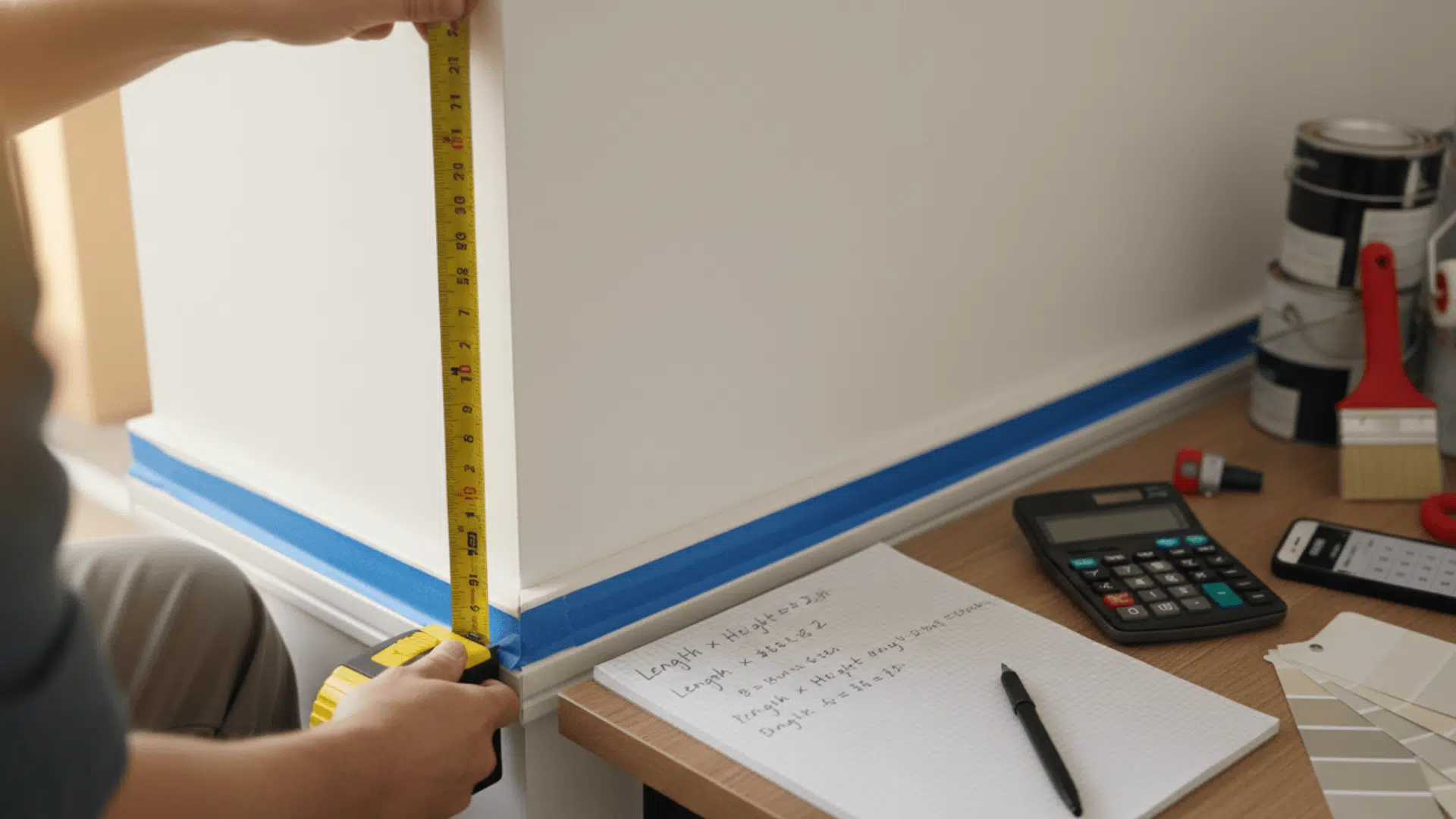
Estimating painting costs doesn’t have to be guesswork. Follow this complete step-by-step method to calculate your project accurately. You’ll know what to expect before getting quotes from painters.
Step 1: Measure the Room
Start by calculating how much wall space you’re actually painting.
Follow these steps:
- Add the length of all four walls (measure in feet)
- Multiply by ceiling height (usually 8 feet)
- Subtract large windows and doors (about 20 sq ft per window, 20 sq ft per door)
Example: A 12×12 room with 8 ft ceilings usually has 350 to 400 sq ft of paintable wall space.
Here’s the math: (12 + 12 + 12 + 12) × 8 = 384 sq ft total. Subtract 40 sq ft for two windows and one door, and you get about 344 sq ft to paint. This measurement is the foundation of your entire estimate.
Step 2: Calculate Paint Amount
Now figure out how much paint you’ll need to buy.
Use these guidelines:
- One gallon covers 300 to 400 sq ft (depends on wall texture and paint quality)
- Two coats = 2 gallons for most rooms
- Paint cost = $25 – $90 per gallon (varies by quality and brand)
Example: For 344 sq ft of wall space, you need about 1 gallon per coat. If you’re applying two coats (recommended), buy 2 gallons. At $40 per gallon, that’s $80 for paint. Textured walls absorb more paint, so add an extra half gallon if your walls aren’t smooth.
Step 3: Calculate Labor
Labor is typically the biggest expense. Use this simple formula to estimate professional painting costs.
The formula: Total sq ft × $2–$4 = Labor cost
Example: 400 sq ft × $3 = $1,200 labor
The rate depends on your location and the painter’s experience. Cities like New York or San Francisco charge closer to $4 per sq ft, while rural areas might charge $2 per sq ft. This covers surface prep, taping, painting, and basic cleanup. Complex rooms with lots of trim or high ceilings push rates higher.
Step 4: Add Extras
Don’t forget the finishing touches. These optional features add to your total cost but make a big difference in the final look.
Common extras and their costs:
- Trim: $40 – $150. Baseboards and window casings need careful hand brushing. Most rooms have 40 to 60 linear feet of trim. At $1 to $3 per linear foot, this adds up quickly.
- Ceiling: $80 – $250. Ceilings are often forgotten but add polish to the room. They require different paint (usually flat white) and extra time for overhead work.
- Doors & windows: $25 – $150 each. Each door needs painting on both sides, plus the edges. Windows require taping and precise cutting around frames and glass.
- Accent wall: $80 – $250. One wall in a different color creates visual interest. This includes taping off adjacent walls and using separate paint.
Add up all these extras to get your complete project cost. A basic room might only need walls painted, but most homeowners want trim and ceilings done too for a finished look.
Putting It All Together
Here’s how a full estimate looks:
Example: 12×12 bedroom
- Wall space: 344 sq ft
- Paint (2 gallons): $80
- Labor (344 sq ft × $3): $1,032
- Trim (50 linear ft × $2): $100
- Ceiling: $120
- Total: $1,332
This formula gives you a realistic budget before contacting painters. Get multiple quotes and compare them to this estimate to ensure you’re getting fair pricing.
Unexpected Painting Costs That Can Increase Your Bill
Most painting estimates cover the basics, but unexpected costs can pop up during your project. These hidden expenses catch homeowners off guard and inflate the final bill. Knowing these in advance helps prevent surprise charges.
Unexpected costs can include:
- Primer for drastic color changes: $30–$80. Going from dark red to white, or covering bold colors, requires extra primer coats to block the old color from showing through.
- Fixing peeling paint: $50–$200. Loose or flaking paint must be scraped off, and the surface smoothed before new paint can go on properly.
- Tall ceilings: +$100 – $300. Ceilings over 9 feet require scaffolding or extension ladders, which increases both time and safety equipment costs.
- Tight schedules (rush jobs): +10% – 20%. Painters charge premium rates when you need the job done quickly, often requiring them to work evenings or weekends.
- Paint disposal fees: $5 – $15. Some cities charge for disposing of old paint cans and hazardous materials, which painters pass on to you.
These costs seem small individually, but can add $200 to $500 to your total project. Ask painters upfront if their quotes include these potential extras. Getting clarity now prevents arguments about the final bill later.
How Often Should You Repaint a Room?
Different rooms wear out at different rates depending on traffic, moisture, and use. Bedrooms typically last 5 to 7 years before needing a fresh coat of paint.
Living rooms can last 5 to 10 years since they get moderate use. Kitchens and bathrooms need repainting every 3 to 4 years because grease, steam, and moisture damage paint faster.
Kids’ rooms wear out the quickest between 2 and 4 years old due to scuffs, crayon marks, and rough play. Higher-traffic rooms need more frequent repainting.
The quality of paint you use also matters; premium paint lasts longer than budget options. Watch for fading, stains, or chipped areas as signs that it’s time to repaint.
Final Thoughts
The cost to paint a room in the U.S. ranges from $200 to $2,000, depending on room size, paint type, labor rates, prep work, and design features.
Bedrooms usually fall at the lower end, while living rooms and detailed spaces cost more. With the formulas and breakdowns above, you can confidently estimate how much your own project will cost.
Whether you decide to DIY or hire a professional, planning your budget and understanding each cost factor ensures a smoother, stress-free painting experience.
Ready to get started? Get quotes from local painters today, or pick up supplies and transform your space this weekend!