Have you noticed flickering lights or outlets that no longer work?
These warning signs may indicate that your home’s electrical system needs attention.
Many people face this situation and wonder about the expenses involved. Old wiring creates safety risks that can lead to serious problems for your family.
Getting your electrical system updated protects everyone and improves your home’s overall value.
Most people delay this work because they fear high prices without understanding what drives those costs.
However, knowing the basics helps you plan better and make informed choices.
In this blog, I’ll show you how much it costs to rewire a houseand the factors that impact your final bill.
What’s the Average Cost to Rewire a House?
The cost to rewire a housetypically ranges from $3,000 to $10,000, depending on the home. This investment protects your family and brings your electrical system up to current safety standards.
The national average for a complete home rewiring project is around $6,500. However, prices vary widely based on your property and location within the country.
Typical Price Ranges:
- Small homes under 1,500 square feet usually cost $3,000 to $5,000
- Medium to large homes between 1,500 and 2,500 square feet range from $5,000 to $8,000
- Homes over 2,500 square feet typically require $8,000 to $10,000 or more.
- Urban areas generally see higher prices than rural locations.
Getting estimates from trusted electricians helps you understand pricing trends. Review their certifications and service scope before you decide.
Factors that Affect the Cost to Rewire a House
Several elements determine your final electrical rewiring bill. These factors help you budget properly and avoid unexpected expenses during the project..
House Size
Larger homes require more wiring, outlets, and switches, which significantly increases material costs. They also require more labor hours to complete the work properly.
Accessibility
Homes with finished walls cost more because electricians must open them up first. Properties with crawl spaces or basements provide easier access to wiring routes throughout.
Permit Requirements
Most cities require permits for electrical work, which typically cost $50 to $500. Inspections also take time and may reveal additional problems that need fixing immediately.
Existing Wire Condition
Some homes only need partial rewiring in specific rooms or problem circuits. Others require the complete removal of old wiring throughout the entire structure for safety reasons.
Panel Upgrades
Modern electrical requirements call for 200-amp service panels rather than older 100-amp panels. Upgrading your electrical panel alone costs between $1,200 to $3,000 on average.
House Rewire Cost Breakdown by Materials and Labor

Knowing where your money goes helps you make better decisions about your rewiring project. Labor and materials each play significant roles in total expenses.
Most electrical rewiring projects split costs between professional services and physical supplies. This breakdown lets you identify potential savings without compromising quality or safety standards.
- Labor Costs: 40% to 60% of total expenses at $50 to $100 per hour.
- Wire and Cable: Copper wire costs $0.50 to $2 per foot.
- Outlets and Switches: Standard outlets $2 to $5 each, GFCI outlets $10 to $20
- Breakers and Panels: Individual breakers $5 to $50, main panels $500 to $2,000
- Permits and Inspections: Budget $100 to $500 for required fees.
Planning your budget around these categories helps prevent financial surprises during the project. Always request itemized estimates to see exactly where your money goes.
Signs Your Home Might Need a Rewire
Recognizing warning signs helps you address problems before they become dangerous. Early detection prevents fire hazards and protects your family from serious electrical injuries.
Frequent Breaker Trips: Your system can’t handle current electrical loads, and modern homes use more power than older wiring safely supports.
Burning Smells: Odors near outlets or switches may indicate overheated wires that could ignite surrounding materials and require immediate professional attention.
Discolored Outlets: Brown or black marks around plug openings indicate dangerous arcing or overheating conditions inside the electrical box.
Flickering Lights: This indicates loose connections or insufficient wire capacity, especially when multiple appliances run on the same circuit.
Two-Prong Outlets: Outdated electrical systems without proper grounding create shock hazards, and modern appliances need three-prong outlets for safety.
DIY House Rewiring vs. Hiring a Professional
Some homeowners consider doing electrical work themselves to save money. However, this decision carries serious risks and potential legal problems that could cost more later.
| DIY House Rewiring | Hiring a Professional |
|
|
How Long Does It Take to Rewire a House?
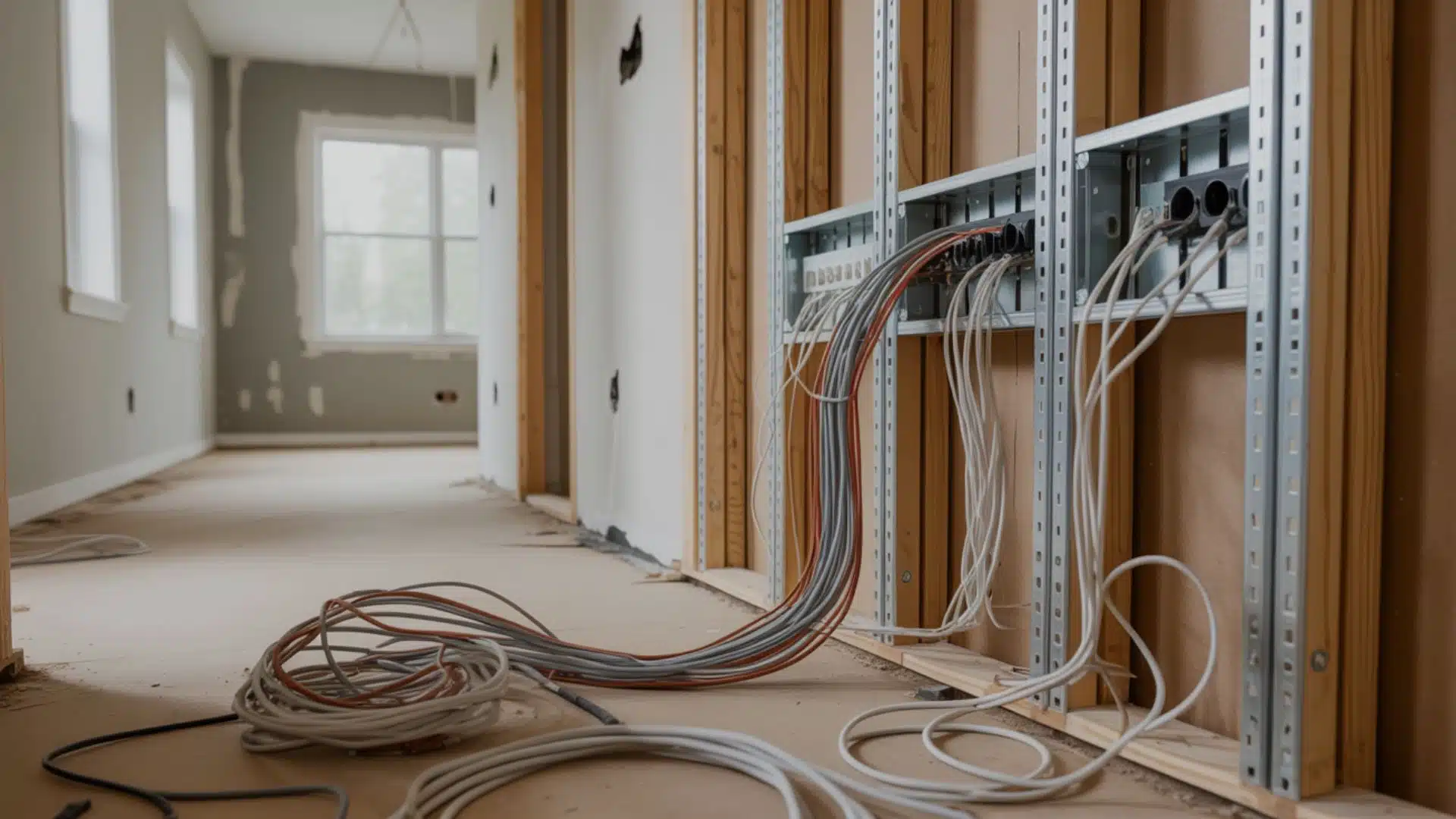
The project timeline depends on your home’s size and complexity. These typical durations help you plan around the work and arrange temporary living situations if needed.
- Small Homes (Under 1,500 sq ft) typically take 3 to 5 days for complete rewiring.
- Medium Homes (1,500 to 2,500 sq ft) usually require 5 to 7 days of work.
- Large Homes (Over 2,500 sq ft) often take 7 to 10 days to complete.
- Finished walls add extra time for creating and repairing access holes.
- Multiple inspections at different stages can extend the overall project timeline.
Most projects finish within the estimated timeframe when conditions remain normal. Weather, unexpected wiring problems, or permit delays can add a few extra days to the schedule.
Smart Ways to Save on House Rewiring Costs
Reducing expenses doesn’t mean compromising safety or quality standards. Smart planning and strategic choices help you manage costs while ensuring proper electrical work for your home.
Get Multiple Quotes: Compare at least three licensed electricians before choosing one. Review their experience, pricing, and customer feedback carefully.
Schedule Off-Season: Winter months often see lower prices because demand drops. Flexible scheduling gives you better negotiating power for rates.
Combine Projects: Rewiring during renovations saves money because walls are already open. Coordinate with contractors to efficiently schedule electrical work.
Do Prep Work: Move furniture and clear access areas yourself. This reduces the billable hours electricians spend on tasks you can handle.
Partial Rewiring: Address only problem areas instead of the entire house. Focus on rooms with safety concerns first.
Wrapping It Up
To summarize, rewiring your home represents a smart step toward modern comfort and dependable power use.
Professional electricians ensure work meets code requirements and passes required inspections successfully.
Project timelines vary based on complexity and home specifications. Smart planning and scheduling choices reduce expenses without compromising quality standards.
Your home’s electrical system benefits from timely upgrades that keep it running safely for years to come.
This work strengthens your home’s performance while preparing it for future electrical needs. Take time to research contractors thoroughly before starting any project.
What electrical concerns do you have in your home right now? Share your questions in the comments below!