Recessed lighting can change any room from dull to bright in an instant. But how much will it actually cost you?
Prices swing wildly based on fixture type, ceiling structure, and wiring needs. Some homeowners spend a few hundred dollars, while others invest several thousand.
The good news? Understanding the cost factors helps you plan better and avoid surprise bills.
This guide breaks down everything from average installation prices and labor rates to fixture options and room-by-room estimates.
You’ll learn how to calculate your total cost, choose the right fixtures, and decide between DIY and professional help.
Average Recessed Lighting Installation Cost
Installing recessed lights comes with different price points, depending on your project’s needs. The type of fixture you choose, how easy it is to access wiring, and your ceiling’s structure all play a role in the final bill.
Most people end up spending somewhere between a few hundred to several thousand dollars based on these factors.
Typical Cost Range:
| Installation Type | Average Cost Per Light | Total Estimate |
|---|---|---|
| Retrofit installation | $85–$175 | $400–$1,200+ |
| New wiring + new housings | $200–$400 | $1,200–$3,000+ |
| Smart recessed lighting | $250–$500 | $1,500–$5,000+ |
If you’re adding 4 to 6 recessed lights to your home, expect to pay between $800 and $2,000. This range covers most standard installations in typical residential spaces. Your actual cost will depend on the complexity of the work and the quality of fixtures you select.
How to Calculate Recessed Lighting Installation Cost?
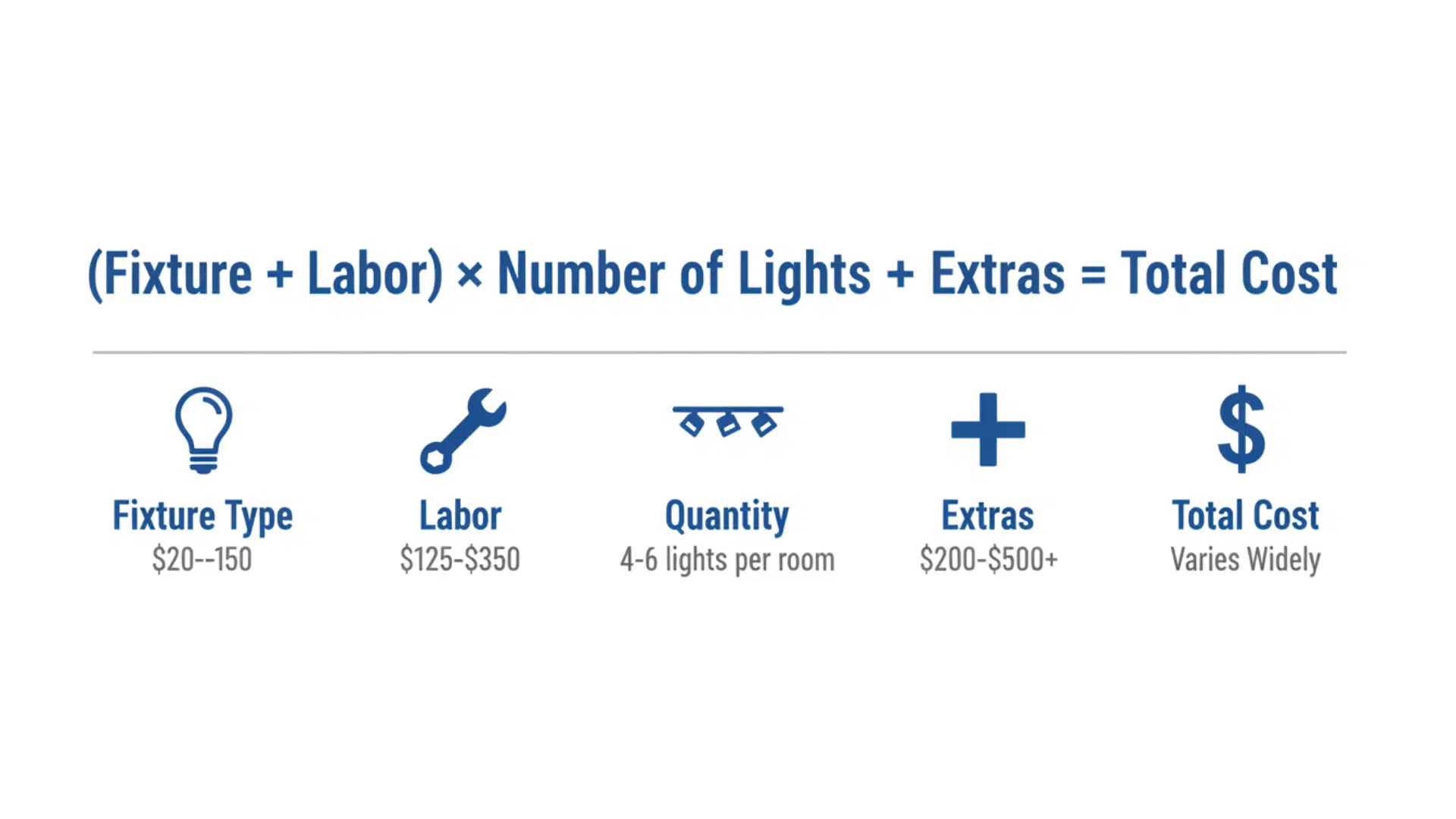
Getting an accurate estimate for your recessed lighting project means looking at five key factors that affect the final price. Start by counting how many lights you need.
Small rooms typically need 2 to 4 lights, medium rooms work well with 4 to 8, and large spaces might require 8 to 12 fixtures. Next, pick your fixture type.
LED retrofit kits cost $20 to $60 each, new construction housings cost $25 to $80 each, and smart recessed lights range from $60 to $150 per unit. Labor charges vary, too.
Most electricians charge $75 to $135 per hour, or $125 to $350 per light, depending on ceiling access and the type of fixture. Wiring conditions can push costs higher if your ceiling has insulation, you need new circuits added, or joists make it tough to run wires.
A simple way to estimate your total cost is to multiply the fixture cost and labor by the number of lights, then add all your additional expenses.
Benefits of Recessed Lighting
Recessed lighting does more than just look good. It brings real benefits that work well in both modern and traditional homes.
- Clean, Unobtrusive Appearance Fixtures sit flush with the ceiling, making rooms look larger and clearer.
- Efficient Lighting LED recessed lights brighten a room with fewer shadows and use minimal energy.
- Versatile, Suitable for kitchens, living rooms, bathrooms, basements, and outdoor covered spaces.
- Safe for Low Ceilings. Since nothing hangs down, it’s ideal for tight or low-height rooms.
- Long-term value LED fixtures last longer, reduce electricity bills, and often increase perceived home value.
Types of Recessed Lighting Fixtures and Their Costs
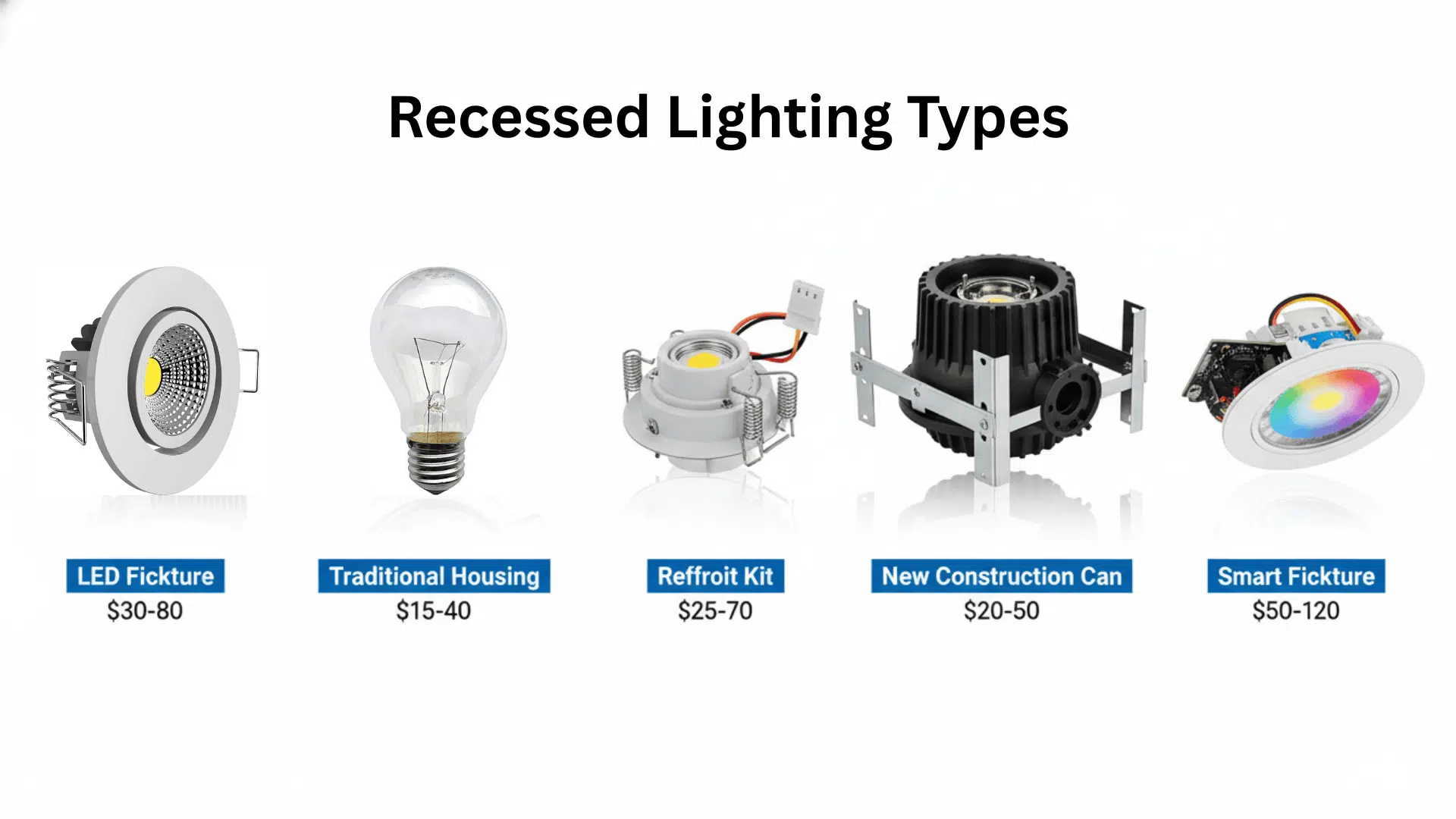
Your fixture choice is one of the biggest influences on installation cost. Different types come with different price tags and features.
LED Recessed Lights
- These fixtures cost $30 to $80 per unit and deliver the best overall efficiency with the longest lifespan.
- They come in adjustable, fixed, and slim profile designs to fit various ceiling types and lighting needs.
Traditional Bulb Housings
- Priced at $15 to $40 per housing, these options are outdated compared to modern LED alternatives.
- They produce higher heat output and have a much shorter lifespan than LED fixtures.
Retrofit Kits
- These kits range from $25 to $70 and are specifically designed for existing ceilings.
- You won’t need extensive wiring work or ceiling teardown, making them perfect for quick upgrades.
New Construction Cans
- Costing $20 to $50 each, these fixtures get installed before drywall goes up.
- They work best for full remodels or new builds where the ceiling structure is still exposed.
Smart Recessed Lighting
- These advanced options cost $50 to $120 per fixture and offer app and voice-controlled lighting features.
- The higher upfront cost pays off with added convenience and the ability to create custom lighting scenes.
What Affects Recessed Lighting Installation Cost?
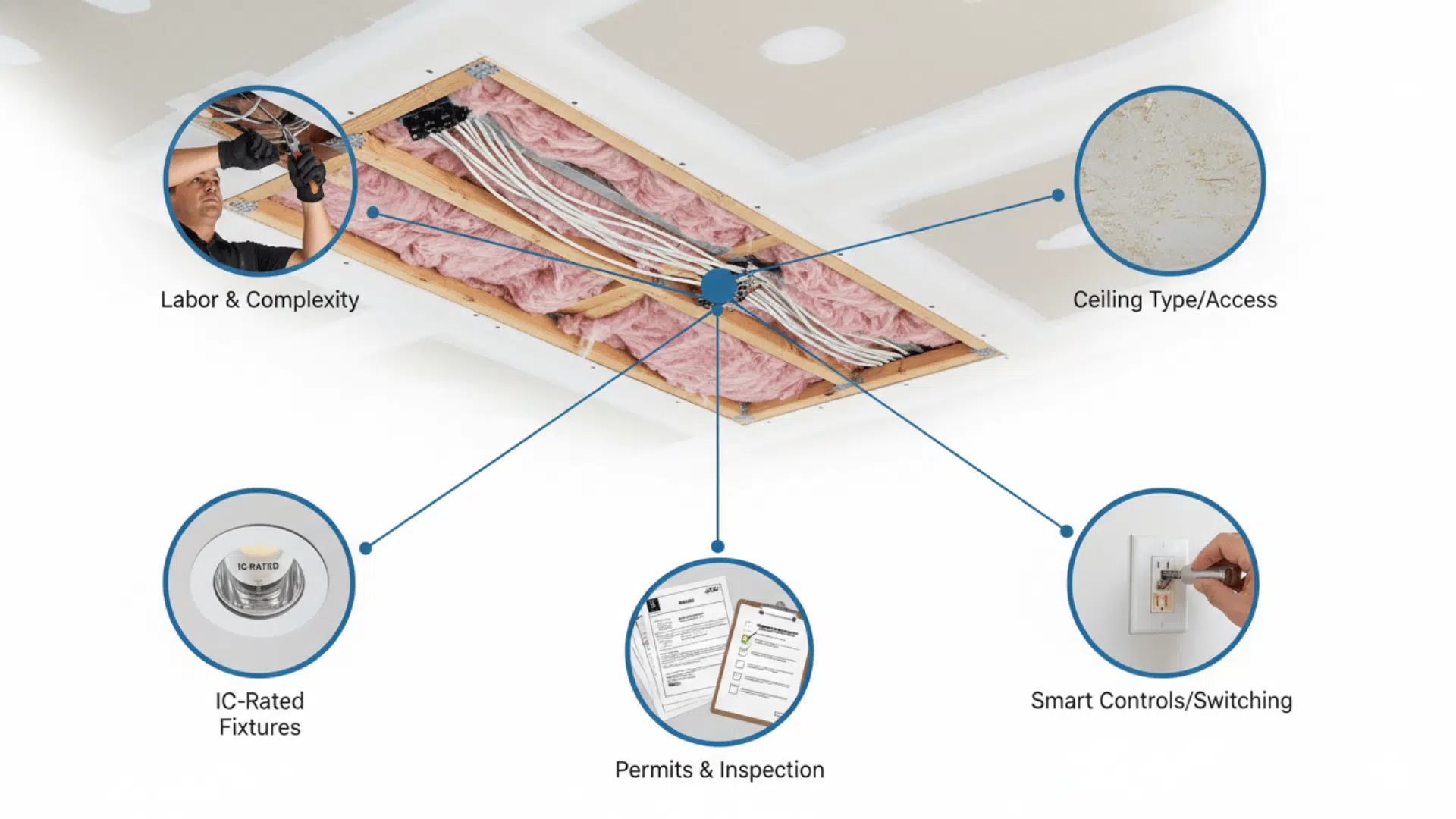
The labor portion of the recessed lighting installation cost is largely determined by how easily an electrician can access the ceiling, run wiring, and install fixtures safely. Below is a complete list of factors that influence installation pricing.
1. Ceiling Structure
Finished ceilings require cutting openings and running wiring through enclosed spaces, which may require patching afterward, increasing labor costs.
Unfinished or open ceilings offer easy wiring access with no repairs required, keeping costs lower. Vaulted or sloped ceilings limit access behind the drywall and require more time for wiring, which drives up the price.
2. Ceiling Material
Different materials affect how difficult it is to cut openings. Drywall is the easiest to work with, while plaster is prone to cracking and requires precision.
Wood or tongue-and-groove ceilings are harder to cut cleanly, and more difficult materials increase labor time.
3. Insulation Conditions
Insulation directly affects wiring access and fixture selection. IC-rated fixtures may be required, and the electrician may need to shift or work around insulation.
This added effort increases labor costs and slows down the installation process.
4. Wiring Complexity
This is one of the biggest cost drivers in any recessed lighting project. Straightforward wiring paths reduce labor, but joists, ducts, or beams blocking the route add time.
Old wiring may require updates, and adding a dedicated circuit increases complexity, making more challenging wiring more expensive.
5. Accessibility
The easier the access, the faster the installation goes. Attics or removable panels help electricians work efficiently, but no overhead access slows down installation. Limited access increases labor hours and pushes up your final bill.
6. Number of Lights
More lights increase the total cost but may reduce the per-light installation rate. This happens because the electrician works more efficiently once they’re already set up.
Bulk installations often save you money per fixture compared to installing just one or two lights.
7. Switch and Control Setup
Labor increases when installing dimmers, adding smart switches, or relocating switches. These tasks require more wiring and wall access, which adds time to the project. Simple on-and-off switches keep things faster and cheaper.
8. Local Code Requirements
Permits, inspections, or required safety upgrades can affect labor time, depending on local regulations.
Some areas have strict electrical codes that demand extra steps. Your electrician needs to follow these rules, which can add hours to the job.
9. Regional Labor Rates
Electrician rates vary by location, with urban and coastal areas typically costing more. A project in a small town might cost hundreds less than the same work in a major city. Where you live has a direct impact on what you’ll pay per hour or per light.
Room-by-Room Recessed Lighting Costs
Installing recessed lights isn’t a one-size-fits-all project. Different rooms have unique requirements that affect the final price you’ll pay.
- Kitchen: Price per light ranges from $150 to $300 because kitchens require high brightness and directional trims to illuminate work areas. The extra fixtures and specialized trim options raise costs above those of standard installations.
- Living Room: Expect to pay $125 to $250 per light for living room installations. These spaces typically need even, ambient lighting with fewer wiring obstacles, making the work simpler and more affordable.
- Bathroom: Bathroom lights cost $150 to $325 per fixture due to special requirements. You need moisture-rated fixtures that are IC-rated or wet-location-rated to handle humidity and prevent safety issues.
- Basement: Basement installations run $175 to $350 per light because of common challenges. Wiring obstacles and ceiling complications are more frequent in these spaces, increasing labor time and difficulty.
- Outdoor Covered Areas: Installing lights in outdoor covered spaces costs $175 to $300 per fixture. These areas must use weather-resistant housings that can handle outdoor conditions and temperature changes.
Professional vs. DIY Recessed Lighting Installation
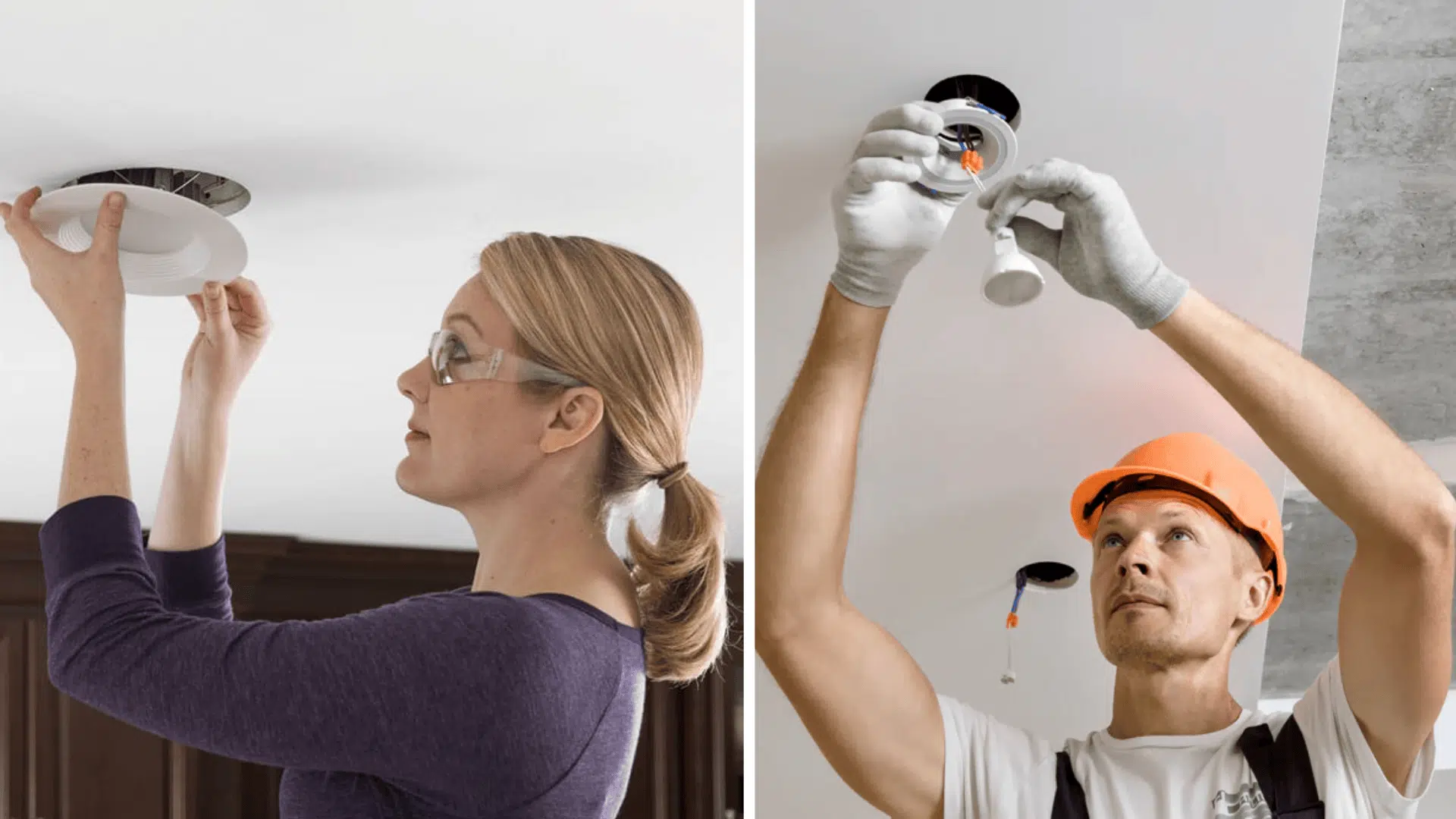
Deciding between doing it yourself and hiring a pro comes down to project complexity and your skill level. Here’s when each option makes the most sense.
| DIY Is Suitable When | Hire a Professional When |
|---|---|
| You’re using simple plug-in retrofit kits | Installing new housings |
| No new wiring is required | Running new circuits |
| Ceiling access is easy | Working with insulated ceilings |
| You have basic electrical knowledge | Your area requires electrical permits |
DIY can reduce costs, but incorrectly installed wiring poses safety and legal risks. Complex or whole-room installations are best handled by a licensed electrician.
How to Save Money on Recessed Lighting?
Cutting costs on your recessed lighting project is possible with smart planning and the right choices. Start by selecting affordable yet quality fixtures that fit your budget without sacrificing performance.
Bundling multiple installations in different rooms at once can reduce the per-light labor cost since the electrician is already on site.
Using retrofit kits instead of new construction housings saves money because they work with your existing ceiling and require less wiring work.
Opting for LED fixtures costs more upfront but delivers long-term savings through lower electricity bills and fewer bulb replacements over the years.
Final Thoughts
Recessed lighting installation cost depends on several key factors, including fixture type, ceiling structure, wiring complexity, and labor rates in your area.
Most landowners spend between $800 and $2,000 for a typical installation of 4 to 6 lights. LED fixtures offer the best long-term value despite higher upfront costs.
While DIY works for simple retrofit kits, complex projects that require new wiring require a licensed electrician to ensure safety and code compliance.
Ready to brighten your space? Get quotes from at least three local electricians, compare fixture options, and choose a plan that fits your budget and lighting goals.