Does your child melt down after a long school day? Many parents watch their kids struggle with sensory overload, not knowing how to help.
A sensory room might be the answer you’ve been looking for.
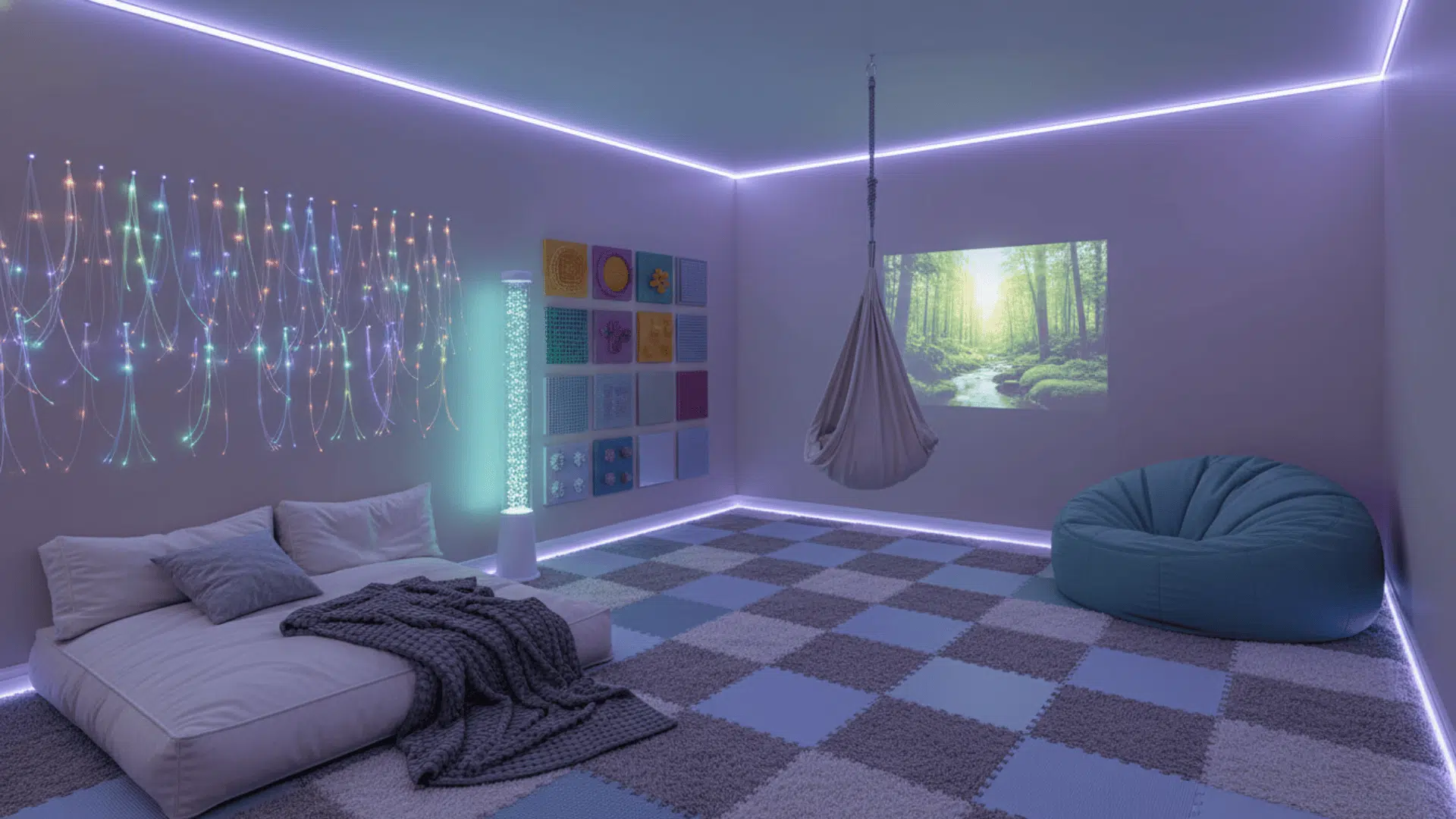
These special spaces use lighting, textures, sounds, and movement tools to help anyone calm down, focus better, or safely interact with their senses.
The best part? You don’t need a huge budget or a massive room to create one.
In this guide, I’ll show you what sensory rooms are, how they work, the different types available, and practical ideas you can use at home, school, or therapy settings.
Let’s get started.
What Is a Sensory Room?
A sensory room is a special space designed to help people calm down, focus better, or safely interact with their senses.
These rooms feature carefully selected elements such as soft lighting, varied textures, soothing sounds, and movement equipment.
The space can be calming when someone feels overwhelmed, or it can provide stimulation when someone needs more sensory input.
The size doesn’t matter much. It could be a small corner in your home or a full room in a school or therapy center.
What Is a Sensory Room Used For?
Sensory rooms serve many helpful purposes depending on who uses them:
- Providing a calming retreat during sensory overload or stressful moments
- Helping regulate emotions for children, teens, or adults who feel overwhelmed
- Supporting sensory processing challenges in people with autism, ADHD, or anxiety
- Encouraging motor development through safe movement tools and activities
- Allowing safe interaction with textures, lights, and sounds
- Supporting therapy routines like occupational therapy, physical therapy, or behavioral therapy
- Offering quiet breaks during overwhelming school days or busy schedules
In schools, these rooms often help students reset emotionally before returning to class. At home, they work as peaceful spaces for winding down after long, tiring days.
Types of Sensory Rooms

Different spaces serve different needs. Here are the main types:
| Type | Purpose | Key Features |
|---|---|---|
| Calming Sensory Rooms | Designed to reduce anxiety and soothe overwhelmed senses | Low lighting, soft textures, gentle movement, neutral colors |
| Stimulating Sensory Rooms | Created to energize and engage someone who needs more sensory input | Interactive walls, bright colors, movement tools, and changing lights |
| Therapy-Based Sensory Rooms | Used by occupational therapists or behavioral therapists | Motor skill equipment, sensory integration tools, balance items, structured activities |
| School Sensory Rooms | Used for emotional regulation, brain breaks, and focus resets | Divided into zones for calming, learning, and movement |
| At-Home Sensory Rooms | Simple setups that fit daily routines | Quiet corner, sensory toys, soft lighting, comfortable seating |
| Portable Sensory Spaces | Great for small homes or classrooms with limited space | Carts, bins, or foldable stations that move easily |
Each type serves a specific purpose. Choose the one that best fits the needs of the person using it and the available space.
How Do Sensory Rooms Work? (The Science)
Sensory rooms work by giving controlled sensory input to the nervous system. When someone feels too much or not enough stimulation, their body needs help finding balance.
The brain processes information better when it receives the right kind of sensory feedback. These rooms use specific elements to either calm or wake the nervous system, depending on what the person needs at that moment.
Key Elements That Influence Sensory Regulation
- Light: Soft, warm lights lower stress levels, while bright or changing lights provide stimulation and focus.
- Sound: White noise, calming music, or nature sounds help soothe an overstimulated mind.
- Texture: Tactile materials, such as soft fabrics or bumpy surfaces, encourage touch and grounding.
- Movement: Rocking, swinging, and balance tools help the body regulate itself naturally.
- Smell: Aromatherapy with scents like lavender or peppermint supports relaxation for many people.
By thoughtfully combining these elements, a sensory room helps the brain organize information and respond to sensory input more effectively.
How to Create a Sensory Room: Step-by-Step

Before you start picking out lights and textures, it helps to understand how all the pieces work together. Here’s a simple step-by-step way to build a sensory room that actually supports your goals.
Step 1: Identify Sensory Needs
Start by determining whether the space should be calming, stimulating, or blend both effects. Watch how the person reacts to different sensory inputs throughout the day.
Does loud noise bother them, or do they seek more activity? Understanding these patterns helps you design a space that truly works.
Step 2: Choose the Right Space
It can be a bedroom corner, a playroom, an empty office, or a small unused nook.
The size doesn’t matter as much as the location. Pick a spot that feels safe and is easy to access when someone needs a sensory break.
Step 3: Select the Base Elements
Lighting, textures, sound, and comfort seating form your foundation.
These four elements create the core experience of any sensory room. Start simple with one item from each category, then build from there based on what works best.
Step 4: Add Personalized Tools
Think swings, tactile panels, or projectors, depending on needs. These tools should match the specific sensory goals you identified in step one. You can always add, remove, or rotate items as preferences change over time.
Step 5: Test and Adjust
Observe how the person responds, then rearrange or swap items as needed. Pay attention to which tools get used most and which get ignored. A sensory room should grow and change with the person using it.
Creative Sensory Room Ideas for Every Space
Below are practical sensory room ideas organized by need and space. These suggestions work for different budgets, room sizes, and sensory goals. Pick the ideas that best fit your situation, then customize them as you go.
1. Small-Space Sensory Room Ideas

- Convert a closet or reading nook into a quiet retreat
- Use a collapsible tent with lights for a portable space
- Add a portable sensory cart that rolls from room to room
- Hang blackout curtains to create a cozy zone in any corner
2. Budget-Friendly Sensory Room Ideas

- DIY sensory bottles with glitter and water for visual calm
- Affordable LED rope lights for gentle mood lighting
- Secondhand beanbags or cushions for comfortable seating
- Homemade tactile boards using fabric scraps and textures
3. Calming Sensory Room Ideas

- Soft, warm-toned lighting that reduces stress
- Neutral color palette with whites, beiges, and soft grays
- Weighted lap pad or blanket for grounding
- Gentle white noise or nature sounds playing softly
- Plush textures and floor cushions for comfort
4. Stimulating Sensory Room Ideas

- Bright, vibrant wall decals that catch attention
- Interactive tactile panels for hands-on exploration
- Light-up stepping stones for movement and focus
- Movement tools like mini-trampolines or wobble boards
5. Sensory Room Ideas for Teens & Adults

- Minimalist design with clean lines and simple layouts
- Bluetooth speakers for custom soundscapes and playlists
- Soft LED strips around the ceiling for mood control
- Therapy swing or rocking chair for movement
- Comfort corner with books and grounding tools
6. Sensory Room Ideas for Schools & Therapy Centers

- Zones for movement, calming, and focus activities
- Durable mats and washable fabrics for high traffic
- Visual schedules for independent regulation and routines
- Sensory pathways along hallways for movement breaks
How to Keep Your Sensory Room Safe
Safety matters just as much as sensory support when setting up your space. A well-designed sensory room should never put anyone at risk. Here are key safety points to keep in mind:
- Secure heavy equipment and anchor tall items: Bolt shelves to walls and anchor swings properly to prevent tipping or falling accidents.
- Hide or organize wires: Use cord covers, cable ties, or wall channels to keep wires out of sight and out of reach.
- Avoid overstimulation with flashing lights: Choose lights with adjustable speeds or opt for steady, soft options that won’t trigger discomfort.
- Choose non-toxic, flame-safe materials: Check labels for safety certifications and select fabrics and tools that meet fire safety standards.
- Supervise movement tools with young children: Always watch kids when they use swings, rockers, or balance equipment to prevent injuries.
Long-Term Care for a Well-Functioning Sensory Room
A sensory room needs regular care to stay effective and engaging. Clean high-touch items such as mats, cushions, and toys weekly to keep the space fresh and hygienic.
Rotate sensory toys monthly so they feel new and interesting again. Swap lighting and textures seasonally to match changing moods and preferences.
As developmental needs change, adjust the tools and equipment in the room. What worked six months ago might not work today, and that’s completely normal.
Pay attention to what gets used and what gets ignored, then make changes based on those patterns.
Wrapping It Up
Creating a sensory room doesn’t require a big budget or perfect space. Start with one corner, add a few key elements, and build from there based on what brings comfort or focus.
When designed thoughtfully, a sensory room becomes a safe haven that helps kids, teens, and adults feel centered and ready to handle daily challenges. The most important step is simply starting.
Pick one or two sensory elements that match your needs, set them up this week, and watch how the space makes a difference. Have questions or want to share your sensory room setup?
Leave a comment below. We’d love to hear what’s working for you and answer any questions you might have.