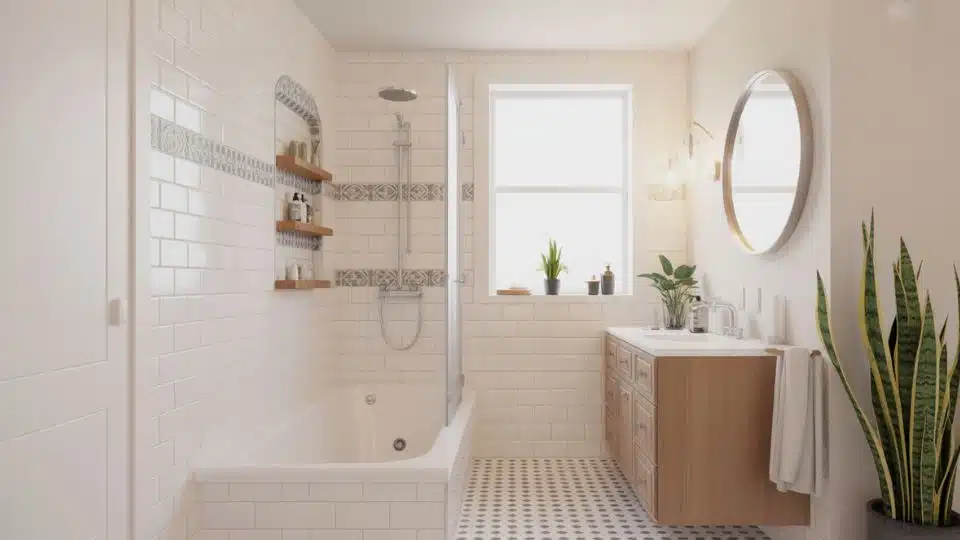
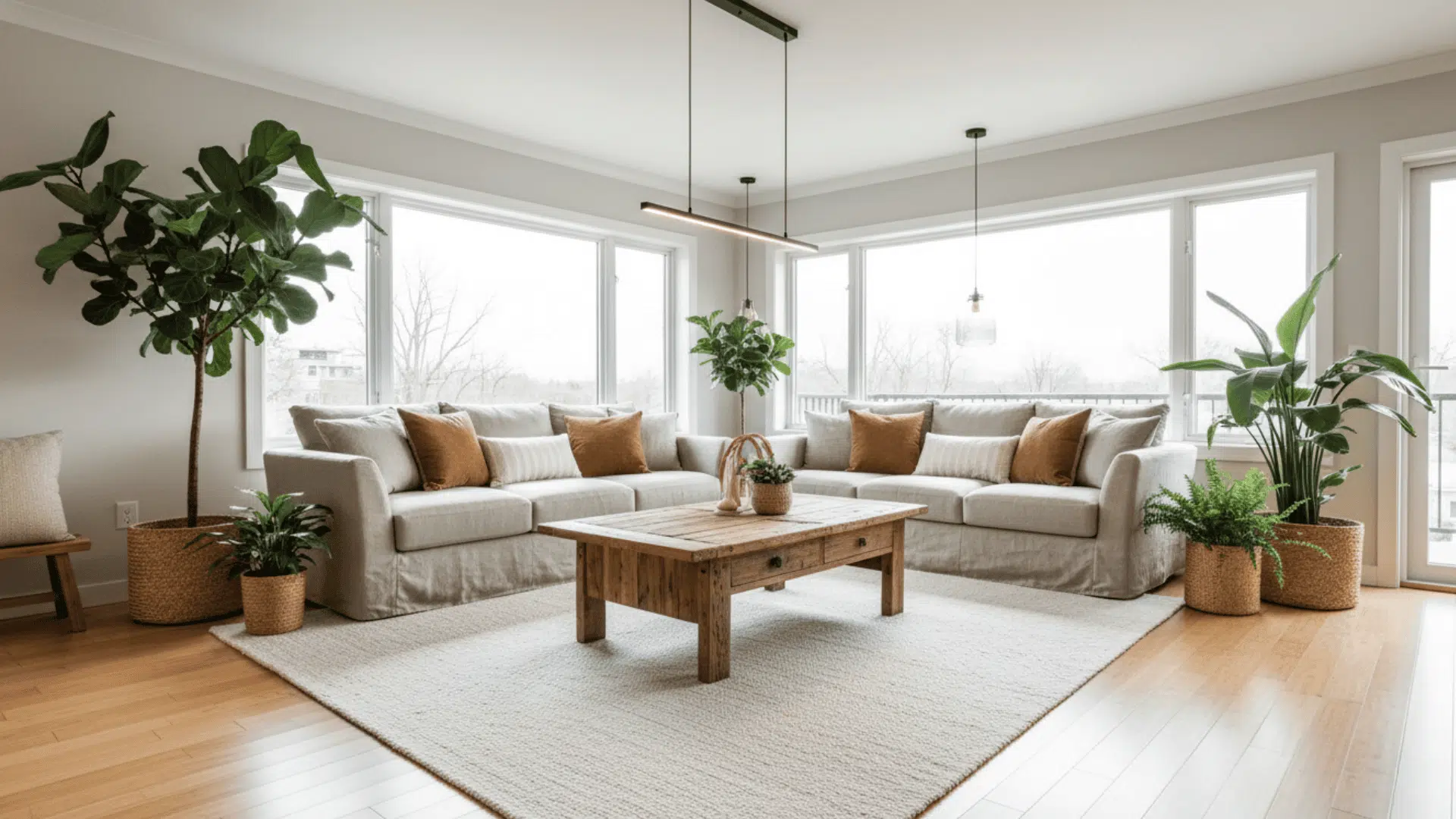
Want a home that looks beautiful and helps the planet too? Sustainable interior design makes it possible.
It’s not just about buying green products. It’s about creating spaces that use less energy, produce less waste, and keep you healthier.
More people are realizing that smart design choices save money and protect the environment at the same time. You don’t need a huge budget to get started. Small changes add up fast.
In this guide, you’ll learn what sustainable design really means, which materials work best, and how to apply these ideas room by room. Let’s build a home that works for you and the world around you.
What Is Sustainable Interior Design?
Sustainable interior design means creating spaces that are kind to the planet while making your home healthier and more comfortable.
It’s about choosing materials wisely, using less energy and water, and building things that last. You focus on reducing waste and keeping the air inside your home clean and safe.
Think of it as designing a beautiful space that works well today and protects the environment for tomorrow. It’s not just about looks.
It’s about making choices that matter for your health, your wallet, and the world around you.
Difference Between Green Design and Sustainable Design
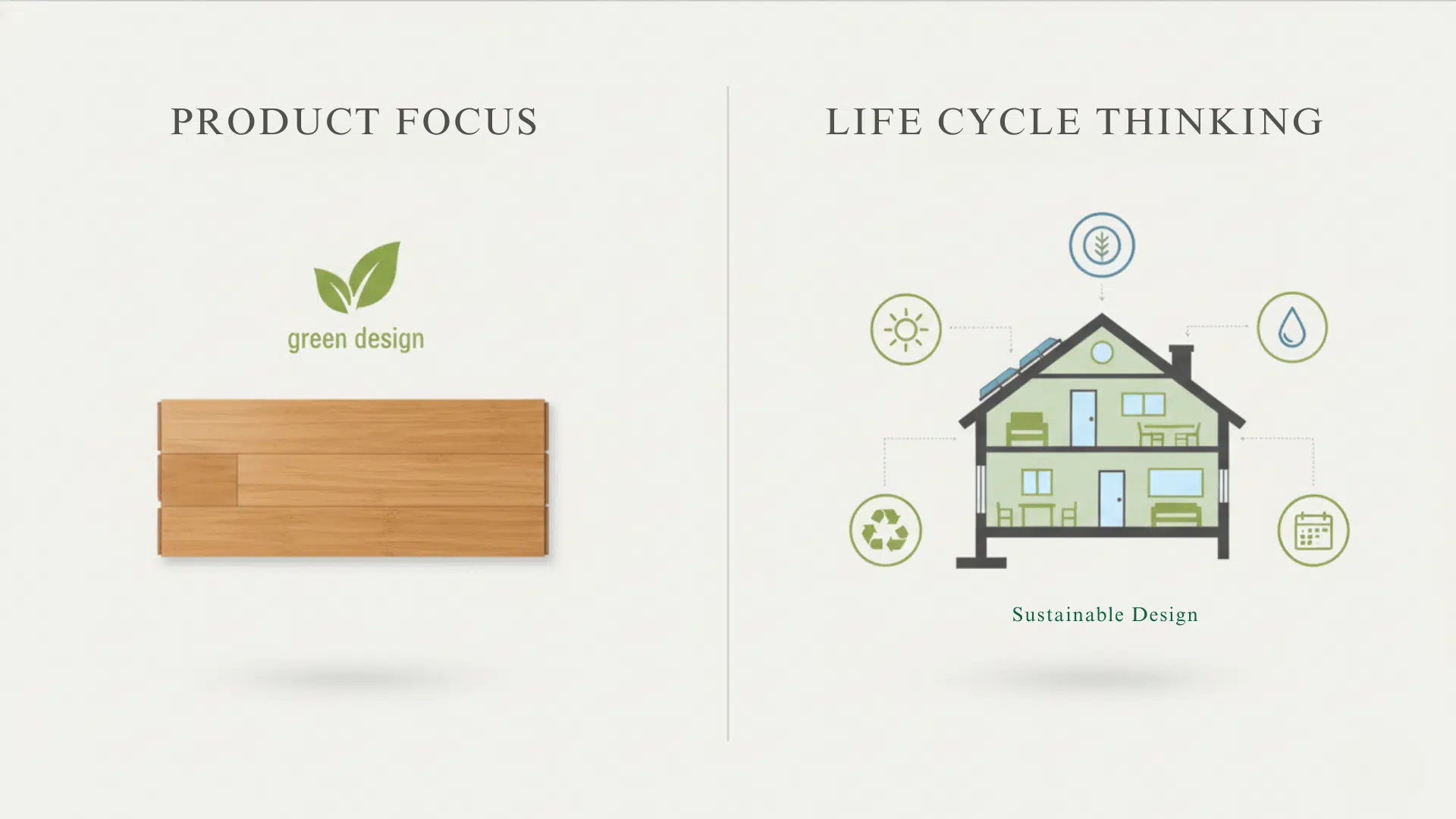
People often use these terms interchangeably, but they’re not the same. Green design focuses on picking eco-friendly products. Sustainable design goes further. It looks at how everything works together over time.
| Green Design | Sustainable Design |
|---|---|
| Focuses on eco-friendly materials | Examines the full lifecycle of materials and systems |
| Emphasizes recycled, natural, or non-toxic items | Balances social, economic, and environmental factors |
| Often product-based | Includes systems thinking (energy, water, long-term impact) |
| Example: Using bamboo flooring | Example: Designing a home that reduces energy consumption overall |
Green design is one part of the solution. Sustainable design considers the whole picture. It’s about thinking long-term, not just buying green products.
Key Principles of Sustainable Interior Design
These principles guide every sustainable design decision you make. They help you create spaces that last longer and work better for both you and the environment.
- Reduce, Reuse, Repurpose. Before buying anything new, look at what you already have and how it can be refreshed or reused.
- Design for Longevity: Choose materials and furniture that are built to last years, not just seasons.
- Energy and Water Efficiency Smart lighting, efficient fixtures, and good insulation cut down on waste and save you money.
- Healthy Indoor Environments Use non-toxic, low-VOC materials to keep the air in your home clean and safe.
- Responsible Material Sourcing: Pick items with verified sustainability certifications so you know they’re truly eco-friendly.
Sustainable Materials to Use in Interior Design
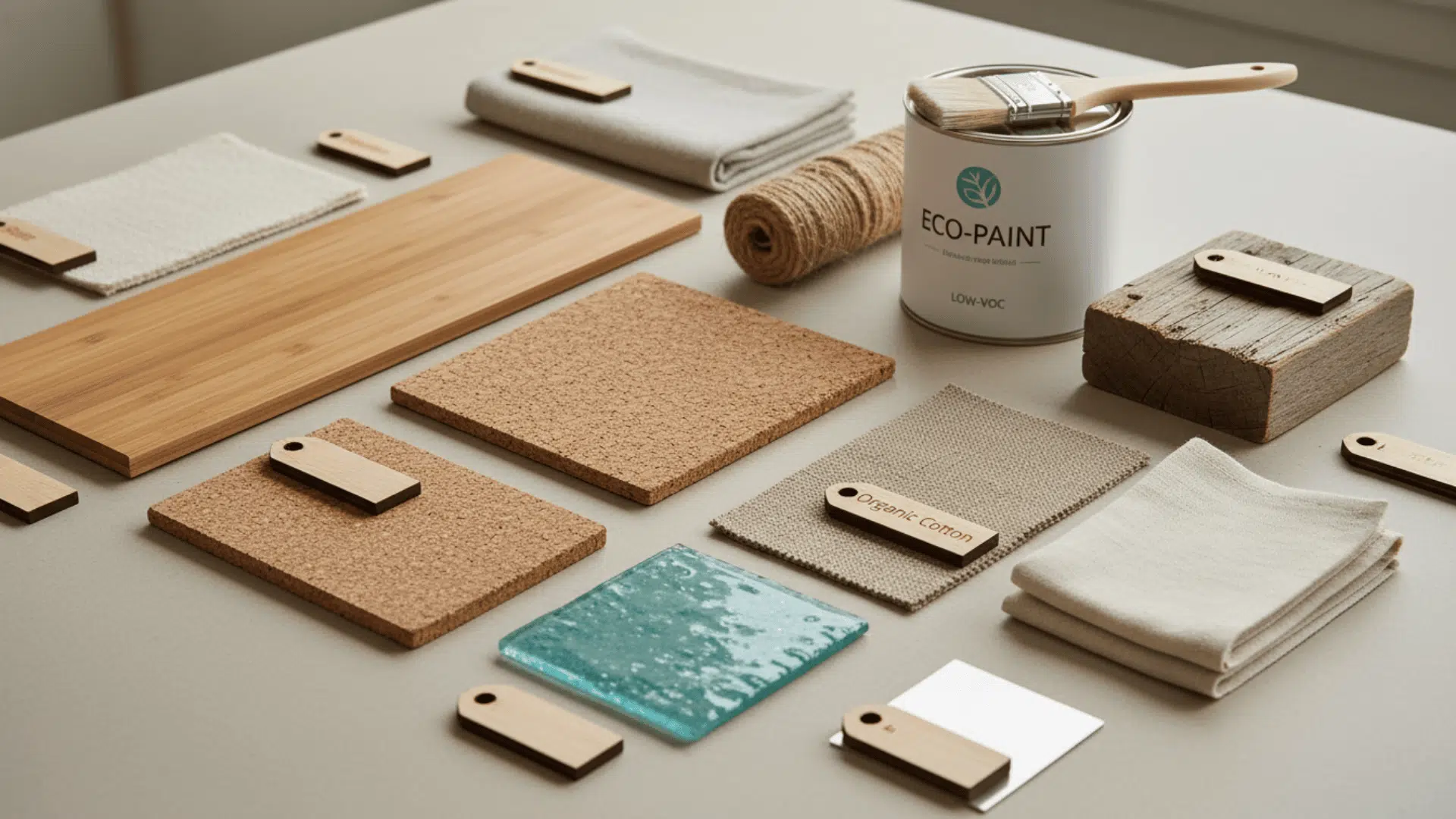
Choosing the right materials makes all the difference in sustainable design. You want options that are renewable, safe, and built to last. Here’s what to look for when selecting materials for your home.
Renewable Materials
These materials grow back quickly and don’t deplete natural resources. They’re a smart choice for floors, furniture, and décor.
- Bamboo – Grows fast and works well for flooring and cabinetry
- Cork – Harvested without harming trees, great for floors and walls
- Hemp – Strong, versatile, and used in textiles and insulation
- Jute – A natural fiber perfect for rugs and wall coverings
- Reclaimed wood – Saves trees and adds character to any space
Recycled & Recyclable Materials
Using recycled materials keeps waste out of landfills. These items give new life to old resources.
- Recycled glass countertops – Durable and stylish for kitchens and bathrooms
- Recycled metals – Used in fixtures, furniture frames, and hardware
- Upcycled furniture – Refurbished pieces that reduce the need for new production
Low-Emission Finishes
Standard paints and stains release harmful chemicals into your home. Low-emission options keep your air cleaner.
- Low-VOC paints – Release fewer toxins and dry faster
- Plant-based stains – Made from natural ingredients, safer for your family
Natural Textiles
Synthetic fabrics often contain chemicals and plastics. Natural textiles are biodegradable and healthier.
- Organic cotton – Grown without pesticides, soft and breathable
- Linen – Made from flax, durable and naturally resistant to bacteria
- Wool – Renewable, fire-resistant, and excellent for insulation
- Sisal – A plant fiber used in rugs and wall coverings
Helpful Eco-Certifications
Not all products labeled “green” are truly sustainable. Look for these certifications to be sure.
- FSC – Confirms wood comes from responsibly managed forests
- OEKO-TEX – Tests textiles for harmful substances
- GREENGUARD – Certifies low chemical emissions for indoor air quality
- Cradle to Cradle – Evaluates products for safe, circular use
How to Implement Sustainability in an Interior Design?
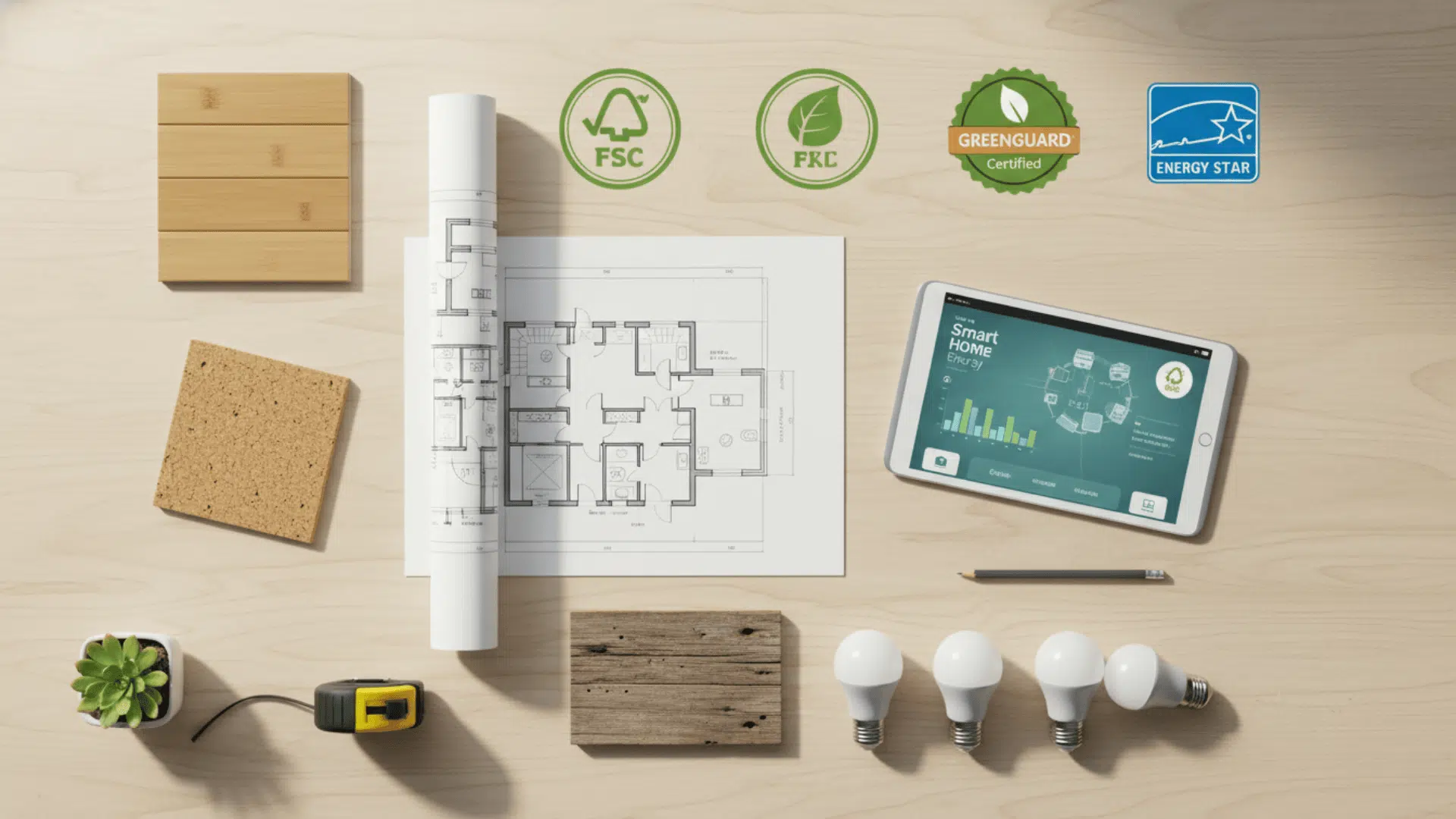
Turning sustainable ideas into reality requires a clear plan. Follow these steps to make your design project truly eco-friendly from start to finish.
1. Conduct a Sustainability Assessment
Start by examining your current space. Look at the layout, energy use, materials, and the amount of waste generated. This gives you a baseline to work from and shows where improvements matter most.
2. Establish Clear Goals
Decide what you want to achieve with your project. Set specific targets, such as lowering energy costs, reducing toxins, using durable materials, or creating spaces that adapt to future needs. Clear goals keep you focused and help measure success.
3. Prioritize Sustainable Materials
Invest in items that are responsibly sourced, recyclable, and built to last. Quality materials may cost more upfront, but they save money and resources over time. Always check for verified certifications before you buy.
4. Optimize Layout and Function
Design your space to maximize natural light, improve airflow, and create efficient traffic flow. Good layout planning reduces the need for artificial lighting and mechanical cooling. It also makes rooms more comfortable and functional.
5. Use Smart Technology
Smart systems automatically monitor and reduce energy use. Install energy-monitoring systems, smart thermostats, and motion-activated sensors. These tools adjust settings in real time to meet needs and cut waste without extra effort.
6. Plan for Maintenance
Choose materials and finishes that age well and can be repaired instead of replaced. Avoid trends that look dated quickly. When something is built to be maintained, it stays out of the landfill and keeps working for years.
Energy-Efficient and Resource-Conscious Choices
Small changes in how you use energy and water add up to big savings. These choices reduce your bills while helping the environment at the same time.
- LED lighting for lower energy use – LEDs use up to 75% less energy than traditional bulbs and last much longer.
- Proper insulation to reduce heating and cooling demand – Good insulation keeps your home comfortable year-round and significantly cuts energy costs.
- High-efficiency appliances for long-term savings – Energy-rated appliances use less power and water, saving you money over their lifetime.
- Low-flow faucets and showerheads to conserve water – These fixtures reduce water use by up to 60% without sacrificing pressure.
- Dual-flush toilets to reduce water waste – They give you control over water usage with each flush, dramatically cutting waste.
- High-performance windows for better temperature control – Quality windows prevent heat loss in winter and keep cool air in during summer.
Room-by-Room Sustainable Interior Design Examples
Every room in your home offers chances to make greener choices. Here’s how to apply sustainable design principles throughout your space.
Living Room
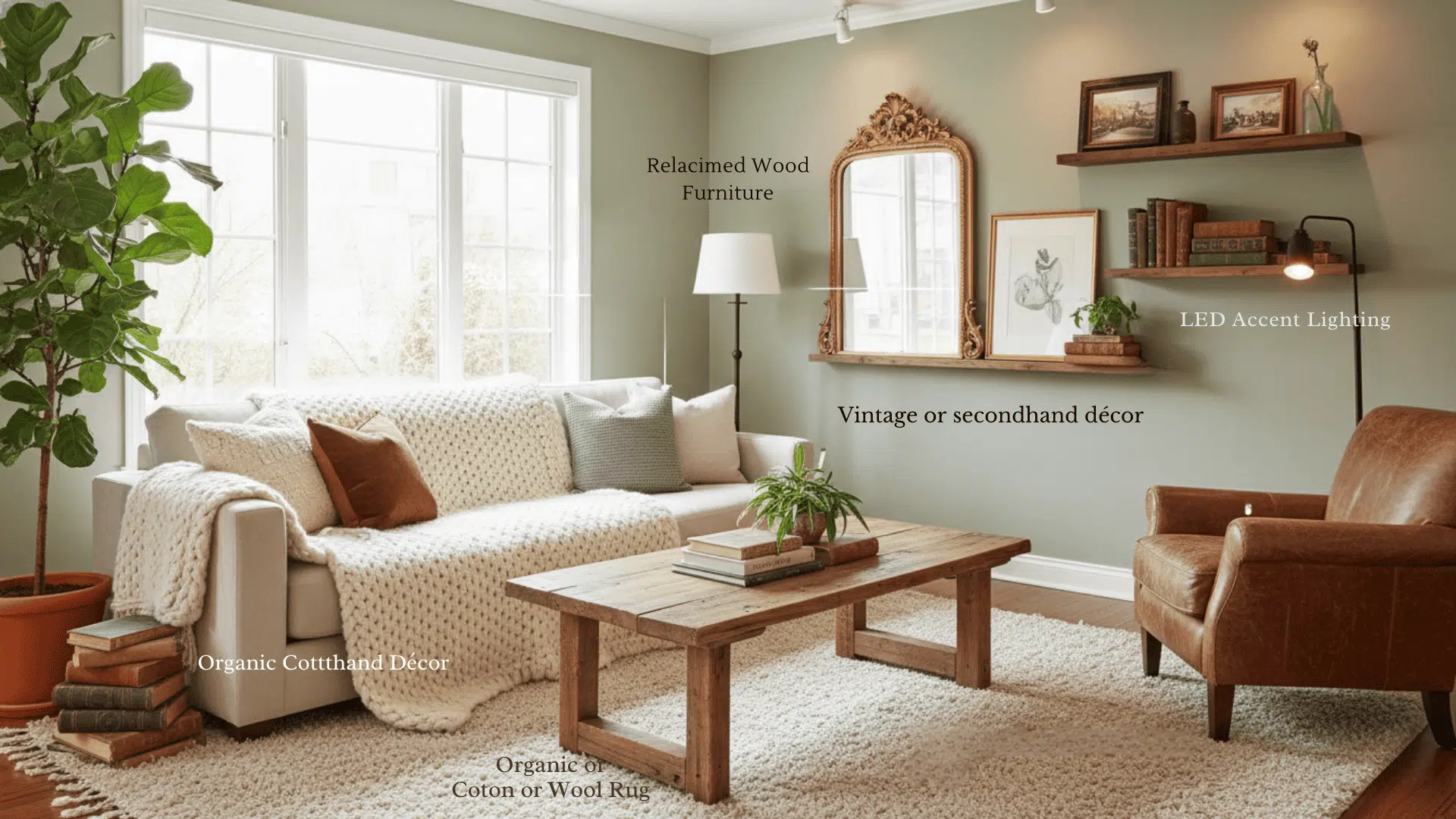
- Reclaimed wood furniture – Adds warmth and character while saving trees
- LED accent lighting – Creates ambiance with minimal energy use
- Organic cotton or wool rugs – Natural fibers that are soft, durable, and chemical-free
- Vintage or secondhand décor – Reduces waste and gives your space a unique style
Kitchen
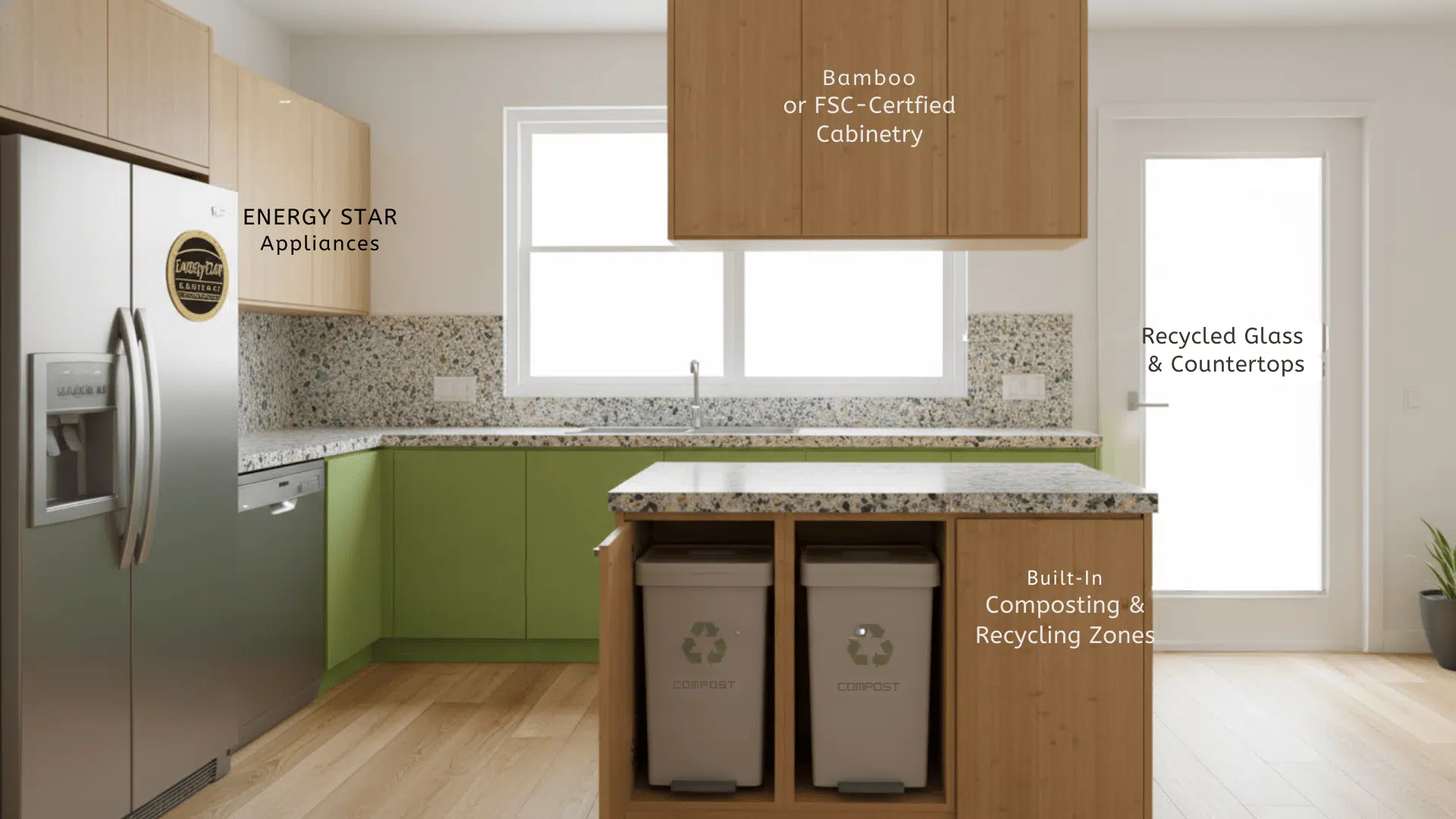
- ENERGY STAR appliances – Use less energy and water without losing performance
- Recycled glass or composite countertops – Stylish surfaces made from reclaimed materials
- Bamboo or FSC-certified cabinetry – Renewable wood options that look great and last
- Built-in composting and recycling zones – Makes waste sorting easy and keeps your kitchen organized
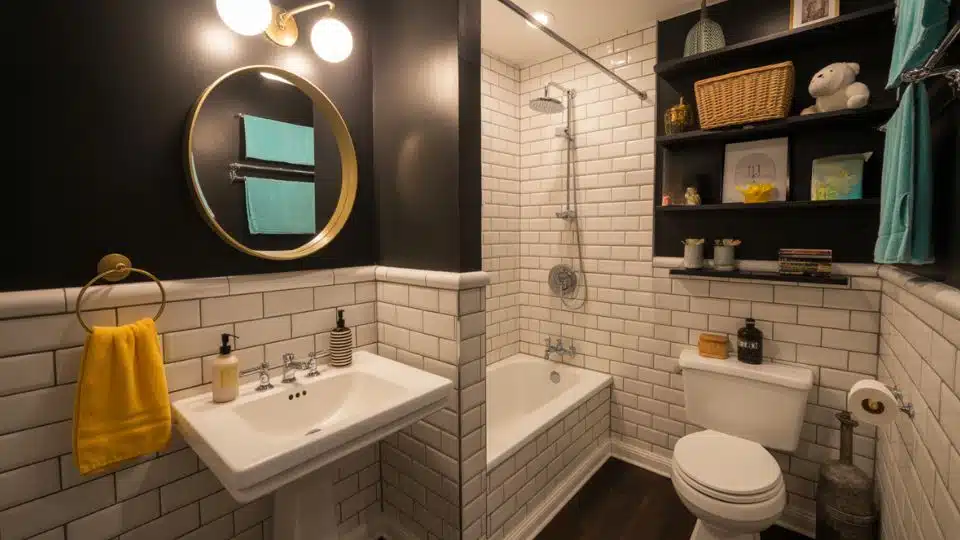
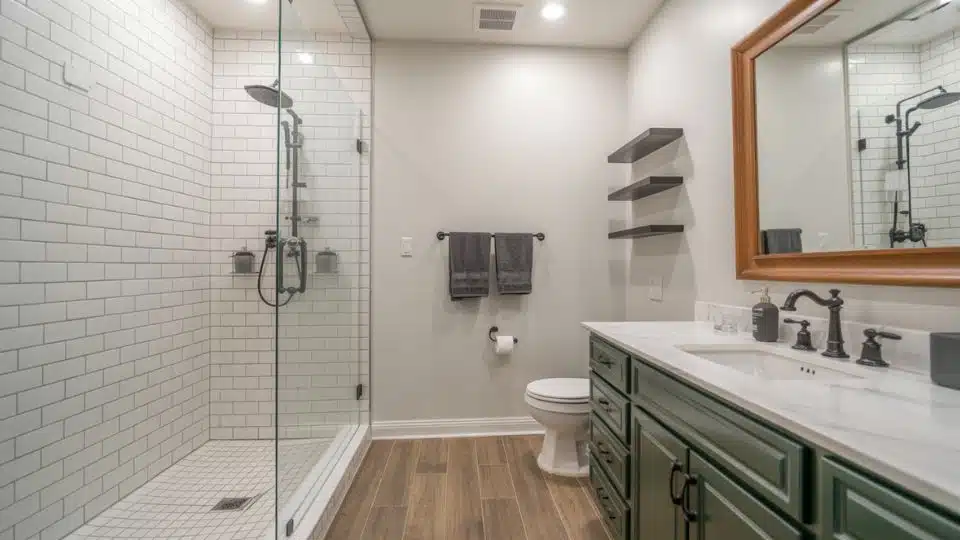
Bathroom
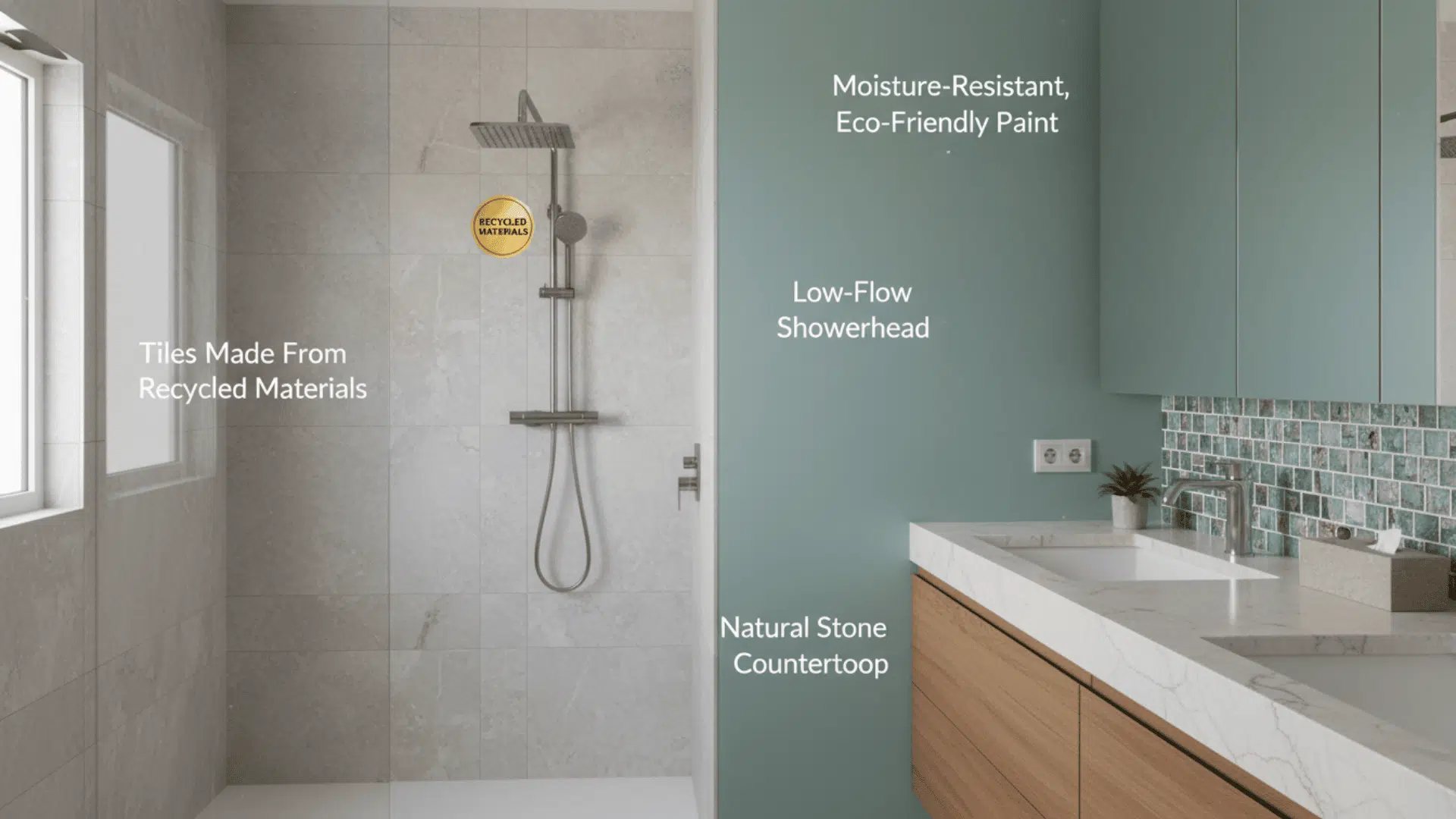
- Low-flow showerheads and faucets – Save water without compromising on comfort
- Tiles made from recycled materials – Durable flooring and walls with less environmental impact
- Moisture-resistant, eco-friendly paints – Protects surfaces while keeping air quality high
- Natural stone or recycled glass accents – Adds beauty with sustainable materials
Bedroom
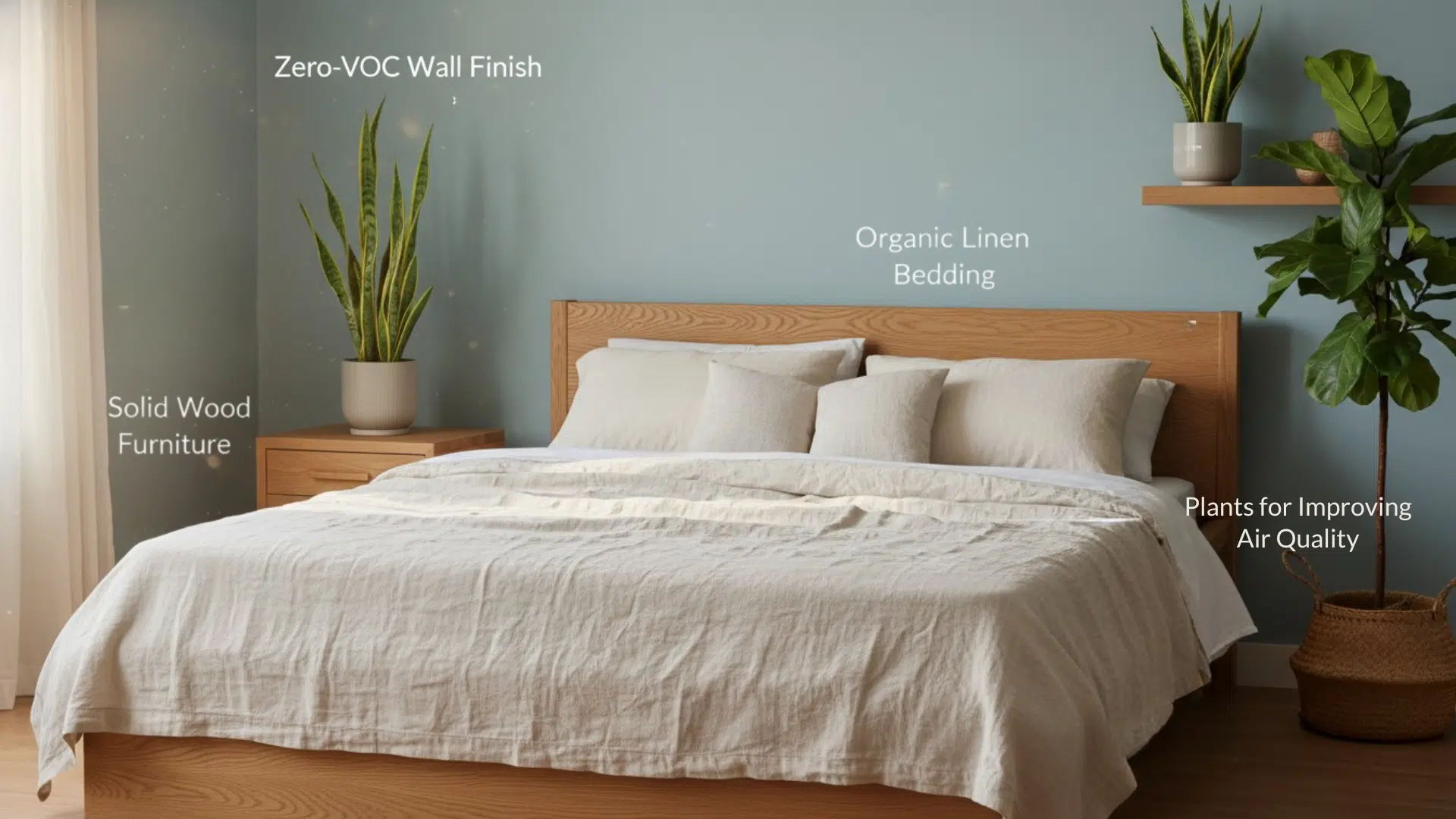
- Zero-VOC wall finishes – Keep the air clean where you spend most of your rest time
- Organic linen or cotton bedding – Soft, breathable fabrics grown without harsh chemicals
- Solid wood furniture with verified sourcing – Quality pieces that last for decades
- Plants for improving air quality – Natural air filters that also boost mood and relaxation
Home Office
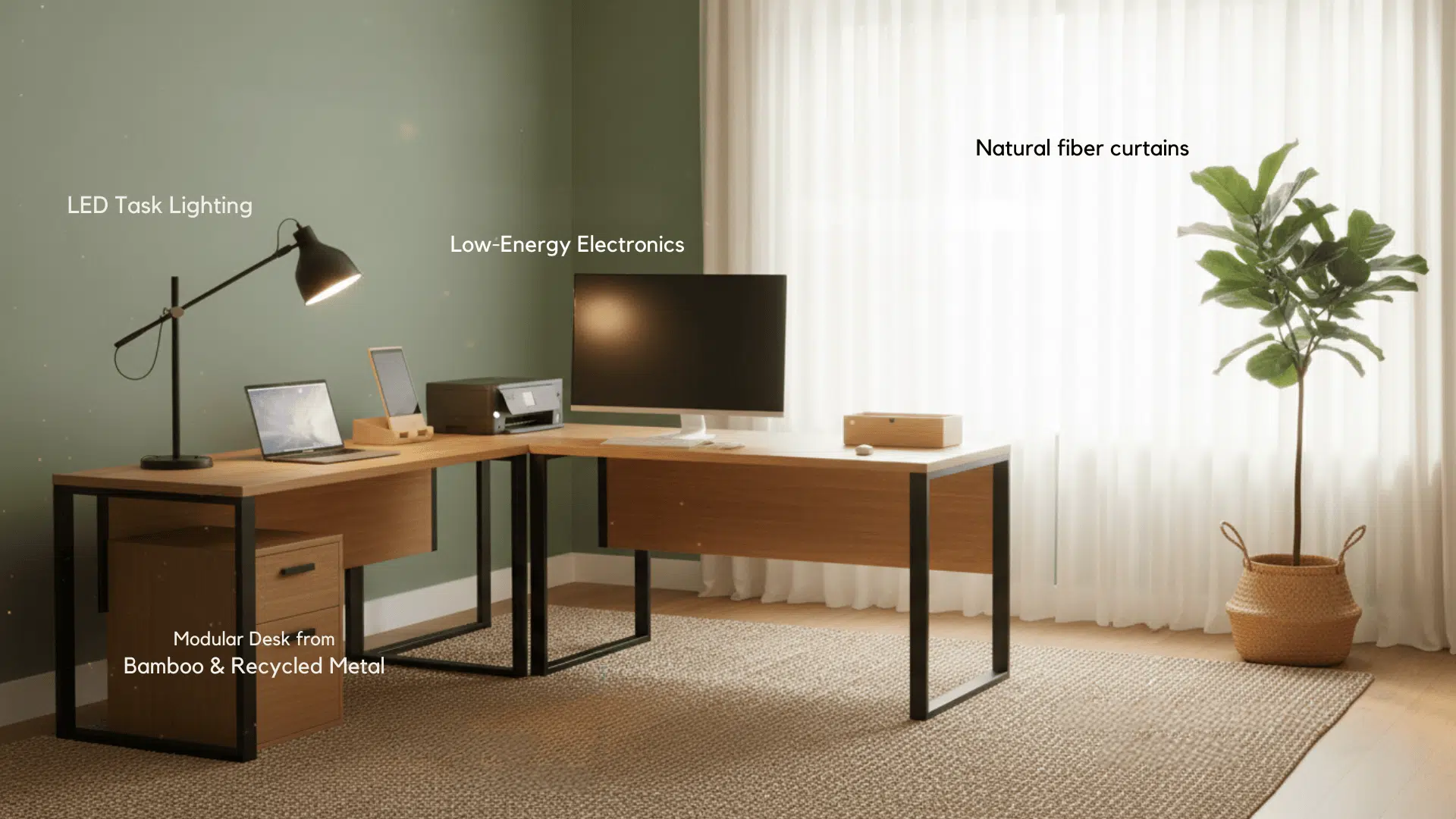
- Modular desks made from bamboo or recycled metal – Flexible workspaces built from sustainable materials
- LED task lighting – Bright, focused light that uses minimal power
- Low-energy electronics – Computers and devices that reduce electricity consumption
- Natural fiber curtains that filter light – Control brightness naturally while adding texture
Sustainable Interior Design on a Budget
Going green doesn’t mean spending more. You can make sustainable choices without breaking the bank. Here are simple, budget-friendly ways to create an eco-friendly home.
| Budget-Friendly Action | How It Helps |
|---|---|
| Swap bulbs for LEDs | Cuts energy bills and bulbs last longer |
| Shop thrift stores or estate sales | Finds quality pieces at low prices while reducing waste |
| Upcycle existing furniture | Refreshes what you own instead of buying new |
| Choose natural textiles over synthetics | Healthier fabrics that often cost the same or less |
| Repaint rather than replace | Updates furniture and cabinets for a fraction of the cost |
You don’t need a big budget to create a greener home. Small swaps add up quickly. Start with one room or even one change at a time. The savings you see will make it easier to keep going.
The Future of Sustainable Interior Design
Sustainable design is moving beyond just reducing harm. The next wave focuses on creating a positive impact.
Circular design systems will reuse and recycle materials in closed loops, keeping waste out of landfills entirely. Regenerative materials go even further by actually improving ecosystems as they’re produced.
AI-powered smart homes will optimize energy use in real time, adjusting lighting, heating, and cooling based on your habits and weather patterns.
Low-carbon manufacturing is becoming standard across furniture and finishes, cutting emissions at the source.
Modular interiors let you easily update spaces with minimal waste, adapting to your changing needs without tearing everything out. Sustainable design is evolving into a movement that blends innovation with environmental care.
It’s not just about doing less damage anymore. It’s about building homes that actively contribute to a healthier planet.
Final Verdict
Sustainable interior design isn’t about giving up style or comfort. It’s about making smarter choices that benefit your health, your wallet, and the planet.
From choosing renewable materials to improving energy efficiency, every decision counts. You can start small with LED bulbs or thrift store finds and build from there.
The key is thinking long-term and avoiding products that harm indoor air quality or end up in landfills quickly. Ready to transform your space? Take one room at a time and apply what you’ve learned here.
Share your sustainable design tips in the comments below. What changes will you make first?