Replacing windows or planning a home renovation? Understanding standard window sizes can save you thousands of dollars and weeks of frustration.
Most people assume all windows follow the same measurements, but manufacturers use slightly different sizing systems that can confuse even experienced builders.
Getting the wrong size means delays, extra costs, and installation headaches you don’t need. This guide breaks down everything you need to know about standard window dimensions.
You’ll learn what standard sizes actually mean, how to measure your openings correctly, which window types fit which rooms, and when custom windows are worth the investment.
Let’s make your window project stress-free and straightforward.
What Does Standard Window Size Mean?
A standard window size refers to the typical width-by-height measurements that manufacturers use when making windows in bulk.
These measurements follow familiar patterns, making it easier for installers to match replacement windows to existing openings in your home.
Here’s what you need to know:
- Width comes first – Manufacturers list sizes as width x height (example: 24″ x 36″)
- Nominal vs. actual size – The label shows a rounded number, not the exact frame measurement
- Rough openings are bigger – The wall opening is slightly larger than the window frame itself
- Measurements use increments – Heights go up in 2″ steps, widths usually in 4″ steps
- Predictable ordering – This system makes it faster for builders and contractors to order and install
This standardized approach saves time and reduces errors during installation.
Standard Window Sizes by Type
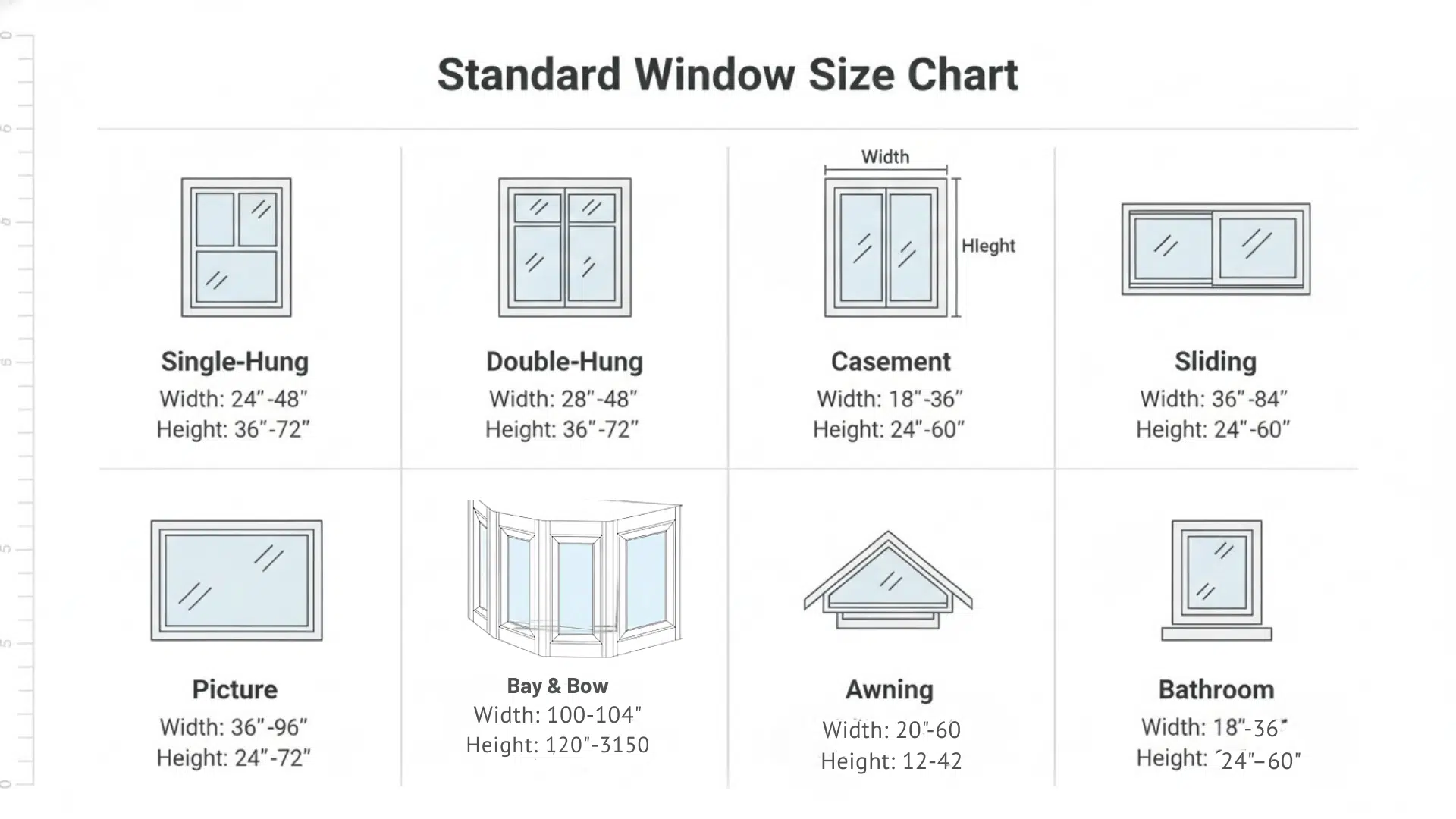
Not all windows are built the same. Here’s a breakdown of the most popular window styles and their typical size ranges.
1. Single-Hung Windows
Widths: 24″–48″
Heights: 36″–72″
Single-hung windows have a fixed top sash and a bottom sash that slides up and down. They’re commonly used in traditional homes and multi-level residences.
These windows are budget-friendly and work well for second-story rooms where exterior cleaning isn’t a priority.
2. Double-Hung Windows
Widths: 24″–48″
Heights: 36″–72″
Both the top and bottom sashes move in double-hung windows, making them highly flexible.
This design allows for better airflow control and makes cleaning much easier from inside your home. They’re one of the most popular choices for bedrooms and living spaces.
3. Casement Windows
Widths: 18″–36″
Heights: 24″–60″
Casement windows swing open outward using a crank mechanism. They provide maximum ventilation since the entire window opening is unobstructed when open.
These windows seal tightly when closed, which helps with energy efficiency and keeping out drafts.
4. Sliding (Gliding) Windows
Widths: 36″–84″
Heights: 24″–60″
Sliding windows move horizontally along a track, making them ideal for wide wall spaces. They work especially well in living rooms, kitchens, and modern-style homes.
Because they don’t swing out or in, they save space and are easy to operate.
5. Picture Windows
Widths: 24″–96″+
Heights: 24″–72″+
Picture windows are fixed and do not open, making them ideal for maximizing views. They let in lots of natural light without sacrificing wall space for operation mechanisms.
Homeowners often use them in living rooms or spaces with beautiful outdoor scenery.
6. Bay & Bow Windows
Bay widths: 100″–144″
Bow widths: 120″–150″+
Bay windows typically have three panels set at angles, while bow windows feature four to six panels in a gentle curve.
Both styles extend outward from the home, adding interior space and architectural interest. They create cozy seating areas and bring in light from multiple angles.
7. Awning Windows
Widths: 20″–60″
Heights: 12″–42″
Awning windows hinge at the top and open outward from the bottom. This design keeps them open even during light rain without water coming in.
They’re commonly placed above doors, in basements, or stacked with other window types for added ventilation.
8. Bathroom Windows
Widths: 18″–36″
Heights: 24″–60″
Bathroom windows are typically smaller to maintain privacy while still allowing ventilation and light. Many feature frosted or textured glass for added privacy.
Awning or casement styles work well in bathrooms since they can stay open without compromising security.
Benefits of Using Standard Window Sizes
Choosing standard window measurements offers several clear advantages for homeowners and builders alike:
- More affordable: Mass production keeps material and labor costs lower than custom options.
- Faster lead times: Standard sizes are usually in stock and ready to ship right away.
- Easier installation: Wall openings are already framed to fit typical window dimensions.
- Consistent performance: Standard sizes often achieve the best available energy efficiency ratings.
- Compatible with accessories: Blinds, shades, screens, and hardware fit without special orders.
These benefits make standard windows the go-to choice for most residential projects.
Pros and Cons of Standard Window Sizes
Before you commit to standard windows, it helps to understand both the benefits and limitations they offer.
| Pros | Cons |
|---|---|
| Budget-friendly and cost-effective | Limited design flexibility |
| Widely available at most suppliers | May not fit older or non-standard openings |
| Easy to install with standard framing | Fewer options for dramatic or unique architecture |
| Compatible with ready-made accessories | Less customization for specific needs |
Standard windows work well for most homes, but it’s important to weigh these factors based on your specific project needs and budget.
Standard Window Sizes by Room
Different rooms in your home require different window sizes based on function, light needs, and safety codes.
- Living Room: Living rooms typically feature larger windows, such as sliders, picture windows, or bay windows, to maximize natural light and views.
- Bedrooms: Bedroom windows must meet egress requirements with a minimum clear opening of 24″ wide x 20″ high for emergency exits.
- Kitchens: Above-sink windows are usually 24″–36″ wide and 12″–24″ high, providing light without taking up too much wall space.
- Bathrooms: Bathrooms work best with compact awning or casement windows that include privacy glass or frosted finishes for discretion.
- Basements: Basement windows are generally smaller unless they serve as egress windows, which must meet specific size and safety standards.
How to Measure for a Standard Window
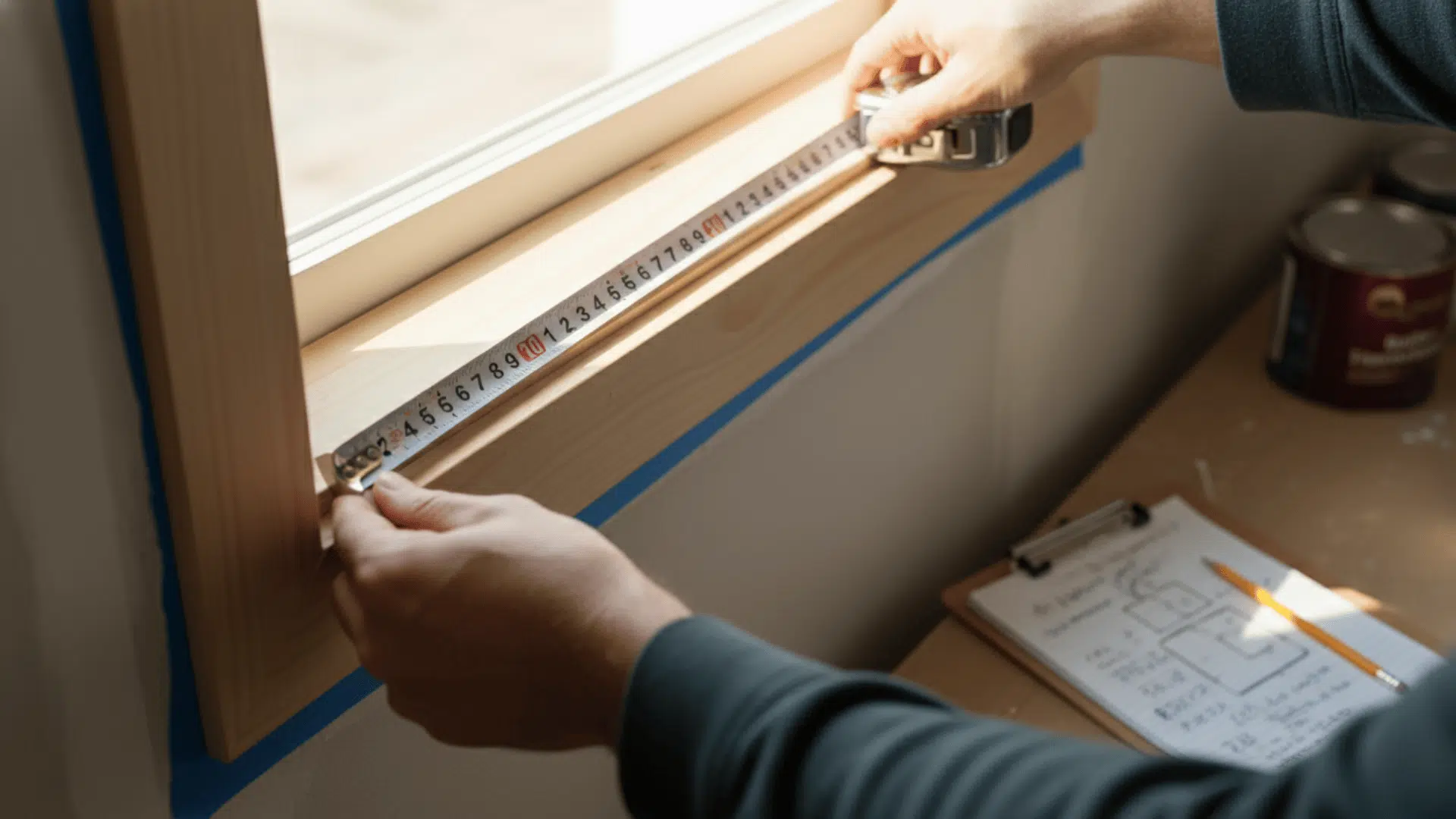
Getting accurate measurements is the most important step before ordering windows. Follow this simple process to measure your openings correctly and avoid costly mistakes.
1. Measure the Width
Start by measuring the width at three different points: the top, middle, and bottom of the window opening.
Record all three measurements and use the smallest one to ensure the window fits properly. Always round your final measurement to the nearest 1/8 inch for precision.
This approach accounts for any slight variations in the opening that could cause installation problems.
2. Measure the Height
Next, measure the height at three locations: the left, center, and right sides of the opening. Just like with the width, record all three measurements and choose the smallest one.
This method ensures your new window won’t be too large for any part of the frame. Using the smallest measurement prevents gaps or forcing the window into a tight space.
3. Check the Depth
Most standard windows need at least 3 1/4 inches of depth from the inside edge to the outside for proper installation. Measure from where the window frame will sit to the exterior wall surface.
If your depth is insufficient, you may need a different window style or frame type. Insufficient depth can affect insulation, weatherproofing, and overall window performance.
4. Identify Irregularities
Carefully inspect the window opening for any bowing, settling, or uneven framing that could affect installation. Look for warped wood, cracked framing, or walls that aren’t perfectly square.
These issues should be fixed before installing new windows to avoid air leaks and operational problems. Taking photos of any irregularities helps when consulting with installers or ordering custom solutions.
Cost Differences: Standard vs. Custom Windows
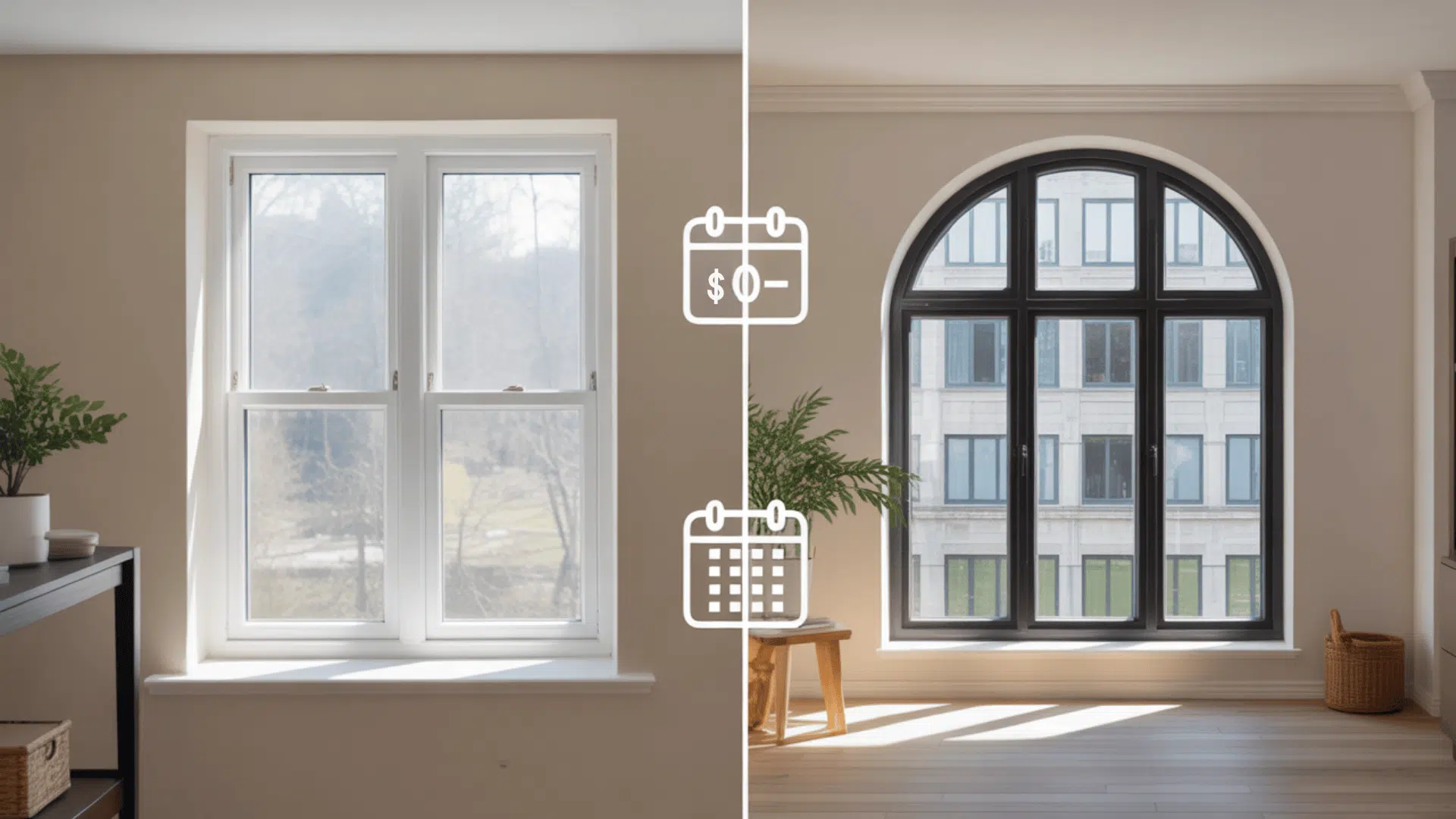
Price plays a big role in window decisions. Here’s how standard and custom windows compare in terms of your budget and timeline.
Standard Windows
- Manufactured in bulk: Production runs are large, spreading costs across many units and reducing the price per window.
- Lower material and labor costs: Standardized sizing reduces waste, simplifies processes, and requires fewer specialized workers.
- Faster production and shipping: Most standard sizes are kept in stock or can be produced quickly without special orders.
Custom Windows
- Made-to-order: Each window is built specifically for your measurements, requiring individual attention and precision.
- Higher manufacturing complexity: Custom sizes need special tooling, materials, and quality checks that standard windows don’t require.
- Longer wait times: Production can take several weeks or even months, depending on the manufacturer’s schedule.
- Higher installation costs due to framing adjustments: Installers may need to modify existing openings or build new frames, adding labor time and expense.
Finding the Perfect Window Sizes for Your Home
Choosing the right window size depends on your home’s layout, the amount of natural light you want, and whether the space requires ventilation or egress.
Start by evaluating each room’s purpose and carefully measuring your existing openings. Compare those measurements with standard sizes to see what’s readily available.
If your home has unusual openings or you want a specific look, consider whether custom windows are worth the extra cost.
When in doubt, talking to an installer or window specialist ensures you get the best combination of function, style, and cost.
Wrapping It Up
Understanding standard window sizes makes replacing or upgrading your windows much simpler and more affordable.
Standard dimensions save you money, reduce installation time, and offer reliable performance across different room types.
Most homes work perfectly with standard measurements, but knowing when to consider custom options gives you the flexibility to match your specific needs.
Take time to measure carefully, compare your options, and consult with professionals when needed. The right window size enhances comfort, style, and energy efficiency for years to come.
Ready to start your window project? Share your questions or experiences in the comments below. We’d love to hear what worked for you!