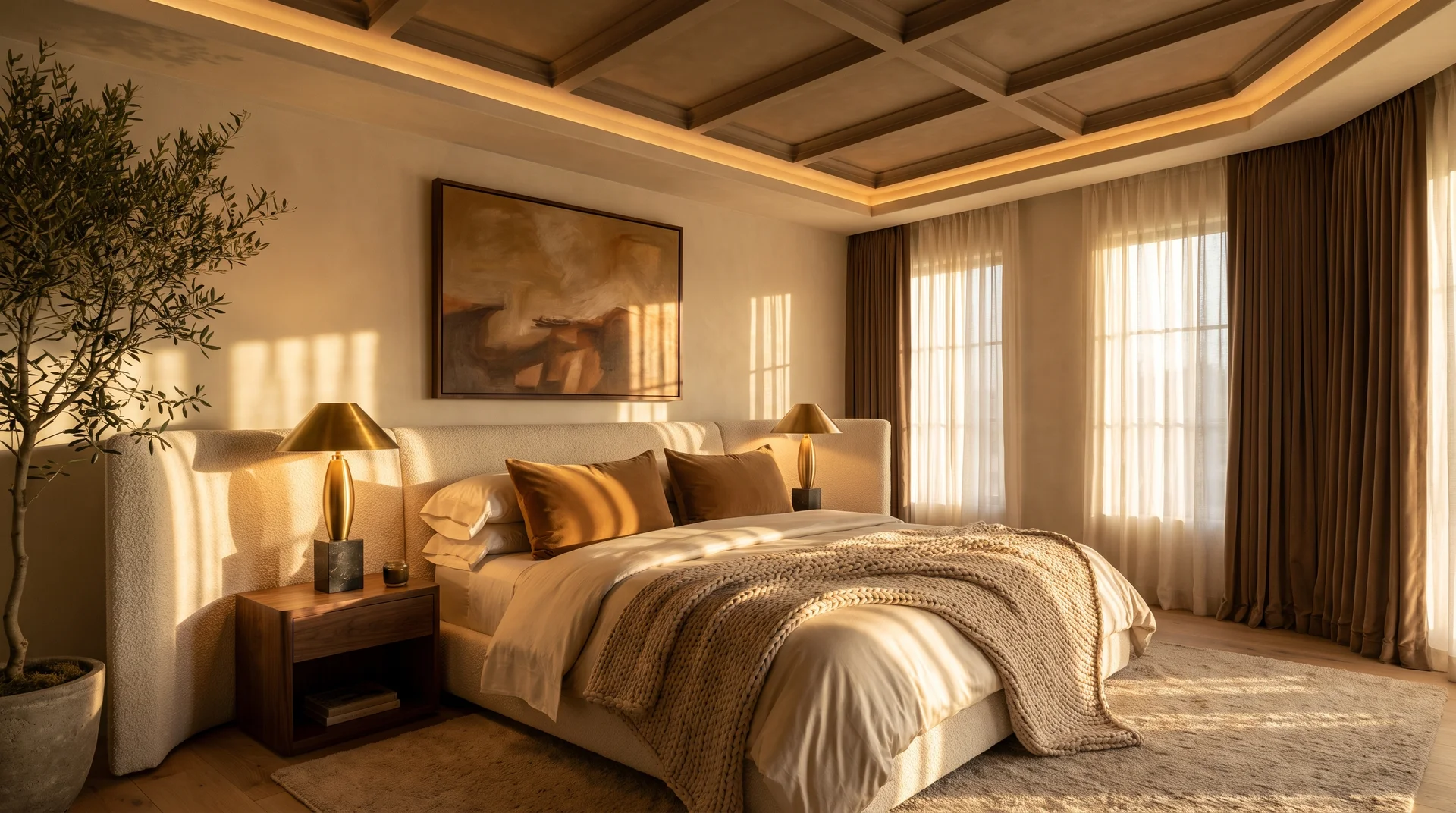
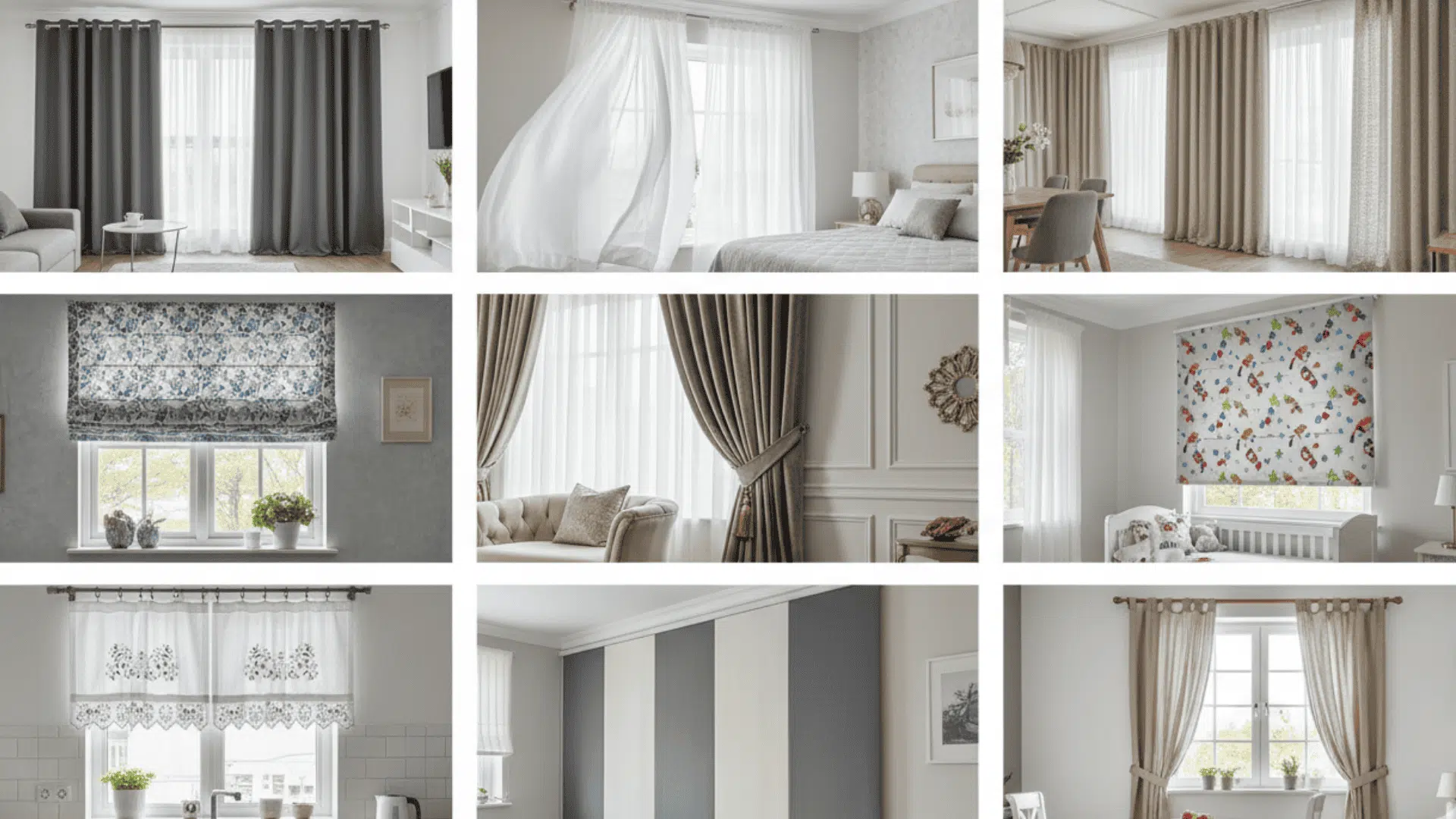
Curtains do more than cover windows. They control light, add privacy, and completely change how a room feels.
But with so many types available, choosing the right one can feel overwhelming. Should you go with sleek grommet panels or soft, gathered sheers?
What about blackout curtains for better sleep or café curtains for your kitchen? Each type serves a different purpose and brings its own style to your space.
In this guide, I’ll walk you through popular curtain types, explain how to match them to your décor, and help you pick the perfect fit for every room in your home.
Types of Curtains
Now that you understand what makes each curtain unique, let’s look at the specific options available. Below are 22 practical and stylish curtain types that work in any home.
1. Rod Pocket Curtains
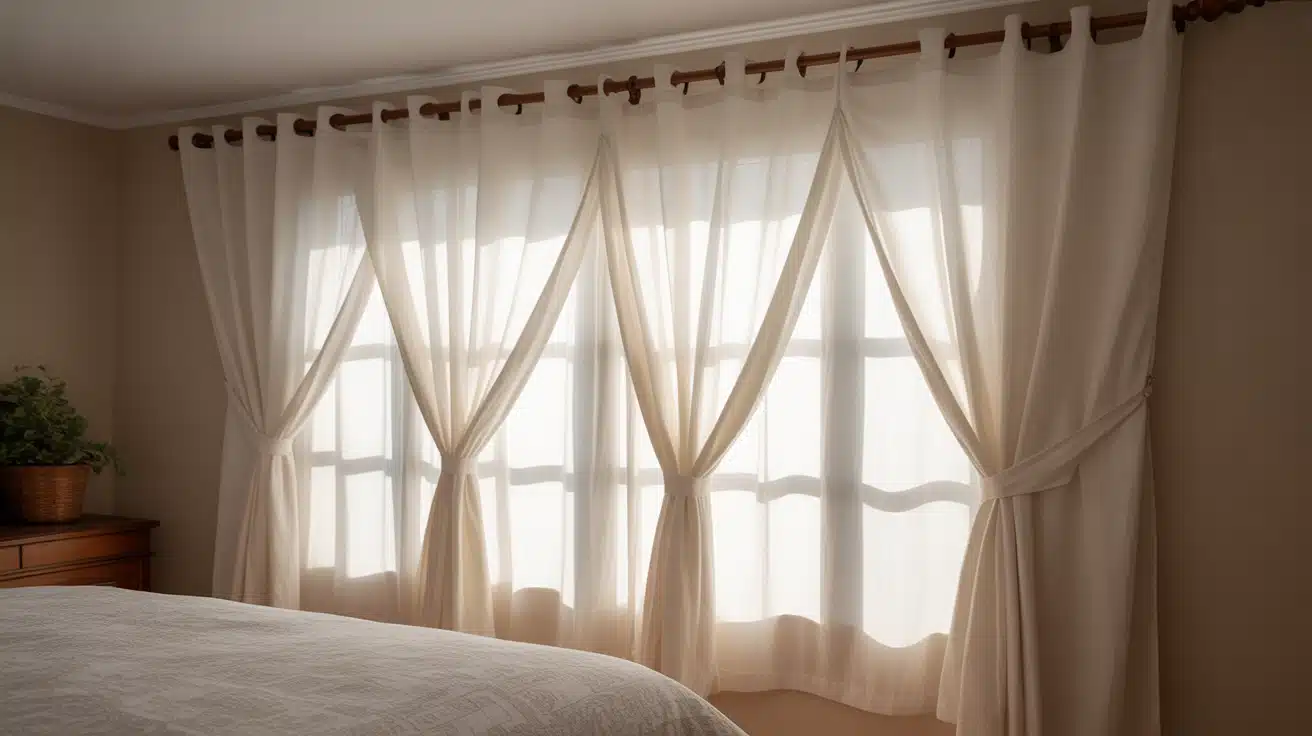
A classic style where the rod slips through a sewn pocket at the top. These hang naturally and work great for lightweight fabrics. They create soft gathers that add warmth to any room without breaking the budget.
Best Use: Bedrooms, living rooms, casual spaces
Features:
- Soft, gathered look
- Budget-friendly
- Easy to install
Pros & Cons:
| Pros | Cons |
|---|---|
| Affordable | Not ideal for heavy fabrics |
| Creates a cozy look | Harder to slide open |
| Works with sheers | Limited design structure |
2. Tab-Top Curtains
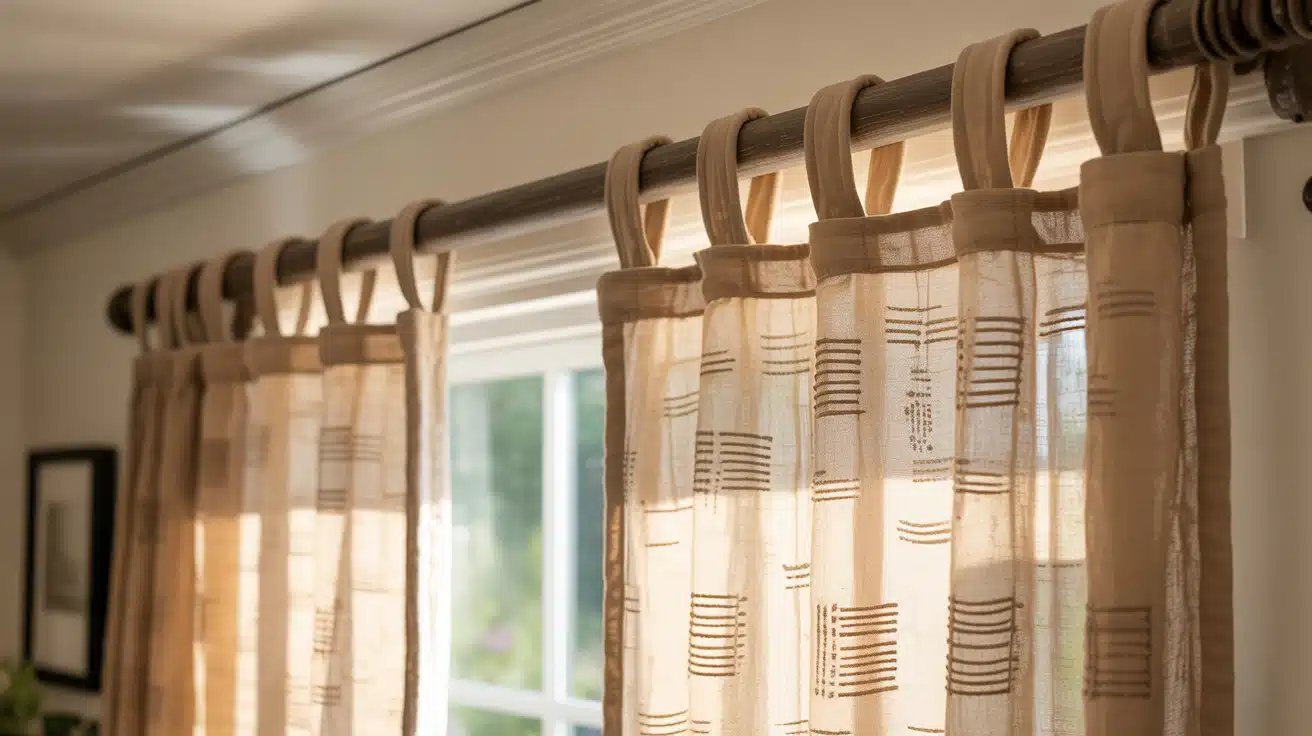
These have fabric loops that hang directly from the rod, creating a laid-back, airy look. Perfect for homes with a relaxed vibe, they add character without feeling too formal or stiff.
Best Use: Farmhouse, boho, relaxed rooms
Features:
- Easy to hang
- Decorative tabs
- Great for casual décor
Pros & Cons:
| Pros | Cons |
|---|---|
| Easy to open | Not very formal |
| Works well with patterns | Tabs can wear over time |
| Light and breezy | Less light control |
3. Grommet Curtains
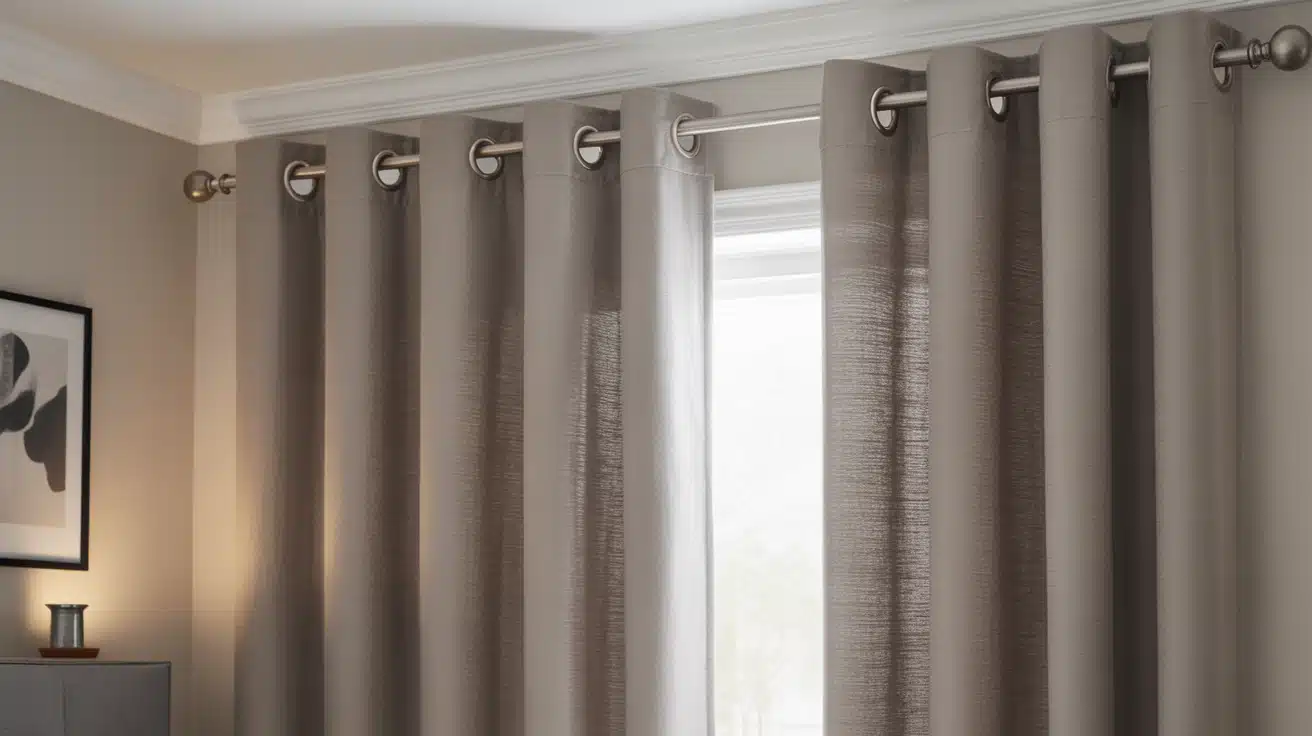
Large metal rings allow the curtain to slide smoothly, creating a modern, structured drape. They’re popular in contemporary homes because they look clean and glide effortlessly across the rod.
Best Use: Living rooms, bedrooms, modern homes
Features:
- Sleek metal rings
- Smooth glide
- Works with medium-to-heavy fabrics
Pros & Cons:
| Pros | Cons |
|---|---|
| Modern look | Rings can make noise |
| Easy to open | Not ideal for traditional style |
| Good light control | Needs a sturdy rod |
4. Pinch-Pleat Curtains
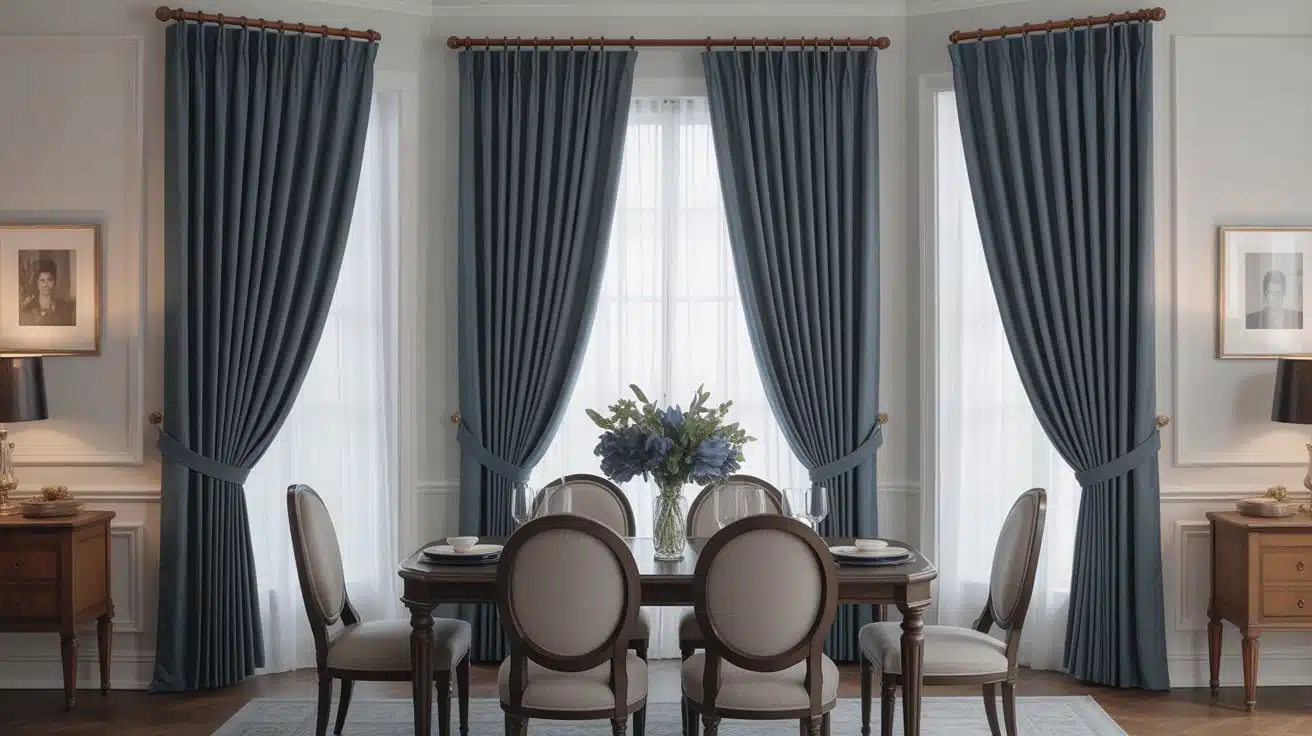
Neatly stitched pleats at the top create a formal, polished profile. These curtains bring a sense of luxury and work best with thicker fabrics that hold their shape beautifully.
Best Use: Formal dining rooms, classic interiors
Features:
- Structured pleats
- Luxurious feel
- Works best with thicker fabrics
Pros & Cons:
| Pros | Cons |
|---|---|
| High-end design | More expensive |
| Great fullness | Requires precise measuring |
| Durable finish | Harder to wash |
5. Box-Pleat Curtains
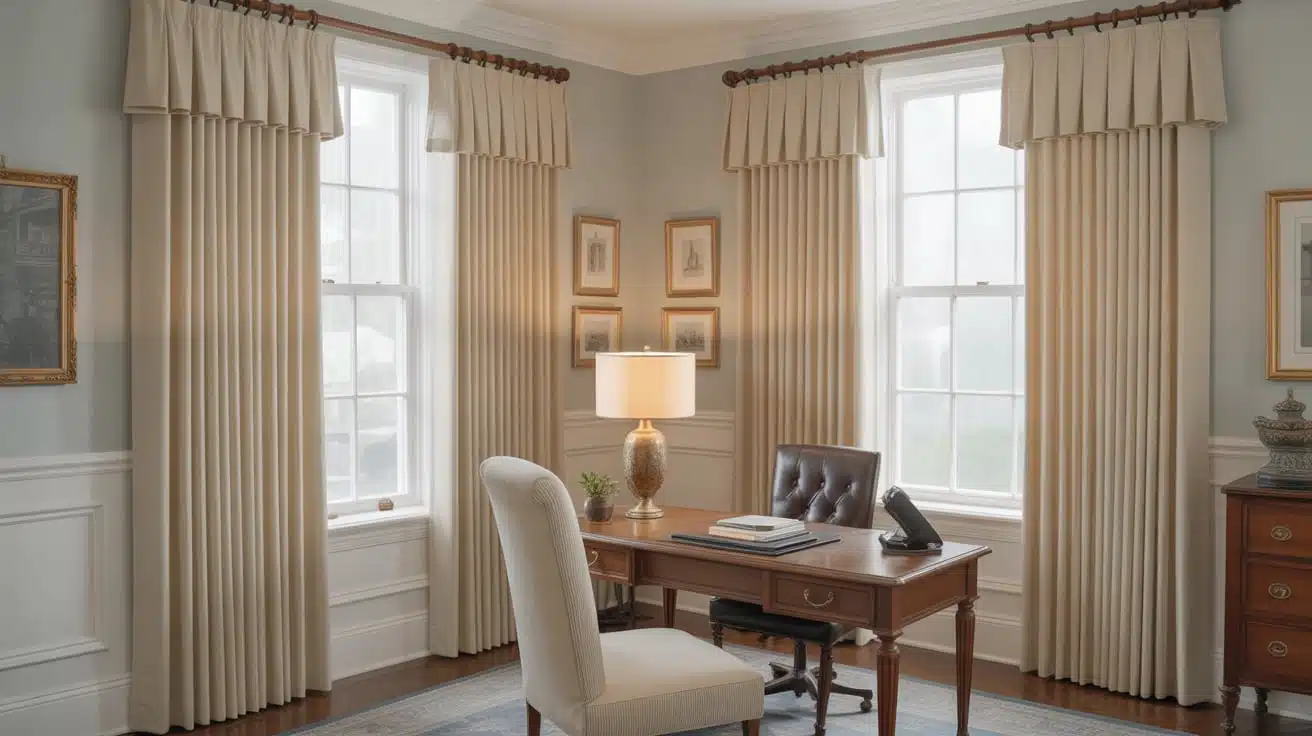
Flat, boxy pleats give a crisp, uniform appearance. They look sharp and professional, making them a smart choice for offices or formal living areas where you want clean lines.
Best Use: Traditional homes, offices
Features:
- Clean structure
- Even curtain folds
- Works well for formal rooms
Pros & Cons:
| Pros | Cons |
|---|---|
| Very polished look | Not ideal for casual décor |
| Stable pleats | Needs professional tailoring |
| Full coverage | Can look heavy |
6. Pencil-Pleat Curtains
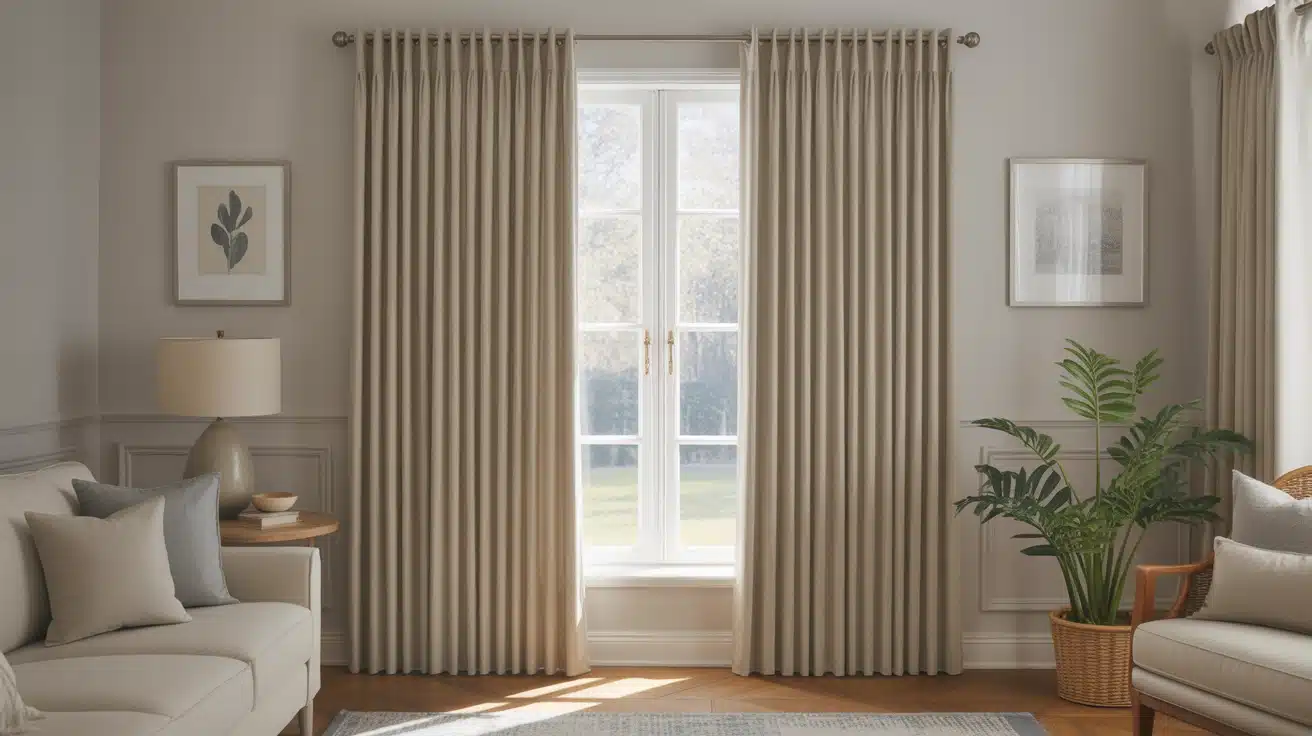
Tight, narrow pleats create a soft, gathered look that suits many decorating styles. They’re flexible and forgiving, which makes them a go-to choice for renters or people who like to switch things up.
Best Use: Living rooms, bedrooms
Features:
- Flexible style
- Fits many rod types
- Works with light and medium fabrics
Pros & Cons:
| Pros | Cons |
|---|---|
| Versatile | Less structured |
| Budget-friendly | Pleats can flatten over time |
| Easy to layer | Not ultra-modern |
7. Goblet-Pleat Curtains
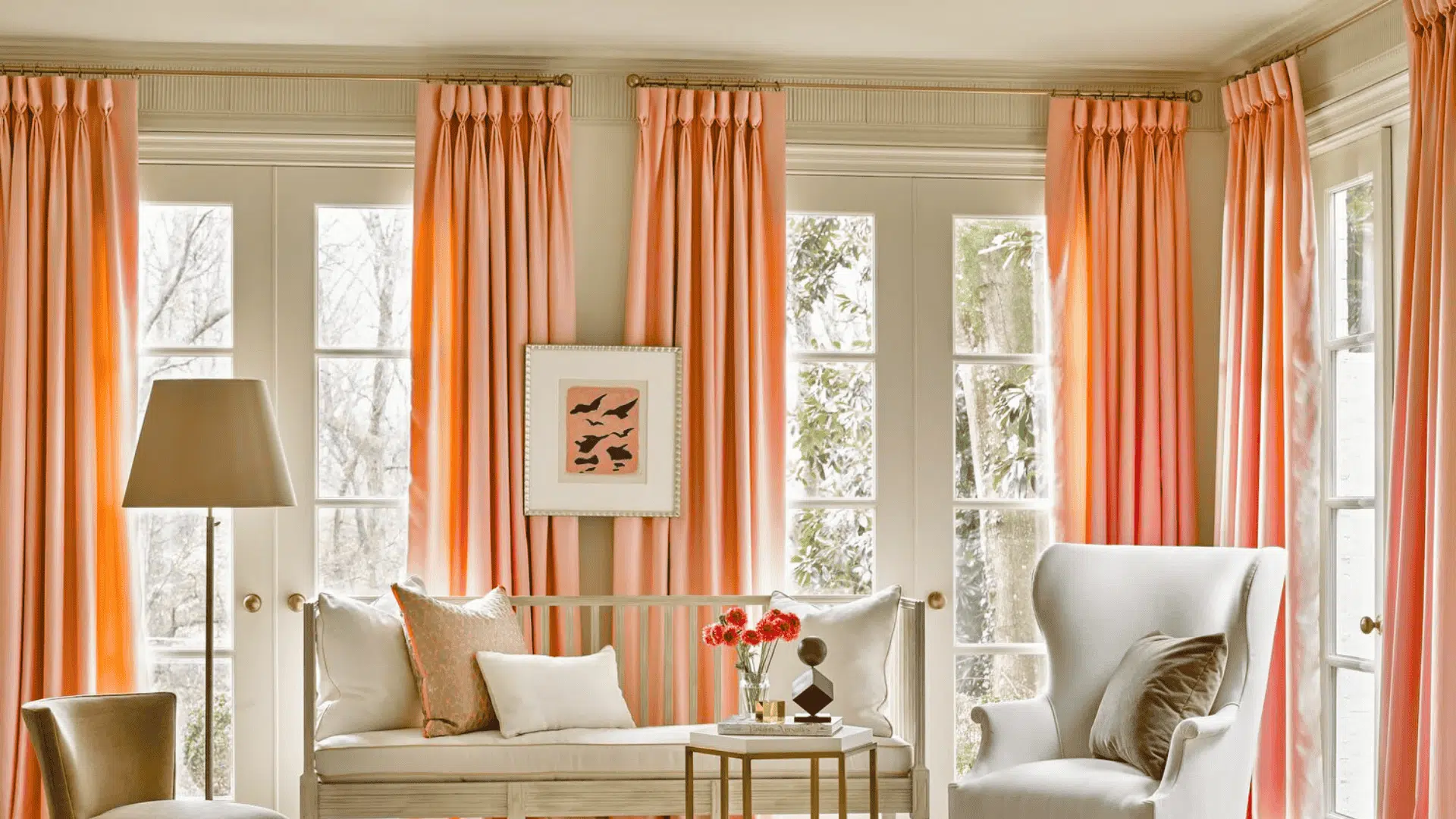
Shaped like goblets at the top, these are luxurious and statement-making. They demand attention and work best in formal spaces where you want to impress guests with bold, rich window treatments.
Best Use: Formal living spaces
Features:
- Decorative silhouette
- Requires thick fabric
- Very full drape
Pros & Cons:
| Pros | Cons |
|---|---|
| Dramatic look | Expensive |
| High impact | Hard to maintain |
| Adds height | Not suited for casual rooms |
8. Sheer Curtains
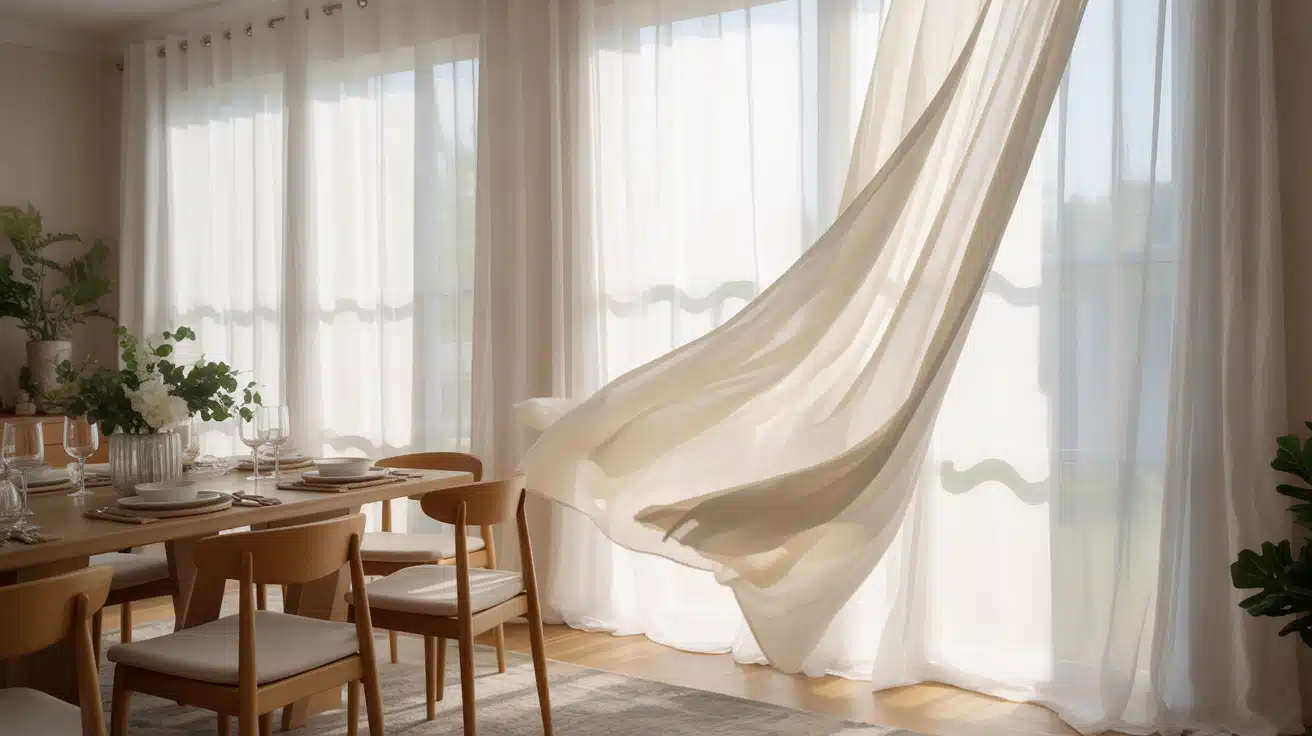
Light and airy, they soften sunlight while keeping spaces bright. Sheers are perfect for layering or for rooms where you want a gentle glow without harsh glare or total darkness.
Best Use: Living rooms, dining rooms
Features:
- Semi-transparent
- Great for layering
- Softens natural light
Pros & Cons:
| Pros | Cons |
|---|---|
| Creates a refined feel | Low privacy |
| Affordable | Not great for bedrooms |
| Adds softness | Doesn’t block sunlight |
9. Blackout Curtains
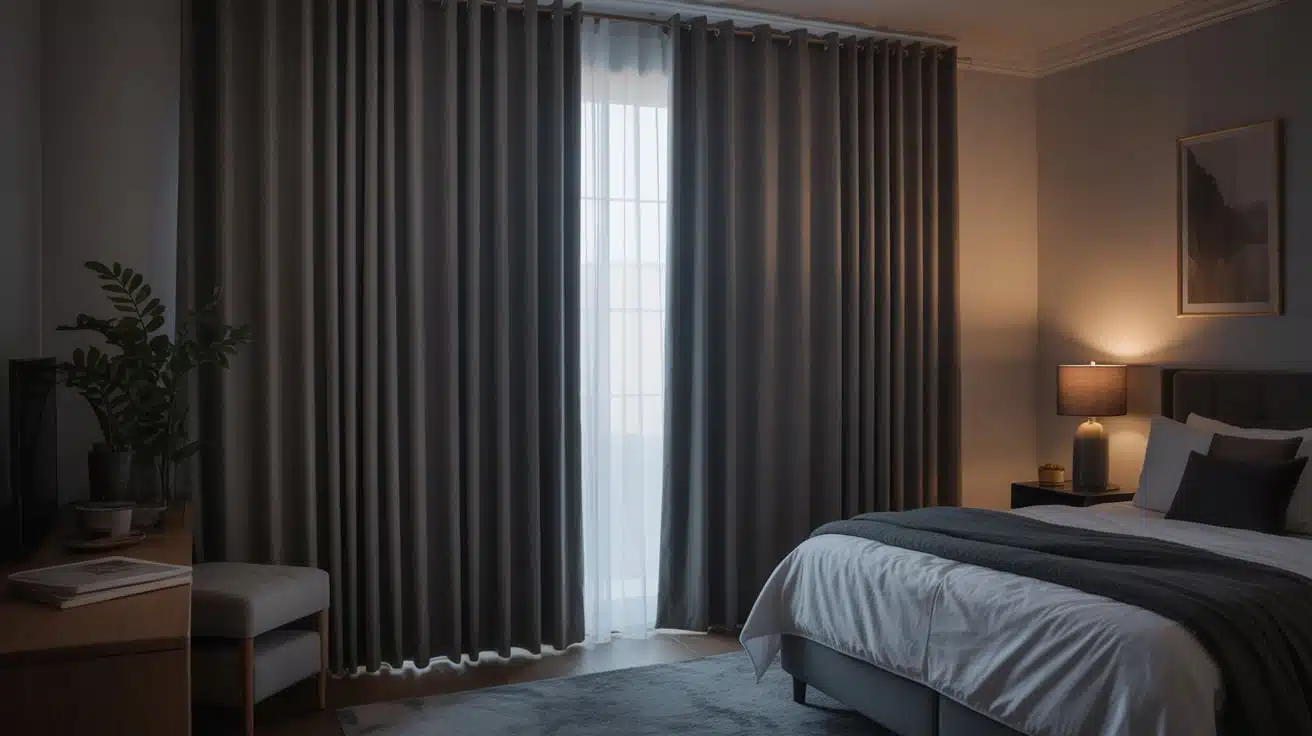
Thick layers help block light entirely for maximum privacy and darkness. They’re a must-have for bedrooms, nurseries, or media rooms where you need complete control over light and outside noise.
Best Use: Bedrooms, nurseries
Features:
- 90–100% light blocking
- Noise reduction
- Thermal insulation
Pros & Cons:
| Pros | Cons |
|---|---|
| Great for sleep | Bulkier |
| Energy-efficient | Limited color options |
| Increases privacy | Can feel heavy |
10. Thermal Curtains
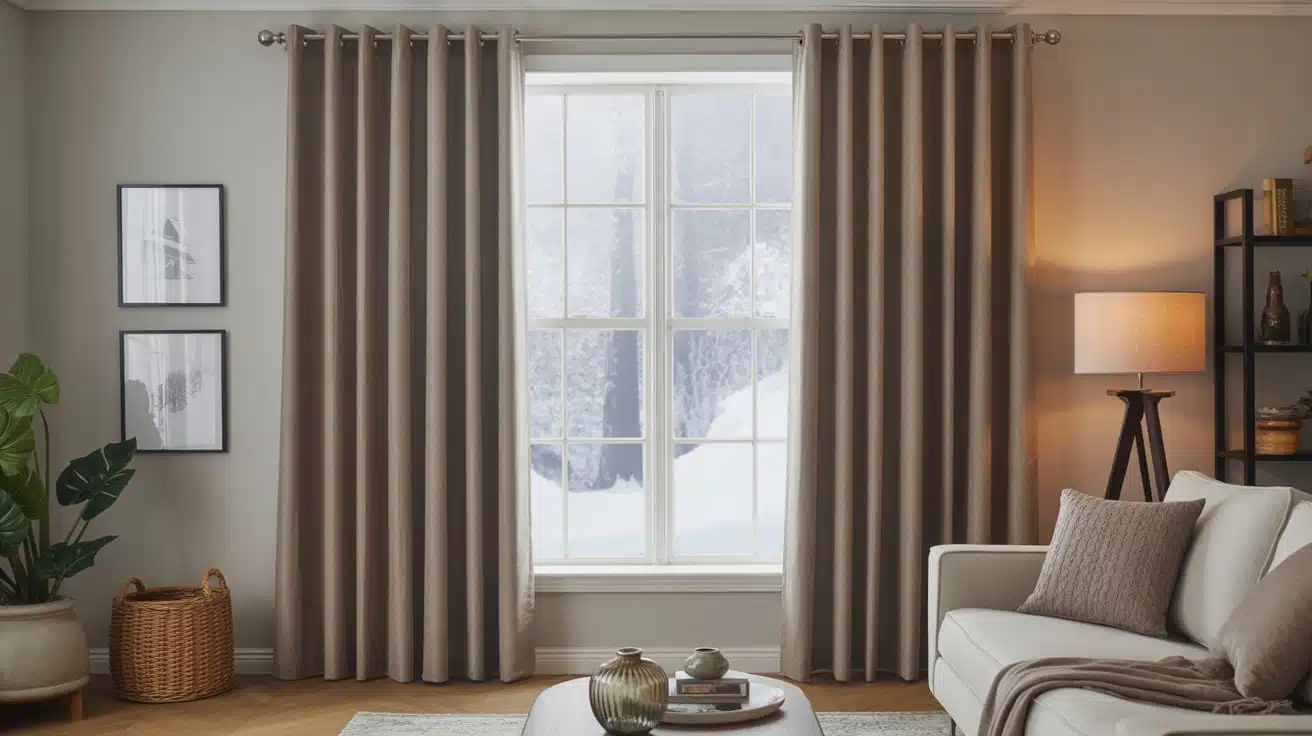
Designed to improve insulation and temperature control. These curtains trap heat in winter and block it in summer, helping you save on energy bills while keeping your home comfortable year-round.
Best Use: Drafty rooms, large windows
Features:
- Multiple layers
- Heat-retaining fabric
- Energy-efficient
Pros & Cons:
| Pros | Cons |
|---|---|
| Reduces energy bills | Heavier fabric |
| Great for winter | Limited styles |
| Blocks drafts | May darken rooms |
11. Café Curtains
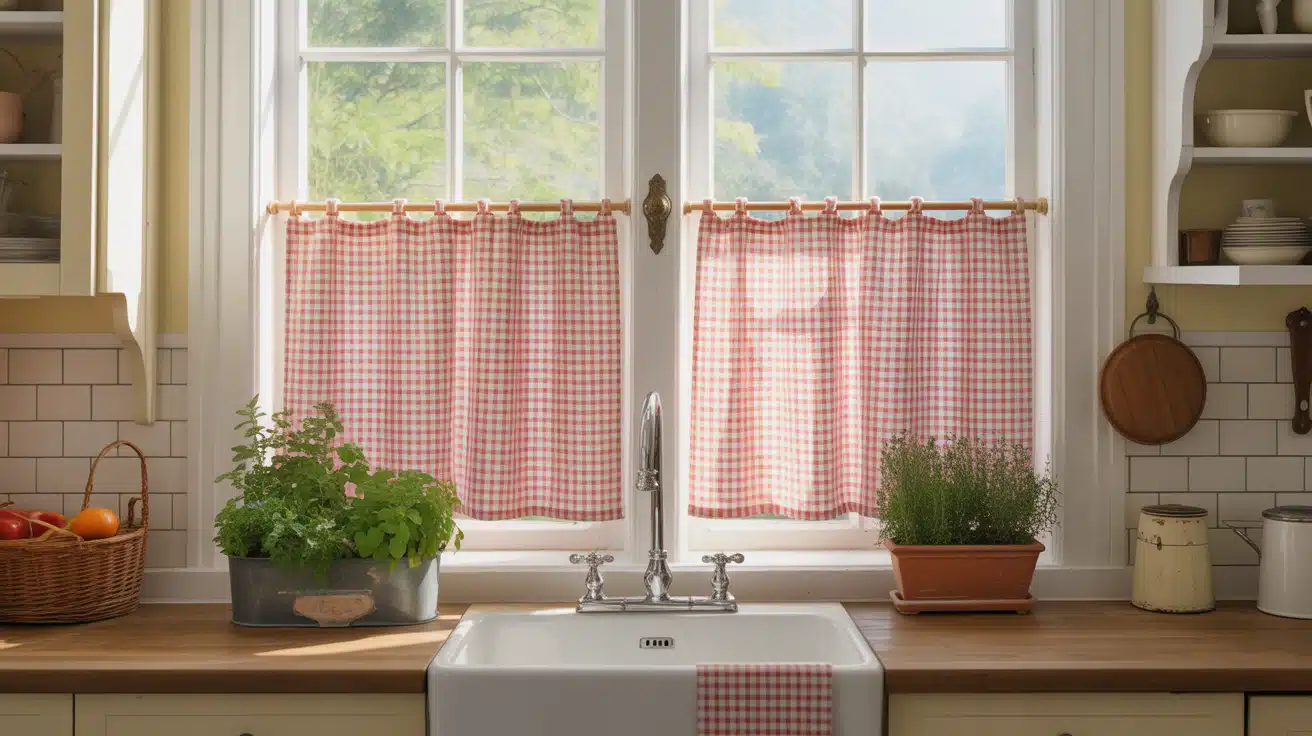
Short curtains that cover only half the window for privacy without blocking daylight. They’re charming and practical, especially in kitchens or breakfast nooks where you want light but also a bit of coverage.
Best Use: Kitchens, breakfast nooks
Features:
- Half-window design
- Light and charming
- Usually paired with valances
Pros & Cons:
| Pros | Cons |
|---|---|
| Let’s in light | Minimal privacy at night |
| Cute look | Not for large windows |
| Easy to clean | Limited light control |
12. Tier Curtains
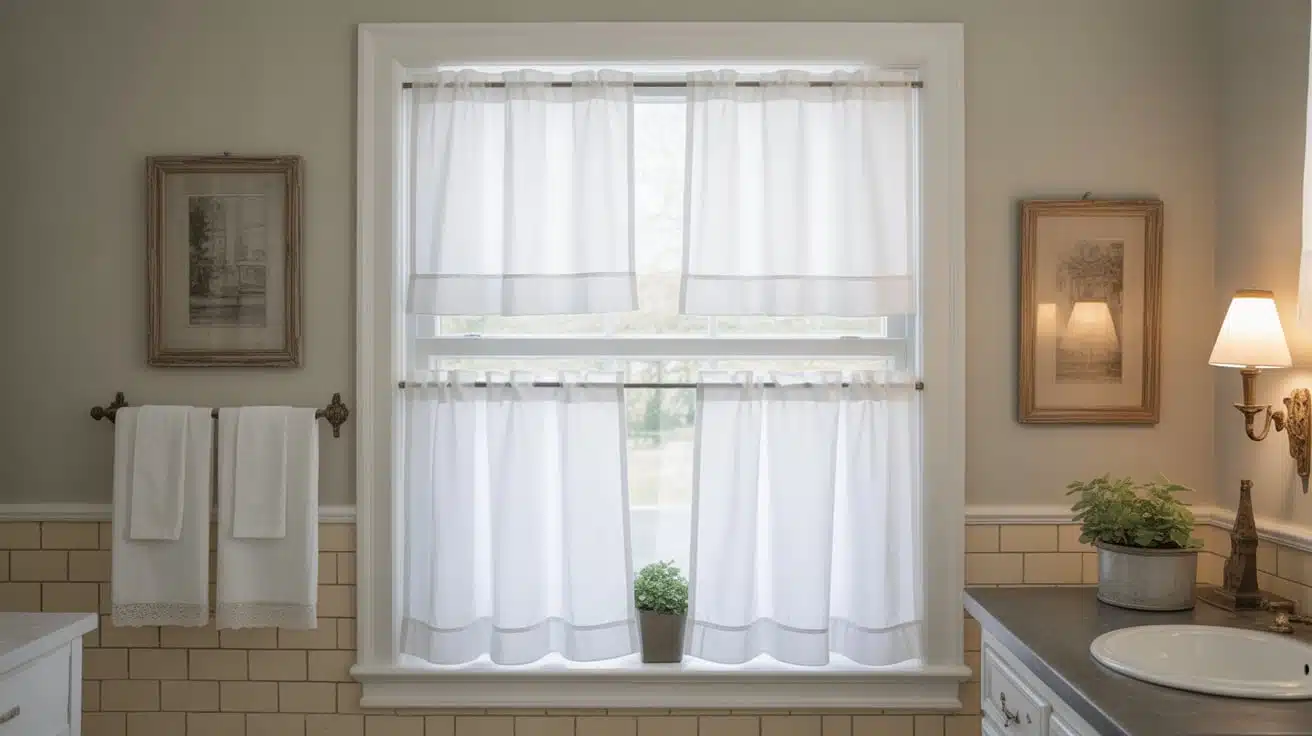
Two short panels stacked on a window for partial coverage. They give you flexibility to control light and privacy at different levels, making them perfect for small or oddly shaped windows.
Best Use: Bathrooms, kitchens
Features:
- Split-level coverage
- Decorative options
- Simple installation
Pros & Cons:
| Pros | Cons |
|---|---|
| Great privacy control | Not suited for big rooms |
| Easy to maintain | Limited fabric choices |
| Adds charm | Less bold design |
13. Valance Curtains
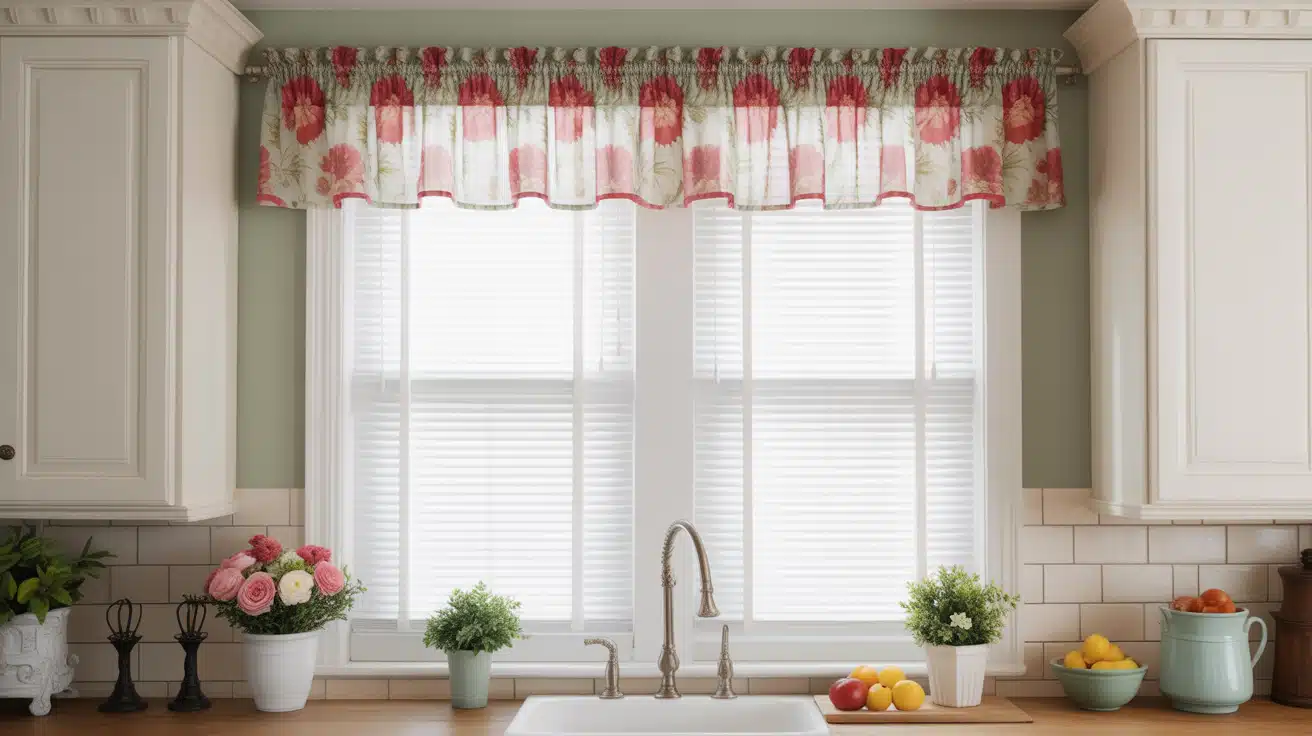
Short decorative toppers that finish a window with style. They add a pop of color or pattern and work beautifully when paired with blinds or shades for a layered, complete look.
Best Use: Kitchens, traditional rooms
Features:
- Decorative top layer
- Works well with blinds
- Adds color and pattern
Pros & Cons:
| Pros | Cons |
|---|---|
| Budget-friendly | Offers no privacy |
| Adds polish | Requires extra cleaning |
| Complements layers | It can look dated if styled poorly |
14. Swag Curtains
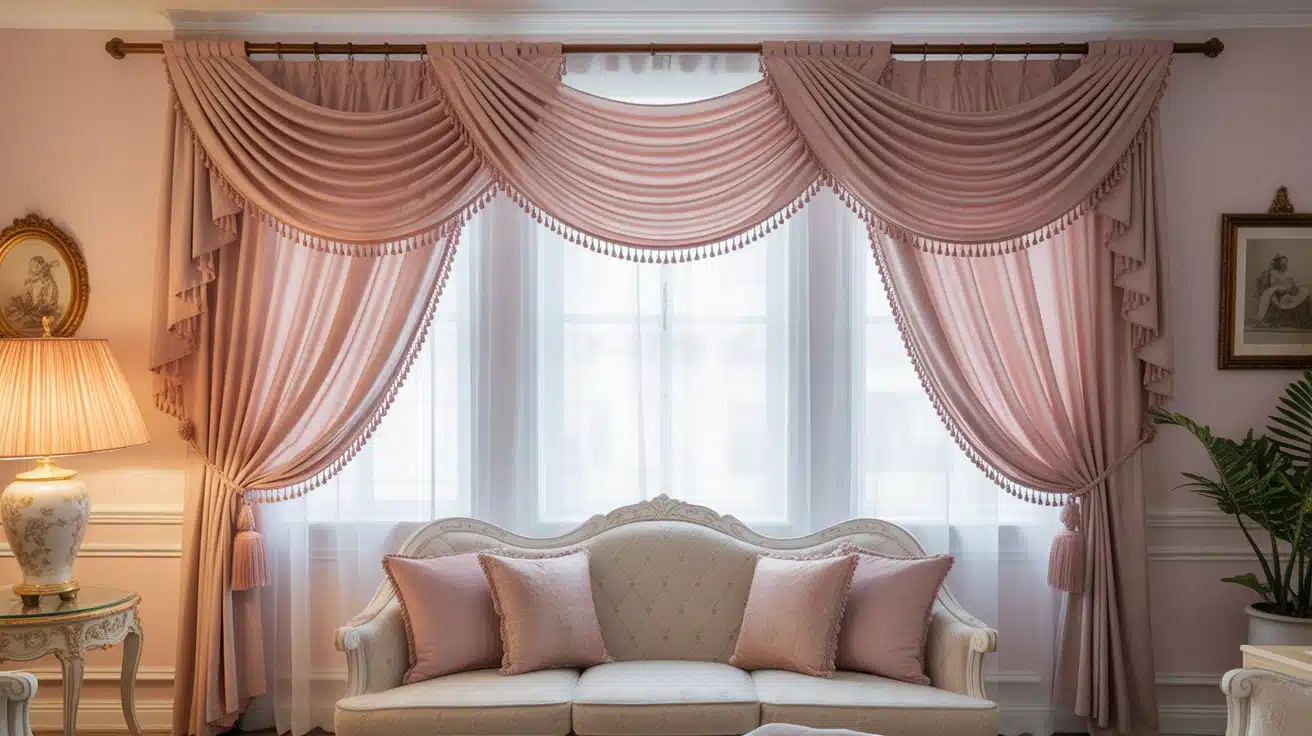
Fabric draped gracefully across a rod for a romantic, classic look. They’re purely decorative and work best in spaces where you want to add visual interest without worrying about function.
Best Use: Traditional, vintage spaces
Features:
- Soft draping
- Decorative
- Versatile layering
Pros & Cons:
| Pros | Cons |
|---|---|
| Graceful style | Not practical for daily use |
| Customizable | May require professional installation |
| Great for décor | Limited light control |
15. Scarf Curtains
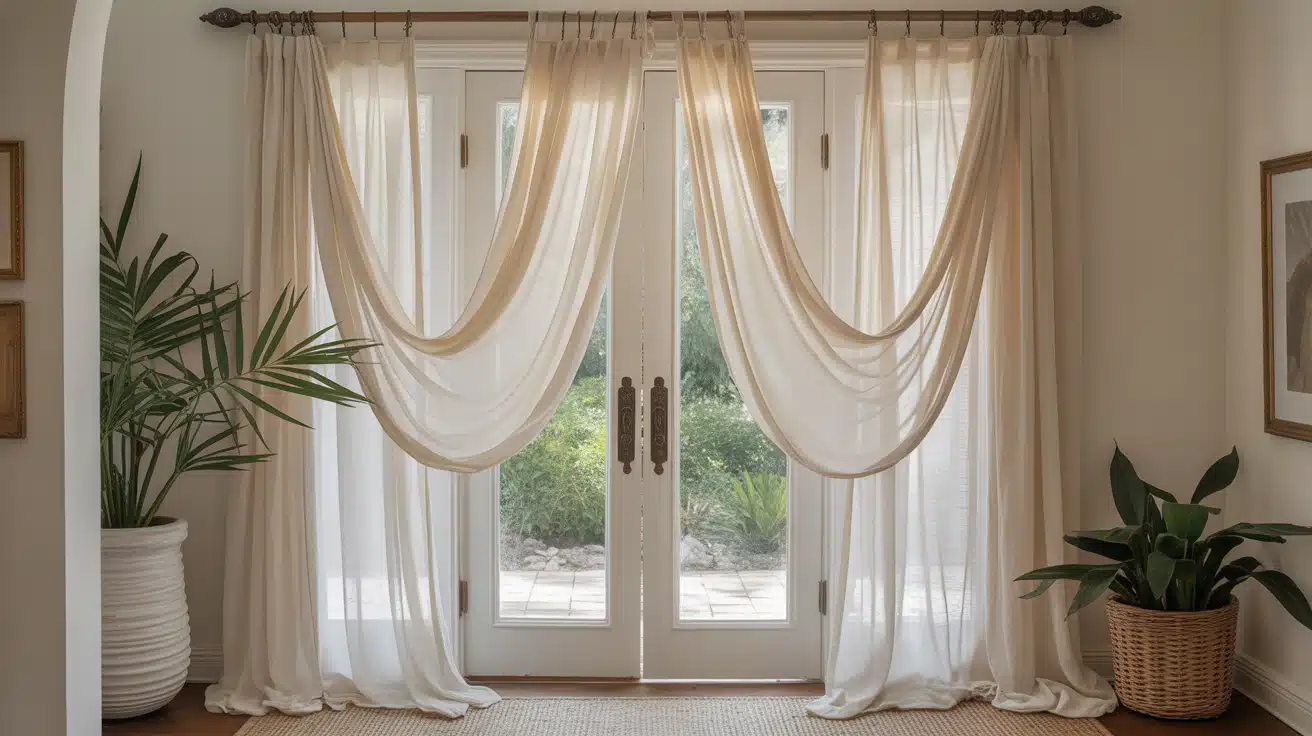
Long fabric is used to create flowing, dramatic drapes. You can loop, swag, or tie them in countless ways, giving you total creative freedom to design a look that feels personal and unique.
Best Use: Entryways, decorative windows
Features:
- Free-flowing
- Highly customizable
- Works with many rods
Pros & Cons:
| Pros | Cons |
|---|---|
| Bold style | Not easy to clean |
| Flexible design | Not for privacy |
| Softens space | Offers little insulation |
16. Ripple-Fold Curtains
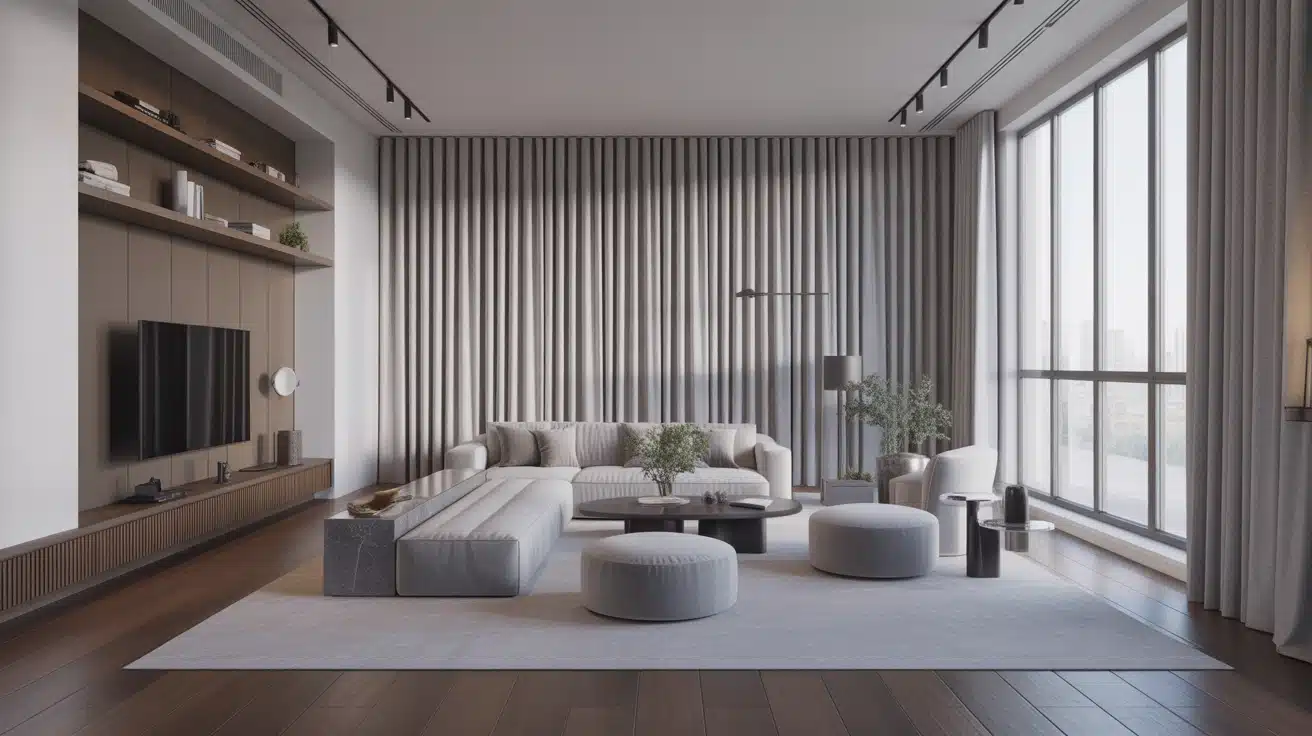
Track-based curtains that form smooth, even waves. They have a sleek, modern look that’s become popular in minimalist homes and high-end apartments where clean lines matter most.
Best Use: Modern homes, large windows
Features:
- Clean waves
- Minimalist appeal
- Smooth gliding
Pros & Cons:
| Pros | Cons |
|---|---|
| Designer look | Requires a special track |
| Clean finish | Costlier |
| Space-saving | Needs precise measurement |
17. Wave Curtains
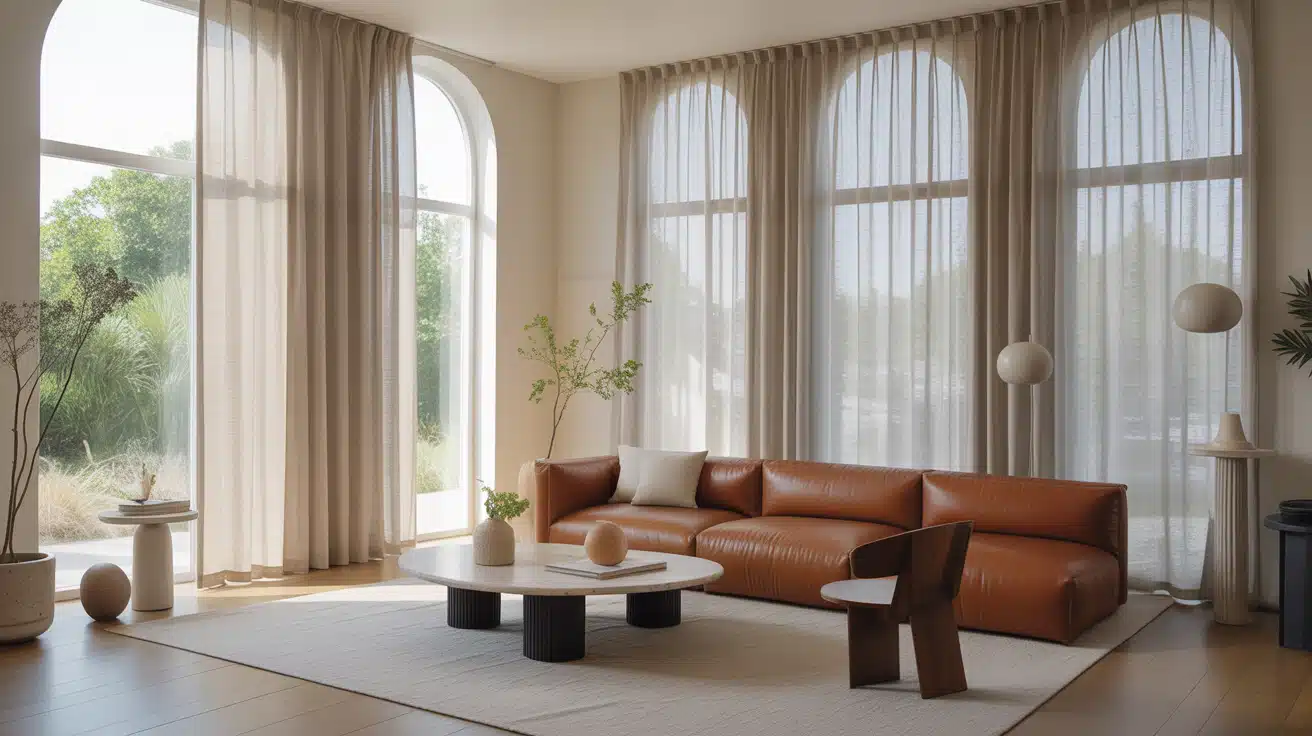
Similar to ripple-fold but with deeper, softer waves. They move beautifully and add a sense of fluidity to contemporary interiors without feeling too stiff or corporate.
Best Use: Contemporary interiors
Features:
- Fluid movement
- Lightweight appearance
- Works with sheer or lined fabrics
Pros & Cons:
| Pros | Cons |
|---|---|
| Sleek and modern | Track system required |
| Great for tall windows | Less light control |
| Easy to style | Limited fullness options |
18. Motorized Curtains
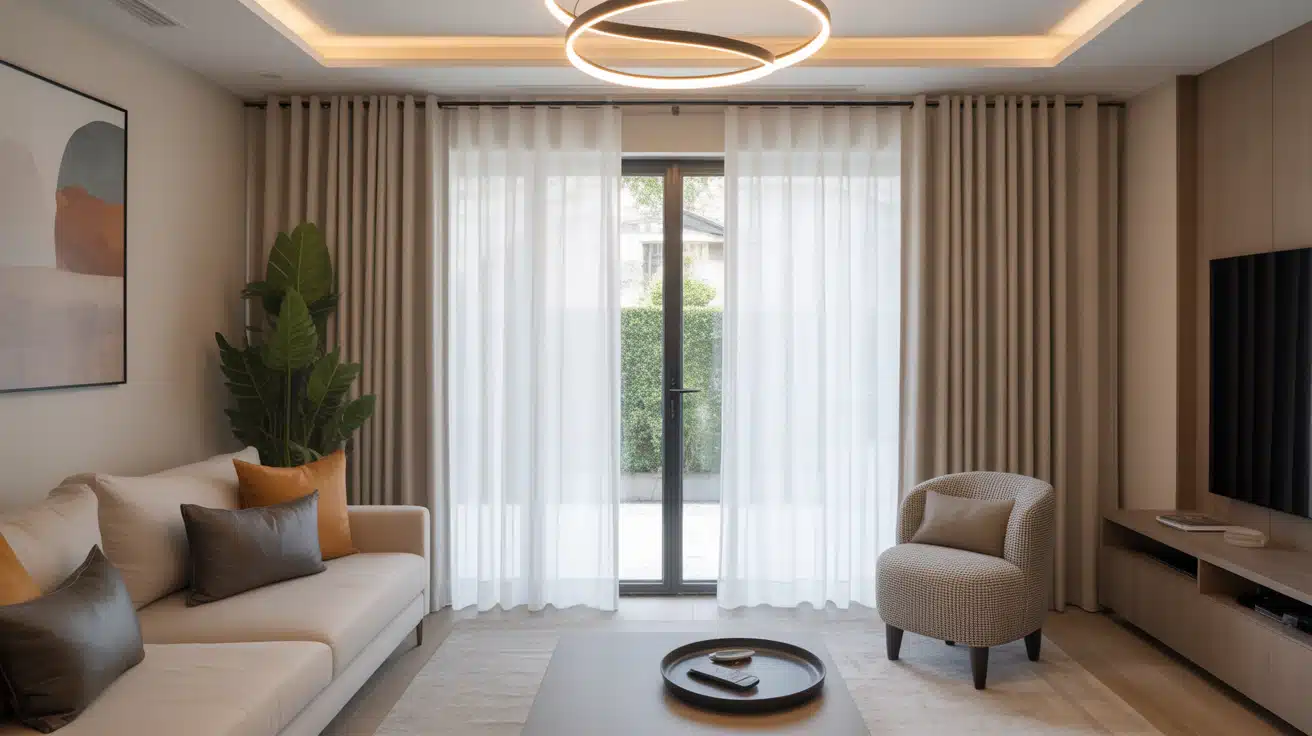
Open and close via remote or smart home integration. Perfect for tech-savvy homes or hard-to-reach windows, they add convenience and can even be programmed to open and close on a schedule.
Best Use: Smart homes, large or hard-to-reach windows
Features:
- Automated
- Quiet operation
- Works with apps/voice commands
Pros & Cons:
| Pros | Cons |
|---|---|
| Convenience | Higher cost |
| Great for accessibility | Needs a power source |
| Perfect for big windows | Repairs can be expensive |
19. Layered Curtains
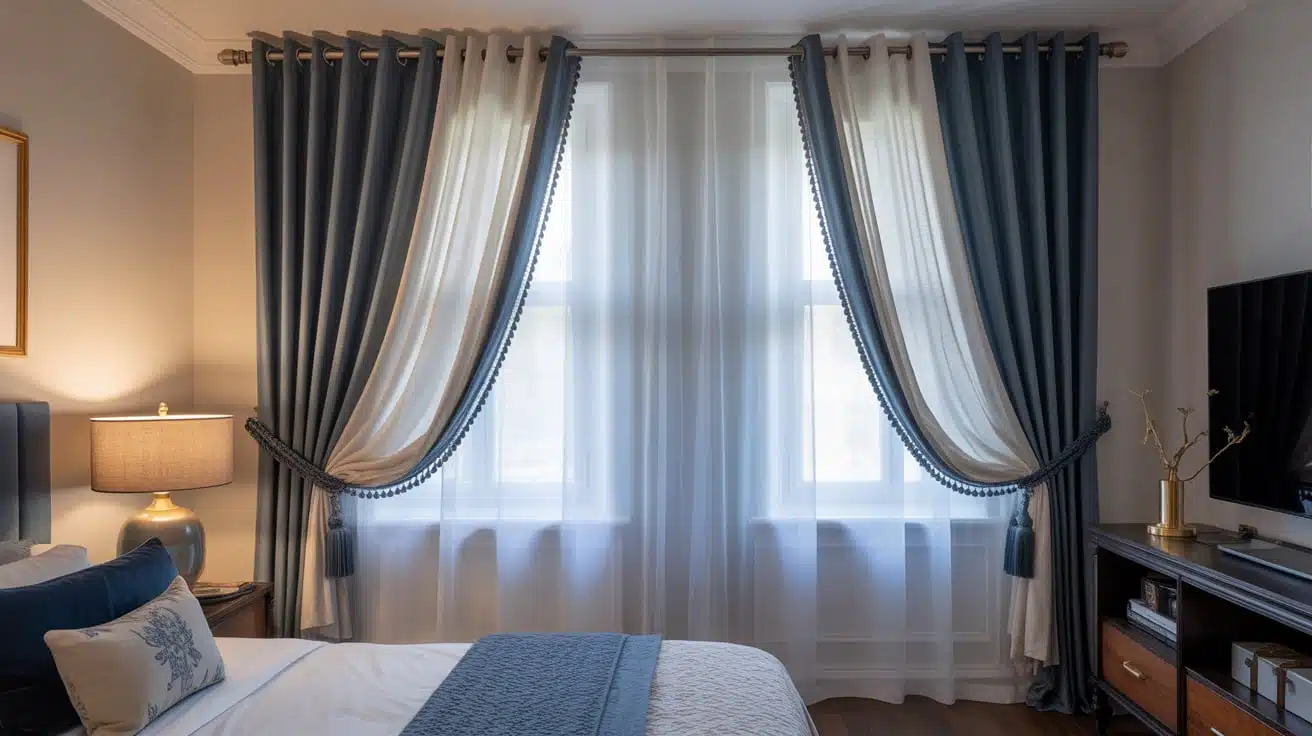
Combines two or more curtain types for depth and versatility. You can pair sheers with blackout panels or mix textures for a custom look that handles both light and privacy beautifully.
Best Use: Bedrooms, living rooms
Features:
- Flexible styling
- Custom combinations
- Great insulation with blackout layers
Pros & Cons:
| Pros | Cons |
|---|---|
| Looks luxurious | More expensive |
| Great control | More hardware needed |
| Adds dimension | Can appear bulky |
20. Lace Curtains
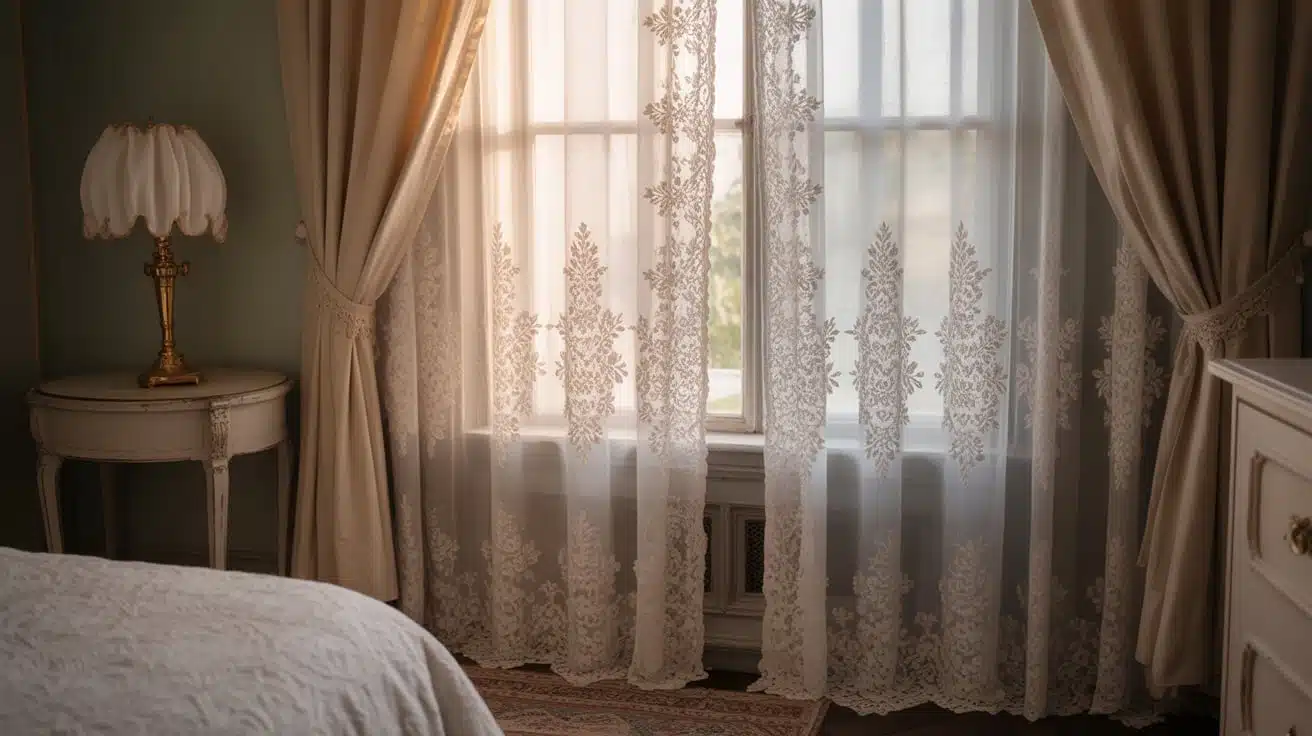
Light, textured, and beautifully decorative. They bring a vintage or romantic feel to any space and work well in rooms that call for a soft, dreamy atmosphere with a hint of nostalgia.
Best Use: Vintage, romantic, or rustic interiors
Features:
- Intricate patterns
- Lightweight
- Great for soft lighting
Pros & Cons:
| Pros | Cons |
|---|---|
| Pretty and charming | Limited privacy |
| Affordable | Not durable |
| Easy to style | UV exposure can fade fabric |
21. Thermal Blackout Combo Curtains
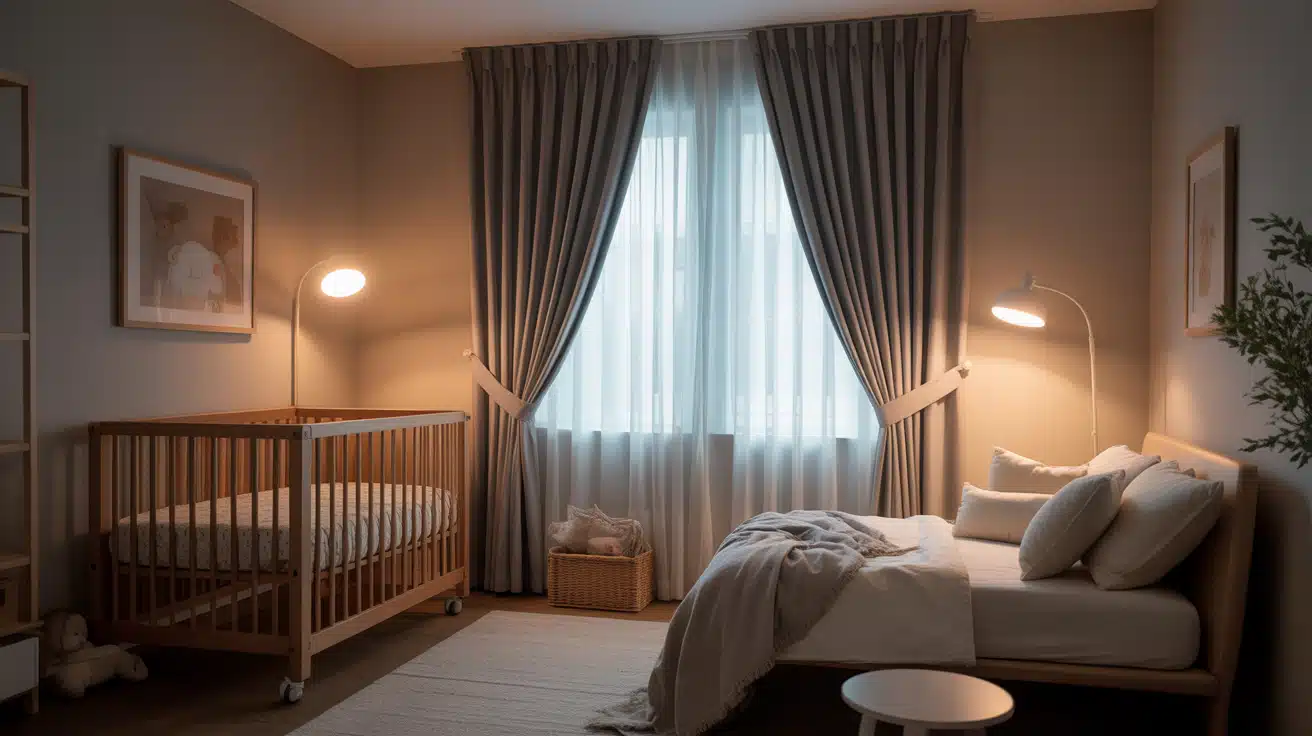
Hybrid curtains for maximum darkness and insulation. They combine the light-blocking power of blackout curtains with thermal layers, making them ideal for shift workers, nurseries, or anyone who values deep sleep.
Best Use: Nurseries, media rooms
Features:
- High thermal rating
- Multi-layered
- Best for noise control
Pros & Cons:
| Pros | Cons |
|---|---|
| Superior darkness | Heavy |
| Saves energy | Limited prints |
| Ideal for shift workers/sleep | Expensive |
22. Outdoor Curtains
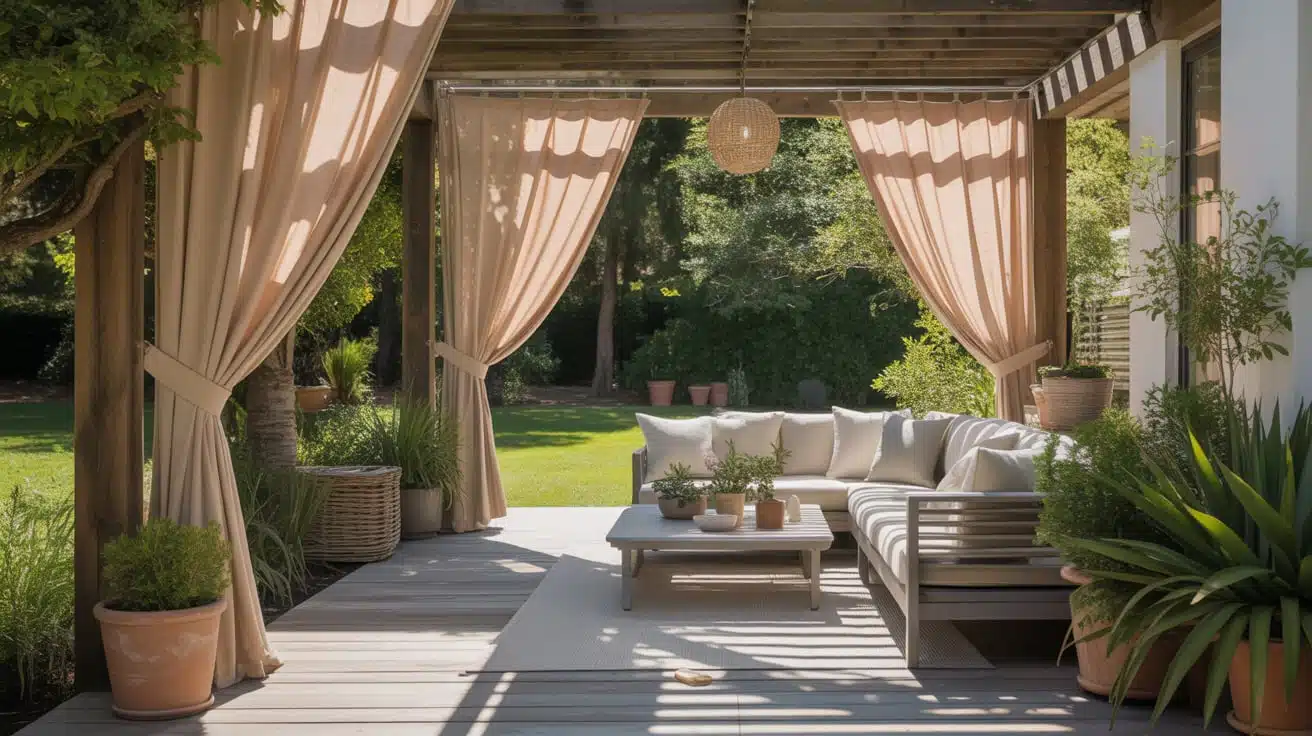
Weather-resistant curtains made for patios and porches. They stand up to sun, wind, and moisture, helping you create a comfortable outdoor living area that feels more private and protected from the elements.
Best Use: Pergolas, decks, gazebos
Features:
- UV-resistant
- Mold/mildew resistant
- Heavy-duty fabric
Pros & Cons:
| Pros | Cons |
|---|---|
| Adds privacy outdoors | Needs regular cleaning |
| Blocks harsh sun | Can fade with time |
| Durable | Heavier hardware required |
Different Curtain Styles to Enhance Home Décor
Once you’ve picked the type of curtain, how you style it changes the whole vibe of the room. Here are popular décor-boosting curtain styles:
- Minimalist style: Clean lines, soft neutral colors, ripple-fold or wave curtains that keep things simple and uncluttered.
- Classic style: Pleated curtains in rich fabrics like velvet or brocade that bring timeless sophistication to formal spaces.
- Boho style: Tab-top curtains, lace, macramé, and earthy tones that create a relaxed, free-spirited atmosphere.
- Modern style: Grommet curtains, geometric prints, and layered sheers that feel fresh and current without being too trendy.
- Luxurious style: Goblet pleats, layered drapes, and silk-like fabrics that make a room feel opulent and high-end.
- Coastal style: Light sheers, airy fabrics, and natural textures that bring in a breezy, beachy feel year-round.
These styles help tie your curtains into the rest of your décor in a way that feels intentional and complete.
How to Choose the Right Curtain for Your Space?
When picking curtains, start with the room’s purpose. Bedrooms need privacy and darkness, so blackout or layered curtains work best.
Living rooms benefit from soft light, making sheers or grommet panels great choices. Kitchens look good with café or tier curtains, while large, modern spaces look beautiful with ripple-fold or wave styles.
From there, consider fabric weight, color, and texture; lighter fabrics feel airy, while heavier fabrics add richness. Height also matters: hanging curtains close to the ceiling makes windows look taller.
Finally, consider maintenance, budget, and how often you want to open and close your curtains. A mix of beauty and function always leads to the right fit.
Final Thoughts
Choosing the right curtains can completely refresh a room without a full renovation.
From blackout panels that help you sleep better to sheer curtains that soften harsh sunlight, each type offers something unique.
The key is matching the function to the style, considering privacy, light control, and the overall feel you want to create.
Start by identifying your room’s needs, then pick a curtain type that checks all the boxes.
Ready to upgrade your windows? Browse different styles, compare fabrics, and don’t be afraid to layer for added depth. Your perfect curtain is out there, go find it and watch your space come to life.