Ever stopped to admire a cottage that looks like it belongs in a storybook?
That’s the magic of a thatched-roof cottage, a home that carries centuries of history in every golden strand.
These aren’t just buildings. They’re living pieces of heritage, crafted by hand using techniques passed down through generations. From the Cotswolds to Devon, thatched-roof homes define the English countryside.
This guide covers everything you need to know. We’ll see traditional styles, regional differences, and practical design ideas for exteriors and interiors.
You’ll see iconic examples, learn about materials and maintenance, and learn how to bring this timeless beauty into your own space. Ready to fall in love with thatch?
What is a Thatched Roof Cottage?
A thatched-roof cottage is a traditional home topped with dried vegetation like straw, water reed, or sedge. These materials are layered in bundles and secured to create a thick, weatherproof covering.
The result is a textured, golden-brown roof that feels organic and full of character.
Key features include:
- Natural, plant-based roof covering
- Thick layers (often 12 inches or more)
- Smooth or ridged finish along the top
- Warm, earthy tones that age gracefully
- Strong connection to local building traditions
Though modern materials exist, thatch remains popular for its beauty and heritage value. It offers natural insulation, keeping homes cool in summer and warm in winter.
History of Thatched Roof Cottages
The thatched-roof cottage, with origins in Bronze Age Britain, used local grasses, reeds, and straw long before tiles or slate existed.
Regional materials shaped distinctive styles, and over centuries, techniques evolved through family apprenticeships.
During the Tudor and Stuart periods, cottages grew larger and more decorative, but industrialization in the 18th to 19th centuries made thatch largely rural and associated with poverty.
By the 20th century, the craft had declined, but conservation efforts from the 1960s revived interest, preserving cottages as heritage sites.
Today, thatching blends traditional skill with modern safety measures, attracting tourism and cultural appreciation, though challenges like cost, climate, and skilled labor persist, keeping the tradition alive as both craft and living history.
Pros and Cons of Thatched Roof Cottages
Choosing a thatched-roof cottage means considering the benefits against the challenges. Here’s what to consider.
Pros:
- Unique Aesthetic Charm and Storybook Appeal
- Excellent Insulation Properties
- Eco-Friendly and Sustainable Materials
- Heritage Value and Resale Appeal
Cons:
- High Maintenance and Specialized Repair Skills Required
- Vulnerable to Fire Risk If Precautions Aren’t Taken
- Expensive Restoration or Renovation Costs
- Limited Availability of Experienced Thatchers
A thatched-roof cottage isn’t for everyone. If you value heritage, craftsmanship, and natural materials, the benefits outweigh the drawbacks. If you want low maintenance and minimal fuss, choose modern roofing instead.
Having seen what defines a thatched roof cottage, let’s take a closer look at some of England’s most iconic examples, where this traditional craftsmanship is beautifully preserved.
Iconic English Thatched Roof Cottages (Examples)
Britain holds thousands of thatched cottages, but some stand out. These villages showcase different regional styles and historic charm.
1. Cottage in Bibury, Gloucestershire
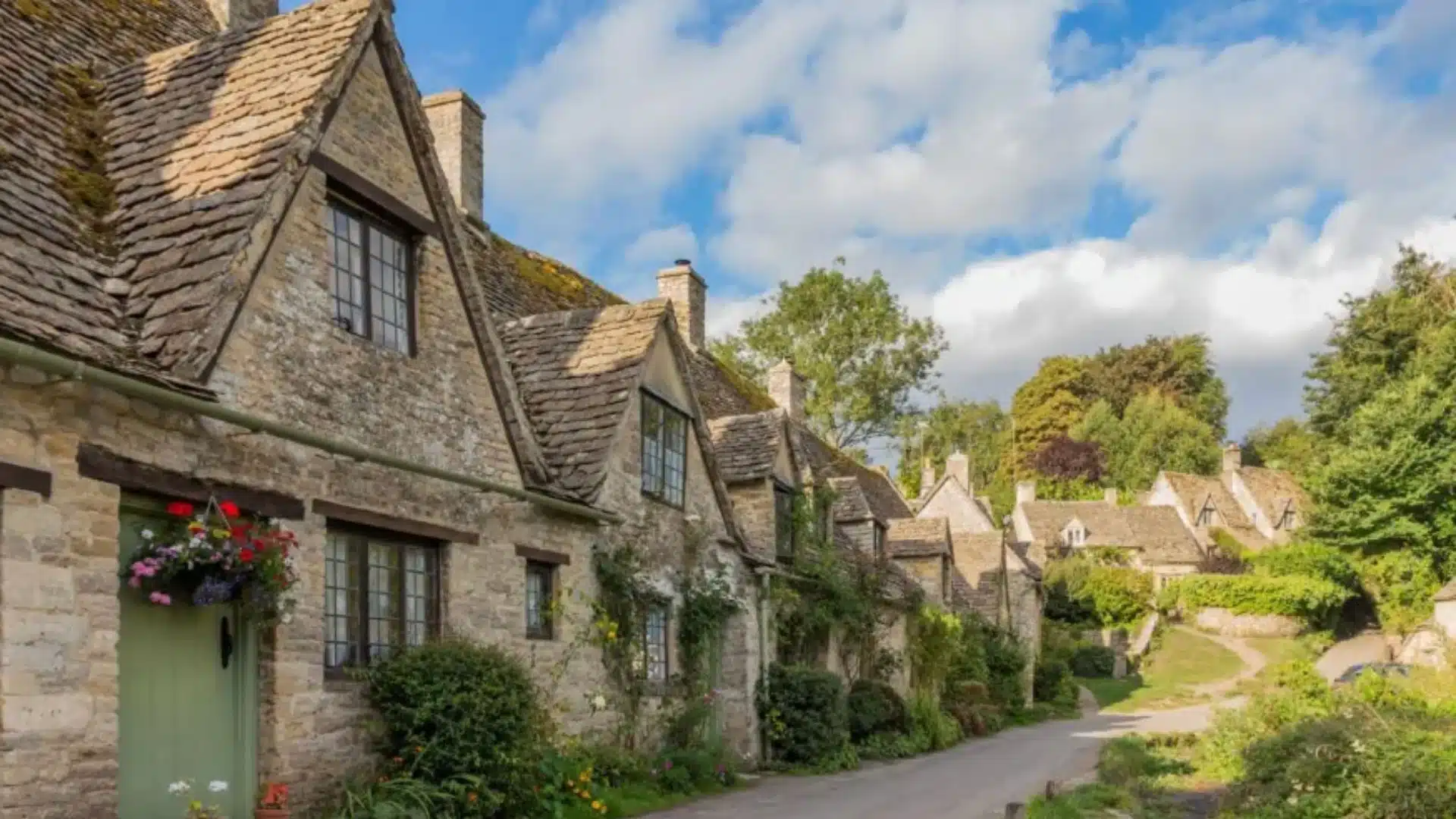
Arlington Row in Bibury is perhaps England’s most photographed terrace. Built in the 1380s as a monastic wool store, the building was converted to weavers’ cottages in the 17th century.
Key features:
- Cotswold stone walls: Honey-coloured limestone
- Steep thatched roof: Traditional wheat straw
- Riverside setting: Overlooks the River Coln
- Uniform design: Row of identical cottages creates rhythm
2. Cottages in Castle Combe, Wiltshire
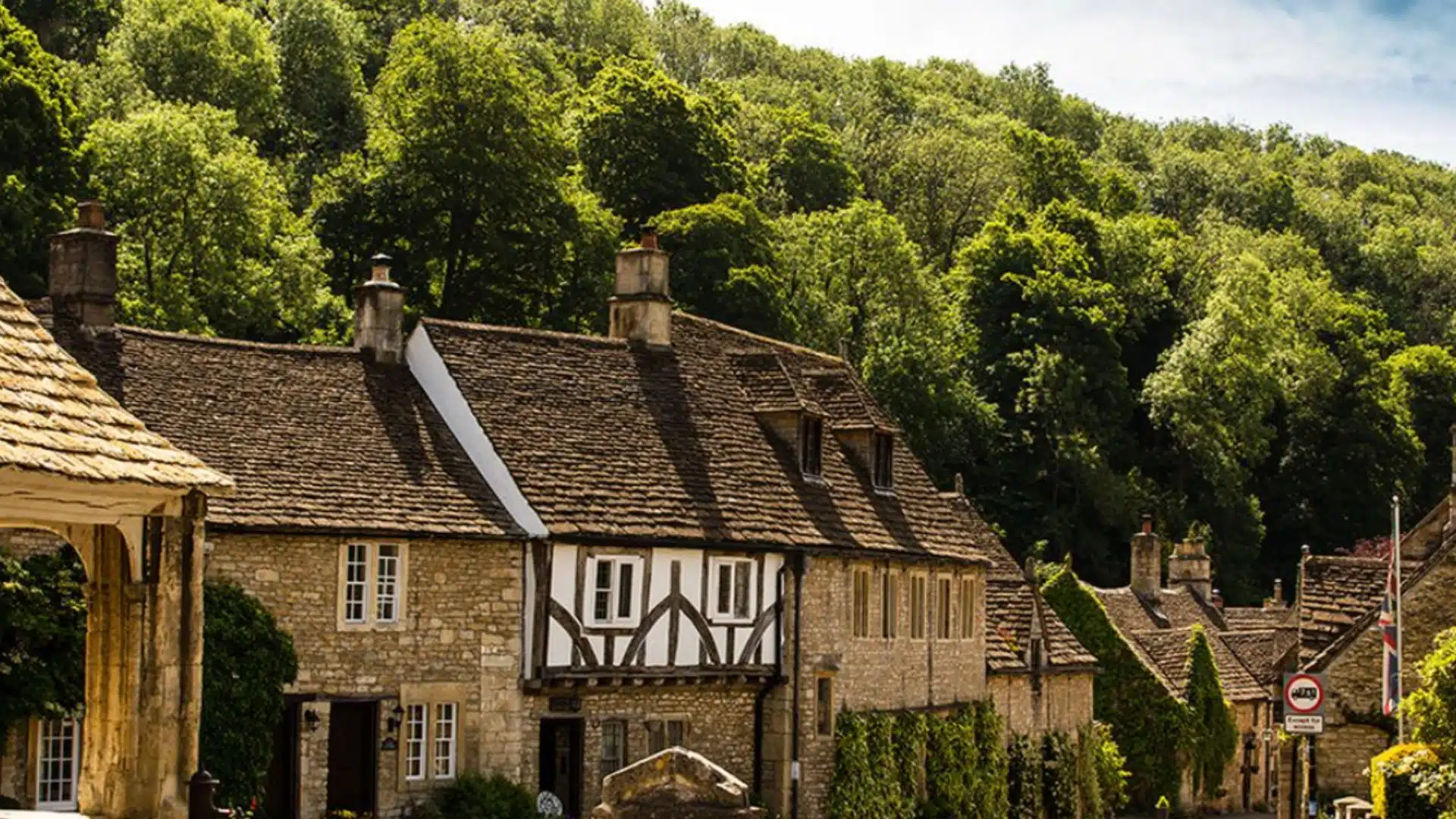
Castle Combe regularly appears on “prettiest village” lists. The medieval market town feels frozen in time. Thatched cottages line the main street, many dating to the 15th and 16th centuries.
Key features:
- Stone construction: Local Cotswold limestone
- Wisteria accents: Purple blooms cascade down facades in spring
- No modern intrusions: No TV aerials, overhead wires, or modern shopfronts
- Variety in roof shapes: Some gabled, others hipped
3. Thatched Cottages in Norfolk Broads
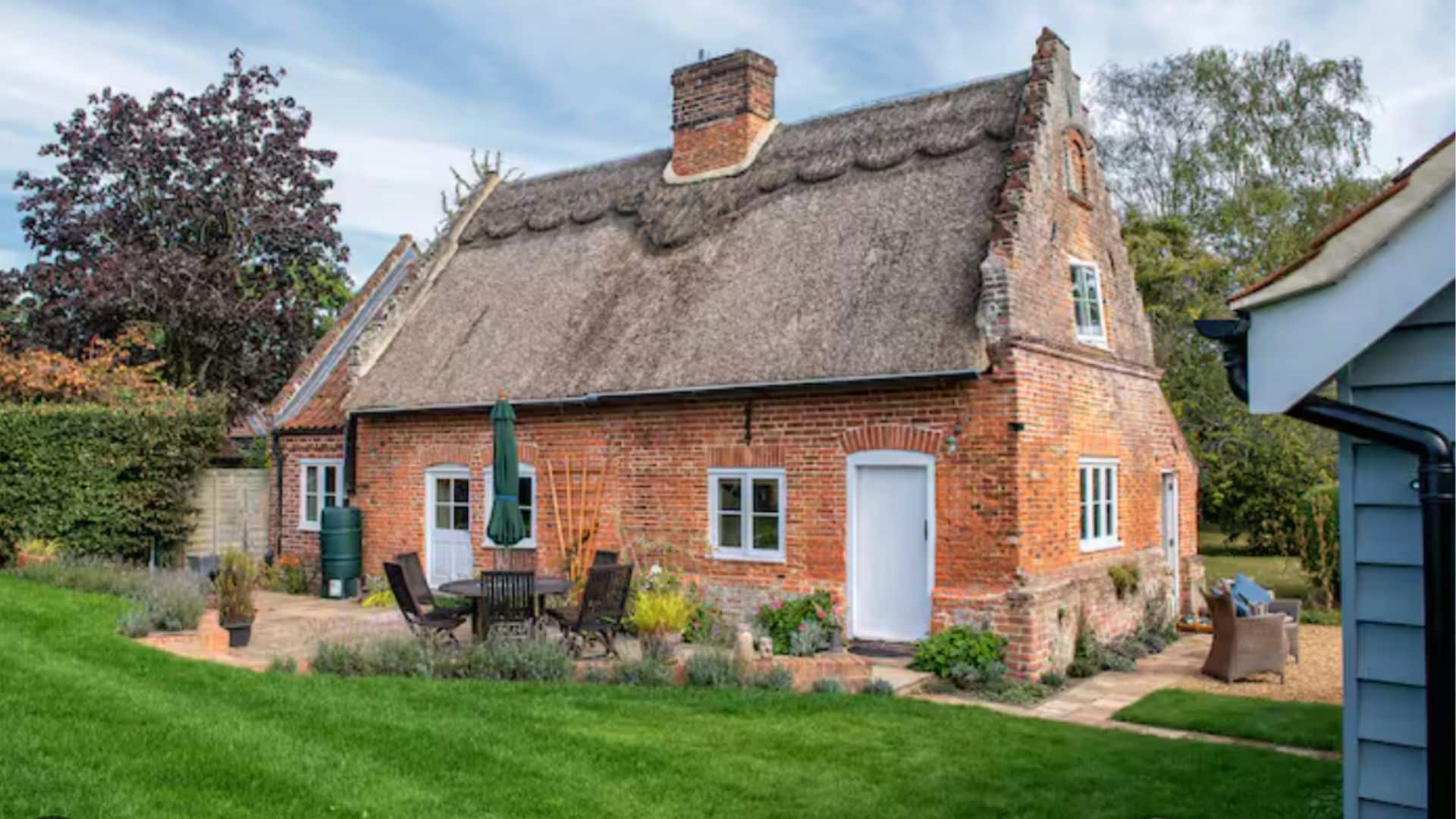
The Norfolk Broads area specializes in water reed thatch. Harvested locally from wetlands, this material creates distinctive roofs: darker, denser, and longer-lasting than straw.
Key features:
- Water reed thatch: Grey-brown colour
- Waterside locations: Many cottages sit near rivers or marshes
- Timber details: Painted wood trim and doors
- Flint or brick walls: Local materials dominate
- Functional design: Built for working families, not decoration
4. Sussex Weald Cottages
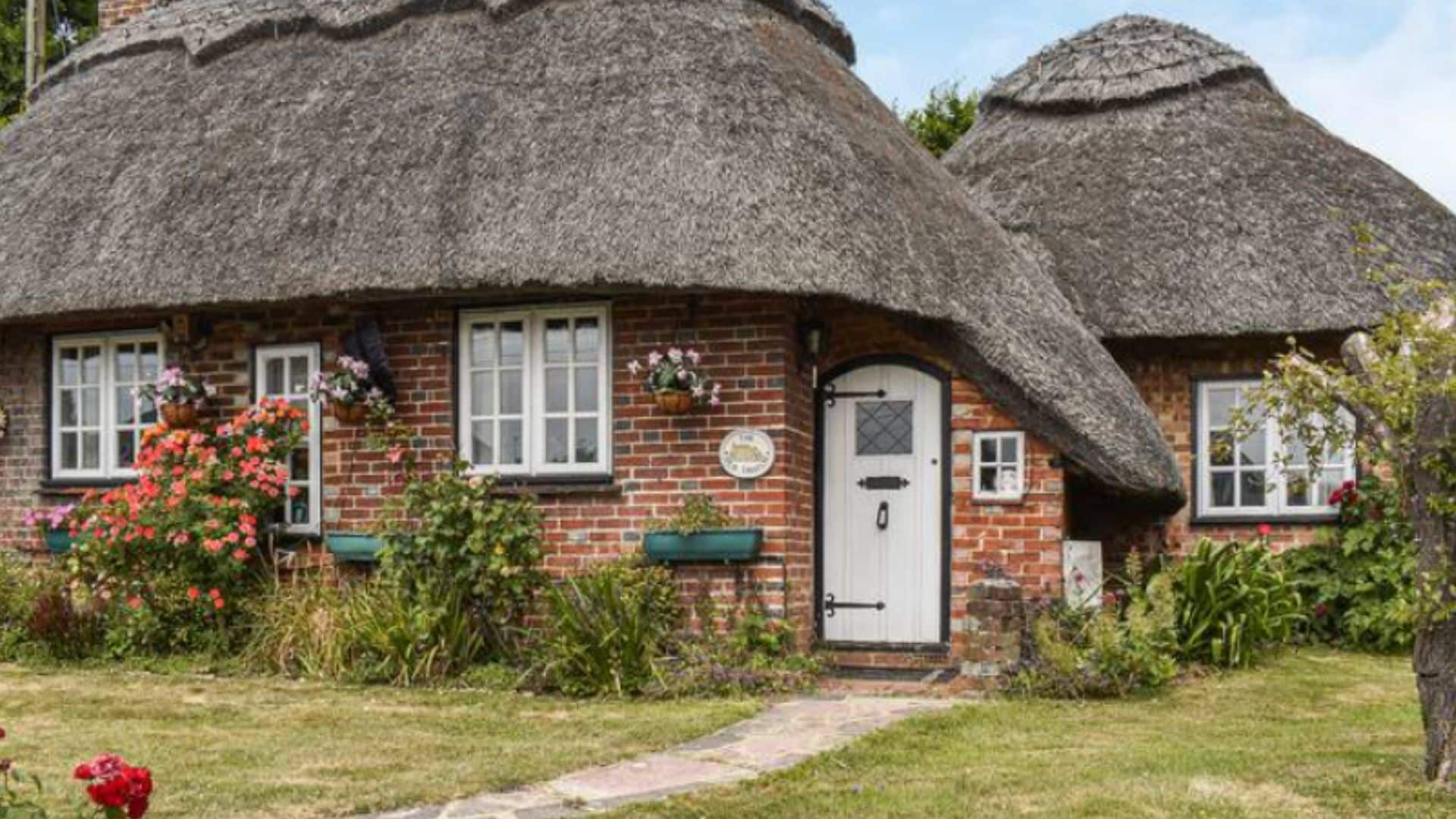
The Weald of Sussex has its own thatching tradition. Many cottages combine red brick with wheat straw thatch. The contrast is striking: warm brick below, golden straw above.
Key features:
- Red brick construction: Often in Flemish bond pattern
- Wheat straw thatch: Traditional material from local farms
- Half-hip roofs: A regional variation
- Tile hanging: Some cottages have tile-covered upper floors beneath thatch
- Large chimneys: Prominent brick stacks
5. Devon Thatched Cottages
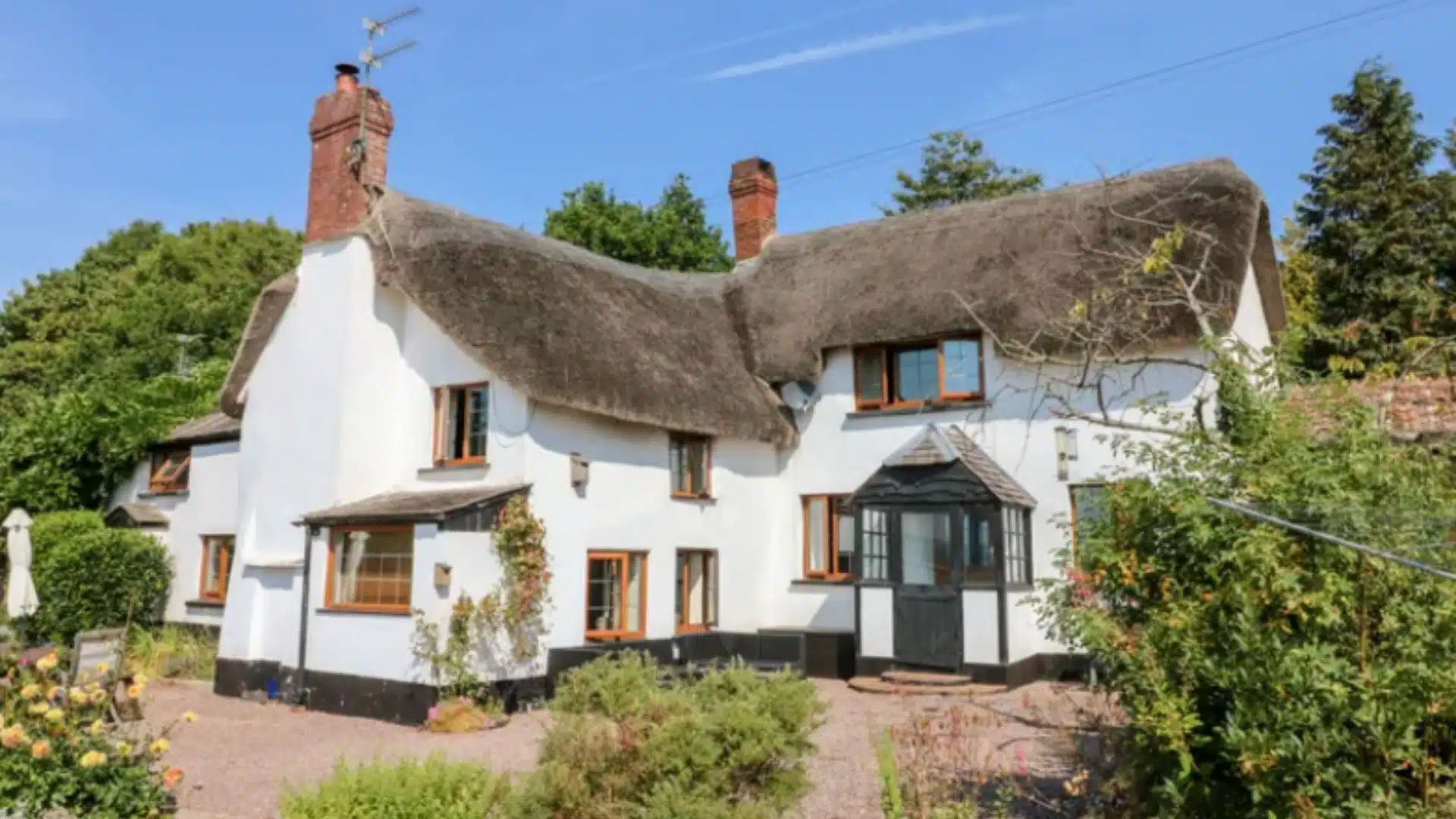
Devon has the highest concentration of thatched cottages in England. The mild, wet climate suits thatch. Many cottages are built of cob, a mix of earth, straw, and lime.
Key features:
- Cob walls: Thick, rounded, organic shapes
- Whitewashed or limewashed exteriors: Bright, clean appearance
- Deep thatch: Extra thickness protects from rain
- Rustic gardens: Informal planting with vegetables and flowers mixed
- Rounded corners: Cob allows curved walls
6. Cotswold Stone Cottages
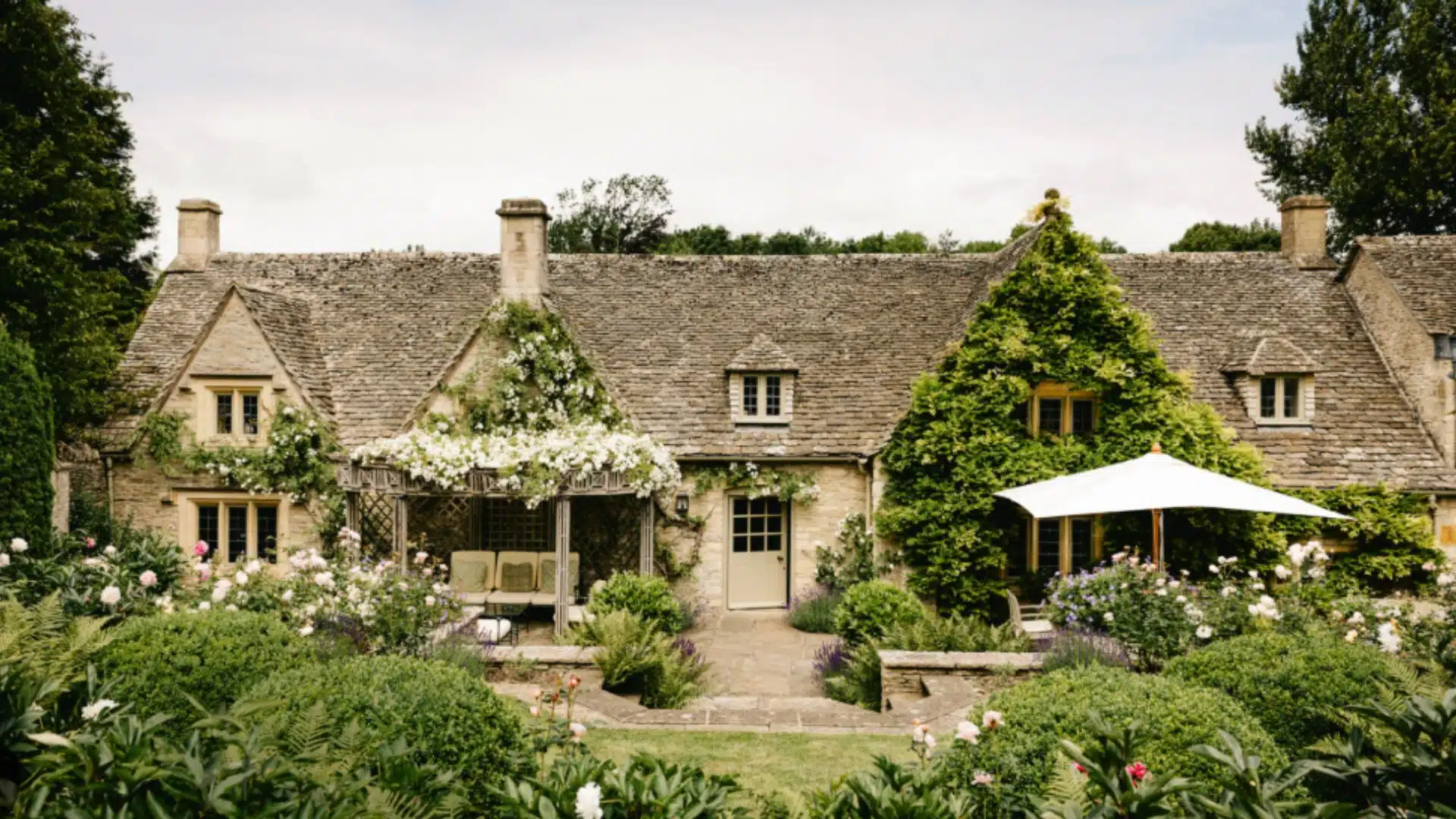
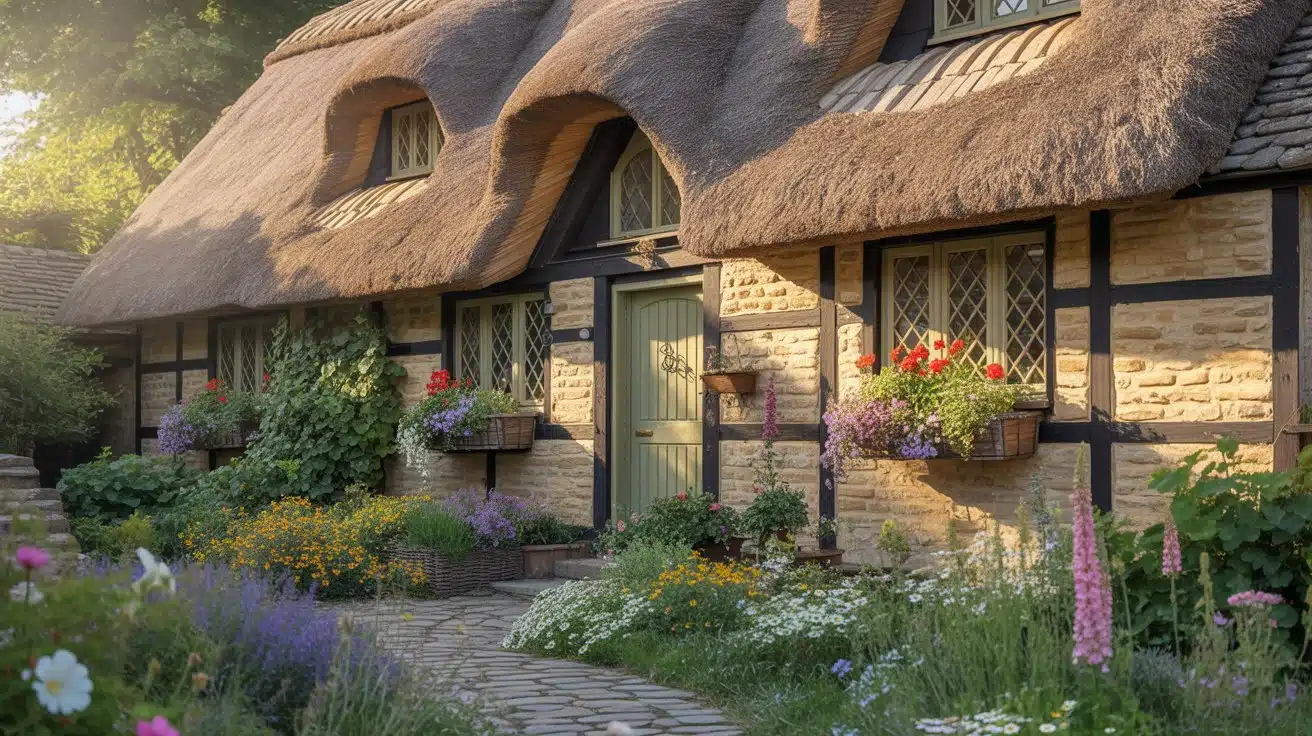
The Cotswolds combine arguably England’s most beautiful building stone with thick, traditional thatch. The honey-coloured limestone glows in sunlight. The thatch adds warmth and texture.
Key features:
- Honey-coloured stone: Varies from pale cream to deep gold
- Thick thatch with decorative ridges: Often ornate patterns
- Steep pitches: 45-55 degrees are common
- Stone mullioned windows: Multi-paned with stone frames
- Prominent chimneys: Tall stone stacks
Beyond individual examples, thatched cottages also reveal fascinating regional styles and variations, shaped by local materials, climate, and tradition.
Styles and Regional Variations of Thatched Roof Cottage
Thatched roof cottages take on distinctive forms, with styles and materials reflecting the local landscape, climate, and traditions.
1. Classic English Country Cottage
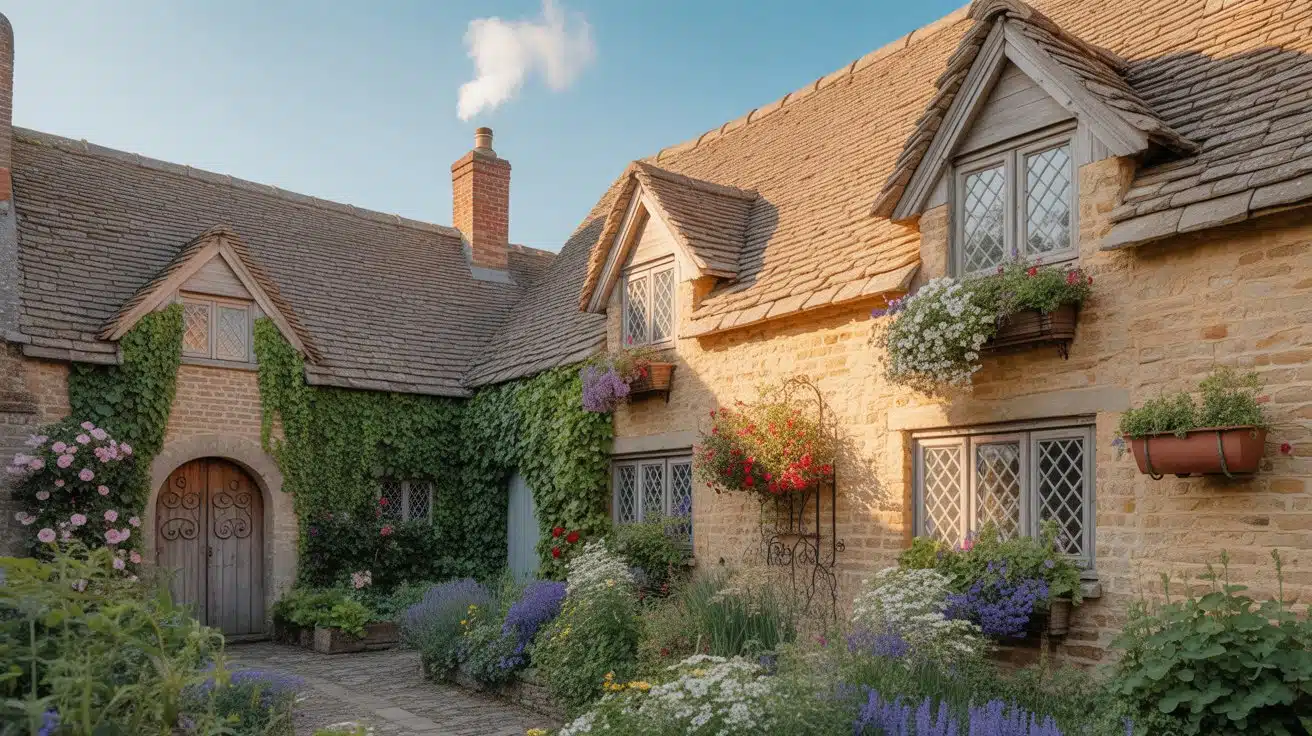
The English thatched cottage is the most recognized style. Think of rolling hills, stone walls, and roses climbing up whitewashed walls. These homes often date back centuries, built by local craftsmen using regional materials.
Key features:
- Timber-framed or stone construction
- Steeply pitched roof (around 45-50 degrees)
- Thick thatch with decorative ridges
- Exposed brick or stone chimneys
- Small, multi-paned windows
- Low doorways with heavy timber lintels
2. Continental / Normandy Style
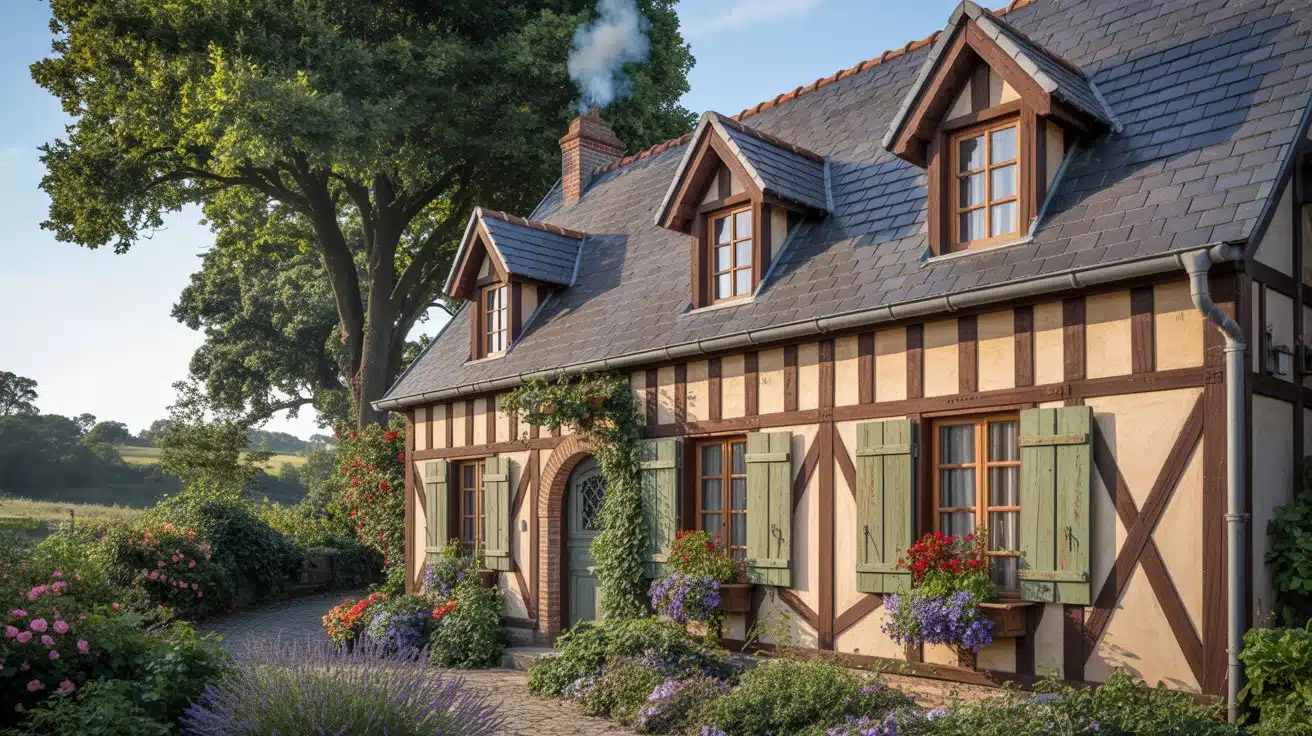
European thatched cottages differ slightly from their English cousins. In France, Germany, and the Netherlands, local materials and building methods created distinct looks.
Characteristics:
- Half-timbered walls with infill panels
- Wattle and daub construction
- Steeper or shallower pitches, depending onthe region
- Integration with barns and outbuildings
- Use of local reed or straw varieties
3. Modern and Hybrid Thatched-Roof Designs
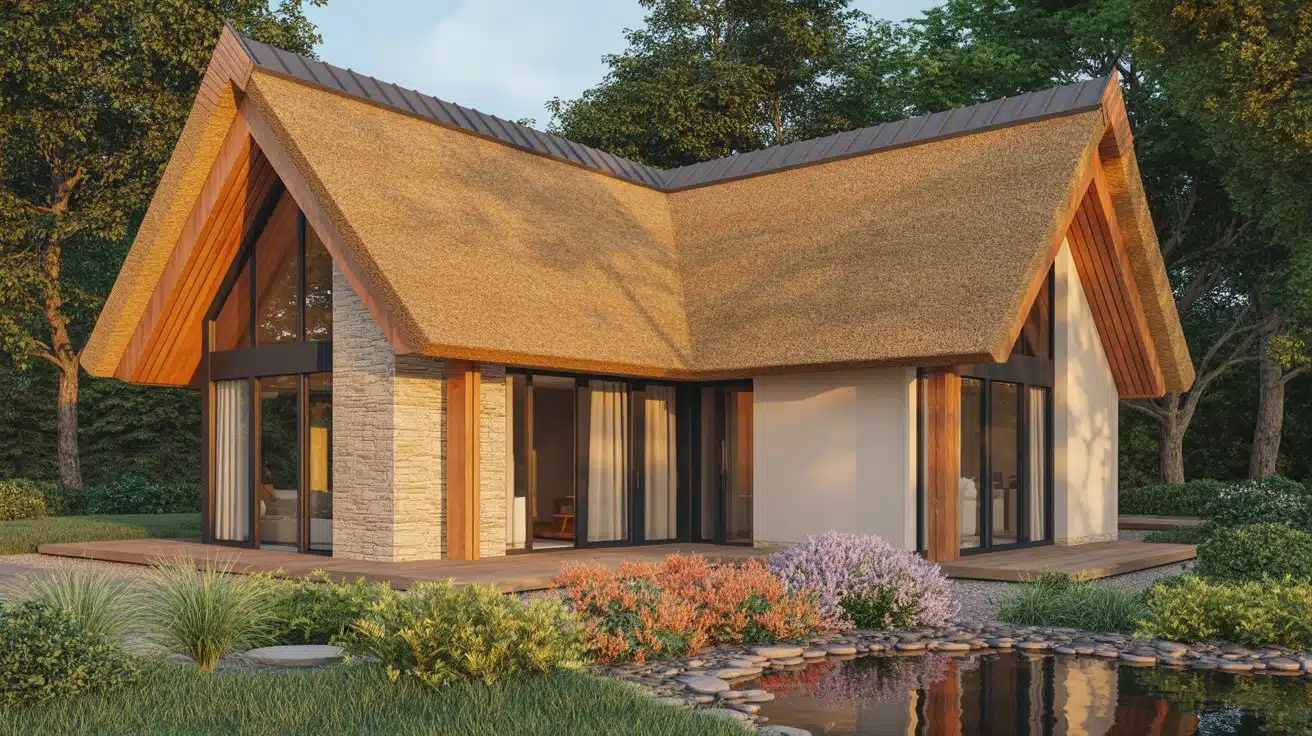
Contemporary architects are reimagining thatch. They pair traditional roofs with modern materials and floor plans. The result is striking; old craft meets new ideas.
Key features:
- Open-plan interiors
- Floor-to-ceiling glass
- Minimalist finishes (concrete, steel, glass)
- Thatched roofs over clean-lined structures
- Flat or angled sections combined with thatch
Understanding the traditional styles and regional variations of thatched cottages can inspire creative ideas for designing charming exteriors.
Exterior Design Ideas for Thatched Roof Cottage
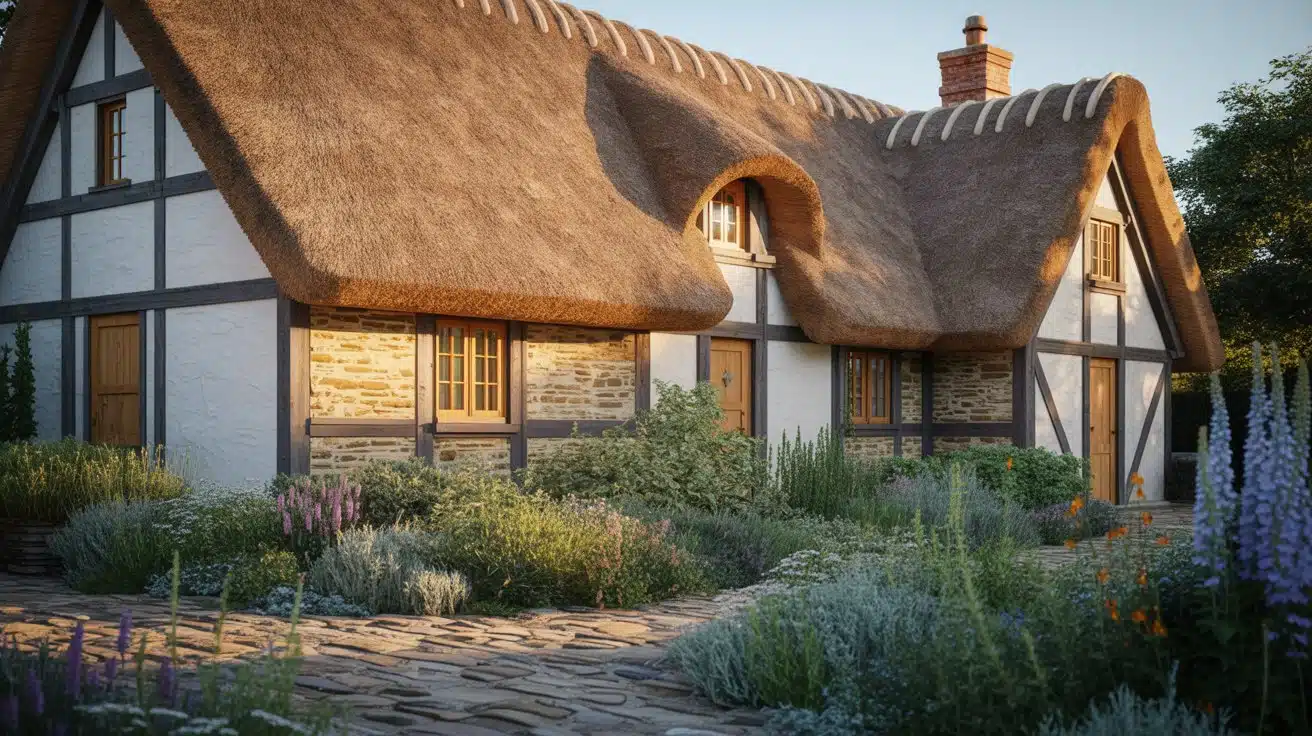
A thatched-roof cottage exterior should feel cohesive. Every element from landscaping to wall colour plays a role.
Plant perennials like lavender, rosemary, foxgloves, and delphiniums. Let plants spill over pathways. Keep edges soft and informal.
The roof sets the tone. Its warm, golden-brown colour pairs well with:
- Whitewashed or lime-rendered walls
- Natural stone
- Exposed timber
- Brick
Avoid synthetic materials. PVC windows or aluminium doors clash with thatch. Choose wood or painted timber instead.
Work with a skilled thatcher to include decorative ridges, eyebrow dormers, swooping eaves, and cosy porches.
With exterior charm covered, the next step is exploring interior layouts and renovation ideas that preserve character while adding modern comfort.
Interior and Renovation Ideas for Thatched Roof Cottage
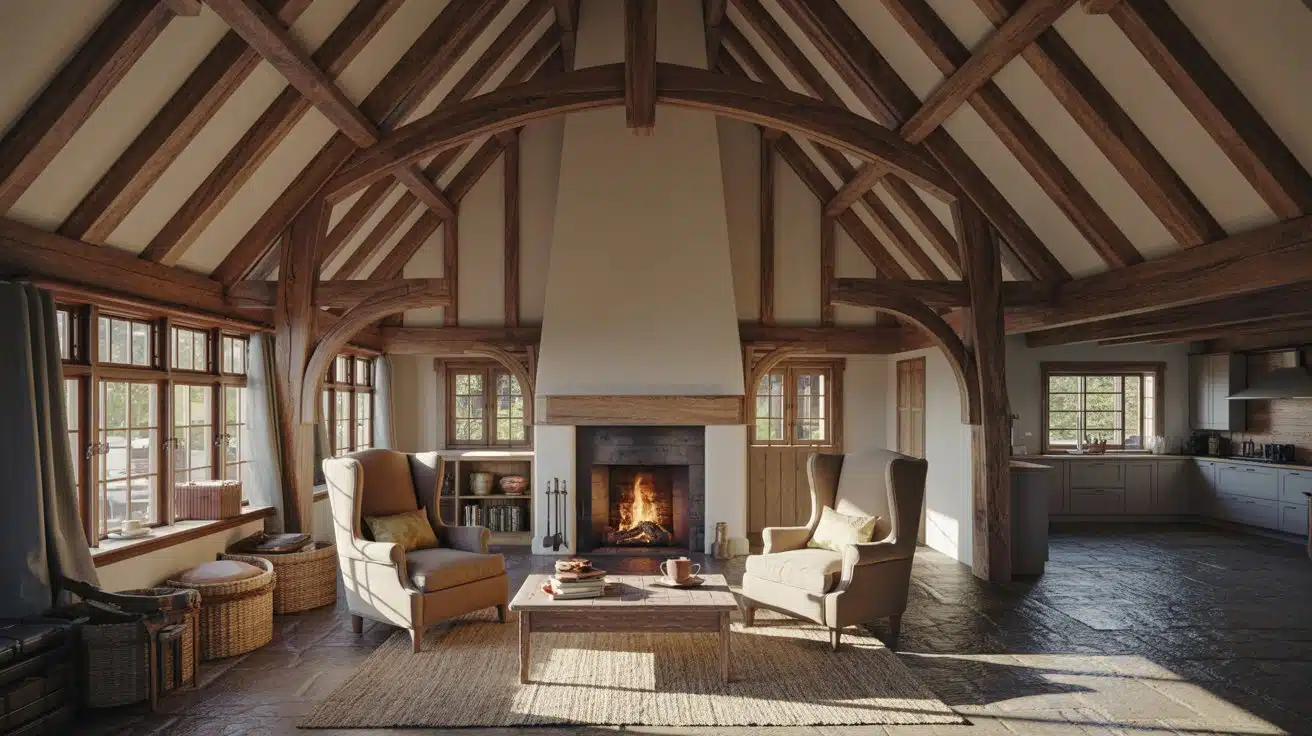
Inside a thatched-roof cottage, the roof often shapes the mood. Vaulted ceilings, exposed beams, and natural materials create a warm atmosphere.
Most interiors lean towards neutral palettes. Think cream, beige, soft grey, and warm white. These colours let the architecture shine.
Common elements:
- Exposed timber beams: Dark oak or lighter pine across ceilings
- Vaulted ceilings: Following the roof pitch for height and drama
- Natural materials: Stone floors, wooden furniture, linen fabrics
- Soft lighting: Lamps and sconces create a cosy glow
- Textured fabrics: Wool throws, linen cushions, cotton rugs
A traditional sitting room anchored by a stone or brick fireplace. Add wingback chairs, a low coffee table, and shelves filled with books. Keep the thatched roof but open up the walls. Add skylights or larger windows.
Use pale walls and simple furniture to let light bounce around. This approach honours tradition while feeling fresh. Contrast works. Install sleek kitchen units, polished concrete floors, and minimal furniture.
Interior truly appreciates their charm, let’s step inside the world of thatched cottages with a visual gallery showcasing their timeless beauty and design details.
Visual Inspiration Gallery for Thatched Roof Cottage
Collect images to refine your vision. Create themed boards based on your preferred style.
1. Rustic & Natural
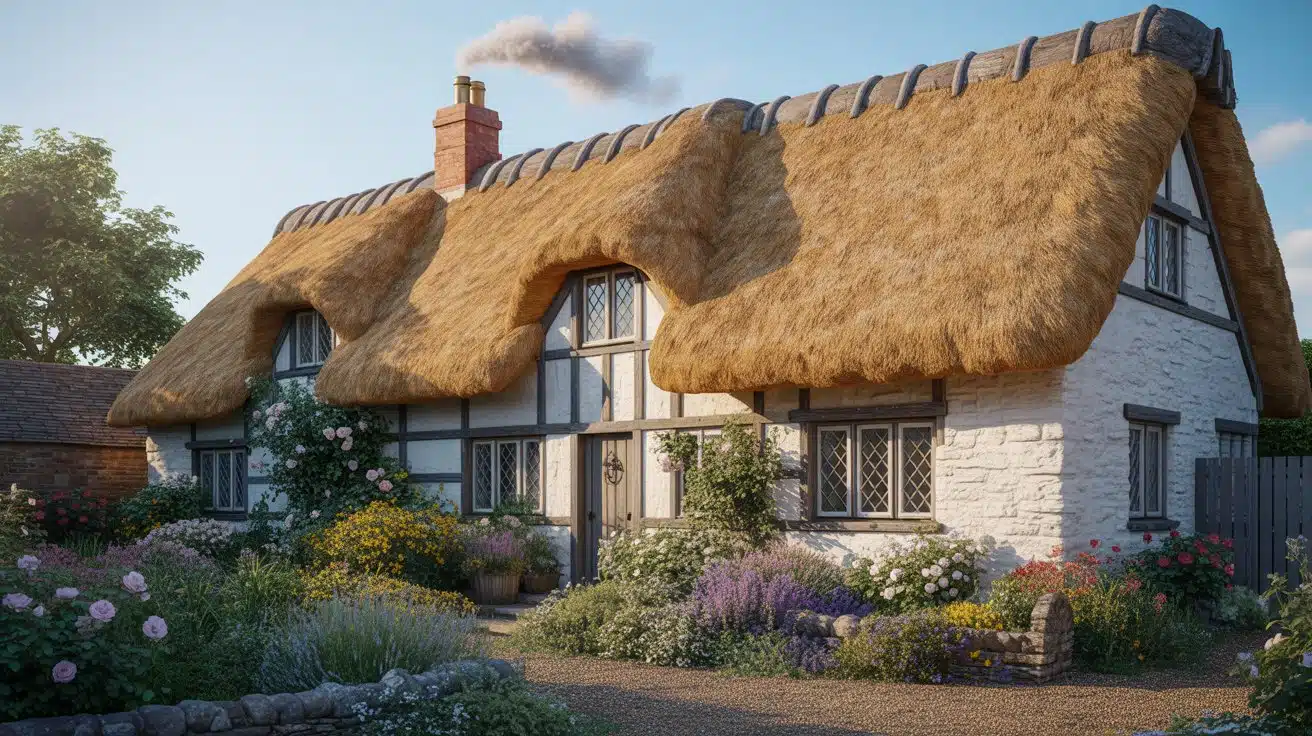
Focus on traditional cottages with:
- Thick, golden thatch
- Stone or whitewashed walls
- Cottage gardens overflowing with flowers
- Timber-framed doors and windows
- Brick chimneys
- Gravel pathways
2. Heritage-Chic
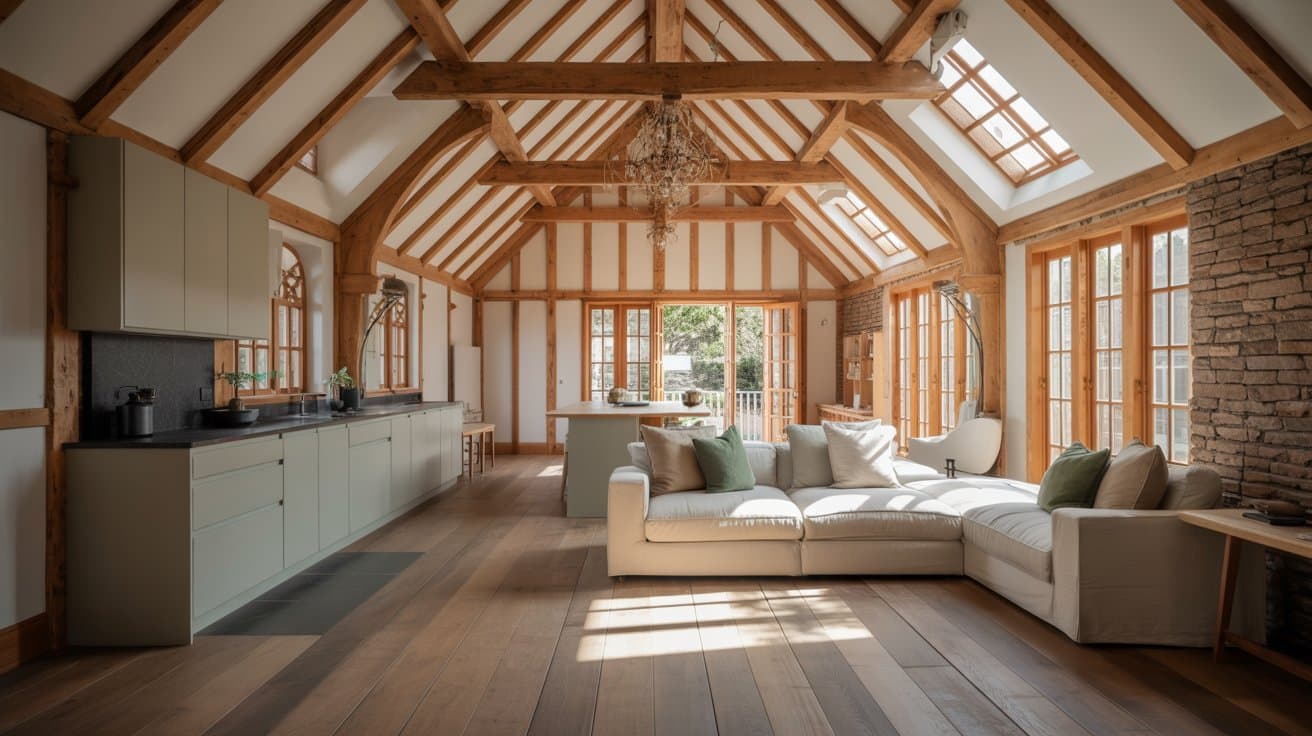
Renovated cottages that blend old and new:
- Original thatched roofs
- Modern kitchens with sleek cabinets
- Neutral interiors with pops of colour
- Updated bathrooms
- Exposed beams paired with contemporary furniture
- Underfloor heating and smart home tech
3. Contemporary Thatched
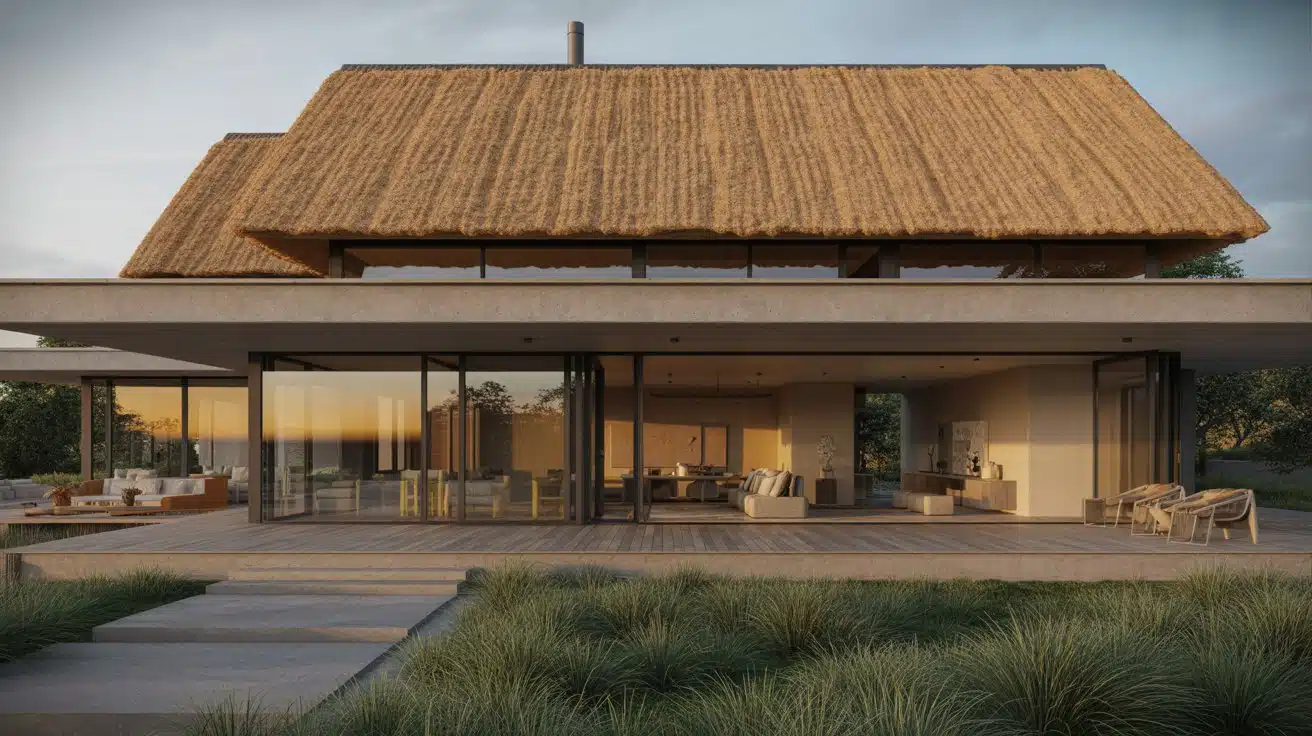
Modern homes with thatch:
- Clean lines and open plans
- Large glass panels
- Thatch as an accent or feature
- Minimalist interiors
- Concrete, steel, or glass combined with a natural roof
- Outdoor living spaces
From their ancient origins to modern revivals, thatched roof cottages remain a living testament to craftsmanship, heritage, and enduring English charm.
Conclusion
A thatched roof cottage offers more than shelter, it connects you to centuries of craftsmanship and natural building tradition.
From the honey-toned stone of the Cotswolds to the whitewashed cob of Devon, these homes showcase regional character and human skill.
Yes, thatched roof maintenance requires commitment and investment. But the rewards are substantial: energy efficiency, unique beauty, heritage value, and a home that turns heads.
Renovating a historic cottage, building new, or simply borrowing design cues, thatch adds warmth.
Start with a moodboard. Research local thatchers. Plan carefully. Create a home that honours the past while meeting modern needs.
What will your thatched cottage story be?