Ceiling paint and wall paint sit on the same shelf at the store, but they are built for completely different jobs.
I learned this the hard way during a guest bedroom refresh years ago when I rolled wall paint overhead and spent the next hour cleaning drips off the floor.
Ceiling paint is thicker, flatter, and made to stick to surfaces above your head without running. Wall paint is thinner, tougher, and designed to handle fingerprints, scrubbing, and daily contact.
The differences go deeper than most people realize, covering finish, thickness, durability, mold resistance, drying time, and cost. This guide walks through each one so you can pick the right product before you pop open a single can.
What is Ceiling Paint?
Ceiling paint is made specifically for overhead surfaces. It has an ultra-flat or flat finish that reduces glare and effectively hides surface flaws.
Its thick formula reduces dripping while you roll it above your head, making the job cleaner and easier. Most ceiling paints are also white or off-white, since ceilings rarely need bold color.
Ceiling paint also dries faster than wall paint because its thicker formula contains less liquid that needs to evaporate. Most ceiling paints dry to the touch within one to two hours, though full curing can take 24 to 72 hours depending on the brand and humidity in your space.
What is Wall Paint?
Wall paint is built for vertical surfaces that take daily wear. It comes in a range of finishes: flat, eggshell, satin, and semi-gloss, so you can match each room’s needs.
Walls collect dust, fingerprints, and scuffs over time. Wall paint is formulated to handle scrubbing and washing without losing its color or breaking down, which is why it uses stronger binders than ceiling paint.
Ceiling Paint vs Wall Paint: How They Compare
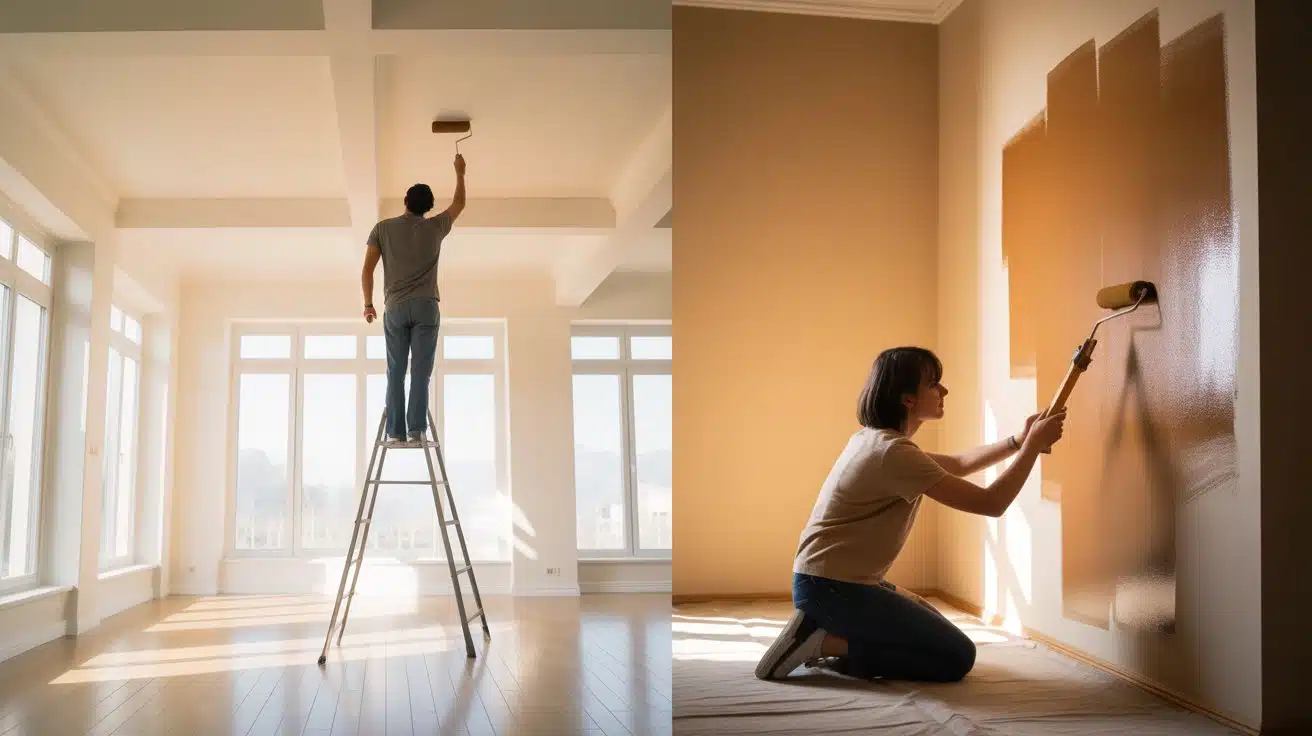
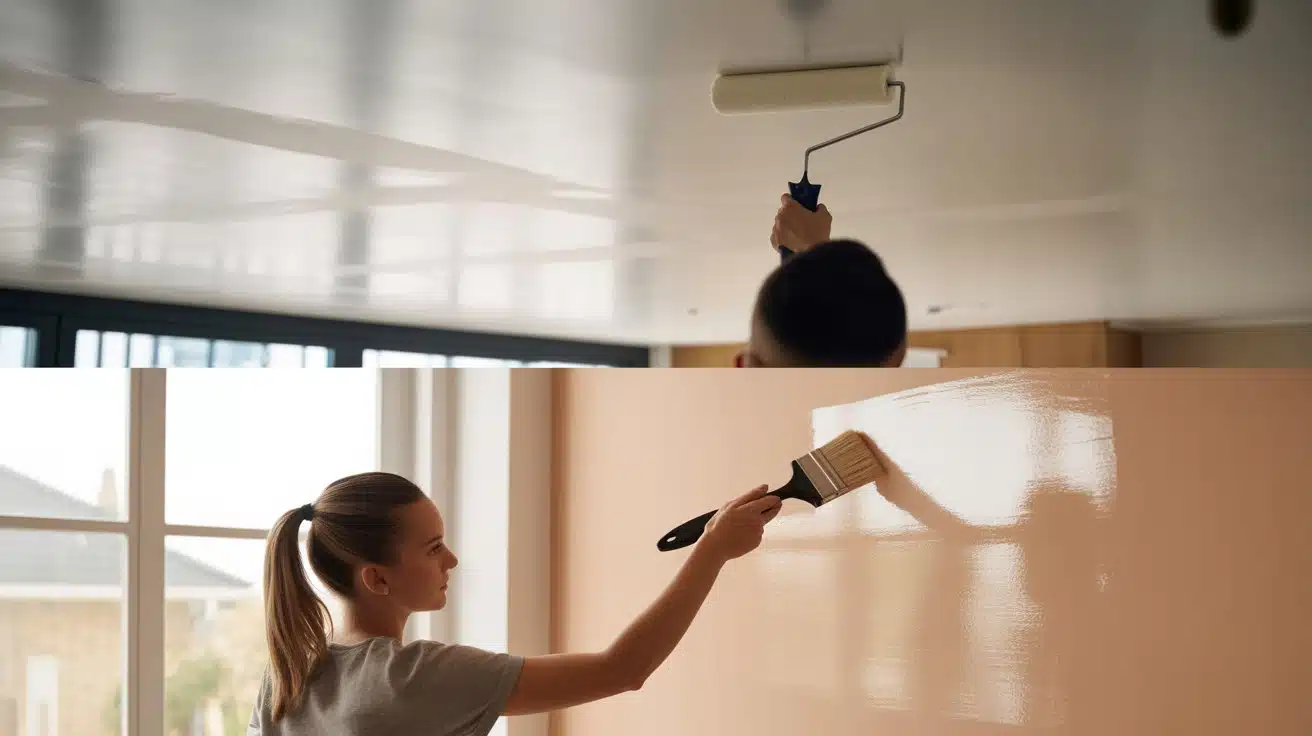
alt text: person-painting-ceiling-on-ladder-and-another-painting-wall-showing-ceiling-vs-wall-paint-difference
These two products look similar in the can, but the formulas are built for different surfaces. The table below breaks down the differences that affect your results.
| Feature | Ceiling Paint | Wall Paint |
|---|---|---|
| Finish | Ultra-flat or flat | Flat, eggshell, satin, semi-gloss |
| Thickness | Thicker, drip-resistant | Thinner, smoother application |
| Coverage | High hides stains well | Moderate to high |
| Durability | Low, not built for scrubbing | High, built for daily contact and cleaning |
| Color Range | Mostly white or off-white | Wide range of colors |
| Touch-up | Can show lap marks easily | Blends better on touch-up |
| Mold/Mildew Resistance | Often includes anti-microbial additives | Varies by product; less common in standard formulas |
| Drying Time | Faster (1-2 hours touch-dry) | Slightly slower due to thinner formula |
| VOC Levels | Typically low-VOC formulas | Varies widely by brand and finish |
Can You Use Ceiling Paint on Walls?
Ceiling paint can go on walls, but it was never made for that job. It lacks the washability, sheen options, and durability that walls need to hold up in rooms where people actually live.
I once used leftover ceiling paint in a utility closet, and it worked fine there because nobody touches those walls. But I would never put it in a kitchen or bathroom.
Where it works: Storage rooms, garages, utility rooms, or basements where traffic is minimal and you do not need to wipe surfaces down.
Where it falls short: Kitchens, bathrooms, hallways, and kids’ rooms. In these spaces, you need paint that can handle moisture, grease, and regular cleaning without breaking down.
Can You Use Wall Paint on Ceilings?
You can use wall paint on ceilings, but it comes with trade-offs. It is thinner, less drip-resistant, and may not cover ceiling flaws as well.
If you go this route, stick with flat or matte wall paint. Any sheen above that will bounce light off every roller mark, tape line, and patched area on the ceiling.
I have seen homeowners use eggshell on a ceiling and immediately regret it once the overhead light hit the surface.
Plan for extra prep work too. Lay plastic sheeting over furniture and flooring, and expect to apply at least two coats since wall paint is thinner and does not cover as well overhead
Why Mold and Mildew Resistance Matters for Ceilings
Heat and moisture rise, so ceilings are more exposed to humidity, cooking steam, and shower vapor than most walls. Over time, this creates conditions where mold and mildew can take hold, especially in bathrooms and kitchens with poor ventilation.
Most ceiling paints include anti-microbial additives that resist mold growth. Standard wall paint does not always include these additives, which is one more reason to use a dedicated ceiling product in moisture-prone rooms.
If your bathroom ceiling has yellowed or shows dark spots near the vent fan, that is a sign your current paint was not built for the job.
Do You Need Primer Before Painting Ceilings or Walls?
Primer is one of those steps that people skip to save time, and then pay for later.
On ceilings, primer is especially important if you are covering water stains, smoke damage, or bare drywall. Without a stain-blocking primer, old stains will bleed through your fresh coat of ceiling paint, sometimes within hours of drying.
For walls, primer matters most when you are switching between very different colors, painting over a glossy surface, or working with new drywall.
Many premium wall paints now include built-in primer, which works fine for routine refreshes. But for tougher situations, a separate primer coat gives you a better base and a longer-lasting finish.
Which Paint Finish Works Best by Room?
The right finish depends on the room, not just personal taste.
1. Living Room Ceilings
Flat or ultra-flat finish works best. It hides minor surface flaws and keeps the ceiling looking clean without drawing attention to itself.
Since living room ceilings are rarely touched, you don’t need a washable coat here. A flat finish does its job quietly.
2. Kitchen and Bathroom Ceilings
Go with a flat or eggshell finish. These rooms deal with steam and humidity daily, so a slightly harder finish holds up better over time.
Flat paint can work if the ventilation is good. But eggshell gives you a little more protection without adding unwanted shine overhead.
3. Bedroom Walls
Eggshell or flat finish suits bedrooms well. Since traffic is low, you don’t need a highly washable coat. It gives a soft, calm look that works with most color choices.
Eggshell also holds up better than flat if the walls get the occasional scuff or mark.
4. Kitchens, Bathrooms, and Hallways
Satin or semi-gloss is the right pick. These finishes handle moisture, grease, and frequent cleaning without wearing down quickly.
Hallways take a lot of daily wear and tear, so a washable finish helps you avoid repainting too soon. Semi-gloss is especially useful near sinks and cooking areas. If you are budgeting for a full kitchen remodel checklist, choosing the right wall finish is a good place to start.
When Flat Paint Works and When It Does Not Flat paint works well on ceilings and low-traffic walls. But avoid it in high-moisture or high-touch areas. It stains easily and cleans poorly. On walls that see regular contact, flat paint leads to more frequent touch-ups and higher long-term costs. |
Painting Walls and Ceilings the Same Color

alt text: minimal-bedroom-with-matching-blue-walls-and-ceiling-low-bed-and-soft-natural-light
Painting walls and ceilings the same color is a design choice that can work really well in the right room.
Same-color rooms create a wrapped, cozy feel that makes smaller spaces look taller. This technique works well in compact rooms, modern interiors, and spaces with low ceilings where you want the walls and ceiling to read as one surface.
Bright, open rooms with high ceilings usually look better with a crisp white ceiling, which reflects more light and keeps the space feeling airy.
One thing to remember: choosing the same color for both surfaces does not mean using the same paint product. You still want ceiling paint on the ceiling and wall paint on the walls, even if the color matches.
Ceiling Paint vs. Wall Paint Cost: Which Is More Expensive?
Cost is not just about price per gallon coverage; coats needed, and labor time all play a role. Here’s how the two compare:
| Factor | Ceiling Paint | Wall Paint |
|---|---|---|
| Average Cost Per Gallon | $15 – $40 | $20 – $70 |
| Coats Needed | Usually 1 – 2 | Usually 2 |
| Coverage Per Gallon | 350 – 400 sq ft | 350 – 400 sq ft |
| One-Coat Claims | Common | Less common |
| Labor Time | A less-thick formula drips less | Thinner paint needs care |
| Value Per Room | Fewer coats save time | Depends on finish and brand |
Tips for Getting Better Results on Ceilings
Ceilings are harder to paint than walls because you are working against gravity, and mistakes are tough to fix once the paint dries. A few simple steps make the process go smoother.
Always paint the ceiling before the walls. This way, any drips that land below get covered when you move on to the walls.
Use a roller with an extension pole rather than climbing up and down a ladder for every pass. You will get more even coverage and finish faster.
Work in small sections and slightly overlap each stroke while the previous pass is still wet. This prevents visible lap marks, which show up easily on flat ceiling finishes.
If the ceiling has water stains or smoke yellowing, apply a stain-blocking primer first. Rolling ceiling paint directly over old stains usually results in bleed-through within a day or two.
Common Mistakes to Avoid
Picking the wrong paint is easy. Here are the mistakes to watch out for:
- Assuming ceiling paint is washable: It is not; scrubbing will damage the finish
- Picking the wrong sheen: Gloss on ceilings shows every flaw; flat on kitchen walls stains fast
- Skipping primer: Paint over a stain without primer, and it will bleed through
- Using ceiling paint on high-contact walls: It cannot handle daily wear in busy rooms
- Ignoring room humidity: Flat paint in bathrooms or kitchens will peel over time
- Expecting the same coverage: Always check the label, every formula differs
Which Paint Should You Choose for Your Project? The choice is simple. If the surface is overhead and uneven, use ceiling paint. If it gets touched, cleaned, or bumped regularly, use wall paint. Flat wall paint can work on ceilings in a pinch, but dedicated ceiling paint gives you better coverage, fewer drips, and built-in mold resistance. When in doubt, always match the paint to the surface, not the other way around. Using the right product from the start saves you time, money, and a second coat. |
Conclusion
Ceiling paint and wall paint are not interchangeable, even when they look the same in the can. Ceiling paint keeps overhead surfaces smooth, flat, and drip-free. Wall paint handles daily contact, moisture, and cleaning without breaking down.
Before you pick up a can, think about the surface it is going on. How much wear will it take? Is the room humid? What finish do you need? Answering those questions points you to the right product every time.
Choose based on the surface, the room’s conditions, and the finish that fits your space. A few extra minutes spent picking the right paint saves hours of frustration later.
Frequently Asked Questions
What’s The Hardest Color To Paint Over?
Red is the hardest color to paint over. Its strong pigments bleed through new coats, often requiring a good primer and multiple layers to cover fully.
Should the Ceiling Be Flat or Satin?
Flat finish is best for ceilings. It hides surface flaws and reduces glare. Satin reflects too much light, highlighting imperfections overhead.
What Color Do Most People Paint Their Ceilings?
White is the most popular ceiling color. It keeps rooms feeling bright and open, and pairs well with almost any wall color.