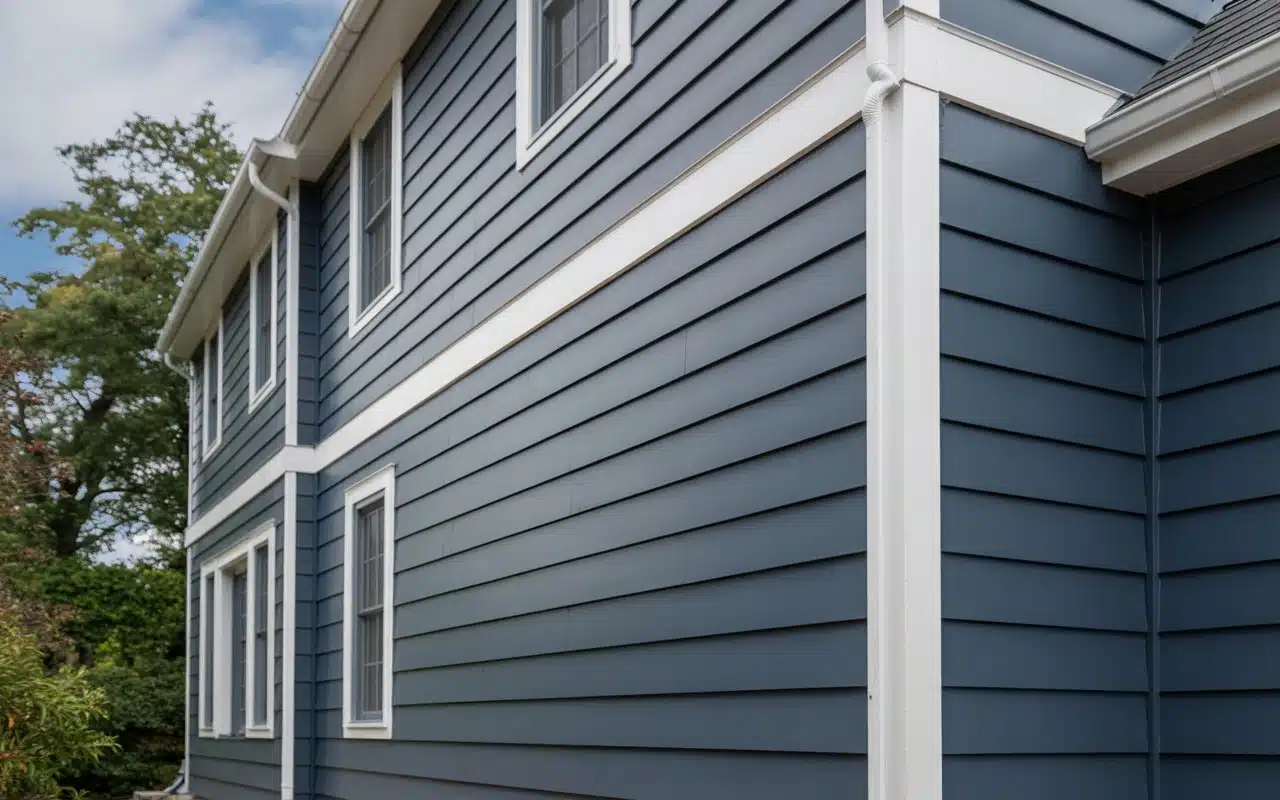
Vinyl siding first hit the market in the 1950s as a cheaper alternative to aluminum. Early versions cracked, sagged, and faded fast. Modern vinyl is a completely different product.
Two-layer construction, UV-resistant capstock, and foam-backed insulation have turned it into one of the most popular exterior materials in the country.
Most vinyl siding lasts between 20 and 40 years, and some premium options can push past 50. But that range depends heavily on the quality of the panels, your local weather, how well the siding was installed, and whether you keep up with basic maintenance.
This guide breaks down each factor, outlines the warning signs of aging siding, and offers simple ways to add years to your exterior.
Types of Vinyl Siding and Their Lifespan
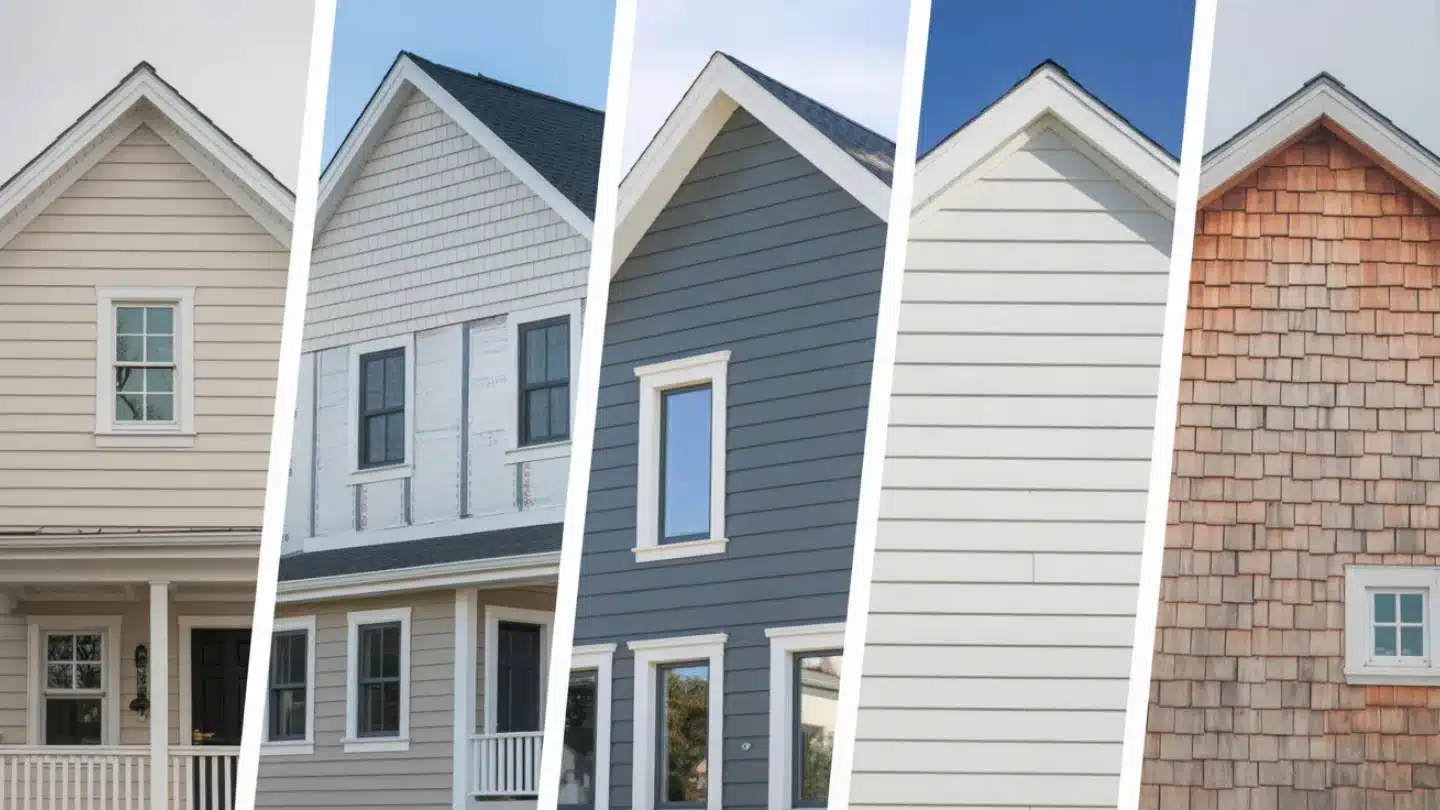
alt text: different-types-of-house-siding-including-horizontal-vinyl-shingle-style-insulated-panel-siding-and-wood-shake-exteriors-shown-side-by-side-on-residential-homes
Not all vinyl siding is built the same. The type you choose directly affects how long it lasts.
1. Standard Vinyl Siding
Standard vinyl siding is the most affordable option on the market. It comes in thinner panels, usually around 0.040 inches thick. Most standard siding lasts 20 to 30 years.
It is more likely to crack, warp, or fade compared to thicker alternatives, especially in areas with harsh sun or freezing winters.
2. Insulated Vinyl Siding
Insulated vinyl siding has a foam backing bonded directly to the panel. This added layer makes it stronger and more resistant to dents and warping.
It typically lasts 30 to 40 years or more. It also helps reduce energy bills by keeping your home better insulated year-round.
3. Premium or Thick-Grade Vinyl Siding
Premium vinyl siding uses thicker panels, often 0.046 inches or more. The extra thickness makes it far more resistant to impacts and physical damage.
It generally lasts 30 to 40 years. It also holds its color much longer, meaning less fading even after years of direct sun exposure.
4. Board and Batten Vinyl Siding
Board-and-batten vinyl siding features wide vertical panels with narrow strips covering the seams. It gives homes a clean, modern look. This style typically lasts 20 to 30 years.
Its durability depends on panel thickness and manufacturing quality. Thinner board-and-batten panels tend to show wear faster than thicker versions.
5. Shake or Shingle-Style Vinyl Siding
Shake-and-shingle-style vinyl siding mimics the look of real wood. It adds a textured, decorative finish to any home exterior. Most versions last 20 to 30 years.
Because of their shape and design, they can be less resistant to strong winds and heavy rain compared to flat-panel styles.
| Which Type of Vinyl Siding Is the Most Durable? Insulated vinyl siding is the most durable option available. Premium thick-grade panels come in as a close second. The foam backing on insulated panels absorbs impacts and resists warping better than any other type of backing. If you are choosing siding for your home, thicker panels with insulation backing will give you the longest lifespan. |
What Affects How Long Vinyl Siding Lasts?
Several factors work together to determine how long your siding holds up. Here is what matters most.
1. Material Quality
Thicker panels resist damage and wear far better than thin ones. Vinyl siding ranges from about 0.035 inches on the low end to 0.055 inches for premium grades. High-quality vinyl also holds color longer under direct sunlight. Look for siding with strong UV resistance ratings.
Cheaper materials fade, crack, and break down faster. Spending more upfront on better materials often means fewer repairs and replacements later.
2. Installation Quality
Even the best siding fails early if installed incorrectly. Panels need proper fastening and consistent spacing to stay secure. Vinyl expands and contracts with temperature changes, so installers must leave room for movement.
Nailing panels too tightly causes buckling and cracking. Gaps from poor installation also let water and pests into the spaces behind the panels, leading to hidden damage over time.
3. Climate and Weather Exposure
Hot climates cause vinyl to expand, fade, and warp over time. Cold climates bring freeze-thaw cycles that repeatedly stress panels and seams.
Hail, strong winds, and heavy storms cause direct physical damage. Homes in harsh climates need thicker, higher-quality siding to hold up longer.
If you live in a region with severe weather, plan for a shorter replacement timeline of closer to 20 to 25 years, or invest in impact-resistant panels from the start.
4. Maintenance Habits
Regular cleaning keeps dirt, mold, and algae from breaking down the surface. Fixing small cracks or holes early prevents bigger, costlier damage later.
Most manufacturers recommend washing your siding at least once a year. A soft-bristle brush with a mix of mild soap and water is enough for most homes. Small efforts now protect your siding for decades.
5. Moisture and Hidden Damage
Water trapped behind siding causes serious problems over time. It leads to mold growth, wood rot, and structural damage to your walls. Poor sealing around windows, doors, and seams allows moisture in.
By the time visible damage appears, the underlying issue is often already severe. Proper flashing and caulking during installation are the best defense against moisture problems.
Vinyl Siding Lifespan by Climate
Your climate directly affects how long vinyl siding lasts. Here is what to expect in each condition.
Hot and Sunny Climates
Constant exposure to sunlight causes vinyl panels to fade over time. Repeated exposure to high heat causes panels to expand, leading to warping and buckling.
Dark-colored siding absorbs more heat and tends to show damage sooner. In very hot regions, vinyl siding may need to be replaced 5 to 10 years earlier than in milder areas.
Cold Climates
Vinyl becomes brittle in freezing temperatures, making it more prone to cracking. Freeze-thaw cycles put repeated stress on panels and seams throughout winter.
Physical impacts from falling ice or hail cause more damage in cold weather. Choosing thicker panels helps siding last longer in harsh winter conditions.
Humid or Rainy Areas
High humidity encourages mold, mildew, and algae growth on siding surfaces. Constant moisture exposure weakens seams and allows water to seep behind panels.
Poor drainage around the home speeds up moisture-related wear. Regular cleaning and proper sealing are the two most important steps in wet or humid climates.
Storm-Prone Regions
Strong winds can lift, crack, or completely tear vinyl panels off. If your home has recently been through severe weather, it is worth checking for wind damage before small issues grow into bigger problems.
Hailstorms leave dents, holes, and cracks that let moisture in. Homes in storm-prone areas benefit most from impact-resistant, thick-grade vinyl siding.
Vinyl Siding Lifespan vs Warranty
A long warranty does not always mean long-lasting siding. Knowing the difference between the two can save you from costly surprises down the road.
| Factor | Lifespan | Warranty |
|---|---|---|
| Definition | How long does siding actually last | Manufacturer’s written promise |
| Based On | Real-world conditions and care | Legal terms and fine print |
| Duration | 20 to 40 years on average | Often labeled “lifetime” but limited |
| Covers | Physical performance over time | Manufacturing defects only |
| Affected By | Weather, maintenance, installation | Improper use, wrong products, neglect |
| Transferable? | Not applicable | Sometimes, but with reduced coverage |
Read the fine print before assuming full coverage. Most “lifetime” warranties are prorated, meaning coverage decreases over time. They also rarely cover labor costs or damage from improper installation.
Signs Your Vinyl Siding Needs Replacement
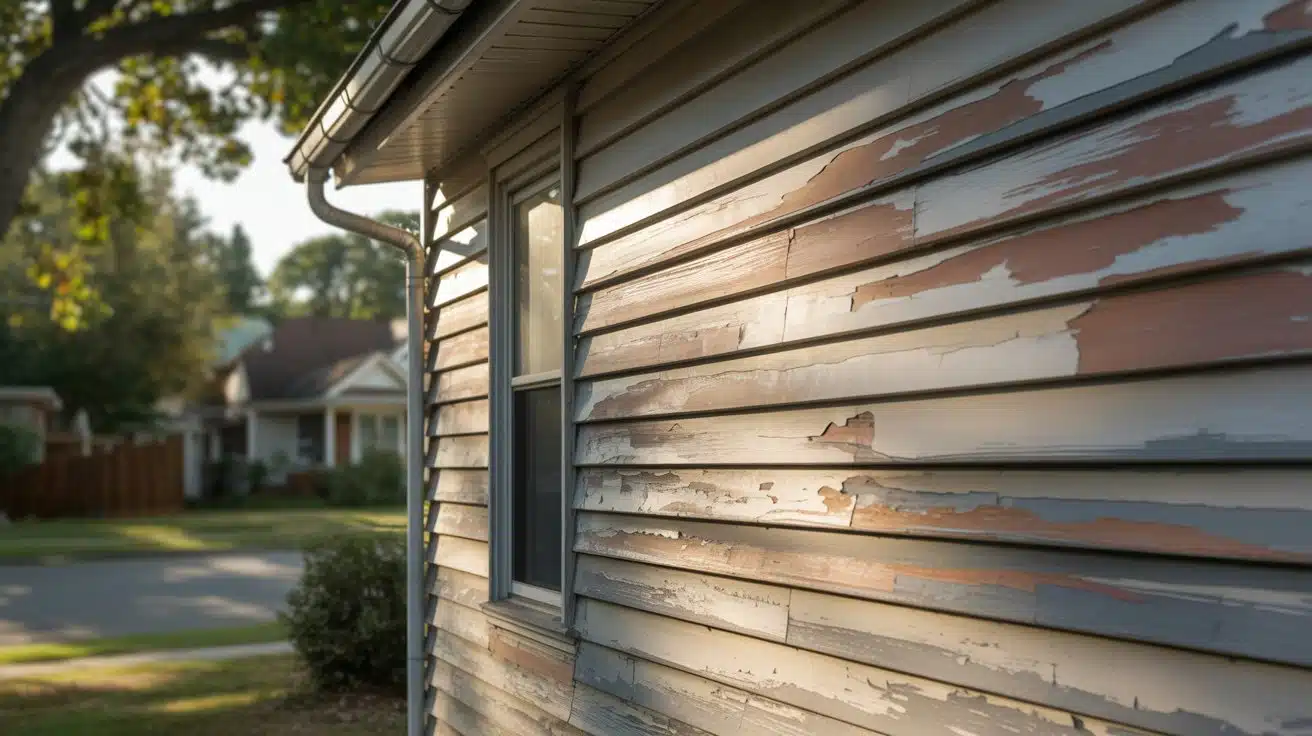
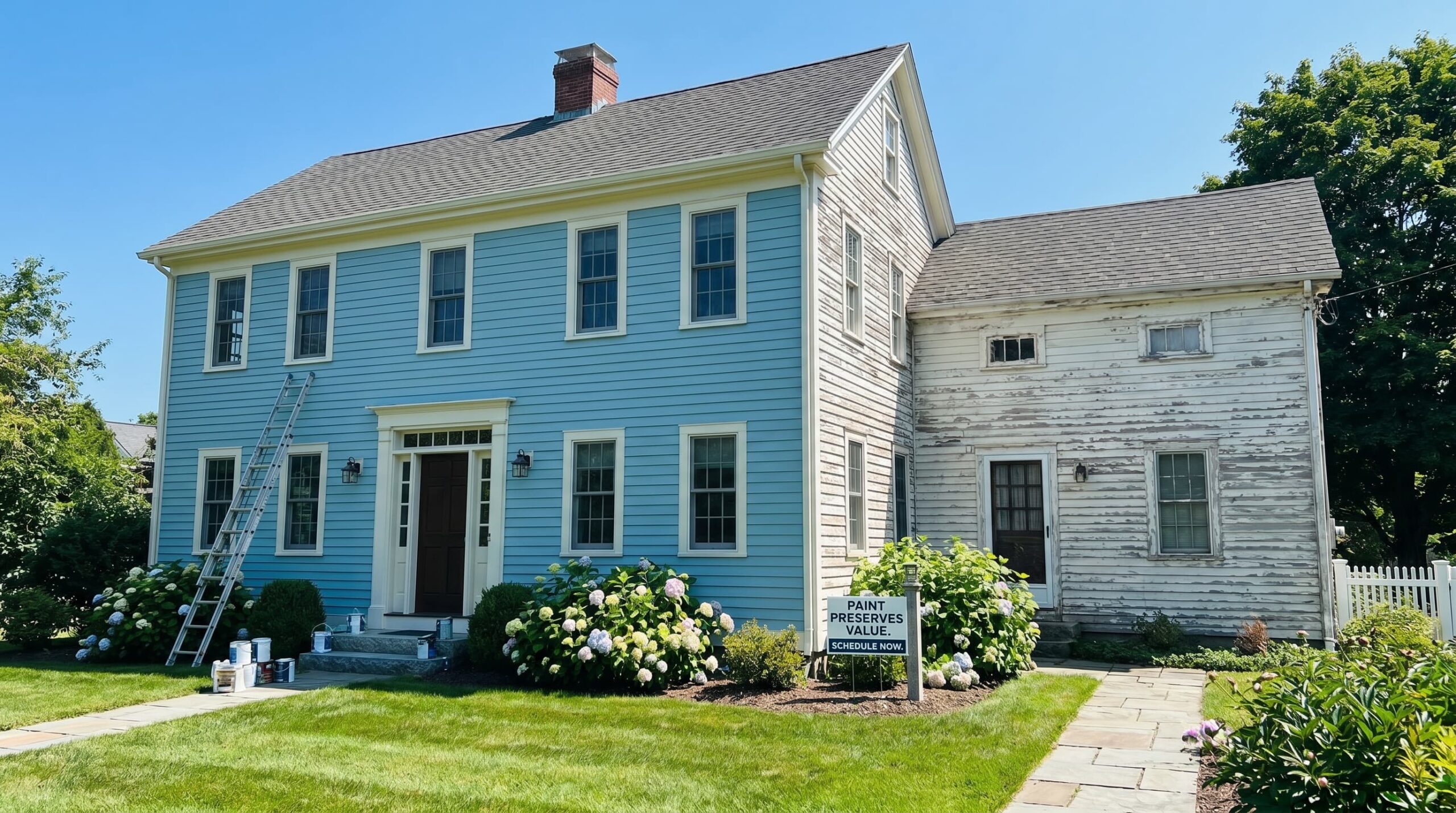
alt text: old-vinyl-siding-on-a-house-with-peeling-paint-and-visible-wear-showing-signs-of-aging-and-need-for-replacement
Some damage is obvious. Other problems hide behind panels for years before you notice. Here are the signs that your siding may be at the end of its life.
Cracks, holes, or loose panels: Small cracks let moisture in. Loose panels that rattle in the wind are no longer secure.
Warping or buckling: Panels that bend or pull away from the wall cannot be fixed. They need a full replacement.
Fading and chalking: A chalky residue means the protective surface is gone. The siding becomes more prone to cracking and moisture.
Mold, mildew, or moisture stains: Stains that return after cleaning mean water is getting behind the panels. This leads to wood rot over time.
Rising energy bills: Cracked or warped siding lets in outside air. Steadily rising heating or cooling costs can point to failing siding. If your energy bills have gone up without any changes to your daily habits, your siding may be part of the problem.
How to Make Vinyl Siding Last Longer
A little care each year can add a full decade or more to your siding’s life. These are the most effective steps.
Clean Siding at Least Once a Year
Use a soft brush, mild soap, and water to remove dirt, mold, and algae. Avoid harsh chemicals that break down the vinyl surface. A solution of 70% water and 30% white vinegar works well for stubborn mildew spots.
Inspect Annually
Walk around your home once a year and inspect your siding closely. Check for cracks, loose panels, gaps around windows, and any signs of moisture. Catching small problems early prevents them from turning into costly repairs later.
Repair Minor Issues Early
A small crack today becomes a big problem next season. Fix minor cracks, holes, or loose panels as soon as you spot them. Early repairs stop moisture from getting behind the siding and protect the structure of your walls.
Avoid Heat Exposure
Keep grills, fire pits, and heat sources away from your siding. Reflected sunlight from windows can also create intense heat on nearby panels, which can warp them.
Even brief repeated heat exposure can cause permanent damage, so give at least three feet of clearance between any heat source and your exterior walls.
Use Low-Pressure Cleaning Only
Always use a soft-bristle brush or a low-pressure garden hose to clean siding. Avoid high-pressure washers. They force water behind panels and damage seams, which leads to the same moisture problems you are trying to prevent.
Trim Trees and Shrubs Near Siding
Branches that rub against your siding scratch the surface and trap moisture against the panels. Keep landscaping trimmed back so air can circulate freely around your exterior walls. This also helps prevent mold and algae buildup in shaded areas.
How Much Does It Cost to Replace Vinyl Siding?
When your siding reaches the end of its useful life, replacement costs depend on your home’s size, the grade of vinyl you choose, and local labor rates. On average, vinyl siding replacement runs between $5 and $12 per square foot installed.
For a typical 1,500-square-foot home, expect to pay somewhere between $7,000 and $18,000 for a full replacement, including removal of the old panels.
Insulated vinyl and premium finishes cost more upfront but often pay for themselves through lower energy bills and a longer lifespan. If you are weighing the numbers, siding cost by material can help you compare options side by side.
Common Reasons Vinyl Siding Fails Early
Most early siding failures are preventable. Here are the most common causes.
Low-quality materials: Thin, cheap panels crack, fade, and warp far sooner than higher-grade options.
Poor installation: Panels nailed too tightly or without proper spacing, but buckle and fail within just a few years.
Lack of maintenance: Dirt, mold, and small cracks left unaddressed quietly cause damage that builds up over time.
Heat damage from external sources: Grills, fire pits, and reflected sunlight from nearby windows warp and melt panels permanently.
Moisture trapped behind panels: Poor sealing allows water in. Over time, this leads to mold, rot, and serious structural damage.
Repair or Replace Vinyl Siding?
Not every damaged panel means a full replacement. Here is how to decide.
- When repair is enough: Damage is minor, localized, and your siding is under 20 years old.
- When replacement is better: Problems keep returning, or damage is widespread across multiple areas.
- Cost vs long-term value: Repairs cost less upfront, but repeated fixes add up quickly over time.
- Age-based decision: Under 20 years, repair first. Over 25 years, replacement is the smarter choice.
Vinyl Siding vs Other Siding Materials for Longevity
Vinyl is a popular choice, but how does it compare to other materials? Here is a side-by-side look.
| Factor | Vinyl | Fiber Cement | Wood | Aluminum |
|---|---|---|---|---|
| Lifespan | 20 to 40 years | 30 to 50 years | 20 to 40 years | 30 to 50 years |
| Maintenance Level | Low | Moderate | High | Low to moderate |
| Rot Resistance | Excellent | Excellent | Poor | Excellent |
| Fade Resistance | Moderate | Good | Poor | Moderate |
| Impact Resistance | Moderate | High | Moderate | Low |
| Upfront Cost | Low | Moderate to high | Moderate | Moderate |
| Long-Term Value | Good | Very good | Average | Good |
| Best For | Budget-friendly, low-maintenance | Durability and longevity | Traditional appearance | Lightweight and rust-free option |
Fiber cement and aluminum both outlast vinyl on average. But vinyl remains the most cost-effective option for homeowners who want a good-looking exterior without heavy upkeep.
If you are deciding between the two most popular choices, fiber cement vs. vinyl covers the full breakdown.
To Sum It Up
The honest answer is somewhere between 20 and 40 years for most homes. Where you land in that range depends on what you buy and how well you take care of it. Cheap panels installed poorly in a harsh climate will not last 20 years.
Quality panels with foam backing, installed by a pro and washed once a year, can push well past 40.
If your siding shows cracks, fades unevenly, or lets moisture through, do not wait for the damage to spread. Get a professional inspection, fix what you can fix early, and plan for replacement when repair costs start adding up.
Your home’s exterior works hard every day. A small amount of attention each year is the best way to keep it performing for the long run.
Frequently Asked Questions
Can Rain Water Get Behind Vinyl Siding?
Yes. Rainwater can get behind vinyl siding through cracks, loose panels, or poorly sealed seams. This leads to mold and structural damage over time.
Can You Use Dawn to Wash Vinyl Siding?
Yes. Dawn dish soap mixed with water is a safe, effective option for cleaning vinyl siding. Use a soft brush for best results.
Is There Anything Better than Vinyl Siding?
Fiber-cement siding lasts longer and withstands harsh weather better. However, it costs more upfront. Vinyl remains the best choice for budget-conscious people.