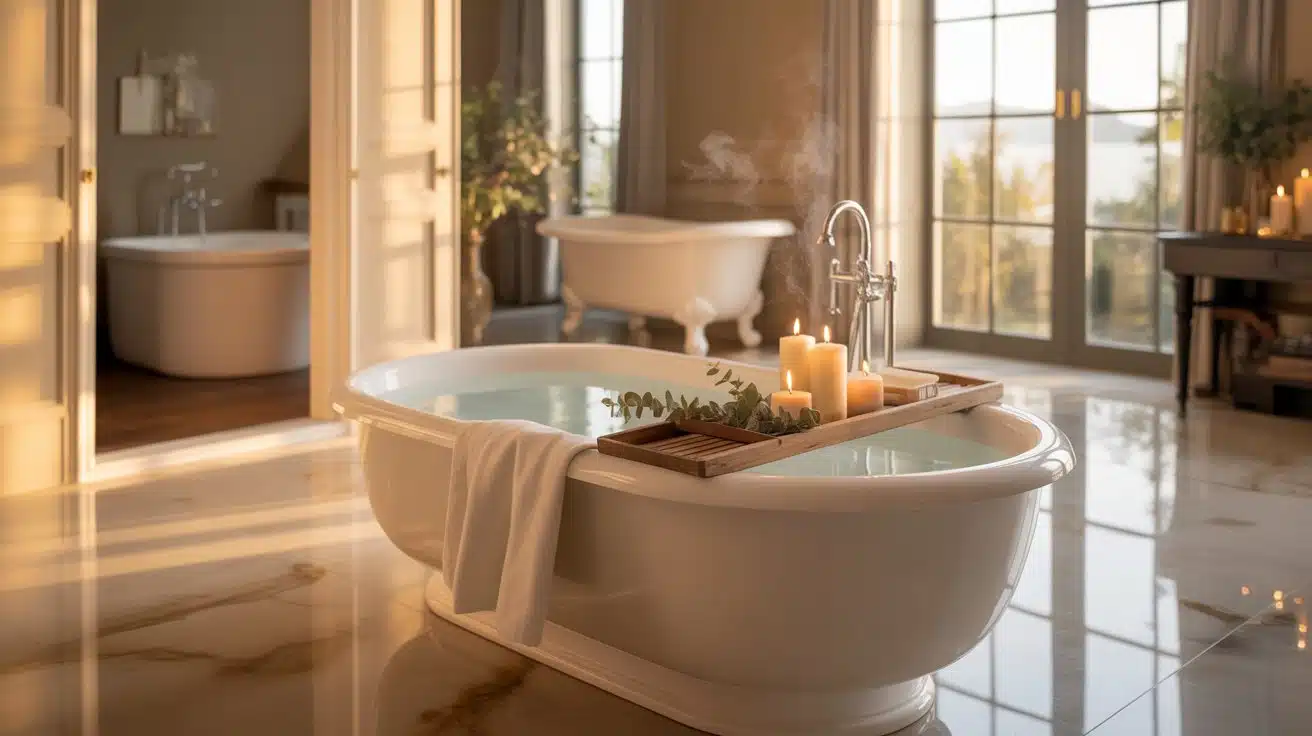
Choosing the right bathtub can transform a purely functional bathroom into a personal wellness sanctuary.
Yet with so many styles currently on the market, making a truly informed decision can feel overwhelming.
The global bathtub market is projected to reach $8.8 billion in 2025, reflecting the seriousness with which homeowners are now investing in their bath spaces.
According to Houzz, 6 in 10 homeowners in bathroom renovation projects chose or preferred a soaking tub.
Whether you’re renovating a compact apartment or designing an expansive master suite, understanding the differences is the first essential step.
This guide breaks down the distinct types of bathtubs, covering their designs, benefits, and who each one suits best.
10 Types of Bathtubs You Should Know Before Buying
Not all bathtubs are built the same. Here is a breakdown of the ten most popular types available today, so you can match the right tub to your space, lifestyle, and budget.
1. Alcove Bathtub
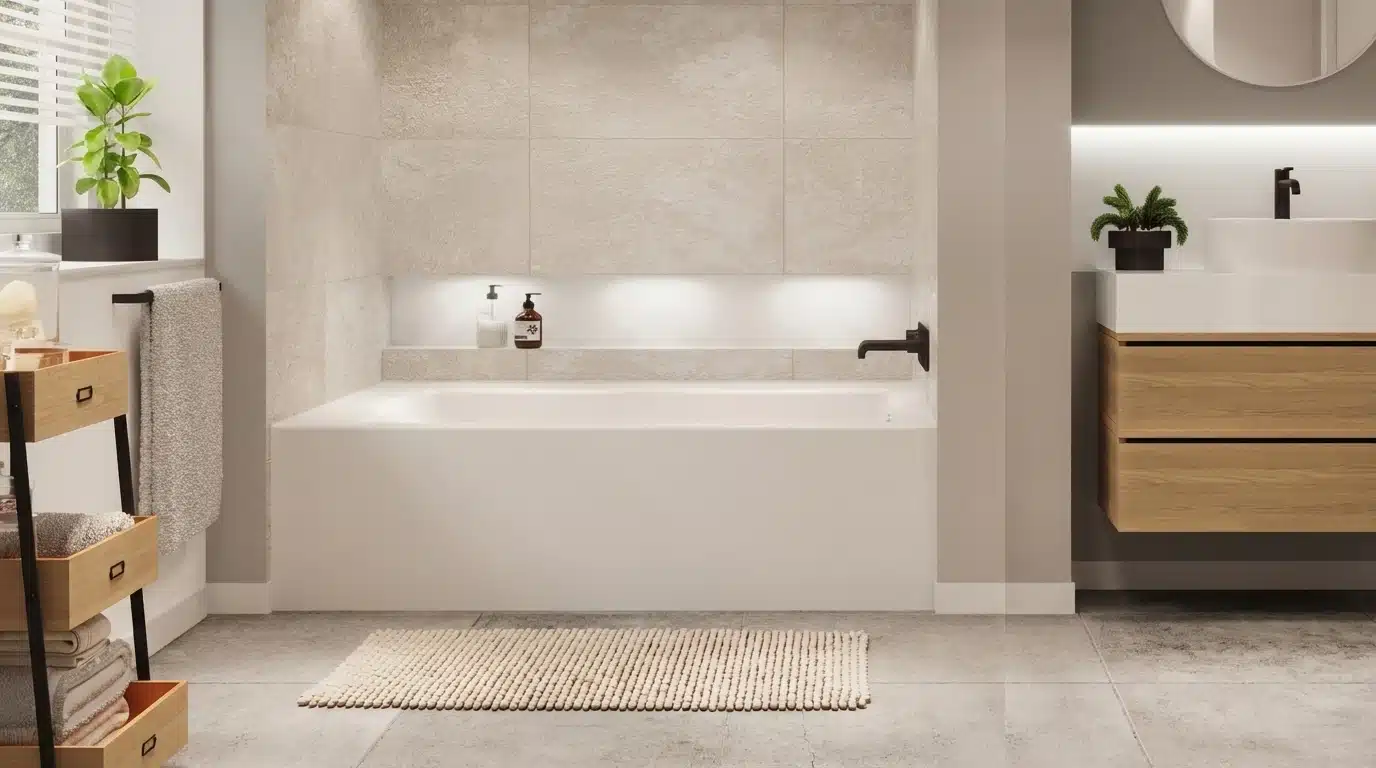
The most widely installed bathtub in residential homes, the alcove tub fits flush between three walls with its single finished side facing outward.
Its surround naturally accommodates a showerhead above, making it the default tub-shower combo for family bathrooms, apartments, and guest suites.
Available in acrylic, fiberglass, cast iron, and steel, it covers a broad price range, with basic models starting at around $200.
- Pros: Budget-friendly; easy installation with standard plumbing; highly space-efficient for bathrooms under 50 sq ft.
- Cons: Limited visual impact; shallower depth reduces the immersive soaking experience.
- Best For: Families, first-time homeowners, compact layouts, and budget renovations.
2. Freestanding Bathtub
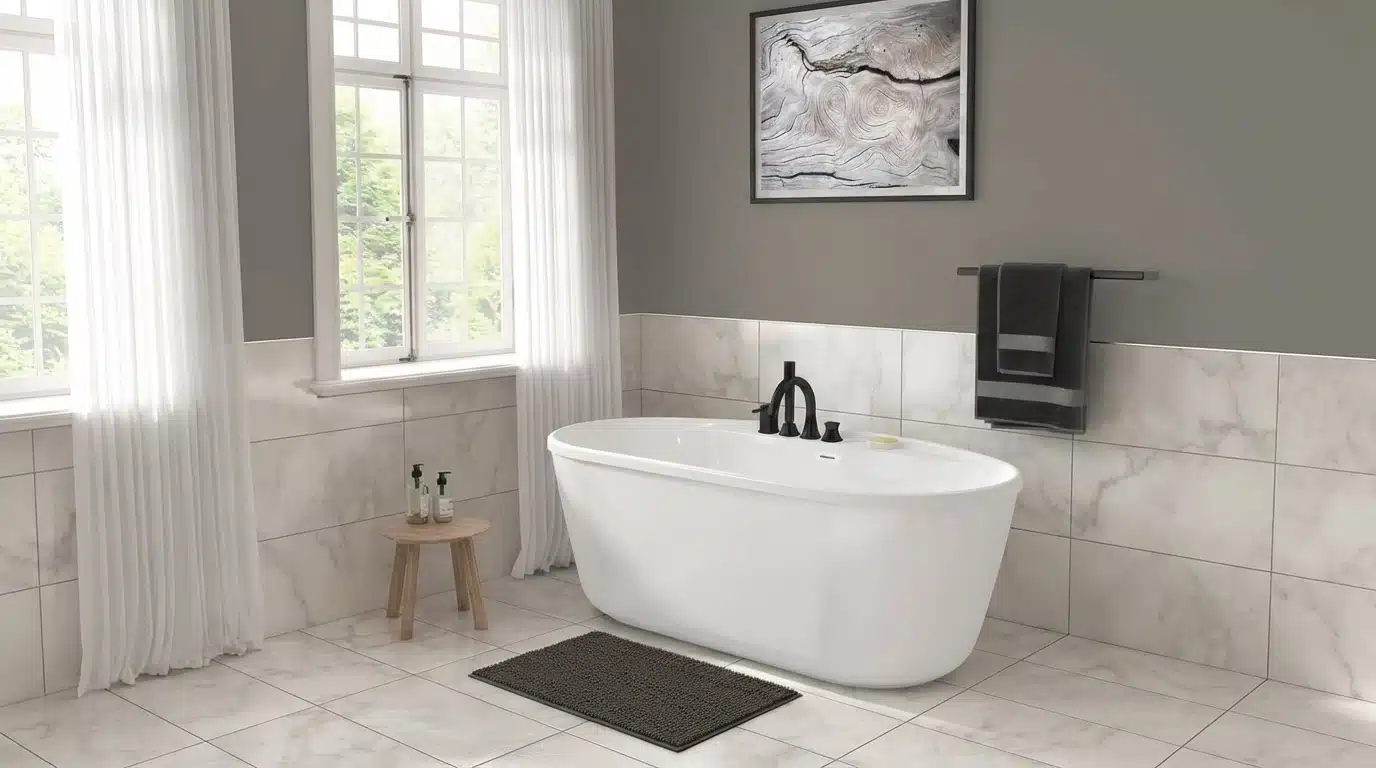
A freestanding tub stands independently on the floor with no wall attachment, often serving as the visual centerpiece of a master bathroom.
It comes in oval, slipper, and double-ended silhouettes. Acrylic is the most popular material, chosen by 60% of upgrading homeowners according to Houzz, while stone resin and cast iron offer superior heat retention for longer soaks.
Rooms of 70 sq ft or more are best suited to accommodate this style comfortably.
- Pros: Spa-like aesthetic; flexible placement during renovations; wide variety in shapes and materials.
- Cons: Requires more floor space; heavier models may need structural floor reinforcement; showering requires a ceiling or wall-mounted fixture.
- Best For: Master bathrooms, luxury remodels, and design-forward homeowners.
3. Drop-in Bathtub
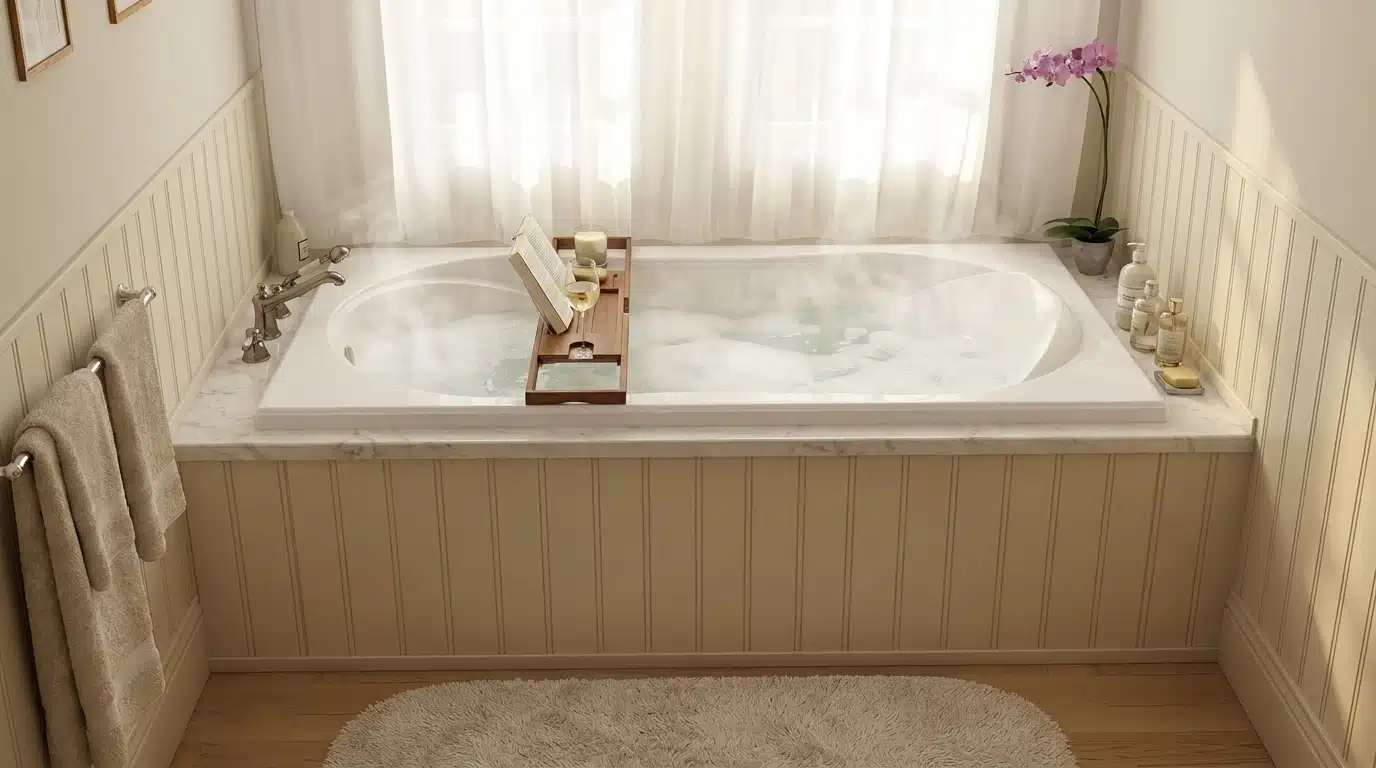
Drop-in tubs are lowered into a custom-built platform or deck, with only the rim exposed.
The surrounding structure can be finished in tile, stone, or wood, giving homeowners complete creative control over the visual presentation.
Plumbing remains accessible beneath the deck, making future repairs or replacements easier. Shapes range from compact rectangles to oversized ovals.
- Pros: Fully customizable aesthetic; accessible plumbing for repairs; strong variety in shape and size.
- Cons: Platform construction raises overall installation cost; ledge surfaces accumulate soap residue if not sealed properly.
- Best For: Medium-to-large bathrooms and design-focused custom remodels.
4. Corner Bathtub
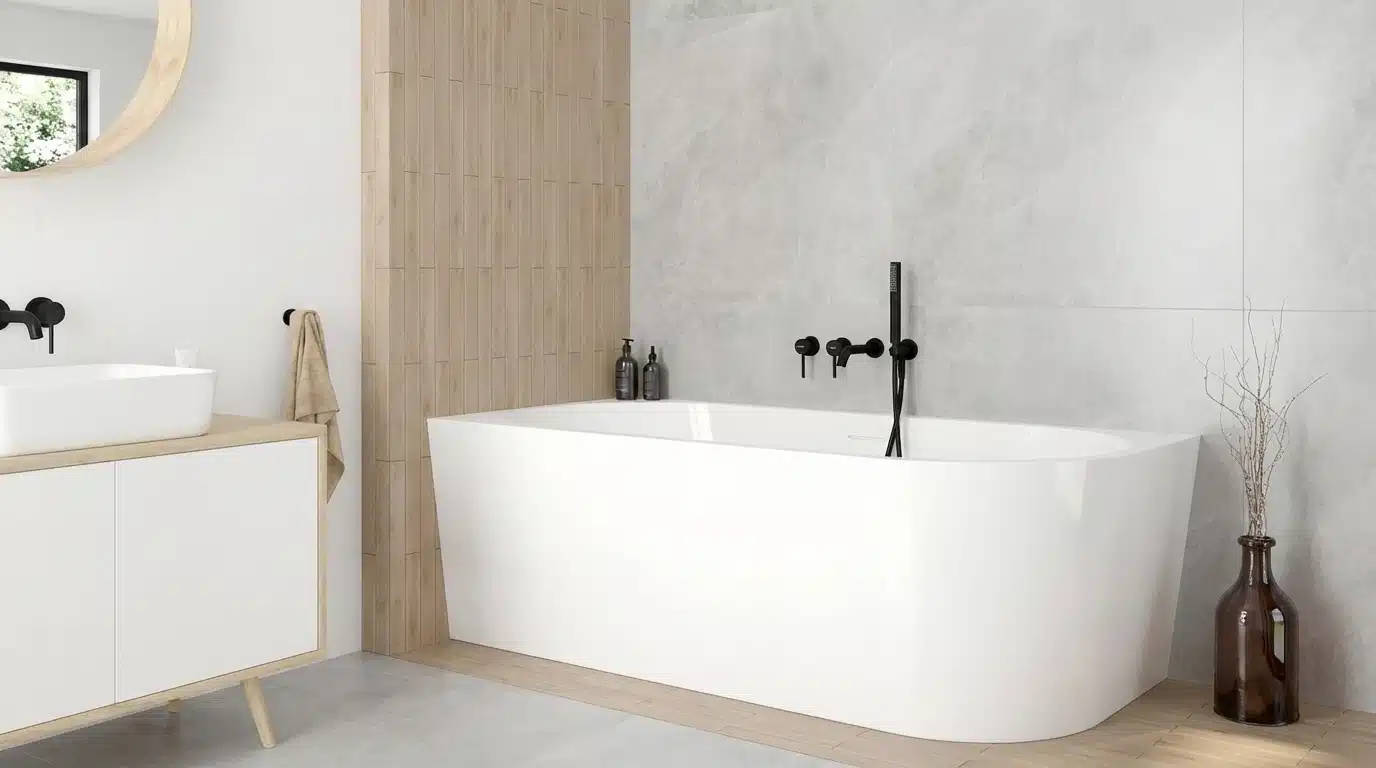
Engineered specifically for bathroom corners, these triangular or wedge-shaped tubs convert what would otherwise be wasted angular space into a generous bathing area.
Despite a compact footprint, many models offer a surprisingly deep soaking capacity, and larger versions can accommodate two bathers, making them a smart choice for shared or secondary bathrooms with unusual layouts.
- Pros: Maximizes unused corner space; deeper capacity than standard tubs; two-person models available.
- Cons: Triangular shape can restrict natural reclining positions; standard replacement parts are less readily available.
- Best For: Guest bathrooms, oddly shaped rooms, and space-conscious renovations.
5. Soaking Bathtub
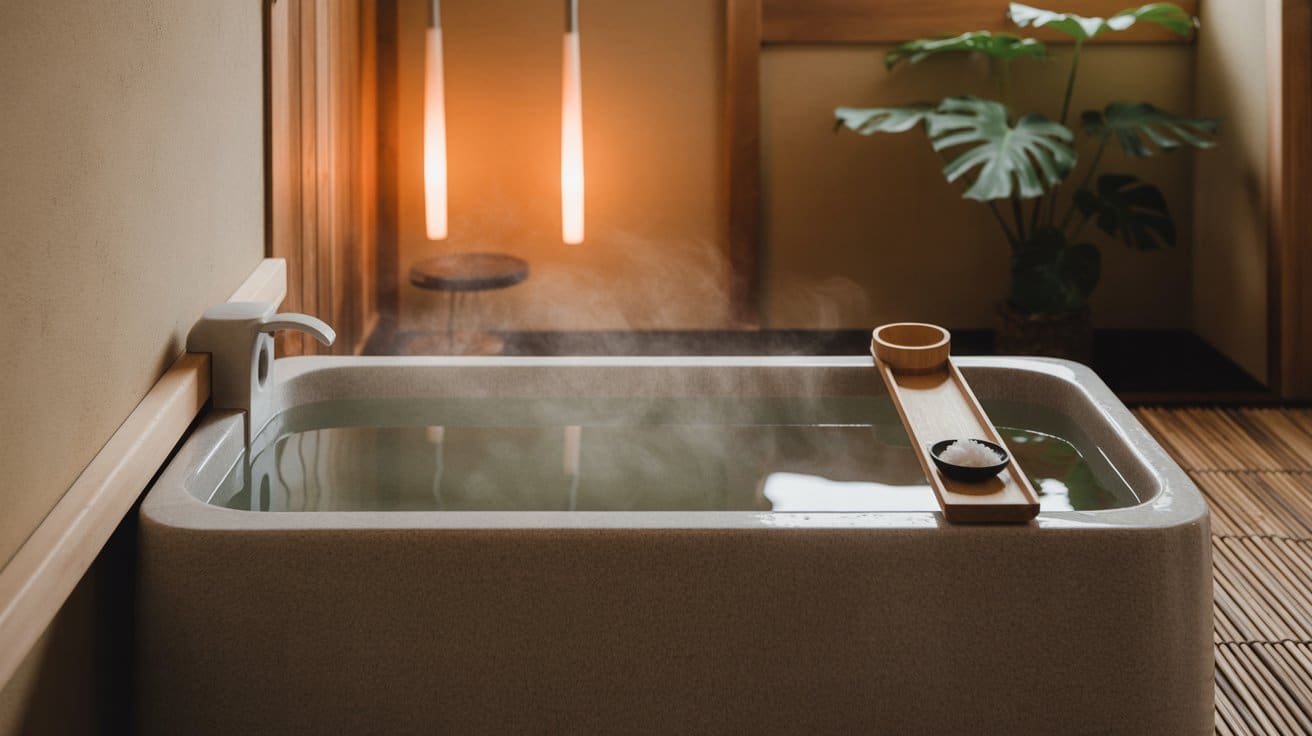
Soaking tubs are defined by exceptional depth, typically 14 to 20 inches, designed for full shoulder-to-toe submersion.
Unlike jetted options, the experience relies entirely on water volume and stillness, creating a meditative, low-maintenance bath.
They are available across freestanding, drop-in, and undermount installation formats, providing strong placement flexibility regardless of bathroom size.
- Pros: Superior relaxation and muscle tension relief; no mechanical components to clean or maintain; versatile installation options.
- Cons: Higher water consumption per bath; a deeper entry point can be challenging for users with limited mobility.
- Best For: Wellness-focused homeowners, large master bathrooms, and dedicated relaxation spaces.
6. Walk-in Bathtub
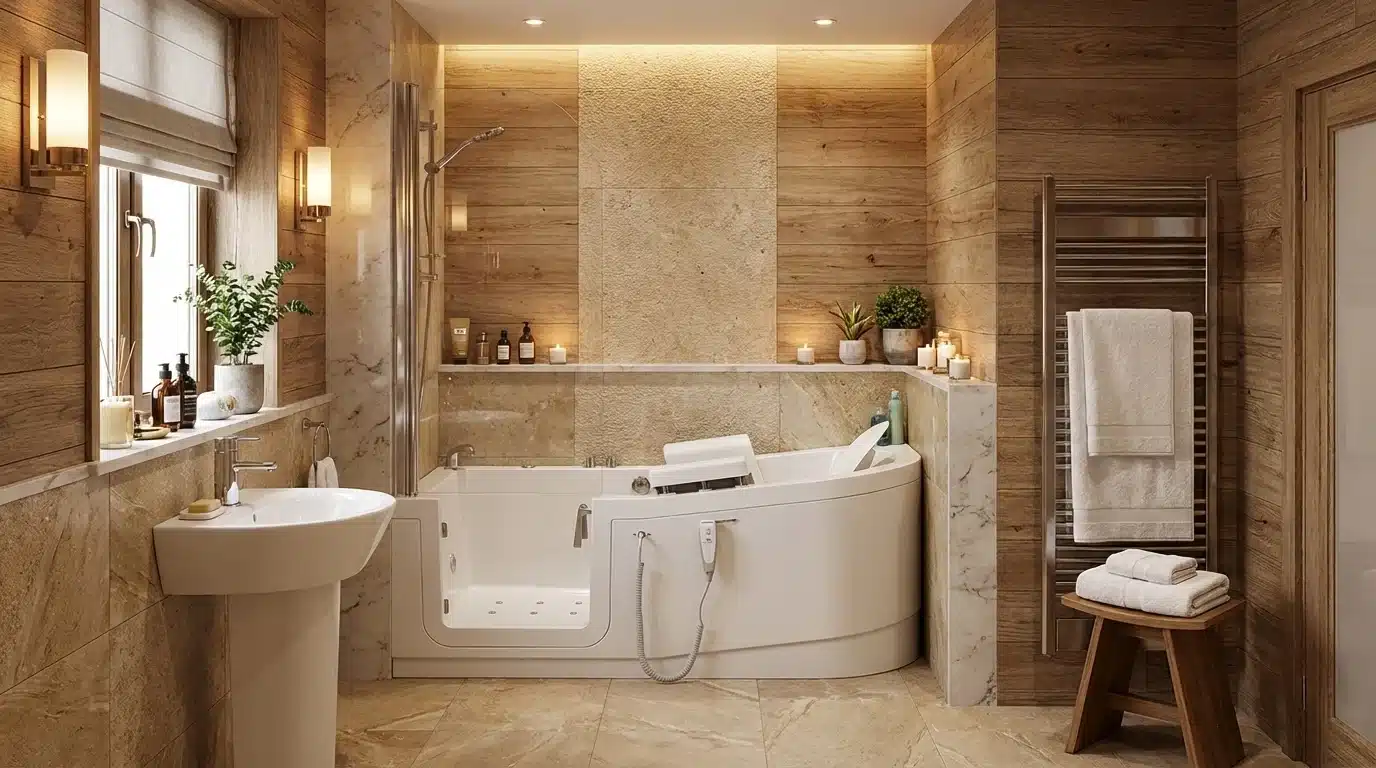
Walk-in tubs feature a watertight door built into the tub wall, eliminating the need to step over a high ledge.
Standard safety features include built-in seating, non-slip flooring, and grab bars. Many units incorporate hydrotherapy jets for added therapeutic benefit.
One important consideration: users must wait for water to fully drain before opening the door to exit, a factor worth weighing in colder climates.
- Pros: Outstanding accessibility for seniors and those with limited mobility; may qualify for aging-in-place modification grants; tub-shower combinations available.
- Cons: Higher price point ($4,000 to $12,000); draining before exiting leads to uncomfortable heat loss.
- Best For: Seniors, individuals with disabilities, and aging-in-place bathroom remodels.
7. Whirlpool / Jetted Bathtub
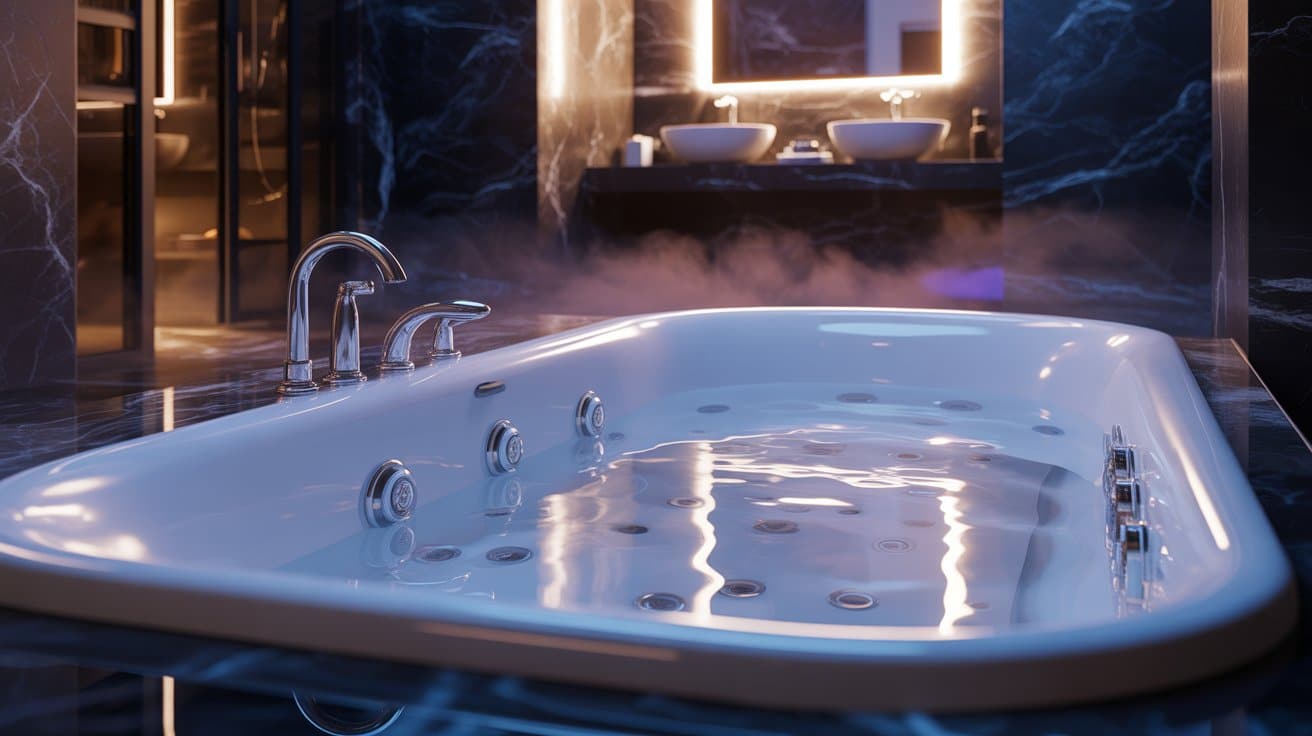
Whirlpool tubs use pressurized water jets to deliver targeted muscle massage, while air bath variants generate thousands of tiny bubbles for a gentler, full-body sensation.
Premium configurations include chromotherapy lighting, Bluetooth speakers, and inline water heaters.
A dedicated electrical circuit is required for installation, which adds complexity to the overall project scope.
- Pros: Proven hydrotherapy benefits; customizable jet placement and intensity; premium home-spa experience.
- Cons: Jets require routine cleaning to prevent bacterial and mold buildup; higher ongoing energy costs than passive tub types.
- Best For: Luxury bathrooms and homeowners seeking deep muscle recovery at home.
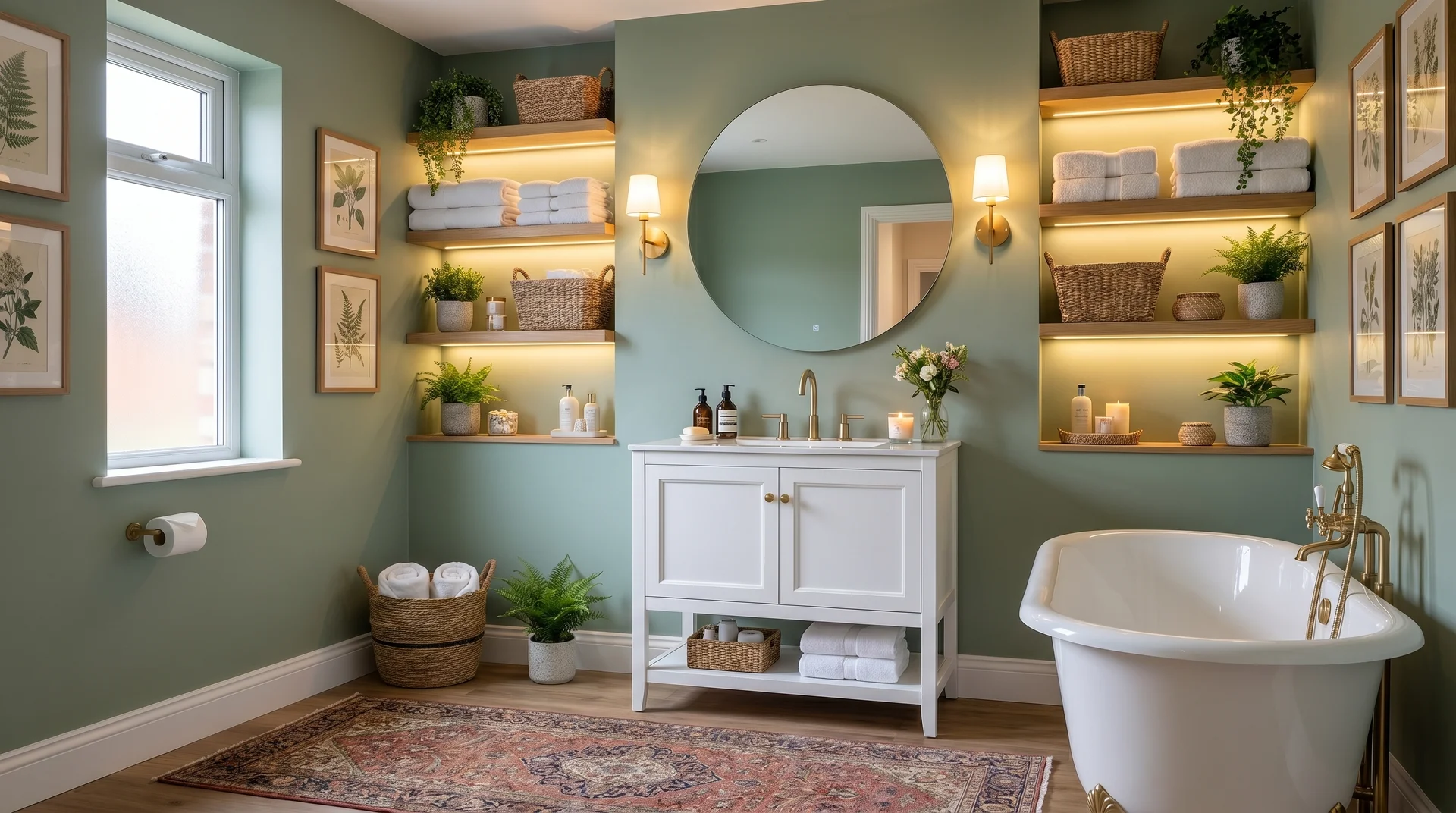
8. Clawfoot Bathtub
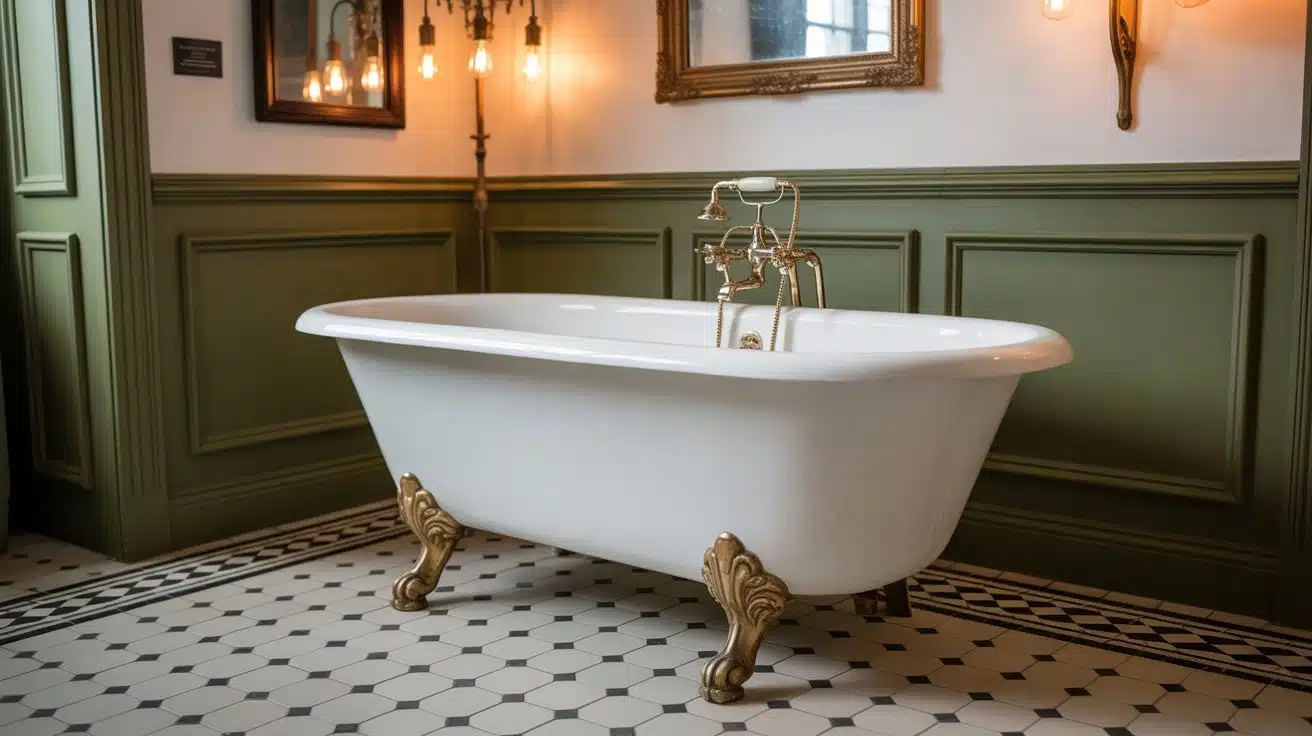
A distinguished subtype of the freestanding family, the clawfoot tub is defined by four ornamental feet and a deeply rolled rim.
Originally crafted in cast iron during the Victorian era, modern versions are now available in lightweight acrylic.
The exposed undercarriage makes plumbing maintenance easy, while the silhouette naturally complements vintage, farmhouse, and industrial interior schemes.
- Pros: Timeless, iconic aesthetic; cast-iron versions offer exceptional thermal mass; plumbing is easily accessible beneath the tub.
- Cons: Feet and undercarriage demand extra cleaning effort; silhouette clashes with minimalist or contemporary designs.
- Best For: Victorian, farmhouse, industrial, or eclectic bathroom aesthetics.
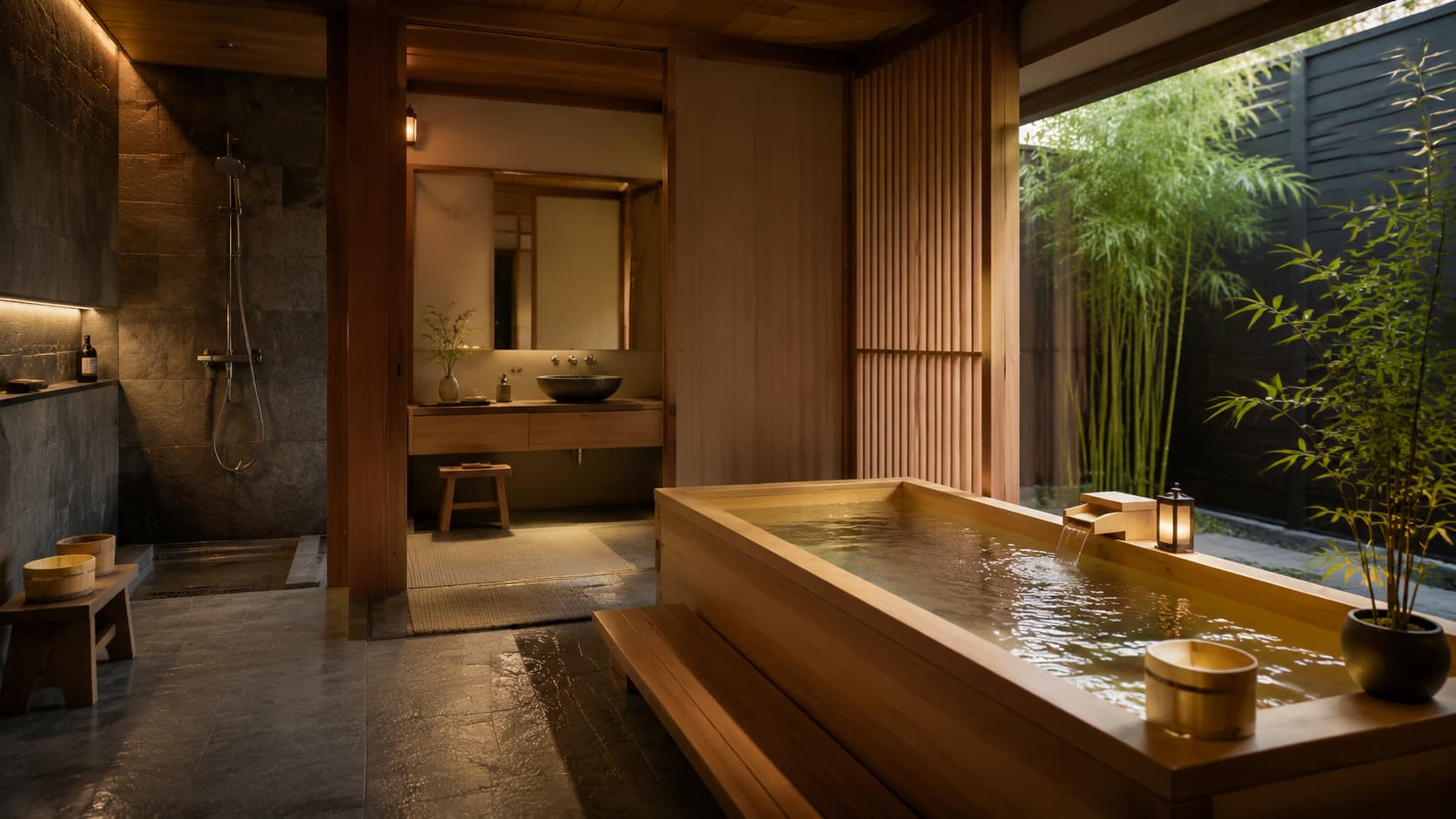
9. Japanese Soaking Tub (Ofuro)
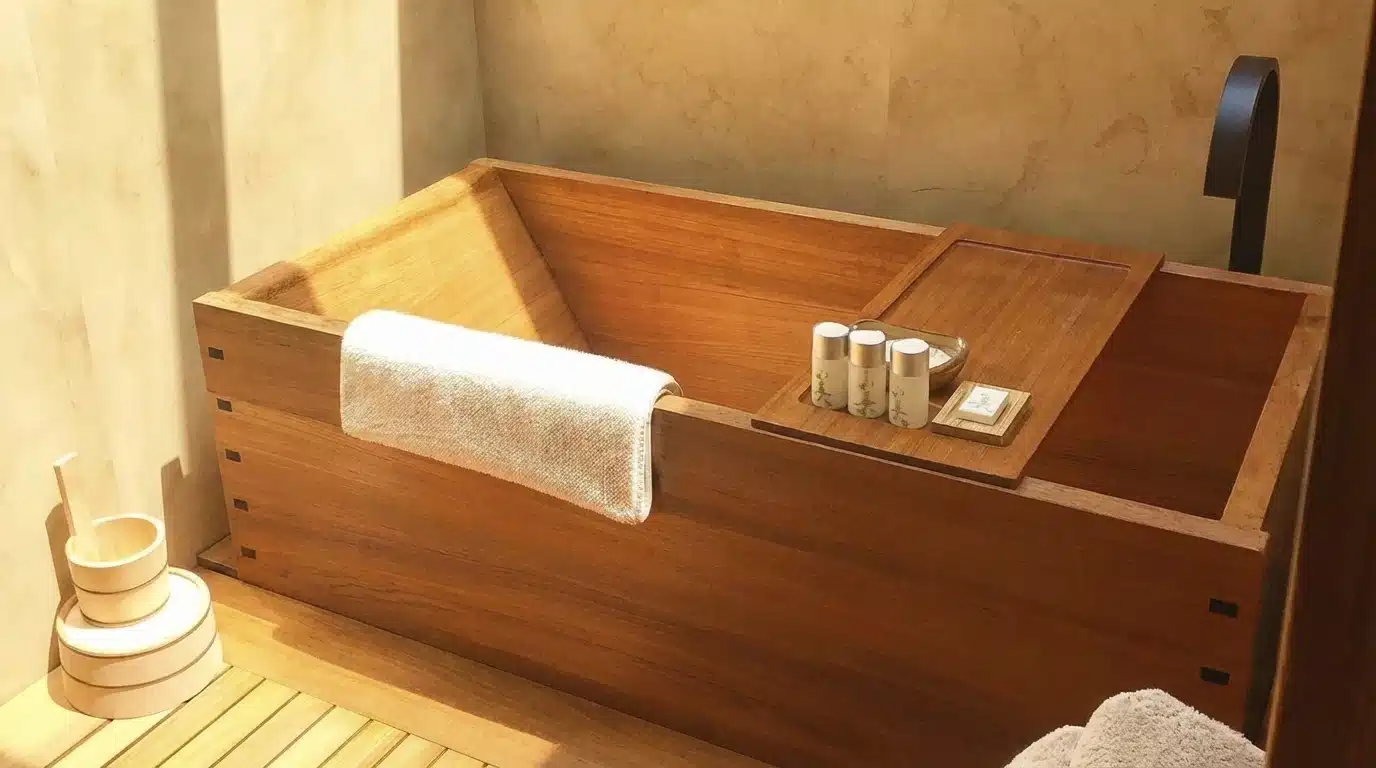
Rooted in traditional Japanese bathing culture, the ofuro is compact in length but dramatically deep, built for upright, seated immersion to shoulder level rather than lying flat.
Typical dimensions run 30 to 45 inches long with depths reaching up to 31 inches.
Traditional models use aromatic hinoki cypress wood; contemporary versions use acrylic or stone resin for easier day-to-day maintenance.
- Pros: Deep soaking in a small footprint; highly distinctive design statement; promotes a mindful, intentional bathing ritual.
- Cons: Seated-only position is unfamiliar to most Western bathers; wooden models demand consistent upkeep to resist moisture damage.
- Best For: Compact bathrooms, spa-inspired or minimalist interiors, and wellness enthusiasts.
10. Cold Plunge Tub
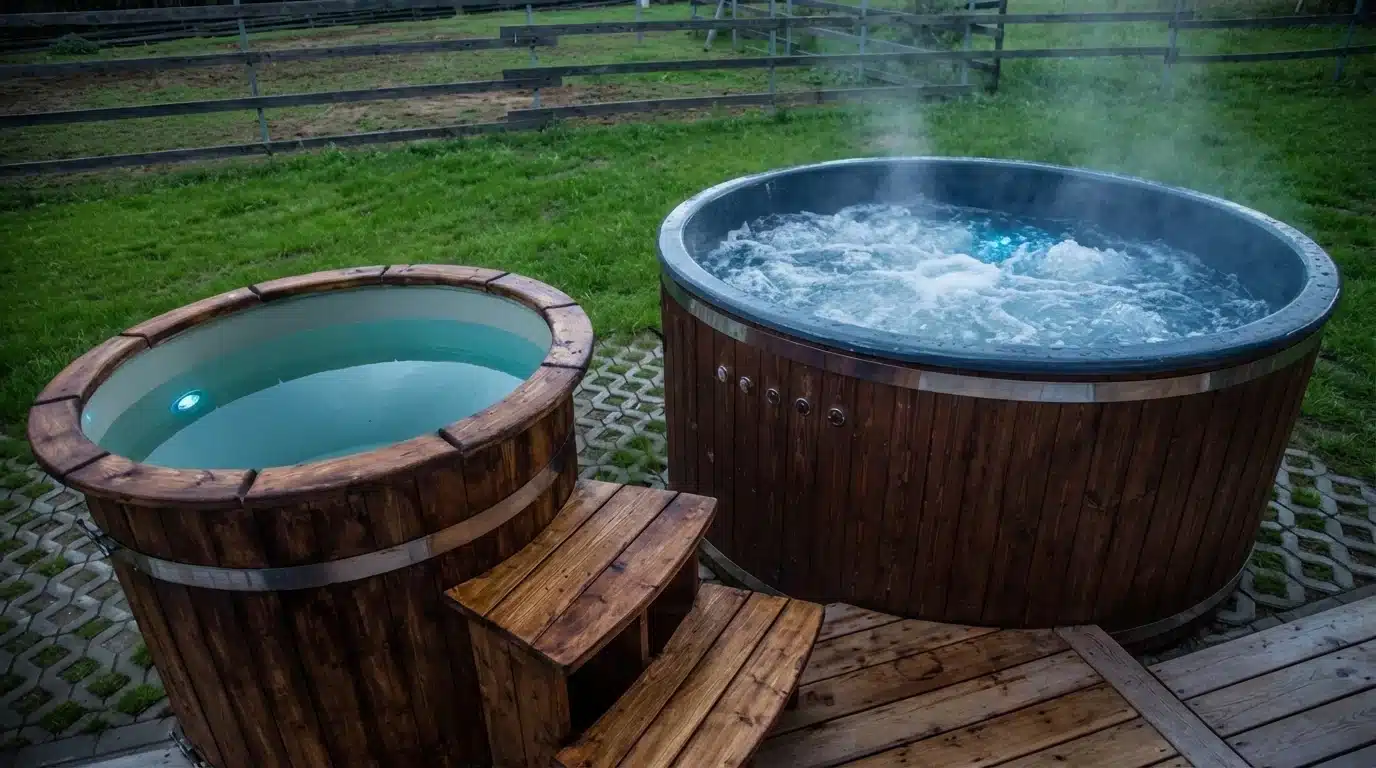
The fastest-growing home wellness product of 2025, cold plunge tubs are designed for immersion in water maintained at 50 to 59 degrees Fahrenheit (10 to 15 degrees Celsius).
Originally an athletic recovery tool, the practice has entered mainstream home spaces in barrel, standalone, and integrated formats.
A dedicated chilling unit sustains the precise target temperature consistently throughout each session.
- Pros: Supports reducing inflammation, improving circulation, and building mental resilience; equally suited to indoor and outdoor installations.
- Cons: Requires a chilling unit for sustained cold; not appropriate for grooming or bathing with soap and products.
- Best For: Athletes, biohackers, wellness-oriented homeowners, and outdoor spa setups.
Conclusion
From the everyday practicality of an alcove tub to the deeply restorative rituals of a cold plunge, every bathtub type in this guide serves a distinct purpose.
The right choice ultimately comes down to three core considerations: the size of your bathroom, the specific needs of everyone using it, and your total renovation budget.
Acrylic remains the most accessible material across most styles, while cast iron and stone resin offer exceptional longevity for long-term investments.
No matter your aesthetic vision, whether spa-like luxury, vintage charm, or accessible safety, there is a bathtub type engineered precisely for it.
Use this guide as your starting point, not your ceiling.
Frequently Asked Questions
What Type of Tub Lasts the Longest?
Enameled cast iron is generally considered the longest-lasting bathtub material.
What Is a Cinderella Tub?
A Cinderella tub is a vintage mid-century corner bathtub popular in the 1950s, characterized by a diagonal, square design that fits into corner spaces to save space and features built-in seats.
What Is the Easiest Bathtub to Clean?
Acrylic tubs are generally considered the easiest to clean because they are lightweight, non-porous, and stain-resistant.