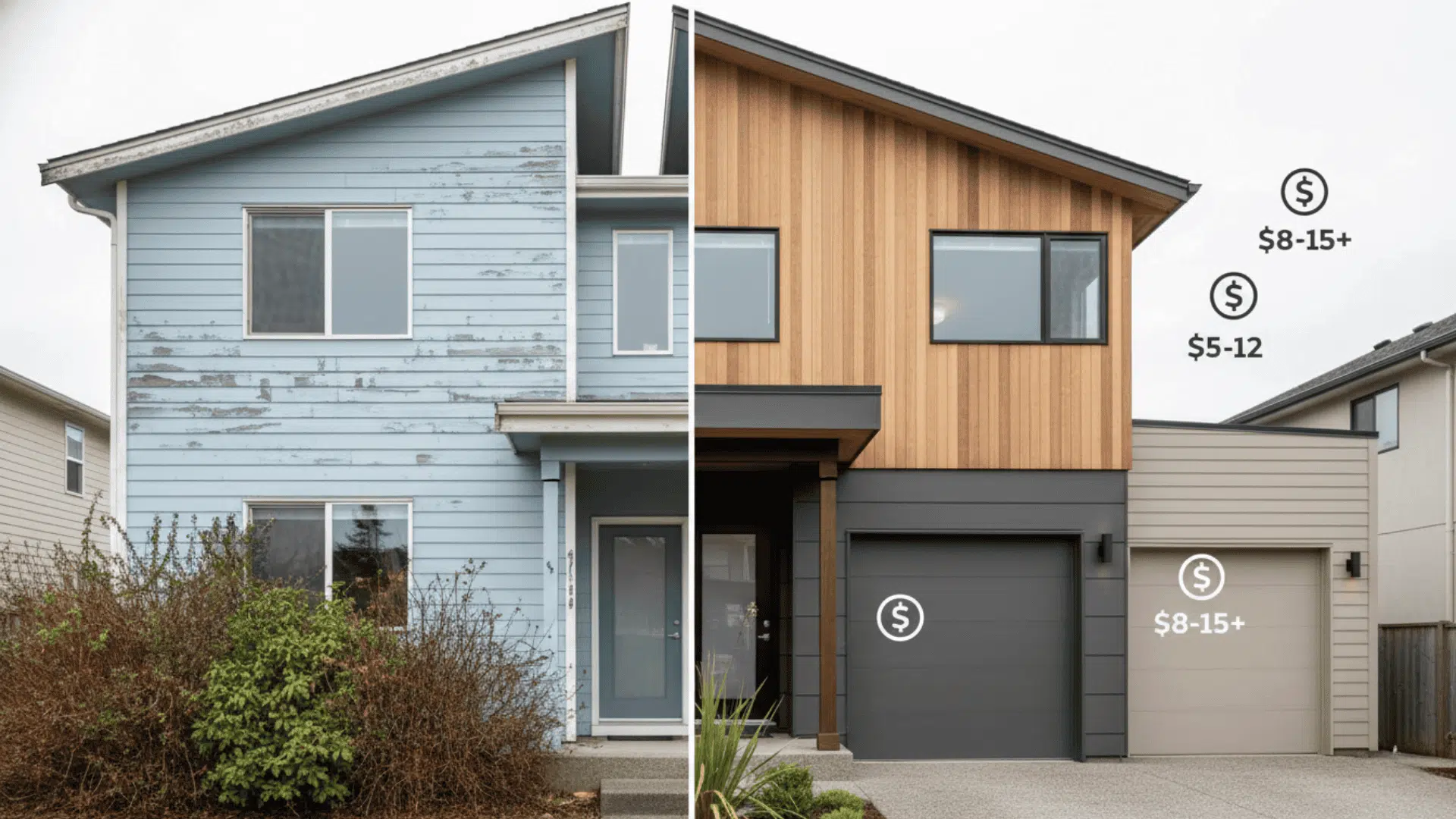
Replacing your home’s siding is a big investment, and the price can vary widely depending on the material, home size, and labor.
If you’ve been getting quotes and scratching your head, you’re not alone. Costs can range from a few thousand to tens of thousands. So, how do you figure out what’s fair for your project?
In this blog, we’ll break down the true costs of siding replacement, guide you through the estimation process, and explore whether the investment is really worth it.
By the end, you’ll have all the info you need to plan your siding project confidently.
Average Siding Replacement Costs
When considering siding replacement, costs can vary widely. Understanding the key factors that influence these prices will help you estimate your budget more accurately.
National Averages:
| Cost Type | Range |
|---|---|
| Total Cost | $8,000–$30,000 |
| Cost Per Square Foot | $3–$16 |
Factors That Influence Siding Costs
- Material Type: The choice of siding material (vinyl, fiber cement, wood, etc.) has the greatest impact on pricing, with premium materials costing significantly more.
- Home Size: Larger homes require more materials and labor, driving up the overall cost of the project.
- Location: Labor costs can vary by geographic region, with urban areas typically seeing higher rates due to higher demand and a higher cost of living.
- Design Complexity: Homes with intricate designs (like dormers, gables, or steep rooflines) require more time, skill, and scaffolding, which increases labor costs.
How Much Does New Siding Cost?
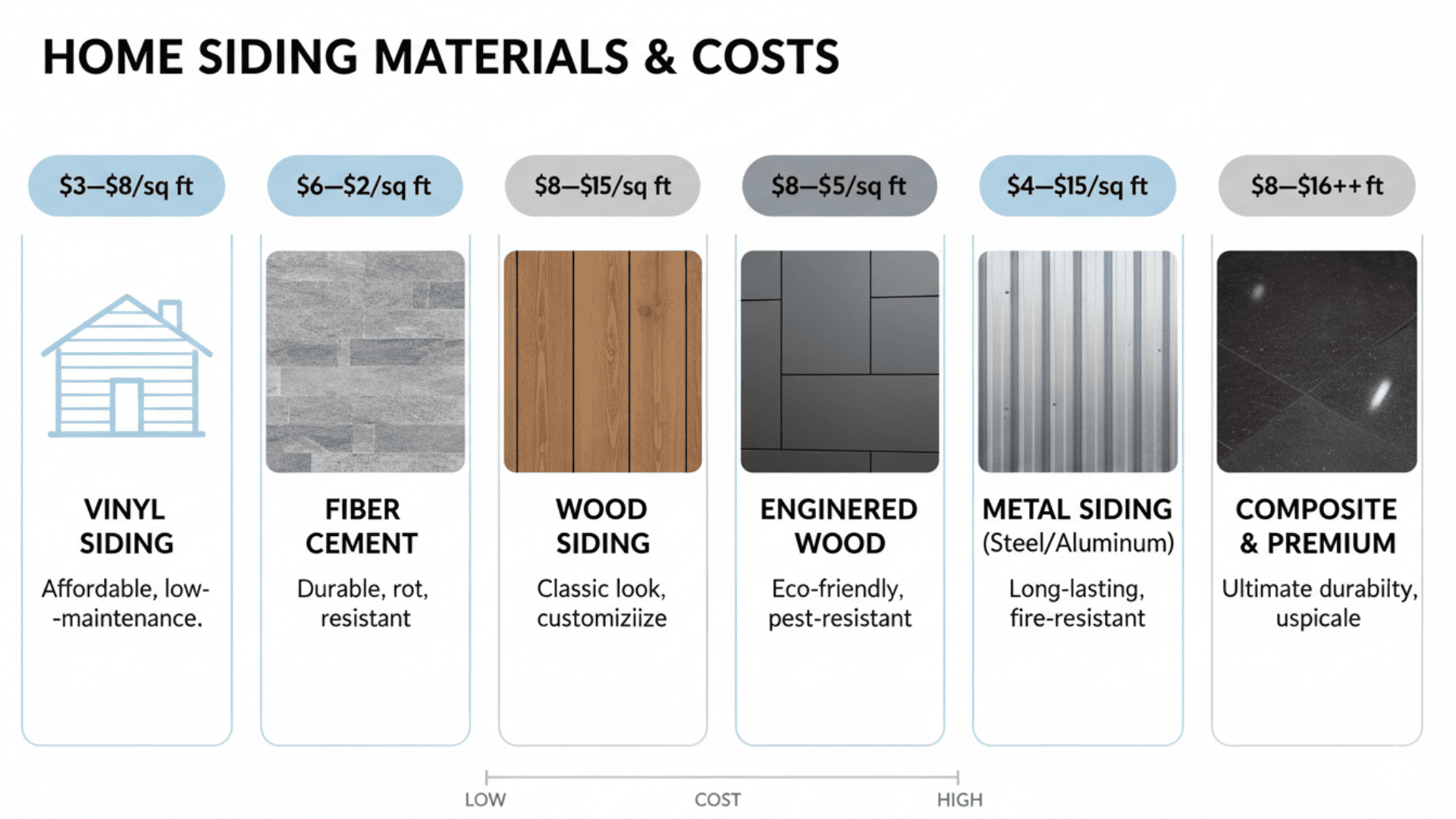
Your material selection has the greatest impact on total project cost. Here’s what new siding costs for each type:
1. Vinyl Siding
Vinyl siding is one of the most cost-effective options available. It requires little maintenance and never needs painting, making it an ideal choice for those on a budget.
- Cost per sq ft: $3–$8 installed
- Why choose it: Affordable, low maintenance, never needs painting
- Lifespan: 20-40 years
- Total estimate: $6,000–$16,000 for 2,000 sq ft
2. Fiber Cement Siding
Offering superior durability and a high-end finish, fiber cement siding is a great investment for homeowners seeking both style and long-term performance.
- Cost per sq ft: $6–$12 installed
- Why choose it: Exceptional durability, high-end appearance
- Lifespan: 50+ years, fire-resistant
- Total estimate: $12,000–$24,000 for 2,000 sq ft
3. Wood Siding
Wood siding is known for its timeless beauty and authenticity. While it requires periodic upkeep every 3-7 years, it remains a popular choice due to its natural charm. Ideal for those willing to invest in maintenance for the aesthetic appeal, it provides a classic look for many homes.
- Cost per sq ft: $8–$15 installed
- Why choose it: Natural beauty and authenticity
- Maintenance: Requires upkeep every 3-7 years
- Total estimate: $16,000–$30,000 for 2,000 sq ft
4. Engineered Wood Siding
Engineered wood siding combines the best of both worlds: the beauty of wood with enhanced durability and less maintenance. It offers a more practical solution than traditional wood, providing a solid balance between natural aesthetics and long-lasting performance.
- Cost per sq ft: $5–$9 installed
- Why choose it: Wood looks better with better durability, and less maintenance
- Total estimate: $10,000–$18,000 for 2,000 sq ft
5. Metal Siding (Steel/Aluminum)
Metal siding, whether made of steel or aluminum, is highly durable and fire-resistant. Its sleek, modern look suits contemporary homes and requires minimal upkeep, making it a smart choice for homeowners looking for durability without frequent maintenance.
- Cost per sq ft: $4–$11 installed
- Why choose it: Durability, fire resistance, modern aesthetics
- Total estimate: $8,000–$22,000 for 2,000 sq ft
6. Composite & Premium Materials
Composite and premium materials offer top-notch performance, outstanding aesthetics, and long-term durability. They are ideal for homeowners seeking a high-end finish with minimal upkeep and are often the go-to choice for those who want a distinctive, high-performance exterior.
- Cost per sq ft: $8–$16+ installed
- Why choose it: Top performance, distinctive appearance
- Total estimate: $16,000–$32,000+ for 2,000 sq ft
Consider lifetime cost, not just upfront price. Materials that require frequent maintenance may cost more over 20-30 years than pricier, low-maintenance options.
Material selection sets your baseline, but labor often surprises homeowners with its variability.
Labor Costs for Installing Siding
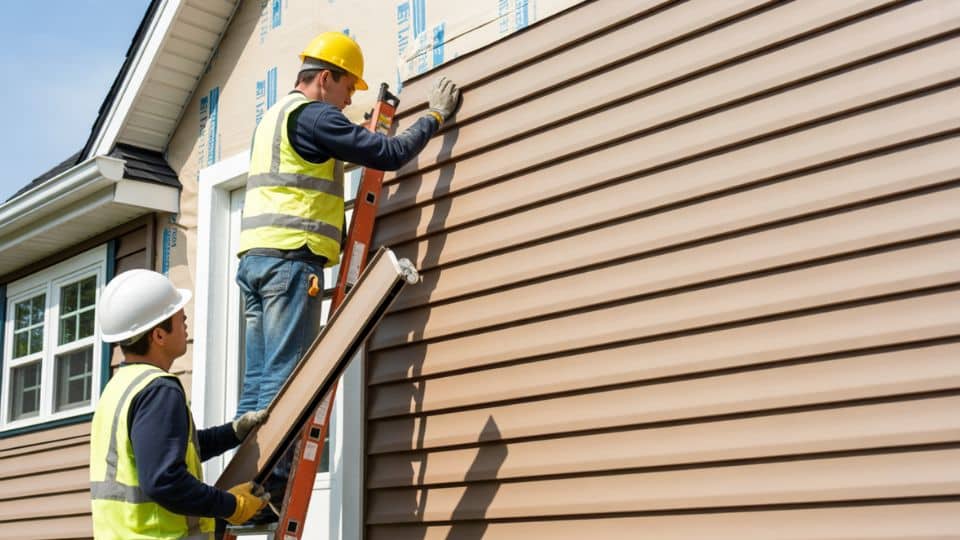
Labor represents 40-50% of most siding projects and can vary more dramatically than material costs. Here’s what influences your labor expenses:
- Labor pricing: Expect $1.50–$4.50 per square foot nationally, $5–$8+ in high-cost urban areas, and $1–$2 in rural areas.
- These rates reflect the local cost of living, contractor demand, and market competition.
- Cost increases: Multi-story homes require scaffolding and safety equipment. Steep rooflines slow installation. Removing old siding, especially when there are multiple layers, adds significant hours.
- Architectural details such as gables, dormers, and complex angles require more skilled labor and can increase costs by 20-40%.
Beyond materials and labor, your home’s specific dimensions and design add another layer of cost.
How Home Size and Design Affect the Final Price
Square footage directly correlates with cost, though the relationship isn’t always linear. Here’s what to expect:
| Home Size | Square Footage | Total Cost Range |
|---|---|---|
| Small homes | Under 1,500 sq ft | $5,000–$15,000 |
| Medium homes | 1,500–2,500 sq ft | $10,000–$30,000 |
| Large homes | 2,500+ sq ft | $40,000–$60,000+ |
Bay windows, chimneys, dormers, gables, and decorative trim require custom cutting and careful flashing, which increases time and cost by 25-40% compared to simple designs.
These visible costs are straightforward, but several additional expenses often catch homeowners by surprise.
Additional Costs to Expect (Often Overlooked)
Budget for these commonly missed expenses:
- Old siding removal: $1,000–$3,000
- Disposal fees: $300–$800
- Sheathing/framing repairs: $200–$3,000+ if water damage exists
- House wrap or insulation: $0.50–$2 per sq ft
- Trim, soffit, fascia updates: $2–$20 per linear foot
- Permit fees: $100–$500
- Painting or finishing: $1–$3 per sq ft
IMPORTANT: Budget an extra 10-20% contingency for unexpected repairs, nearly every project uncovers hidden damage.
With all variables in mind, let’s examine what it actually costs to complete projects.
Siding Cost Breakdown: Real Project Examples
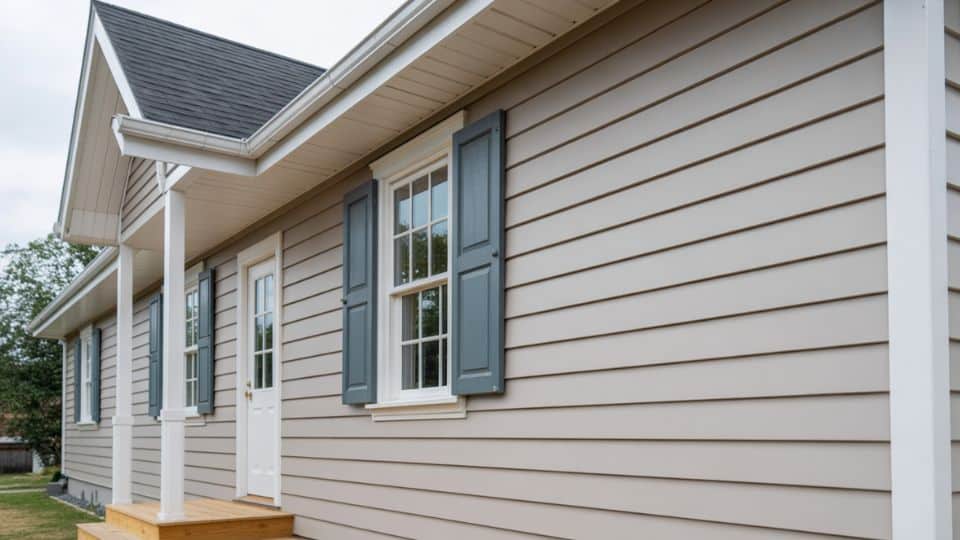
Now, let’s break down the costs of siding replacement with real-life examples. These scenarios will help you understand what to expect based on your home’s size, material choice, and design complexity.
Scenario 1: Budget-Friendly Vinyl
- Home: Simple single-story ranch, 1,500 sq ft
- Material: Basic vinyl siding
- Total cost: $7,000–$12,000
- Includes: Removal, house wrap, installation
Scenario 2: Mid-Range Fiber Cement
- Home: Two-story colonial, 2,200 sq ft
- Material: Mid-grade fiber cement
- Total cost: $18,000–$28,000
- Includes: Removal, house wrap, trim, scaffolding
Scenario 3: Premium Materials
- Home: Large with gables/dormers, 3,000 sq ft
- Material: High-end composite
- Total cost: $35,000–$55,000+
- Includes: Removal, premium materials, complex installation
Final costs depend on: Material selection, home size, architectural complexity, regional labor rates (urban markets run 20-40% higher), and existing structural condition.
Armed with these ranges, you’re ready to estimate your own project.
How to Estimate Your Own Siding Project Cost
Estimating the cost of your siding project can feel overwhelming, but it’s easier once you break it down into simple steps. Follow this guide to calculate a realistic budget based on your home’s size, material choice, and other factors.
- Step 1. Measure exterior square footage – Height × width of each wall, then add together
- Step 2. Choose material category – Budget (vinyl), mid-range (fiber cement), or premium
- Step 3. Factor labor costs – Use $2–$6 per sq ft based on complexity and location
- Step 4. Add extras – Include removal, permits, repairs
- Step 5. Add 10-20% contingency – For unexpected issues
Example: 2,000 sq ft × $7/sq ft = $14,000 + $1,500 extras + $2,325 contingency = $17,825 budget. Of course, most homeowners want to save money without compromising quality.
Ways to Reduce Siding Costs Without Cutting Quality
Strategic decisions can significantly reduce costs while maintaining excellent results:
- Choose mid-range over premium – Performance gaps are often minimal while savings reach $5,000-$15,000
- Simplify design – Clean, straightforward designs save thousands on materials and labor
- Get 3+ detailed quotes – Prices vary 20-40% for identical work
- Schedule off-peak – Late fall/winter installation may save 10-15% in suitable climates
- Handle prep work – Remove shutters or clear landscaping to save $500-$1,500
- Ask about material deals – Contractors sometimes access discounted bulk purchases
These strategies work best when you understand the true value new siding provides.
Is New Siding Worth the Investment?
With all the costs clearly laid out, the next question is whether new siding delivers value beyond the price tag. Let’s explore the long‑term benefits that make siding replacement a smart investment for many homeowners.
- Boosts Curb Appeal – Fresh siding instantly transforms your home’s appearance, creating strong first impressions and standing out positively in your neighborhood.
- Improves Energy Efficiency – Quality siding with proper insulation reduces heating/cooling costs by 10-20%, with savings offsetting installation costs over 15-20 years.
- Increases Property Value – Industry data shows homeowners typically recoup 70-85% of costs in increased home value, with new siding often justifying premium asking prices.
- Protects Structure – Quality siding prevents water infiltration, rot, mold, and pest access, and costs far more to repair than proactive replacement.
When viewed as protection, efficiency improvement, and value enhancement, siding replacement proves its worth many times over.
Conclusion
New siding is a smart investment that boosts your home’s curb appeal, energy efficiency, and overall value.
While the upfront cost may seem high, choosing the right material and planning carefully can save you money in the long run.
By understanding the factors that affect siding prices and estimating your own project, you can make an informed decision that fits your budget.
Ready to get started? Measure your home, gather quotes from reliable contractors, and choose the best siding option for your needs.
With the right approach, you’ll enjoy a lasting transformation and an increase in home value.