That dark patch on your wooden cabinet? It may not be dirt. It could be something far more concerning.
Mold on wood furniture can go unnoticed. By the time most people notice it, it has already taken hold. And if you live with it long enough, your health starts paying the price.
You will get a clear, step-by-step removal process, a breakdown of safe cleaning solutions, and solid prevention habits to keep problems away for good.
No guesswork. No complicated steps. Just straightforward information that actually helps. Ready to take back control of your space? Let’s get started.
What Mold on Wood Furniture Looks Like?
Mold on wood furniture doesn’t always show up in an obvious way. Sometimes it hides in corners or under cushions. Knowing what to look for helps you act fast.
Common Signs of Mold on Wood:
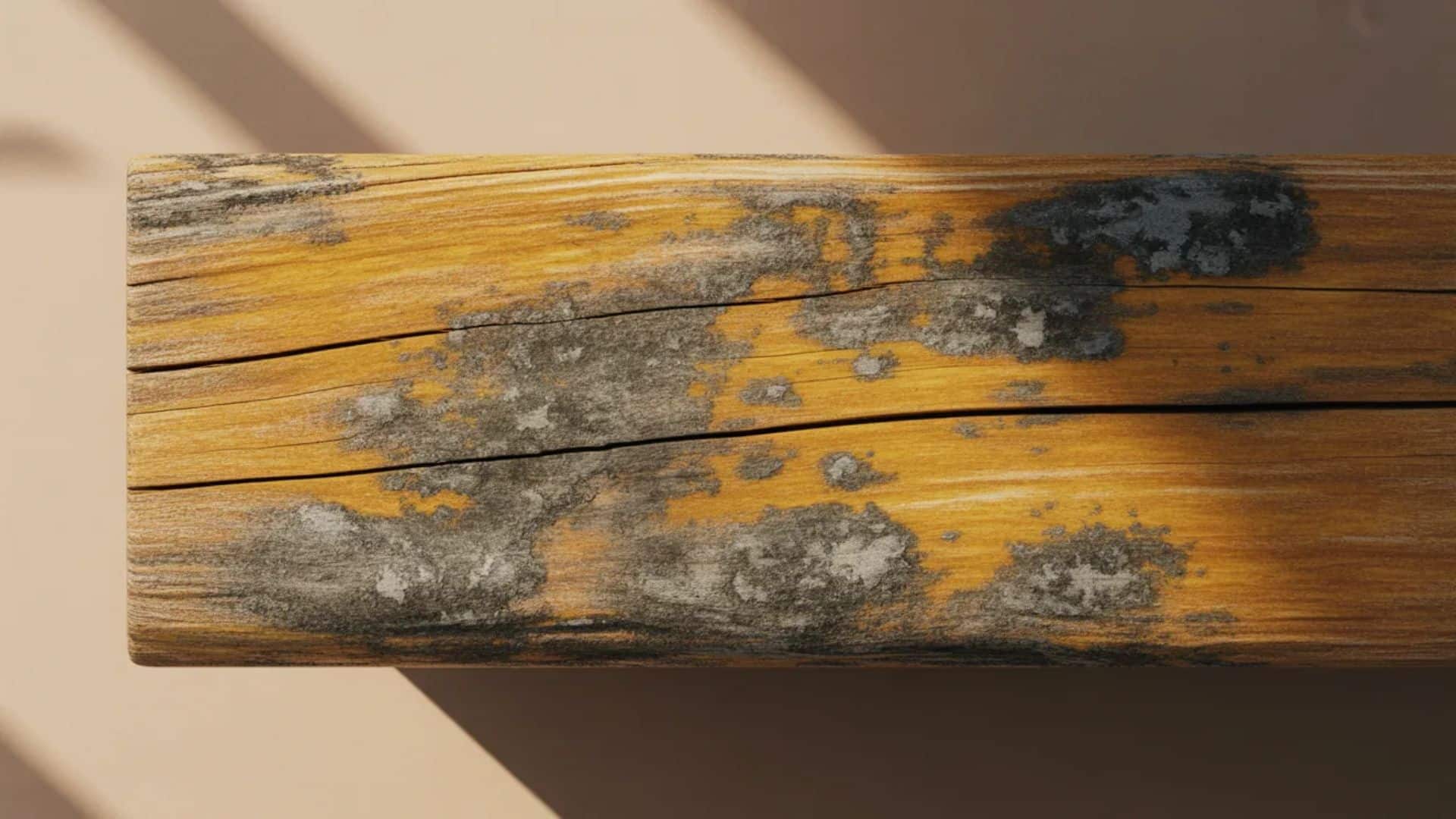
- Fuzzy or powdery patches in white, green, gray, or black
- Musty smell that hits you before you even see anything
- Discoloration or staining on the wood surface
- Damp or sticky surface that refuses to dry out
If you spot any of these signs, check the area closely. Mold spreads fast on wood.
Mold vs. Mildew on Wood Furniture:
Many people mix up mold and mildew, and that’s fair. Both grow on wood and point to excess moisture.
Mildew is flat and powdery. It usually stays on the surface. Mold penetrates deeper into the wood, making it harder to remove. Both need attention right away.
Why Mold Grows on Wood Furniture? Mold grows on wood furniture due to high humidity, poor ventilation, and the presence of organic matter. As a porous material, wood absorbs moisture, providing the perfect damp environment for spores to thrive. |
Types of Mold On Wood Furniture
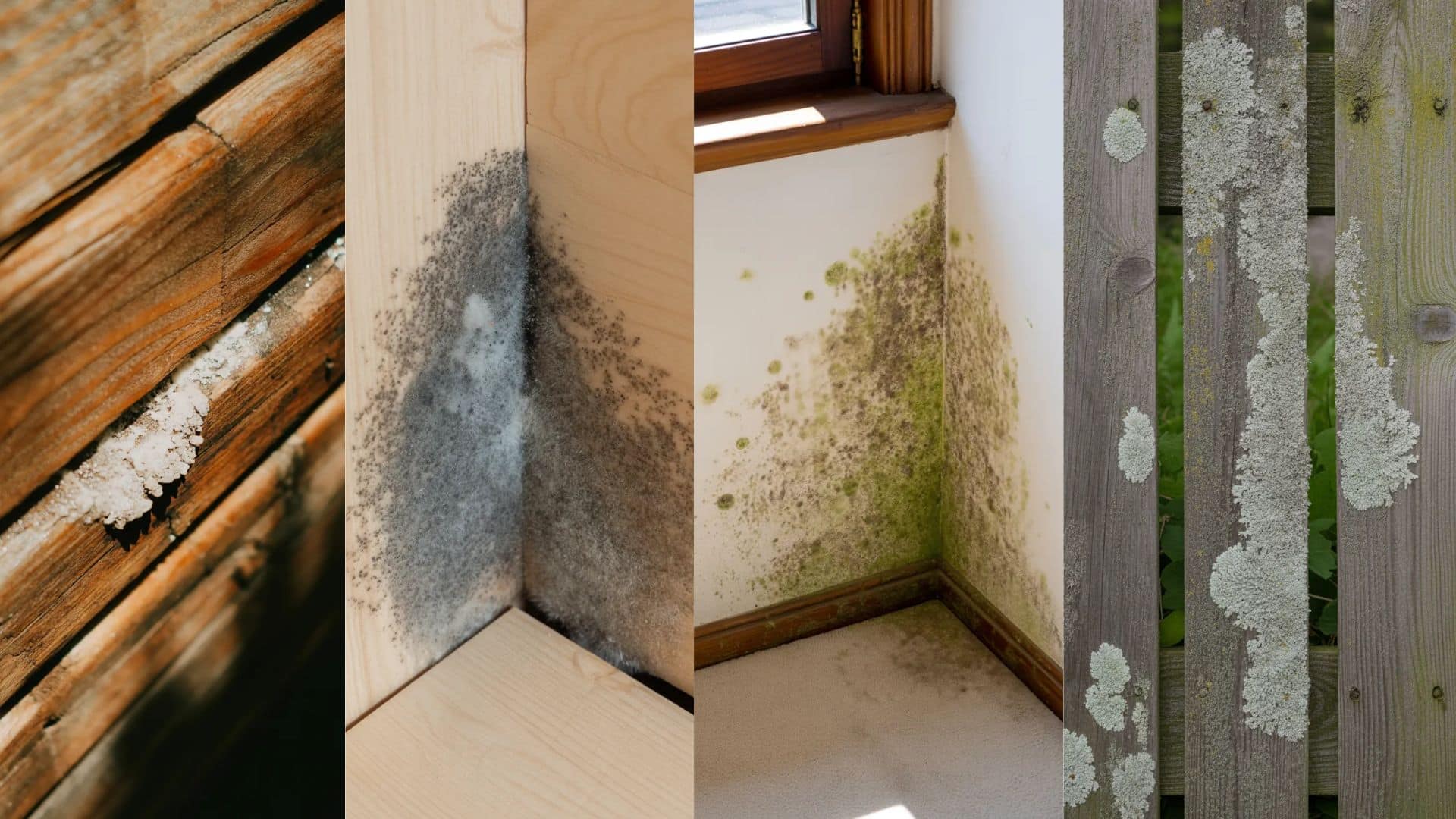
alt text: collage showing different types of mold growth on wood surfaces, including black mold, green mold, and mildew on furniture and walls.
Mold on wood furniture does not always look the same. Different types vary in color, texture, and the degree to which they affect the wood. Identifying the type helps in choosing the right cleaning approach.
1. White Mold on Wood Furniture
White mold is one of the most common types found on indoor furniture. It shows up as powdery or fuzzy white patches. Many people mistake it for dust or mildew. It usually stays on the surface but spreads fast in humid conditions.
2. Black Mold on Wood Furniture
Black mold appears as dark black or greenish-black spots. It can look slimy or speckled. It is often linked to long-term moisture exposure. It may go deeper into the wood and cause staining. Handle it carefully, as it poses potential health risks.
3. Green Mold on Wood Furniture
Green mold shows up as green or bluish-green patches. It is common in damp areas such as basements or storage areas. It usually grows on the surface but can spread across large areas if left untreated.
4. Gray Mold on Wood Furniture
Gray mold has a dusty gray or dull white look. It often blends into the wood surface, making it harder to spot. You will typically find it in poorly ventilated areas.
5. Brown Mold on Wood Furniture
Brown mold appears as brown or tan spots that can look like stains. It often grows on untreated or unfinished wood. Many people confuse it with natural wood discoloration, so look closely before assuming it is just a stain.
Best Cleaners for Mold on Wood Furniture
Not every cleaner works the same way on wood. Some are gentle and safe for regular use. Others need extra care. Picking the right one protects both the wood and your health.
| Cleaner | How to Use | Key Notes |
|---|---|---|
| Mild Soap and Water | Mix soap in warm water. Scrub gently. Wipe dry right away. | Best for light mold. Safe for most wood types. |
| White Vinegar | Spray undiluted vinegar. Wait one hour. Wipe clean. | Non-toxic. May slightly affect some wood finishes. |
| Hydrogen Peroxide | Apply 3% solution. Wait 10 minutes. Scrub and wipe. | Good for stubborn spots. Test on a hidden area first. |
| Commercial Mold Removers | Follow label instructions. Apply, wait, then wipe off. | Best for heavy mold. Use products made for wood only. |
| Cleaners to Avoid | Avoid bleach on unfinished wood. Skip ammonia-based cleaners entirely. | Both can damage wood and strip its finish. |
How to Remove Mold From Wood Furniture Step by Step
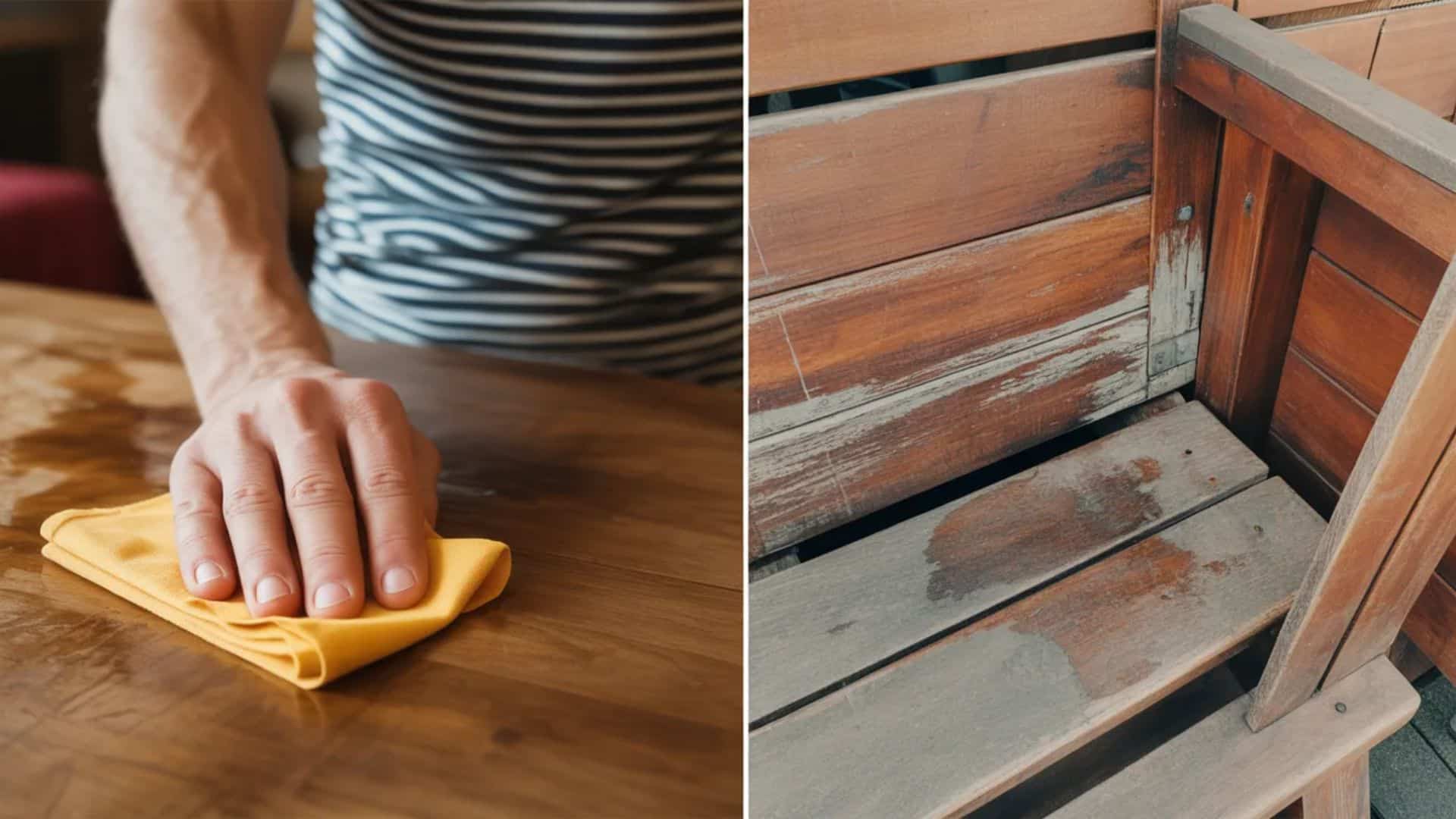
alt text: split image showing cleaning and restoring wood furniture, with one side wiping a wooden surface and the other showing mold or water damage on wooden boards.
Removing mold from wood furniture is not complicated. Follow these steps carefully, and you can get your furniture looking clean again without causing damage.
Step 1: Dry the Furniture First
Wet wood makes mold worse. Move the furniture to a dry spot. Let it air out fully before you start any cleaning. Moisture feeds mold growth.
Step 2: Vacuum Loose Spores Carefully
Use a vacuum with a HEPA filter to pick up loose spores. Work slowly over the surface. After vacuuming, seal and dispose of the bag or empty the canister outside immediately.
Step 3: Clean the Surface With a Suitable Solution
For light mold, mild soap and warm water work well. For tougher spots, use white vinegar. Apply with a cloth. Avoid harsh chemicals that can strip the wood finish.
Step 4: Scrub Gently Without Damaging the Finish
Use a soft brush or cloth to scrub the area. Always move in the direction of the wood grain. Scrubbing too hard can permanently scratch or damage the surface.
Step 5: Wipe, Dry, and Air Out Completely
Wipe off all moisture right after cleaning. Use a dry cloth, then leave the furniture in a well-ventilated space. Full drying stops mold from coming back quickly.
Step 6: Repeat Only if Needed
Check the surface after 24 hours. If faint spots remain, clean once more. If mold keeps returning after two or three attempts, the wood may need professional treatment
Health Risks of Mold on Wood Furniture
Mold on wood furniture is not just a surface issue. It can affect indoor air quality and cause serious health problems, especially when left untreated for a long time.
1. Respiratory Issues
Mold releases tiny spores into the air. Breathing them in can cause coughing, sneezing, throat irritation, and shortness of breath. Those with existing lung conditions may feel symptoms worsen fast.
2. Allergic Reactions
Many people react to mold without realizing the source. Common signs include a runny or blocked nose, itchy watery eyes, skin irritation, and repeated sneezing.
3. Worsening of Asthma
Mold is a known asthma trigger. Regular exposure can increase the frequency and severity of attacks. Over time, it makes breathing harder and daily life more difficult.
4. Skin and Eye Irritation
Direct contact with moldy furniture can cause redness, itching, or rashes. Eyes may become watery or sore after exposure to affected pieces.
5. Headaches and Fatigue
Spending time in a mold-affected space takes a toll. Long-term exposure can lead to frequent headaches, low energy levels, and trouble focusing throughout the day.
Why Immediate Action Matters? Ignoring mold allows spores to spread, increasing health risks and contaminating the room. Promptly cleaning the growth and fixing the moisture source significantly reduces exposure and prevents further furniture damage |
How to Prevent Mold on Wood Furniture From Coming Back
Cleaning mold once is not enough. Without the right habits in place, it will return. These simple steps help keep your wood furniture mold-free for the long term.
| Prevention Tip | What to Do | Why It Matters |
|---|---|---|
| Control Indoor Humidity | Keep humidity between 30% and 50%. Use a hygrometer to monitor levels. | High humidity is the leading cause of indoor mold growth. |
| Fix Leaks and Condensation | Inspect pipes and windows regularly. Fix drips right away. | Even small leaks create enough moisture for mold to grow. |
| Improve Airflow | Keep furniture slightly away from walls. Use fans or open windows. | Moving air stops moisture from settling on wood surfaces. |
| Avoid Damp Walls | Leave a small gap between furniture and exterior walls. | Damp walls transfer moisture directly into the wood. |
| Clean Dust Regularly | Wipe down furniture weekly with a dry or damp cloth. | Dust holds moisture and gives mold a surface to settle on. |
| Use a Dehumidifier | Place one in basements or poorly ventilated rooms. Empty it often. | Pulls excess moisture from the air before it reaches the wood. |
| Store Furniture Correctly | Use breathable fabric covers. Keep pieces in dry, ventilated spaces. | Plastic covers trap moisture, which speeds up mold growth. |
Conclusion
Mold on wood furniture is a real problem, but it is one you can fix. You now know how to spot it, clean it, and stop it from coming back. The key is to act fast and stay consistent.
Do not wait for mold to spread. Check your furniture regularly, control moisture levels, and keep the air moving in your home. Small steps taken today save you from bigger problems later.
Have you dealt with mold on your wood furniture before? What worked for you? Drop your thoughts in the comments below. We would love to hear your experience.
If you found this guide helpful, share it with someone who might need it right now.
Frequently Asked Questions
Will Mold Go Away if It Dries Out?
No, mold does not go away just by drying out. It simply becomes dormant. These dry spores can remain viable for years and will regrow immediately once moisture returns.
Should I Throw Away Moldy Furniture?
Not necessarily. If the mold is on the surface of finished wood, it can usually be cleaned. However, consider discarding porous items, such as upholstery.
How Quickly Will Black Mold Make You Sick?
Symptoms can appear within hours for sensitive individuals. However, the health risks vary; long-term exposure typically leads to more chronic respiratory issues, persistent headaches, and worsening asthma over time