Is your commercial building ready for the next 20 years?
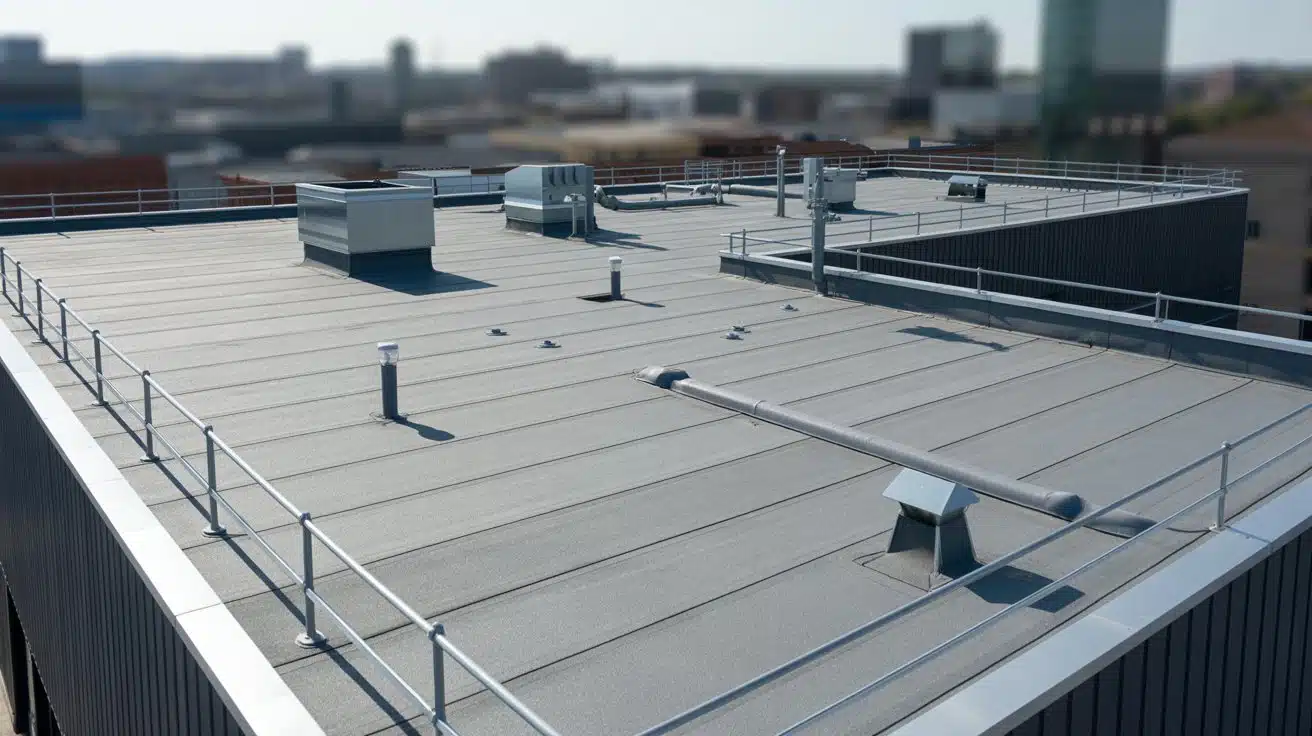
Commercial flat roofing protects warehouses, offices, retail centers, and industrial facilities across the country.
These low-slope roofs (0–3:12 pitch) offer cost-effective coverage, easy maintenance access, and space for equipment.
But which system is right for your building? TPO, EPDM, PVC, modified bitumen; the options can feel overwhelming. The wrong choice leads to frequent repairs, high energy bills, and early replacement.
This guide covers everything: material types, costs, installation, and when commercial flat roof replacement makes sense. We’ll help you choose a system that fits your budget, climate, and long-term goals.
What is a Commercial Flat Roofing?
Most people think flat roofs are completely level. That’s not true. Commercial flat roofs have a slight slope, usually 0 to 3:12. They offer more usable space than sloped roofs. You can install HVAC units, solar panels, or even create rooftop areas.
Here’s how a typical commercial flat roof is built:
- Roof deck: The base structure (concrete, steel, or wood)
- Insulation layer: Reduces energy costs and controls temperature
- Roofing membrane: The waterproof barrier that protects the building
- Flashing: Seals edges, corners, and roof penetrations
- Drainage system: Moves water off the roof to prevent pooling
Commercial flat roofing systems are designed for low-slope commercial buildings to provide cost-effective, weather-resistant coverage. The right system protects your investment and keeps maintenance costs low.
Types of Commercial Flat Roofing Systems
Choosing the right material matters. Each system has different strengths, costs, and lifespans. Let’s break down the most popular options.
1. Built-Up Roofing (BUR) Systems
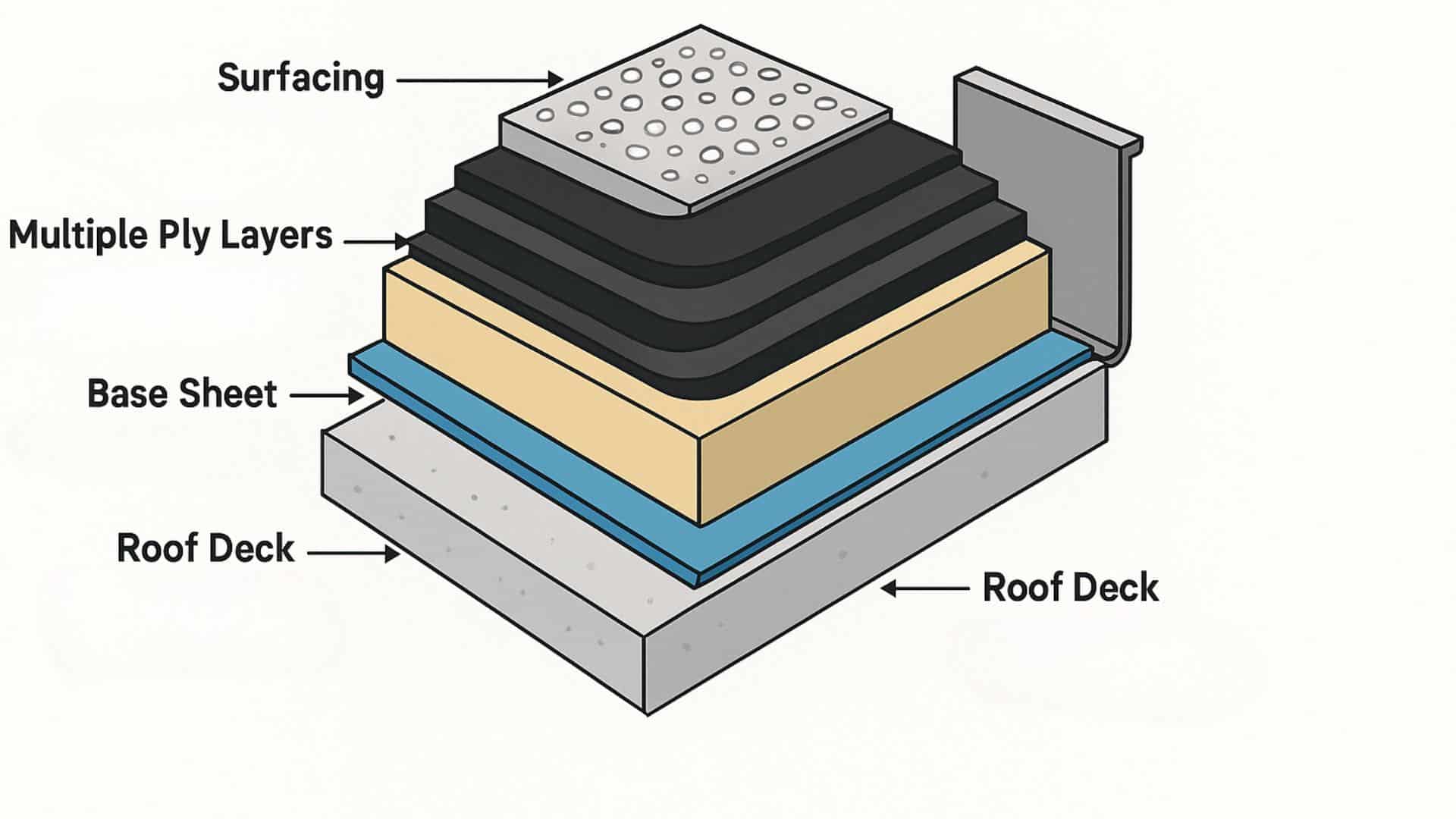
Built-Up Roofing (BUR) is one of the oldest flat roofing methods, consisting of multiple layers of bitumen (asphalt or tar) and reinforcing fabric to form a thick, waterproof barrier.
It is durable and long-lasting, with good fire resistance, but is heavy, produces strong odors during installation, and takes longer to install than single-ply systems.
It is well-suited for buildings requiring heavy-duty protection, especially those with regular foot traffic or rooftop equipment.
2. Modified Bitumen Roofing (Mod-Bit)
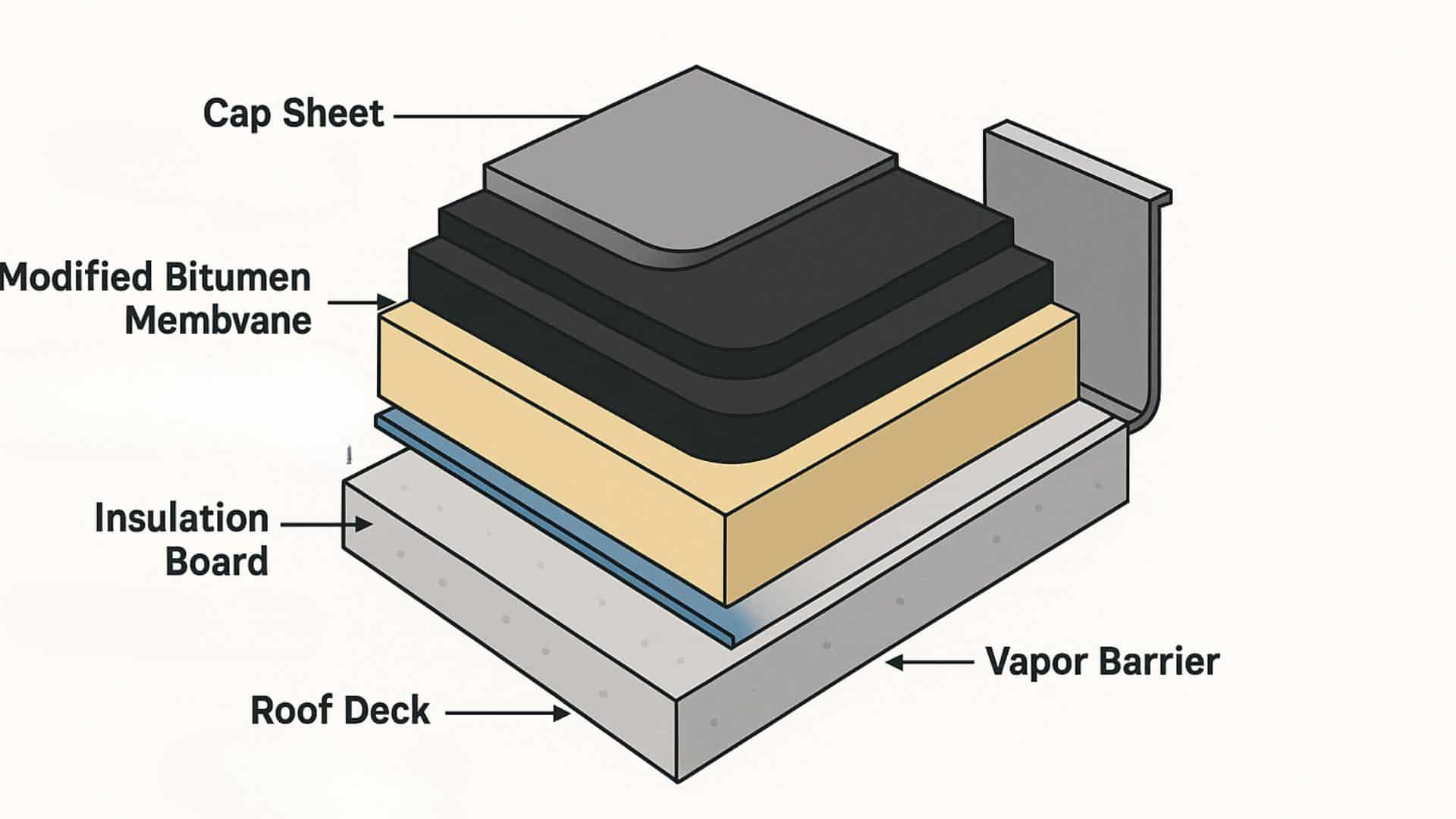
Modified bitumen roofing enhances traditional BUR by adding rubber or plastic polymers to asphalt, making it more flexible and easier to install.
There are two types: SBS (rubber-modified) for cold-weather flexibility and APP (plastic-modified) for heat resistance.
It is flexible, durable under foot traffic, and budget-friendly, but has a shorter lifespan than some newer systems; seams can fail if poorly installed, and dark colors absorb heat unless coated.
It’s ideal for smaller commercial buildings or facilities with moderate budgets.
3. Single-Ply Membranes (TPO, PVC, EPDM)
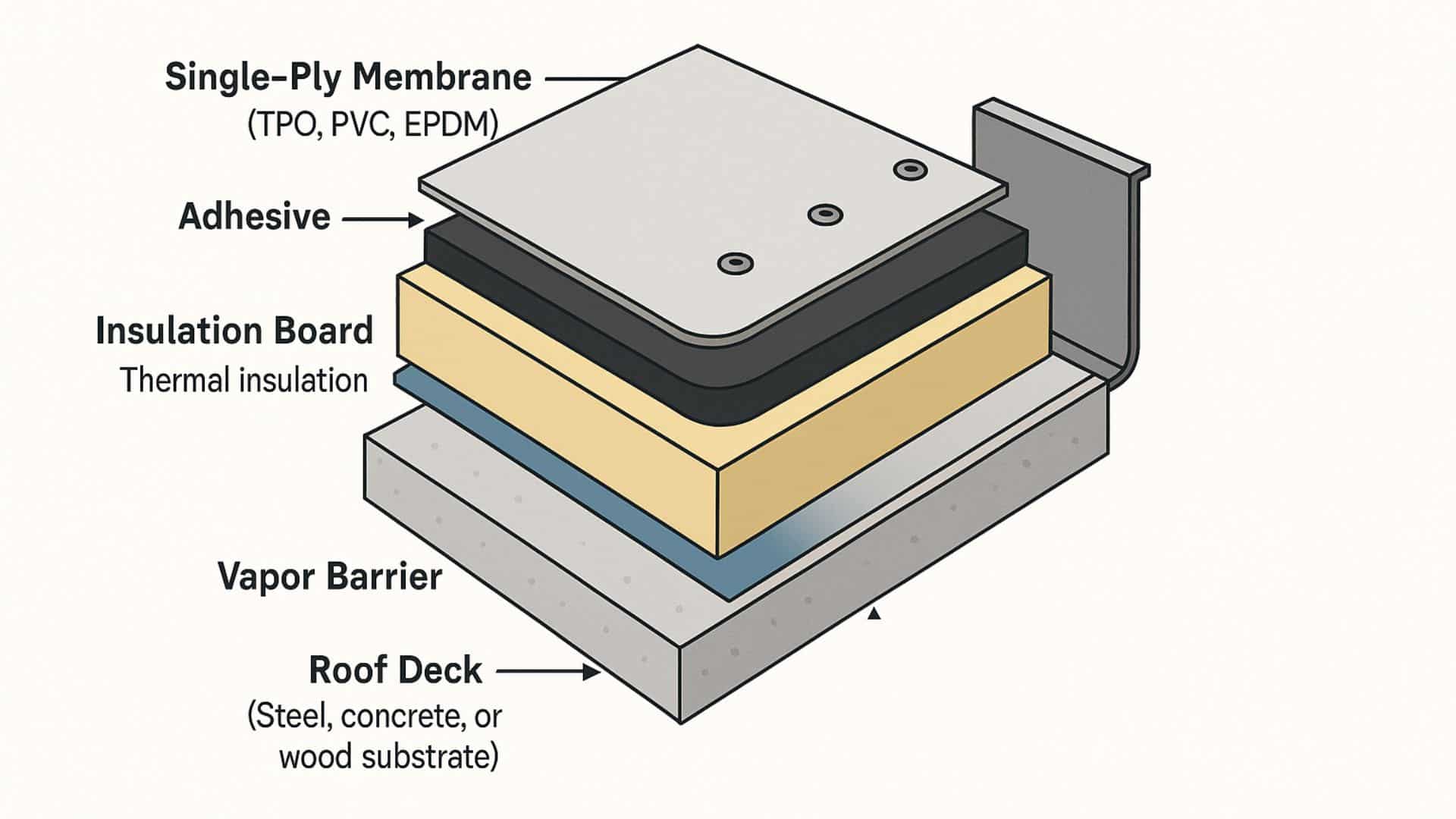
Single-ply roofing consists of a single layer of synthetic material, making it lighter and faster to install than BUR or modified bitumen.
TPO (Thermoplastic Polyolefin) is light-colored and reflective, improving energy efficiency. Its heat-welded seams are strong, and it’s affordable, though quality varies by manufacturer, and long-term data is limited.
PVC (Polyvinyl Chloride) is chemical- and fire-resistant, flexible, and durable, ideal for industrial or restaurant roofs. It’s more expensive and can shrink if improperly installed.
EPDM (Ethylene Propylene Diene Monomer) is a black rubber membrane with a long track record, UV/ozone resistance, and easy repairs. It absorbs heat, and seams are glued or taped rather than welded.
Single-ply roofing is suitable for buildings needing lightweight, energy-efficient, and relatively easy-to-install roofing solutions.
4. Metal Flat Roofing Systems
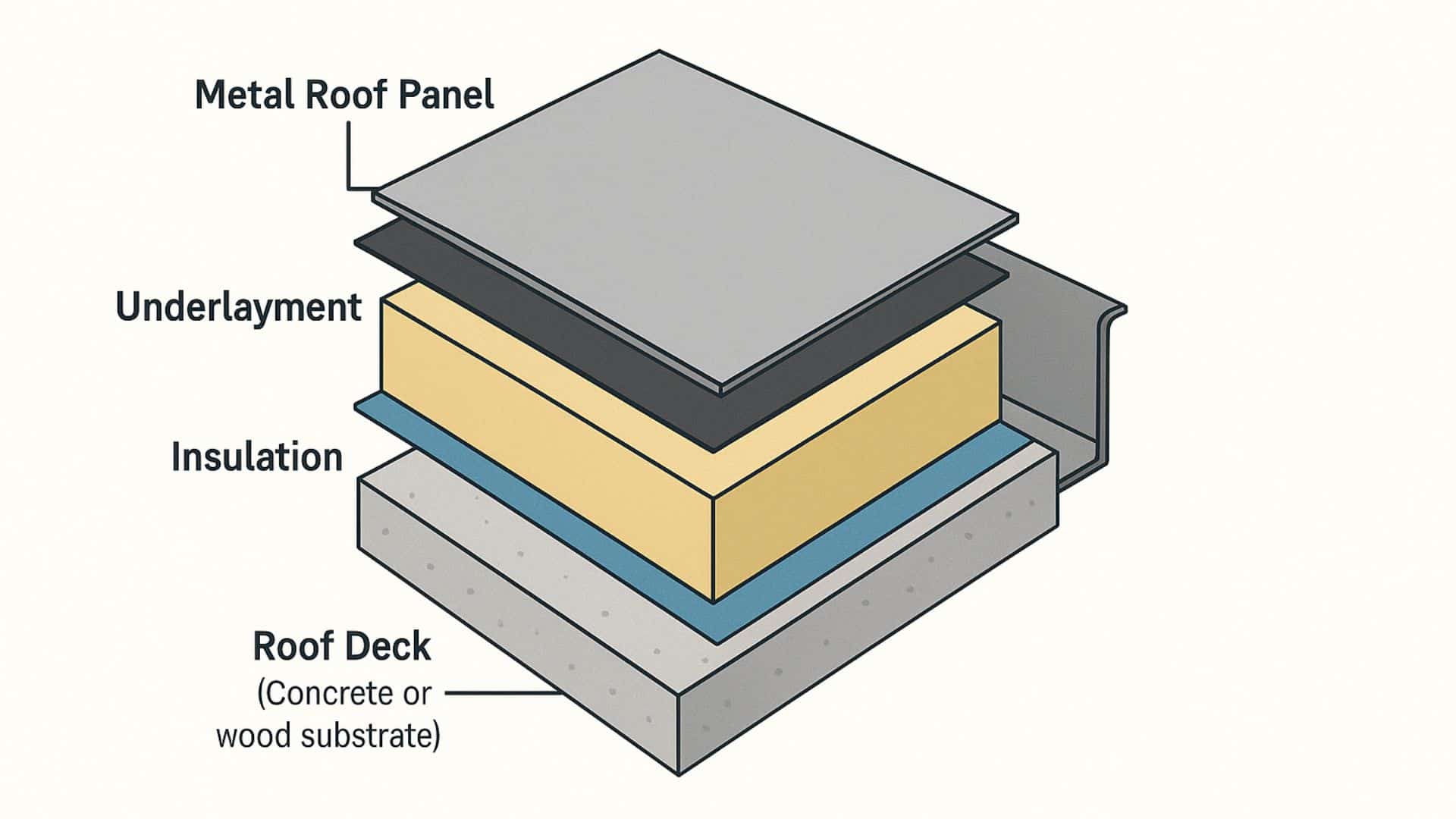
Metal roofing, made from steel, aluminum, or copper, is extremely durable with a lifespan of 40 to 70 years.
It requires very little maintenance, is fire-resistant, and environmentally friendly. However, it has a higher upfront cost, can be noisy during rain or hail, and needs skilled installation.
Metal roofs are ideal for buildings prioritizing long-term value and low maintenance.
5. Liquid-Applied & Spray Foam Roofs
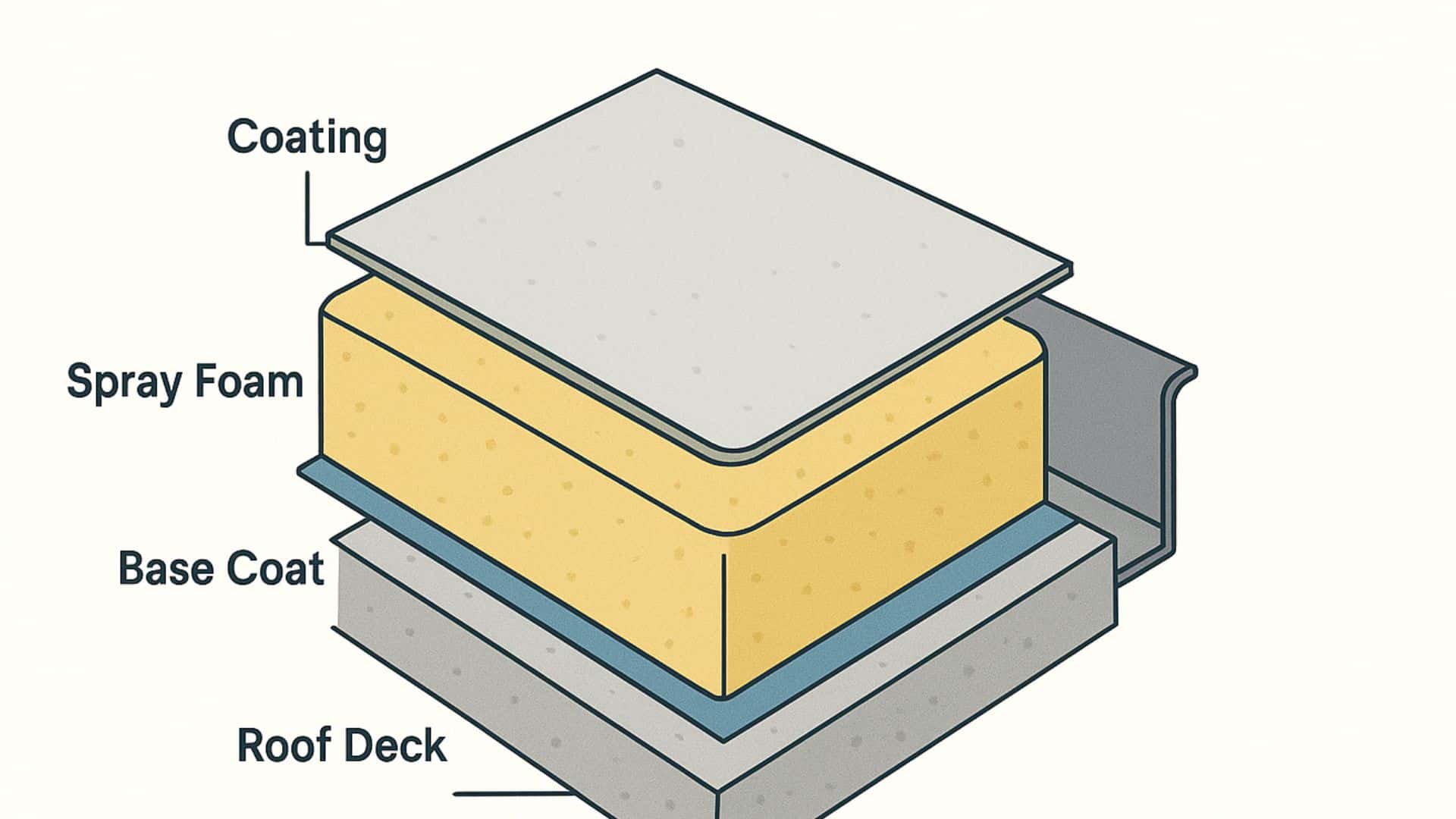
Liquid-applied and spray-on roofing systems form a seamless, waterproof layer applied directly to the roof surface.
Spray Polyurethane Foam (SPF) insulates and waterproofs simultaneously, adapts to irregular shapes, and is lightweight yet strong.
Liquid-applied coatings restore aging roofs, seal cracks and seams, and extend membrane life. These systems reduce leak risk, add insulation, and are ideal for restoration or replacement projects without tear-off.
Limitations include weather-dependent installation, the need for protective coatings (SPF), and unsuitability for areas with ponding water.
6. Green / Vegetative Roofs
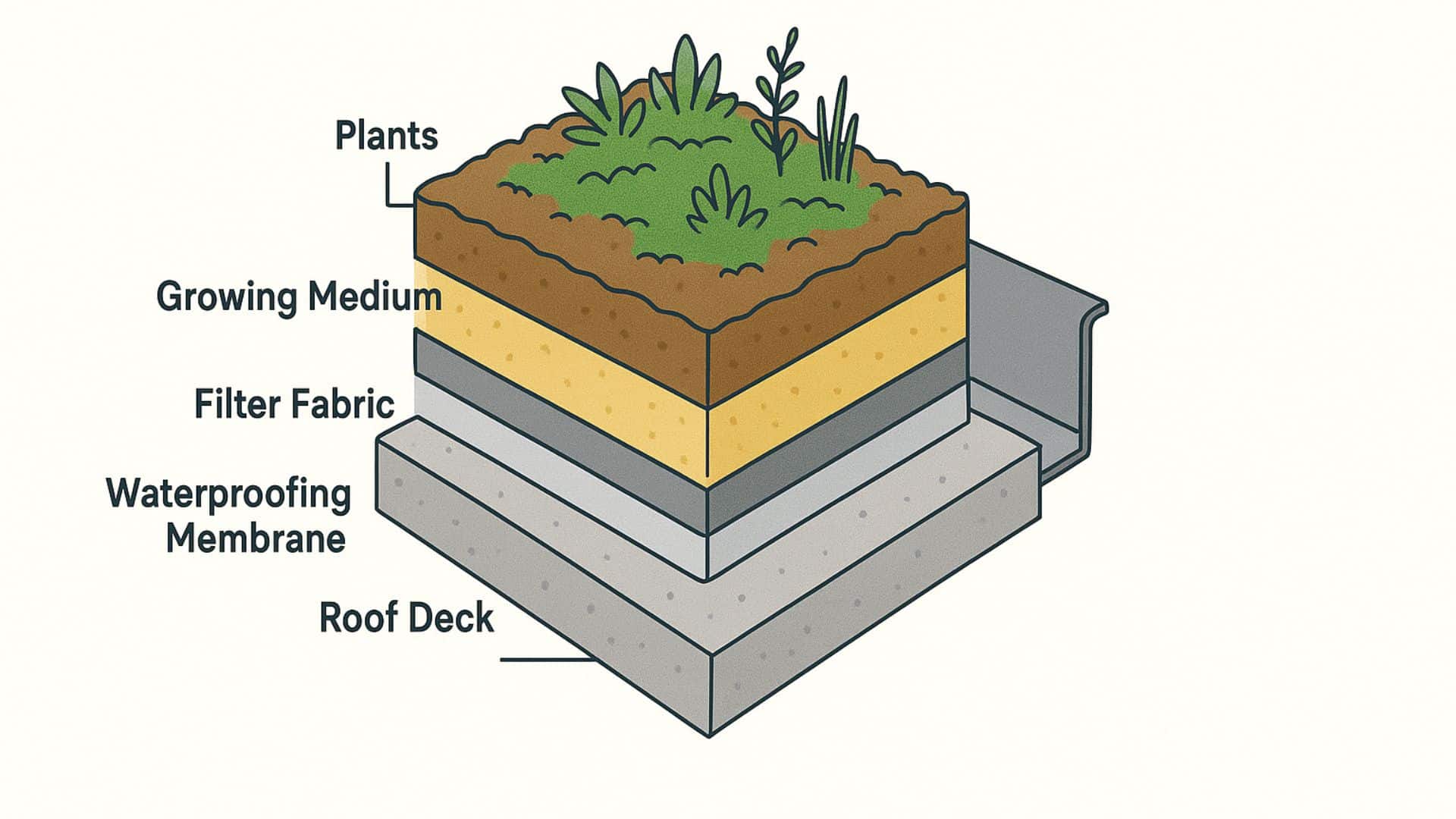
Green roofs feature soil and plants over a waterproof membrane, offering environmental and insulation benefits while protecting the roof.
They reduce stormwater runoff, improve energy efficiency, and extend membrane life. However, they have high installation costs, require ongoing maintenance, and aren’t suitable for all buildings.
Green roofs are ideal for projects prioritizing sustainability and energy savings.
Comparison Table: Commercial Flat Roofing Systems
The table below compares key features, costs, lifespans, and benefits of popular commercial flat roofing systems to help you make an informed choice.
| System | Lifespan | Cost per Sq Ft | Reflectivity | Best For |
|---|---|---|---|---|
| BUR | 20 to 30 years | $4 to $8 | Low | Heavy-duty protection |
| Modified Bitumen | 15 to 25 years | $3 to $6 | Low to Moderate | Budget-friendly projects |
| TPO | 20 to 30 years | $5 to $8 | High | Energy savings |
| PVC | 20 to 30 years | $6 to $10 | High | Chemical resistance |
| EPDM | 25 to 40 years | $4 to $7 | Low | Long-term reliability |
| Metal | 40 to 70 years | $8 to $14 | Moderate to High | Low-maintenance buildings |
| Spray Foam | 15 to 25 years | $4 to $9 | High | Restoration projects |
| Green Roof | 30 to 50 years | $15 to $25+ | Moderate | Sustainability goals |
Knowing the different types of commercial flat roofing systems is the first step; next, consider how to choose the right system based on your building’s specific needs and conditions.
Choosing the Right Flat Roof System for Your Building
Not all commercial flat roofing systems work for every building. The right choice depends on several factors.
1. Building Use
What happens inside your building matters. If your roof supports heavy equipment or foot traffic, choose a system that can handle the load.
2. Climate Conditions
Your local weather affects roof performance.
- Hot climates: Choose reflective materials like TPO or coated metal
- Cold climates: Use flexible systems like SBS modified bitumen or EPDM
- Rainy regions: Prioritize strong drainage and seam strength (PVC, TPO)
- High UV exposure: Select UV-resistant materials like EPDM
3. Roof Traffic & Equipment Load
Heavier systems like BUR can support more weight. Single-ply membranes may need walkway pads or ballast to protect them.
4. Budget & Desired Lifespan
Metal roofs have higher upfront costs but last twice as long as some alternatives. Think about the total cost over 20 to 30 years. Include maintenance, energy savings, and potential repairs.
5. Energy Efficiency Goals
Light-colored roofs reflect sunlight. This reduces cooling costs. TPO and PVC are both reflective. Spray foam adds insulation value. EPDM is dark but can be coated to improve reflectivity.
Once you’ve selected the right roofing system, it’s important to know when and how to replace your commercial flat roof to protect your investment and prevent costly damage.
Commercial Flat Roof Replacement: When & How?
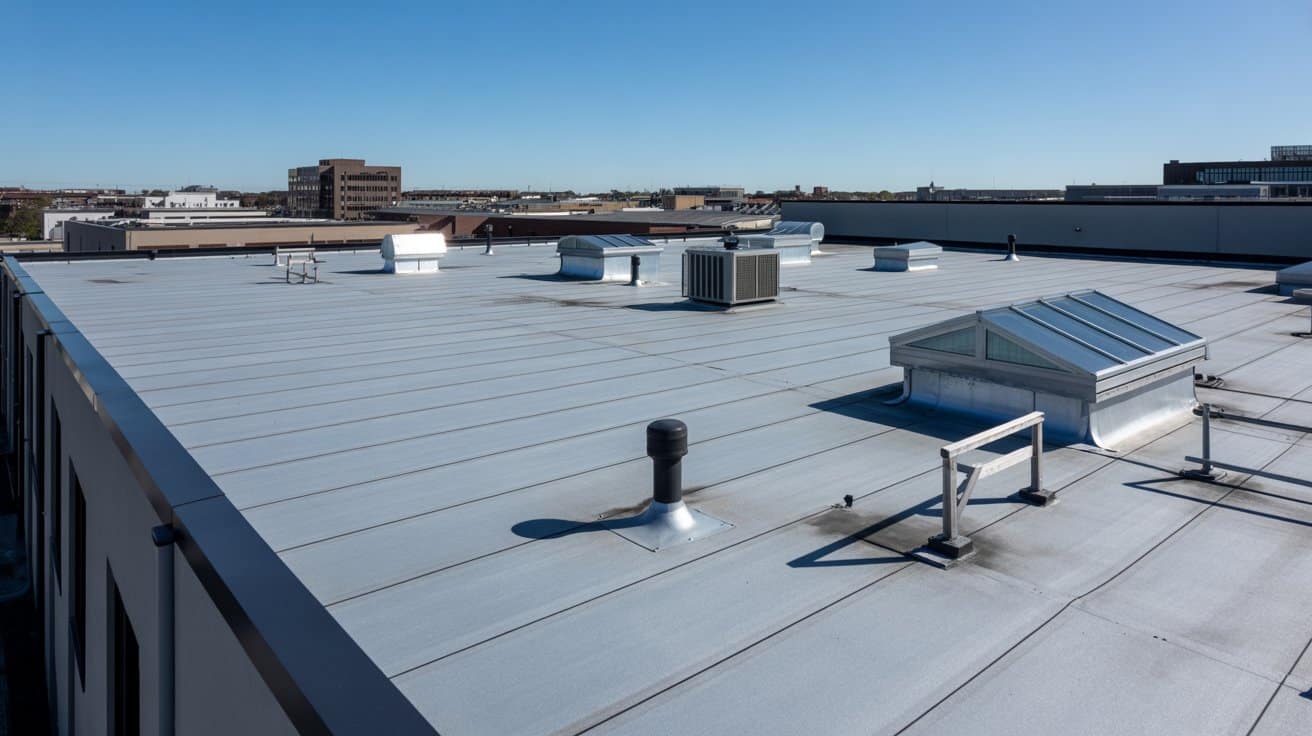
Even the best roofs don’t last forever. Knowing when to replace yours saves money and prevents bigger problems.
Signs You Need Roof Replacement
- Ponding water
- Membrane cracks or blisters
- Frequent leaks
- Age over 20 years
- Visible sagging
- Energy bills rising
If you see two or more of these signs, schedule an inspection.
The Commercial Flat Roof Replacement Process
Replacing a commercial roof involves several steps. Understanding the process helps you plan better.
Step 1: Inspection & Assessment
A professional roofer inspects your current roof. They check for membrane condition, insulation moisture, and drainage issues. This inspection determines whether you need full replacement or just repairs.
Step 2: Tear-Off or Overlay Decision
Sometimes you can install a new roof over the old one. This saves on tear-off and disposal costs. But overlays aren’t always possible. If the insulation is wet or the deck is damaged, a full tear-off is necessary.
Step 3: New Insulation & Vapor Barrier
After removing the old roof, contractors inspect the deck. They repair any damage. Next comes insulation. This layer controls temperature and saves energy. A vapor barrier prevents moisture from moving into the insulation.
Step 4: Membrane Installation
The new roofing membrane goes on next. Installation methods vary by material:
- Mechanically attached: Fasteners hold the membrane down
- Fully adhered: Glue or heat bonds the membrane to the insulation
- Ballasted: Heavy stones or pavers hold the membrane in place
TPO and PVC seams are heat-welded. EPDM seams use tape or adhesive.
Step 5: Flashing & Drainage Finishing
Flashing seals roof edges, corners, and penetrations. Properly installed flashing prevents leaks. Contractors also install or upgrade drainage systems. Good drainage extends roof life.
Commercial Flat Roofing Maintenance Tips
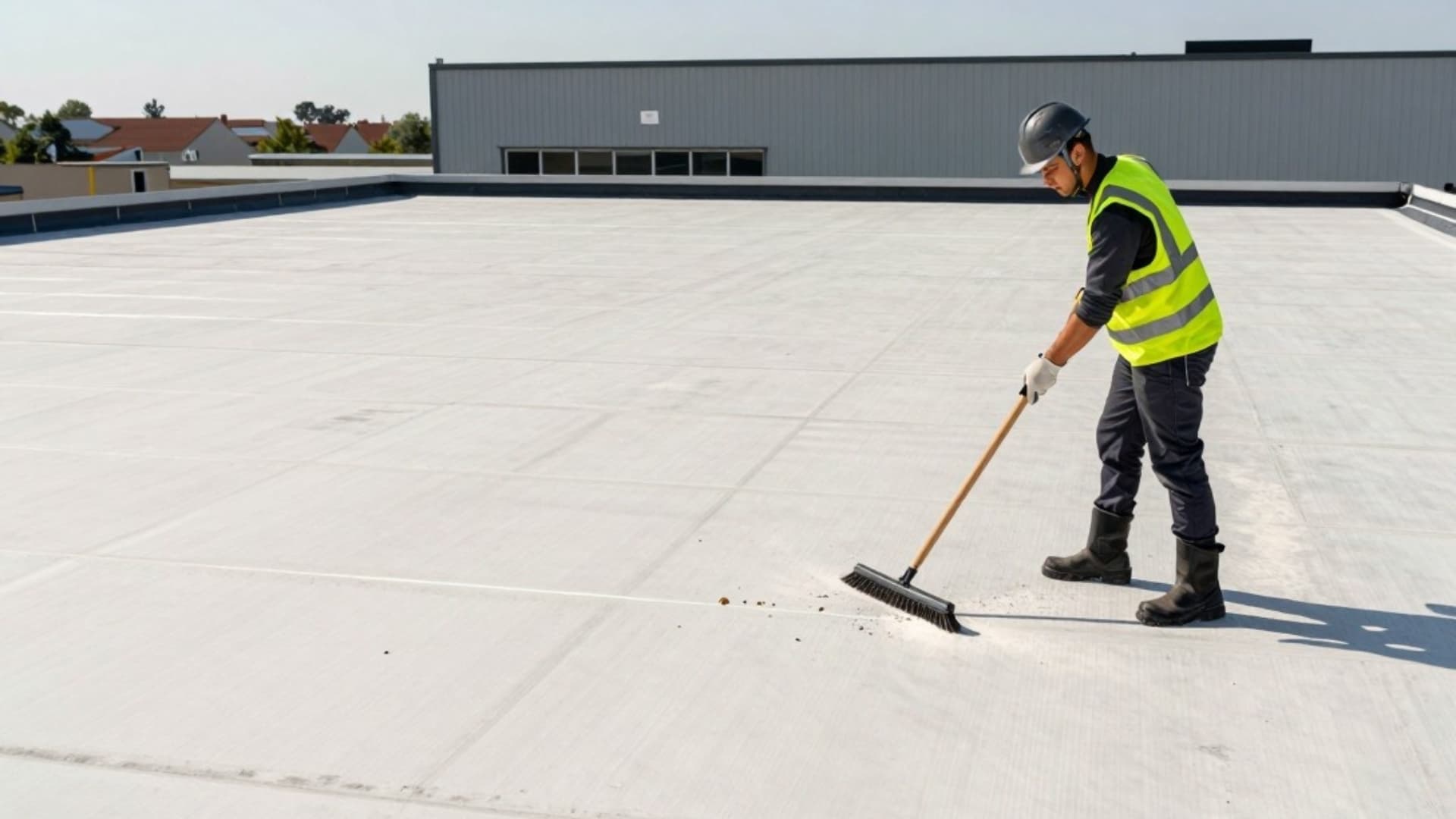
Regular maintenance extends roof life and prevents costly repairs. Simple steps make a big difference.
- Schedule Routine Inspections
- Keep Drains Clear
- Fix Minor Repairs Quickly
- Protect High-Traffic Areas
- Work With Certified Contractors
Investing in the right commercial flat roof and maintaining it promises long-term protection, energy savings, and peace of mind for your building.
Conclusion
Commercial flat roofing is a major investment. The right system protects your building, reduces energy costs, and minimizes maintenance for decades.
Consider your climate, building use, and budget. TPO and PVC offer energy efficiency. EPDM provides proven reliability. Metal roofs deliver the longest lifespan. Modified bitumen and BUR handle heavy-duty applications.
Don’t skip professional installation. Even premium materials fail when workmanship is poor. Choose certified contractors who offer strong warranties.
Need commercial flat roof replacement? Look for ponding water, frequent leaks, or roofs older than 20 years. Act before small problems become structural damage.
Regular inspections and preventative maintenance can extend the life of any flat roof and save significant repair costs.