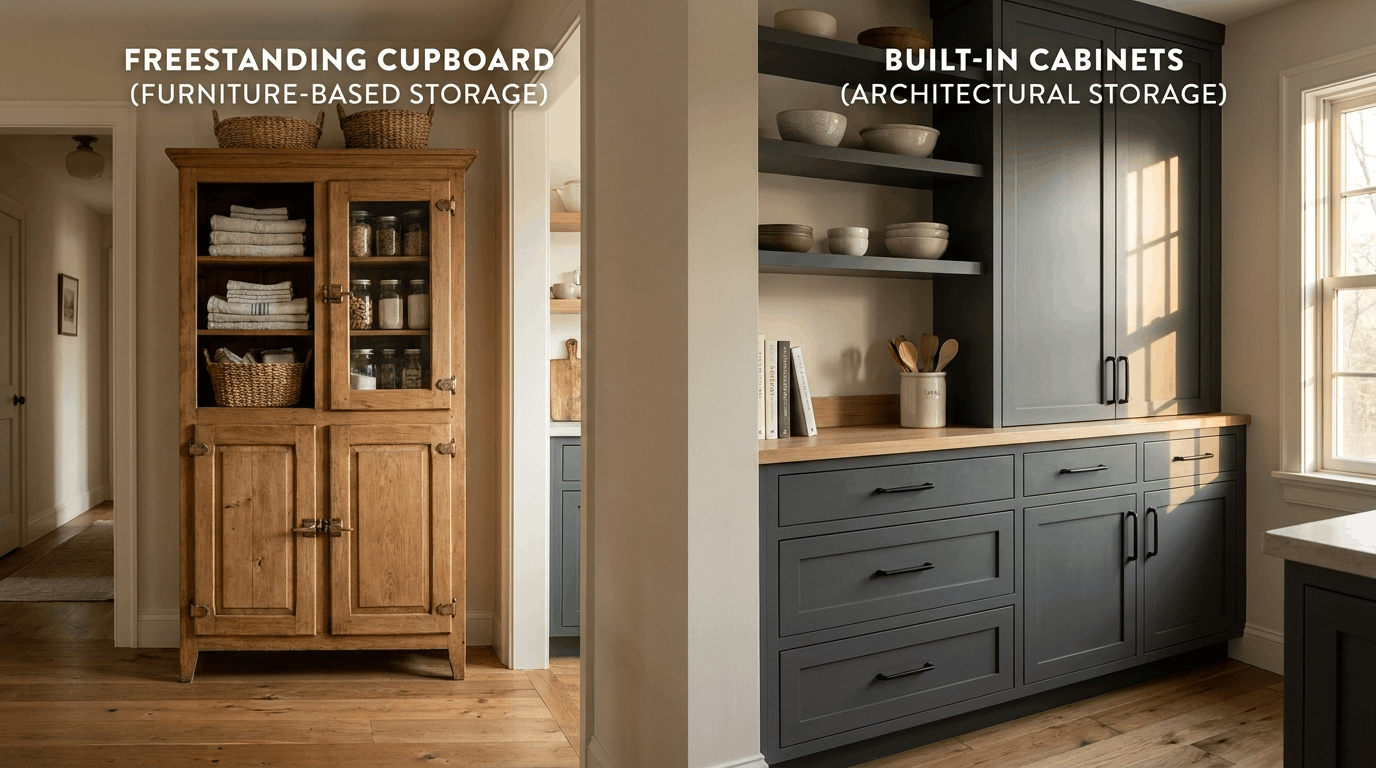
A cupboard is a freestanding piece of furniture with doors and shelves. A cabinet is built into a wall or mounted on it. That is the core difference, and almost every argument about these two words comes down to people not knowing it.
The problem is that the UK, US, and Australia each use these terms differently. Kitchen retailers make it worse by deliberately swapping the words around. It helps them upsell.
A basic freestanding cupboard costs $80 to $300. A set of fitted kitchen cabinets doing roughly the same job starts at $5,000. Picking the wrong one because the terminology confused you is an expensive mistake.
This breaks down the real definitions, what structurally separates them, what each costs across room types, and why British English and American English treat these words as if they belong to completely different pieces of furniture.
What is a Cupboard?
The word comes from Middle English.
“Copbord” meant a board or shelf for storing cups and plates. A literal shelf for cups. The meaning grew over centuries until “cupboard” became a catch-all for almost any enclosed storage unit with a door.
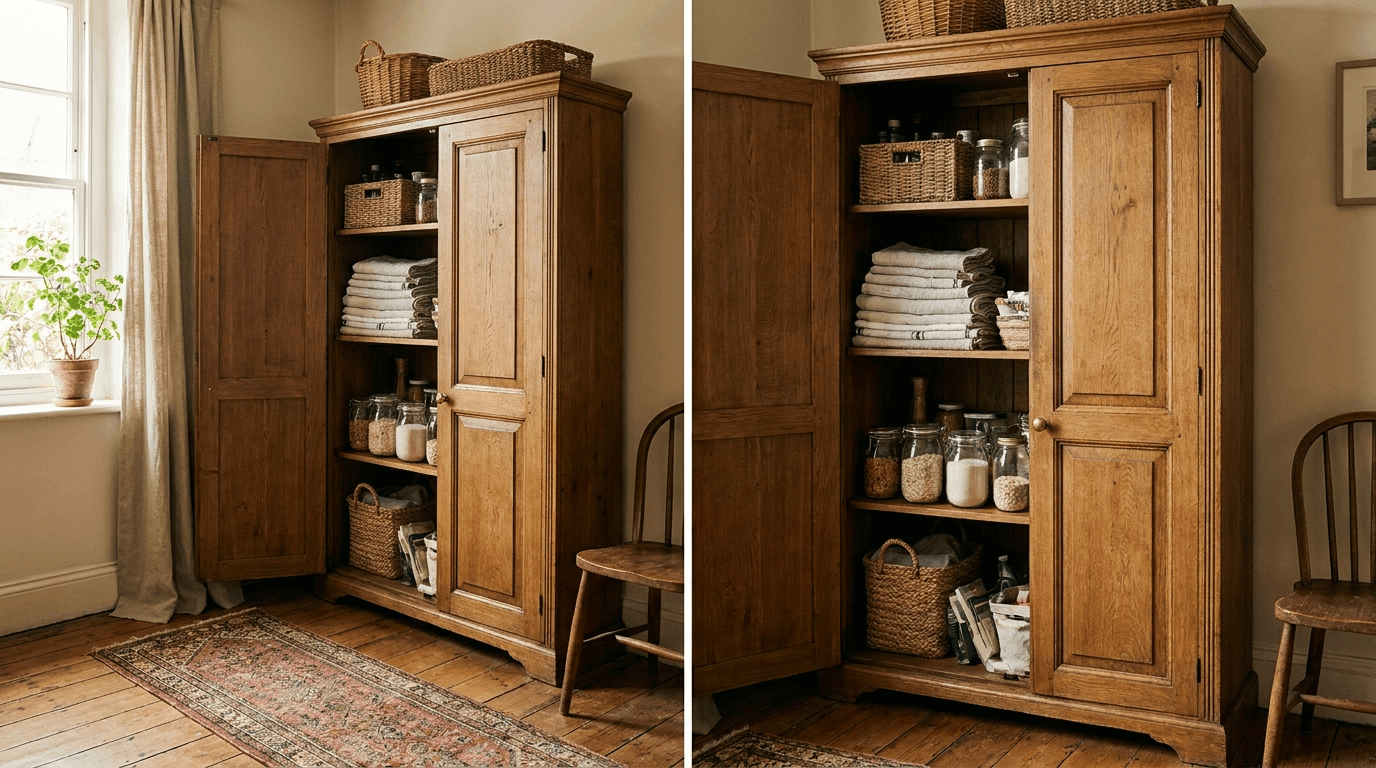
Today, a cupboard is a storage unit with doors and shelves.
It stores general household items: food, linens, clothing, cleaning supplies, whatever needs a home. It is not designed for a specific room or function.
That is the core distinction.
Here are the types you will come across:
- Freestanding cupboard: stands on its own, no installation needed, moves from room to room. Most flexible, usually the cheapest.
- Built-in cupboard: recessed into a wall or fitted into a space permanently. Common in hallways and bedrooms. Once it goes in, it stays.
- Linen cupboard: a specific type for towels, bed sheets, and fabric items. Usually near a bathroom or bedroom.
- Airing cupboard: a UK term for a warm storage cupboard near a boiler or water heater. If you have read Harry Potter, you know what one looks like. It is the cupboard under the stairs where Harry slept.
- Under-stairs cupboard: storage built into the space beneath a staircase. Very common in UK homes.
Materials run the full range. Solid wood, plywood, MDF, and particleboard all appear at different price points. The material you choose matters more than most people realize when the cupboard is near water.
Now, What Makes a Cabinet Different
A cabinet is not a fancier version of a cupboard. The distinction is structural.
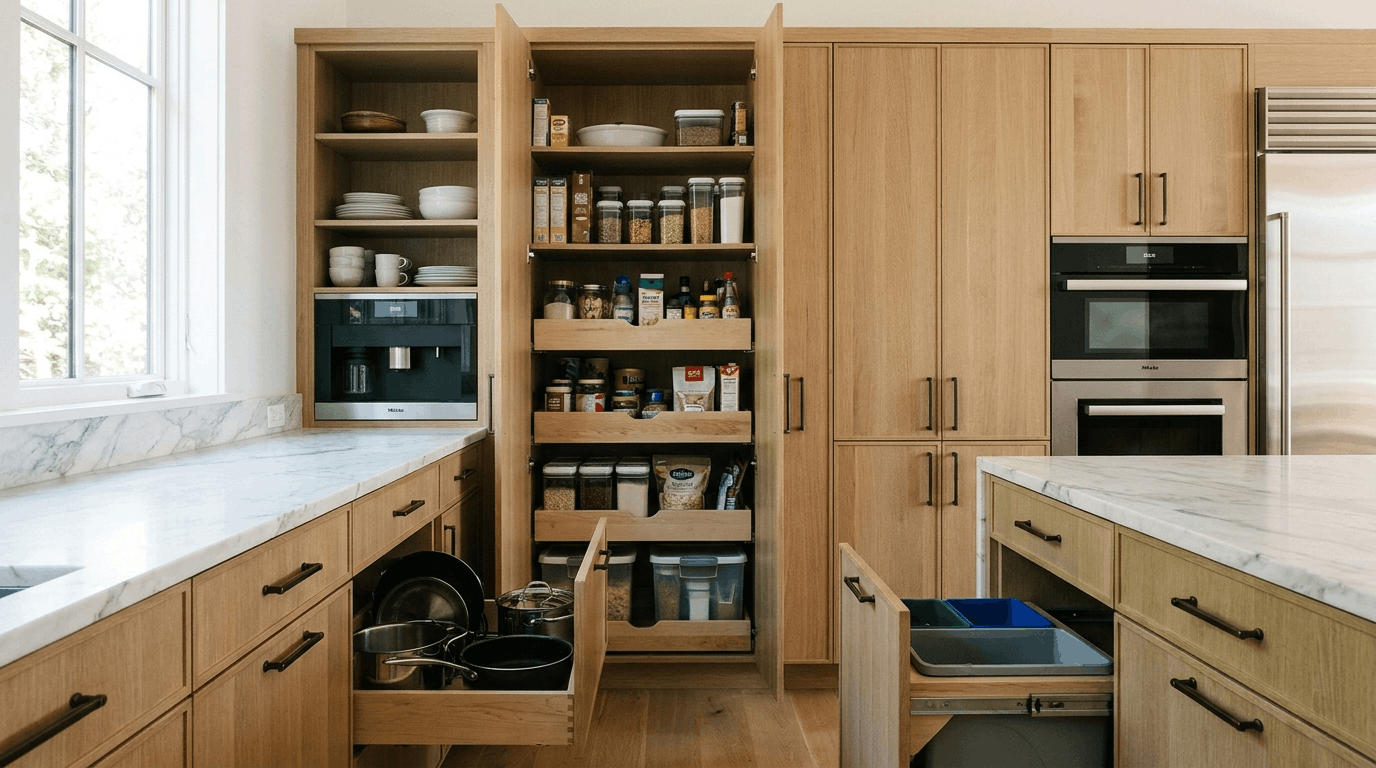
A cabinet is built around a specific purpose in a specific room. It is engineered around what goes inside, not just built to hold whatever you put in.
Kitchen cabinets handle the weight of pots, pans, and appliances. Bathroom cabinets resist daily moisture. A filing cabinet fits documents precisely. Every part of a cabinet has a job before you use it.
Most cabinets are fixed. Mounted to a wall, anchored to a floor, or built directly into the room. That is the most basic difference. Cabinets become part of the room. Cupboards are furniture.
The types you will encounter:
- Wall cabinet: mounted above a countertop. Everyday essentials within reach. Standard in kitchens and bathrooms.
- Base cabinet: sits below the countertop, supports the worktop, and stores heavier items underneath. The foundation of most kitchen layouts.
- Tall or pantry cabinet: floor-to-ceiling. Maximum vertical storage in kitchens and utility rooms.
- Bathroom vanity cabinet: built around a sink unit. Stores toiletries and bathroom essentials below the basin.
- Display cabinet: glass-fronted, sometimes with internal lighting. For China, books or decorative items.
- Filing cabinet: documents and office supplies. Home offices and commercial spaces.
Cupboard vs Cabinet: The Differences Side by Side
The simplest way to put it: a cupboard holds whatever you put in it. A cabinet is designed around what goes inside before you buy it.
Here is how they compare across the factors that actually matter when you are making a purchase decision.
Feature | Cupboard | Cabinet |
Structure | Freestanding or simple built-in | Fixed to the wall or floor |
Purpose | General household storage | Room-specific, function-built |
Design | Shelves and doors, minimal features | Shelves, drawers, compartments |
Mobility | Can be moved | Permanent fixture |
Common materials | Solid wood, MDF, particleboard | Hardwood, plywood, quality hardware |
Typical cost | Lower | Higher |
Best rooms | Bedroom, hallway, pantry, utility | Kitchen, bathroom, living room, office |
Installation | Usually DIY | Often professional |
Two things the table does not fully capture.
The permanence difference: When you install cabinets, they become part of the house. They factor into a property valuation. When you move, they stay. A cupboard is furniture. It goes with you.
The UK vs US Terminology Problem Nobody Talks About
This is where most of the confusion actually comes from. Almost no guide covers it.
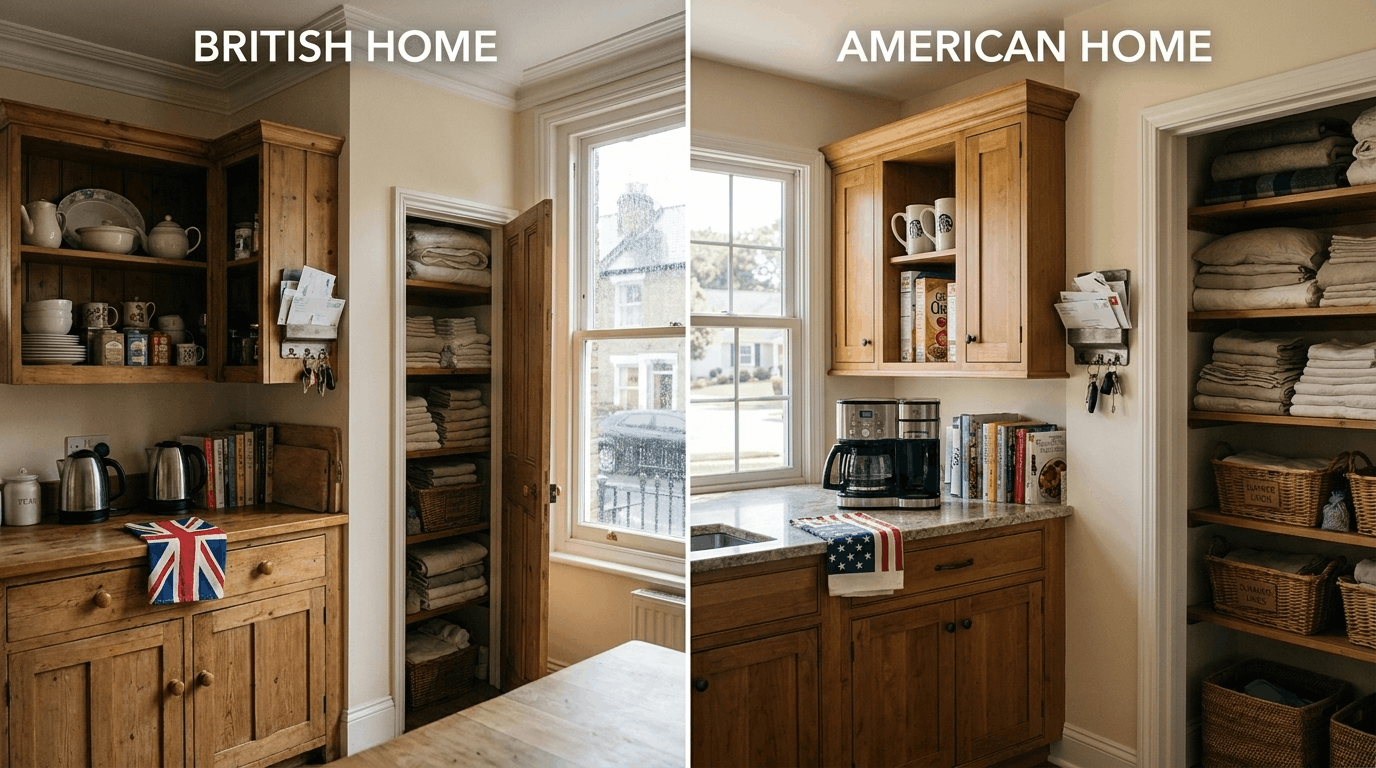
In British English, “cupboard” covers nearly any enclosed storage space. What Americans call kitchen cabinets, British people call kitchen cupboards.
What Americans call a closet, British people call a cupboard. A fitted bedroom in a UK home has cupboards, not cabinets. An airing cupboard is the warm storage space near the boiler.
In American English, “cabinet” is the standard word for kitchen and bathroom storage. Cupboard is used more informally, often for a pantry-style unit or a freestanding piece.
Many Americans use both words interchangeably, unaware that they technically describe different things.
The products are often identical. The word depends on which English you are using.
This matters in practice. If you are reading a British kitchen design blog and they say “kitchen cupboards,” they mean the same thing as an American kitchen showroom would call “kitchen cabinets.”
Same product. Same installation. Different name.
It also works the other way. If you are an American reader and a British friend tells you to put a cupboard in the hallway, they do not necessarily mean a small freestanding unit.
They might mean a built-in storage unit with hanging space. What you would call a closet.
If you shop at international retailers or follow home design content from both countries, check which English the source uses before comparing products or prices.
The price difference will otherwise confuse you.
What Do They Actually Cost?
Here are real price ranges.
Type | Typical Cost Range | Notes |
Flat-pack cupboard (MDF/particleboard) | $50 to $300 | DIY assembly; lowest durability |
Solid wood freestanding cupboard | $200 to $1,200 | Better durability; can be painted or stained |
RTA kitchen cabinet (per unit) | $80 to $400 | Ready-to-assemble; decent budget option |
Semi-custom kitchen cabinet (per unit) | $150 to $650 | More size options; plywood construction |
Custom kitchen cabinet (per unit) | $500 to $1,500+ | Built to exact dimensions; highest durability |
Bathroom vanity cabinet | $150 to $1,500 | Wide range depending on size and material |
Display cabinet (living room) | $200 to $2,000 | Glass doors and finishes add cost |
A full kitchen uses multiple cabinet units. A typical kitchen renovation using semi-custom cabinets runs $5,000 to $20,000 or more, depending on size and layout. That is a real commitment.
A freestanding cupboard installs in minutes and costs far less. The tradeoff is that it is furniture, not a fixture. It does not factor into a home valuation. It goes with you when you move.
How Long Will It Actually Last?
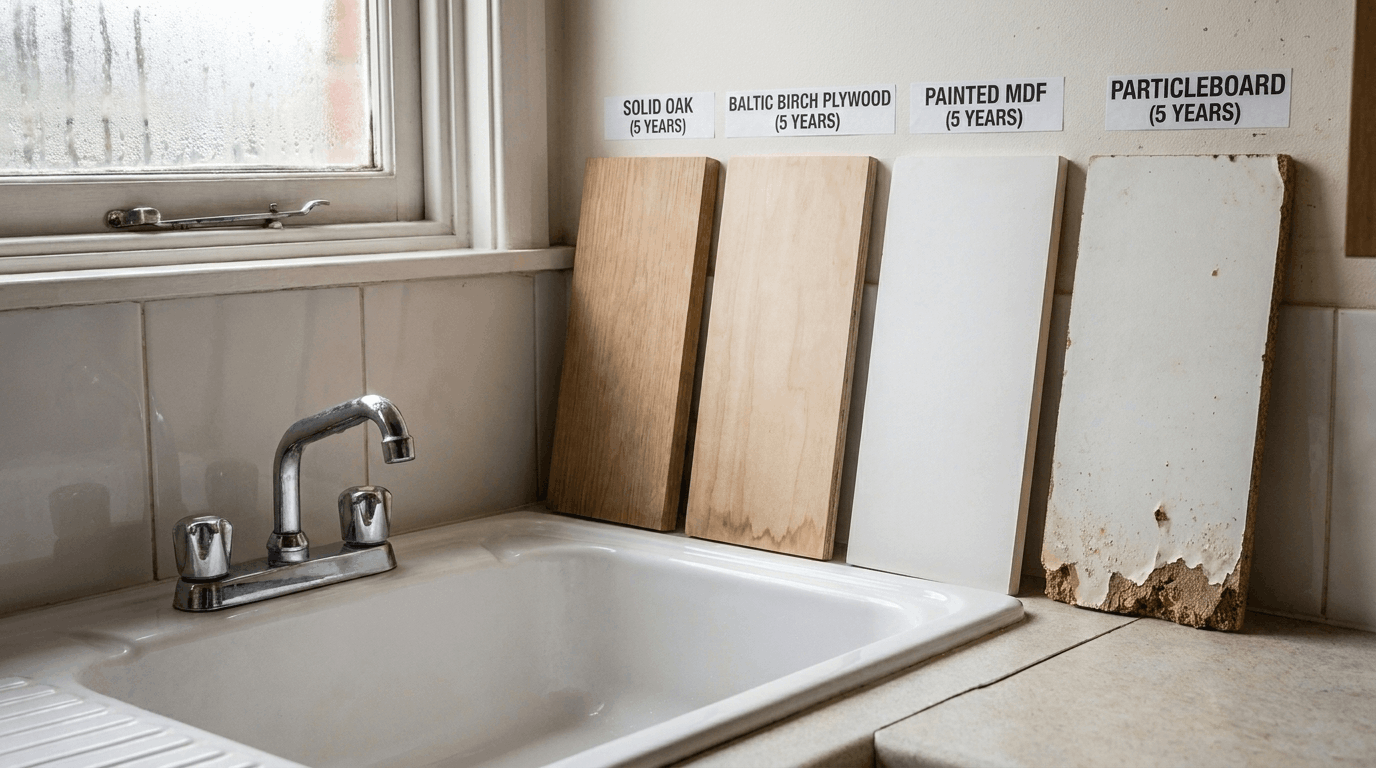
The material matters more than the label. A solid wood cupboard outlasts a poorly made cabinet. A plywood cabinet outlasts a flat-pack MDF cupboard in most conditions.
Cupboard materials, from cheapest to most durable:
- Particleboard: most affordable, least durable. Edges swell and split near moisture. Acceptable only for dry, low-use locations.
- MDF: smooth surface, takes paint well, costs less than wood. Keep it away from sinks, bathrooms, and anywhere with regular moisture. Edges degrade.
- Plywood: stronger and more moisture-resistant than MDF. Stays stable when humidity changes. Good mid-range choice.
- Solid wood: most durable. Oak, maple, cherry, walnut. Handles moisture better than sheet materials and can be refinished. Worth the extra cost for any cupboard near water or in heavy daily use.
Cabinet materials, budget to premium:
- Budget RTA cabinets often use particleboard or MDF boxes with a veneer or laminate finish. Functional and affordable, but they won’t last 25 years in a busy kitchen.
- Mid-range semi-custom cabinets use plywood box construction with hardwood face frames. This is where most home kitchens land, and it is a reasonable place to be.
- High-end custom cabinets use solid wood or premium plywood throughout with precision hardware. Built to last decades and priced accordingly.
The moisture rule applies to both near water, solid wood, or plywood only. Kitchen sink area, bathroom, utility room. MDF and particleboard will fail at the edges, usually within a few years.
Room by Room: Cupboard or Cabinet?
This is the question most people actually need answered. Most guides give vague advice. Here is the direct version.
1. Kitchen
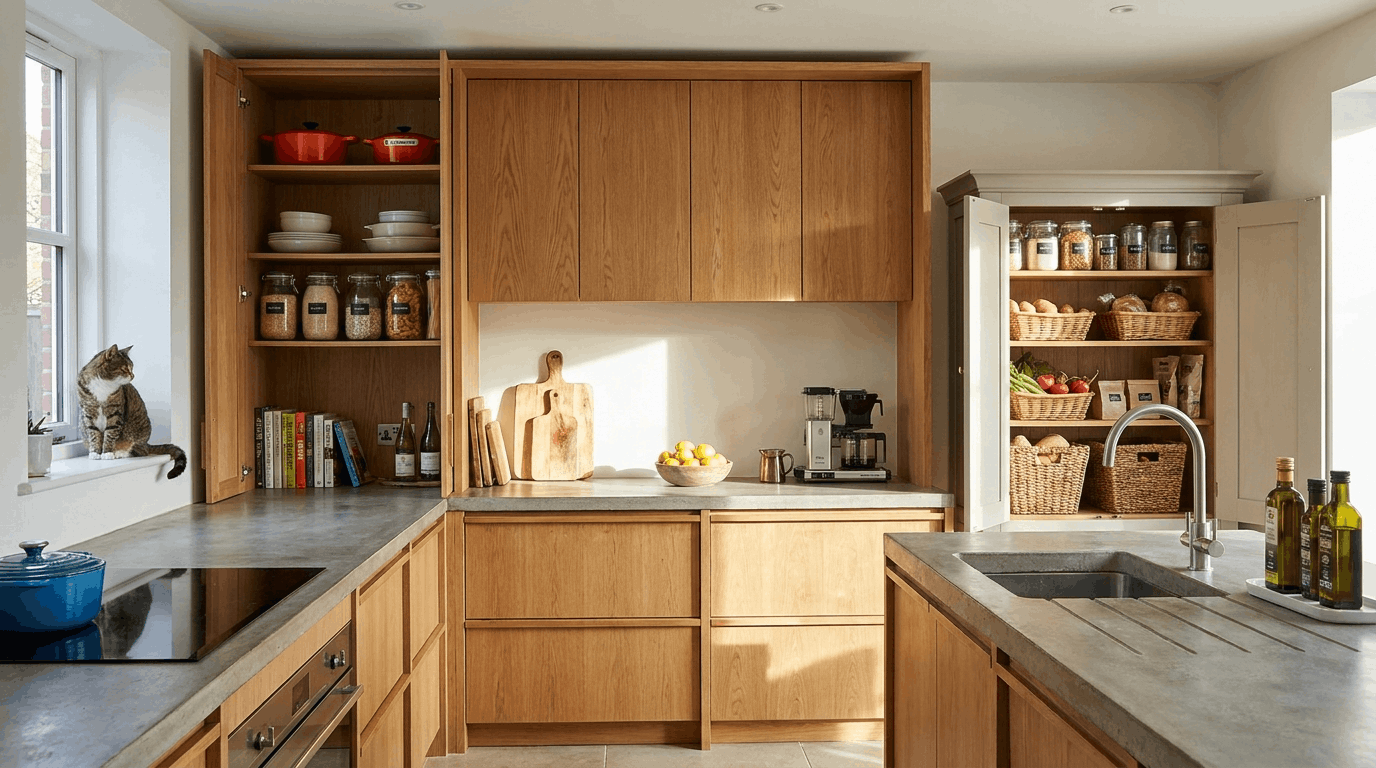
Cabinets for a working kitchen.
Wall cabinets, base cabinets, and a tall pantry unit form a system built around how a kitchen actually functions: daily heavy use, moisture from cooking, and the weight of appliances. A cupboard cannot replace that.
A freestanding pantry cupboard still has a place alongside a cabinet layout.
It handles dry goods, canned food, and overflow storage. For rental properties or short-term living situations, a freestanding cupboard avoids the cost and commitment of a full cabinet installation entirely.
2. Bathroom
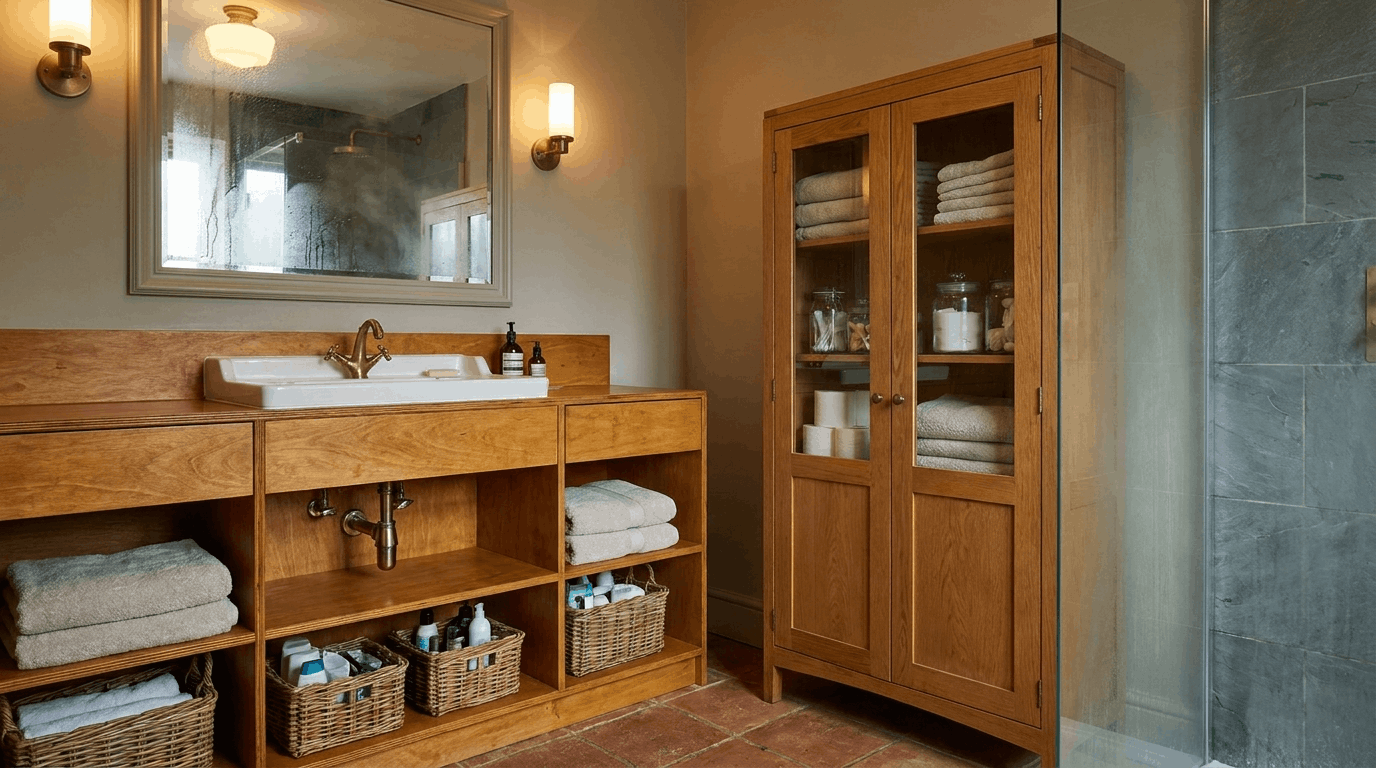
Cabinets again. A vanity cabinet around the sink, a wall cabinet for daily-use items. Both handle the moisture produced by a bathroom every day.
Want a freestanding linen cupboard in a larger bathroom? Fine, but the material matters. MDF and particleboard near a shower or bathtub will swell and fall apart at the edges. Solid wood or plywood only.
3. Bedroom
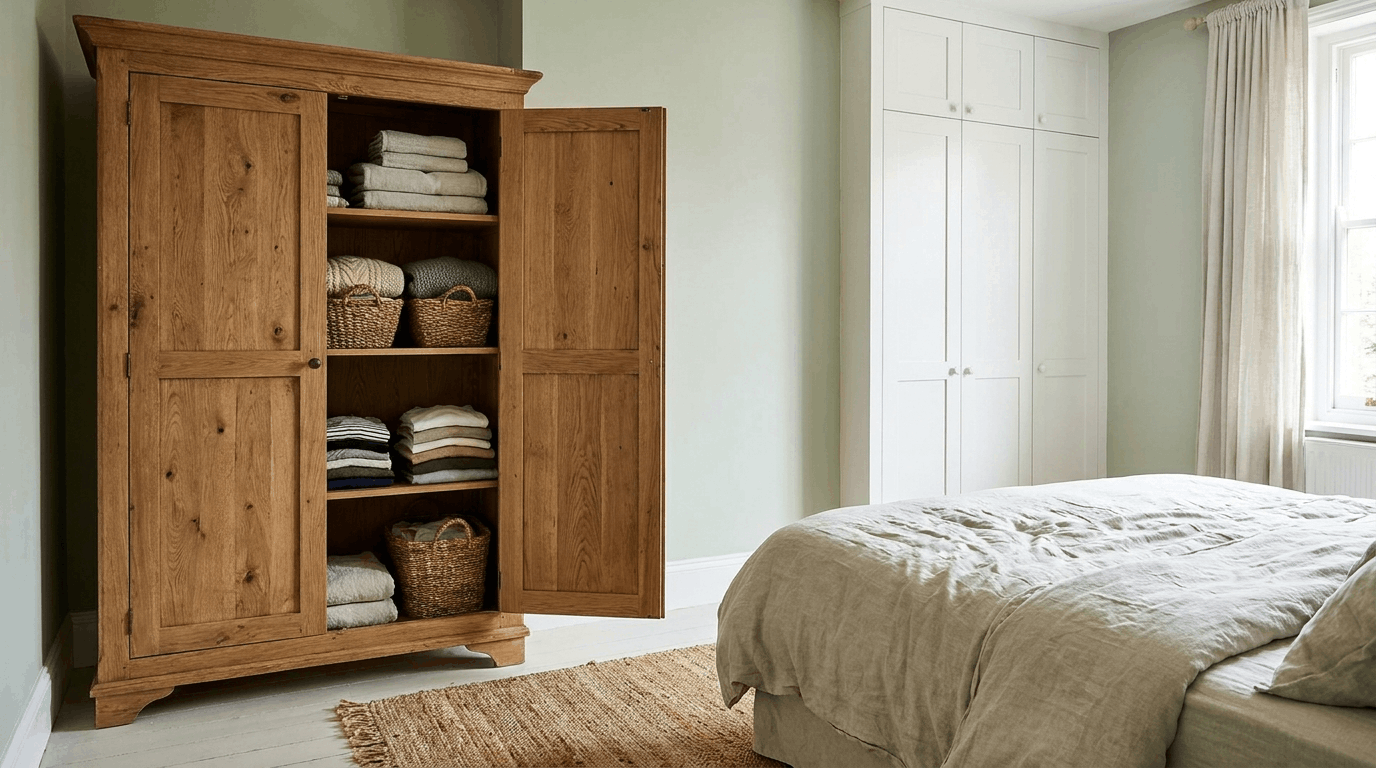
A freestanding cupboard works well here when a wardrobe or built-in storage is not an option. Clothing, extra linens, and general bedroom items. No installation work needed.
Built-in bedroom cabinets work as wardrobe equivalents. In UK homes, “fitted cupboards” in a bedroom and “built-in closets” in an American home describe the same thing.
4. Hallway
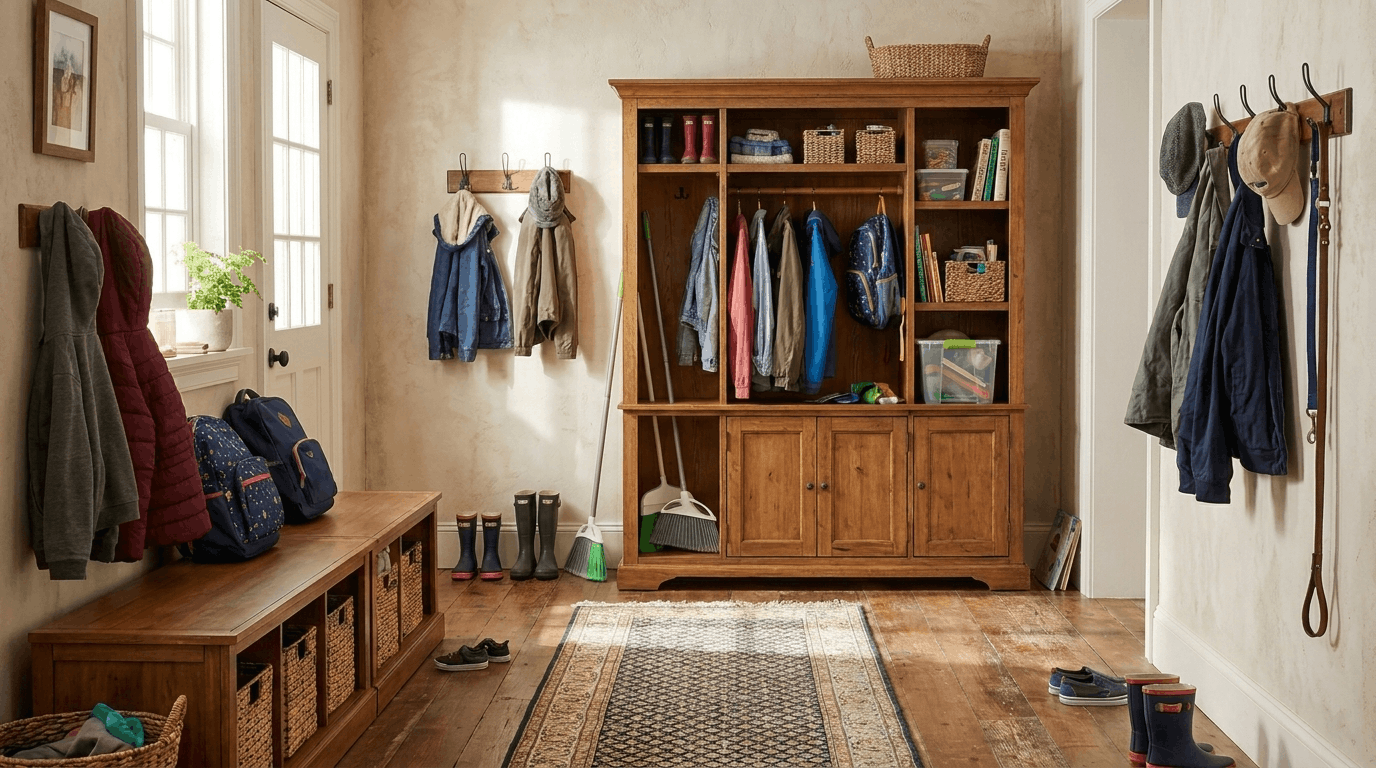
A freestanding cupboard is usually the right call.
Hallways rarely have the wall space for a cabinet installation, and the storage needs are general: shoes, coats, bags, and the random household items that do not belong anywhere specific.
A tall freestanding cupboard uses vertical space without a contractor.
5. Living Room and Dining Room
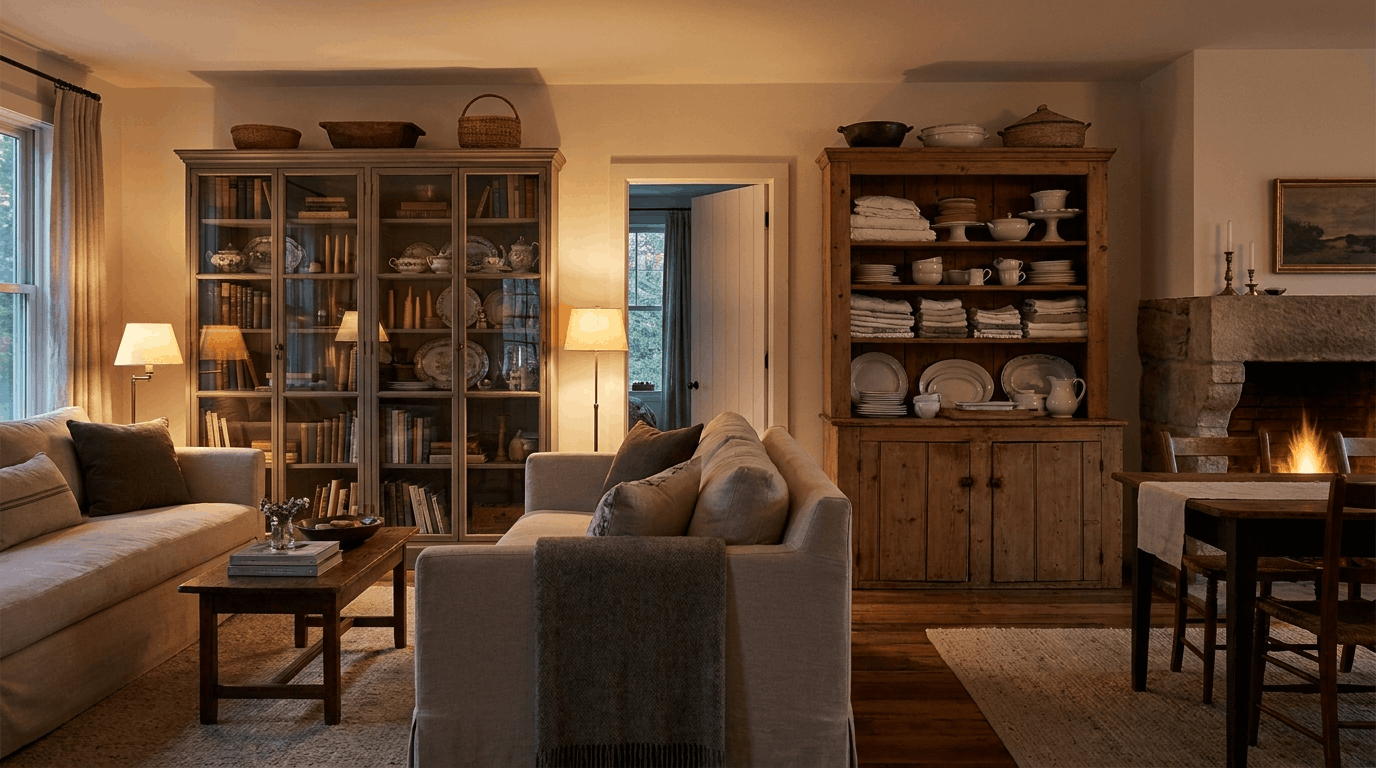
Display cabinets for books, china, and decorative items. A media cabinet for AV equipment. Both are purpose-built for the room.
A freestanding cupboard in a dining room handles table linens, candles, and entertaining items well.
Farmhouse and vintage-style homes often go this route rather than fitting built-in units, and it works better than most people expect.
Conclusion
The cupboard vs cabinet question trips people up because the words are used so loosely by retailers, designers, and people in different countries that it stops feeling like a meaningful distinction.
It is a meaningful distinction. It just comes down to three things: is it furniture or a fixture, where is it going, and how long do you need it to last.
Get that right, and the rest is just shopping.
What room are you deciding on? Drop it in the comments, and I can point you in the right direction.