Most bedrooms are functional. They have a bed, a dresser, and enough light to get dressed by. What they lack is the quality that makes you want to stay in the room.
Luxury bedroom interior design is not about spending more. It comes down to a handful of well-made decisions.
Think about the wall behind your bed, the way light layers through the room, and the fabric on your curtain rod.
In my work with clients across the US, small choices matter more than budget.
Luxury Bedroom Interior Design Ideas To Change Your Room
Luxury bedroom interior design is about combining comfort, quality materials, and thoughtful details.
The right colors, lighting, furniture, and textures can make your room feel calm, stylish, and more inviting.
1. Statement Headboard
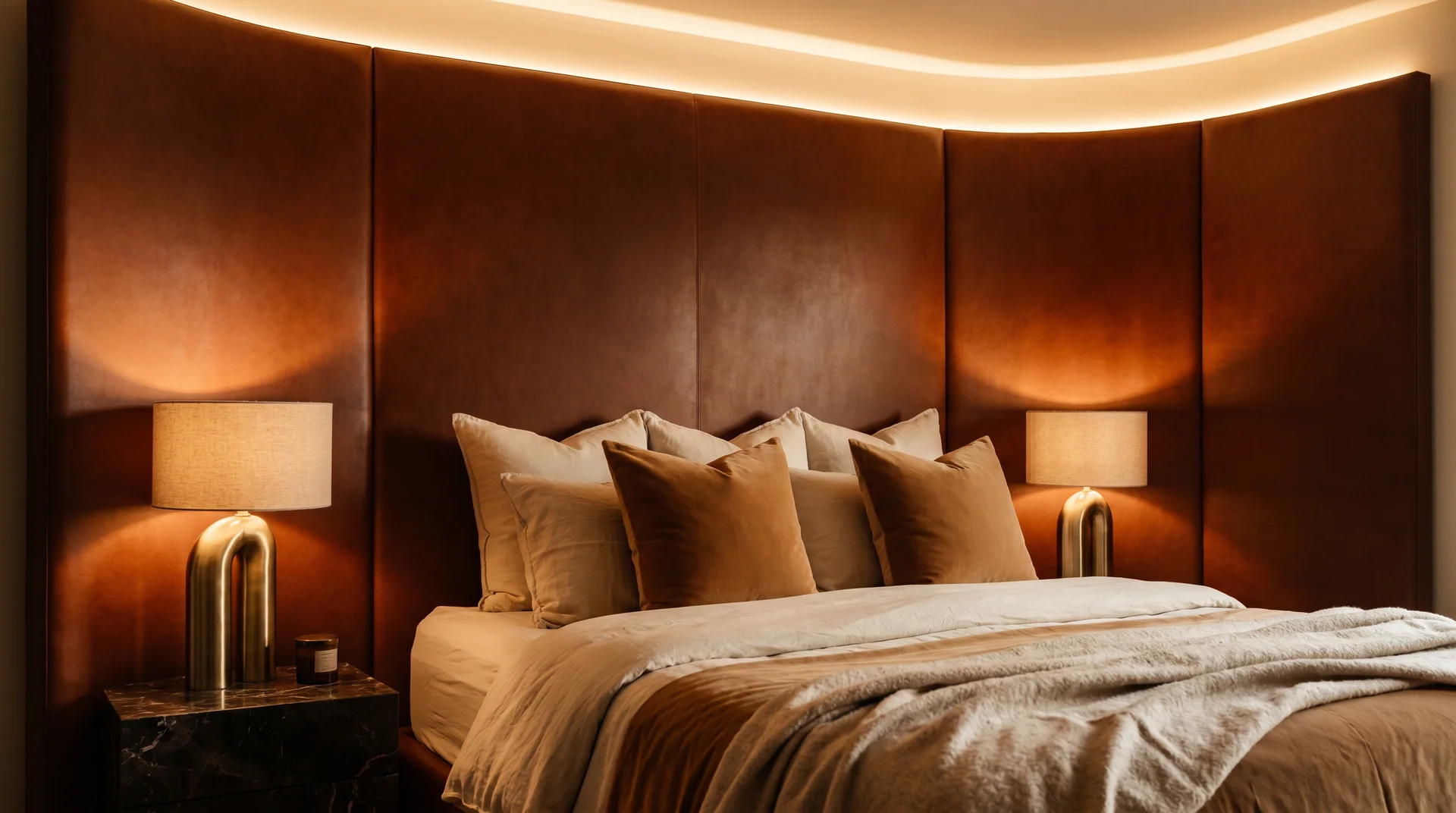
The headboard is the single highest-impact decision in luxury bedroom interior design. It sets the scale for everything else.
A floor-to-ceiling upholstered headboard in bouclé, velvet, or top-grain leather immediately reads as high-end because it treats the wall behind the bed as architecture rather than a background.
2. Quiet Luxury Bedroom Color Palette
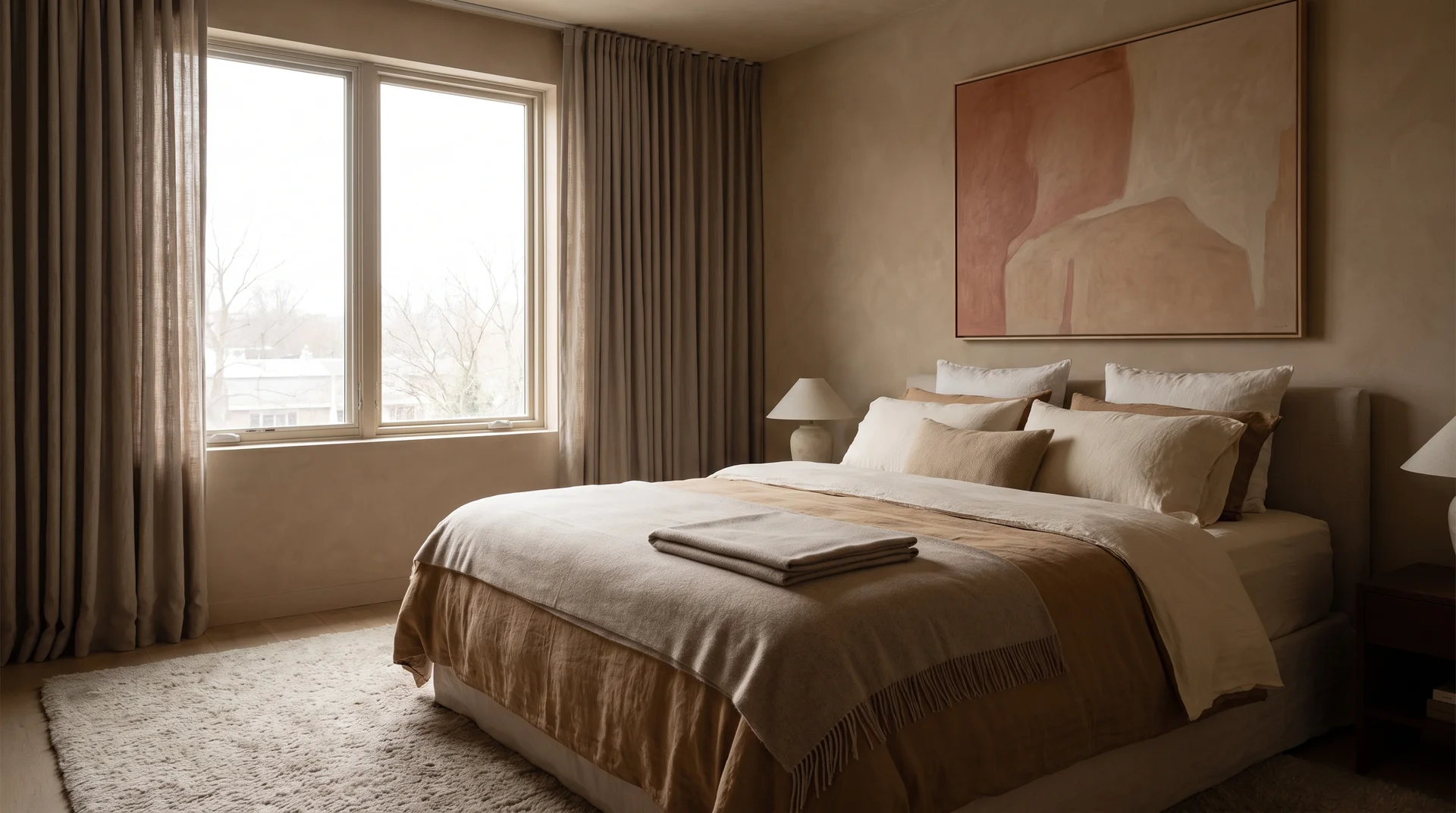
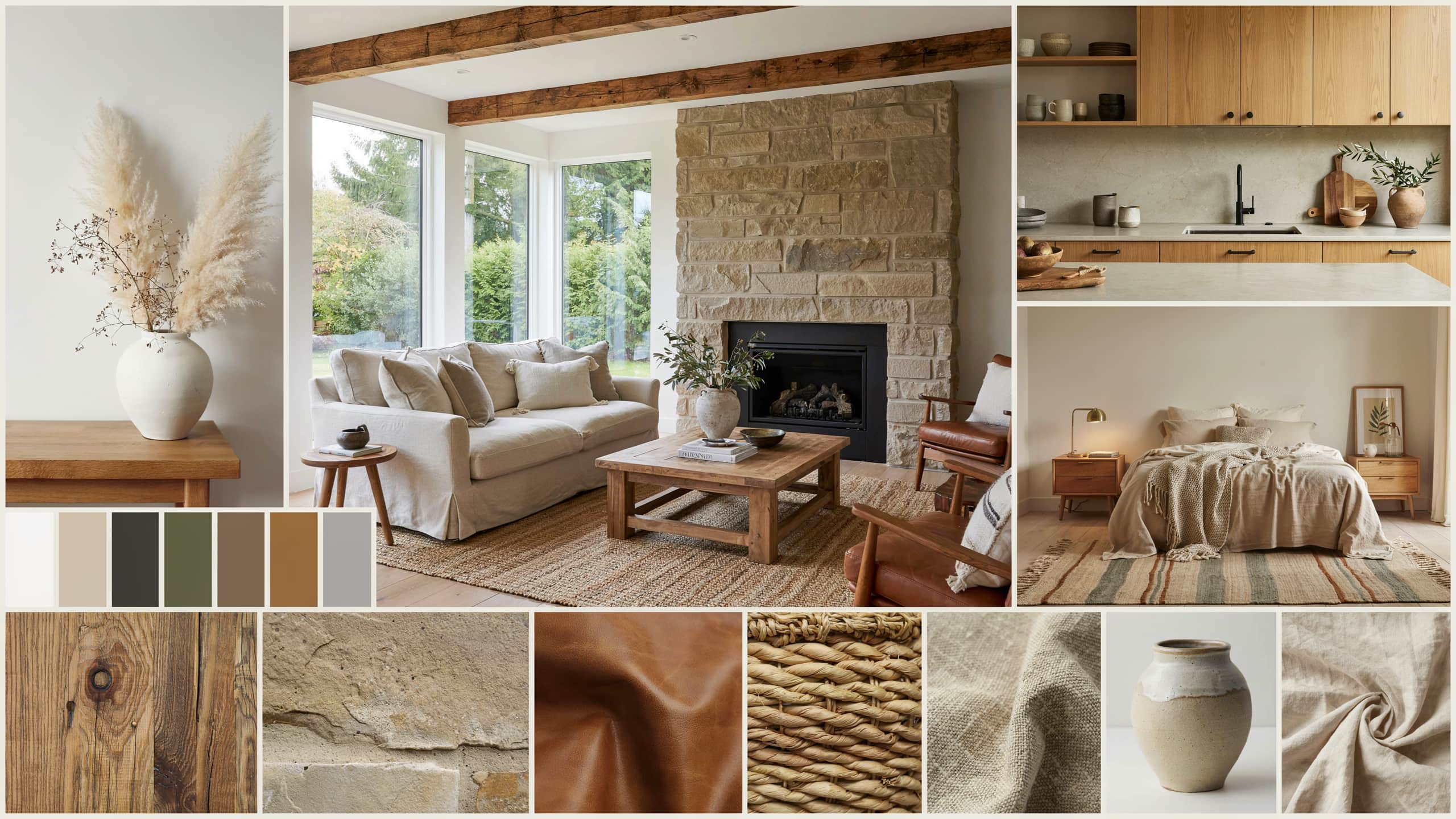
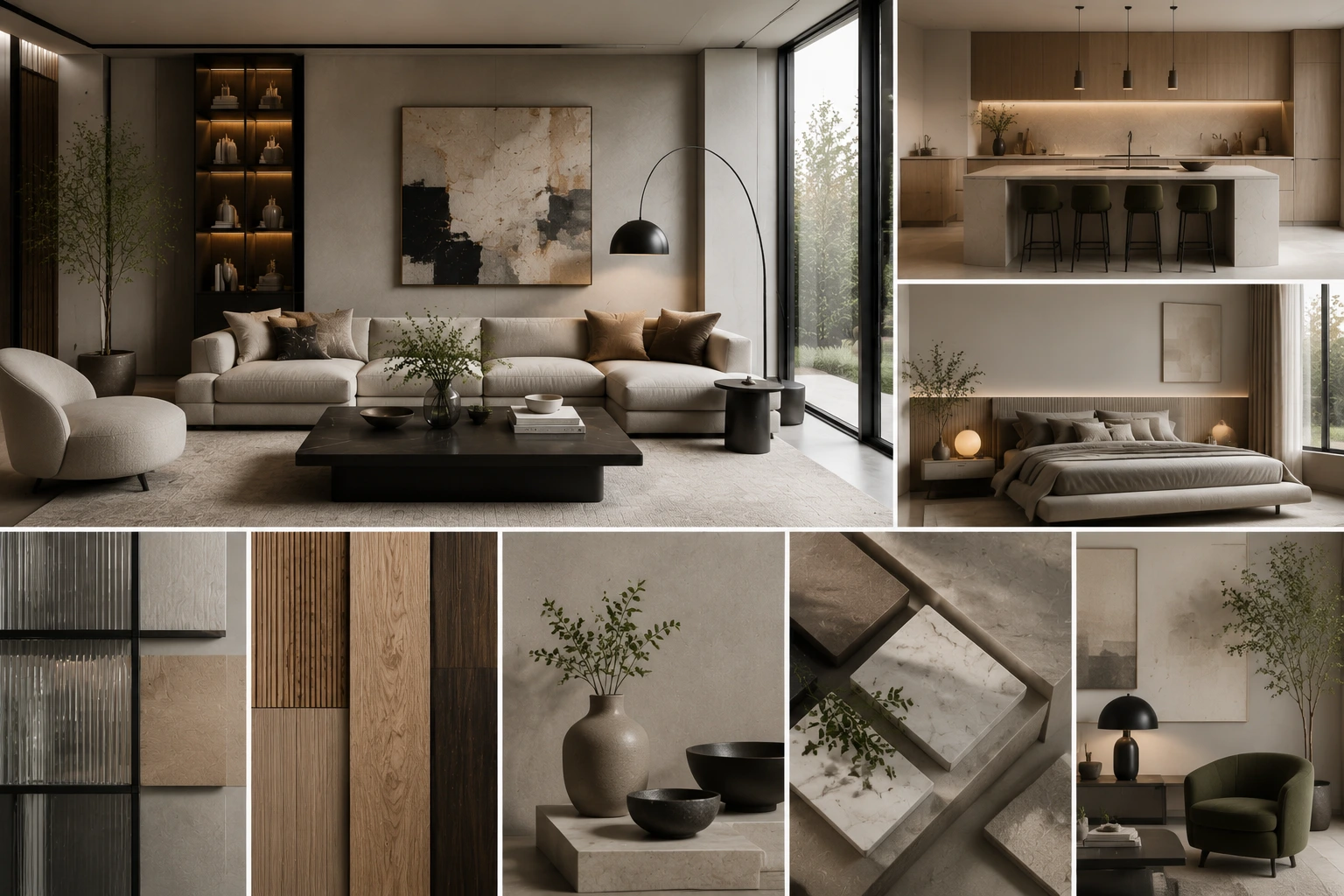
The quiet luxury color palette that has defined high-end US bedroom design over the past three years reads in warm stone, taupe, oat, warm white, and dusty blush.
What it does not read in is cool gray, which photographs beautifully in magazines and feels corporate in person.
A warm white in a cool-toned room reads yellow. Most palette failures in luxury bedrooms come from mismatched undertones rather than wrong colors.
3. Layered Luxury Bedding
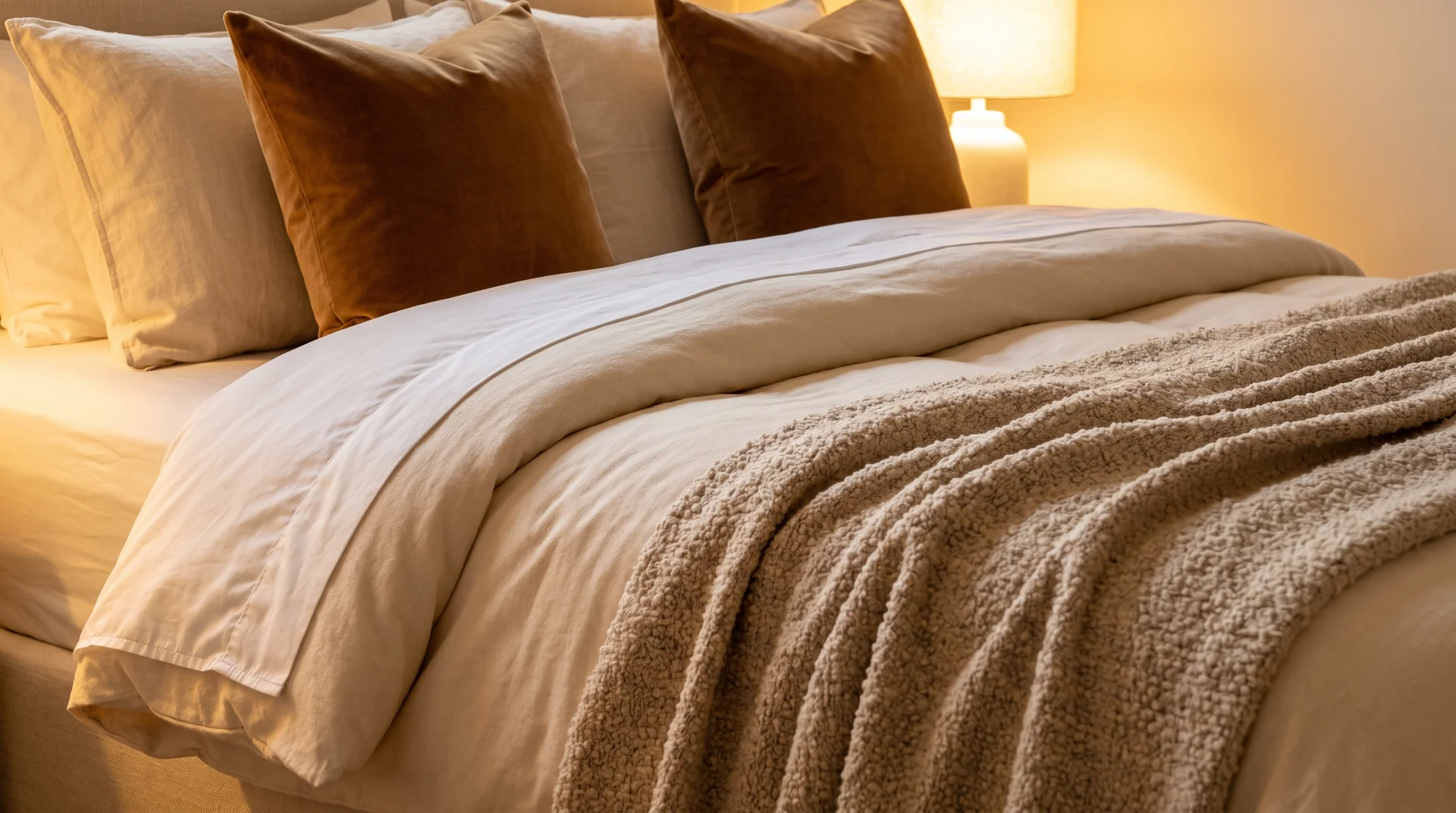
Luxury bedding is not one heavy duvet. It is four or five layers at different weights and textures working together to create a bed that looks as good as it feels.
The structure that works: a fitted sheet, a flat sheet, a lightweight cotton or wool blanket, a primary duvet, and two to three decorative throws draped across the foot.
The thread count sweet spot for sateen is 400 to 600. Beyond 600, the hand feel does not improve, and the fabric often becomes less breathable.
4. Bespoke Walk-In Wardrobe
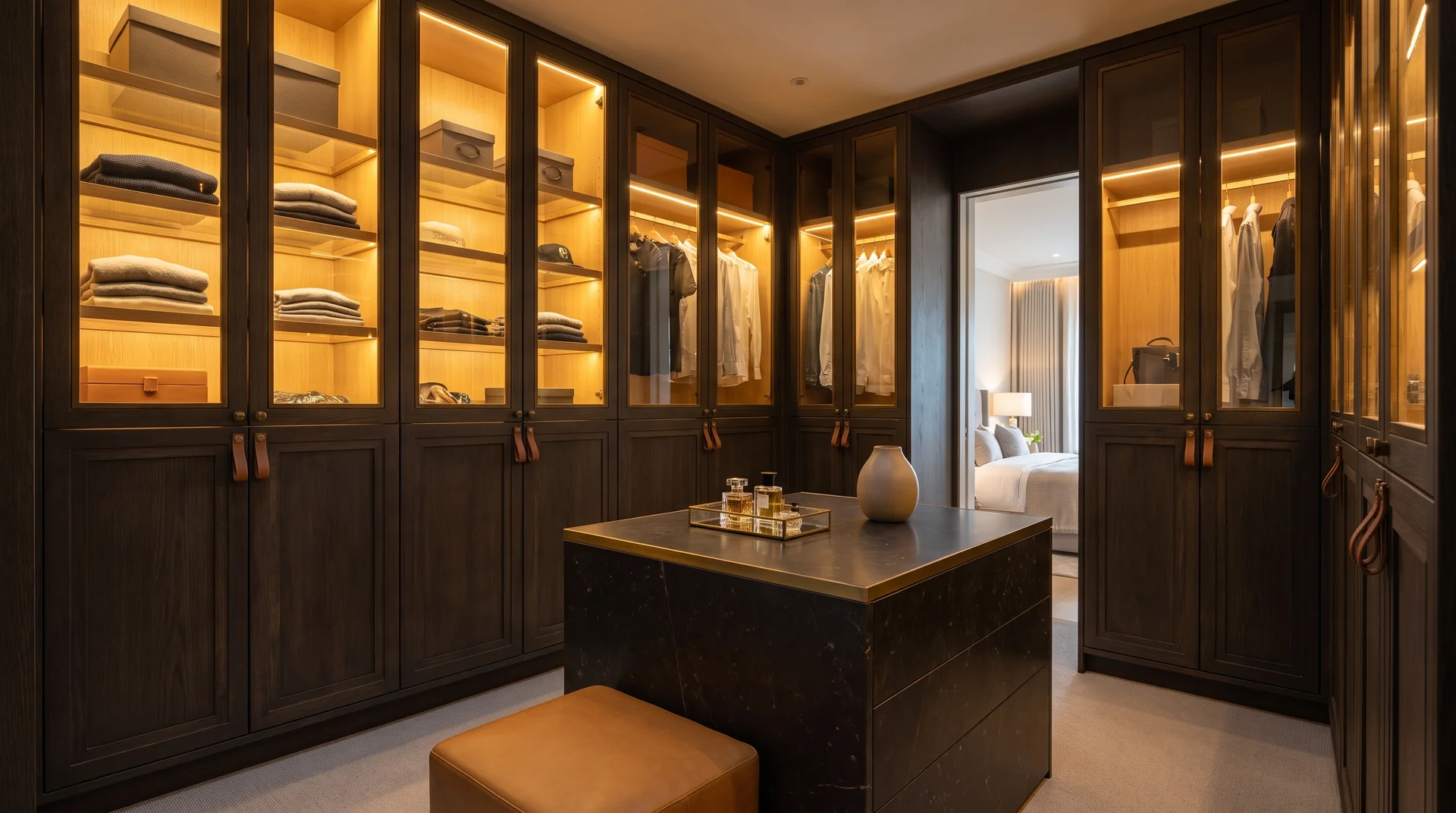
A walk-in wardrobe designed as an extension of the bedroom rather than a storage room attached to it is one of the clearest markers of luxury master bedroom design in US residential projects.
The wardrobe’s design language should match the bedroom: the same hardware finish, wood tone, and palette.
Full-height cabinetry in lacquered white, warm walnut, or dark oak with integrated LED strip lighting inside reads as considered rather than functional. Glass-fronted upper sections show curated items.
5. Layered Lighting Plan
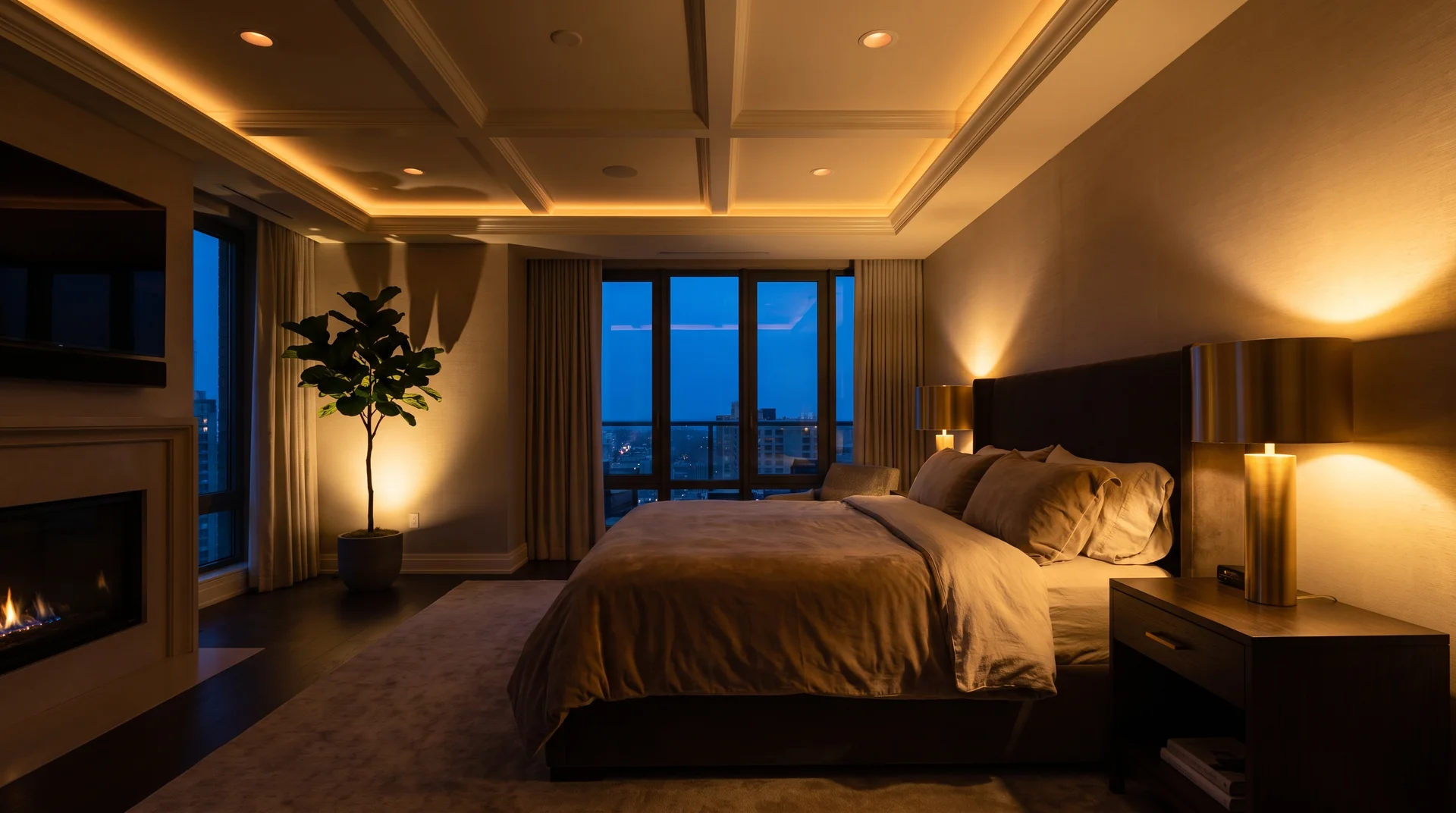
A single overhead fixture is the clearest sign of an unfinished room, no matter what it costs. Luxury bedroom interior design requires, at a minimum, three separate lighting circuits, each on a dimmer.
Anything cooler than that destroys the atmosphere, no matter how beautiful the fitting is. Every switch that controls the bedroom should be accessible from the bed.
6. Natural Material Mix
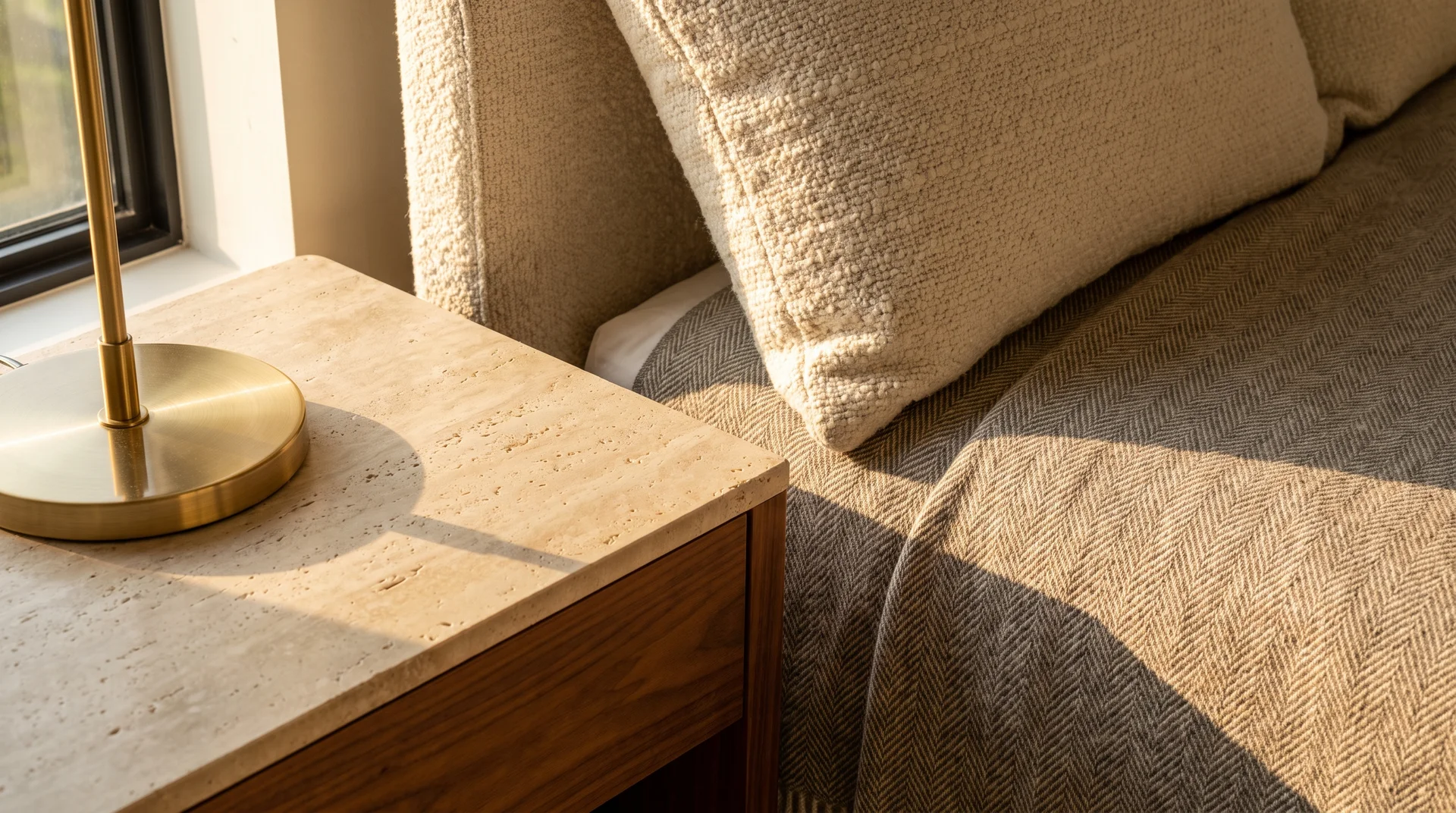
Quiet luxury bedroom design draws on natural materials because they age well, photograph well, and feel expensive without announcing themselves.
The wood you choose for furniture or flooring sets the tone for every other material in the room, so it’s worth getting that decision right before picking anything else.
Our guide to wood flooring styles and costs breaks down which tones pair best with a quiet luxury palette.
7. Dramatic Ceiling Treatment
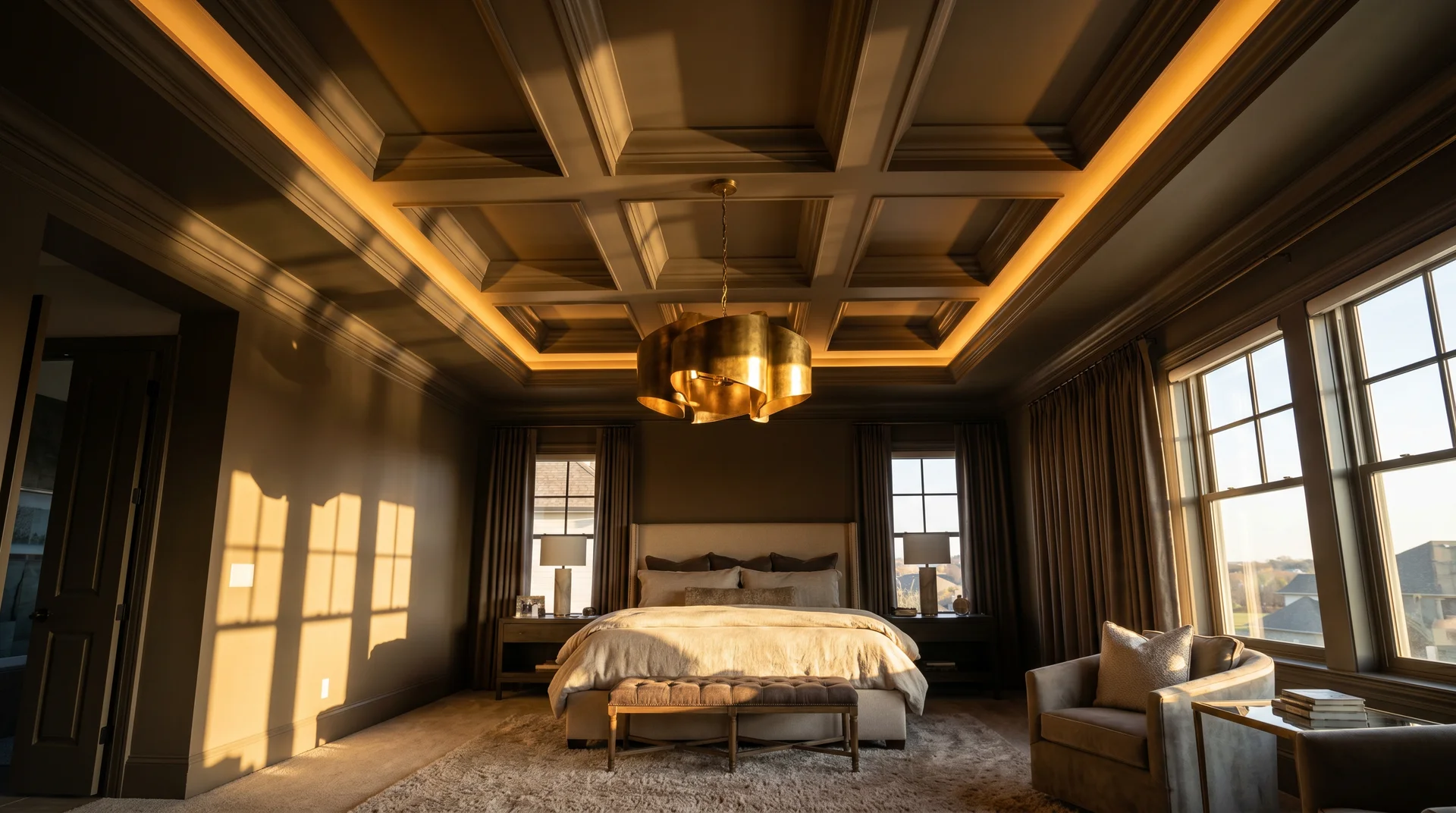
The ceiling is the most underused surface in US residential bedroom design. Treating it as a design element rather than a blank surface above the furniture changes the character of the room more than almost any other single decision.
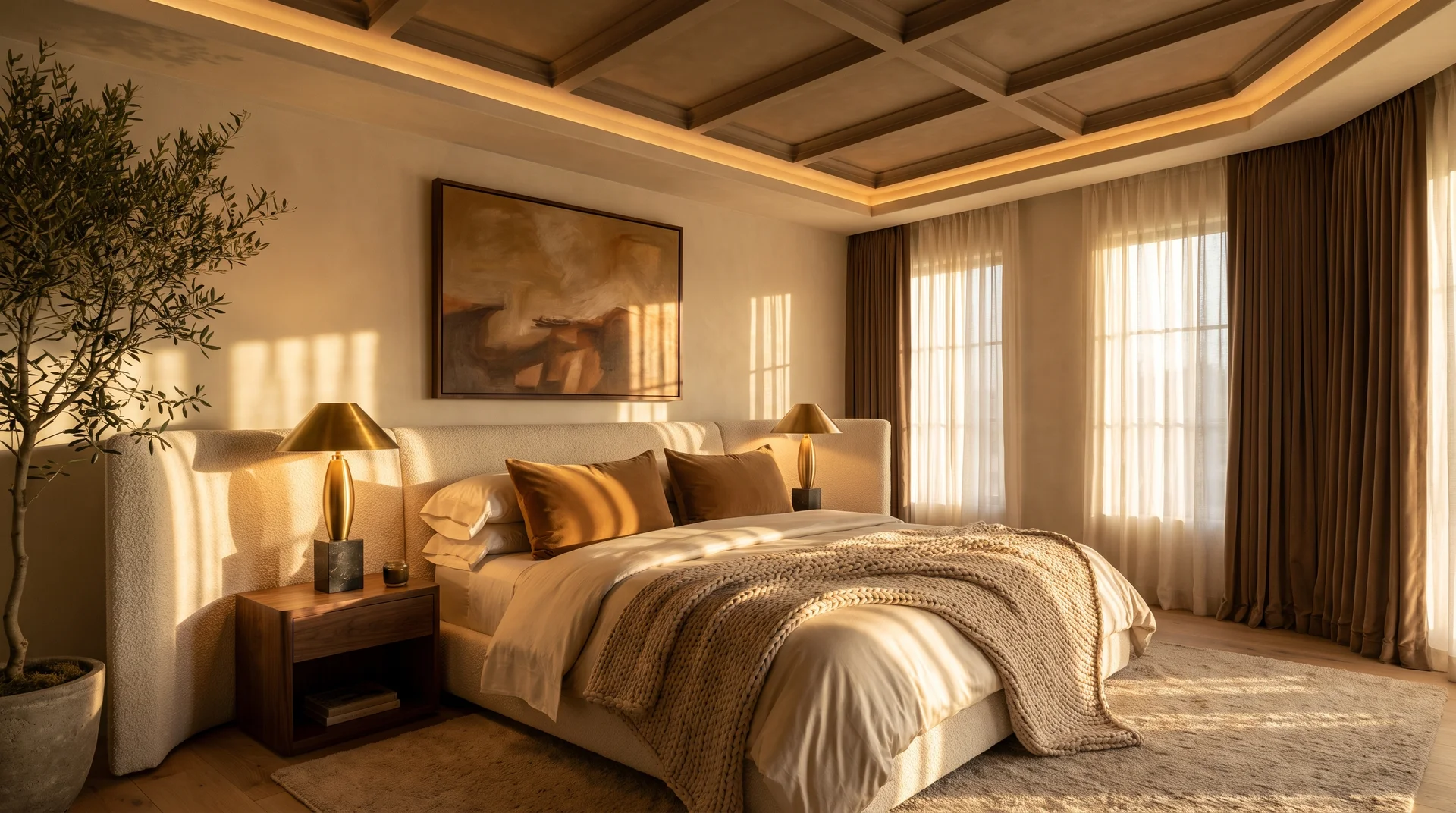
A coffered ceiling with painted or lacquered insets adds architectural weight without structural changes in most construction types.
8. Canopy or Four-Poster Bed
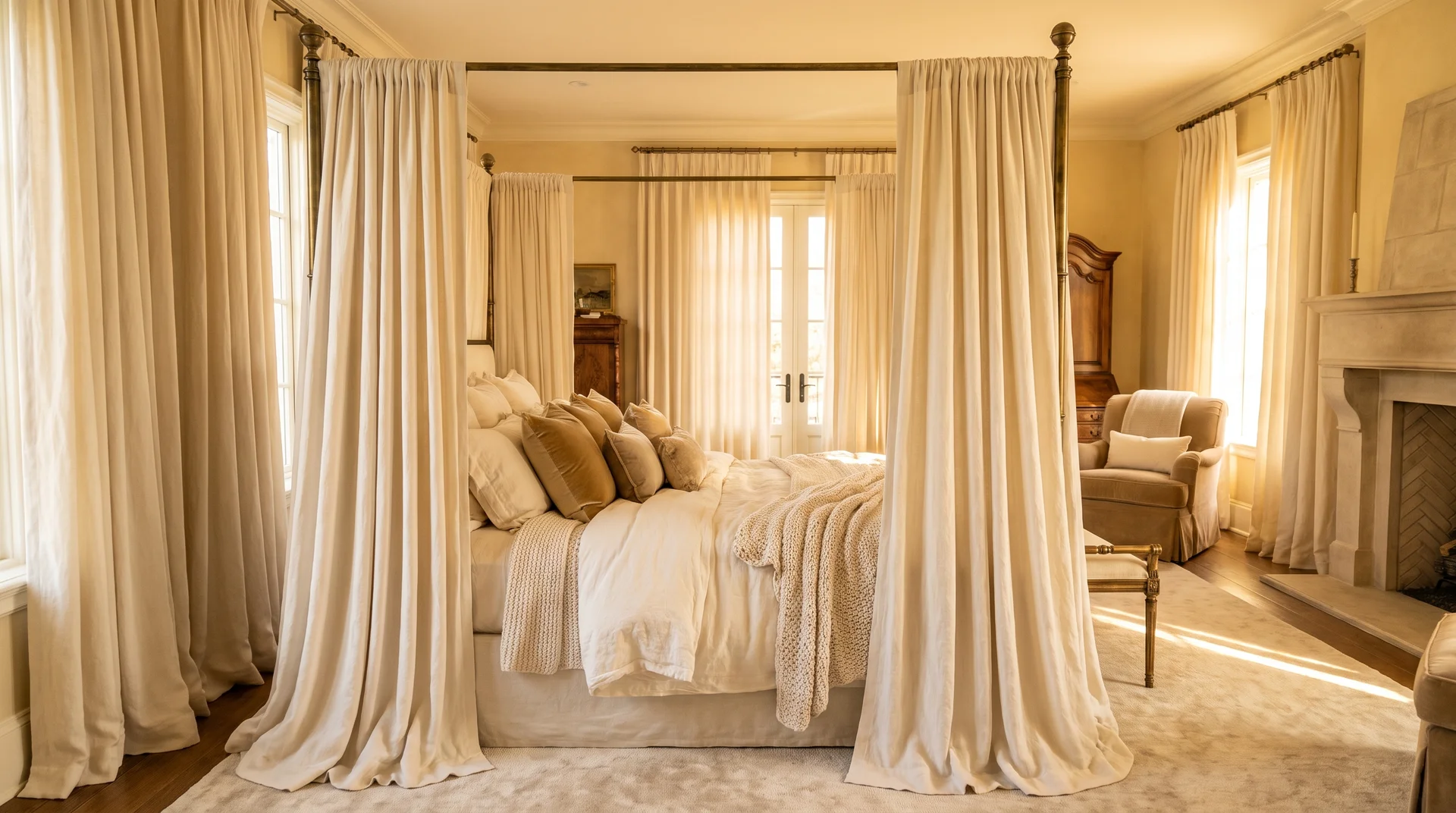
A canopy or four-poster bed adds vertical scale that a standard platform bed cannot achieve, no matter the upholstery or material quality.
Floor-to-ceiling fabric panels on a four-poster frame create enclosure and warmth without any permanent structural change to the room.
Linen or velvet draping matching wall color suggests quiet luxury, while contrasting drapes are more expressive and theatrical. Both are valid, but selection should be deliberate.
9. Floor-to-Ceiling Curtains
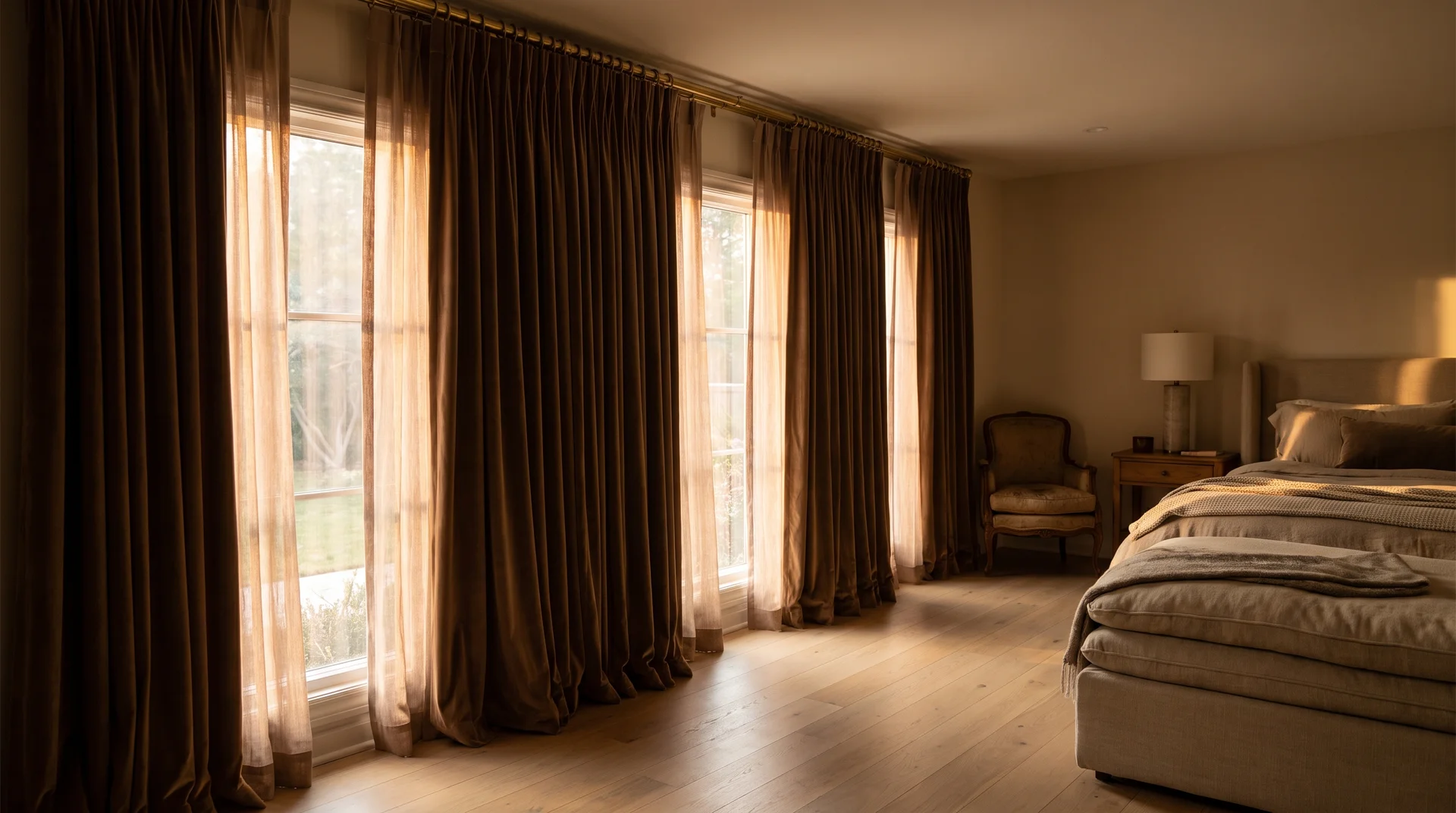
Curtains that stop short of the ceiling or hang at an awkward height are one of the most common signs of an unfinished room across every price bracket.
In luxury bedroom interior design, the curtain rod mounts four to six inches below the ceiling line, and the fabric falls to the floor with either a half-inch break or a deliberate two-inch puddle.
If the wall color leans toward gray rather than warm, the choice of curtain color becomes more important, since the wrong shade will amplify the coolness rather than soften it.
10. Architectural Wall Paneling
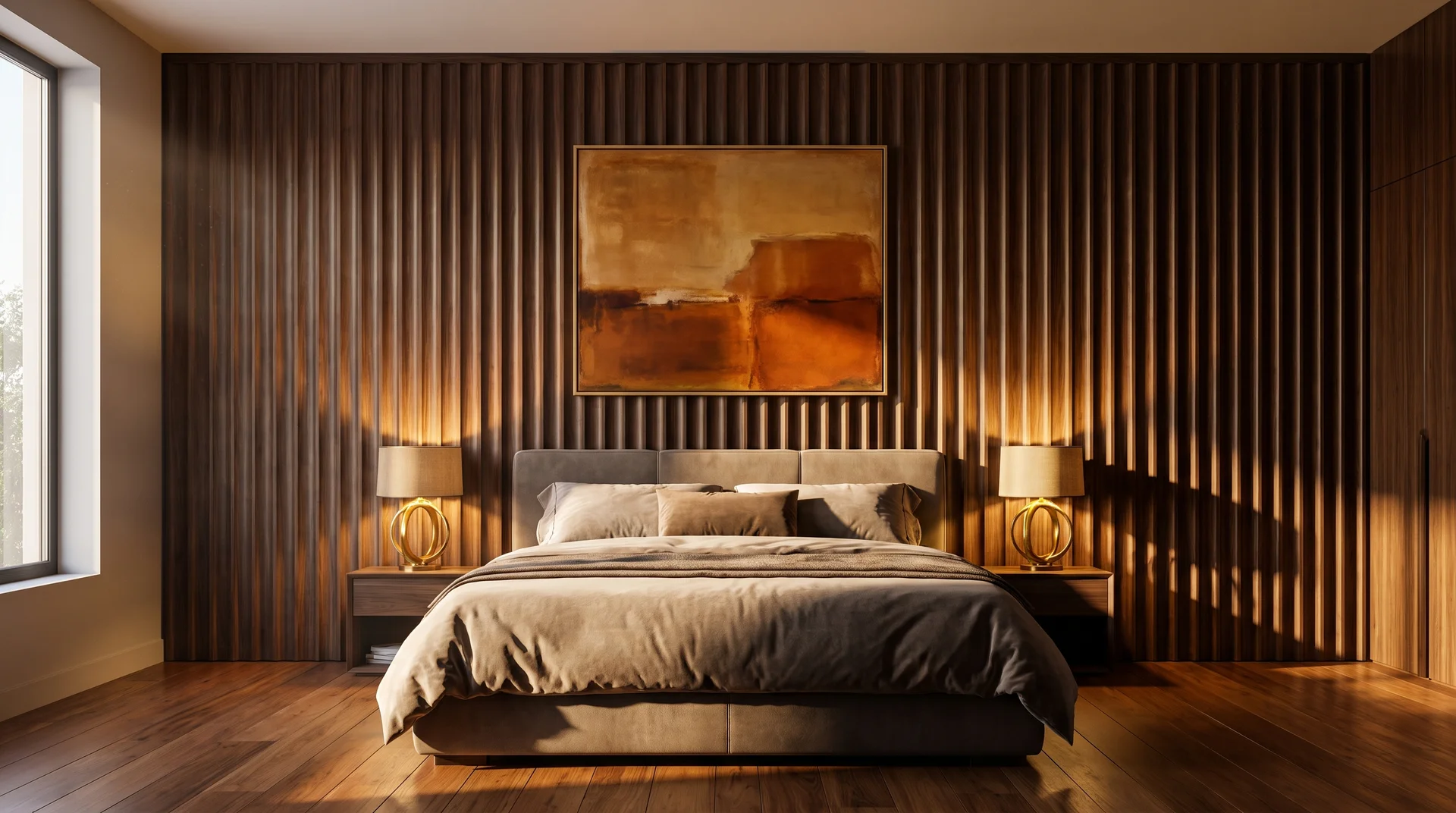
Wall paneling has replaced wallpaper as the defining luxury bedroom wall treatment in US residential design.
Fluted wood panels installed behind the bed create texture and depth without introducing pattern, which is why they work across so many different bedroom styles.
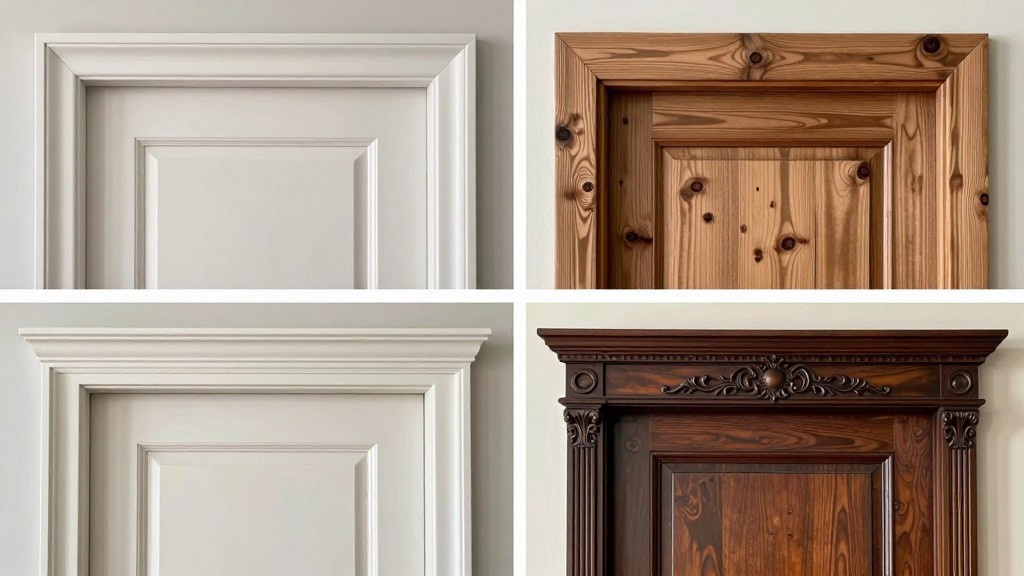
Boiserie-style painted panel molding in a tone-on-tone finish reads as classic European luxury and translates well into both traditional and transitional American interiors.
11. Curated Art as the Luxury Bedroom Focal Wall
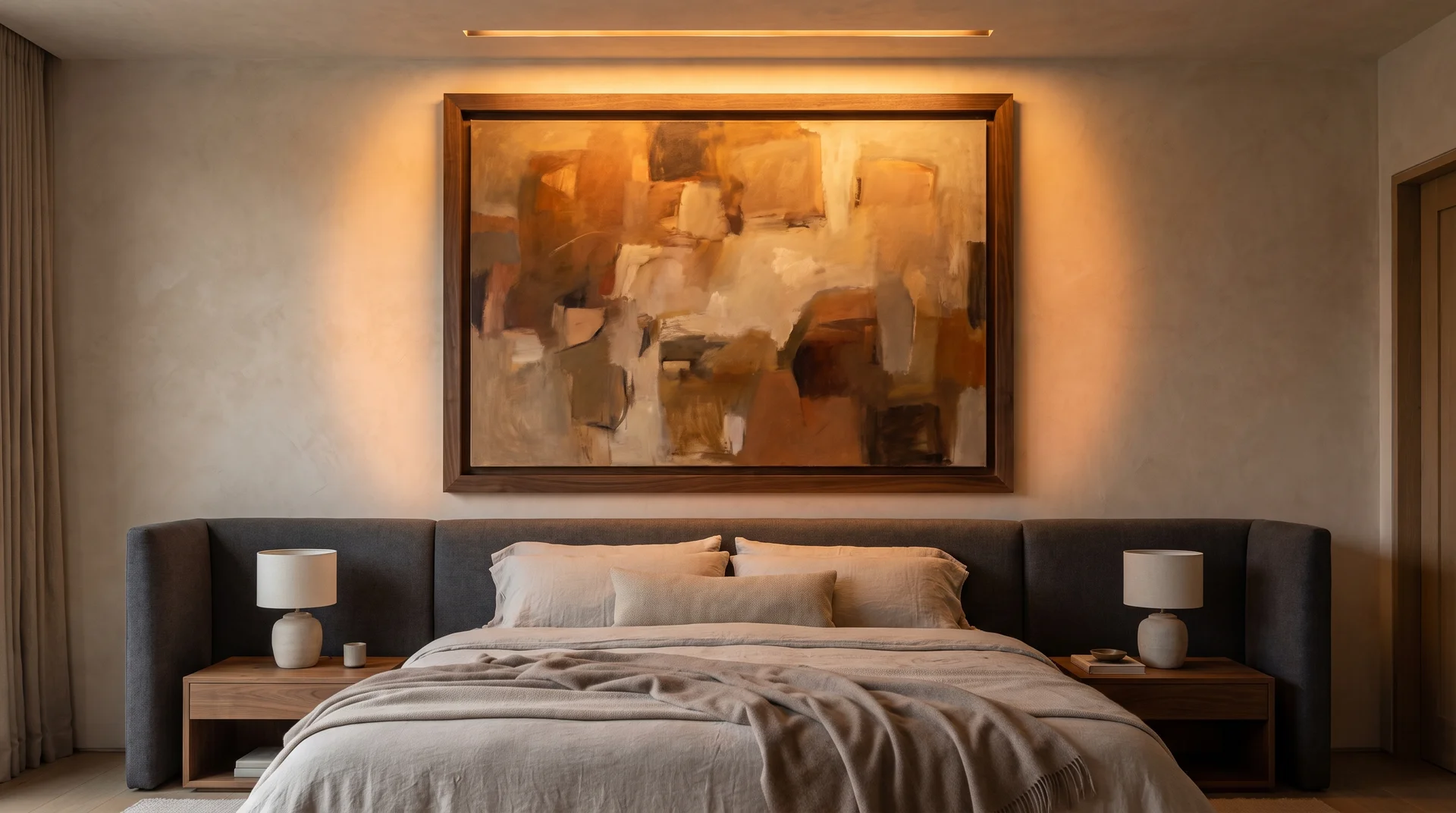
A single large-format artwork above the bed outperforms a gallery wall in most luxury bedroom settings because scale conveys confidence.
A collection of small frames above a king bed reads as indecision rather than curation, no matter the quality of individual pieces.
Install at true eye level from standing height: center of the work at 57 to 60 inches from the floor, not at the height that feels right while sitting on the bed.
12. Integrated Smart Technology
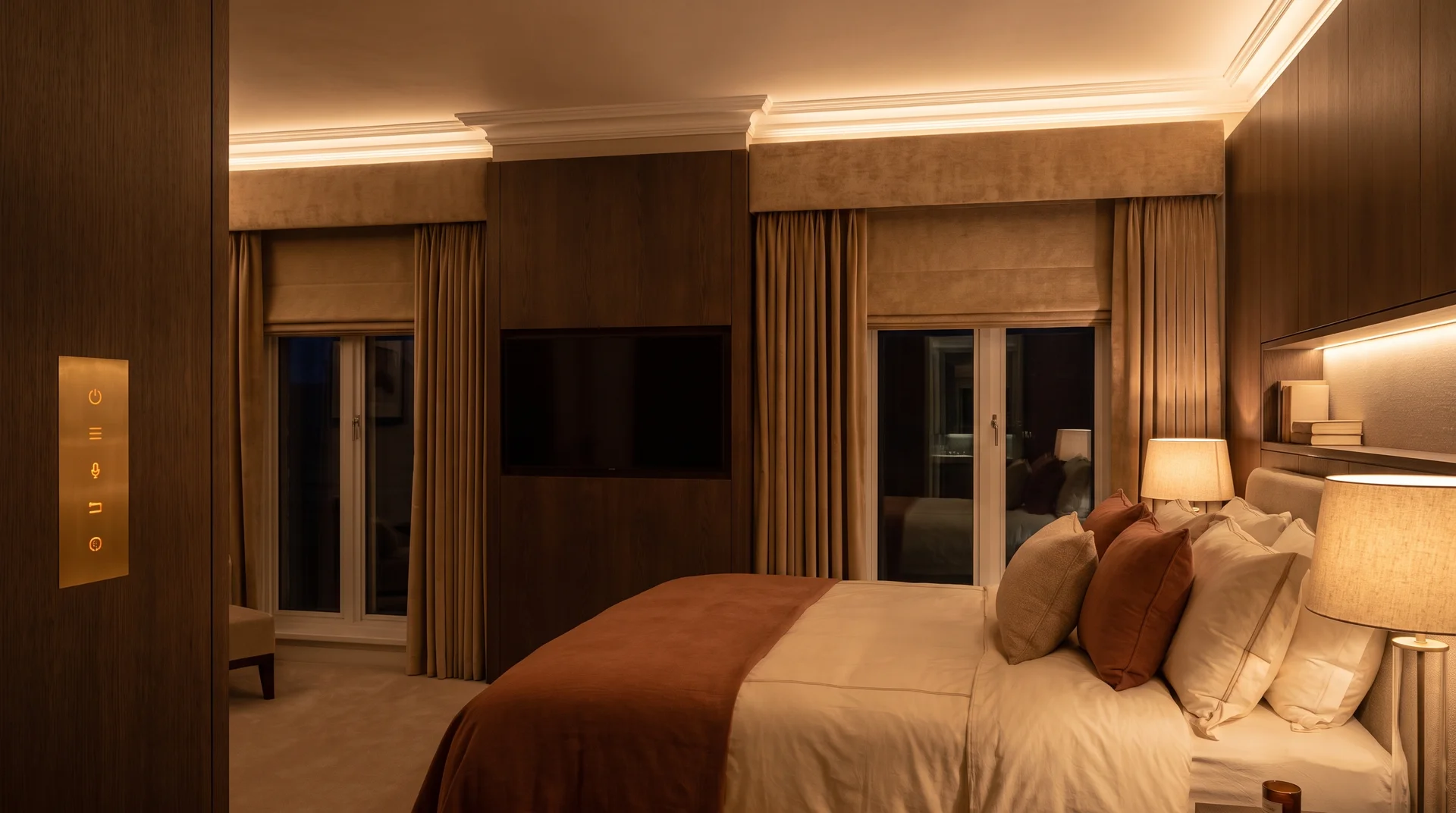
Smart technology is rarely covered in bedroom design guides, yet it comes up often in high-end renovation projects I work on.
The reason it reads as luxury is not the technology itself but how invisible it is. Hidden technology signals more resources and more thought than visible technology.
13. Luxury Bedroom Seating Area
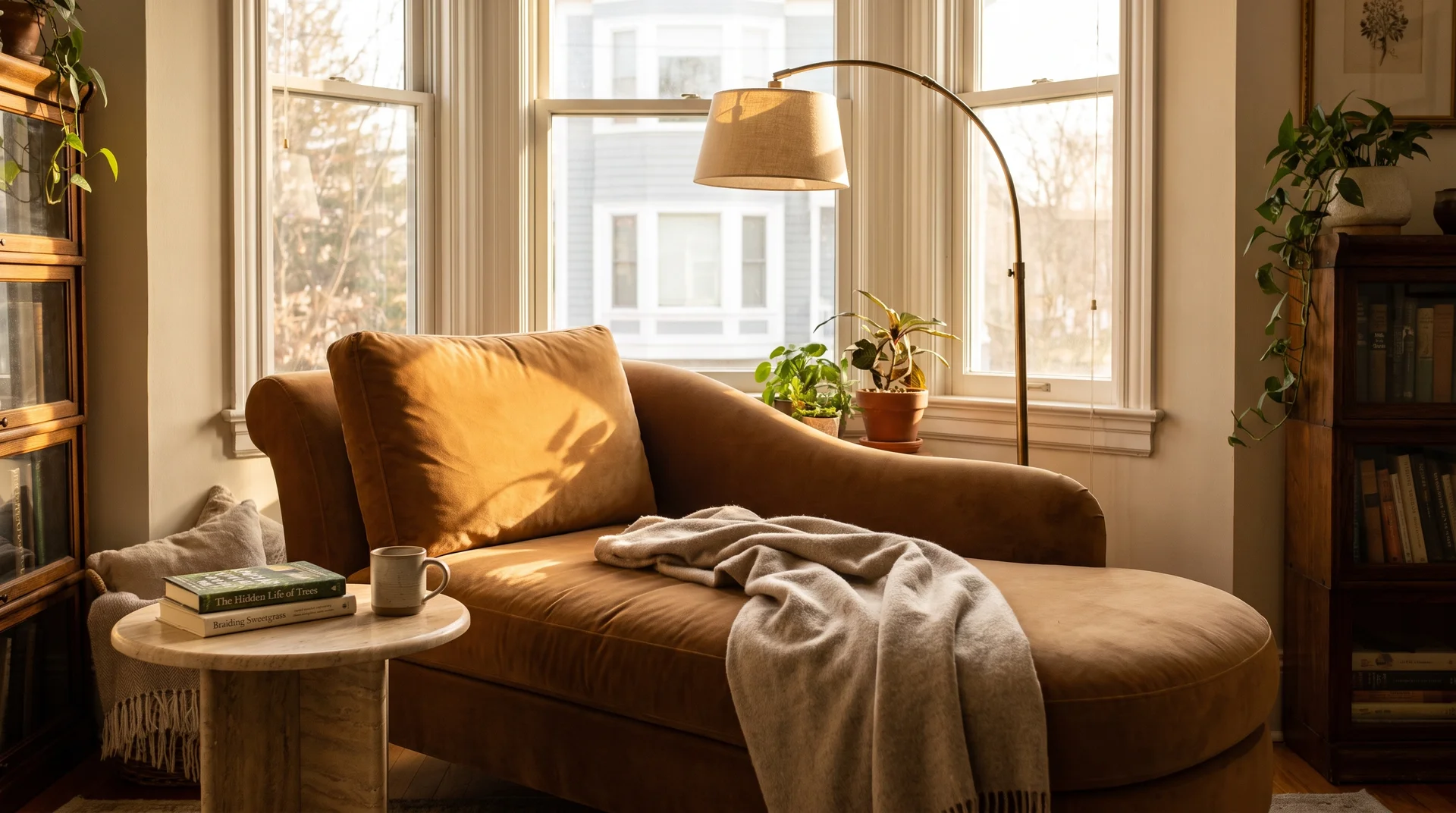
A seating area within the bedroom is the strongest spatial signal that the room was designed rather than just furnished. It separates a bedroom from a room with a bed.
A foot-of-bed upholstered bench in a contrasting fabric anchors the bed and adds a layer of function: somewhere to sit while dressing, somewhere to lay out tomorrow’s clothes.
14. Monochromatic Color Scheme
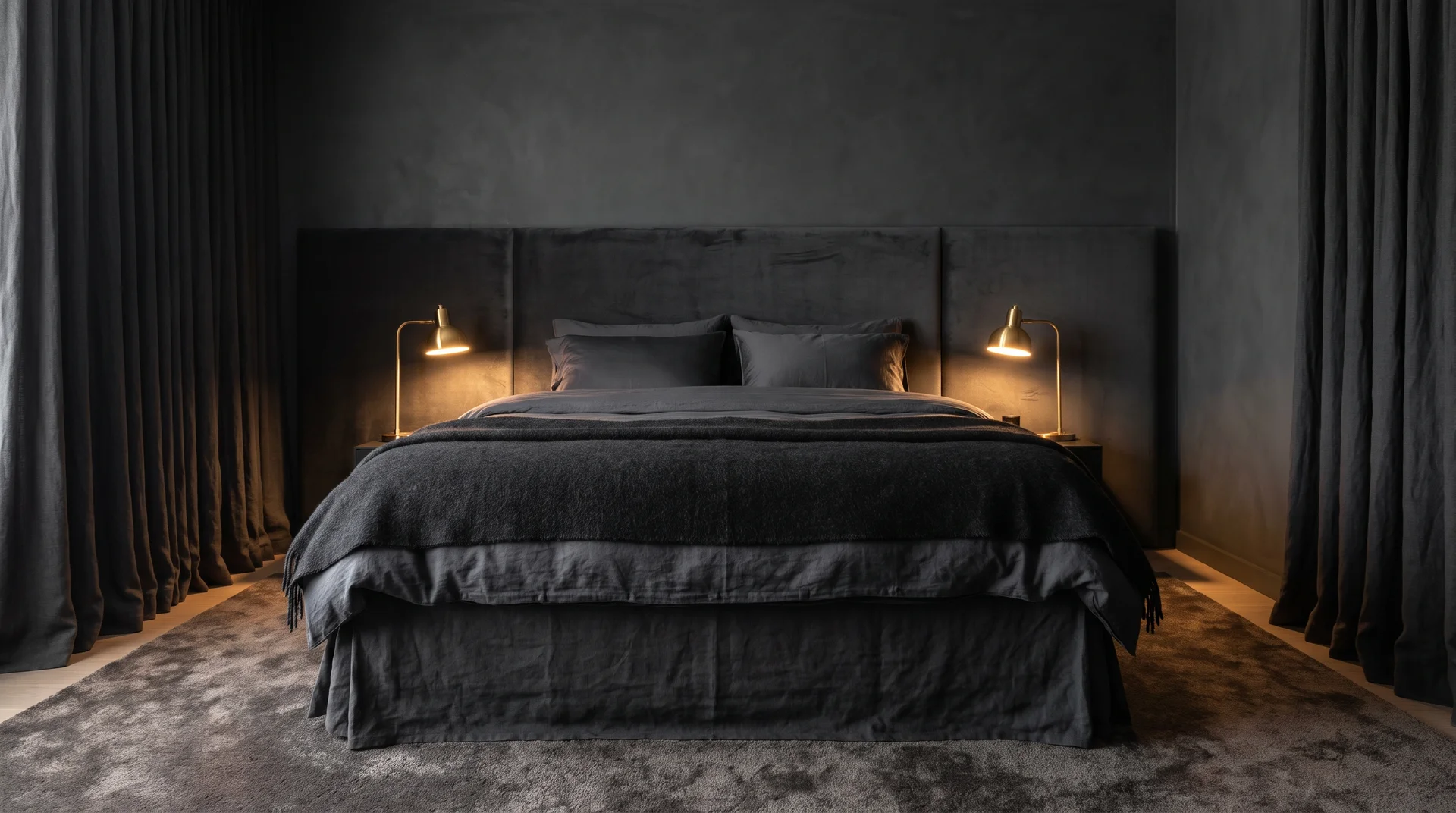
A monochromatic bedroom in warm cream, deep charcoal, or dusty sage reads as immediately intentional because it requires more restraint than multi-color decorating. The logic is simple: vary texture rather than color.
A charcoal bedroom works because the velvet headboard, the wool throw, the matte wall, and the linen drapes all register differently despite sharing the same hue.
15. Biophilic Design Elements
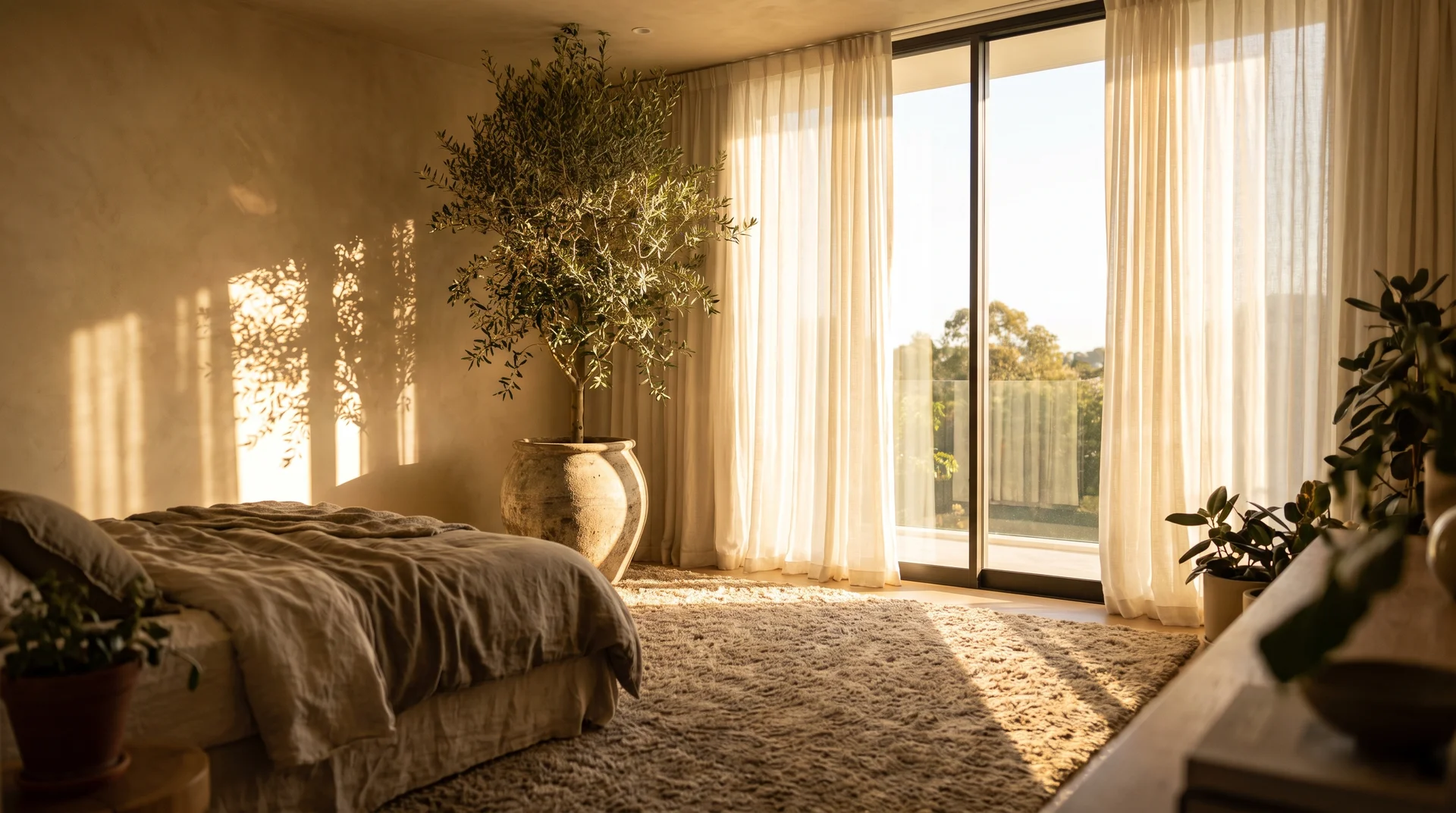
Biophilic design in a luxury bedroom means bringing natural light strategy, organic textures, and living elements into the room as part of the design plan rather than adding a plant in the corner as an afterthought.
A large-format indoor tree (fiddle leaf fig, olive, or eucalyptus) in a stone or ceramic vessel of appropriate scale reads as a design element when placed correctly.
Natural fiber rugs in jute, sisal, or wool under the bed ground the room and add warmth that synthetic rugs cannot replicate, no matter the pile height.
16. Sculptural Bedside Tables
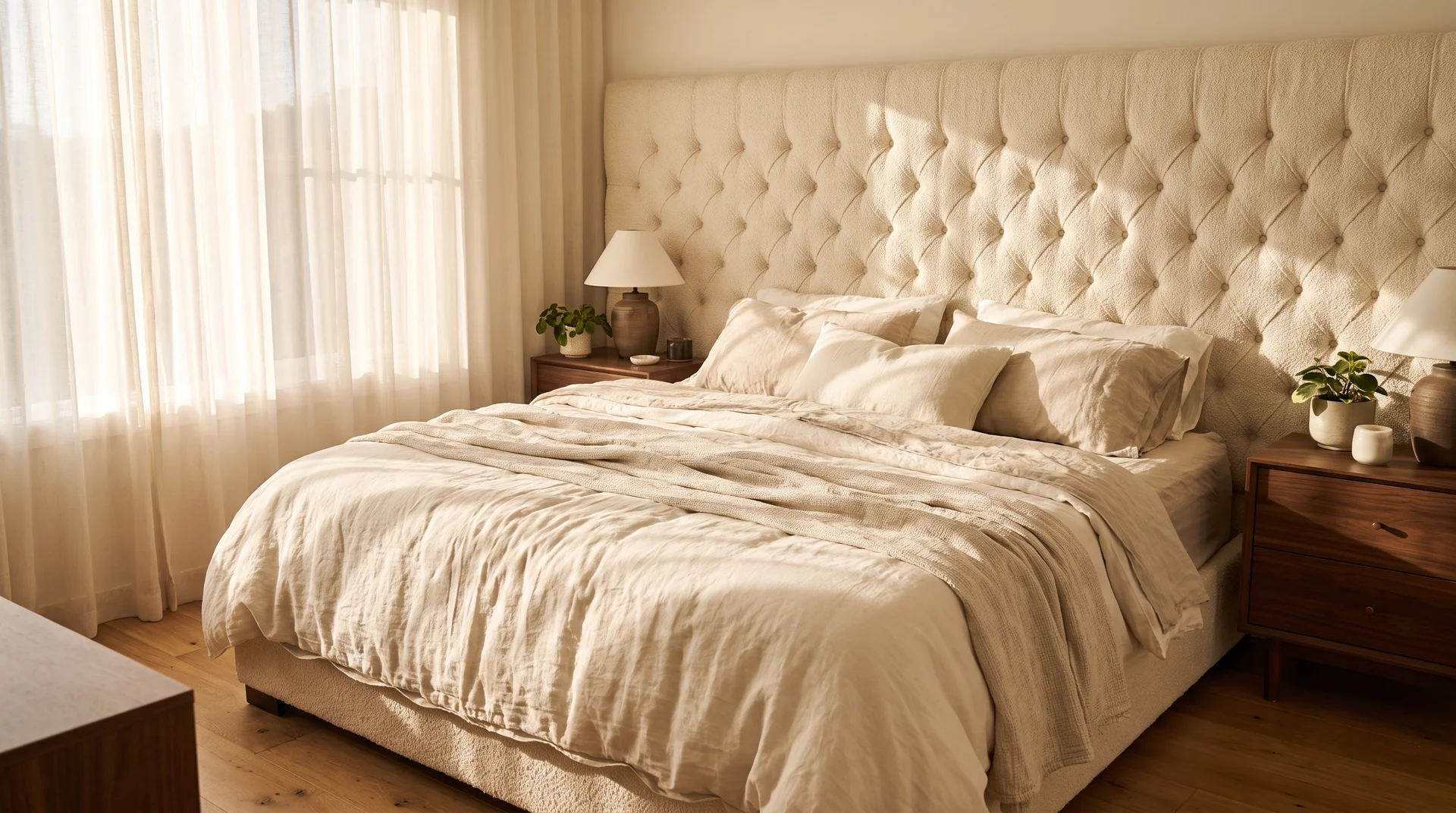
Bedside tables are the most replaced pieces in American bedrooms and the most frequently chosen wrong. Scale is the issue.
In a luxury bedroom, the surface should sit level with the top of the mattress and extend wide enough to hold a lamp, a book, and a glass without crowding.
Sculptural bases in travertine, aged brass, or solid walnut read as furniture rather than afterthoughts.
17. Bespoke Scent and Atmosphere
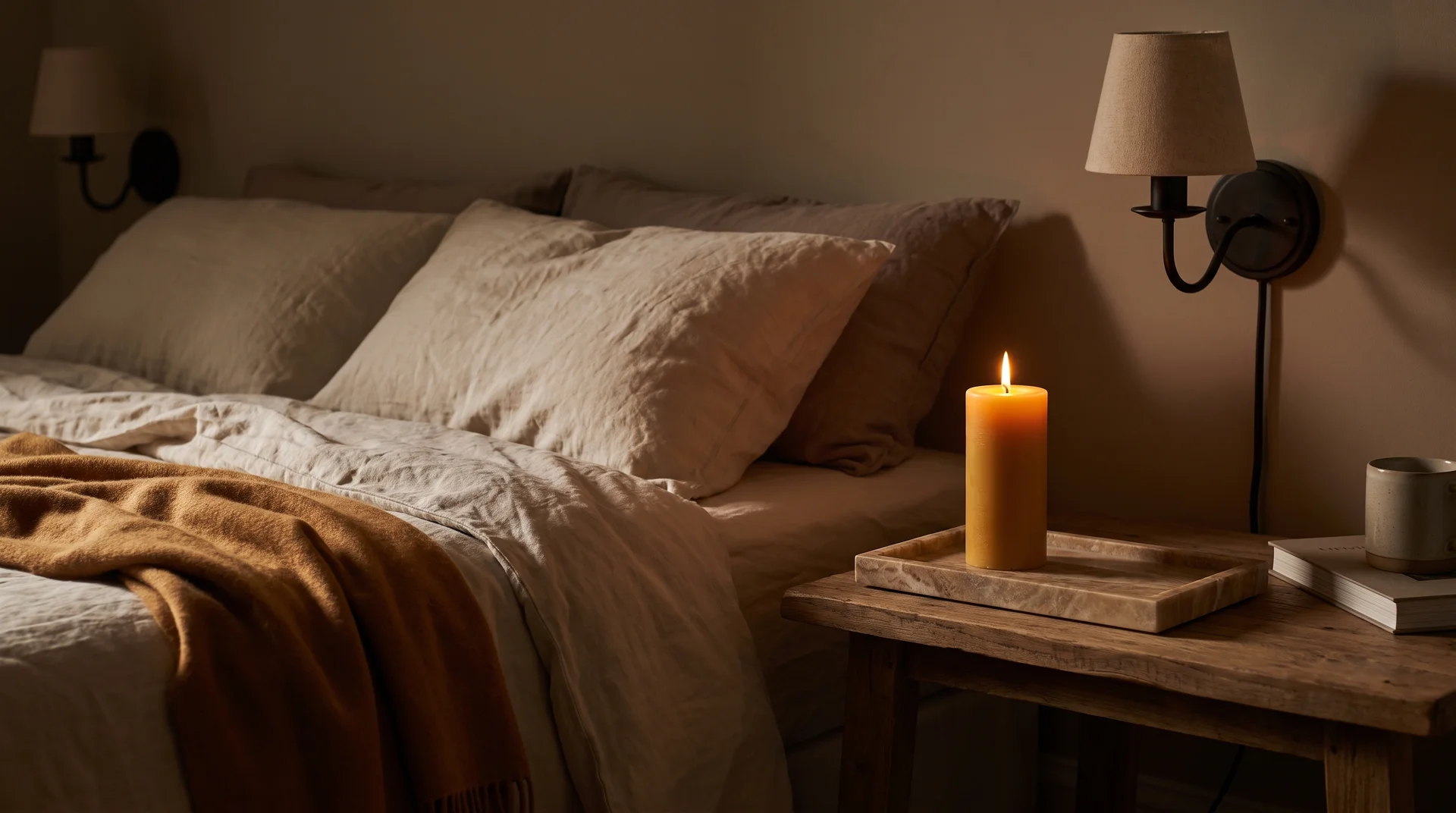
Scent is the most overlooked element in luxury bedroom interior design, and the one guests notice first.
A consistent room fragrance through a high-quality diffuser, linen spray, or beeswax candle creates sensory continuity that photographs cannot capture but memory holds.
Choose one fragrance family and stay with it. Layering competing scents across candles and sprays creates the opposite of the intended effect.
18. Statement Bedroom Rug
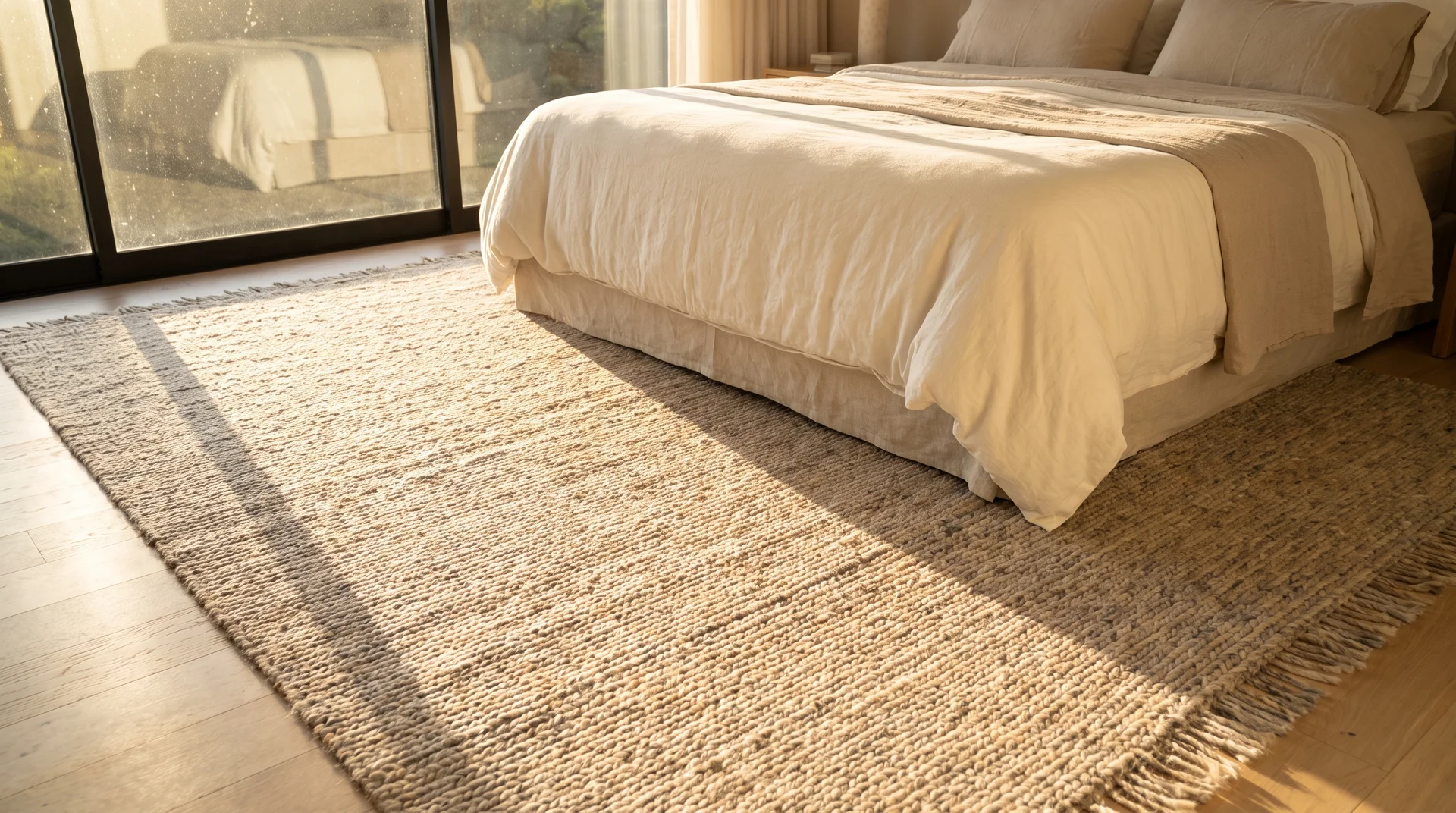
A rug that stops short of the bed legs is one of the most common proportion errors in US bedroom design.
In a luxury context, the rug extends at least 24 inches beyond each side of the mattress and 18 inches beyond the foot of the mattress.
Material matters as much as size. Hand-knotted wool or silk rugs retain their pile and pattern in ways machine-made alternatives cannot.
19. Integrated Fireplace
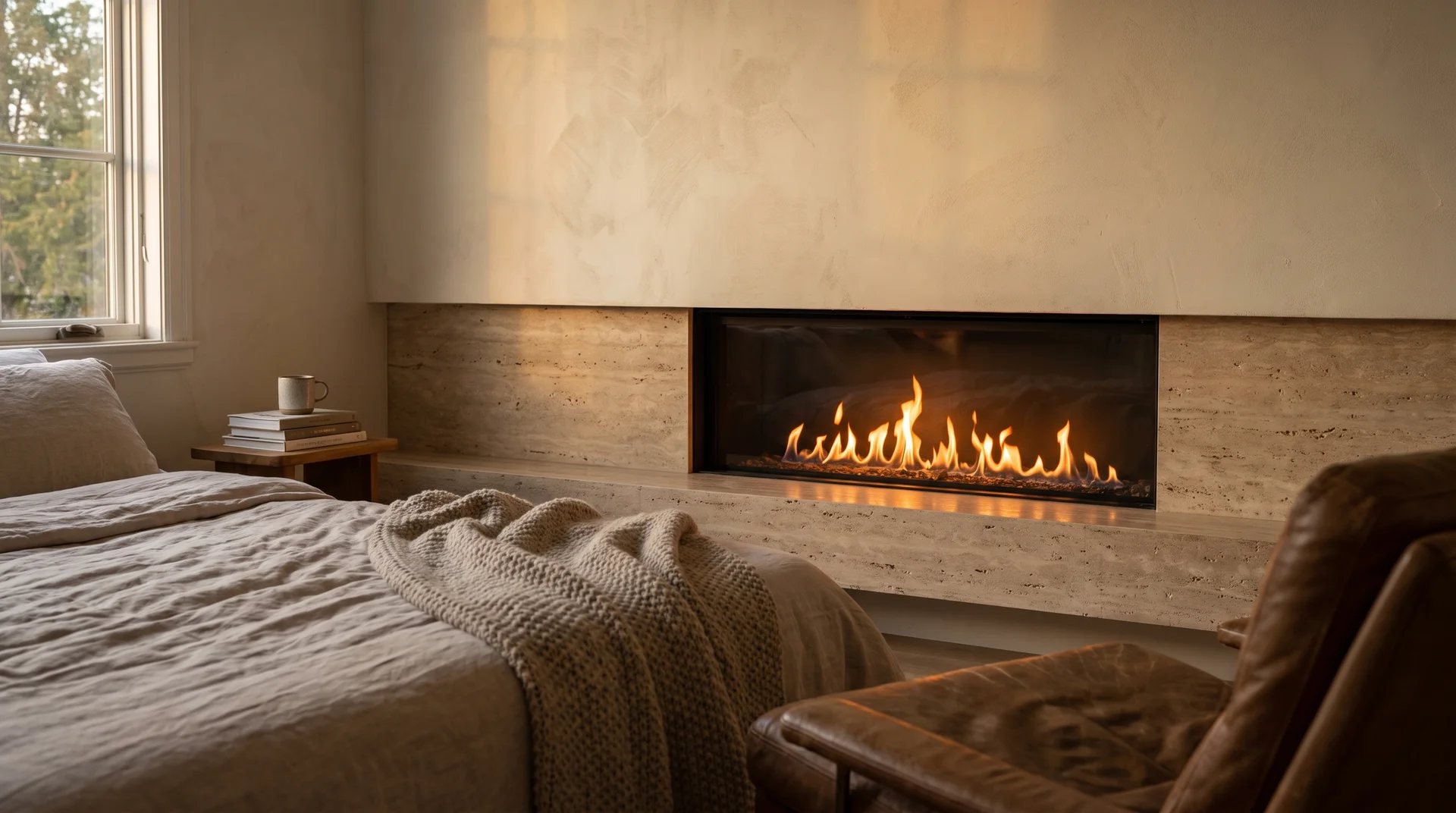
A primary bedroom fireplace turns the space into a retreat. Gas inserts, set into surrounds, mimic a working fireplace without the upkeep of a wood-burning unit.
Have a licensed professional handle the gas line connection and venting, as local building codes typically require it.
The surround should be proportional to the wall, not the firebox. A surround that is too narrow for its wall reads as decorative rather than architectural.
20. Custom Millwork Built-Ins
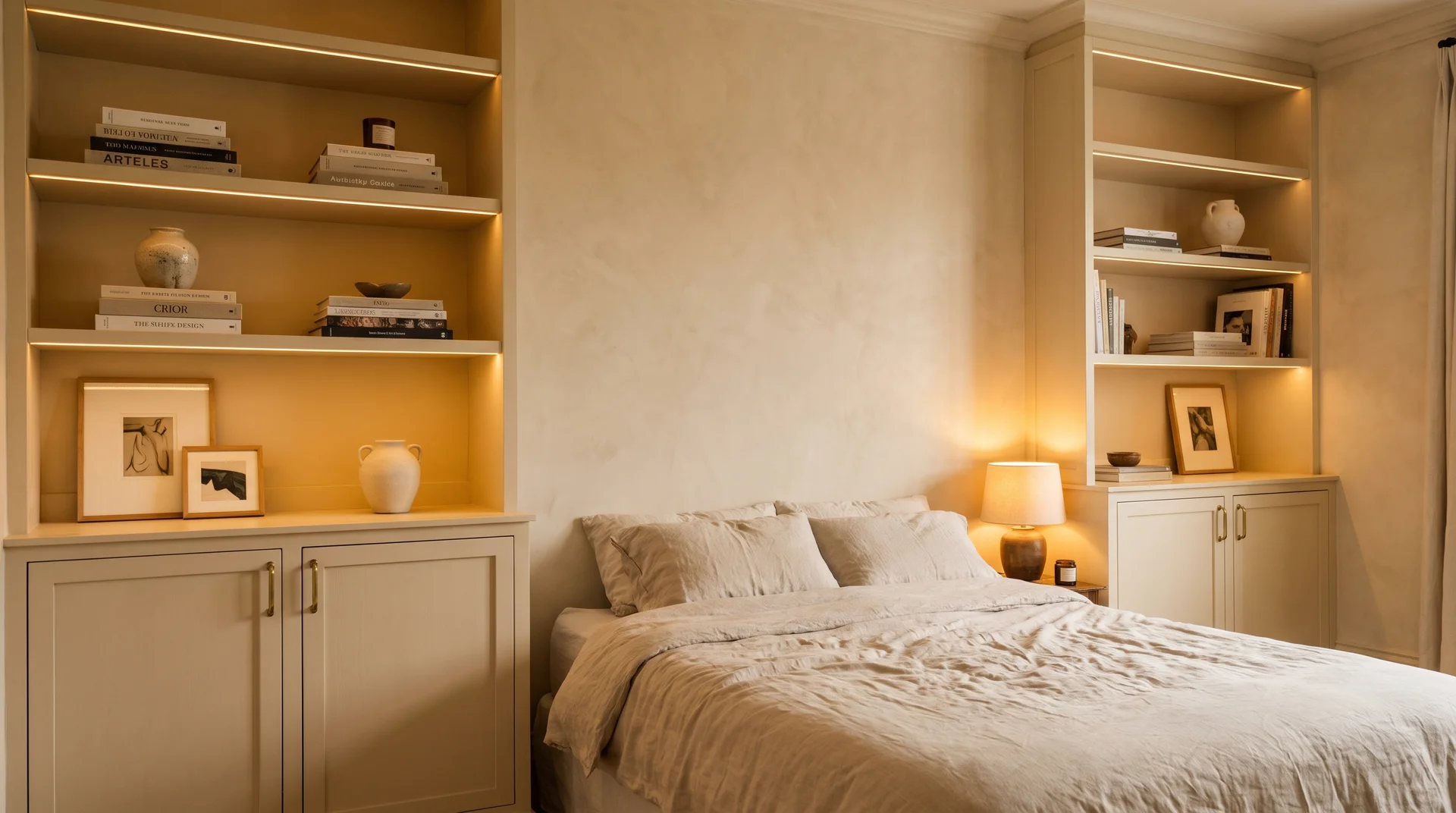
Built-in shelving and cabinetry flanking the bed or fireplace create the kind of symmetry that custom furniture alone cannot produce.
The built-ins should run floor-to-ceiling and align with the room’s trim height. Open upper shelves for curated objects, closed lower cabinets for function.
Paint them the same color as the walls for a tonal built-in effect that reads as architecture rather than furniture.
21. Blackout and Sheer Layering
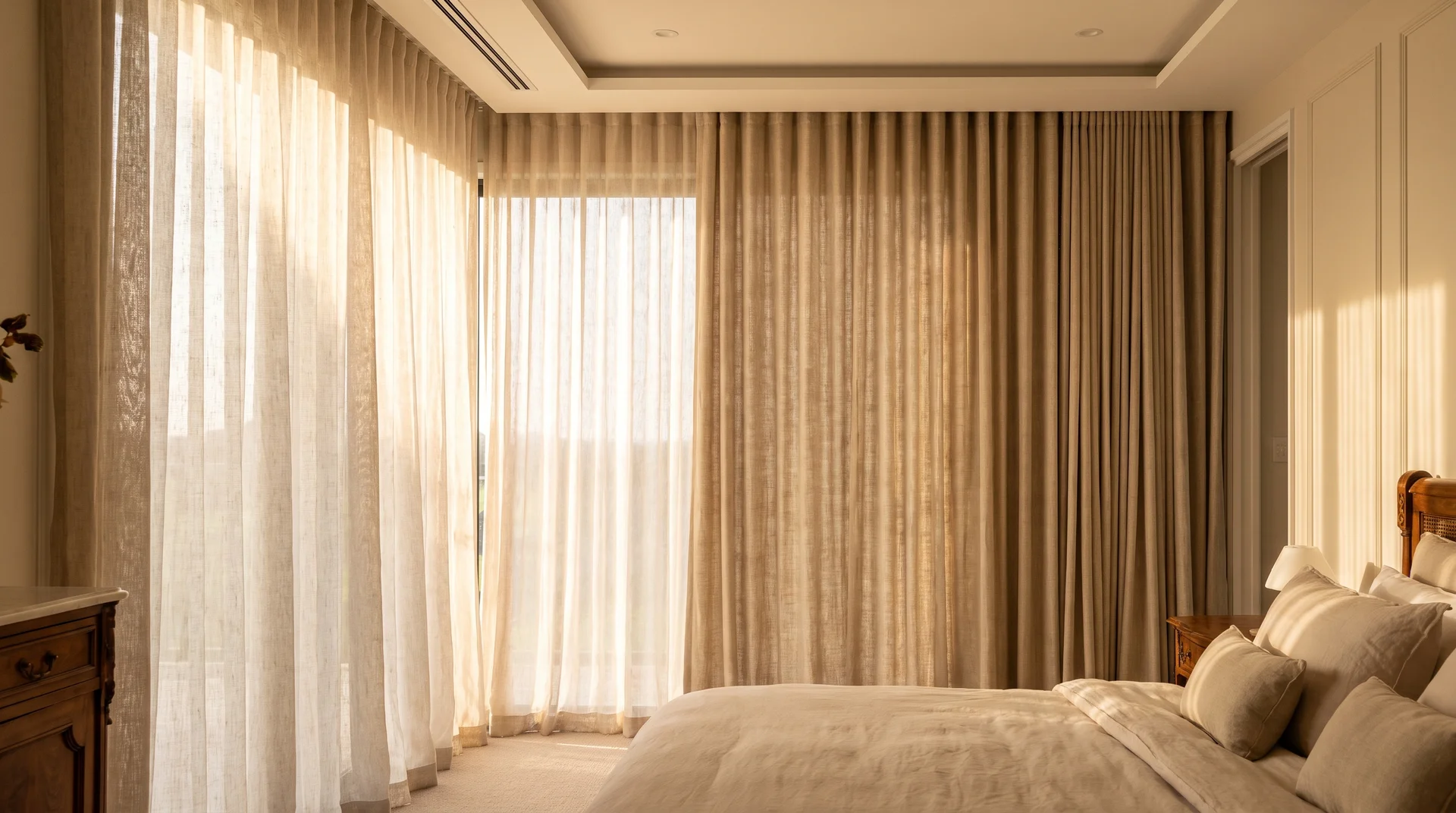
A luxury bedroom handles light at every hour of the day, not just at night.
The layered approach runs a sheer panel closest to the glass for daytime privacy and diffused light, with a heavy lined drape pulled over it after dark.
Both panels hang from the same ceiling-mounted track for a clean, hotelesque appearance. Separate tracks or rods at different heights immediately undercut the effect.
22. Upholstered Walls
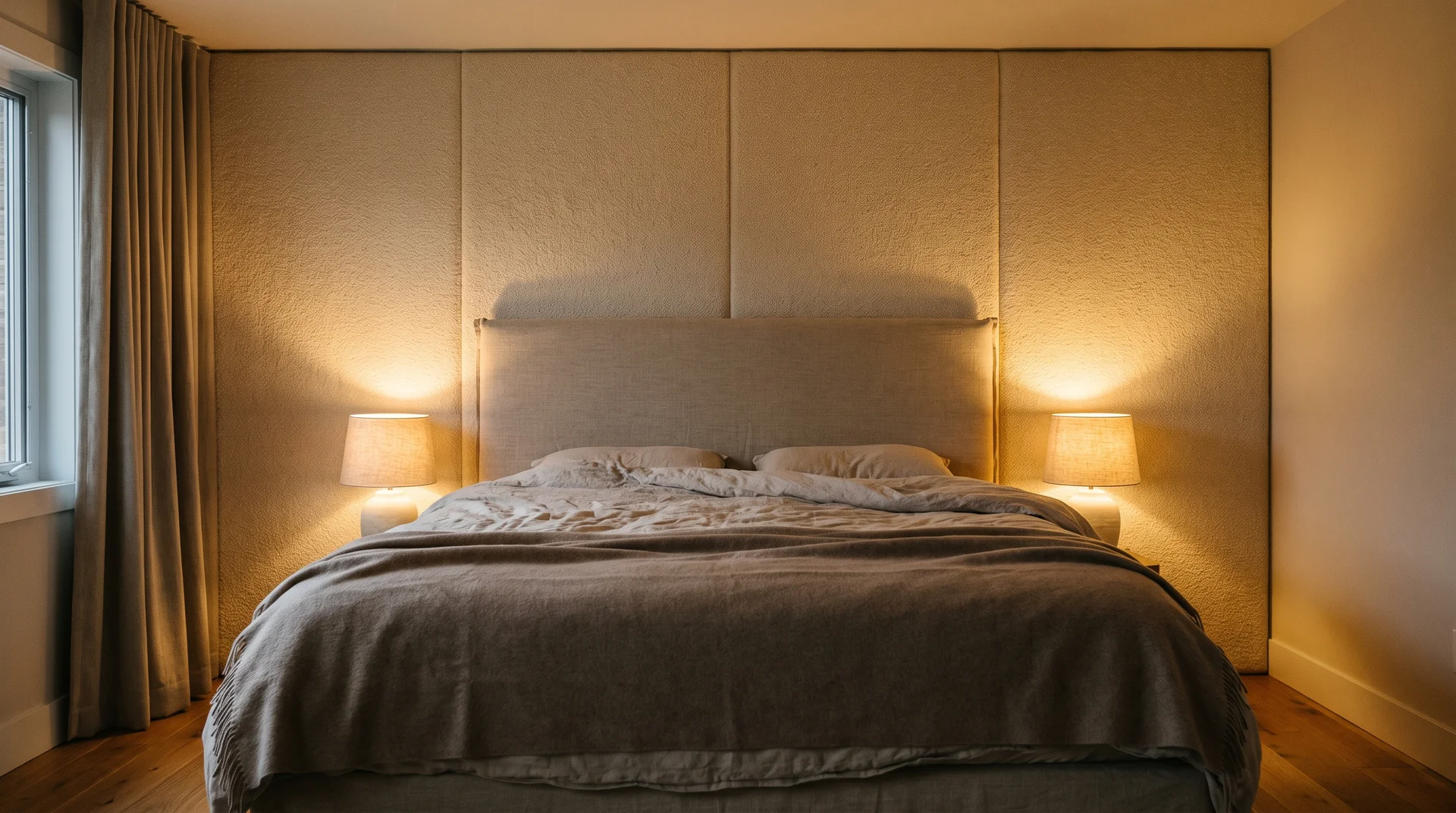
Fabric-wrapped wall panels behind the bed add acoustic warmth and visual softness that paint and plaster cannot replicate.
Bouclé, linen, and performance velvet all work well in panel form when stretched over a timber frame and mounted flush to the wall surface.
The panels should align with the headboard width at minimum and extend to ceiling height for maximum architectural impact in the room.
23. Concealed Storage Architecture
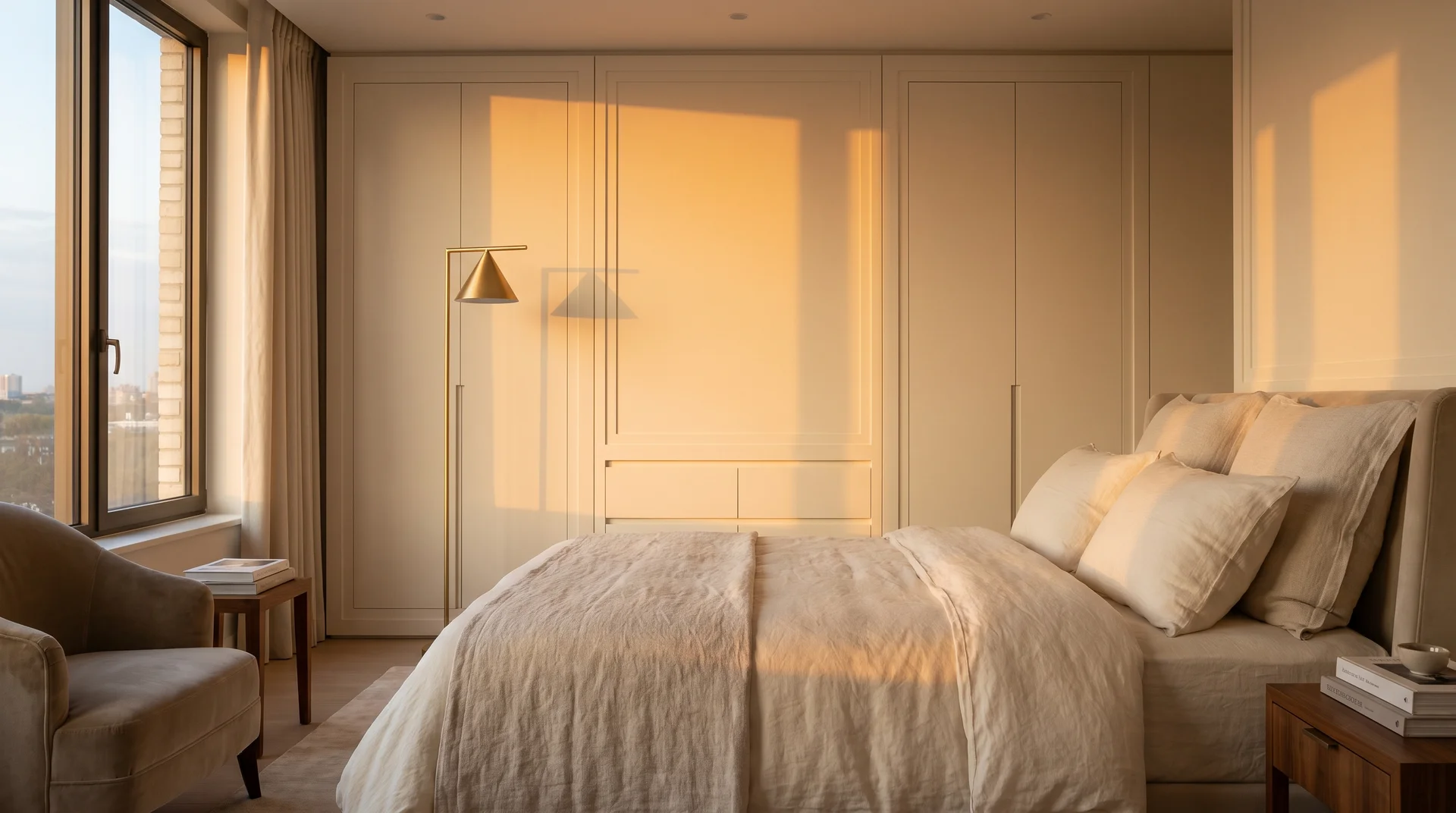
Storage that disappears into the room’s architecture is one of the clearest markers of a truly designed bedroom.
Push-to-open cabinetry with no visible hardware, bed frames with integrated drawer systems, and ottomans with interior storage all remove the visual clutter that undermines a luxury aesthetic.
Every object left visible in a luxury bedroom should be there by choice, not because there was nowhere else to put it.
24. Private Ensuite Connection
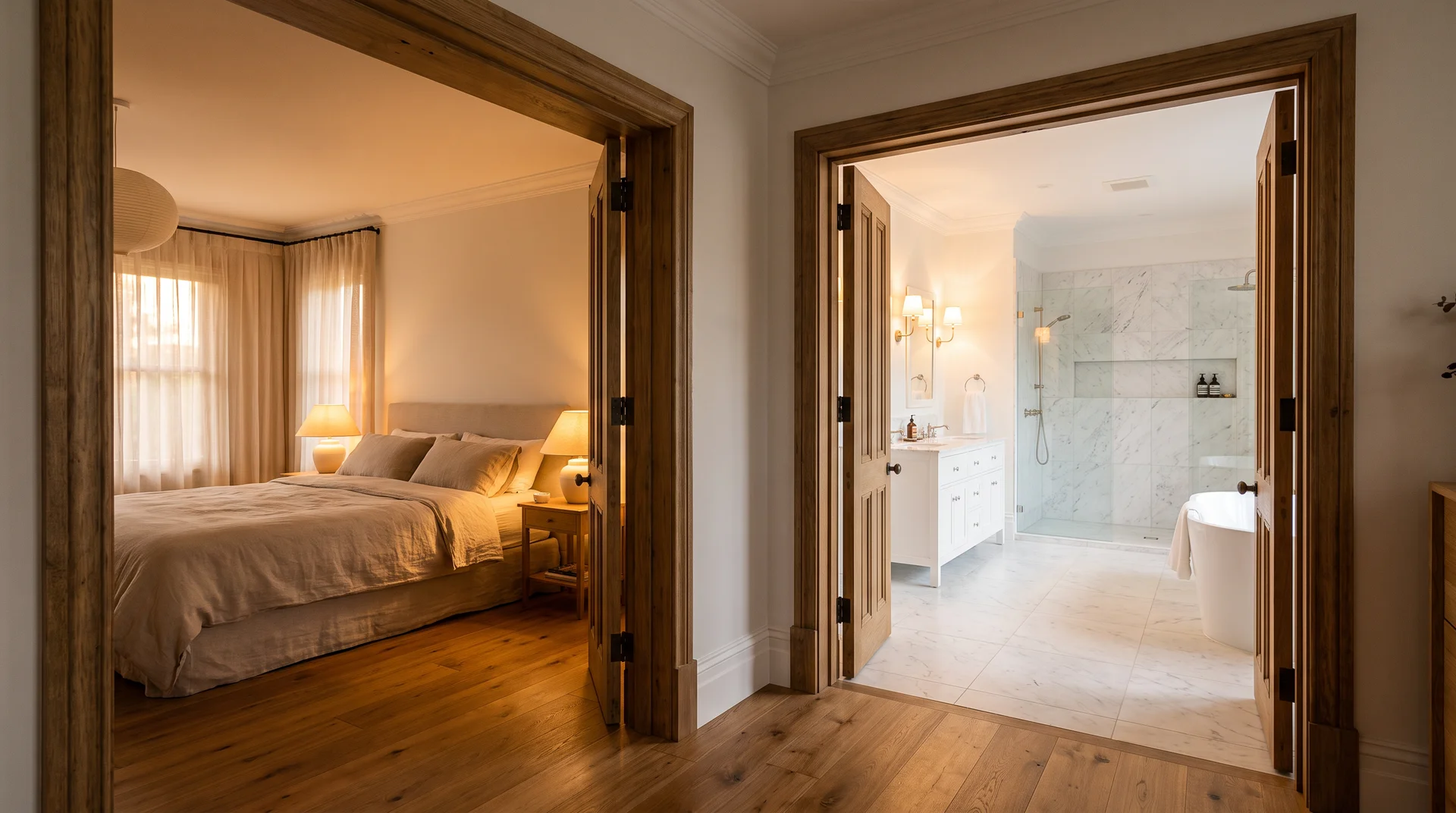
A wide ensuite doorway and matching flooring create a smooth flow, making the entire bedroom suite feel larger.
This matters even more if the ensuite leans into a bold palette, like a dark green scheme, since the transition between the two rooms needs to feel deliberate rather than jarring.
Double doors rather than a single door, or a frameless glass panel on a pivot, reinforce the suite quality of the overall space.
25. Window Seat or Bay Detail
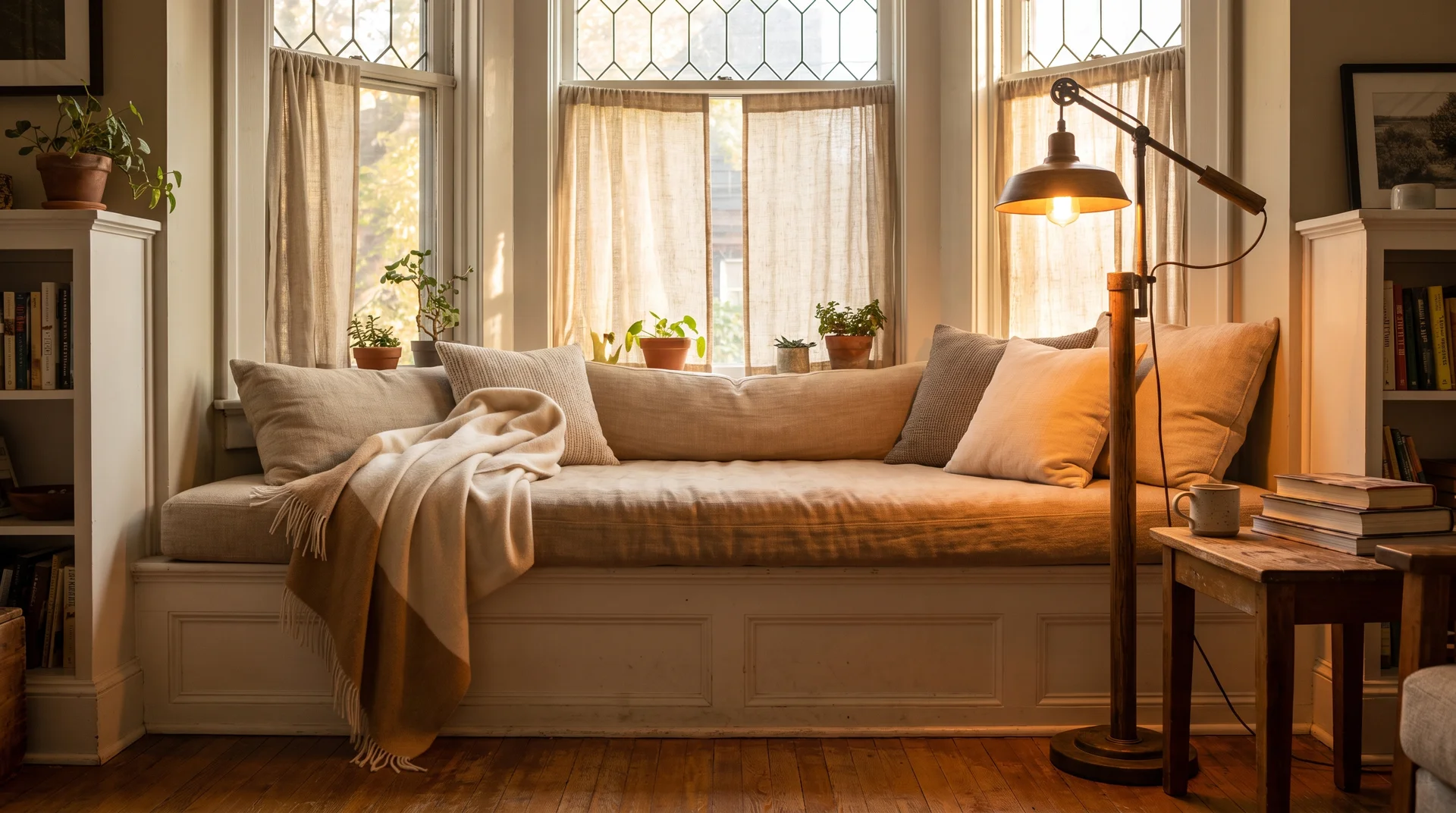
A window seat with an upholstered cushion and built-in storage below converts underused window space into the most desirable spot in the room.
Depth matters: a minimum of 20 inches allows comfortable seated use rather than a surface that reads as decorative only.
Position a floor lamp beside it, and the window seat becomes a reading zone that functions independently from the rest of the bedroom layout.
26. Tray Ceiling With Cove Lighting
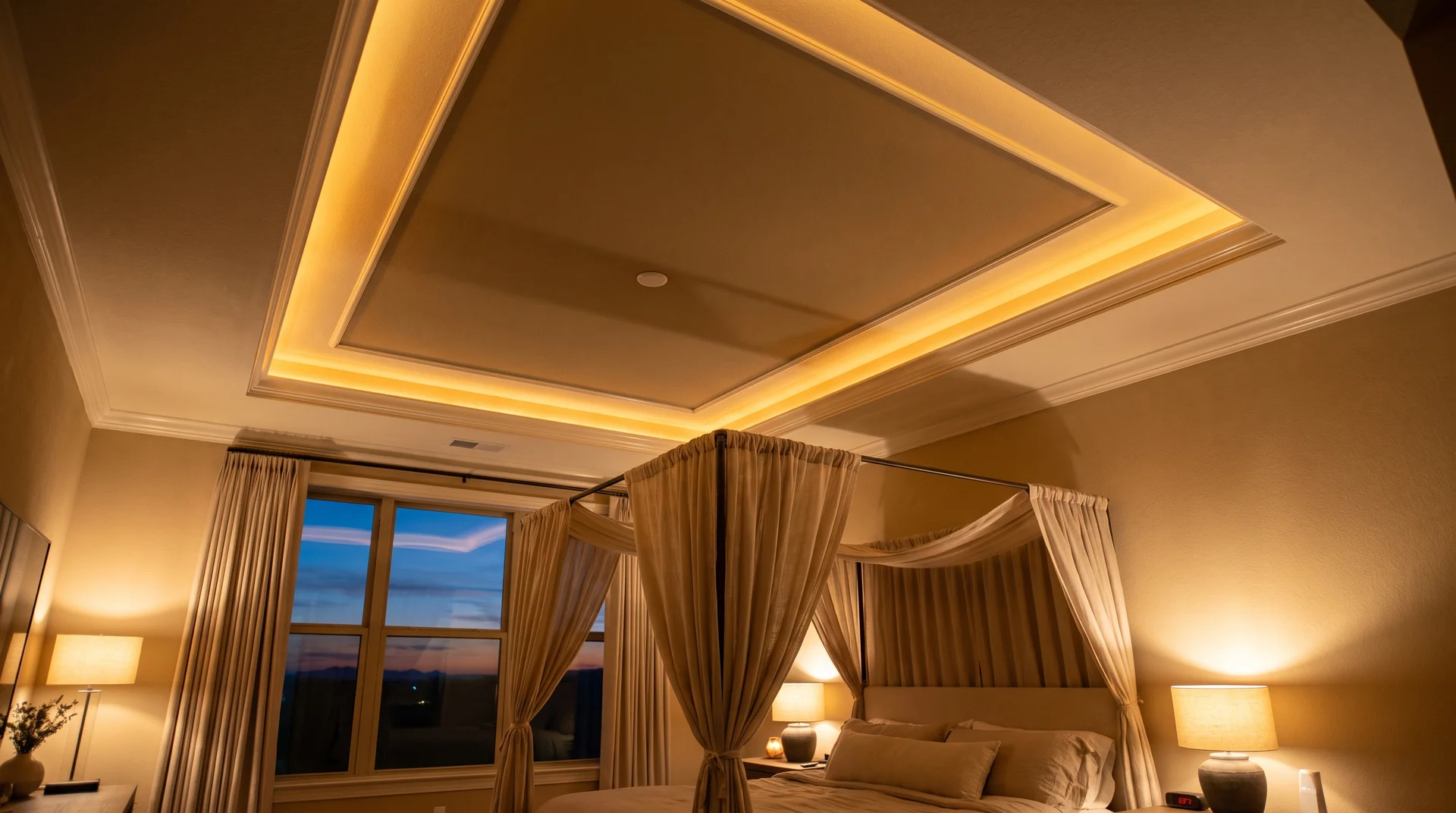
A tray ceiling adds architectural dimension that flat ceilings in most US residential construction lack entirely.
The step between the perimeter and the recessed center creates a natural ledge for LED cove lighting that washes the ceiling plane in warm indirect light.
Paint the recessed center one shade deeper than the walls for a canopy effect that makes the room feel both taller and more intimate simultaneously.
27. Luxury Bedroom Vanity Area
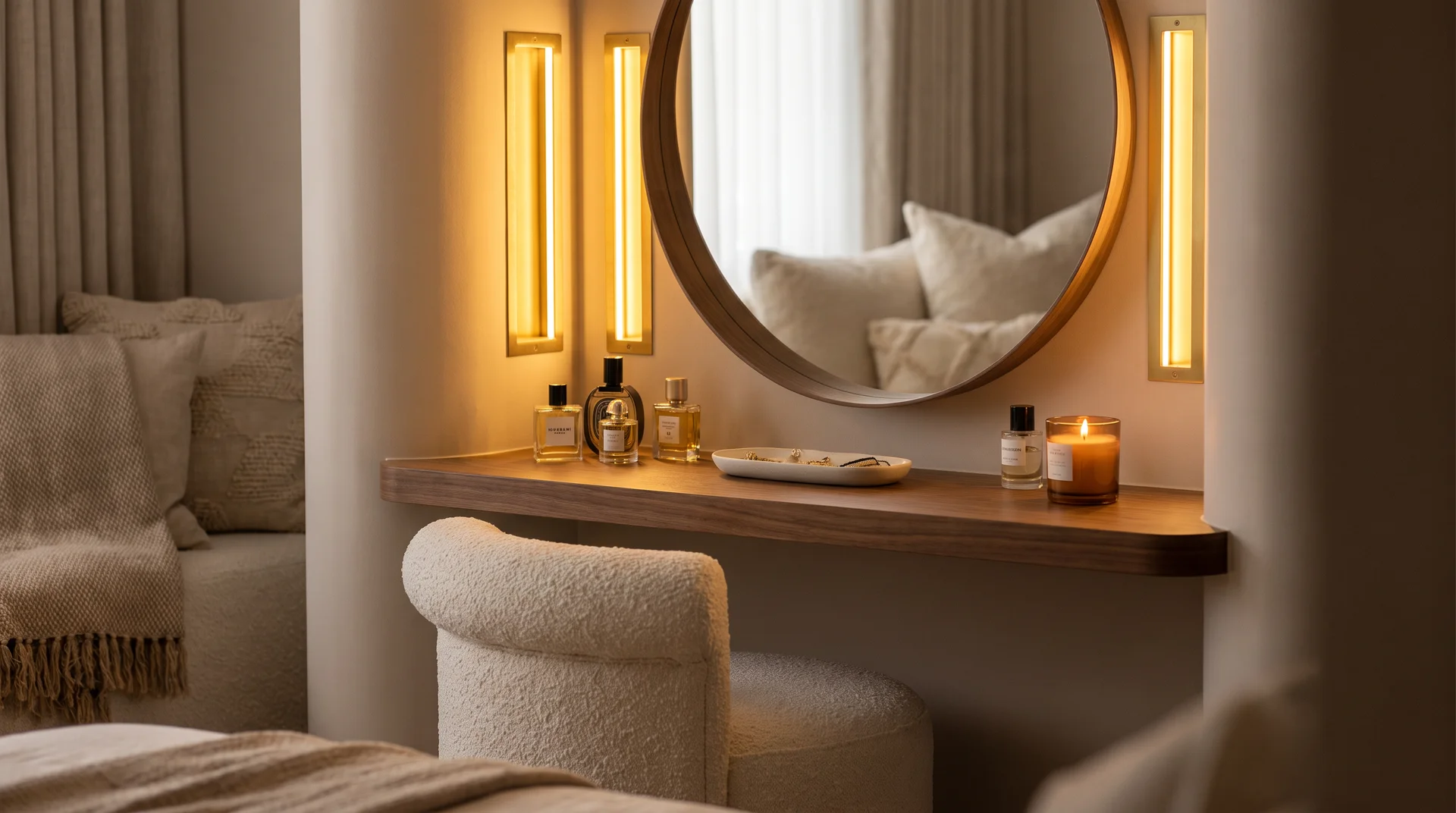
A dedicated vanity area within the bedroom is one of the most requested additions in US luxury master bedroom design and one of the least well executed.
The vanity surface should be deep enough for a proper mirror at the correct height, with task lighting mounted at eye level on both sides rather than overhead.
Overhead vanity lighting casts shadows that render the mirror functionally useless, regardless of its design quality.
Key Design Priorities for a Luxury Bedroom
The order in which you make these decisions determines whether the room feels composed or assembled.
Start with architecture, work inward to furniture scale, then material palette, then lighting, and finish with textiles and art.
| Design Priority | Element | What It Achieves |
|---|---|---|
| First | Ceiling and wall treatment | Sets the room’s architectural character before any furniture arrives |
| Second | Bed, wardrobe, and seating scale | Establishes a proportion that every other decision responds to |
| Third | Material palette | Creates cohesion across every surface in the room |
| Fourth | Lighting plan | Controls the atmosphere at every hour of the day |
| Fifth | Textiles and art | Adds warmth, personality, and the finish that makes the room feel complete |
Conclusion
A luxury bedroom interior design comes together one decision at a time, not all at once. A headboard sized right, a curtain hung high, or a warmer lamp can shift the whole room.
Each good choice makes the next one easier to see. That is where every well-designed bedroom starts.
Pick one idea from this guide and try it in your own room this week. Then tell us in the comments which change made the biggest difference, or share a photo of your finished bedroom.
Frequently Asked Questions
Is Japandi A Good Style For A Luxury Bedroom?
Yes, Japandi blends Japanese simplicity with Scandinavian warmth through natural wood, soft shapes, and minimal styling, reading as quiet luxury.
How Much Does Luxury Bedroom Interior Design Cost In The US?
Between $15,000 and $50,000 for design fees, furniture, window treatments, and lighting, with major US cities running higher.
What Is The Difference Between Quiet Luxury And Maximalist Bedroom Design?
Quiet luxury uses a single palette and restrained textures for richness. Maximalist uses pattern, color, and layered complexity instead.
What’s The Cheapest Way To Make A Bedroom Feel Luxurious?
Layer the bedding, swap overhead lighting for warmer lamps, and hang curtains higher and wider than the window.
Can A Small Bedroom Still Feel Luxurious?
Yes, scale furniture to the room, keep the palette tight, and choose one statement piece instead of several.