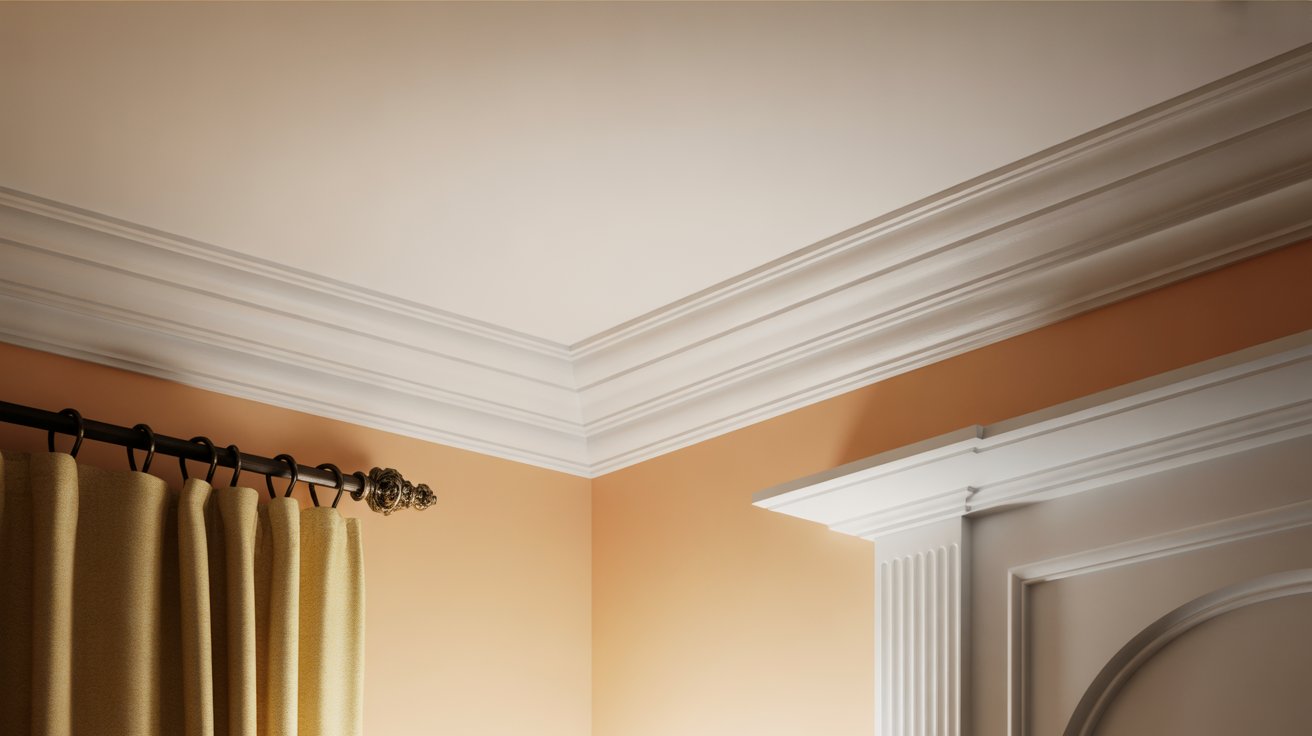
Crown molding is a simple architectural detail that can add a finished look to any room, but the right style, material, and proportions are key to getting the best result.
Once reserved for grand buildings and historic homes, crown molding is now available in styles and materials that fit almost any budget or interior design.
In this article, we cover the different types of crown molding, available materials, installation options, costs, design considerations, and whether it is still a practical choice for modern homes.
What Is Crown Molding?
Crown molding is a decorative trim strip installed where the wall meets the ceiling. Think of it as a frame for the top of your room, the same way a picture frame gives artwork a clean, finished edge.
It sits at an angle, bridging the gap between two flat surfaces. That angle is what gives it depth and makes it look so much more finished than a plain painted corner.
Originally, it had a purely practical job: hiding the cracks and gaps that naturally appear where building materials meet. Over time, it became a design feature in its own right. Today, it shows up in homes of every style and budget, from minimalist apartments to traditional family homes.
Purpose of Crown Molding
Crown molding is not just about looks. It serves a few practical purposes at the same time:
- Covers imperfections: Hides uneven joints, hairline cracks, and rough edges where the wall and ceiling meet.
- Makes ceilings look higher: The angled profile draws the eye upward, making rooms feel more open.
- Adds a finished quality: Rooms with trim simply look more thought-out than rooms without it.
- Can increase home value: Buyers and appraisers notice the detail. Professionally installed molding suggests quality construction and attention to detail.
- Works above cabinets: In kitchens, crown molding above upper cabinets fills the gap between cabinetry and the ceiling, giving it a custom-built-in look.
The impact is often noticeable right away, with many people wishing they had added it sooner.
A Short History of Crown Molding
Crown molding goes back further than most people realize. Ancient Egyptians used carved stone details to decorate temples and columns.
The Greeks and Romans carried the idea further, using molded profiles to give their buildings structure and visual character.
For centuries, each piece was hand-carved. That made it expensive and exclusive, a symbol of wealth in grand estates and government buildings. By the 18th century, it had become a standard feature of Georgian and Colonial architecture across England and America.
Modern production changed everything. Today, crown molding is made from wood, MDF, polyurethane, PVC, and plaster, at price points that work for nearly any budget.
Types of Crown Molding By Style
Crown molding comes in a wide range of styles and materials, making it easy to find an option that suits any home. Here are the most common crown molding styles to help you find the right fit for your space.
1. Cove Molding
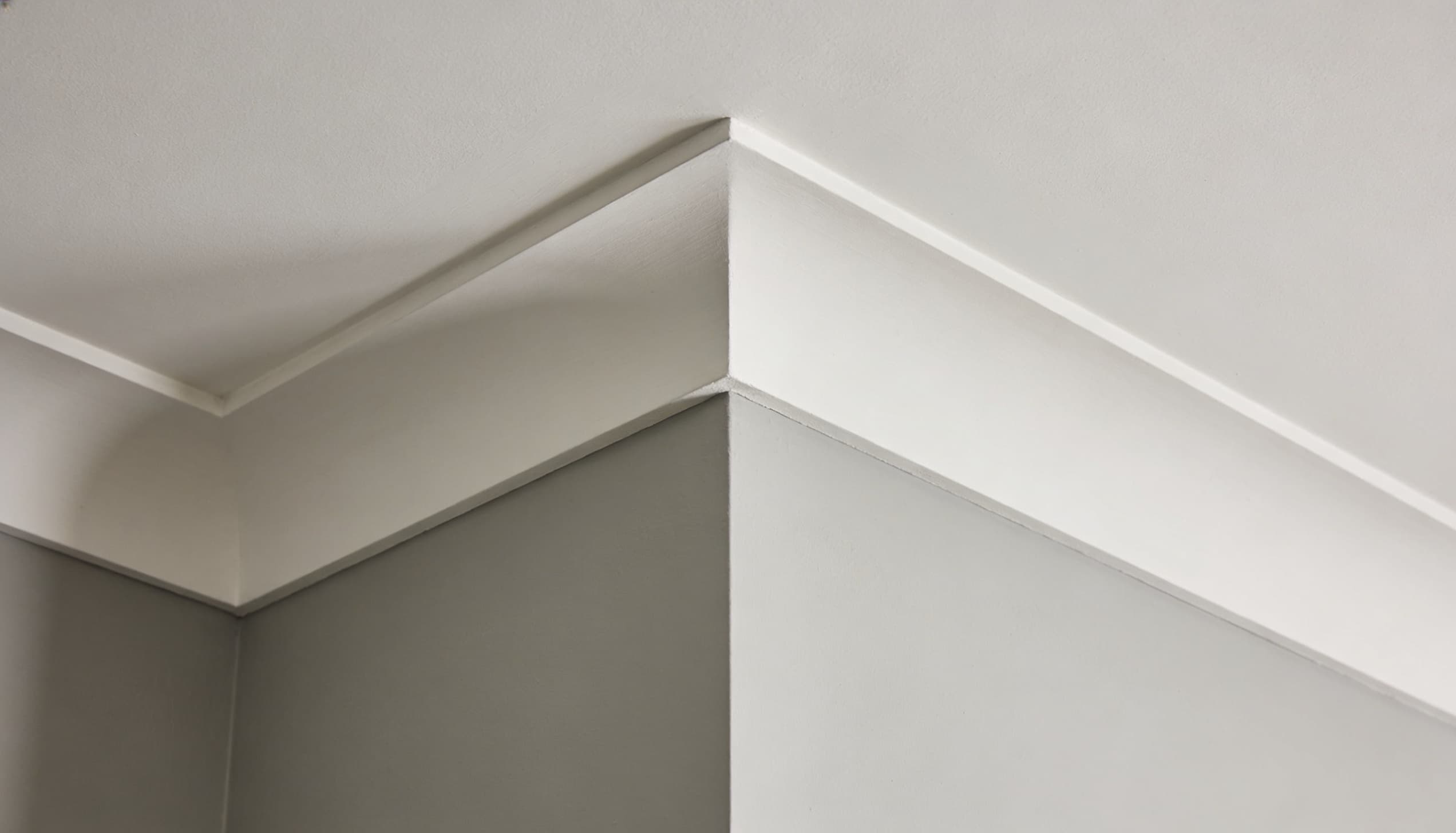
Cove molding has a simple concave curve. It creates a soft, flowing transition between the wall and ceiling without drawing much attention to itself.
It works especially well in rooms with lower ceilings or in spaces where you want a clean look without a lot of visual weight. Modern, minimalist interiors pair naturally with it.
Best for: Modern homes, smaller rooms, low ceilings
2. Dentil Molding
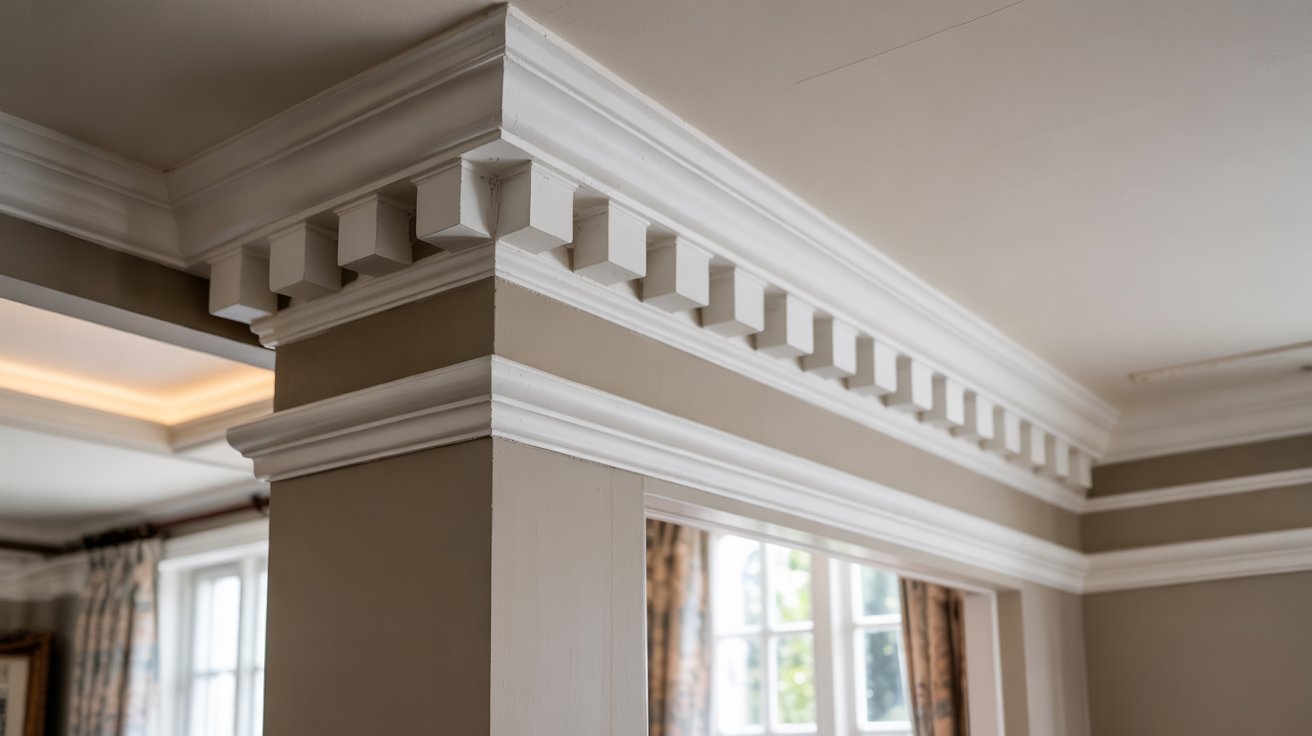
Dentil molding features small, evenly spaced rectangular blocks running along the base of the profile. The blocks look like teeth, which is where the name comes from (the Latin dens, meaning tooth).
It is a strong, structured look. Colonial and Victorian homes often use it. It also works well in dining rooms and formal living spaces where you want the trim to make a clear statement.
Best for: Traditional homes, formal rooms, Colonial or Victorian architecture
3. Egg and Dart Molding
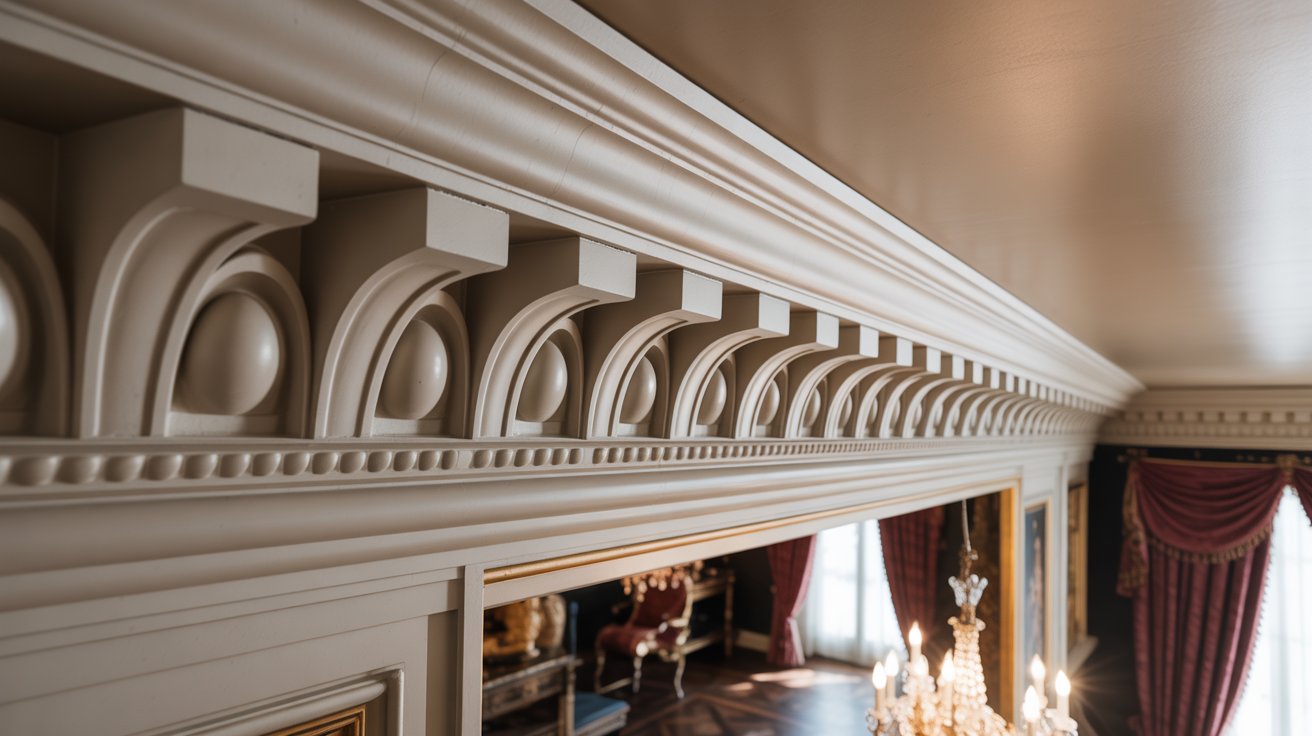
This is one of the oldest molding patterns in existence. It alternates oval shapes (the egg) with pointed arrow shapes (the dart) in a repeating pattern. The design is directly inspired by ancient Greek architecture.
It is an ornate choice, best saved for formal spaces like studies, libraries, or dining rooms where a detailed, historical look is the goal. Plaster and wood are the most common materials for this style.
Best for: Formal rooms, historic homes, high ceilings
4. Ogee Molding
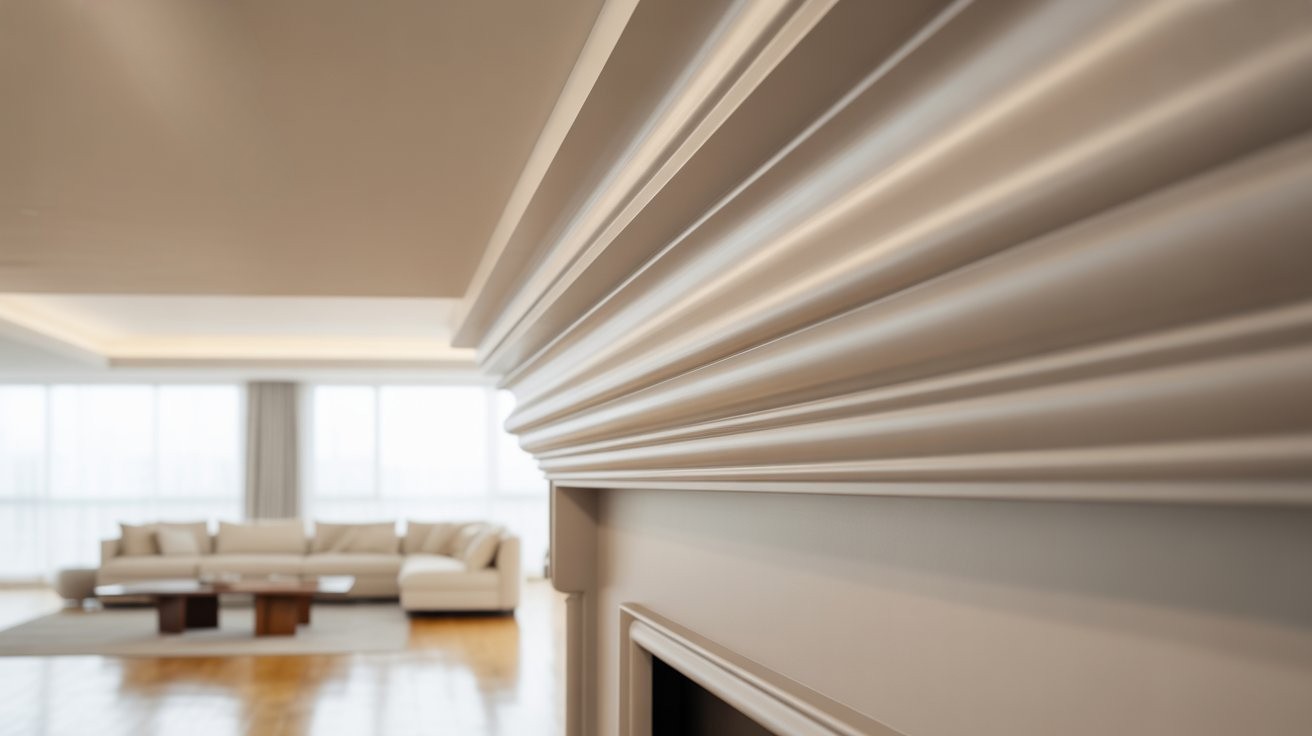
Ogee molding has an S-shaped curve, with one side concave and the other convex. It is one of the most widely used profiles because it sits comfortably between traditional and transitional styles without leaning too far in either direction.
If your home does not fall neatly into “modern” or “classic,” ogee is usually a safe and attractive choice.
Best for: Transitional homes, living rooms, bedrooms
5. Step (Flat Stock) Molding
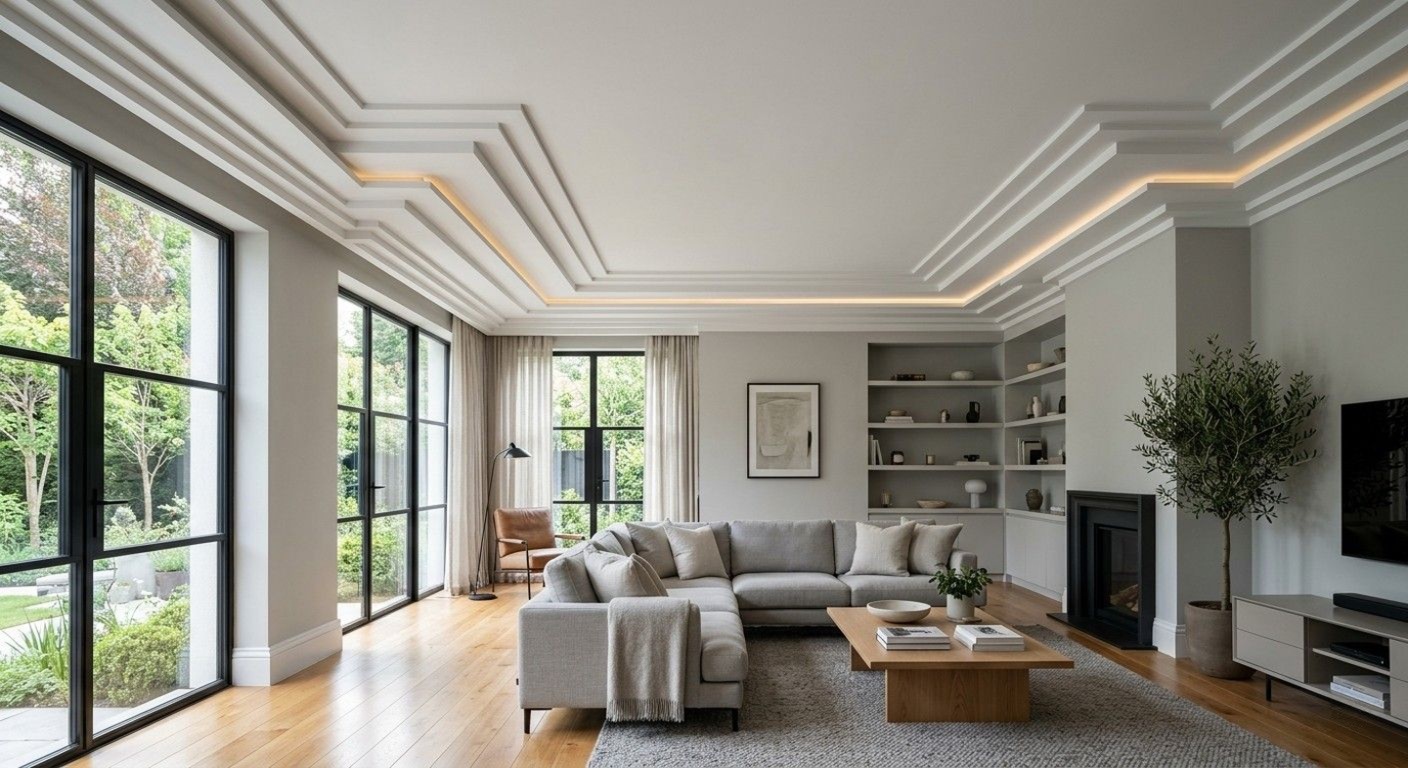
Step molding uses layered flat surfaces at different heights to create a geometric, structured look. There are no curves. The profile is clean, angular, and deliberate.
It is a good fit for homeowners who prefer a sharp architectural finish over a curved, traditional one. Contemporary and craftsman-style homes often use this.
Best for: Modern homes, craftsman interiors, higher ceilings
Types of Crown Molding by Material
Here are the most common crown molding materials to help you find the right fit for your space and budget.
1. Wood
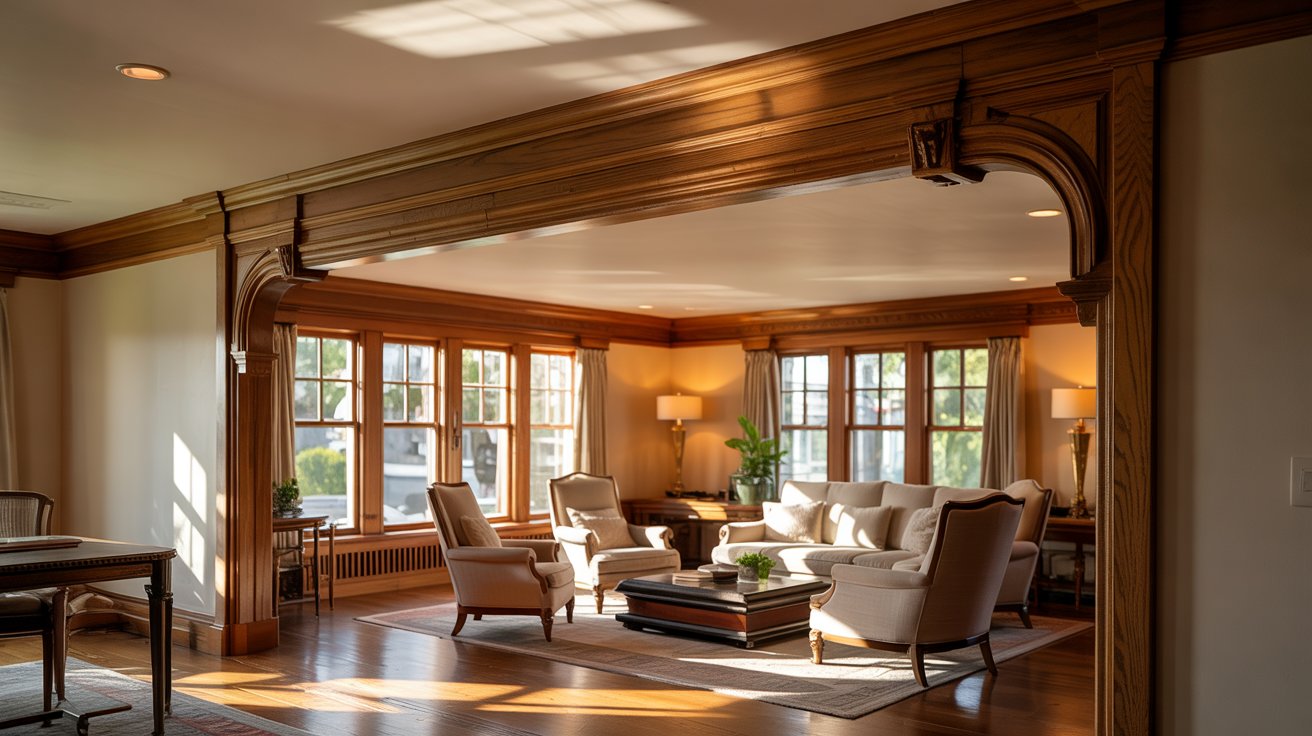
Wood is the most traditional option. It can be painted or stained, and it takes detail well. Softwoods like pine are easier to cut and work with. Hardwoods like oak and mahogany are denser, hold stain beautifully, and resist dents better.
The downside: wood can warp or shrink in humid conditions if not properly sealed. It also requires more maintenance over time.
Best for: Dry rooms, high-end finishes, stained or painted applications
2. MDF (Medium Density Fiberboard)
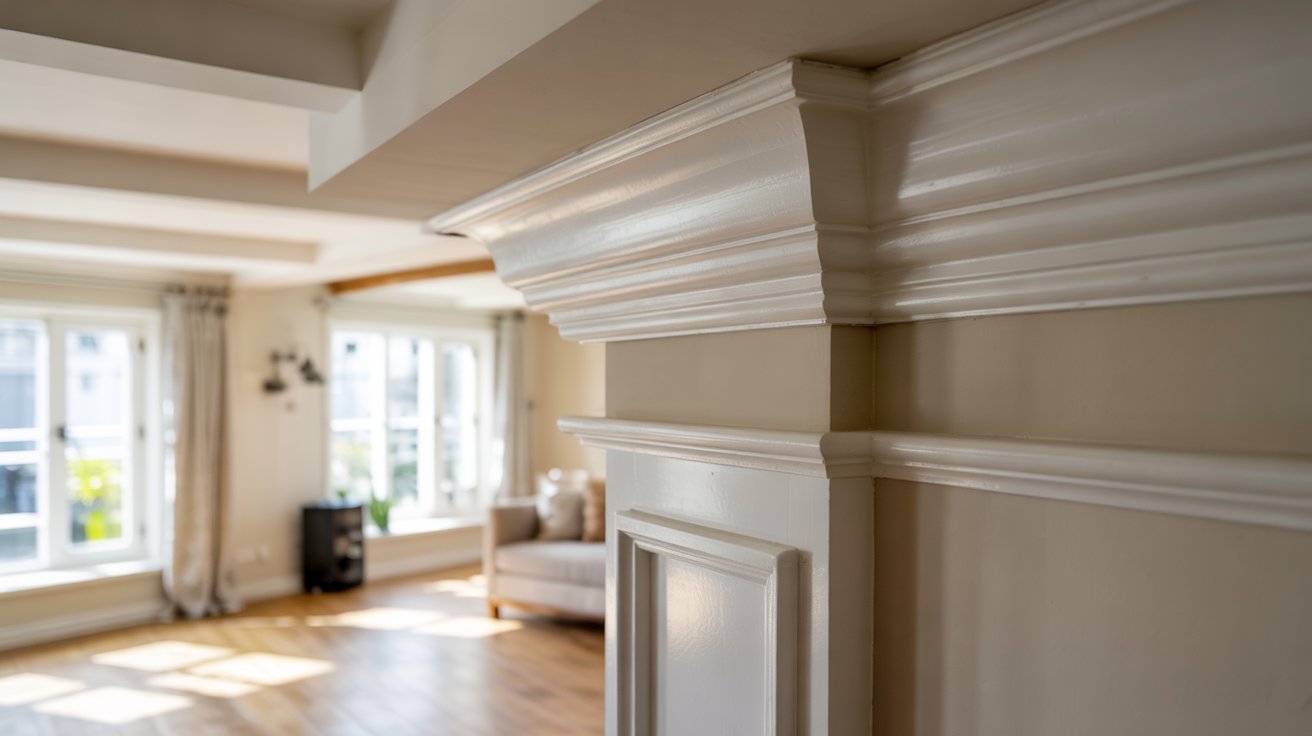
MDF is the most commonly installed crown molding material in the US, according to contractors. It is lightweight, takes paint well, and costs far less than solid wood.
One important note: always prime MDF before painting. It is porous and absorbs paint unevenly without a sealer coat. A semi-gloss or satin finish works best once primed.
MDF does not handle moisture. Do not install it in bathrooms, kitchens, or any space with regular humidity changes.
Best for: Painted finishes, dry rooms, budget-conscious projects
3. Polyurethane
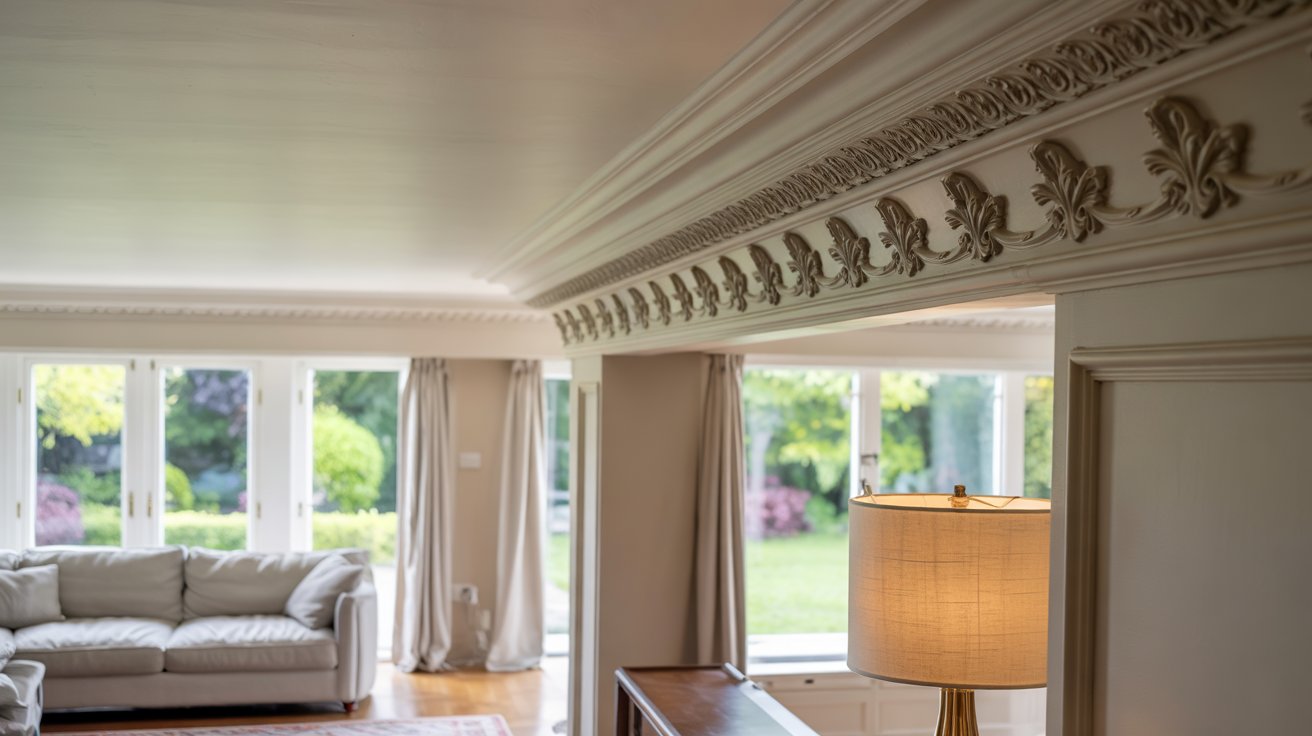
Polyurethane molding is made from dense foam and comes pre-primed and ready to paint. It is lightweight, resists rot and insects, and holds up well in most indoor settings.
It closely mimics the look of plaster or wood. One drawback: it dents more easily than wood during handling and installation, so it requires a careful touch.
Best for: DIY installs, detailed profiles at a mid-range price, most indoor rooms
4. Plaster
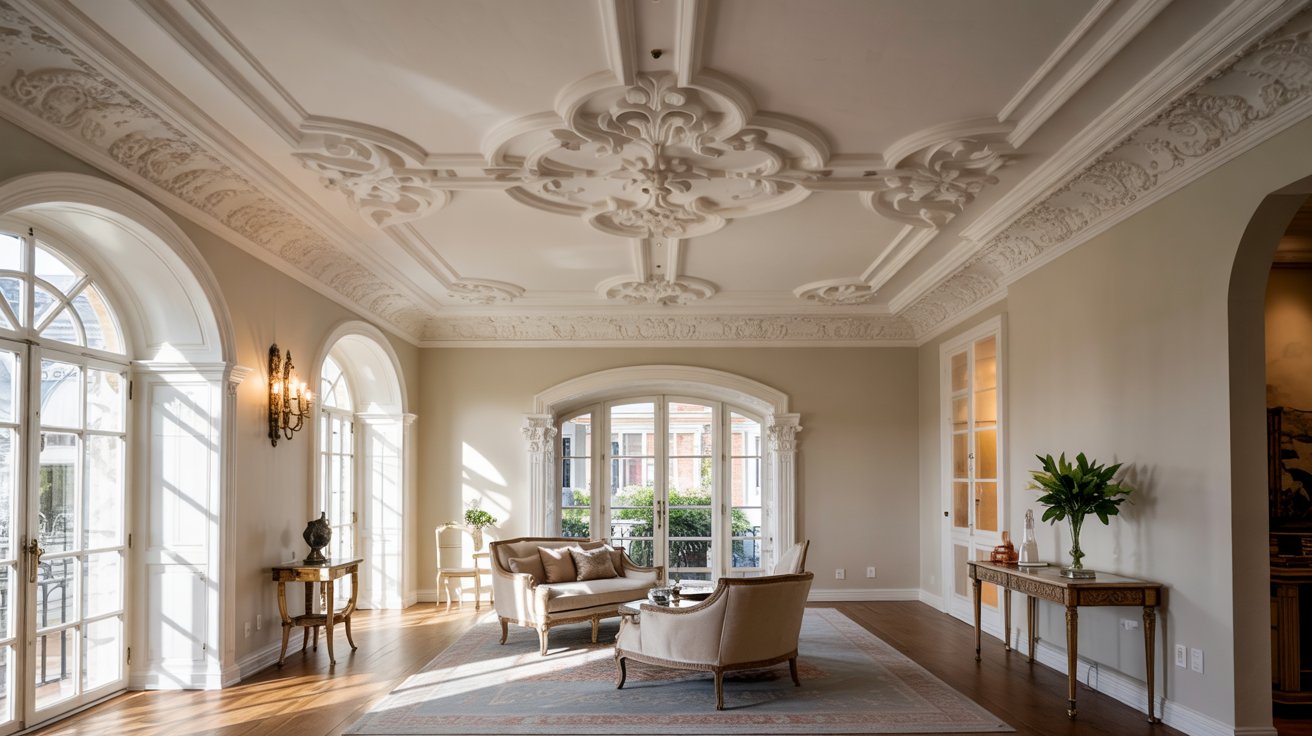
Plaster is the most detailed and custom option available. It can be cast into any design imaginable, from Roman dental patterns to English vine styles to ornate egg-and-dart work. The level of crispness and detail is hard to replicate with other materials.
It is also the heaviest option and requires professional installation. Premade plaster runs $6 to $20 per linear foot for materials alone, with labor adding significantly to that total.
Best for: Historic homes, high-end renovations, custom or period-accurate interiors
5. PVC
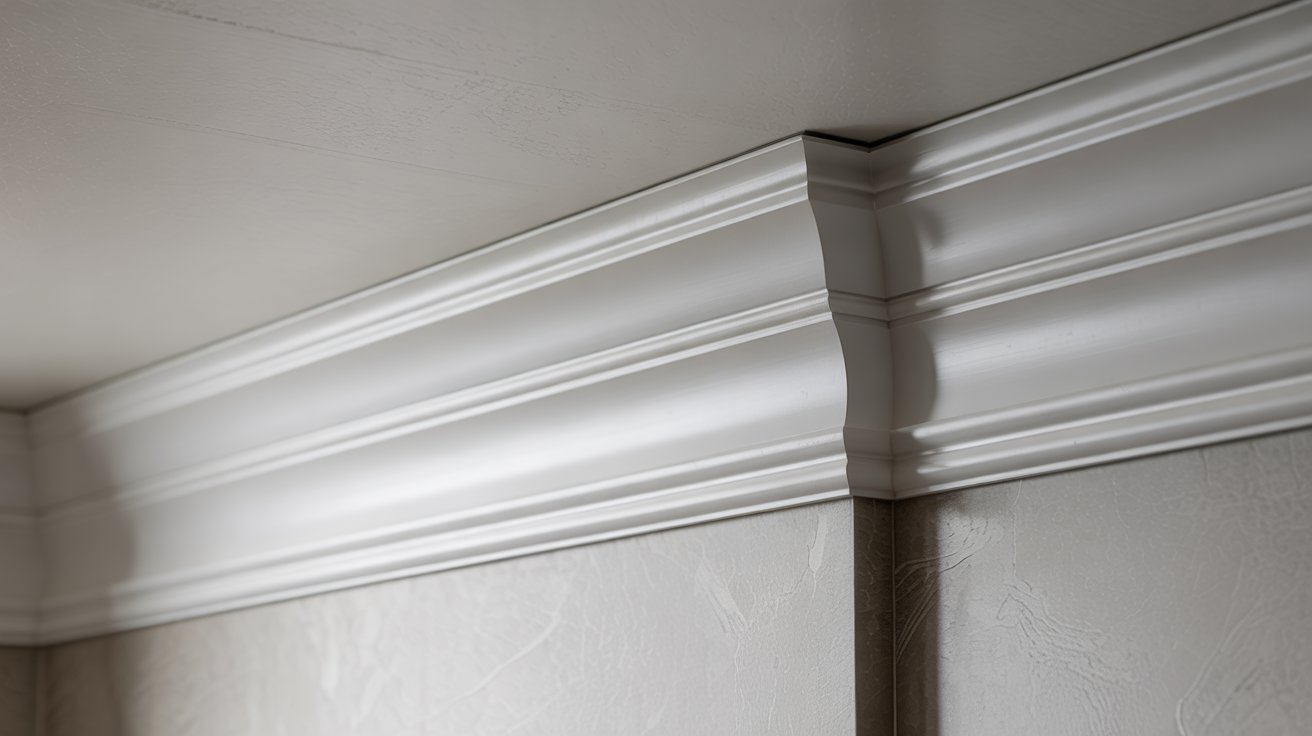
PVC is the right call for moisture-prone rooms. Bathrooms, kitchens, laundry rooms, anywhere humidity is a regular factor. It will not warp, rot, or swell regardless of conditions.
The tradeoff is style range. PVC comes in fewer profile options than other materials and is difficult to paint due to its slick surface. It typically ships only in white.
Best for: Bathrooms, kitchens, laundry rooms, exterior applications
Where Crown Molding Works Best?
Crown molding is not limited to living rooms. Here is where it tends to deliver the most visible impact:
- Living rooms and dining rooms: Add structure and a sense of intentional design. Works with nearly every style of furniture and decor.
- Bedrooms: Bring a calm, finished quality, especially in primary bedrooms where the ceiling height allows for a wider profile.
- Kitchens: Installed above upper cabinets, it fills the gap between cabinetry and the ceiling, creating the appearance of a custom kitchen remodel.
- Entryways and hallways: Set the tone for the rest of the home. Even a narrow hallway feels more considered with trim at the ceiling line.
- Bathrooms: With PVC or polyurethane, you get the detail without the moisture risk. Most bathrooms skip trim entirely, so adding it tends to stand out.
Crown Molding Cost: What to Expect
Crown molding is one of the more affordable home upgrades when you plan it correctly. Here is a full cost breakdown based on current US data from Angi, HomeAdvisor, HomeGuide, and The Family Handyman.
Overall average: $4 to $23 per linear foot installed, depending on material and labor complexity.
| Material | Material Cost (Per Linear Foot) | Labor Cost (Per Linear Foot) | Total Installed |
|---|---|---|---|
| PVC | $1 – $4 | $3 – $7 | $4 – $11 |
| MDF | $1 – $7 | $3 – $7 | $4 – $14 |
| Polyurethane | $2 – $10 | $4 – $5 | $6 – $15 |
| Softwood | $3 – $10 | $5 – $10 | $8 – $20 |
| Plaster (premade) | $6 – $20 | $10 – $20 | $16 – $40 |
| Hardwood (exotic) | $10 – $45 | $10 – $20 | $20 – $65 |
Room-level estimates:
- Small room (10×10): $210 – $570
- Standard living room (15×14): $460 – $1,100
- Whole home: $2,000 – $4,000
How to calculate linear feet for your room: Add the total widths of all four walls. A 15×14 room has two 15-foot walls and two 14-foot walls, so: 30 + 28 = 58 linear feet. Multiply that by your material’s cost per foot to get a rough estimate.
Labor note: Professional installation typically runs $3 to $12 per linear foot for standard materials. Complex materials like exotic hardwood or plaster can push labor to $15 – $20 per linear foot. In cities like San Francisco and New York, expect to pay above the national average.
How to Choose the Right Crown Molding?
A few straightforward factors will narrow your options quickly:
Ceiling height: Taller ceilings can handle wider, more detailed profiles without feeling crowded. For standard 8-foot ceilings, keep the profile to about 3–4 inches wide. For 9- to 10-foot ceilings, 4–6 inches works well. Anything beyond 10 feet can support a wider or multi-piece installation.
Home style: Ornate profiles with curves and carved details suit traditional homes. Clean, flat profiles work better in modern and contemporary spaces. Transitional homes tend to do well with ogee or simple cove.
Room size: Match the scale of the molding to the scale of the room. Oversized trim in a small room makes the ceiling feel lower, not higher.
Material vs. moisture: Wood and MDF are best suited for dry rooms. PVC and polyurethane handle moisture better. Plaster is for high-end, dry applications only.
Budget: MDF and PVC give you the most flexibility at the lowest cost. Polyurethane is a good mid-range option. Wood and plaster cost more but deliver a higher-end result that buyers and appraisers notice.
Is Crown Molding Outdated?
No. Most interior designers are clear on this: crown molding is not going out of style.
What dates a room is not the molding itself; it is using the wrong style for the space. Heavy, ornate profiles in a minimalist home look out of place. A thin cove in a grand formal dining room looks undersized. The molding is rarely the problem. The mismatch is.
When the profile fits the room’s proportions and the home’s overall style, crown molding reads as finished and intentional rather than dated.
The shift in recent years is toward simpler profiles. Cove and step molding are more common in newer builds than egg-and-dart or dentil. But even in very modern homes, some form of ceiling trim remains a popular choice.
DIY vs. Professional Installation
This is the question most homeowners get stuck on. Here is an honest breakdown:
DIY is reasonable if:
- You choose a lightweight material like polyurethane or MDF
- Your walls and ceiling are relatively flat and even
- You have access to a miter saw and coping tools
- The room has standard 90-degree corners
Hire a professional if:
- You are using wood, plaster, or exotic hardwood
- Your room has vaulted ceilings, curved walls, or irregular angles
- You want a flawless result, especially for high-traffic or highly visible rooms
The most common DIY mistake is corner cuts. Inside and outside corners require precise angle cuts, usually 45-degree miters or coped joints.
One wrong cut is very visible once the paint goes on. For a first project, a simple room with straight walls is the right place to start.
Installation typically takes 1 to 3 hours per room for a professional, depending on the material and room complexity.
Crown Molding Alternatives
Crown molding is not the only way to finish the ceiling line. These options are worth considering if it does not fit your style or budget:
- Picture rail: A thin horizontal strip installed just below the ceiling line. Quiet and understated. Adds definition without weight.
- Flat stock: A simple flat board applied at the top of the wall. Clean, straight lines with no curves. Works well in very modern interiors.
- Baseboard profile at the ceiling line: A budget option in which a standard baseboard profile is applied upside down at the ceiling. Less detailed but achieves a similar finished effect.
- Shadow line / no-trim look: A thin gap left between the wall and ceiling, painted in a contrasting color. Common in high-end modern construction. Looks intentional when done cleanly.
Does Crown Molding Add Value?
Yes, it can, with some nuance.
Professionally installed wood or plaster molding in a higher-end home leaves a strong impression on buyers and appraisers. It signals that the home has been maintained and that attention was paid to finishing details.
In more modest homes, the return is less about dollar-for-dollar value and more about appeal. A room with crown molding simply shows better during walkthroughs. It photographs better. It feels more complete.
The key is that the installation has to look clean. Poorly cut corners or gaps filled with too much caulk undercut the effect entirely. Good interior and exterior trim work makes all the difference when it comes to resale.
Final Thoughts
Crown molding has stood the test of time for good reason. It is one of the few home details that manages to be both practical and visually impactful at the same time.
Whether you are looking to cover up ceiling imperfections, add character to a plain room, or boost your home’s resale value, it is a worthwhile upgrade.
With so many styles, materials, and price points available today, there is an option for every home and every budget.
The key is choosing the right profile for your space and installing it properly for the best results.
Frequently Asked Questions
Why Do New Houses Not Have Crown Molding?
Most new builds skip crown molding to cut construction costs and cater to the growing preference for clean, minimalist interiors.
What Makes a House Look Outdated?
Mismatched trim, poor proportions, and overuse of ornate details that don’t align with the home’s overall style can make a house feel dated.
What Are Common Crown Molding Mistakes?
The most common mistakes are choosing the wrong size for the room, poor corner cuts, and using a style that does not match the home’s overall design.