Walk into any furniture store or scroll through a design app, and you’ll hear “modern” and “contemporary” used like they mean the same thing. They don’t.
So what is contemporary interior design, exactly? It’s not a fixed look tied to one decade.
It’s a style that shifts with the times, borrowing whatever’s working right now and keeping spaces calm, functional, and clear.
This blog breaks down what the term actually means, how it stacks up against modern and Japandi design, and where it’s headed next.
Understanding Contemporary Interior Design
Contemporary interior design refers to the design language of the present rather than to a fixed historical period.
Because it moves with current trends, a contemporary home in 2026 looks noticeably different from one styled a decade ago.
The constant thread running through every era of contemporary design is balance, the same idea behind harmony in interior design. Minimal structure on one side, warm, livable comfort on the other.
Rooms are meant to feel clean and open. Never cold or unused.
Two ideas anchor the style: functionality and visual clarity. Every piece in the room should earn its place. The layout should let the eye move easily from one area to the next.
Contemporary is just one form of interior design among many. It sits alongside styles like traditional, eclectic, and transitional as a distinct approach to shaping a home.
Signature Traits of Contemporary Interiors
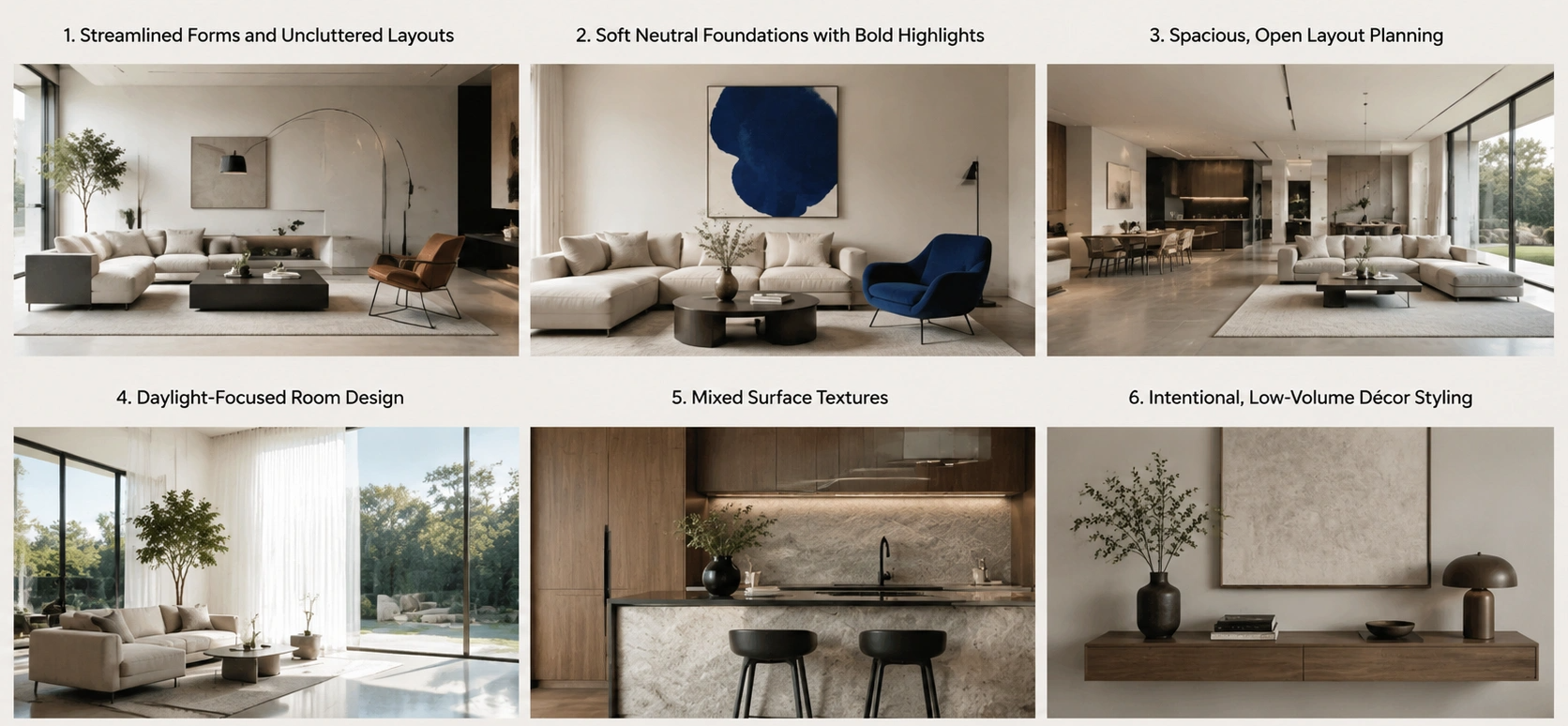
Beyond the broad definition, contemporary spaces tend to share a handful of recognizable traits, the details that make a room instantly readable as “contemporary” the moment you walk in.
1. Clean-Lined Forms and Uncluttered Layouts
Furniture and architectural lines stay simple. Excess ornamentation is avoided so the room reads as calm and organized.
Straight edges, simple silhouettes, and clean transitions between spaces all reinforce this sense of order.
2. Soft Neutral Foundations with Bold Highlights
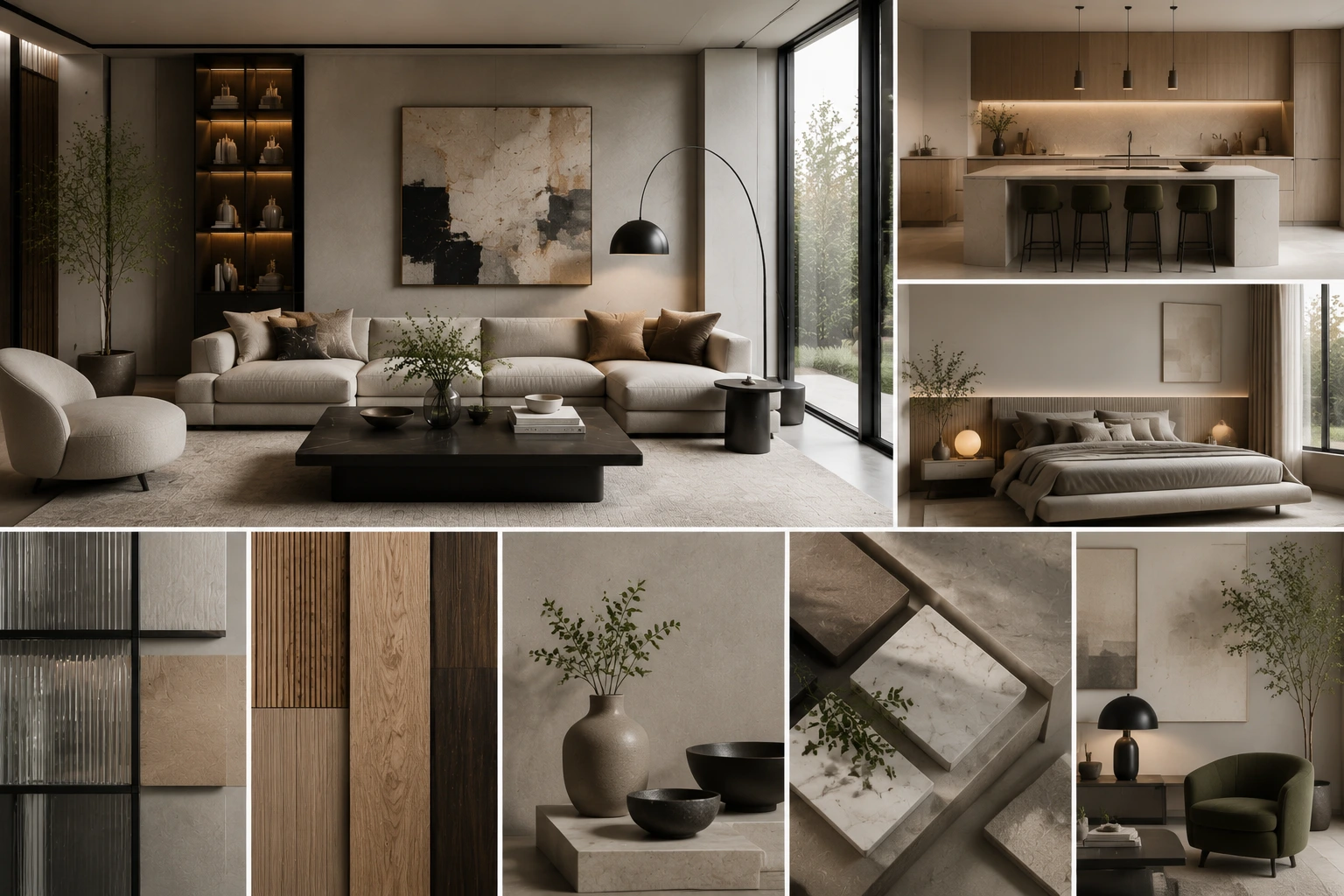
Walls and large surfaces typically use quiet neutral tones. A single bold element, a chair, artwork, or rug, carries the visual energy.
This keeps the base of the room calm while still giving the eye something interesting to land on.
3. Spacious, Open Layout Planning
Rooms are planned to breathe. Generous negative space sits between furniture groupings rather than wall-to-wall filling.
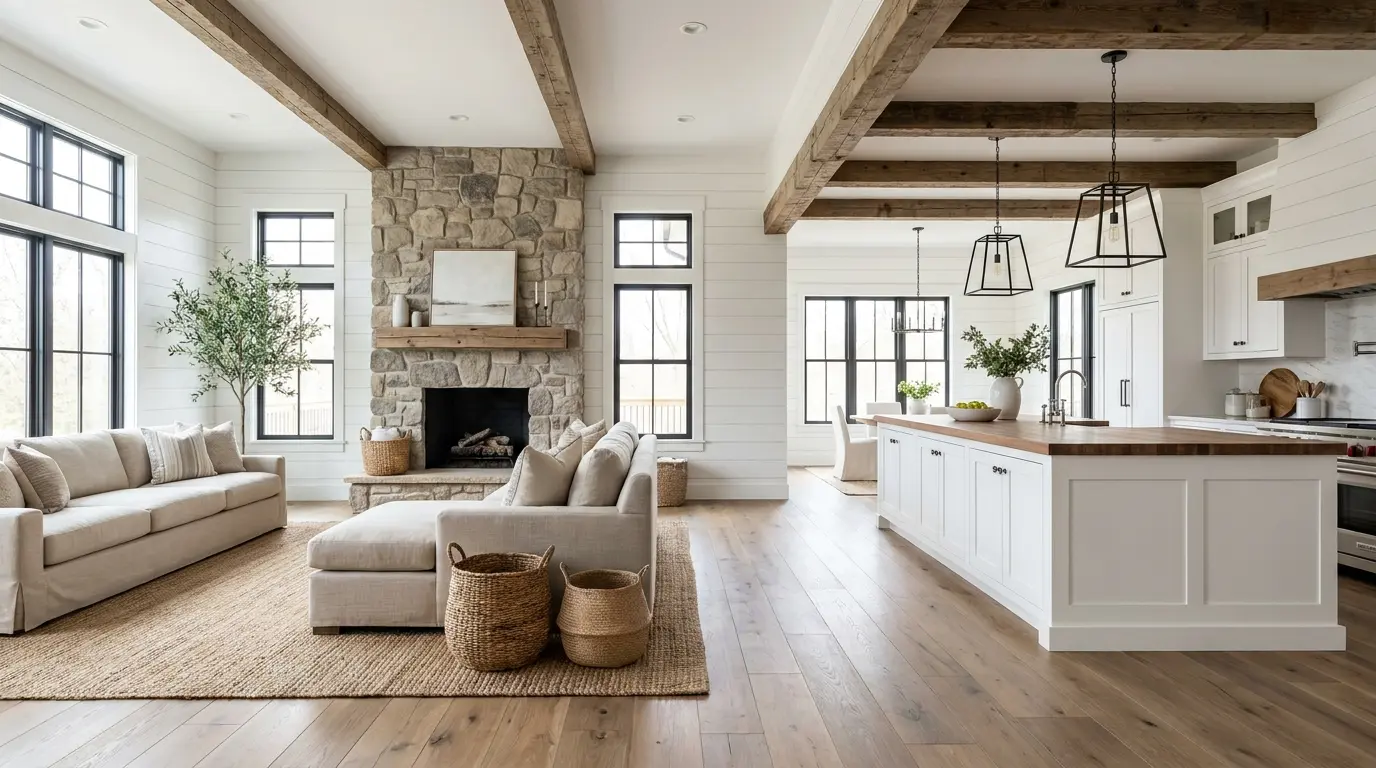
Open floor plans and minimal partitioning are common, allowing rooms to flow into one another rather than feel boxed in.
4. Daylight-Focused Room Design
Large windows, sheer treatments, and reflective surfaces are used deliberately. The goal is to pull natural light deeper into the room.
Mirrors, glossy finishes, and light-colored walls are commonly used to reflect daylight into darker corners.
5. Mixed Surface Textures
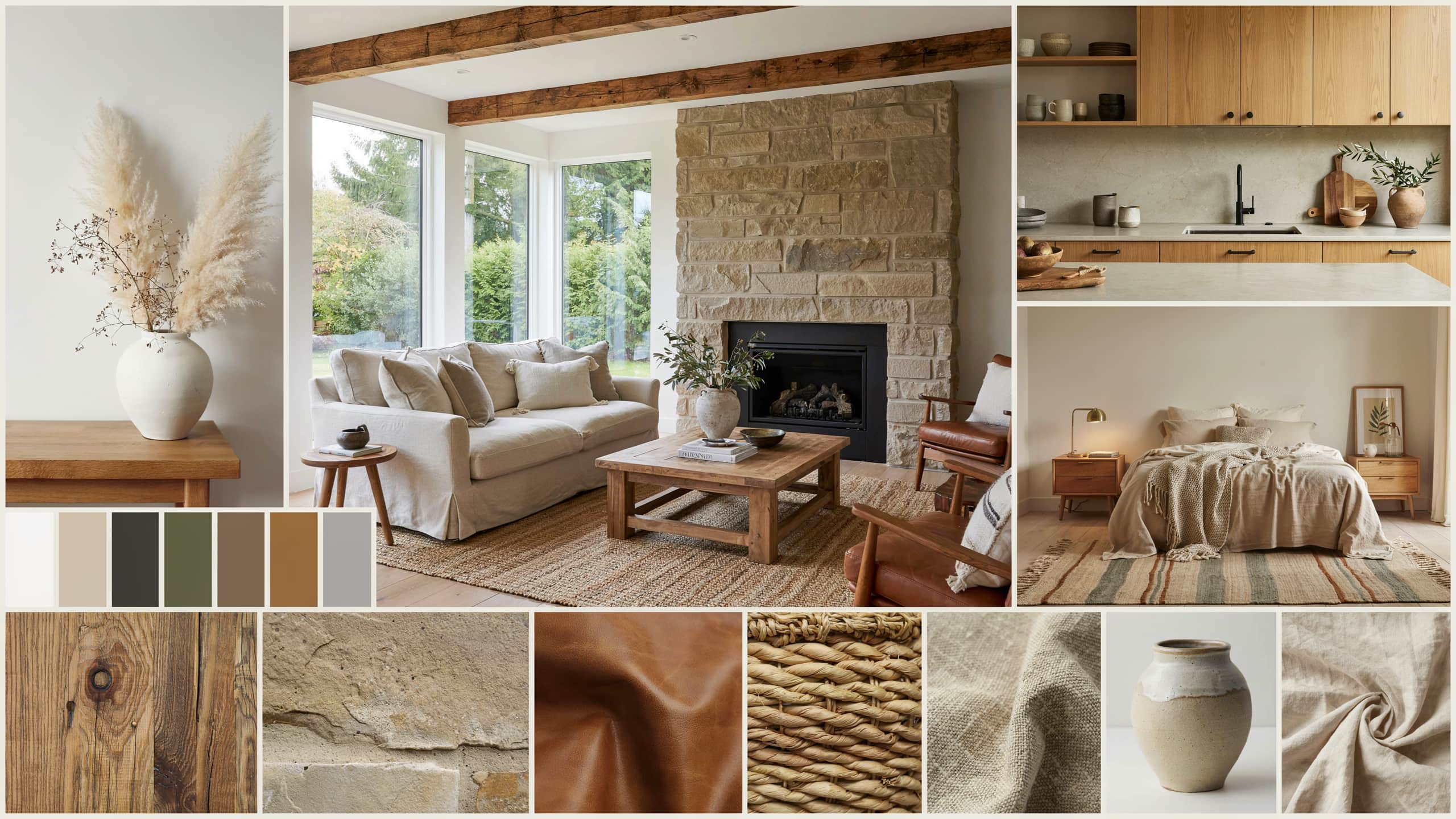
A blend of natural materials, such as wood or stone, with industrial elements, such as metal or glass. This gives contemporary rooms depth without clutter.
The contrast between rough and smooth, or warm and cool, is what keeps an all-neutral room from feeling flat.
6. Intentional, Low-Volume Decor Styling
Fewer decorative objects are used. Each one is chosen with purpose rather than filling shelves for the sake of it.
This restraint is often what separates a contemporary room from a merely minimalist one; it’s edited, not empty.
Contemporary vs Modern vs Japandi: Key Differences
Modern, contemporary, and Japandi interiors may look similar, but each follows different design principles. Their materials, colors, furniture, and overall atmosphere set them apart.
| Aspect | Contemporary Design | Modern Design | Japandi Design |
|---|---|---|---|
| Time / Philosophy | Reflects current trends | Rooted in the early–mid 20th century | Rooted in wabi-sabi and hygge principles |
| Design Approach | Flexible and evolving | Structured and fixed | Slow-living and intentional |
| Color Direction | Neutrals with bold accents | Earthy, muted tones | Muted earth tones, almost no bold accents |
| Materials | Mix of old and new textures | Natural, minimal materials | Raw wood, linen, and handcrafted materials |
| Overall Feel | Adaptable and soft | Strict and minimal | Quiet, slow-living atmosphere |
Core Building Blocks of Contemporary Style Interiors
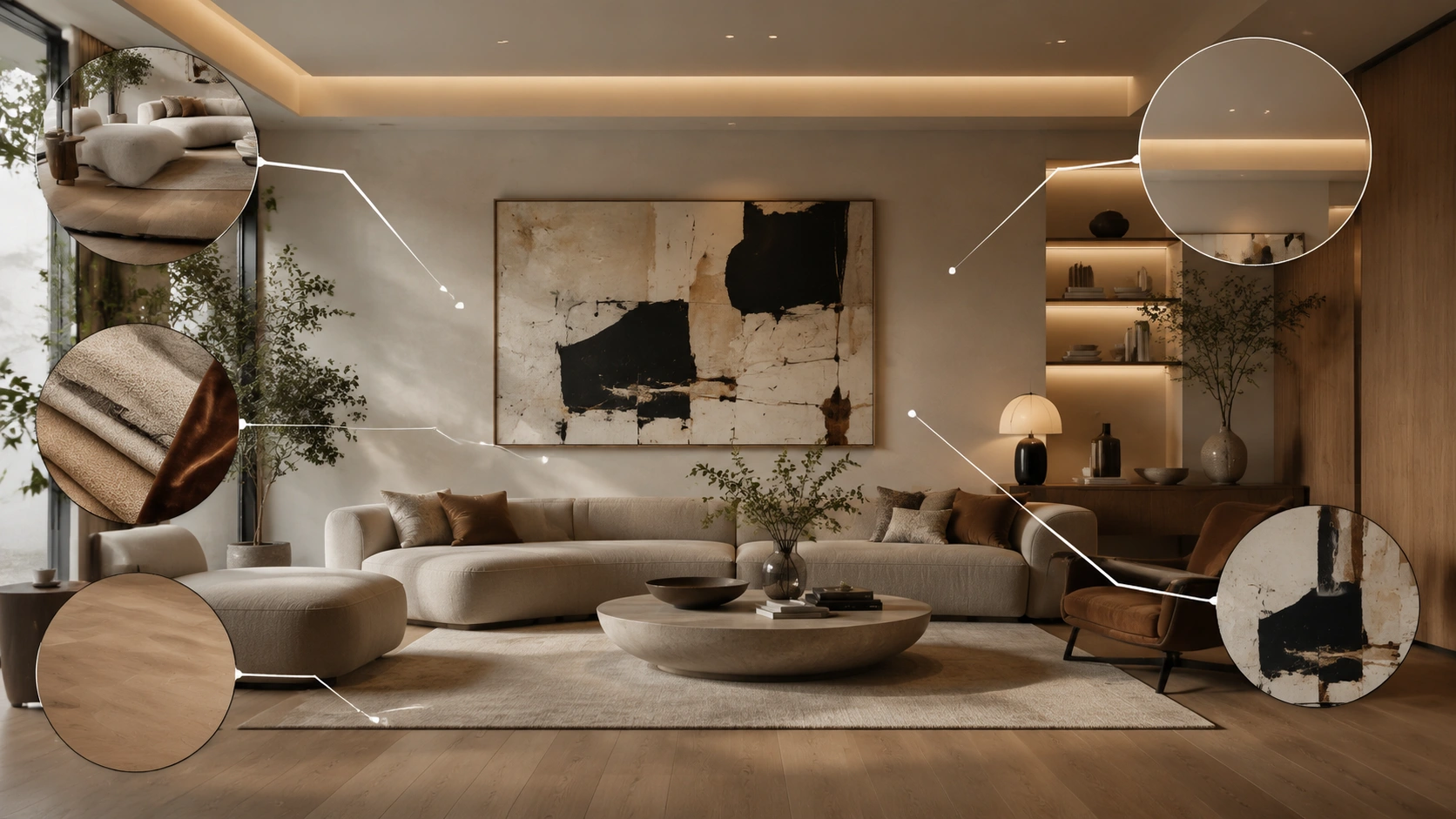
Beyond the big-picture traits, a handful of concrete choices, such as furniture, lighting, fabric, flooring, and art, are what actually bring a contemporary room together in practice.
- Furniture with Low Profiles and Smooth Silhouettes: Sofas, beds, and seating tend to sit lower to the ground. Edges are rounded or gently curved. When compared with other furniture styles every owner should know, these low, rounded silhouettes are easier to spot in a showroom.
- Layered Lighting Instead of Single Source Lighting: Ambient, task, and accent lighting are combined. This replaces reliance on one central fixture.
- Fabric Choices That Add Softness and Contrast: Textiles like bouclé, linen, and velvet introduce tactile variety against harder surfaces.
- Flooring That Balances Warmth and Clean Finish: Light wood tones or large-format tile are common choices. Both stay neutral without feeling sterile.
- Statement Art Instead of Heavy Decoration: One large art piece often replaces multiple smaller decorative items on a wall.
Color Direction in Contemporary Homes
Contemporary homes use layered colors to create balance, warmth, and contrast. Start with a soft neutral base, then add deeper or bolder shades in smaller amounts.
| Color Role | Best Choices | How to Use |
|---|---|---|
| Base tones | White, ivory, sand, soft gray | Use on walls and large surfaces. |
| Contrast shades | Black, navy, forest green | Add through furniture or trim. |
| Warm neutrals | Taupe, beige, clay | Prevent a cold, clinical look. |
| Bold accents | Mustard, rust, cobalt | Reserve for artwork or decor. |
How Contemporary Design Changes Across Rooms
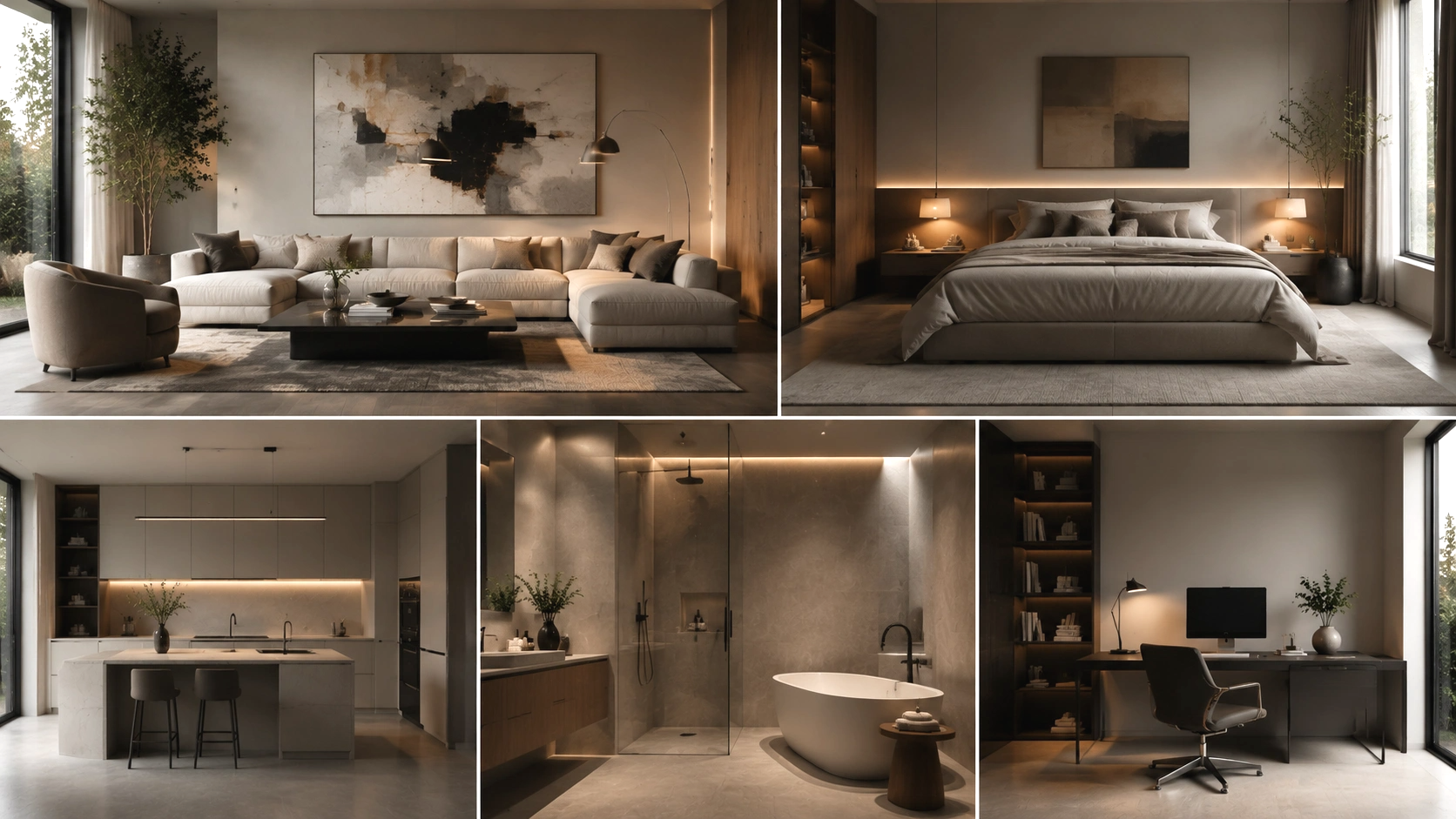
The core principles stay the same everywhere, but how they show up shifts depending on the room. Each space calls for its own balance of light, color, and function.
1. Living Room
Seating is arranged in conversation-friendly groupings rather than pushed against walls, while walkways stay clear and unobstructed so the room feels open even with several pieces of furniture in it.
A large area rug is often used to visually anchor the seating group without closing off the space, while low coffee tables keep sightlines open across the room.
2. Bedroom
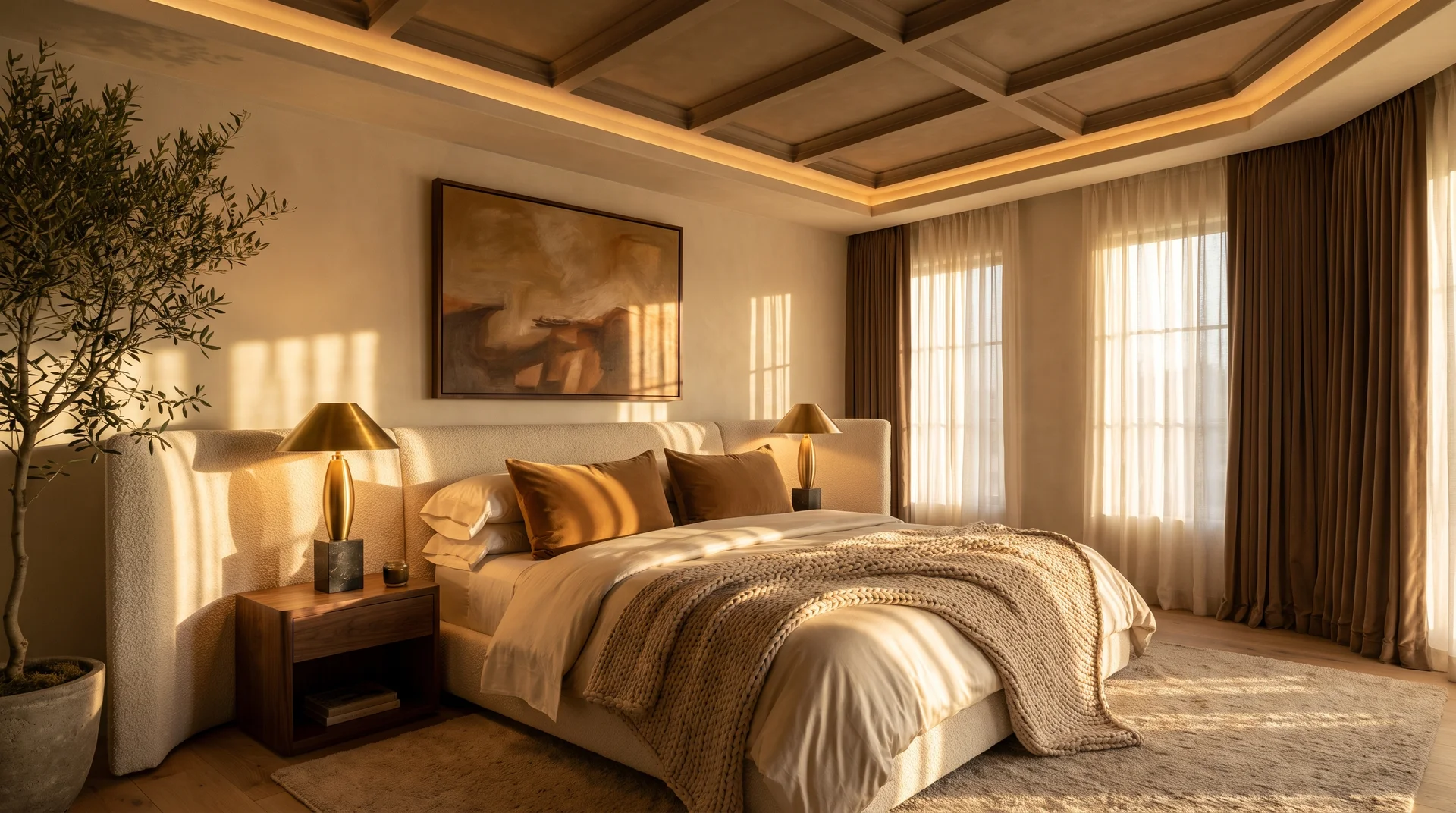
Soft textiles, a limited color palette, and minimal visual noise work together to support rest over stimulation. The space is kept feeling restful rather than busy or overstyled at the end of a long day.
Nightstands and dressers usually stay low-profile so the room doesn’t feel visually heavy, and blackout or sheer window treatments help control light without adding visual clutter.
3. Kitchen
Handleless cabinetry, integrated appliances, and hidden storage keep the workspace visually quiet, letting the kitchen feel streamlined and functional instead of cluttered with countertop gadgets and open shelving.
Islands are often designed to double as both prep space and casual seating, with pendant lighting overhead adding a subtle focal point without cluttering the counters.
4. Bathroom
Matte fixtures, natural stone, and warm, layered lighting create a retreat-like feel, turning a purely functional space into one that feels closer to a small at-home spa.
Frameless glass showers and floating vanities are common choices for keeping the room visually open, while heated flooring and dimmable lighting add a final layer of comfort.
5. Home Office
Minimal desk clutter, hidden cable management, and neutral backgrounds support concentration during video calls and deep work, keeping the space calm rather than distracting.
Storage is usually built in or closed, so paperwork and supplies don’t compete for visual attention, and a single well-placed plant or lamp often finishes the look.
Materials and Finishes Commonly Used Today
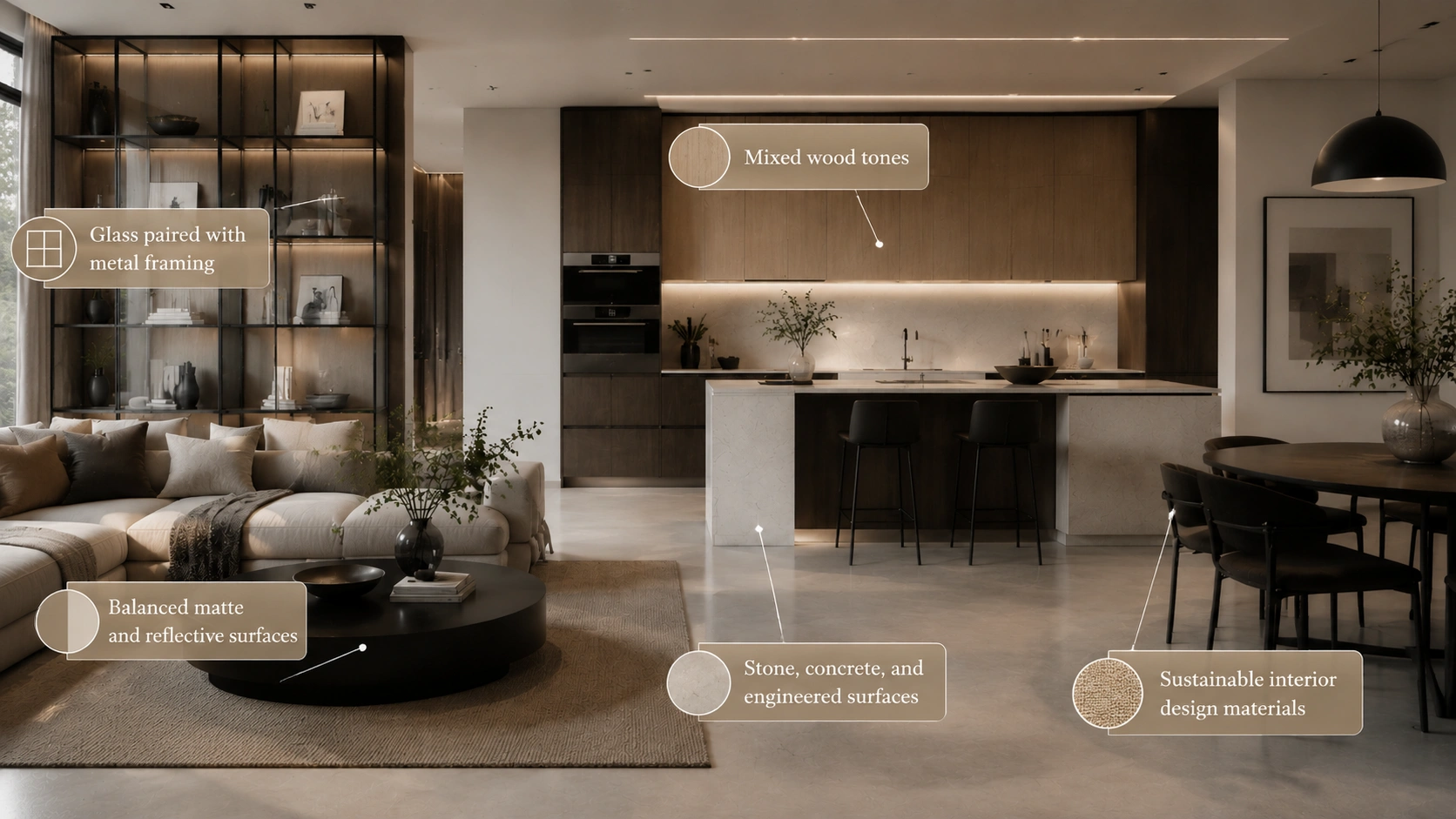
Contemporary interiors mix durable, modern materials with controlled contrast. The goal is to add texture and interest without making the space feel crowded.
| Material Choice | Common Use |
|---|---|
| Glass and metal | Shelving, partitions, and cabinet fronts |
| Mixed wood tones | Adds contrast through light and dark finishes |
| Matte and reflective surfaces | Balances light and visual depth |
| Stone and concrete | Creates clean, durable kitchens and bathrooms |
| Sustainable materials | Includes reclaimed, recycled, and responsibly sourced options |
The key is restraint: combine a few contrasting textures while keeping the overall room calm and balanced.
Why Contemporary Design Works in Modern Homes
Contemporary interiors are easy to refresh without a full renovation. Swapping a rug or a light fixture can shift the whole feel of a room.
The style adapts equally well to compact apartments and larger homes. It keeps spaces visually breathable.
It supports modern lifestyle needs, such as work-from-home setups and space-efficient furniture.
It also tends to hold strong resale appeal, since its neutral foundation appeals to a wide range of buyers.
Where Contemporary Interiors Often Go Wrong
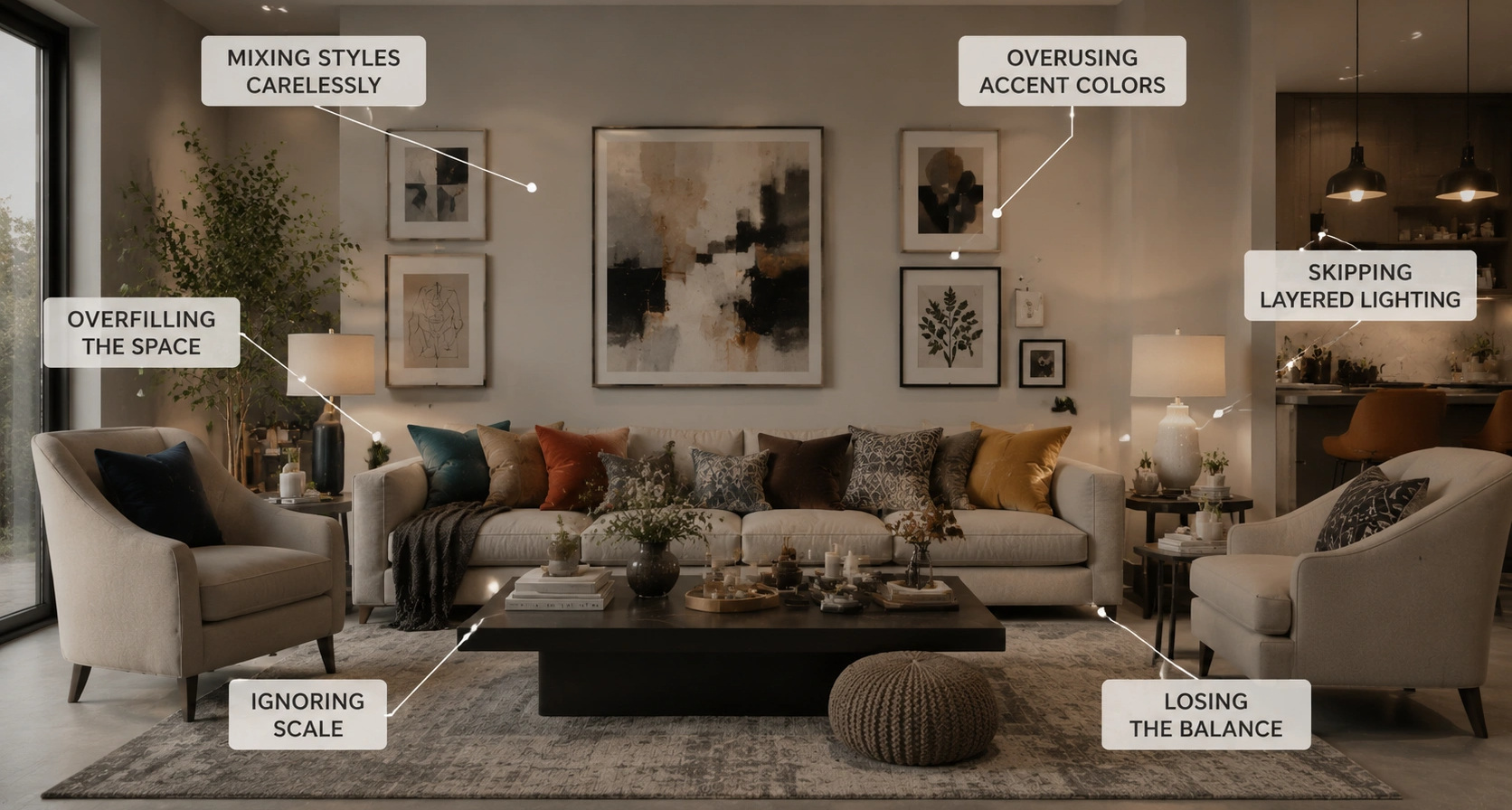
Even people who love the style can end up with a room that feels off, usually because of a few easy-to-miss habits:
- Mixing modern and contemporary styles: Learn the key differences before combining them, or the room may feel visually inconsistent.
- Using too many decorative items: Choose a few strong pieces and leave enough open space for each one to stand out.
- Adding too many accent colors: Limit the palette to one or two accent shades to keep the room balanced and controlled.
- Depending on one overhead light: Combine ambient, task, and accent lighting to add depth and improve the room’s function.
- Going too minimal or too cluttered: Keep enough furniture for comfort without filling every surface, wall, or empty corner.
- Choosing the wrong furniture scale: Select pieces that match the room’s size so the layout feels open, balanced, and practical.
Most of these mistakes come down to the same thing: adding without editing. A contemporary room usually improves the moment something gets taken away, not added.
Where Contemporary Design Is Heading: Future Trends
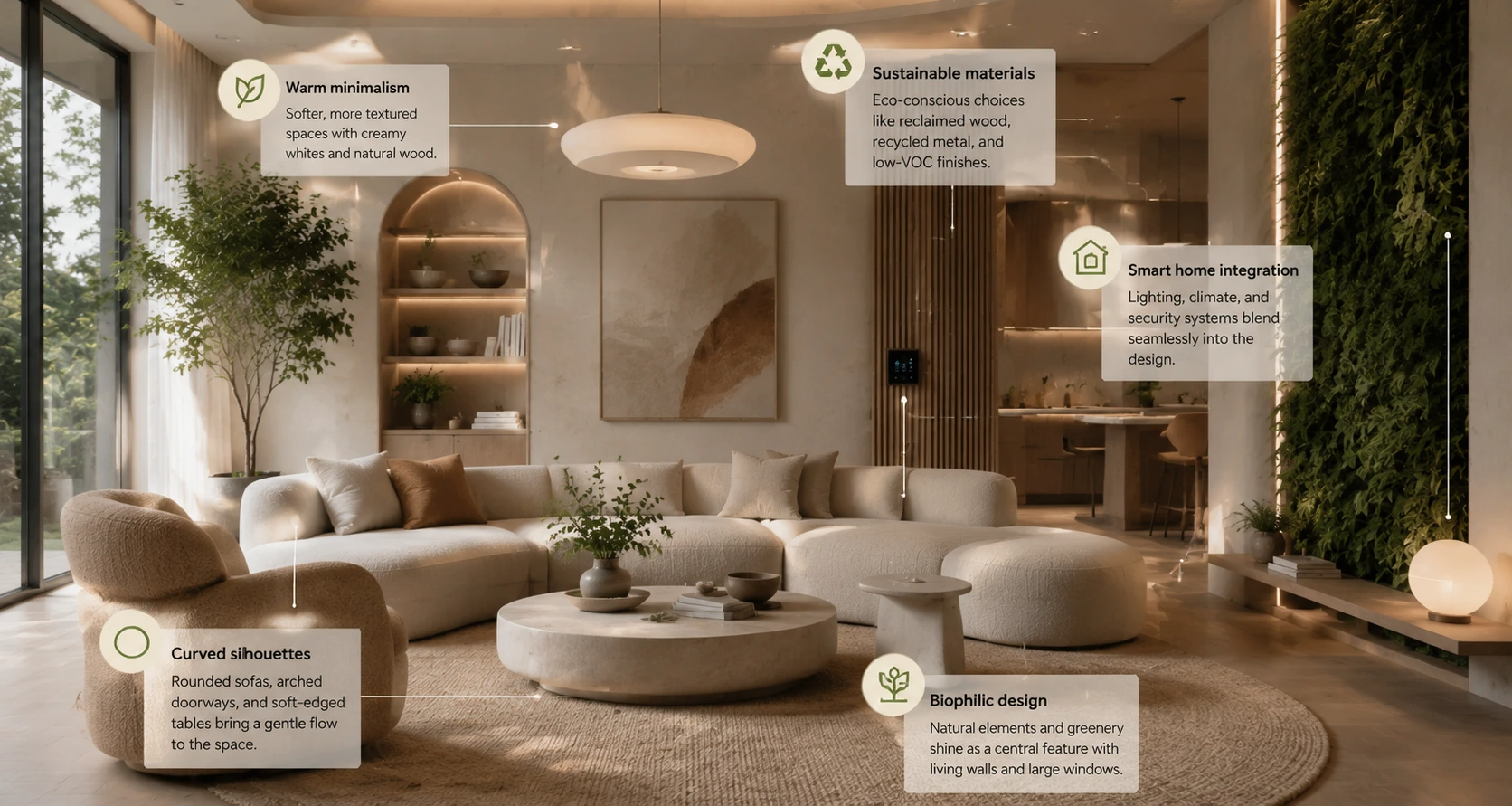
Contemporary design never sits still, and a few clear shifts are already shaping what comes next, from the materials designers reach for to the way rooms are lit and laid out.
- Warmer colors and natural materials: Creamy whites, warm neutrals, and natural wood are replacing stark white, glass, and steel finishes.
- Built-in smart home features: Lighting, climate, and security systems are integrated into rooms rather than appearing as visible add-ons.
- Curved furniture and architecture: Rounded sofas, arched doorways, and soft-edged tables are replacing rigid geometric shapes.
- Stronger biophilic design: Large windows, indoor greenery, and living walls are becoming central parts of contemporary interiors.
Together, these trends show that contemporary design is becoming warmer, greener, softer, and less rigid.
Together, these shifts point in one direction: contemporary design is getting warmer, greener, and a little less rigid than it’s been in years past.
Is Contemporary Interior Design Right for You?
This style suits people who prefer flexible aesthetics over a fixed decorating rulebook.
It works particularly well in urban homes and modern apartments.
It’s less suited to those who love heavy traditional or ornate interiors. It’s best embraced by owners who don’t mind their space evolving as trends shift.
The best contemporary rooms still feel lived-in, not staged for a photo. Comfort matters just as much as clean lines.
Owners chasing a more opulent, statement-driven feel may find luxury interior design a closer fit than the understated restraint contemporary spaces are built around.
Conclusion
Contemporary interior design isn’t a single look you can copy from a photo. It’s a moving target, shaped by culture, materials, and taste, and it changes shape every few years.
Knowing how it differs from modern, Japandi, and transitional styles helps you pick pieces that work together instead of pulling a room in different directions.
Ready to bring the look into your own home? Start with one bold piece, a chair, a rug, or a lamp, and build the rest of the room around it.
Frequently Asked Questions
What Are The Four Types Of Interior Design?
The four foundational styles are Traditional, Modern, Eclectic, and Transitional, forming the basis on which most other interior aesthetics are built.
What Is The 3-5-7 Rule In Interior Design?
It’s a styling rule stating décor looks most balanced when grouped in odd numbers, three, five, or seven, for natural visual movement.
How Long Does A Contemporary Look Stay In Trend?
Contemporary style evolves every few years rather than staying fixed, since it follows current design trends rather than a single historical movement.
Can Contemporary Design Work In Small Spaces?
Yes, its clean lines, light color palette, and clutter-free layout make it especially effective for compact apartments and small rooms.
Can You Mix Modern And Contemporary Design In One Room?
Yes. Pair a modern anchor piece, such as a low-profile sofa, with contemporary accents, like curved lighting or a bold rug, for balance.