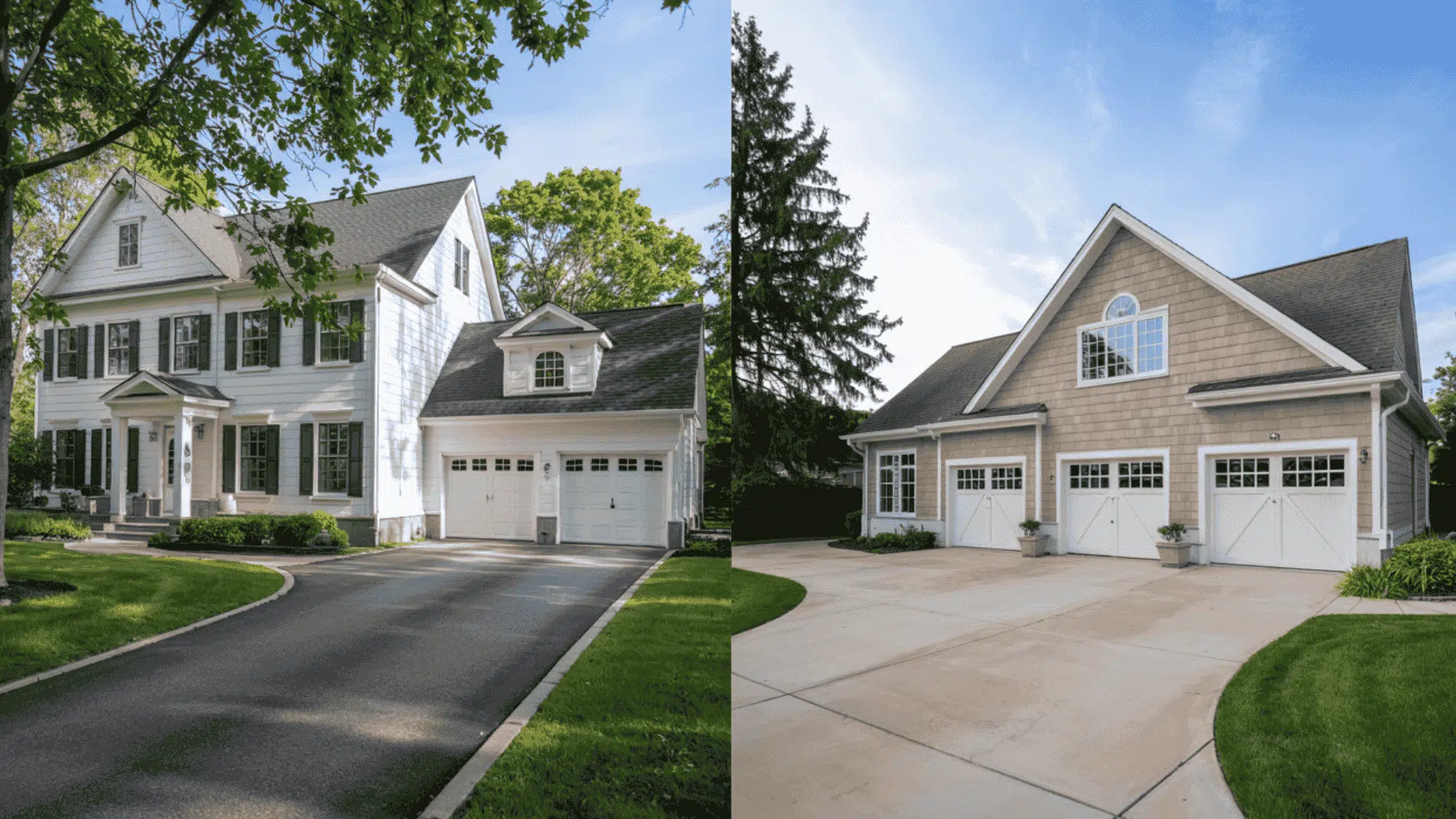
A cracked, aging driveway drags down your entire property’s curb appeal.
After more than a decade working with homeowners on exterior projects, I have seen the concrete-or-asphalt driveway debate come down to three factors: local climate, upfront budget, and how long you plan to stay in the home.
Concrete costs more at the start but needs less attention over the years. Asphalt goes down fast and costs less, but it requires regular upkeep. Both can last decades when installed on the right sub-base and maintained on schedule.
This guide breaks down cost, durability, climate performance, appearance, and maintenance so you can pick the material that actually works for your situation.
What Is a Concrete Driveway?
A concrete driveway is a rigid slab made from cement, sand, gravel, and water. Once poured into forms and cured, it creates a hard, load-bearing surface that can handle cars, trucks, and even heavy equipment.
Concrete has a compressive strength of about 4,000 to 6,000 PSI, roughly double that of asphalt. That makes it a strong option for homes where heavier vehicles park regularly.
Concrete driveways typically have a lighter appearance and offer a range of color customization options. You can stain, stamp, or brush the surface for textures that mimic stone, brick, or tile.
However, concrete is less flexible than asphalt, which can make it more prone to cracking, especially in areas with freeze-thaw cycles.
What Is an Asphalt Driveway?
An asphalt driveway uses a mix of bitumen (a petroleum-based binder) and stone aggregate. The mixture is heated, poured, and then rolled and compressed to form a smooth, dark surface.
Because asphalt remains slightly flexible after curing, it better absorbs ground movement and temperature shifts than rigid concrete.
Asphalt driveways are typically dark grey or black, with fewer customization options than concrete driveways. The flexibility of asphalt allows it to better adapt to temperature fluctuations and ground movement.
That flexibility also means asphalt absorbs road noise better, which is one reason it is the standard material for public roads and highways.
Concrete vs. Asphalt Driveway: Key Differences at a Glance
This side-by-side table covers the main factors most homeowners weigh when choosing between a concrete or asphalt driveway.
| Feature | Concrete Driveway | Asphalt Driveway |
|---|---|---|
| Compressive Strength | 4,000-6,000 PSI | ~2,500-3,000 PSI |
| Heat Resistance | Stays firm in high heat | May soften or deform in extreme heat |
| Cold Climate Performance | Can crack from freeze-thaw | Flexible; handles freeze-thaw better |
| Visual Appeal | Stains, stamps, and finishes available | Classic black look; limited design options |
| Curing Time | 5-7 days before vehicle use | 2-3 days before vehicle use |
| Initial Cost | $4-$15+ per sq ft | $3-$7 per sq ft |
| Lifespan | 30-40 years | 15-25 years |
| Maintenance | Seal every 5-7 years; occasional crack repair | Sealcoat every 3-5 years |
| Repair Ease | Harder to repair; patches visible | Easier to patch; repairs blend in |
| Noise Level | Slightly louder under tires | Absorbs road noise better |
| Best For | Hot climates, long-term owners | Cold regions, budget projects |
How Much Does a Concrete or Asphalt Driveway Cost?
Cost is usually the first question homeowners ask, and the gap between these two materials is real. Here is what a typical 500-square-foot residential driveway costs for each option.
| Cost Factor | Asphalt | Concrete |
|---|---|---|
| Initial Cost per Sq Ft | $3 to $7 | $4 to $15+ |
| Cost for 500 Sq Ft | $1,500 to $3,500 | $2,000 to $7,500+ |
| Maintenance Cost | $500-$1,000 sealcoating every 3-5 years | $200-$500 sealing every 5-7 years |
| Estimated 30-Year Total | $8,000-$10,000 (includes one resurfacing) | $6,500-$8,000 |
The upfront difference is clear. Asphalt costs roughly 40-50% less to install. But over 30 years, the picture shifts. Asphalt sealcoating runs $500 to $1,000 per application every three to five years, and most asphalt driveways need resurfacing around the 15-year mark at $1,500 to $3,000.
Concrete takes a bigger hit on day one but asks for far less over the decades. One of my clients replaced an asphalt driveway after 18 years and told me the total spent over that period matched what a concrete slab would have cost from the start.
If you are staying in your home for 10 years or more, run the full 30-year term before choosing based solely on the upfront price.
Climate Performance: Heat, Cold, and Freeze-Thaw Cycles
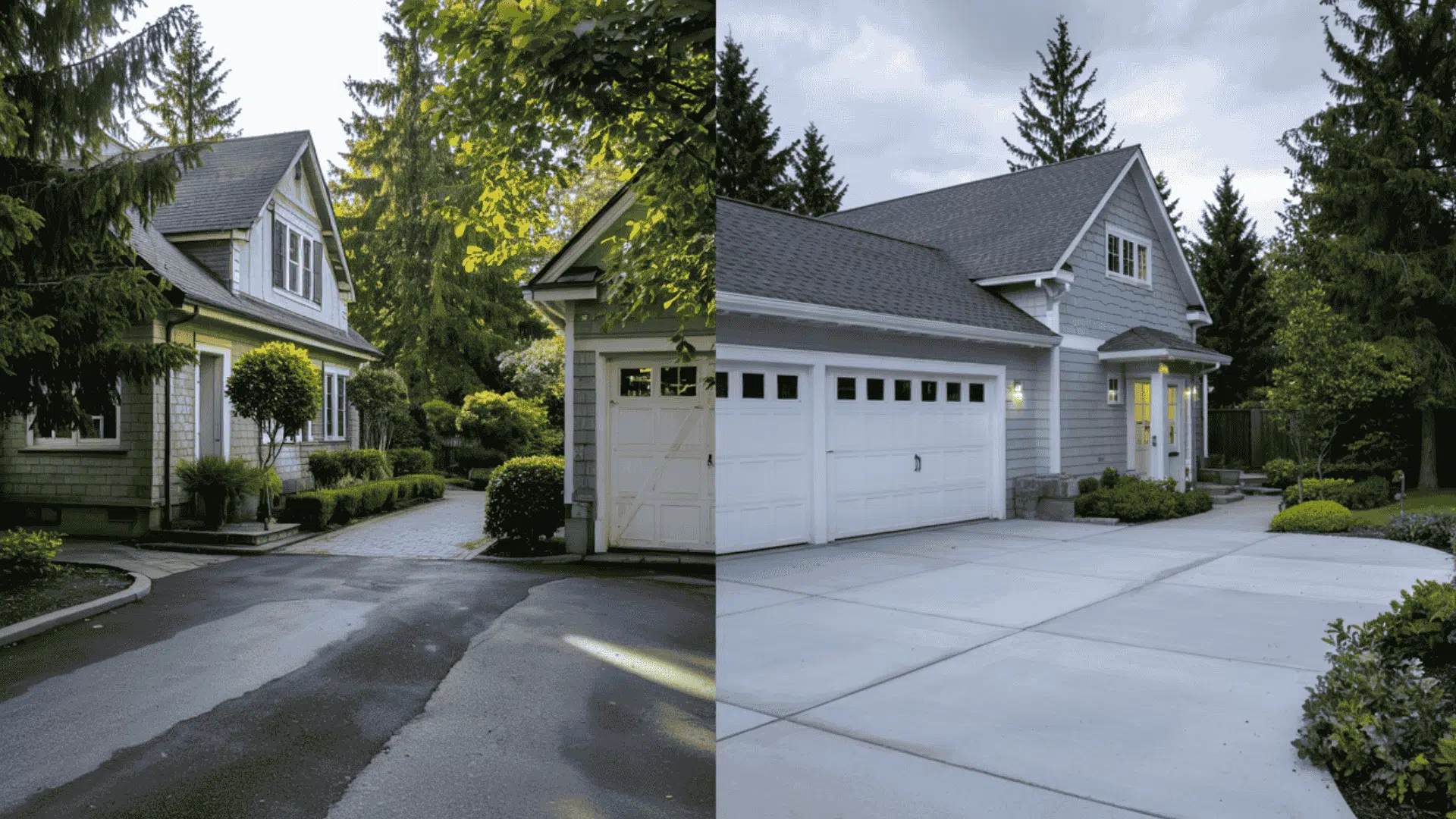
Climate is the single biggest factor that separates these two materials in real-world performance.
Asphalt in Cold Climates
Asphalt handles cold weather well because it stays slightly flexible. When the ground expands and contracts through freeze-thaw cycles, asphalt moves with it instead of cracking.
Snow and ice also melt faster on asphalt because the dark color absorbs heat from the sunlight. That is a real advantage for homeowners in northern states who deal with ice buildup through the winter.
Concrete in Hot Climates
Concrete holds up well in heat. It does not soften, stick to shoes, or deform under direct sunlight the way asphalt can. On a 100-degree day, a concrete surface stays roughly 10 degrees cooler than an asphalt surface.
For Texas homeowners and anyone in the southern half of the country, that temperature difference matters for comfort and material longevity.
Where Each Material Struggles
Concrete cracks more in cold regions, especially if control joints are poorly placed or the sub-base shifts. De-icing salt also damages concrete more quickly than it does asphalt.
Asphalt, on the other hand, gets soft and tacky in prolonged heat above 90 degrees. Heavy vehicles parked on hot asphalt can leave permanent impressions.
Durability and Maintenance Compared
Both driveways need attention, but the type and frequency of maintenance are different.
Maintaining an Asphalt Driveway
Asphalt requires sealcoating every three to five years. Skipping this step lets moisture seep into the surface, which accelerates cracking.
Most homeowners can handle sealcoating themselves for around $100 to $200 in materials, or hire a contractor for $500 to $1,000. Small cracks should be filled as soon as they appear, because water intrusion is asphalt’s biggest enemy.
Around year 15, many asphalt driveways need a full resurfacing.
Maintaining a Concrete Driveway
Concrete is lower-maintenance overall. A quality sealer, applied every 5 to 7 years, protects against stains and moisture. Cracks do happen, but they show up less often.
The catch is that when concrete does crack, repairs are more visible and more expensive. A typical crack repair job runs $200 to $500, depending on severity, and patched concrete rarely blends perfectly with the original surface.
Concrete also stains more visibly because of its lighter color. Oil drips, rust, and leaf stains stand out more than they would on dark asphalt.
Appearance, Customization, and Curb Appeal
If design matters to you, concrete has a clear edge.
Concrete can be stained in a wide range of colors, stamped to look like brick or stone, etched with patterns, or given a brushed texture.
These finishing options let you match the driveway to your home’s exterior style, whether that is a traditional ranch, a modern build, or something in between. Custom finishes do add to the price, sometimes pushing the cost above $15 per square foot.
Asphalt offers a clean, dark, uniform surface. Recent advancements allow limited tinting and colored sealers, but the design range is narrower than for concrete.
The fresh black look of a newly sealed asphalt driveway pairs well with modern entrance designs and minimalist homes.
For neighborhoods with strict HOA rules, check your covenants before choosing. Some communities require one material over the other or mandate specific colors and finishes.
Environmental Impact and Recyclability
This is a factor most homeowners overlook, but it is worth knowing.
Asphalt is one of the most recycled materials in the United States. Old asphalt gets ground up and reused in new paving projects regularly.
That reduces landfill waste and lowers the environmental cost of replacement. The downside is that asphalt is a petroleum-based product, and its production depends on fossil fuels.
Concrete has a longer usable life, which means fewer replacements over time. But cement manufacturing carries a high carbon footprint. Neither material is a clear environmental winner.
If sustainability matters to you, consider permeable paving options that allow rainwater to pass through to the ground below rather than running off into storm drains.
Drainage, Grading, and Sub-Base Preparation
The sub-base under your driveway matters as much as the surface material. Poor drainage ruins both concrete and asphalt, often within a few years.
A good contractor starts by grading the site so water flows away from your home and garage. The sub-base should be compacted gravel, typically 4 to 8 inches deep, depending on soil conditions.
Clay-heavy soil (common in Texas) expands when wet, which puts extra stress on rigid concrete. In those conditions, deeper gravel bases and proper control joints are not optional.
Asphalt is more forgiving of minor ground movement, but it still needs a stable foundation. Skipping the sub-base preparation is the most common reason driveways of either material fail early.
When budgeting for your project, the grading and foundation work should be planned alongside your surface materials.
Resale Value: Which Driveway Adds More to Your Home?
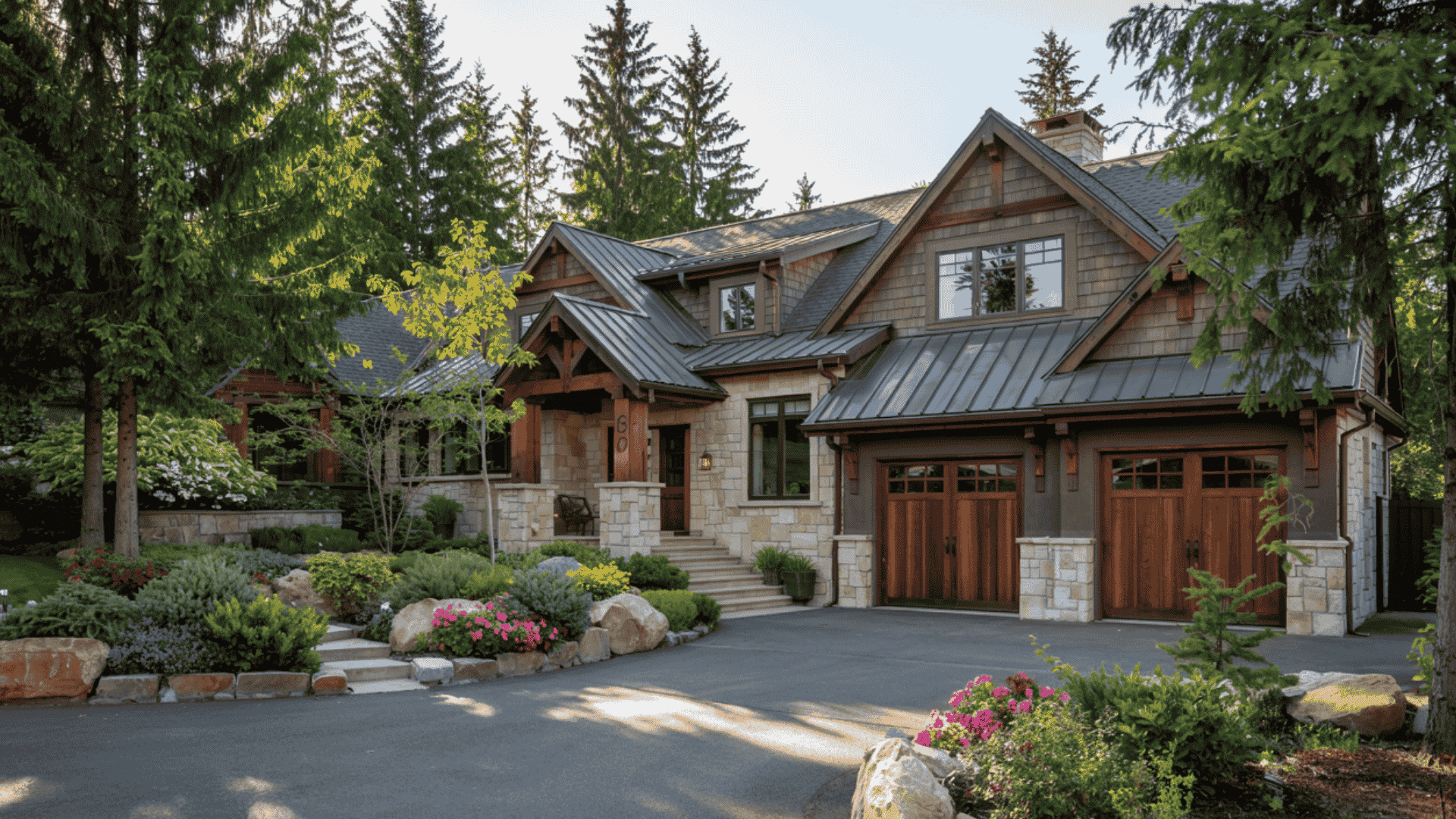
A well-maintained driveway of either type adds value. But concrete generally returns more at resale because of its longer lifespan and lower perceived maintenance burden.
Buyers in warmer markets often prefer concrete for its heat resistance and design options. In colder regions, a freshly sealed asphalt driveway signals good upkeep and still makes a positive impression.
The condition of the driveway matters more than the material. A crumbling concrete slab will not help your home’s value any more than worn-out asphalt. Regular maintenance is what protects your investment either way.
Questions You Should Ask Your Driveway Contractor
A good contractor answers these questions without hesitation. If they dodge or give vague replies, keep looking.
Ask about their sub-base preparation and drainage plan for your specific lot. Find out how thick the slab or asphalt layer will be and whether they use rebar or wire mesh reinforcement for concrete.
Get a clear answer on curing time before vehicles can safely use the driveway. Ask what warranty they offer on workmanship and materials, and how long it lasts. Finally, ask for a written maintenance schedule so you know exactly what upkeep to expect.
Request at least three written estimates and compare the scope of work, not just the bottom-line price. A low bid that skips the gravel base or uses thinner material will cost you more in repairs within a few years.
Conclusion
Choosing between a concrete or asphalt driveway comes down to your climate, your budget timeline, and how much maintenance you are willing to handle.
Concrete rewards long-term owners in warm climates with decades of low-maintenance service and design flexibility. Asphalt fits cold-weather properties and tighter budgets, as long as you commit to sealcoating every few years.
Get written quotes from at least 2 or 3 local contractors and ask each about their sub-base preparation, material thickness, and warranty coverage.
The driveway that lasts is the one that was installed correctly from day one.
Frequently Asked Questions
Is a Concrete Driveway Worth the Extra Cost?
For homeowners who have stayed 10+ years, yes. Lower maintenance and a 30-40 year lifespan often make concrete cheaper overall than asphalt.
How Long Does an Asphalt Driveway Last?
15 to 25 years with proper care. Sealcoating every three to five years and patching cracks early make the biggest difference.
Can You Pour Concrete Over Existing Asphalt?
Sometimes. The asphalt must be stable with a solid sub-base. A contractor can assess whether an overlay suits your situation.
Which Driveway is Better for Cold Weather?
Asphalt. It flexes with freeze-thaw cycles instead of cracking, and its dark surface melts snow faster than concrete.
Does an asphalt driveway lower home value?
Not if maintained well. Resale impact depends more on condition than material. In cold markets, asphalt is standard and expected.