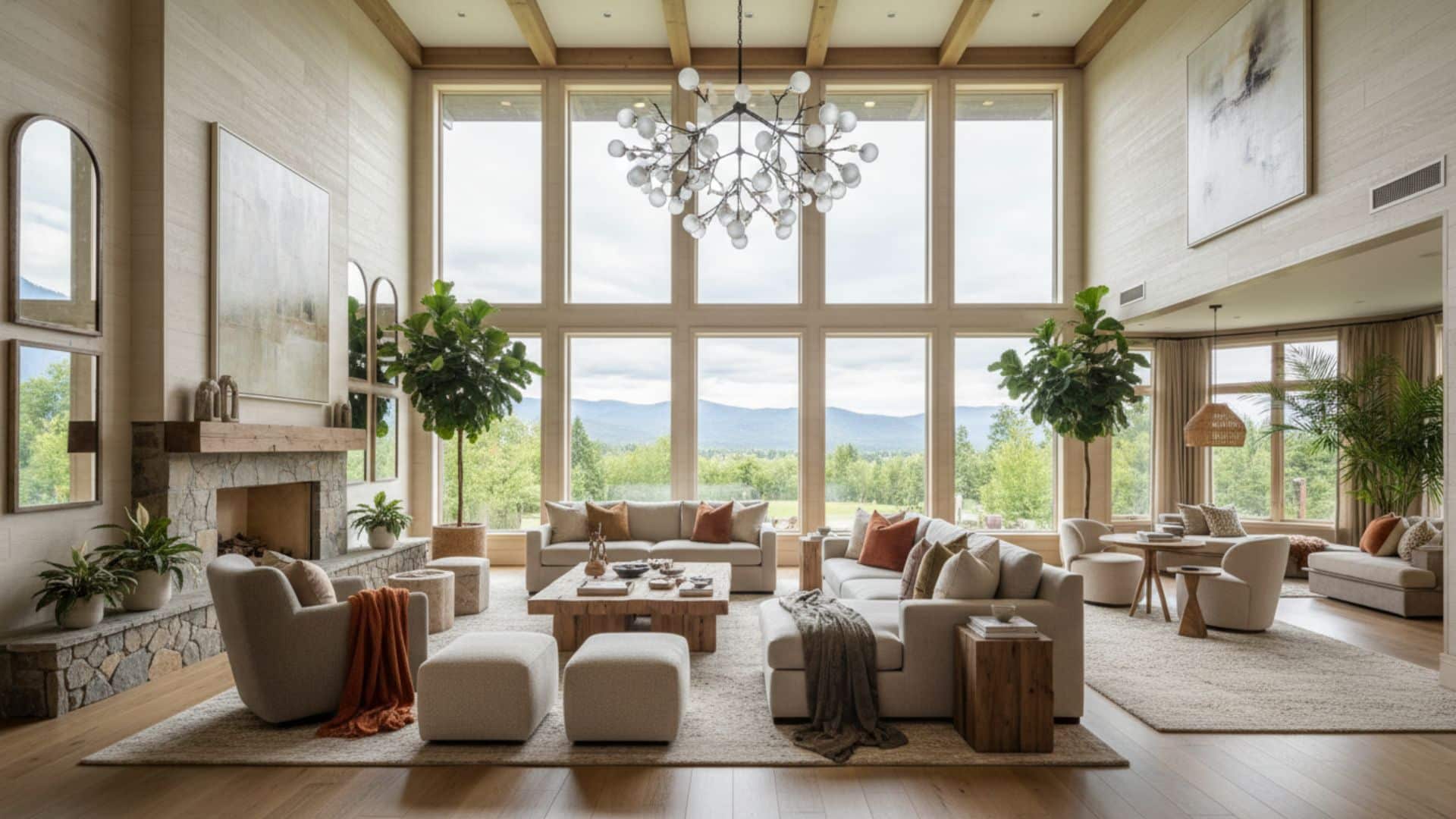
Do your living room walls stretch infinitely upward, leaving you wondering how to fill all that space?
High ceilings create an impressive first impression, but decorating those tall walls requires a different approach than in standard rooms.
Empty vertical space can make even furnished rooms feel cold and unfinished. The right wall decor changes soaring ceilings from a design challenge into your home’s best feature.
This guide shares practical living room high ceiling wall decor ideas, from oversized art and gallery walls to strategic lighting and textured surfaces.
Each approach includes visual inspiration to help you create a balanced, welcoming space that celebrates your room’s height while maintaining comfort and style.
Living Room High Ceiling Wall Decor Ideas
Make your living room a stunning visual masterpiece with high-ceiling wall decor that combines class and creativity.
From bold accent walls to artistic installations, these ideas uplift your space, making it feel airy, inviting, and stylish.
1. Large-Scale Art for Dramatic Impact
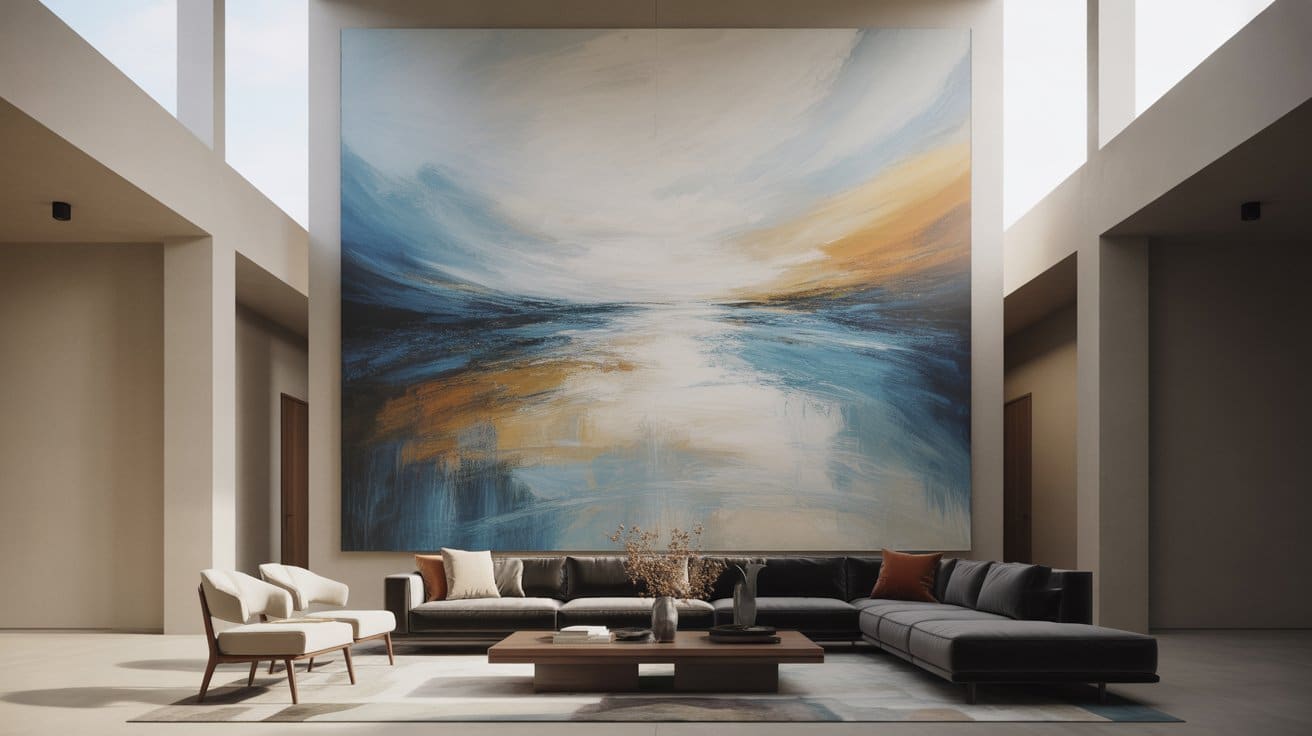
For living rooms with high ceilings, large artwork fills vertical space and creates a clear focal point. Standard-sized pieces can feel lost, so aim for art at least 60 to 80 inches tall or wide.
Hang the center at eye level (57 to 60 inches from the floor), position above furniture with 6 to 8 inches of clearance, and leave 2 to 3 inches between grouped pieces.
Single statement works, like bold abstracts or dramatic landscapes, suit modern spaces.
2. Gallery Walls for Personality
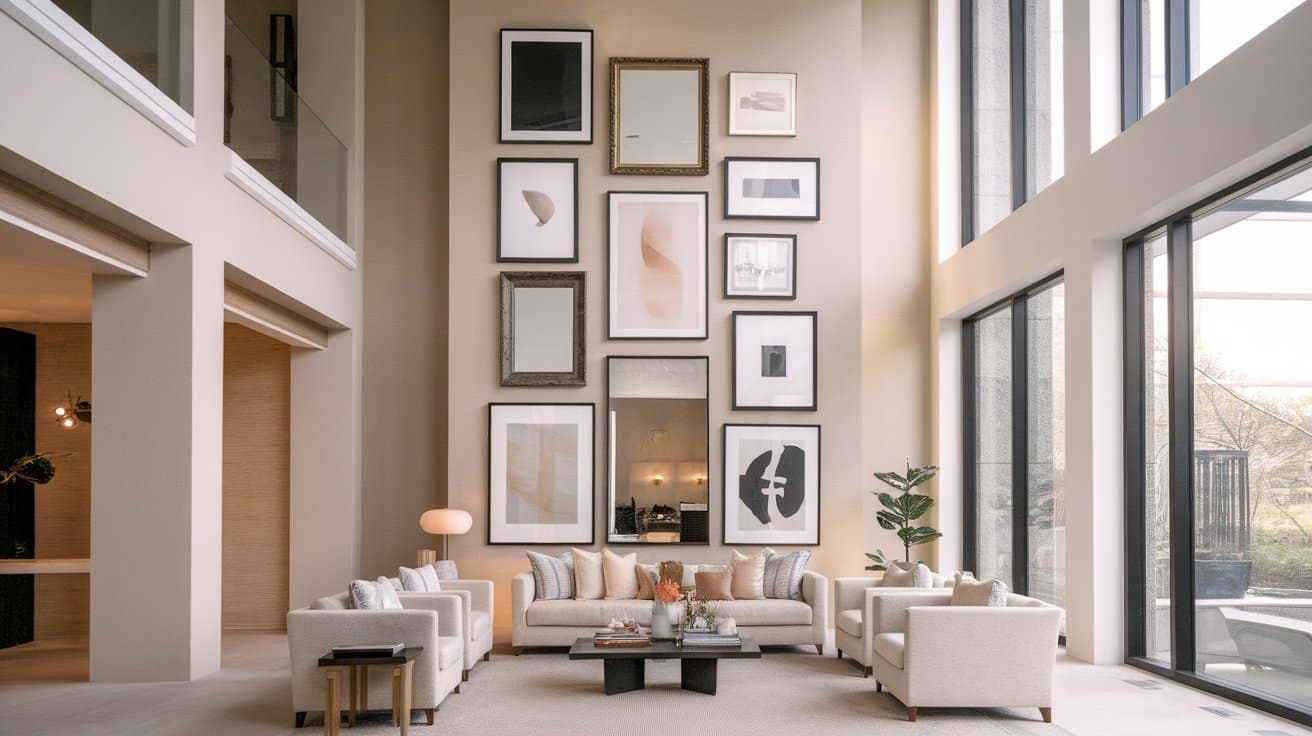
Gallery walls turn tall, empty walls into a personal display.
Use 3 to 5 frame sizes and maintain 2 to 3 inches of space between pieces for cohesion. Layouts can be grid, staggered, or floor-to-ceiling salon style, depending on your preference.
Mirrors can be mixed in to reflect light and add dimension. For very high ceilings, consider two horizontal rows to naturally break up the vertical space.
3. Horizontal Trim, Paneling, and Architectural Features
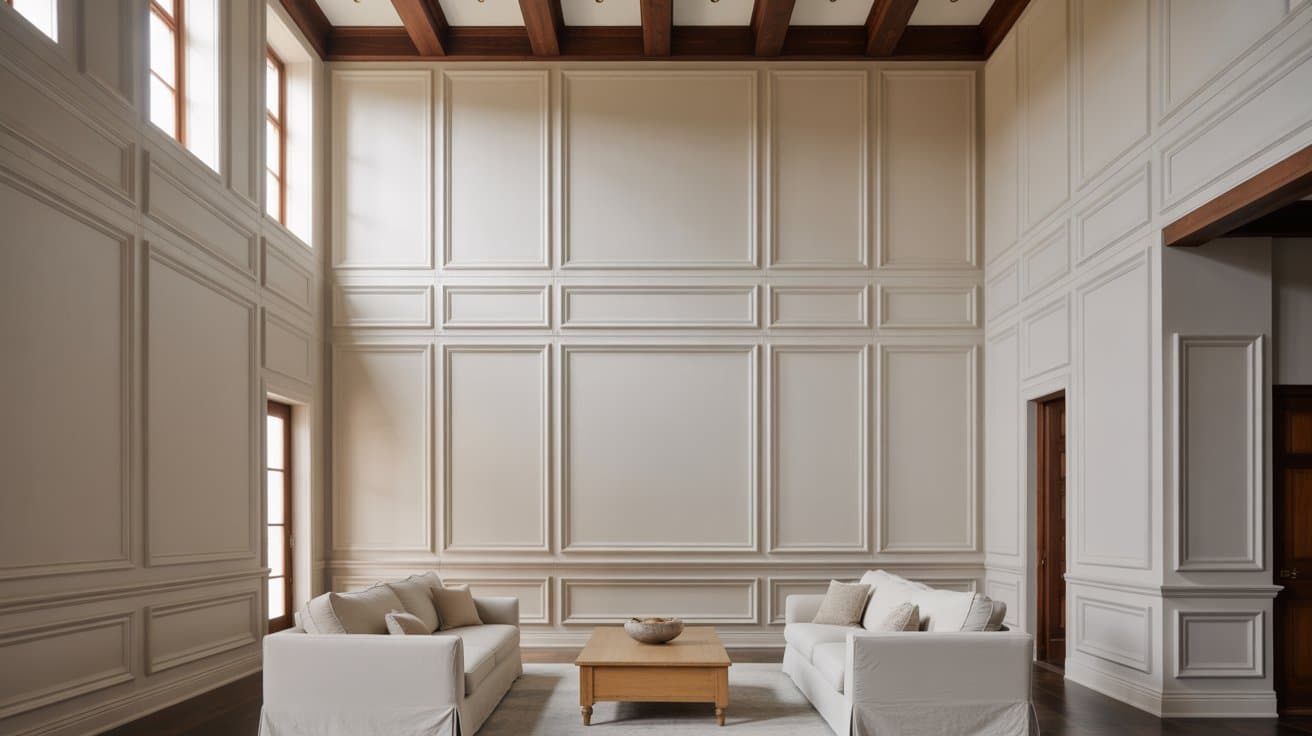
Adding horizontal elements helps break tall walls and balance the room.
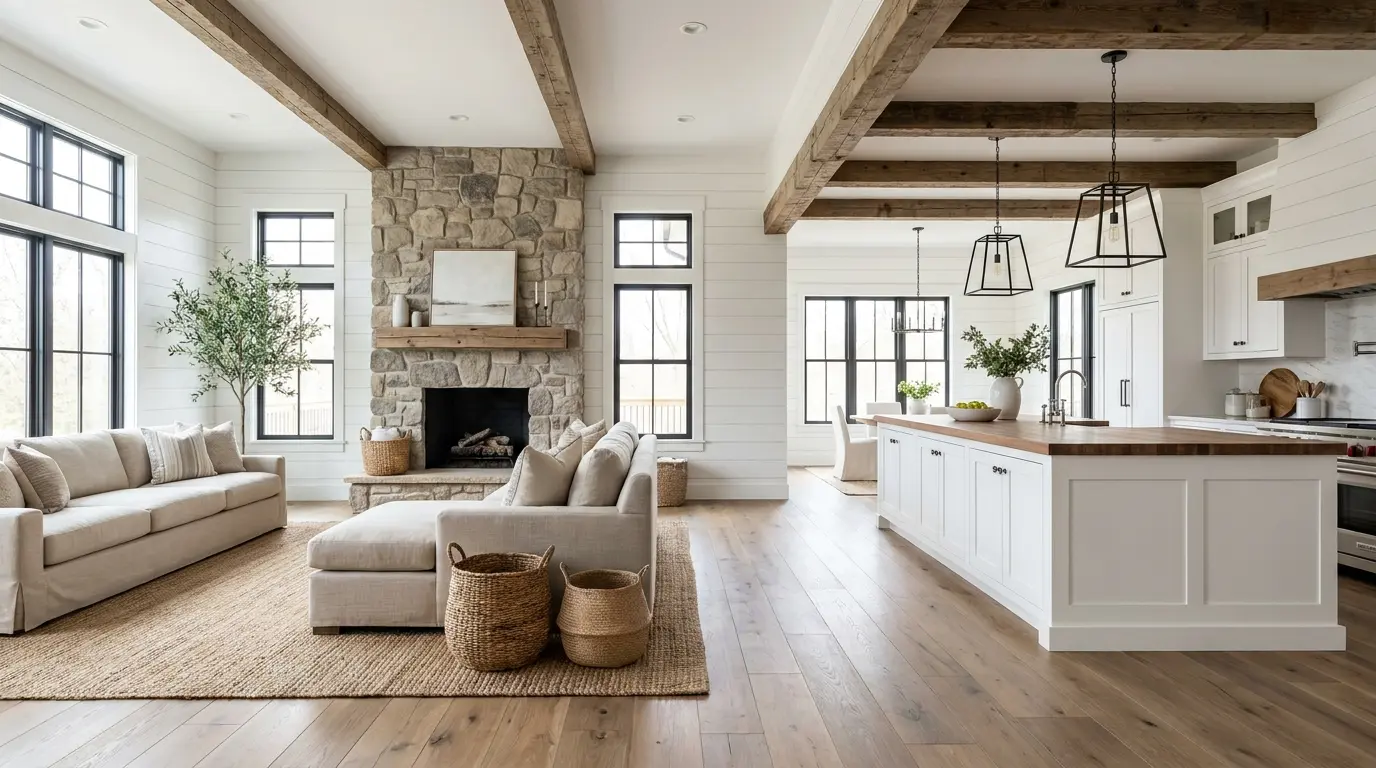
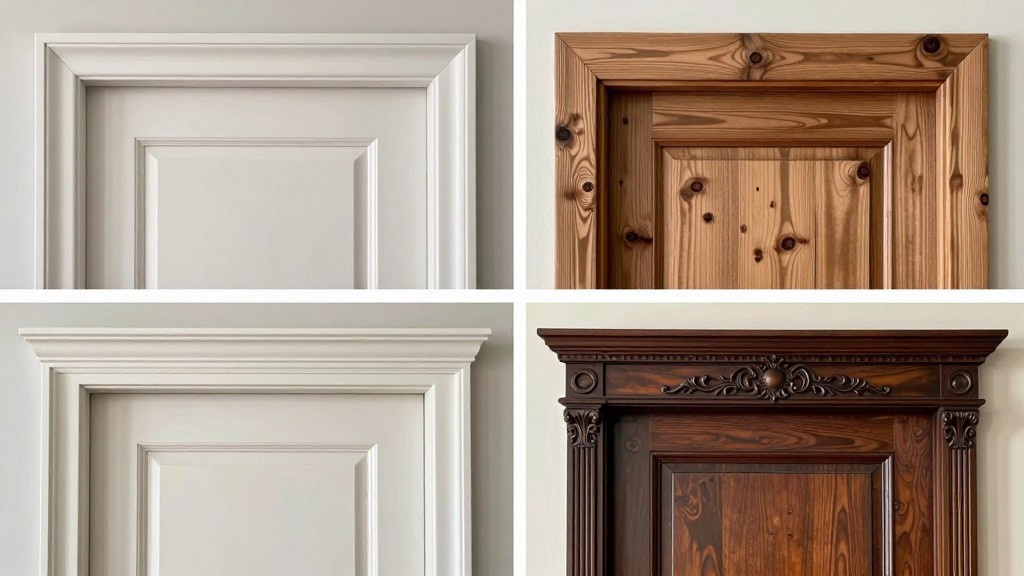
Options include chair rails, picture rails, or board-and-batten panels. Full-wall paneling adds texture, whether shiplap for a farmhouse look, grid panels for formal rooms, or geometric designs for modern spaces.
Ceiling beams draw the eye upward while adding warmth, complementing existing wood tones in flooring and furniture.
This technique gives tall walls structure and visual interest.
4. Statement Lighting
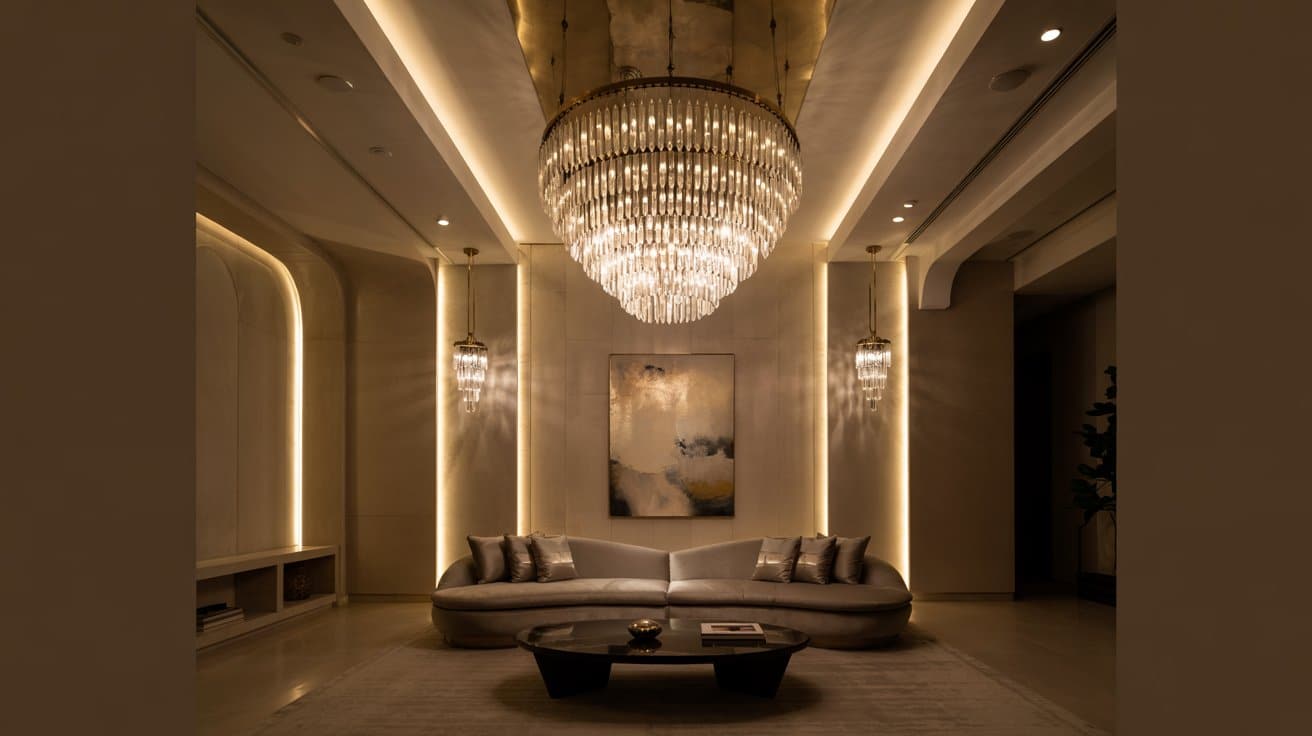
Lighting is both functional and decorative on high walls.
Chandeliers, pendant lights, and layered lighting fill vertical space and provide illumination. Hang fixtures 7 to 7.5 feet above the floor, scaling 30 to 36 inches for every 10 feet of ceiling.
Multiple light points create depth, while wall sconces and uplights highlight art or architectural features. Grouped pendants with varied heights add movement and energy to the space.
5. Tall Plants and Vertical Decor
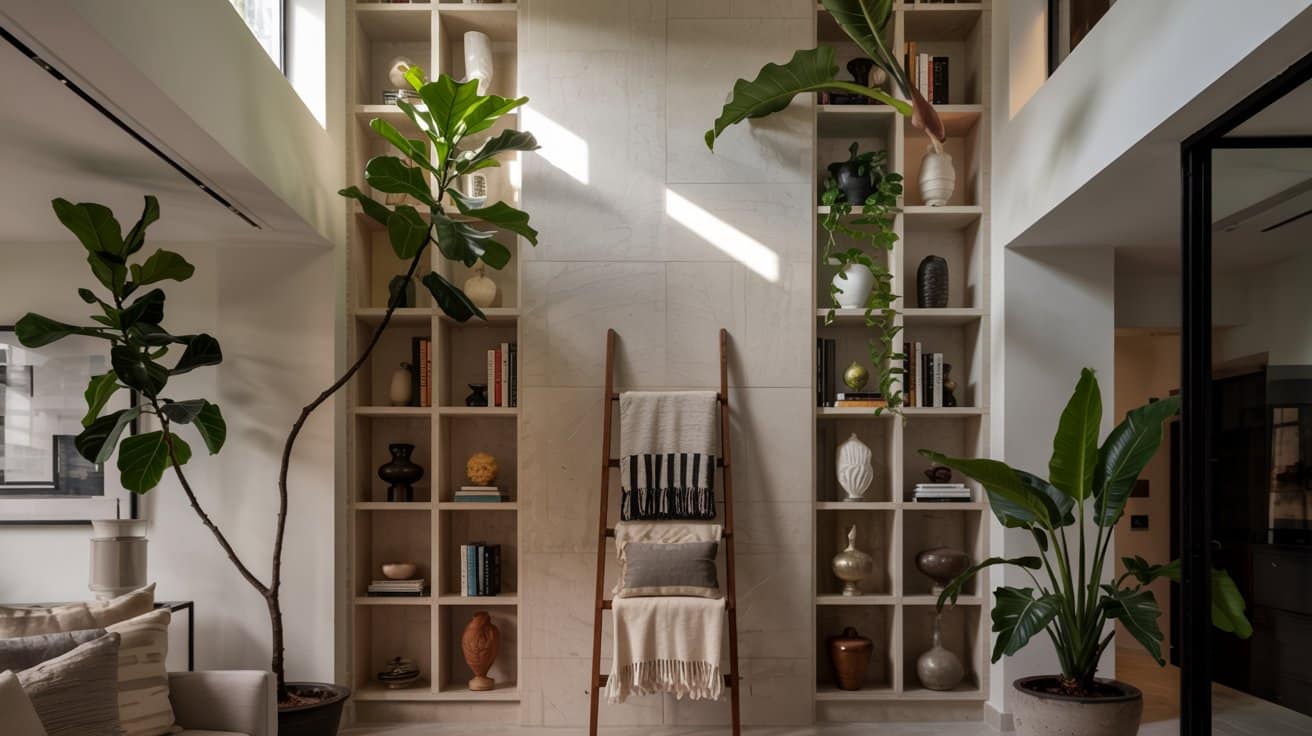
Large plants connect the floor and the ceiling, making tall walls feel intentional.
Fiddle-leaf figs, palms, and bird-of-paradise plants work well for high ceilings. Floor-to-ceiling shelves display books, plants, and decorative objects, while decorative ladders show textiles or art.
Sculptural pieces, such as tall vases or metal forms, add height without crowding the floor. Group elements in odd numbers for natural visual flow.
6. Bold Accent Walls and Feature Walls
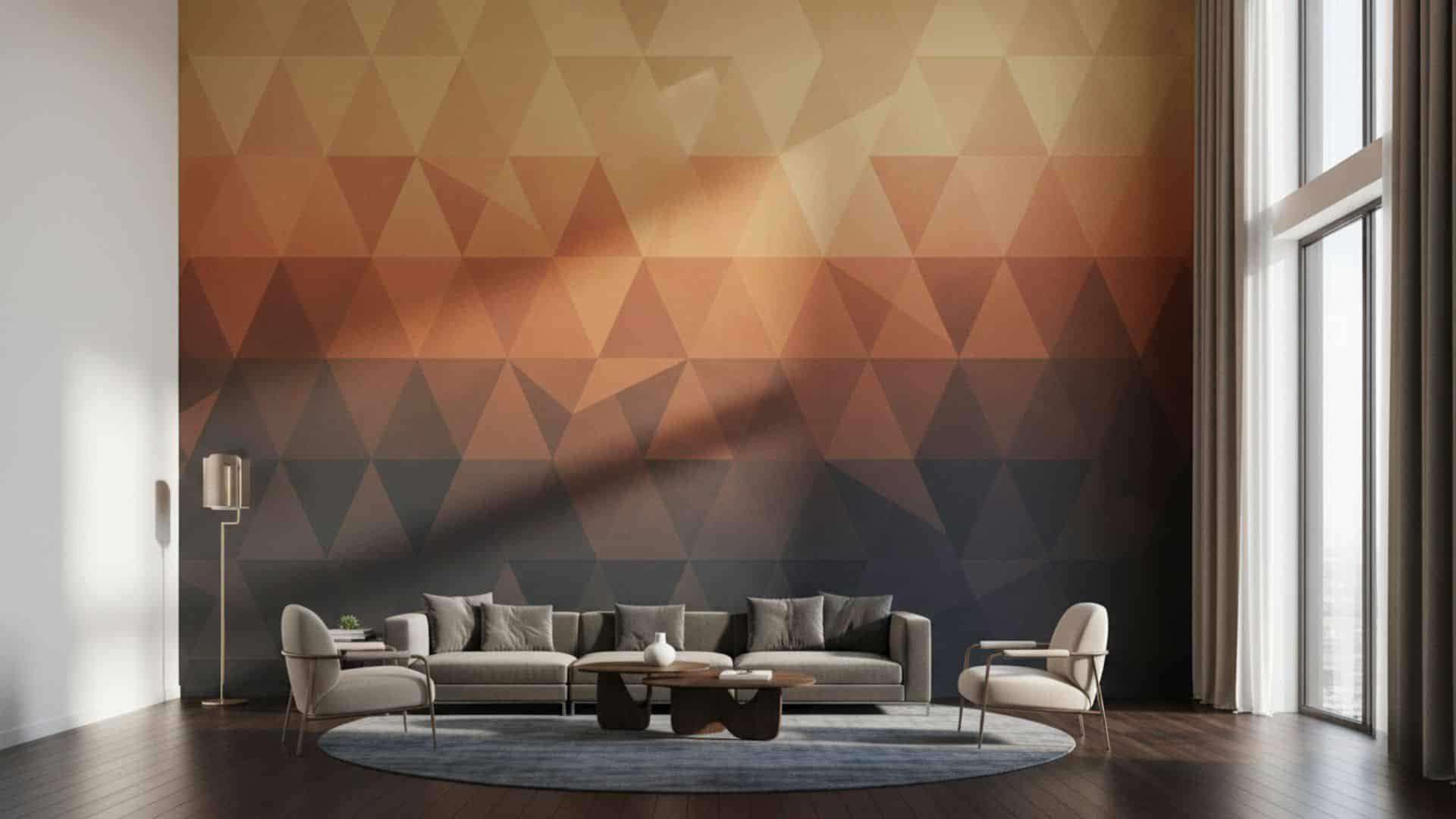
A bold wall changes how a room perceives height. Paint techniques like color drenching, two-tone walls, ombre gradients, or horizontal stripes can define the space.
Dark colors make tall rooms feel cozier, while large-scale wallpaper or patterns add impact.
Accent walls should hold their own against vertical space; timid designs tend to disappear. Consider matching undertones to furniture and flooring for cohesion.
7. Layered Wall Textures
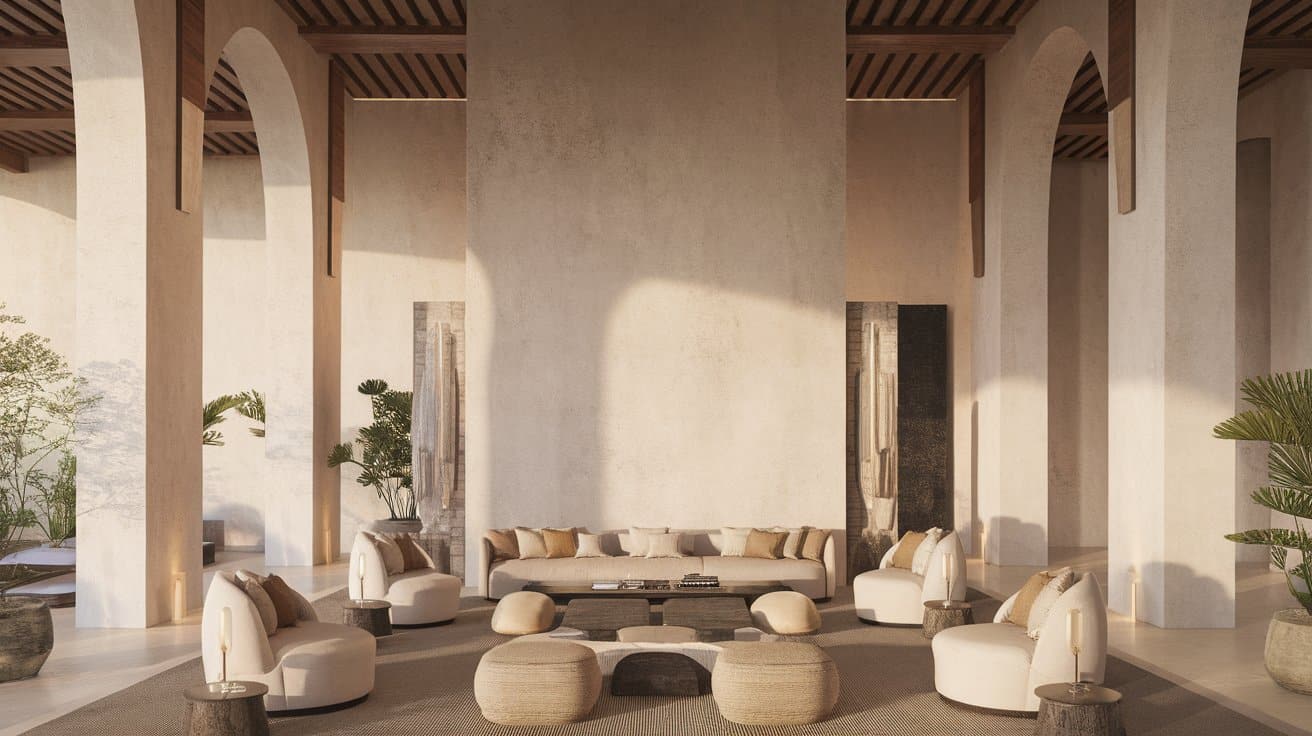
Adding physical texture to tall walls creates depth that paint alone cannot achieve. Different materials catch light at varying angles throughout the day. Texture options by style:
Modern spaces: Concrete panels, 3D wall panels, Smooth plaster
Traditional rooms: Grasscloth wallcovering, Raised plaster designs, Fabric wall covering
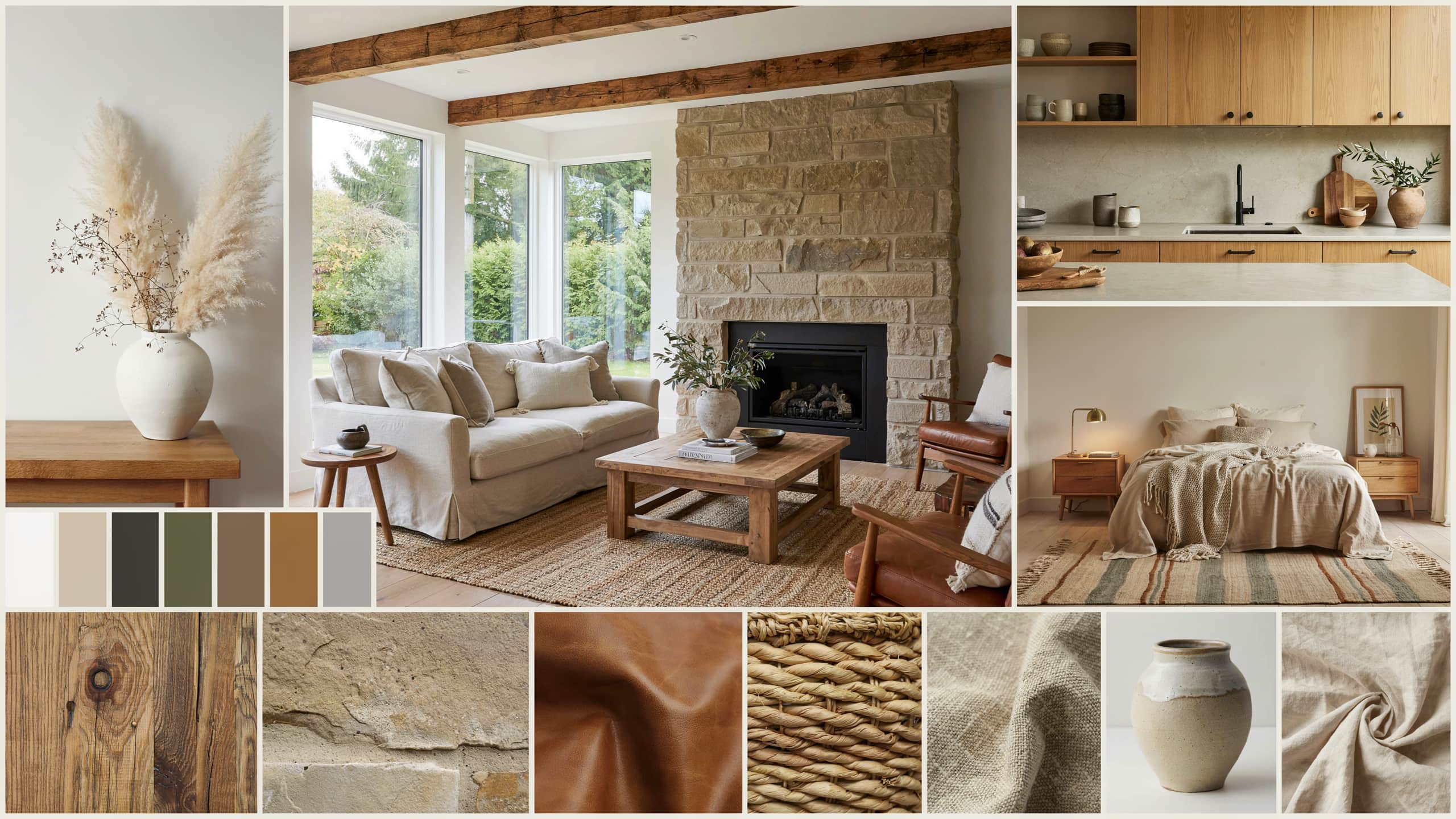
Rustic and transitional: Reclaimed wood planks, Stacked stone accent wall, Brick exposure or veneer
Textured walls work especially well behind seating areas. The added dimension creates a natural backdrop that makes furniture stand out.
8. Mirrors to Expand Space
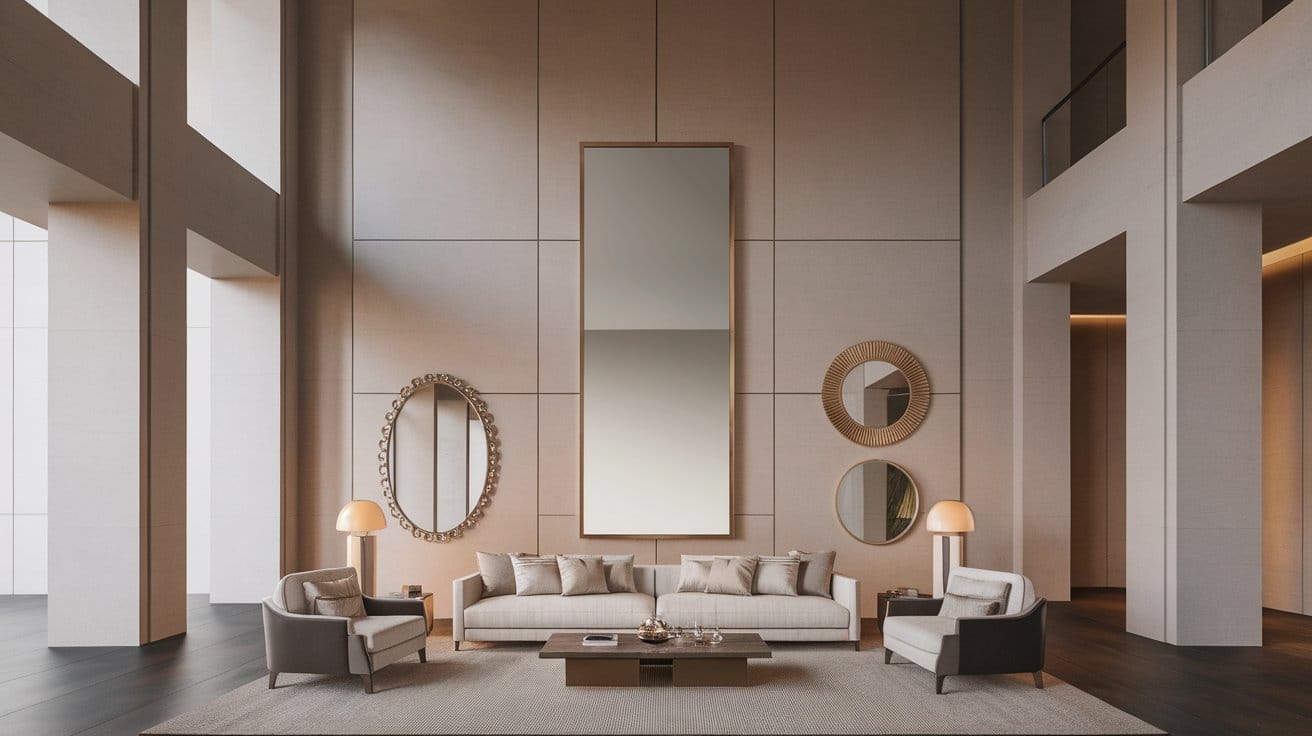
Mirrors reflect light and visually enlarge rooms with high ceilings.
Oversized floor mirrors or clusters of smaller mirrors work best. Place mirrors opposite windows or above furniture for added brightness.
Vertical mirrors emphasize height, while centering them at eye level balances the wall. Properly positioned mirrors create a sense of depth and proportion in tall rooms.
9. Incorporate Textiles
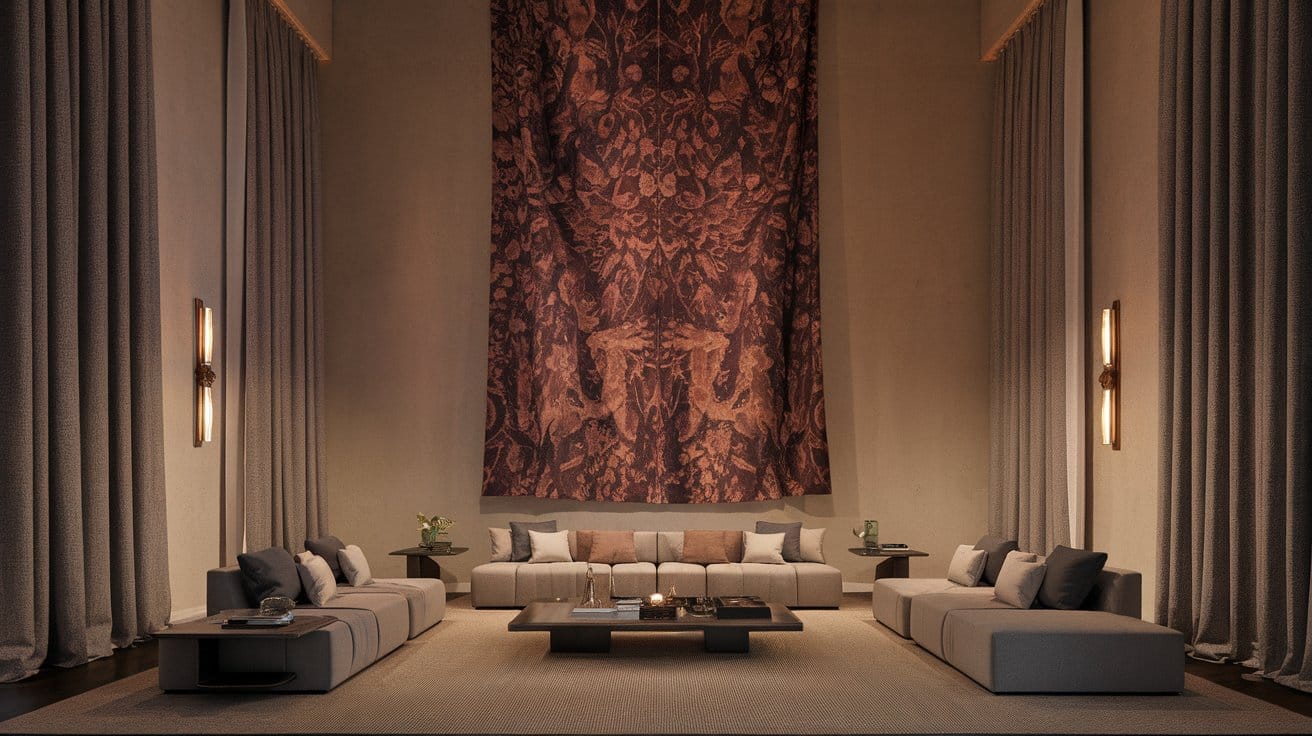
Large textiles soften hard surfaces and add warmth.
Options include wall tapestries, macramé, fabric panels, and floor-to-ceiling drapes. Hang pieces high enough (6–8 feet) to make a statement, and consider layering for depth.
Fabric introduces color, pattern, and texture that paint alone cannot achieve. Seasonal swaps of panels or drapes keep the room fresh and dynamic.
10. Layered Wall Decor for Balance
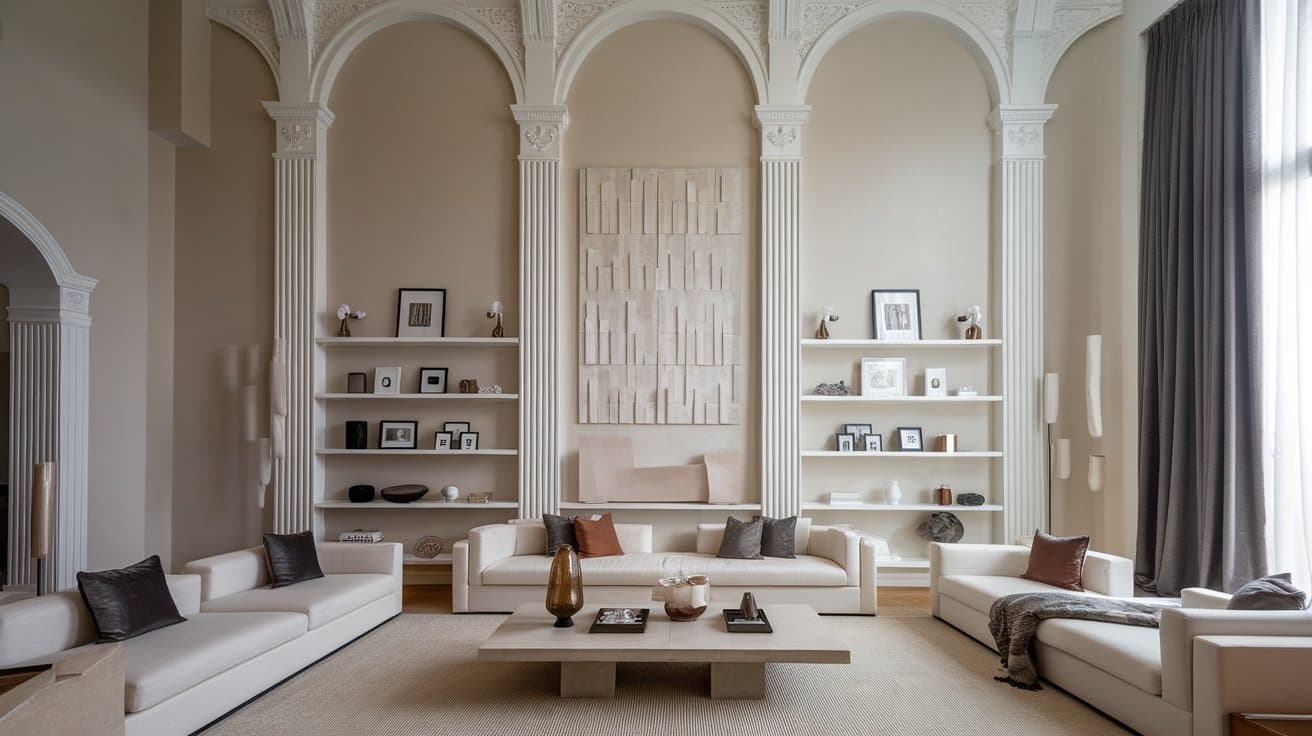
Combining different elements adds interest that single pieces cannot.
Start with a base like a mirror, artwork, or accent color, then add shelves, grouped frames, or small decor. Horizontal lines break up vertical space, while lighter items on top balance heavier pieces below.
Repeat 3–5 colors across elements to create cohesion. Layering creates a curated, intentional look that feels natural over time.
11. Create Visual Zones with Furniture
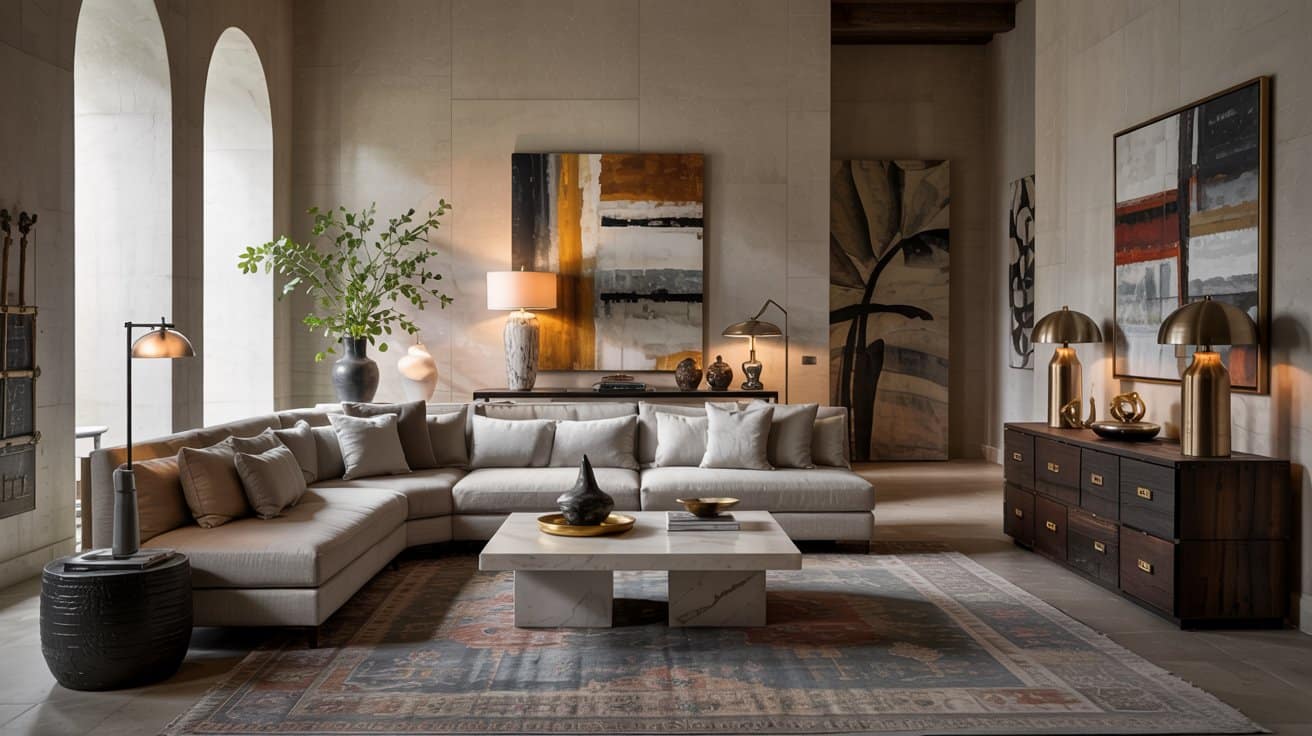
Furniture placement influences how walls are perceived and the room’s balance.
Anchor seating against tall walls, adding consoles or side tables for horizontal lines. Use large rugs to define areas and create visual grounding.
Divide open spaces with furniture backs or floor lamps to form distinct zones. Correctly scaled furniture turns tall ceilings into an asset rather than a challenge.
12. Make High Ceilings Feel Cozier
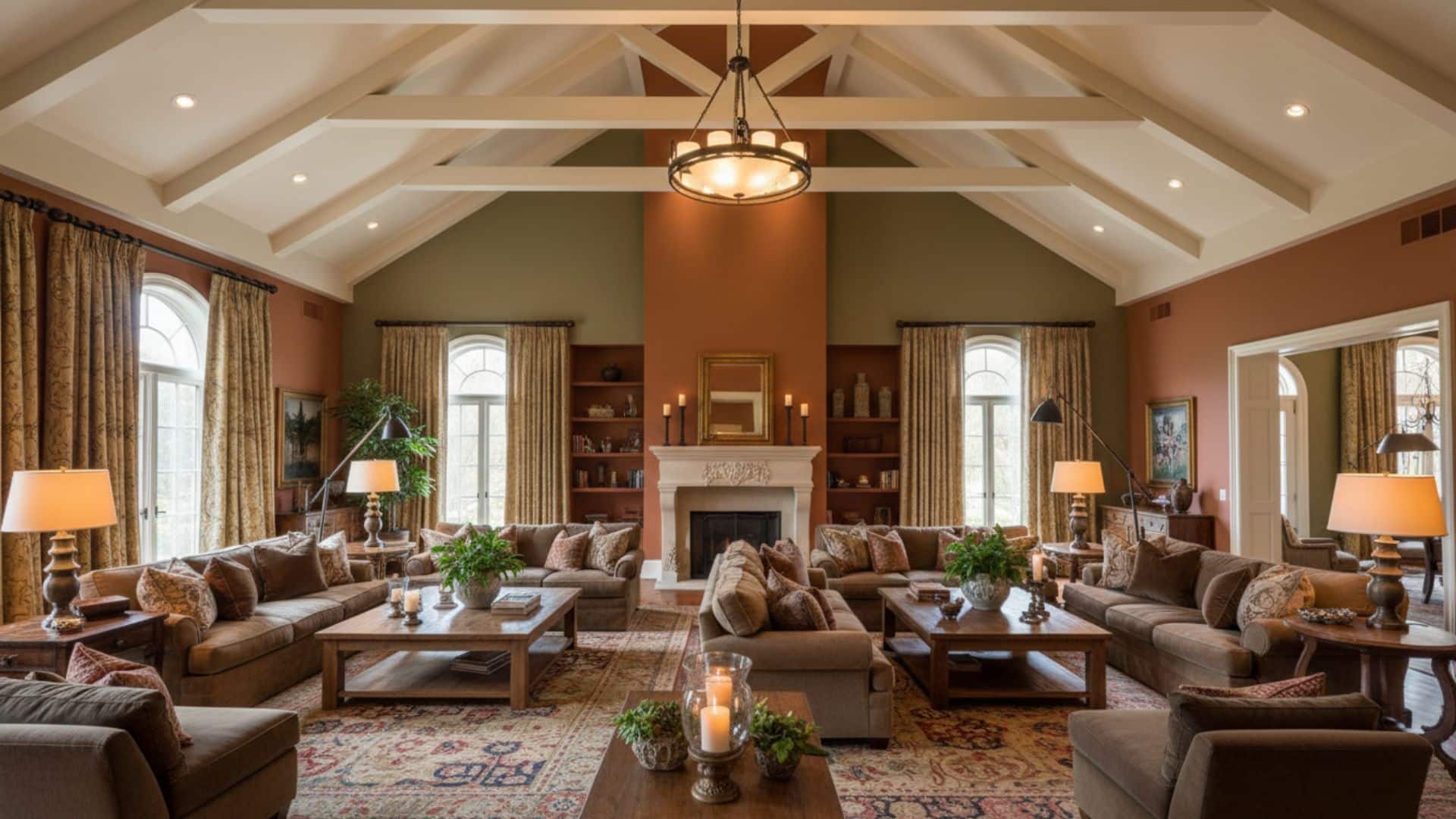
Intimacy can be added to tall rooms by lowering perceived height.
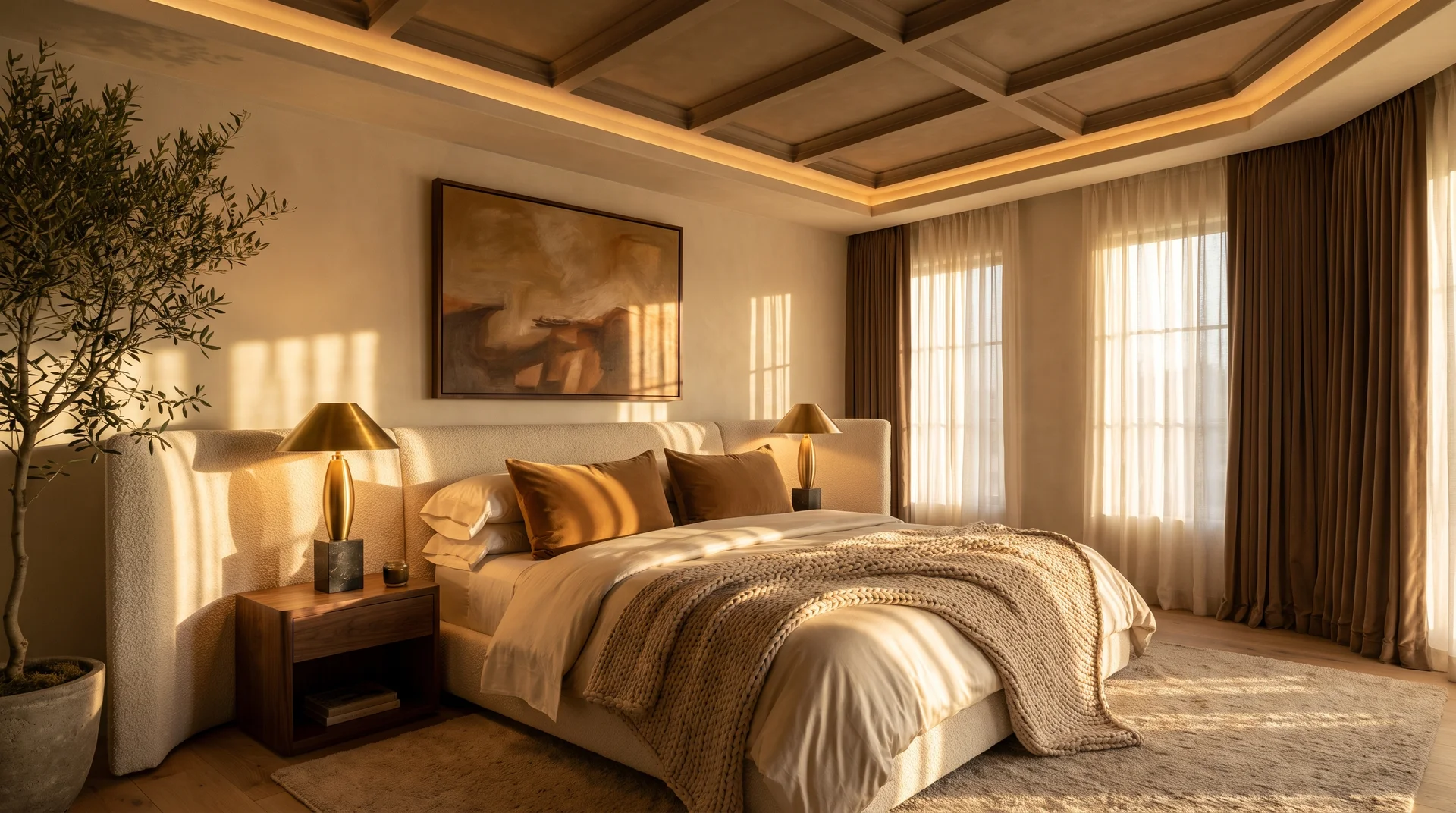
Darker ceilings, horizontal beams, and rich wall colors help. Layer lighting with lamps, dimmers, and candles instead of relying on harsh overheads.
Use abundant textiles: pillows, rugs, and drapes, and arrange furniture in cozy clusters. Natural materials such as wood, stone, and plants further soften large vertical spaces.
13. Floating Wall Gardens
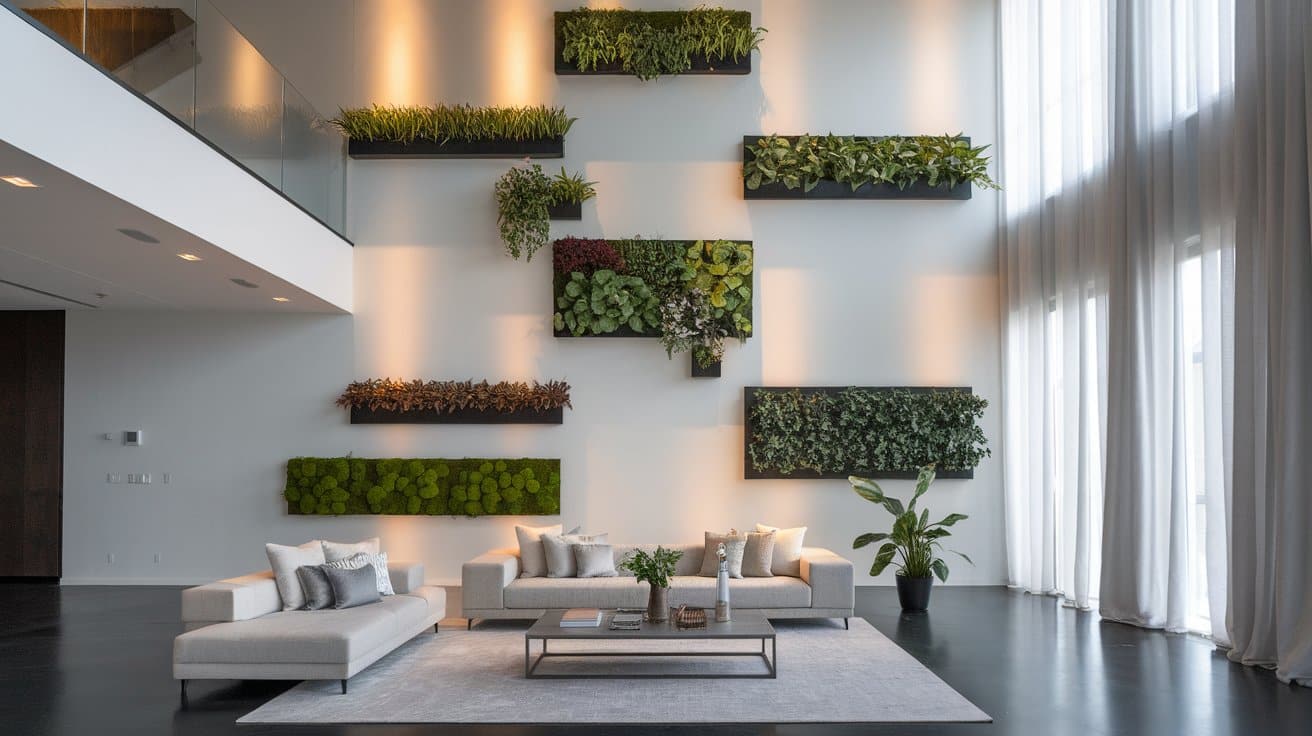
Vertical planters bring greenery and texture to tall walls.
Modular units, moss panels, pocket planters, or hydroponics provide structure and flexibility. Mix trailing and upright plants for dimension, and include flowering or herb varieties for variety.
Proper placement ensures access for care and watering. Floating gardens add a living, organic element that evolves with the seasons.
14. Hanging Art Installations
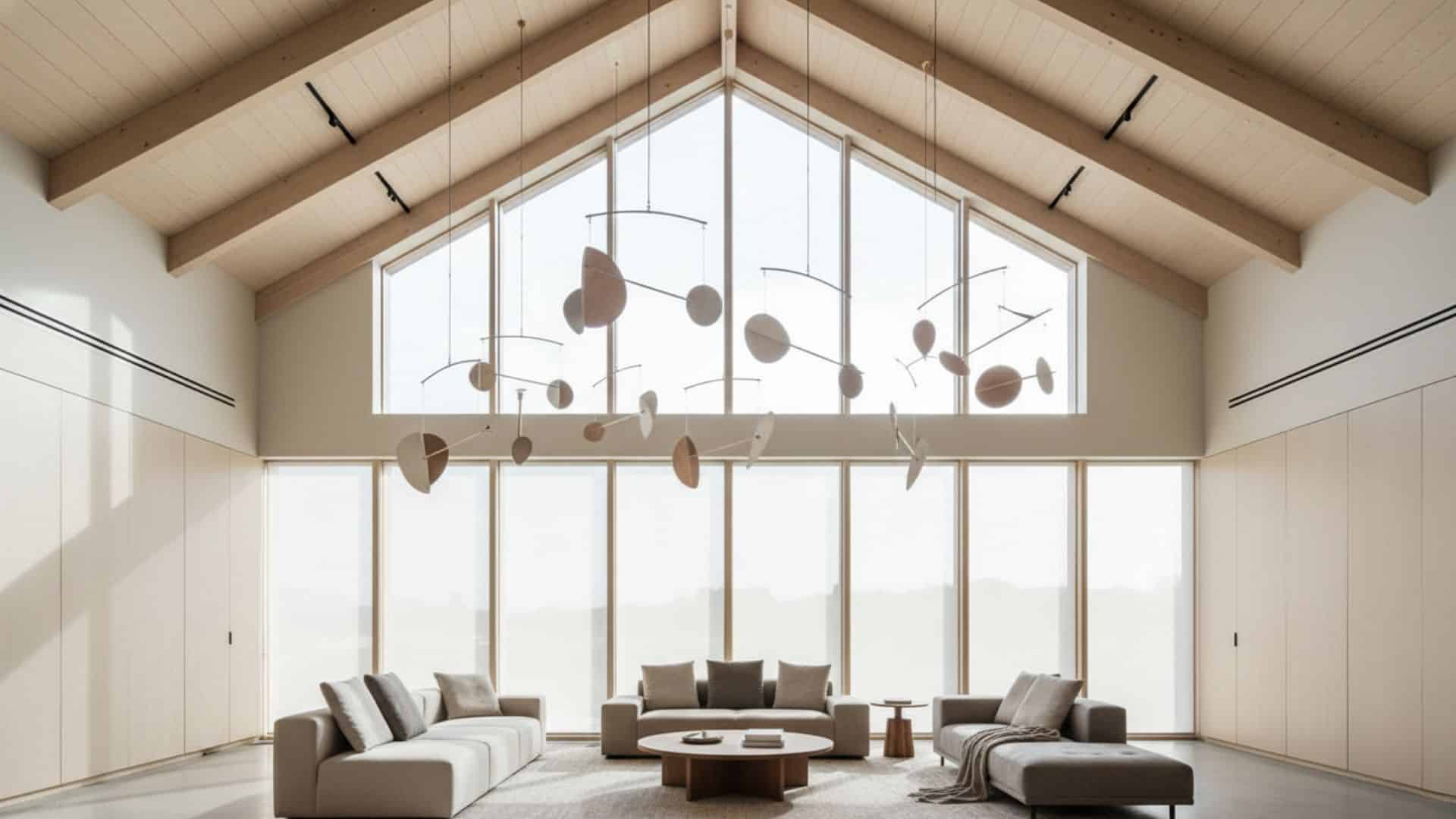
Suspended pieces add motion and depth. Options include mobiles, kinetic sculptures, geometric forms, or fabric installations.
Hang over seating areas or tables, stagger heights, and position near windows for natural movement. Choose materials like metal, wood, glass, or acrylic to suit the style.
Proper mounting and spacing keep tall walls visually engaging without cluttering the floor.
15. Ceiling Murals and Painted Focal Ceilings
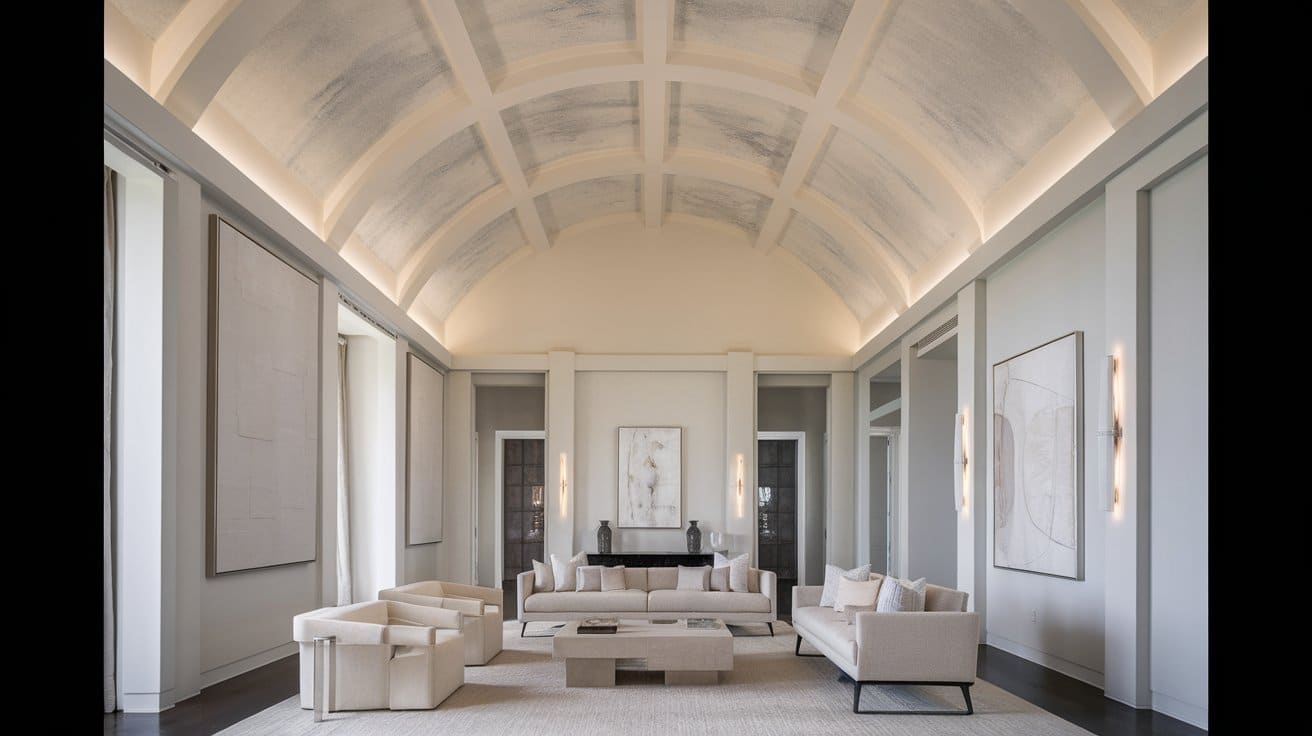
Ceilings can act as a fifth wall with murals, patterns, metallic finishes, or ombre effects.
Dark ceilings add intimacy, while light tones maintain airiness. Patterns like clouds, stars, florals, or stripes enhance design. Bold or coordinated colors make ceilings feel intentional.
Ceiling treatments complement wall decor and complete the room’s vertical aesthetic.
16. Integrated Wall Audio and Visual Features
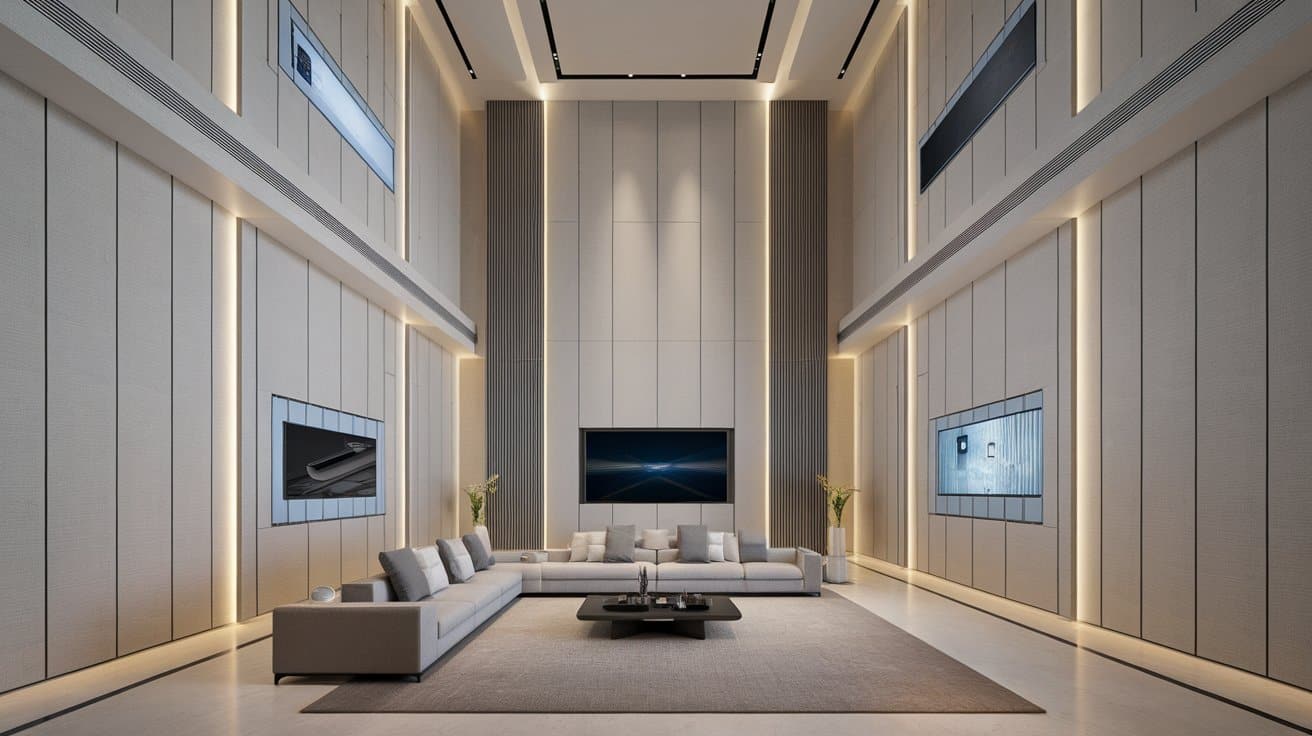
Technology can become decor when carefully incorporated.
Hidden speakers, motorized screens, LED panels, or digital frames blend function with design. Frame or conceal devices with panels, and coordinate finishes with room style.
Plan electrical and mounting during design. Integrated tech creates modern walls that are both functional and stylish.
17. Architectural Shadow Play
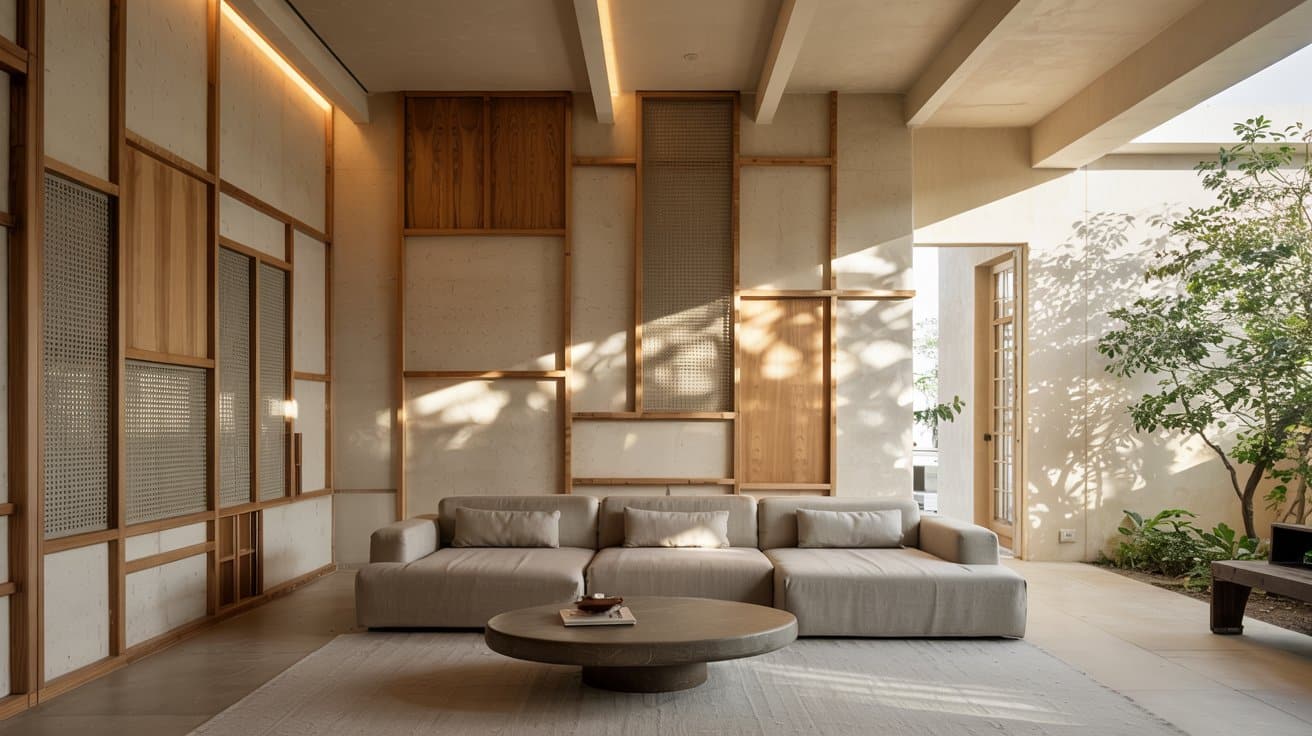
Layered panels, slatted wood, perforated screens, or 3D reliefs cast shifting shadows across tall walls.
Wood, metal, or acrylic surfaces provide different textures. Lighting angles and natural light change patterns throughout the day.
Horizontal lines can lower perceived height, vertical lines emphasize it, and geometric or organic shapes add visual interest. Shadows create depth without adding color.
18. Statement Wall Clocks and Functional Art
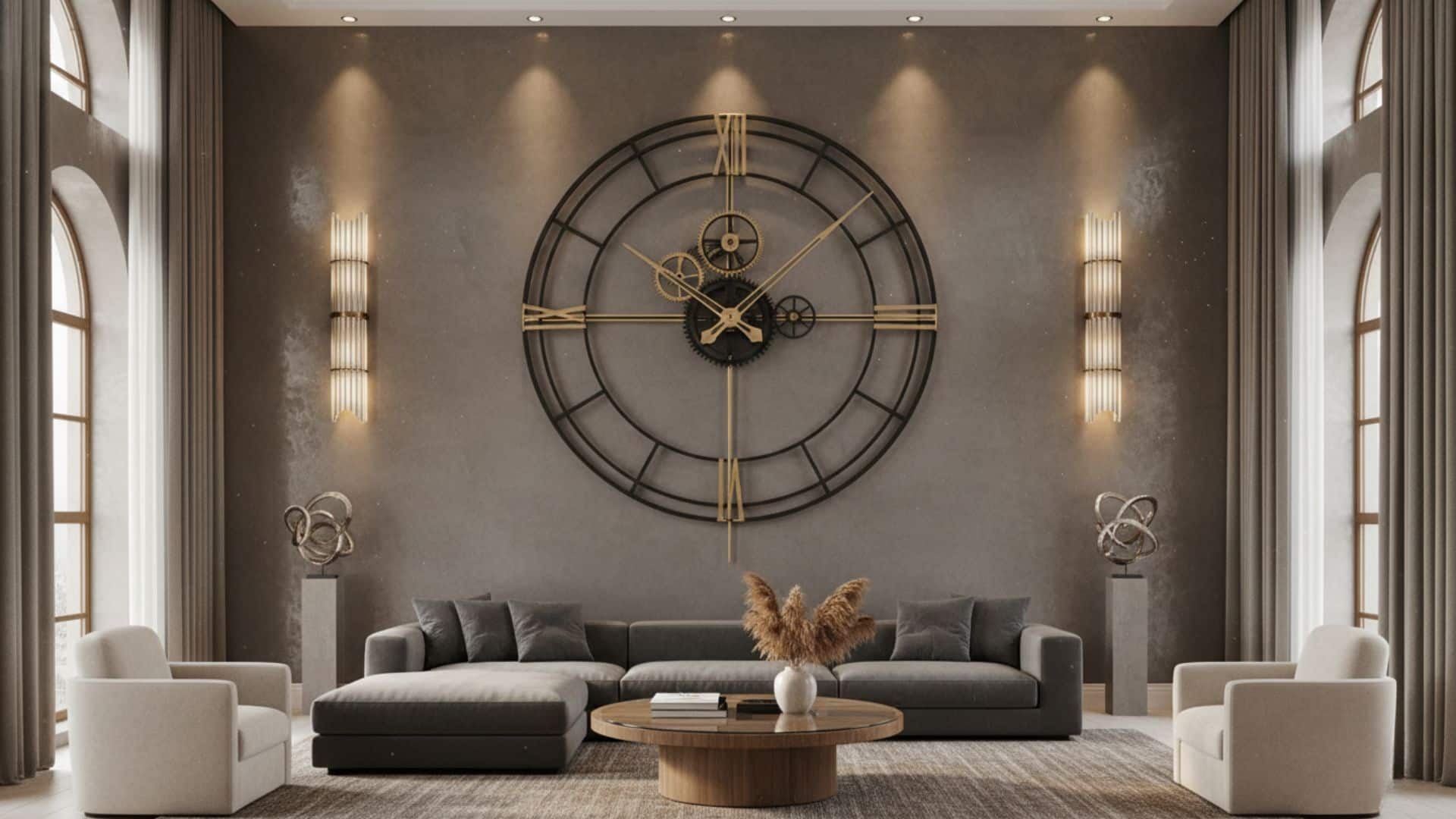
Oversized clocks or kinetic art combine utility with decor.
Styles include modern, skeleton, pendulum, or digital designs. Centerpieces 60 to 72 inches from the floor, positioned above furniture, and allow space around them.
Functional art, like rotating mechanisms or weather displays, adds interactive appeal. Pair with smaller items or sconces for balance and focus on tall walls.
The most successful cozy changes combine several of these techniques. Start with horizontal visual breaks, then add warmth through color and texture.
How to Decorate Your Living Room Walls with High Ceilings?
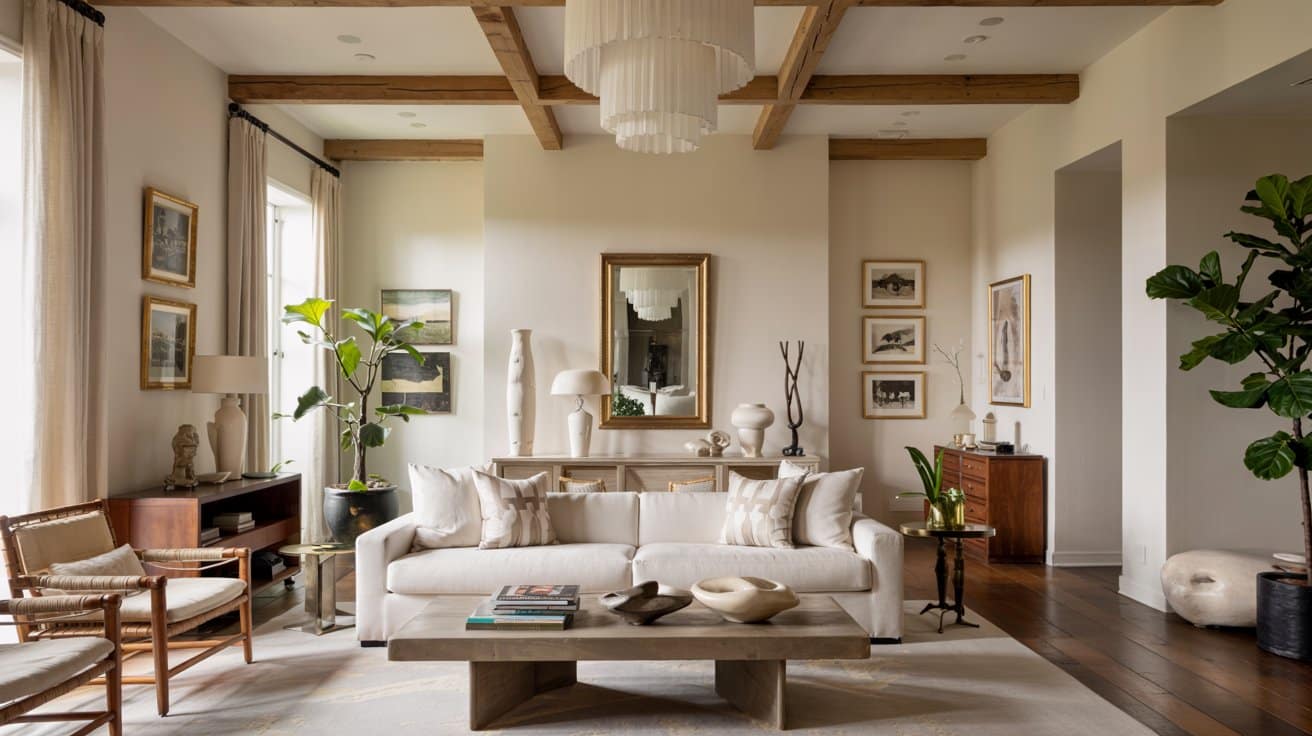
Before exploring specific living room high ceiling wall decor ideas, learning core design principles helps you make better choices.
1. Start With Proportions
Scale matters more than anything when working with tall walls.
Proportion guidelines:
- Choose furniture 36+ inches tall for proper scale
- Select art pieces at least 60 to 80 inches in dimension
- Use oversized accessories (vases, sculptures, plants)
- Avoid small decorative items that disappear visually
Match every element to your ceiling height. In 12+ foot spaces, standard 8-foot items look undersized.
2. Draw the Eye Up or Anchor It Down
Decide whether to emphasize or minimize height based on your comfort goals.
To highlight height, use vertical art, floor-to-ceiling shelves, ceiling murals, and vertical textures.
To anchor the space, add horizontal trim, darker upper walls or ceilings, intimate furniture arrangements, and layered lighting.
Both approaches work; choose based on whether you want drama or coziness.
3. Treat Ceiling and Wall as One Design Zone
Stop thinking of ceilings and walls separately. They form a continuous vertical surface in the living room, with high-ceiling wall decor.
For a unified look, paint them the same color, extend wallpaper or texture, use connecting beams or moldings, and coordinate fixtures with wall decor.
For contrast, try dark ceilings with light walls, ceiling murals with neutral walls, or textured walls with smooth ceilings.
4. Layer Light, Color, and Texture
Depth comes from layering.
Lighting: combine ambient, task, and accent sources. Color: base wall, accent wall, and decor in 3 to 5 coordinating hues. Texture: mix smooth paint, textured panels, soft textiles, and hard materials like wood or metal.
Layering creates richness and visual interest, making tall walls feel balanced and engaging.
5. Pick a Focal Wall and Maintain Balance
Choose one dramatic wall: behind seating, with architectural features, or visible from the entrance.
Keep other walls simple to avoid competing with them.
Distribute visual weight evenly, vary heights and sizes, and step back frequently. Balanced walls with a strong focal point feel cohesive and comfortable.
Everything should feel like it belongs to the same design story. Now, let’s see various ideas that bring these decor tips to life.
Tips for Designing Living Rooms with High Ceilings
Before jumping to the finishing touches, here are a few quick tips to help you design and decorate living rooms with high ceilings effectively.
- Use Oversized Art or Lighting: Large-scale pieces help visually balance tall walls and anchor the space.
- Layer Lighting at Different Heights: Mix chandeliers, sconces, and floor lamps to create warmth and depth.
- Add Horizontal Lines: Trim, molding, or long furniture pieces help lower the visual height and add balance.
- Incorporate Texture and Warm Materials: Wood, fabric, and natural finishes make tall rooms feel more inviting.
- Highlight Architectural Features: Show off beams, arches, or windows to turn height into a design advantage.
- Create Vertical Flow with Plants or Drapes: Tall greenery and floor-to-ceiling curtains draw the eye upward in a graceful way.
Conclusion
Living room high ceiling wall decor doesn’t have to feel overwhelming.
The strategies covered here, from large-scale art and gallery walls to mirrors, plants, and furniture placement, give you multiple ways to fill vertical space beautifully.
Mix techniques that match your style: combine statement lighting with textured walls, pair bold accent colors with horizontal trim, or layer artwork with floating shelves.
The key is creating visual balance that makes tall walls feel intentional rather than empty. Start with one focal wall and build from there.
Take references from these ideas and turn those soaring walls into your home’s most striking feature.