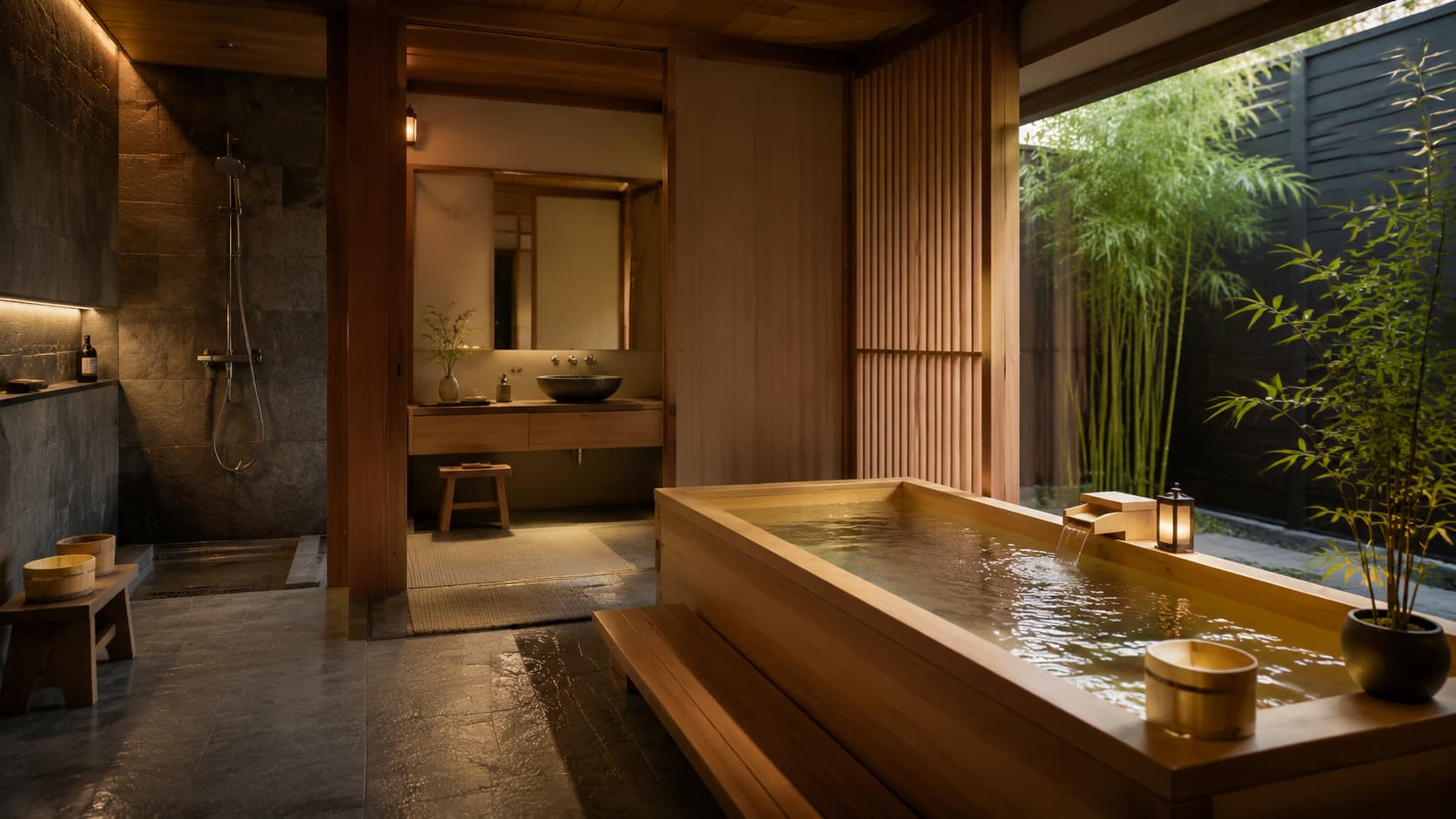
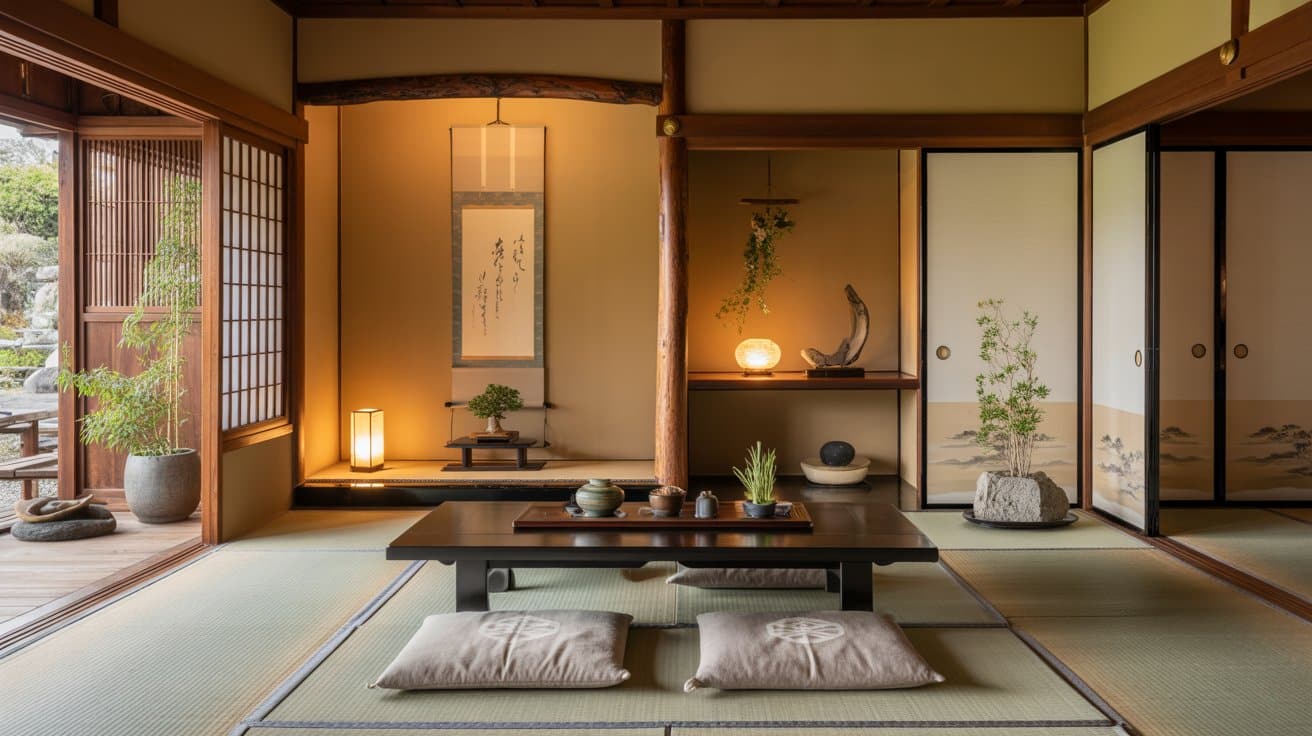
Want a space that feels calm, organized, and deeply relaxing?
A Japanese room offers exactly that, minus the clutter and chaos of typical modern homes.
These minimalist spaces, known as washitsu, have served families for centuries through their brilliant use of tatami mats, sliding shoji doors, and multipurpose layouts.
What makes them special isn’t just the aesthetic. Japanese-style rooms adapt to your needs throughout the day: the breakfast nook becomes a workspace, then changes into a sleeping area at night.
This guide covers everything: from traditional elements and modern updates to decor ideas and practical setup tips to help you create your own Japanese room.
History of the Japanese Room
Japanese rooms, or washitsu, evolved over centuries in response to cultural, climatic, resource, and practical needs.
Emerging during the Muromachi period (1336 to 1573), tatami mats became a symbol of status in noble homes, alongside shoin-style architecture, tea rooms, and tokonoma alcoves.
Western influence appeared in the Meiji period (1868 to 1912), creating hybrid spaces while preserving traditional rooms.
Modern washitsu blends tradition with contemporary needs through synthetic tatami, glass panels, underfloor heating, and hybrid furniture while retaining natural materials, neutral palettes, and multipurpose functionality.
Today, these rooms serve as guest spaces, meditation areas, or special gathering rooms, reflecting both enduring cultural values and growing global influence through minimalism and appreciation for craftsmanship.
Core Elements of a Traditional Japanese Room
A traditional Japanese room, or washitsu, is defined by a few fundamental features. These elements work together to create a space that feels calm, functional, and connected to nature.
1. Tatami Mats: The Foundation of Japanese Rooms
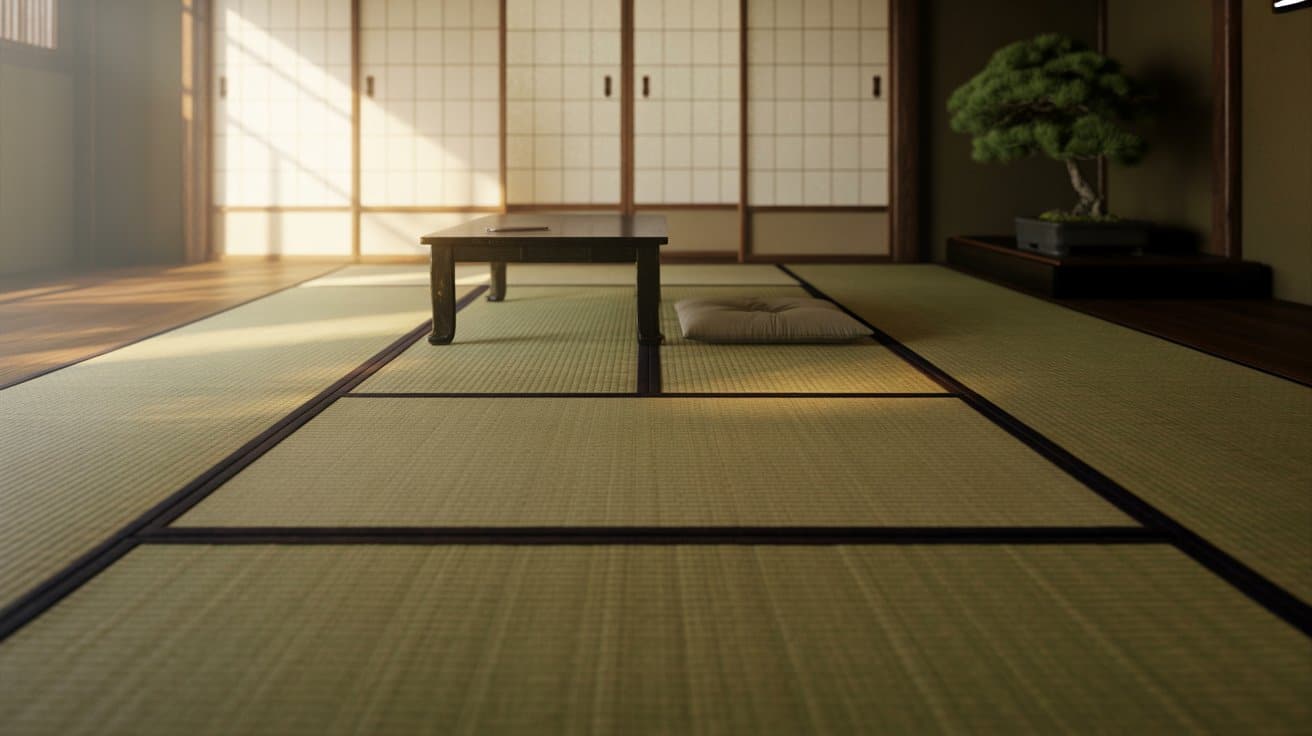
Tatami mats define the floor layout in most traditional spaces. These woven rush mats measure about 3 feet by 6 feet and create a soft, natural surface.
Key characteristics:
- Natural rush grass surface with rice straw core
- Standard thickness of about 2 inches
- Pleasant, earthy scent when new
- Requires regular cleaning and occasional replacement
2. Sliding Doors: Shoji and Fusuma
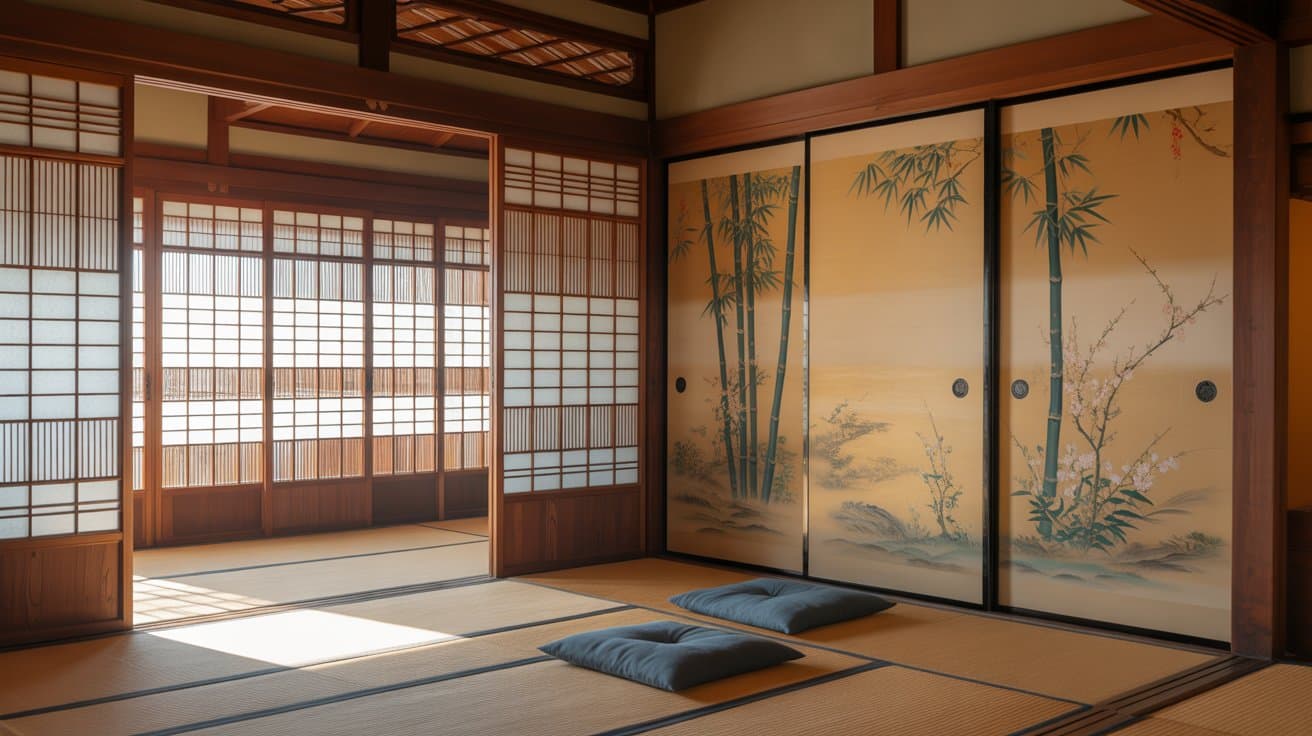
Sliding panels replace traditional hinged doors. Two main types serve different purposes.
Shoji screens:
- Wooden frames with translucent paper
- Filter natural light softly into rooms
- Create privacy while maintaining brightness
- Easy to repair and refresh
Fusuma panels:
- Opaque paper or fabric over wooden frames
- Often features painted designs or calligraphy
- Divide larger spaces into smaller areas
- Some include beautiful landscape artwork
3. Tokonoma Alcove: The Display Space
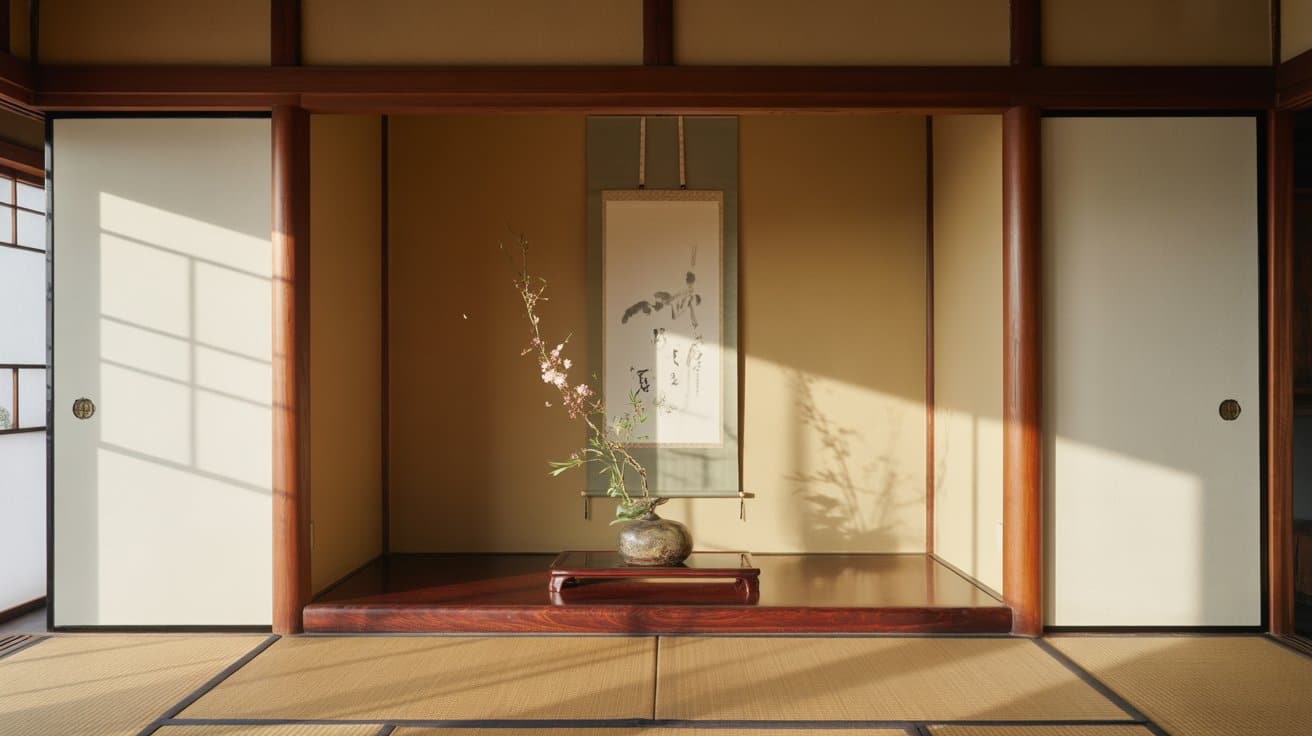
The tokonoma is a raised alcove built into one wall. This recessed area serves as the room’s focal point.
Traditional uses include:
- Hanging scrolls with seasonal artwork or calligraphy
- Small flower arrangements (ikebana)
- Treasured objects or pottery
- Items that reflect the current season
4. Low Furniture and Floor Seating
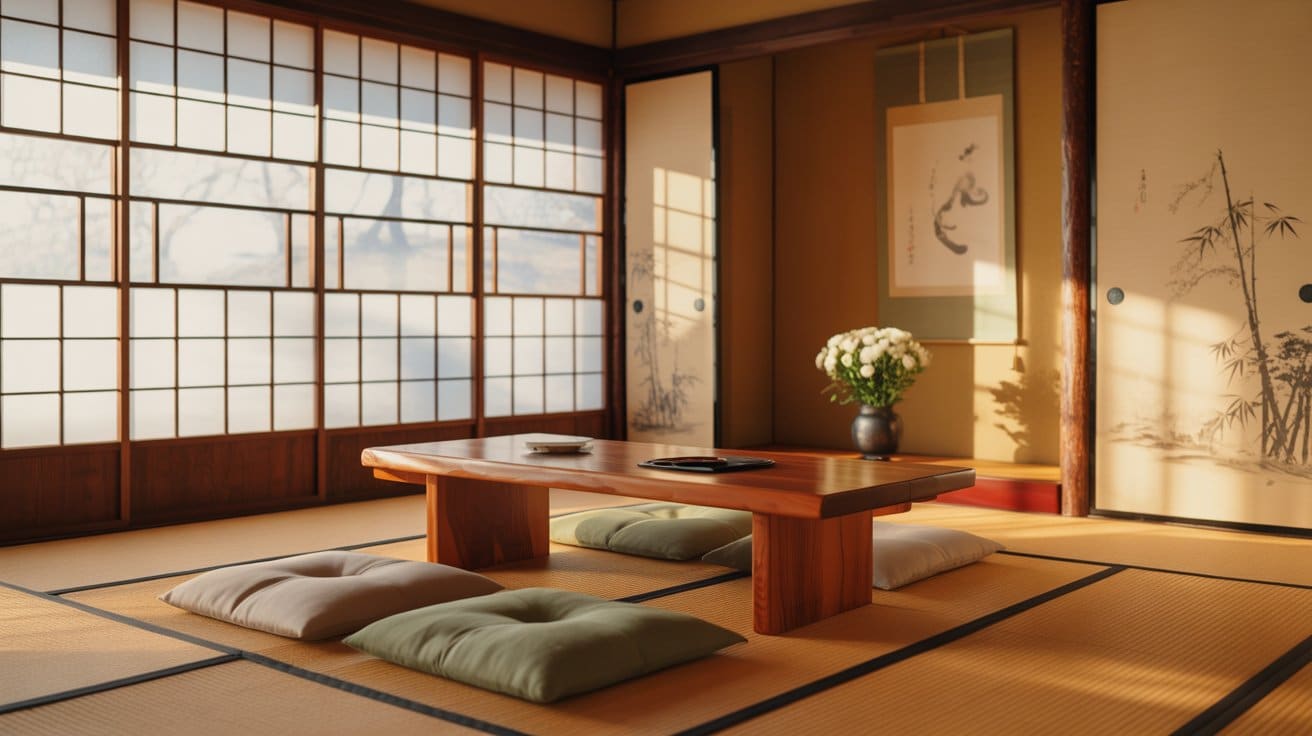
Traditional Japanese rooms keep furniture close to the ground. This creates visual spaciousness and encourages floor-level living.
Essential furniture pieces:
- Futon bedding:
- Chabudai (low tables)
- Zabuton (floor cushions)
- Zaisu (floor chairs)
Once the core elements are in place, the character of your Japanese room comes to life through carefully chosen decor and accessories that complement its simplicity and harmony.
Japanese Room Decor and Accessories
Decorative elements in a Japanese room stay minimal but meaningful. Each item serves a purpose or reflects seasonal beauty.
1. Wall Decor
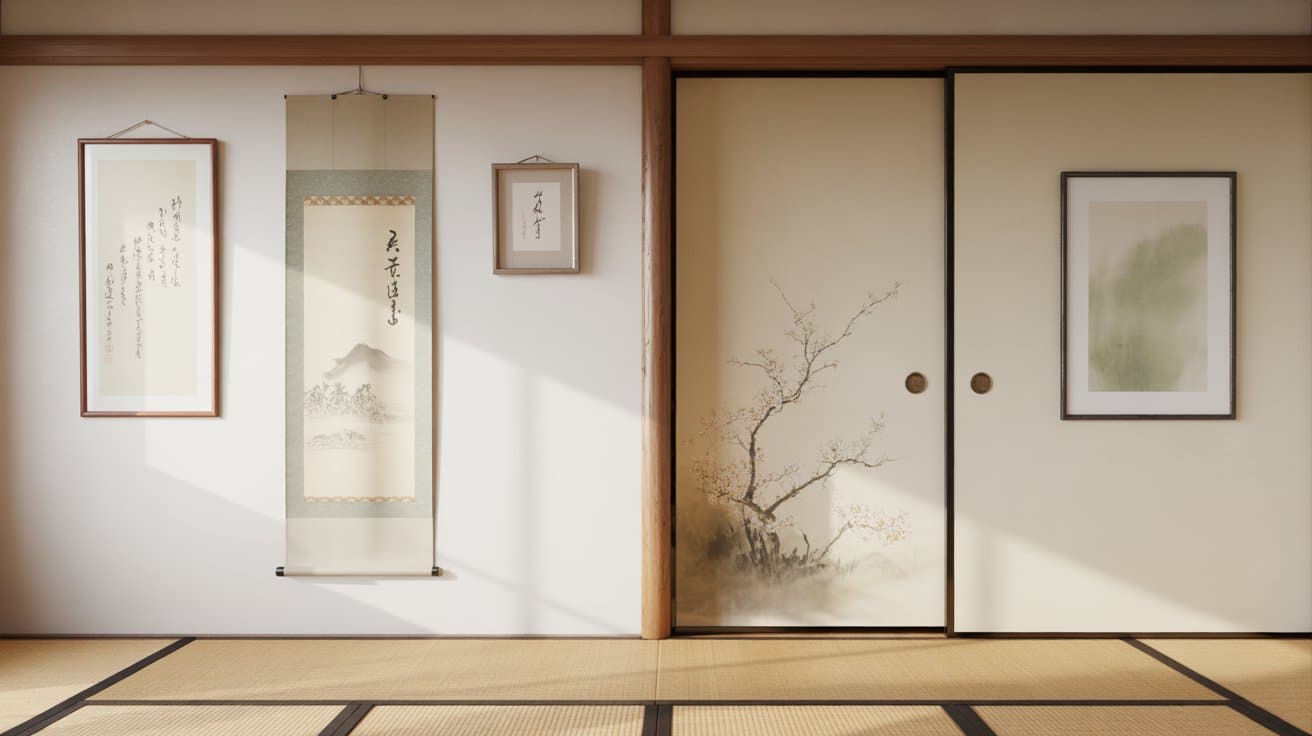
Walls in Japanese rooms remain mostly bare. This makes each decorative choice significant. Include:
- Hanging scrolls (kakemono)
- Calligraphy
- Art prints
- Decorative screens (byobu)
2. Indoor Plants
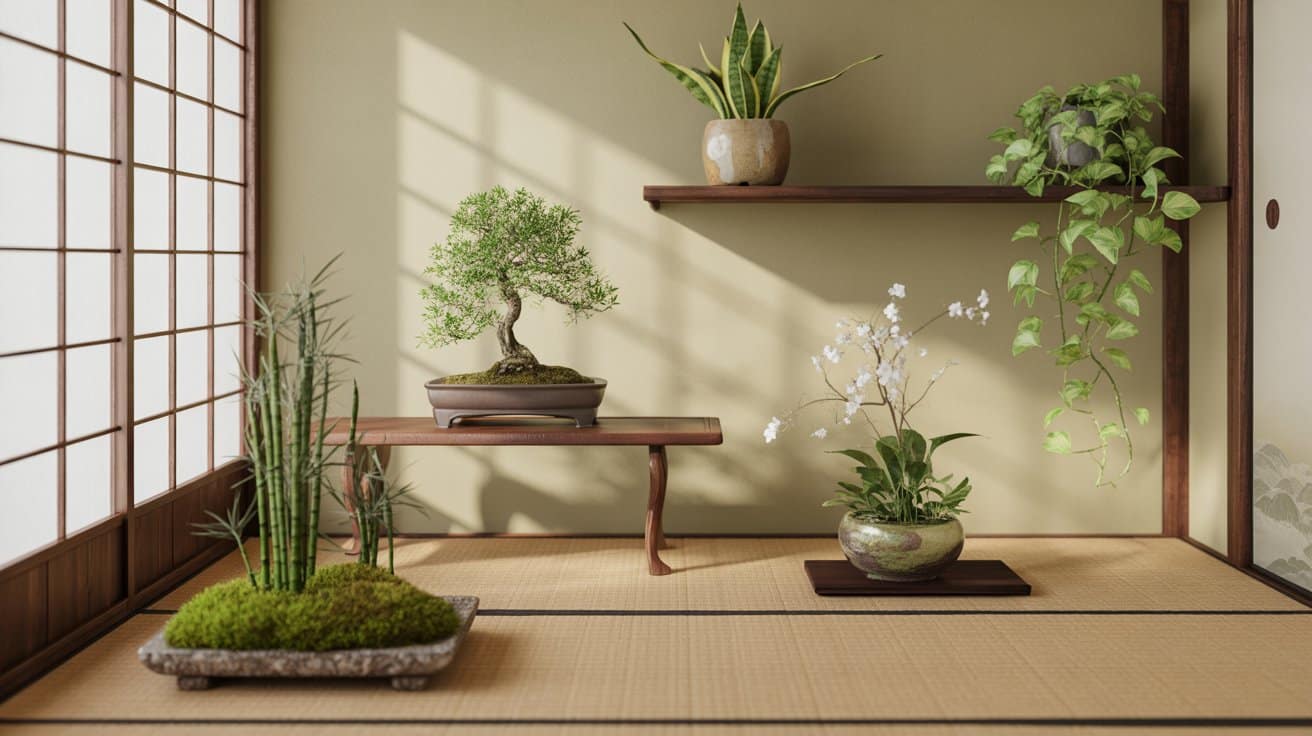
Plants connect Japanese rooms to the natural world. Selection and placement follow specific principles.
Traditional plant choices:
- Bonsai trees
- Bamboo
- Moss gardens
- Seasonal flowers (ikebana)
- Modern alternatives: Snake plants, Peace lilies, Pothos vines, ZZ plants
Container choices:
- Ceramic in neutral colors
- Simple glazed pottery
- Natural wood or bamboo holders
- Stone or concrete planters
3. Decorative Accessories
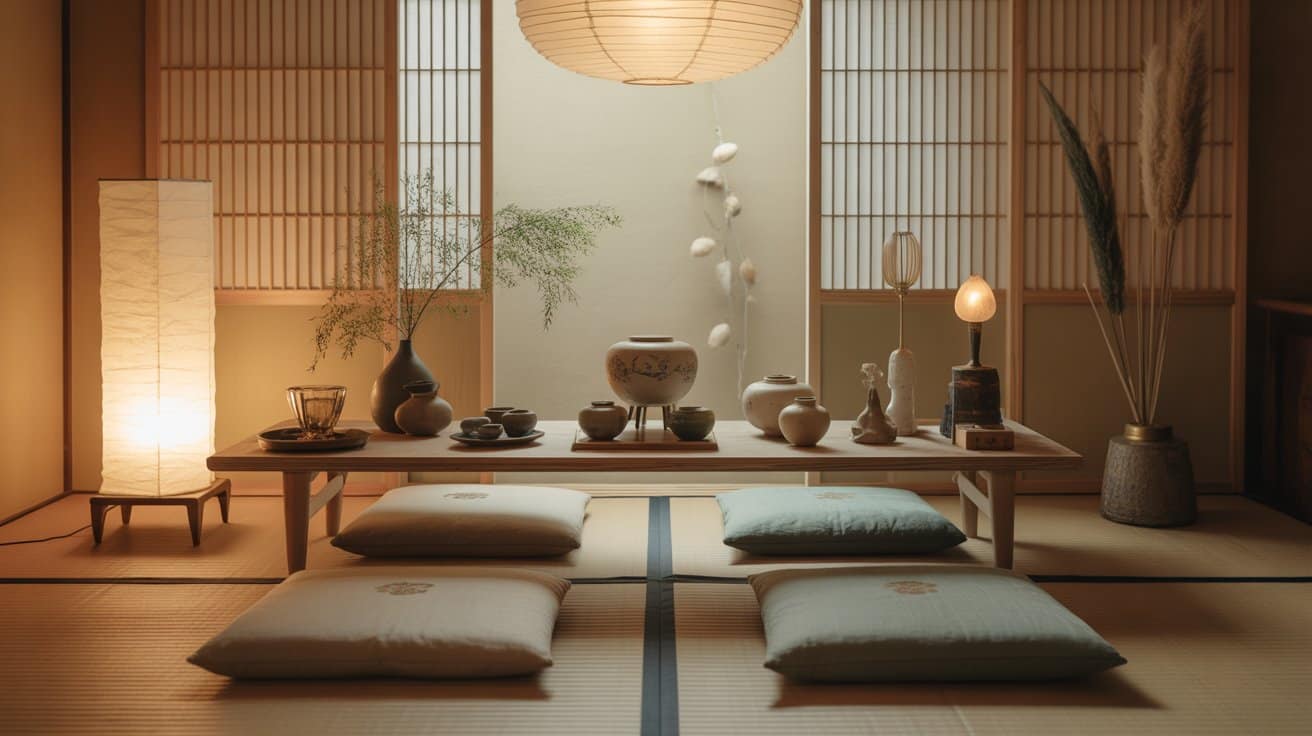
Accessories add personality while respecting minimalist principles.
- Lighting accessories: Paper lanterns, Oil lamps, Wooden lamp stands, Natural fiber lampshades
- Ceramics and pottery: Tea sets for display or use, Sake vessels, Decorative bowls
- Cushions and textiles: Zabuton in solid colors, Cotton or linen covers, Natural fiber patterns
- Natural objects: River stones, Driftwood pieces, Pine cones, Dried flowers or grasses
- Small decorative items: Incense holders, Small bells, Fans, Traditional boxes or trays
Pro tip: Invest in a few high-quality textile pieces rather than many cheap ones. Well-made items last longer and feel better in your Japanese room.
With the foundation set, these 11 Japanese-style room ideas offer inspiration to bring style, functionality, and serenity to your space.
11 Japanese-Style Room Ideas for Inspiration
These design ideas show different ways to create Japanese-style spaces. Mix and match elements to fit your home and lifestyle.
1. Classic Tatami Room
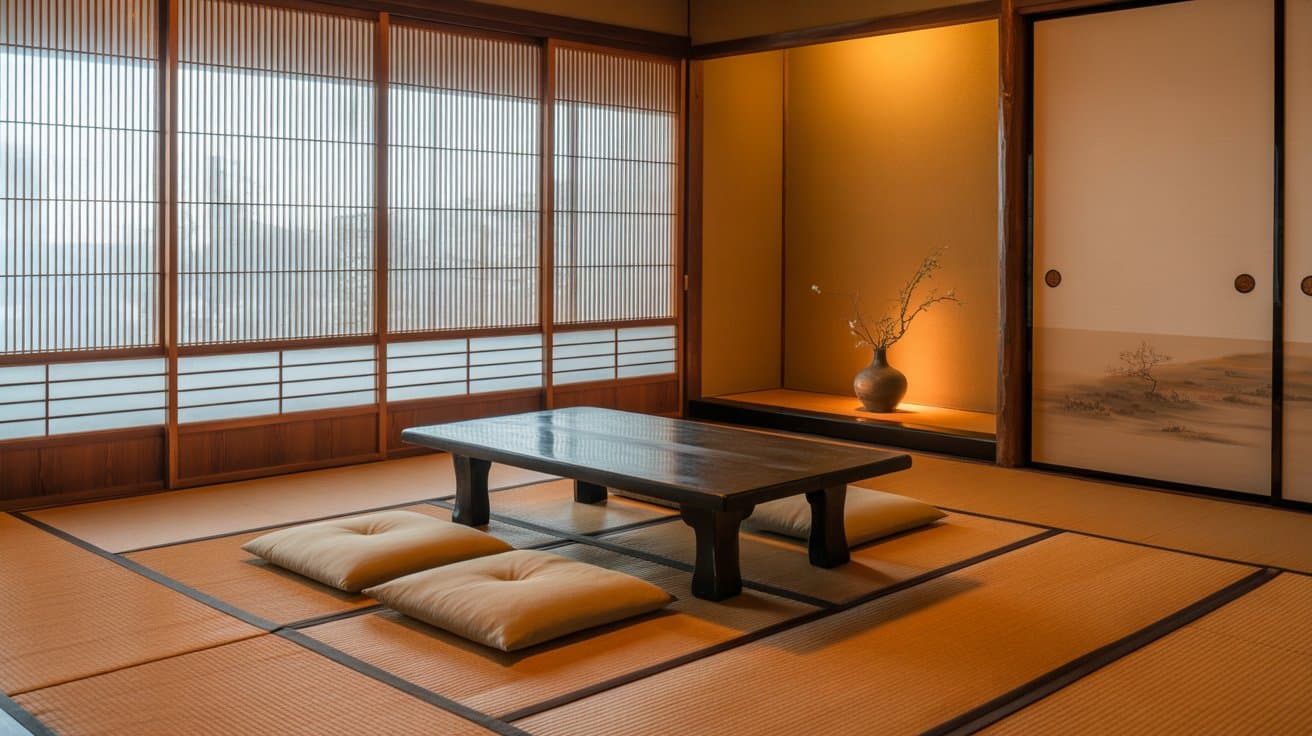
The most traditional approach is to use full tatami flooring throughout the space.
Essential elements:
- Complete tatami mat coverage
- Low table (chabudai) at the center
- Floor cushions (zabuton) for seating
- Tokonoma alcove or display area
- Sliding shoji doors
- Minimal furniture
2. Ryokan-Inspired Guest Room
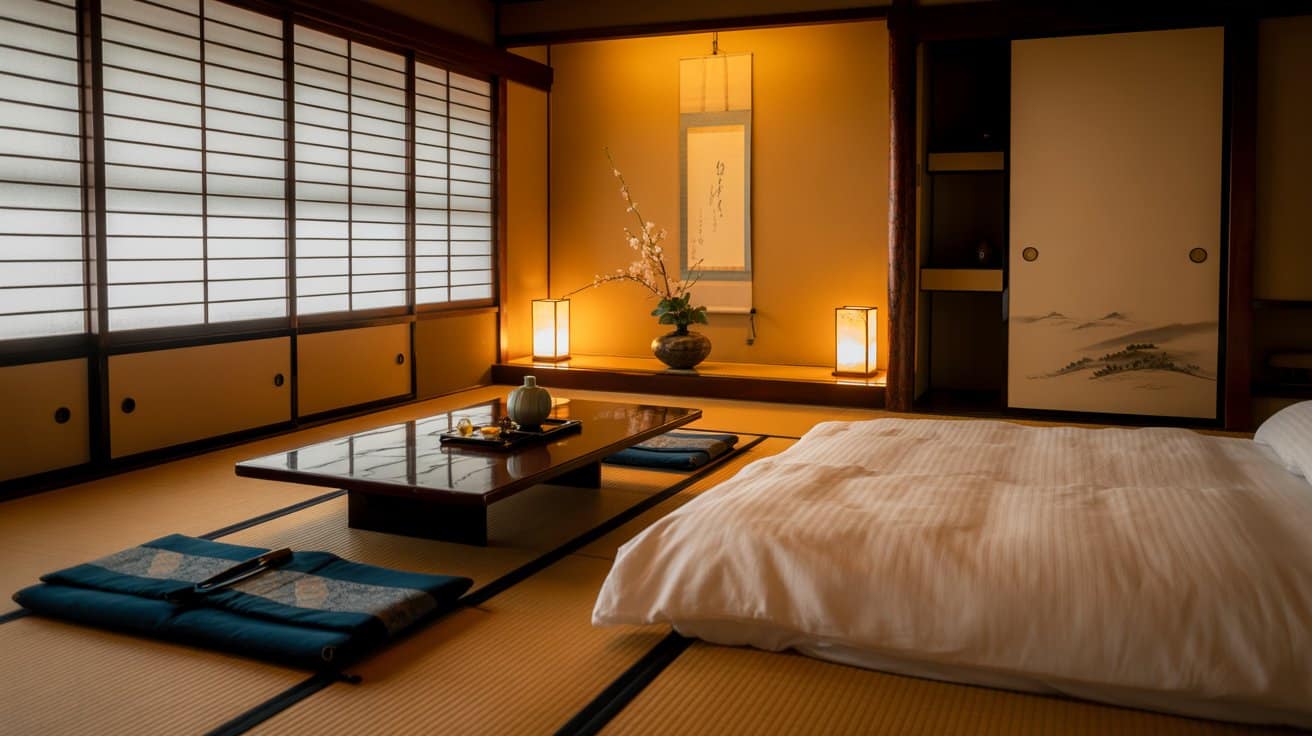
Create a guest room that feels like a traditional Japanese inn.
Key features:
- Futon bedding on tatami
- Tokonoma with seasonal display
- Paper lantern lighting
- Small low table with a tea set
- Yukata robes for guests
- Minimal western furniture
3. Modern Minimalist Japanese Bedroom
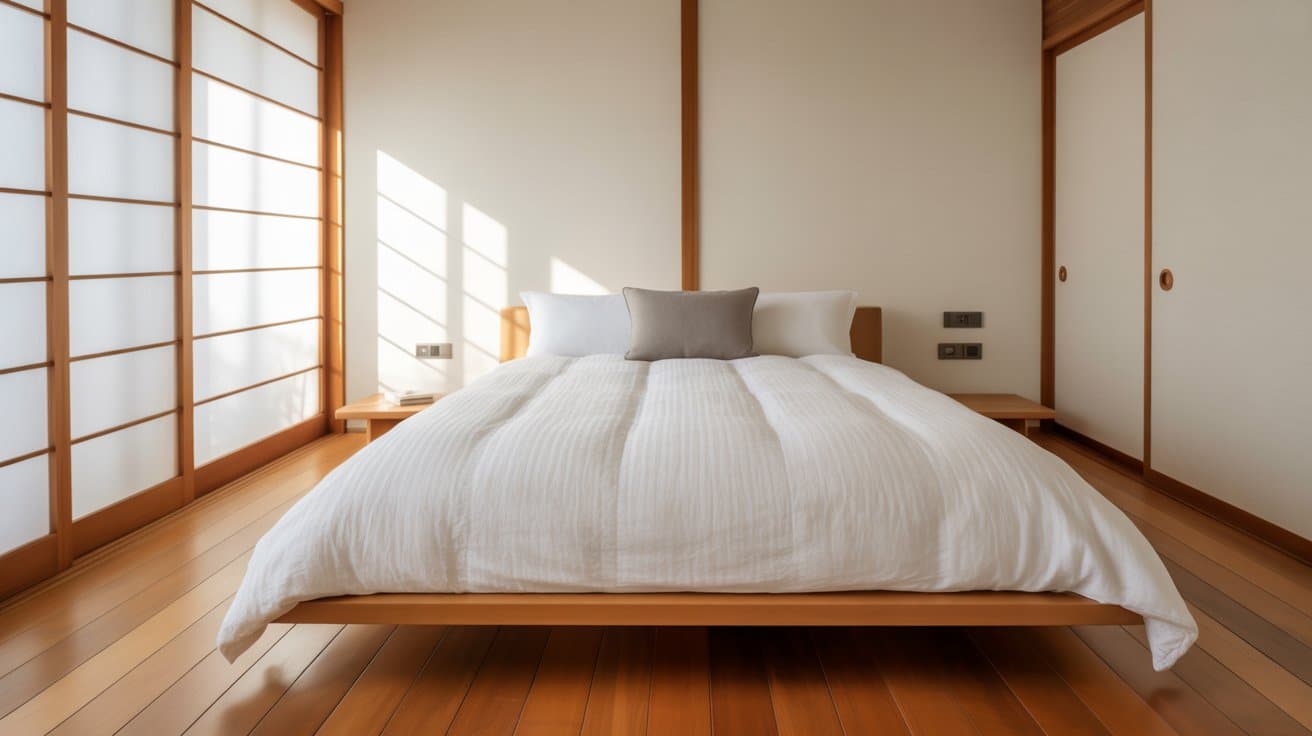
Combine Japanese principles with contemporary bedroom needs.
Design elements:
- Low platform bed or floor mattress
- Neutral color palette (whites, grays, light wood)
- Minimal nightstands or none
- Simple bedding in natural fabrics
- Concealed storage
- Clean lines throughout
4. Zen Meditation or Reading Nook
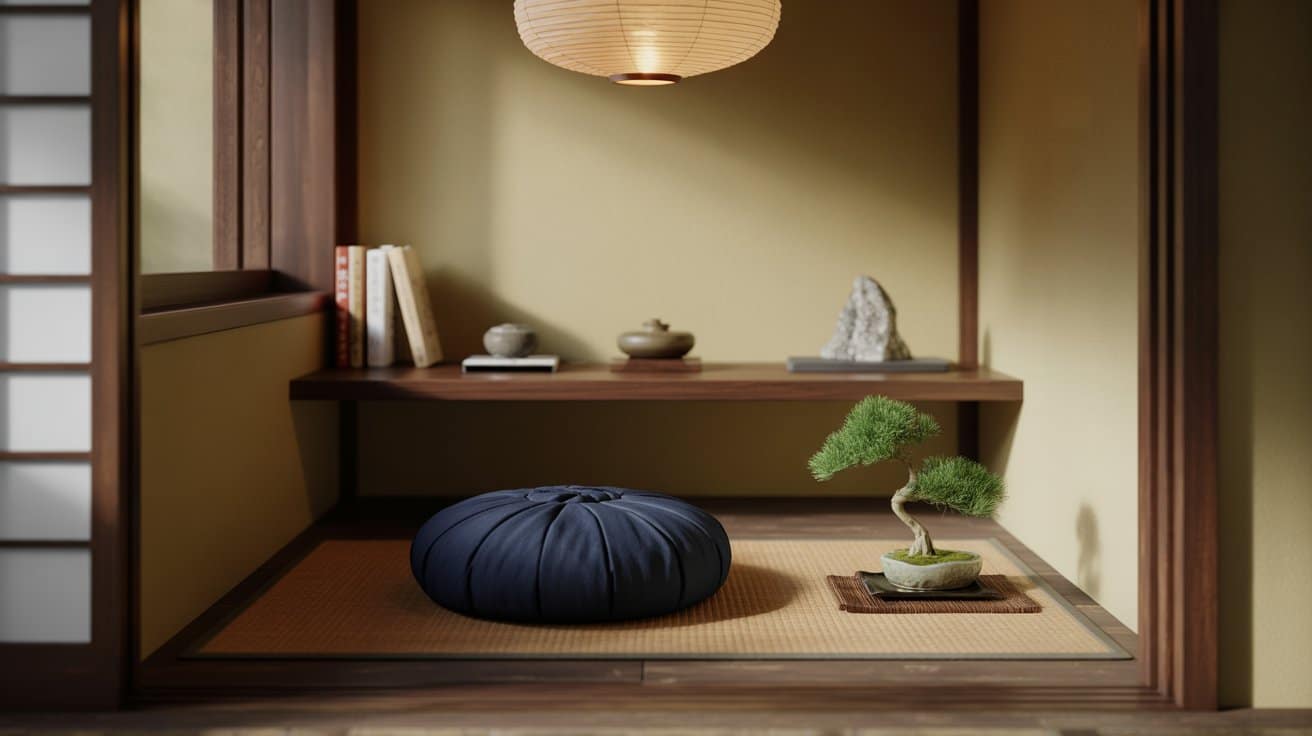
Transform a corner into a peaceful retreat.
Setup includes:
- Single tatami mat or small rug
- Floor cushion (zafu for meditation)
- Small shelf for books or objects
- Simple plant (bonsai or bamboo)
- Soft lighting option
5. Tea Ceremony-Inspired Corner
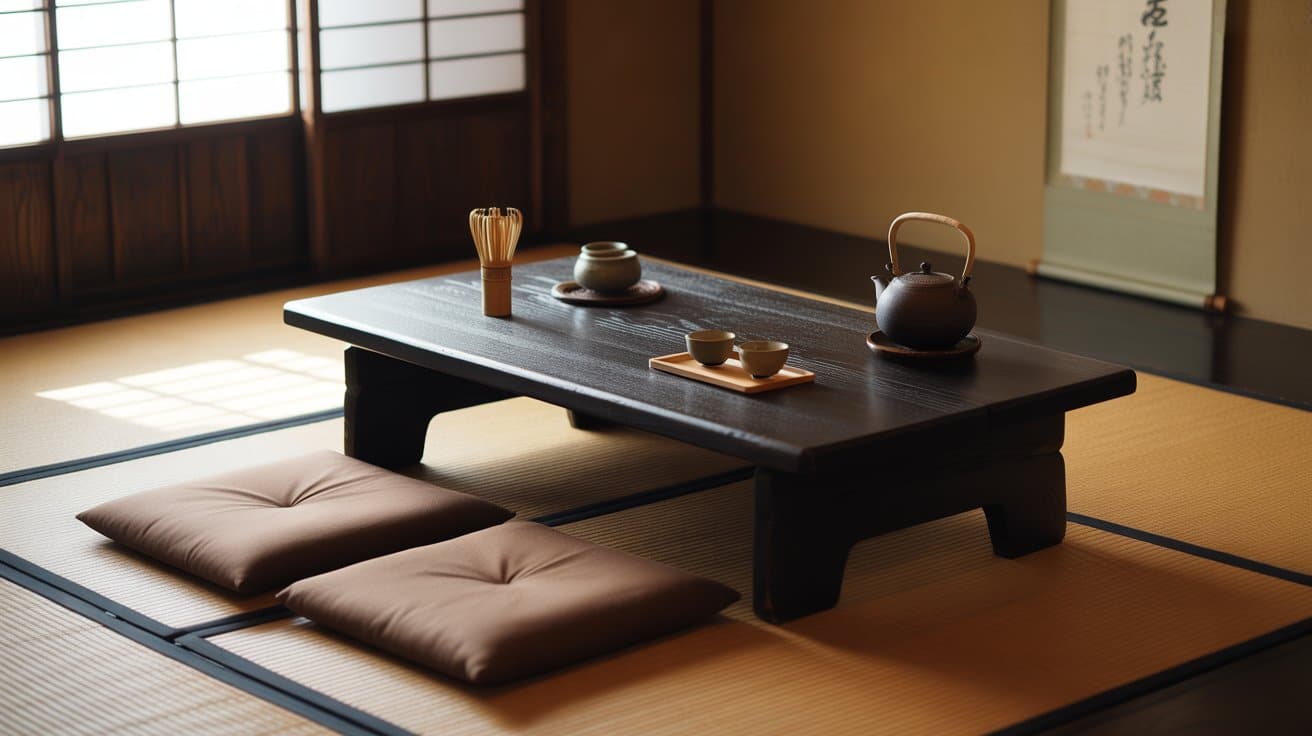
Dedicate a small area to the aesthetics of the tea ritual.
Essential components:
- Small chabudai table (tea table)
- Tatami rug underneath
- Minimal tea ceremony items
- Hanging scroll or simple art
- Floor cushions for the host and the guest
6. Japanese-Style Living Room
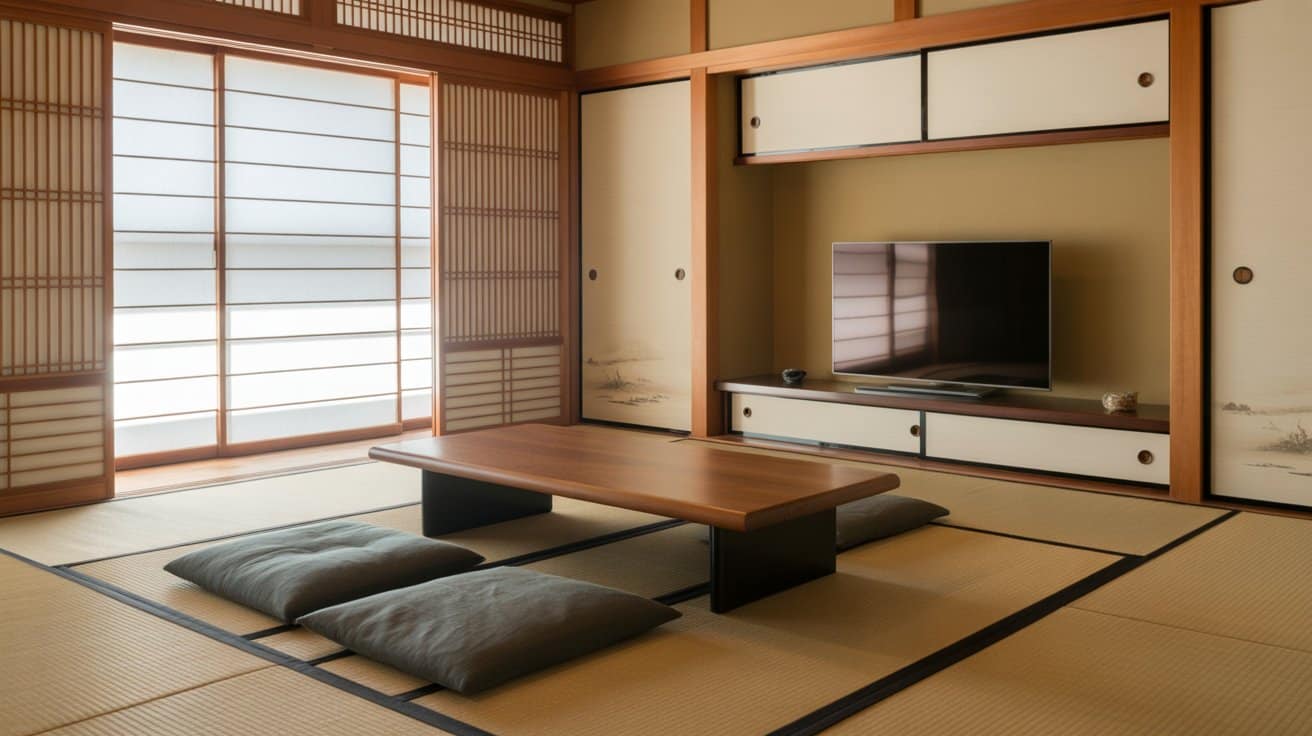
Adapt the living room functions to the Japanese aesthetic.
Layout approach:
- Tatami zone for main seating
- Floor cushions or low chairs
- Low coffee table
- Sliding panels define space
- Wall-mounted TV or hidden screen
7. Hybrid Japanese-Western Room
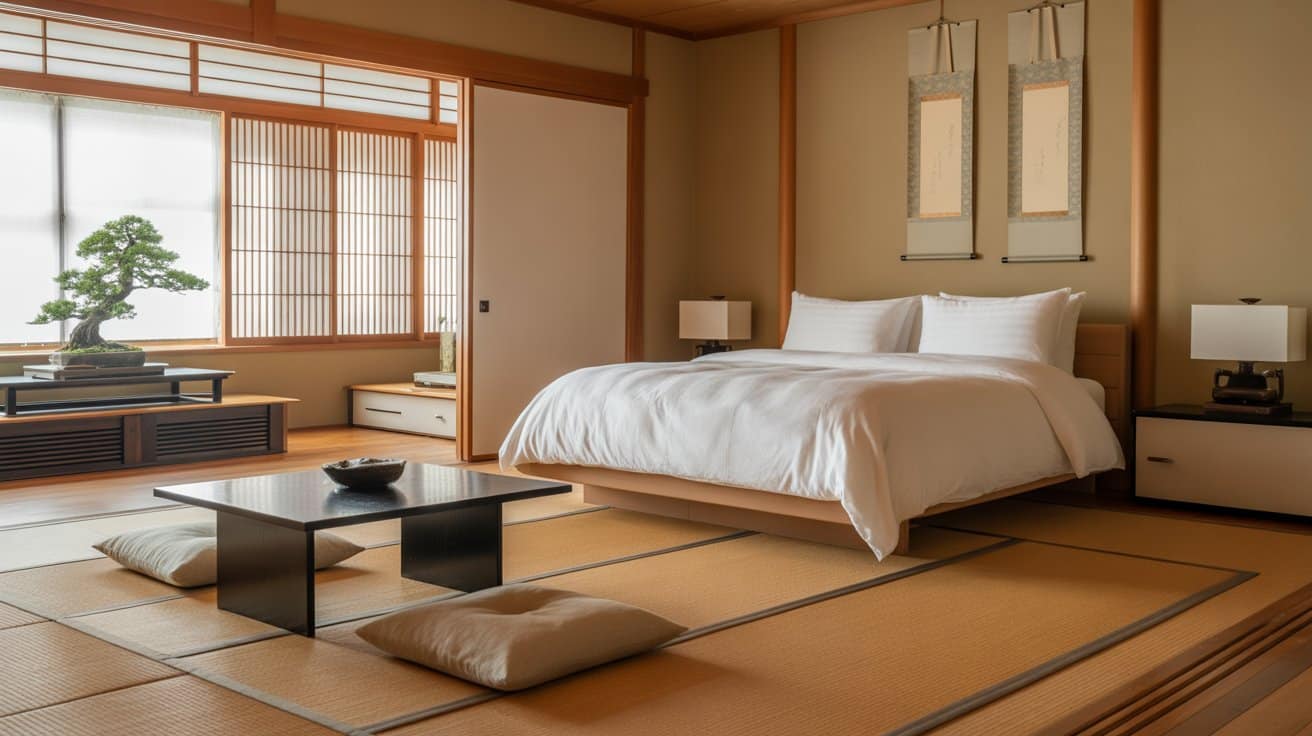
Blend both styles for maximum flexibility.
Combination strategies:
- Western bed in the tatami area
- Low table with regular chairs option
- Mix of floor and raised seating
- Traditional décor with modern furniture
8. Compact Japanese Room for Small Spaces
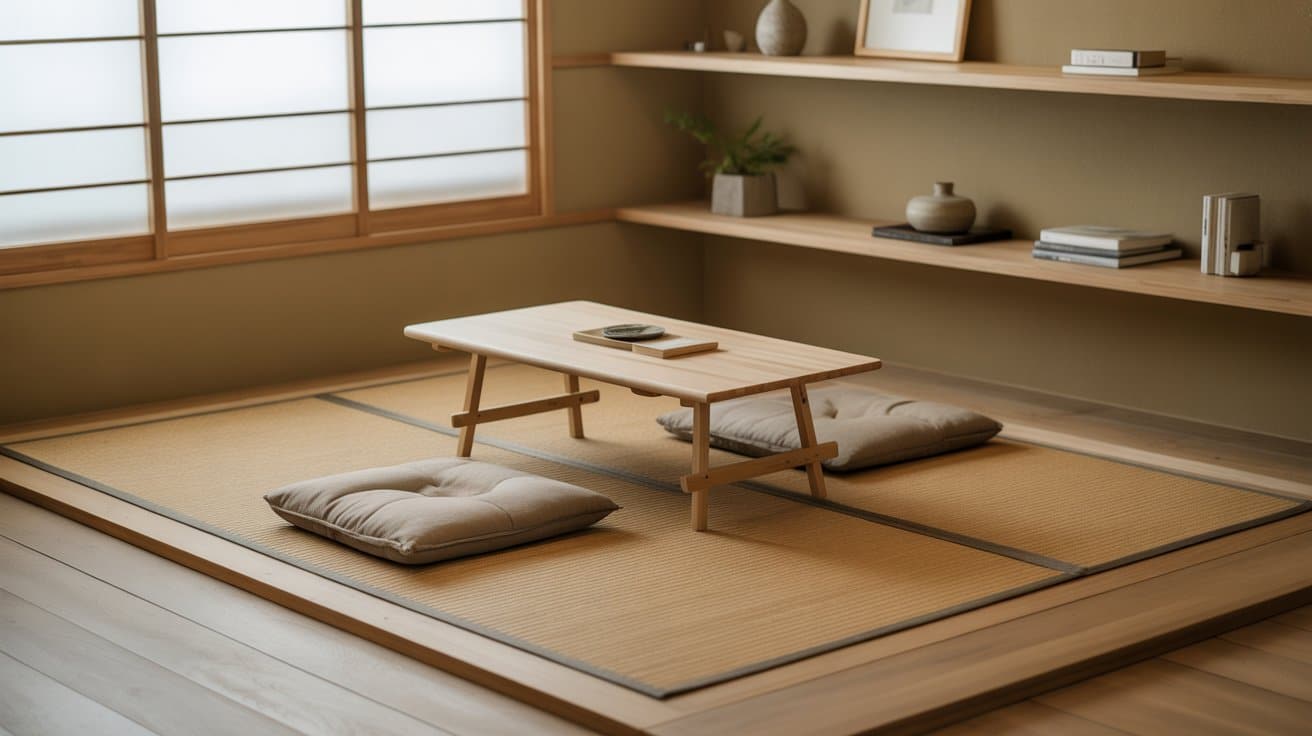
Perfect for apartments or small homes.
Space-efficient features:
- Single tatami mat (3×6 feet)
- One foldable low table
- Two stacking cushions
- Wall-mounted shelves
- Multi-purpose design
9. Japanese-Inspired Home Office
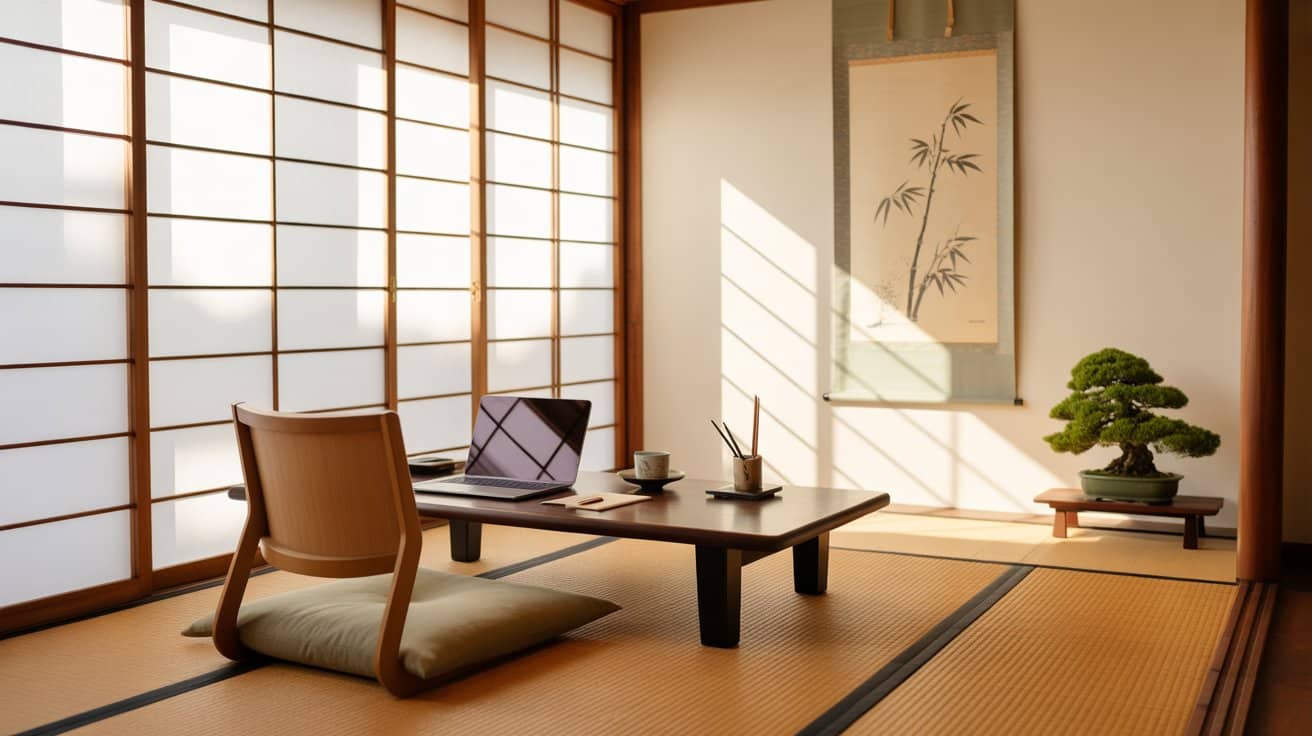
Bring calm focus to your workspace.
Office setup:
- Low desk or floor desk
- Floor cushion or low chair
- Natural light priority
- Minimal tech visible
- Simple organization
10. Nature-Integrated Japanese Room
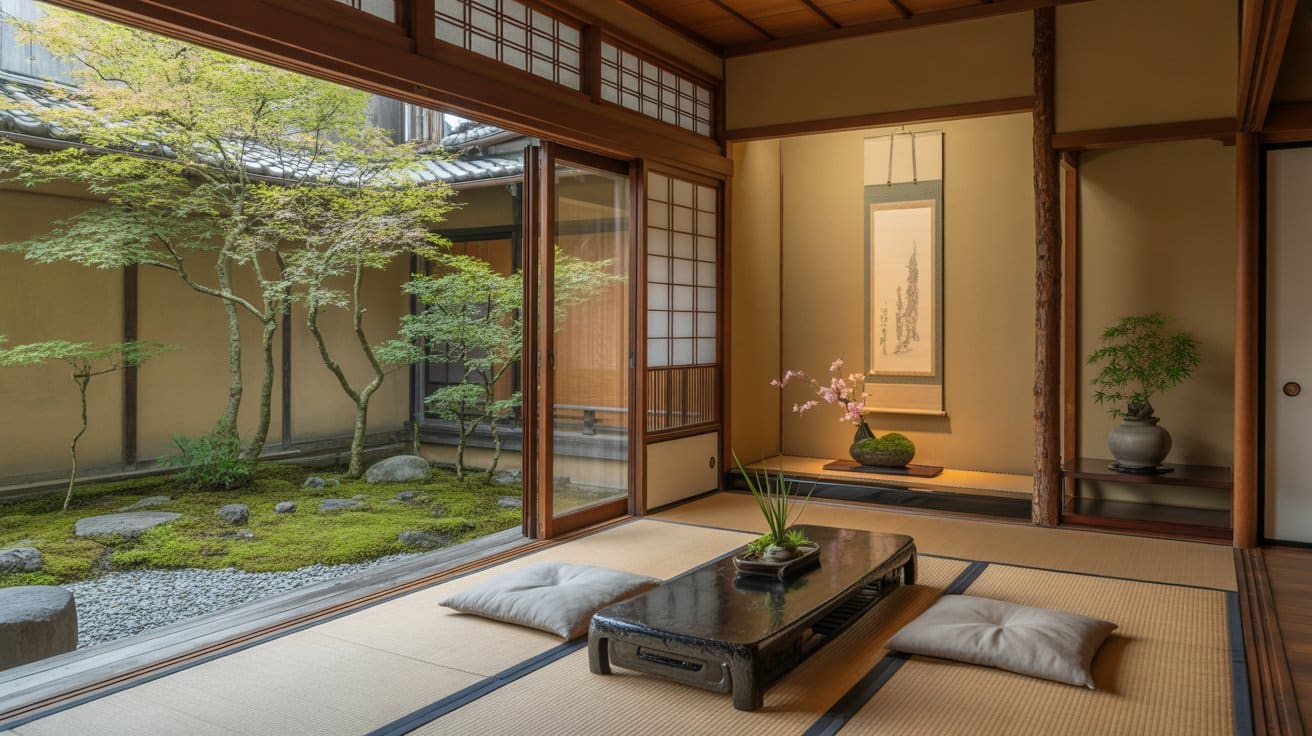
Emphasize connection to outdoor spaces.
Design priorities:
- Large windows or glass doors
- Indoor plants throughout
- Natural materials everywhere
- Outdoor views framed
- Seasonal décor changes
11. Tatami Loft or Raised Platform Room
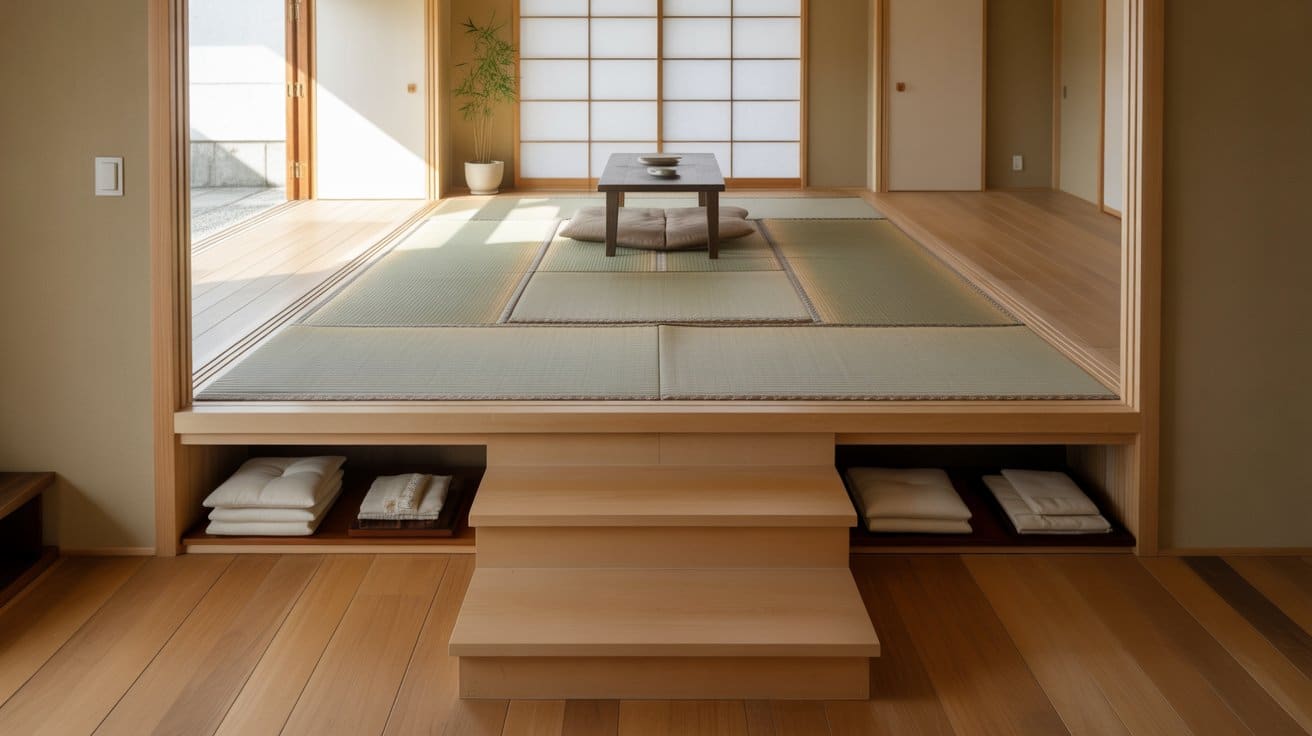
Create distinct zones with elevation changes.
Platform construction:
- Raised tatami zone 12-18 inches high
- Steps or ladder access
- Storage underneath the platform
- Defined boundary from the main floor
To keep your Japanese room looking natural and comfortable, here are some practical tips for materials, decor, and maintenance.
Practical Tips for Your Japanese Room
Creating a serene Japanese room is easier when you follow a few practical tips that balance comfort and durability.
Material Selection (Adjust for Your Climate)
- Humid: Use synthetic tatami, moisture-resistant wood, dehumidifiers, and ensure good airflow.
- Dry: Keep humidity stable, avoid direct sun, oil wood surfaces, humidify in winter.
- Temperature extremes: Insulate under tatami, use thermal curtains, consider floor heating, and choose wood that tolerates expansion.
- Sunlight: Filter harsh light with shoji, rotate tatami, use UV-blocking treatments, and protect valuables.
Budget-Friendly Alternatives
- Tatami: Tatami-style rugs, seagrass, rush mats, cork, bamboo.
- Shoji screens: Rice paper blinds, frosted glass, light curtains, DIY wood frames.
- Furniture: Low tables, DIY platform beds, thrifted pieces, cushions from fabric scraps.
- Decor: DIY wall art, artificial bonsai, thrifted ceramics, simple flower arrangements.
- Tip: Invest in one original piece as a focal point; complement with budget options.
Maintenance Tips
- Tatami: Vacuum along the grain; wipe up spills immediately; remove shoes; air mats; rotate periodically; avoid wet mops and harsh chemicals.
- Shoji screens: Dust frames, replace torn paper, clean tracks, and lubricate slides.
- Wood surfaces: Dust regularly, oil yearly, clean spills immediately, buff minor scratches.
- Air & light: Open shoji for ventilation, rotate items, use window treatments, protect from sun damage.
By applying these simple strategies, you can maintain a beautiful, functional Japanese space that lasts for years.
Conclusion
Creating a Japanese room brings lasting calm to your home.
Start with core elements: tatami mats or rugs, low furniture, neutral colors, and natural materials. Add sliding screens, simple lighting, and minimal décor that changes with the seasons.
Whether you choose a fully traditional washitsu or blend Japanese style with modern furniture, the principles remain the same: less clutter, more function, natural beauty.
Small spaces work just as well as large rooms. Budget alternatives exist for expensive materials. The key is maintaining simplicity and intention in every choice.
Your Japanese-style room should feel peaceful, look uncluttered, and serve multiple purposes throughout the day.