Brick veneer is one of the most misunderstood materials in residential construction.
Most homeowners either assume it is a cheap imitation of real brick, or they do not realize it is already what their own home is clad in.
Neither assumption is accurate. Brick veneer is a purpose-built cladding system used across millions of US homes and commercial buildings, and in over a decade of consulting on siding and exterior finishes, I have watched it outperform full masonry in the applications it was designed for.
This guide walks through what brick veneer actually is, the three main types available, how it compares to solid brick, where it works best, what it costs, and the installation errors that quietly ruin it.
What is Brick Veneer?
Brick veneer is a thin layer of brick or brick-like material applied over a structural wall. It is not load-bearing. The wall behind it carries the weight of the structure.
The veneer sits in front of that wall as a finished surface, attached by mortar, adhesive, or metal ties depending on the type and application.
Most people picture brick construction as the brick being the wall. In traditional solid masonry, that is correct. The brick carries the load and provides the structure.
In brick-veneer construction, a wood frame or a concrete block wall does that job. The brick is applied afterward as the exterior finish.
In the trade, the full-size version is often called “face brick” because it forms only the face of the wall rather than its structural core.
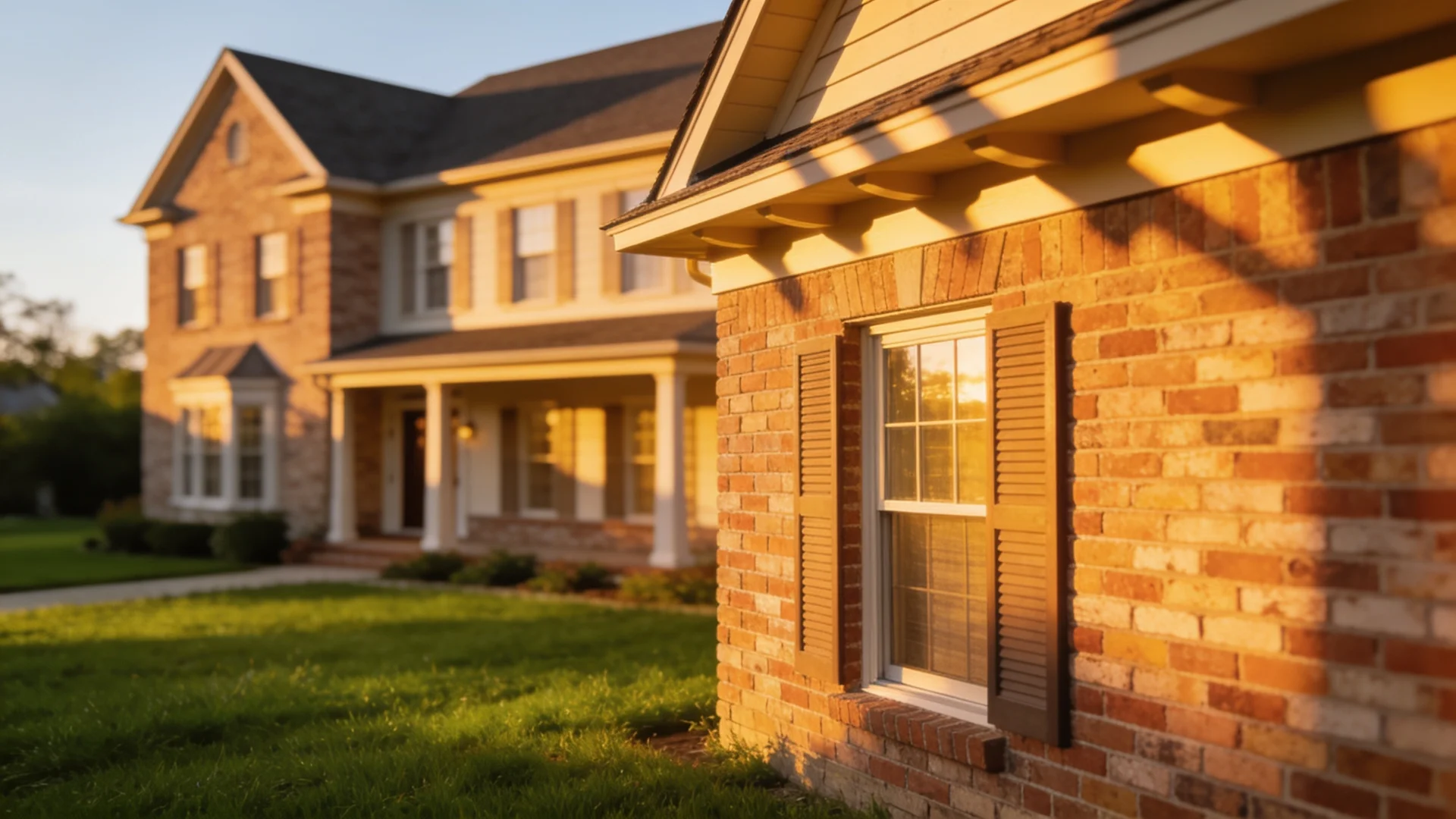
Brick veneer has been standard in US residential construction since the mid-20th century. Most brick homes built after 1950 are brick veneer rather than solid masonry.
If your home has brick on the outside and drywall directly behind it on the inside, you have veneer, not full brick walls.
Types of Brick Veneer
Brick veneer is not one material. It comes in three distinct forms, and the right choice depends on where you are using it and what your wall can support.
1. Full Brick Veneer
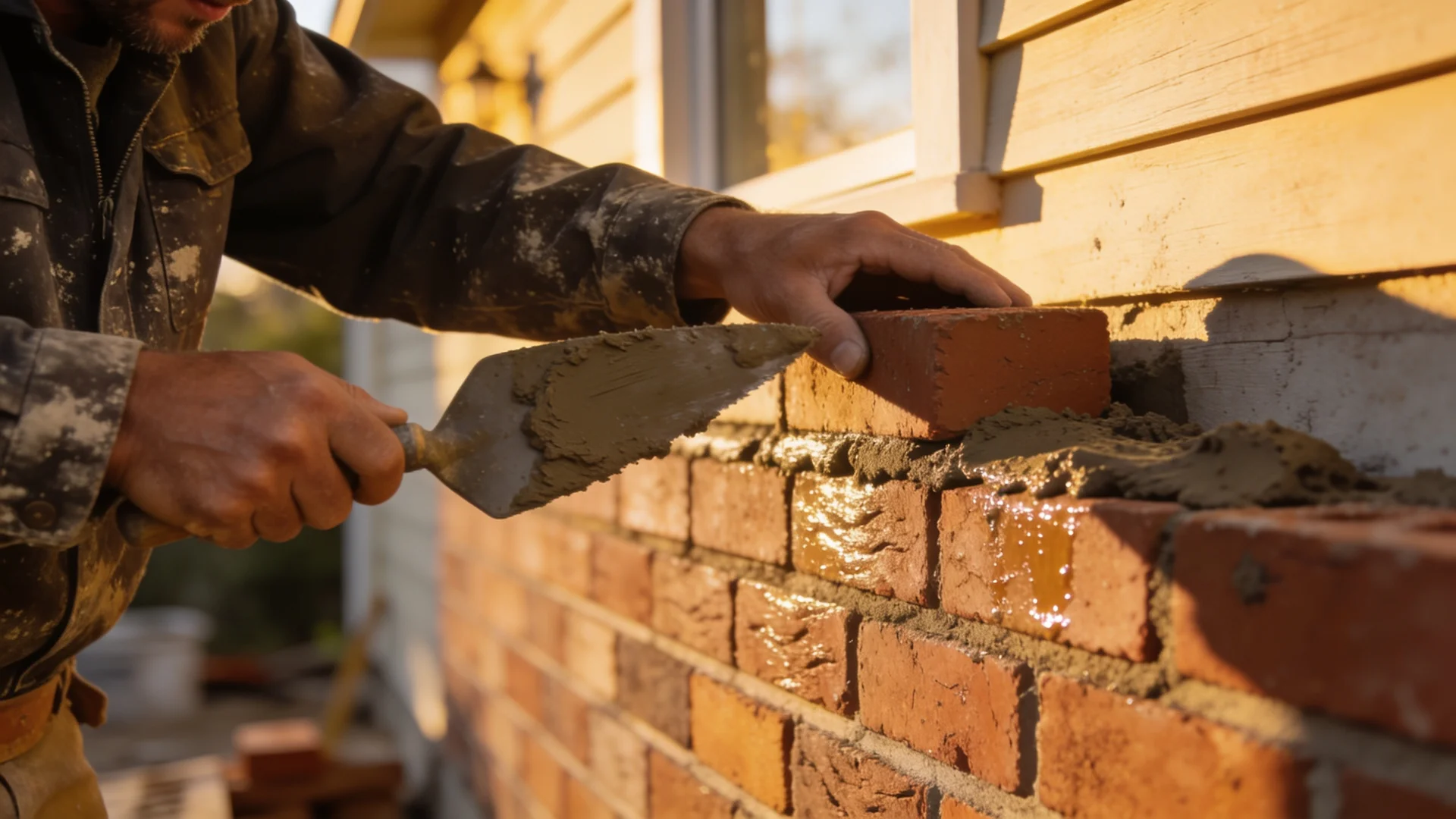
Full brick veneer uses standard-size bricks set in mortar and anchored to the wall framing behind with metal ties. There is a small air gap between the veneer and the wall sheathing.
That gap is intentional. It allows water that gets behind the brick to drain out through weep holes at the base rather than penetrating into the wall assembly.
This is the most common type on US residential exteriors. It is heavier than thin brick and requires a wider foundation ledge to support the weight, but it is still not a structural wall. It looks identical to a solid brick wall from the outside.
2. Thin Brick Veneer
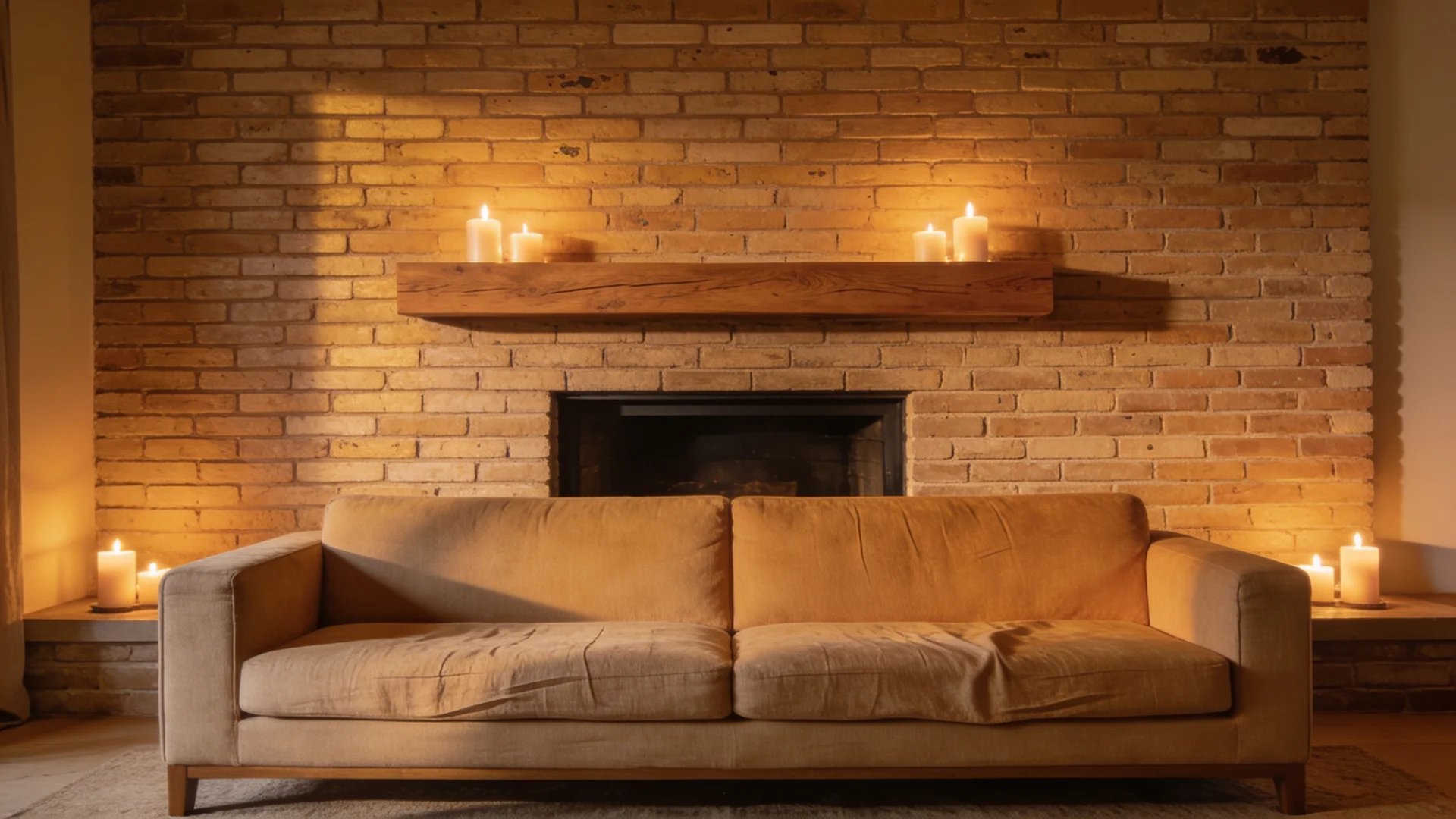
Thin brick is cut from the same clay bricks used in full-size construction. The slices are typically half an inch to one inch thick and are bonded directly to a surface using mortar or adhesive.
Because they are made of genuine fired clay, they have the same texture, color variation, and character as full brick.
Thin brick veneer is lighter than full brick and does not require the same foundation support.
It works on interior walls, fireplace surrounds, kitchen backsplashes, and exterior facades where full brick would add too much weight or where the wall cannot support a full masonry system.
It is the format architects use most often on commercial interiors and high-end residential projects.
3. Manufactured Brick Veneer Panels
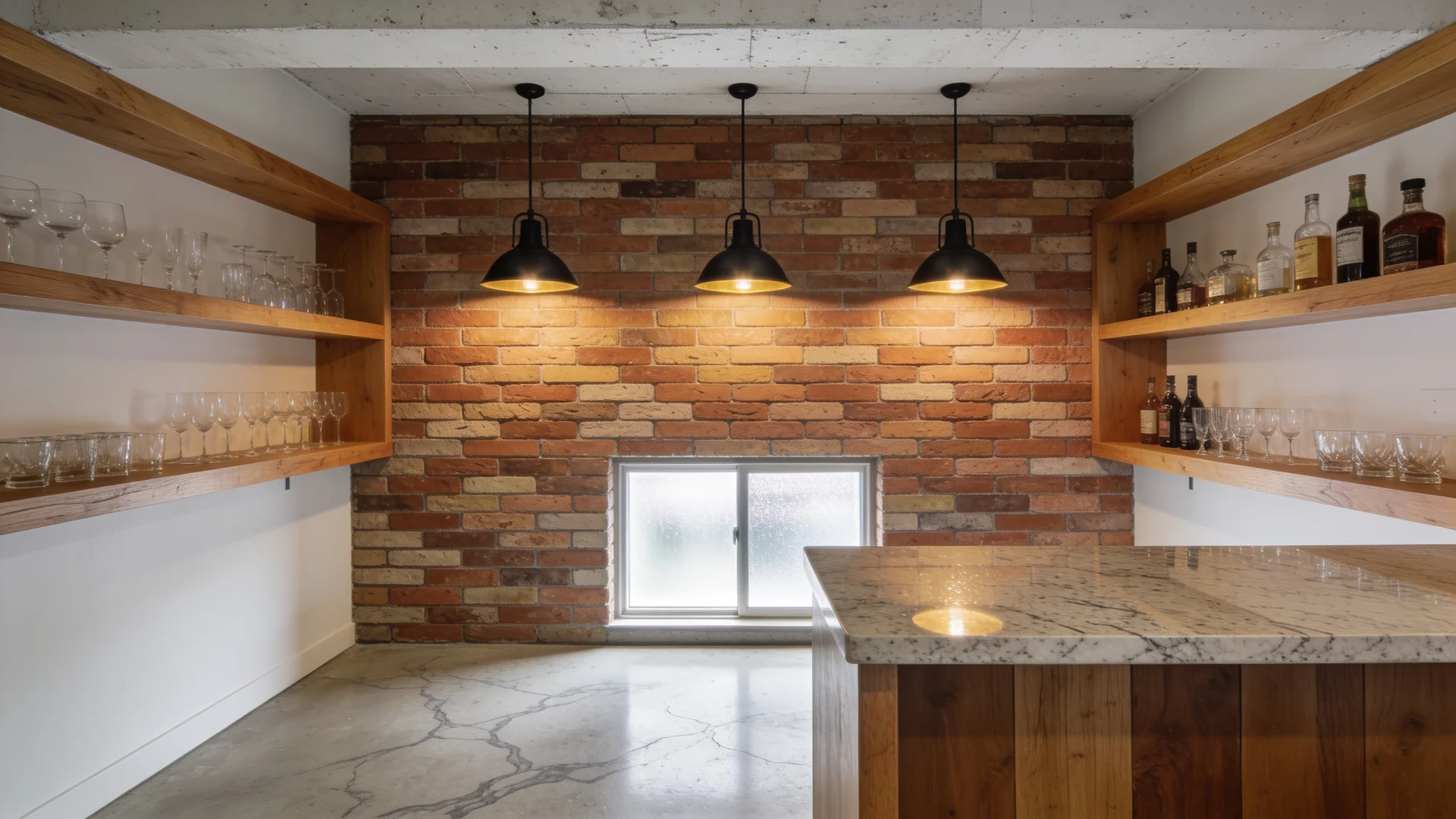
Manufactured panels are formed from polyurethane foam, cast concrete, or composite blends to mimic the look of brick.
They are the lightest option and the easiest to install. Most systems interlock and can be applied with construction adhesive and screws. No mortar needed.
Polyurethane panels look convincing from a distance and work well on interior accent walls, but they are not a long-term solution for exterior cladding in most US climates. Cast concrete panels are more durable and hold up better outdoors.
Brick Veneer vs. Real Brick: Key Differences
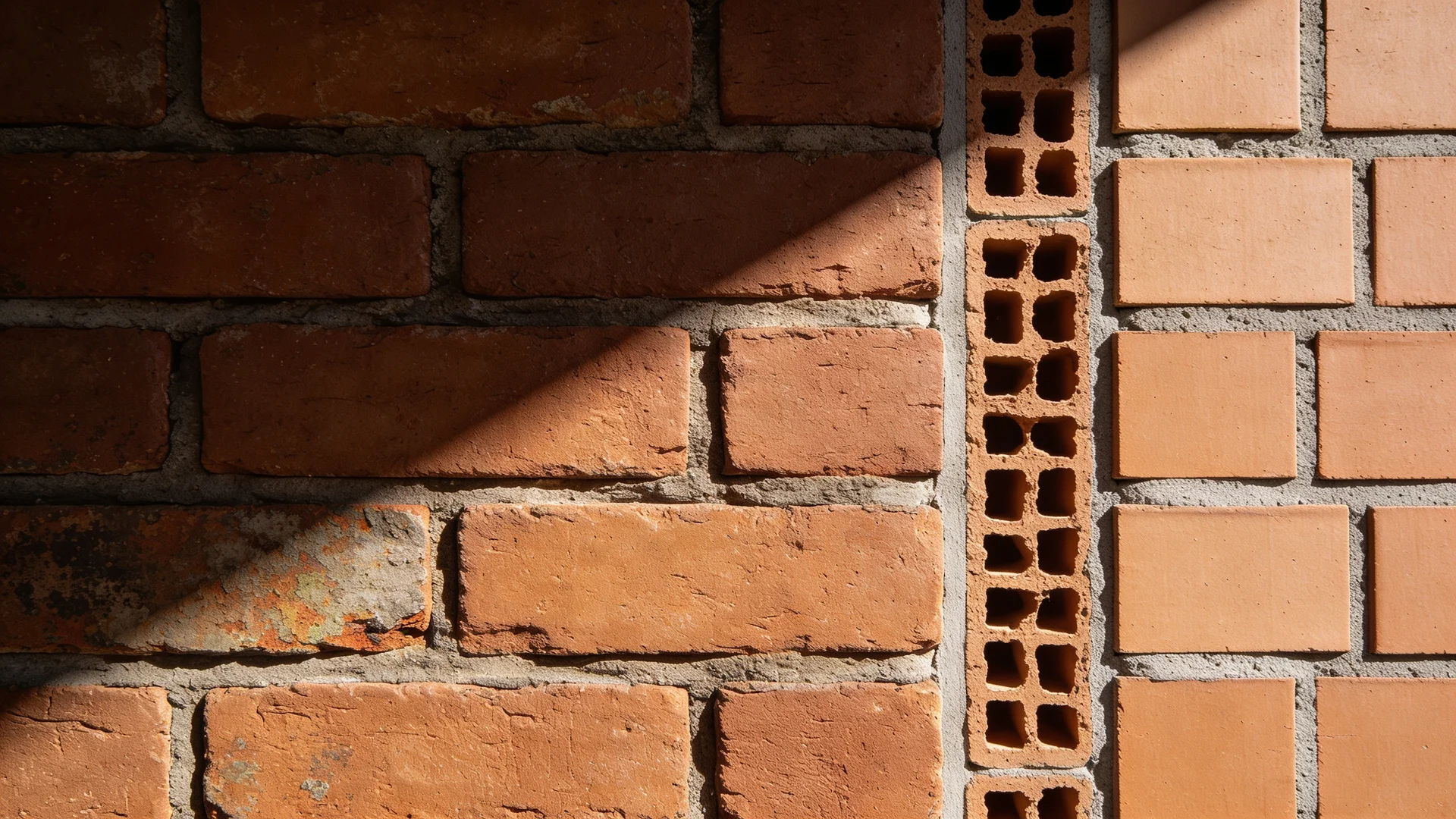
The biggest misconception I run into is homeowners assuming brick veneer is just a cheaper version of the real thing. It is a different system entirely, built for a different purpose.
| Factor | Brick Veneer | Solid Brick |
|---|---|---|
| Structural role | Decorative cladding only | Load-bearing wall system |
| Weight | Light to moderate | Heavy |
| Installation | Adhered or tied to the existing wall | Requires engineered foundation support |
| Cost | Lower | Higher |
| Interior use | Yes | Rarely |
| Lifespan | 20 to 100+ years depending on type | 100+ years |
| Insulation value | Depends on the wall system behind it | Low on its own |
| Suitable for retrofits | Yes | No |
Cost is where most homeowners make the call. Solid brick construction costs more per square foot in materials and labor than any type of brick veneer.
On new construction, the foundation requirements alone add cost, which is one reason veneer now dominates the market.
On an existing home, solid brick is not a realistic retrofit option, but veneer is, and it can be paired with other cladding on the same house without any visual mismatch. Homeowners weighing broader exterior choices often find it useful to compare against other cladding options for different home styles before settling on brick
Insulation and Thermal Performance
Brick on its own is a poor insulator. Its low thermal resistance is one reason older solid-masonry homes are so hard to heat and cool efficiently.
Brick veneer changes that math. The air gap between the veneer and the sheathing behind it is not just for drainage.
It also breaks the thermal bridge between the exterior and the interior. Most modern veneer walls add rigid foam or mineral wool insulation into that cavity, and the combined assembly outperforms a solid brick wall of the same thickness by a noticeable margin.
If you are pricing a veneer wall system, ask the contractor what insulation goes into the cavity. R-values in that space are where the real energy savings come from, not the brick itself.
Where Is Brick Veneer Used?
Brick veneer works on more surfaces than most homeowners expect. The same material that clads a home exterior can finish a fireplace wall or a kitchen backsplash indoors.
1. Exterior Applications
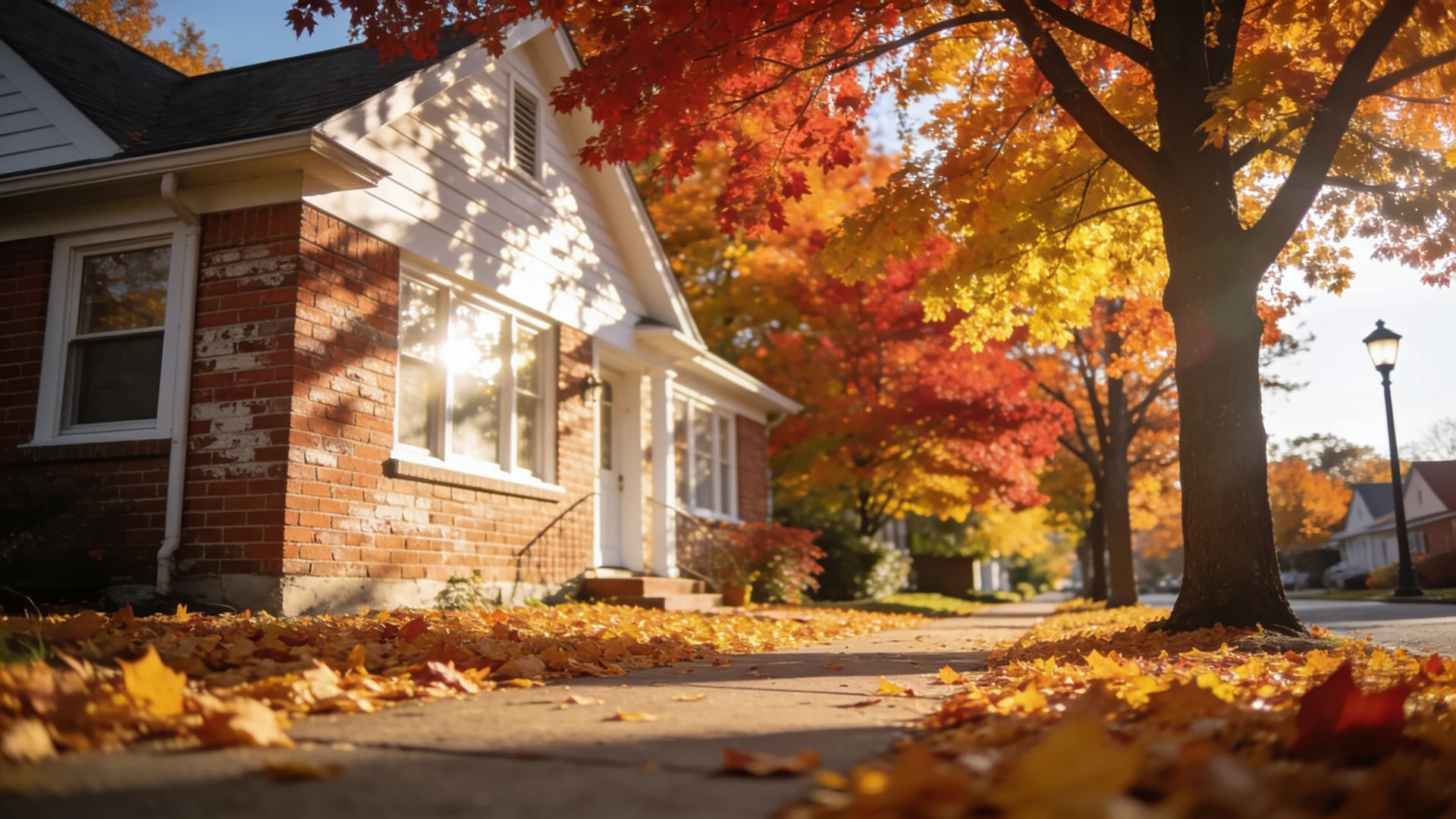
- Full brick veneer is the standard finish on new single-family homes across the US South, Midwest, and Mid-Atlantic.
- It wraps the full facade or serves as an accent on the front elevation, with fiber cement or lap siding on the remaining sides.
- Thin brick veneer is used on commercial storefronts, mixed-use buildings, and residential additions where the wall assembly cannot carry the weight of full brick.
- It is also used on home exteriors as a retrofit cladding over existing siding in some applications.
- Manufactured panels are ideal for low-traffic exterior areas: garden walls, mailbox surrounds, entry columns, and garage accent sections.
- They are not well suited for full-facade cladding in climates with temperature extremes or heavy precipitation.
2. Interior Applications
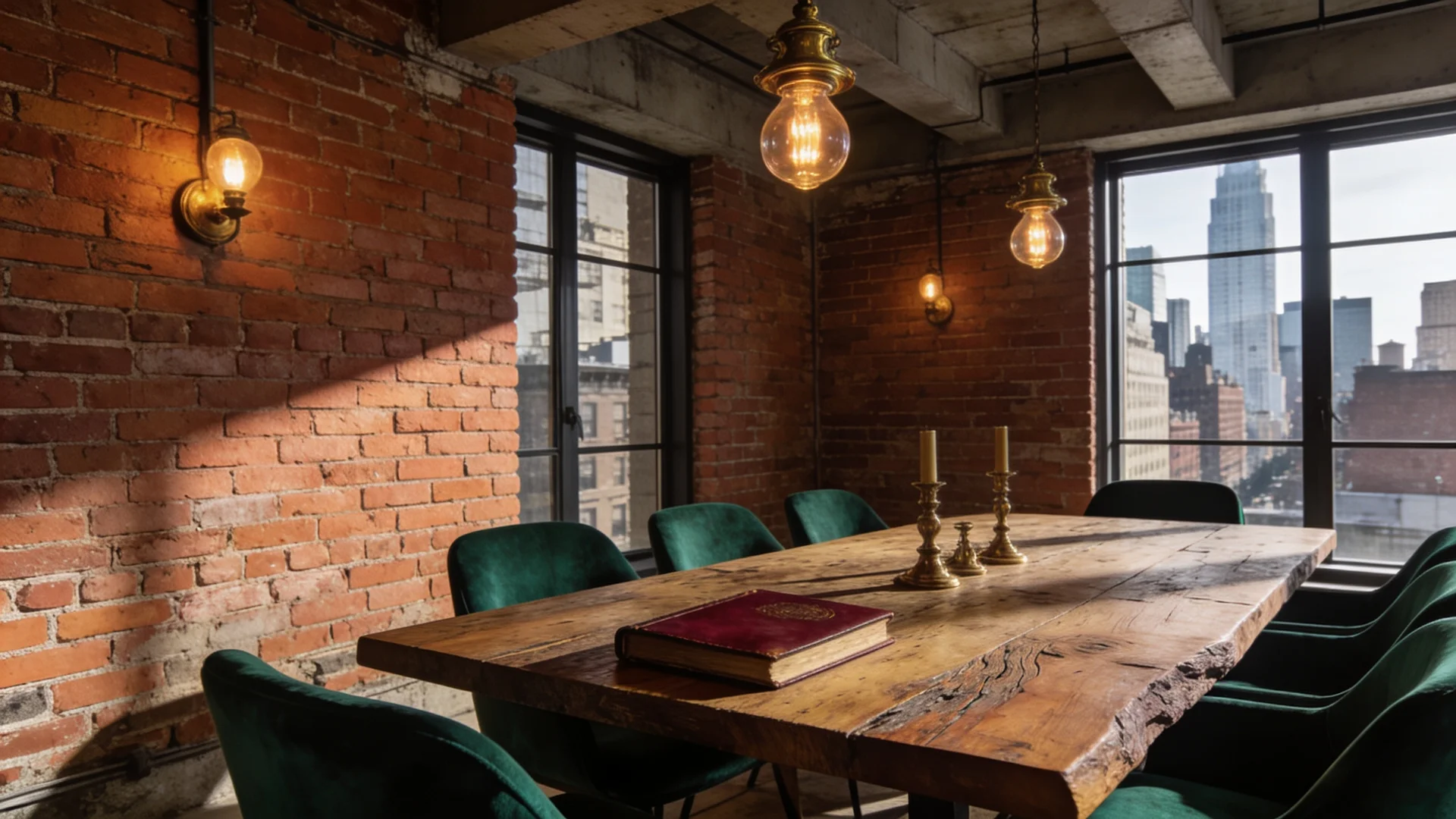
- This is where thin brick veneer and manufactured panels the used most. The most common interior applications are:
- Fireplace surrounds and chimney chases. Brick veneer on a fireplace adds visual weight to the room without the cost and structural implications of real masonry.
- Kitchen backsplashes. Thin brick veneer behind a range or along a full backsplash wall reads as a design choice rather than a construction detail. It handles heat, cleans easily, and adds texture that tile cannot replicate.
- Accent walls. Living rooms, dining rooms, basement bars, and restaurant interiors all feature brick-veneer accent walls.
- The thin-brick format makes it practical for any interior wall with a flat, sound-resistant surface behind it.
How Is Brick Veneer Installed
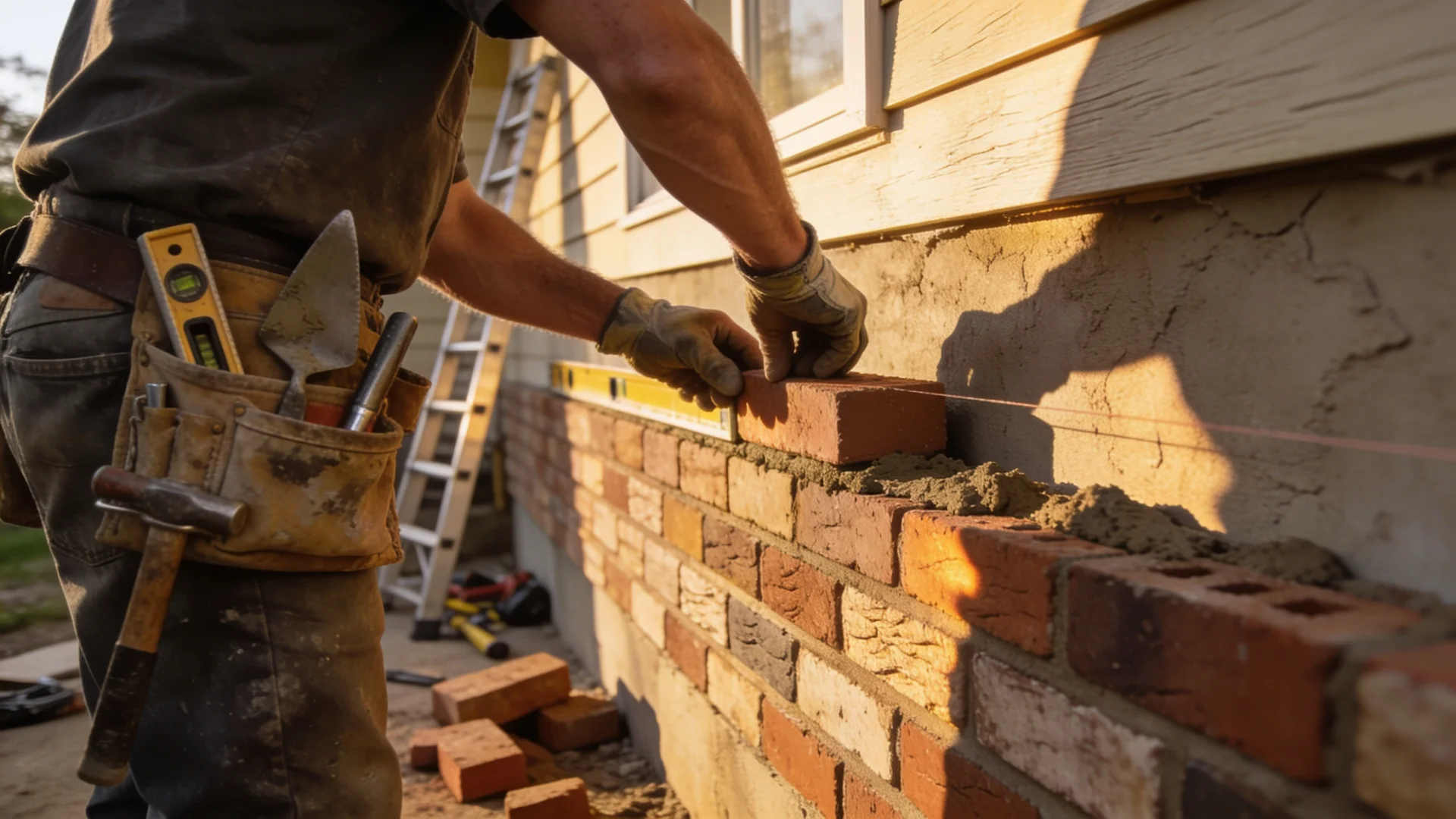
Installation varies by type, but the rules that matter most apply to all of them: the surface behind the veneer has to be sound, and water has to have a way out.
1. Full and Thin Brick Veneer Installation
- The wall surface has to be clean, flat, and moisture-resistant before anything goes up. On exterior walls, a weather-resistant barrier goes over the sheathing before the veneer is applied.
- For full brick veneer, metal wall ties are fastened into the framing at regular intervals to anchor the veneer to the wall. For thin brick, the slices are set in mortar directly onto the surface or a mortar scratch coat.
- Weep holes at the base of exterior veneer installations are not optional. They allow any water that migrates behind the veneer to drain out.
- Blocking them, which happens when veneer is installed directly on a concrete slab without clearance, is one of the most common installation errors and one of the most expensive to fix later.
- Grout joints are filled after the brick is set and cured. Most exterior applications use a polymer-modified mortar that flexes slightly with thermal movement rather than cracking.
2. Manufactured Panel Installation
- Panel systems vary by manufacturer, but most use an interlocking edge system. Panels are cut with a circular saw and attached to wall studs with construction adhesive and screws.
- Corner pieces and trim pieces finish the edges. No mortar, no specialty tools. Most DIYers can complete an interior accent wall in a day.
Pros and Cons of Brick Veneer
The case for brick veneer is straightforward. The limitations are just as important to know before you buy anything or hire anyone.
| Type | Pros | Cons |
|---|---|---|
| Full Brick Veneer | Looks identical to solid brick; lasts 50-100+ years | Requires proper flashing, weep holes, and an air gap; heavier than thin brick |
| Thin Brick Veneer | Real clay brick; works indoors and outdoors; no extra foundation support | Can crack if substrate moves; needs sealing on exterior applications |
| Manufactured Panels | Lightest option; DIY-friendly; lowest cost | Shorter lifespan; not suited for harsh climates; less realistic up close |
How Much Does Brick Veneer Cost?
Costs vary by type, region, and whether you are doing the work yourself or hiring a contractor.
| Type | Material Cost Per Sq Ft | Installed Cost Per Sq Ft |
|---|---|---|
| Full brick veneer | $6 to $10 | $14 to $22 |
| Thin brick veneer | $5 to $15 | $12 to $25 |
| Manufactured panels | $3 to $8 | $8 to $15 |
| Solid brick construction | $14 to $30 | $25 to $45+ |
Labor is the biggest variable. Urban US markets run higher than rural ones. Contractor experience with masonry also matters. A crew that sets brick every day works faster and makes fewer errors than a general contractor who handles it occasionally.
For a DIY interior accent wall using manufactured panels, total material costs for a standard 10-by-10-foot wall run range from $300 to $800, depending on panel quality. Thin brick on the same wall runs $500 to $1,500, including mortar and tools.
For a whole-house exterior job, veneer sits in the same broad price band as premium fiber cement or engineered wood siding once you factor in labor, and it helps to look at total siding costs for an average home before locking in a material.
Maintenance and Repair
One reason I steer clients toward brick veneer on exterior facades is that it needs very little attention once it is up. There is no paint to refresh every seven years, no boards to swap out after storm damage, and no annual sealing on the brick itself.
The maintenance that does matter is small and infrequent:
- Keep the weep holes clear: Once a year, gently run a small screwdriver or wooden dowel into each weep hole to ensure it is open. Insects and mortar debris are the usual culprits.
- Watch the mortar joints: Small cracks are normal with thermal movement. Larger cracks, spalling, or joints that crumble when pressed with a screwdriver mean it is time to tuckpoint that section.
- Clean when needed: A garden hose and a soft brush handle most of the staining. Skip pressure washers on veneer; the force can drive water behind the brick and force mortar out of joints.
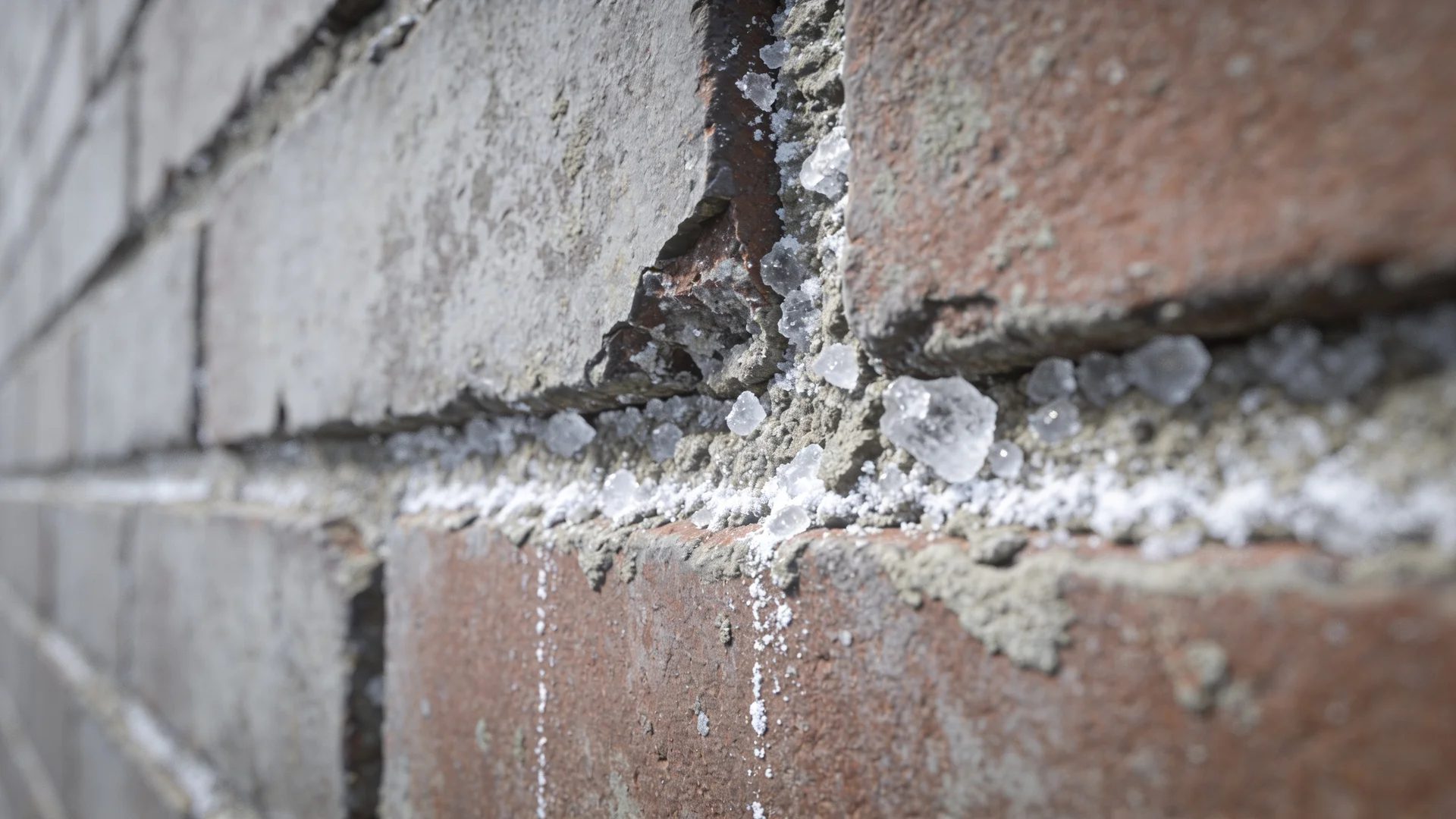
- Address efflorescence early: White powdery deposits on the brick face are mineral salts pushed out by moisture. A stiff, dry brush removes surface efflorescence. Repeated efflorescence points to a moisture problem behind the wall.
Common Mistakes with Brick Veneer
- Skipping the air gap on exterior installations: Full brick veneer needs a drainage space between the back of the veneer and the wall sheathing. Without it, water has nowhere to go and will work its way into the wall assembly.
- Blocking weep holes: The drainage openings at the base of the exterior veneer serve a purpose. Caulking them or setting veneer flush to a slab without clearance defeats the entire drainage system.
- Using manufactured panels outdoors in harsh climates: Polyurethane panels expand and contract with temperature changes. In climates with hard freeze-thaw cycles, that movement breaks joints and pushes panels off the wall within a few seasons.
- Installing thin brick over an unstable surface: Thin brick bonded to green lumber or a wall that still has movement in it will crack as the wall shifts. Let new framing dry and stabilize before applying any rigid tile-set material.
- Not sealing exterior thin brick: Clay brick is porous. On exterior applications in wet climates, a penetrating masonry sealer applied after installation extends the life of the mortar joints and prevents efflorescence.
Conclusion
Brick veneer is not a compromise. It is how most brick homes in the US are built, and it works when installed correctly.
The material choice comes down to where you are using it, what your wall assembly can support, and how long you need it to last.
Full brick veneer on an exterior facade is a decades-long investment. Thin brick on an interior fireplace wall is a weekend project that changes the entire character of a room.
Manufactured panels fill the gap for budget applications where longevity is less critical. Know what you are working with, install it right, and brick veneer performs exactly as advertised.
Frequently Asked Questions
How Do I Know If My House Is Solid Brick or Brick Veneer?
Tap the wall. Brick veneer sounds hollow. Also check for weep holes at the base and whether all bricks run horizontally with no header bricks interspersed.
Does Brick Veneer Add Value to a Home?
Yes. Brick veneer improves curb appeal and is seen as a premium exterior finish by US buyers, generally supporting resale value over vinyl or fiber-cement siding.
Can Brick Veneer be Installed Over Existing Siding?
Yes, in most cases. The existing siding must be sound and the wall assembly able to handle the added weight. A masonry contractor should assess the substrate first.