Are your kitchen countertops showing their age?
Choosing the right surface material affects both your daily routine and your home’s value. Quartz countertops have become one of the most sought-after options for modern kitchens and bathrooms.
This engineered stone combines natural beauty with practical benefits, but it’s not perfect for every situation.
Understanding the pros and cons of quartz countertops helps you make a smart investment decision. This guide covers everything from durability and maintenance to costs and common problems.
By the end, you’ll know whether quartz countertops match your lifestyle, budget, and design goals. Let’s examine what makes this material popular and where it falls short.
What is a Quartz Countertop?
Quartz countertops are engineered stone surfaces made from crushed natural quartz crystals mixed with resin binders and pigments.
Most quartz slabs contain 90-95% natural quartz, with the remaining 5-10% consisting of polymer resins and color additives.
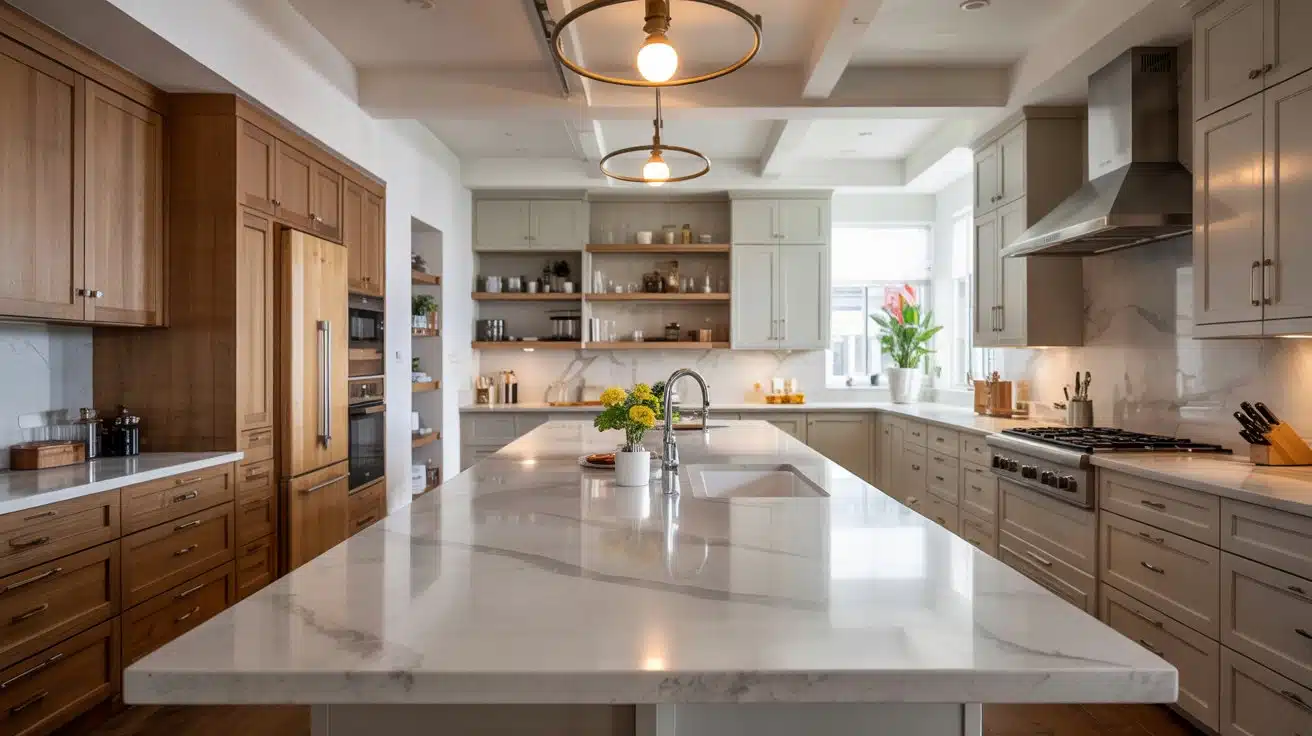
Quartz offers more variety than many natural stones, with options that look like marble, granite, or concrete. Some slabs feature bold veining, while others offer solid, uniform colors.
How Quartz Differs from Other Materials:
Unlike granite, which is cut directly from quarried stone, quartz is manufactured in a controlled factory setting. This process allows for consistent patterns and colors across slabs.
Solid surface materials like Corian contain no natural stone and are made entirely from acrylic or polyester compounds.
Now that we know what quartz countertops are, let’s see the key advantages that make them a popular choice for kitchens and bathrooms.
Pros of Quartz Countertops
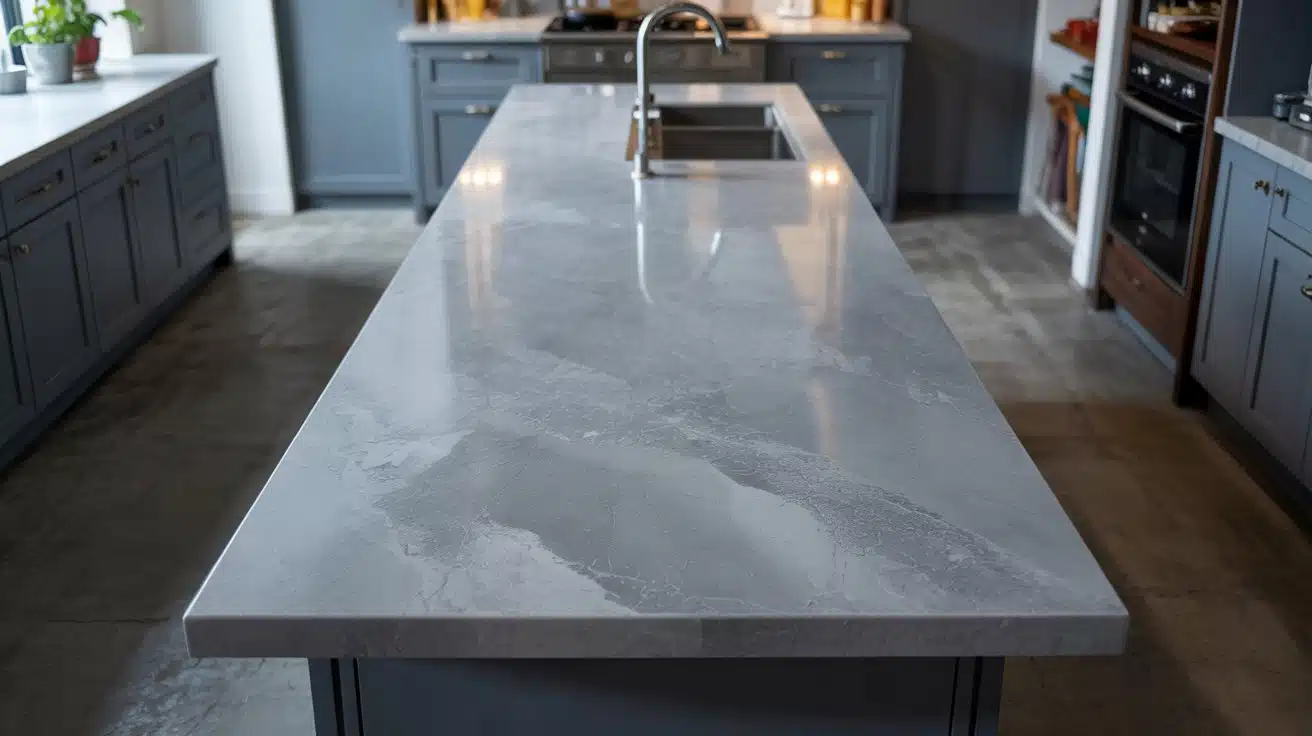
Quartz countertops combine beauty and durability, making them one of the most popular choices for modern kitchens and bathrooms.
1. Extremely Durable and Scratch-Resistant
Quartz ranks high on the Mohs hardness scale, making it one of the toughest countertop materials available. The compressed quartz crystals create a surface that resists daily wear and tear better than many alternatives.
Comparing Durability:
Here’s a quick comparison of popular countertop materials based on scratch resistance and expected lifespan:
| Material | Scratch Resistance | Average Lifespan |
|---|---|---|
| Quartz | Excellent | 20-25+ years |
| Granite | Very Good | 15-20 years |
| Solid Surface | Good | 10-15 years |
The engineered composition means quartz doesn’t have natural fissures or weak points, which prevents chips and cracks under normal use.
Owners report that their quartz surfaces look nearly new even after a decade of daily use. The resin binders help the material flex slightly under impact rather than cracking immediately.
2. Non-Porous and Low Maintenance
The non-porous nature of quartz countertops stands out as one of their biggest advantages. The resin sealant creates a surface that liquids cannot penetrate, preventing stains and bacterial growth..
Easy Cleaning Routine:
- Wipe spills immediately with a damp cloth
- Use mild dish soap and warm water for daily cleaning
- Avoid abrasive cleaners or scouring pads
- Dry with a soft towel to prevent water spots
Red wine, coffee, and cooking oils sit on the surface rather than soaking in. Even lemon juice won’t etch the surface. The bacteria-resistant properties make quartz ideal for food preparation areas.
3. Wide Range of Design Options
Quartz manufacturing allows for nearly limitless design possibilities. Fabricators can create looks that natural stone cannot match while maintaining the durability you need.
Popular Style Categories:
- Marble-Look Quartz: Beautiful veining, marble appearance without upkeep, and more affordable than real marble.
- Solid Colors: Whites, grays, blacks, earth tones; consistent, modern look that hides wear.
- Contemporary Patterns: Concrete finishes, metallic/glass flecks, bold geometric designs, customizable colors.
4. Consistent Appearance and Color Retention
Quartz countertops maintain their color and pattern uniformly throughout the slab because the pigments are mixed into the material rather than applied as a surface coating.
This means scratches, chips, or wear won’t reveal a different color underneath.
Owners also benefit from easier matching for large projects or multiple slabs, making quartz an ideal choice for kitchens and bathrooms where a flawless, cohesive appearance is desired.
5. Increases Home Value
Installing quartz countertops can boost your home’s resale value and appeal to potential buyers. Real estate professionals often list quality countertops as a key selling feature.
Market Appeal:
- Busy families value the low-maintenance requirements
- Home cooks appreciate the durability and cleanliness
- Design-conscious buyers like the modern appearance options
- Budget-aware purchasers recognize the long-term value
Homes with quartz countertops often sell faster than comparable properties with outdated surfaces. The clean look photographs well in listings and makes strong first impressions during showings.
While quartz countertops offer many benefits, it’s important to consider their potential drawbacks as well.
Cons of Quartz Countertops
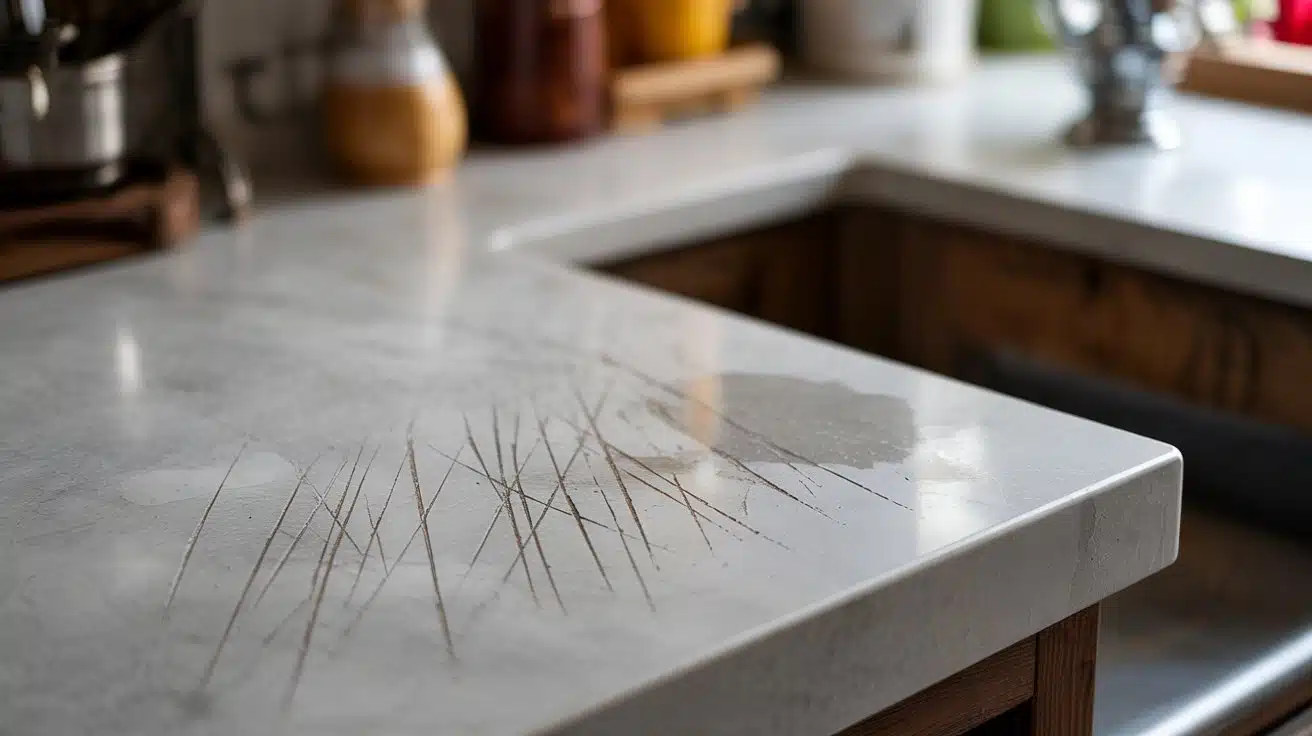
Despite their many advantages, quartz countertops have some limitations that buyers should consider before making a choice.
1. Heat Sensitivity
The resin binders in quartz countertops pose a significant limitation when exposed to high temperatures.
Polyester and epoxy resins begin to soften and degrade at temperatures between 300 and 400°F. When hot cookware contacts the surface, several issues can occur:
- Discoloration: White or light quartz may develop yellow or brown marks
- Surface burns: Dark spots or rings appear where heat has concentrated
- Cracking: Rapid temperature changes cause thermal shock
- Resin separation: Extreme heat can cause the binding agents to fail
Owners report damage from: sheet pans straight from the oven, cast iron skillets moved directly from stovetop burners, slow cookers running on high settings for hours, and electric griddles without protective pads underneath
2. UV Sensitivity
Direct sunlight and UV exposure can damage quartz countertops over time. This limitation makes quartz unsuitable for outdoor kitchens and problematic near large windows.
How UV Affects Quartz:
- Fading: Colors become washed out or dull
- Yellowing: White and light colors develop a yellow tint
- Brittleness: Material becomes more prone to cracking
- Surface degradation: The protective finish breaks down
Manufacturers specifically warn against using quartz outside. Summer sun can reach the surface with full intensity for 8-10 hours daily. Within months, noticeable yellowing or fading appears.
Even filtered sunlight through glass windows contains enough UV to cause gradual damage. South-facing windows in particular expose countertops to intense afternoon sun.
3. Visible Seams
Quartz slabs typically measure 120 inches long and 55-60 inches wide. Standard slab thicknesses are 3/4 inch or 1-1/4 inch. Any countertop longer or wider than these dimensions needs multiple pieces joined together.
Factors That Make Seams More Visible:
- Light Colors: White, cream, pale gray show seams most clearly.
- Dark Colors: Better at hiding seams.
- Solid vs. Patterned: Solid patterns highlight mismatches; uniform patterns allow better alignment; bold/irregular patterns are harder to match.
- High-Contrast Veining: Makes perfect matching difficult.
- Installation Quality: Precise cutting, color-matched adhesives, and strategic placement minimize seam visibility.
Poor installation makes seams stand out dramatically. Gaps, height differences, or mismatched patterns become permanent eyesores.
4. Cost and Professional Installation
Quartz countertops require a significant upfront investment. Both the material and installation costs exceed those of many alternatives.
Quality level affects pricing substantially:
| Tier | Price per sq. ft. | Features |
|---|---|---|
| Budget Quartz | $50–70 | Limited colors, simple patterns, basic warranties |
| Mid-Range Quartz | $70–100 | Wider color variety, better veining, standard warranties |
| Premium Quartz | $100–200+ | Exotic patterns, designer colors, extended warranties, and thicker slabs |
For an average kitchen (50 square feet), total material costs range from $2,500 to $10,000 before installation.
Quartz installation is not a DIY project. The material requires professional handling due to its weight and the precision of its cutting.
Most manufacturers require professional installation to honor warranties. This requirement protects both the customer and the company from installation-related failures.
5. Not Fully Natural
Some owners prefer completely natural materials for their countertops. Quartz’s engineered nature may not appeal to those seeking authentic stone surfaces.
While quartz contains 90-95% natural stone, the remaining 5-10% consists of manufactured resins and pigments. These synthetic components bother buyers who want:
- All-natural home materials
- Chemical-free surfaces
- Authentic stone character
- Environmental sustainability
While quartz has its drawbacks, knowing how it compares to other countertop materials can help you decide if it’s the right choice for your home.
Quartz vs Other Countertop Materials: What to Choose
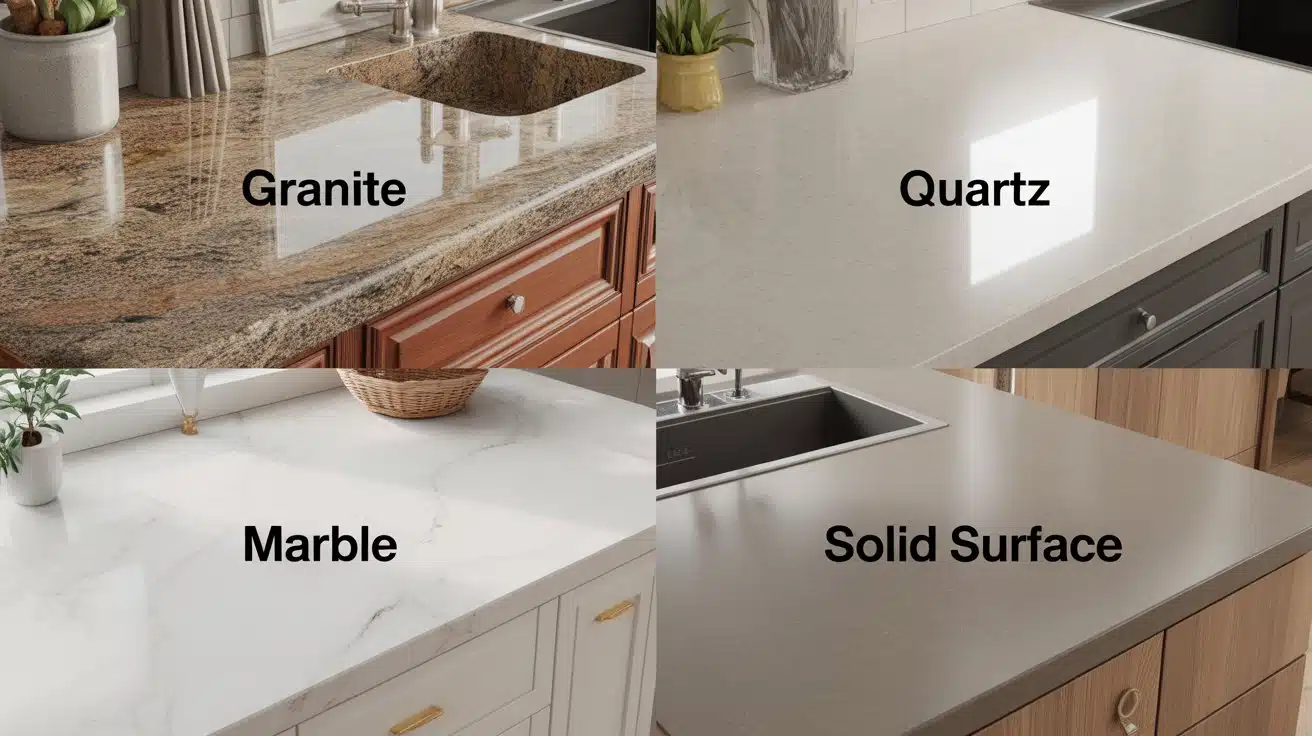
Comparing quartz to other countertop materials helps you know durability, cost, and maintenance to find the best fit for your kitchen or bathroom.
| Feature / Material | Quartz | Granite | Marble | Solid Surface |
|---|---|---|---|---|
| Durability | Hard, scratch-resistant, | Heat-resistant, long-lasting | Softer, scratches easily | Softer, scratches easily, |
| Maintenance | Low | Low | High | Low |
| Appearance | Engineered designs | Natural patterns | Luxurious veining, | Versatile |
| Cost (per sqft) | $50 to $200 | $40 to $200 | $50 to $250 | $40 to $80 |
| Installation | Professional | Moderate | Moderate | Lighter |
| Lifespan | 20 to 25+ years | 25+ years | 5 to 10 years | 10–15 years |
| Special Notes | Stain & acid resistant | Natural stone, heat-tolerant, UV safe | Ages with character, etches from acids | Flexible, thermoformable, |
So, given the pros and cons, the real question is: are quartz countertops truly worth the investment?
Are Quartz Countertops Worth Buying?
Quartz countertops are a long-term, low-maintenance investment that pays off for most owners despite a higher upfront cost.
When Quartz Is Worth It:
- Ideal if staying in your home 5+ years.
- Lifespan: 20–25 years with minimal maintenance.
- Saves money/time vs. materials needing annual sealing.
When Quartz May Not Be Worth It:
- Selling home within 1 to 2 years
- Direct sunlight exposure
- Frequent hot pot use
- Budget under $50/sq ft
- Outdoor installations
Quartz is ideal for indoor kitchens and bathrooms for durability, appearance, and low upkeep. For outdoor use or high-heat cooking, granite may be a better choice.
Conclusion
The pros and cons of quartz countertops reveal a material that offers exceptional durability and low maintenance for indoor use.
Its non-porous surface resists stains and bacteria better than many alternatives, while the wide design range suits various styles.
However, heat sensitivity, UV vulnerability, and higher costs require careful consideration. Quartz works best for busy households that value easy cleaning and consistent patterns.
If you frequently use hot cookware or have a sunny kitchen, consider other options, such as granite. Evaluate your specific needs, cooking habits, and budget before committing.
The right choice balances appearance, functionality, and long-term value. Consider whether quartz countertops align with your priorities.
Have a question or your own experience with quartz? Drop a comment below, we’d love to hear your thoughts.