
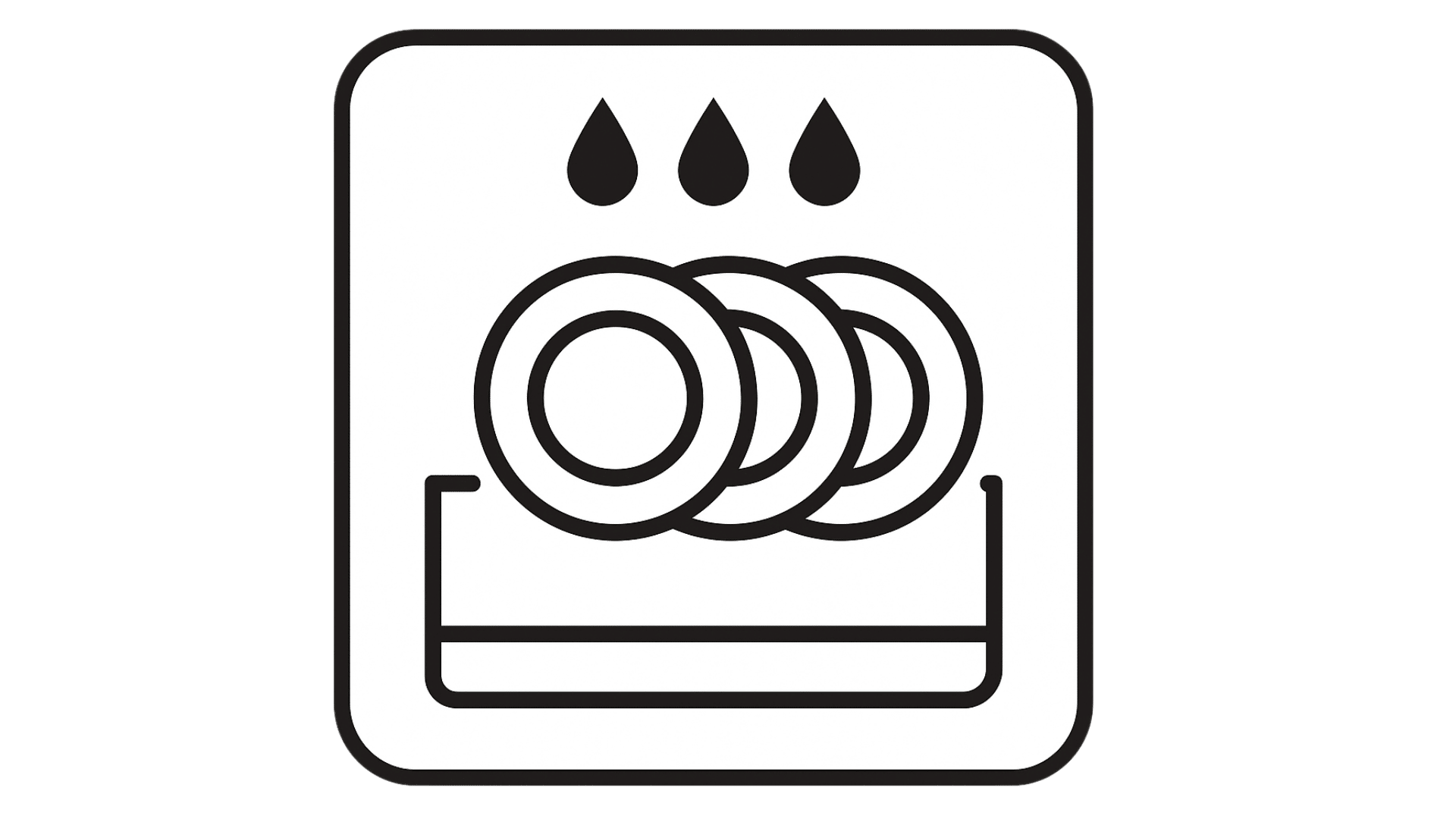
You load your dishes, spot a tiny icon on the bottom of a bowl, and pause. What does that little symbol actually mean?
It looks simple, but misunderstanding it could be why your favorite mug came out cloudy or your plastic lid warped beyond repair.
The phrase “dishwasher safe” is everywhere, yet the dishwasher safe symbol itself often leaves people guessing.
This blog breaks down exactly what manufacturers are telling you with that image.
You’ll learn how to recognize different versions of the symbol, understand what each variation means, and apply that knowledge to protect your kitchenware.
By the end, you’ll know exactly how to interpret the dishwasher safe symbol and load your appliance with confidence.
What Does the Dishwasher Safe Symbol Mean?
The dishwasher-safe symbol is more than just a small mark on your dishes. When you see the dishwasher-safe symbol, it means the item has been tested to withstand the high temperatures and strong detergents used in dishwashers.
Items without this marking might not survive repeated washes, especially those made from delicate plastics or decorated ceramics.
Why it matters:
- Prevents damage: Avoids warping, fading, and cracking.
- Saves money: Extends the lifespan of your kitchenware.
- Ensures safety: Prevents the release of harmful chemicals from overheated materials.
- Protects appliances: Stops debris or melted parts from clogging or damaging your dishwasher.
Since there’s no universal symbol, designs may vary by brand. Learning to recognize it helps you load your dishwasher confidently and keep your favorite pieces in top shape.
What Does the Dishwasher Safe Symbol Look Like?
The most common design features a square or rectangular box, representing the dishwasher interior: with plates, glasses, or both inside, accompanied by water droplets or diagonal spray lines.
But beyond that basic shape, there are several distinct variations, each with a slightly different meaning.
Symbol 1: Square Box with Plates and Diagonal Lines or Water Droplets
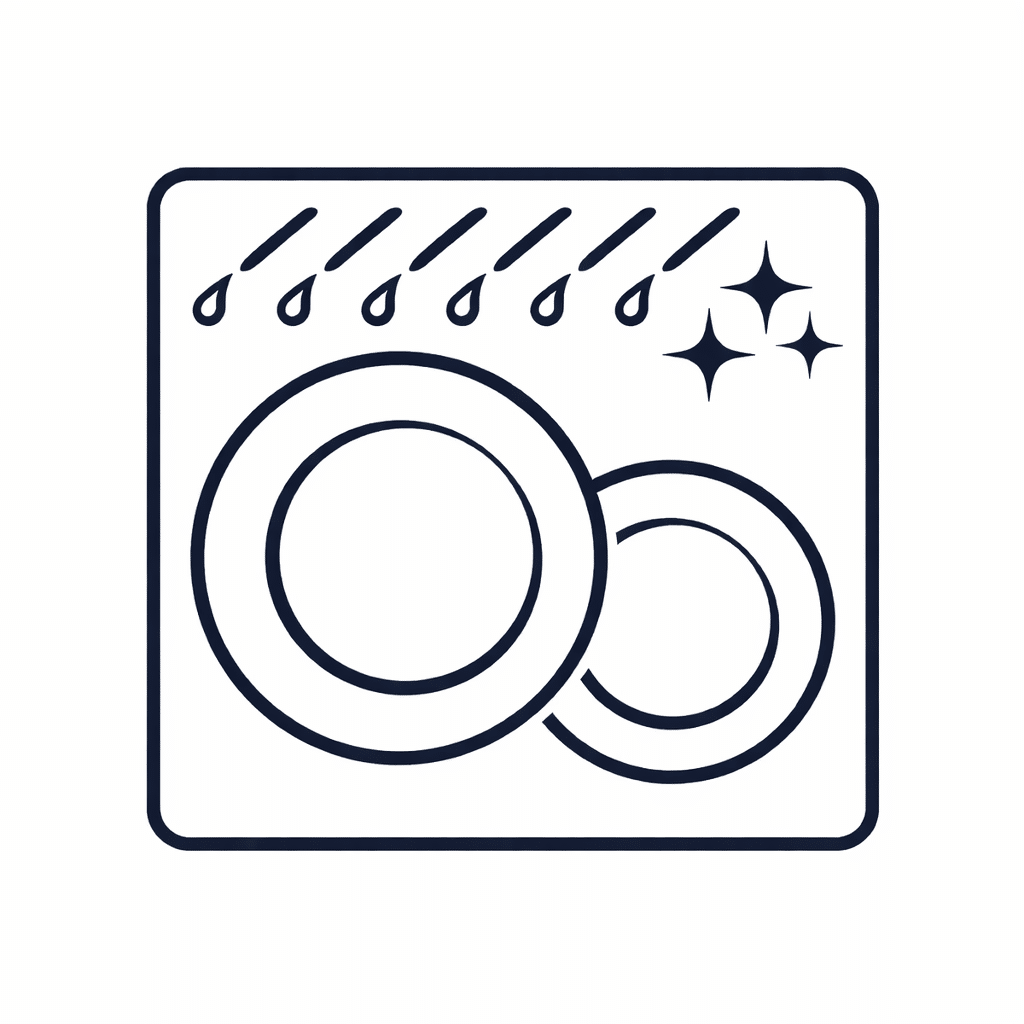
This is the most widely recognized dishwasher-safe symbol. It shows one or two plates inside a square box with diagonal lines or water droplets covering the entire image.
What it means: The item is fully dishwasher safe and can be placed on either the top or bottom rack without risk of heat damage.
Where you’ll see it: On glazed ceramics, stainless steel items, hard plastics, and most everyday glassware.
Symbol 2: Wine Glass or Cup with Water Droplets

This symbol features a single wine glass or cup, either upright or upside down, with water droplets falling onto or around it.
What it means: The item is dishwasher safe. This version is especially common on glassware, stemware, and drinking cups from European manufacturers.
Where you’ll see it: Wine glasses, tumblers, mugs, and glass storage containers.
Symbol 3: Top Rack Only Symbol

This symbol mirrors the standard dishwasher-safe icon, but with a key difference: the water droplets or spray lines appear only on the upper portion of the image. Some versions include the text “Top Rack Only” alongside the icon.
What it means: The item can go in the dishwasher, but must be placed on the top rack only. The heating element in most U.S. dishwashers sits at the bottom, making the lower rack significantly hotter. Placing heat-sensitive items there risks warping, melting, or distortion.
Where you’ll see it: Soft plastics, plastic lids, lightweight containers, and some silicone items.
Symbol 4: Single Plate in a Dishwasher Rack with Water Droplet

This version shows a plate sitting in a rack, with a single water droplet falling onto it.
What it means: The item is dishwasher safe for standard cycles. It’s a simplified version of the standard symbol and carries the same meaning.
Where you’ll see it: Melamine dishware, ceramic bowls, and some flatware.
Symbol 5: Crossed-Out Dishwasher Symbol (Not Dishwasher Safe)
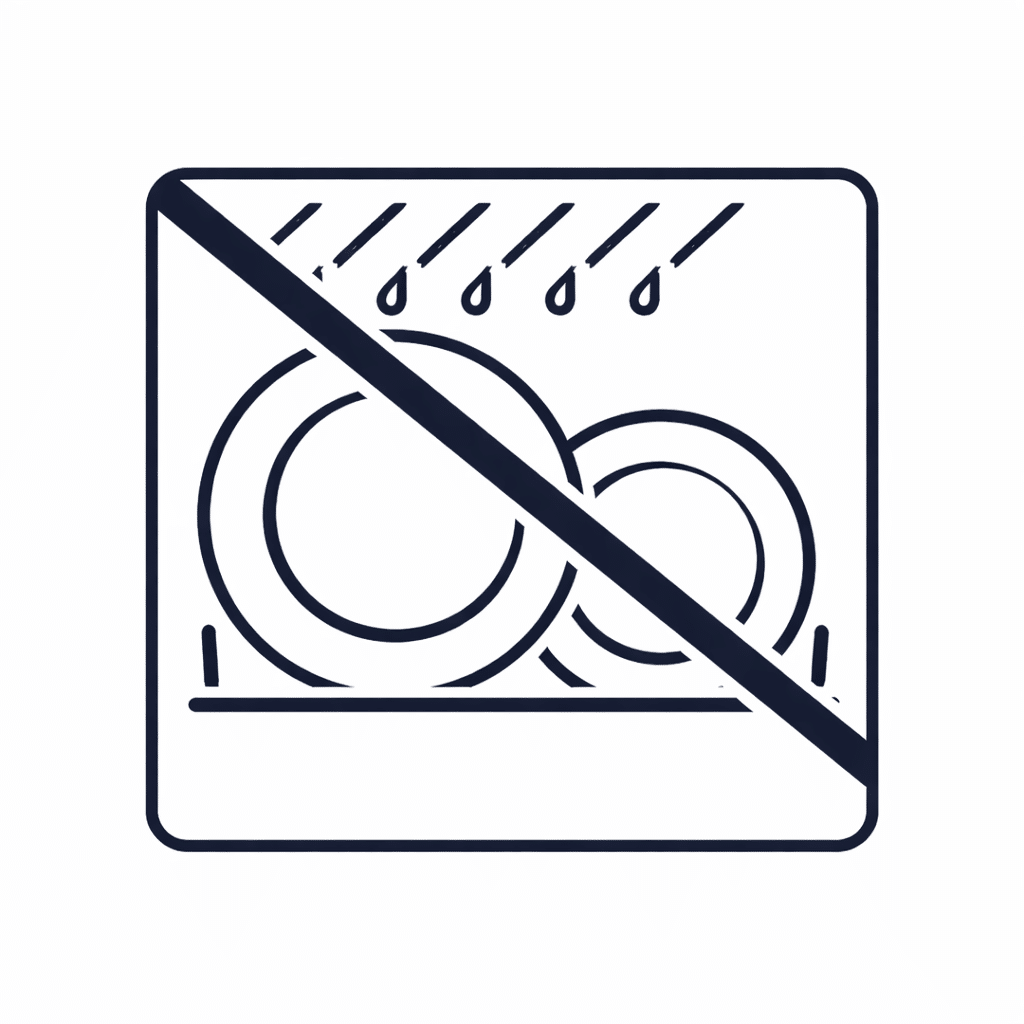
This symbol shows the standard dishwasher icon with an X or a line crossed through it.
What it means: Do not put this item in the dishwasher. Hand washes only. Ignoring this can cause irreversible damage to the item and, potentially, to your appliance.
Where you’ll see it: Hand-painted ceramics, cast iron cookware, wooden utensils, copper items, lead crystal, and delicate non-stick pans.
Symbol 6: Hand in Water Basin (Hand Wash Only)

This symbol shows a hand submerged in a basin or bucket of water.
What it means: This item must be hand-washed. It is not dishwasher safe under any conditions.
Where you’ll see it: Heirloom dishware, fine china, antique or hand-decorated pieces, and delicate glassware.
How Does the Symbol Apply to Different Materials?
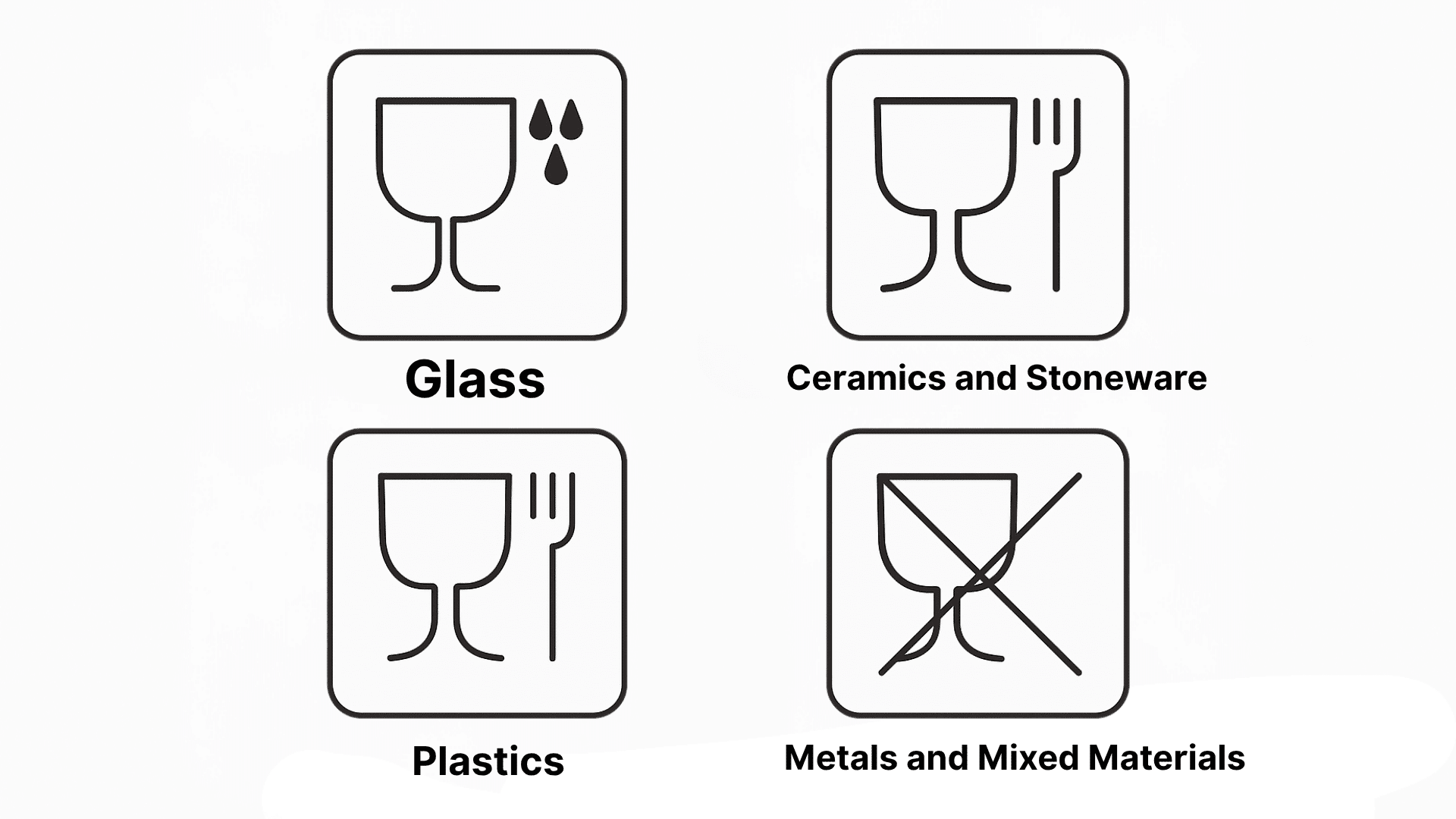
Material type strongly determines whether an item truly survives dishwasher conditions. Different materials respond differently to heat, water, and detergent exposure.
1. Glass
Glass items are often designed or specially treated to be dishwasher safe. Modern glassware undergoes annealing or tempering, strengthening it against heat and water pressure.
Most newer glass products display the dishwasher safe symbol, confirming full compatibility with typical dishwasher cycles.
2. Ceramics and Stoneware
Ceramics can vary greatly in dishwasher safety. Glazed pieces usually handle cycles well, but hand-painted or low-fired ceramics may chip, fade, or crack.
Always check for the dishwasher-safe symbol;if missing, hand-wash to preserve the design and glaze quality.
3. Plastics
Plastic items need special attention in dishwashers. Their melting point and heat tolerance differ by type, making “top rack only” symbols important to follow.
Placing plastics near the heating element can cause warping or chemical leaching over time.
4. Metals and Mixed Materials
Metals, even stainless steel, aren’t always fully safe. Coated finishes, nonstick surfaces, or handles made from wood or resin may react badly to heat.
Always consider the item’s entire construction before trusting the dishwasher-safe symbol completely.
Understanding how each material interacts with dishwasher conditions helps you make smarter loading decisions. By reading the dishwasher-safe symbol correctly and pairing it with material knowledge, you’ll extend the lifespan of your kitchenware.
What If There’s No Dishwasher-Safe Symbol?
This is one of the most common questions people have, and the answer isn’t always straightforward.
The absence of a symbol doesn’t automatically mean the item is unsafe. Some manufacturers, especially older brands or smaller producers, simply don’t label their products with any care symbols.
However, it also doesn’t mean the item is safe.
Here’s how to handle it:
- Check the original packaging: care instructions are often printed there, even when not stamped on the item.
- Visit the manufacturer’s website: search the product name or model for care instructions.
- Look for written text: some manufacturers print “Dishwasher Safe” or “Hand Wash Only” in plain text rather than a symbol.
- Default to hand washing: when genuinely unsure, hand washing is always the safer option, especially for valuable, decorative, or older items.
- Consider the material: if it’s untreated wood, hand-painted, cast iron, or delicate crystal, assume it’s not dishwasher safe.
If you have a faded or worn symbol on an older item, err on the side of caution. Symbols can wear off over years of use, and the item’s heat tolerance may have degraded along with the marking.
Items That Are Never Dishwasher Safe (Regardless of Any Symbol)
Some materials should never go in a dishwasher, even if you think you’ve spotted a symbol. These include:
- Hand-painted or gilded china paint and metallic finishes lift and fade
- Lead crystal is sensitive to high heat and detergent cause cloudiness and structural weakening
- Cast iron cookware ruins the seasoning and causes rust
- Copper pots and pans discolor, pit, and corrode
- Wooden utensils and cutting boards warp, crack, and split
- Non-stick pans (even if labeled safe) coating degrades significantly faster
- Antique or heirloom dishware construction standards were different; heat tolerance is unknown
- Items with glued components ahave dhesive that breaks down under heat and moisture
- Thin, decorative plastics melt or warp near heating elements
- Insulated tumblers with vacuum sealing allow water to infiltrate the insulation layer
When in doubt with any of these, hand-wash. The few minutes saved aren’t worth the damage.
Other Common Kitchenware Symbols
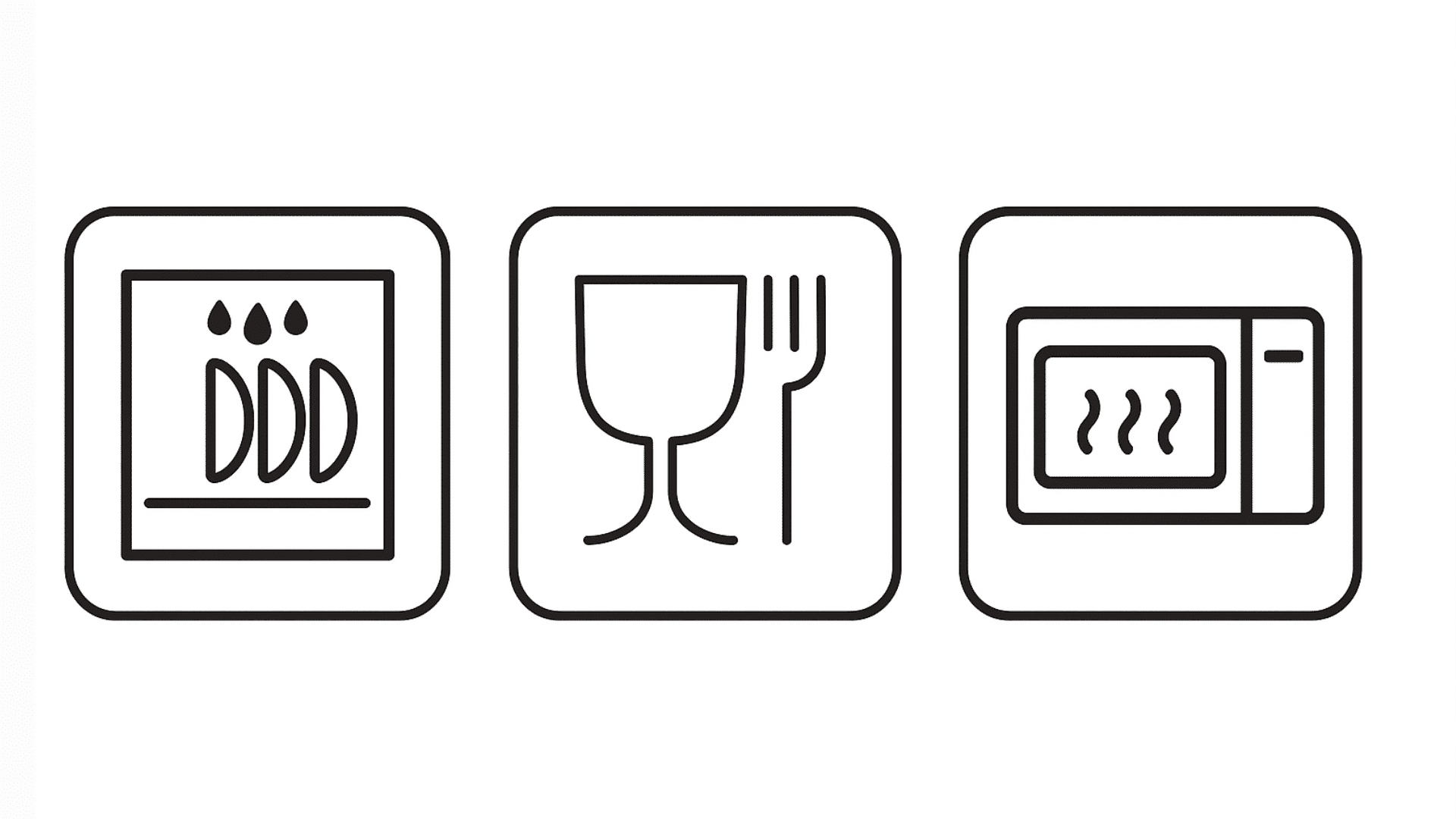
Not every mark on your kitchenware refers to dishwasher safety. Here are a few common symbols you’ll often see and what each one means:
Food Safe Symbol: Shown as awine glass and fork, this means the item is safe for direct contact with food and drink. It doesn’t indicate anything about dishwasher or heat resistance.
Microwave Safe Symbol: Usually features wavy lines or a microwave outline. This tells you the item can handle microwave heating without melting or leaching chemicals.
Freezer Safe Symbol: Represented by a snowflake, it means the item can safely store food at freezing temperatures without cracking or degrading.
Oven Safe Symbol: Displays as an oven icon or a temperature number. It shows the item can withstand oven heat, but not necessarily direct stovetop flame.
Not Dishwasher Safe Symbol: A crossed-out dishwasher or water droplet icon means the item should be hand-washed only to prevent warping, fading, or damage.
Always read these symbols together. An item might be food-safe but not dishwasher- or microwave-safe. Knowing the difference keeps your kitchenware in great shape longer.
Best Practices for Using Dishwasher-Safe Items

Follow these practical steps to protect your kitchenware:
- Always inspect the bottom: Check for the symbol before loading any item into your dishwasher.
- Place items appropriately: Follow “top rack only” cues to prevent heat damage to sensitive materials.
- Avoid overcrowding the top rack; allow the spray arms to spin freely for proper cleaning.
- Use suitable detergents and cycles: Select cycles matching your U.S. dishwasher’s standard options.
- Prefer top rack for plastics: Place plastic items on the top rack when possible to avoid high heat.
- Hand wash when uncertain: Treat hand-painted ceramics or heirloom glass with care by handwashing.
- Review older items periodically: Symbols fade over the years, so inspect aging kitchenware regularly.
Regional Differences in Dishwasher Safe Symbols
If you purchase kitchenware from international brands or shop for imports, you may encounter symbol variations that look unfamiliar.
- European brands often use the wine glass with water droplet symbol more frequently than the square box design common in the U.S.
- Asian manufacturers may use text-only labeling in their regional language alongside a symbol, or omit symbols entirely in favor of written care instructions.
- Commercial or foodservice items (common on brands like Cambro or Vollrath) often meet NSF standards for high-temperature commercial dishwashers, which run significantly hotter than home models.
When purchasing imported kitchenware, check the brand’s English-language website or product manual to confirm dishwasher compatibility rather than relying solely on the symbol.
Conclusion
That tiny symbol on the bottom of your dish is doing a lot of work. It’s the difference between kitchenware that lasts years and pieces that warp, cloud, or crack after a handful of cycles.
Now you know what each variation means, which materials need extra caution, and what to do when there’s no symbol at all.
The habit is simple: check before you load. It takes three seconds and saves you from replacing items you didn’t need to replace.
Still unsure about a specific item in your kitchen? Drop it in the comments, brand name, material, whatever you know, and we’ll help you figure it out.
Frequently Asked Questions
Does “Dishwasher Safe” Mean “Oven Safe” Too?
No. They test for completely different heat types. Dishwasher-safe covers are hot-water and steam-resistant. Oven-safe covers dry radiant heat. Always check each symbol separately before use.
Why Do My Dishes Come Out Cloudy Even Though They’re Dishwasher-Safe?
Cloudiness usually comes from hard water mineral deposits or using too much detergent, not symbol misreading. A rinse aid and a reduced detergent amount typically fix this without damaging the dish.
Can I Put Baby Bottles and Feeding Accessories in the Dishwasher?
Only if they display the dishwasher safe symbol. Most modern baby bottles are top-rack safe. Always check each component individually, since nipples, valves, and caps may have ratings different from the bottle itself.
Can Knives Go in the Dishwasher if They Have the Dishwasher-Safe Symbol?
Technically, yes, but it’s not recommended. Dishwasher heat and detergent dull blades faster and can damage handles over time. Hand washing extends the lifespan of the knife significantly, regardless of the symbol.