What makes a house feel calm the moment you step inside?
Japanese-style houses achieve this through timeless design principles that blend simplicity with nature. These homes have gained worldwide attention for their clean lines, natural materials, and spaces that breathe.
Modern Japanese houses take these traditional concepts further, creating flexible layouts perfect for contemporary living.
From compact urban homes in Tokyo to spacious suburban retreats, modern Japanese architecture shows how to live with less clutter and more intention.
This guide explains what defines Japanese-style homes, their key features, real examples, and practical ways to bring these principles into your own space.
What Defines a Japanese Style House?
A Japanese-style house is defined by simplicity, harmony with nature, and thoughtful design. These homes focus on creating calm, uncluttered spaces that connect people with their surroundings.
At the heart of Japanese architecture is the idea of balance. The design avoids excess. Every element serves a purpose. This approach creates homes that feel peaceful and functional.
Connection with Nature:
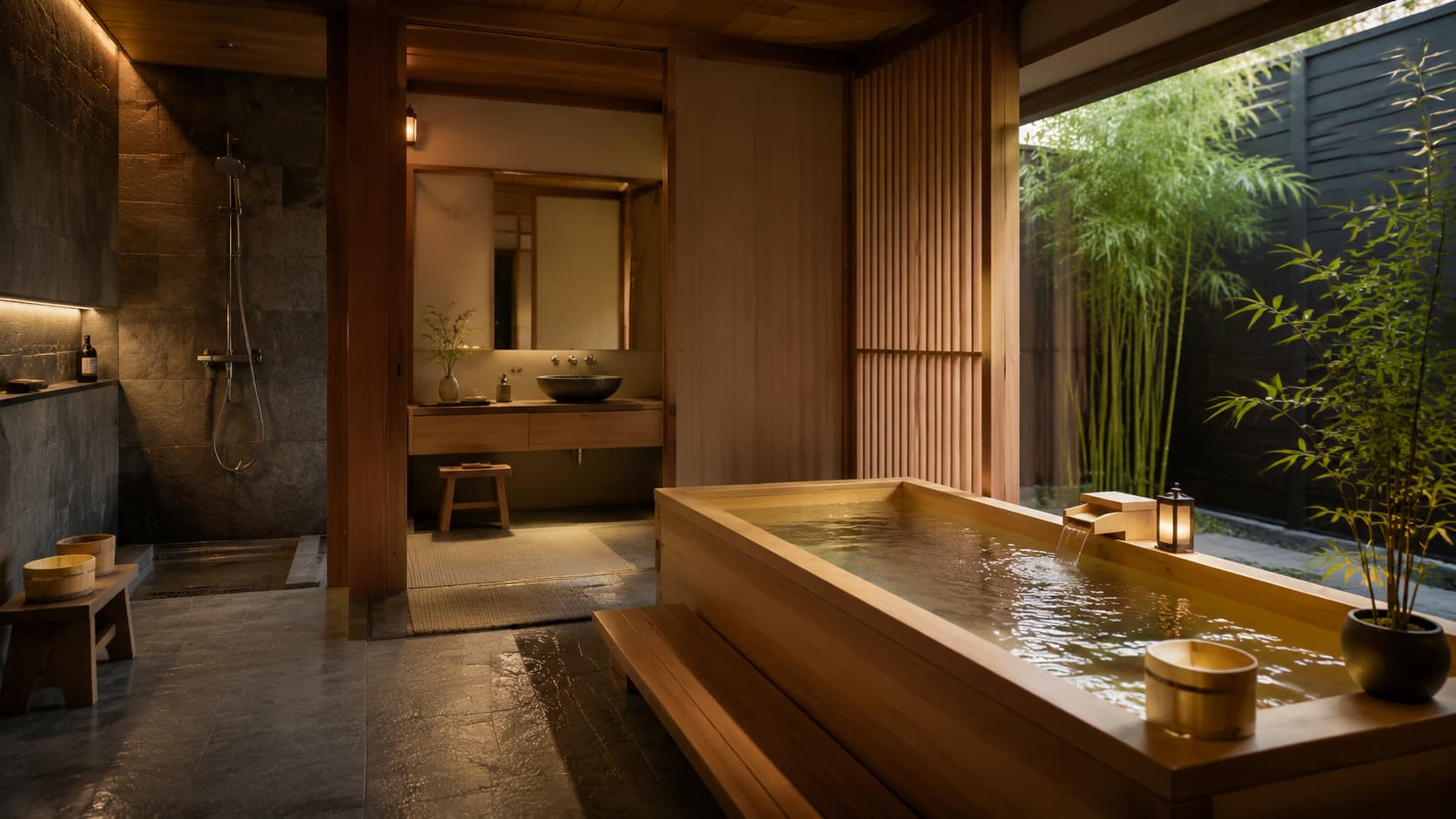
Japanese homes blur the line between indoors and outdoors. Large windows and sliding doors open to gardens or courtyards. This design brings natural light, fresh air, and greenery into daily life.
Traditional Elements in Modern Designs:
Even today, modern Japanese houses keep traditional features alive. Here’s what you’ll often see:
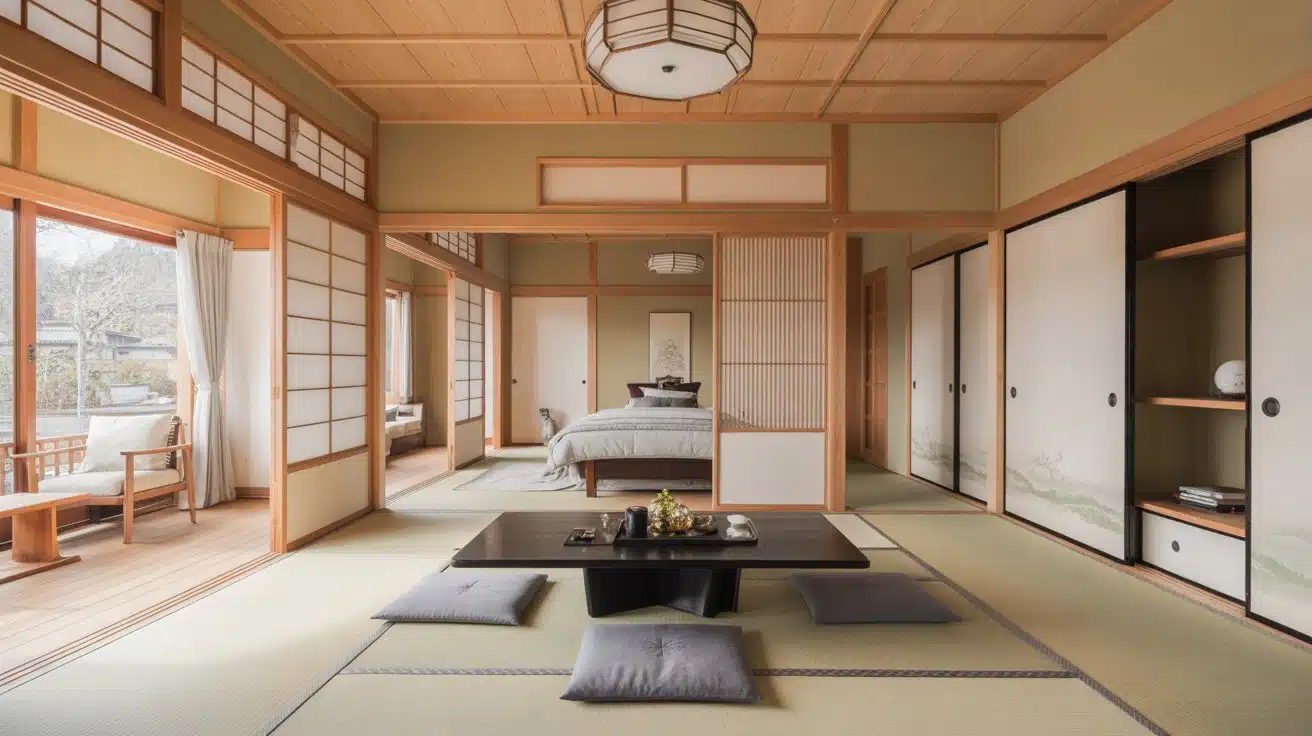
- Sliding Screens (Shōji and Fusuma)
- Tatami Flooring
- Internal Courtyards
Indoor-Outdoor Harmony:
The layout of a Japanese-style house encourages a sense of flow between inside and outside. Wide verandas act as transitional spaces. You can sit here to enjoy the garden while staying protected from rain or sun.
Having seen what defines a Japanese-style house, let’s now get into the key features that shape modern Japanese homes.
Key Features of Modern Japanese Style House
Modern Japanese houses blend traditional principles with today’s lifestyle needs. They keep the focus on simplicity and nature while adding comfort and efficiency.
1. Minimalist Designs
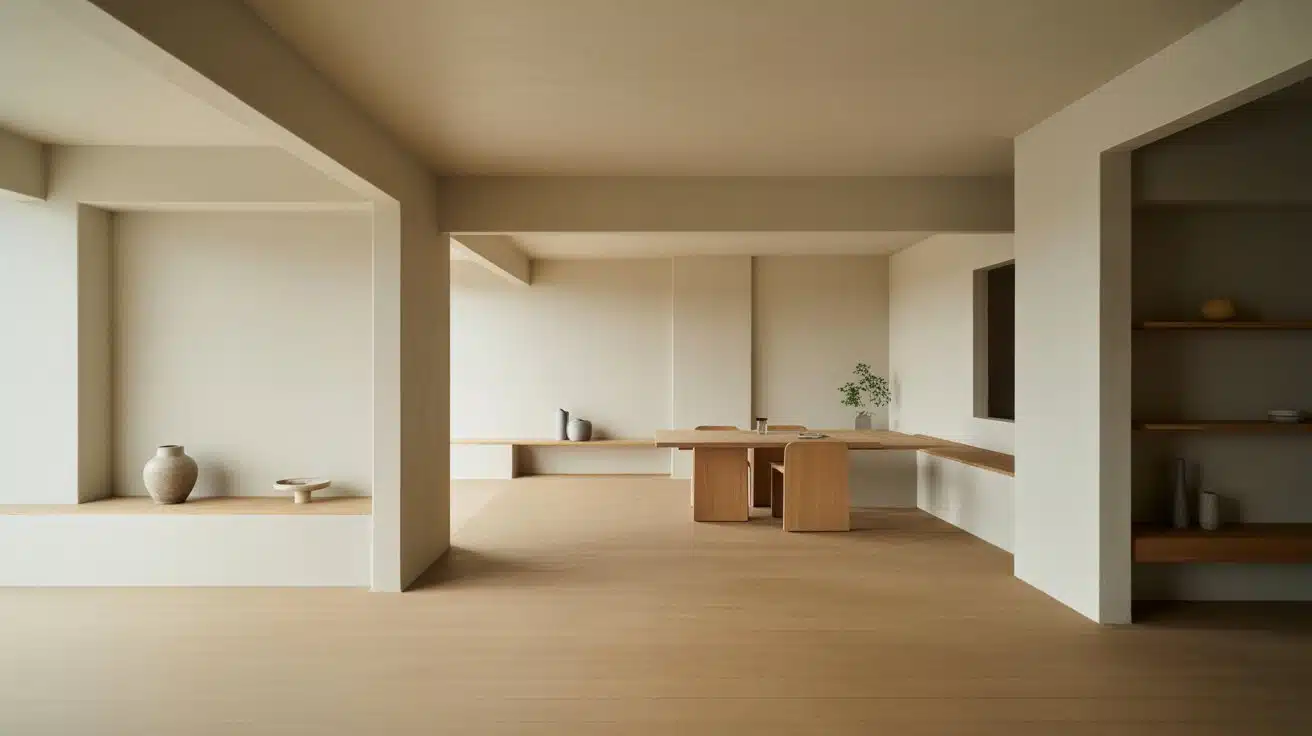
Clean lines and neutral colors define modern Japanese house interiors. White walls, light wood tones, and gray accents create calm spaces. There’s no clutter or unnecessary decoration.
Every piece of furniture has a purpose. Storage stays hidden. The result is a home that feels open and peaceful. Key design choices include:
- Open shelving with minimal display items
- Built-in storage to hide everyday clutter
- Natural textures instead of bold patterns
2. Flexible Layouts & Space Efficiency
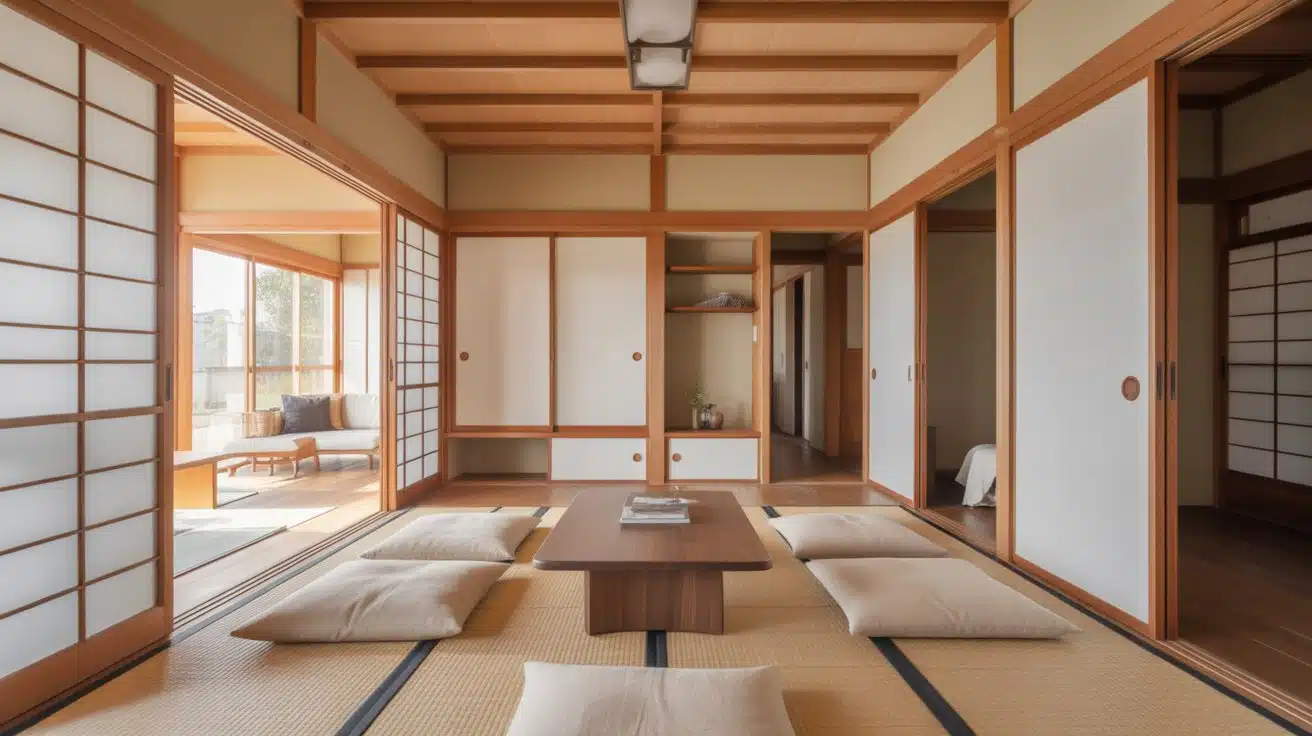
Small Japanese houses show how to live comfortably in compact spaces without feeling cramped. Features that maximize space:
- Open floor plans without fixed walls
- Multifunctional rooms that adapt to different activities
- Low furniture (floor cushions, low tables) to make ceilings feel higher
- Built-in storage under floors or in walls
3. Use of Natural Materials
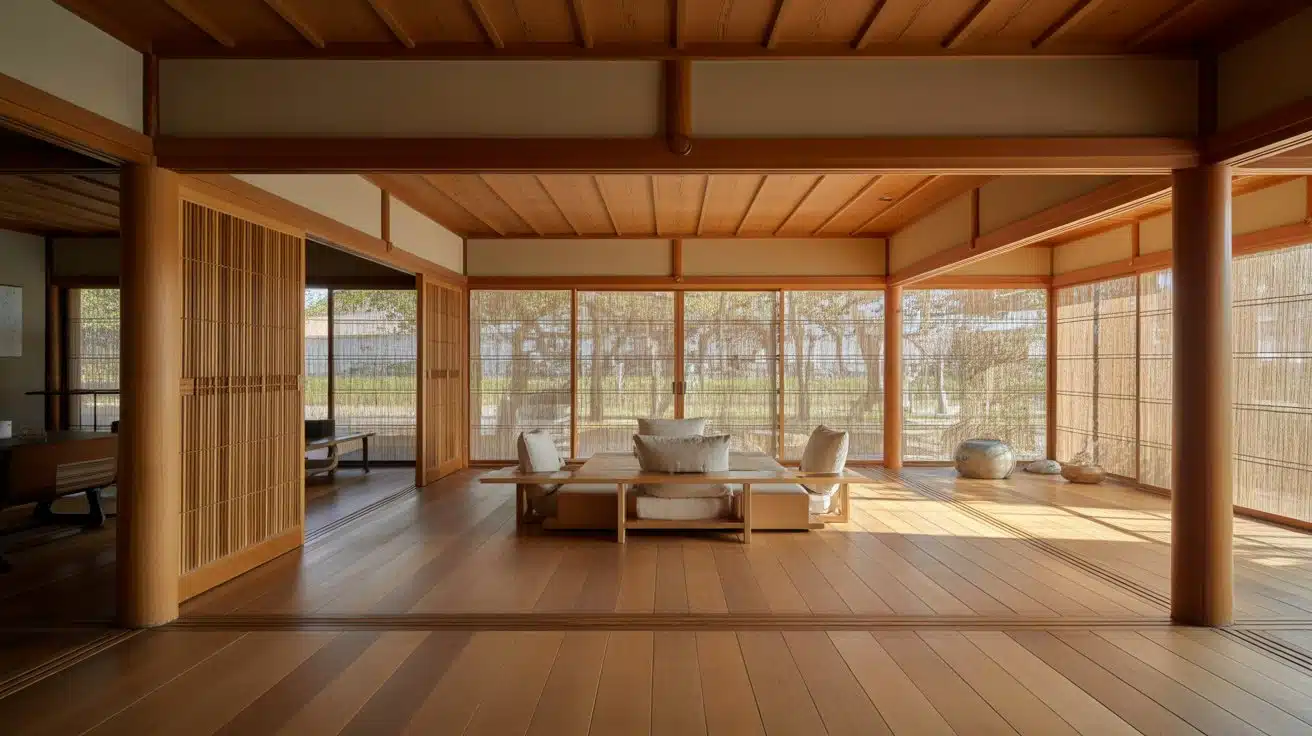
Wood is the primary material in modern Japanese houses. You’ll see it on floors, walls, ceilings, and structural beams. Common materials include:
- Timber frames (often exposed to show craftsmanship)
- Wood finishes in light tones like hinoki cypress or cedar
- Bamboo for screens or decorative elements
- Paper (in shoji screens) or modern alternatives like frosted glass
4. Climate Adaptation Features
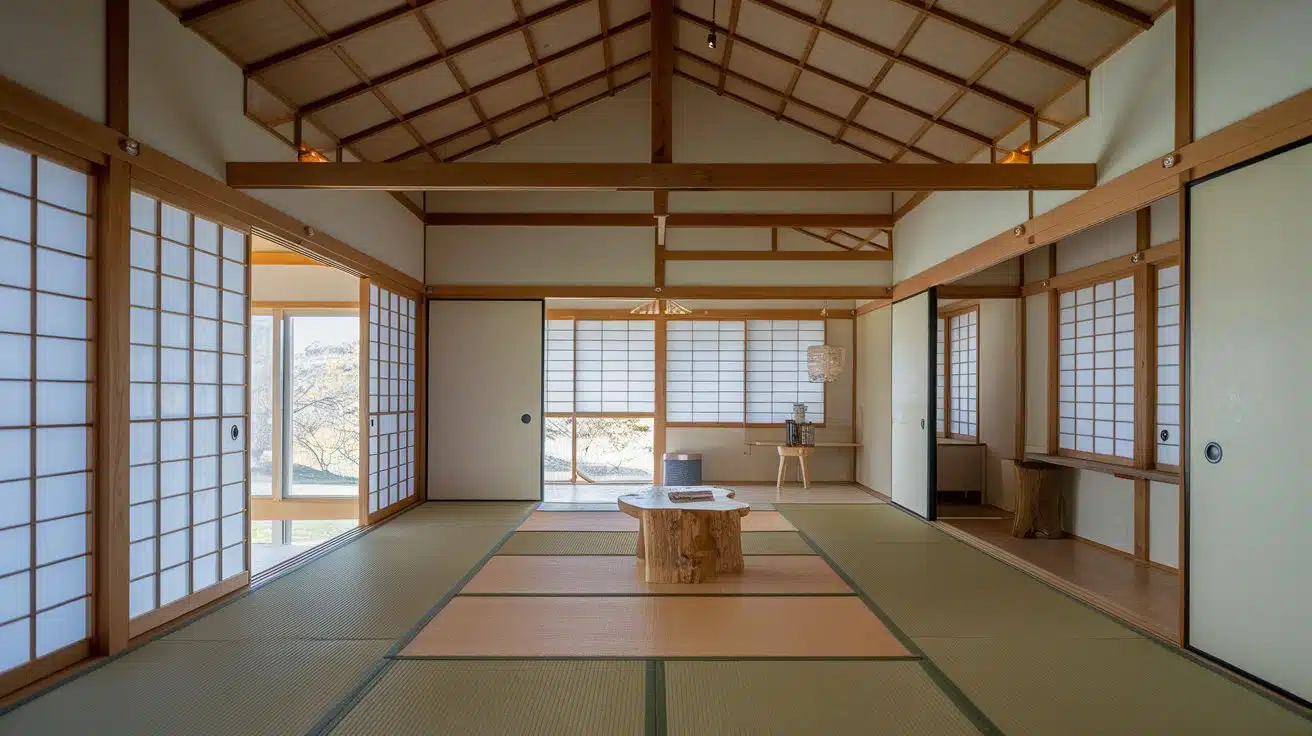
Japanese homes evolved to handle hot, humid summers and cold winters.
- Deep eaves and overhangs provide shade in summer while letting in low winter sun.
- Ventilation principles create natural airflow.
- Windows on opposite walls for cross-ventilation.
- High windows or vents to release hot air.
Now that we’ve examined the key features of modern Japanese-style houses, let’s see how to incorporate these design elements into your own home.
How to Incorporate Japanese Design in Your Home?
You don’t need to build from scratch to bring Japanese style into your space. These practical tips work for renovations or updates.
- Use natural materials and muted color palettes
- Introduce indoor gardens or small courtyards
- Create open, flexible floor plans with sliding partitions
- Incorporate deep eaves and shaded verandas
- Focus on minimalism: clutter-free, functional design
You don’t need to change everything at once. Pick one principle and apply it to one room. Notice how it affects the feel of the space. Then gradually expand.
With a clear knowledge of how to incorporate Japanese design into your home, let’s check out inspiring Japanese-style house design ideas to bring these concepts to life.
7 Japanese Style House Design Element Ideas
These specific features bring true Japanese character to your home. Each idea combines traditional wisdom with practical modern updates.
1. Engawa (Veranda Corridor)
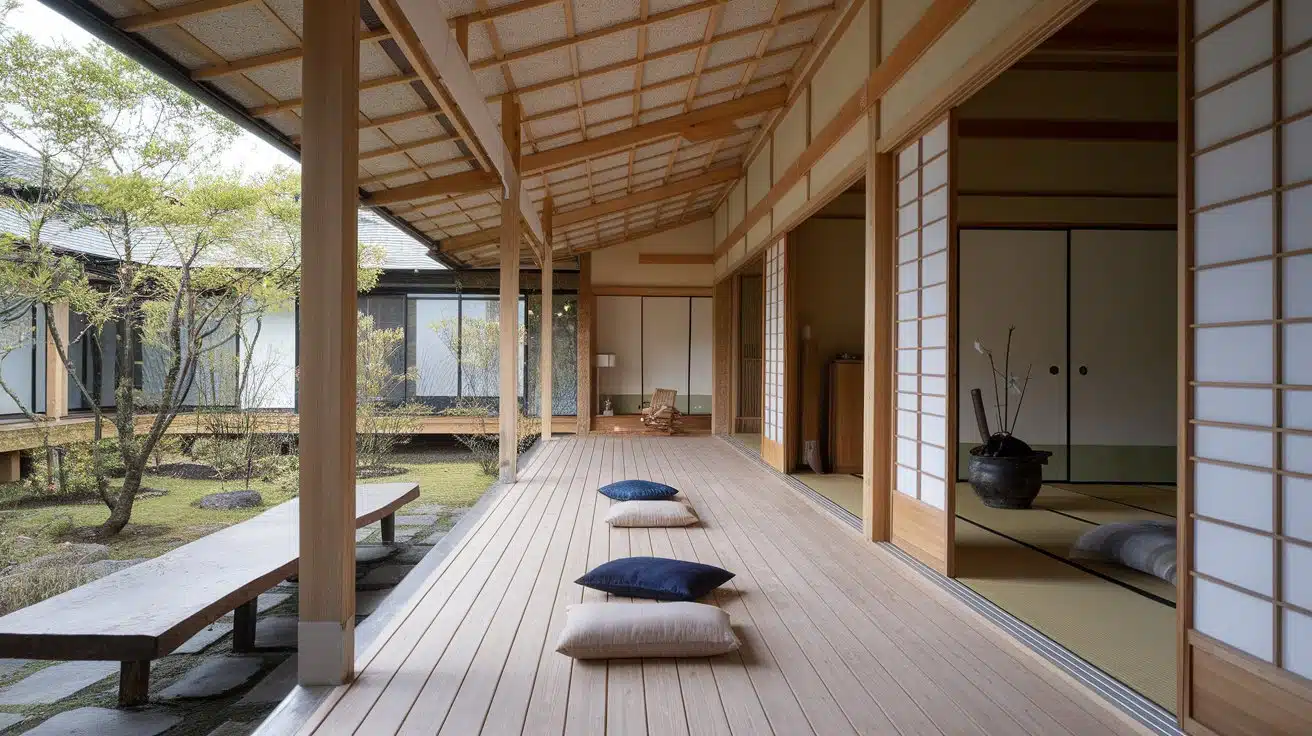
The engawa is a wooden corridor that runs along the edge of a Japanese-style house, connecting indoor spaces with the garden. Practical uses:
- Morning coffee spot with garden views
- Outdoor workspace with shade and breeze
- Play area for children (visible from inside)
- Path between rooms while enjoying fresh air
2. Shoji Screens Instead of Curtains
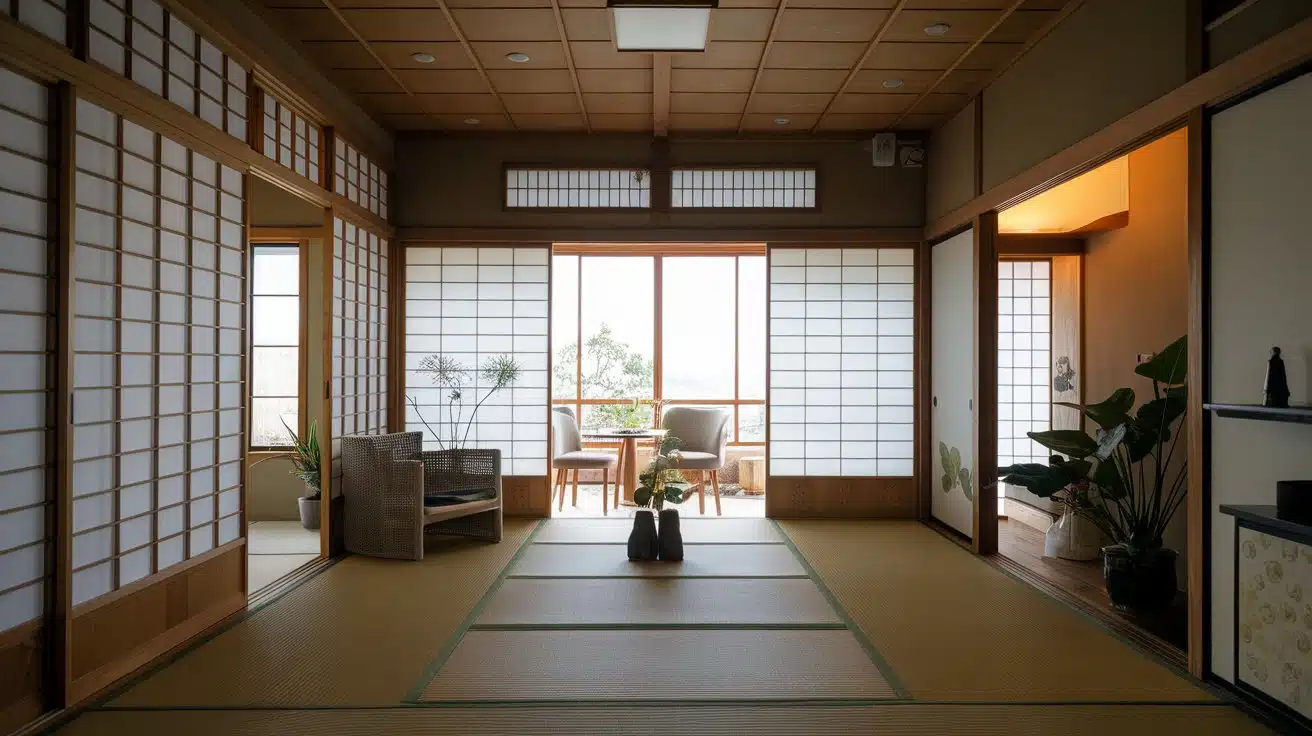
Replace heavy curtains with sliding shoji panels for windows or interior partitions. Benefits:
- Soft, diffused light throughout the day (no harsh glare)
- Privacy without blocking brightness
- Flexibility in room layout (slide open or closed as needed)
- True Japanese aesthetic
3. Tatami Rooms (Washitsu)
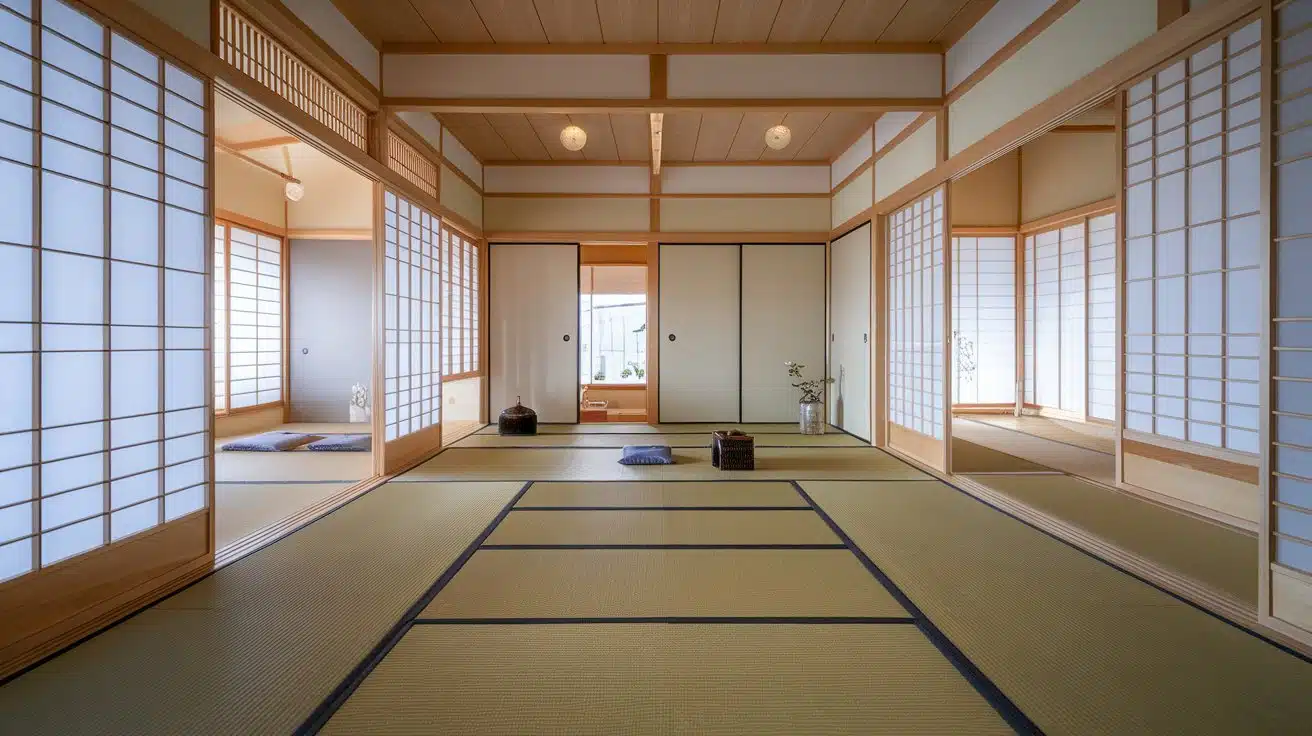
Include at least one tatami-matted room in your modern Japanese house. Functions:
- Meditation or yoga space
- Tea ceremony area
- Guest room (use futons that store away during the day)
- Multipurpose living space
4. Minimalist Courtyard Garden (Naka-niwa)
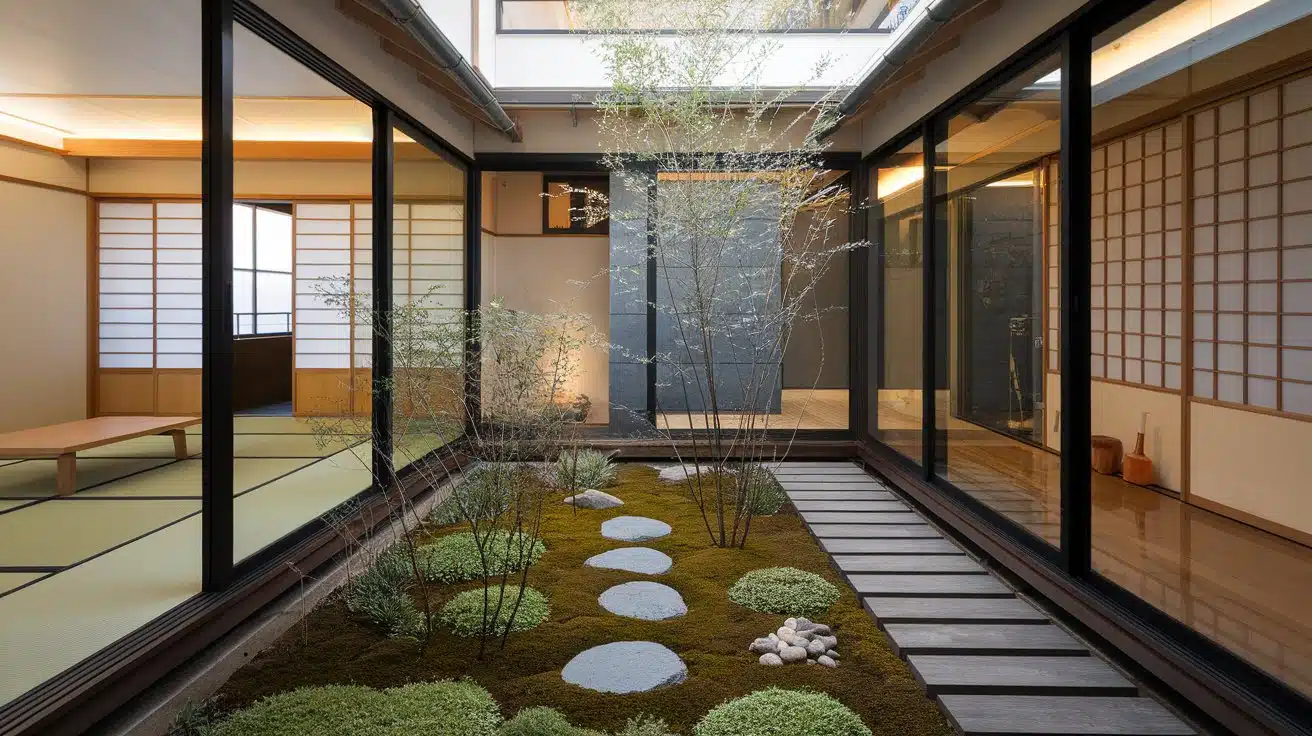
A small inner courtyard brings nature to the center of your home. Benefits:
- Brings nature inside (visible from multiple rooms)
- Enhances natural light to interior spaces
- Provides seasonal views that change throughout the year
- Improves natural ventilation
5. Natural Wood and Vertical Lines
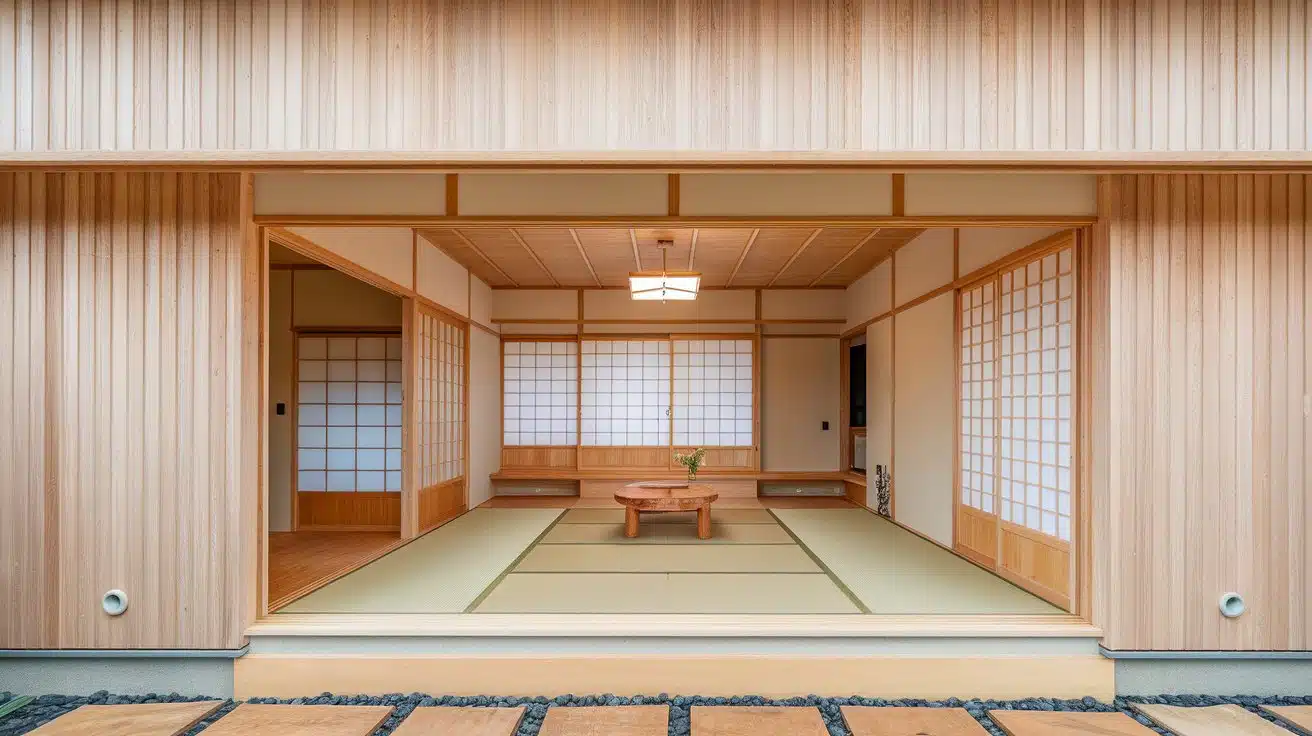
Use vertical timber cladding for exterior walls or interior features. Benefits:
- Adds warmth and texture
- Creates strong visual lines that draw the eye upward
- Natural aging develops an attractive patina over time
- Original modern Japanese architecture looks
6. Ground-Level or Horizontal Windows
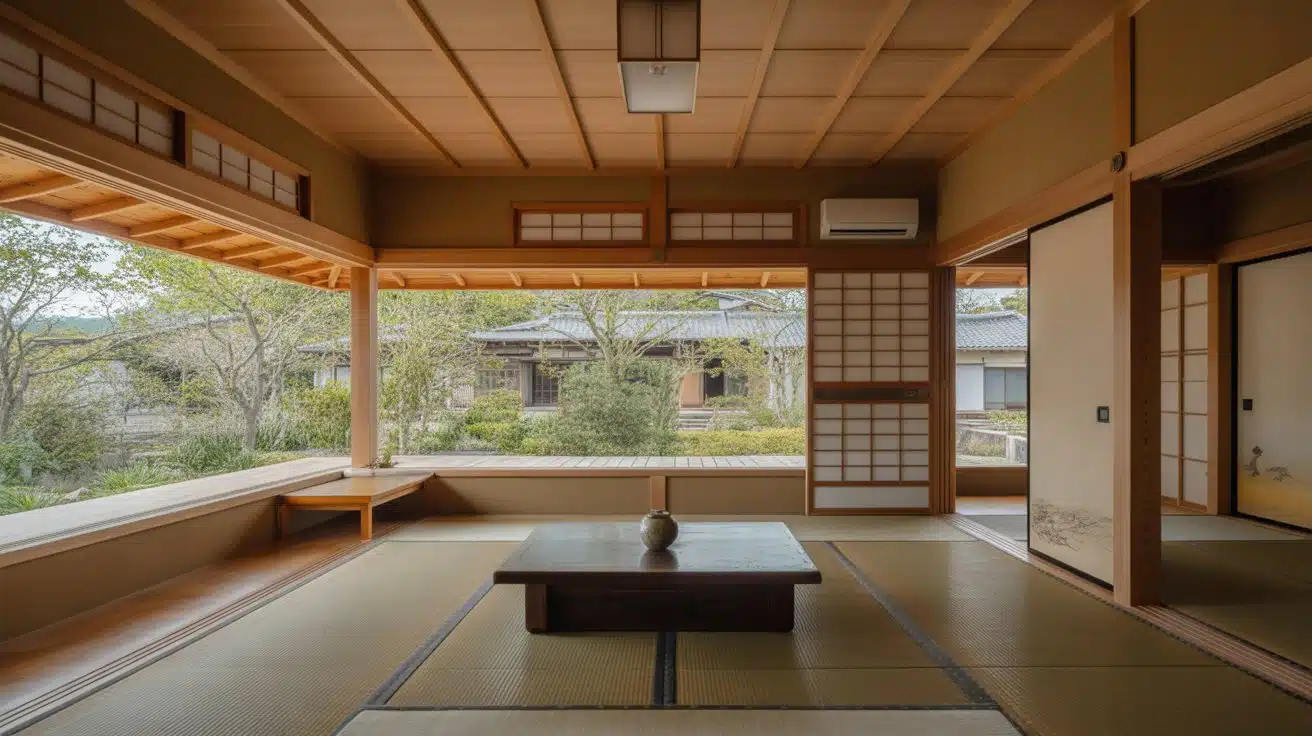
Install low, horizontal windows to frame garden views or the horizon. Benefits:
- Creates a calm, contemplative connection with the outside
- Works well with floor seating or low furniture
- Emphasizes horizontal landscape planes
- Offers a different perspective than standard windows
7. Deep Eaves and Overhangs
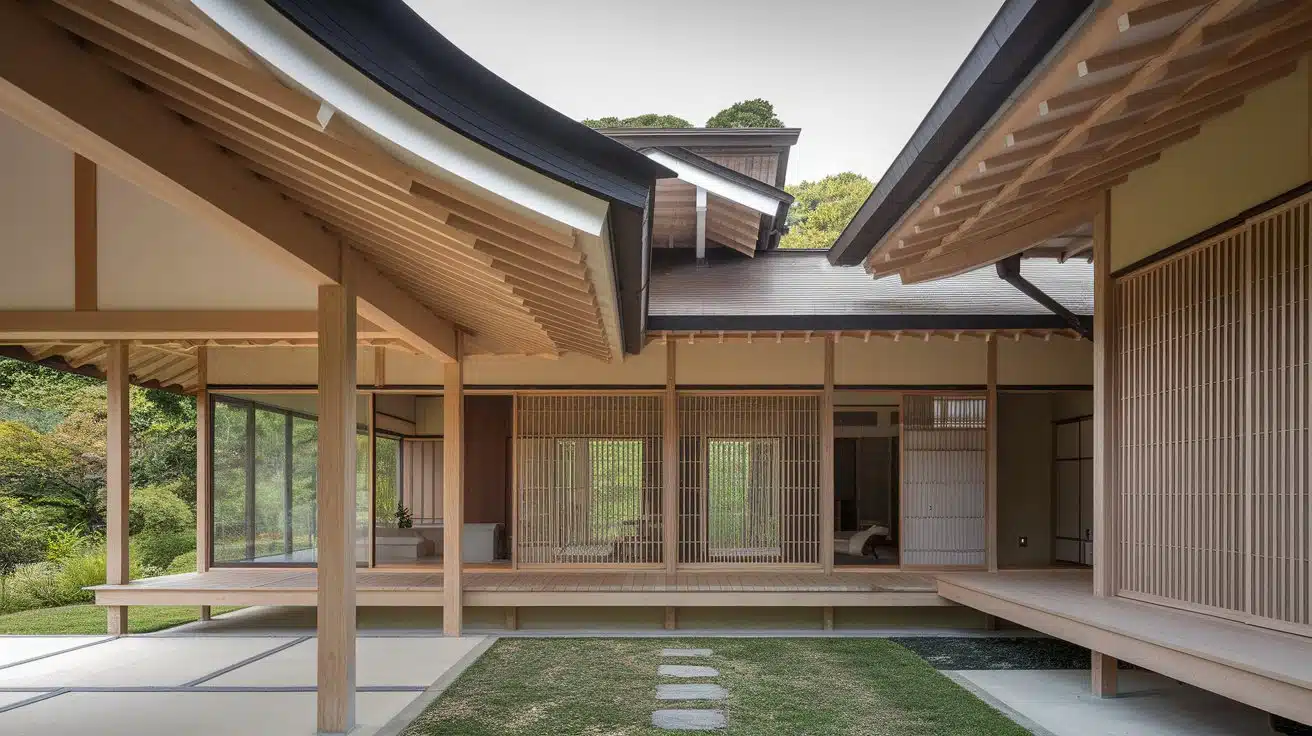
Extend roof eaves beyond walls to provide shade and protection. Benefits:
- Passive cooling (blocks summer sun)
- Reduces rain splash on walls and foundations
- Protects wooden elements from weather damage
- Creates a traditional Japanese-style house silhouette
By applying the simplicity, harmony, and functionality of Japanese design, you can create a home that is not only beautiful but also calming and timeless.
Conclusion
Japanese-style houses offer more than beautiful design; they provide a framework for calmer, more intentional living.
From minimalist aesthetics to flexible layouts, these homes show how architecture can improve daily life.
Modern Japanese houses adapt traditional wisdom to contemporary needs, creating spaces that work for families, professionals, and anyone seeking harmony with nature.
Whether you’re building new, renovating, or simply updating your current home, the principles explained here: natural materials, indoor-outdoor connection, functional simplicity can change your space.
Start with small changes: declutter one room, add natural elements, or create flexible zones.
Your home can become the peaceful retreat you need.