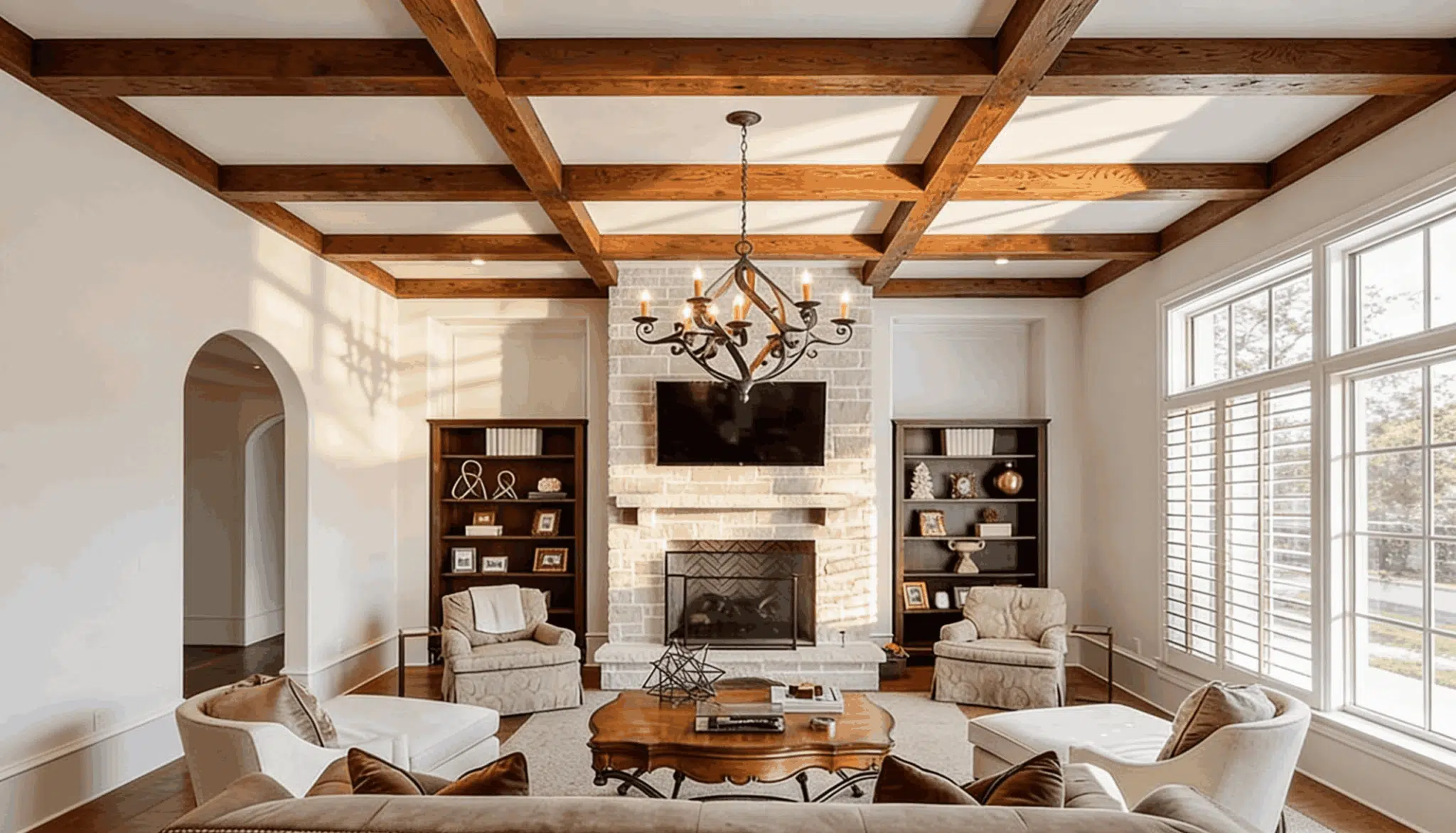
Exposed ceiling beams are one of those features that make a room feel like it was built with intention.
The kind of architectural detail that makes you want to linger in a space rather than pass through it. The problem is that most homes were not built that way.
Adding real structural wood beams means permits, engineering assessments, and costs that climb quickly past what most renovation budgets can absorb.
Faux wood beams for ceilings is the answer I give most often when clients want that look without the structural project.
They can be installed over a weekend, and from a typical viewing distance, most people won’t notice the difference. Yet, they transform the entire atmosphere of the room.
This guide covers everything you need: faux beam materials, ideal rooms, choosing size and style, installation process, and a realistic budget to help you make informed decisions.
What Faux Beams Are Made Of
Before ordering, it’s important to know what you’re getting for your home. There are two main options:
- Pre-made Faux Beams: Made from high-density polyurethane foam, these beams are lightweight, moisture- and insect-resistant, prefinished with realistic wood-grain textures, and won’t warp or crack like real wood.
- DIY Lumber Box Beams: Made from 3 planks of whitewood or pine, assembled into a hollow U-shape and stained to mimic wood. While more labor-intensive and customizable, they are less expensive per linear foot.
The choice depends on whether you prefer to build and customize or simply unwrap and install. Both options are manageable with a weekend and basic tools.
Faux beams offer a more affordable, customizable, and easier-to-install alternative to real structural wood beams, and nowadays, the difference is nearly impossible to notice.
Why Faux Beats Real Wood Beams for Most Homes
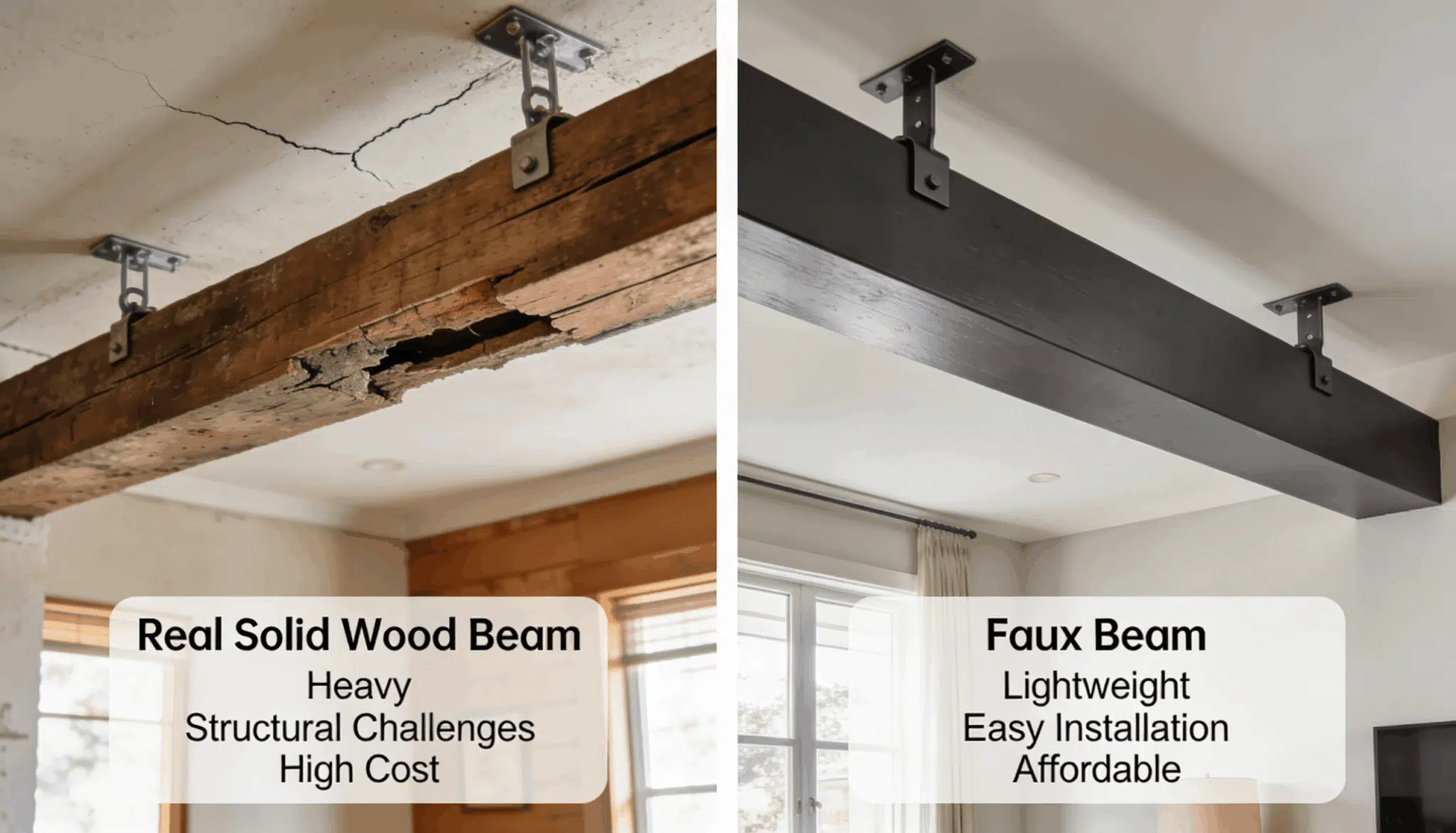
Real exposed wood beams are beautiful. They are also heavy and expensive, and in most existing homes, structurally complicated to add after the fact.
A solid wood beam of the same dimensions as a standard faux beam can weigh 10 to 15 times as much.
That weight matters for ceiling attachment, for older homes with aging joists, and for the cost of getting the material into the space.
Real reclaimed wood beams can cost $400 or more per beam before installation. Faux beams start around $80 for pre-made polyurethane.
Beyond cost and weight, real wood warps and absorbs moisture over time.
Faux beams do neither of those things. They hold their appearance year after year without any maintenance.
The honest limitation: at very close range, a faux beam does not feel like solid timber when you knock on it or look at it from six inches away.
From across the room, from the couch, from the dining table, that distinction disappears completely
Where Faux Beams Make the Most Difference
Most designers show inspirational photos but fail to explain where faux beams truly make sense in a room. This section provides a framework for understanding where these beams can elevate your space most effectively.
1. Living Room
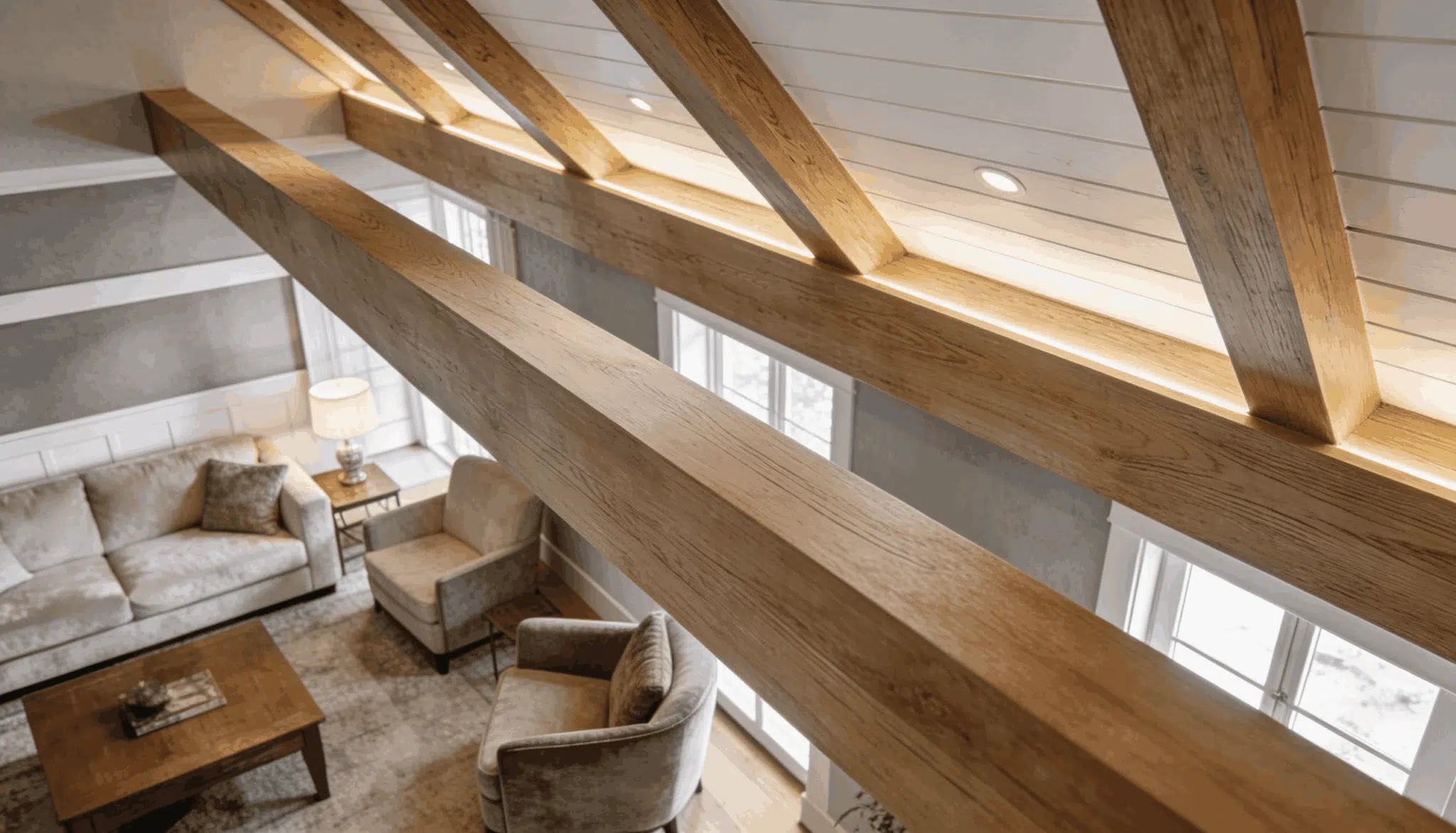
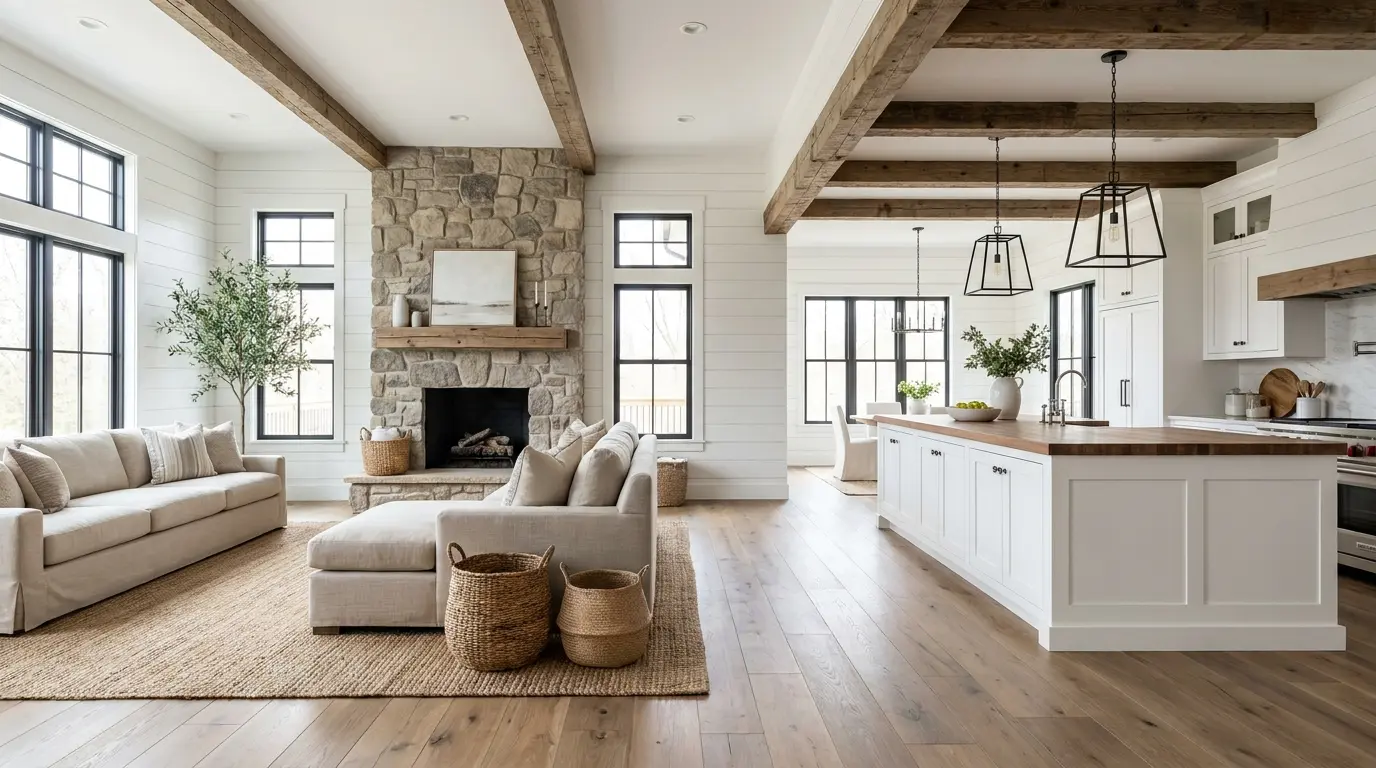
Living rooms are the most common and impactful places to install faux beams.
They draw the eye upward, creating a sense of height while adding architectural warmth. Beams help transform the room from merely functional to a well-designed space that feels finished and inviting.
Whether you have high or standard-height ceilings, the right beams can make a world of difference.
2. Kitchen
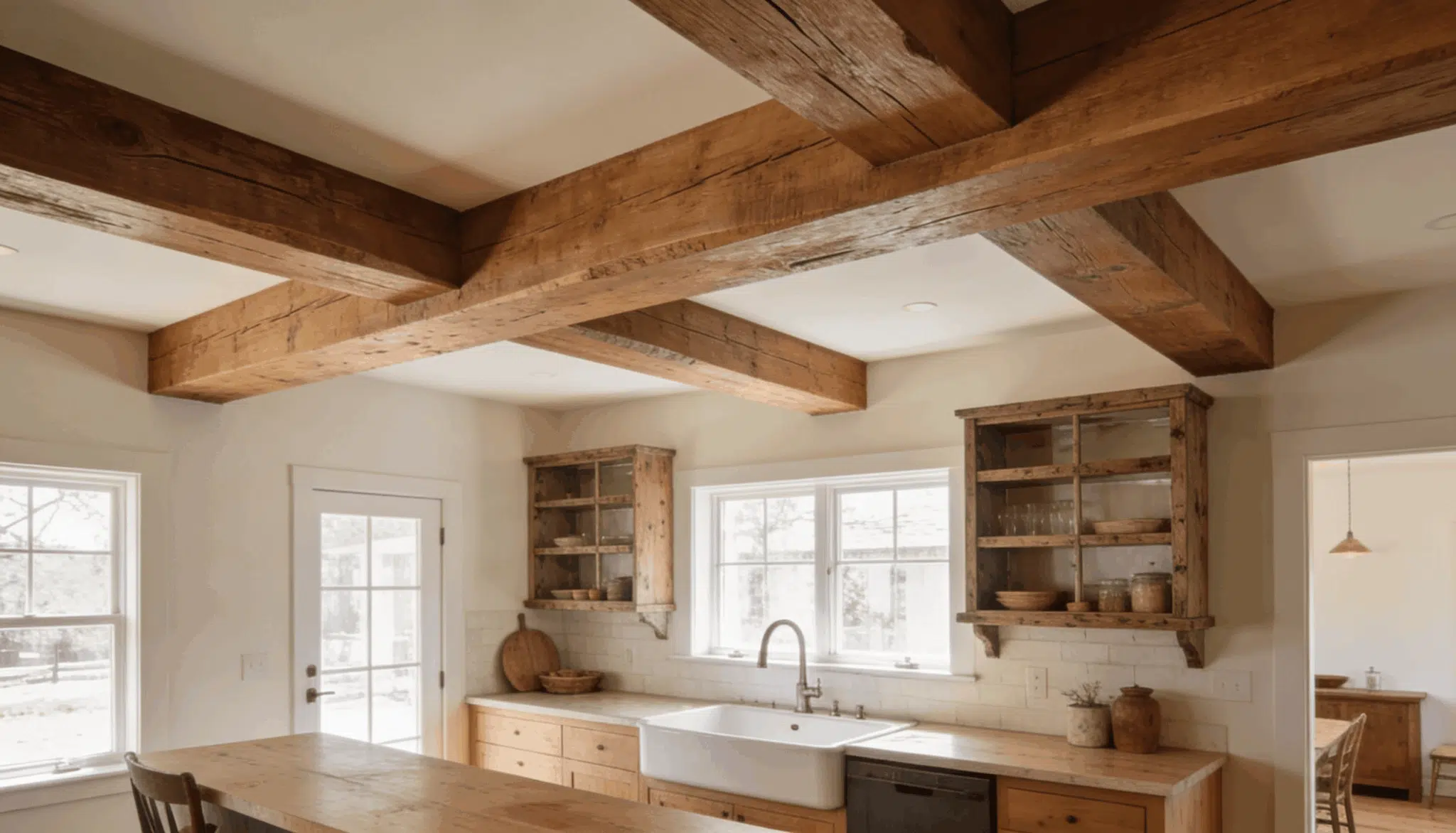
Faux beams above an island or spanning the length of the kitchen bring a farmhouse or rustic effect without the need for a full renovation.
By pairing beams with elements like a white farmhouse sink or open shelving, you can quickly create a cozy, country-inspired atmosphere.
This is a simple way to add charm and warmth to your kitchen without extensive remodeling.
3. Bedroom
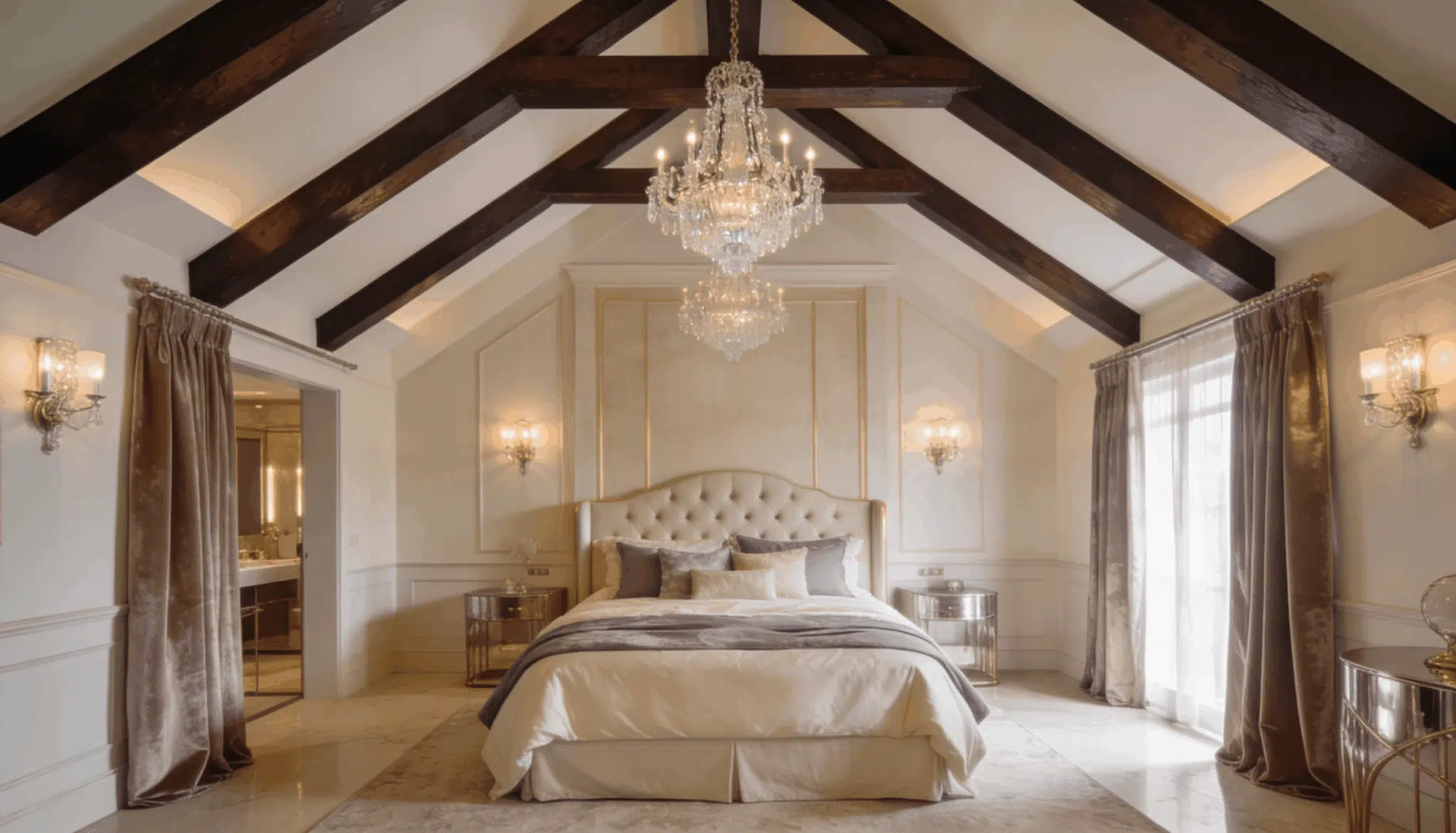
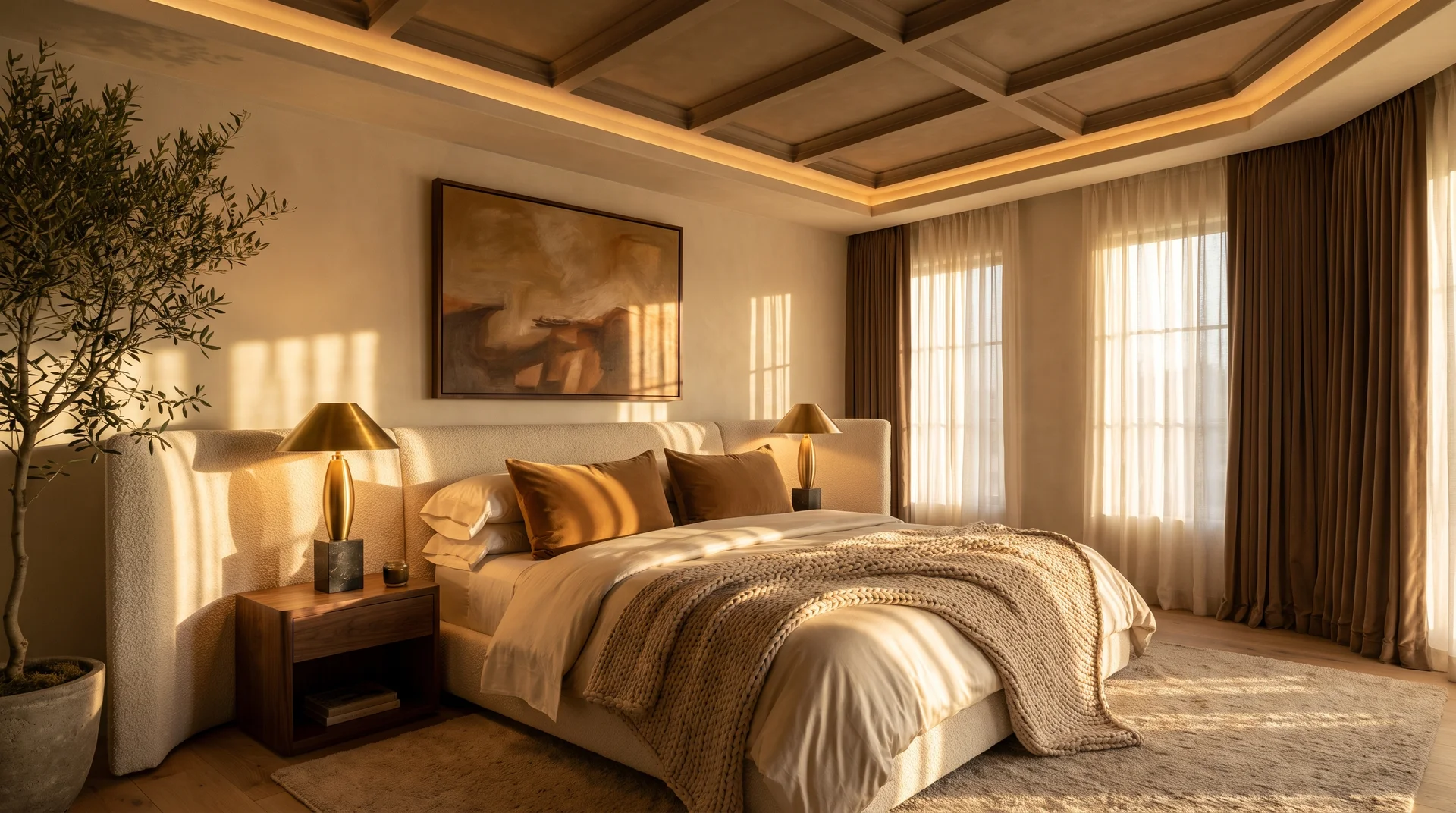
Faux beams work wonders in bedrooms with vaulted or high ceilings, turning the space into a luxurious, boutique-style suite. In master bedrooms with ample height, beams add elegance and a touch of architectural sophistication.
They also help to break up the ceiling, creating a more intimate atmosphere in larger spaces.
4. Bathroom
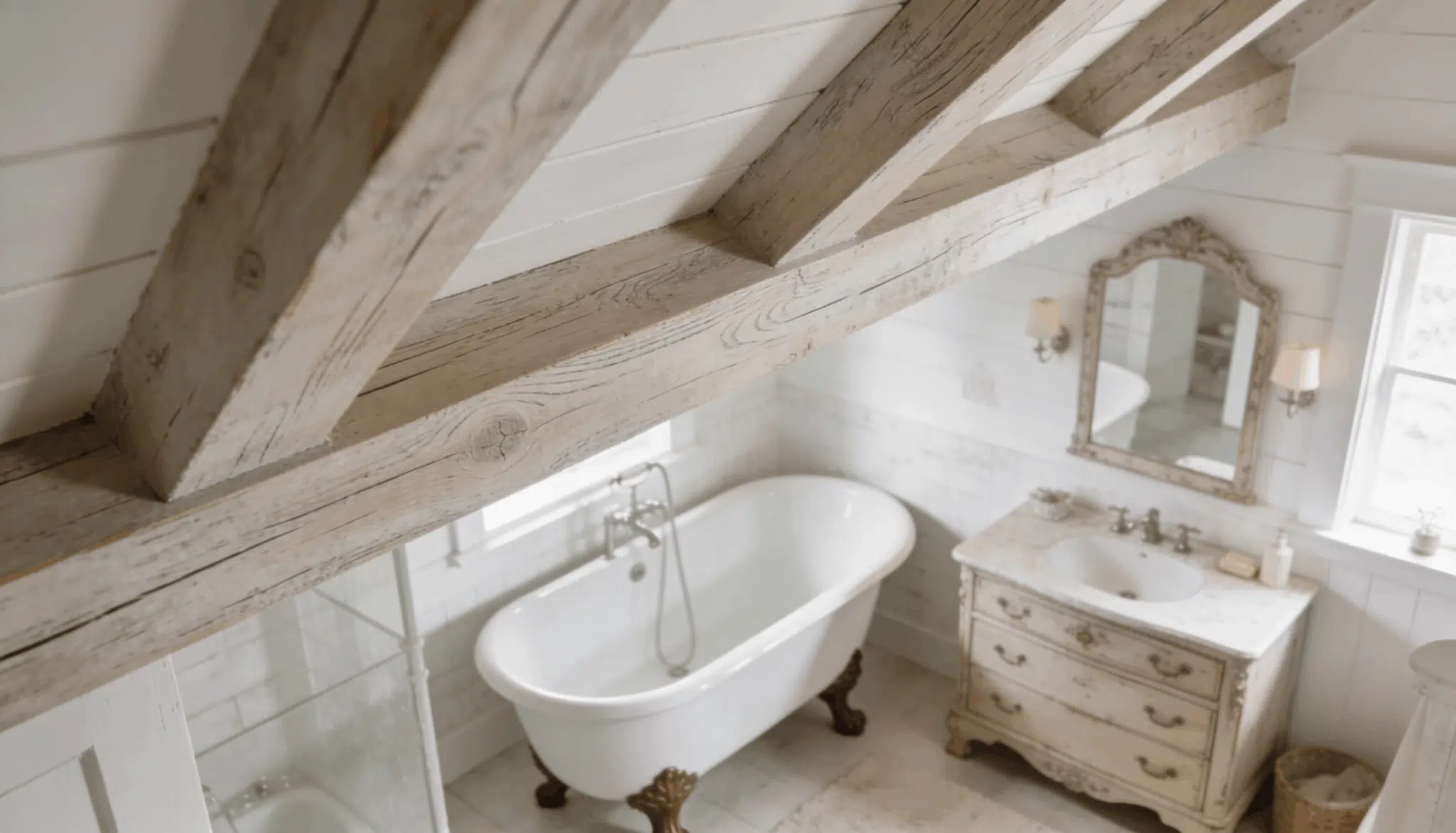
Bathrooms may not be the first room that comes to mind for faux beams, but they are one of the most effective and surprising applications.
In a primary bathroom, beams can complement features like a claw-foot tub or antique vanities, creating a spa-like atmosphere.
Their ease of installation makes them an attractive option for those looking to elevate the space without major renovations.
5. Entryways and Hallways
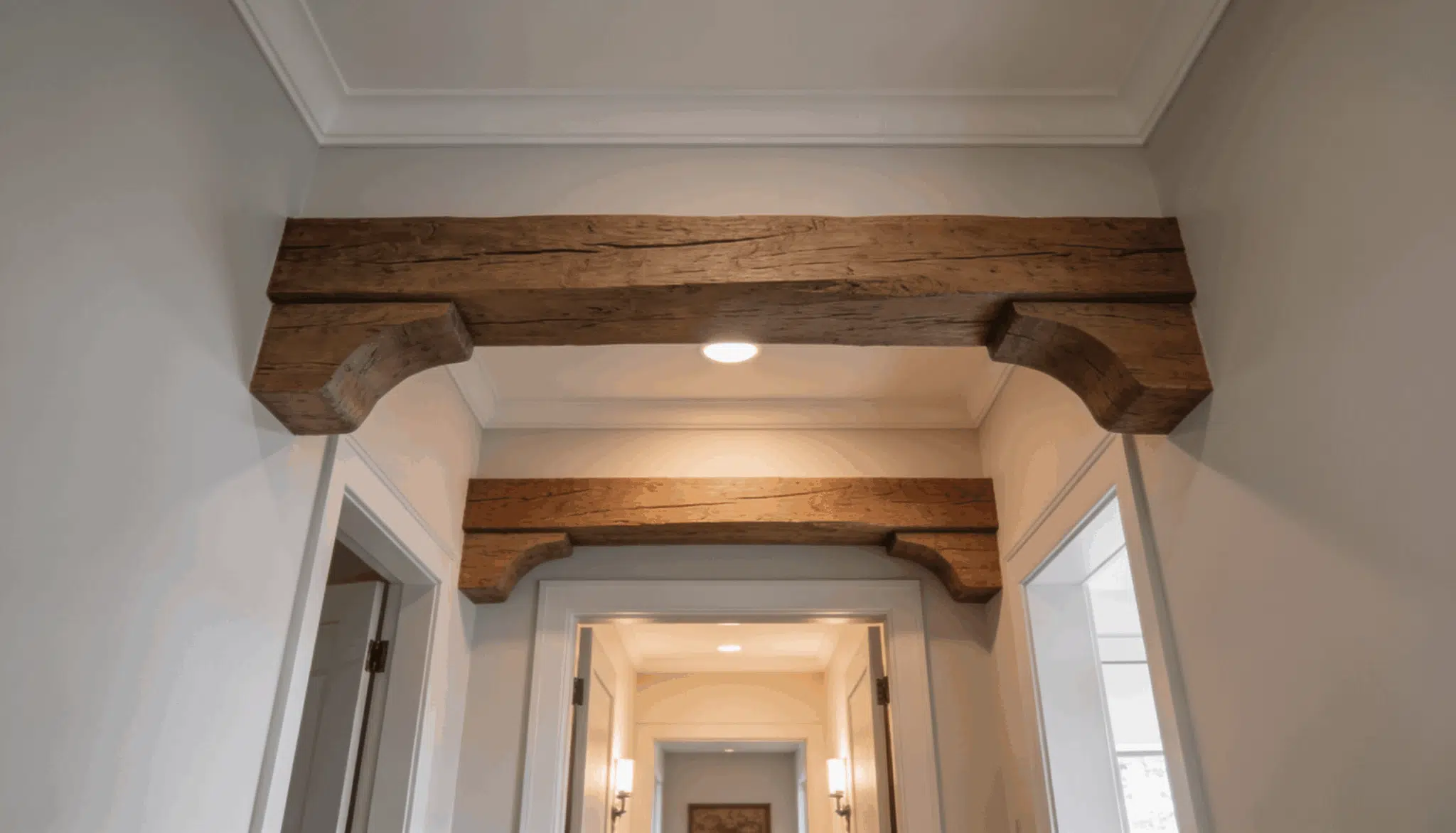
A single faux beam (or two) across a foyer or entryway can make a powerful first impression.
This subtle architectural detail immediately adds character, transforming a simple hallway or entry into a thoughtfully designed space.
Faux beams can create a warm, welcoming vibe that sets the tone for the rest of the home.
In my opinion, the rooms that benefit least from faux beams are those with too many added. While beams can enhance a room, restraint is just as important in design.
Too many beams in a single space can quickly make the room feel cluttered or heavy. Focus on one or two key areas where beams can add the most impact.
Meghan’s Tip: Faux beams may not suit spaces with low ceilings (under 8 feet) or small rooms where wide or closely spaced beams could make the space feel cramped.
Size, Spacing, Style: Decide Before You Buy
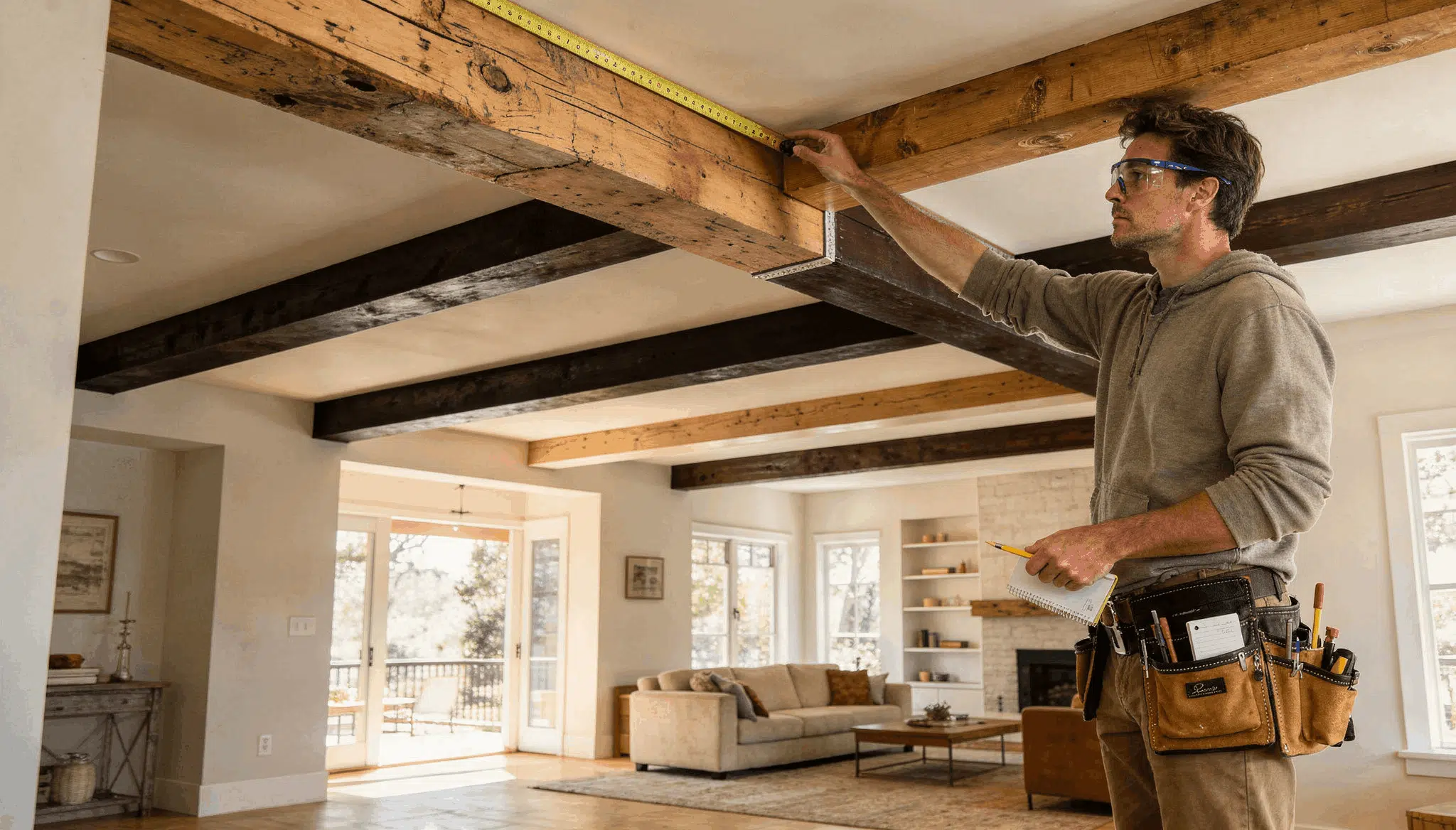
Getting this right before ordering is the most important step. The size and spacing of your faux beams affect the room more than the finish does.
Size
- Low Ceilings: For rooms with lower ceilings, narrower beams (4 “-6”) are recommended to prevent the space from feeling cramped.
- High Ceilings: In spaces with higher ceilings, wider beams (6 “-10”) can make a bold statement and add dramatic flair.
- Rule of Thumb: The width of the beam should be approximately 1 inch for every foot of ceiling height. For example, an 8-foot ceiling works well with 6 “-8” beams, while a 10-foot ceiling can handle up to 10” beams.
Spacing
- Standard Spacing: Beams are typically spaced 4 to 6 feet apart. In a 16-foot wide room, 3 to 5 beams work well on a flat ceiling, and 6 to 10 on a cathedral ceiling.
- Closer Spacing: Opt for closer spacing to create a cozy, intimate feel in the room.
- Wider Spacing: Wider spacing creates a more open, airy vibe. Both options are valid depending on the room’s intended mood and purpose.
- Practical Test: Before committing, cut paper strips to match the beam width and tape them to your ceiling to preview the look and spacing.
Style
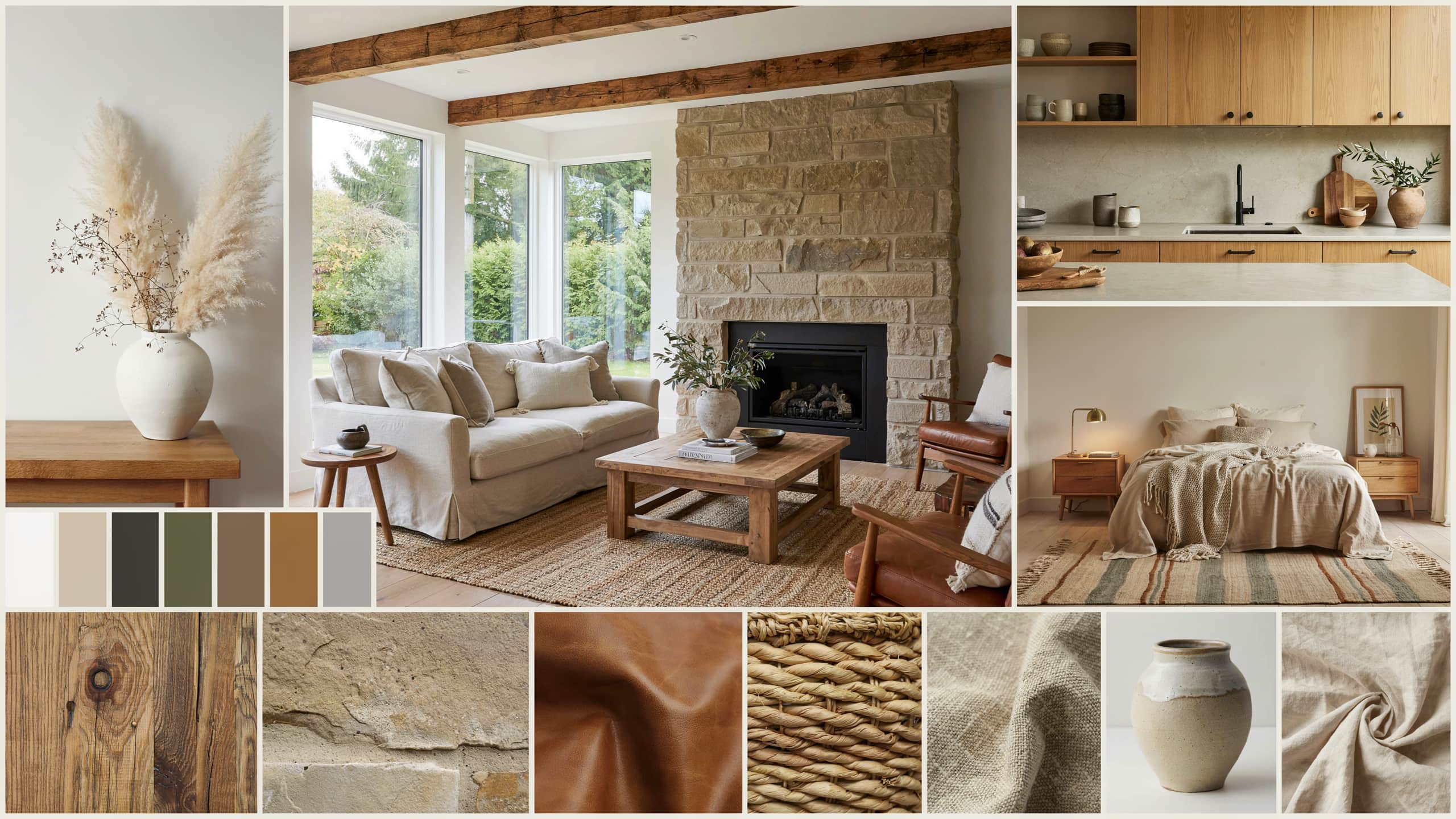
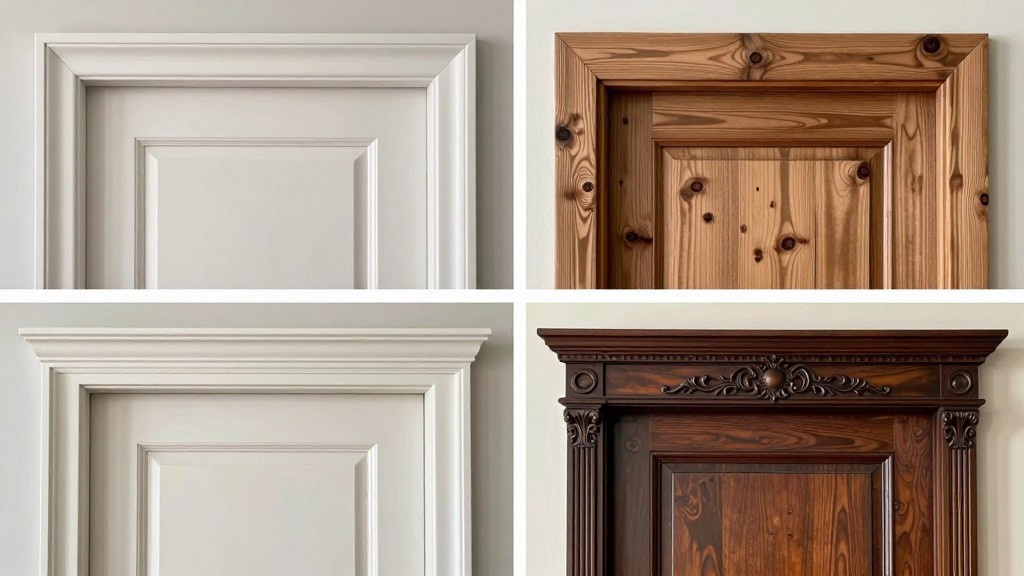
- Rustic / Hand-Hewn / Rough-Sawn: Ideal for farmhouse, cabin, or traditional interiors. Works best with warm stained wood tones, exposed brick, or shiplap walls.
- Smooth / Clean-Edged: Perfect for transitional or contemporary spaces. Lighter finishes, such as whitewash or natural oak, complement these beams.
- Dark Espresso or Walnut: Creates a dramatic look, perfect for rooms with high ceilings and ample natural light.
- Whitewashed or Natural: Brightens up a space and works especially well in coastal or Scandinavian-inspired rooms.
What to Budget for Faux Ceiling Beams
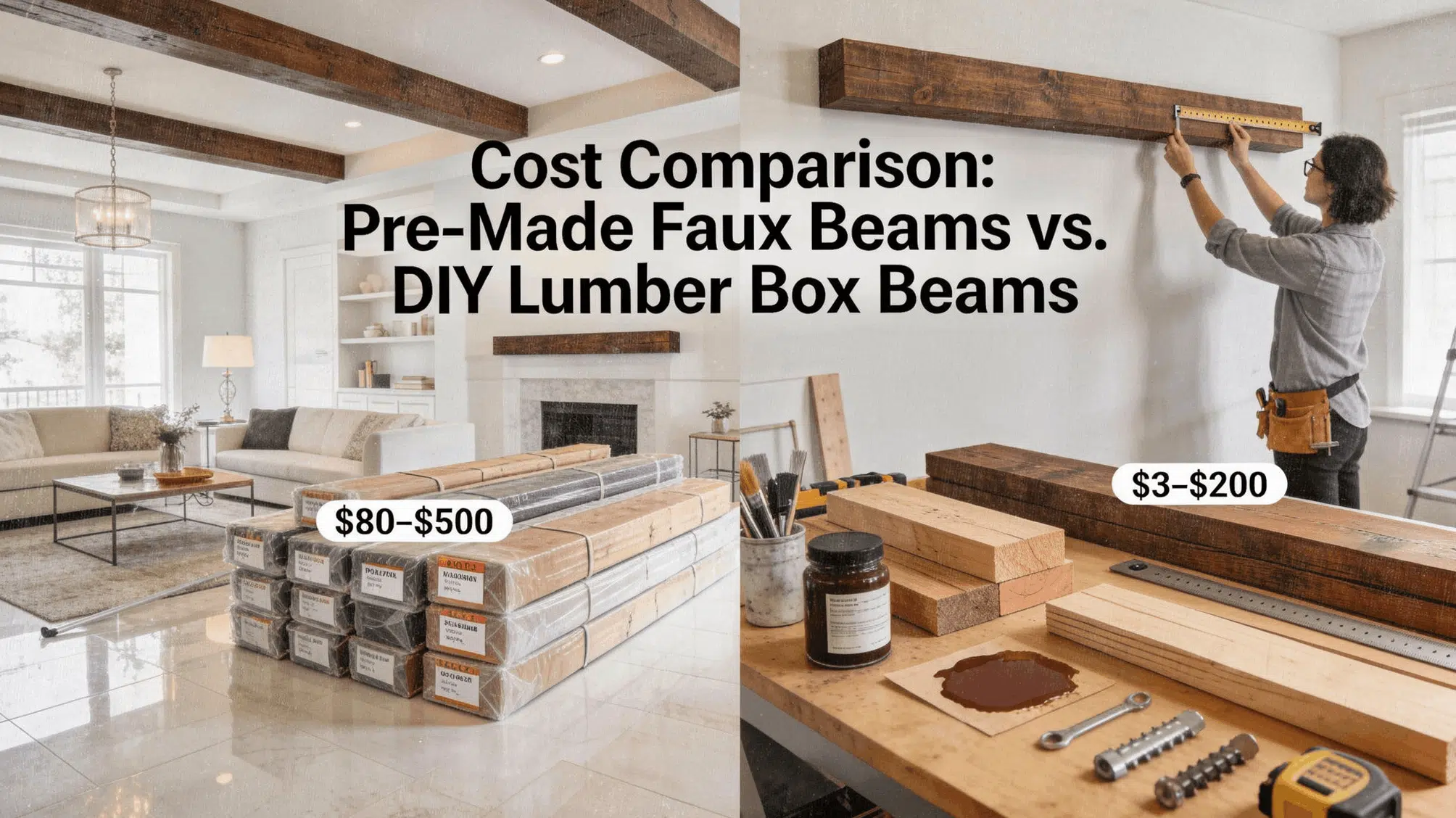
The cost splits cleanly into two categories, depending on which route you take:
Pre-Made Polyurethane Faux Beams:
- Entry-level styles: $80–120 per beam for standard sizes
- Mid-range with realistic texture: $150–250 per beam
- Premium or specialty finishes: $300–500 per beam
- A typical living room with 4 beams: $400–800 in beam materials plus mounting hardware and caulk
DIY lumber box beams:
- 1×6 and 1×4 whitewood pine from a hardware store: $3–5 per linear foot in lumber
- A single 12-foot beam: $30–40 in lumber plus stain and hardware
- A room with four 12-foot beams: $150–200 total in materials
The DIY route costs less but requires more time and a saw, a nail gun, and the patience to stain before you install. The pre-made route costs more per beam, but the only tools you need are a stud finder, a drill, and a nail gun.
Neither is the wrong choice. They are different time-for-money trade-offs.
Making Wood Beams Look Real: The Details that Matter
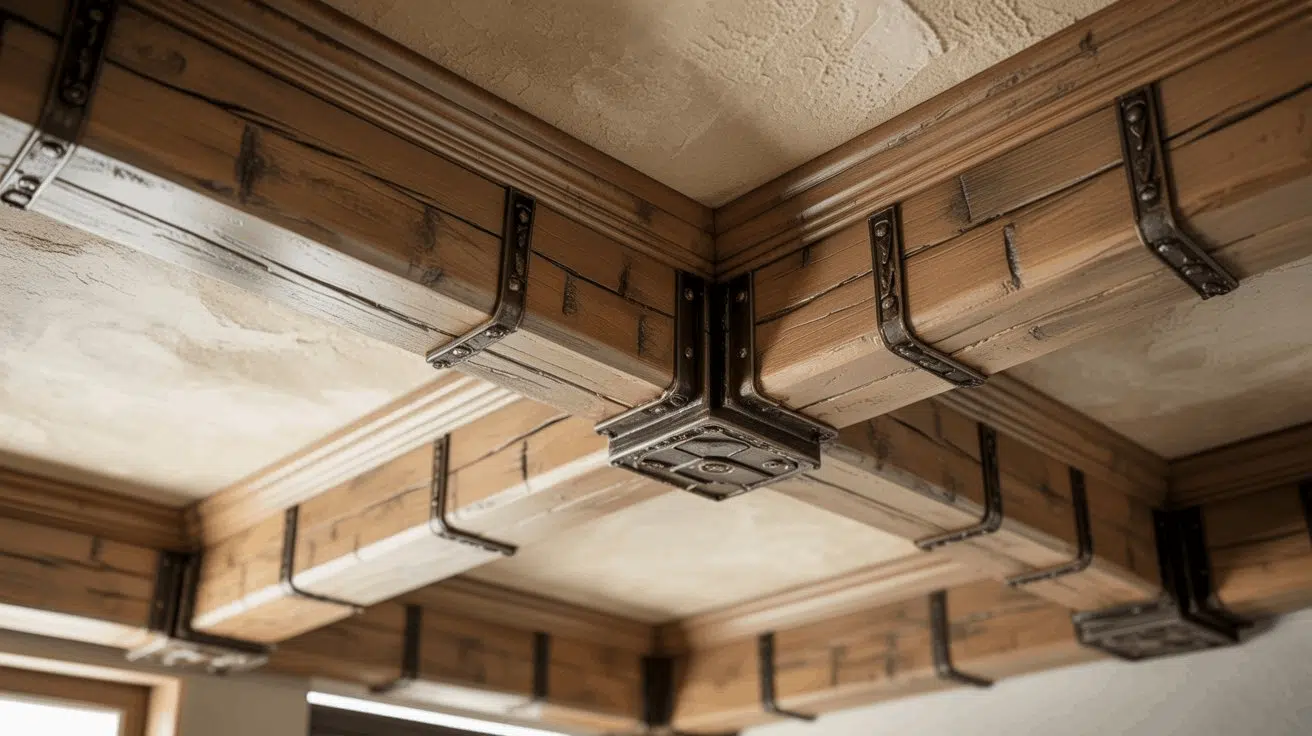
The installation is straightforward, but the details that make faux beams look natural are what truly set them apart. Most tutorials skip these, but they’re essential for a realistic finish.
- Match Existing Wood Tones: Ensure the beam color matches the warmth and undertones of your floors or furniture. Beams that are too light or dark compared to other wood surfaces can appear out of place.
- Add Decorative Metal Straps: Add metal straps at intervals along each beam to mimic reinforcement and age. Use pre-made or DIY options, positioning them at ends and seams for realism.
- Distress the Wood Before Staining: Use a hammer or nail to create marks on the wood, giving it an aged look. When stained, these marks absorb the color, making the wood appear naturally weathered.
- Caulk the Ceiling Line: Fill the gap between the beam and ceiling with paintable caulk, then paint it to match the ceiling. This step closes the gap and helps the beam blend seamlessly into the room.
- Leave a Slight Gap at Beam Joints: When two beams meet, leave a small gap between them. This mimics the look of settled, aged wood. A tightly sealed joint can make the beams look like new construction.
Bottom Line
Ceiling beams are the project I point people toward when they want a room to feel completely different without touching the walls, the floors, or a single piece of furniture.
Faux beams go up in a weekend. They look real from across the room. They add the kind of architectural warmth that is genuinely difficult to achieve at this cost any other way.
Start with the paper strip test. It costs nothing and takes ten minutes. If the preview feels right, you have your answer.
The ceiling is the one surface in a room that most people never use.
That is exactly why it has the most potential.