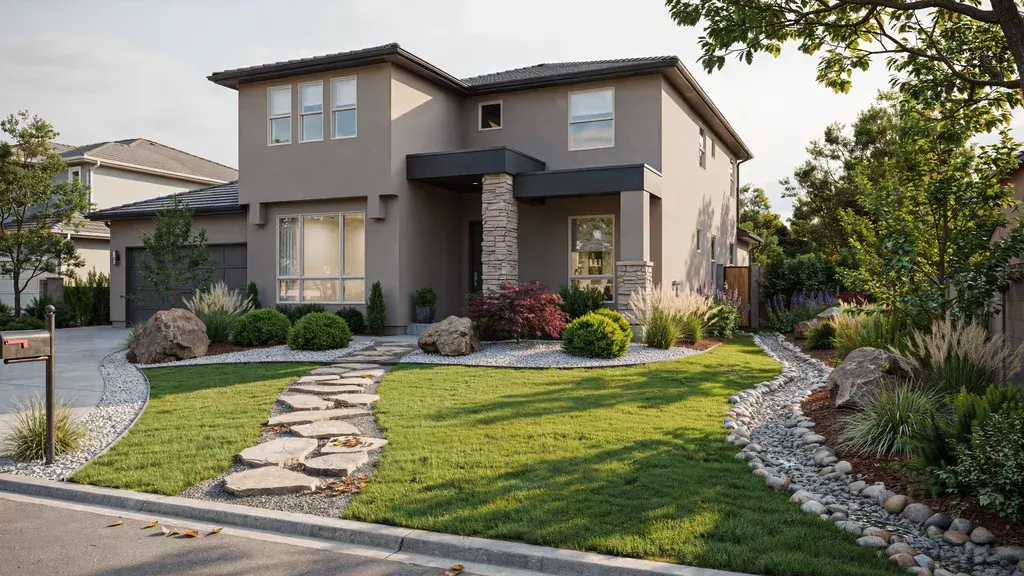
You mow, water, and edge, yet by late summer, your lawn still looks patchy. Sound familiar?
Front yard landscaping ideas with rocks fix that problem for good, giving you a finished look that holds up through every season without the constant upkeep.
No more watering, fertilizing, or replacing mulch every spring.
This blog walks you through real rock designs for your front yard, plus rock type picks, cost ranges, and installation tips.
Whatever your yard size or budget, there’s a layout here that fits.
Why Rock Landscaping Works Better Than You Think
Rocks do not attract termites or pests the way wood mulch does.
Before getting into the ideas, it helps to understand why rocks are such a smart choice for front yards.
They hold their shape through rain, wind, and foot traffic. They also help water drain through gaps in the surface instead of pooling after heavy rain.
Rocks fall on the hardscaping side of your yard rather than the living, growing side, and knowing the difference between hardscape and landscape design helps you decide how much of the yard should stay rock versus plant.
The upfront cost is higher than sod or mulch. But rock landscaping typically pays for itself in two to four years through savings on mowing, watering, and mulch replacement.
A typical front yard converted from lawn to rock landscaping saves $500 to $1,500 annually in maintenance costs.
Common Landscaping Rock Types at a Glance
Different rocks suit different landscaping needs, budgets, and styles. This quick table helps you compare the most common options.
| Rock Type | Best Use | Key Benefit |
|---|---|---|
| River rock | Creek beds and borders | Smooth, natural look |
| Pea gravel | Paths and open areas | Affordable and easy to spread |
| Boulders | Retaining walls and features | Bold visual impact |
| Flagstone | Paths and stepping stones | Flat and structured |
| Crushed granite | Driveways and walkways | Firm and compact |
| Lava rock | Raised beds and mulch areas | Lightweight and porous |
Front Yard Landscaping Ideas With Rocks
Rocks can alter an ordinary front yard into a low-maintenance, eye-catching landscape.
If you prefer a modern, rustic, or natural look, these creative ideas can help you design a space that enhances your home’s curb appeal.
1. Build a Dry Creek Bed
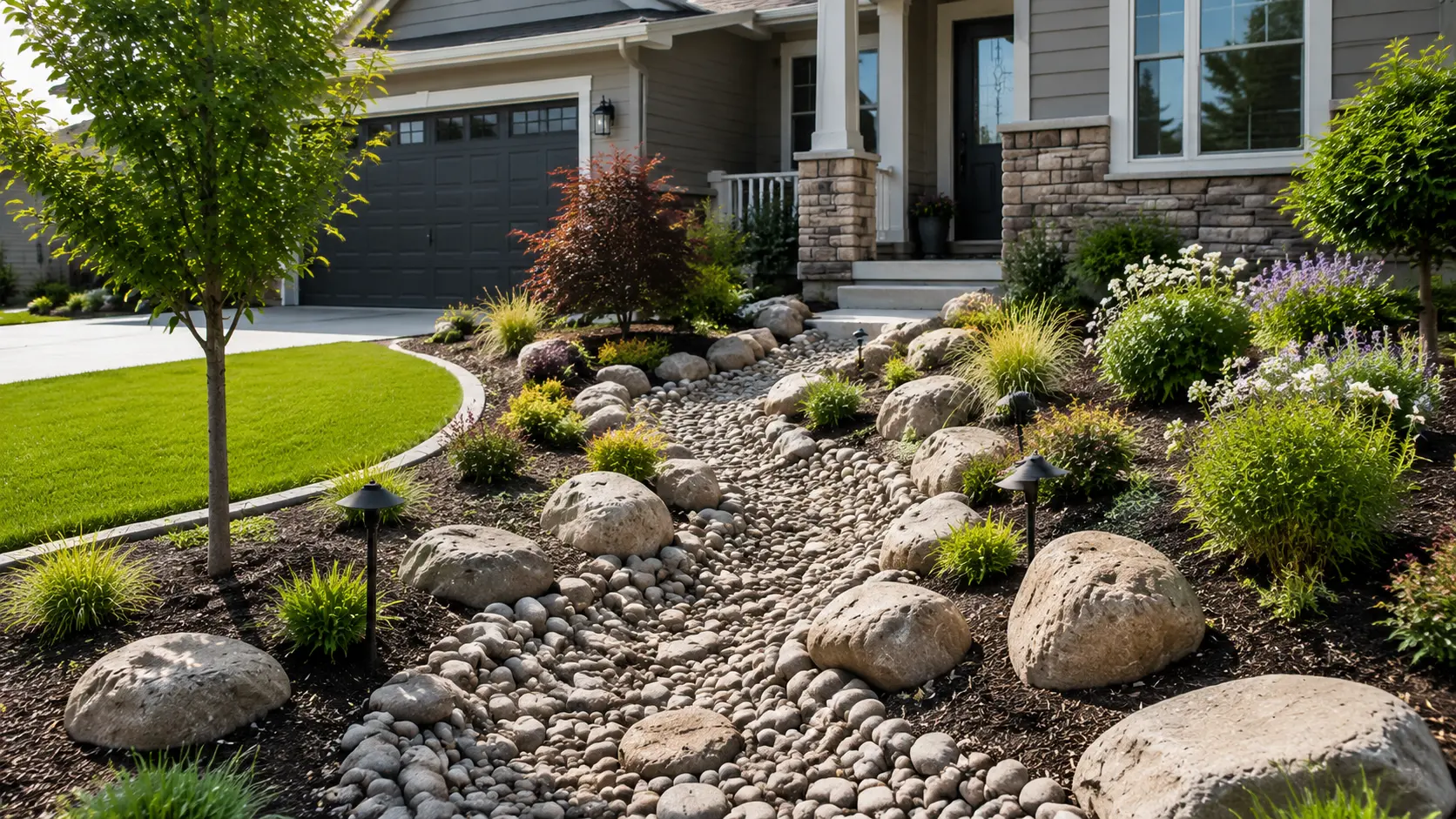
A dry creek bed is one of the most popular front yard landscaping ideas with rocks, and for good reason.
Owners now use river rocks in dry creek beds to direct rainwater away from the foundation and toward rain gardens. This turns a drainage problem into a standout design feature.
When building one, make sure there is a slight slope away from your foundation. This stops water from pooling during heavy rain.
2. Add Rock Borders Around Flower Beds
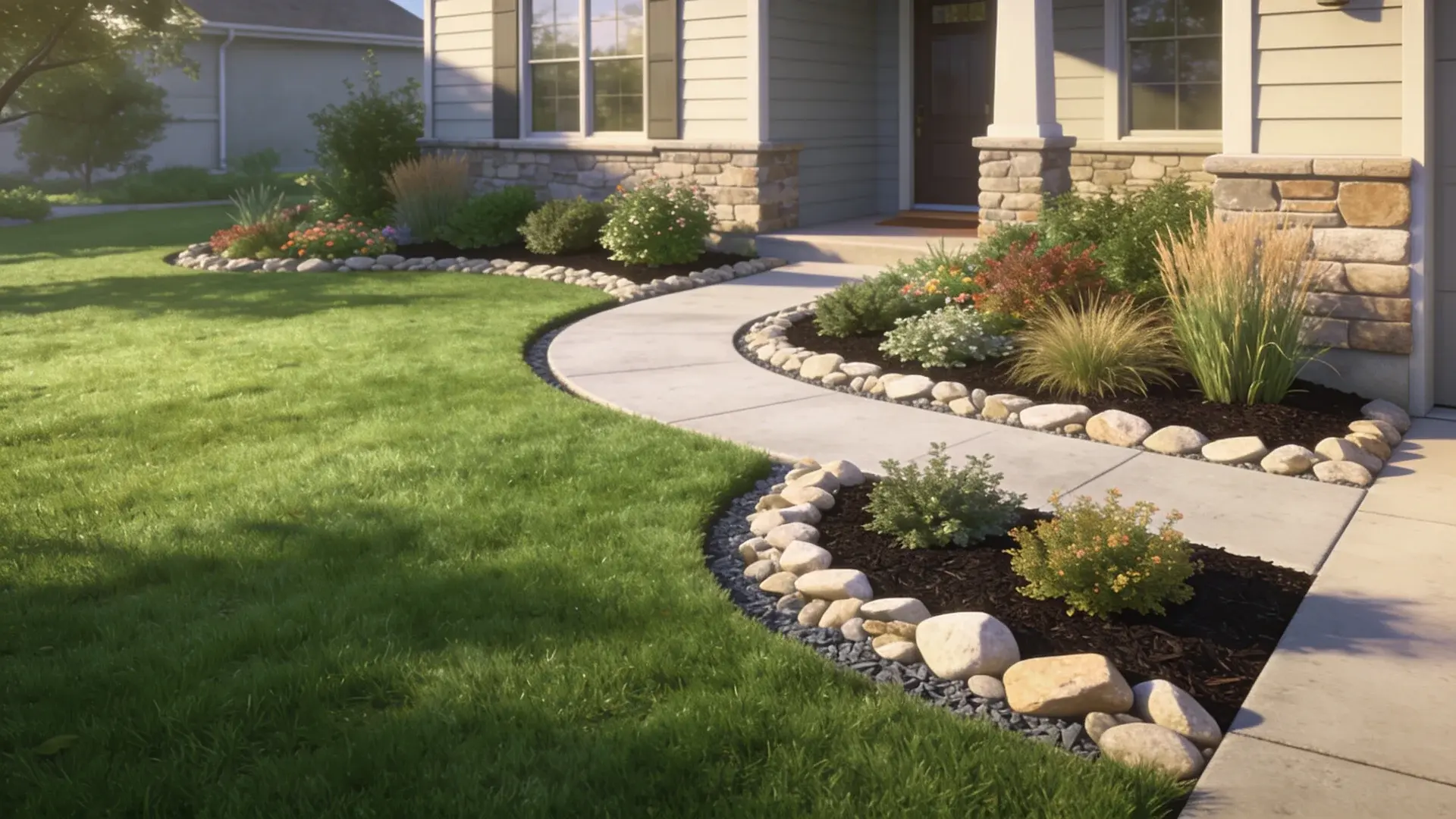
This is the easiest entry point for front yard rock landscaping. You do not need to redo the whole yard.
A 6- to 12-inch-wide strip of river rock along garden bed edges creates a clean, flowing border.
Always lay landscape fabric underneath first. Without it, weeds will push through within one growing season. Commercial-grade woven fabric works far better than the thin non-woven type sold at big-box stores.
3. Create a Boulder Focal Point
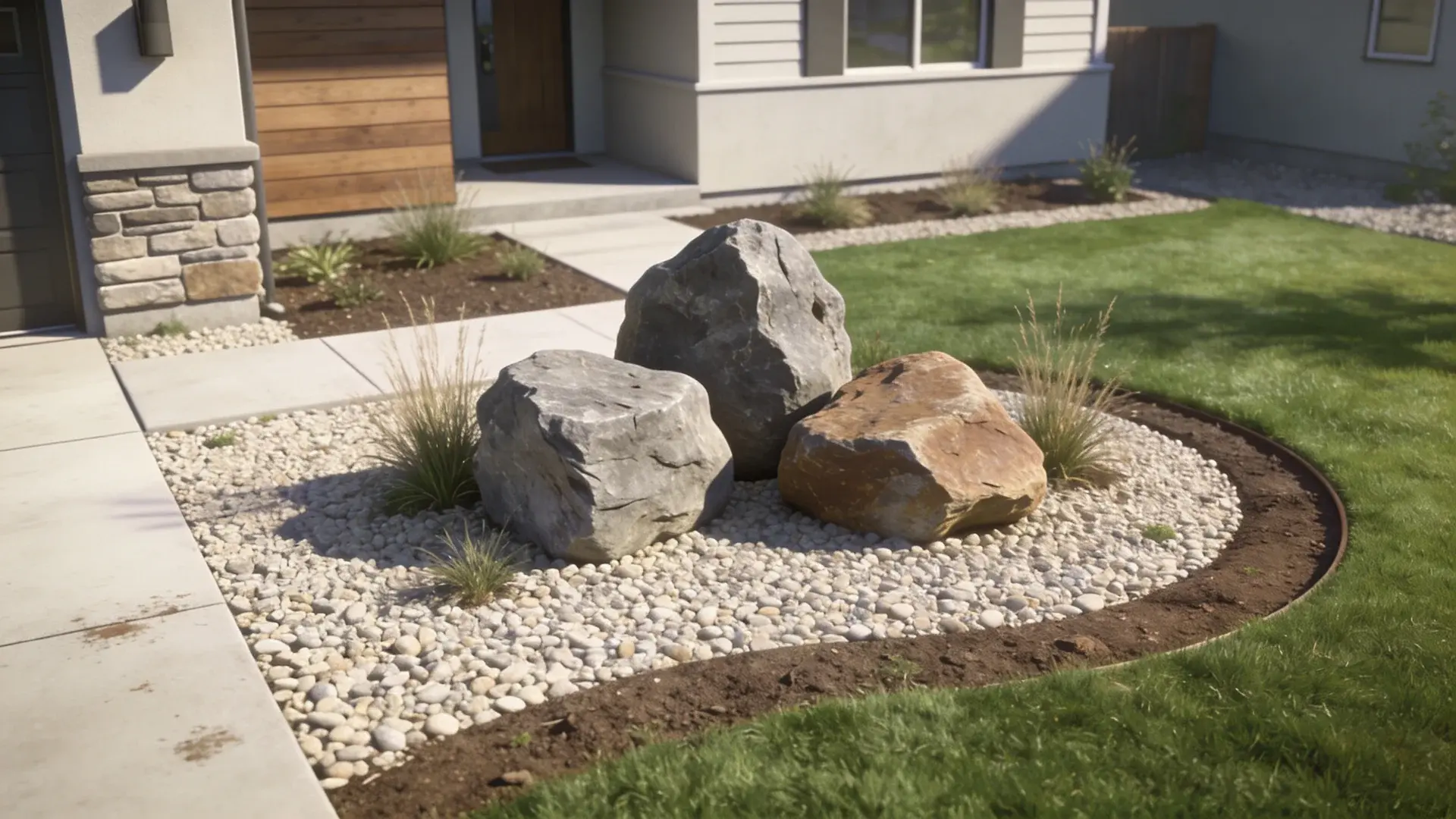
A single large boulder is one of the simplest front yard boulder landscaping ideas, and it does more for curb appeal than you’d expect.
That natural variety adds artistic character to your yard without any effort on your part.
Place one or three boulders together; odd numbers look more natural than even ones, and surround them with pea gravel or ornamental grasses.
4. Replace Grass With Rock Mulch
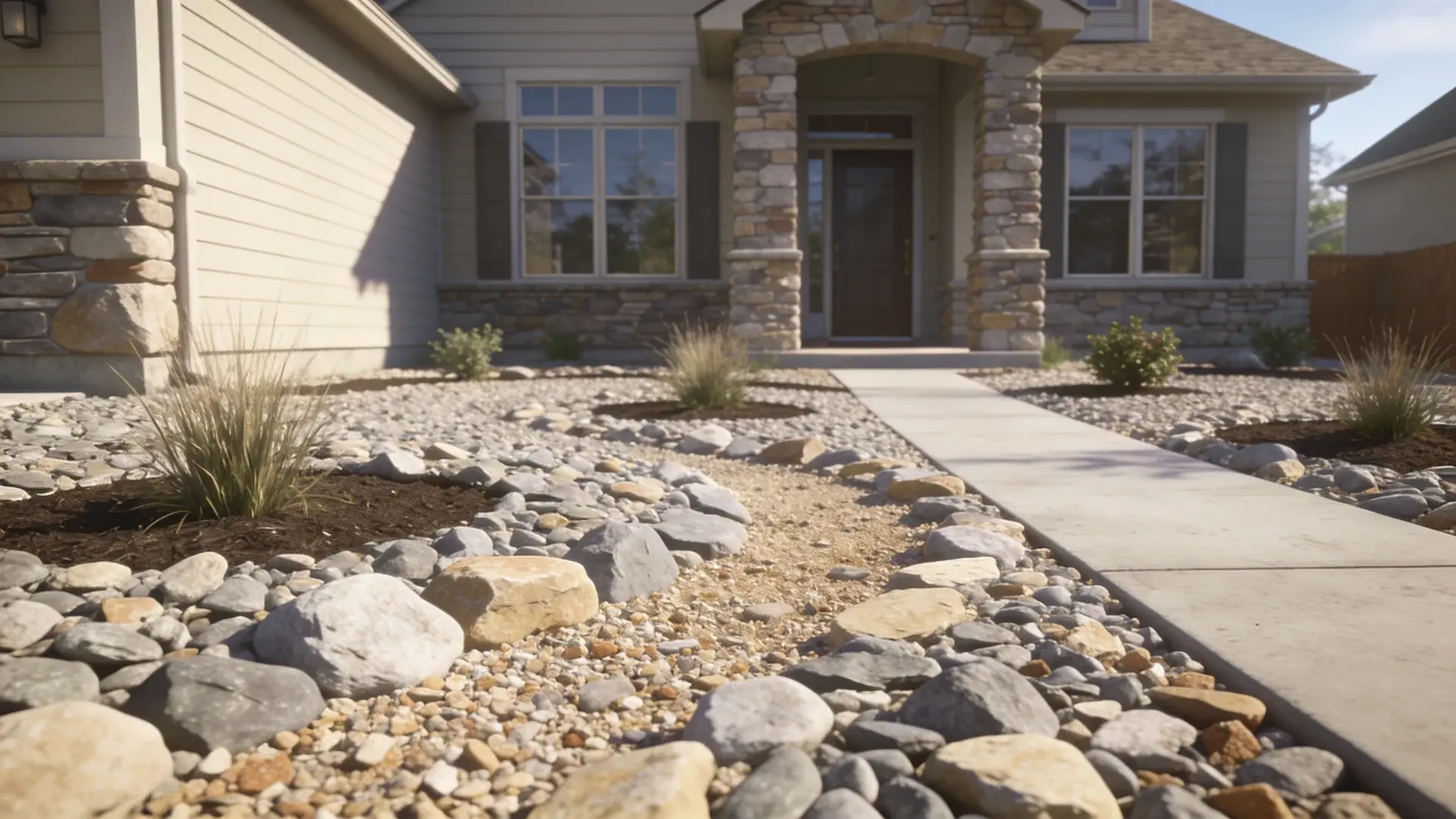
Rock mulch replaces turf entirely for a clean, modern look with almost zero ongoing maintenance.
For decorative ground cover, spread rocks to a depth of 2 to 3 inches. For areas people walk through, go 3 to 4 inches for a more stable surface.
Lay commercial-grade woven landscape fabric first. Without it, weeds will grow through the rock within one season and undo all your work.
5. Lay a Flagstone Stepping Stone Path
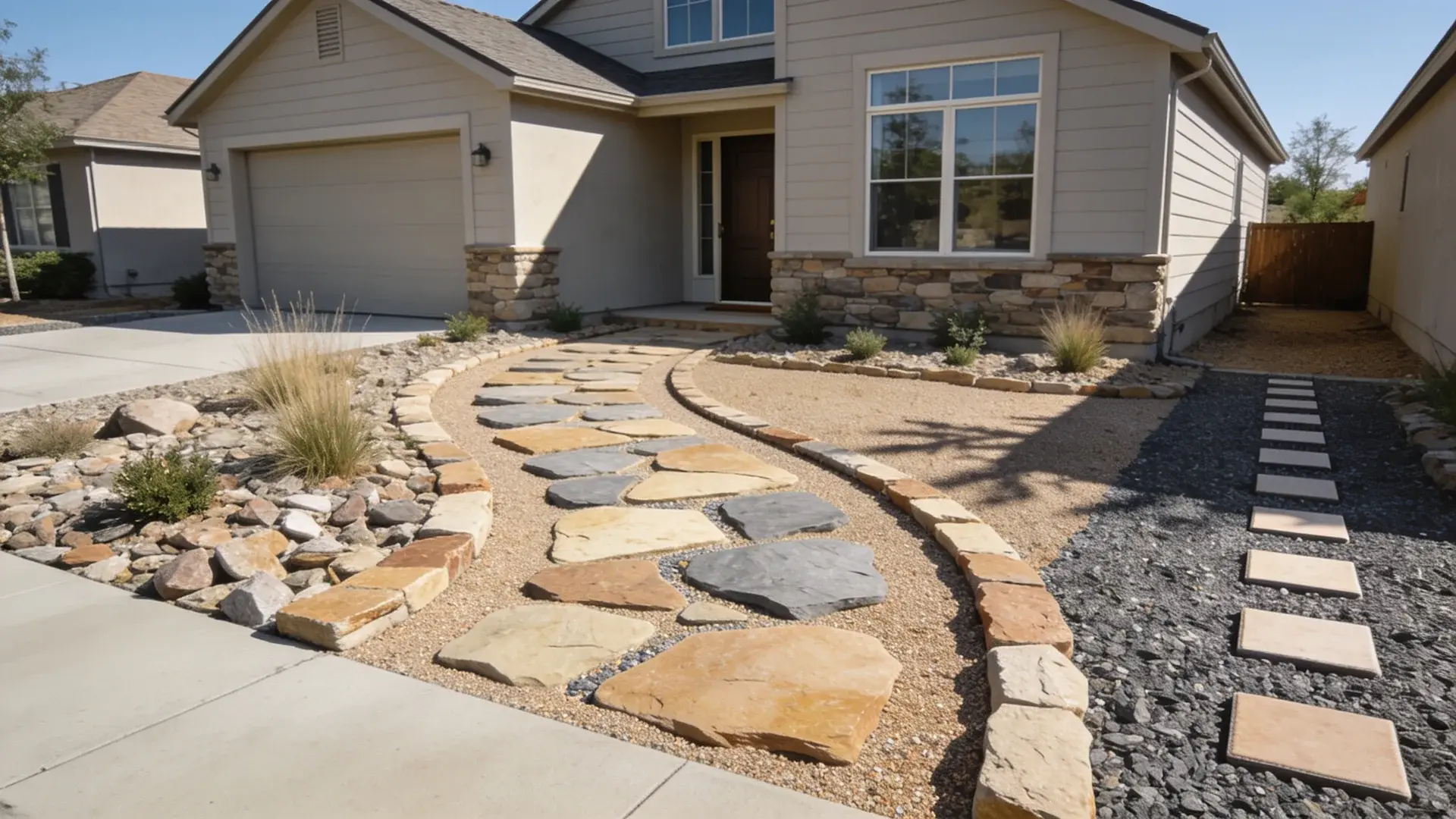
A stone path from the street to your front door immediately makes the yard look finished and intentional.
Flagstone paths can be laid straight or in a gentle curve. You can also mix different stone shapes, sizes, and colors for a one-of-a-kind result.
For a more modern look, set square-cut pavers into a bed of contrasting gravel. This floating paver-in-gravel style is one of the biggest front-yard design trends right now.
6. Combine Rocks With Mulch
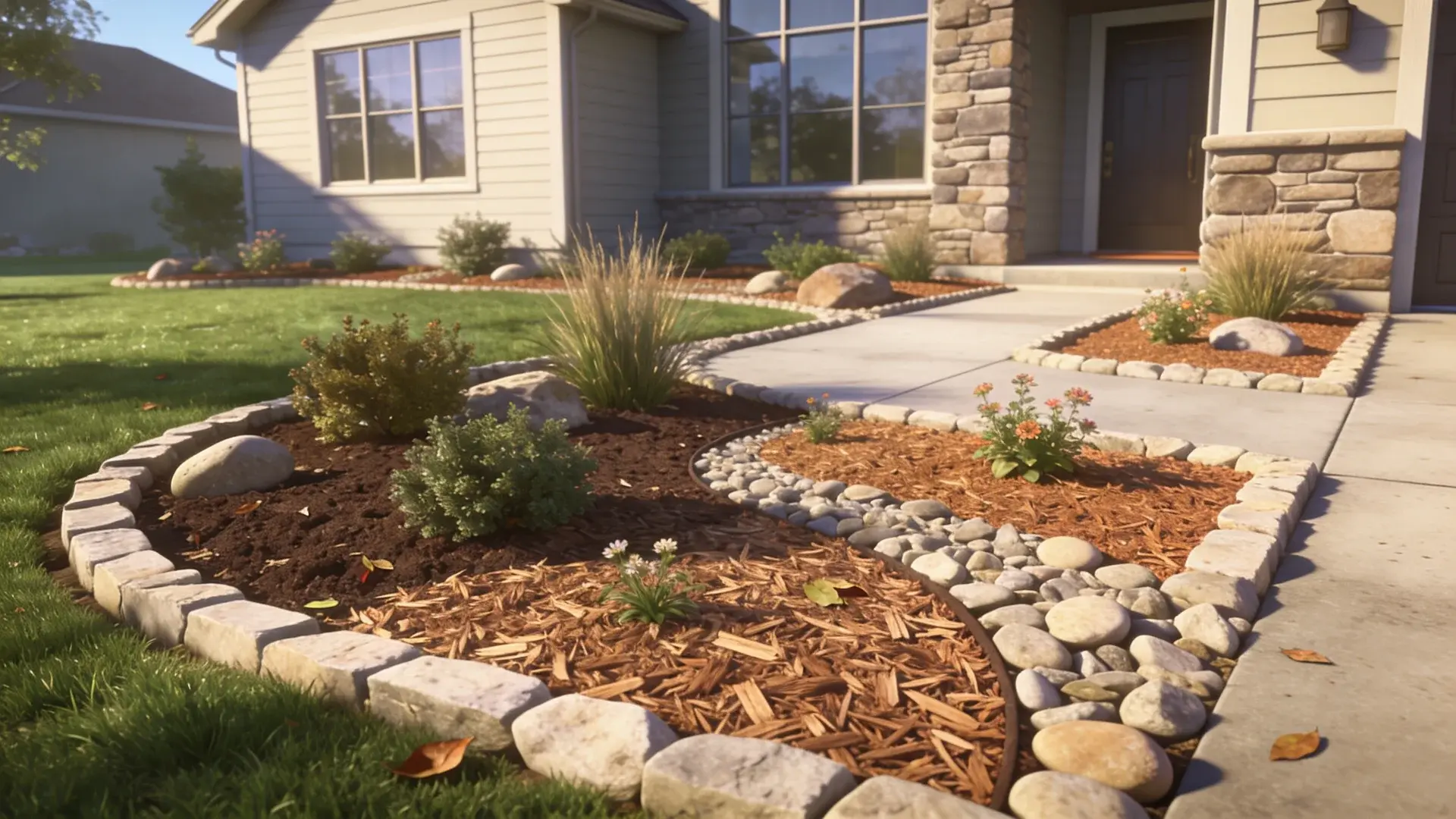
The contrast between the soft, warm texture of mulch and the harder surface of rock gives your yard a layered, finished look.
Use rocks as the border or edging, then fill the interiors of planting beds with natural mulch such as wood chips or shredded leaves.
Natural mulch breaks down over time and feeds the soil, which means less fertilizer and better moisture retention for your plants.
7. Try a Xeriscape Design With Native Plants
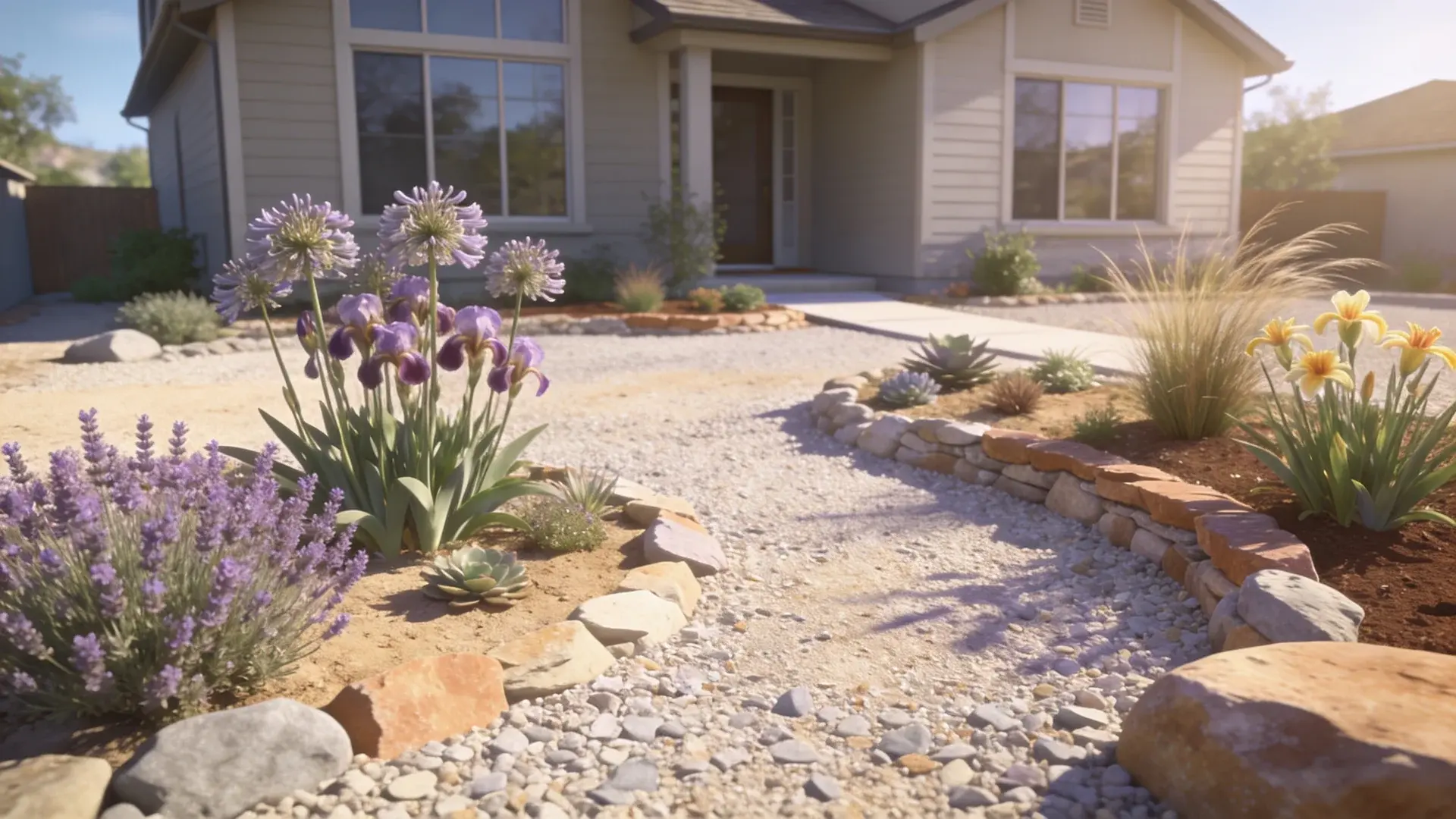
Xeriscape landscaping means designing your yard to need very little water. It works beautifully in dry climates but is a smart choice in any region where water bills are a concern.
Replace turf grass with gravel or crushed stone as the ground cover. Then plant native shrubs, ornamental grasses, and drought-tolerant flowers throughout the rock bed.
Grass turns brown in dry weather and needs regular watering to stay green.
8. Build a Rock Retaining Wall
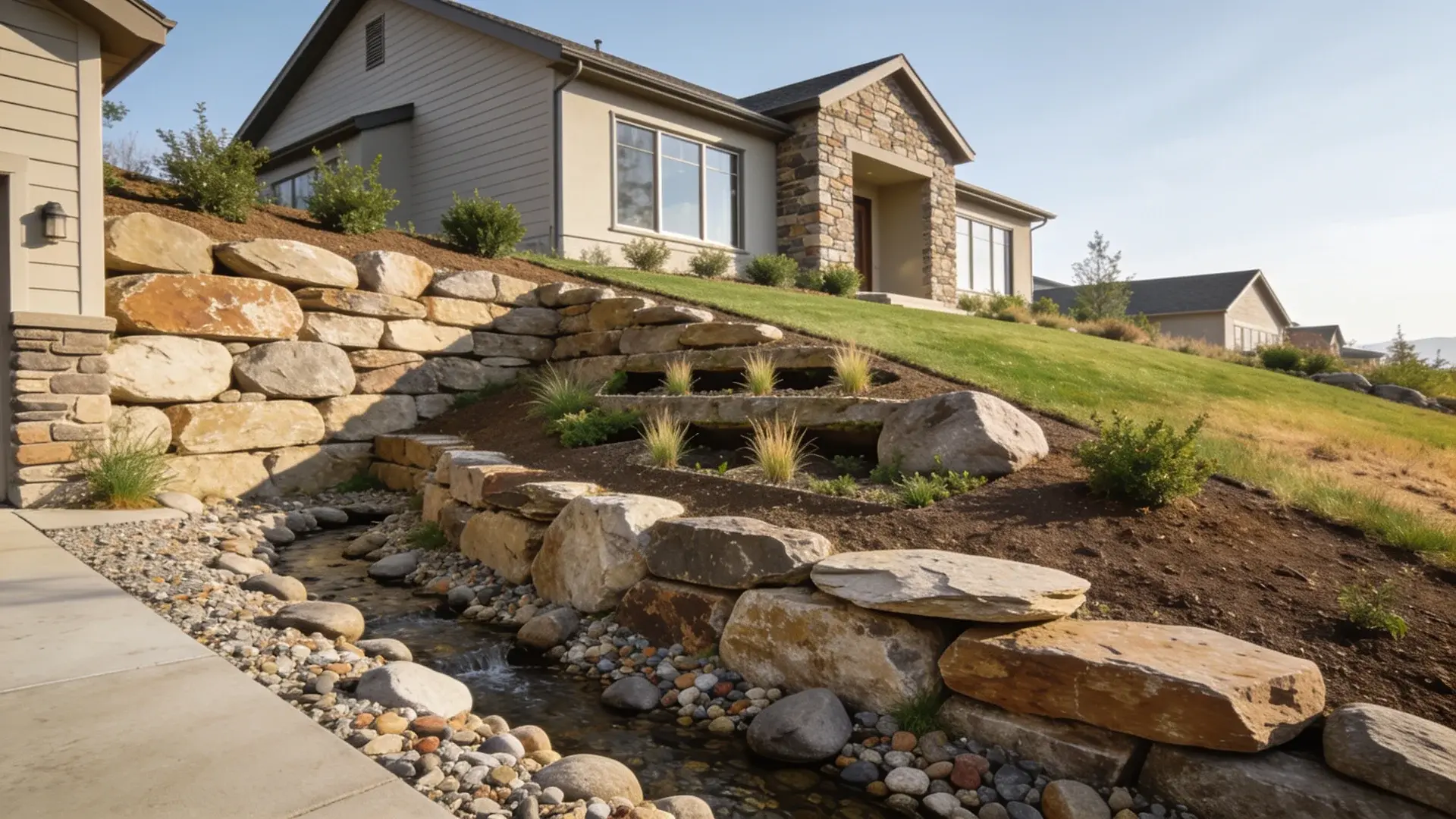
A retaining wall controls erosion and gives a sloped yard a clean, structured look.
A retaining wall with a dry creek riverbed at its base combines drainage function with a standout focal point.
Use boulders for a natural, rustic look, or large flat stones for a more structured look.
9. Line Your Driveway With Gravel Borders
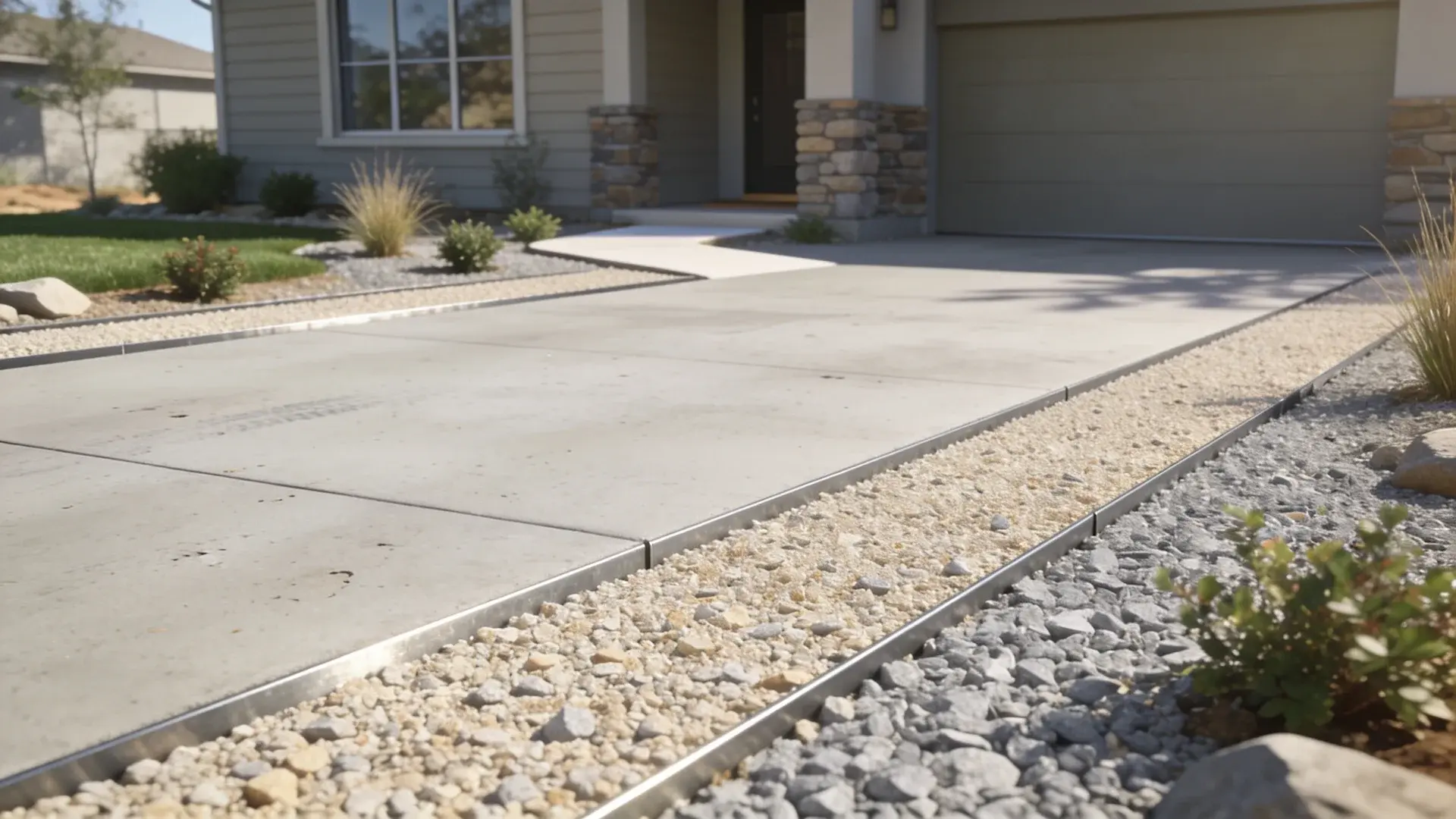
This one is often overlooked, but it is one of the quickest ways to sharpen the look of your front yard from the street.
Replace driveway-side dirt or grass with compacted granite, then add steel, stone, or brick edging for a clean finish.
If you are rethinking the driveway itself at the same time, pairing the gravel border with fresh modern driveway design ideas can tie the whole entrance together.
10. Build a Layered Rock Garden
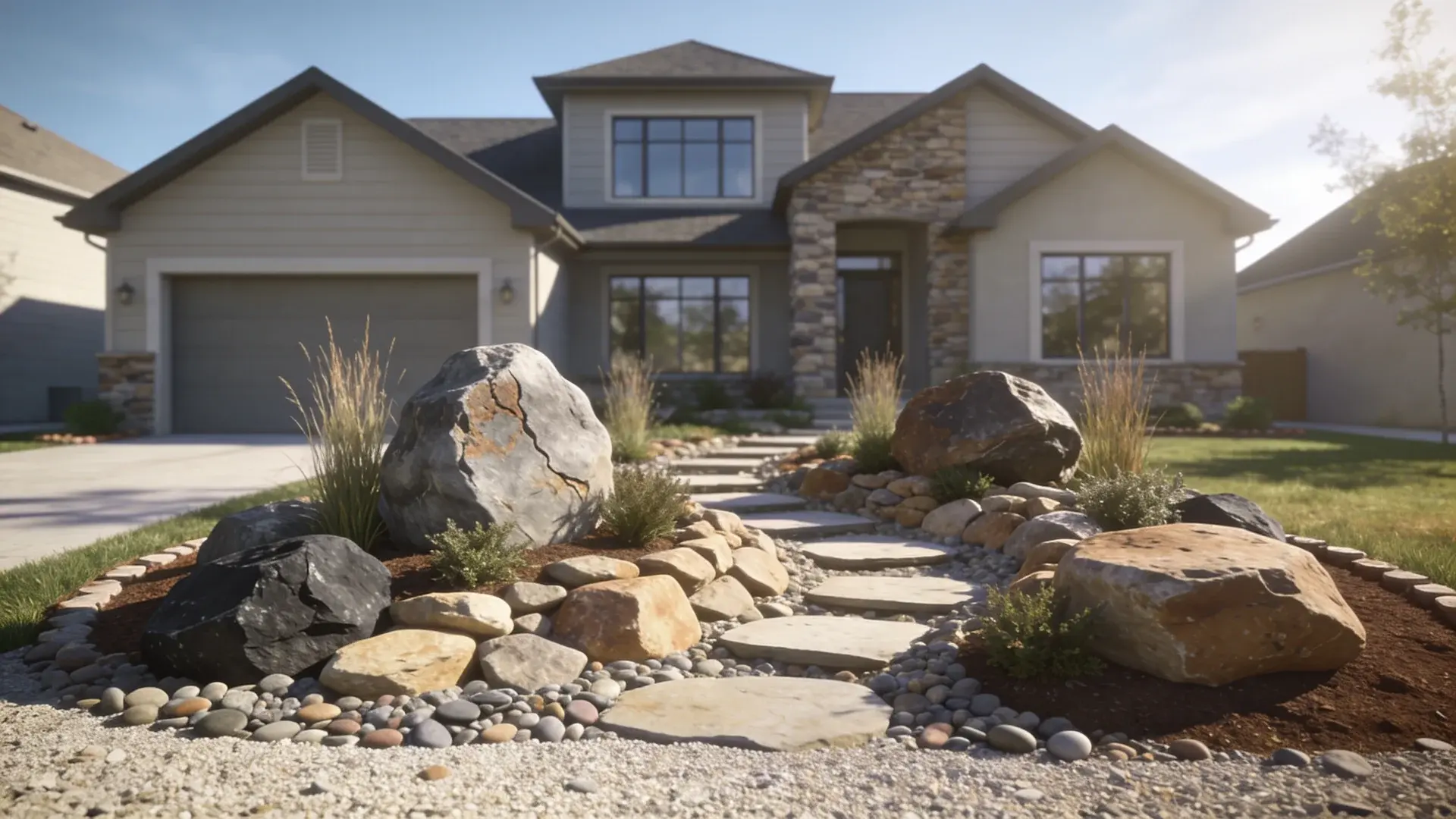
A rock garden with mixed stone sizes creates one of the most natural-looking front-yard designs you can make.
Use large boulders as anchors, medium fieldstone in the middle layer, and small pebbles or gravel as the ground fill.
Random groupings look more natural than neat rows. Vary the materials: pebbles, gravel, and stepping stones together create more visual interest than a single rock type alone.
11. Use Rocks to Edge a Walkway
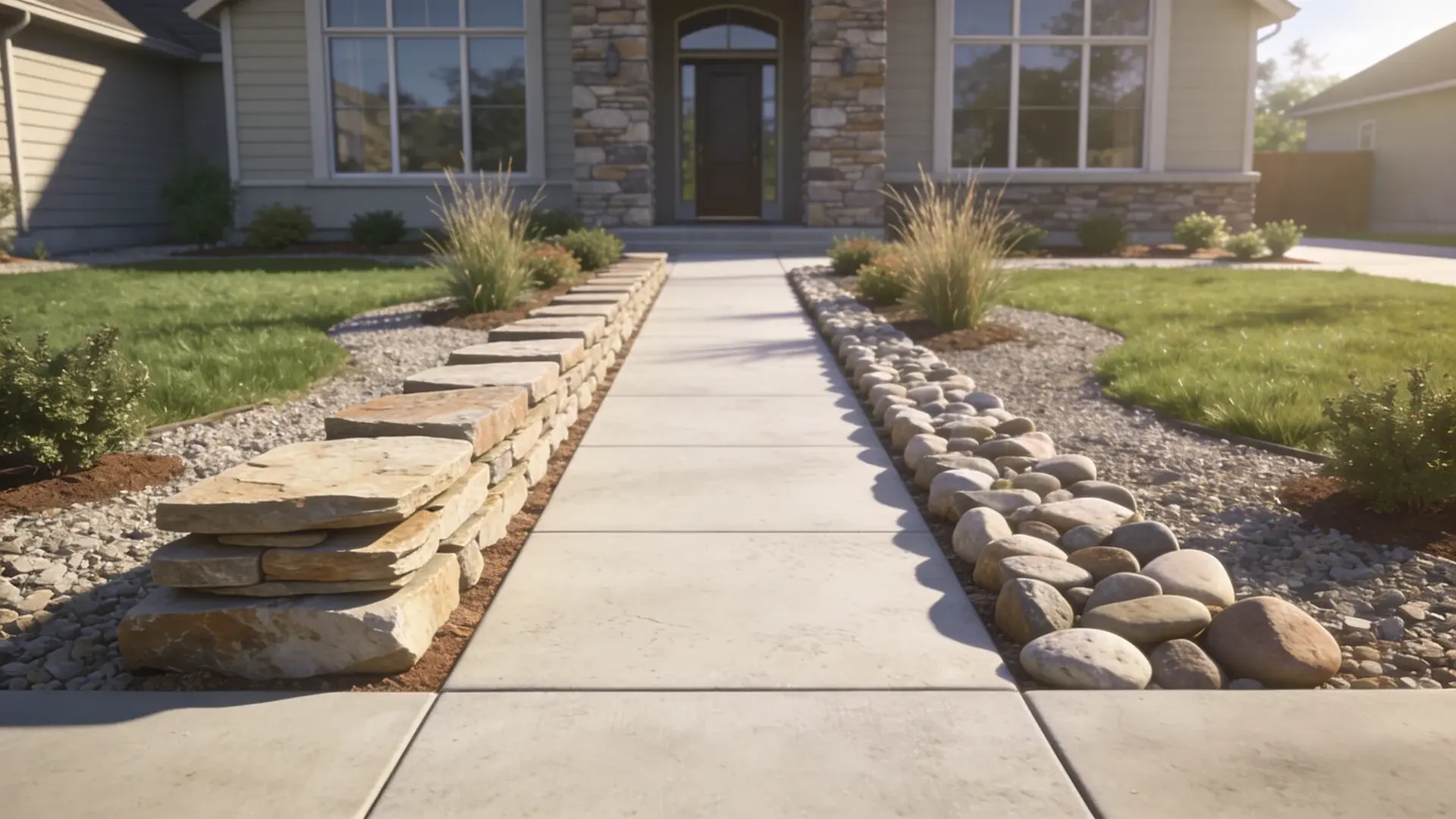
Rock edging is one of the most budget-friendly upgrades for any front yard.
Stack flat rocks two to three courses high along a paved walkway for a structured, more formal look. Use smooth, rounded river rocks for a softer, casual feel.
Check rock quarries, home improvement stores, or Craigslist listings from homeowners looking to clear stone from their properties.
12. Install a Rock Maintenance Strip Along the Foundation
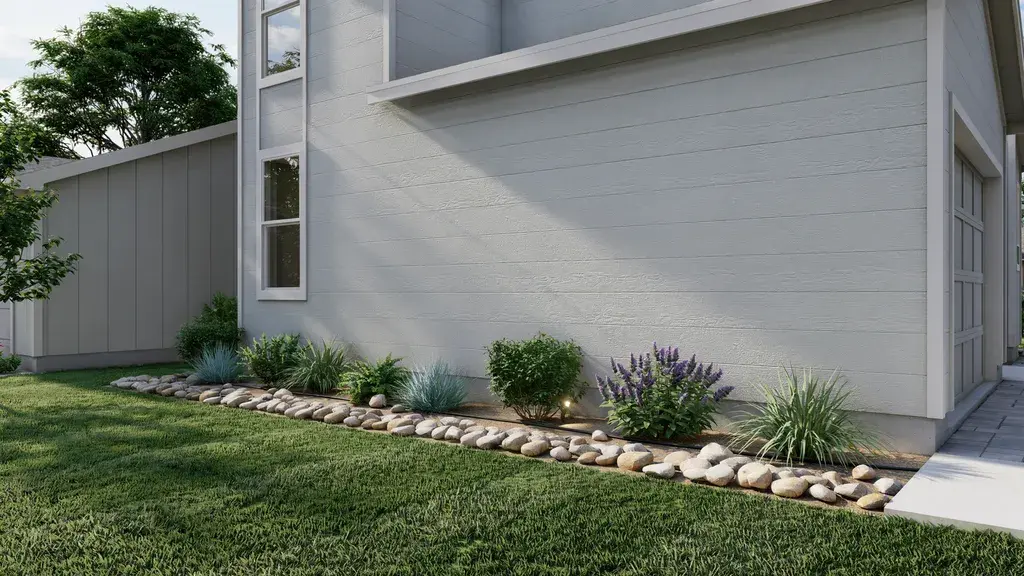
A narrow strip of rocks placed right against the base of your house catches water splashes off the soil. It keeps siding cleaner and reduces the risk of pest activity near the foundation.
Organic mulch right against the house creates a moist environment that attracts termites and other insects. Rock does not.
Place your foundation plantings just in front of the strip, not directly against the house.
13. Add a Rock Water Feature
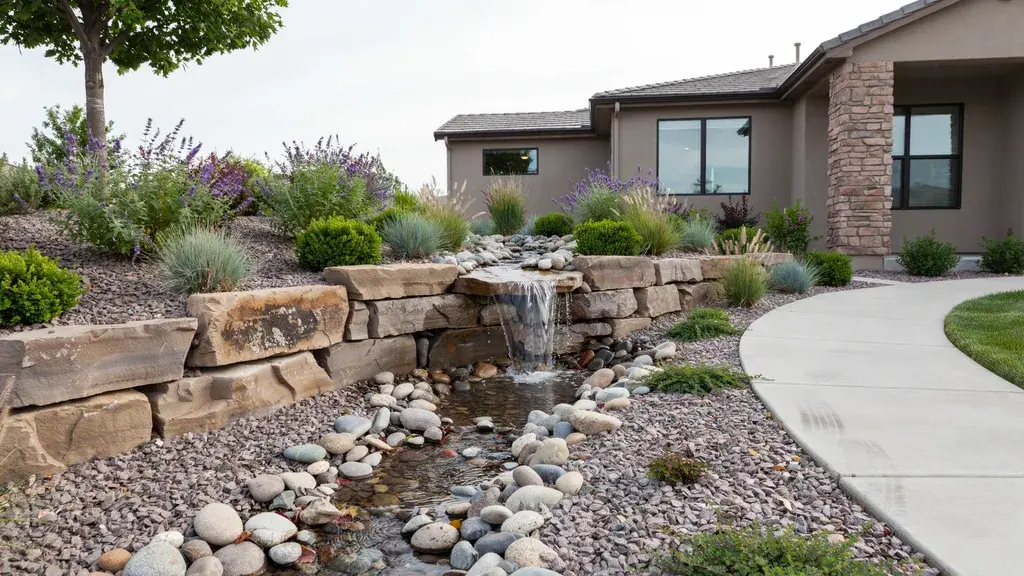
If you want your front yard to stand out in a way that no neighbor can easily copy, a rock water feature does it.
A rock spillway, where water flows over a flat stone ledge into a rock basin below, creates the visual drama of a waterfall in a compact, front-yard-appropriate format.
Place it at the base of a retaining wall or garden bed so it feels like a natural part of the landscape.
14. Rock-Filled Gabion Baskets
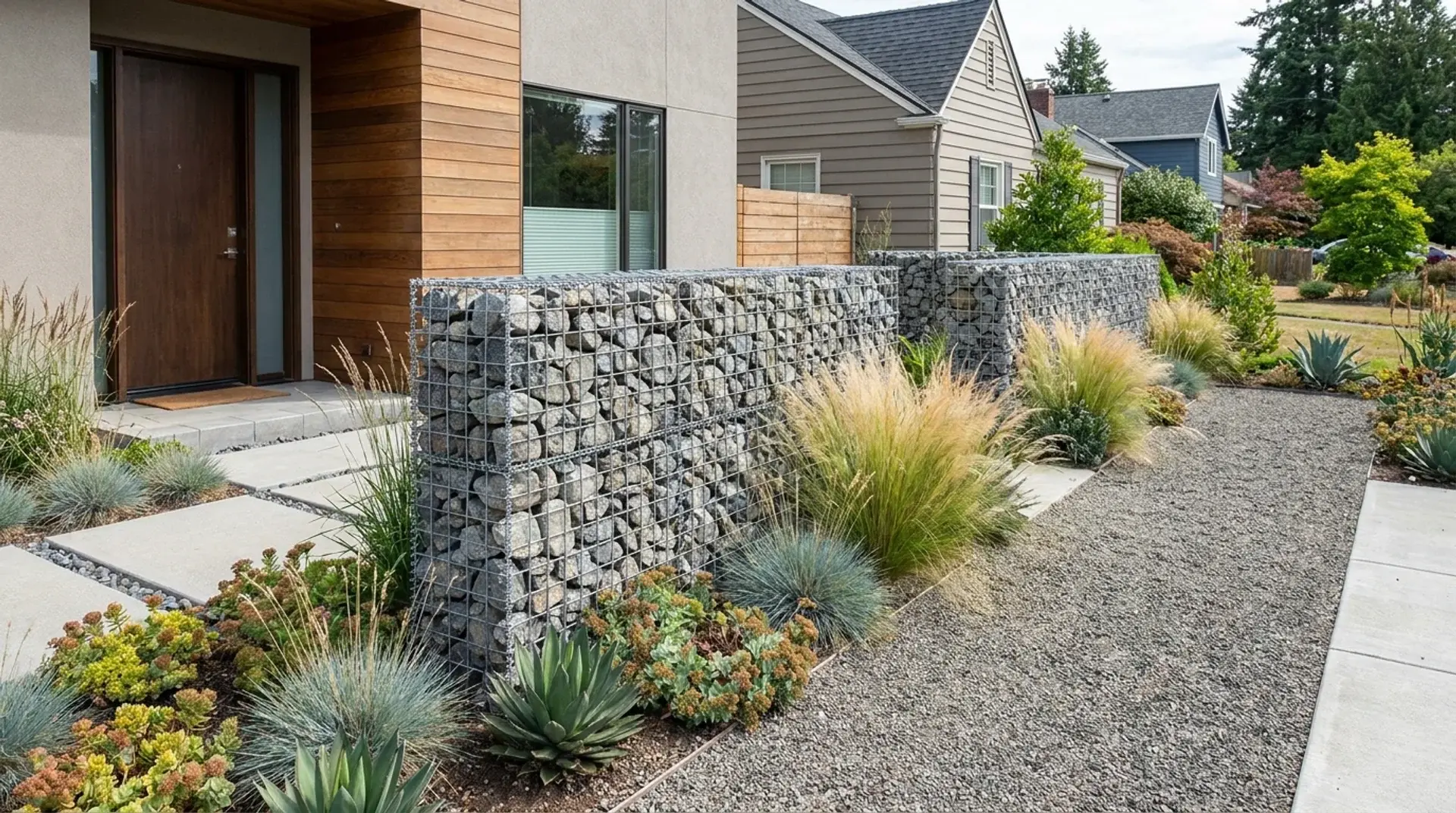
Gabion baskets are wire cages packed tightly with stones, often used to build modern, geometric walls or seating edges.
They give a sleek, industrial look that pairs well with contemporary home exteriors. Unlike loose stacked stone, gabions stay put without mortar or heavy equipment.
Use smaller, uniform rocks for a refined finish or mix sizes for texture. They also work well as low garden dividers or bench bases.
15. Zen-Style Raked Gravel Garden
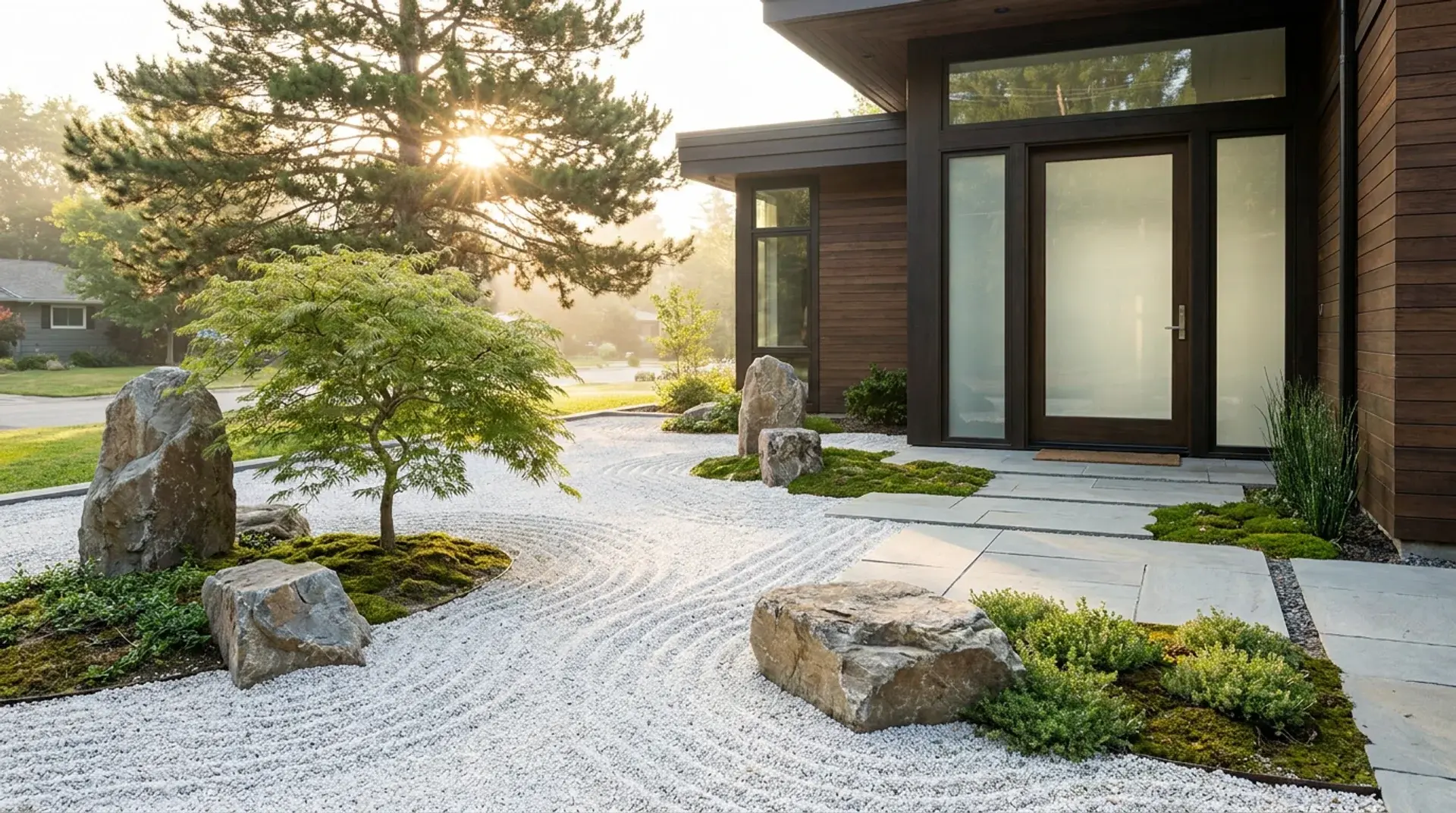
A raked gravel garden draws on Japanese design traditions to create a calm, minimalist front-yard feature.
Fine gravel is raked into wave-like patterns around a few carefully placed rocks or a single specimen tree. The result feels intentional and meditative rather than decorative.
This style works best in small, defined spaces like an entry courtyard. Keep plantings minimal so the raked lines stay the visual focus.
16. Colored Rock Accent Zones
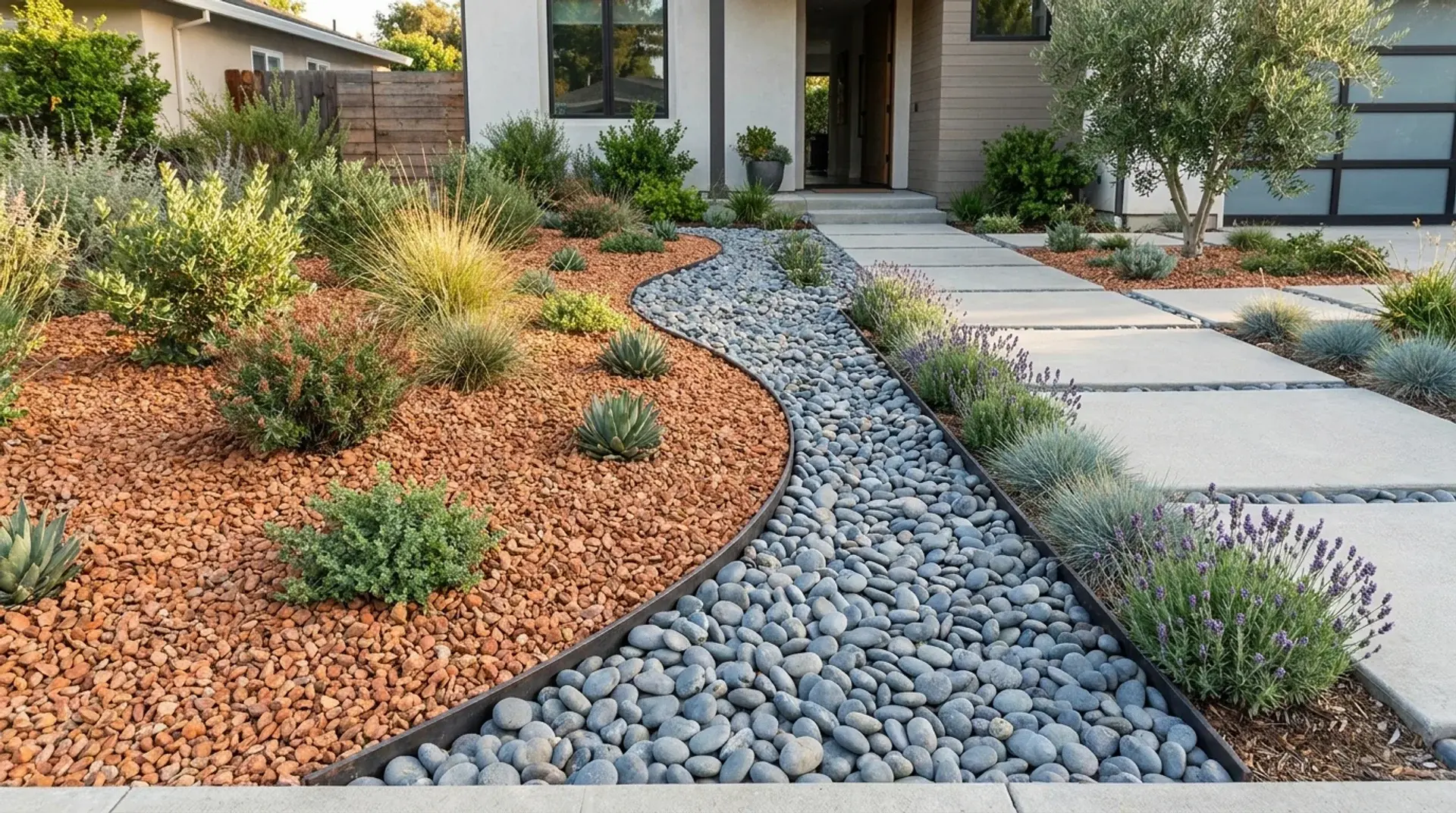
Instead of sticking to a single rock color throughout the yard, create distinct accent zones with contrasting shades.
Pair warm terracotta gravel near a seating area with cool gray river rock along a planting bed. This adds visual rhythm without needing extra plants or structures.
Keep zones separated with edging so colors do not blend together over time. It is an easy way to add personality to an otherwise simple rock yard.
17. Rock-Lined Fire Pit Area
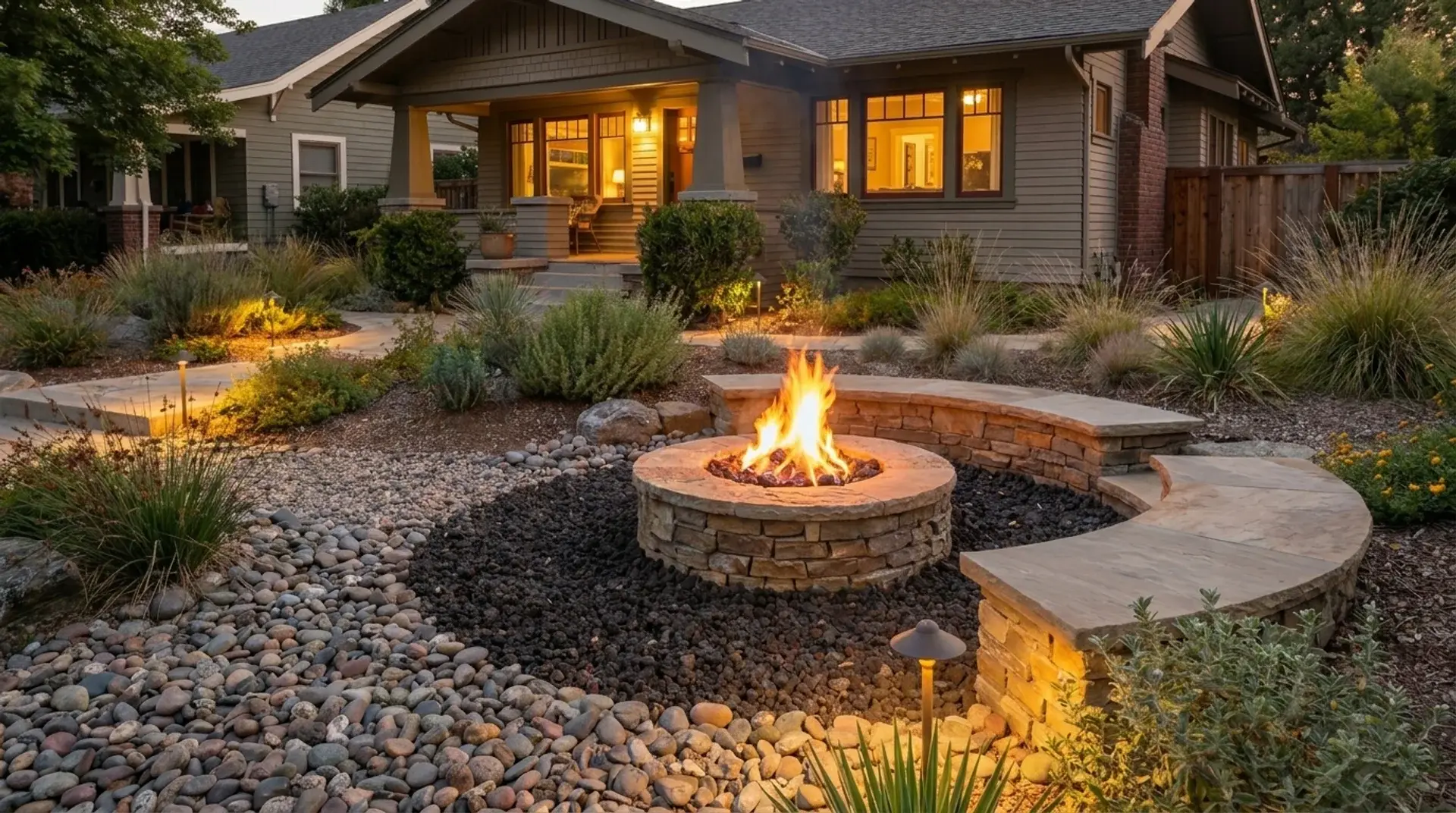
A small fire pit surrounded by rock creates a functional gathering spot right in the front yard.
Use heat-resistant fire rock or lava rock immediately around the pit, then transition to river rock or gravel further out. This keeps the area safe while tying it into the rest of the landscape.
Add a few flat stone seats or a low rock bench nearby. It turns an unused corner into an inviting outdoor feature.
18. Vertical Rock Wall Planters
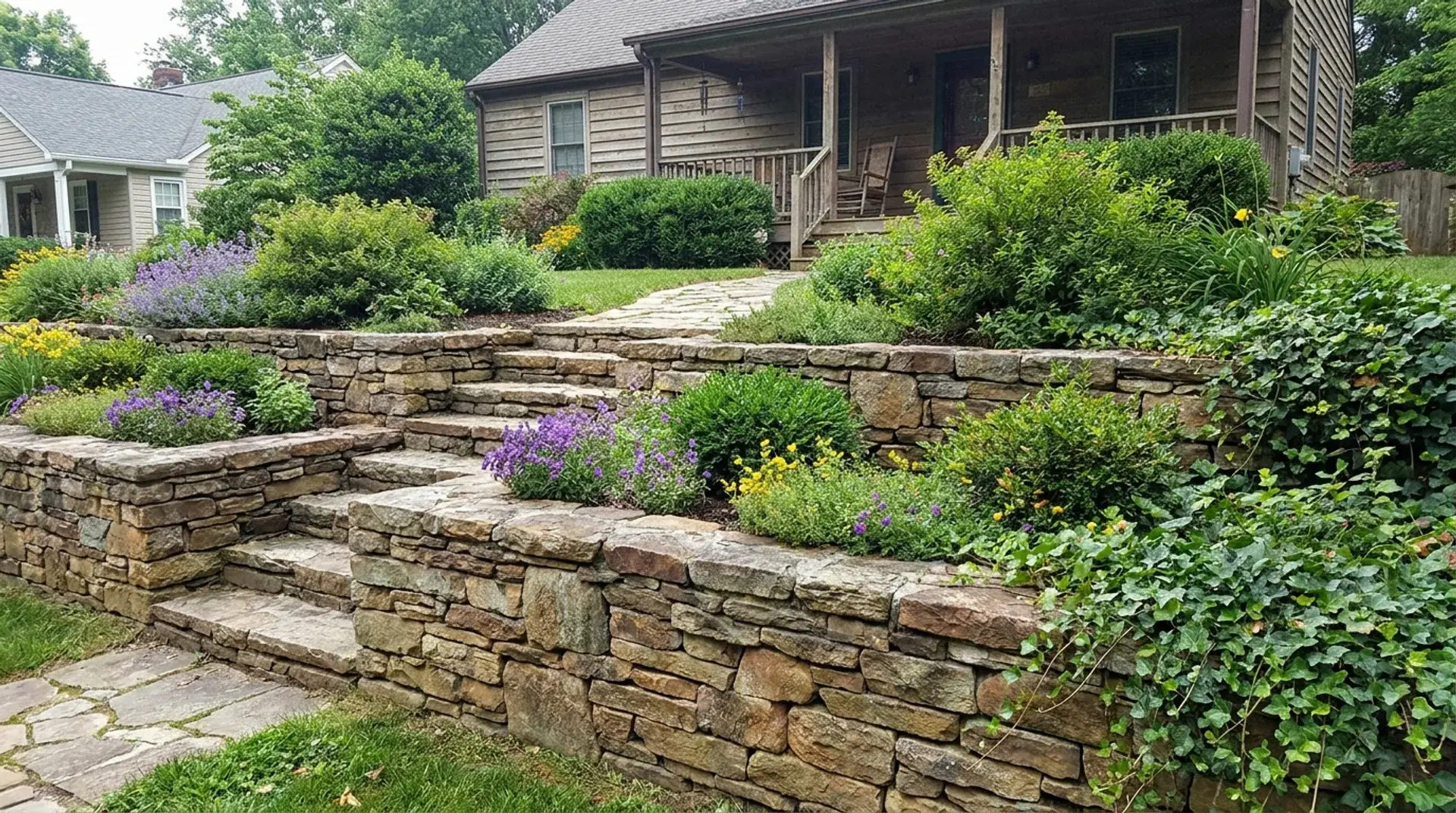
Vertical rock planters use stacked stone to create raised, tiered planting pockets built directly into a slope or wall.
This tiered design adds depth, saves lawn space, and supports plants with different sunlight needs.
If you want more planting space without adding more lawn, a raised garden bed layout can help you decide which plants go in each tier.
Dry-stacked fieldstone or flagstone works best for stability. It is a striking way to combine hardscaping with layered greenery.
19. Rock Mailbox Garden Bed
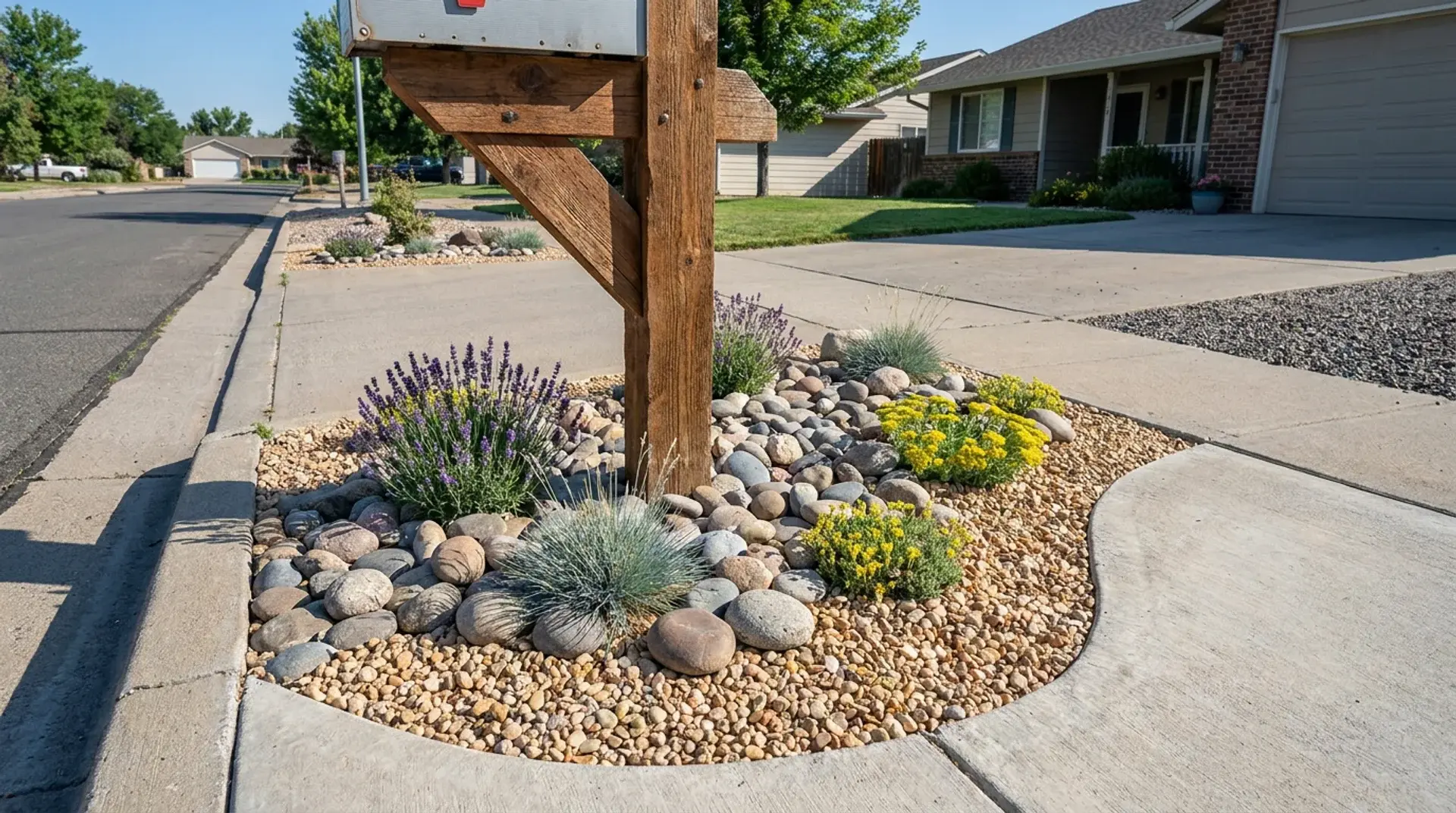
The area around a mailbox is often overlooked, but a small rock garden bed here adds instant polish.
Surround the mailbox post with a compact bed of pea gravel or river rock, then add one or two low, drought-tolerant plants for color. Keep the scale small so it does not compete with the rest of the yard.
This is a low-cost, low-effort project that still makes a noticeable difference on the street.
20. Rock Border Along a Fence Line
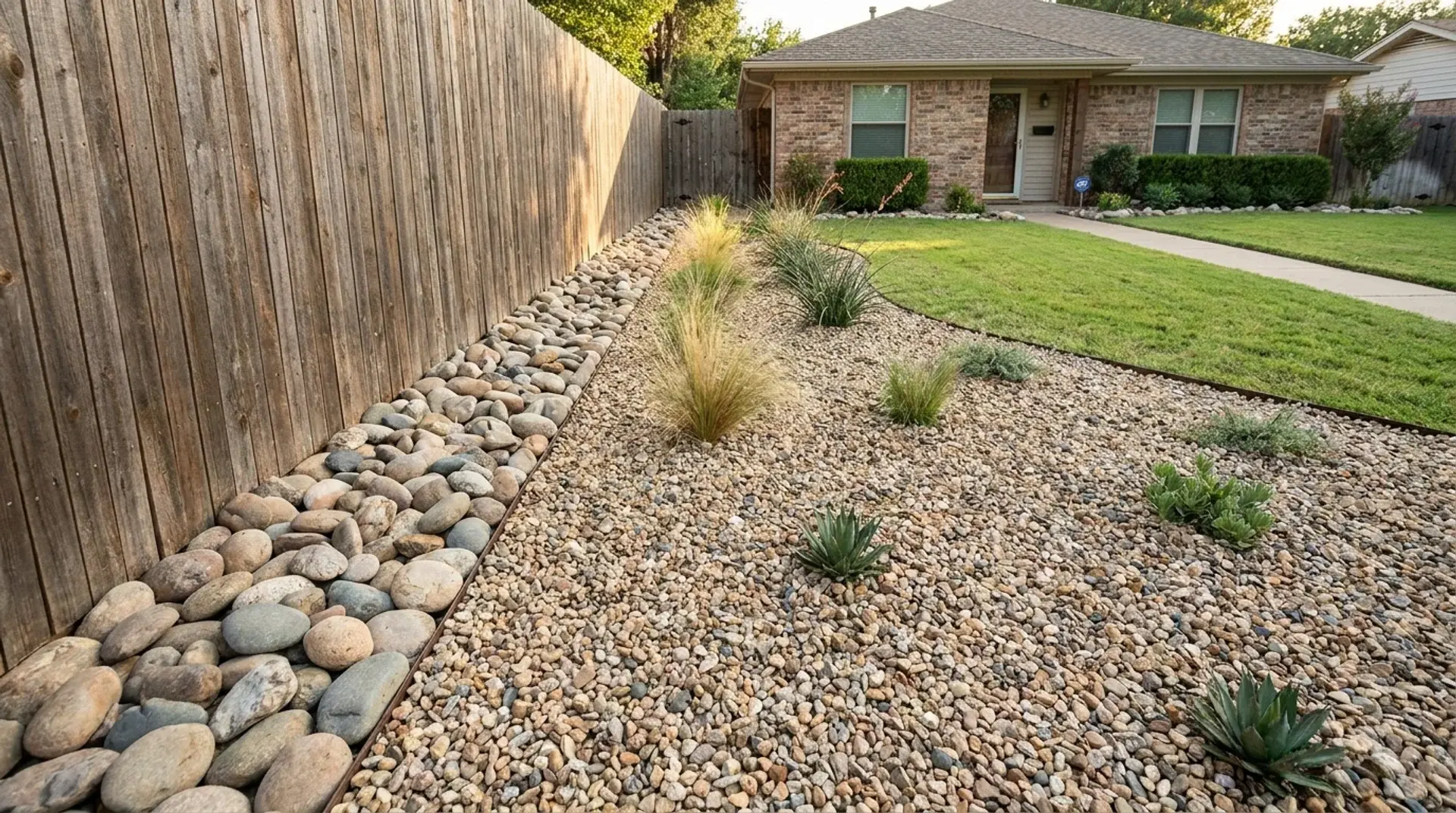
A narrow strip of rock running along the base of a front-yard fence solves a common maintenance headache.
Grass and weeds growing right against fence posts are hard to mow and trim cleanly. Replacing that strip with gravel or crushed stone eliminates the trimming work entirely.
Choose a rock color that complements the fence material. This small change keeps the fence line looking tidy with almost no upkeep.
21. Seasonal Rock Bed with Rotating Plants
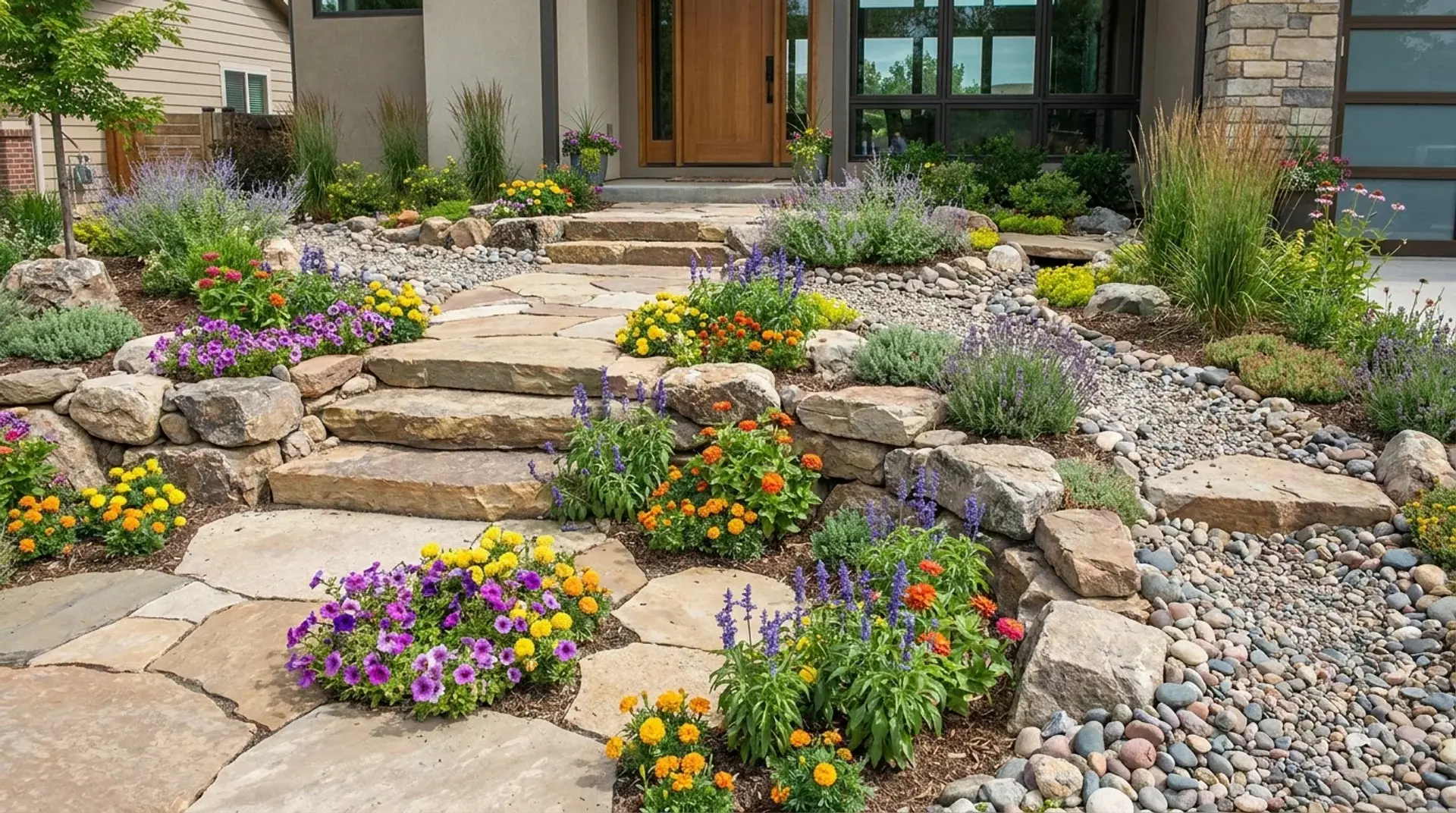
A seasonal rock bed uses a fixed rock layout as the permanent structure, while a few open pockets are left for rotating seasonal plants.
Swap in pansies for winter, marigolds for summer, or mums for fall without disturbing the rock design itself. This keeps maintenance to a minimum while still allowing color changes throughout the year.
It is a practical way to enjoy seasonal variety without having to redo hardscaping work.
How to Get Rock Landscaping Right the First Time
Getting the design right matters, but the installation details matter just as much. Here are five things worth knowing before you start:
- Use commercial-grade woven landscape fabric: not the thin, non-woven type. The difference in weed control is significant.
- Scale your rocks to your yard: Large boulders can overwhelm a small space. Small stones get lost in a large open yard.
- Leave a 3- to 6-inch clear zone around plant stems: Rocks that press against plant bases can trap heat and moisture, damaging roots.
- Shop around for materials: Local rock quarries, garden centers, and even Craigslist listings often offer rocks at far lower prices than big-box stores.
- Choose plants for your USDA Zone: Even a rock-heavy yard works better when the plants in it are suited to your local climate and soil.
Final Thoughts
Rock landscaping is one of the best upgrades for a front yard, and it’s easier to start than it looks.
Front yard landscaping ideas with rocks work across every home style, climate, and budget once you pick the right rock and lay fabric first.
You don’t have to overhaul the whole yard this weekend.
Start small: a dry creek bed by the driveway, a boulder near the walkway, or a rock border around your flower beds.
Pick one idea and tell us how your yard turns out.
Frequently Asked Questions
How Do I Stop Weeds from Growing Through Landscape Rocks?
Lay commercial-grade woven landscape fabric before placing your rocks. Without fabric, weeds will push through within one season.
How Much Does Front Yard Rock Landscaping Cost?
Rock landscaping costs $2 to $8 per square foot installed. That is higher than sod upfront, but it typically pays for itself in two to four years.
Can I Mix Rocks and Plants in My Front Yard?
Yes. Rocks and plants work well together. Leave a 3- to 6-inch gap around plant stems and choose plants that do well in well-drained, rocky conditions.
Is Rock Landscaping Better than Mulch?
Rock lasts longer, does not attract pests, and does not need seasonal replacement. Mulch is cheaper upfront and feeds the soil as it breaks down.