Your flat roof takes a beating every single day. Rain, sun, wind, it handles it all without a slope to shed water quickly.
That’s exactly why flat roof maintenance matters more. A small crack today becomes a costly leak tomorrow. And the worst part? Most damage is preventable.
This post walks you through inspection steps, membrane types, recoating schedules, repair costs, and the signs that tell you it’s time to call a professional.
Flat Roof Maintenance and Why It Matters
Flat roof maintenance involves regularly inspecting and repairing your roof. It includes cleaning drains, removing debris, and spotting damage early. A flat roof sits at a low angle. This makes it prone to water pooling and leaks.
Without proper care, small issues turn into costly repairs. Routine flat roof maintenance helps extend your roof’s life and keeps your building safe from water damage.
Skipping regular roof checkups leads to expensive problems. Water can sit on a flat roof for days. Over time, this causes cracks, blisters, and leaks. These issues weaken the roof structure. Regular maintenance catches these problems before they grow.
It also protects your warranty. Roofing manufacturers typically require documented routine care to keep a warranty valid. A well-maintained flat roof can last 20 to 30 years. Ignoring it cuts that lifespan in half.
Flat Roof Maintenance Checklist
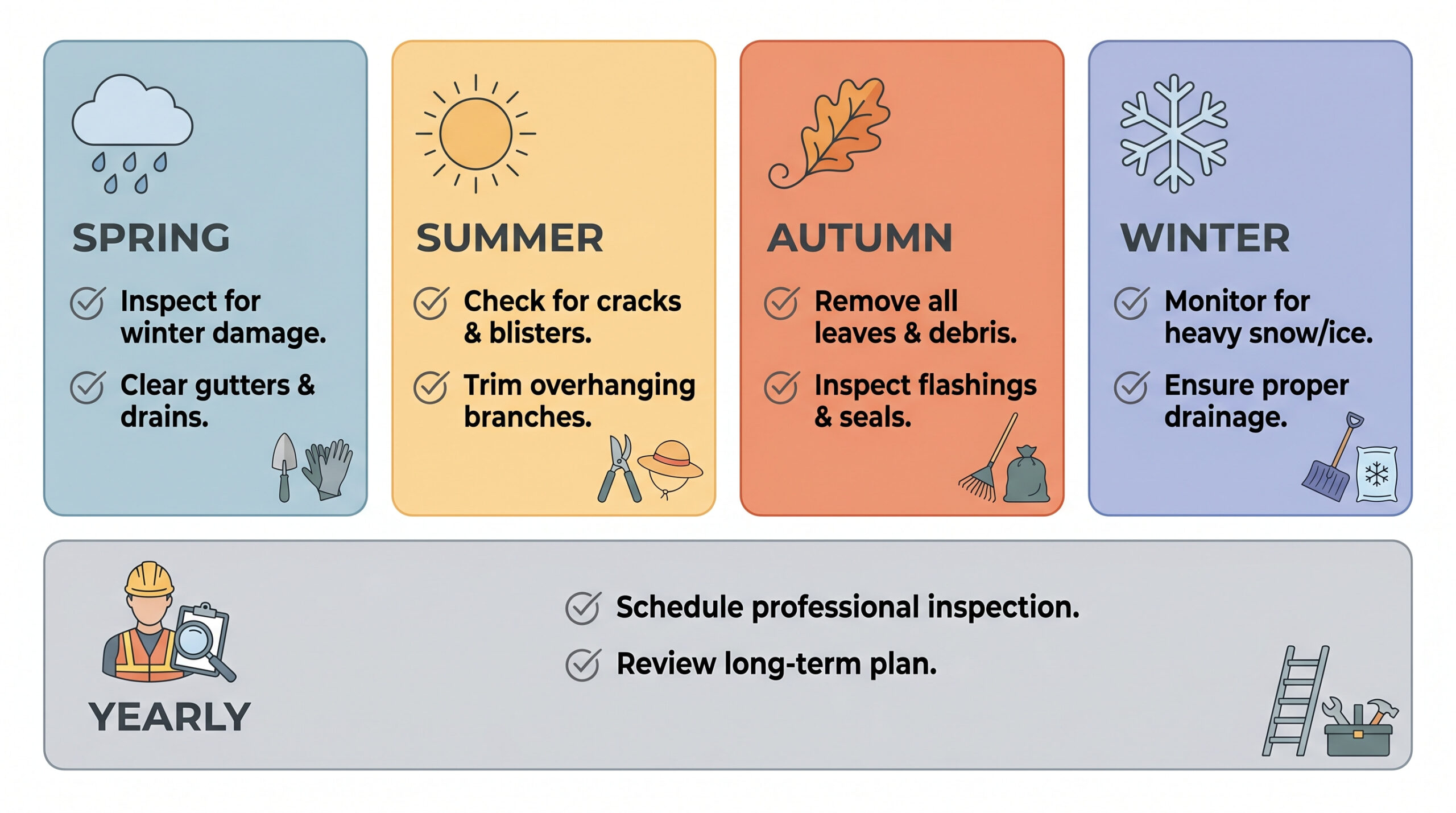
Flat Roof Maintenance Checklist PDF
A flat roof maintenance checklist keeps you organized. It helps you track what needs attention and when. Without a checklist, it’s easy to miss warning signs. Small cracks or blocked drains can go unnoticed for months.
Following a clear checklist ensures nothing gets overlooked. It also helps you plan your budget for repairs. Break your checklist into weekly, monthly, and seasonal tasks for best results.
Weekly and Monthly Checks
Here’s what to check on a weekly and monthly basis:
- Remove leaves, branches, and dirt from the roof surface.
- Check drains and gutters for blockages.
- Look for standing water after rainfall.
- Inspect visible seams and edges for lifting or gaps.
- Clear any moss or algae growth before it spreads.
- Check for cracks or blisters in the membrane.
Seasonal and Yearly Inspections
Schedule these inspections every season and once a year:
- In spring, check for damage caused by winter weather.
- In summer, look for heat-related blisters or splits.
- In autumn, clear fallen leaves and prep drainage systems.
- In winter, remove snow buildup to reduce weight stress on the roof.
- Once a year, hire a certified roofing professional for a full inspection.
- Document every inspection with photos and notes for your records.
Common Flat Roof Problems and Causes
Flat roofs face issues that sloped roofs rarely deal with. Their low angle invites water, heat, and debris buildup. Most problems start small but grow fast if ignored. Here are five common flat roof problems and how to fix them.
1. Ponding Water: The Silent Roof Destroyer
Ponding water occurs when water sits on your roof for more than 48 hours. It adds weight and slowly breaks down the membrane.
- Cause: Blocked drains or poor roof slope.
- Solution: Clean gutters and drains every month. Install tapered insulation to improve water flow if pooling keeps returning. Mark wet spots with chalk after rain so your roofer knows exactly where to check.
2. Cracks and Splits: Slow but Steady Damage
Temperature swings force the membrane to expand and shrink. Over time, this creates cracks that let water seep through.
- Cause: Extreme heat and cold cycles.
- Solution: Seal small cracks with roofing caulk right away. For larger splits, call a certified roofer to patch the area.
3. Blistering: Trapped Trouble Beneath the Surface
Blisters look like raised bubbles on the roof. They weaken the membrane and grow worse over time.
- Cause: Moisture or air trapped between roof layers during installation.
- Solution: A professional roofer can cut, dry, and reseal the blister. Never try to pop one without proper tools.
4. Flashing Failures: The Weak Link at the Edges
Flashing seals joints around vents, pipes, and edges. When it cracks or pulls away, water gets in fast.
- Cause: Wind exposure, aging, or poor installation.
- Solution: Reseal loose flashing with roofing cement. Replace sections with heavy rust or wide gaps.
5. Vegetation Growth: Roots That Eat Your Roof
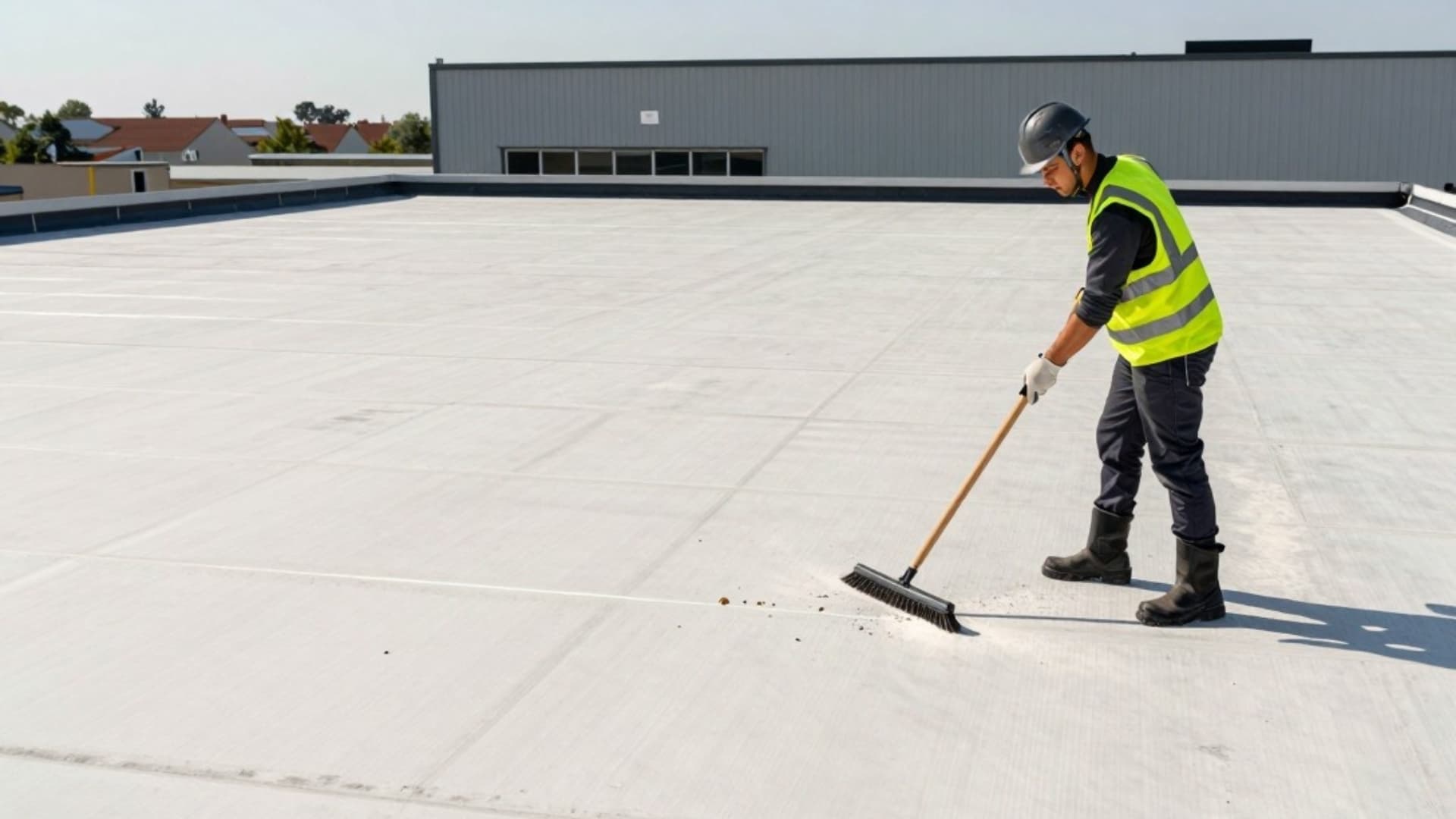
Moss, algae, and small plants grow where moisture sits. Their roots break through the membrane, causing hidden leaks.
- Cause: Shade, trapped moisture, and lack of regular cleaning.
- Solution: Remove growth with a soft brush. Apply moss treatment twice a year and trim nearby tree branches.
One more sign to watch for indoors: brown or yellow water stains on ceilings or walls. These appear before a visible leak forms on the roof itself. Rising energy bills can also signal a damaged roof, a compromised membrane reduces insulation performance and forces heating and cooling systems to work harder.
How to Inspect a Flat Roof?
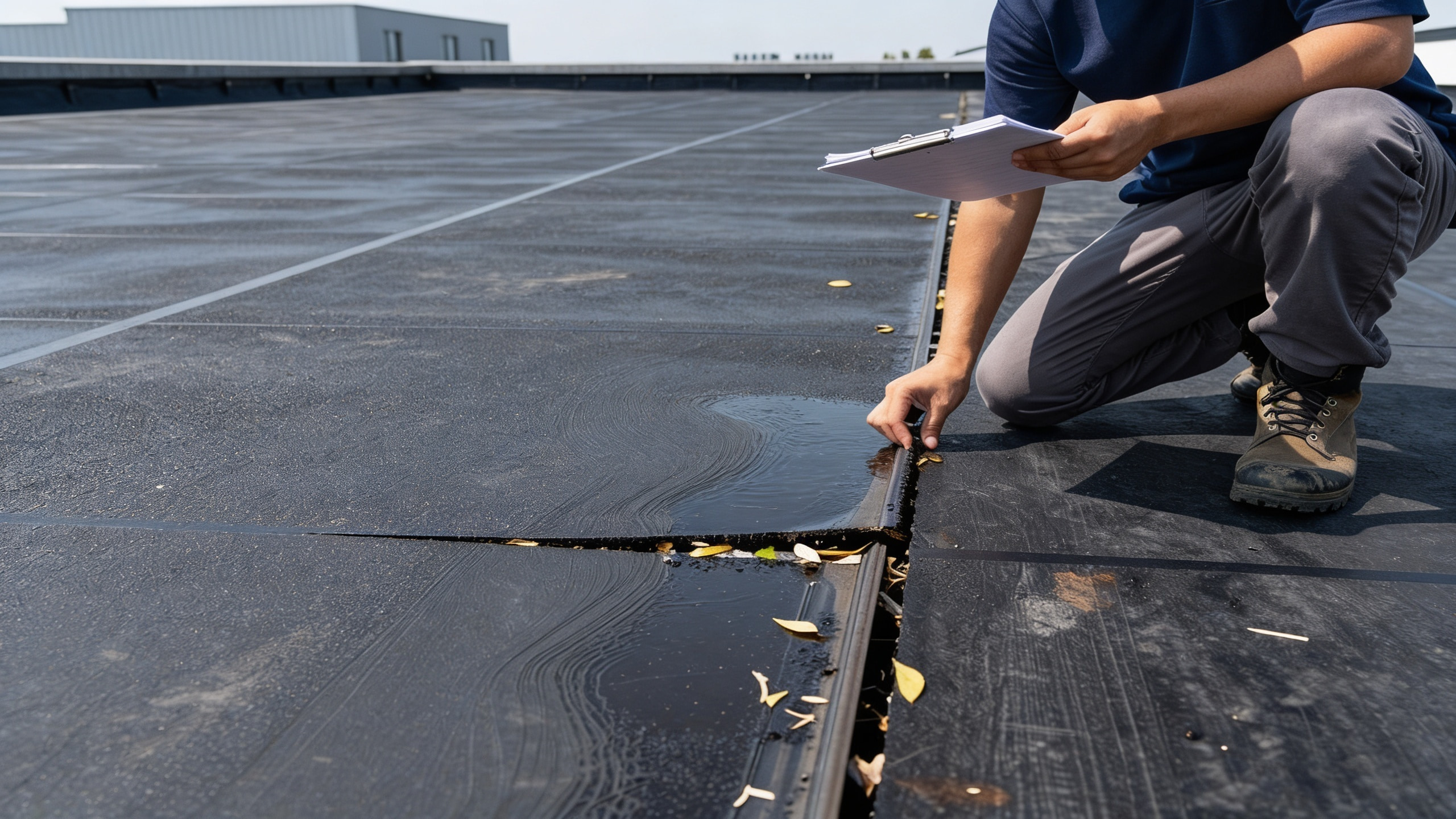
Inspecting your flat roof doesn’t require expert skills. A simple routine check can save you from expensive repairs. Follow these steps to inspect your flat roof safely and thoroughly.
Safety first: Never inspect a flat roof alone or in wet, windy conditions. Wear non-slip footwear, use a stable ladder that extends at least three feet past the roofline, and tell someone before going up. If you’re uncomfortable with heights, hire a professional.
Step 1: Check the Weather First
Pick a dry, calm day for your inspection. A wet roof is slippery and dangerous. Wait at least 24 hours after rain before going up.
Step 2: Use the Right Safety Gear
Wear soft-soled shoes to protect the membrane. Bring a ladder, gloves, and a flashlight. Never inspect a roof alone; have someone nearby.
Step 3: Look for Standing Water
Walk the entire surface slowly. Note any areas where water has pooled. These spots signal drainage problems that need to be fixed.
Step 4: Check Drains and Gutters
Make sure all drains are clear of leaves and debris. If your system uses downspouts connected to interior drain lines, check those connections too. Blocked drains are the top cause of water damage on flat roofs.
Step 5: Examine the Membrane
Look closely for cracks, blisters, or tears. Pay extra attention to seams and edges. These areas wear out faster than the rest.
Step 6: Inspect Flashing and Edges
Check the flashing around vents, pipes, and roof edges. Loose or cracked flashing lets water sneak underneath.
Step 7: Document Everything
Take photos of any damage you find. Write down the location and size of each issue. This record helps your roofer give an accurate quote. Doing this twice a year keeps small issues from turning into big ones.
Flat Roof Membrane Types and What Each One Needs
Your membrane type determines which sealants you can use, how to clean the surface, and how often to recoat. Applying the wrong product on the wrong membrane causes faster deterioration. Here are the four most common types found on flat roofs:
- EPDM (Rubber): Flexible and durable. Inspect seams closely; they can separate over time. Clean with mild soap and water only. Avoid oil-based products or petroleum solvents, which break down the rubber.
- TPO: Light-colored and heat-resistant. Check seams after extended heat exposure. Its reflective surface reduces heat absorption and can lower cooling costs.
PVC: Chemical-resistant and strong. Inspect lap seams regularly. When properly maintained, PVC membranes can last 20 years or more. - Modified Bitumen: Applied in multiple layers. Common in older buildings. Check for surface cracks and granule loss each season; these are early signs of deterioration.
If you’re unsure which membrane you have, ask a licensed roofer before applying any sealant or coating product. The wrong product can void your warranty and speed up damage rather than prevent it.
When to Reseal and Recoat a Flat Roof
Roof coatings add a waterproof layer over your existing membrane. They protect against UV rays, temperature swings, and minor surface damage. Flat roof leaks often start in spots where the original coating has thinned or cracked, making scheduled recoating one of the most cost-effective tasks in any flat roof maintenance plan.
Most flat roofs need recoating every 3 to 5 years, depending on membrane type and local weather conditions. As a general rule:
- Silicone coatings work well on EPDM and aged modified bitumen roofs.
- Acrylic coatings suit TPO roofs and work well in areas with moderate UV exposure.
- Polyurethane coatings handle foot traffic well and suit heavily used roofs.
Before applying any coating, clean the surface and repair any cracks or blisters. Sealing over damaged areas traps moisture underneath and accelerates further breakdown. Reflective coatings also reduce heat absorption, which can lower energy bills in warm climates.
Flat Roof Maintenance and Repair Cost
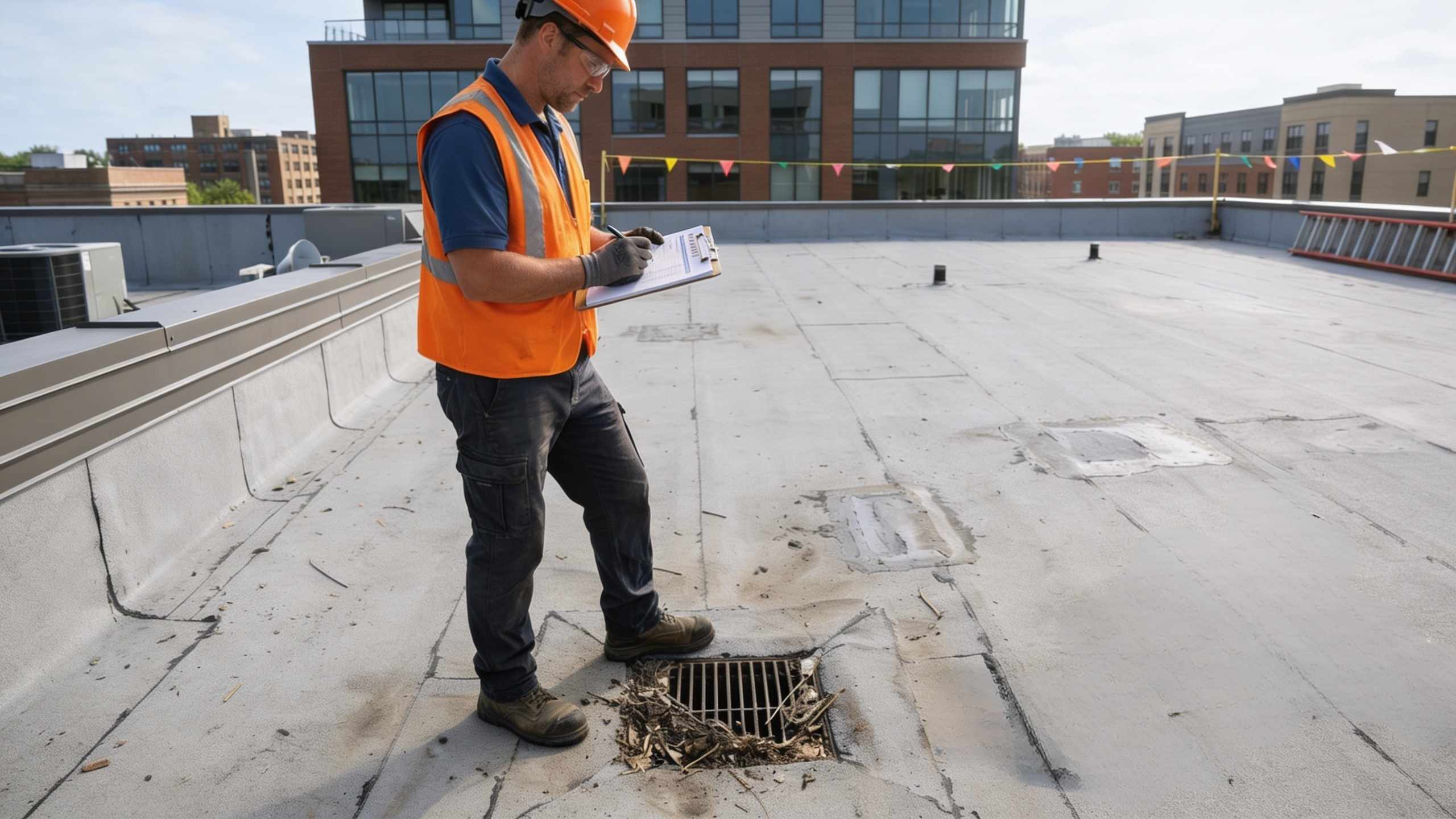
Knowing the cost upfront helps you plan your budget better. Flat roof maintenance costs vary based on the type of work needed. Minor fixes are affordable, but ignoring them leads to expensive replacements.
Here’s a quick breakdown of common costs.
| Service Type | Average Cost (USD) |
|---|---|
| Routine inspection | $100 – $300 |
| Drain and gutter cleaning | $75 – $200 |
| Small crack or seam repair | $200 – $500 |
| Blister or membrane patch | $300 – $700 |
| Flashing repair or replacement | $400 – $800 |
| Roof recoating | $500–$2,500 |
| Full roof replacement | $5,000 – $15,000 |
Costs depend on your roof size, material, and location. Getting two or three quotes from licensed roofers is always a smart move.
Regular flat roof maintenance keeps you on the lower end of these costs. Skipping it almost always pushes you toward the higher end.
Common Flat Roof Maintenance Mistakes to Avoid
Simple, avoidable mistakes are behind most flat roof failures. Avoiding these errors keeps your roof in good shape for years.
- Ignoring small cracks or blisters. Minor damage spreads fast. Fix it as soon as you spot it.
- Walking on the roof with hard-soled shoes. This scuffs and tears the membrane. Always use soft-soled footwear.
- Skipping seasonal inspections. Weather changes cause new damage every season. Check your roof at least twice a year.
- Using the wrong repair materials. Not all sealants work on every type of roof. Always match products to your membrane material.
- Blocking drains with stored items. Keep items away from drains and edges.
Avoiding these mistakes is a core part of flat roof maintenance. A little care now saves a lot of money later.
When to Call a Professional?
Not every flat roof issue is a DIY fix. Some problems need a trained expert. If you notice large cracks, deep sagging, or multiple leaks, call a licensed roofer right away. Membrane damage that covers a wide area also needs professional hands.
The same goes for flashing that has pulled away in several spots. If your roof is still under warranty, DIY repairs could void it.
A certified contractor knows how to fix things without breaking your coverage. When in doubt, always choose a professional over a quick patch.
Proper flat roof maintenance sometimes means knowing when to step back and let an expert handle it.
If your roof is over 20 years old, or if repair costs keep climbing each year, a full replacement may be more cost-effective than continued patching.
Widespread blistering and repeated leaks in different areas are the clearest signals that repairs alone won’t hold. After storm events, document every area of new damage before a roofer arrives; photos and written notes make the assessment faster and the quote more accurate.
Proper flat roof maintenance sometimes means knowing when to step back and let an expert handle it.
Summing It Up
Flat roof maintenance comes down to one thing: staying ahead of the damage. Regular inspections, clear drains, and quick repairs add years to your roof’s life.
Know your membrane type. Recoat on schedule. Use a seasonal checklist so nothing slips through. When the job feels too big, call a certified roofer.
A small investment in maintenance now is far cheaper than a full replacement later. If a major repair or full replacement is on the horizon, looking into your roofing finance options early gives you more time to plan and compare costs.
Frequently Asked Questions
What is the 25% Rule for Roofing?
If more than 25% of a roof needs repair, most building codes require a full replacement instead of a patch job.
What Color Roof Increases Home Value?
Neutral colors like gray, beige, and charcoal tend to appeal to more buyers and hold value better than bold or bright shades.
How Often Should You Seal a Flat Roof?
Most flat roofs need resealing every 3 to 5 years, depending on the material and the roof’s exposure to the weather.
Can You Walk on a Flat Roof for Maintenance?
Yes, with soft-soled shoes, dry conditions, and a second person nearby. Hard soles damage the membrane. Avoid going up after rain or in strong winds.