The floor is the quietest decision in a mid-century modern room, and often the one that makes or breaks the whole design. It grounds the furniture, pulls in natural light, and holds the space together without competing for attention.
Most homeowners recognize the style on sight, but go blank when it is time to pick a material. Wood is the obvious answer. But terrazzo, cork, linoleum, and vinyl can all work if the tone and finish are right.
After 15 years in residential design and construction, flooring is where I see clients second-guess themselves the most.
This guide covers the materials, colors, room-by-room choices, and budget-friendly options that make up the mid-century modern flooring landscape, including the mistakes worth avoiding before the first plank goes down.
What Makes Mid-Century Modern Flooring Different
Mid-century modern design ran from roughly 1933 to 1965. Flooring in that period was simple and warm. It never competed with the furniture or the architecture for attention.
The style favors smooth surfaces over texture. It prefers warm wood tones over gray or bleached finishes. Geometric patterns appear in tile and terrazzo but stay controlled, not saturated.
What separates it from other styles is the combination of warmth and restraint. The floor is always warm in tone. The finish is always low-sheen. The material is always natural or close to it. Get those three right and most other decisions fall into place.
A Brief History of Mid-Century Modern Flooring
Mid-century modern design did not start as a style. It started as a problem to solve.
After World War II, millions of veterans needed housing fast. Developers built at a scale the country had never seen. The flooring choices of that era reflect that pressure exactly.
Before the Era
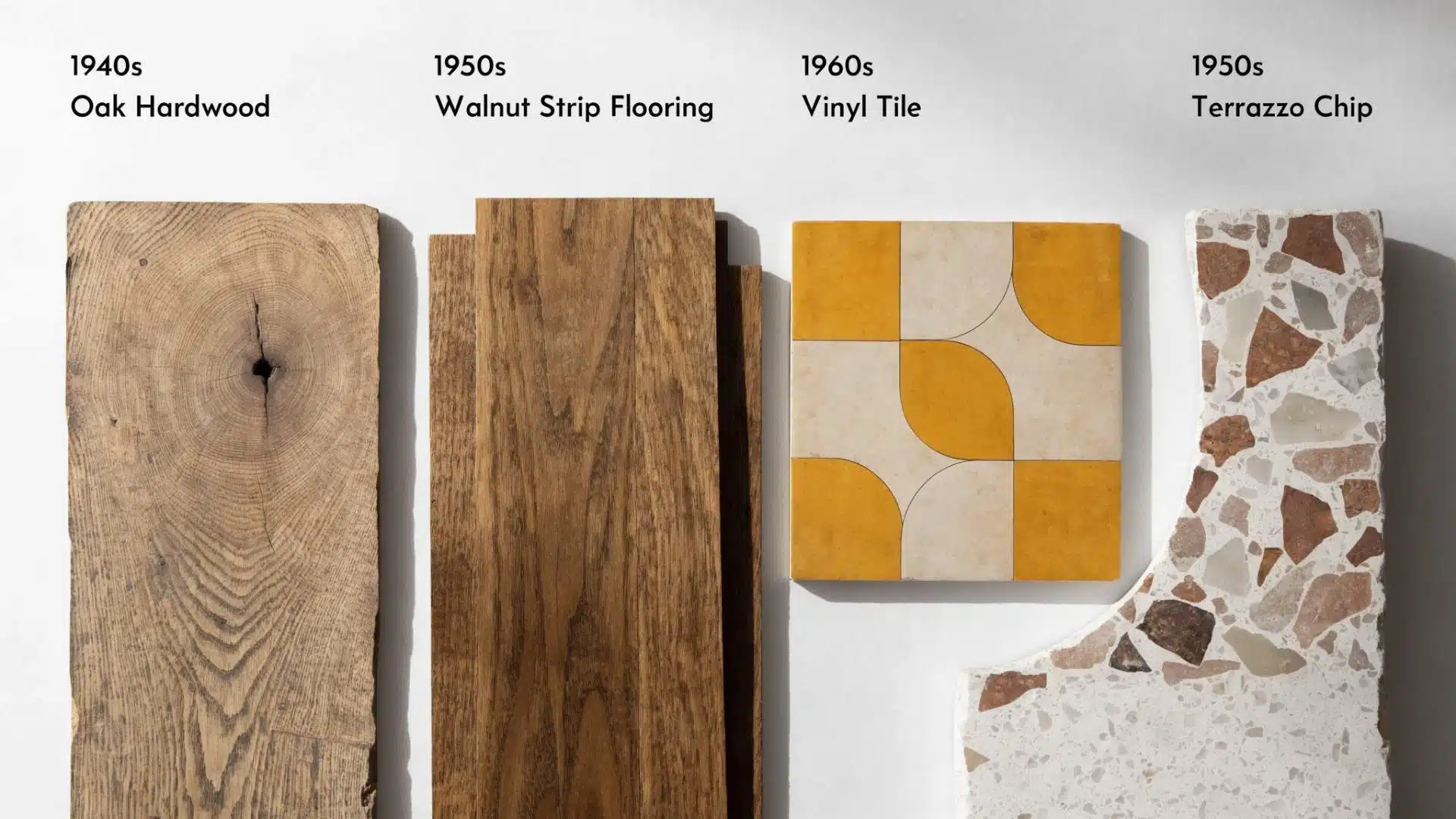
ALT TEXT: timeline-1940s-oak-1950s-walnut-1960s-vinyl-terrazzo-flooring
Victorian homes used heavy, ornate flooring. Dark-stained hardwood, patterned rugs, and decorative tile. The floor was supposed to signal status.
By the 1930s, that sensibility was wearing thin. The Great Depression made ornamentation feel wasteful.
The Bauhaus movement had been pushing functional, stripped-back design since the early 1920s. Both forces pointed in the same direction: simpler materials, less decoration, rooms that worked.
The 1940s: Utility First
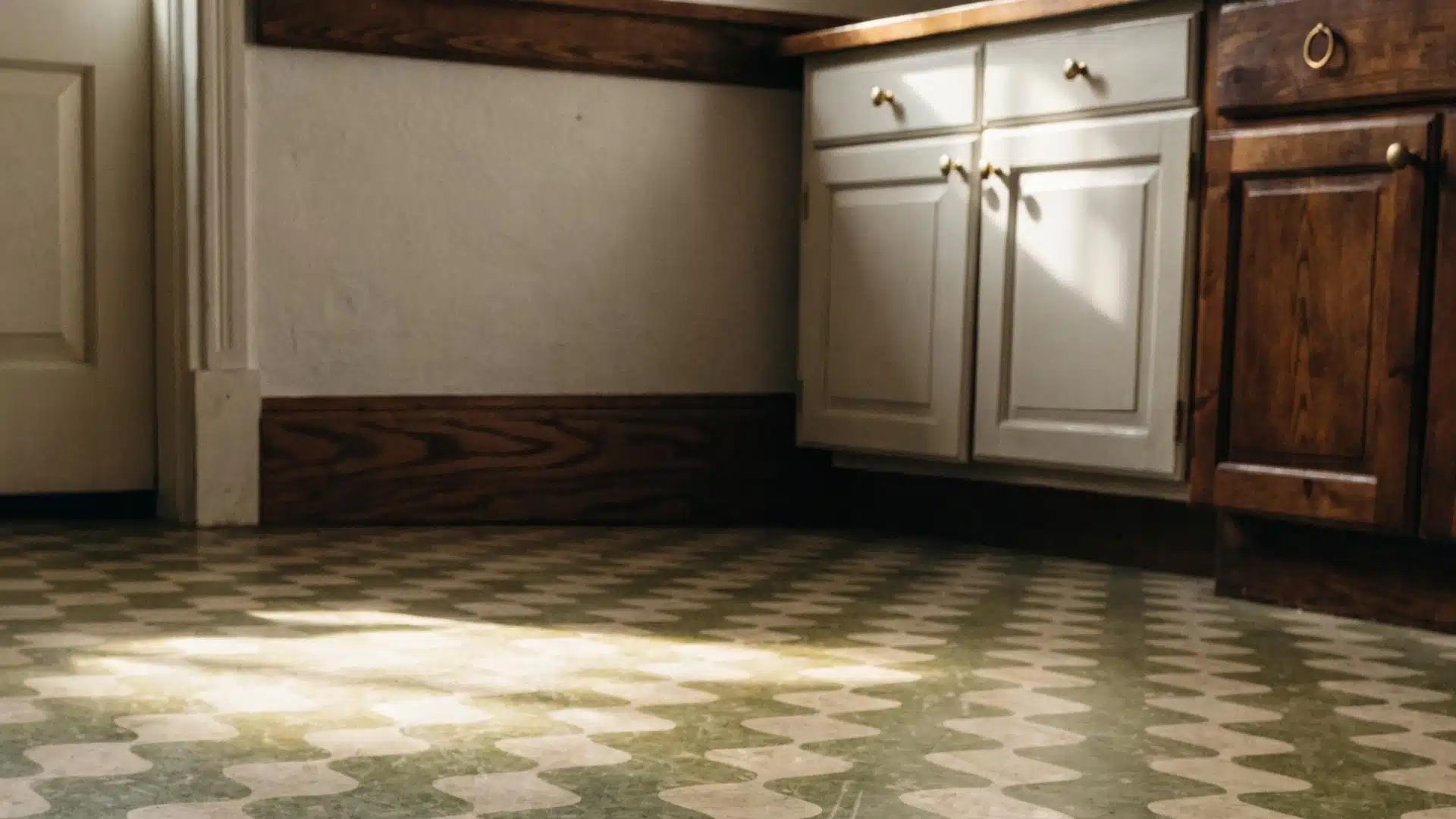
ALT TEXT: green-and-white-geometric-mid-century-linoleum-floor-in-kitchen
Wartime rationing shaped residential construction more than any designer did. Linoleum stepped in where hardwood was scarce.
Made from linseed oil, cork dust, and natural resins, it was affordable, easy to clean, and came in simple geometric patterns that suited the era. Many mid-century kitchens still have their original linoleum intact.
Hardwood remained standard in living rooms and bedrooms. Narrow planks between 2.25 and 3.25 inches were the norm, not as a stylistic statement, but because that was the standard mill dimension. The aesthetic came after the fact.
The 1950s: The Style Takes Shape
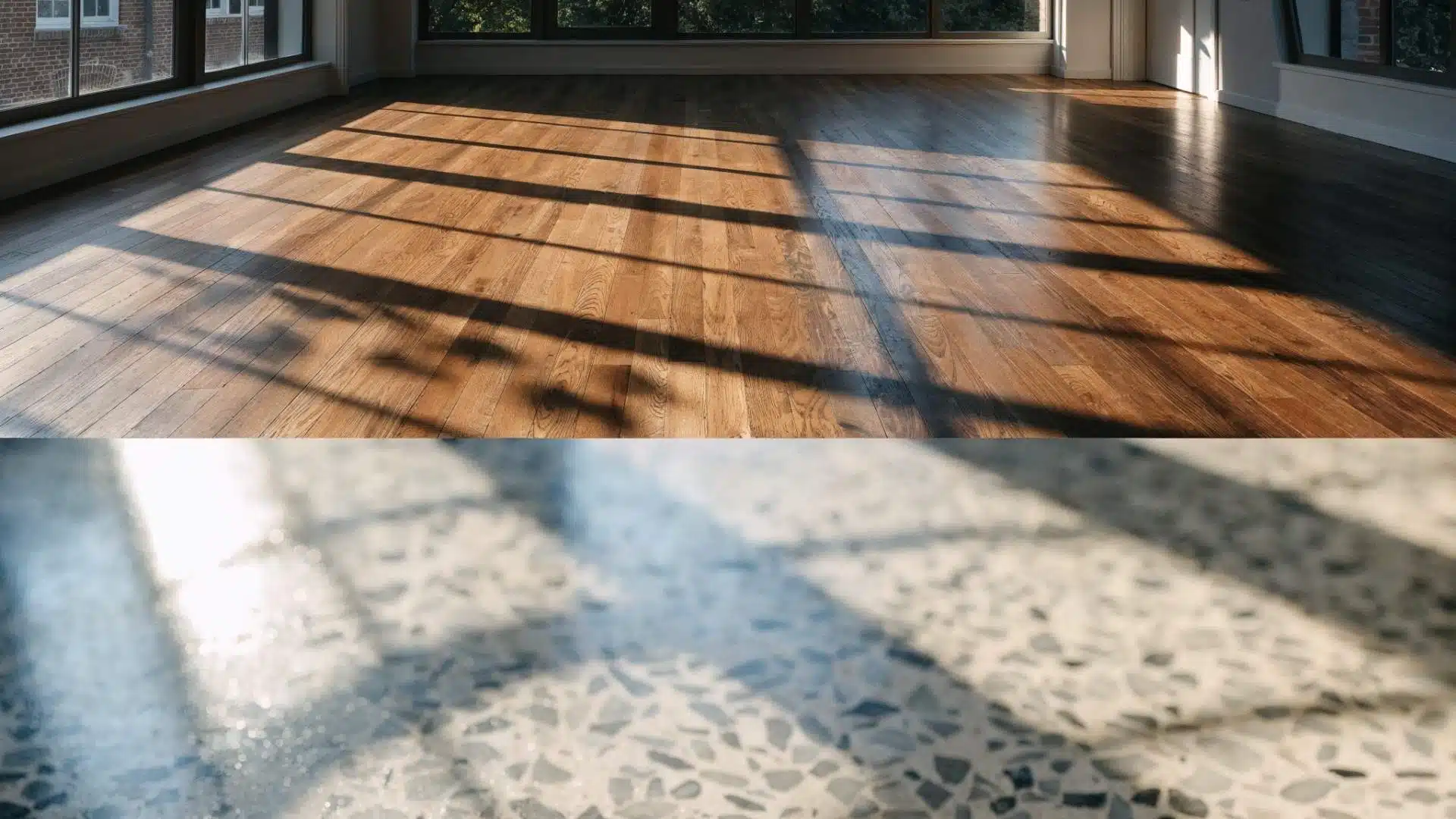
ALT TEXT: sunlit-warm-oak-hardwood-mid-century-modern-flooring-living-room
Postwar architects influenced by Wright, Neutra, and the Eameses kept the same approach to flooring: let the material do the work, keep the finish low, skip decoration.
Walnut and honey oak hardwood became the signature of the era. Terrazzo moved from commercial buildings into high-end residential construction, especially in Florida, California, and the Southwest.
Cork gained traction in bedrooms for its quiet, natural properties. Concrete slabs with radiant heat made sense in warmer climates.
The 1960s: Synthetic Materials Enter
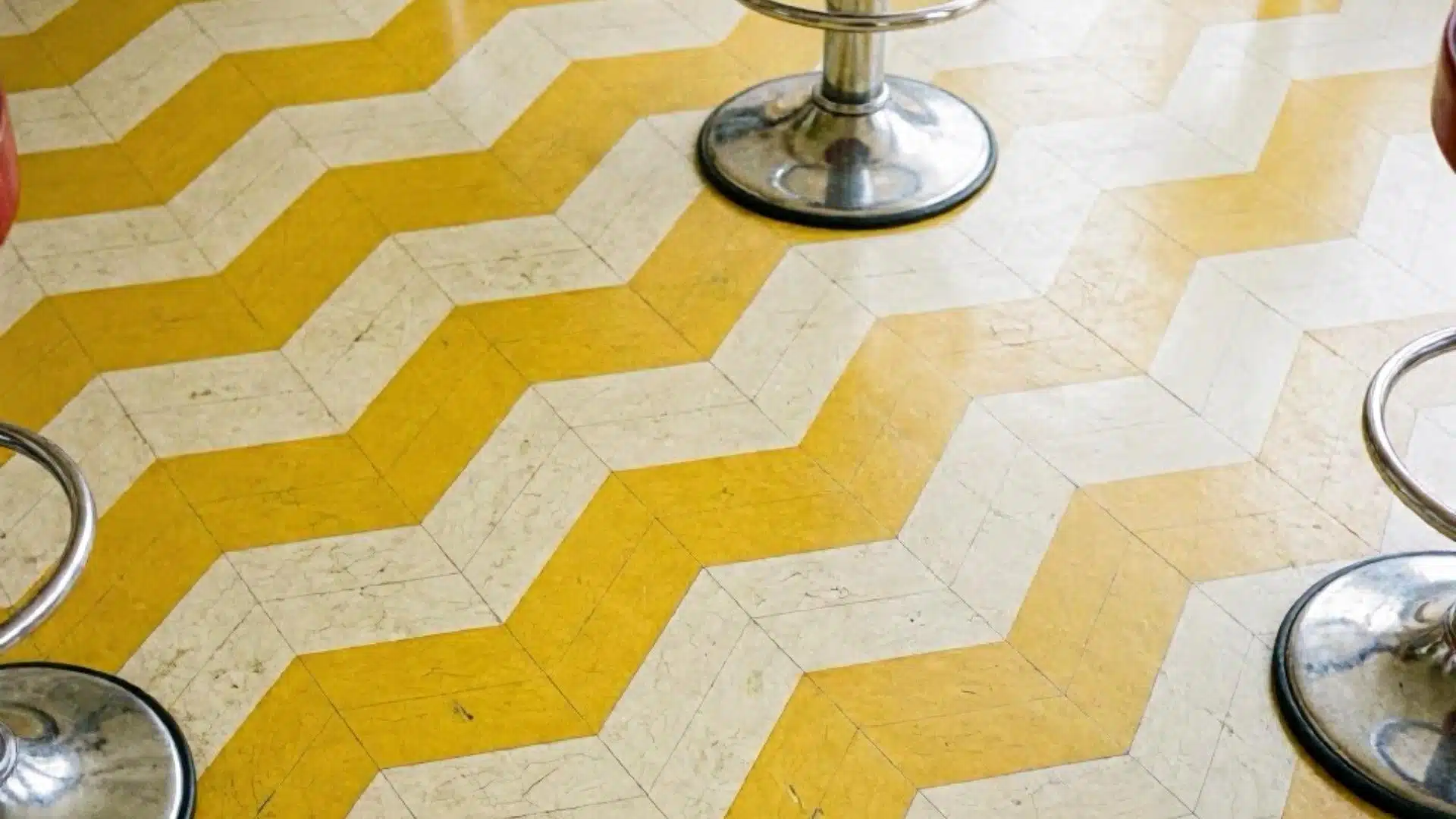
ALT TEXT: yellow-and-white-retro-geometric-vinyl-tile-mid-century-floor
Vinyl sheet flooring arrived as a cheaper, easier alternative to linoleum. Manufacturers leaned into mid-century geometric patterns: hexagons, diamonds, and boomerangs in two-tone colorways.
By the mid-1960s, vinyl had largely replaced linoleum in new construction.
Wall-to-wall carpet expanded into living rooms and bedrooms. Many original hardwood floors from the 1950s were covered rather than refinished. That is why so many mid-century homes still have intact hardwood under 1960s carpet.
What the History Actually Tells You
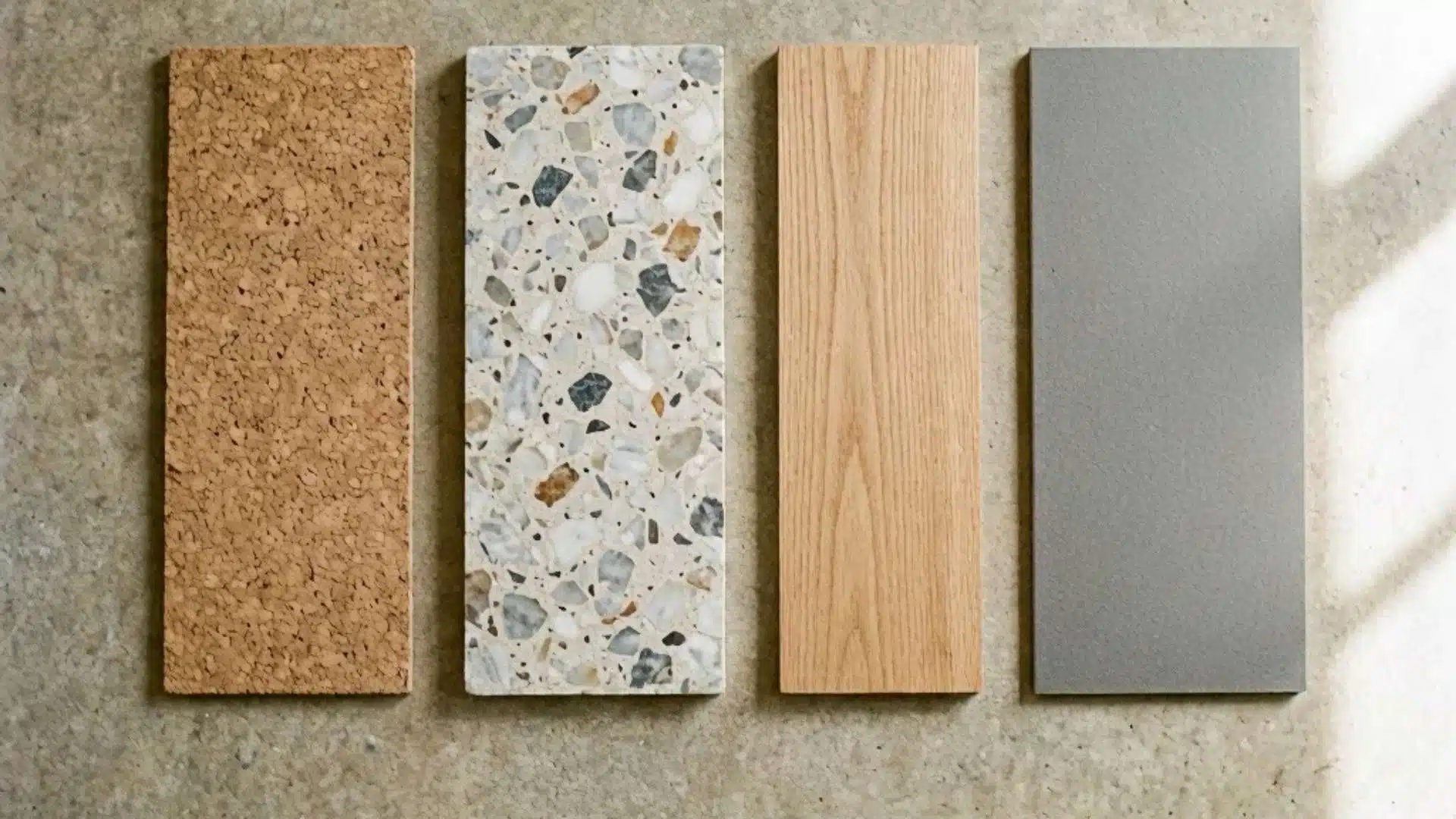
ALT TEXT: cork-terrazzo-wood-and-concrete-mid-century-flooring-material-samples
The materials that defined mid-century modern were not chosen for their appearance. Linoleum was practical. Terrazzo was durable. Narrow-plank hardwood was what mills produced. Cork was natural and quiet.
The aesthetic came from function. That is why it holds up.
Best Flooring Materials for a Mid-Century Modern Home
Not every material works equally well. Some are accurate to the era. Others are modern alternatives that get close enough without the cost or upkeep.
| Material | Authenticity | Cost Range | Best Room |
|---|---|---|---|
| Solid hardwood | High | $$$ | Living room, bedroom |
| Engineered wood | Medium-High | $$ | Any room |
| Terrazzo | High | $$$+ | Kitchen, bathroom, entry |
| Cork | High | $$ | Bedroom, office |
| Luxury vinyl plank | Low-Medium | $ | Basement, rental |
| Linoleum | High | $$ | Kitchen, utility |
| Slate or stone | Medium | $$$ | Entry, bathroom |
| Concrete | Medium | $$ | Basement, open-plan living |
| Carpet | Medium | $$ | Bedroom, family room |
Solid hardwood and terrazzo are the most period-accurate choices. Luxury vinyl plank belongs in rooms where budget or moisture make everything else impractical.
Wood Flooring for Mid Century Modern Interiors
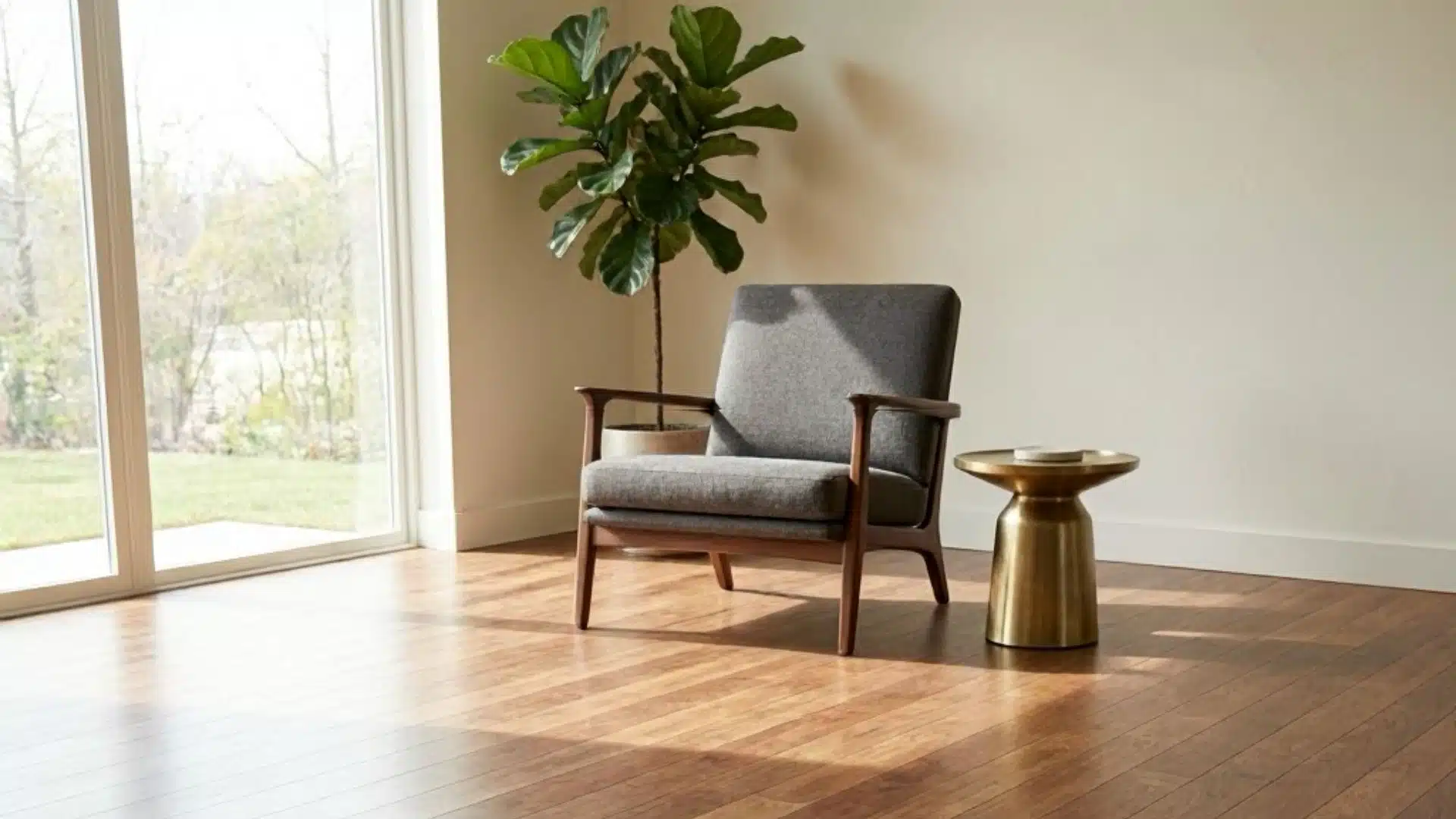
ALT TEXT: mid-century-modern-living-room-chair-on-warm-wood-flooring
Wood is the most common choice, and also the most commonly mishandled. The species, tone, plank width, and finish all affect whether the floor actually reads as mid-century modern or just as wood.
Species and tone matter most. Oak, walnut, and teak-inspired species work best. Maple suits lighter color palettes. Gray-washed and whitened finishes belong to a different style entirely and are a frequent mistake I see in renovation projects.
Plank width is the detail most homeowners overlook. Narrow planks between 2.25 and 3.25 inches are the most period-accurate. Wider planks came later and pushed the look toward contemporary or farmhouse territory, depending on the finish.
Finish options:
- Matte or satin seals protect the floor without adding shine
- Oil finishes give a natural, slightly raw-looking surface
- Distressed and hand-scraped textures are the wrong call here; the era preferred smooth
Engineered wood is a practical option for most rooms. It handles humidity better than solid wood and looks identical once installed.
One thing I tell clients before they commit: always pull a sample into natural light alongside your wall color and primary furniture piece. Wood with warm red undertones can clash hard against a cool gray wall, and that tension is very difficult to fix after installation.
Terrazzo, Cork, and Other Retro Options
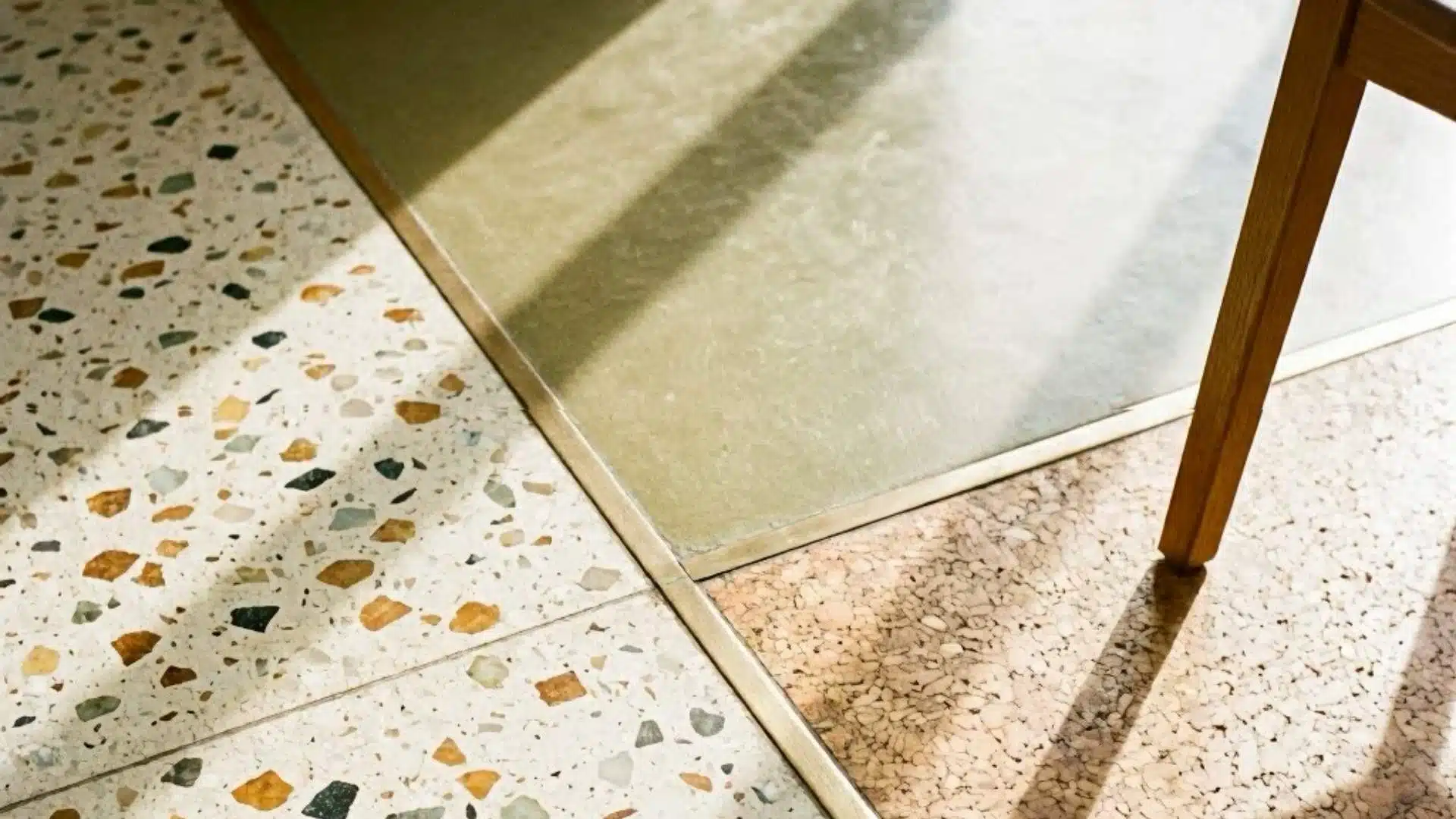
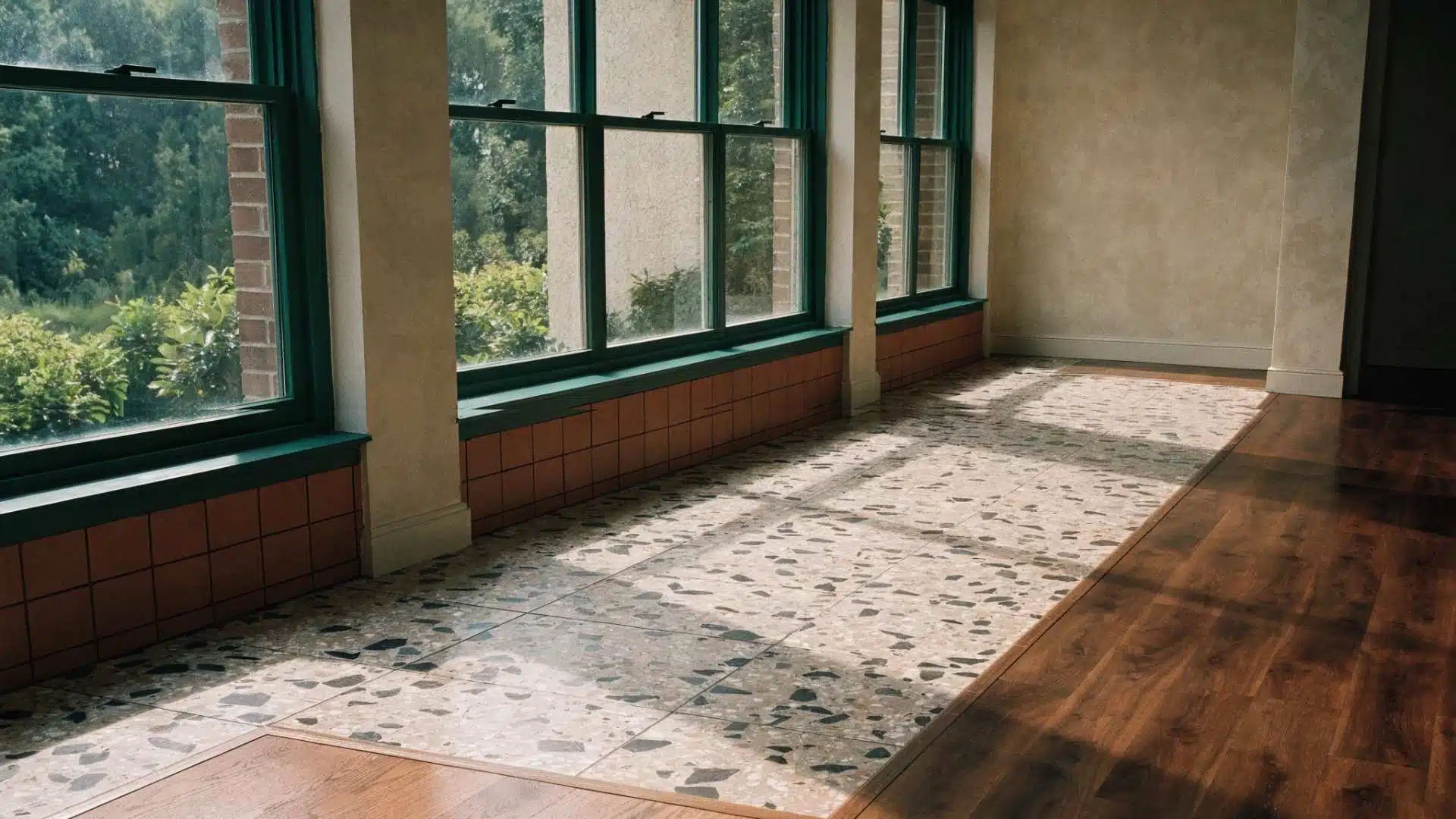
ALT TEXT: terrazzo-and-concrete-floor-transition-mid-century-modern-detail
These materials are underused in modern renovations, which is a missed opportunity.
Terrazzo
Terrazzo is one of the most accurate choices available. It appeared in residential homes from the 1940s onward. The chips of marble and glass in cement create patterns that read immediately as mid-century.
It works in kitchens, bathrooms, and entries. Installation costs are high, but maintenance requirements over time are low.
If the poured terrazzo budget is out of reach, VCT (vinyl composite tile) is worth a look. It replicates the speckled terrazzo appearance at a fraction of the cost and comes in 12–18-inch-square tiles. It is not an exact match up close, but from a normal standing distance, it reads as the real thing.
Cork was standard in mid-century residential construction. It is soft underfoot, quiet, and naturally mold-resistant. Bedrooms and home offices are the best rooms for it, where comfort outweighs hardness.
Linoleum is not the same thing as vinyl. Real linoleum uses linseed oil and natural resins. It was a common kitchen and bathroom material in the mid-century era.
It has survived intact in many older homes and is worth specifying in renovations that need accuracy.
Natural Stone Tile: Travertine and Slate
Both travertine and slate were used in mid-century residential buildings, particularly in warmer climates and higher-end construction. Travertine reads warm and elegant, coming in neutral shades from light tan to soft brown.
Slate works well in entries and bathrooms, where its natural grip and dark tones add grounding weight.
Porcelain versions of both are available at most tile retailers and cost far less than natural stone. They hold up better in high-moisture areas as well.
Carpet: The Late MCM Option
Wall-to-wall carpet took off in the 1960s and became one of the dominant flooring choices of the era’s later years. If you are furnishing a room in that direction, warm neutral carpet in solid tones or a restrained geometric pattern works.
Berber and cut-and-loop textures are the most authentic to the period.
Avoid heavy shag or very plush pile, which reads as 1970s rather than mid-century modern. In most rooms, a well-chosen area rug over a hard floor gives you the warmth of carpet without locking you into it permanently.
The same logic applies when working with harder surfaces like reclaimed brick floor tile, where a rug softens the room without masking the floor’s character.
Mid Century Modern Flooring Colors and Finishes
Color is where most mid-century modern flooring projects go off track. The instinct to choose something current often overrides what actually fits the style.
Colors that Work
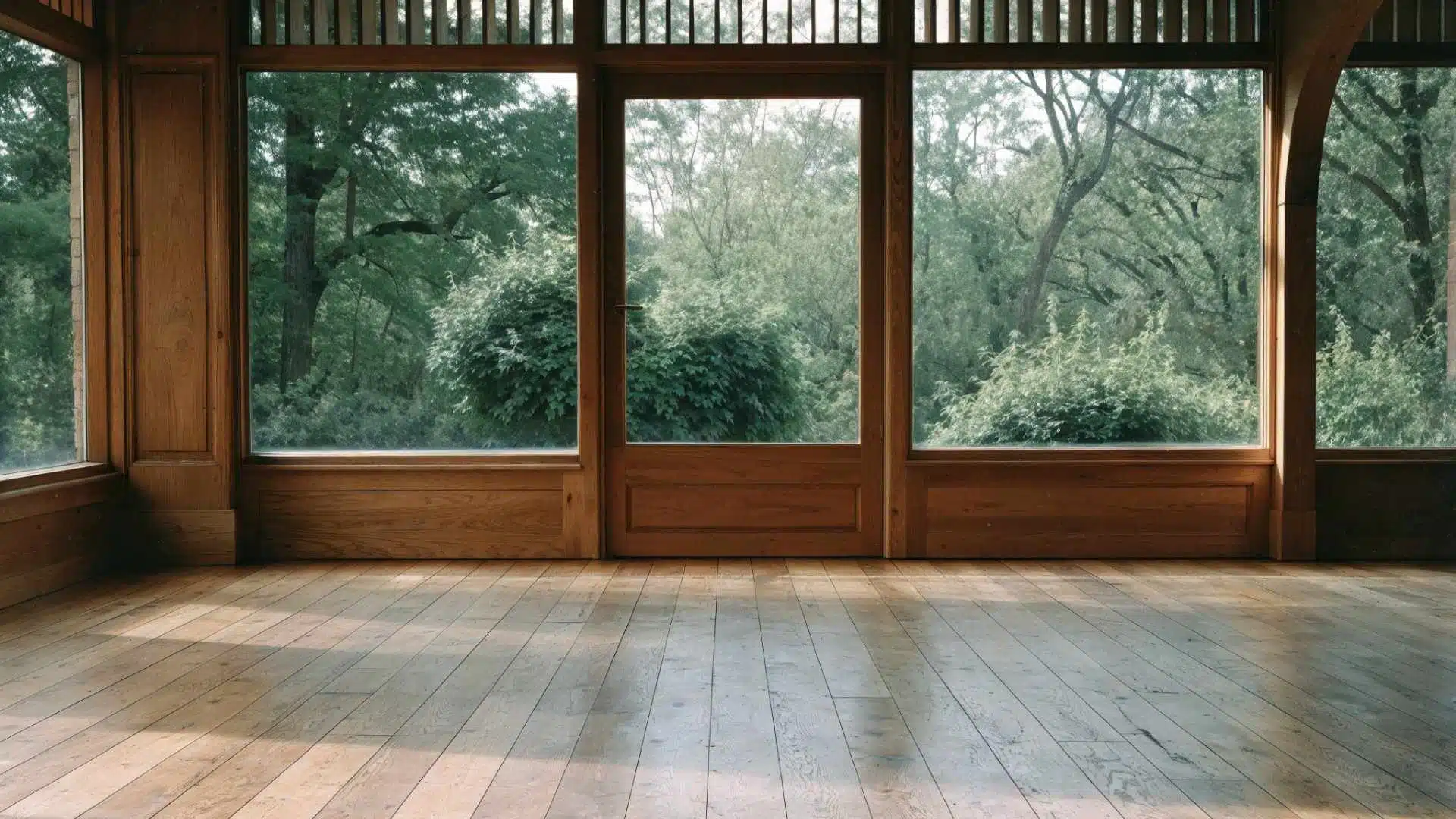
ALT TEXT:large-windows-natural-wood-flooring-mid-century-modern-interior
- Honey oak and natural teak tones
- Medium walnut browns
- Warm beige and sandy stone shades
- Black and white geometric tile in limited areas
Colors that Do Not Work
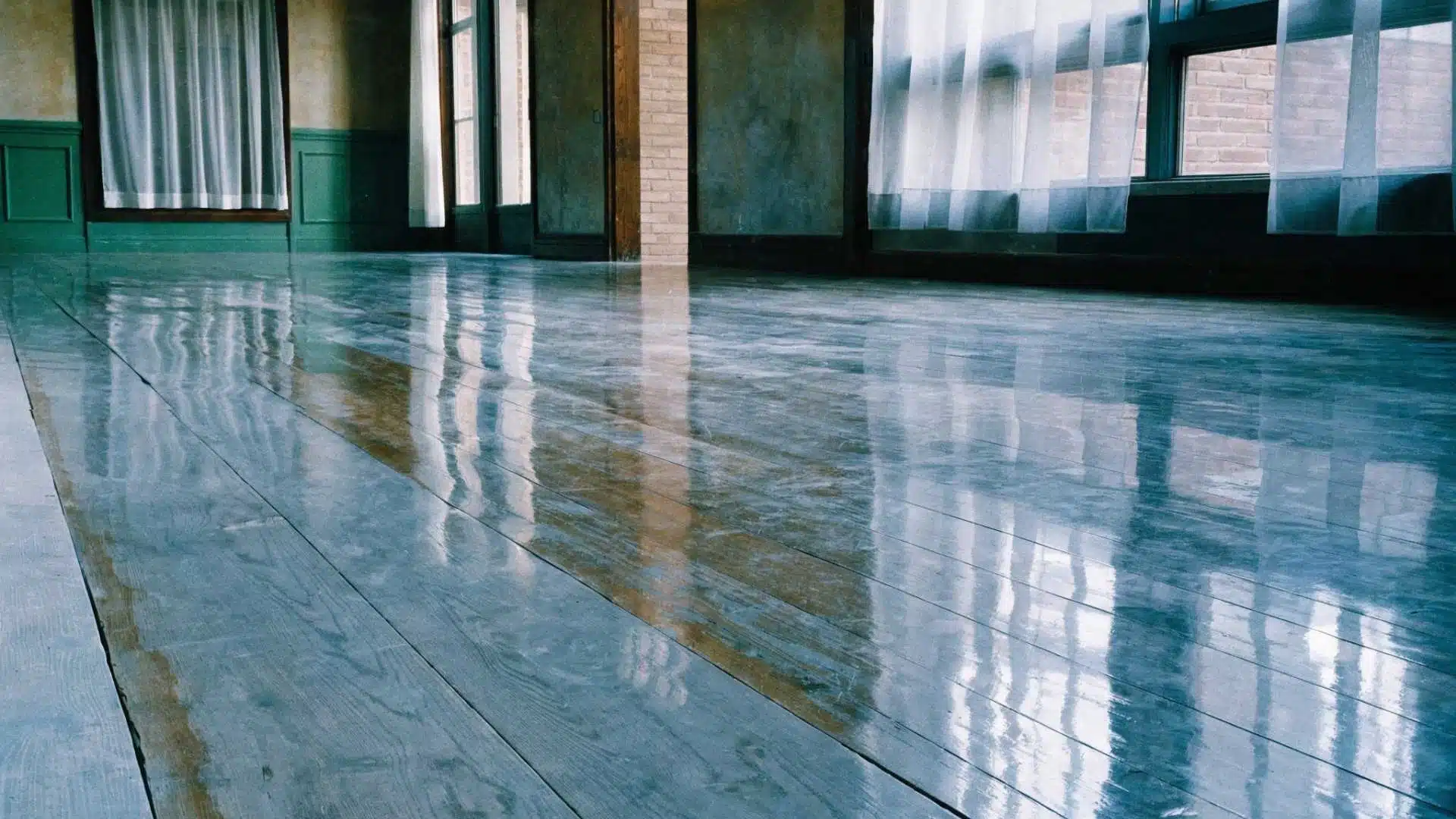
ALT TEXT: polished-concrete-flooring-with-reflections-modern-mid-century-space
- Cool gray wood tones
- Bleached or whitened finishes
- Heavy red tones that read as traditional rather than retro
Matte and satin are the right finishes for wood and cork. High gloss reads as more formal or contemporary. Terrazzo and tile reflect enough light naturally, so added sheen is not needed.
Undertone matching is worth the extra time. A warm wood floor paired with cool gray walls creates a tension that is difficult to resolve after installation. Hold the flooring sample next to the wall color and the dominant furniture piece before ordering.
Room-by-Room Flooring Guide
The same material does not work equally well in every room. Function, foot traffic, and moisture levels all affect the right choice.
| Room | Best Material | Notes |
|---|---|---|
| Living room | Hardwood | Narrow planks, warm tone, area rug to anchor seating |
| Kitchen | Terrazzo or linoleum | Durable, easy to clean, period-accurate |
| Bathroom | Terrazzo or ceramic tile | Geometric patterns read well here |
| Bedroom | Cork or hardwood | Cork adds comfort and sound absorption |
| Entry | Terrazzo or slate | Sets the tone before any other room |
| Basement | LVP or concrete | Moisture resistance takes priority |
| Family room | Hardwood with area rug, or warm-tone carpet | Heavier foot traffic warrants a durable surface; a rug defines the seating zone |
For open floor plans, keeping a single material throughout the main living area creates a cleaner, more period-appropriate look. Rugs can define each zone without introducing a new floor surface at every transition.
This matters especially in slab homes, where mixing materials also means dealing with height differences at thresholds.
Budget Alternatives That Still Look the Part
Not every project has the budget for solid hardwood or poured terrazzo. There are honest alternatives.
Luxury Vinyl Plank
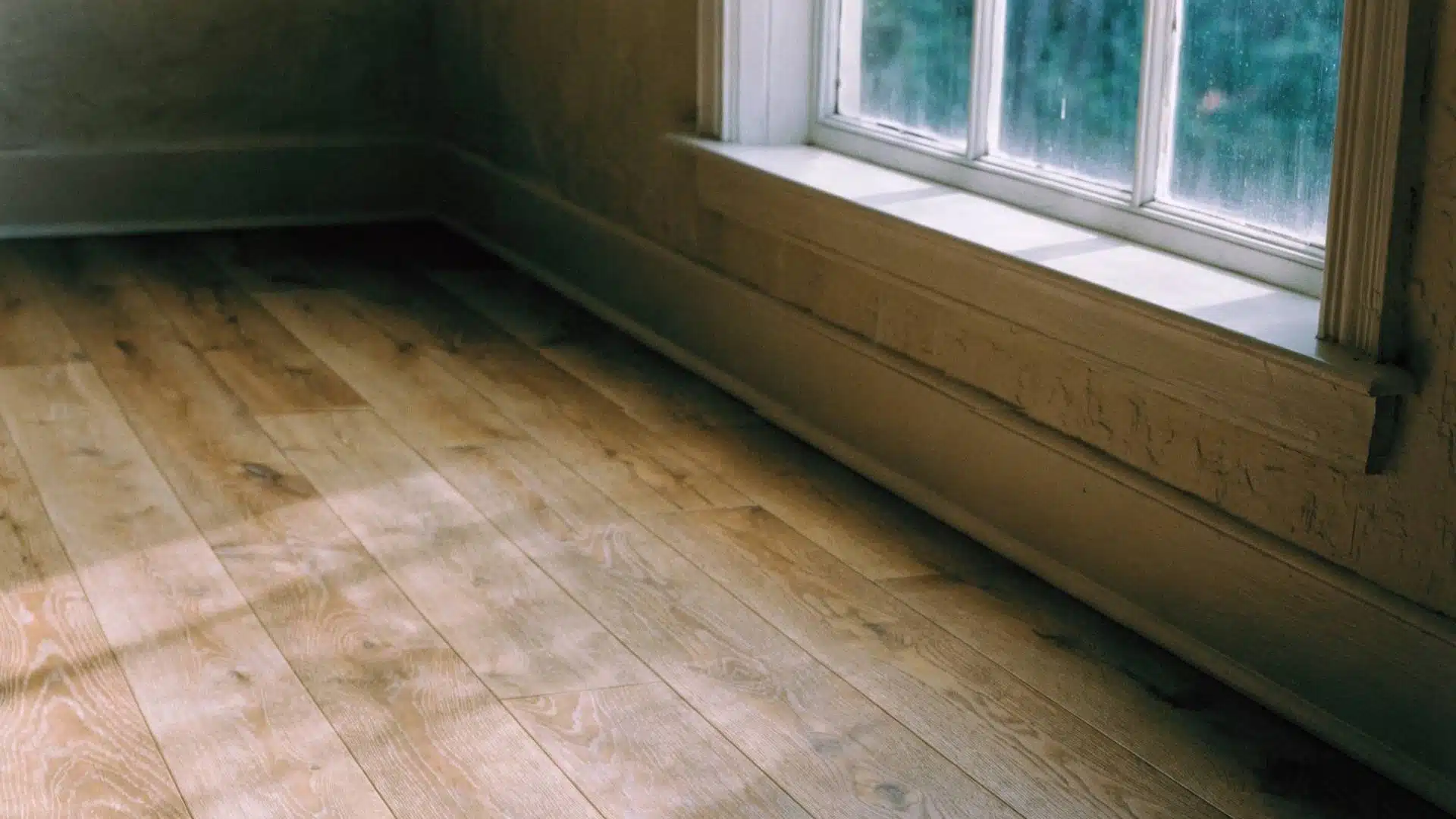
ALT TEXT: warm-toned-oak-style-luxury-vinyl-plank-flooring-near-window-mid-century-modern-look
Luxury vinyl plank has improved significantly over the past decade. The best products now accurately replicate the grain and tone of real wood. Choose a warm oak or walnut tone in a matte finish.
Avoid options with heavy surface embossing or visible plastic sheen.
Terrazzo-Look Porcelain Tile
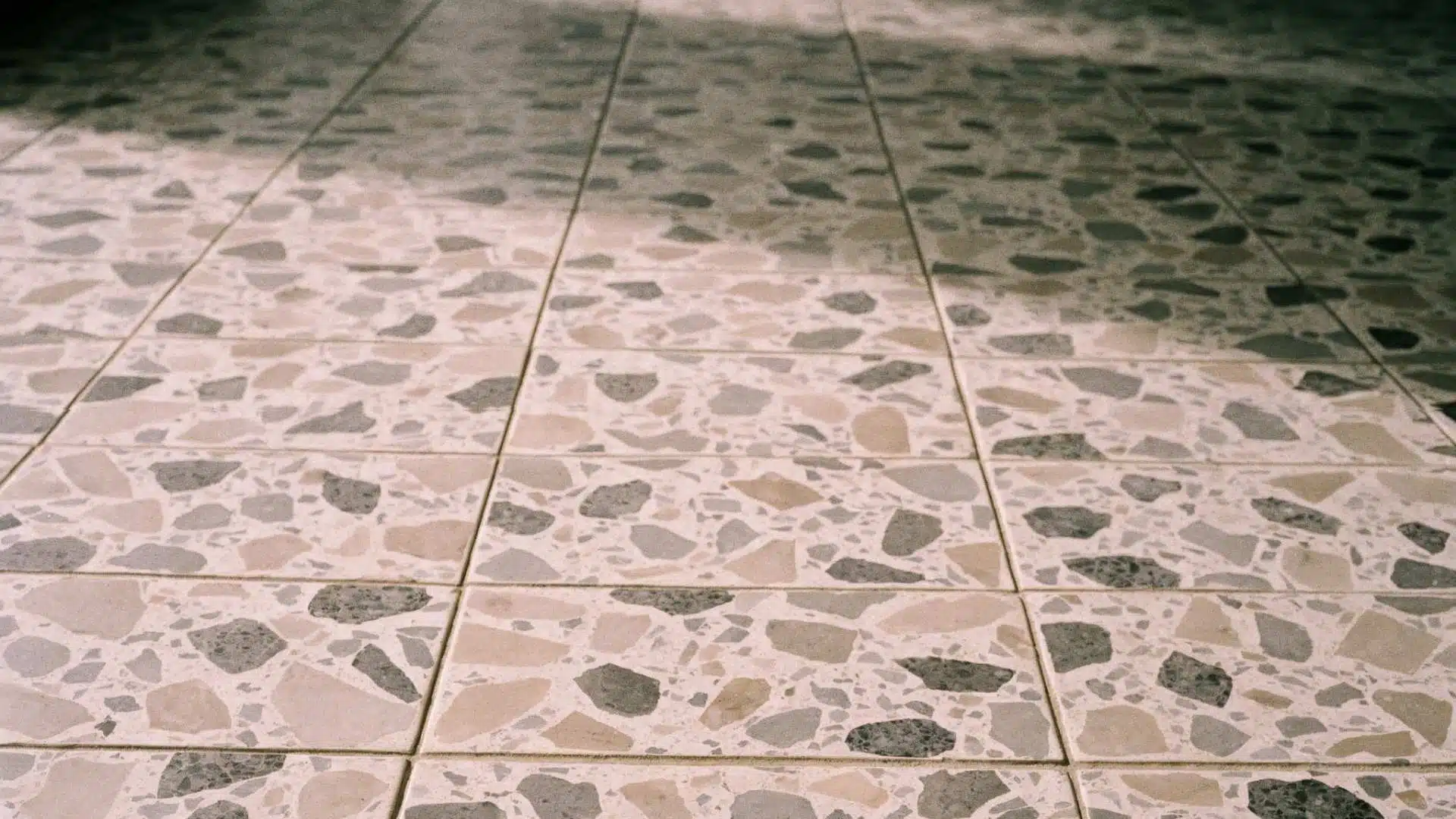
ALT TEXT: neutral-terrazzo-tile-floor-pattern-mid-century-modern-design
Terrazzo-look porcelain tile is available at most tile retailers. It costs a fraction of the cost of real material and delivers the same visual effect at a distance. The trade-off is that it lacks the depth of real terrazzo when viewed up close.
Laminate
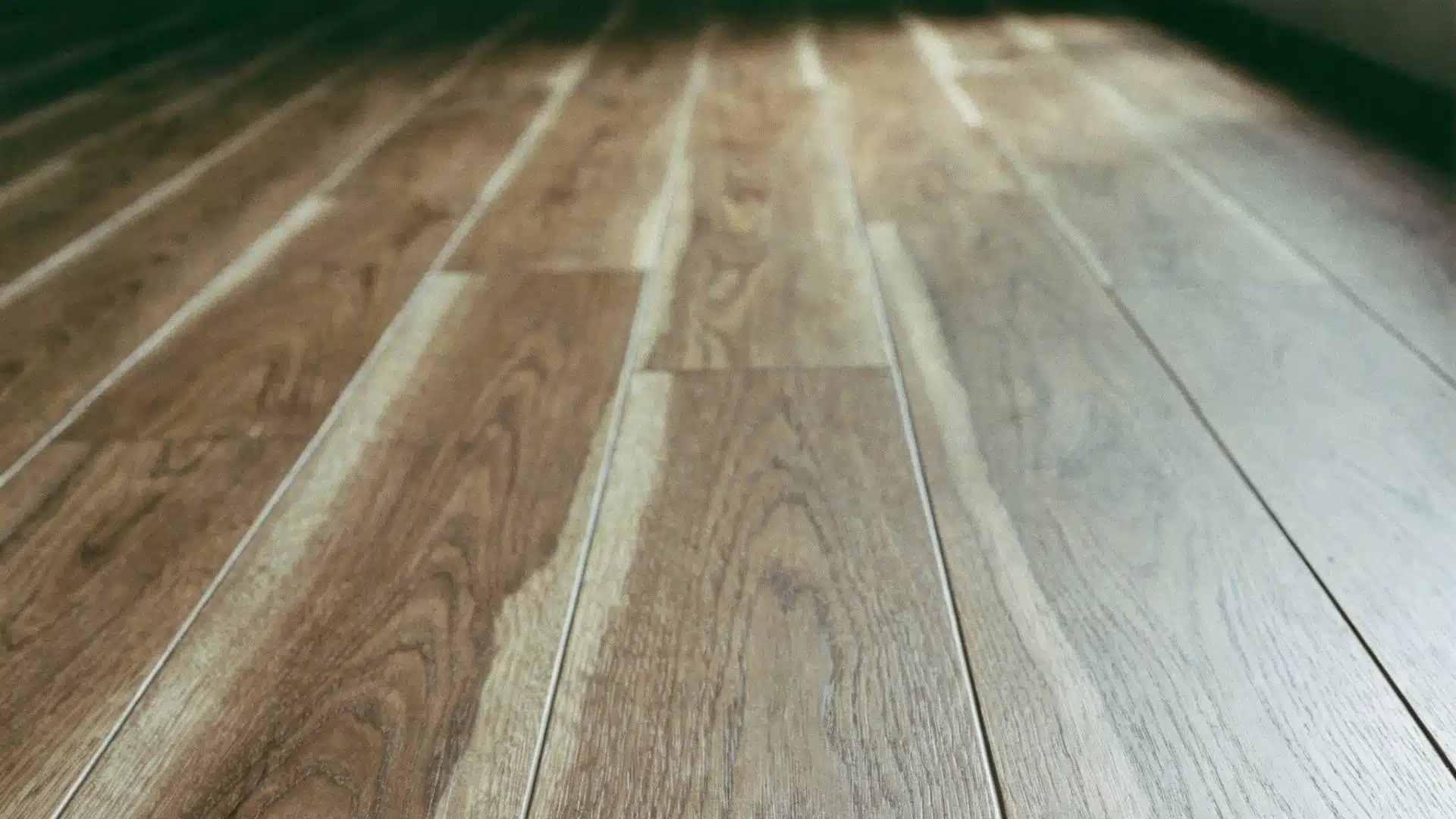
ALT TEXT: walnut-toned-hardwood-planks-mid-century-modern-flooring-texture
Laminate works in low-traffic areas. Choose a product with a smooth surface texture and a warm wood tone. Avoid laminates with beveled edges, which tend to lean rustic.
| Spend on the materials in the rooms that see the most use and the most visibility. Living rooms and main bedrooms are ideal for real hardwood. Basements, laundry rooms, and guest rooms are reasonable places to use vinyl or laminate. |
Restoration vs. Replacement in Older Homes
Many mid century homes still have original floors under carpet, sheet vinyl, or newer tile. Before tearing anything out, I always tell clients to check what is underneath.
Original narrow-plank hardwood and terrazzo are worth restoring in most cases. A refinished original floor reads as more accurate than anything new can replicate.
Restore when:
- The floor has 3 or more sanding cycles remaining in the wood depth
- No structural damage is present below the surface
- The wood species and plank width are consistent with the era
Replace when:
- Water damage has warped or buckled planks beyond repair
- The subfloor is structurally compromised
- Asbestos-containing flooring materials are present (test before disturbing anything in a pre-1980 home)
PRO TIP: Covering original floors with new flooring is rarely the right call. It raises floor height at transitions, creates problems at door clearances, and usually hides material that could have been saved.
Common Mistakes to Avoid
These come up on nearly every project I work on.
- Gray wood tones. They belong in a Scandinavian or contemporary interior, not a mid-century modern one.
- Distressed finishes. The era preferred smooth and clean. Heavily textured wood reads as farmhouse or rustic.
- Plank widths above 5 inches. Wider planks shift the look toward contemporary or traditional, depending on the finish.
- Geometric patterns in every room. One statement floor is enough. Repeating it in adjoining spaces makes the rooms compete rather than connect.
- Skipping rugs. A well-chosen area rug anchors a seating area, softens a hard surface, and adds color without touching the floor itself.
- Buying before the undertone check. Always compare the flooring sample against the wall color and the main furniture piece in natural light before purchasing.
- Choosing LVP in a warm-climate slab home over polished concrete. If you have a structurally sound concrete slab, polishing it costs less than installing vinyl and is more period-accurate. It also pairs well with radiant heat systems already in the slab.
Final Thoughts
Mid-century modern flooring is not complicated once the logic behind it is clear. Warm tones, smooth surfaces, and natural materials dominate the decision.
Mid-century modern flooring is not complicated once the logic behind it is clear. Warm tones, smooth surfaces, and natural materials dominate the decision.
As an architect with 15 years on residential builds, I think about floors the same way I think about structural walls. They are not decorative afterthoughts. They are the base on which everything else is built.
Get the floor right first, and every decision that follows becomes easier. If you are still working through the broader design direction for a room, living room choices like fireplace placement will also shape which flooring materials and rugs make practical sense.
Frequently Asked Questions
Can Mid Century Modern Flooring Work in A Small Apartment?
Yes. A consistent narrow-plank hardwood or warm-toned vinyl plank throughout a small space makes it feel larger and more cohesive than mixing materials.
Do I Need to Match Flooring Across Every Room in the House?
The tones should be compatible, but do not have to be identical. A slight variation between rooms is fine. Hard contrast between adjacent spaces is what creates problems.
How Do I Find out if Original Hardwood is Under My Current Floor?
Check inside a closet or pull a floor register cover. New flooring usually stops at the closet threshold. A contractor can also pull a small area without damaging the main surface.
Is Terrazzo Too Slippery for A Home with Kids or Older Adults?
Polished terrazzo can be. A matte or honed finish significantly reduces slip risk and reads better in a residential mid-century modern interior anyway.
What Grout Color Works Best with Black and White Geometric Floor Tile?
Darker grout sharpens the geometry. Lighter grout softens it. Both can work, depending on how much visual weight you want the floor to carry in the room.