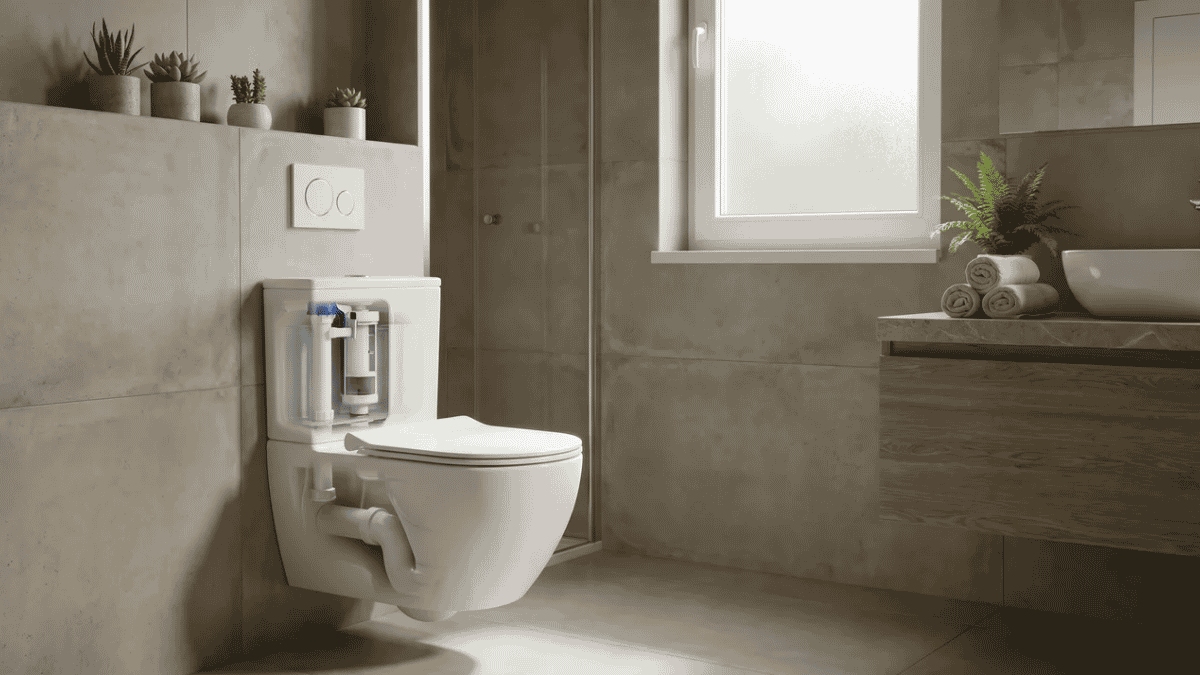
Your toilet is the biggest water user in your home. Most people know this. But the toilet keeps getting the same fixed flush every single time, no matter what.
A dual flush toilet fixes that. It gives you two separate flushing options: one for liquid waste and one for solid waste. The result? Less water used per day, lower bills, and a measurable drop in household water waste over time.
According to the U.S. Environmental Protection Agency (EPA), toilets account for nearly 30% of a home’s indoor water use. Choosing the right toilet can reduce that number significantly.
This post covers what a dual flush toilet is, how both flush options work inside the tank, how it compares to standard toilets, common problems, and whether it makes sense to upgrade.
What Is a Dual Flush Toilet?
A dual-flush toilet has two separate flushing options. One uses less water for liquid waste. The other uses more water to dispose of solid waste.
The logic is straightforward: liquid waste needs far less water to clear than solid waste. So why use the same amount of water for both?
A standard toilet releases a fixed amount of water every time it is flushed. A dual-flush toilet gives the user control by matching water use to waste type.
On most models, two buttons sit on top of the tank:
- Small button: Activates the reduced flush for liquid waste
- Large button: Activates the full flush for solid waste
Some models use a handle that flushes in two directions depending on how it is pushed. From the outside, a dual flush toilet looks almost identical to a standard toilet. The real difference is inside the tank.
The dual-flush system was first developed commercially by the Australian company Caroma in 1980. It has since become standard in Australia, New Zealand, Singapore, Sweden, and Israel. In the United States, adoption of WaterSense certification has grown steadily since the EPA created the program in 2006.
How Does a Dual Flush Toilet Work?
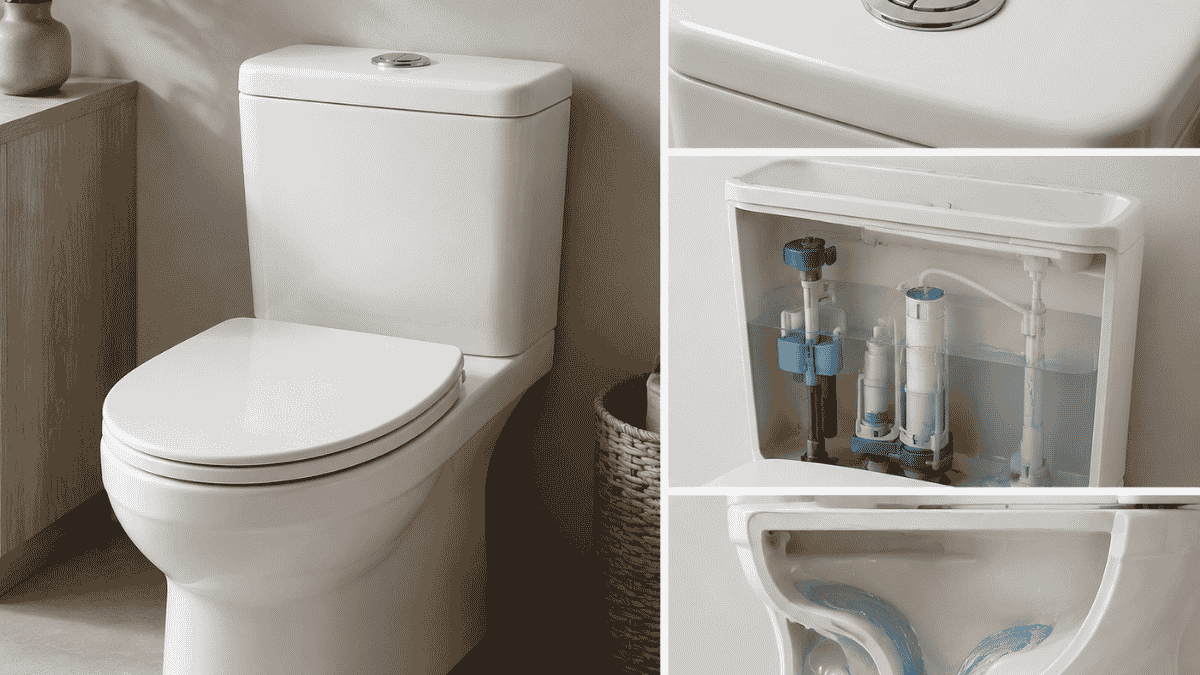
A dual flush toilet works by controlling how much water leaves the tank during each flush.
Before getting into the two flush options, it helps to understand one key difference from standard toilets: dual-flush toilets do not use a siphon.
Standard toilets rely on a siphon tube filled with a high volume of water to pull waste down the drain. Dual flush toilets use a wash-down design instead. Water pushes waste through a larger trapway rather than pulling it. This uses less water and reduces clogging.
1. The Half Flush for Liquid Waste
The smaller button triggers a partial flush that uses about 0.8-1.1 gallons per flush (GPF).
Here is how it works step by step:
- The smaller button partially activates the flush valve.
- A limited amount of water enters the bowl.
- Water clears liquid waste through the wider trapway.
- The tank refills automatically.
Since liquid waste accounts for the majority of daily flushes, using this option consistently results in significant water savings by the end of each year.
2. The Full Flush for Solid Waste
The larger button releases the full tank volume, typically 1.28-1.6 GPF.
Here is how the full flush works:
- The larger button fully opens the flush valve.
- More water enters the bowl with greater force.
- The flow moves solid waste through the wider trapway.
- The tank refills for the next use.
Modern dual flush toilets balance water efficiency with reliable performance. Older conventional toilets used 3.5 to 7 gallons per flush. Even the full flush on a dual-flush toilet uses far less.
3. The Two Main Flushing Mechanisms
There are two internal systems used across dual flush models:
- Toilet siphon mechanism: Controlled by a handle, this system uses a siphon tube to regulate flush volume between the two options
- Drop valve mechanism: Controlled by push buttons, this is the more common modern system and the one used in most new dual-flush installations.
Both deliver the same result. The drop valve system is generally easier to service because replacement parts are widely available at most hardware stores.
How to Use a Dual Flush Toilet Correctly
Using the right button every time is the only way to achieve the water savings a dual-flush system promises.
- For liquid waste: Press the small button or the half-flush option. Look for a half-circle symbol or a small water drop icon on the button.
- For solid waste: Press the large button or the full-flush option. This is usually a full circle or a larger icon.
Do not press both buttons at the same time. This usually triggers a full flush and cancels out any water savings.
In shared or guest bathrooms, visitors unfamiliar with the two-button system may, out of habit, press the larger button every time. This is one of the biggest practical drawbacks of the design in high-traffic settings.
Dual Flush vs Single Flush Toilet
A single-flush toilet uses the same volume of water every time, regardless of the waste type. A dual flush toilet matches water volume to the job. That difference is where the savings come from.
| Feature | Dual Flush Toilet | Single Flush Toilet |
|---|---|---|
| Flush options | Two (partial and full) | One (fixed volume) |
| Water per flush | 0.8–1.6 GPF | 1.28–3.5 GPF (model dependent) |
| Water savings | Up to 67% vs older models | No variation possible |
| Upfront cost | 10–20% higher | More affordable upfront |
| Maintenance | More components, periodic seal checks | Simpler, fewer parts |
| Clog risk | Lower (larger trapway) | Moderate |
| User control | Yes, the user chooses the flush size | No, fixed amount each time |
| Best for | Water-conscious households | High-traffic, budget-focused use |
| Eco certifications | Often WaterSense certified | Available on newer models |
For a family bathroom used daily by three or more people, a dual-flush toilet is the stronger choice. For a rarely used guest bathroom or vacation home, a standard low-flow model may be sufficient and easier to maintain.
If you are planning a broader bathroom layout update, a toilet replacement pairs naturally with vanity and fixture changes, so you reduce labor costs by scheduling everything together.
Dual Flush Toilet Pros and Cons
Like any bathroom fixture, a dual flush toilet comes with trade-offs worth knowing before you buy.
Here is an honest breakdown
Advantages
- Water conservation: Dual-flush toilets can reduce water consumption by up to 67% compared to a traditional toilet, and according to the EPA, the average family can save nearly 13,000 gallons of water each year by switching to a more environmentally friendly toilet.
- Lower water bills: Fewer gallons per flush means a measurable reduction in monthly utility costs, particularly in households with four or more people
- Reduced clog risk: The larger trapway allows waste to pass through more easily, which means fewer blockages and fewer calls to a plumber
- Modern aesthetics: Most dual flush models carry a cleaner, more contemporary profile than older single flush designs
- Less strain on infrastructure: Lower water use per flush places less demand on septic systems and municipal water treatment facilities
Disadvantages
- Higher upfront cost: The initial cost of a dual-flush toilet may be 10 to 20 percent higher than that of a comparable single-flush model.
- More components: The internal mechanism has more parts than a standard toilet, which means there is more that can eventually wear or need replacing
- User error: In shared or guest bathrooms, visitors unfamiliar with the two-button system may consistently use the full flush regardless of waste type, reducing actual water savings
- Seal maintenance: The drop valve seals in a dual flush system require periodic inspection and occasional replacement to prevent slow leaks or running water
How Much Water Does a Dual Flush Toilet Save?
Water savings depend on household size and how consistently the partial flush is used.
| Household Size | Est. Annual Flushes | Dual Flush Annual Use | Single Flush Annual Use | Est. Savings |
|---|---|---|---|---|
| 1 person | ~2,190 | ~1,460 gallons | ~4,380 gallons | ~2,920 gallons |
| 2 people | ~4,380 | ~2,920 gallons | ~8,760 gallons | ~5,840 gallons |
| 4 people | ~8,760 | ~5,840 gallons | ~17,520 gallons | ~11,680 gallons |
The EPA estimates that switching to a WaterSense-rated dual flush toilet can save more than $170 per year on water bills, or up to $3,400 over the toilet’s lifespan. The average family can save close to 13,000 gallons of water per year by making the switch.
Many utility providers offer rebates for WaterSense-certified toilets.
WaterSense-certified toilets use at least 20% less water than standard models while maintaining reliable performance. Check with your local water utility before buying; rebates can significantly reduce the upfront cost.
For WaterSense certification in the US, a dual-flush toilet’s average flushing volume (calculated as two reduced flushes plus one full flush, divided by three) must be below 1.28 GPF. California has gone further, making the 1.28 GPF standard a statewide regulation for all new toilet installations.
Dual Flush Conversion Kits vs a Full Toilet Replacement
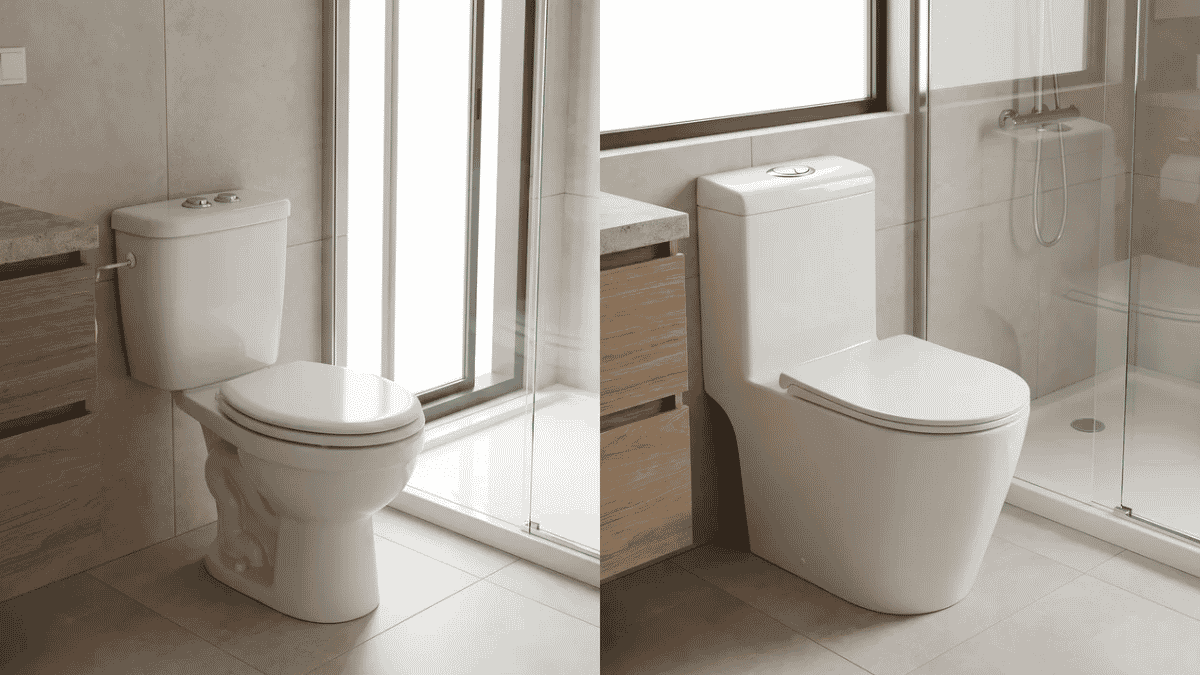
A dual flush conversion kit replaces the flush mechanism inside an existing toilet tank. It gives the same two-button functionality without replacing the full unit.
If your current toilet is in otherwise good condition, a conversion kit is a low-cost way to get started. If you are planning a budget bathroom remodel, a full replacement may be the smarter investment since you get the wider trapway and WaterSense eligibility at the same time.
| Feature | Conversion Kit | Full Replacement |
|---|---|---|
| Cost | $20–$50 | $200–$600 (toilet only, plus installation) |
| Installation | DIY-friendly in most cases | Usually requires a plumber |
| Trapway improvement | No, the existing trapway stays | Yes, a new wider trapway included |
| WaterSense eligible | No | Yes, on qualifying models |
| Best if the current toilet is | In good condition, under 15 years old | Over 15 years old or using 3+ GPF |
Can You Install a Dual Flush Toilet Yourself?
A DIY installation is possible if the replacement toilet matches the existing rough-in distance and the floor flange is in good condition.
Hire a plumber if the flange is damaged, drain lines need repositioning, or the floor is uneven. For more complex bathroom projects, you may find that combining the toilet swap with other updates saves on total labor costs.
Common Dual Flush Toilet Problems and How to Fix Them
Dual-flush toilets are reliable, but a few issues arise regularly.
1. Running Water After Flushing
The most common dual flush problem. Usually caused by a worn drop valve seal or flapper that no longer sits flush against the seat.
Replacement seals are inexpensive and available at most hardware stores. Turn off the water supply, drain the tank, and swap the seal.
2. Weak Half Flush
If the partial flush is not clearing liquid waste effectively, the water level in the tank may be too low.
Check the fill valve adjustment and raise the water level slightly. In some cases, mineral buildup on the valve restricts flow and requires cleaning.
3. Buttons Sticking or Not Returning
The push buttons on drop valve systems can stick if mineral deposits build up around the mechanism.
Removing the lid and cleaning the button assembly with a descaling solution usually resolves this without needing replacement parts.
4. Ghost Flushing
If the toilet appears to flush on its own periodically, the fill valve is likely refilling due to a slow leak in the drop valve.
Replacing the valve seal stops the leak and eliminates the ghost flush.
Is a Dual Flush Toilet Right for Your Home?
A dual flush toilet makes clear sense when the household has three or more people, the existing toilet is aging or inefficient, water rates in your area are high, or reducing water waste is a genuine priority.
The payback period from water savings is typically 2 to 4 years in a regular family home. The EPA’s $170 annual saving estimate reflects average household use with consistent use of the half-flush option.
It makes less sense for a low-use guest bathroom, a vacation property where the two-button system is rarely used correctly, or any situation where the existing toilet is already a modern low-flow model.
What to Look for When Buying
- WaterSense certification: Confirms the toilet meets EPA efficiency standards without sacrificing flushing power.
- Flush performance ratings: Look for independent flush testing scores. A toilet that requires two flushes to clear solid waste does not save water.
- Bowl shape: Round bowls suit compact spaces. Elongated bowls provide more comfort in larger bathrooms.
- Parts availability: Choose a brand with readily available flush valves and seals. This matters when parts eventually wear out.
Conclusion
A dual flush toilet gives you control over water use that a standard toilet simply does not offer. The half flush handles the majority of daily use. The full flush handles the rest. Over the course of a year, that difference adds up to thousands of gallons saved and a measurable drop in water bills.
If your current toilet is aging, inefficient, or simply due for replacement, a dual flush model is worth serious consideration. The upfront cost is marginally higher than that of a standard toilet. For a family bathroom, the savings on water bills offset that difference within a few years.
Look for a WaterSense-certified model from a brand with good parts availability. Use the half flush consistently, and the long-term math works in your favor from the first year onward.
Ready to upgrade? Start by checking whether your local utility offers a rebate for WaterSense-certified toilets before you buy. That alone can make the upfront cost much easier to justify.
Frequently Asked Questions
Do Plumbers Recommend Dual Flush Toilets?
Yes, plumbers recommend dual-flush toilets for their excellent water-saving capabilities and modern efficiency.
Do You Press Both Buttons on a Dual-Flush Toilet?
No, you do not press both buttons simultaneously on a dual flush toilet. The two buttons are designed to help you conserve water, and pressing both at once usually triggers a full flush.
What Does Putting Dawn Dish Soap in The Toilet Do?
Putting Dawn dish soap in the toilet is an effective, inexpensive DIY trick to unclog toilets.