Your knees hurt every time you stand up from the toilet. Your elderly parent visits and has trouble sitting down safely. You assumed toilet height was a non-issue. It is not.
A chair-height toilet is slightly taller than a standard one, which changes how much your knees and hips bend when you sit and stand.
For the right household, that difference matters more than tile choice or vanity style.
This post covers exactly what a chair-height toilet is, how it compares to standard models, who benefits, and how to choose the right height before you buy.
What Is a Chair-Height Toilet?
A chair height toilet is a toilet with a seat height of 17 to 19 inches from the finished floor to the top of the seat.
The name comes from its similarity to a standard dining chair seat, which makes sitting and standing feel more natural for adults.
The Americans with Disabilities Act (ADA) specifies that publicly accessible toilets must fall in this 17- to 19-inch range to be considered compliant.
That requirement pushed taller toilets into residential bathrooms, and chair height models are now the default in many new builds across North America.
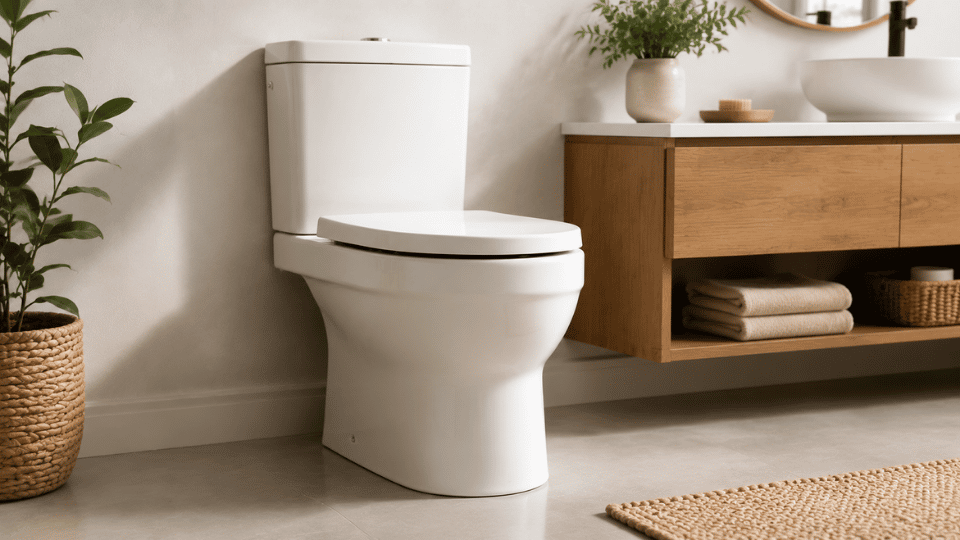
From the outside, a chair-height toilet looks like any other toilet. The only difference is the height of the unit itself.
How High Is a Chair Height Toilet? (Bowl vs Seat Height Explained)
Toilet height is quoted two ways: with the seat included or without it. This causes real confusion when comparing models online.
Here is the key rule: always check seat height, not just bowl height. A toilet listed as 16.5 inches (bowl only) becomes 17 to 17.5 inches once the seat is fitted, which puts it in the ADA-compliant chair height range. Add at least half an inch to any bowl-height figure to get the actual installed measurement.
| Toilet Type | Without Seat | With Seat |
|---|---|---|
| Standard height toilet | 14 to 15 inches | 15 to 16 inches |
| Chair height toilet | 16 to 17.5 inches | 17 to 19 inches |
| ADA-compliant range | N/A | 17 to 19 inches |
Check Your Rough-In Before Buying:
Before purchasing any toilet, measure your rough-in size. This is the distance from the wall behind your toilet to the center of the floor drain. Most homes use a 12-inch rough-in, but 10-inch and 14-inch sizes are also available.
Both chair-height and standard-height toilets come in all three rough-in sizes. Buying the wrong rough-in means the toilet will not fit your plumbing correctly.
Measure from the wall to the bolts holding your current toilet down. Those bolts sit at the midpoint of the drain, so you do not need to remove the toilet to get an accurate number.
Chair Height vs Comfort Height Toilet: Are They the Same Thing?
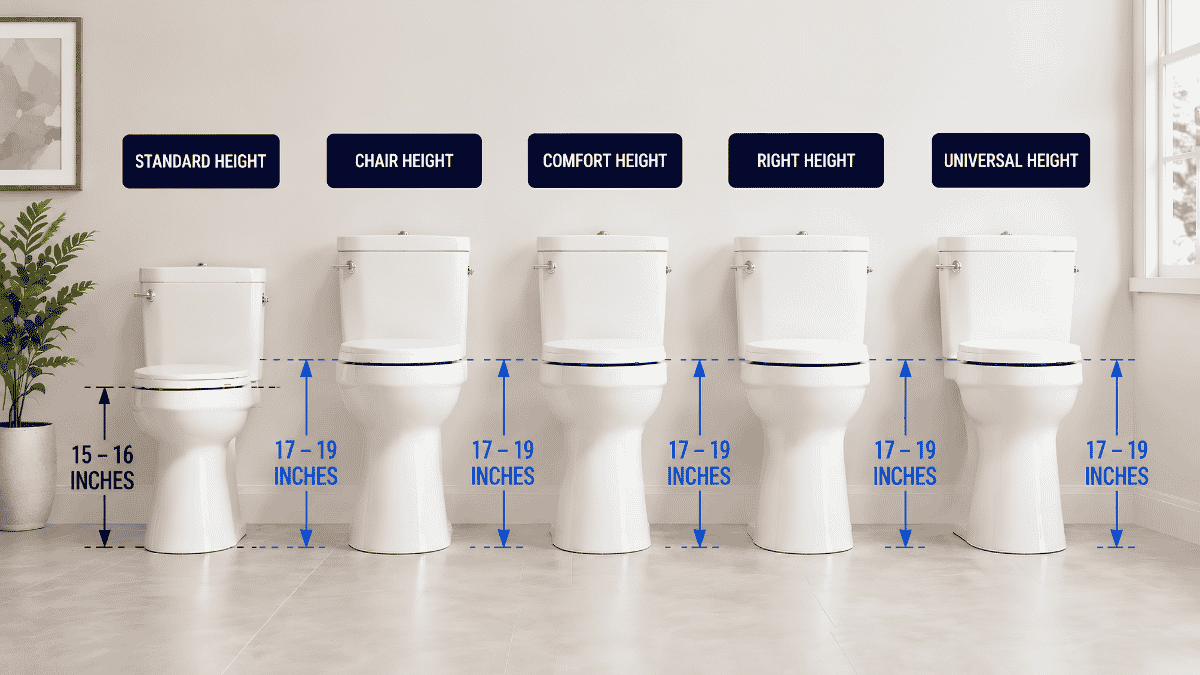
Yes, they are the same toilet. Different brands use different names for marketing. Here is the full breakdown:
| Brand Term | Brand / Source | Seat Height |
|---|---|---|
| Chair Height | Generic / industry term | 17 to 19 inches |
| Comfort Height | Kohler | 17 to 19 inches |
| Right Height | American Standard | 17 to 19 inches |
| Universal Height | Various brands | 17 to 19 inches |
| Standard Height | Traditional models | 15 to 16 inches |
These are all marketing labels for the same height range. The only exception worth noting: “tall height” toilets exceed 19 inches. These fall outside ADA recommendations and suit only very tall individuals, typically over 6 feet 4 inches.
Chair Height Toilet vs Standard Height Toilet
Both work. The right pick depends entirely on who uses the bathroom and how often.
| Feature | Chair Height | Standard Height |
|---|---|---|
| Seat height | 17 to 19 inches | 15 to 16 inches |
| ADA compliant | Yes (when certified) | No |
| Best for | Adults, seniors, tall users | Children, shorter adults |
| Joint strain | Lower | Higher |
| Bowel movement posture | Less natural squat angle | Closer to a natural squat |
| Installation | Same process | Same process |
| Bowl shape options | Round or elongated | Round or elongated |
A note on installation: Switching from standard to chair height does not require plumbing changes in most homes. The rough-in stays the same. You replace only the toilet unit itself. The one practical consideration for a DIY install: chair-height one-piece models are heavier than comparable standard units, so have a second person on hand.
Who Benefits Most from A Chair-Height Toilet?
The answer depends on who uses the bathroom every day and whether that will change in the next ten years.
Chair height toilets work well for:
- Adults over 5 feet 6 inches tall, who sit at a more comfortable knee angle on the higher seat
- Seniors and older adults, for whom the reduced need to bend deeply when sitting and standing reduces joint strain and fall risk
- Anyone recovering from hip or knee surgery, where minimizing joint flexion during daily movements speeds recovery
- People with arthritis, limited mobility, or balance difficulties, for whom the extra height provides stability during transfers
- Wheelchair users, as the seat height aligns more closely with standard wheelchair seat height, making lateral transfers easier
Standard height toilets work better for:
- Children and shorter adults under 5 feet 4 inches, who may find their feet dangling on a chair height model
- Households where the primary bathroom users are mixed in height and age, particularly where children use the space regularly
- Users who prioritize natural bowel movement posture (discussed in the next section)
For homes with both adults and children, the practical fix is straightforward: install a chair-height toilet in the primary adult bathroom, and a standard-height model in the bathroom children use most.
If that is not possible, a budget-friendly bathroom remodel that includes a small footstool solves the reach problem for shorter users without changing the toilet itself.
Pros and Cons of Chair Height Toilets
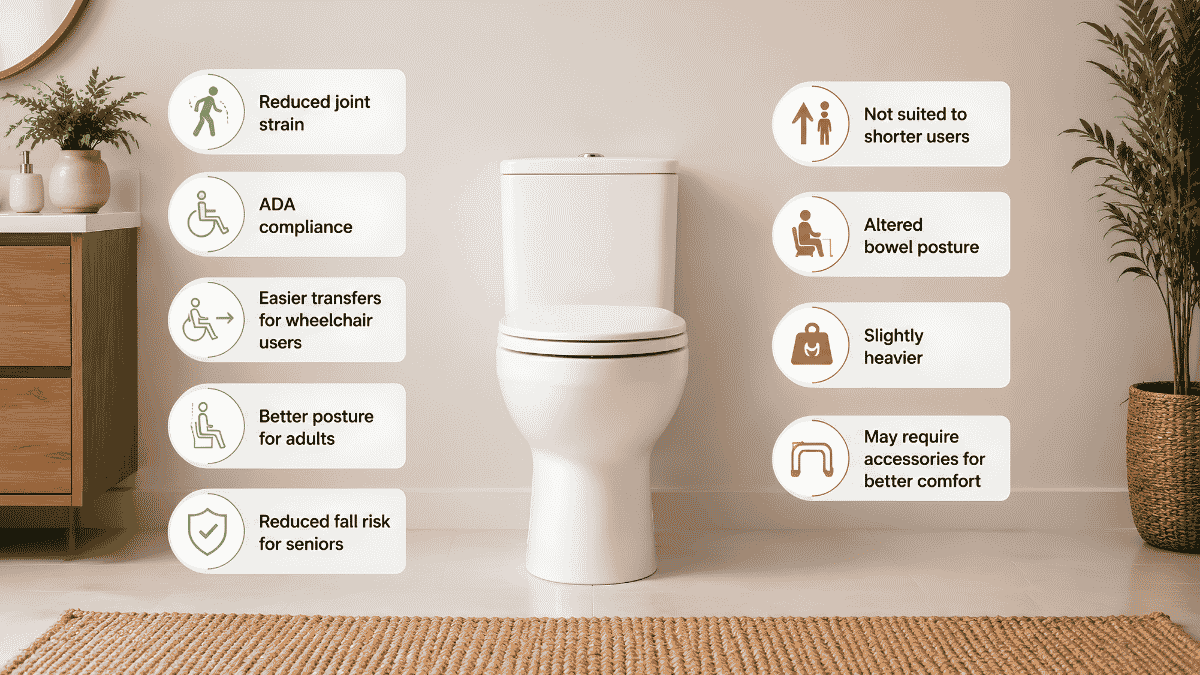
Based on my work with clients across a wide range of ages and physical needs, here is an honest summary of what chair-height toilets do well and where they fall short.
Advantages
- Reduced joint strain: The taller seat height means less bending at the knees and hips when sitting and standing, which is particularly valuable for anyone with arthritis or post-surgical recovery needs
- ADA compliance: A chair-height toilet meets ADA requirements, which matters for resale value and future-proofing a bathroom for accessibility needs
- Easier transfers for wheelchair users: The seat height aligns with standard wheelchair height, making lateral transfers more manageable and safer
- Better posture for adults: The upright seated position keeps the spine more vertical, which reduces lower back strain during extended sitting
- Reduced fall risk for seniors: Lowering onto and rising from a taller seat requires less controlled bending, which lowers the chance of losing balance
- Modern default in new construction: Chair height models are now standard in most new residential builds in North America.
Disadvantages
- Not suited to shorter users: Adults under 5 feet 4 inches and children may find that their feet cannot reach the floor comfortably, which affects both stability and circulation
- Altered bowel posture: The chair-like seated angle moves away from the natural squatting position. A toilet footstool fixes this without replacing the toilet.
- Slightly heavier: Chair-height one-piece models are heavier than comparable standard-height units, which is relevant for DIY installation.
Does Toilet Height Affect Digestive Health?
Gastroenterologists note that a squatting position, with knees raised above the hips, creates a straighter path through the colon and can make bowel movements easier
Standard height toilets place the body closer to this position because the lower seat creates a greater knee-to-hip angle. A chair height toilet, by contrast, positions the body more like sitting in a chair, with knees roughly level with or below the hips.
The fix is simple: a toilet footstool (sometimes called a squatty potty) placed under the feet while seated raises the knees and recreates a closer-to-natural angle. This costs $25 to $50 and works on any chair-height toilet without any plumbing changes.
Round Bowl vs Elongated Bowl on a Chair Height Toilet
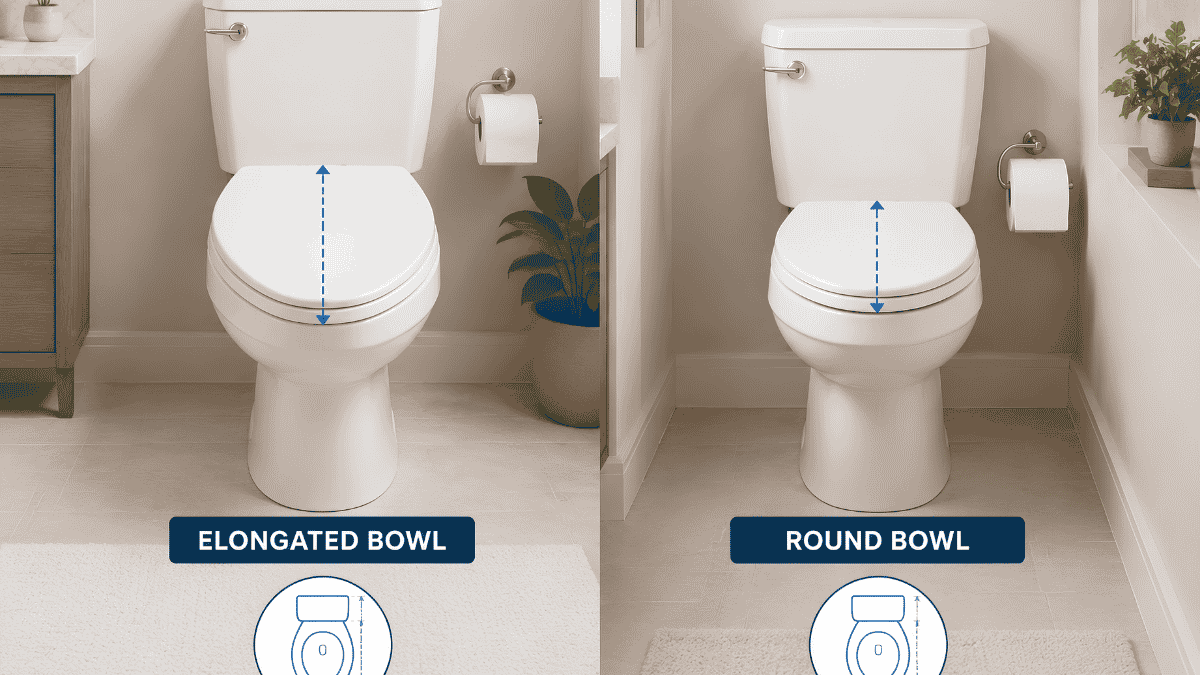
Chair height toilets come in two bowl shapes. The shape affects comfort and the amount of space the toilet takes up.
- Elongated bowl: Oval-shaped. About 2 inches longer than a round bowl. More comfortable for adults. Takes up more floor space, so measure your bathroom before choosing this style.
- Round bowl: Shorter front-to-back. Better for small bathrooms and powder rooms. Easier for children to use.
In most adult primary bathrooms with adequate space, an elongated, chair-height toilet is the more comfortable option. In a tight powder room or a bathroom children also use, a round bowl keeps the footprint smaller. Check your bathroom layout dimensions before deciding on the bowl shape; the difference in length can create clearance problems in smaller rooms.
How to Choose the Right Toilet Height for Your Home
With everything above in mind, choosing comes down to a simple assessment of who uses the bathroom and what they need from it.
Here are the factors worth working through before purchasing:
- Measure the primary users: Adults over 5 feet 6 inches are generally more comfortable on a chair height model. Under 5 feet 4 inches, standard height fits better. When in doubt, sit on a dining chair (typically 17 to 18 inches high) and assess how that height feels.
- Consider age and mobility: Any household with a senior resident, or one that plans to age in place, is better served by a chair-height model from the outset.
- Check for ADA requirements: If the bathroom needs to meet ADA standards now or in the future, a chair-height toilet is non-negotiable. Note that not all chair-height toilets carry official ADA certification; look for this on the product spec sheet if certification is required.
- Account for children: If a primary bathroom is shared with young children, a standard height toilet or a dedicated child-accessible bathroom is worth considering
Conclusion
A chair-height toilet is the practical default for most adult bathrooms. If the primary users are adults over 5 feet 6 inches, anyone over 60, or anyone managing joint pain or limited mobility, the taller seat reduces daily strain, lowers fall risk, and meets ADA standards that matter for long-term home value.
It is not the right fit for every bathroom. Households with young children, shorter adults under 5 feet 4 inches, or users concerned about posture during bowel movements are better served by a standard-height model or by pairing a chair-height toilet with a footstool.
Before you buy, measure your rough-in, check whether the listed height includes the seat, and think about who will use that bathroom ten 10 years. Those three steps prevent the most common toilet-buying mistakes.
Have questions about how a new toilet fits into a larger bathroom project? The planning guides on DIY bathroom renovation ideas cover fixture selection, layout changes, and cost planning in one place.
Frequently Asked Questions
What Is the Best Toilet Height for Back Pain?
Comfort height toilets are designed to sit higher than standard models, with a seat height typically around 17-19 inches (43-48 cm).
Do Chair-Height Toilets Use More Water?
Usually no. Water use depends on the toilet’s flush design and efficiency rating, not its seat height. Height does not tell you how much water it uses.
What Height Toilet Is Good for Knee Pain in The Elderly?
For seniors with knee pain, the ideal toilet seat height is between 17 and 19 inches from the floor.
Why Are Chair-Height Toilets so Popular?
Chair-height toilets are becoming increasingly popular because they allow people to sit more naturally, with much less pressure on their knees and backs when sitting or standing.
Which Toilet Shape Is More Modern?
Round toilets suit traditional, classic designs, while elongated bowls bring a modern, updated look.