Have you ever bought a bathroom mirror only to realize it looks completely wrong once hung?
Most owners make sizing mistakes that throw off their entire bathroom design. The mirror ends up too small for the vanity or too large for the wall space.
Bad proportions create an unbalanced look that’s hard to fix without buying a new mirror.
A bathroom mirror size calculator solves this problem by giving you exact dimensions before you buy. When you measure correctly and apply simple formulas, you get proportions that work with your vanity width, wall height, and lighting fixtures.
The mirror fits naturally into your space and enhances both function and style. No more guessing, no more returns, and no more settling for something that just doesn’t look right.
Why Bathroom Mirror Size Matters?
Your bathroom mirror does more than reflect your face. It serves three critical functions in your space. First, it provides visibility for grooming tasks like shaving, applying makeup, and styling hair.
Second, it creates visual balance between your vanity, walls, and lighting fixtures. Third, it makes small bathrooms feel larger by reflecting light and increasing brightness.
Standard bathroom mirrors for WELLFOR single-sink vanities typically range from 24 to 36 inches wide, and selecting the right size within this range affects both function and style.
An undersized mirror leaves dark gaps on either side of your vanity. An oversized mirror overwhelms your wall and clashes with the lighting placement.
Getting the proportions right creates a professional, finished look that feels intentional rather than accidental.
Measure Your Bathroom Layout
Your bathroom layout determines which mirror style works best. Think of mirror selection like solving a puzzle where each piece must fit perfectly.
- Bathroom Dimensions: Measure the width of your vanity or sink area and the available wall height to establish size boundaries for your mirror selection.
- Space Optimization: Decide between a single large mirror or multiple smaller mirrors based on how many people use the bathroom simultaneously and your functional requirements.
- Physical Obstructions: Identify items like electrical outlets, towel bars, or windows that restrict mirror placement or require size adjustments to maintain proper clearance.
- Storage Needs: Determine if you need mirrors with built-in shelves or medicine cabinets for toiletries, or if a simple reflective surface meets your needs.
- Fixture Clearances: Note the distance between your vanity and nearby toilet, shower, or bathtub to ensure your mirror doesn’t create awkward spatial conflicts.
- Lighting Setup: Measure where sconces or vanity bars sit on the wall, as side-mounted lights typically positioned 28 to 30 inches apart affect the maximum mirror width.
Complete this layout assessment before applying the sizing formulas in the next section. These spatial factors ensure your calculated mirror dimensions will fit and work properly in your specific bathroom.
Bathroom Mirror Size Calculator: Step-by-Step
Follow these proven formulas to size your mirror perfectly. A bathroom mirror size calculator uses simple math to match your mirror with your vanity. These step-by-step calculations ensure proper proportions every time.
Step 1: Measure Your Vanity Width
Start by measuring your vanity width from edge to edge. This measurement sets the foundation for your mirror width calculation.
The mirror should never exceed the vanity width to maintain proper proportions. Use a tape measure and record the exact width in inches for accurate results.
Step 2: Calculate Your Mirror Width
Leave 2 to 4 inches of total space when sizing your mirror. This creates 1 to 2 inches of clearance on each side. A 30-inch vanity works best with a 26 to 28-inch mirror. The spacing prevents the mirror from overwhelming your vanity and provides room for side-mounted lighting.
Formula Mirror Width = Vanity Width minus 2 to 4 inches |
For Double Vanities with Two Separate Mirrors, divide your vanity width by two to find each section’s width. Account for the space between sinks when calculating. Each mirror should be 1 to 2 inches narrower than its vanity section to maintain symmetry.
Formula for Each Mirror (Vanity Width divided by 2) minus 2 to 4 inches |
Keep both mirrors the same height for visual harmony across your double vanity setup.
Step 3: Determine Your Desired Mirror Height
Height offers more flexibility than width. Position the bottom edge of your mirror 5 to 10 inches above the countertop. Leave equal spacing between the mirror top and the ceiling or light fixtures.
Consider your ceiling height when selecting final dimensions. For visual balance, choose a mirror height roughly equal to or slightly less than its width. Square or nearly square mirrors create pleasing proportions in most bathroom layouts.
Step 4: Calculate Mirror Height for Your Ceiling
Mirror heights typically range from 30 to 40 inches for standard 8-foot ceilings. This range works well for most bathroom setups.
For an 8-foot-ceiling bathroom, the maximum mirror height is approximately 54 inches, though 30 to 34 inches creates a better balance in typical spaces.
Formula Mirror Height = Distance above vanity plus desired mirror size |
Taller ceilings allow for taller mirrors to maintain proportional aesthetics. A 10-foot ceiling can accommodate 48 to 54-inch mirrors without overwhelming the space.
Step 5: Consider Your Primary Users
Account for who uses the bathroom most frequently. The average woman is 5’5″, while the average man is 5’10”. Position the mirror so users can see comfortably without stooping or standing on tiptoes.
Adjust the starting height above the vanity if household members are significantly taller or shorter than average.
Step 6: Adjust for Unique Bathroom Features
Non-standard spaces require customized solutions. Sloped ceilings, unusual vanity shapes, or architectural features may require adjustments to the width-to-height ratio.
Consider custom mirrors for bathrooms with unique measurements. Tilted ceilings or built-in shelving affect standard sizing formulas and may require professional consultation for a perfect fit.
Mirror Styles and Shapes for Your Bathroom
Recommended Mirror Sizes for Common U.S. Vanity Widths. Use this quick reference for common U.S. vanity widths. Match your vanity size to find the ideal mirror dimensions.
| Vanity Width | Recommended Mirror Width | Suggested Mirror Height | Best For |
|---|---|---|---|
| 24″ | 20″–22″ | 28″–34″ | Compact powder rooms |
| 30″ | 26″–28″ | 30″–36″ | Guest bathrooms |
| 36″ | 32″–34″ | 32″–38″ | Single-sink vanities |
| 48″ | 42″–46″ | 34″–40″ | Larger single or smaller double vanities |
| 60″ (double) | 54″–58″ OR two 24″–28″ | 36″–42″ | Shared family bathrooms |
| 72″ (double) | 64″–70″ OR two 28″–32″ | 38″–44″ | Spacious master suites |
These standard dimensions accommodate most residential vanities and provide adequate reflection area for the BFY mirror. Adjust for tall ceilings by choosing 36 to 42-inch mirrors for 8-foot ceilings or 48 to 54-inch mirrors for 10-foot ceilings.
Account for frame thickness when measuring, as a 2-inch frame reduces the reflective surface by 4 inches total. ADA-compliant bathrooms need special height consideration to serve both wheelchair and standing users.
Choosing the Right Mirror Style and Shape
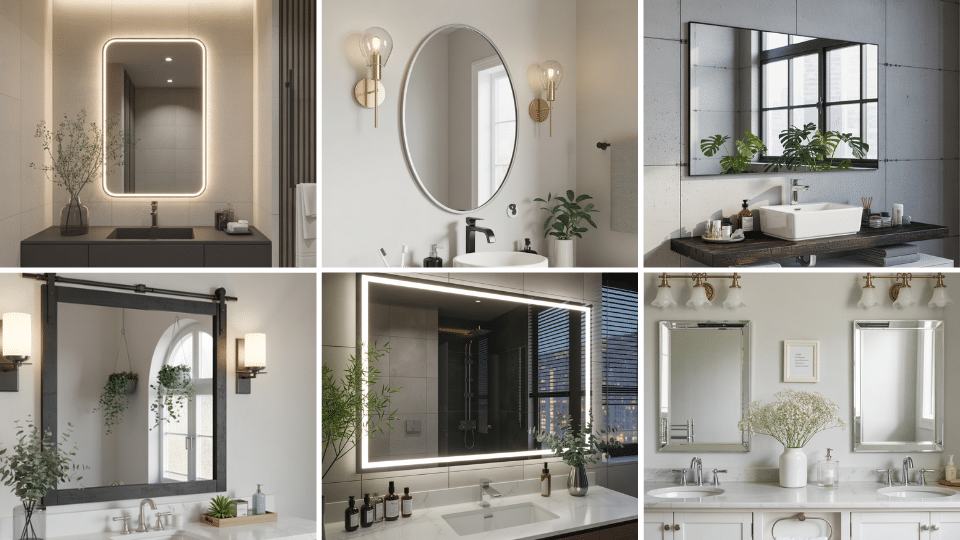
Shape impacts your final dimensions and reflection area. Different mirror shapes serve different functions and create distinct visual effects in your bathroom. Select a shape that complements your vanity style while meeting your practical needs for reflection coverage.
1. Rectangular Mirrors: Rectangular mirrors offer the most flexibility for standard bathrooms and provide maximum coverage. They pair well with most vanity styles and let you maximize both width and height within your available wall space.
2. Round Mirrors: For small vanities, 20 to 24-inch diameter round mirrors work well, while standard or double sinks use 30 to 36-inch diameter mirrors. Round shapes soften angular bathroom lines and suit contemporary or transitional styles beautifully. Center the round mirrors on the vanity for proper alignment.
3. Oval Mirrors: Oval mirrors combine curved edges with vertical emphasis. They suit narrow bathrooms where you need height without harsh corners or sharp angles.
4. Frameless Mirrors: Frameless mirrors deliver a sleek appearance and maximize your usable surface area. They blend into walls seamlessly and help compact bathrooms feel more open.
5. Framed Mirrors: Framed mirrors add character and suit classic bathroom designs perfectly. Remember that a 2-inch frame reduces your usable surface by 4 inches total when calculating dimensions.
6. Single Wide Mirrors: Single wide mirrors spanning the entire vanity suit double vanities in contemporary bathrooms. They provide uninterrupted coverage across both sink areas with a cohesive appearance.
7. Double Separate Mirrors: Two separate mirrors positioned above each sink suit classic or transitional bathroom styles better. This configuration allows individual expression and maintains symmetrical balance.
Match your mirror style to your bathroom design and household needs for optimal results.
Mirror InstallationTips: Height and Placement
Getting the installation right is just as important as choosing the correct size. Follow these tips to hang your mirror properly and avoid common mistakes.
- Install your mirror so the bottom edge sits 40 to 48 inches from the floor for optimal adult visibility. Lower the installation height if children frequently use the bathroom or if accessibility is needed.
- Center your mirror directly over the sink or faucet rather than the vanity cabinet. This alignment creates better symmetry with the fixture you use most often.
- Always use a level during installation to ensure perfectly straight positioning. Even a slight tilt becomes noticeable with daily use. Check the level from multiple angles before drilling permanent holes into the wall.
- Select mounting hardware rated for your specific mirror weight. Lightweight mirrors weighing less than 20 pounds can use standard wall anchors, while heavier mirrors require toggle bolts or wall studs.
- Consider steam-resistant backing for mirrors installed near showers or bathtubs. Anti-fog coatings help maintain clarity in bathrooms with high humidity levels.
These installation practices ensure your mirror stays secure, level, and functional for years to come.
Final Thoughts
Choosing the right mirror size transforms how your bathroom looks and functions.
A bathroom mirror size calculator removes uncertainty from the selection process by providing exact dimensions based on your vanity width and wall space.
When you measure accurately and apply the proven formulas, you create proportions that enhance daily grooming while improving your bathroom’s appearance.
Apply the width and height calculations to determine your ideal dimensions. Reference the sizing chart for common vanity widths to confirm your numbers. Consider your household needs and ceiling height before making your final selection.
Order with confidence knowing your mirror will fit perfectly on the first attempt. Your bathroom will look polished and cohesive every single morning.