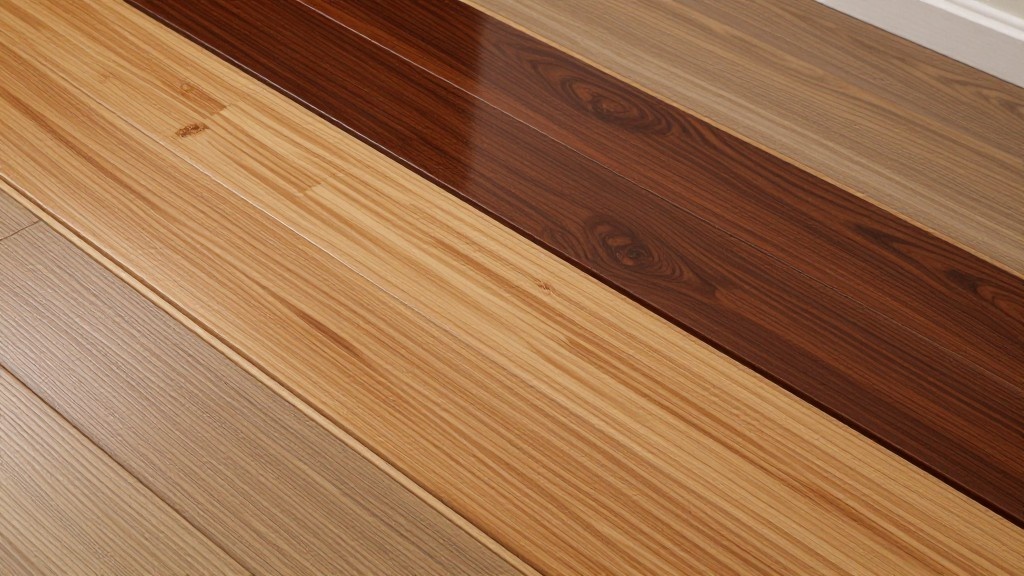
Your floor sets the tone for everything above it. It is the first thing you feel underfoot and the last detail that ties a room together.
The right wood floor looks good from day one and holds up well over time. It ages with character and adds real value to your home.
With so many types of wood flooring available today, picking the right one can feel overwhelming. Solid or engineered? Bamboo or cork? Prefinished or site-finished? Each option comes with its own strengths, price points, and ideal use cases.
You will find a clear breakdown of each type below, with real trade-offs and best use cases to help you choose.
What is Wood Flooring and How is it Made?
Wood flooring refers to any floor surface made from real wood or wood-based materials, cut and finished for indoor installation. The three main construction types are solid hardwood, engineered wood, and laminate.
- Solid Hardwood: Milled from species like maple, oak, or walnut, then kiln-dried and cut into uniform planks. Each plank is one solid piece of timber, giving it unmatched longevity and natural beauty.
- Engineered Wood: Combines a hardwood veneer over multiple layers of plywood or high-density fiberboard (HDF). This layered construction improves stability and makes it more resistant to humidity and temperature fluctuations.
- Laminate: Uses a photographic wood-grain image fused onto a fiberboard core with a protective wear layer. While less expensive, laminate does not offer the refinishing potential of real wood.
Other variations include parquet flooring arranged in geometric patterns; reclaimed wood salvaged from old buildings for a unique aesthetic; softwoods like pine or fir; bamboo; and cork, both of which are environmentally conscious options.
Why Do Homeowners Choose Wood Flooring?
Wood flooring has remained a top choice for homeowners and designers for centuries, and for good reason. Here is what makes it stand out.
- Visual authenticity: Every plank is unique. The natural grain patterns, knot formations, and color variations give any space a character that manufactured flooring cannot replicate.
- Durability: Hardwood species such as oak, hickory, and maple are built to withstand daily wear. With proper care, solid hardwood floors can last well over a century.
- Refinishability: Unlike most flooring materials, solid hardwood can be sanded and refinished multiple times. This means scratches and dullness over the years are never permanent.
- Adaptability: Wood flooring works across virtually every interior style, from rustic farmhouse to sleek modern. It adapts without effort.
- Resale value: Homes with wood flooring consistently attract higher resale prices. It is widely considered one of the best flooring investments a homeowner can make.
Types of Wood Flooring
When it comes to wood flooring, one size does not fit all. Each type comes with its own strengths, limitations, and ideal use cases. Here is a breakdown of the most common options to help you find the right fit.
1. Solid Hardwood Flooring
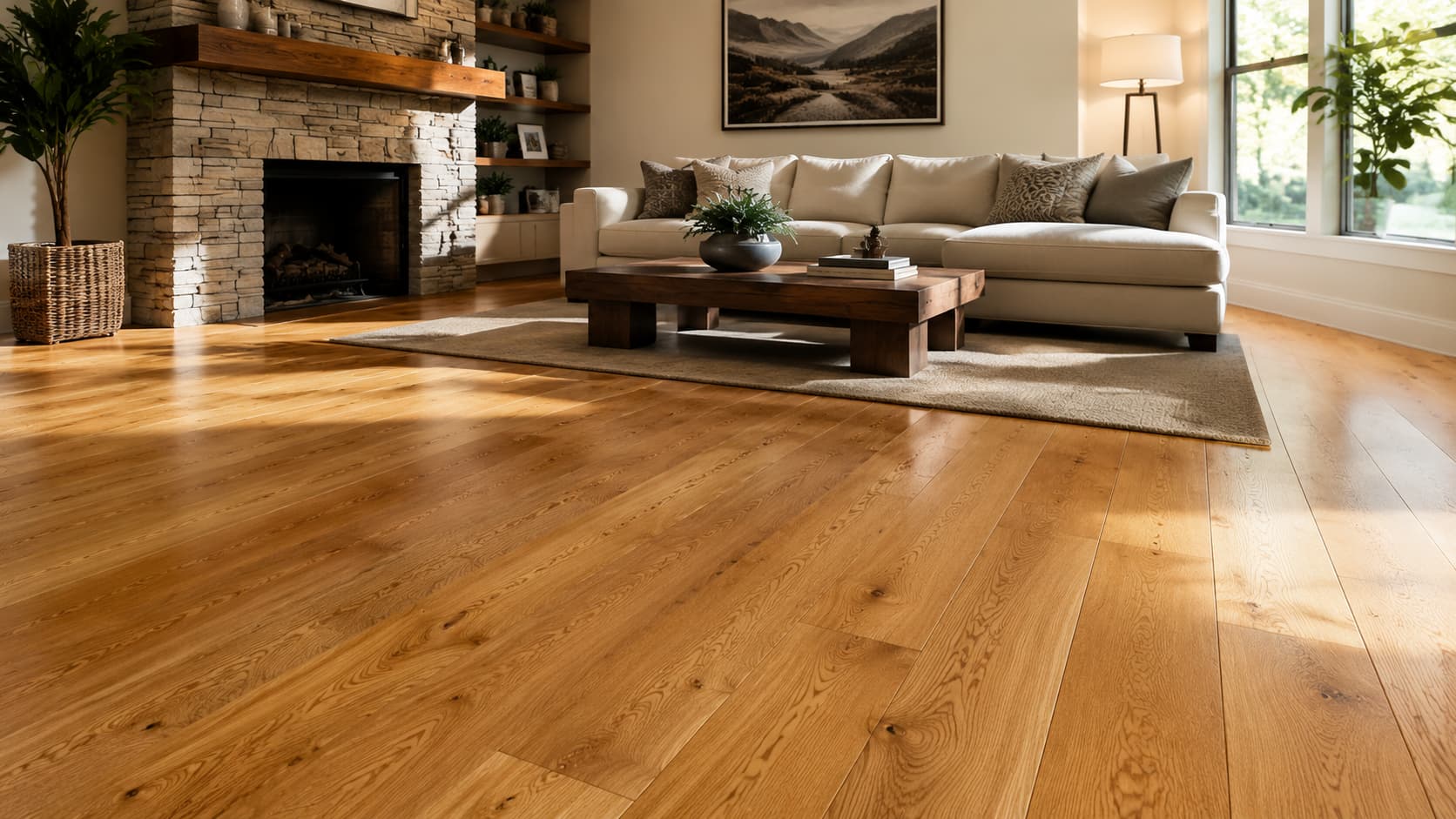
Solid hardwood comes from a single piece of timber, typically 5/8” to 3/4” thick. Each plank shows unique grain and color that vary naturally by wood species.
Pros:
- Can be sanded and refinished multiple times.
- Adds significant resale value to the home.
- Classic look that suits most interior styles.
Cons:
- Prone to expansion and contraction with changes in humidity.
- Higher upfront cost compared to alternatives.
- Requires professional installation.
Best for: Living rooms, bedrooms, dining rooms, and dry above-grade spaces.
2. Engineered Wood Flooring
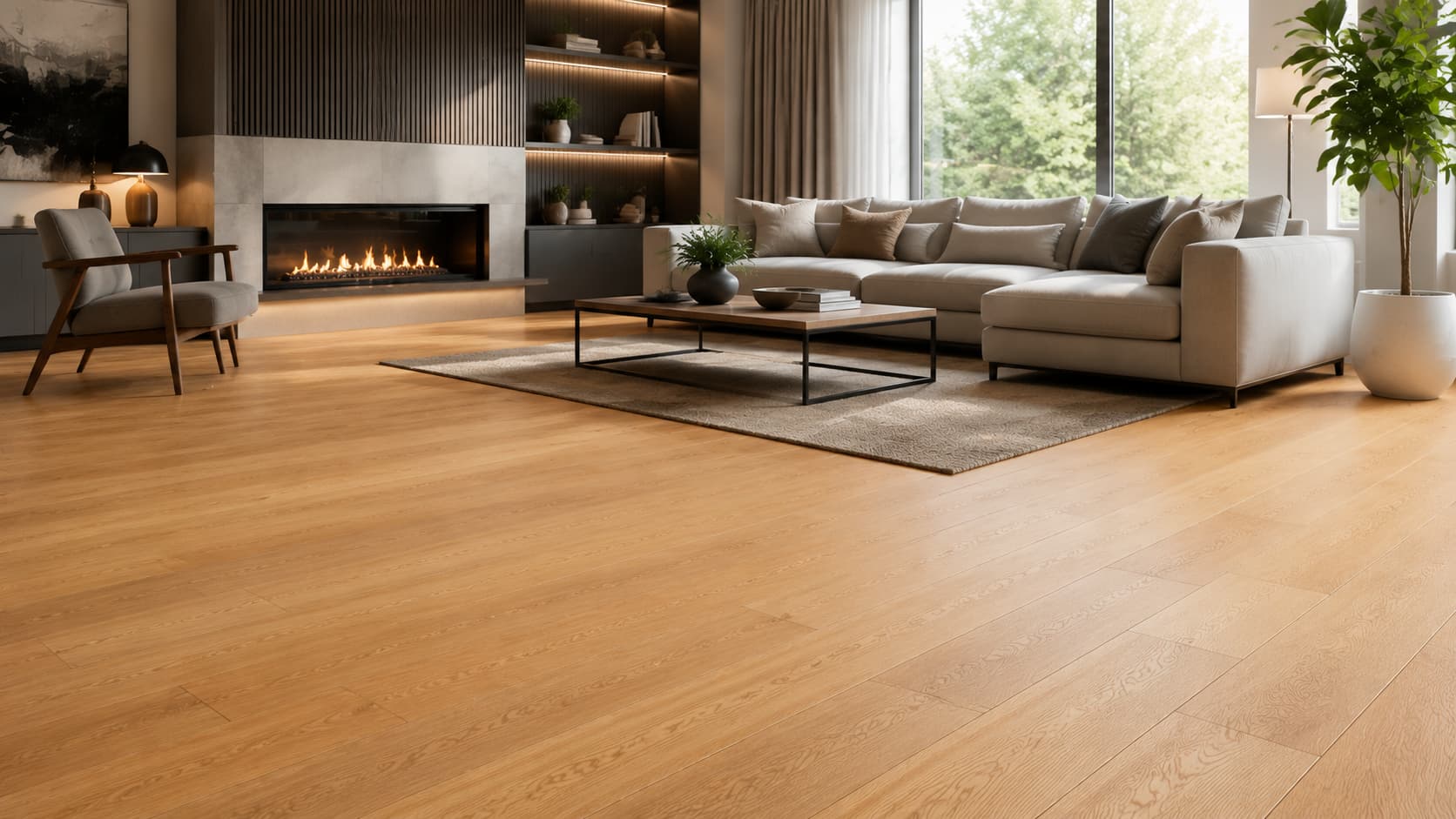
Engineered wood has a real hardwood veneer on top, typically 3 mm to 6 mm thick. Below it, several layers of plywood or HDF run in opposing directions.
This cross-ply build makes it far less prone to expansion and contraction. If your concrete subfloor has existing damage, those repairs must be completed before installation. Concrete crack repairs add to your total project budget.
Pros:
- More stable and moisture-resistant than solid hardwood
- Can be installed via nailing, gluing, or as a floating floor system
- Works well over concrete subfloors and underfloor heating
Cons:
- A thinner veneer limits the number of times it can be refinished
- Does not add the same premium value as solid hardwood
Best for: Basements, kitchens, ground-floor spaces, and areas with moderate moisture.
3. Parquet Wood Flooring
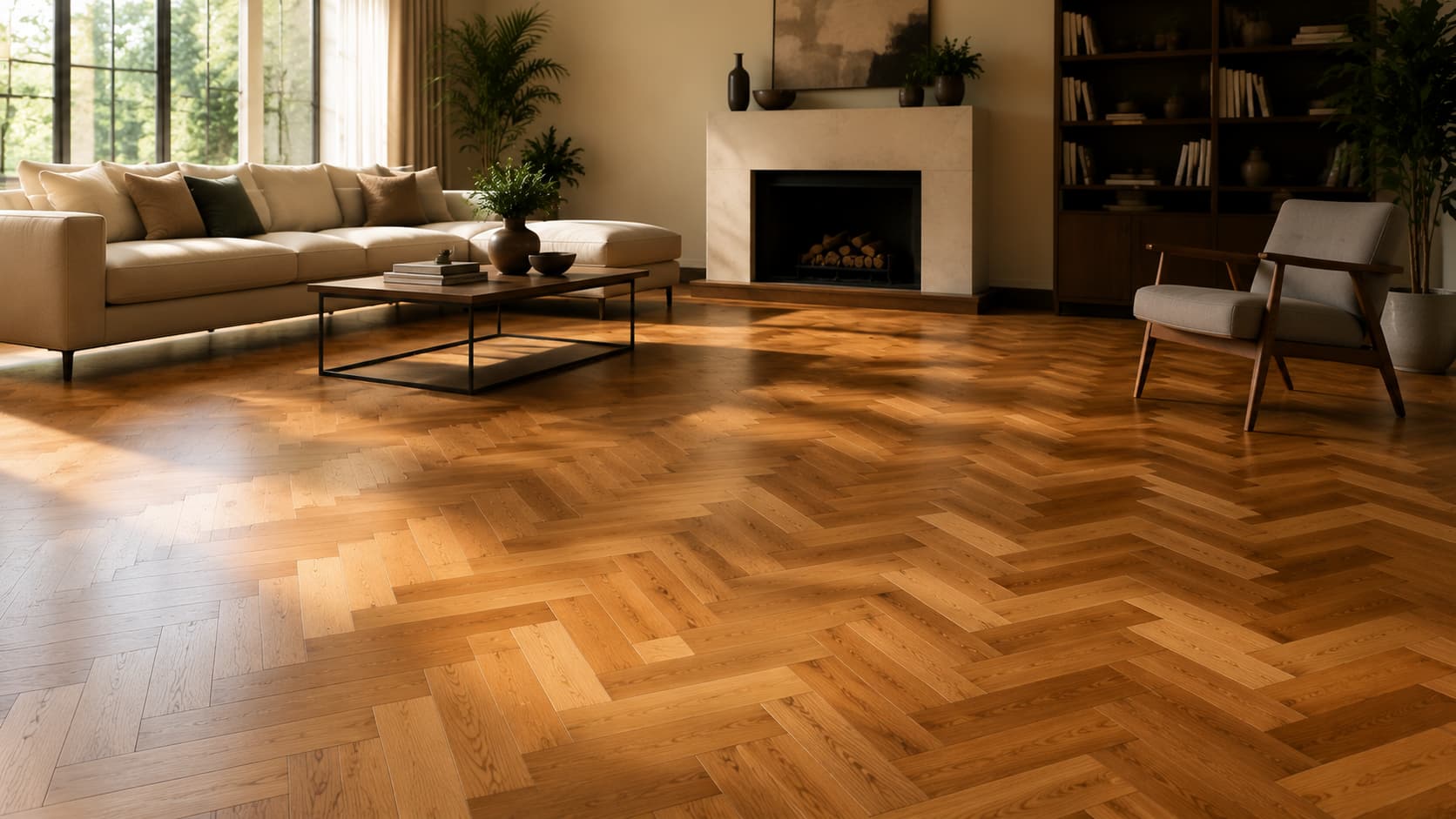
Parquet flooring uses small wood pieces arranged in geometric patterns like herringbone, chevron, and basketweave. It can be made from either solid or engineered wood blocks.
Pros:
- Visually striking, the floor turns into a design feature
- Herringbone and chevron patterns instantly improve any interior and add architectural interest
- Available in a wide range of wood species and finishes
Cons:
- Installation can be detailed and may require skilled professionals
- Higher installation cost due to pattern complexity
- Harder to repair the individually damaged pieces
Best for: Entryways, dining rooms, master bedrooms, and formal living spaces.
4. Reclaimed Wood Flooring
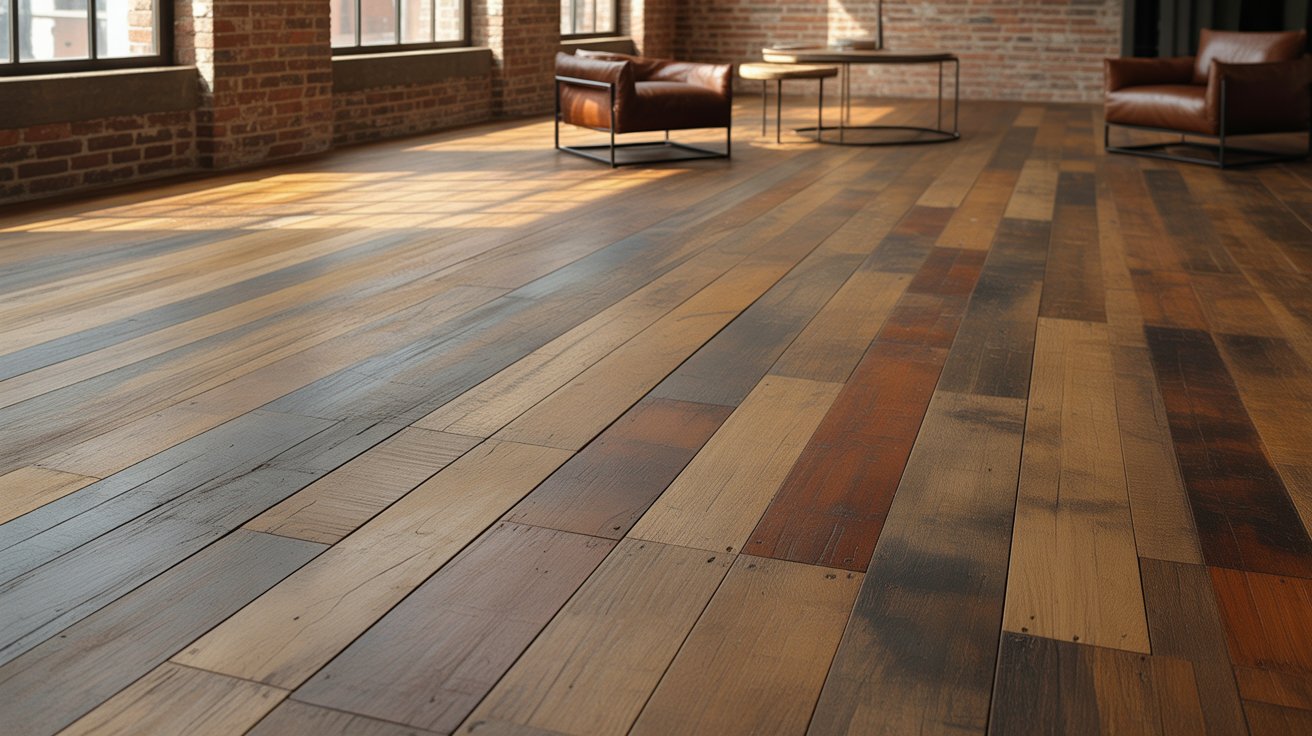
Reclaimed wood flooring is made from salvaged timber from old barns, buildings, or other structures. Each plank carries natural signs of wear that no new wood can replicate.
Pros:
- Highly eco-friendly, repurposes existing materials.
- Every plank is one-of-a-kind with a rich history and texture
- Strong resale appeal and premium look
Cons:
- Costly due to the labor-intensive process of sourcing and removal
- May require additional treatment before installation
- Inconsistent sizing can complicate installation
Best for: Living rooms, bedrooms, dens, and heritage or rustic-style interiors.
5. Softwood Flooring
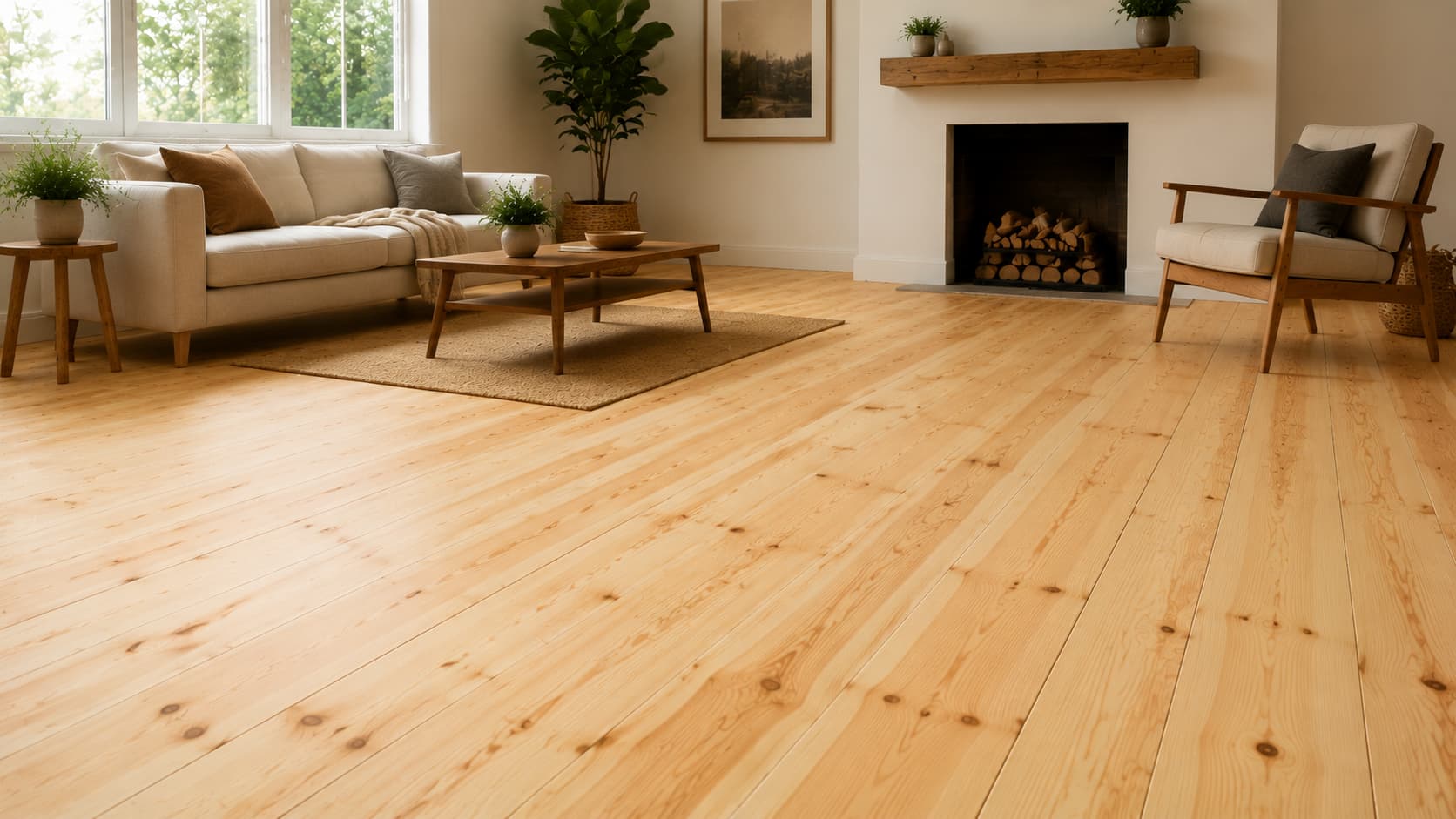
Softwood flooring comes from coniferous trees like pine, fir, and cedar. Softwoods grow faster than hardwoods. That makes them more affordable, and they still deliver a warm, natural wood look.
Pros:
- More budget-friendly than hardwood options
- Naturally, light tones brighten up smaller spaces
- Easy to work with, making installation more straightforward
Cons:
- A softer surface is more susceptible to dents and scratches
- Requires more frequent maintenance in high-traffic areas
- Limited refinishing capability compared to dense hardwoods
Best for: Bedrooms, low-traffic areas, cottages, and rustic or farmhouse-style interiors.
6. Bamboo Flooring
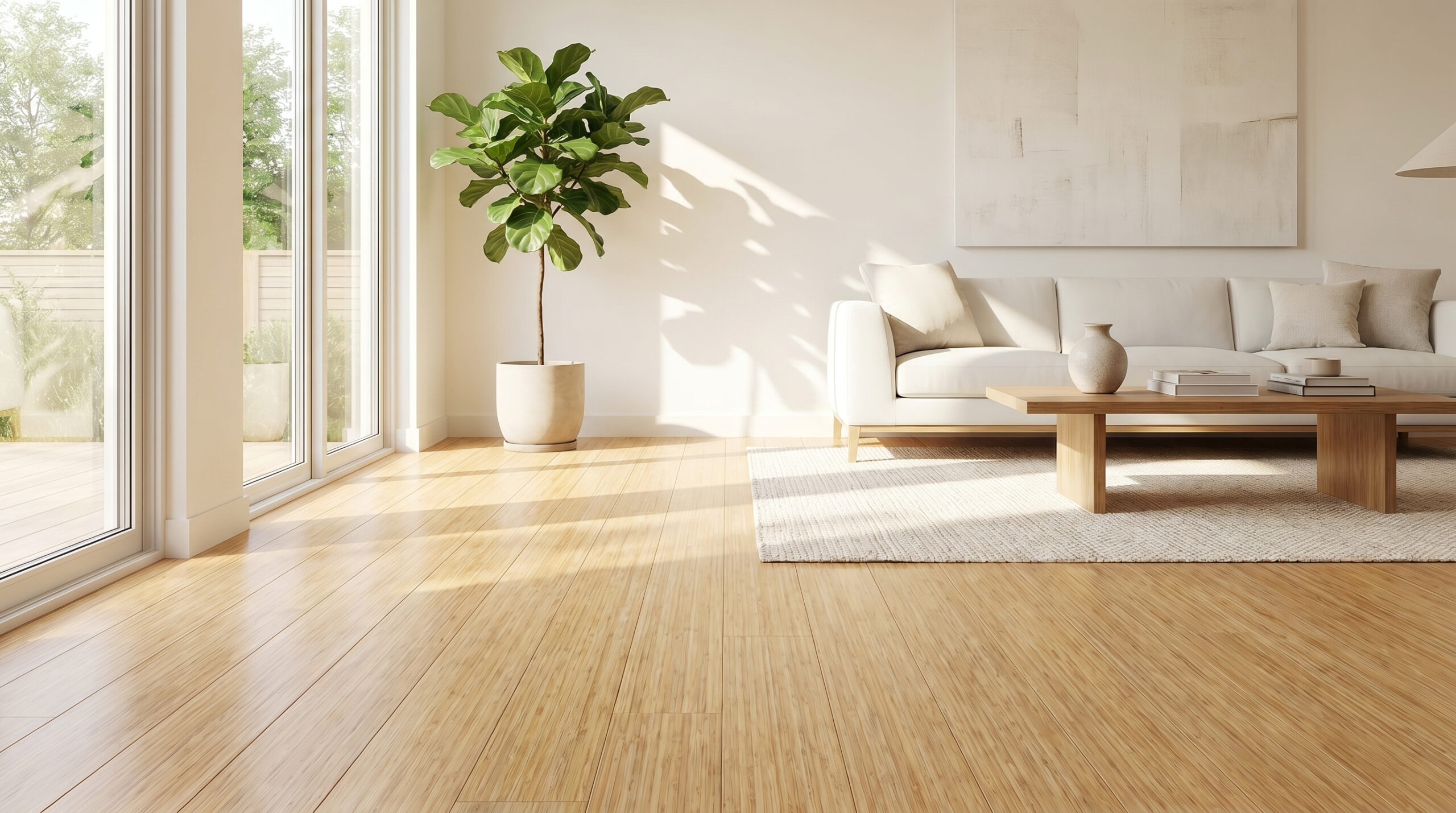
Bamboo flooring is made from fast-growing bamboo grass, making it an environmentally conscious alternative to traditional hardwood flooring. Bamboo reaches maturity in just five to seven years, far faster than most timber species.
Pros:
- Strand-woven varieties are known to be harder than oak and other traditional hardwoods.
- Easy to clean and maintain
- Reaches maturity in just five to seven years, far more renewable than traditional timber
Cons:
- Can warp or crack in high humidity or overly dry conditions
- Vulnerable to scratches from furniture legs and pet claws
- Quality varies significantly between manufacturers
Best for: Living rooms, home offices, and eco-conscious homeowners in moderate-climate regions.
7. Cork Flooring
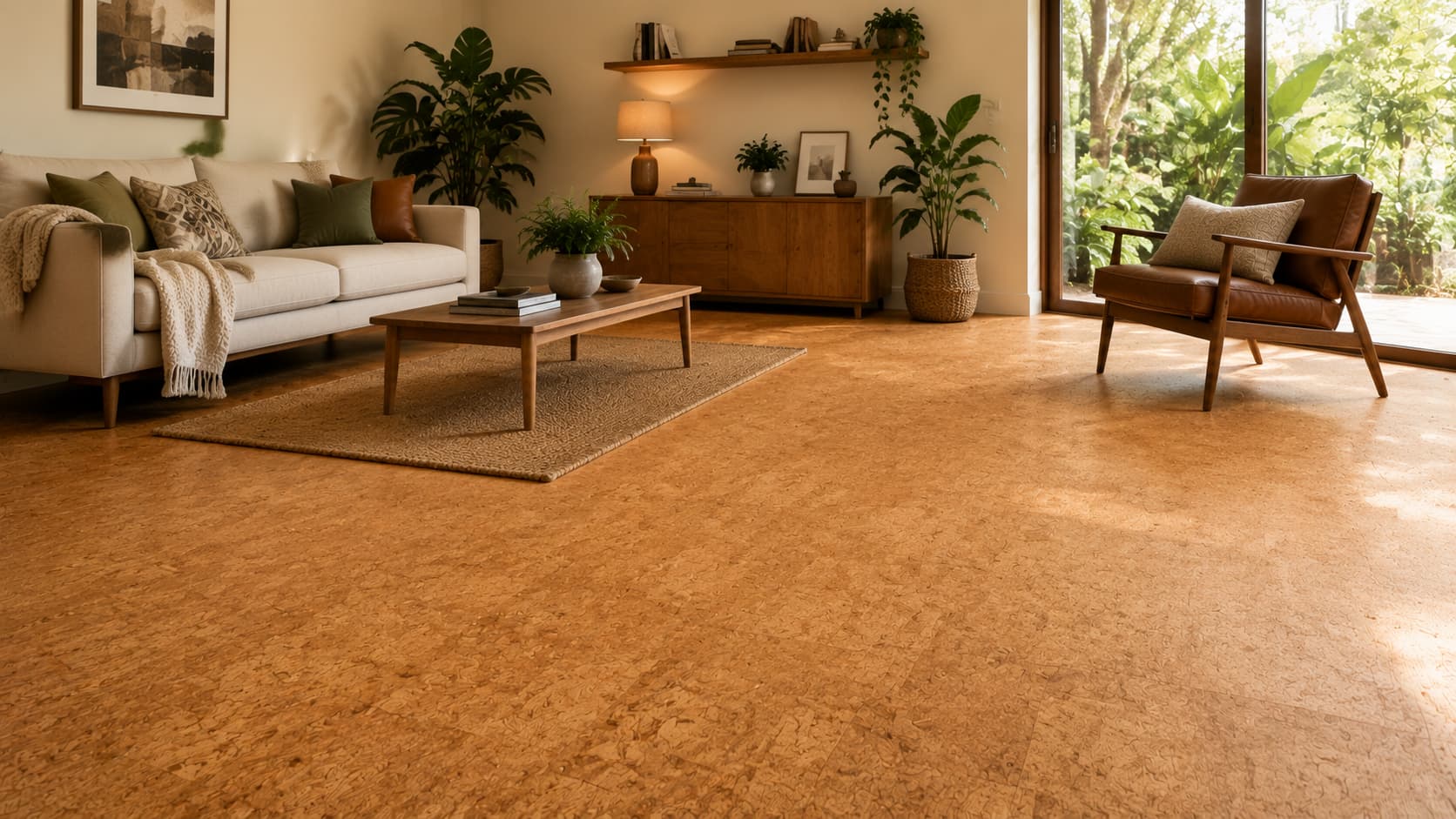
Cork flooring is harvested from the bark of cork oak trees without cutting the tree down. The bark grows back naturally every nine to twelve years. That makes cork one of the most sustainable flooring materials available.
Pros:
- Soft underfoot with natural cushioning, acting as an excellent acoustic and thermal insulator
- Naturally resistant to mold, mildew, and termites
- Comfortable for long periods of standing
Cons:
- Vulnerable to punctures from sharp objects and heavy furniture
- Sunlight can bleach the color out over time
- Requires sealing to protect against moisture damage
Best for: Home offices, nurseries, kitchens, and multi-level homes where noise reduction matters.
Wood Flooring Finishes and Cost
The finish on your wood flooring affects everything from its appearance and durability to the maintenance it requires over time. Equally, understanding what drives the cost helps you plan your budget more realistically.
Types of Finishes
- Oil-based polyurethane: Enhances the natural warmth of the wood with an amber tone, but takes longer to dry
- Water-based polyurethane: Dries faster, stays clear, and emits fewer VOCs, making it a healthier indoor option
- Hardwax oil: Penetrates deep into the wood grain, giving a natural matte look that is easy to spot-repair
- Aluminum oxideis a factory-applied finish found on most prefinished floors, highly scratch-resistant and long-lasting
- UV-cured finish: Is cured instantly using ultraviolet light, offering excellent durability with minimal drying time
Cost Factors
- Wood species: Exotic species like walnut and Brazilian cherry cost significantly more than domestic oak or maple
- Solid vs engineered: Solid hardwood carries a higher price tag, while engineered wood offers a more moderate entry point
- Floor size and layout: Larger rooms and complex patterns like herringbone increase both material and labor costs
- Finish type: Site-finished floors cost more due to additional labor, while prefinished options are faster and cheaper to install
- Location and labor: Installation costs vary by region, with professional fitting typically adding $3 to $8 per square foot. If flooring is part of a larger renovation or home addition, home addition costs include subfloor preparation as a separate line item.
Step-by-Step Wood Flooring Installation
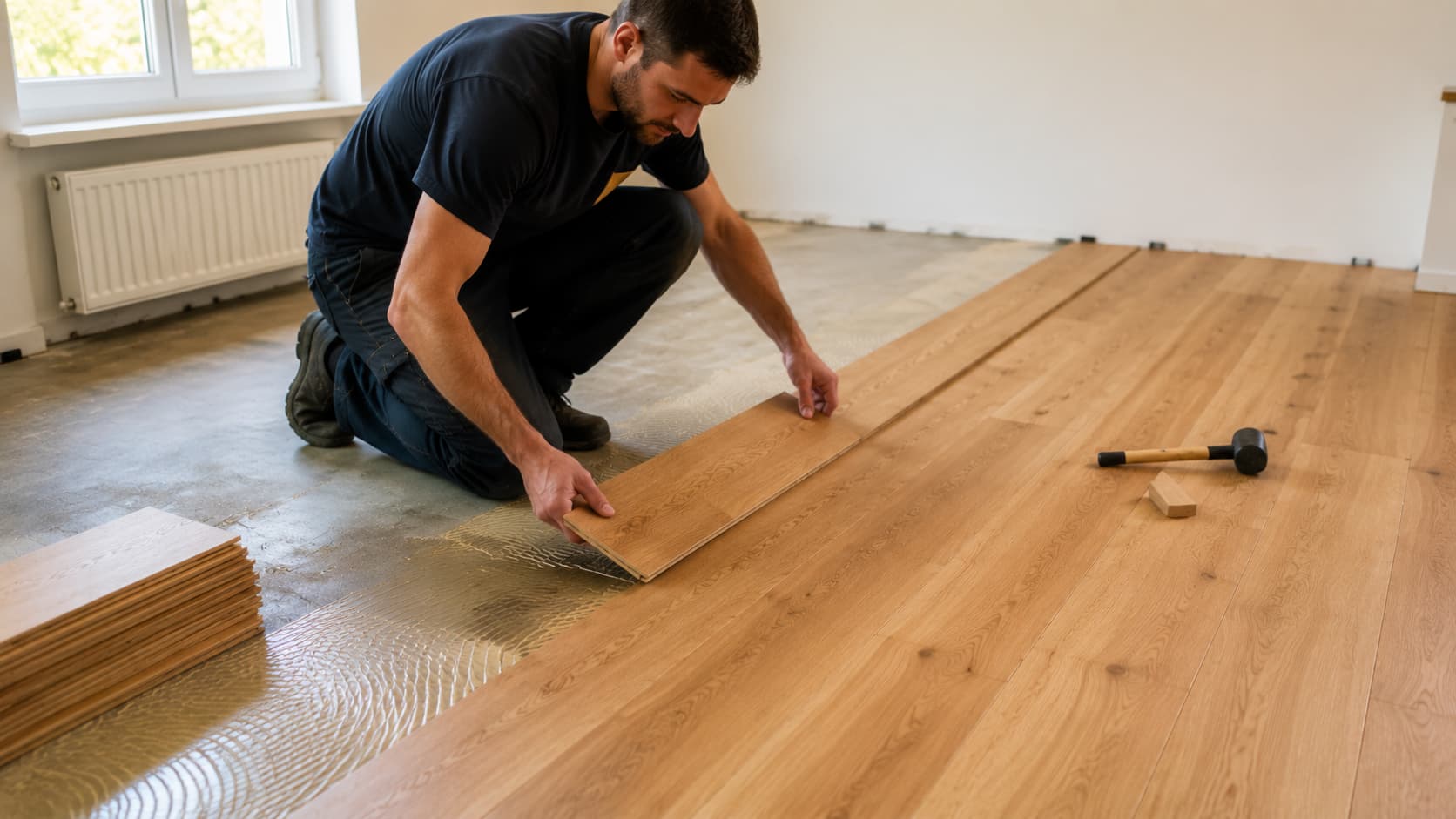
Before starting, make sure your subfloor is clean, level, and dry, and allow your planks to acclimate to the room’s temperature and humidity. Proper planning and layout can prevent costly mistakes and ensure a professional-looking finish.
Step 1: Acclimate and Prepare
Allow the planks to sit in the room for 48–72 hours so they can adjust to the temperature and humidity. Clean and level the subfloor, remove debris, and install a moisture barrier if needed to prevent warping or cupping over time.
Step 2: Plan the Layout
Measure the room and calculate plank placement, including extra material for cuts and waste. Decide on the plank direction for aesthetics and natural light flow. Mark reference lines, and for patterned floors, determine the center or main focal point to maintain symmetry.
Step 3: Install the First Row
Place the first row carefully using spacers along walls to maintain proper expansion gaps. Ensure the row is perfectly straight, as it sets the foundation for all subsequent rows. Double-check alignment and use a level for precision.
Step 4: Continue Installation
Stagger end joints by at least 6–8 inches for stability and visual appeal. Cut planks to fit corners, doors, and obstacles. Regularly check for alignment, gaps, or uneven edges, adjusting as necessary to maintain a smooth surface.
Step 5: Finishing Touches
Remove spacers and install baseboards or quarter-round molding to cover expansion gaps. Clean the floor to remove dust and debris. Allow proper curing or adhesive drying time, then inspect the floor for any minor adjustments or touch-ups.
How to Maintain Wood Flooring
Proper maintenance keeps your wood floors looking beautiful and ensures they last for decades. Regular care prevents scratches, moisture damage, and wear, while preserving the natural grain and finish of your flooring.
- Sweep or Vacuum Weekly: Remove dust, dirt, and grit that can scratch the surface. Using a soft-bristle broom or vacuum attachment helps maintain the floor’s finish without causing damage.
- Mop with a Damp Cloth: Clean gently using a wood-safe cleaner and a damp, not wet, cloth. Avoid excessive water, as moisture can cause warping, cupping, or discoloration over time.
- Wipe Spills Immediately: Address spills as soon as they happen to prevent staining or moisture damage. Quick action protects both the finish and the underlying wood from long-term issues.
- Use Felt Pads Under Furniture: Place felt pads on chairs, tables, and heavy furniture to prevent dents, scratches, and scuff marks. Regularly check and replace worn pads to maintain protection.
- Refinish Solid Hardwood Periodically: Sand and refinish every 7–10 years, depending on traffic and wear. This restores the surface, removes scratches, and keeps the floor looking fresh and vibrant.
For care standards by species and finish type, the National Wood Flooring Association (NWFA) publishes free maintenance guides for homeowners.
How to Choose the Right Wood Flooring
Choosing the right wood flooring comes down to balancing style, durability, and practicality.
Consider your room’s foot traffic, moisture levels, and overall use; high-traffic areas benefit from harder woods like oak or maple, while basements or kitchens perform better with engineered wood. Factor in your budget, desired maintenance level, and long-term investment, including resale value.
Think about aesthetics, such as grain, color, and plank width, as well as finishes that match your lifestyle. Also, consider environmental factors, like humidity and sunlight exposure, which can affect expansion, fading, and wear over time.
By weighing these factors carefully, you can select a floor that not only looks beautiful but also performs reliably for decades, enhancing both your home’s comfort and value.
Conclusion
With so many types of wood flooring available, the right choice comes down to your space, budget, and the amount of daily wear it needs to handle. Solid hardwood lasts the longest and adds the most resale value.
Engineered wood works better in moisture-prone areas like basements and kitchens. Bamboo and cork suit eco-conscious homeowners on a tighter budget.
Pay attention to the finish and species, too. Harder species like oak and hickory hold up better in busy spaces, while softer woods suit quieter rooms.
Get those basics right, and you will end up with a floor that holds up and adds value for years.
Frequently Asked Questions
What Is Better, LVP or Engineered Hardwood?
Engineered hardwood gives you a real wood feel and the potential for refinishing. LVP is the better pick for wet areas and tighter budgets; it is fully waterproof.
Do High-End Homes Use LVP?
Yes, modern luxury homes increasingly use high-end LVP as it closely mimics natural wood, offers superior water resistance, and holds up exceptionally well in high-traffic areas.
What Is the Newest Trend in Flooring?
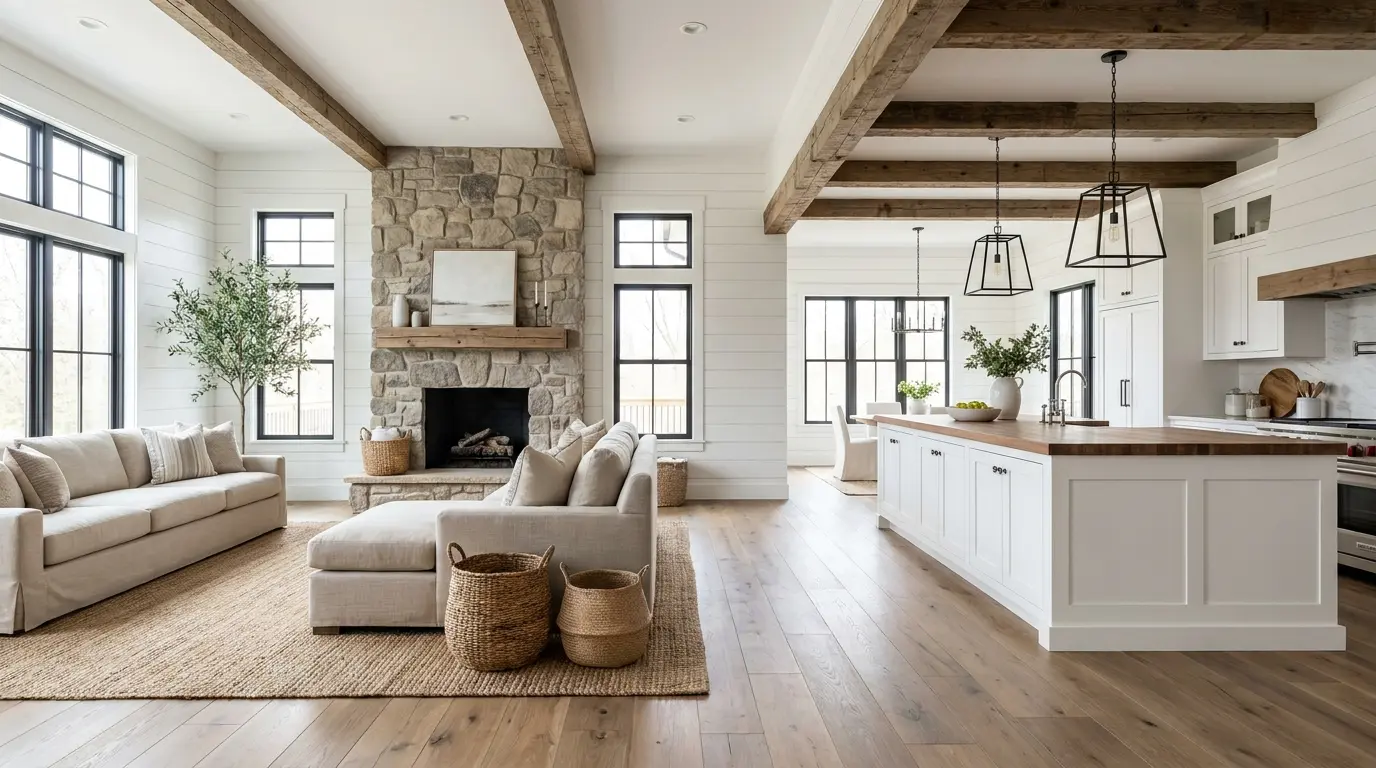
Wide plank hardwood in warm, natural tones is dominating interiors, with herringbone and chevron patterns making a strong comeback across both modern and transitional home designs.