A $6,000 job and a $25,000 job can both be called a “bathroom renovation.” Neither contractor is lying.
That gap is real. And if you have already gotten your first quote, those numbers probably felt random.
The truth is that figuring out how much to renovate a bathroom comes down to six factors: size, scope, labor, materials, layout, and location. Get a handle on those, and the rest is much easier to plan.
This guide breaks down real numbers by bathroom type, by fixture, and by the specific choices that move costs up or down the most, so you can set a budget that holds.
Average Cost to Remodel a Bathroom by Type
The average cost to remodel a bathroom falls between $6,600 and $17,600 in 2025, according to Angi. Most standard full bathroom renovations land around $12,000.
But “bathroom” covers a wide range. A powder room is not the same project as a master suite. Here is a quick reference by bathroom type:
| Bathroom Type | Typical Cost Range |
|---|---|
| Half-bath / powder room | $3,000 – $8,000 |
| Small full bathroom | $6,000 – $15,000 |
| Standard full bathroom | $12,000 – $25,000 |
| Master / primary bathroom | $20,000 – $50,000+ |
| Luxury remodel | $60,000 – $100,000+ |
Per square foot, most projects fall between $70 and $250 depending on the finish level you choose.
Financial advisors suggest spending 5% to 10% of your home’s value on a primary bathroom renovation. For a secondary bathroom, 3% to 5% is a solid target.
What Actually Drives the Cost of a Bathroom Renovation?
The final number on your quote is not random. Six factors shape it. Understanding each one helps you figure out why your project falls where it does on the cost range.
1. Bathroom Size
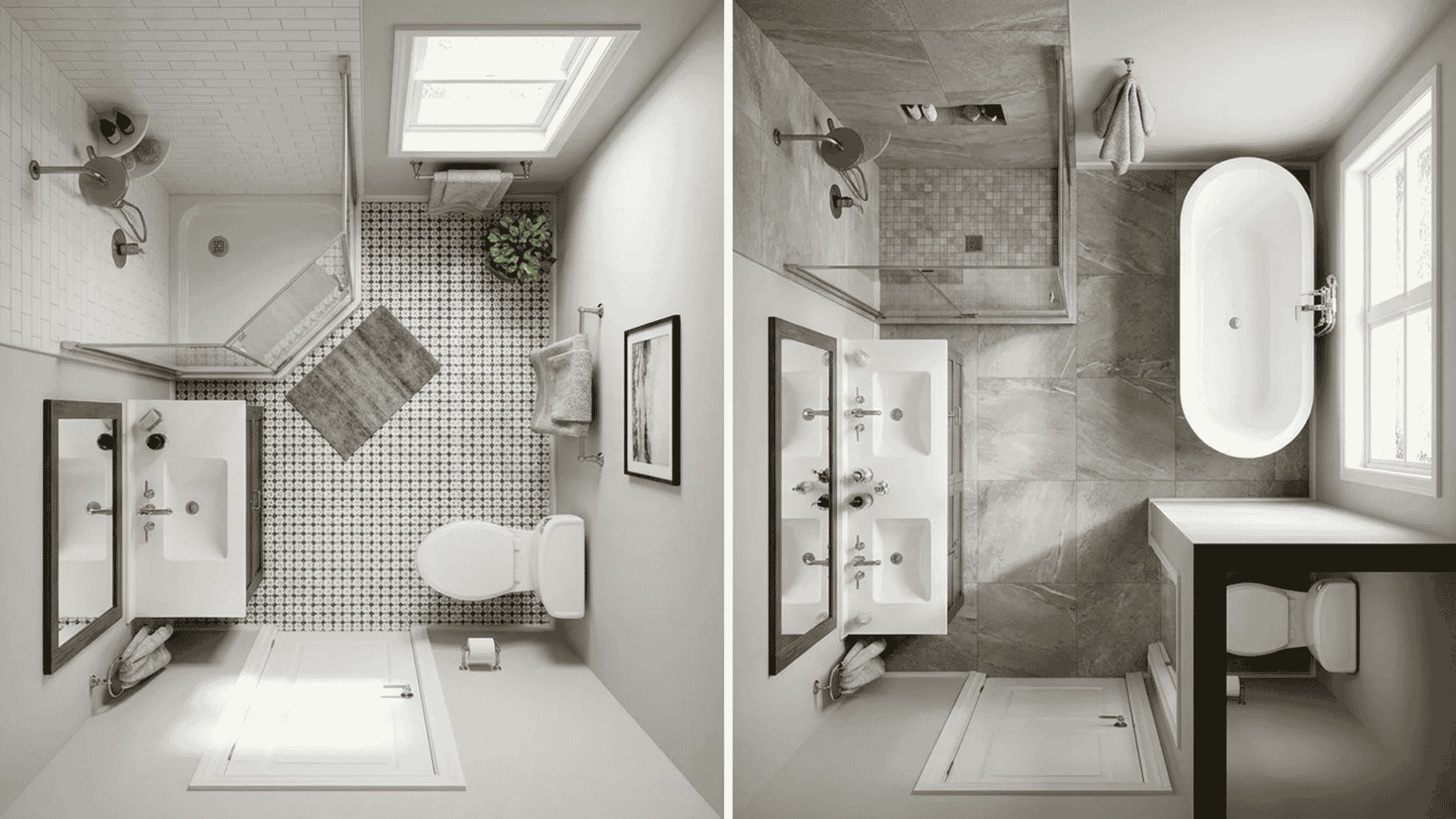
Every added square foot costs $70 to $250 more. Going from a 40-square-foot guest bath to a 75-square-foot full bath nearly doubles your total spend. More tile, more labor hours, more fixtures, it all adds up.
2. Scope of the Project
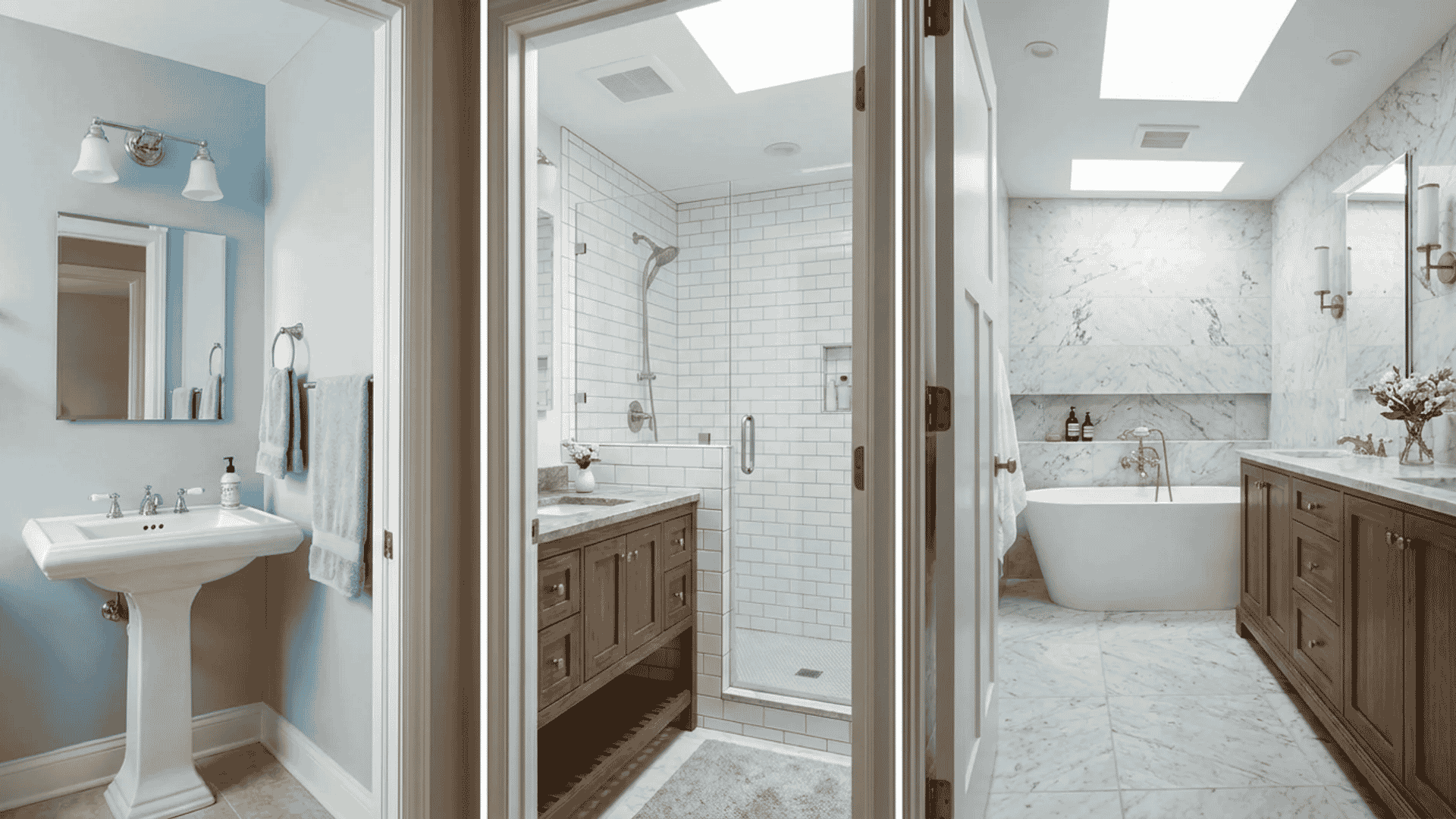
There are three clear tiers, and most projects fall squarely into one of them:
- Minor refresh ($3,000–$10,000): New paint, updated hardware, fresh light fixtures, basic cosmetic work.
- Mid-range remodel ($12,000–$25,000): New tile, vanity, toilet, and fixtures. Layout stays exactly where it is.
- Full gut renovation ($30,000+): Layout changes, new plumbing, custom cabinetry, the entire room rebuilt from scratch.
Staying within one tier and avoiding mid-project add-ons keeps costs predictable.
3. Labor
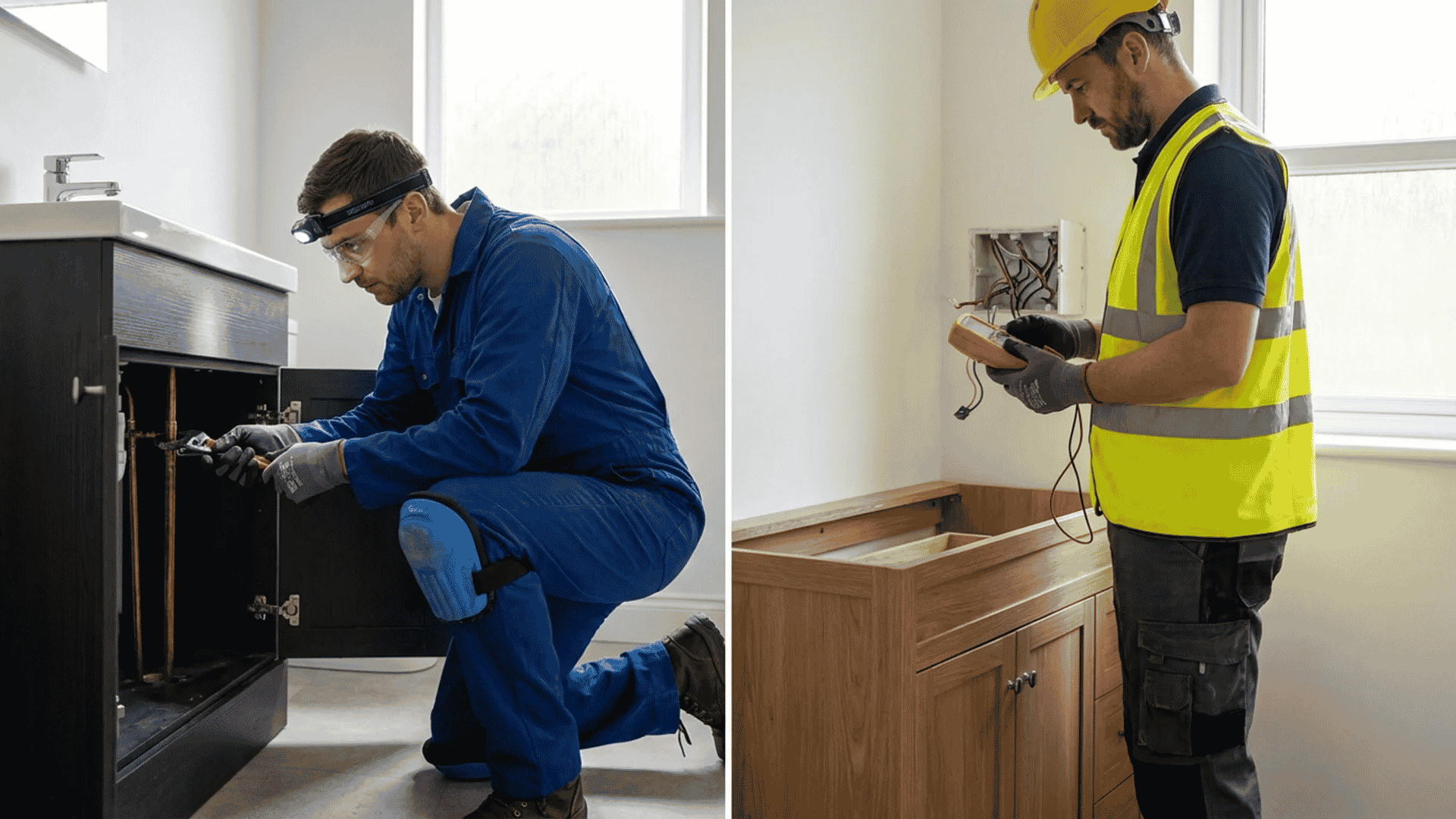
Labor is the cost most homeowners underestimate. It accounts for 40% to 65% of a typical bathroom renovation budget.
General contractors charge $50 to $150 per hour, or 10% to 20% of the total project cost. A licensed plumber runs $45 to $200 per hour before trip fees. Add an electrician and the labor total climbs quickly.
4. Materials and Fixtures
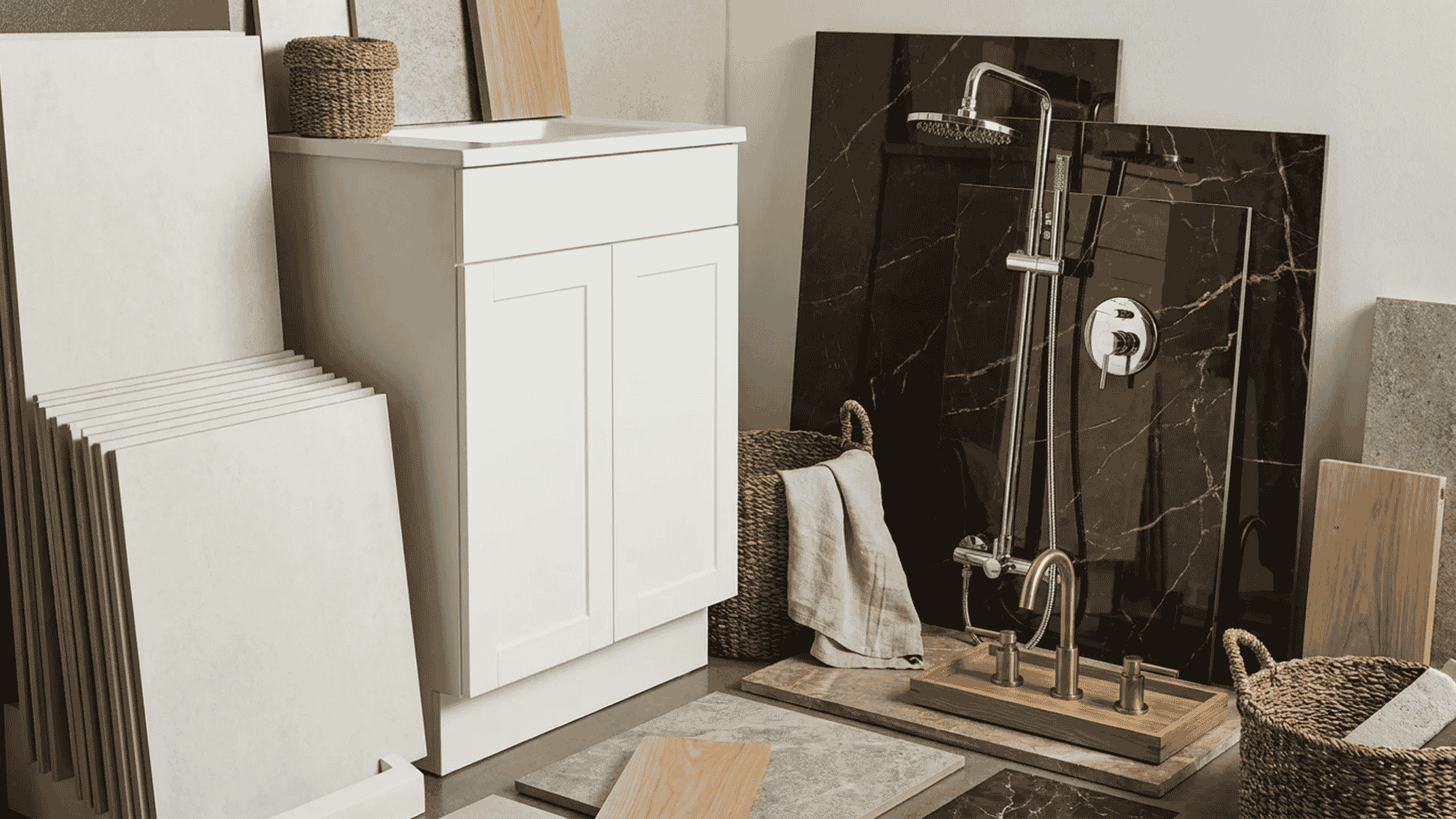
When labor sits on the lower end, materials and fixtures make up 60% to 80% of the total. The quality tier you choose- budget, mid-range, or premium- shifts your final cost by thousands.
Porcelain tile costs far less than natural stone. A stock vanity from a big-box store runs $300 to $800. A custom built-in can cost $3,000 or more.
5. Layout Changes
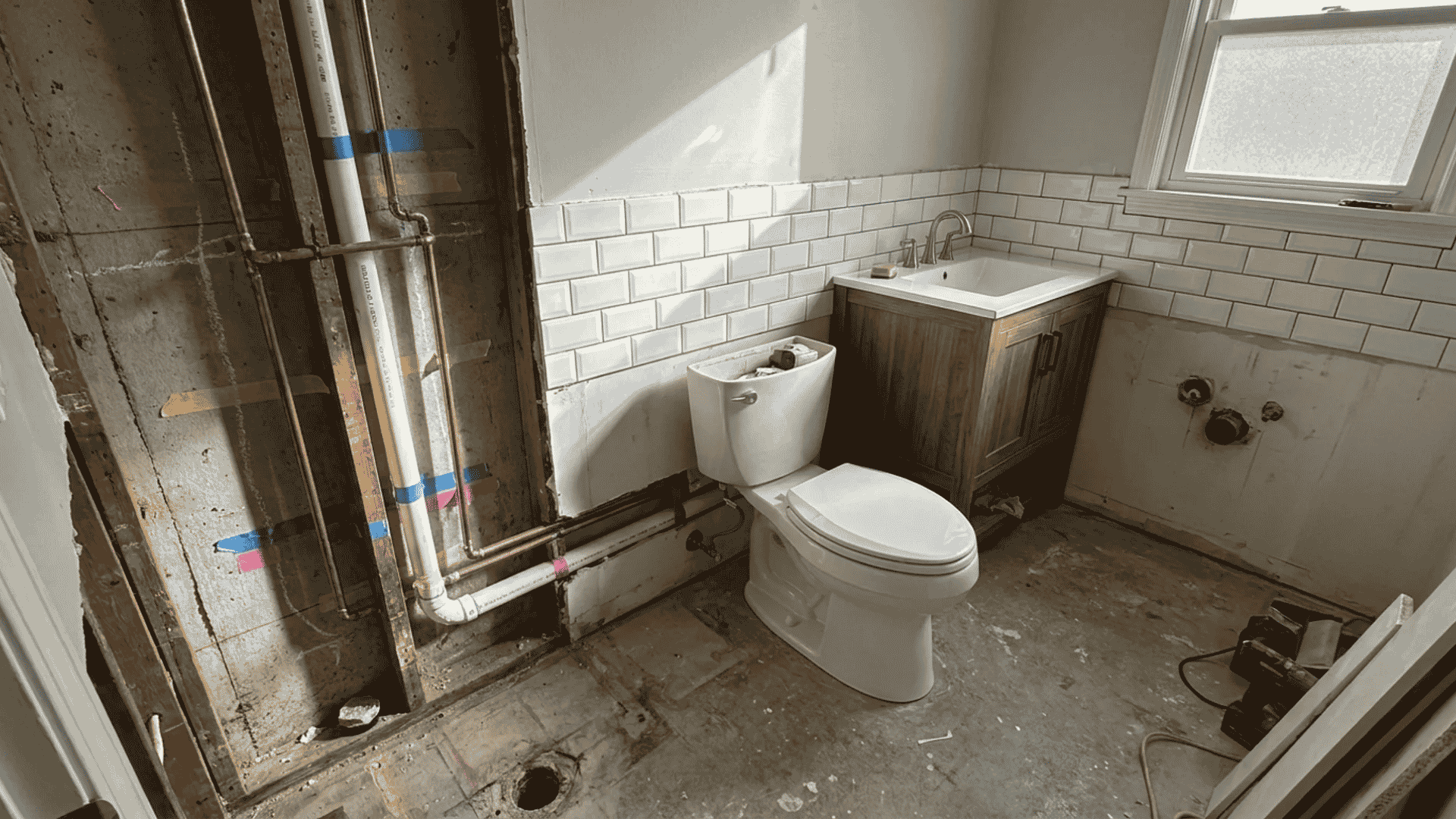
Moving a toilet, sink, or tub requires a licensed plumber to relocate waste lines. That one decision can add $3,000 to $10,000 on its own.
Keeping the existing layout saves more money than any other single choice in the project.
6. Your Location
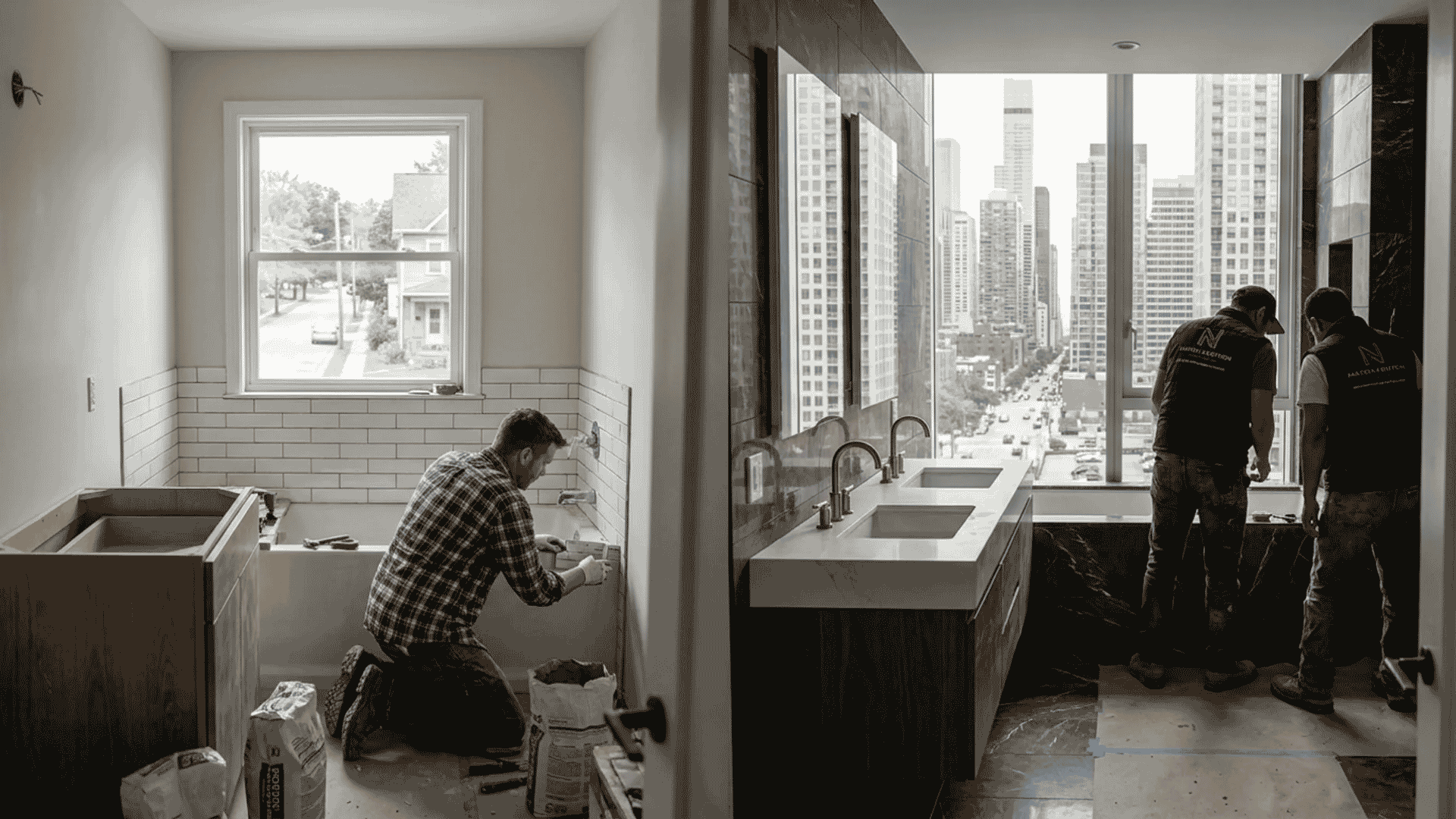
Labor rates vary by region. A mid-range bathroom remodel in a rural area may cost $15,000. The same project in a high-cost city like San Francisco or New York can run $35,000 to $50,000 or more.
In Texas, renovation costs generally fall below national averages, though Austin and surrounding markets have seen labor rates rise in recent years as demand has grown.
Bathroom Renovation Cost Breakdown
Knowing per-item costs lets you build a real budget and decide where to spend more versus where to pull back.
Toilet
- Basic: $130 to $250 installed
- Mid-range: $340 to $480 installed
- Wall-mounted or smart toilet: $550 and up
Vanity and Sink
- Simple sink installation: $190 to $900
- Mid-range vanity with sink: $1,400 to $2,500
- High-end double vanity: $3,500 to $4,500
Shower and Tub
- Tub-to-shower conversion (basic): $1,200 to $3,500
- Tile shower with glass enclosure: $4,000 to $10,000 and up
- Freestanding soaking tub: $1,500 to $6,000 plus installation
Flooring
- Vinyl or laminate: $3 to $7 per square foot
- Ceramic tile: $5 to $15 per square foot (installed)
- Natural stone: $20 to $50 per square foot and up (installed)
Lighting and Ventilation
- Basic light fixture swap: $150 to $400
- New exhaust fan (required by code in many areas): $200 to $600 installed
A mid-range renovation covering a toilet, vanity, tile shower, flooring, and lighting can hit $18,000 to $25,000 before labor overhead and any surprises behind the walls.
DIY vs. Hiring Contractors: The Real Cost Comparison

A DIY bathroom remodel costs $70 to $100 per square foot, roughly $1,500 to $10,000 total. That sounds like a big saving. The math is more complicated in practice.
Labor makes up 20% to 40% of professional costs. Doing it yourself theoretically saves that much. But DIYers often buy 15% to 20% more material than professionals due to cutting errors and waste.
Add potential redo costs of $500 to $2,000 for fixing mistakes. Real savings drop from an apparent 40% to 50% down to around 20% to 30% overall.
What you can handle yourself:
- Painting walls and ceilings
- Replacing cabinet hardware and mirrors
- Installing a new toilet (if the rough-in stays the same)
- Removing old fixtures before the contractor arrives
What needs a licensed professional:
- Moving any plumbing lines
- Electrical work near water sources
- Waterproofing behind shower walls
- Tile installation for shower surrounds; waterproofing errors cause mold
A hybrid approach works well for most homeowners. Handle the prep and cosmetic tasks yourself. Hire professionals for anything involving water, electricity, or structural work.
Hidden Costs Homeowners Miss
This is where projects go over budget. Homeowners plan for tile, a vanity, and a toilet. They forget everything else.
Permits: $200 to $1,500: Any work involving plumbing relocation, electrical changes, or structural modifications almost always requires a permit. Skipping it can mean fines, failed home inspections at resale, and voided homeowner’s insurance for water damage claims.
Demolition Surprises: $500 to $5,000+: Older homes often hide water damage, mold, rotted subfloors, or outdated galvanized pipes behind walls. You will not know until demolition starts. Budget for it before you open the walls.
Mid-Project Scope Changes: Once walls are open, many homeowners add a heated floor, a niche shelf, or a larger shower. Each change costs more than it would have if planned upfront. Lock in your full wish list before day one.
Temporary Bathroom Arrangements: $50 to $200 per Week: If the bathroom being renovated is your only full bath, plan for this expense. A gym membership, portable restroom rental, or neighbor arrangement adds up over a multi-week project.
Dumpster Rental: $300 to $600: Demolition creates far more waste than most homeowners expect — old tile, drywall, vanities, and fixtures. Some contractors include debris removal in their quote. Others charge separately. Ask upfront.
Add a 20% to 30% contingency fund to your itemized estimate. For a $20,000 renovation, set aside $4,000 to $6,000 as a reserve to use only if needed.
What Return on Investment Should You Expect?
A well-planned bathroom renovation is one of the better home improvement investments you can make. According to Angi, many renovations return around 70% ROI at resale.
But the type of renovation matters more than the total spend:
| Remodel Level | Average ROI |
|---|---|
| Minor cosmetic refresh ($3,000 – $8,000) | 80% – 100% |
| Mid-range full remodel ($15,000 – $25,000) | 60% – 70% |
| High-end master bath ($40,000 – $75,000) | 50% – 60% |
The sweet spot for pre-sale renovations is $15,000 to $25,000, with a focus on a walk-in shower, a modern vanity, quality tile, and updated lighting. These are features buyers want.
A $60,000 custom renovation with heated stone floors and a steam shower often returns less because it reflects a personal taste not shared by every buyer, and it may exceed comparable neighborhood values.
Budget and mid-range renovations consistently deliver stronger percentage returns and appeal to a broader group of buyers.
Ways to Keep Bathroom Renovation Costs Under Control
You do not need to cut corners to stay on budget. These are the moves that actually work:
1. Keep the existing layout: Not moving plumbing saves $3,000 to $10,000 on its own.
2. Refinish instead of replace: Bathtub refinishing costs $300 to $600. A new tub installed can run $2,000 to $5,000+.
3. Book your contractor early: Scheduling 2 to 3 months ahead often secures better rates and a faster timeline than last-minute bookings.
4. Get three written quotes: The cheapest bid is not always the best deal. Ask about warranties, how they handle change orders, and whether subcontractors are licensed.
5. Make all your decisions before work starts: Mid-project changes are the fastest way to blow a budget. Lock in tile, fixtures, and layout before the first tool is picked up.
Frequently Asked Questions
What is the most expensive part of a bathroom renovation?
Labor is usually the highest single cost, accounting for 40% to 65% of the total budget. Within materials, tile work and the vanity with countertop tend to be the biggest line items.
Do I need a permit to renovate my bathroom?
Cosmetic updates usually do not need a permit. Plumbing, electrical, or structural changes often do, and skipping permits can cause resale and insurance issues.
What is a realistic budget for a bathroom remodel?
For a standard 40 to 50 square foot bathroom, a realistic mid-range budget is $12,000 to $25,000. Add 20% to 30% as a contingency for surprises found behind walls.
How long does a bathroom renovation take?
A minor refresh takes 2 to 5 days. A mid-range remodel typically runs 1 to 3 weeks. A full gut renovation with layout changes can take 4 to 8 weeks depending on permit approvals and contractor scheduling.
Is it cheaper to renovate a bathroom or add a new one?
Renovating an existing bathroom costs far less. Adding a new bathroom to a home costs $5,000 to $30,000 and can reach $90,000 if the project requires expanding the home’s square footage.
When is the best time of year to renovate a bathroom?
Late winter and early spring tend to offer the best contractor availability and pricing. Demand drops after the holiday season, which can mean shorter wait times and more room to negotiate rates.
Final Thoughts on How Much It Costs to Renovate a Bathroom
Knowing how much to renovate a bathroom starts with three things: the size of the space, the scope of the project, and the materials you choose.
For most homeowners, a standard full bathroom renovation lands between $12,000 and $25,000 in 2025. Labor, plumbing work, and layout changes have the biggest effect on the final number.
To keep costs on track, compare multiple written quotes, build a contingency fund of 20% to 30%, and finalize all decisions before construction begins. The homeowners who come in on budget almost always made their choices before the demo crew showed up.
Start with a clear scope, set your tier, and let the real numbers guide your plan.