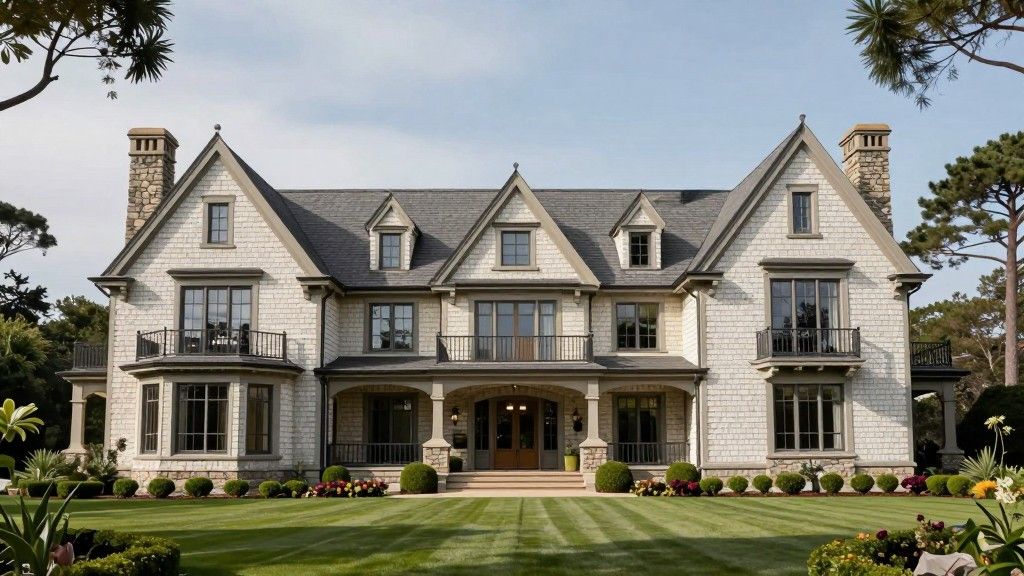
The house style you choose affects your energy bills, your resale price, your renovation budget, and, depending on where you live, your relationship with your neighbors’ HOA.
I’ve spent 15 years working on residential builds. The one thing I notice in almost every client conversation is the same gap: people know they like a style when they see it, but they can’t name it, can’t describe what makes it work, and definitely can’t tell you what they’re getting into before they sign.
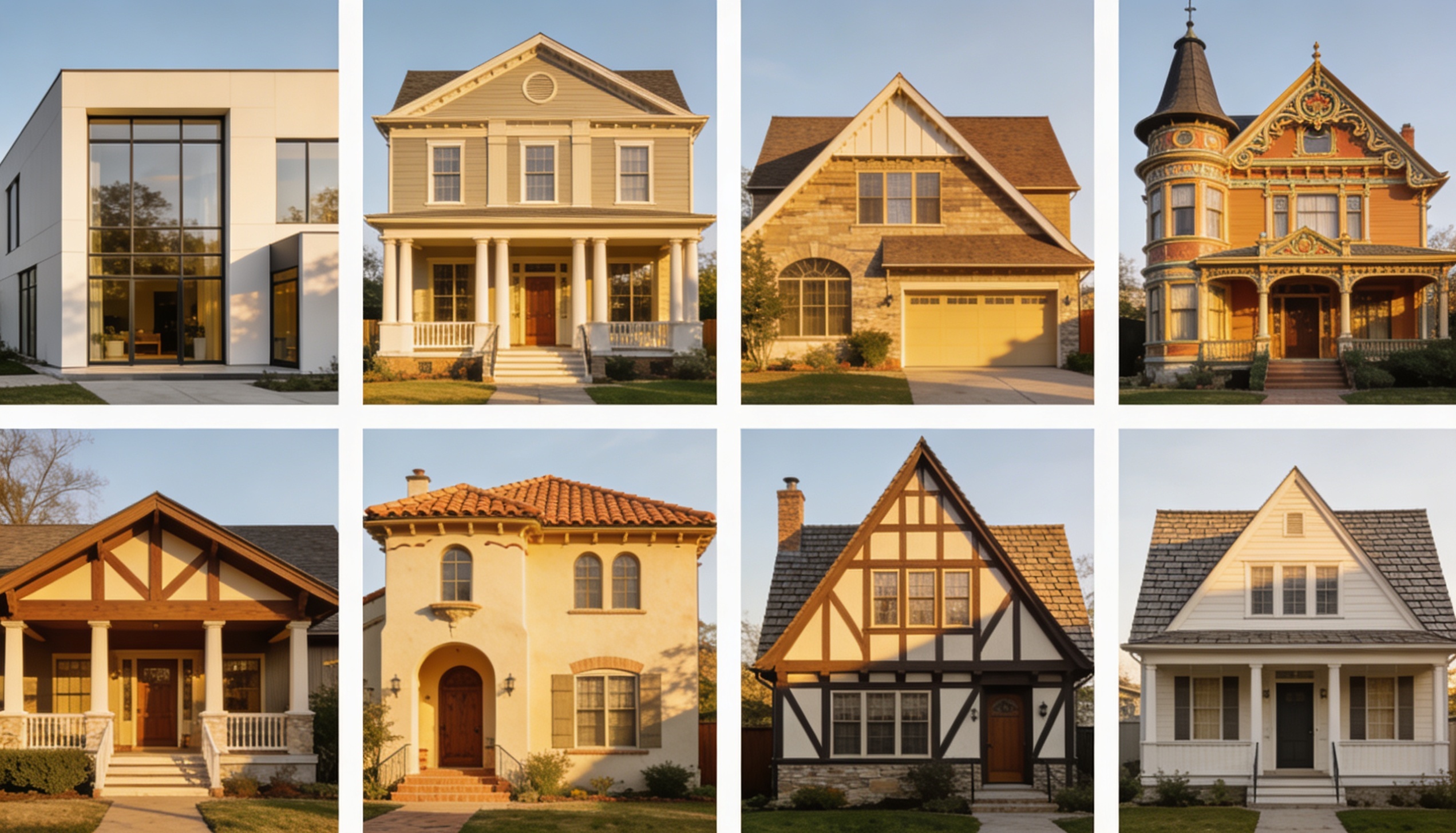
This guide covers 25 distinct architectural styles, from the ones you’ll find on every American street to the ones quietly reshaping how people build today.
For each one, I’ll tell you what makes it recognizable, who it actually suits, and what owning one really means day to day.
No filler. No oversimplification. Just architecture explained like someone who’s drawn the plans, walked the sites, and lived with the decisions.
Classic American Styles That Still Define Most Neighborhoods
From charming Craftsman bungalows to stately Colonial Revival homes, classic American architectural styles have shaped neighborhoods across the country.
These timeless designs, often featuring front porches, pitched roofs, and symmetrical layouts, reflect both historical trends and regional influences.
They create a sense of familiarity and character in communities, blending practicality with aesthetic appeal.
Even today, many new homes borrow elements from these traditional styles, ensuring their enduring presence in American neighborhoods.
1. Ranch
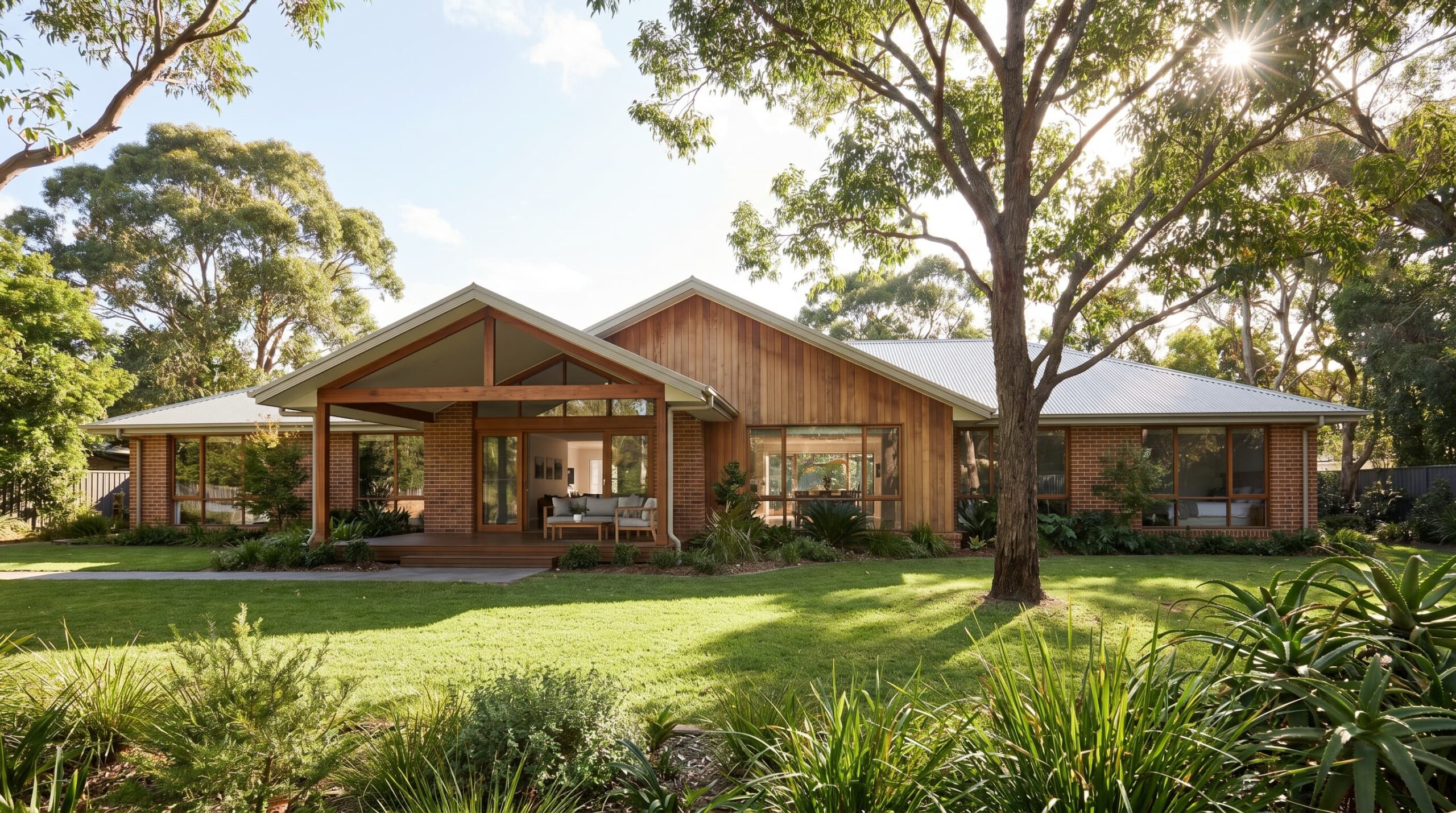
Ranch homes, popular in suburbs built between 1950 and 1975, feature single-story layouts with low-pitched roofs, wide eaves, and attached garages.
Their “L” or “U” shaped floor plans allow for natural light and an open interior, predating the open-concept trend.
Best for: Aging-in-place buyers, families with young children, and anyone prioritizing single-floor accessibility.
Climate fit: Suitable for most regions, with wide eave overhangs providing natural shade in hot climates.
Renovation compatibility: High. The open structure and single-story layout make floor plan changes easier than in multi-story homes.
Ranch homes currently sell above list price in cities like Portland, Phoenix, Chicago, San Francisco, and San Diego, according to Redfin. If resale matters, that’s important to note.
2. Colonial
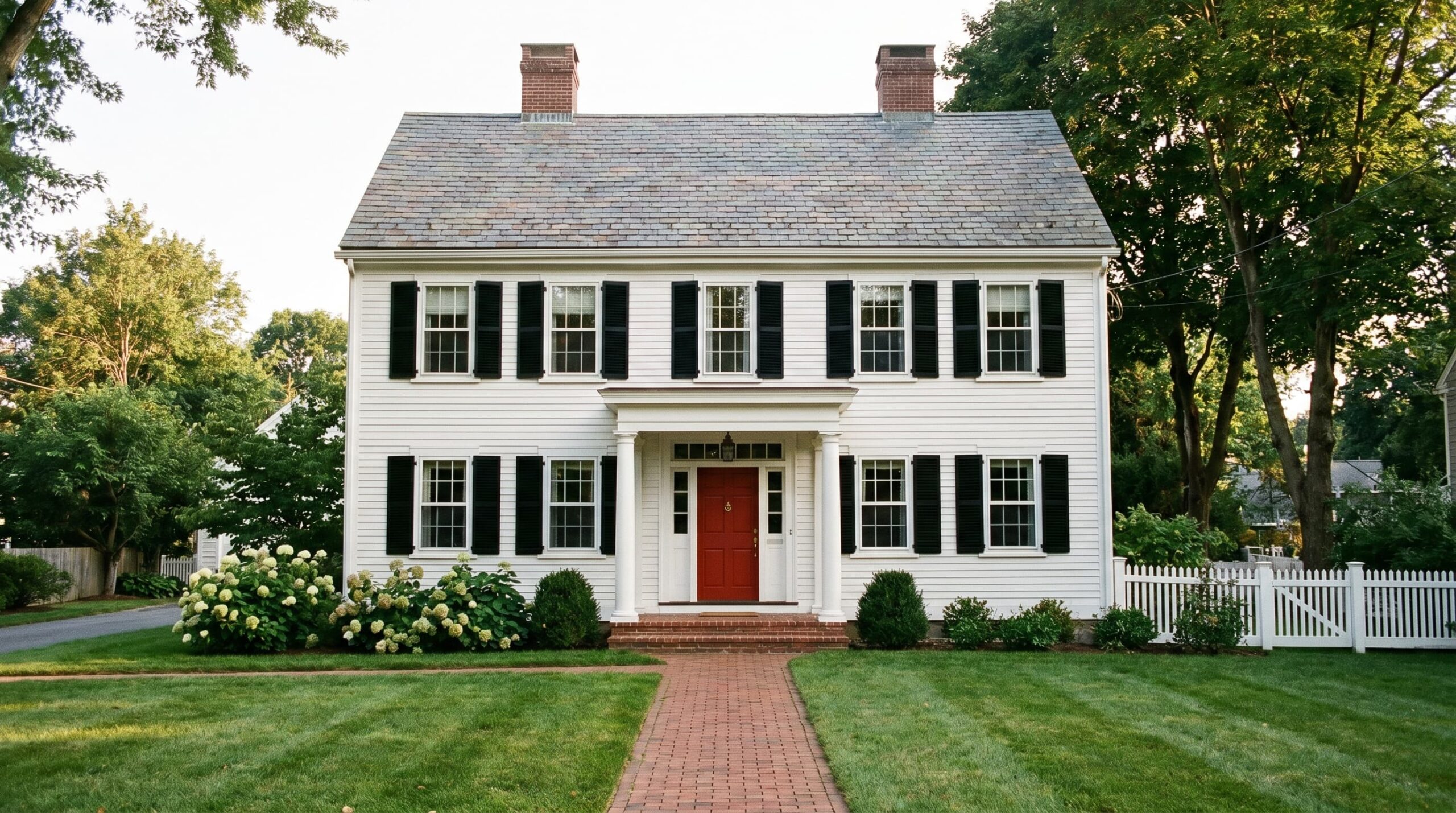
Colonial homes are built around balance. A centered front door with matching windows on either side, a formal foyer that opens to a central staircase, and closed-off rooms arranged in a mirrored floor plan.
Best for: Traditional buyers, formal entertainers, and families who prefer defined rooms over open plans.
Climate fit: Ideal for the Northeast, as the closed layout and thick walls help retain heat during cold winters.
3. Cape Cod
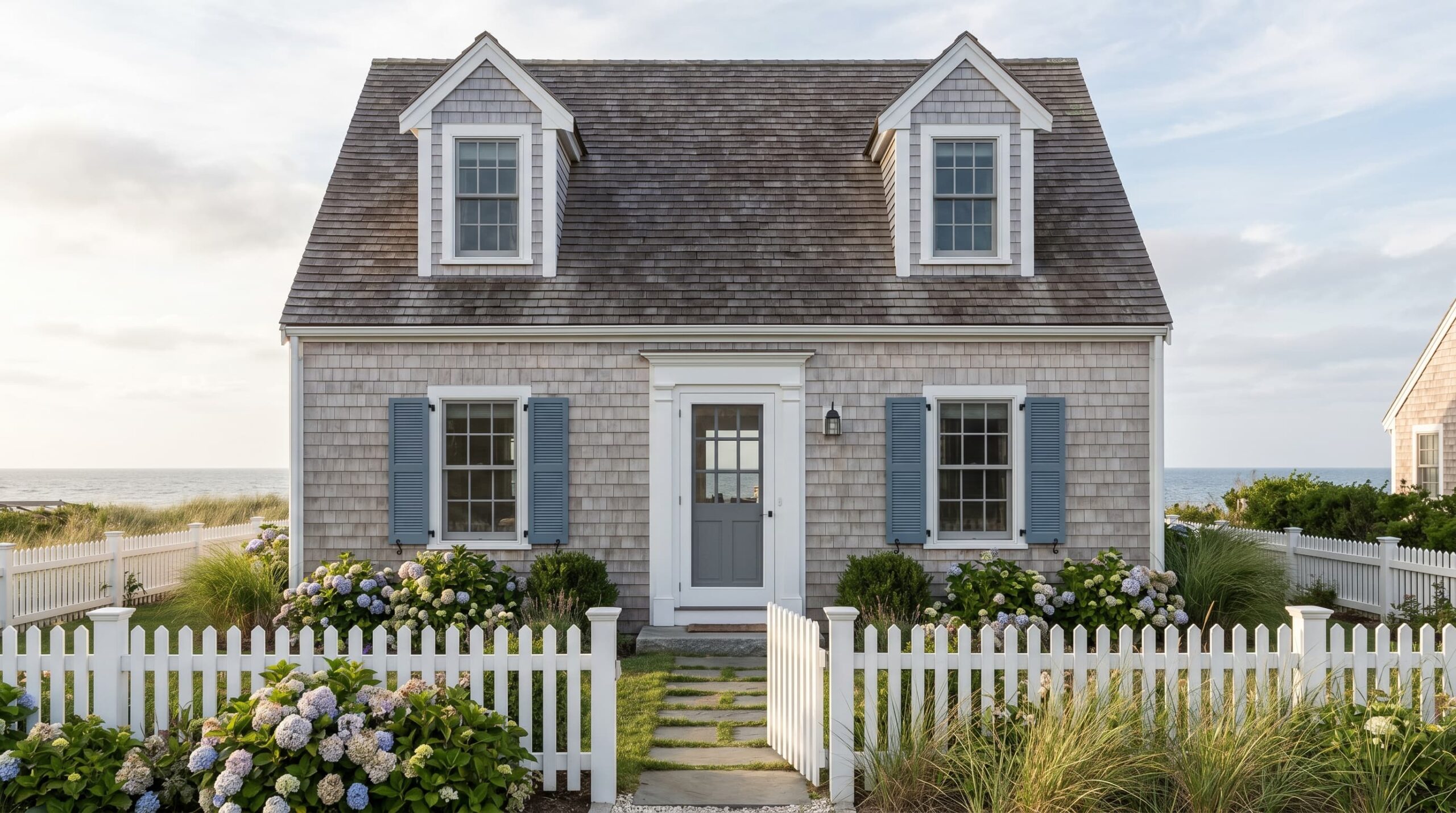
Few house styles have a cleaner design origin story than the Cape Cod. It was built to survive steep-pitched gable roofs that shed snow without collapsing, a central chimney that heated the whole House, one fire, thick walls, and small windows.
This was a 17th-century home built for brutal Massachusetts winters on minimal materials.
Best for: First-time buyers, small families, and budget-conscious buyers looking for room to expand over time.
Climate fit: Ideal for Northeast and cold-climate regions, as the steep roof pitch serves as a functional snow-management system, not just an aesthetic feature.
4. Craftsman
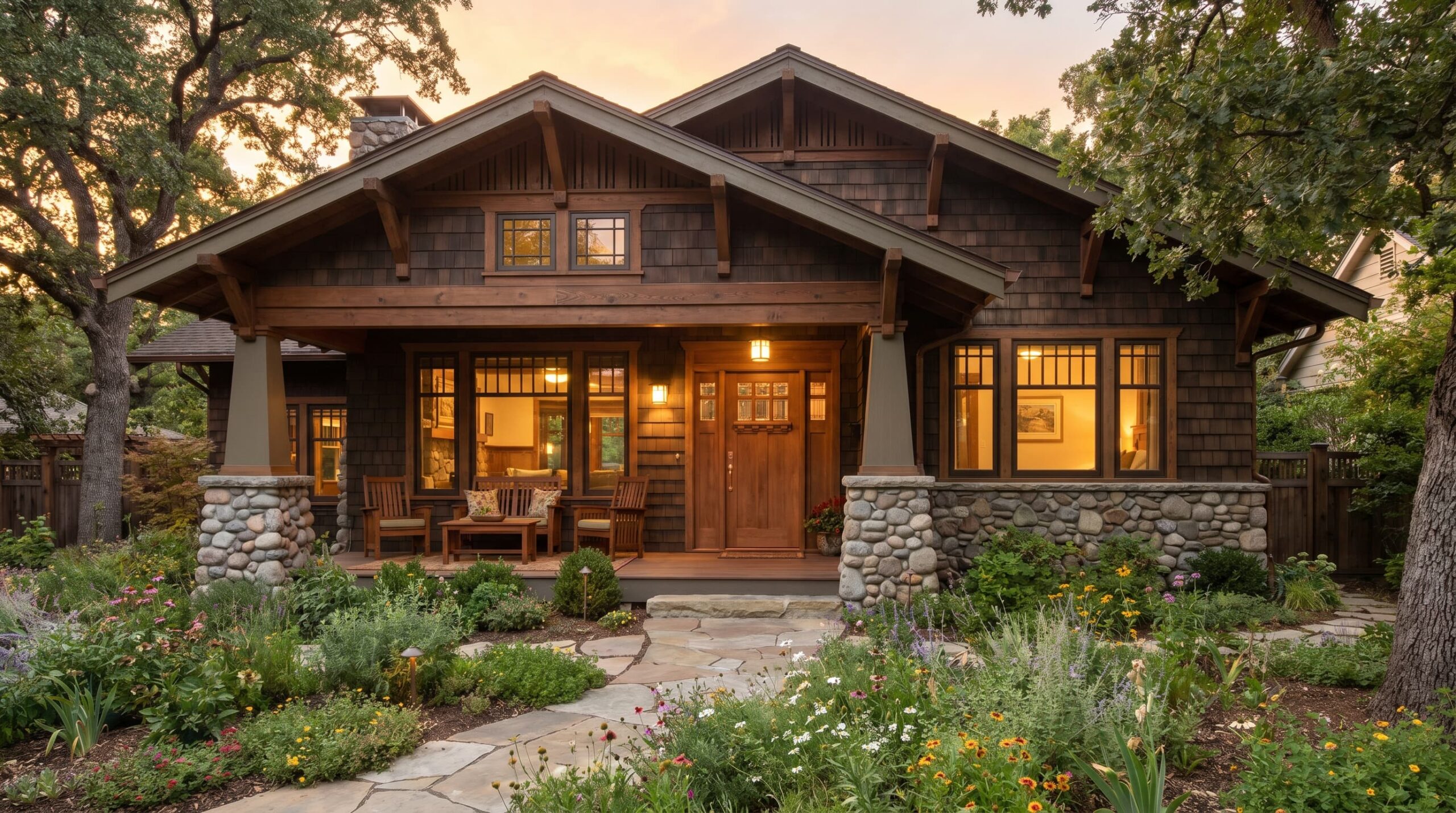
The Craftsman style began as a philosophy before becoming an architectural style. Gustav Stickley launched the Arts and Crafts movement in America as a direct response to industrial mass production.
The argument is that skilled hands should make homes from honest materials, not stamped out of factories.
Best for: Design-conscious buyers, renovation enthusiasts, and those seeking a home with genuine character rather than generic finishes.
Climate fit: Ideal for the Pacific Northwest, Southeast, and Great Lakes regions, particularly suited to moderate climates where natural materials age gracefully.
5. Victorian
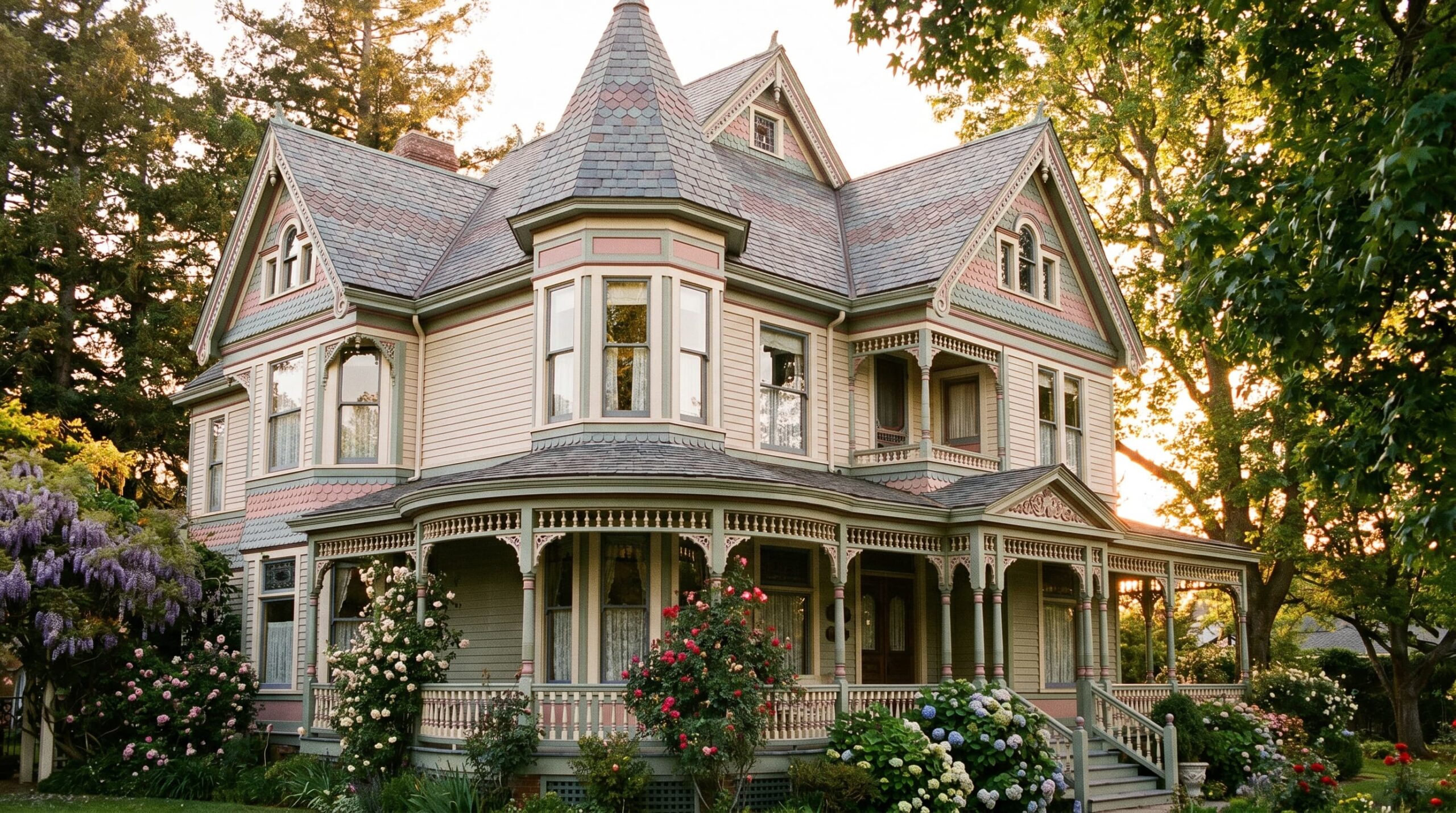
Victorian refers to a collection of sub-styles (Queen Anne, Gothic Revival, etc.) built during Queen Victoria’s reign (1837–1901).
These homes feature tall, narrow facades, steep roofs, bay windows, towers, and wraparound porches.
Best for: Historic preservation enthusiasts, design maximalists, buyers in established historic districts
Climate fit: Moderate climates prefer large windows and detailed exteriors, which increase the maintenance burden in extreme weather
6. Tudor Revival
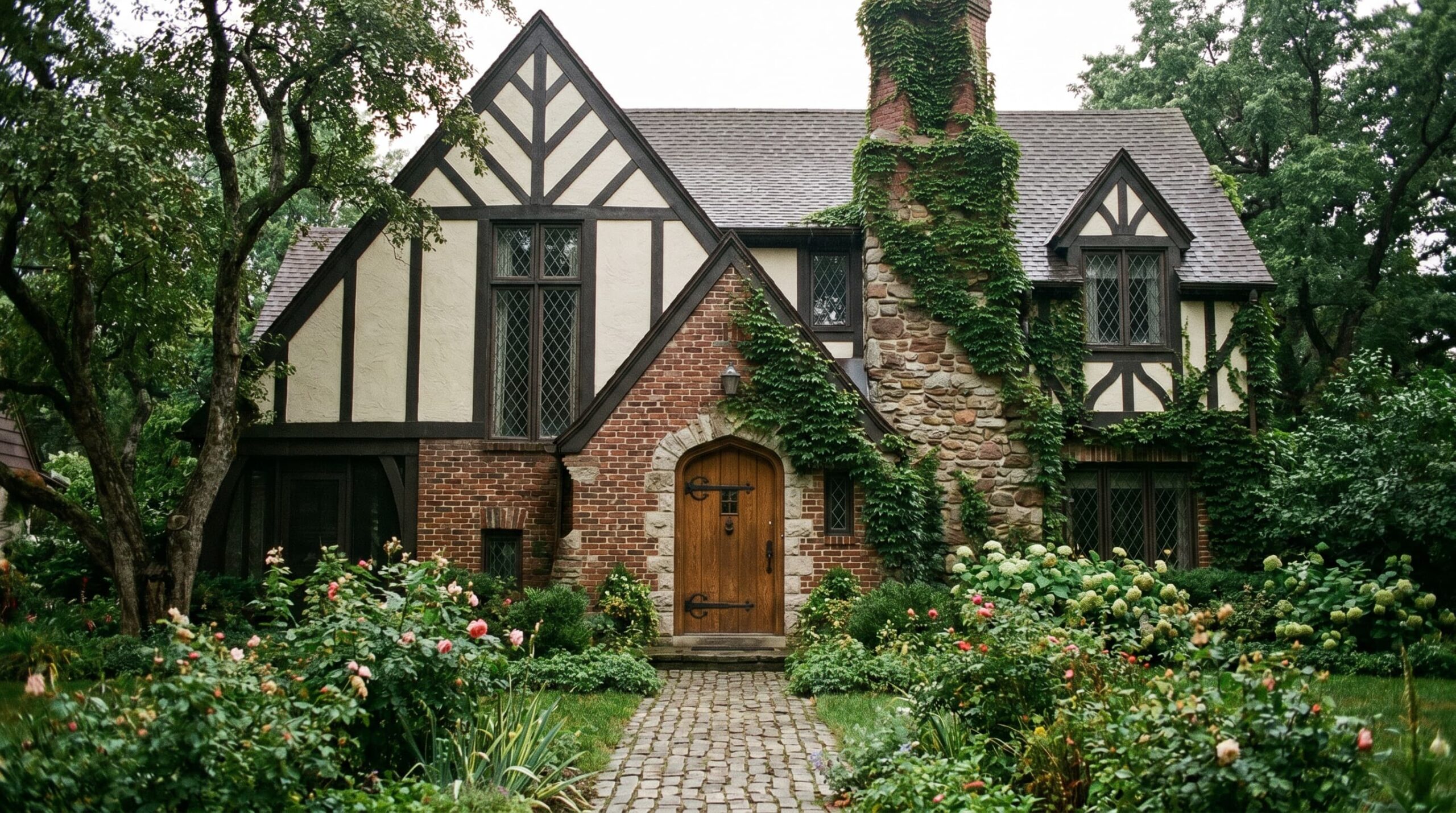
Tudor Revival homes look like they belong in a Tolkien novel, with steeply pitched roofs, decorative half-timbered facades with exposed dark beams, arched doorways framed in heavy stonework, tall, narrow windows with leaded glass, and a combination of brick and stucco that reads as both aged and intentional.
Best for: Buyers who want drama without Victorian flamboyance; historic district homeowners; anyone who wants a home that stops people on the sidewalk
Climate fit: Pacific Northwest, Northeast, upper Midwest. The heavy masonry holds heat well in cold climates
7. Federal Style
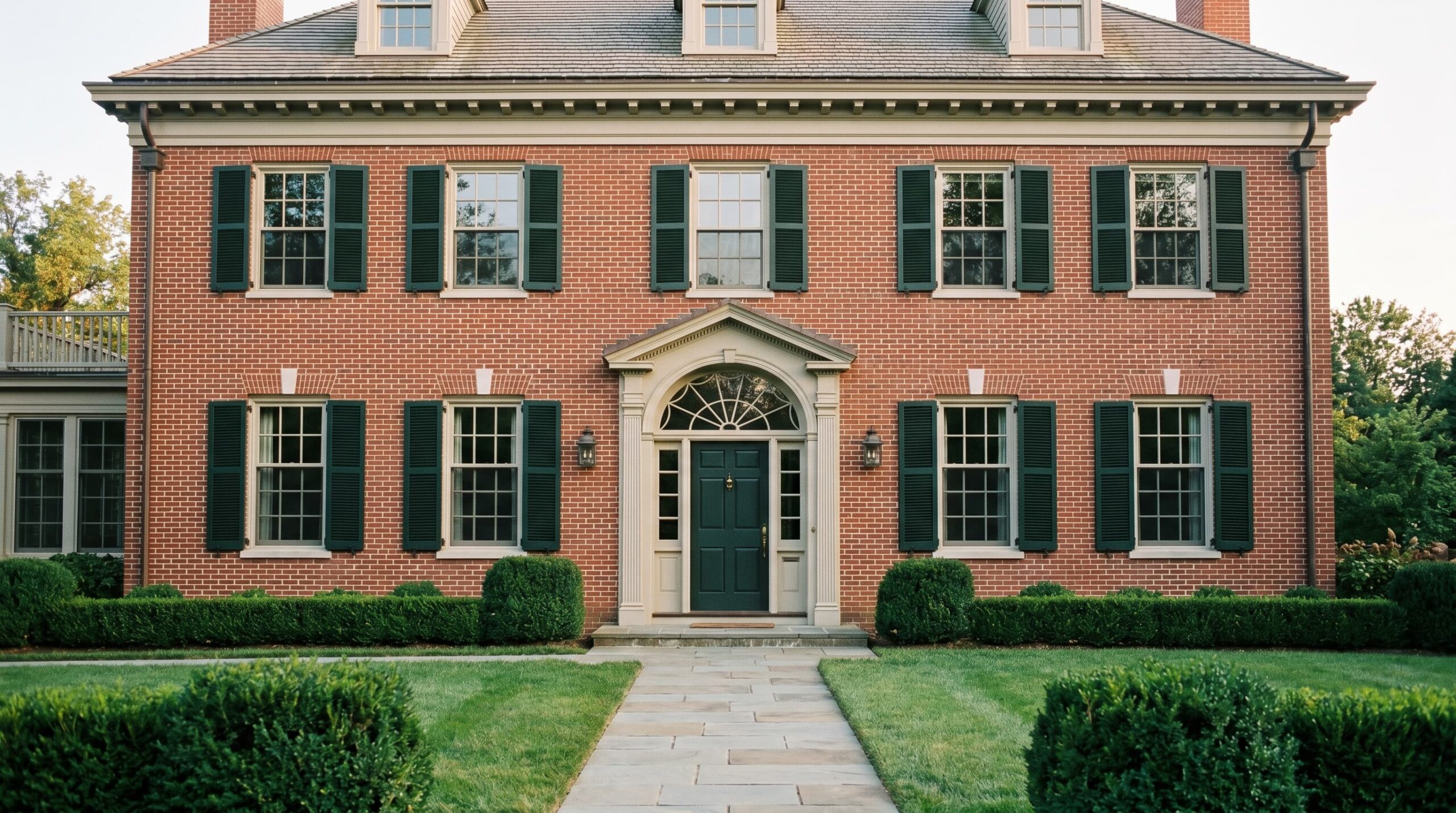
The Federal style, influenced by British architect Robert Adam, became popular after the Revolution. It features a rectangular shape, flat facades, minimal decoration, multi-pane windows, fanlights, and low-hipped roofs with balustrades.
Think of the Oval Office for its restrained, symmetrical, presidential look. Federal homes are common in the Mid-Atlantic and Northeast, particularly in Philadelphia, Boston, and Alexandria, Virginia.
Best for: History enthusiasts, East Coast urban buyers, buyers interested in historic preservation tax incentives
Climate fit: Mid-Atlantic, Northeast
8. Greek Revival
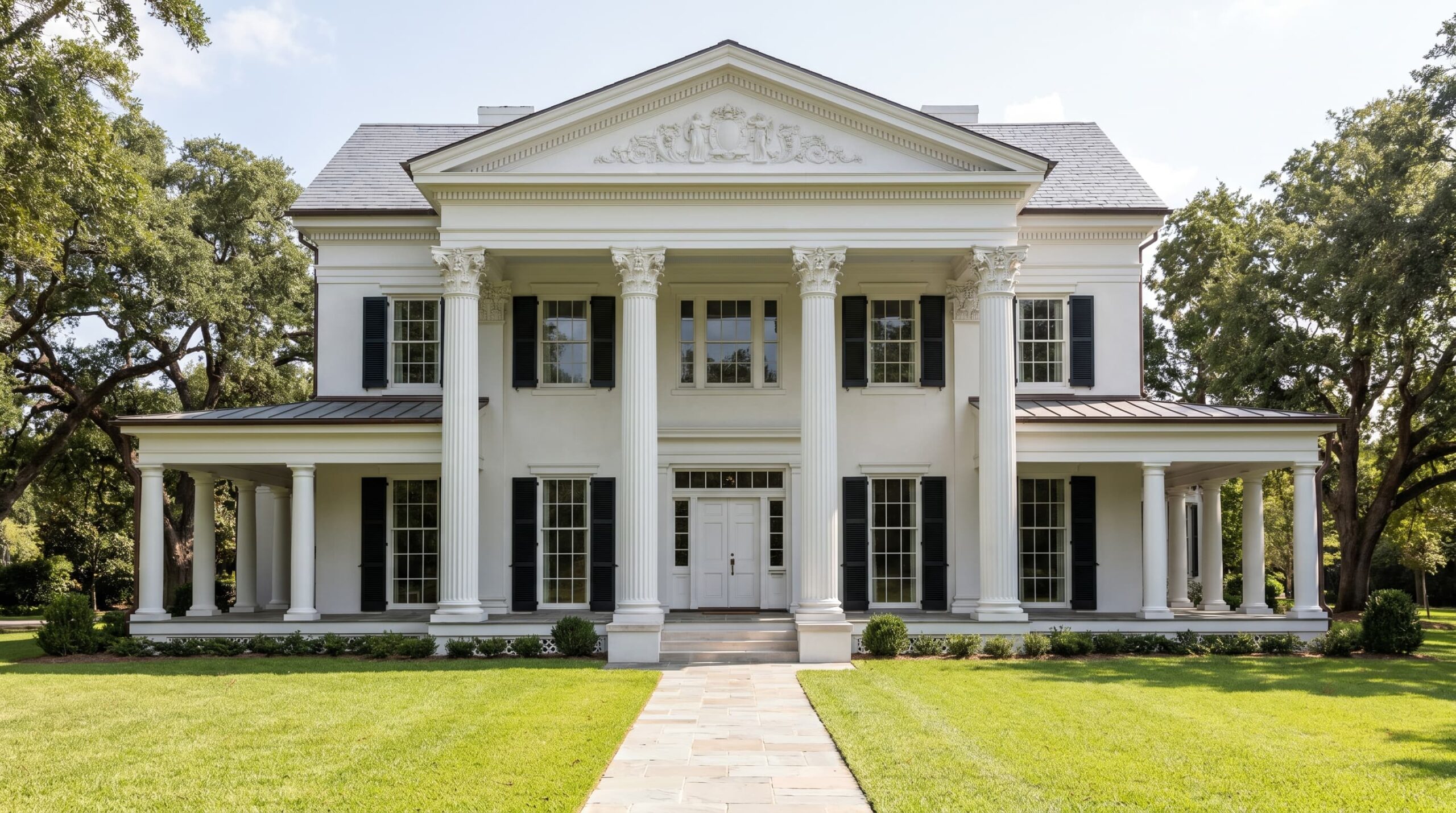
Greek Revival, popular in the 1830s, was inspired by admiration for ancient Greek democracy during America’s early years.
It features stately columns, triangular pediments, symmetrical facades, and white or light-painted wood. Sometimes, the columns were symbolic rather than structural, reflecting the era’s values.
Best for: Southern estate buyers, historic property investors, buyers in towns with preserved antebellum districts
9. Mid-Century Modern
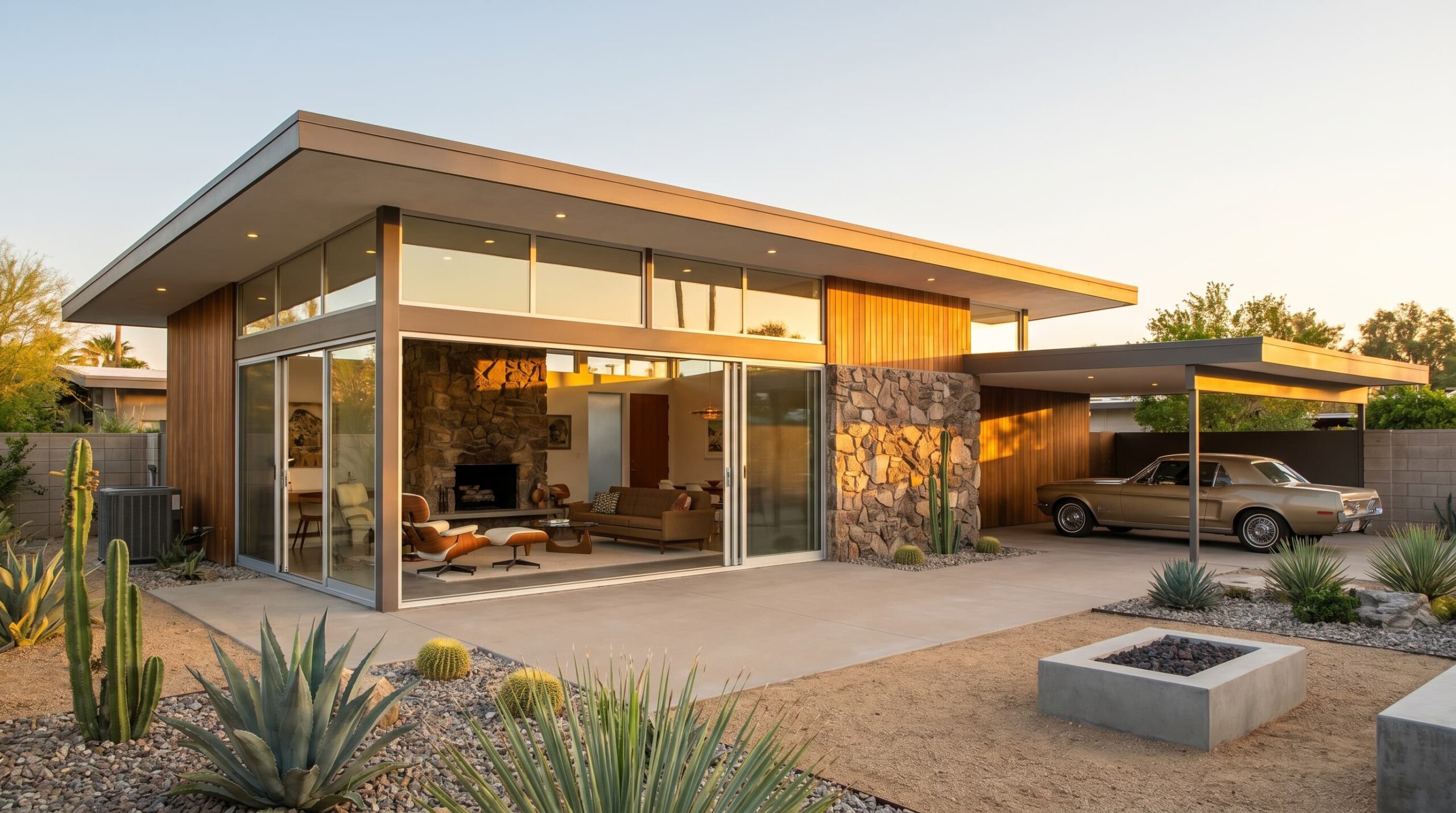
Mid-Century Modern, the most searched architectural style today, spanned from the 1940s to the early 1970s.
Rooted in the European Bauhaus movement, it embraced a futuristic vision. Key features include flat or low-pitched roofs, floor-to-ceiling windows, open floor plans, organic curves, and geometric lines.
The style combined beauty and function, making them the same.
Best for: Design-forward buyers, urban professionals, anyone who prioritizes natural light and indoor-outdoor flow
Climate fit: California, Southwest, Pacific Northwest, anywhere with moderate year-round temperatures where large glass walls don’t create thermal nightmares
10. Contemporary
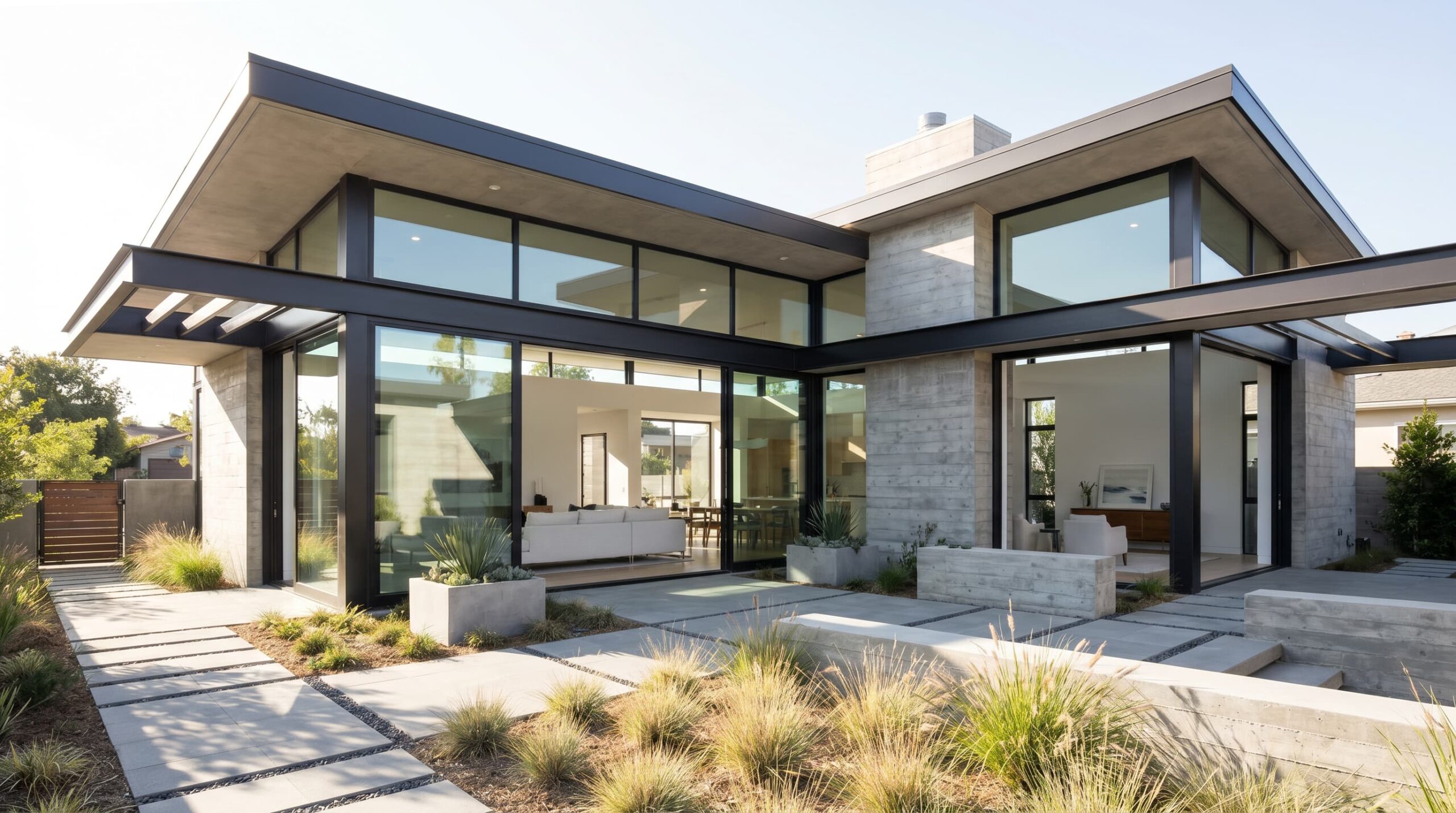
Today’s homes often feature flat or low-slope roofs, mixed materials such as concrete, steel, and wood, floor-to-ceiling glass, minimal ornamentation, and a focus on sustainability.
The key feature isn’t one detail, but how the style reflects the current moment.
Best for: New-build buyers, eco-conscious buyers, households that want technology and sustainability baked into the design from the start
Renovation compatibility: Variable contemporary homes often use unconventional materials or configurations that require specialized contractors
11. Modern Farmhouse
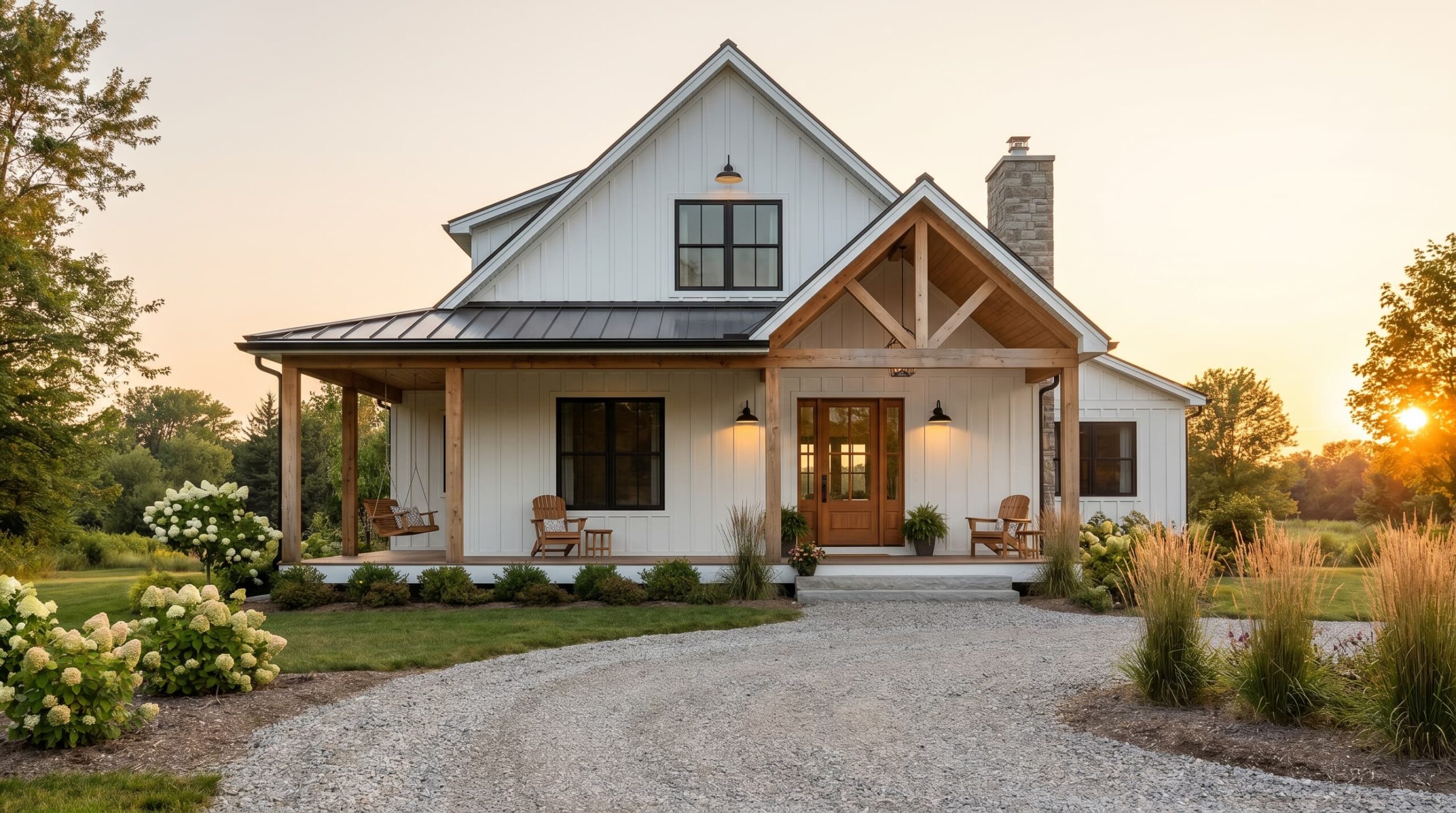
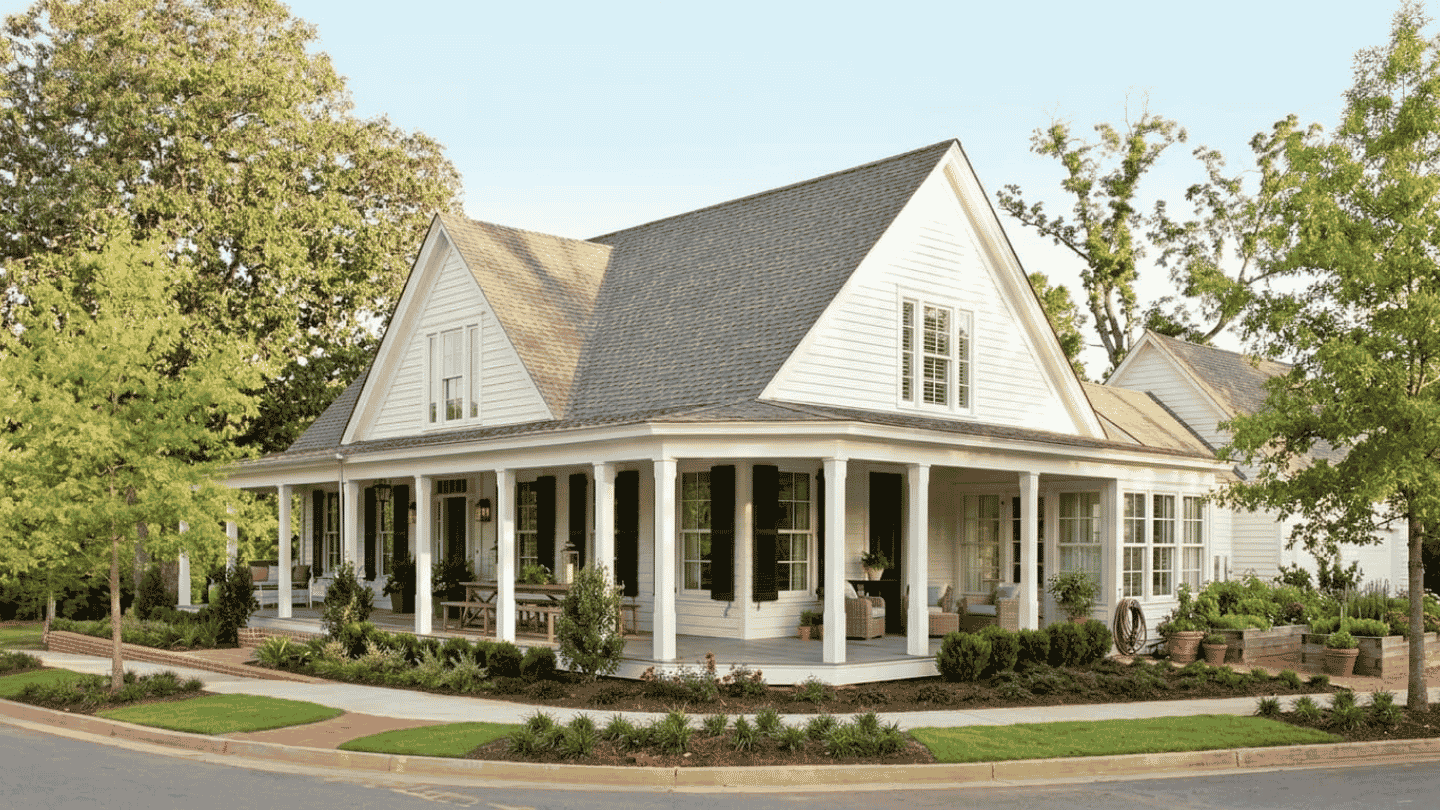
Modern Farmhouse, featuring farmhouse board-and-batten siding, gabled roofs, black-framed windows, open floor plans, shiplap accents, and barn doors, made the style so dominant that it became “wallpaper.”
Best for: Families, rural and suburban buyers, anyone who wants a home that photographs well and lives comfortably
Climate fit: Central, South, Midwest, the wide porches and deep eaves work best where weather allows genuine outdoor living
12. Mediterranean / Spanish Revival
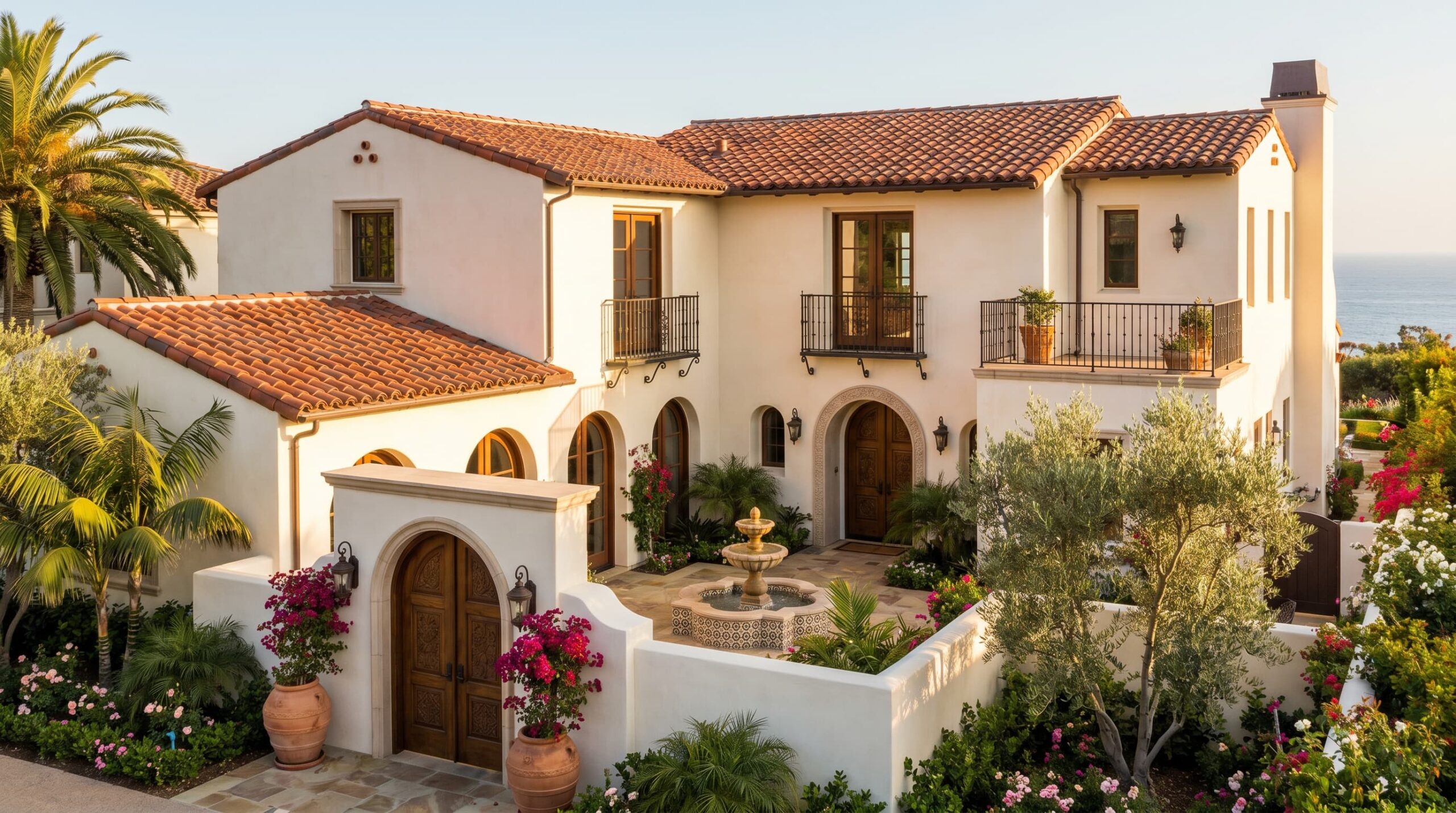
Mediterranean architecture, featuring red clay tile roofs, thick stucco walls, arched doorways, courtyards, iron balconies, and U-shaped floor plans, was designed for warm climates, with materials that function as a passive cooling system.
Stucco walls absorb heat during the day and release it slowly at night, clay tiles reflect sunlight, and large eaves shade windows from the midday sun.
Best for: Warm-climate buyers, households that center life around outdoor space and indoor-outdoor flow
Climate fit: Florida, California, Texas, Arizona. These materials perform poorly in freeze-thaw climates, where moisture expansion can damage stucco and tile.
13. Art Deco
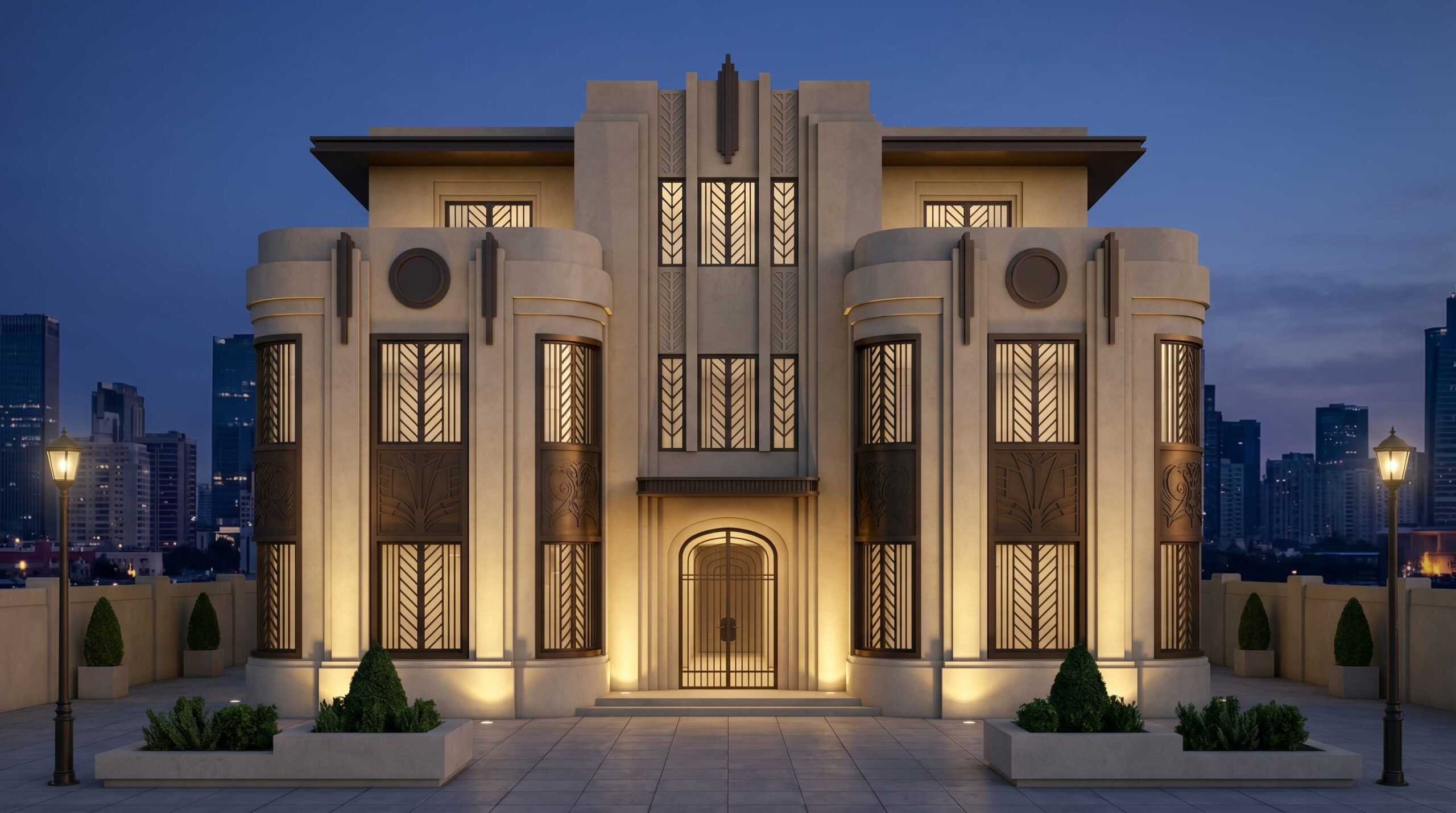
Art Deco is often associated with skyscrapers like the Empire State and Chrysler Buildings, but its residential presence is less discussed.
Miami’s South Beach is home to the world’s largest collection of Art Deco residential buildings.
The style also appears in apartment buildings, row houses, and single-family homes in cities that grew rapidly during the 1920s and 1930s.
Best for: Urban buyers, design maximalists, historic-district investors, anyone buying in Miami Beach or similar Art Deco corridors where the neighborhood itself is the aesthetic
14. Italianate
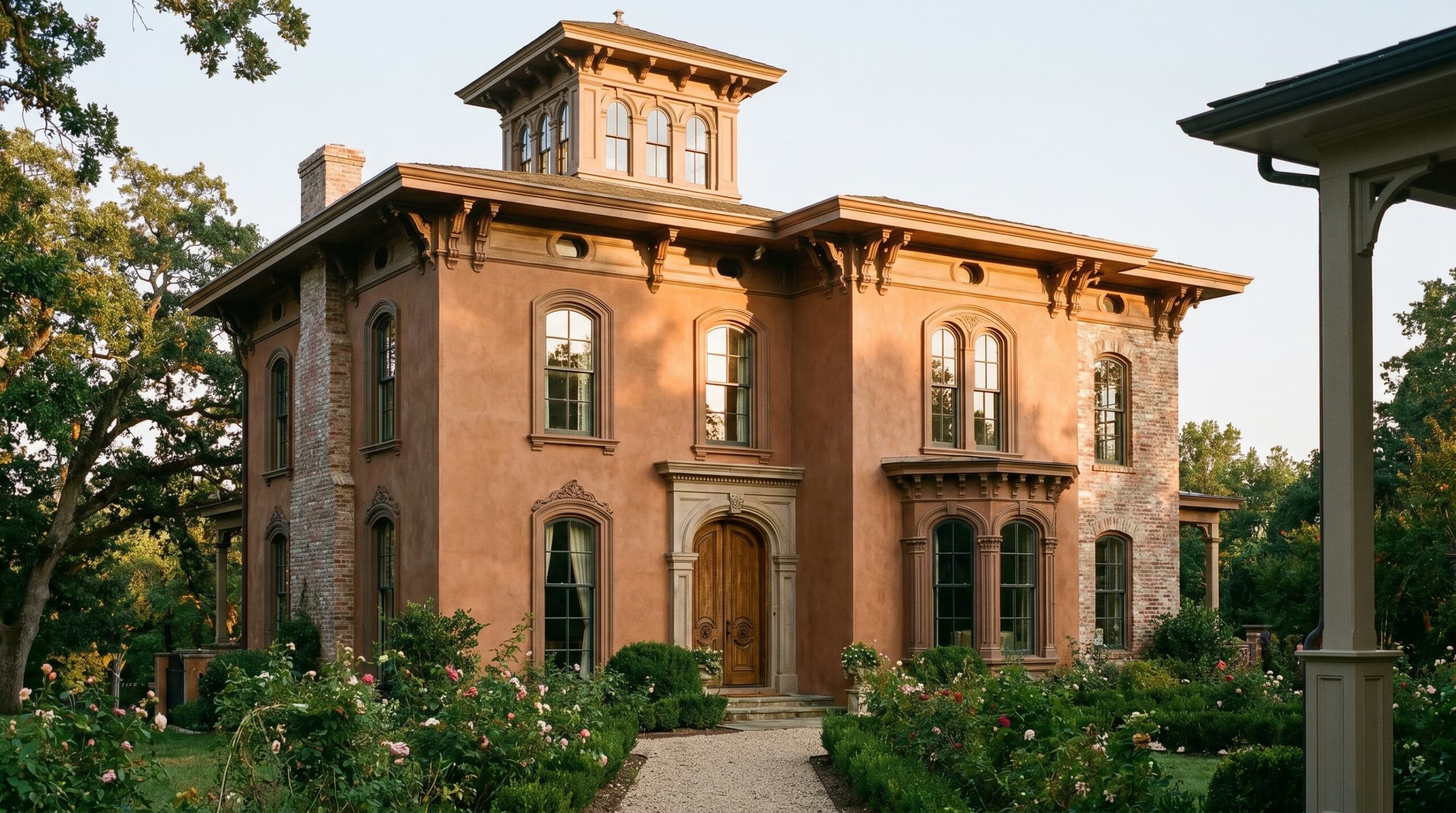
A two-story box or a three-story row house can both be Italianate. The defining features are its decoration:
low-pitched or flat roofs with wide overhanging eaves, decorative brackets, tall, narrow windows with ornate hoods, bay windows, and, sometimes, a cupola on the roof.
Italianate peaked in America between 1840 and 1880, especially in San Francisco’s hill neighborhoods, Midwest river towns, and East Coast row houses.
Best for: Buyers who want historic character without Victorian flamboyance; San Francisco and Midwest urban buyers in historic districts
15. Brownstone, Row House, and Townhouse
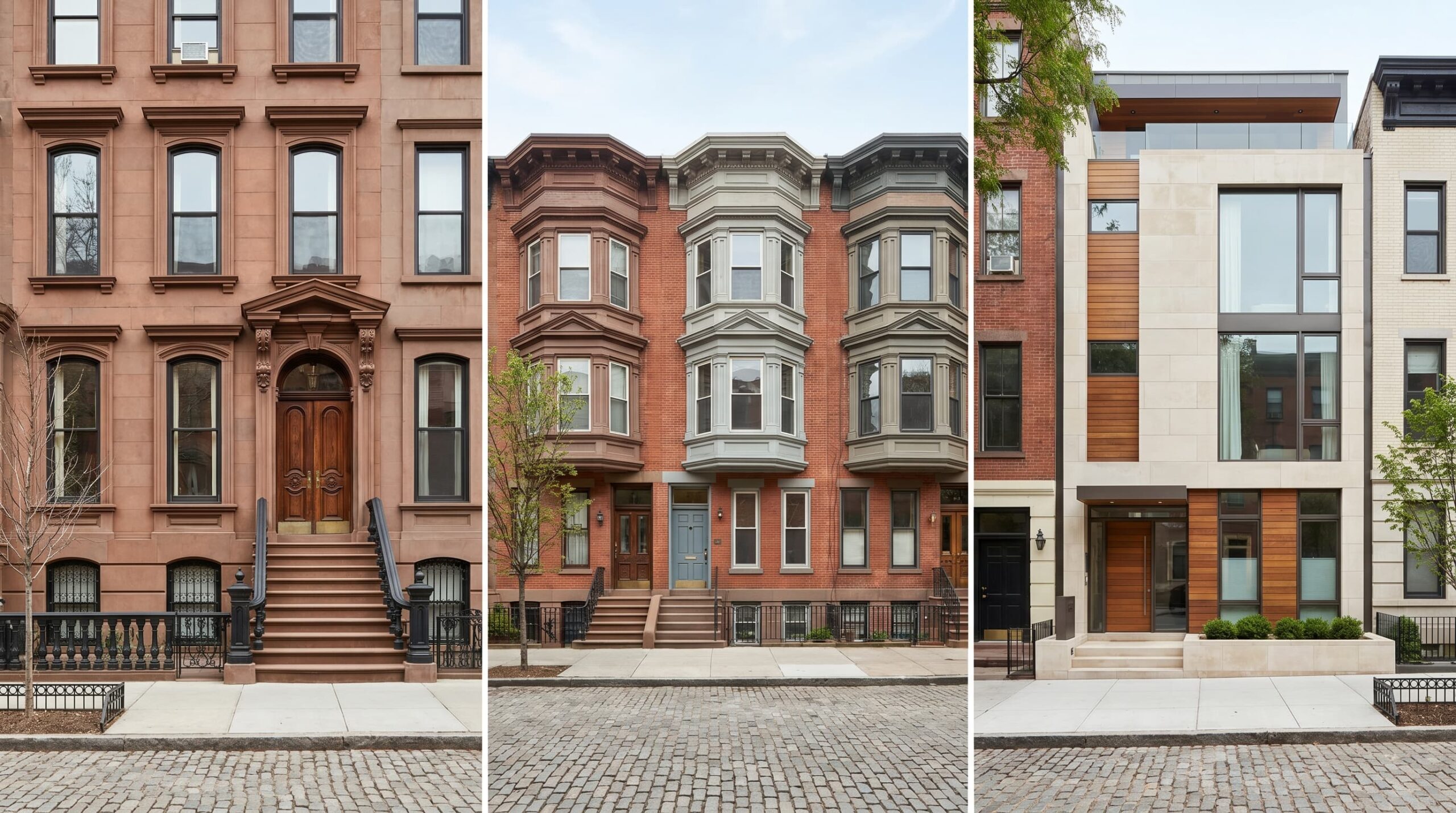
A brownstone is a townhouse made from brown sandstone, common in NYC and Boston, built between 1850 and 1910.
Row houses are attached homes, often brick, in cities like Baltimore and Philadelphia. A townhouse shares walls with neighbors, whether new or old.
Brownstones in NYC often have landmark designation, limiting exterior changes but protecting value. Row houses in Baltimore and Philly are affected by neighborhood-level preservation, which influences pricing.
Best for: Urban buyers, first-time buyers in cities, investors interested in multi-unit potential, or historic property
16. Prairie Style
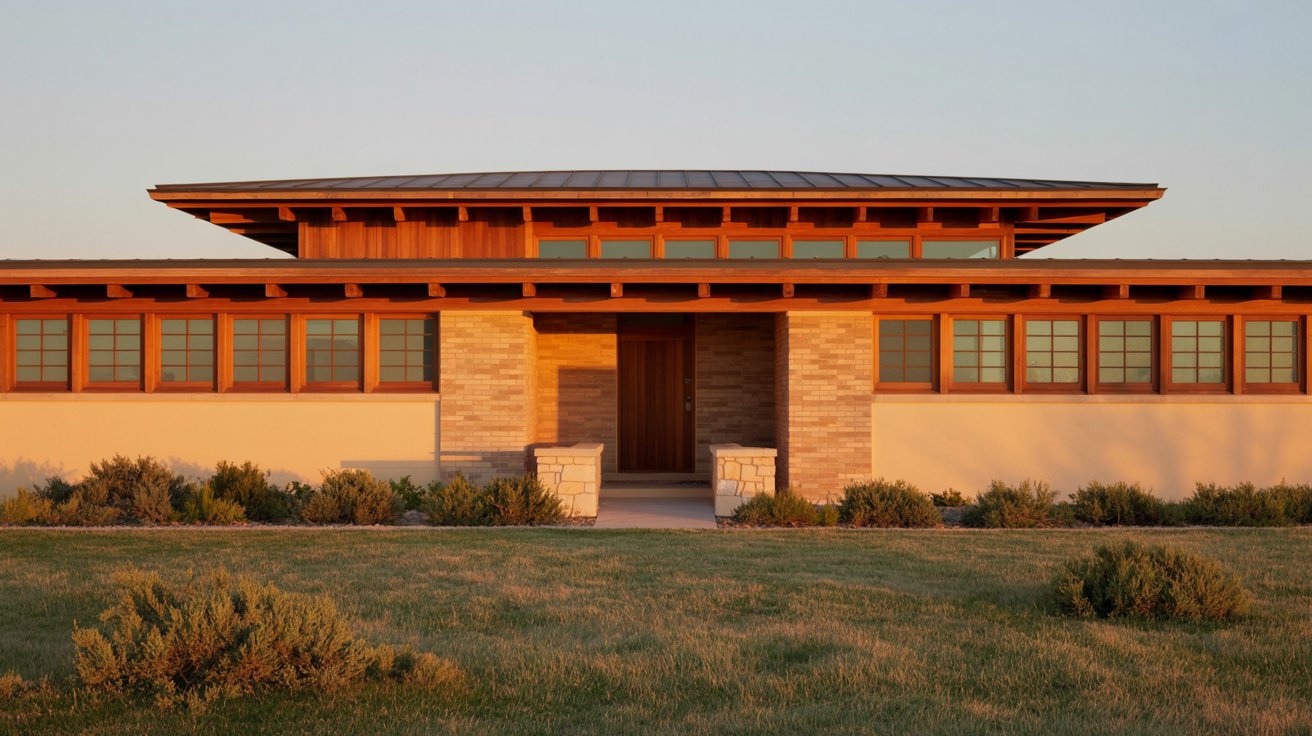
Prairie Style, created by Frank Lloyd Wright in Chicago, is the only major residential architectural movement born in America, with no European roots.
Developed at the turn of the 20th century, it emphasizes horizontal lines to reflect the flat Midwestern plains, low-pitched roofs, wide eaves, and deep integration with the landscape.
Best for: Architecture enthusiasts, historic preservation buyers, buyers in the Chicago metro area
Renovation note: Major changes to authentic Prairie homes typically require architectural review and preservation consultation
17. A-Frame
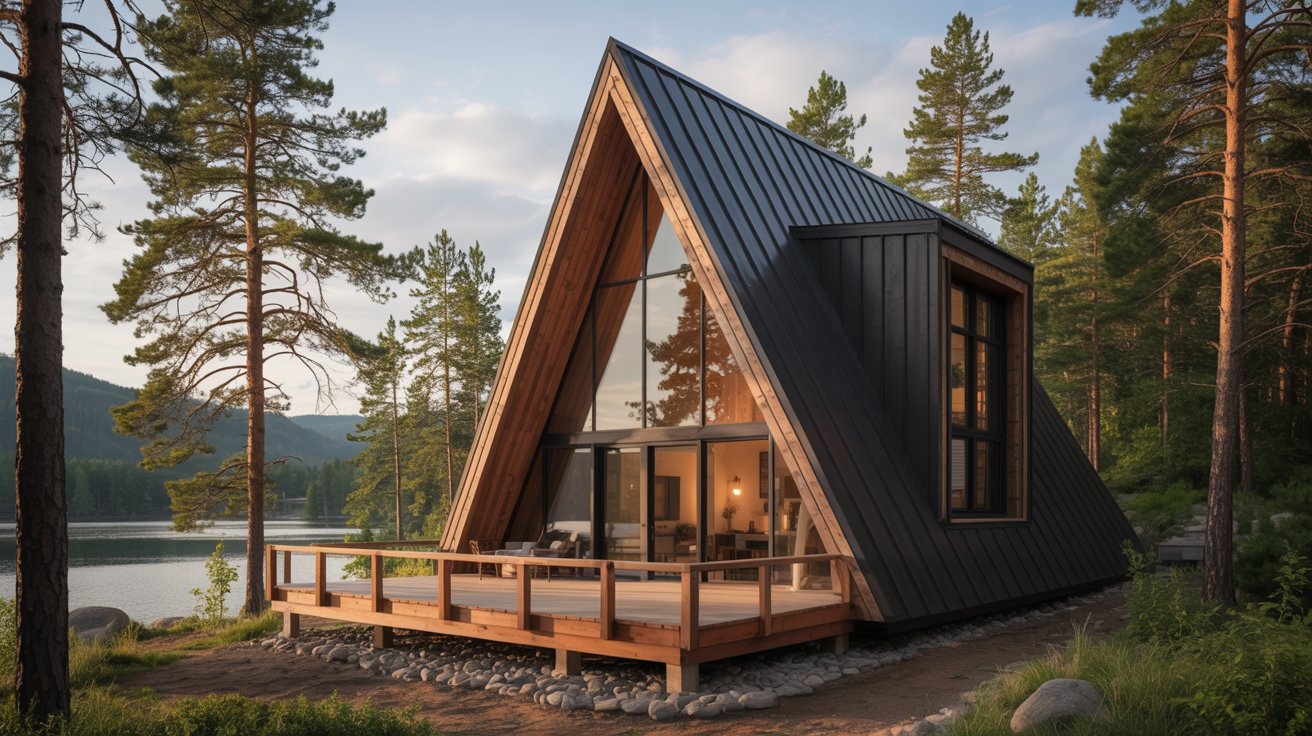
The A-Frame is a structure shaped like a giant “A,” with the roof extending to the ground. Its simple design makes it strong, and snow slides off easily. In the 1960s, A-Frames became popular DIY projects for homeowners.
Best for: Mountain and lakeside buyers, remote workers, vacation rental investors
Climate fit: Snowy mountain regions, the steep roof pitch is a functional advantage in heavy snow loads, not just a visual statement
18. Modern Cottage
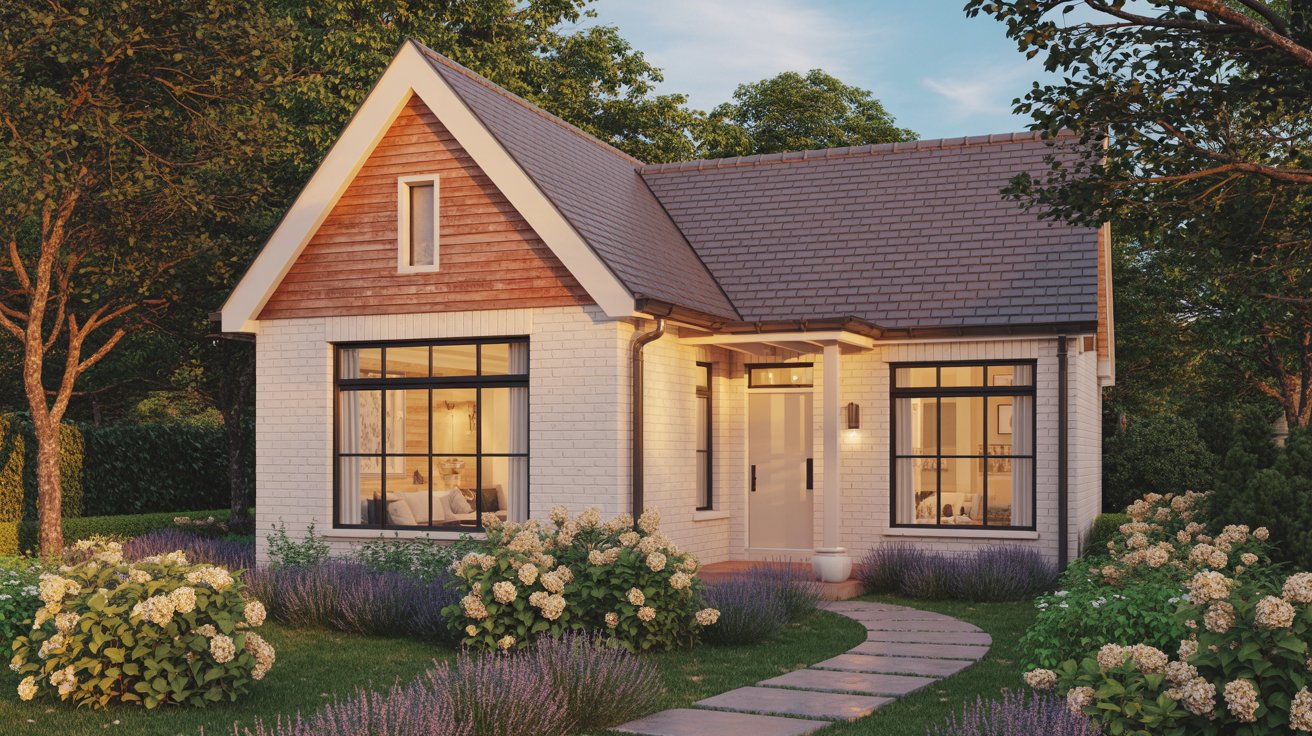
What makes a modern cottage different from a traditional one: steep gables paired with crisp, contemporary lines;
brick or stone details alongside clean siding; light-filled interiors with simple finishes; and a scale that feels intentional rather than just small. It’s cozy without being precious. It reads as modern without being cold.
Best for: Downsizers, empty nesters, buyers who want coziness over square footage, anyone building a smaller home who doesn’t want it to feel like a compromise
19. Barndominium
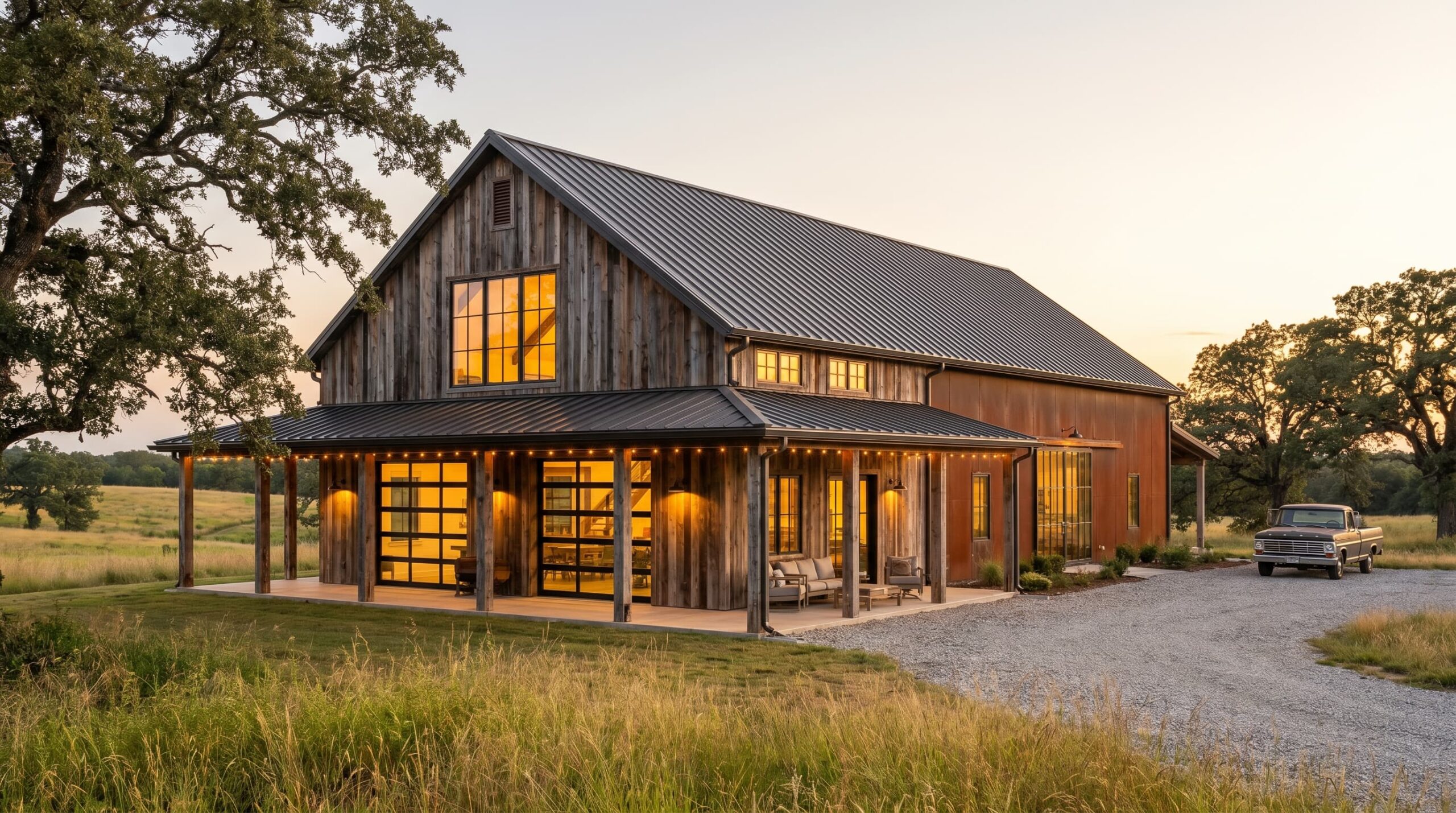
A barndominium, “barndo” for short, or “shouse” when the shop component dominates, combines a residential living space with a large utilitarian area, such as a workshop, warehouse, multi-car garage, or commercial space.
The structure is typically steel or heavy timber, with a gambrel or metal roof. The interior is completely customizable in a way that few other residential types allow.
Best for: Tradespeople, rural hobbyists, remote workers, small-business owners, livestock owners, and anyone who needs a serious workspace attached to their home
Investment note: Strong short-term rental performance in rural areas where unique property types outperform generic vacation homes
20. Passive House / Net-Zero Aesthetic
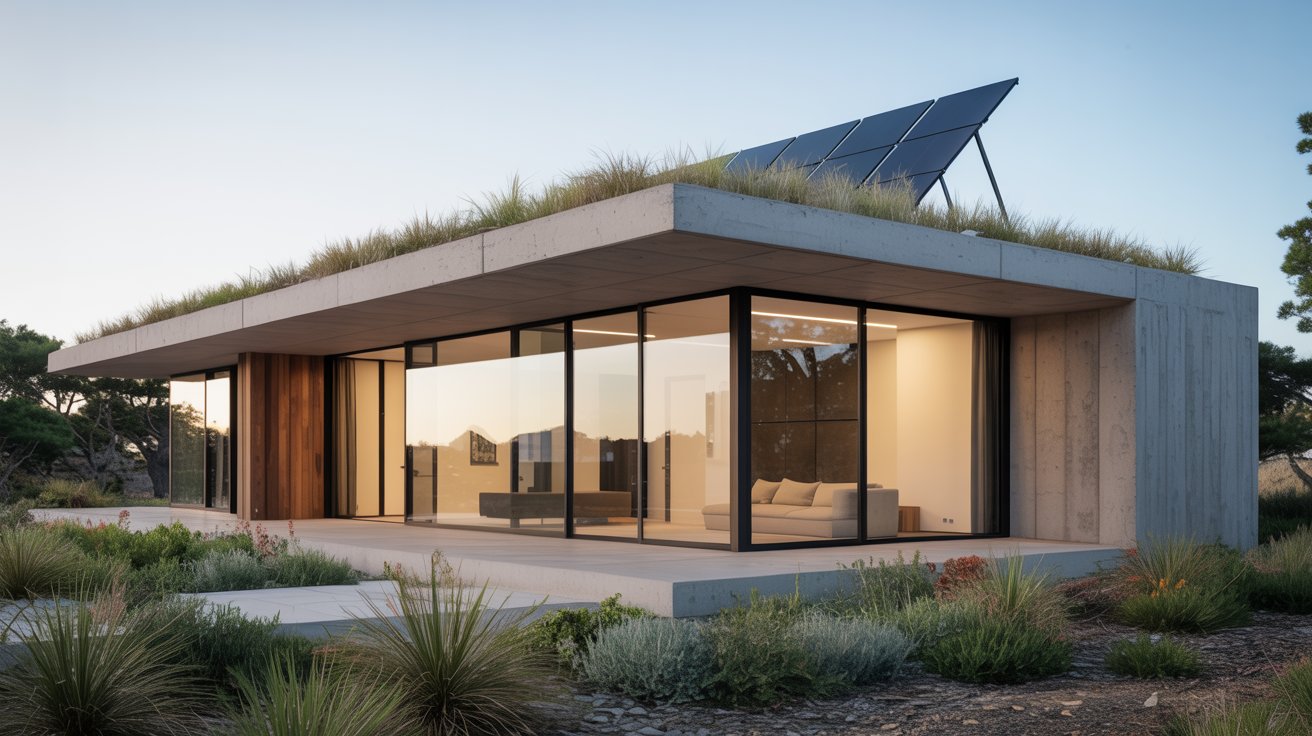
Passive House is defined by building science, not appearance. It can resemble any style- contemporary, farmhouse, or farmhouse- but what sets it apart is the interior:
super-insulated walls, triple-pane windows, airtight construction, controlled ventilation, heat recovery systems, and a south-facing orientation for solar gain.
It also eliminates thermal bridges, the spots where heat escapes through structural elements.
Best for: Sustainability-focused buyers, long-term homeowners, buyers in high energy-cost regions, anyone building from scratch who wants future-resistant performance
21. Mountain Modern
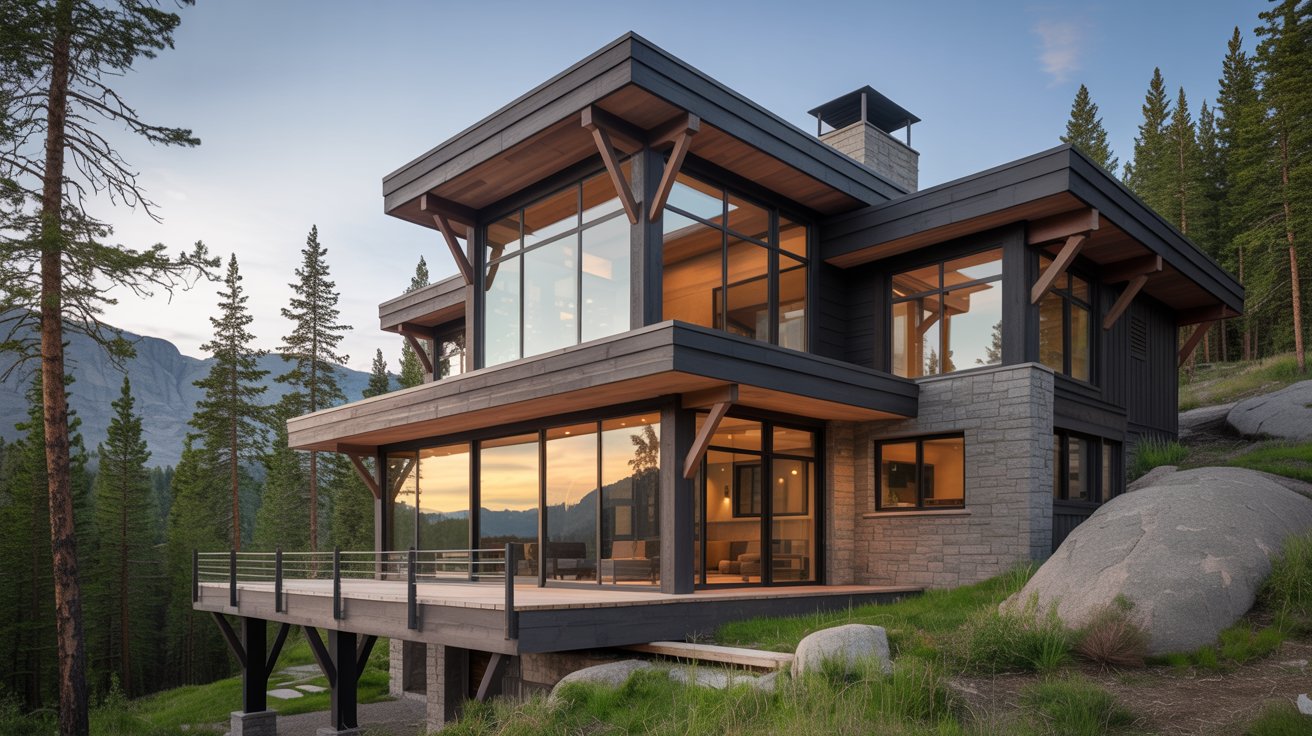
Mountain Modern blends rustic materials like heavy timber framing, stone walls, and rough-sawn wood with the sleek geometry of contemporary design.
The result is an architecturally designed home that feels warm and inviting, not cold.
Large windows frame stunning landscape views, metal roofing manages snow loads, and deep overhangs provide covered outdoor spaces, extending usable living areas despite variable mountain weather.
Best for: Remote workers, outdoor-lifestyle buyers, luxury buyers who want nature built into the architecture, not just the view
Climate fit: Mountain regions with significant snow load and temperature variation, the structural and material choices are functional, not decorative
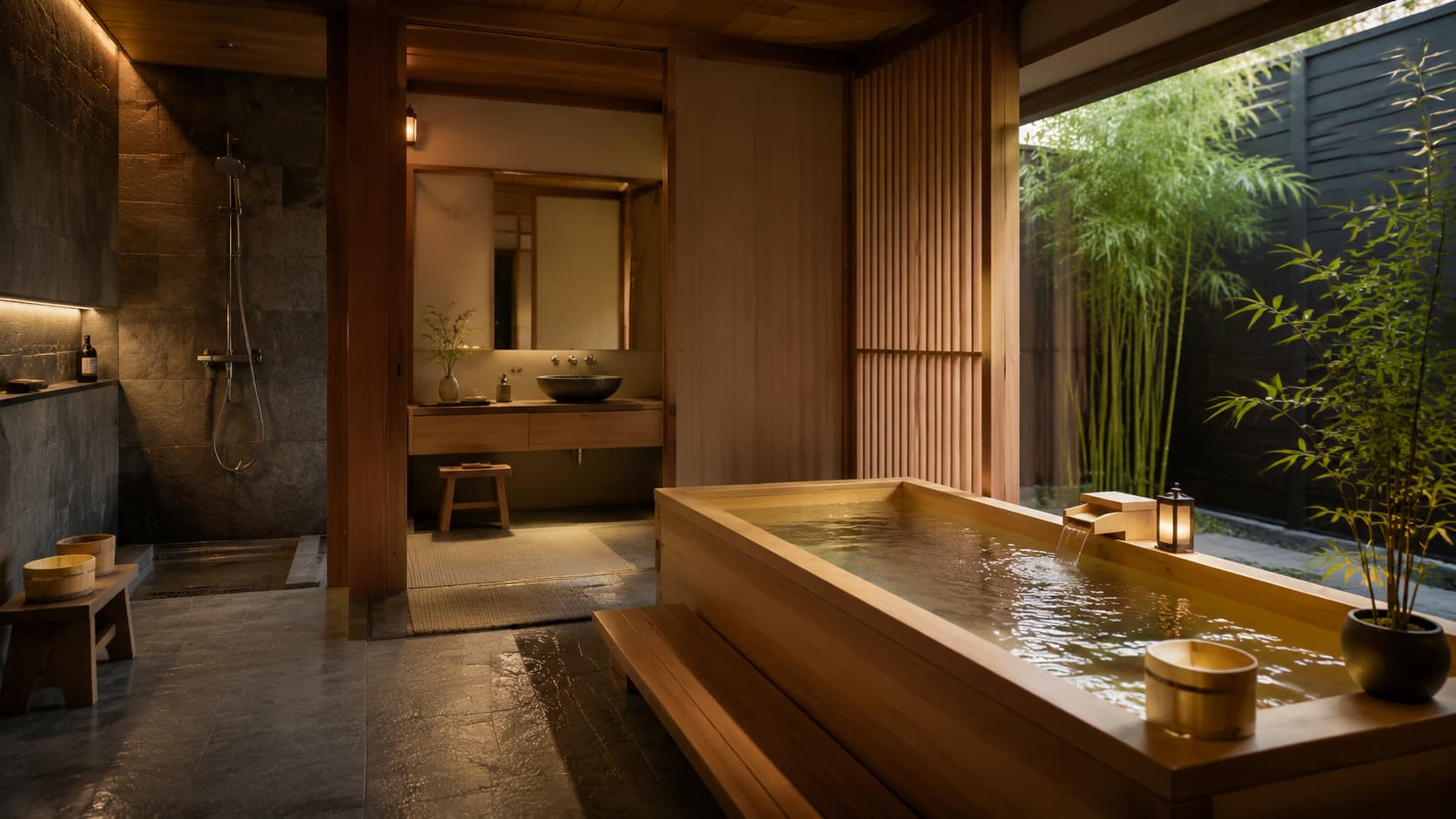
22. Japandi
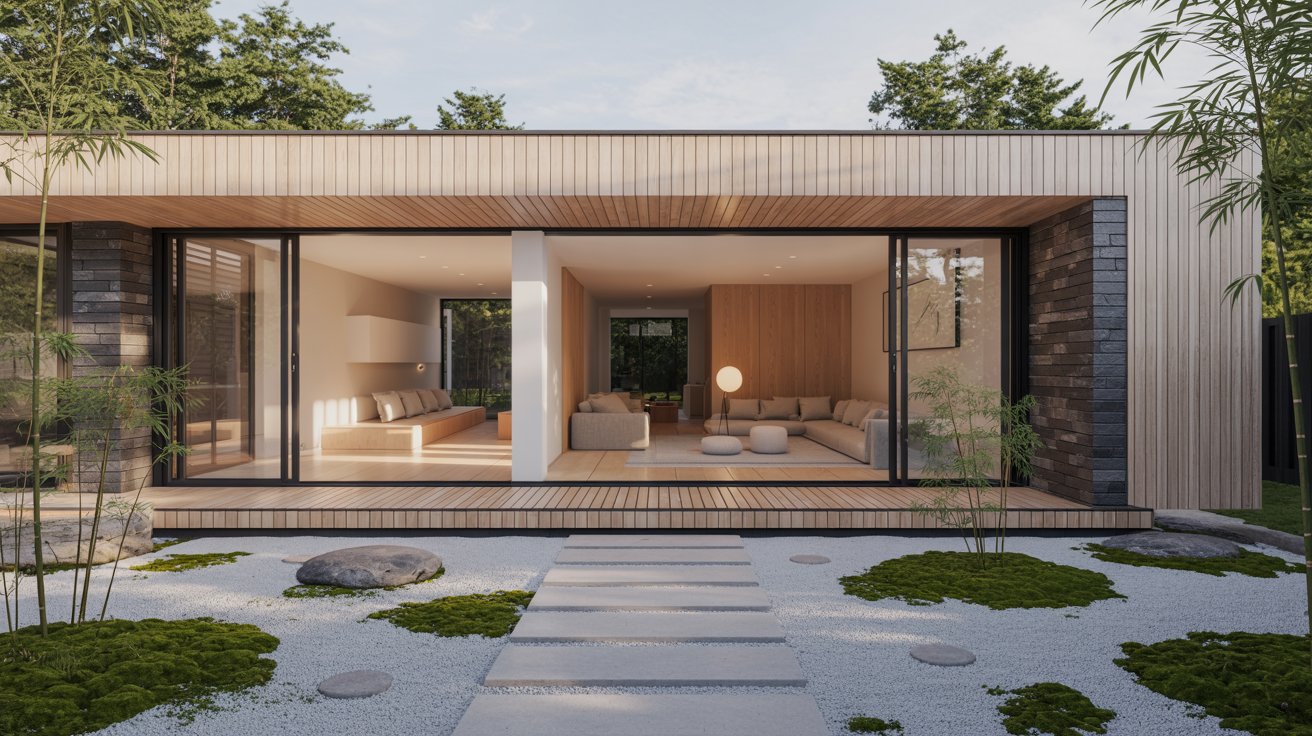
One of the most searched emerging aesthetics among millennial buyers, particularly in the Pacific Northwest and Northeast, where the visual language aligns with both the landscape and a generational shift away from excess.
Best for: Minimalism-seekers, wellness-focused buyers, design-forward new builders who want warmth without visual noise
23. Biophilic Design Homes
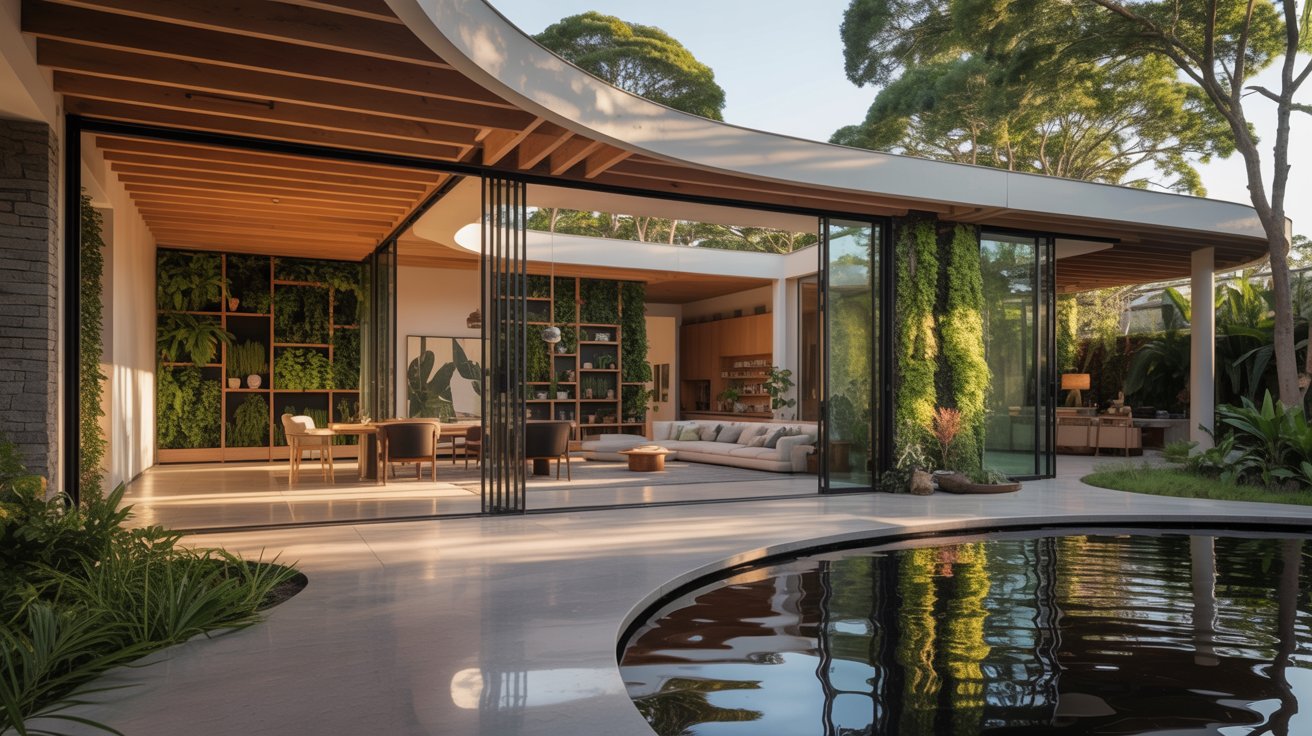
Biophilic design is built on a straightforward premise from environmental psychology: people are measurably healthier and less stressed when they have regular contact with natural elements.
The design response to that research shows up in living walls covered in moss and ferns, large skylights that bring natural light from above, green roofs, indoor gardens, organic curved forms, water features, and floor-to-ceiling glass that frames the landscape as what some architects call“living artwork.”
Best for: Wellness-conscious buyers, urban dwellers craving regular contact with nature, buyers with the budget to build custom
24. Sears Catalog Homes
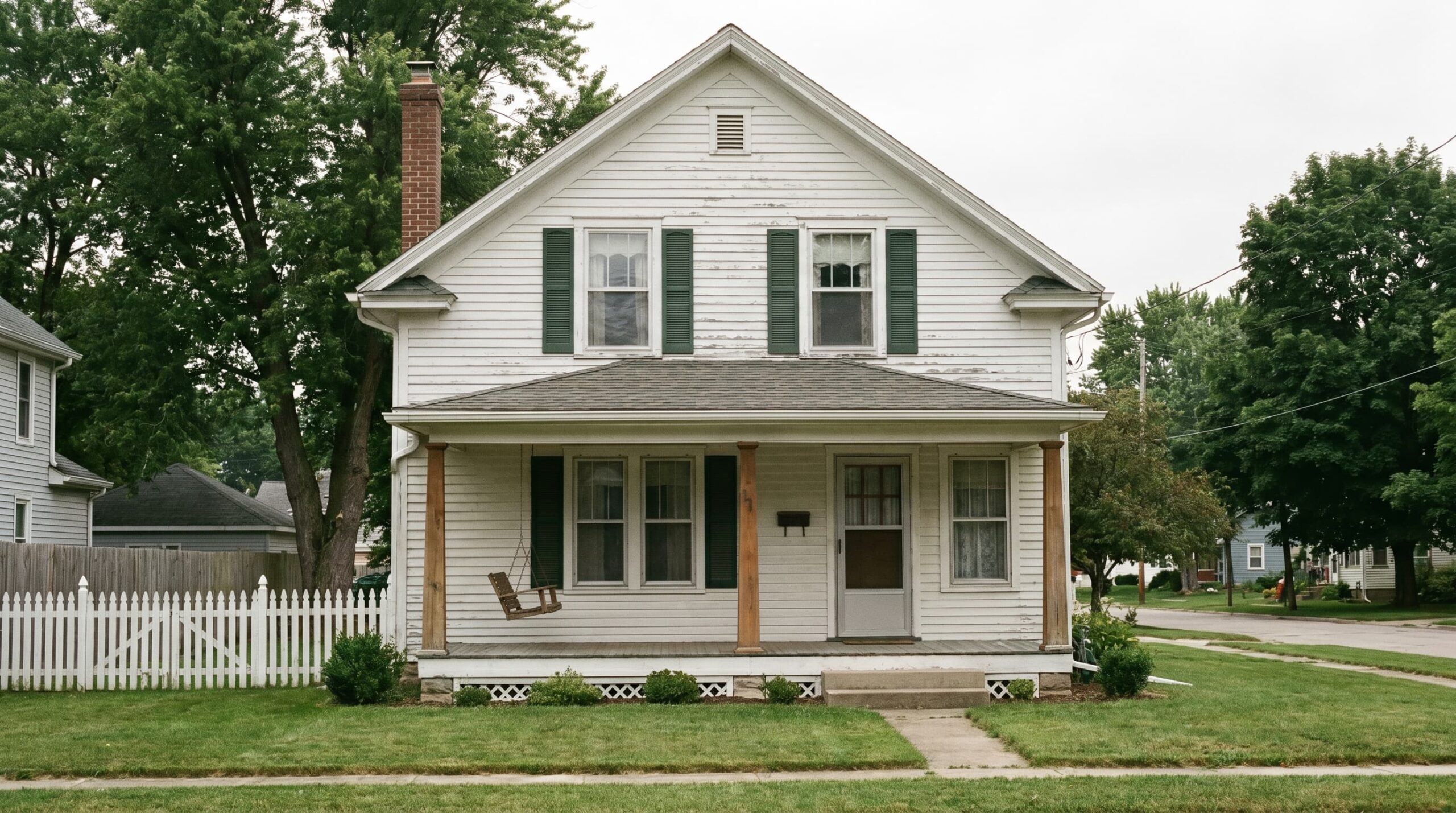
The styles ranged from Craftsman bungalows to Colonial Revivals to foursquares, all with efficient floor plans sized for real family life.
Most of them are still standing. Researchers estimate 70,000 to 100,000 Sears Catalog Homes survive across the country, concentrated in the Midwest and Mid-Atlantic.
Best for: Historic preservation buyers, Midwest and East Coast antique home enthusiasts, buyers who want a home with an actual documented history
25. Modern Heritage
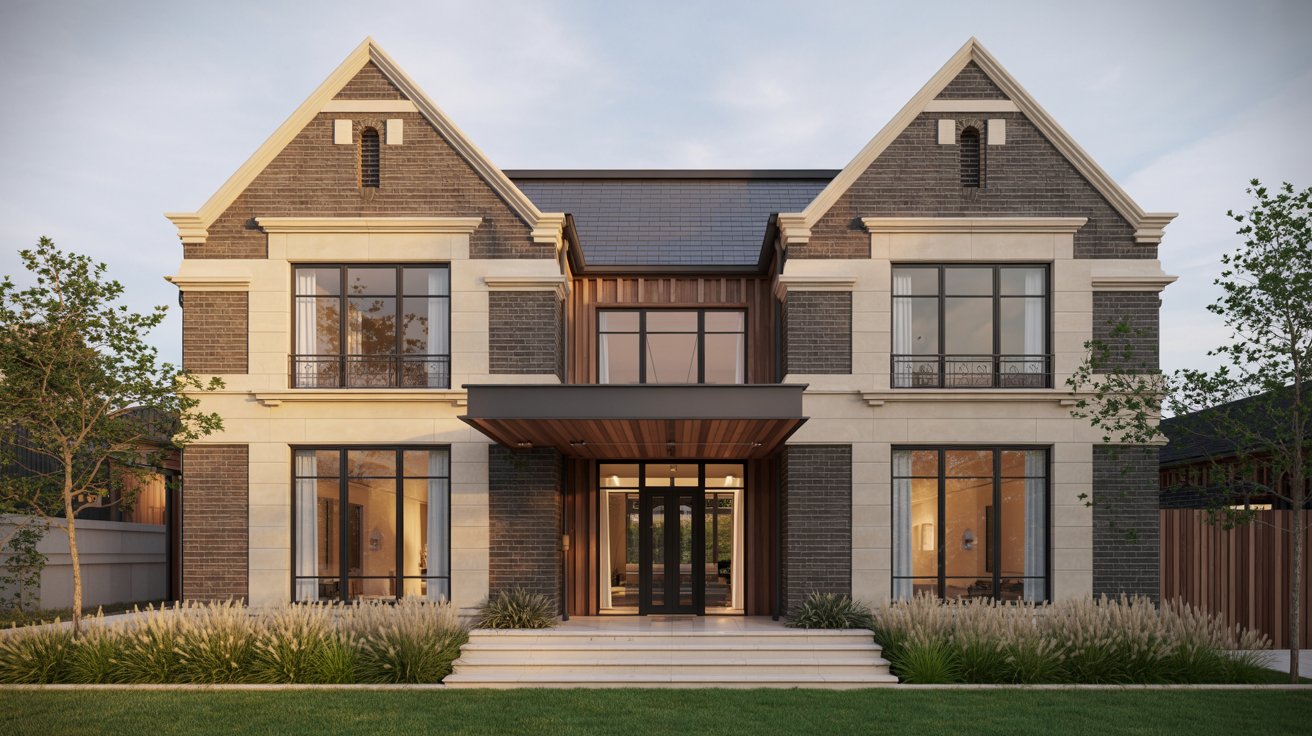
Modern Heritage is the design movement that most people are drawn to right now, but can’t articulate why.
It takes classic architectural details, traditional millwork, historical moldings, handcrafted cabinetry, and period silhouettes and pairs them with modern materials, updated color palettes, and contemporary spatial planning.
Best for: Buyers renovating older homes, design-forward new builders, anyone exhausted by interiors that look beautiful in photos and feel hollow in person.
Conclusion
Picking a house style is not a design decision. It’s a life decision. The style you choose determines your maintenance costs, your energy bills, your renovation ceiling, and how your home holds value over 10, 20, or 30 years.
Most buyers fall in love with a look before they understand what that look actually costs to own. This guide exists to close that gap.
Whether you’re drawn to the handcrafted warmth of a Craftsman, the passive performance of a net-zero build, or the layered character of Modern Heritage, the right choice is the one that fits how you actually live.
Know the style. Know the trade-offs. Then buy with your eyes open.