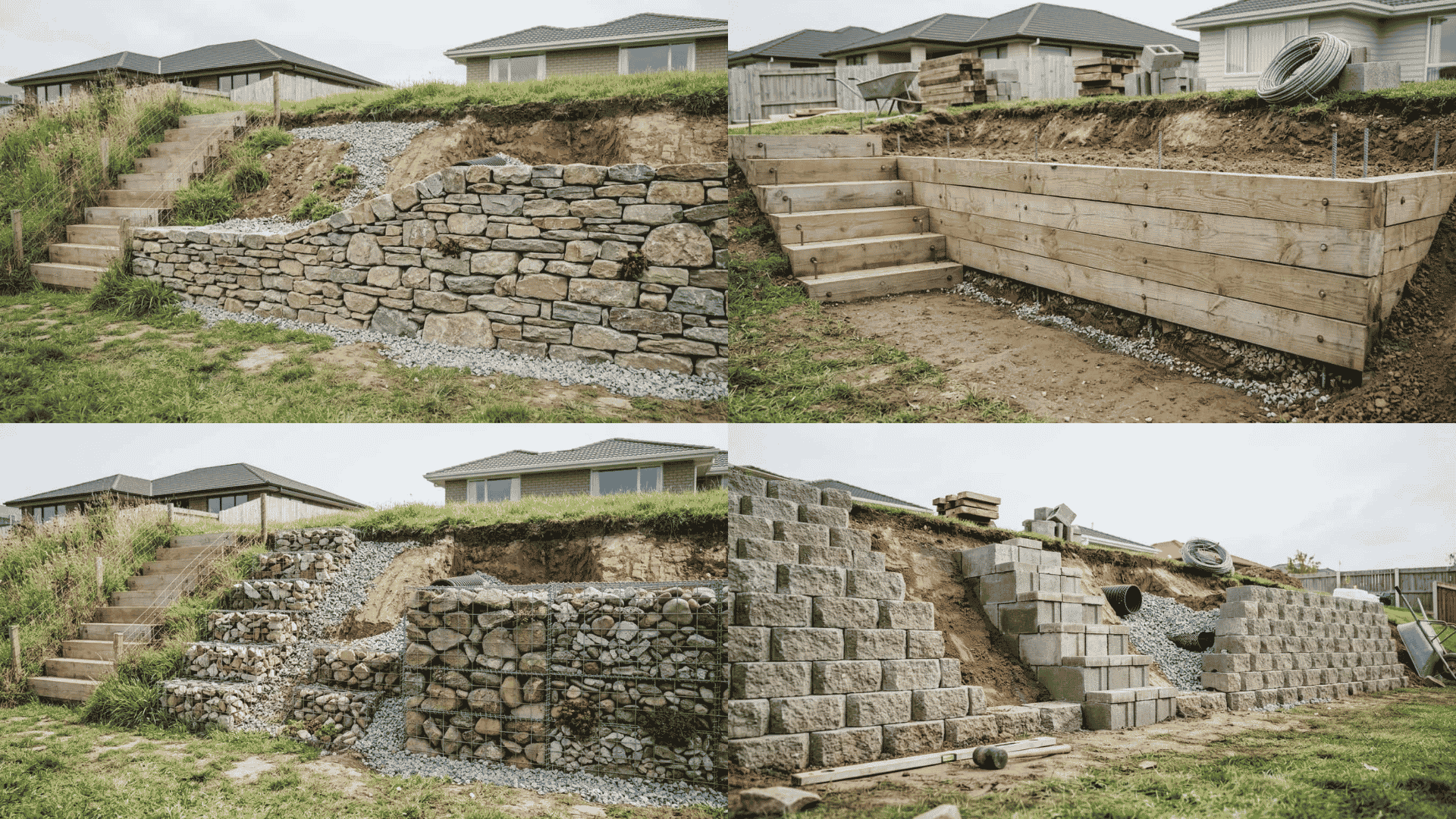
The cheapest retaining wall for your yard depends on your soil, slope, and the labor you handle yourself, not just the material price.
Costs run from $10 to over $100 per square foot, based on what you pick and how tall the wall stands.
That gap looks huge, but plenty of budget-friendly materials hold soil just as well as pricier ones when matched to your yard.
Below you find real cost ranges for five options, what each handles well, and where each falls short.
How to Identify a Good Low-Cost Retaining Wall?
A good low-cost retaining wall balances upfront price with drainage, height, and how long it lasts.
Since it’s one of the most recognizable hardscape features in a yard, plan it alongside your planting beds to stay on budget.
Here are the factors that shape the actual cost:
- Wall height: Taller walls require more material, support, drainage, and footing, so terracing a slope into shorter walls often costs less than building a single tall wall, since each wall stays under the permit-triggering height.
- Soil type: Loose or sandy soil puts more pressure on a wall than compacted clay. Some cheap materials aren’t strong enough for high-pressure situations.
- DIY vs. hired labor: Labor can make up 50–60% of a retaining wall’s total cost. If you can build it yourself, you cut the bill significantly. Some materials are much easier to DIY than others.
- Drainage requirements: Every retaining wall needs drainage behind it. Skipping this leads to wall failure. Factor in gravel backfill and drainage pipe when comparing costs.
The cheapest retaining wall for you is the one that fits yourbudget, your soil, your wall height, and your skill level, but not just the one with the lowest price tag per unit.
Cheapest Retaining Wall Ideas Worth Trying
These are the five most affordable and cost-effective retaining wall materials for building a solid wall.
1. Timber Sleepers
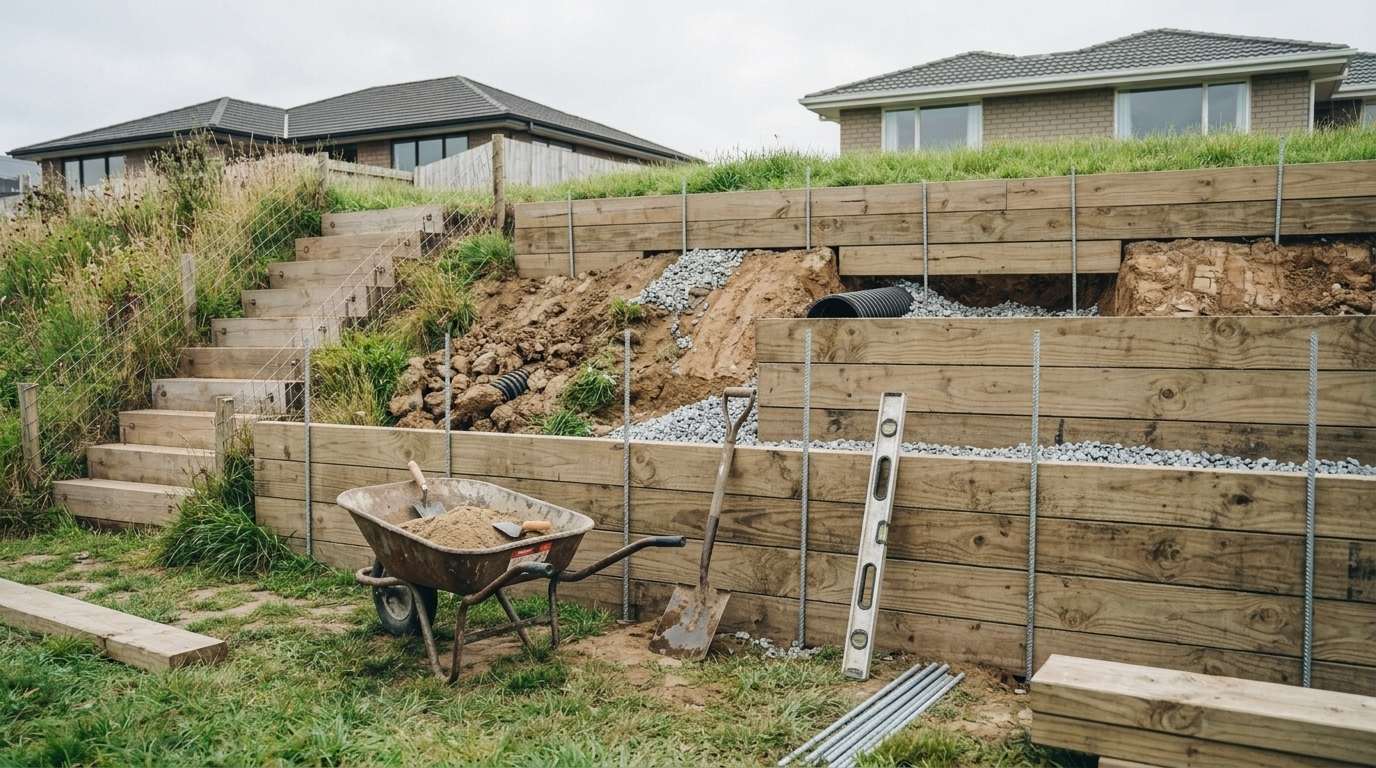
Timber sleepers are among the most widely used low-cost retaining wall options, easy to source and simple to cut.
Even treated sleepers last 10-20 years, less in wet or tropical climates, since timber rots.
Lay sleepers horizontally and drive galvanized rebar through them into the ground to lock them in place without expensive footings.
This suits garden beds, low slopes, and quick fixes under 3 feet, and pairs well with a raised garden bed built in cheaper layers instead of solid premium soil.
- Fast, easy install
- Widely available everywhere
- Natural garden look
- Best under 3 feet
Average cost: $10-$25 per square foot (installed)
2. Concrete Blocks (Segmental Blocks)
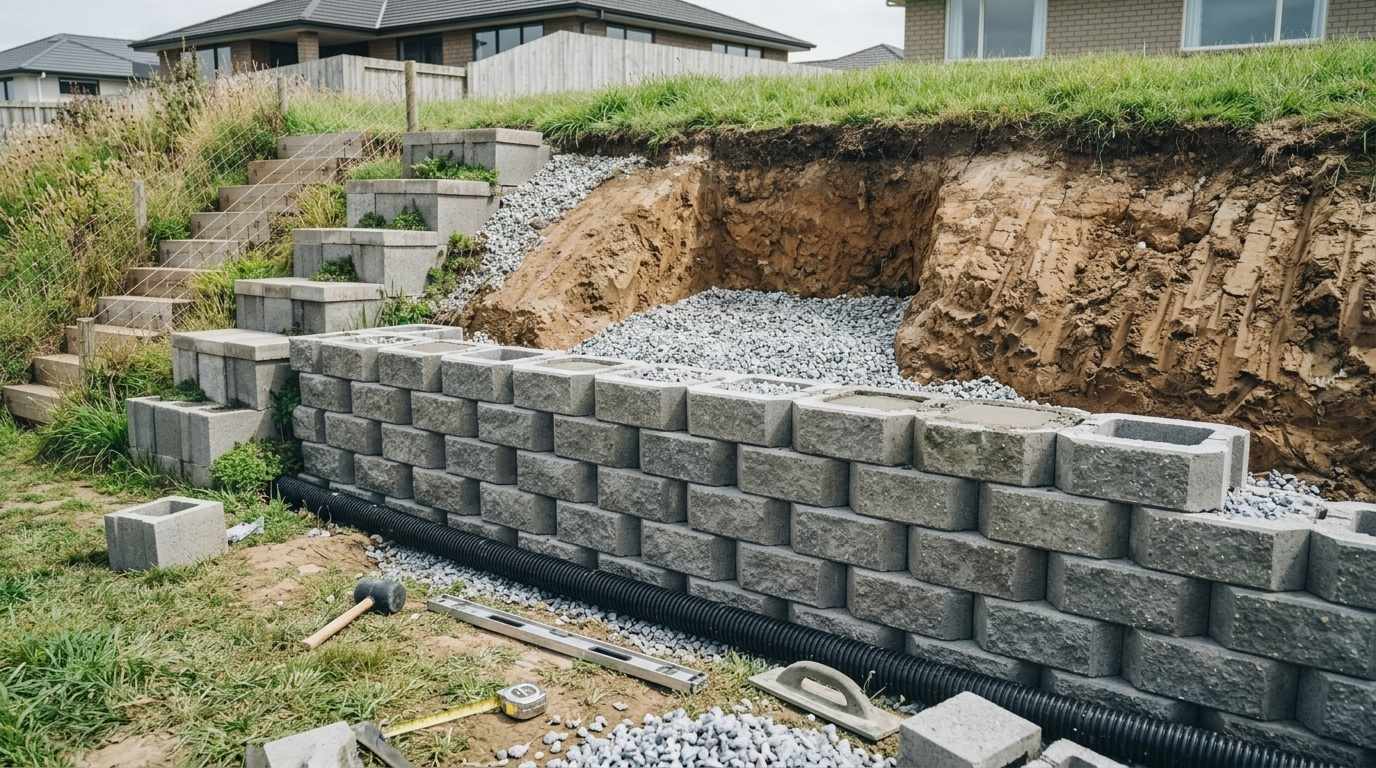
Concrete segmental blocks, sometimes called besser blocks, are among the most durable low-cost options available.
They interlock without mortar, handle heavy soil loads, and last 30-50 years with proper drainage.
The blocks are cheap but heavy, so delivery and stacking take real physical work, and walls over 4 feet usually need a structural engineer’s input. For small walls under 3 feet, hollow blocks filled with concrete and rebar give a strong result for medium to large, high-load builds.
- No mortar needed
- Handles heavy loads
- Lasts 30-50 years
- Many sizes, finishes
Average cost: $15-$30 per square foot (installed)
3. Gabion Walls (Rock-Filled Cages)
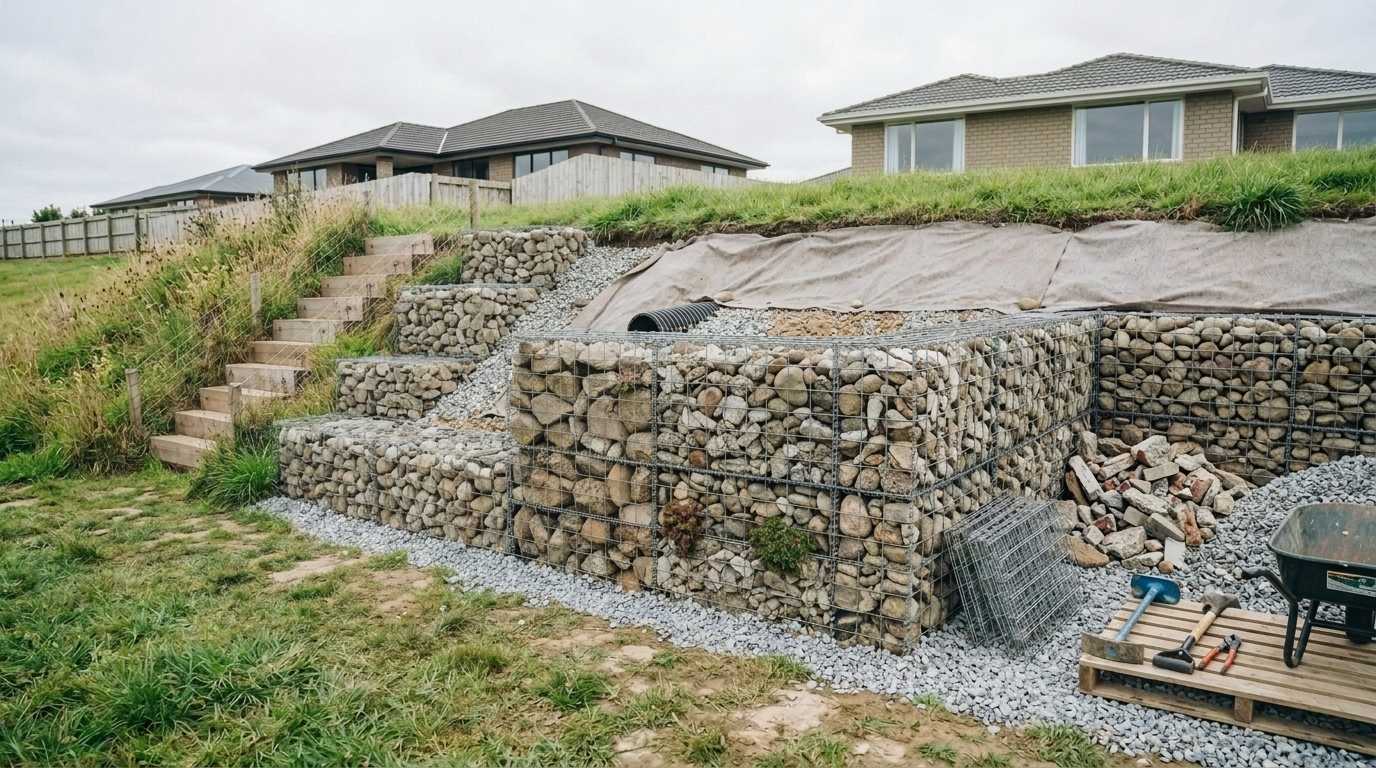
Gabion walls are wire mesh cages filled with rocks or rubble, and they look industrial but perform extremely well.
If you have free access to rocks or demolition rubble, material costs drop to nearly zero, though the cages themselves run $30-$80 per linear meter.
Buying rock also raises costs quickly, so real savings come from sourcing fill locally, often through demolition companies that give away broken concrete chunks known as urbanite.
This suits slopes with drainage problems, rural properties, and areas with locally sourced stone.
- Very strong wall
- Drains water freely
- Uses free fill
- Lasts 60+ years
Average cost: $10-$35 per square foot (installed)
4. Recycled Materials (Pallets, Reclaimed Stone)
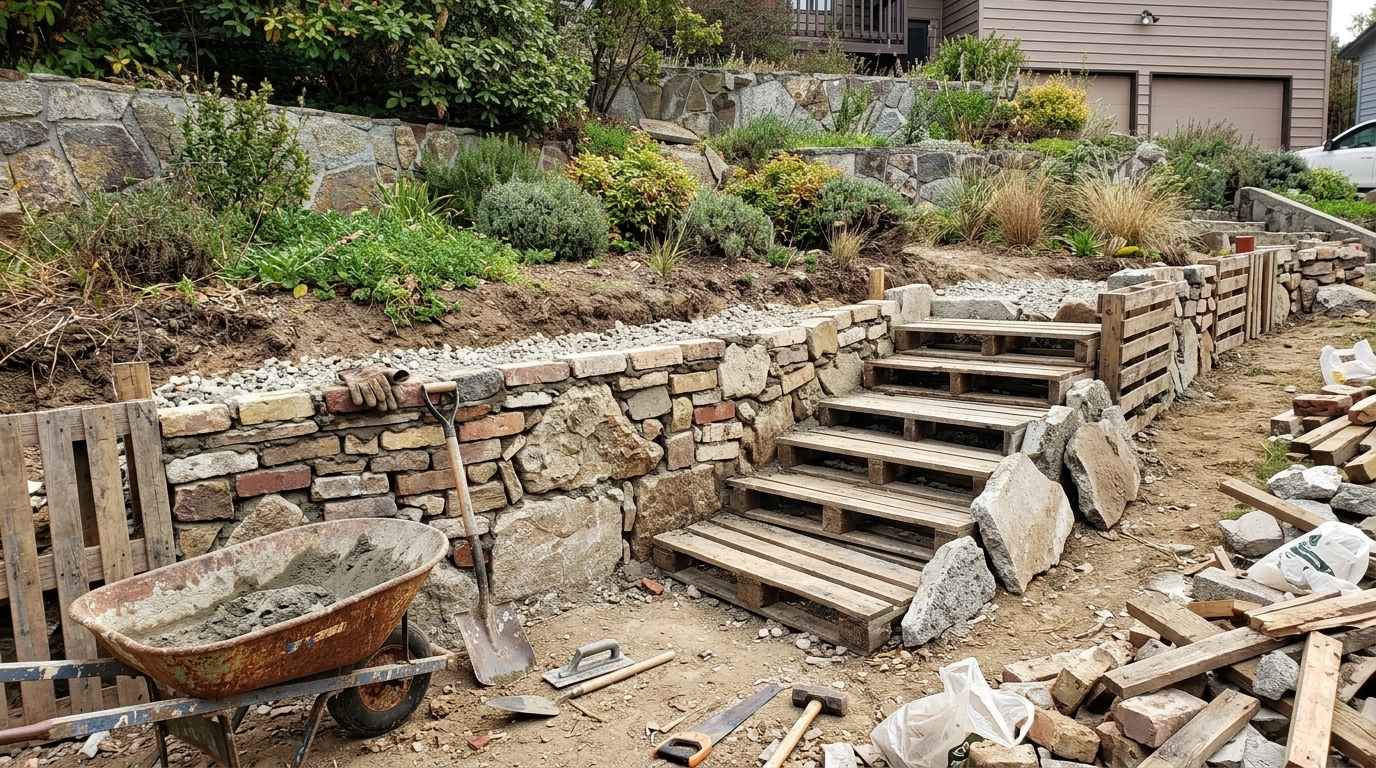
Reclaimed stone, old bricks, broken concrete, and even wooden pallets can build a functional retaining wall at near-zero material cost.
This route reduces waste and works well for low garden walls and raised beds, though it needs more planning and labor, and pallets rot too fast for anything but short-term or decorative use.
Check Facebook Marketplace, Gumtree, or local classifieds for free reclaimed stone or brick from demolition sites, and reuse the same salvage tricks for a front-yard makeover on a tight budget.
- Near-zero material cost
- Reduces waste, eco-friendly
- Good for raised beds
Average cost: $0-$10 per square foot (materials only)
5. Dry-Stacked Stone
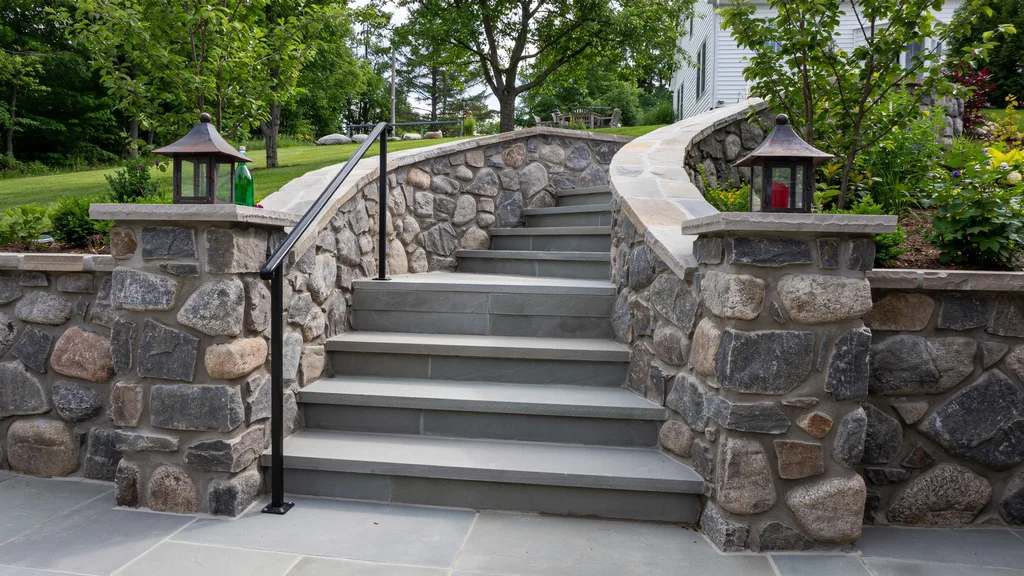
Dry-stacked stone walls use no mortar. Stones are stacked carefully so the wall holds itself together through weight, friction, and proper batter, a slight backward lean into the slope.
Stone is heavy and often the priciest option here, and installation takes real time and skill, since each stone must be chosen and placed with care for stability.
Use a 1:6 batter ratio to keep the wall stable without mortar or footings. This suits rural properties with existing stone and garden walls where looks matter.
- Natural drainage, no mortar
- Very long lifespan
- Excellent rural look
- DIY with patience
Average cost: $25-$45 per square foot (installed)
What is the Cost Break-down of a Retaining Wall?
What you actually pay for when building a retaining wall. The real cost includes several other things people skip or do not count that are actually important.
If your wall is part of a larger backyard remodel with its own cost factors, price the wall separately before you set a total budget.
| Cost Item | Estimated Cost |
|---|---|
| Materials | $10–$45 per sq ft |
| Labor (if hired) | $50–$80 per hour |
| Drainage gravel/pipe | $5–$15 per linear ft |
| Excavation | $50–$200 per hour |
| Permits (if required) | $100–$500+ |
| Delivery fees | $50–$300 |
A rough total for a basic 3-foot wall, 20 feet long:
- DIY timber: $400–$900
- DIY concrete block: $600–$1,200
- Hired labor (any material): $2,000–$5,000+
The Actual Hidden Cost of Building Retaining Walls
There are several things people usually miss, which then cost them even more in the future.
- Permits for walls over 3 feet: In most areas, any wall taller than 3 feet needs a council or building permit. Some areas require an engineer’s sign-off too.
- Excavation and soil disposal: Digging out the base and removing excess soil costs money. Disposing of soil off-site adds more.
- Compacted base material: A stable wall needs a compacted gravel base. This costs around$2–$5 per square foot and is often left out of basic estimates.
- Wall failure and rebuild costs: A cheap wall built wrong costs double once to build and then once to fix. Factor this in before going with the absolute lowest-priced option.
Why Drainage Matters More Than Material Cost
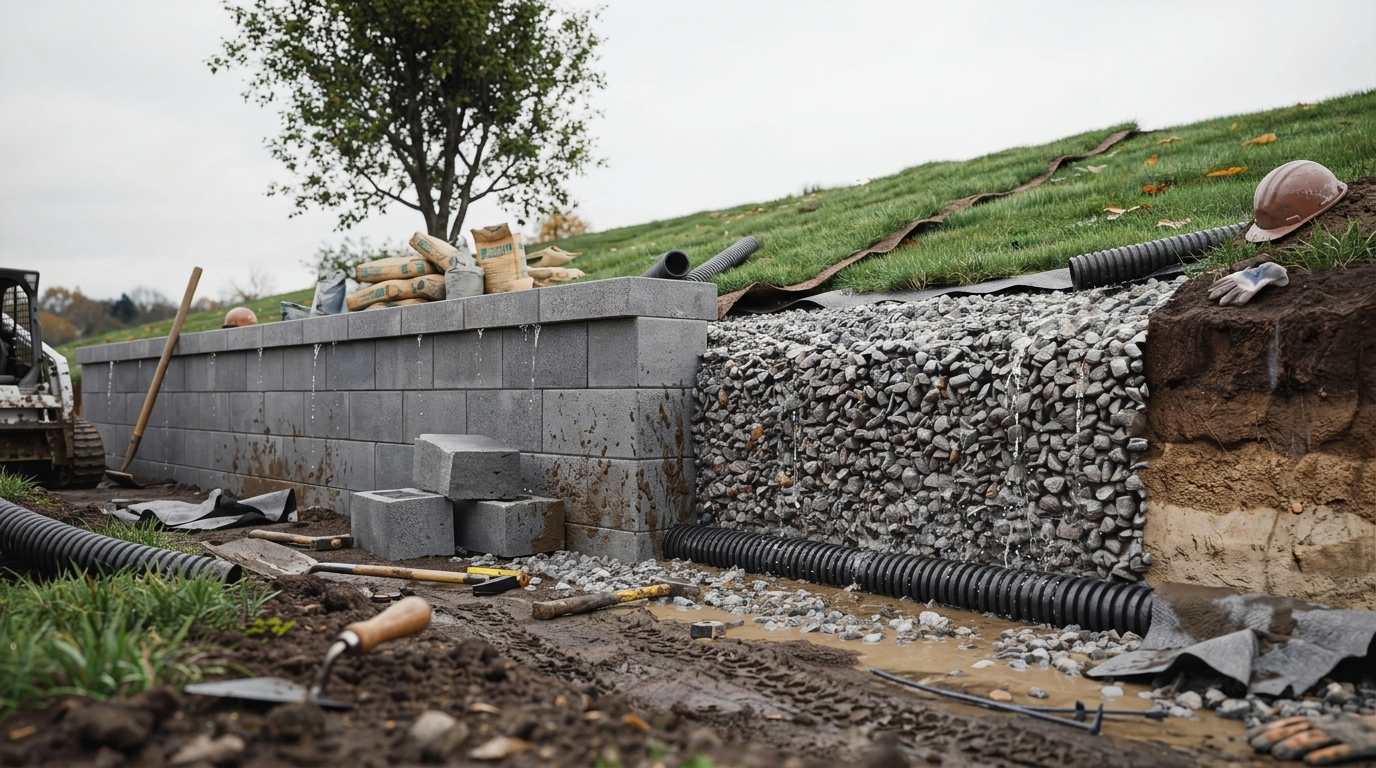
You can build with the best material on this list, but without a proper drainage system, it will still fail.
Water is the biggest threat to any retaining wall. When rain soaks into the soil behind the wall, pressure builds up fast. That pressure pushes outward, and eventually the wall moves, cracks, or collapses.
What good drainage looks like:
- A layer of coarse gravel (at least 12 inches) packed behind the wall
- A perforated drainage pipe at the base to carry water away
- Weep holes in the wall face every 4–6 feet to release pressure
What it costs:
Drainage adds roughly$3–$8 per linear foot to your build. That’s a small number compared to a full rebuild.
A $10 timber wall with proper drainage will outlast a $30 concrete wall with none. Get this right before anything else.
Cost vs Durability Trade-Off
Spending less upfront doesn’t always save money in the long term. Here’s a straight comparison.
| Material | Approx. Cost (per sq ft) | Lifespan |
|---|---|---|
| Recycled materials | $0–$10 | 3–10 years |
| Timber sleepers | $10–$25 | 10–20 years |
| Gabion walls | $10–$35 | 30–60 years |
| Concrete blocks | $15–$30 | 30–50 years |
| Dry-stacked stone | $25–$45 | 50–100+ years |
A timber wall at $15 per square foot that lasts 15 years costs$1 per square foot per year.
A dry-stacked stone wall at $40 per square foot lasting 80 years costs $0.50 per square foot per year.
The cheaper wall ends up costing more over time. Match the lifespan of the wall to how long you plan to use it.
Community Advice on Cheap Retaining Walls
Community discussions often highlight practical ways to reduce retaining wall costs while avoiding common mistakes.
Owners also share real experiences about materials, durability, and where to find affordable or even free building supplies.
DIY Chatroom : Cheapest Retaining Wall
A DIY Chatroom user estimated that a 3-foot interlocking block retaining wall would cost about $820 for materials and labor. However, others warned that choosing the cheapest option can lead to failure after heavy rain, making repairs and rebuilding far more expensive.
The Garage Journal: Cheap Retaining Wall Solutions
In a DIY Chatroom discussion, homeowners compared timber and interlocking block retaining walls. Many agreed that landscape timbers are the cheaper option, while interlocking blocks cost more but offer better durability and a longer lifespan.
DoItYourself : Free/Cheap Retaining Wall
In a DIY Chatroom thread, homeowners suggested using reclaimed bricks or blocks for low-cost tiered garden walls. Demolition sites may provide free materials, though permission from the site supervisor is required.
Maintenance Tips to Keep Costs Low
A well-built cheap wall lasts longer when you look after it. These checks take very little time.
- Clear drainage outlets yearly: Make sure water flows freely behind and through the wall to prevent pressure and failure.
- Check for leaning or bulging: Early movement may need a small repair, while delayed action can lead to rebuilding.
- Fix loose stones or blocks quickly: Repoint cracked mortar or re-stack shifted sections before the damage spreads.
- Control soil and plant roots: Keep roots away from the wall face, as they can widen gaps and crack mortar.
- Inspect timber for rot every 2–3 years: Press a screwdriver into the wood to find soft, weakened, or decayed areas.
Common Mistakes in Cheap Retaining Walls
These mistakes show up often, and they’re all avoidable. Make sure to check these points off.
- Skipping drainage: This is the most common reason retaining walls fail. Water builds up behind the wall, pressure increases, and the wall pushes forward or cracks.
- Building too tall for the material: Timber sleepers are not suitable for a 5-foot wall. Dry-stacked stone needs careful engineering above 4 feet. Match your material to your wall height.
- No base preparation: A wall built on loose or uneven soil will shift and lean. Always dig down and compact a gravel base before laying the first course.
- Using untreated timber: Untreated wood in contact with soil rots fast, sometimes within 2–3 years. Always use treated timber rated for ground contact.
- Ignoring local soil conditions: Loose or sandy soil puts more pressure on retaining walls than firm clay, so check your soil type before building.
Conclusion
The cheapest retaining wall only saves money if it survives the first hard rain. Good design matches the material to the load, not the lowest price per square foot.
Timber suits small budgets, concrete blocks support heavier soil, gabions provide natural drainage, and locally salvaged stone can cost almost nothing.
Check your soil type, wall height, and local permit requirements before committing to a single option.
Ready to build? Measure your slope this weekend and price out your first material today.
Frequently Asked Questions
What is the 1/3 Rule for Retaining Walls?
The 1/3 rule means burying about one-third of the wall’s total height underground and building the base so that it is one-third as wide as the wall stands tall.
Does a 2 Ft Retaining Wall Need Drainage?
Yes, a 2 ft retaining wall needs some form of drainage. Even small walls are subjected to hydrostatic pressure as water builds up behind them.
Do I Need a Footing for a 2-ft Retaining Wall?
Yes, even a 2 ft wall needs a footing. It spreads the wall’s weight evenly and helps it resist soil pressure, water, and shifting over time.
Do I Need Landscape Fabric Behind a Retaining Wall?
Yes, landscape fabric behind the wall keeps soil out of your gravel backfill so water drains freely and the wall does not clog or bulge.
Can I Use Earthbags Instead of Blocks for a Cheap Wall?
Earthbags can work in the short term, but the plastic breaks down in sunlight and soil, so the wall loses strength within a few years.