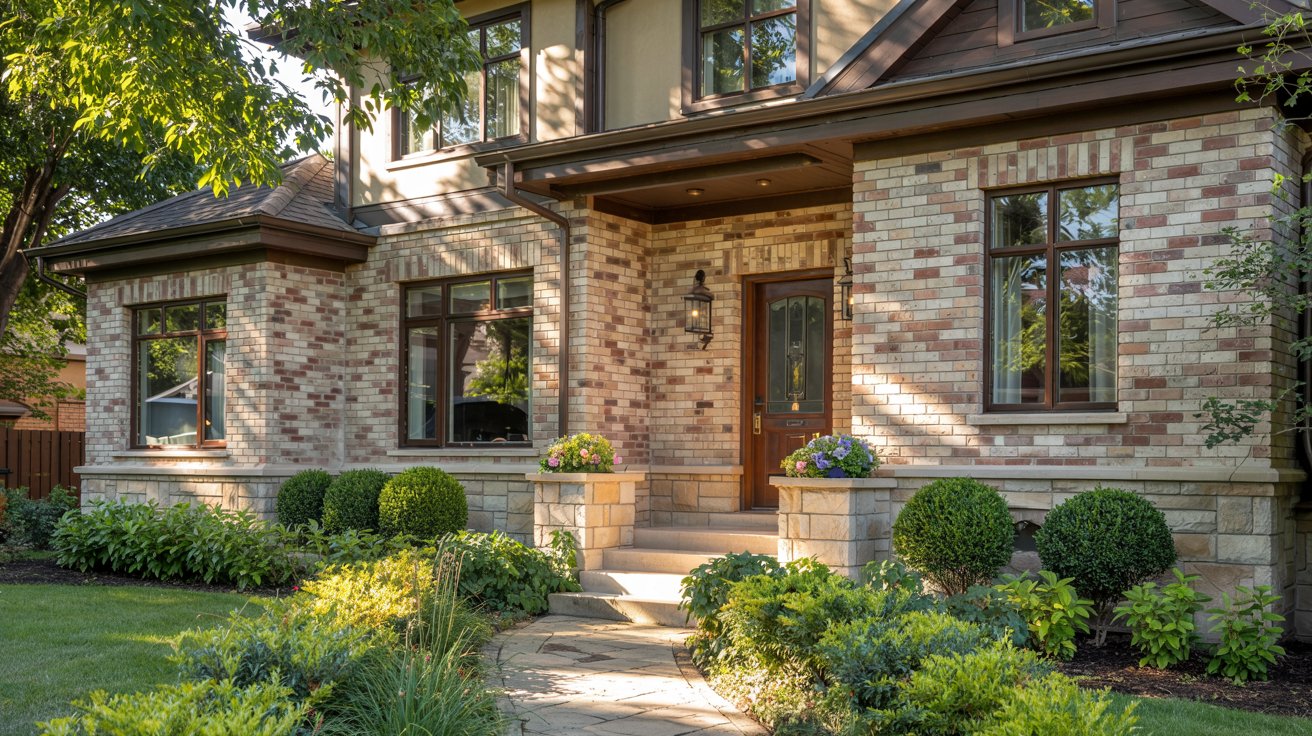
What if the wrong paint color could make your brick home look outdated?
Choosing the right exterior brick and paint color combinations can lift curb appeal and support your home’s long-term value.
The challenge is finding colors that work with your brick rather than against it.
Red brick needs different paint choices than grey or tan brick. Your roof color, trim, and climate all affect which combinations work best.
This post covers proven exterior brick and paint color combinations for every major brick type, plus guidance on placement, testing, matching home style, and the most common color mistakes to avoid.
Exterior Brick and Paint Color Combinations for Red Brick Homes
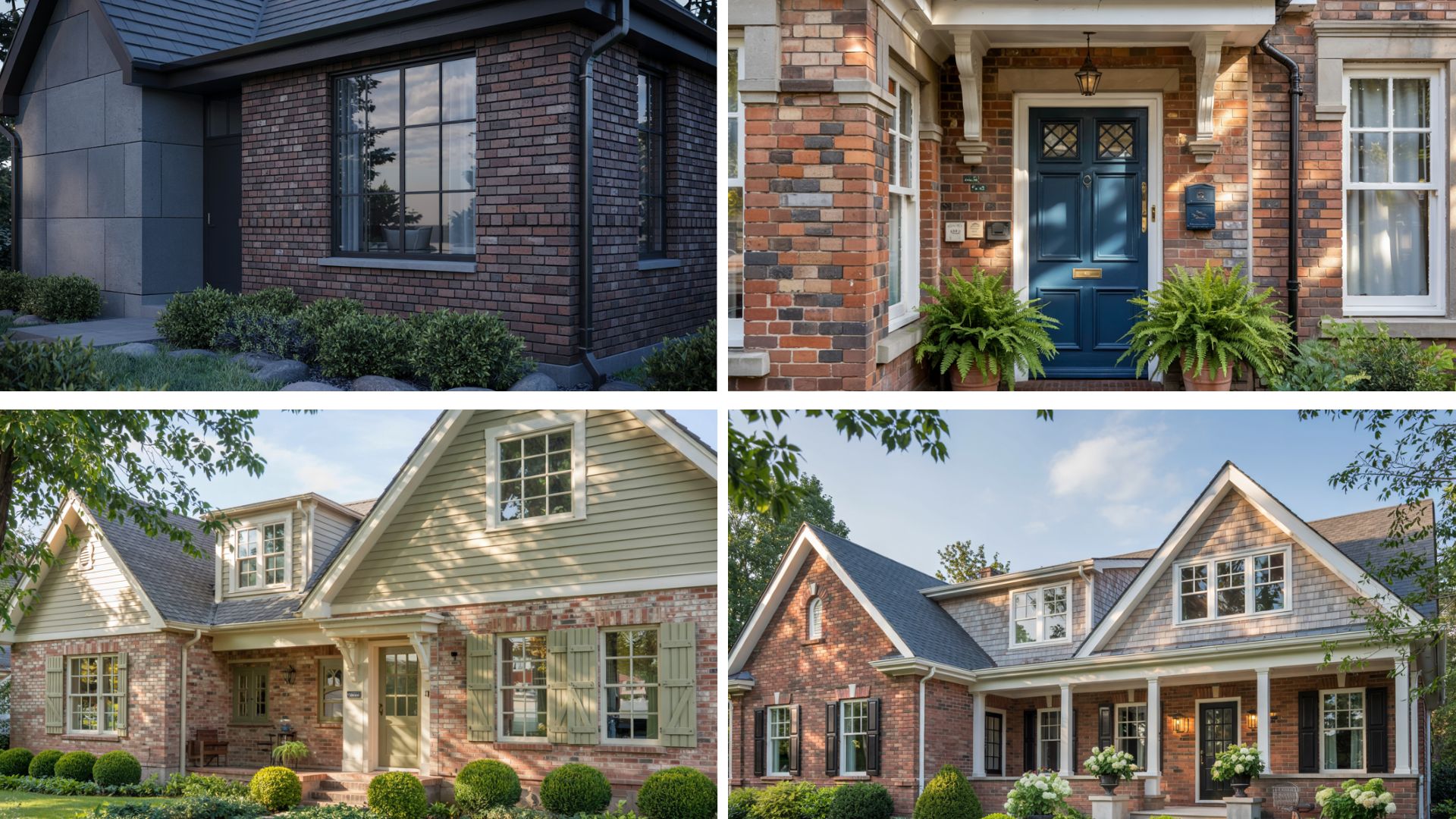
Red brick has held its appeal for generations. Orange-red brick tends to suit cream, taupe, and olive. Burgundy brick works better with charcoal, slate, or muted navy. Identify the undertone before choosing a palette.
1. Red Brick + Soft Grey + Warm White Trim
Soft grey reduces the visual weight of red brick without covering its character. Choose a warm grey rather than a blue-grey when the brick has orange or brown undertones. Warm white trim gives windows, eaves, and columns a clean outline.
Best for: Ranch, transitional, and traditional homes.
2. Red Brick + Charcoal Grey + Black Accents
Charcoal siding creates strong contrast against red brick. Black accents give windows and doors clear definition. Use this palette carefully on heavily shaded homes since large amounts of dark color can make the exterior feel heavy.
Best for: Contemporary, Tudor, and updated traditional homes.
3. Red Brick +Taupe + Cream Trim
Taupe connects naturally with brown or beige flecks in red brick. Cream trim adds separation without the sharp contrast of bright white. This is a reliable choice for a warmer, quieter exterior.
Best for: Colonial, ranch, and suburban homes.
4. Red Brick + Olive Green + Cream Trim
Olive works especially well when the brick carries brown, gold, or orange tones. Use olive on siding, shutters, or the front door. Cream trim keeps the palette from reading too dark.
Best for: Craftsman, Tudor, and rustic-style homes.
5. Red Brick + Navy Blue + Soft White Trim
Navy creates a cooler contrast against warm red brick without going as severe as black. A greyed navy is easier to coordinate than a bright blue. Soft white trim separates the two strong colors and keeps the facade balanced.
Best for: Colonial, coastal, and two-story homes.
6. Red Brick + Sage Green + Off-White
Sage sits at the muted end of green and creates restrained contrast against red. Its grey undertone stops the combination from reading too bright. Choose a muted sage rather than a clear or mint green. Off-white trim connects the green to warm brick-and-mortar tones.
Best for: Craftsman, cottage, and wooded properties.
7. Red Brick + Greige + Charcoal Accents
Greige combines beige warmth with grey restraint. It connects red brick to a charcoal roof, dark shutters, or black metal details. Match the greige to the mortar or a lighter fleck in the brick for a more unified result.
Best for: Transitional and partial-brick homes.
8. Red Brick + Cream Body + Black Door
Cream trim softens the brick and avoids a harsh line between surfaces. A black front door creates a clear entrance without requiring dark paint across the whole house. Repeat the black in light fixtures, railings, or house numbers for cohesion.
Best for: Colonial, Georgian, and traditional homes.
9. Red Brick + Blue-Grey + Cream
A muted blue-grey suits red brick with burgundy, purple, or cool grey undertones. It is less reliant on strongly orange brick. Test the color directly beside the brick since some blue-greys make warm mortar look yellow.
Best for: Tudor, historic, and traditional homes with cooler red brick.
Paint Color Combinations for Brown and Tan Brick Homes
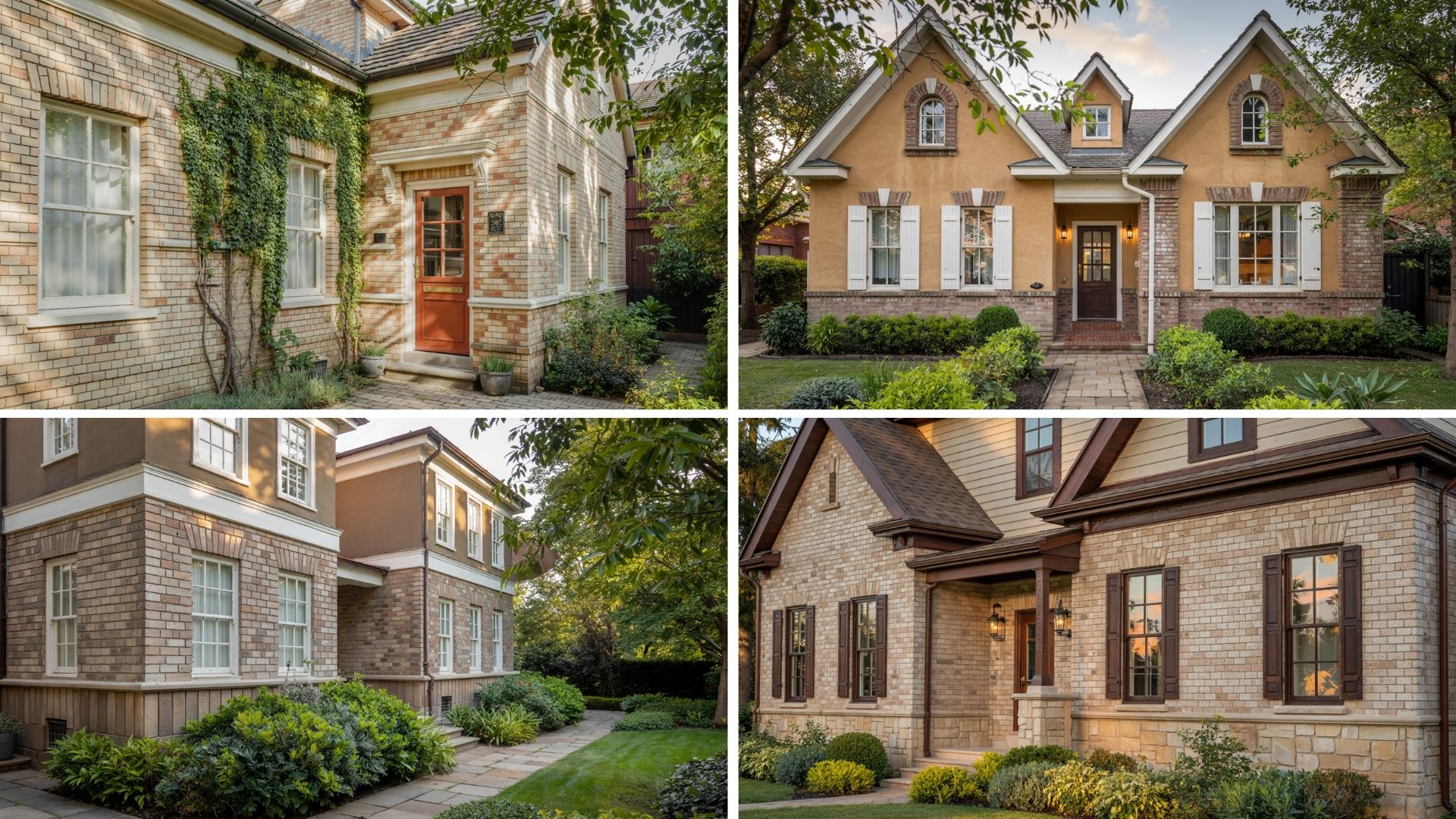
Brown and tan brick provides a warm neutral base. Paint choices should repeat their beige, cream, gold, brown, or muted red undertones rather than introducing cool or icy shades.
10. Brown Brick + Warm Taupe + Off-White Trim
Warm taupe repeats the earthy tones in brown brick while creating a separation between brick and siding. Off-white trim adds definition without reading too bright.
Best for: Traditional, ranch, and transitional homes.
11. Tan Brick + Sage Green + Cream Trim
Sage adds soft color while staying connected to tan brick’s natural warmth. Use a sage with a warm grey or slightly yellow undertone. Cream trim works better here than stark white.
Best for: Craftsman, cottage, and ranch homes.
12. Brown Brick + Cream + Deep Brown Trim
Cream lightens the exterior while deep brown trim pulls from the darkest tones in the brick. The result is a monochromatic palette with enough contrast to define windows and rooflines.
Best for: Tudor, ranch, and traditional homes.
13. Tan Brick + Terracotta Accent Door + Light Beige Trim
Terracotta works best as a small accent since it repeats the warmth of tan brick without overwhelming the facade. Use it on the front door and support it with light beige siding or trim.
Best for: Spanish, Mediterranean, and Southwestern homes.
14. Brown-Red Brick + Muted Mustard + Cream Trim
A subdued mustard works when the brick carries visible gold, ochre, or brown tones. It should read earthy rather than bright yellow. Keep the trim light to balance the warmth across the facade.
Best for: Craftsman, cottage, and historic homes.
15. Tan Brick + Taupe Body + Olive Accents
Taupe reads quietly as a body color while olive adds depth through shutters, doors, or small architectural details. This pairing works especially well alongside mature trees and natural landscaping.
Best for: Craftsman, ranch, and wooded homes.
16. Tan Brick + Warm White + Bronze Hardware
Warm white gives tan brick a cleaner look while bronze window frames, gutters, and lighting preserve its earthy character. Avoid cool white since it can make tan brick look yellow or dull.
Best for: Mediterranean, transitional, and modern homes.
17. Brown Brick + Mushroom + Black-Brown Trim
Mushroom is a greyed brown that connects well with mixed brown brick. Black-brown trim adds depth without the sharpness of true black. Use the darker tone on the door, shutters, or window frames rather than every trim piece.
Best for: Contemporary and updated traditional homes.
Paint Color Combinations for Grey and White Brick Homes
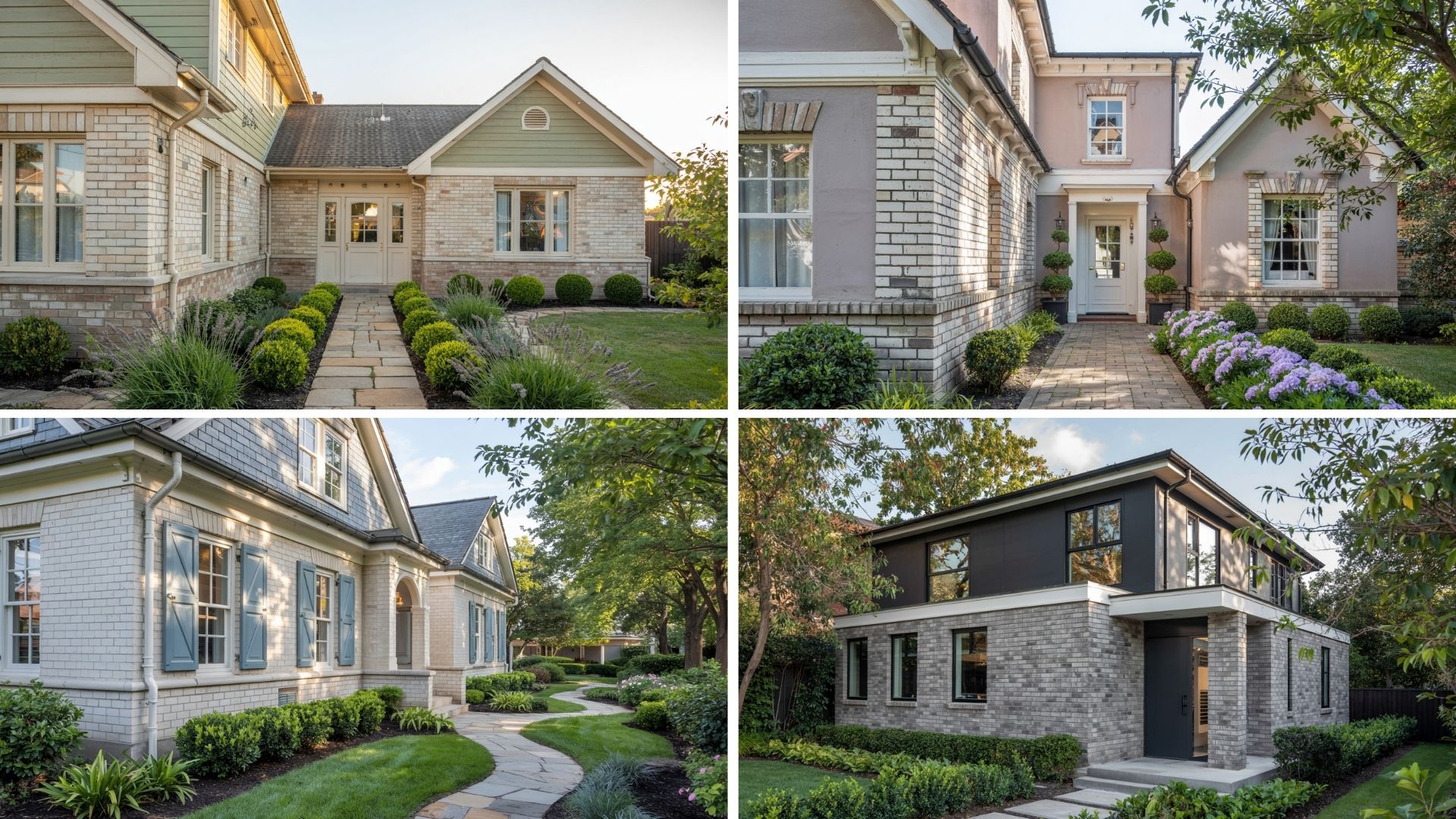
Grey and white brick can carry cooler colors and stronger contrast. Mortar tone, roof color, and sunlight still determine whether the brick reads warm or cool, so testing is especially important here
18. Grey Brick + Charcoal Soft White Trim
Charcoal deepens the exterior without introducing a new color family. Soft white trim stops the palette from looking flat. Use the darkest tones selectively if the house gets limited natural light.
Best for: Contemporary, modern farmhouse, and transitional homes.
19. White Brick + Light Blue + Medium Grey Trim
Light blue gives white brick a gentle color lift. Medium grey trim defines architectural features without the severe contrast of black. Choose a greyed blue rather than a pastel shade that may look washed out in full sun.
Best for: Coastal, cottage, and traditional homes.
20. Grey Brick + Sage Green + Cream Trim
Sage brings natural warmth to cool grey brick. Cream trim softens the transition and can connect the palette to warm stone or landscaping.
Best for: Cottage, Craftsman, and transitional homes.
21. White Brick + Soft Taupe + Black Accents
Taupe adds warmth and stops white brick from reading too clinical. Black accents create clear structure around doors, windows, and lighting. Natural wood can also soften the contrast.
Best for: Modern farmhouse, ranch, and contemporary homes.
22. Grey Brick + Lavender + White Trim
Grey-purple body paint suits brick with violet or cool blue undertones. It should read as grey from a distance, with lavender visible only in certain light. Test large samples since this combination shifts noticeably between sun and shade.
Best for: Victorian, cottage, and character homes.
23. Grey Brick + Slate Blue + White
Slate blue repeats the cool tones in grey brick while adding more character than another neutral. White trim keeps the palette crisp. Black or charcoal accents can be added in small amounts.
Best for: Coastal, contemporary, and Cape Cod homes.
24. White Brick + Deep Green + Natural Wood
Deep green creates a grounded contrast against white brick. Natural wood on the door, porch ceiling, or columns stops the exterior from reading too stark. Repeating the green in landscaping connects the palette visually.
Best for: Tudor, modern, and wooded homes.
Paint Color Combinations for Multi-Toned Brick Homes
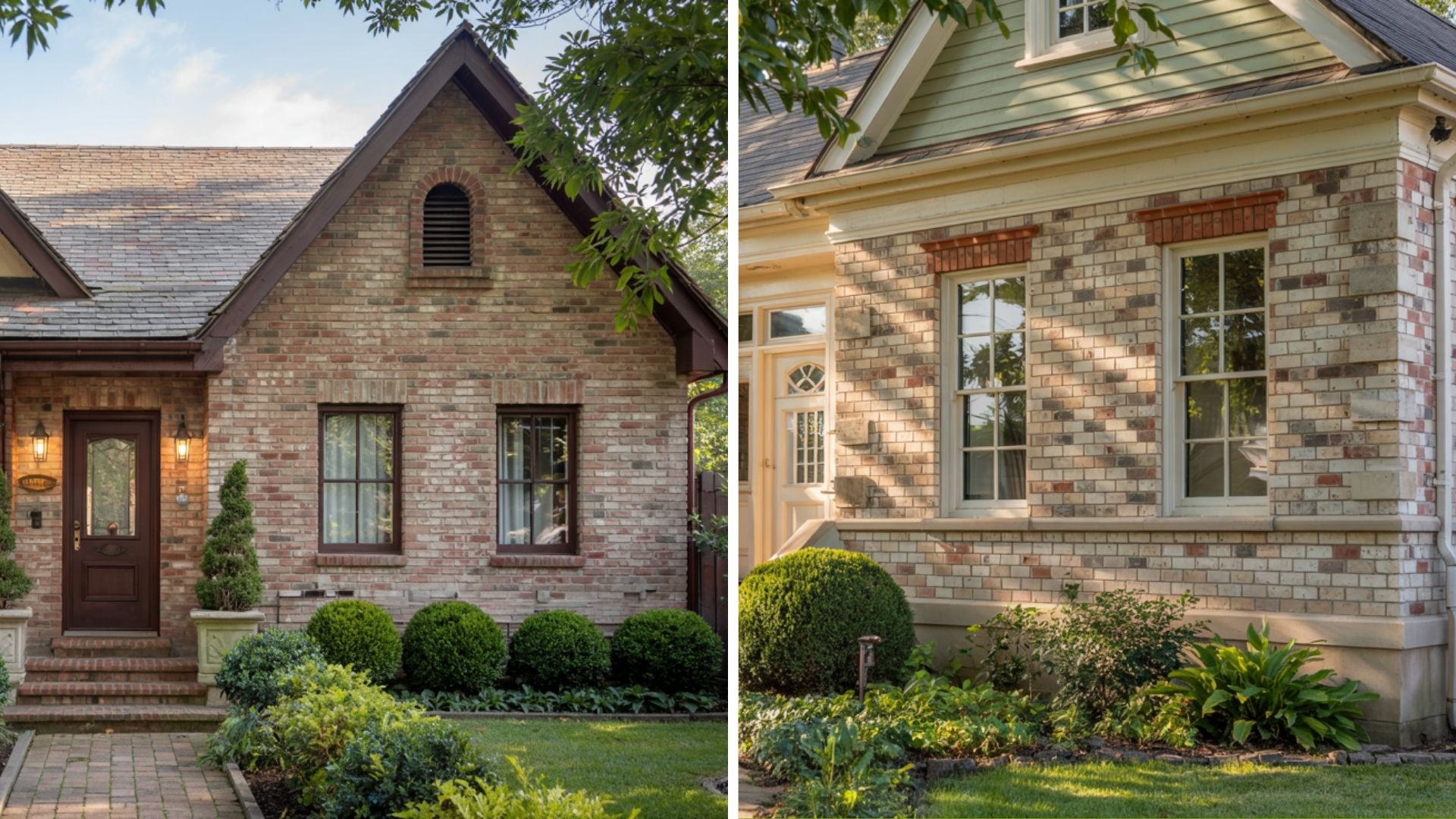
Multi-toned brick already carries considerable visual variation. The safest approach is to pull one quieter tone from the brick and repeat it across a larger painted surface.
25. Mixed Red/Brown Brick + Beige + Dark Brown Trim
Beige connects the red and brown portions of the brick without adding another strong hue. Dark brown trim repeats the deepest brick tones and adds structure to the exterior. Keep the front door simple if the brick already has high contrast.
Best for: Traditional, Tudor, and ranch homes.
26. Multi-Toned Grey/Red Brick + Warm Grey + Off-White Trim
Warm grey connects the brick’s cool and warm sections. Off-white trim provides definition without making the red portions look too orange. Compare several warm greys since some may read green or purple beside mixed brick.
Best for: Transitional and traditional homes.
27. Multi-Colored Brick + Pale Green + Cream Trim
Pale green stays neutral enough to work with varied brick colors without clashing with any single tone. Cream trim maintains warmth throughout the palette.
Best for: Cottage and eclectic-style homes.
Trending Exterior Brick and Paint Combinations
Certain color directions stay consistently popular because they coordinate with many brick types and home styles. These are directional guides, not prescriptions. Always test against your specific brick and roof before buying.
1. Earthy Neutrals
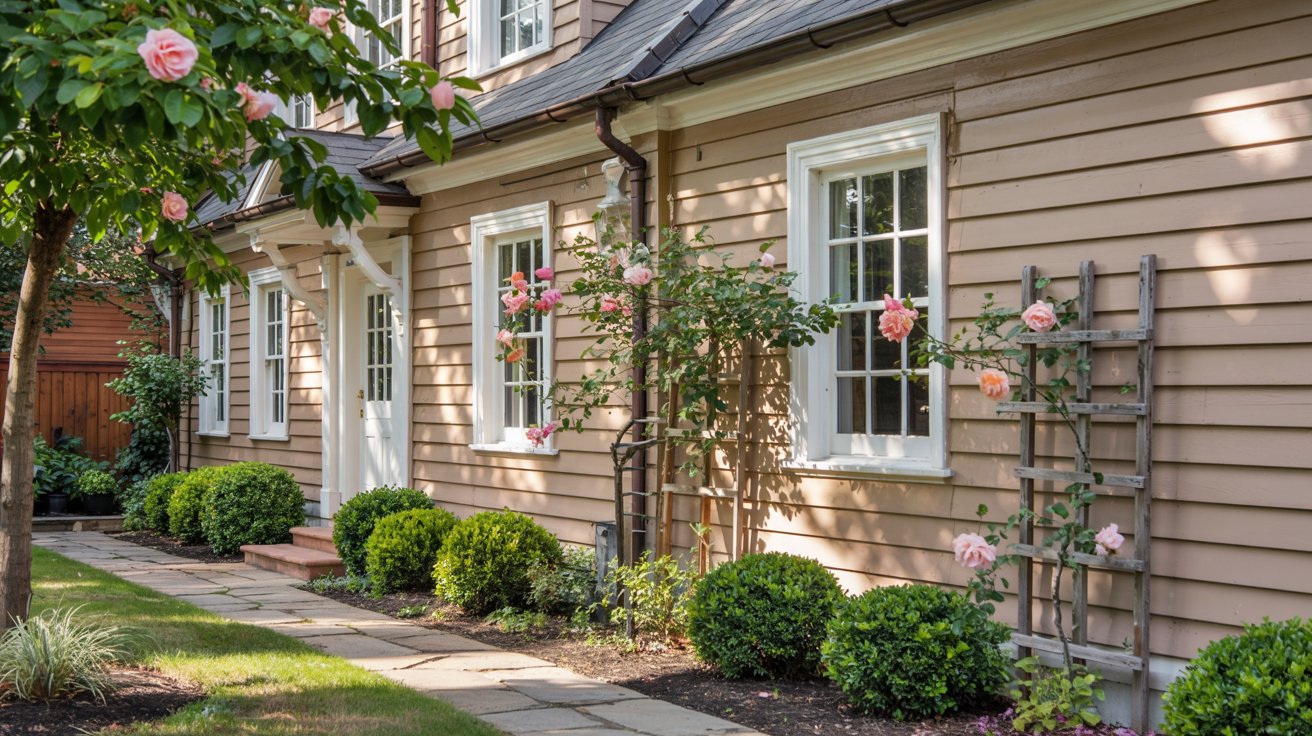
Earthy neutrals age well and connect brick to stone, wood, roofing, and landscaping.
Warm Taupe + Cream: Works across all brick types. Taupe adds depth without going dark.
Greige + Soft White: Bridges warm and cool tones. Pairs well with both red and grey brick.
Sand + Warm White: Suits tan and brown brick. Creates calm exteriors that read with the surroundings.
Mushroom + Bronze: Adds warmth to mixed brown brick while bronze hardware ties in the earthy character.
2. Muted Greens
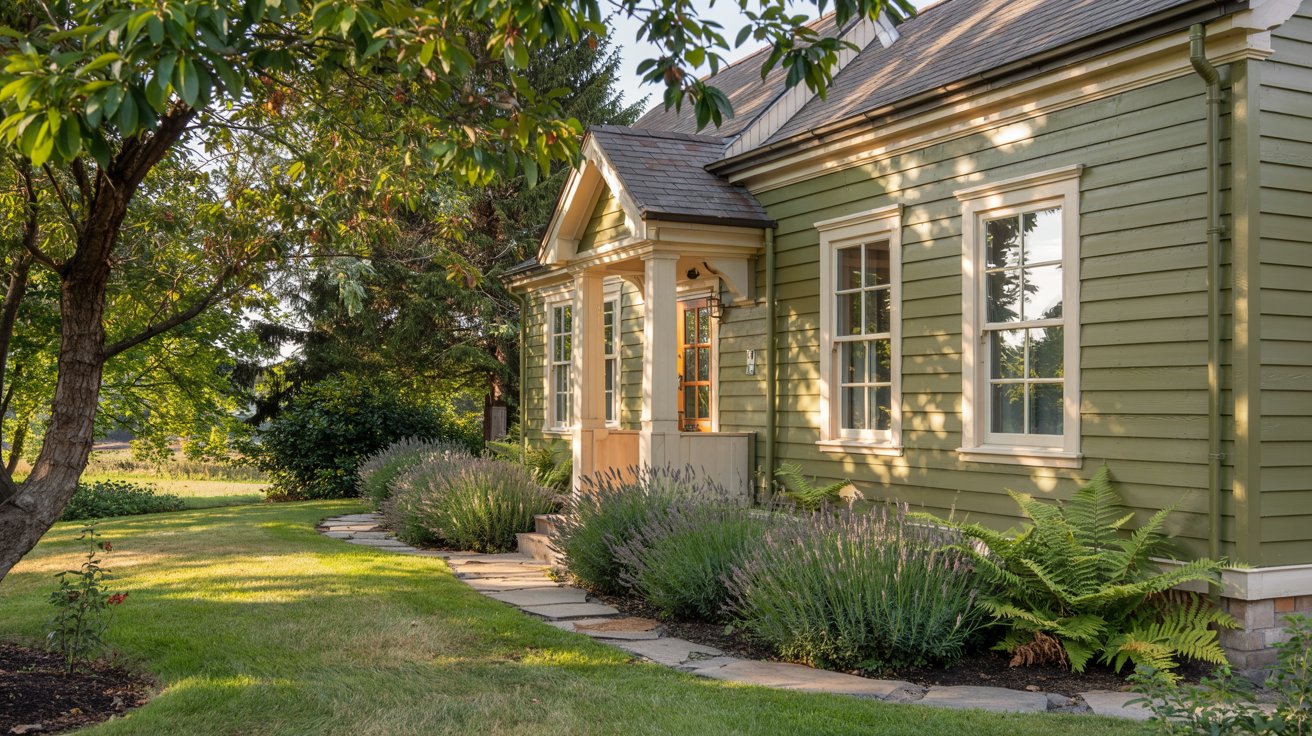
Muted greens add life to nearly any brick color without clashing. Avoid clear or bright greens that can create an overly strong red-and-green contrast.
Sage Green + White Trim: Works with almost any brick. Organic and calming.
Olive Green + Cream Trim: Deeper and warmer. Cream trim stops it from reading cold.
Grey-Green + Taupe: A quieter option that suits brick with brown or beige undertones.
3. Warm Greys
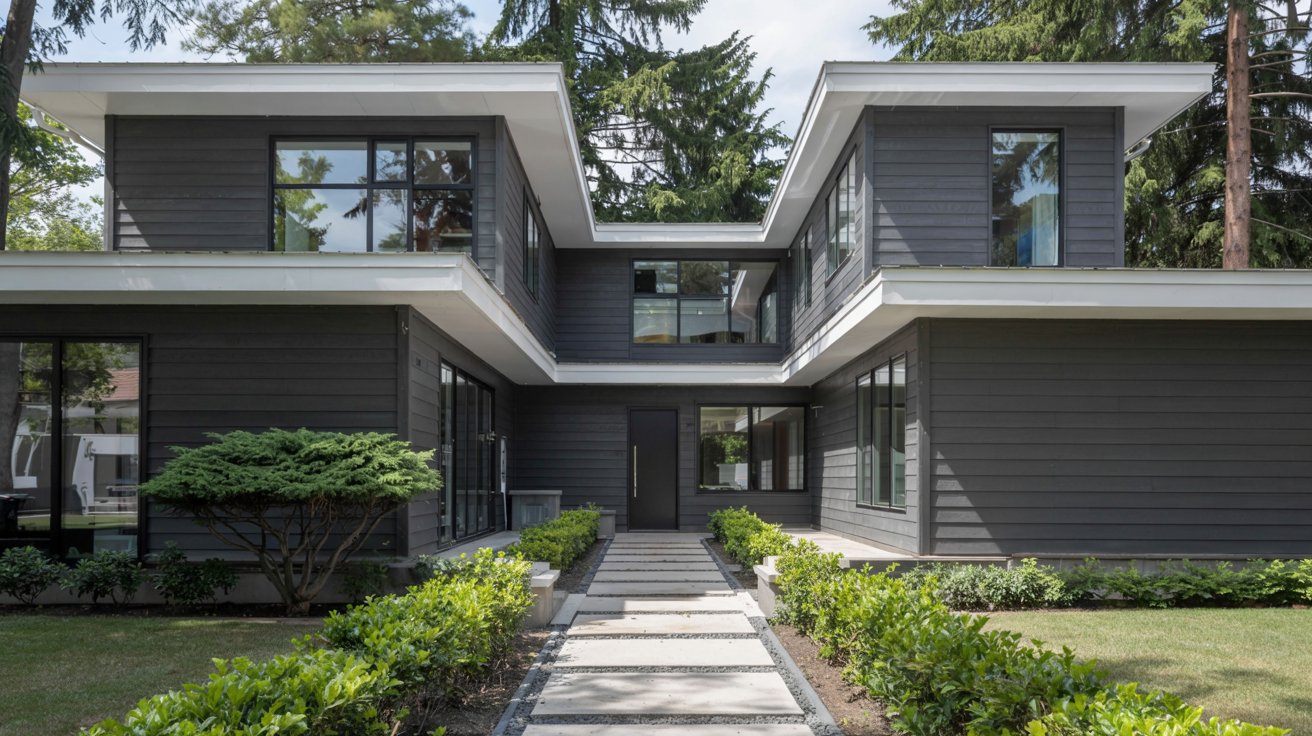
Grey works well on brick homes, but its undertone matters more than the label on the chip. Warm grey suits orange or tan-leaning brick. Cool grey suits brick with purple or blue undertones.
Warm Grey + White Trim + Black Door: Works across most brick types. Warm grey stops the palette from reading cold.
Charcoal + White Trim: Bold and contemporary. Works best with red or grey brick on modern-style homes.
Grey-Blue + Cream Trim: Subtle blue undertones. Pairs well with grey brick that has cool flecks.
4. Charcoal Accents
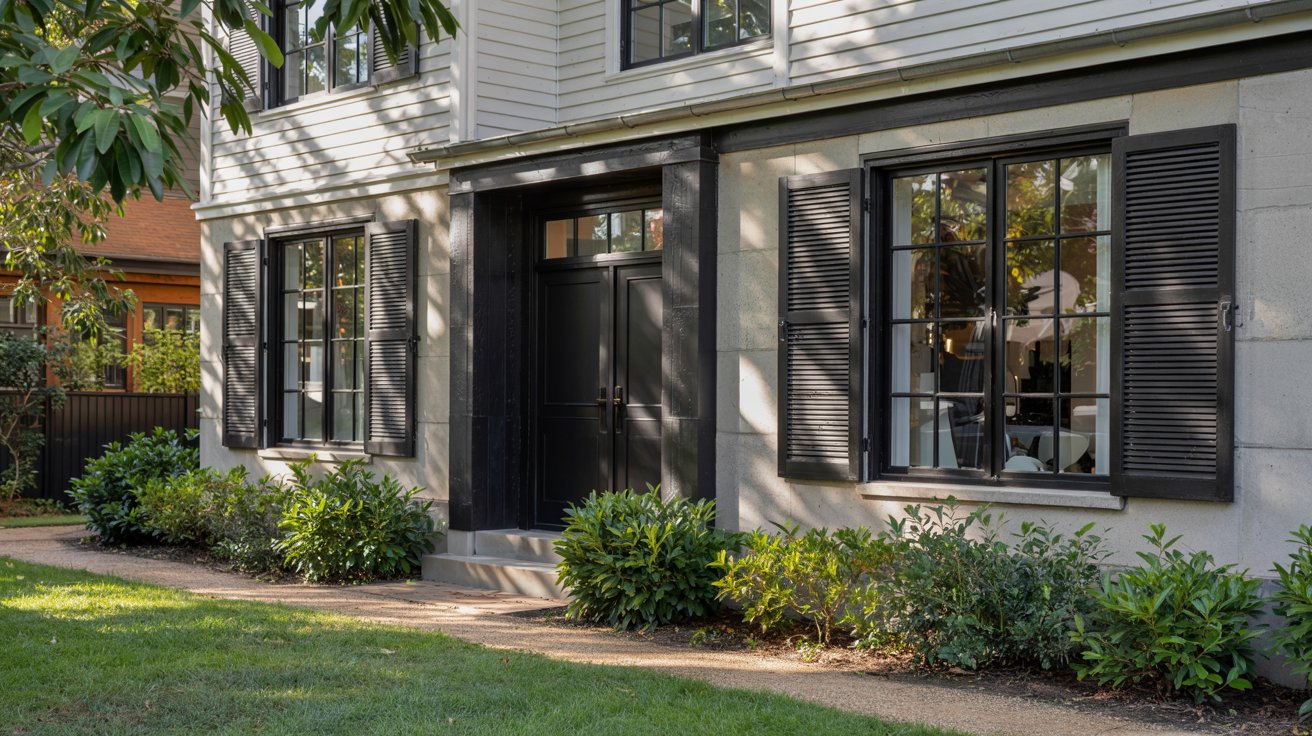
Charcoal and black help define windows, doors, and rooflines. Use them selectively. Applying them to every detail can overwhelm the brick.
Black Front Door: Works with nearly any brick-and-body combination.
Charcoal Shutters: Frame windows well, especially with light-colored brick or body paint.
Black Window Frames: Create architectural definition and suit any color scheme.
5. Monochromatic Palettes
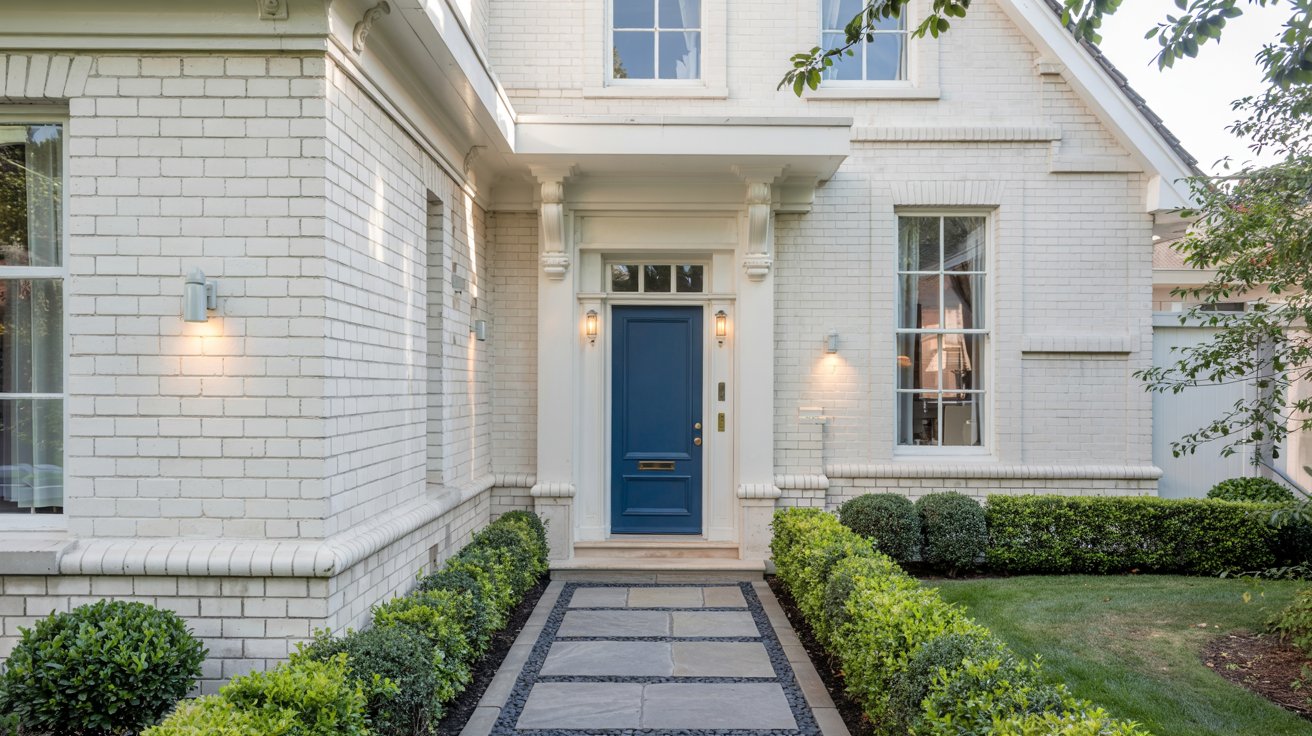
Sticking to one color family in different values lets the architecture carry the visual interest.
White on White: Keep brick, trim, and siding in white tones. Save one bold accent for the door only.
Run varying shades of grey across brick, body, and trim. Add warmth through wood or bronze accents.
Warm Neutrals: All creams, taupes, or greiges in different values. Vary lightness so the architecture reads clearly.
How to Test Exterior Paint Colors Before Committing
Never choose an exterior color from a small paint chip or phone screen alone. The gap between a chip and a finished wall is significant.
Choose three finalists: Select a lighter option, a medium option, and a deeper option from the same color family. Comparing related shades makes undertone differences easier to spot.
Paint large boards: Apply two coats to moveable boards rather than small patches directly on the facade. Position the boards beside the brick, mortar, roof edge, and window frames.
Check multiple walls: A color can read warm on the sunny front and cool on a shaded side. Move sample boards around the exterior before deciding.
View throughout the day: Check each option in morning light, midday sun, late afternoon, and on a cloudy day. The same color can look noticeably different across all these conditions.
Stand across the street: Exterior colors are normally seen from a distance. Check whether the body and brick read as connected, whether the trim defines architectural edges clearly, and whether the door gets the right amount of attention.
Should You Paint the Brick?
Painting natural brick is different from painting nearby siding or trim. Once brick is painted, returning it to its original state is difficult and may damage the surface. This decision deserves careful consideration before any product is applied.
Keep Brick Natural When:
- The brick is in good condition and suits the home’s style.
- The property is historic or sits within a protected district.
- You want lower long-term coating maintenance.
- The brick’s texture and color variation add character to the facade.
Consider Painting Brick When:
- Different brick sections from additions or repairs do not match.
- The brick has already been painted in a previous update.
- A major exterior update requires a unified finish across all surfaces.
- Moisture and mortar issues have already been corrected by a qualified mason.
Moisture and Masonry Risks
Brick and mortar must manage and release moisture. A non-vapor-permeable coating can trap moisture inside the wall, causing peeling and masonry damage over time.
The Brick Industry Association advises caution with conventional film-forming paints on clay brick and recommends checking vapor permeability before any coating is applied.
Note: If your brick shows signs of structural damage, water infiltration, crumbling mortar, spalling, or efflorescence, address those issues with a qualified masonry professional before applying any coating or paint product.
Alternatives to Paint
Limewash, mineral-based coatings, masonry stains, and German schmear create different coverage levels and allow more moisture movement than conventional latex paint.
Each product has specific preparation requirements. Confirm that any product suits your specific brick type before ordering.
When choosing a product, the exterior paint brand matters considerably on masonry since elastomeric formulas perform very differently from standard latex on porous brick surfaces.
Finding the Right Exterior Brick and Paint Color Combination
The right exterior brick and paint color combinations start with the colors already built into your home.
Identify your brick’s undertones and mortar tone first. Then factor in your roof, windows, and other fixed surfaces before choosing body, trim, and accent colors.
Red brick, brown brick, tan brick, grey brick, and multi-toned brick all have proven pairings in this guide. Test large sample boards in real light across multiple walls before buying. A combination that looks right in a photo may read very differently on your specific facade.
If you are planning a broader exterior update, coordinating your siding and trim choices alongside the brick palette from the start saves time and avoids costly repaints later.
Frequently Asked Questions
What paint sheen is best for exterior brick?
Satin or low-luster finish. Flat paint traps dirt and moisture in porous brick. High gloss highlights imperfections. Satin is the most practical and widely recommended sheen for masonry surfaces.
How long does paint last on brick?
Five to ten years on average, depending on climate, product quality, and surface preparation. Elastomeric coatings typically outlast standard latex on masonry by several years.
Can you paint over already-painted brick?
Yes, if the existing coating is sound and fully adhered. Peeling, chalking, or moisture-damaged paint must be stripped and the surface repaired before recoating.
Do I need primer on brick before painting?
Yes. A masonry-grade primer seals the porous surface, improves adhesion, and reduces the number of topcoats needed. Skipping primer on bare brick leads to uneven coverage and early peeling.