Your closet has a bigger effect on your day than you think. You wake up, head to get dressed, and if everything is in the wrong place, you start feeling frustrated.
I have worked with enough homes to know this: the right types of closets, placed in the right spots, change how a space actually feels to live in.
Most homes already have several types of built-in closets. The problem is that nobody tells you what each one is actually meant for.
This guide walks you through seven different types of closets, what each one is designed for, and what to look for when setting one up.
7 Closet Types and What Each One Is Built For
Most homes already have several of these. The difference is knowing what each one is built for and how to set it up so it actually works.
1. Walk-In Closet
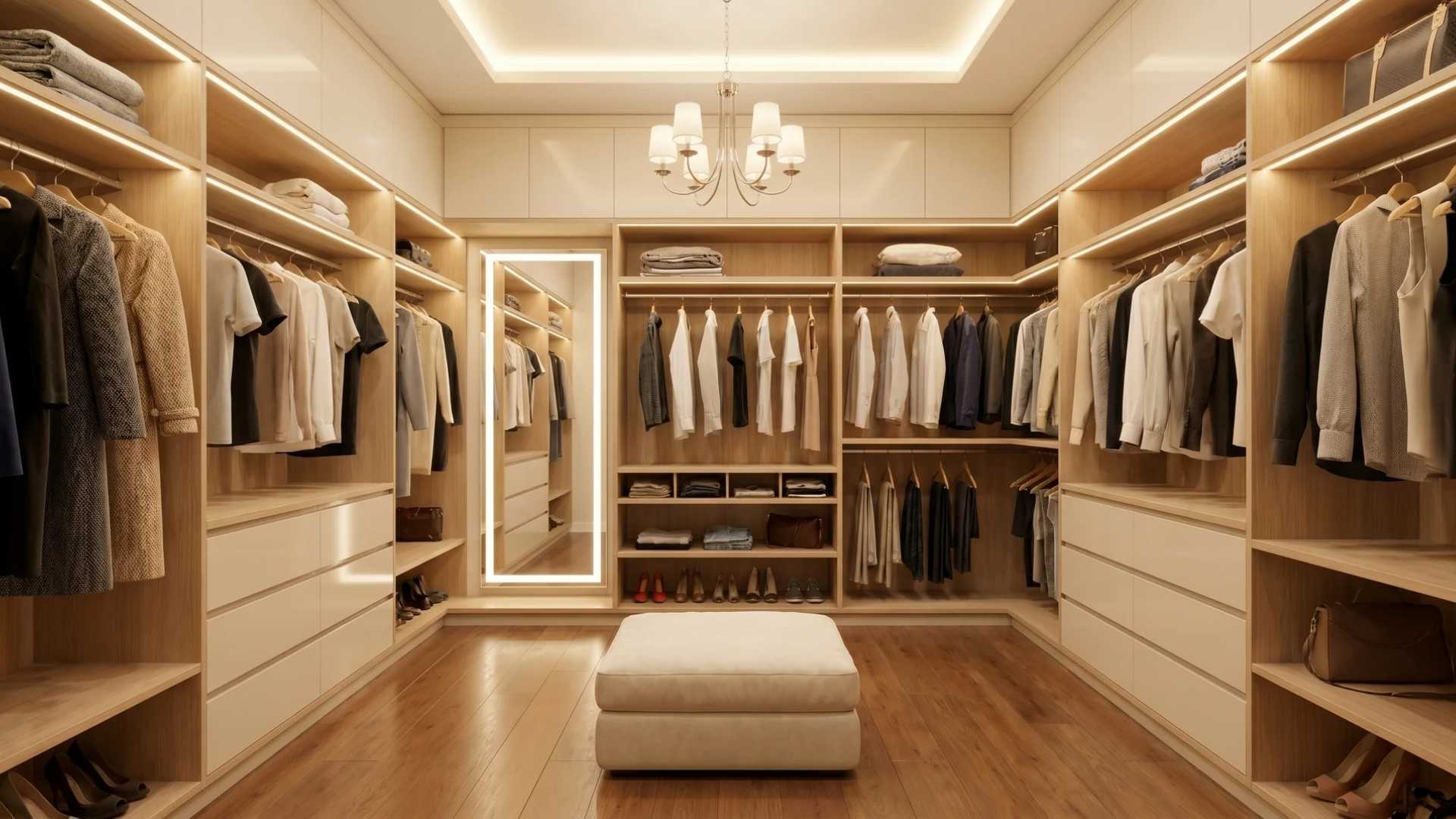
A walk-in closet is a room you step inside to access your clothes. It is most common in primary bedrooms and master suites.
To walk through it comfortably, you need at least 4 feet of clearance. Most well-used walk-ins start at 5×8 feet, with shelving along two or three walls.
What works well inside a walk-in:
- Hanging rods at two heights (one for long items, one for shorter pieces like jackets and shirts)
- Shoe shelves or a low shoe rack along one wall
- A built-in drawer unit to replace the need for a dresser
- A small mirror or a full-length mirror on the back wall
- Good overhead lighting so you can actually see what you own
One thing I always tell clients: plan the layout before you buy the storage. A U-shaped or L-shaped setup tends to use the space better than a single-wall design.
2. Reach-In Closet
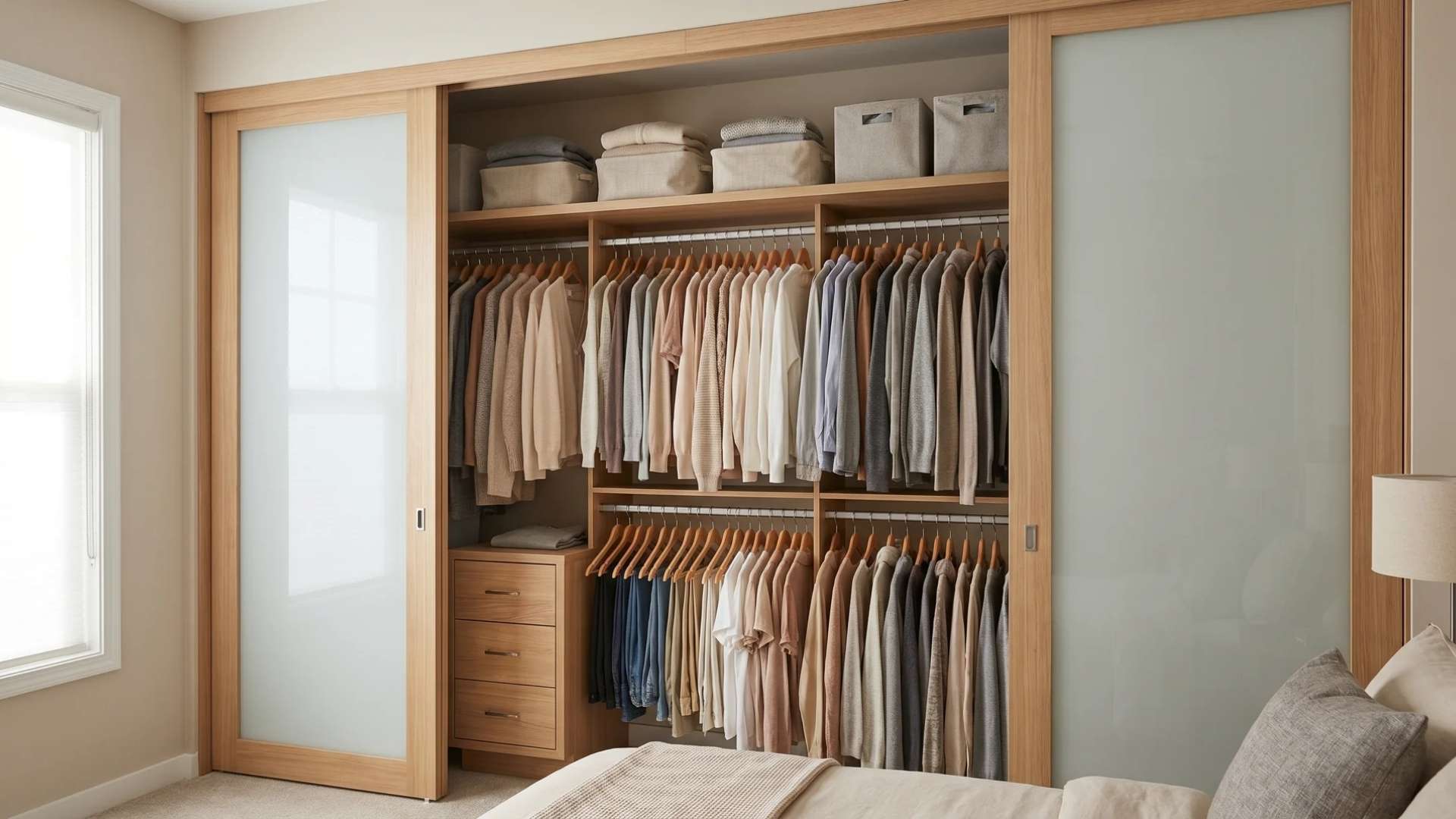
The reach-in Closet is the one you find in almost every bedroom and hallway in the country. It is a shallow, built-in space that you access from the front, without stepping inside.
A standard reach-in is about 6 feet wide and 2 to 3 feet deep. It usually comes with a single hanging rod and one shelf above it. That setup works, but it wastes a lot of space.
Small upgrades that make a big difference:
- Add a second hanging rod below the first for shirts, jackets, and folded pants
- Put in a shelf unit or drawer tower on one end for folded items and accessories
- Swap out a swinging door for a bi-fold or sliding door if floor space is tight
The door type matters more than most people realize. Bi-fold doors are good for narrow spaces because they fold back on themselves.
Sliding doors work well when you need more floor clearance in front of the Closet. French doors look great, but require more swing room.
3. Linen Closet
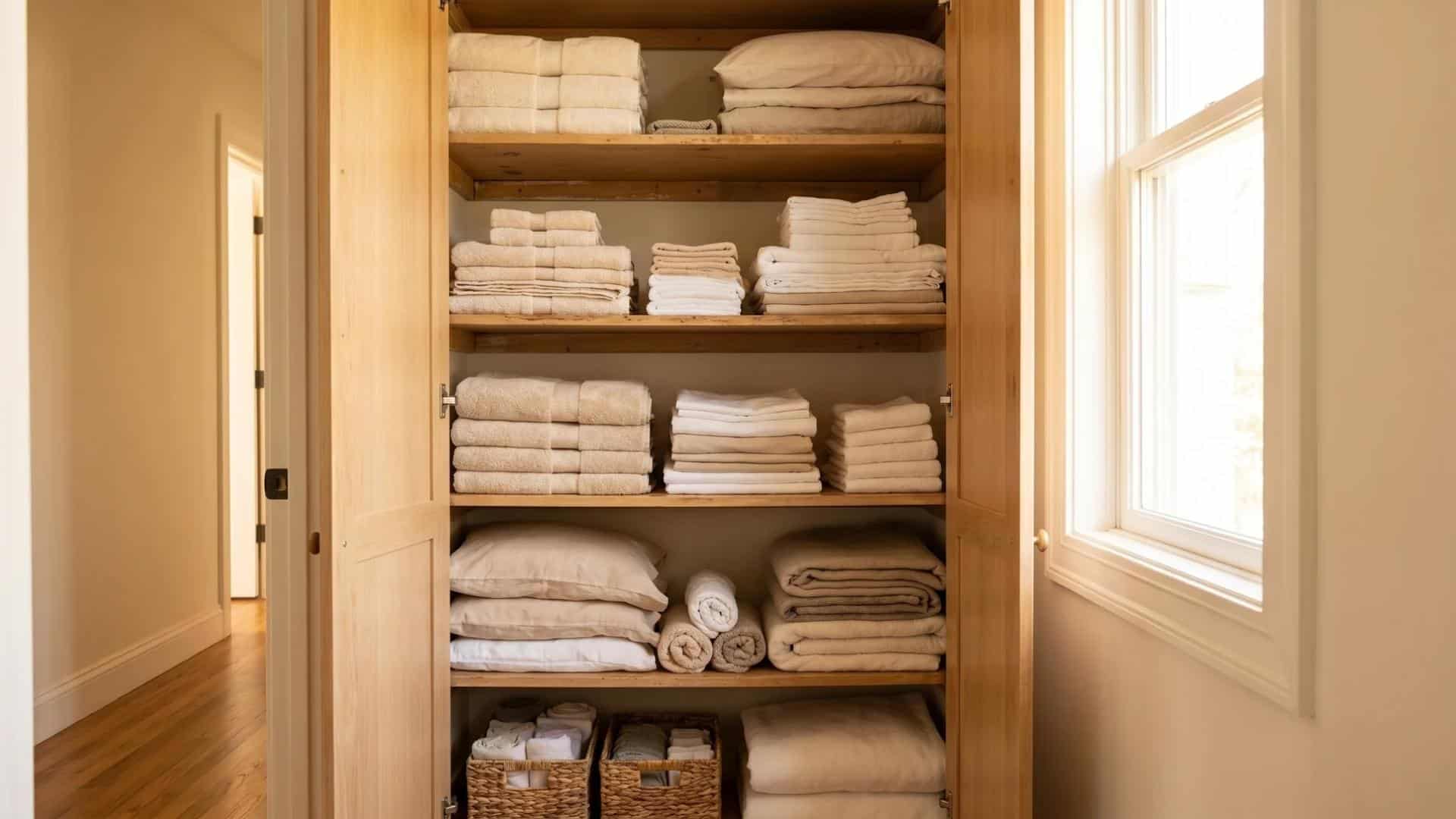
Linen closets are the smallest type of Closet in most homes. They live in hallways, usually between a bedroom and a bathroom, and their only job is to hold towels, sheets, pillowcases, and extra bathroom supplies.
They are narrow and shallow by design. Unlike a reach-in closet, a linen closet has no hanging rod. It is all shelves.
What makes a linen closet actually useful:
- Varying shelf heights: closer spacing near the top for washcloths and hand towels, wider spacing lower down for bulkier comforters and pillows
- Doors to keep things looking neat in the hallway, either hinged or bi-fold
- Labels on each shelf so every person in the house puts things back in the right place
A common mistake is piling towels too high. They tip over, things fall, and eventually the whole Closet becomes a guessing game.
Try the fold-and-stand method instead: fold towels into thirds lengthwise, then roll or stand them upright so you can see each one.
4. Pantry Closet
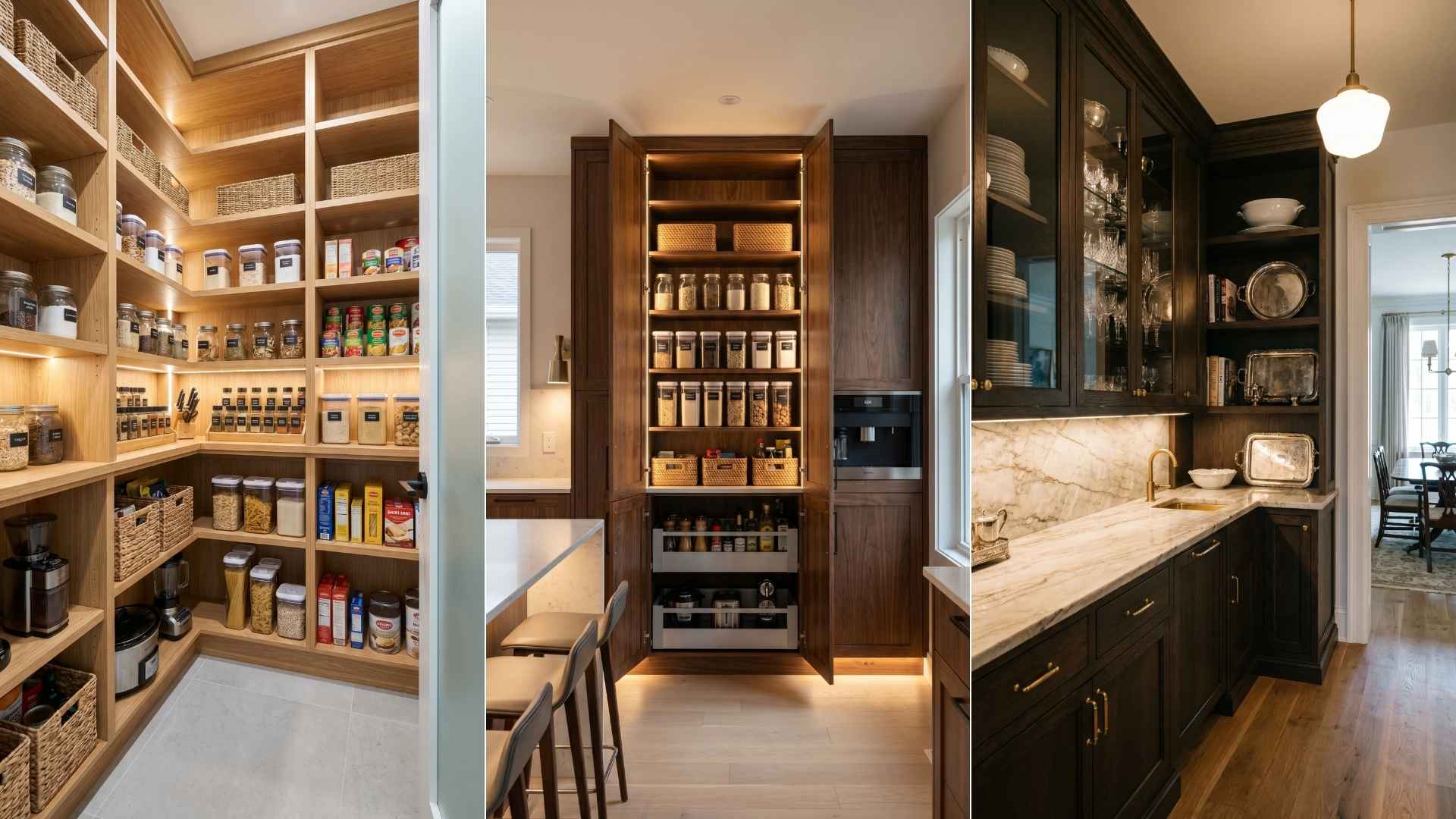
A pantry closet is a dedicated space for food, kitchen supplies, and small appliances. It keeps your counters clear and speeds up cooking because everything has a fixed spot.
There are three main formats, and they serve different needs:
- Walk-in pantry: A small room just for kitchen storage. You can see everything at once, which is helpful for larger households. You need at least a 4×4-foot space to make it work.
- Cabinet pantry: Built into the kitchen layout to match your existing kitchen cabinet styles, with adjustable shelves and pull-out drawers. Good for everyday access in a tighter kitchen.
- Butler’s pantry: A transitional space between the kitchen and dining area. It often includes a countertop, a small sink, and storage for serving pieces and entertaining supplies.
How to set up pantry shelves so they actually work:
- Shallow shelves near eye level for spices, canned goods, and things you grab daily
- Deeper shelves lower down for bulky appliances and large containers
- Pull-out baskets for produce so air circulates, and nothing gets hidden
- A dedicated spot for snacks at a lower height if you have kids
The biggest pantry mistake I see is putting everything at the same shelf depth. That forces you to move things to get to what is behind them, and the pantry stays messy no matter how often you organize it.
5. Coat Closet
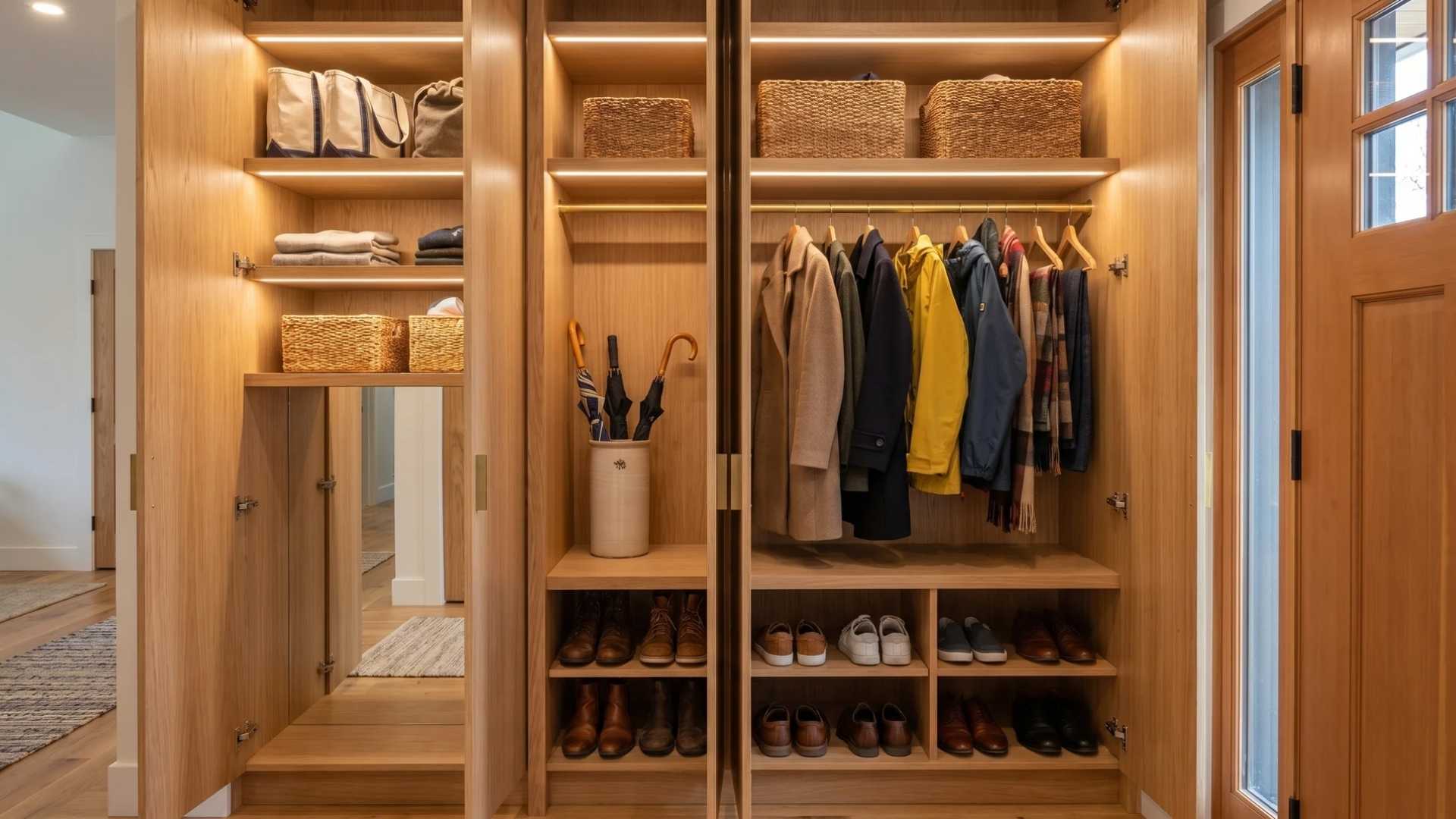
A coat closet sits near the front door and holds everything you grab on your way out: coats, boots, umbrellas, bags, and anything else that lives in that in-between zone of your home.
Most coat closets come with a single rod and one shelf. That is enough for a single person. For a family, it fills up fast.
Ways to make a coat closet work harder:
- Add hooks at two heights inside the door, one for adults, one for kids, so that everyone can reach their own things
- Put a small shoe rack or basket along the bottom for boots and sneakers
- Use the top shelf for seasonal items. Winter gear goes up there in summer, and summer gear goes up there in winter.
- Add a narrow drawer unit or bin for smaller items like gloves, sunglasses, and dog leashes.
A well-organized coat closet can replace the need for a dedicated mudroom in smaller homes. The key is giving every item a fixed spot.
When things land in the same place every time, the entry area stays clean with very little effort.
6. Utility Closet
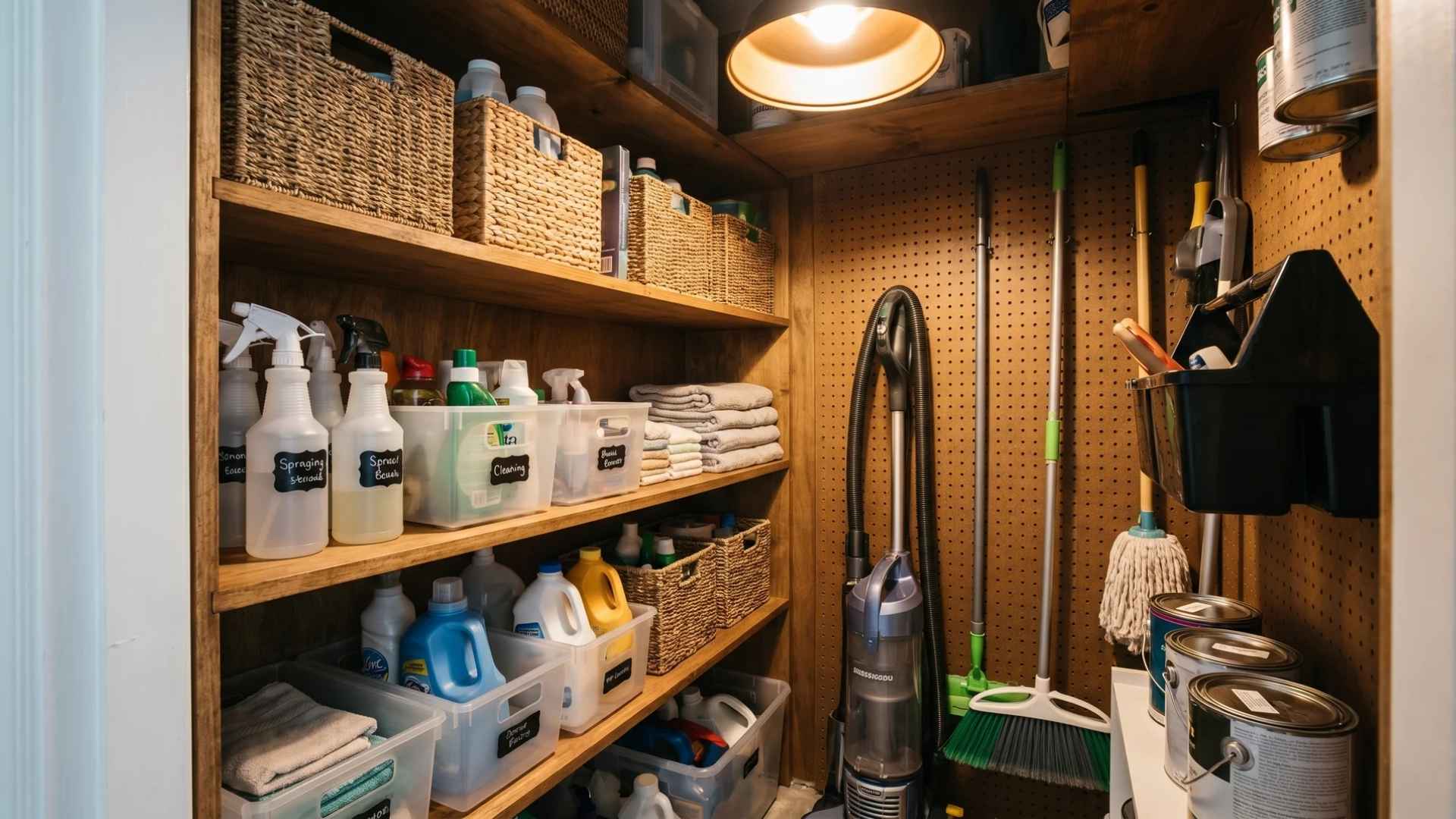
A utility closet holds the household items that do not belong anywhere else. Cleaning supplies, tools, vacuum cleaners, brooms, mops, paint cans, and gardening supplies. This is where they go.
Utility closets are usually found near the laundry room, in the basement, or close to the garage. If you are working with a small laundry room, placing the utility closet right beside it keeps cleaning and laundry supplies in one zone.
A cleaning closet placed near the kitchen gets used. The same Closet tucked into a back corner gets ignored.
What to put in a utility closet (and how to keep it organized):
- Heavy-duty shelves along the back wall for larger items and containers
- Hooks on the inside of the door for brooms, mops, and dustpans
- Wire baskets or bins grouped by task: one for cleaning products, one for tools, one for garden supplies
- Labels on each bin so things go back to the right spot
The most useful thing you can do is group by task, not by size. A cleaning basket with everything you need to clean a bathroom means you grab one thing and go. That makes the Closet worth using every time.
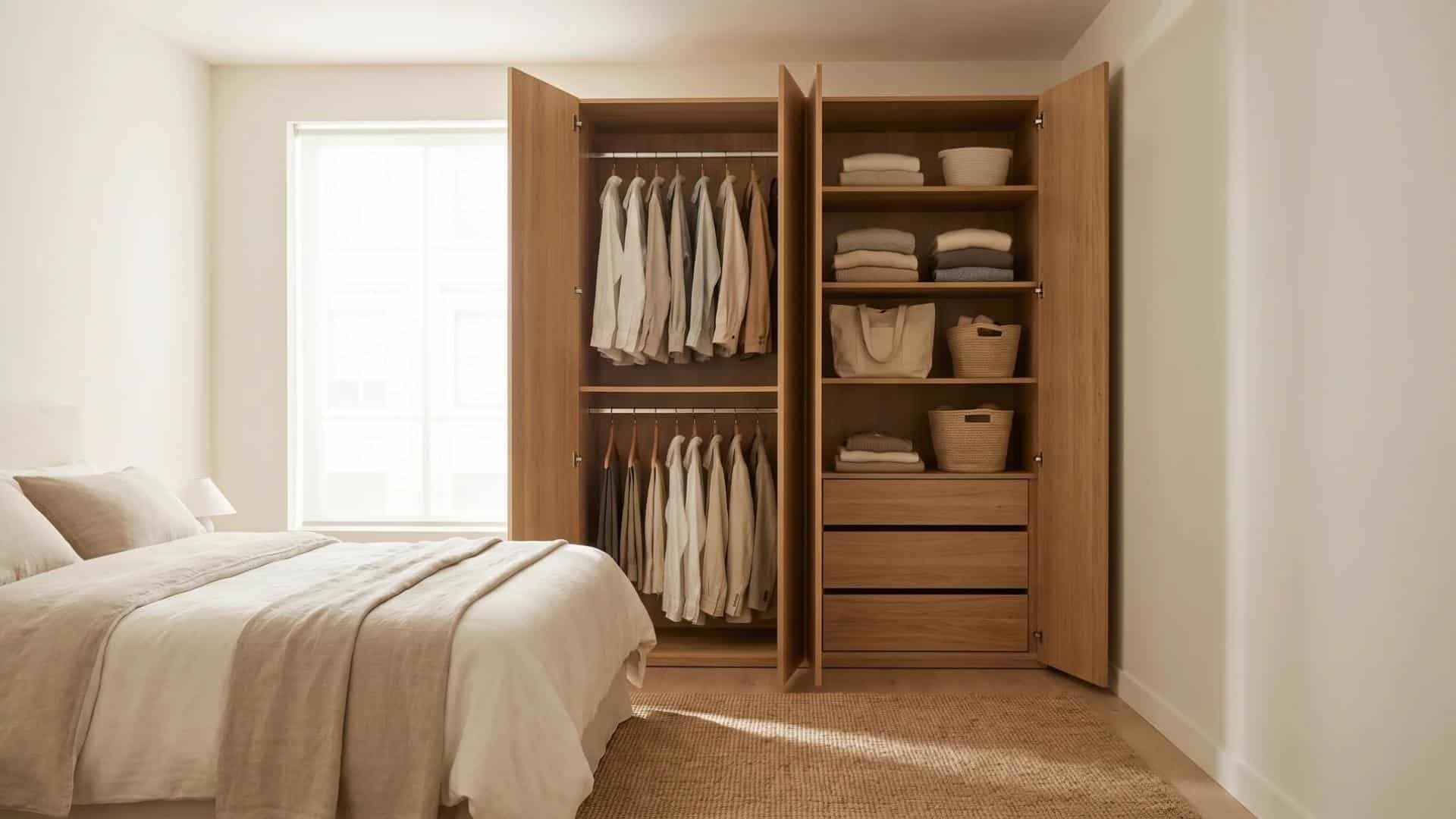
7. Wardrobe or Freestanding Closet
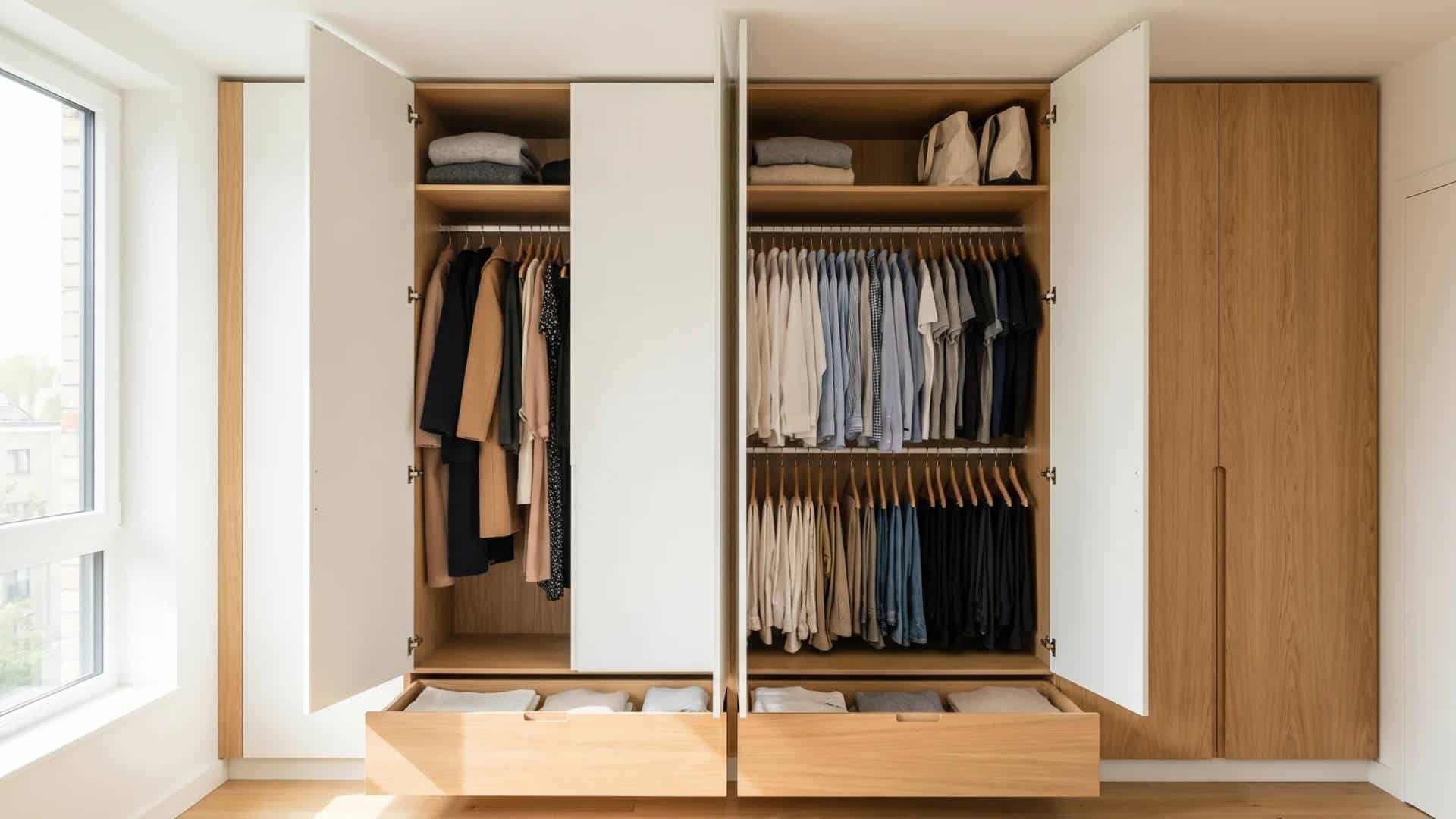
A wardrobe is a freestanding piece of furniture that serves as a closet. It includes hanging space, shelves, and sometimes drawers, all in one unit. You do not need a contractor to install it.
This type of Closet is the go-to solution for older homes that were built without built-ins, apartments where you cannot make permanent changes, or any room that needs more storage fast.
What a good wardrobe should include:
- A full-length hanging section for dresses, coats, and longer items
- A shorter double-rod section for shirts and folded pants
- Shelf space at the top for bags, boxes, or folded sweaters
- Drawers at the bottom of the unit allow
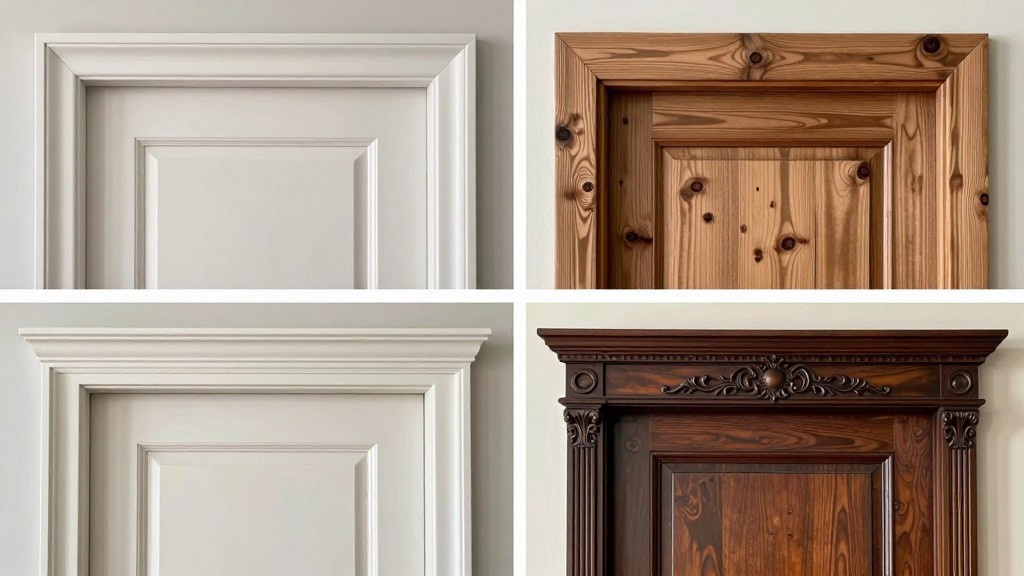
Freestanding wardrobes come in a wide range of styles. A sleek white unit works in a modern room. A darker wood armoire works well in a more traditional setting.
The biggest advantage is flexibility: you can move it if you redecorate or take it with you when you move.
One placement tip: put the wardrobe on the wall opposite your bed. It keeps the room visually balanced and makes it easier to see your full wardrobe at a glance.
How to Pick the Right Closet for Your Space
Before you buy anything or start a renovation, ask yourself three questions:
1. What am I storing? Clothes need hanging rods. Food needs shelves at different depths. Tools need hooks and baskets.
2. How much space do I have? A walk-in needs at least 4 feet by 4 feet. A reach-in works in a space as shallow as 2 feet. A freestanding wardrobe needs only the footprint of the unit itself.
3. Is this permanent or flexible? Built-in closets are fixed. Wardrobes and freestanding systems move with you.
Conclusion
Every home has storage needs that differ slightly. A family of four needs a coat closet that can hold double the gear.
A single person in a studio apartment needs a wardrobe that does everything a built-in would. The different types of closets covered here are not just about what they hold; they are about where they go and how they fit into the way you actually live.
Start with the room that gives you the most daily stress, and work from there. Small changes in the right Closet can make your whole home feel more put-together.
Which Closet in your home needs the most attention right now? Let me know in the comments.
frequently asked questions