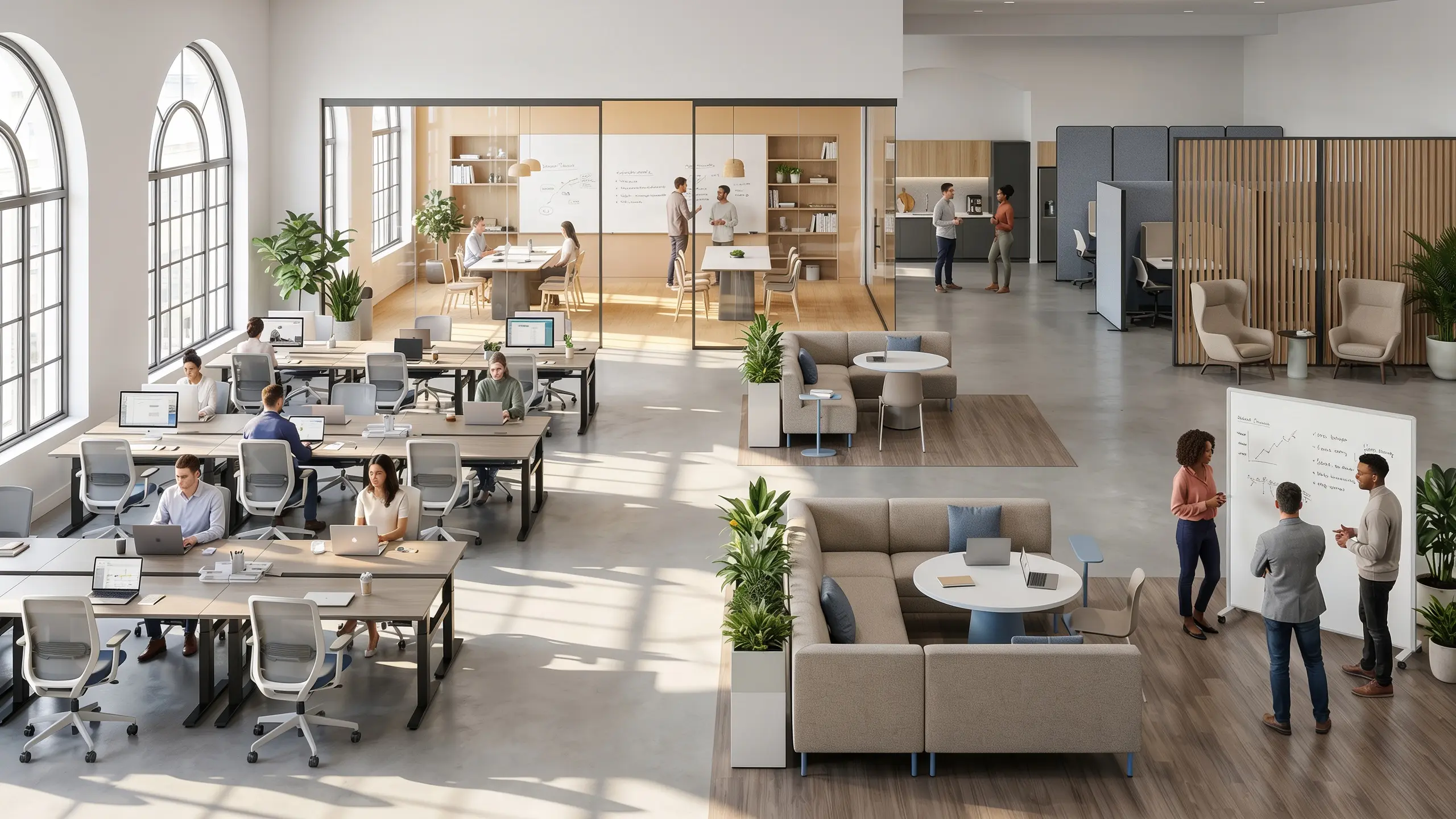
A decade ago, the open-plan office was going to save us all. Tear down the walls, let ideas flow freely, watch collaboration soar.
Then reality hit: noise complaints piled up, productivity dipped, and employees started booking conference rooms just to get a quiet hour alone.
Office design has moved past that experiment. The best office layouts today aren’t built around a single philosophy.
They’re built around how your team actually works, which days they’re in, what tasks demand focus, and what gets people off the couch and onto the commute.
JLL’s Global Occupancy Planning Benchmark reports that 67% of office workers are now hybrid. They come in one to four days per week.
That means the office has to earn its place. Below are 15 proven office layout ideas, backed by data, design details, and honest trade-offs to help you design a space worth showing up for.
The 15 Office Layout Ideas
Check out creative ways to organize your office for productivity, collaboration, and style. From open workspaces to cozy corners, these ideas show efficient layouts that look modern and feel inviting.
Each idea balances functionality, comfort, and aesthetics to help you get the most out of your office.
1. Open-Plan Office Layout
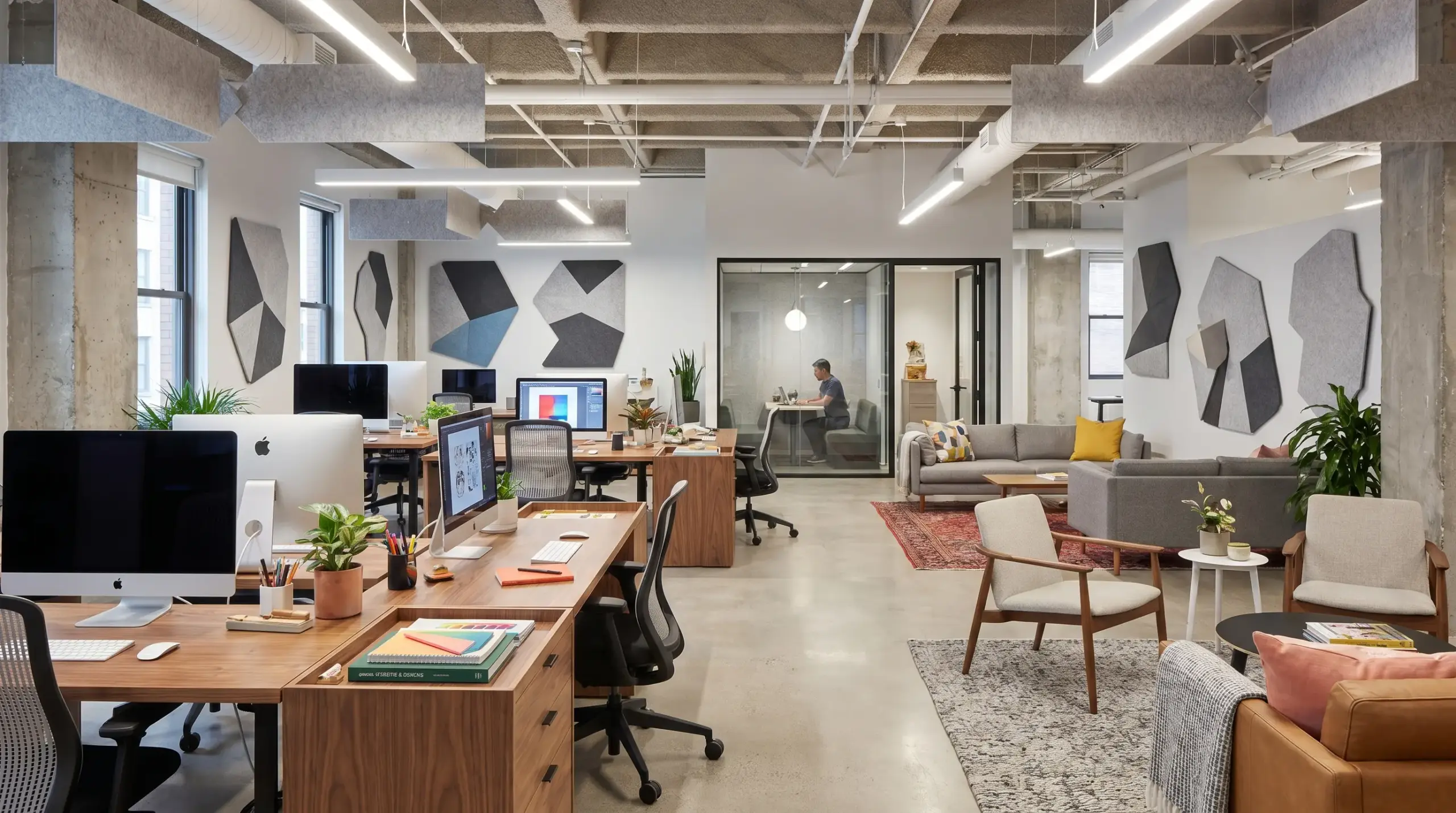
Modern offices still work, especially for creative teams and fast-moving companies, using desk clusters without full partitions. Noise can be an issue, so add acoustic panels, soft furnishings, and a nearby quiet room.
Best for: Startups, creative studios, sales floors
2. Hybrid Hub Layout
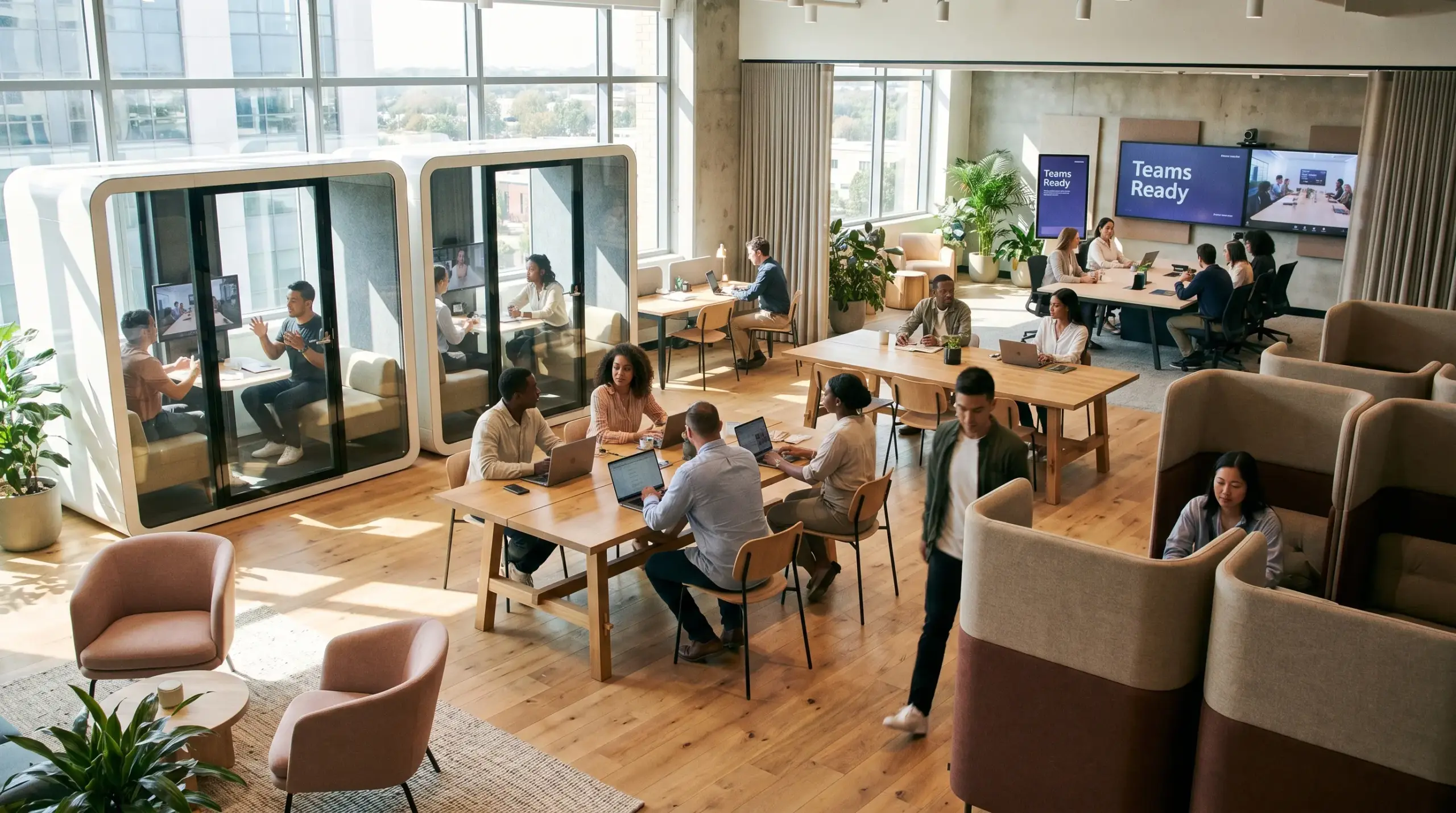
The hybrid hub layout replaces assigned desks with zones for video calls, collaboration, touchdown work, and quiet focus. Employees choose their spot based on daily tasks.
Design tip: Include “Teams Ready” rooms with quality cameras, wide screens, and good acoustics to make hybrid meetings smoother.
Best for: Companies with structured hybrid schedules, 3+ days in-office average
3. Activity-Based Working (ABW)
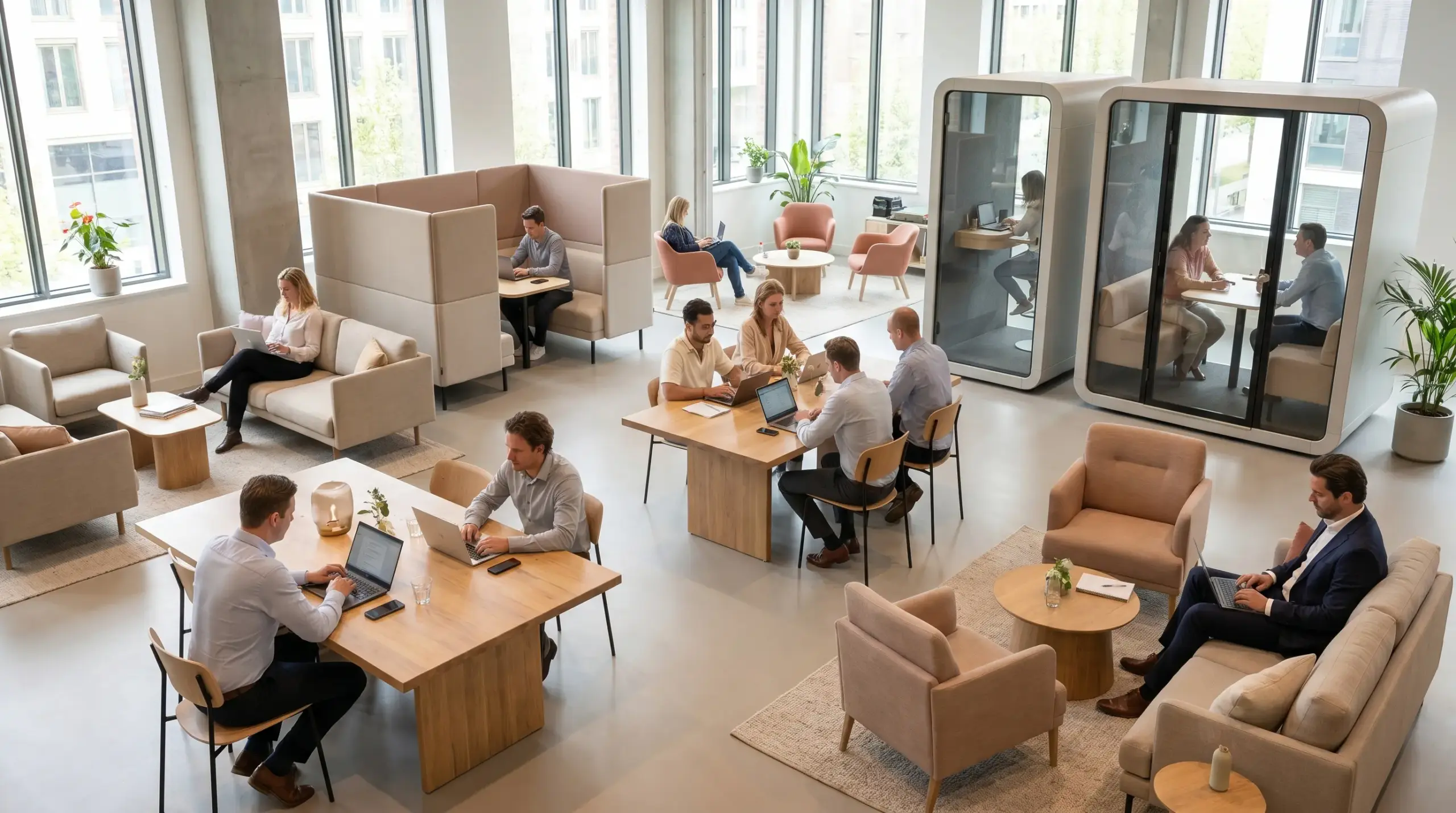
ABW goes one step further than the hybrid hub by removing assigned desks entirely. The office becomes a collection of zones, each designed for a specific type of work: deep focus, collaborative brainstorming, casual conversation, phone calls, and social breaks.
Research from YAROOMS puts activity-based layouts at the top for productivity gains because employees can match their environment to their work, rather than adapting their work to a fixed environment.
Best for: Knowledge workers, consulting firms, teams with varied daily task types
4. Team Neighborhood Layout
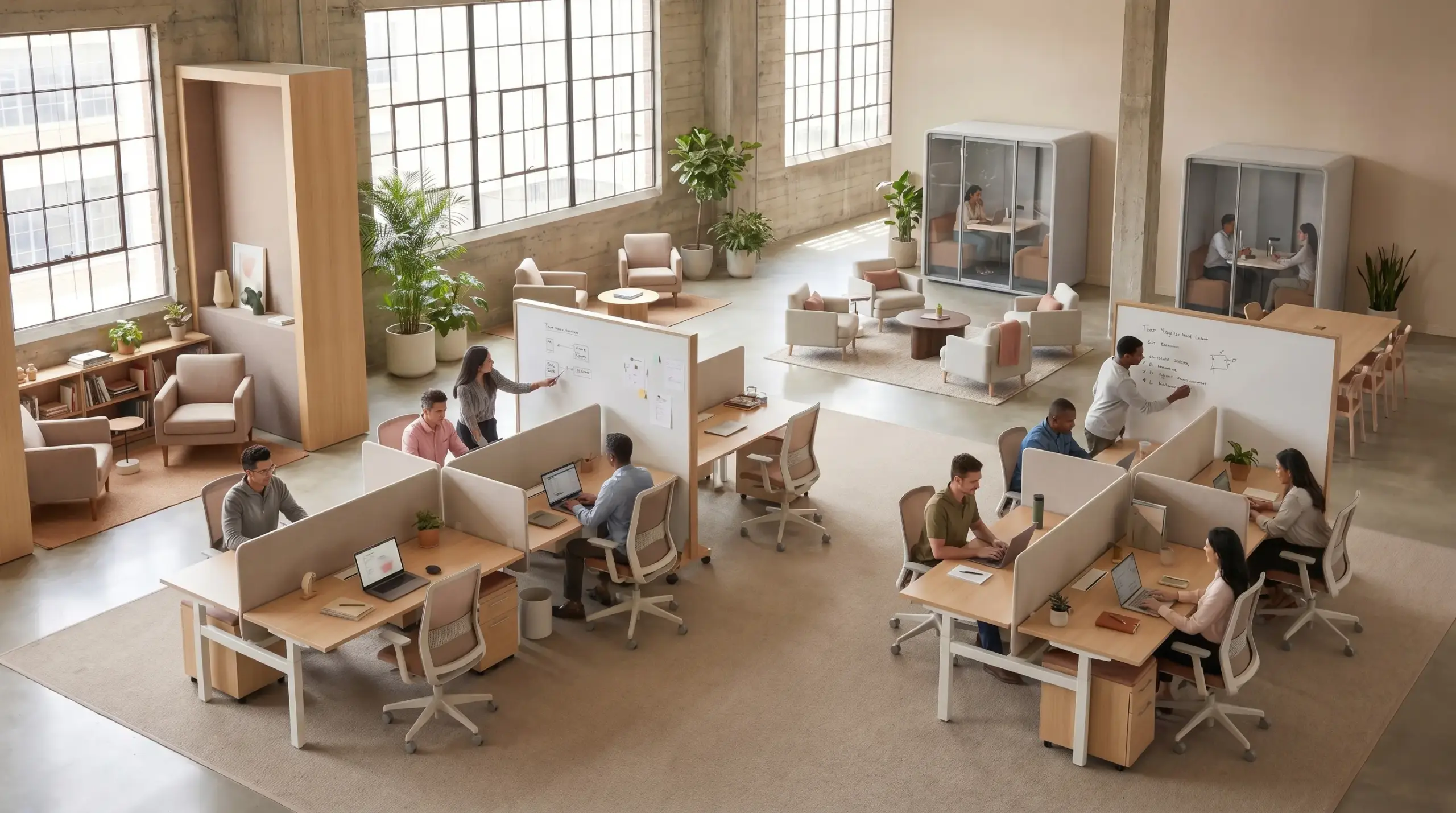
Instead of organizing by floor or alphabetically, neighborhoods group people by function: the marketing cluster here, the product team there.
Communication speeds up. Shared whiteboards and reference materials stay within arm’s reach.
To make neighborhoods feel intentional rather than random, use visual wayfinding. Color-coded zones, branded signage, and distinct flooring palettes for each team area all help.
Best for: Mid-size companies with clear departmental divisions
5. Traditional Cellular Layout
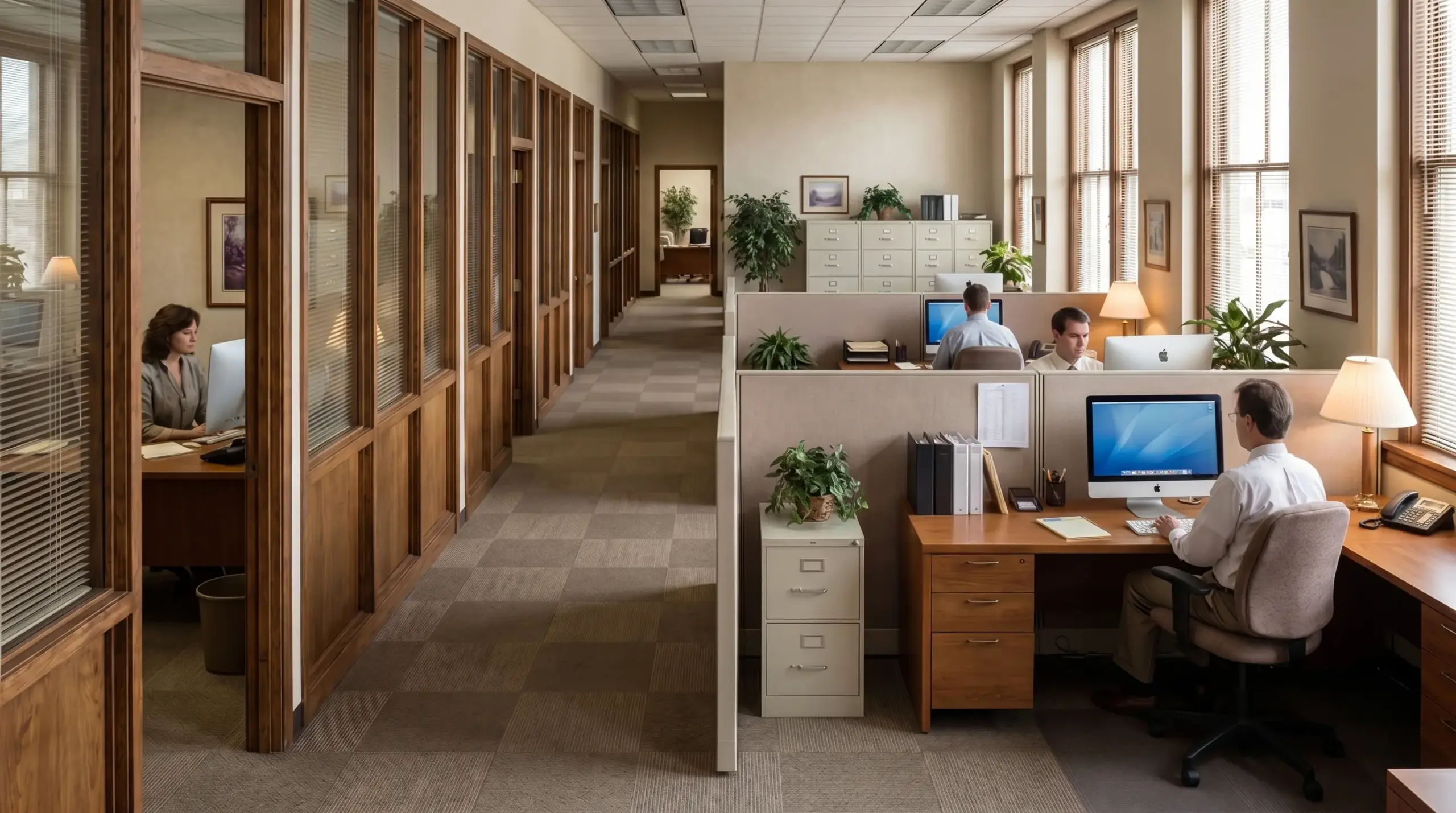
Private offices along a central corridor. It’s not fashionable, but it works in industries where confidentiality, concentration, or status signals matter: law, finance, senior executive spaces, and clinical environments.
The trade-off is that spontaneous collaboration drops to near zero. If cellular fits your work type, budget for shared casual zones: a kitchen, a lounge, or a shared meeting room where people actually cross paths.
Best for: Legal, financial services, healthcare administration
6. Reimagined Cubicle Layout
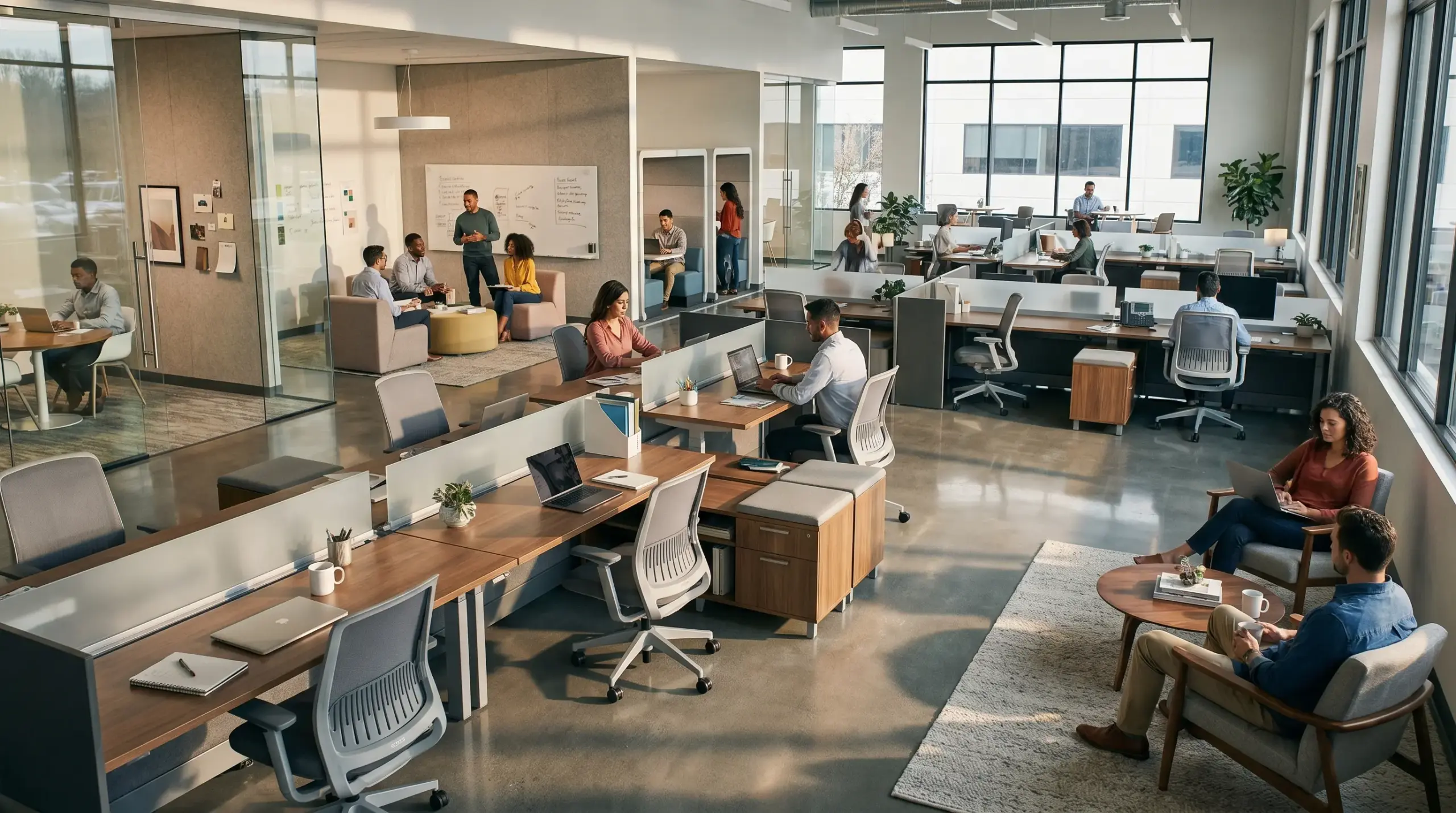
The cubicle’s reputation is unfair. The modern version uses lower partitions, glass panels, and pod clusters instead of rows. It gives people a defined space without the sensory isolation of the old-school cube farm.
Angled cubicle arrangements improve sightlines and reduce the tunnel effect of straight rows. Clustered pods of four to six workstations let small teams stay co-located without being walled off from the broader office.
Best for: Call centres, data teams, administrative roles that need focus without full enclosure
7. Small Office Layout (Under 500 sq ft)
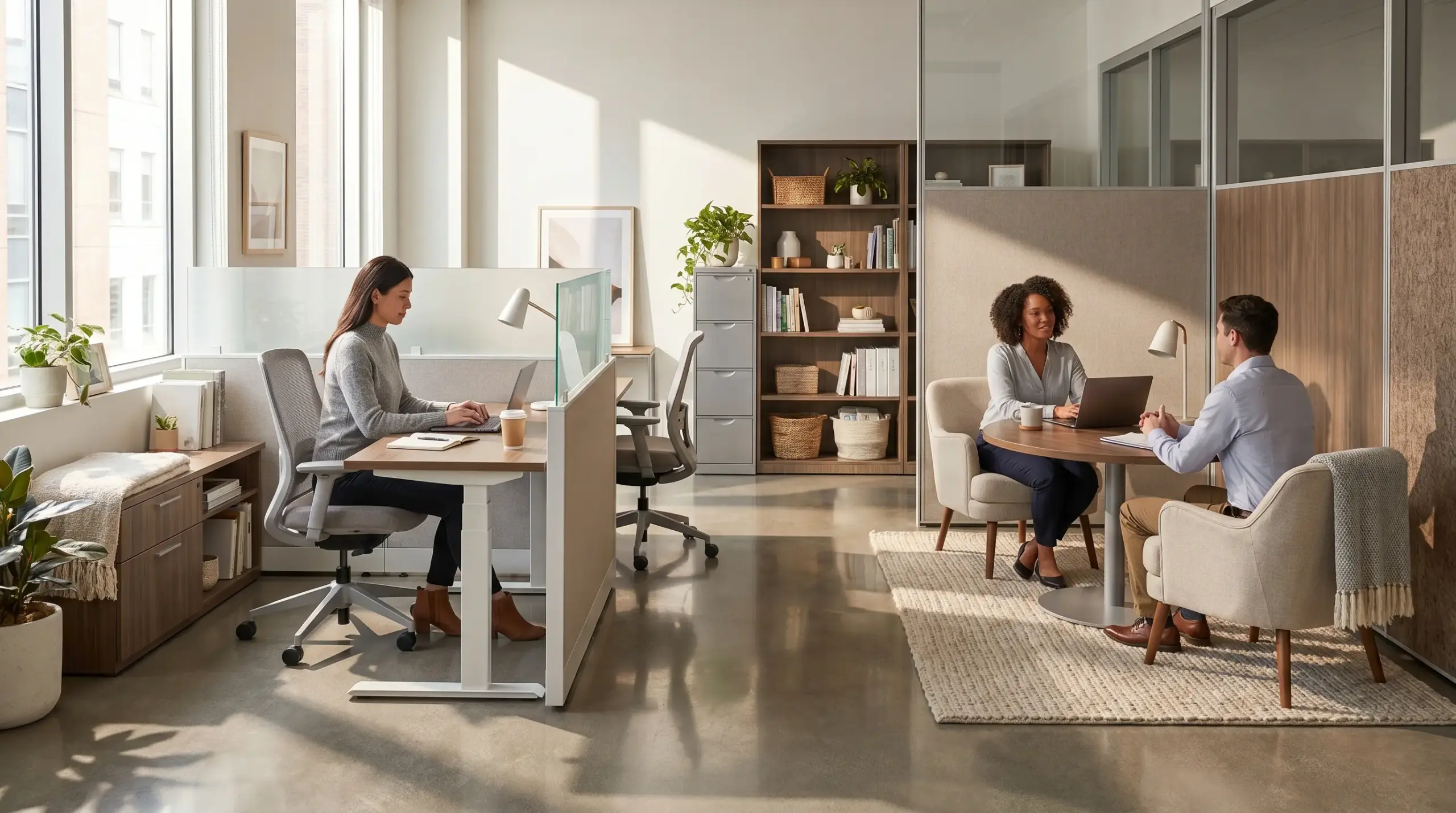
Small-scale layouts follow different rules than large-floor planning. This applies to the three-person team in a shared building and the small business with one modest room.
L-shaped desks against walls free up the center of the room. Vertical storage shelving up to ceiling height recovers floor space. The same open-concept space-planning principles that work in compact homes apply here as well.
Glass partitions or open shelving units divide zones without cutting off light. A single sit-stand desk doubles as a standing workstation and occasional overflow meeting spot.
Best for: Sole traders, small agencies, satellite offices
8. Biophilic Office Layout
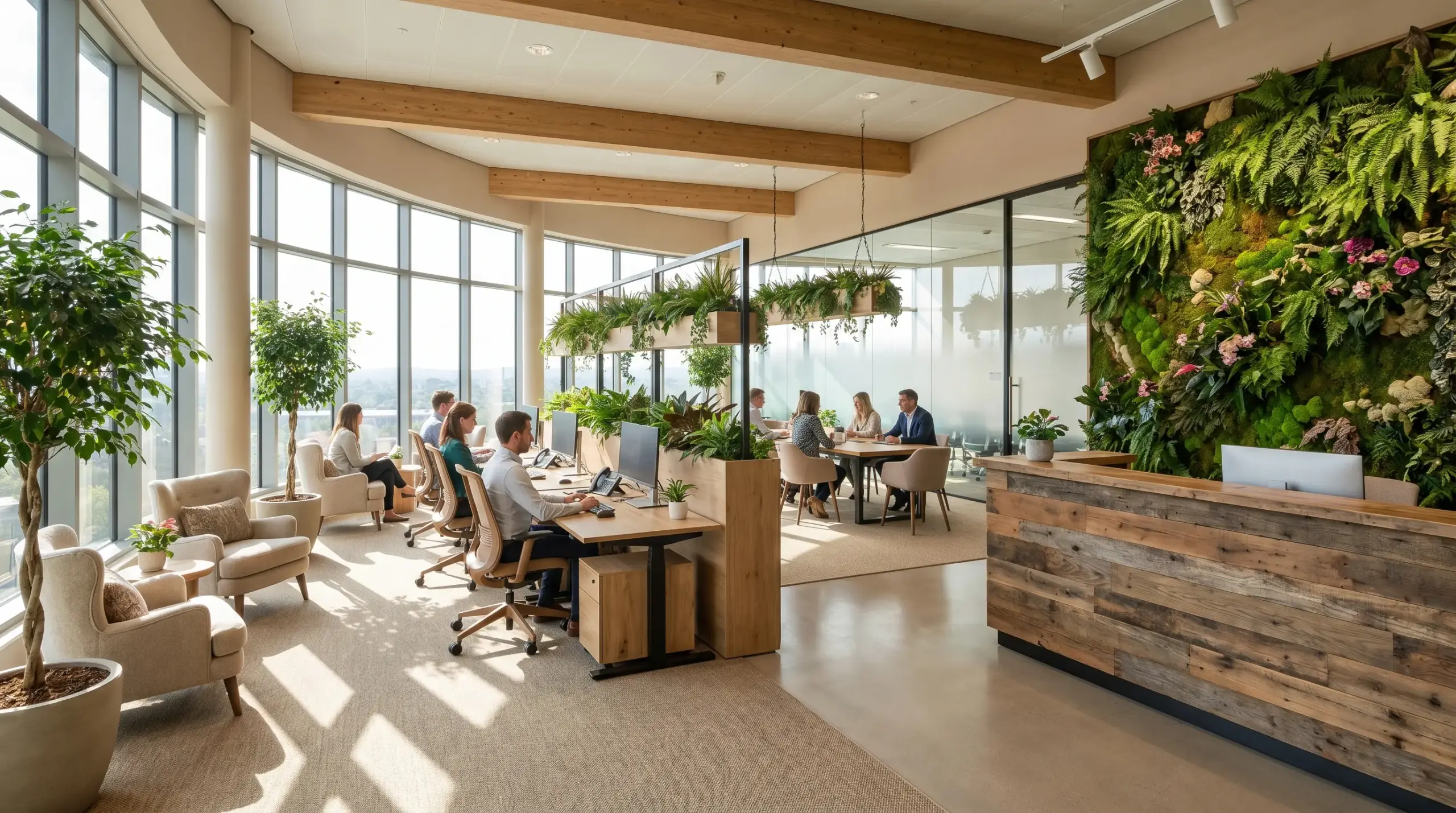
Biophilic design isn’t just about putting a plant on every desk. At the layout level, it means orienting desks toward windows. Position high-traffic areas near the most natural light. Use plant walls or green partitions as room dividers.
The research is consistent. Natural light improves mood, reduces eye strain, and supports better sleep. Each of those affects how people show up at work.
A living wall at reception also makes a stronger first impression on clients than any logo installation.
Best for: Any office with a wellness culture, client-facing spaces, creative environments
9. Coworking-Inspired Private Office
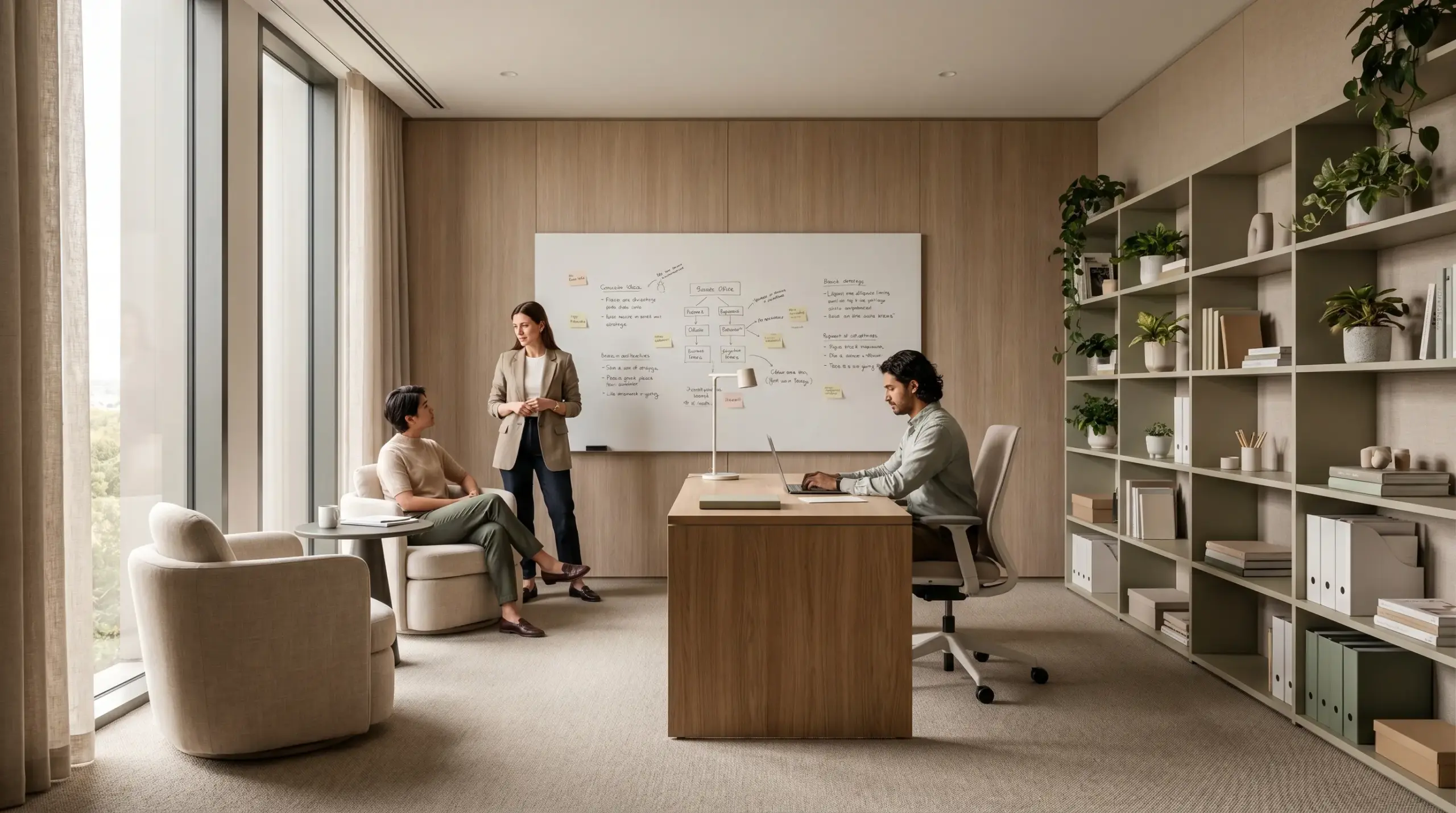
You don’t have to rent a coworking space to get the energy of one. The coworking-inspired layout brings café-style lounge seating, phone booths, hot desks, and communal tables into a private office floor plan.
This works especially well for companies trying to attract people back from home setups. If the office feels more like a well-designed public space than a corporate grid, the commute becomes easier to justify.
Best for: Companies with a young workforce, hybrid-first cultures, post-pandemic re-engagement efforts
10. Neurodiversity-Friendly Layout
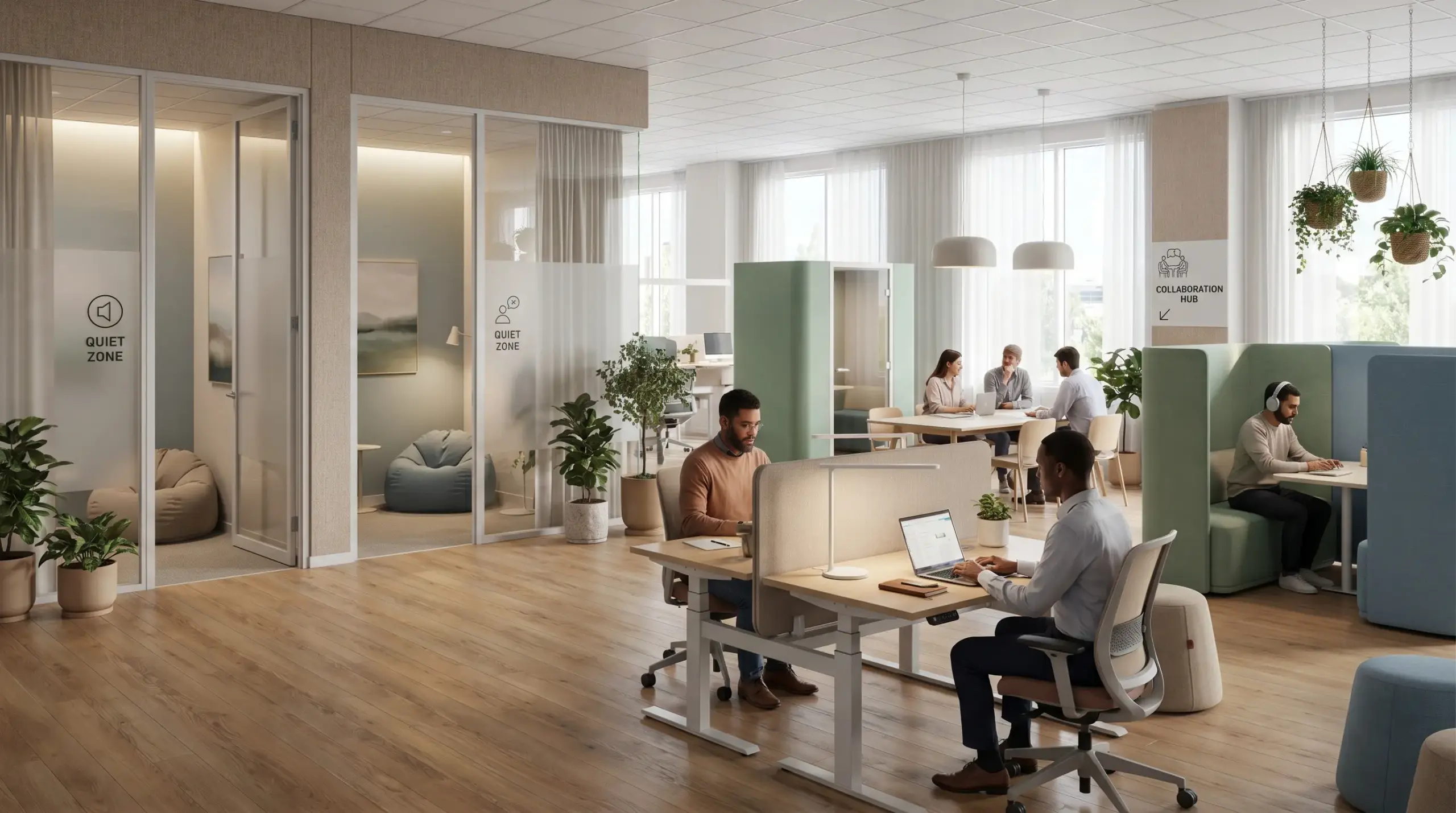
This is the most overlooked gap in office design right now and one of the highest-return changes a company can make.
A 2025 study found that neurodivergent employees in high-sensory environments report higher stress. In that study, 35% were frequently distracted and 31% experienced sensory overload.
Yet teams that include neurodivergent talent can be 30% more productive when supported.
Effective design features include low-stimulus quiet rooms, adjustable lighting, acoustic privacy pods, clear wayfinding, and flexible seating.
Research shows these changes benefit everyone, improving acoustics, lighting, and focus, not just serving accommodations.
Best for: All offices, this is not a niche consideration
11. Deep Work / Focus-First Layout
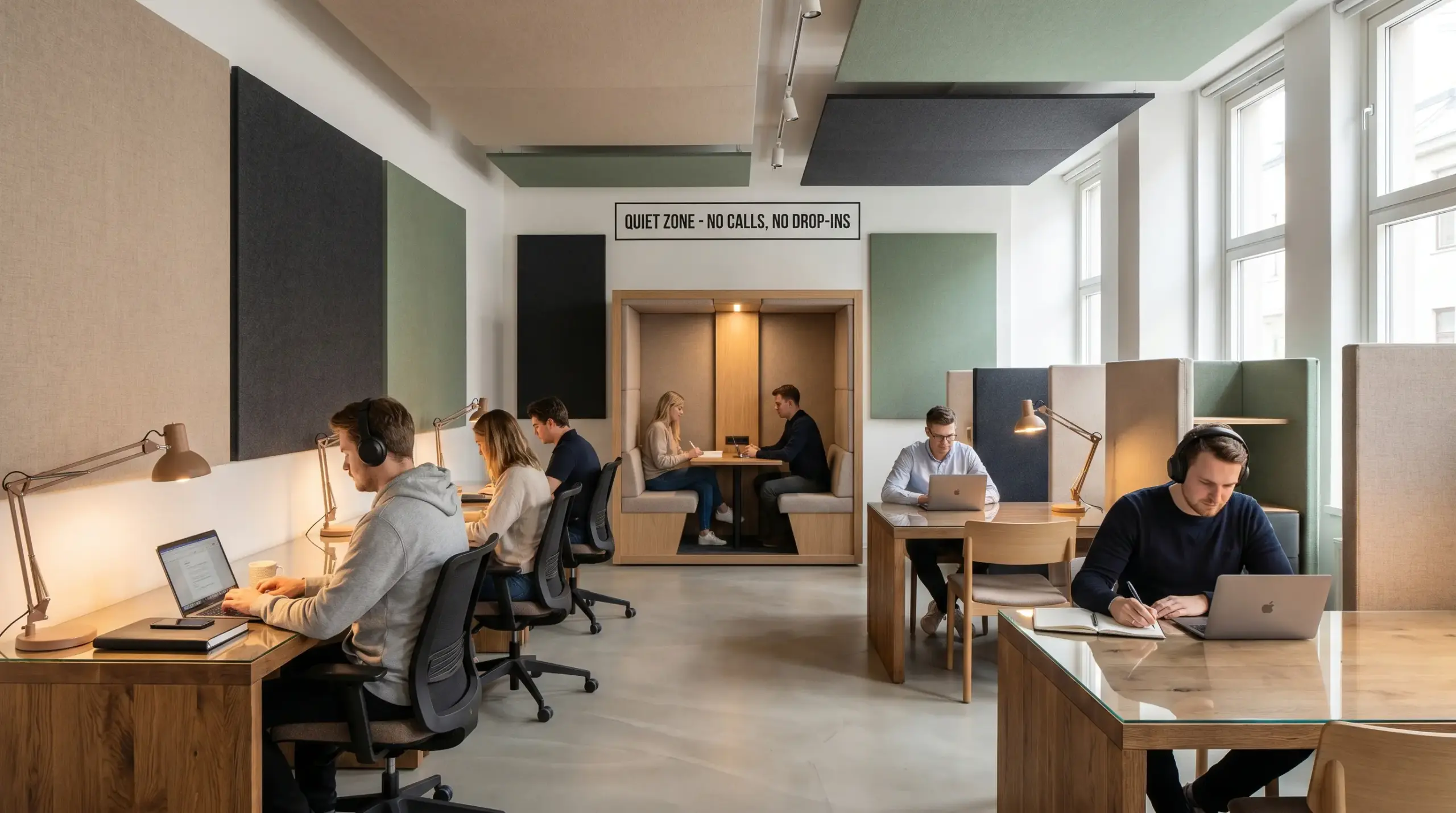
Cal Newport’s book Deep Work argues that sustained concentration is the scarcest resource in any modern office. That thinking has made its way into floor planning.
This layout dedicates a quiet zone with no calls, drop-in conversations, or walk-through traffic. Use acoustic booths, single-direction desks, and sound-absorbing panels.
Simple signals like colored cards, status lights, or closed curtains indicate deep-focus time.
Best for: Engineering teams, writers, analysts, any role with long blocks of solo work
12. Wellness-Centered Layout
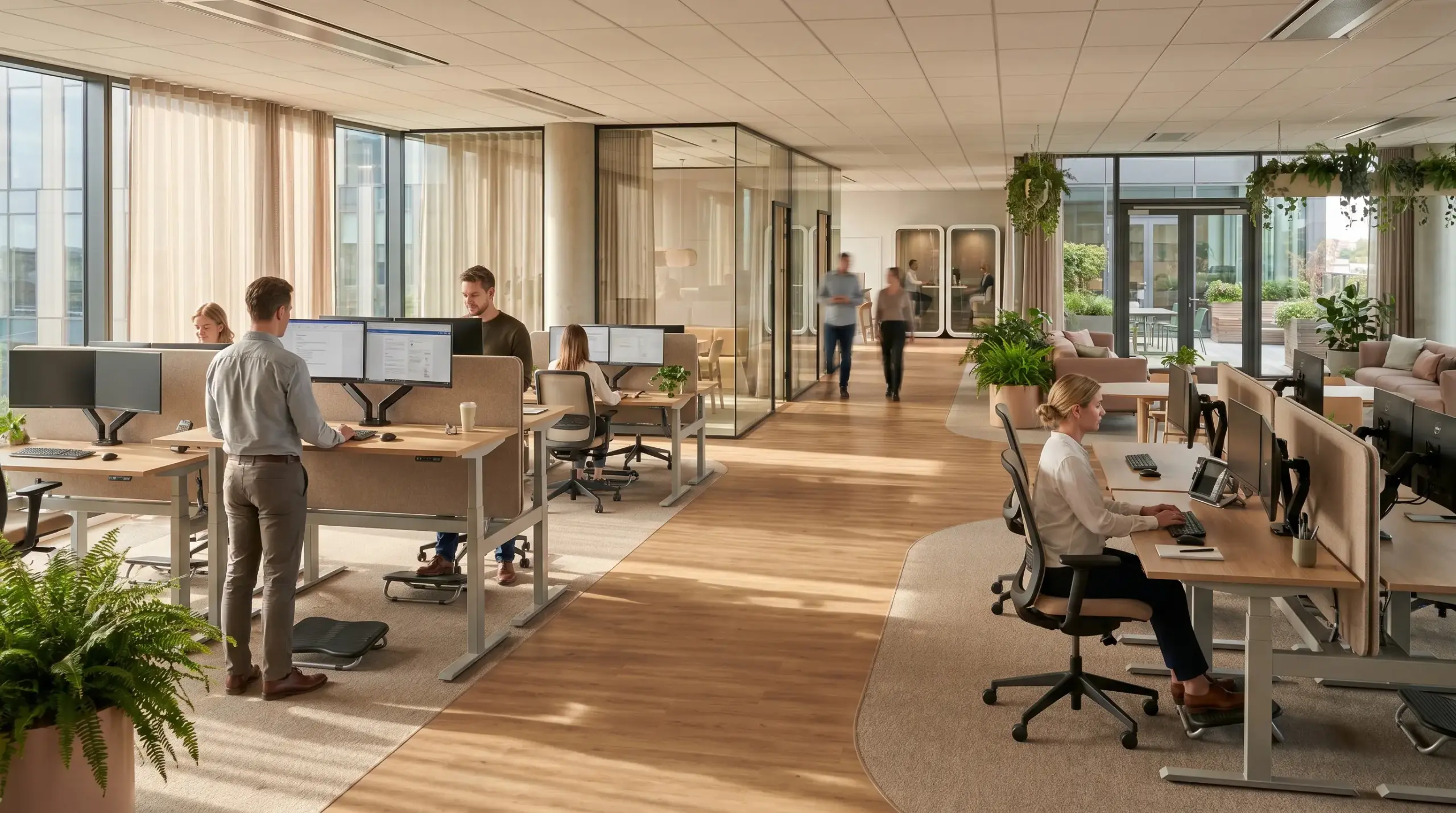
Ergonomics goes beyond chairs. Place standing desks near natural light, design walking paths, and ensure private wellness rooms are available.
Height-adjustable desks, footrests, monitor arms, and proper desk depth are basics. Break rooms and outdoor access should serve as intentional decompression zones.
Best for: Offices with long working hours, high-screen-time roles, any company with a stated wellbeing commitment
13. Technology-First Smart Office Layout
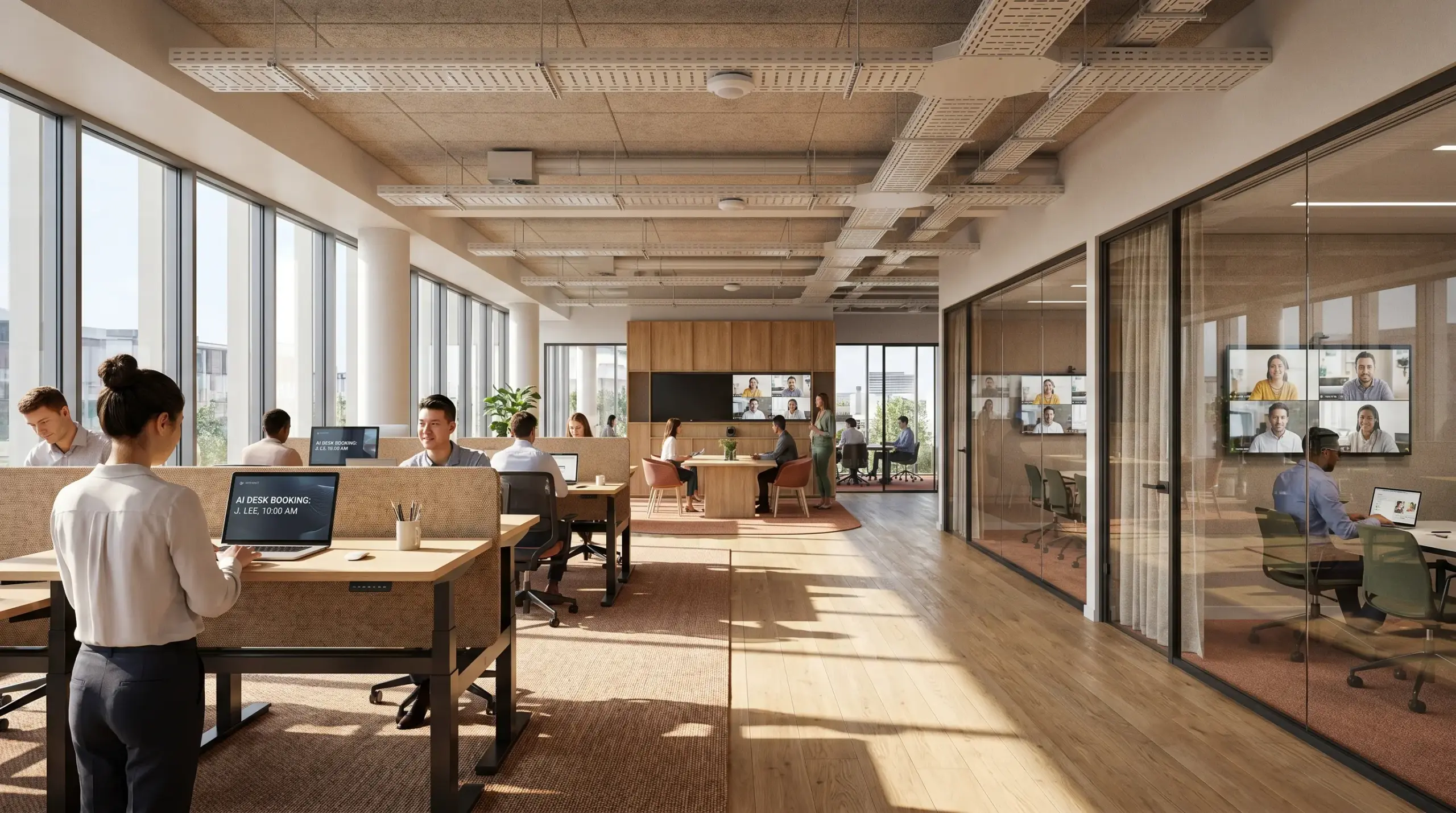
Design the floor plan around tech, not the other way around. Pre-plan cable pathways, power access, and AV-equipped rooms for hybrid calls.
Use occupancy sensors and AI-powered desk booking to optimize workstation use. Budget 3–5% of fit-out cost for acoustic treatment; it delivers high ROI.
Best for: Tech companies and offices managing high levels of hybrid attendance.
14. Brand-Immersive Layout
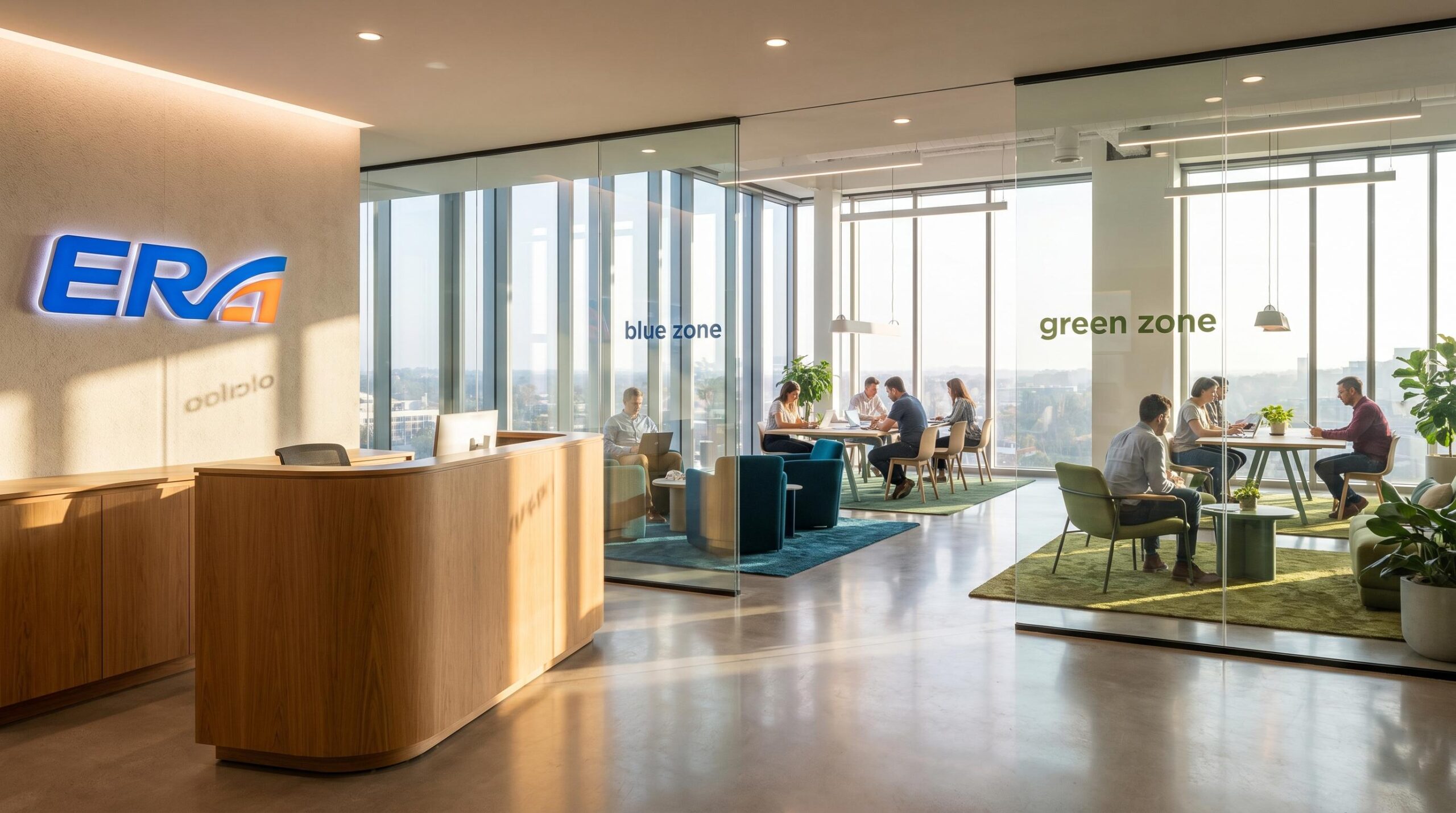
Every surface and sightline is a chance to communicate what the company stands for to employees, clients, and candidates who walk in for interviews.
Branding isn’t about plastering logos everywhere. Use the company’s color palette in wayfinding, choose materials that reflect its identity, and design the reception to create the desired first impression.
Decorative wall treatments can reinforce a brand story in ways that furniture alone cannot.
For example, a financial firm used navy and gold across team neighborhoods, subtly differentiating zones while making the space instantly recognizable.
Best for: Client-facing offices, companies in competitive talent markets, brand-led businesses
15. Modular and Future-Proof Layout
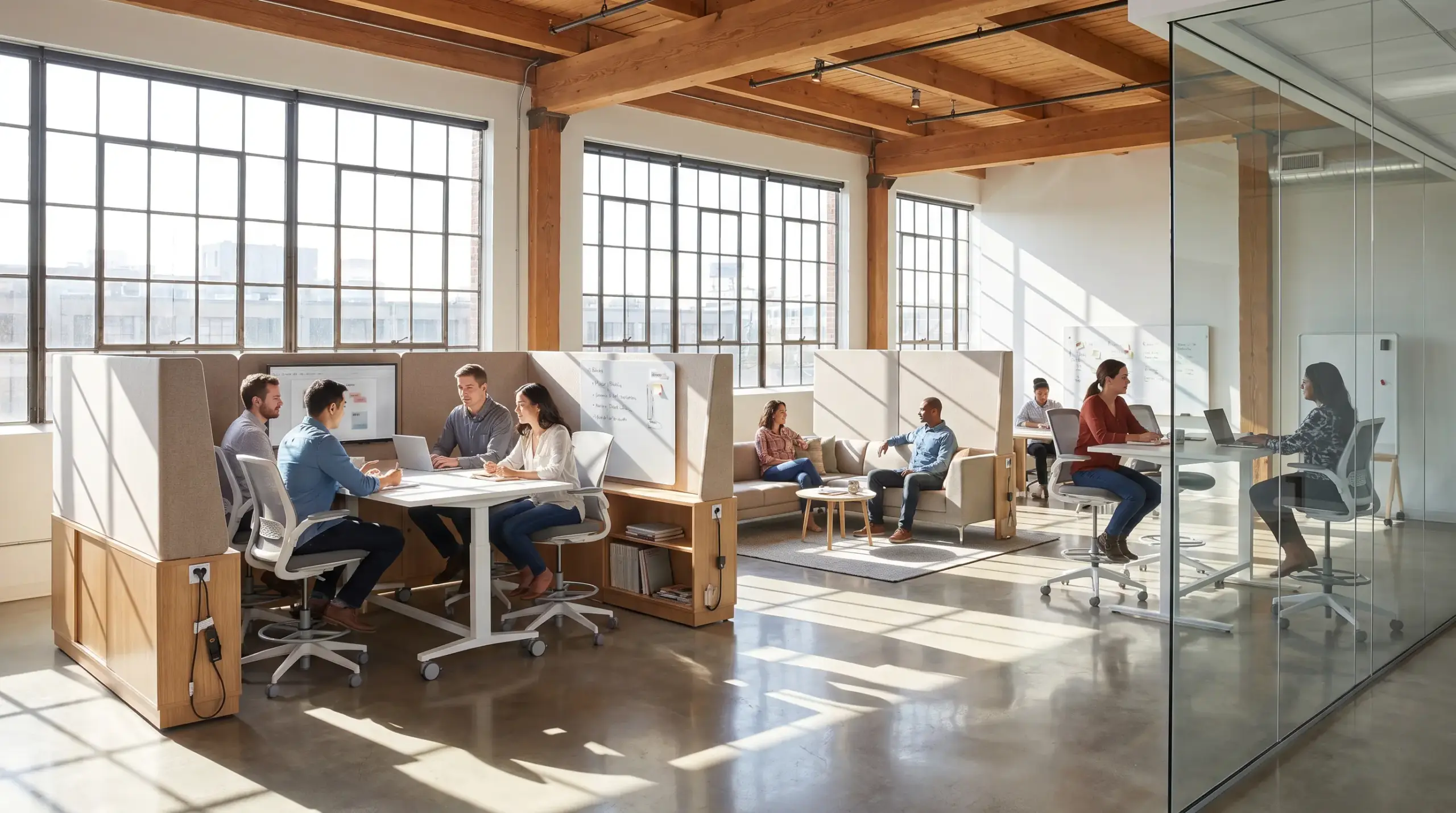
Fixed walls are costly to build and change. Modular systems, movable partitions, reconfigurable furniture, and plug-and-play power let offices evolve without a full fit-out.
Research shows these investments extend a fit-out’s lifespan and provide the highest ROI, making them ideal for growing companies or those testing hybrid policies. The same principles of flexibility shape strong commercial building design at every scale.
Best for: Fast-growing companies, post-merger integrations, any office where future headcount is genuinely uncertain
Office Layout Mistakes
A great office layout can boost productivity, but a few common mistakes can have the opposite effect. Here are the layout issues that often make workplaces feel less comfortable, efficient, and inviting.
- Designing for average attendance: If the busiest day has 40 people but the office is built for 30, every peak day is chaotic.
- Skipping acoustic planning: Poor acoustics increase stress and reduce concentration, directly affecting productivity.
- No employee input: Employees using the space daily know details the floor plan misses; surveys prevent costly post-move fixes.
- Open plan without private options: Collaboration and focus spaces are both essential and should coexist.
- Building for today’s team size only: A layout for 15 people may not work for 30; plan for growth.
Choosing Your Office Layout: A Quick Decision Path
Not sure which office layout is right for your space? This quick decision path can help narrow down the best option based on your team size, work style, and business needs.
| Your Situation | Recommended Layout |
|---|---|
| Mostly in-office, collaborative work | Open plan or team neighborhoods with acoustic investment |
| Hybrid team, mixed task types | Hybrid hub or activity-based working |
| Deep focus as the primary work mode | Cellular or focus-first layout with collaborative zones added |
| Small space, small team | Small office layout principles with modular furniture |
| Client-facing or brand-led | Brand-immersive layout with biophilic elements |
| Uncertain growth or changing needs | Modular layout as the default choice |
Conclusion
The office you design today either pulls people in or gives them a reason to stay home. None of these 15 office layout ideas work on their own. The best spaces borrow from several, combining zones to match how work actually gets done.
Start with your team’s real patterns: when they come in, what they work on, and what drains them by 3 pm. Add the layout elements that address those specifics: acoustic focus rooms, modular furniture, or a neurodiversity-friendly quiet area.
Good design doesn’t announce itself. People just notice they’re less tired, more focused, and, oddly enough, more willing to come in on a Friday.
That’s the measure that matters.
Frequently Asked Questions
Which Direction Should Your Desk Face?
Your desk should face a window or natural light when possible to boost mood and focus, while minimizing glare and distractions from high-traffic areas.
Which Direction is Not Good for Office Work?
Desks facing walls with no natural light, high-traffic areas, or noisy zones are not ideal, as they increase distractions and stress and reduce focus.
What Is the 5 S Office Layout?
The 5S layout is a Lean management method focused on Sort, Set in Order, Shine, Standardize, and Sustain to create a clean, efficient workspace.