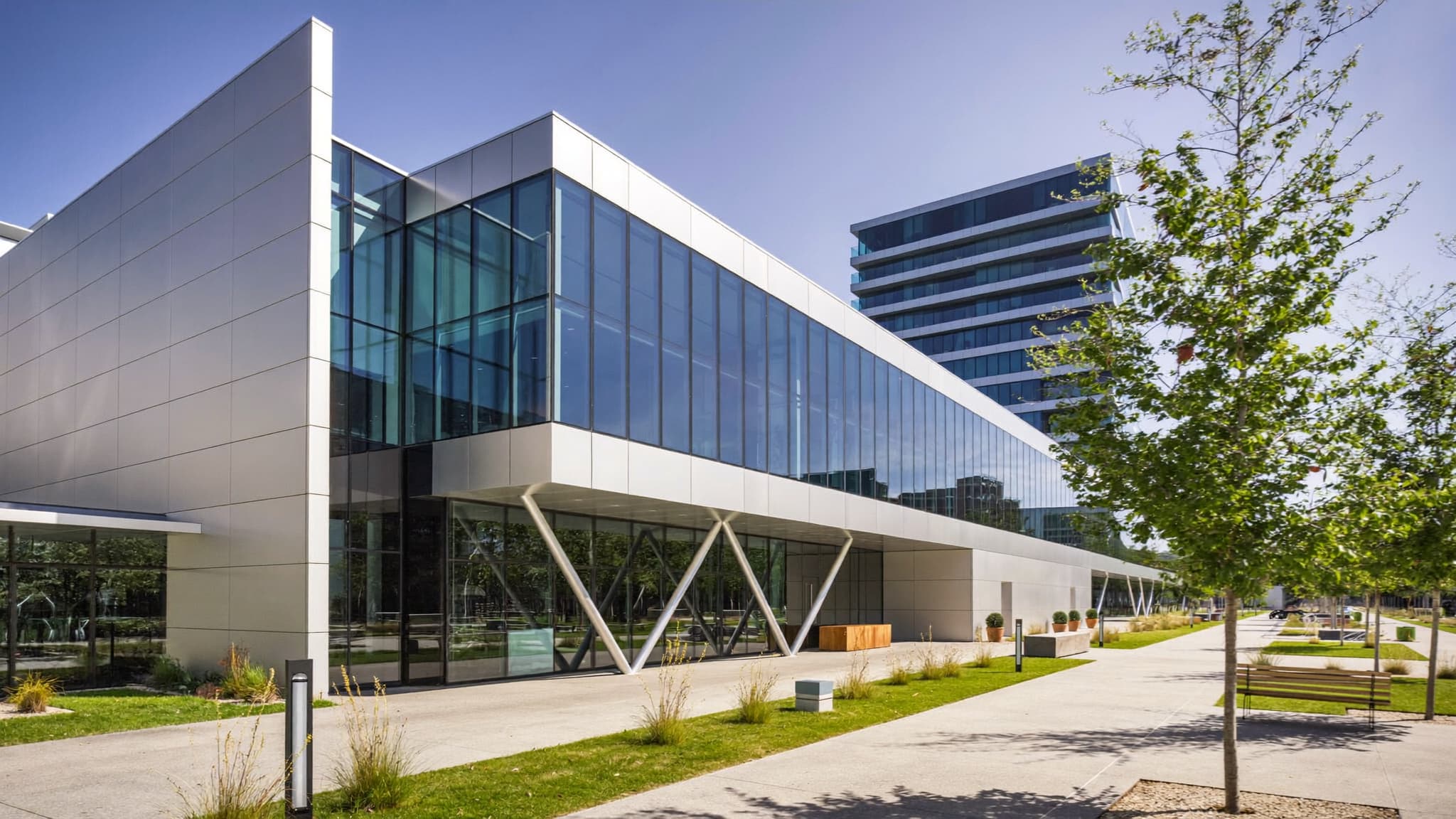
When I work on a residential project, the goal is simple: make the homeowner happy. Commercial building design runs on entirely different rules.
A commercial building must satisfy the owner’s financial goals, tenants’ operational requirements, end-user daily experience, zoning and code requirements, lender underwriting conditions, and the sustainability standards of institutional investors, which require ESG documentation before an asset is considered.
All at once.
The term covers office buildings, retail centers, industrial and warehouse facilities, medical offices, hospitality buildings, and mixed-use developments.
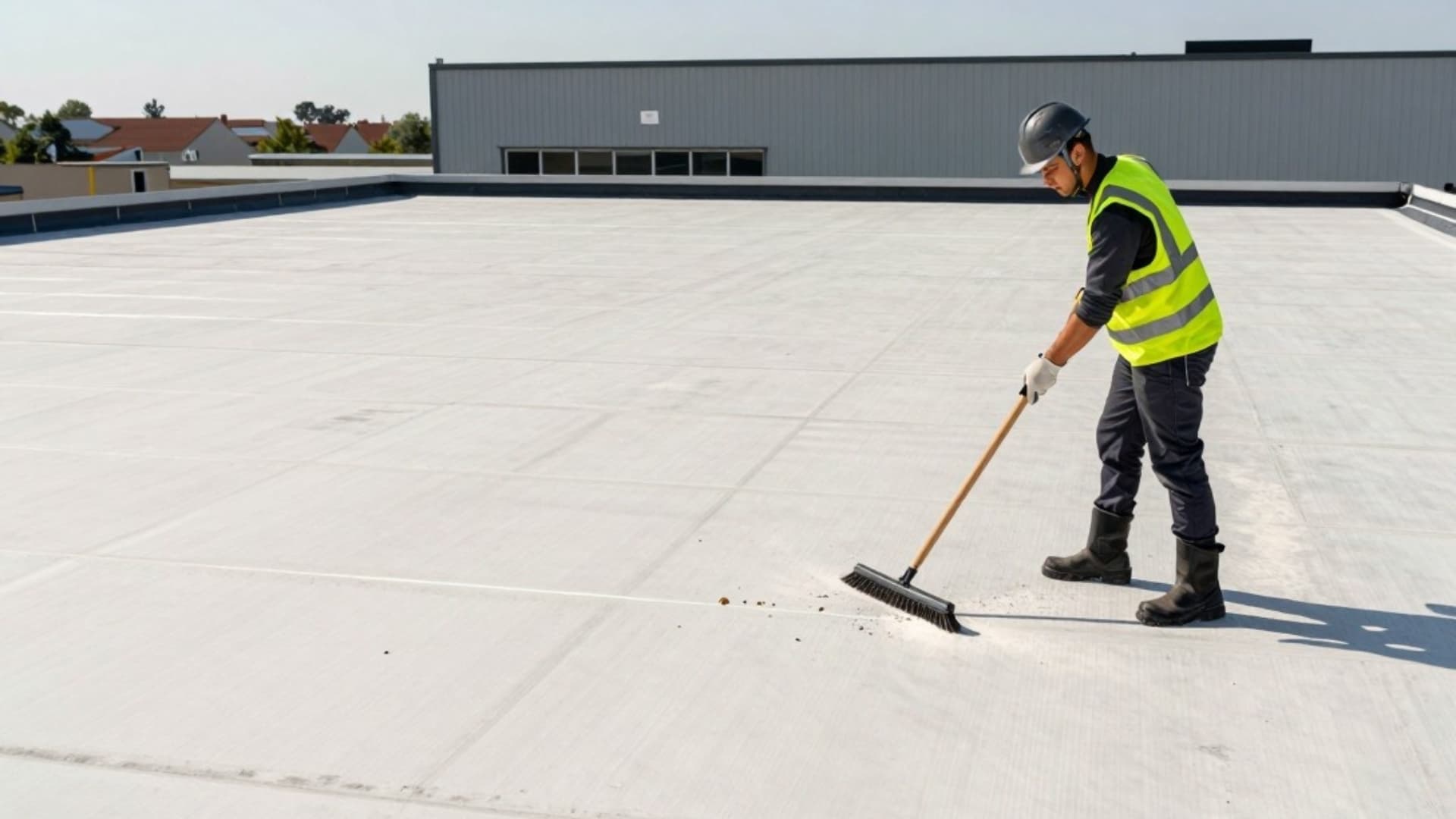
Each type follows its own design logic. What works in a warehouse—maximum clear span, high ceilings, commercial flat roofing, minimal interior finish—would drive a Class A office tenant away before a lease is signed.
Getting the building type right starts before your architect opens any software.
The 5 Decisions to Make Before Design Starts
Five decisions happen before schematic design begins. They carry more weight than almost any choice made during the design process itself.
Most owners either make them reactively or let them be made by default.
1. Building Class
- Class A: Premium materials, advanced mechanical systems, and above-standard finishes.
- Class B: Functional without luxury.
- Class C: Targets cost efficiency above everything.
Class choice affects rent ceiling and construction costs. Overbuilding or underbuilding can impact financial viability.
2. Delivery Method
- Traditional design-bid-build: Design and construction are separate, taking longer.
- Design-build: Design and construction run in parallel under one contract, compressing the schedule by 20-30%.
- Construction Manager at-Risk: Contractor joins during design to provide real-time cost checks and deliver within a guaranteed maximum price. Useful for complex projects like healthcare and mixed-use.
3. Sustainability Certification Target
- Decide on LEED, WELL, BREEAM, or Energy Star certification before schematic design.
- Designing for certification from day one saves 20-30% in compliance costs compared to adding it later.
- Material specs, glazing, and MEP selections all depend on certification requirements.
4. Zoning and Feasibility Pre-Check
- A feasibility study (costing $5,000–$20,000) helps avoid spending months on architectural fees for projects that zoning won’t permit.
- Conduct the feasibility study before hiring an architect for design services.
5. End-user definition
- Employee-centered design: Prioritizes acoustic separation, air quality, and workflow adjacency.
- Customer-facing design focuses on wayfinding and dwell time.
- Tenant-centered design: Prioritizes floor plate flexibility and column spacing.
- Buildings that try to serve all users equally tend to serve none particularly well.
Commercial Building Design Phases
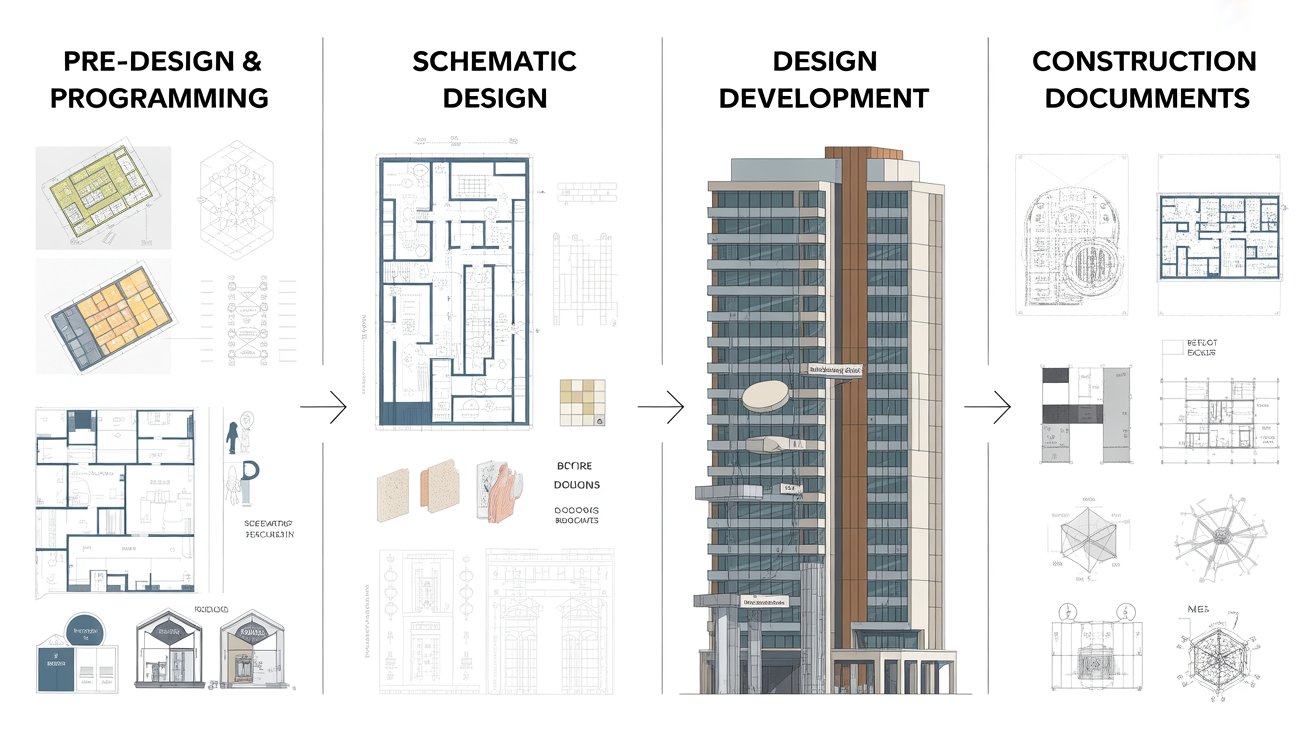
The commercial building design process includes key phases: Pre-Design and Programming, where project goals and site analysis are defined; Schematic Design, which develops initial layouts and concepts; and Design Development, which finalizes design details and construction specifications.
Phase 1: Pre-Design and Programming (Weeks 1–6)
Pre-design is where owners most often underinvest attention and where the project is most at risk.
Your architect analyzes the site, documents your operational requirements, and builds the program that all subsequent decisions reference.
Provide complete information, including five-year growth projections, and the design will reflect the business you’re building, not just the one you have today.
Phase 2: Schematic Design (Weeks 7–14)
Schematic design translates programming into physical drawings: site plans, floor plan options, exterior massing.
These drawings are deliberately loose; they convey spatial intent rather than final dimensions. Revisions here cost hours.
The same revision after construction documents are complete costs days and real money. Review schematic drawings with that fact clearly in mind.
Phase 3: Design Development (Weeks 15–26)
This is where the design becomes fully coordinated. Structural, mechanical, electrical, and plumbing systems are integrated into the architectural drawings.
This phase increasingly involves BIM (Building Information Modeling), in which the entire project is built as a three-dimensional digital model before construction begins.
Mature BIM workflows catch clashes between structural members and ductwork before they become field problems. Ask any firm you’re considering about their BIM process.
Phase 4: Construction Documents (Weeks 27–36)
Construction documents are the permit-ready drawings and specifications that contractors use to build. Their quality directly controls cost exposure during construction.
Poorly coordinated drawings produce requests for information, and change orders both add cost without adding value. A pre-bid cost estimate catches budget gaps before you’re locked into contractor pricing.
Phase 5: Construction Administration
The architect reviews contractor submittals, responds to field questions, and conducts site observations.
Changes during construction typically cost three to five times as much as the same change would have cost during design development. That number is worth keeping in mind before approving anything mid-build.
Commercial Building Design Costs
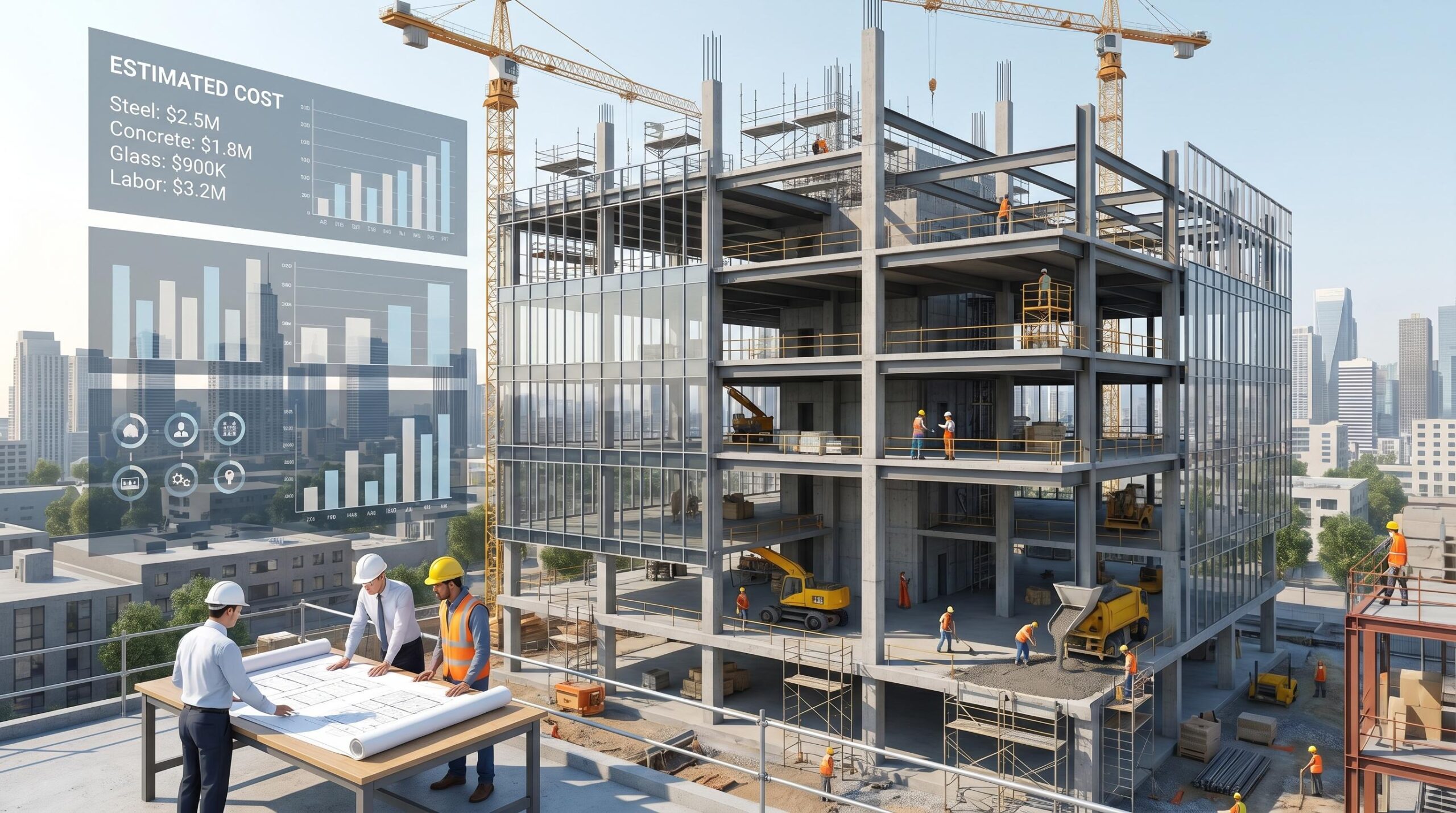
Designing a commercial building involves several cost factors beyond construction.
The total expense typically includes architectural fees, engineering services, permits, interior planning, and consultation with specialists to ensure the building meets all functional, safety, and aesthetic requirements.
Factors Affecting Commercial Building Design Costs
- Architectural Fees: Architects usually charge a percentage of the total project cost, typically 5% to 15%, depending on the building’s complexity and size. Custom designs with unique features can increase fees.
- Engineering Services: Structural, mechanical, electrical, and civil engineering are essential to ensure the building is safe, functional, and efficient. Each service may be billed separately or included in a comprehensive design package.
- Permits and Regulatory Approvals: Costs vary depending on location, building type, and local regulations. Acquiring permits may require additional consulting fees.
- Interior and Space Planning: Professional interior planning ensures efficient layout, compliance with building codes, and functional aesthetics, which can affect long-term operational costs.
- Specialty Consultation: Hiring experts in sustainability, acoustics, lighting, or energy efficiency may increase upfront design costs but can reduce long-term operating expenses.
Average Cost Ranges
- Small Commercial Buildings: Typically cost between $50,000 to $150,000 for complete design services.
- Mid-Size Commercial Buildings: Design costs typically range from $150,000 to $500,000, depending on complexity and location.
- Large Commercial or Custom Projects: Costs can exceed $500,000 for detailed architectural plans, multiple engineering consultations, and high-end interior planning.
Understanding these cost factors helps business owners and developers plan their budget effectively while ensuring the commercial building meets both functional and aesthetic goals.
| Building Type | Low ($/sq ft) | High ($/sq ft) |
|---|---|---|
| Single-story office | $240 | $440 |
| Multi-story office | $400 | $1,000+ |
| Retail / strip center | $370 | $580 |
| Warehouse / light industrial | $70 | $210 |
| Medical / healthcare | $500 | $1,000+ |
| Mixed-use development | $400 | $700 |
| Hotel/hospitality | $350 | $750 |
Commercial Building Design Trends
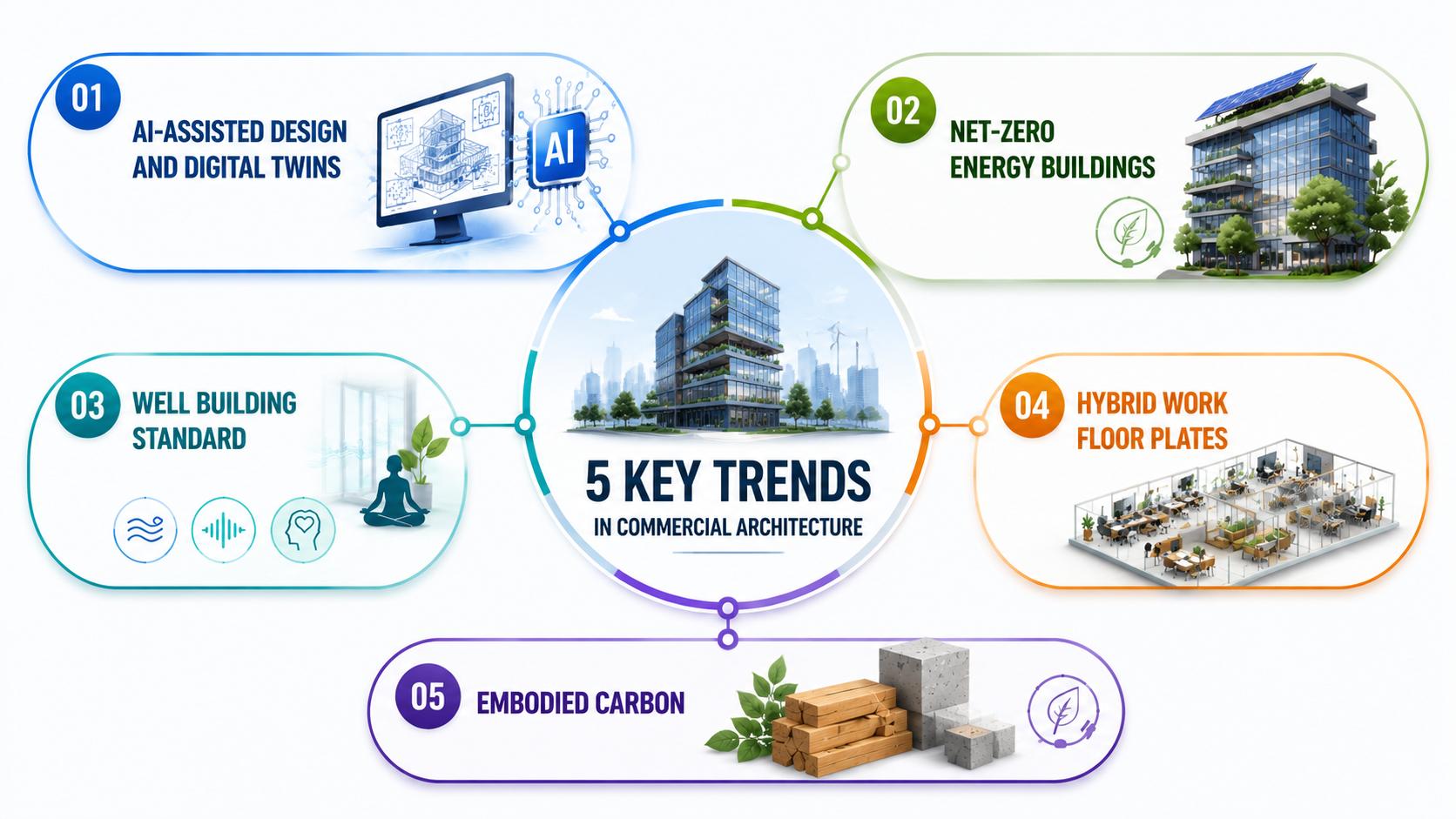
- AI-assisted design and digital twins: Architects use generative design tools to optimize floor plans and energy performance, with digital twins simulating occupancy and energy behavior before construction.
- Net-zero energy buildings: Net-zero buildings are growing in number, featuring rooftop solar, high-performance envelopes, and efficient HVAC systems, offering long-term reductions in operating costs.
- WELL Building Standard: Focuses on air quality, acoustics, and mental health resources, with premium tenants increasingly choosing WELL-certified buildings for better workplace well-being.
- Hybrid work floor plates: Modern offices feature modular walls and flexible work zones, enabling easy reconfiguration to adapt to changing occupancy patterns without major construction.
- Embodied carbon: Low-carbon materials such as concrete and cross-laminated timber are becoming standard as building codes tighten their total-carbon accounting requirements.
How Building Design Affects Property Value
ESG-certified commercial buildings lease faster and command rent premiums of up to 11.6% over comparable non-certified assets, according to current JLL and CBRE market data.
On a 50,000-square-foot office building at $40 per square foot, that premium is $232,000 in additional annual income.
Over ten years, the revenue difference more than covers the cost of designing for certification.
Lobby quality, glazing ratio, floor-to-ceiling height, and acoustic separation impact tenant decisions and rental prices, with Class A tenants often walking buildings first.
Post-occupancy evaluation (POE), which measures performance 12-24 months after opening, improves design but is rarely requested or offered proactively.
7 Commercial Building Design Mistakes Owners Make
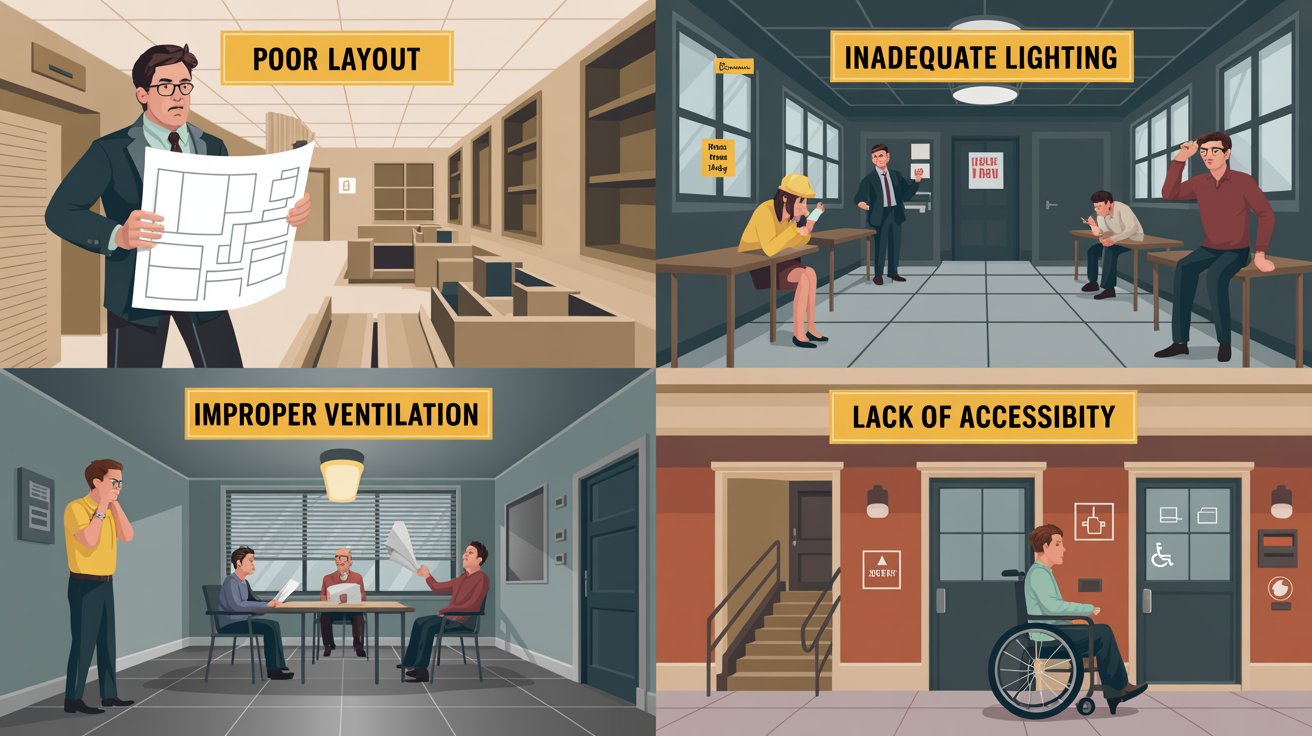
1. Skipping the feasibility study: Owners commit to full design services before confirming the site is zoned for their use or that the project is financially viable.
A feasibility study costs $5,000 to $20,000. A six-month redesign after a zoning denial costs far more.
2. Treating indoor air quality as optional: IEQ air quality, thermal comfort, acoustic performance, and daylight access affect tenants and employees every day the building is occupied.
Underspecifying mechanical systems or designing floor plans with poor natural light may look like a cost-saving measure on paper, but it shows up as a lease renewal problem.
3. Underspecifying MEP systems: HVAC, electrical capacity, and plumbing are where design-phase underspending results in the highest long-term operating costs.
A building without electrical capacity for EV charging will need expensive upgrades within a decade. Get systems right in design, not in retrofits.
4. Designing only for the current headcount: A commercial building suitable for today’s staff may become too small in a few years. Plan for future growth with extra floor space or interiors that can be reconfigured easily.
5. Ignoring parking and site circulation: Retail spaces with insufficient parking lose customers before they enter, and medical offices with confusing drop-off areas frustrate patients. These schematic design choices are costly or impossible to fix after construction.
6. No post-occupancy clause: Most architecture contracts end at delivery. A post-occupancy evaluation clause extends the engagement to assess how the building performs for occupants 12 to 24 months after occupancy.
Almost no owner asks for it; the ones who do get better buildings.
Choosing the Right Commercial Architect
Most owners evaluate commercial architects by reviewing photos of completed projects and checking references. That’s a starting point.
What matters more is firm structure, BIM capability, and portfolio relevance to your specific building type. Ask about BIM workflow directly: What software? At what phase does the model become fully coordinated?
A firm still delivering 2D drawings primarily increases the risk of coordination errors in construction documents, and that risk lands on your budget.
Architectural fees for commercial building design run from 2.5% to 12% of total construction cost, depending on complexity. Standard warehouse and retail sit at the lower end.
Healthcare and high-rise office at the higher end.
Make sure the proposal specifies exactly which services are included: structural and MEP engineering coordination, post-occupancy evaluation, and renderings are often additional line items.
Conclusion
Most owners treat commercial building design as something that happens after they’ve made the big decisions. In reality, it is the big decision, and the earlier you engage with it seriously, the less it costs you later.
Start with a feasibility study. Define your building class, delivery method, and sustainability target before your architect opens any software. Know your cost-per-square-foot ceiling before schematic design begins.
Those steps cost a fraction of what a late-stage redesign costs, and they change every conversation that follows.
The commercial building projects that come in on budget, attract the right tenants, and hold their value over thirty years aren’t lucky. They’re planned by owners who understood the design process before it started.
That’s the whole point of getting here early.
Frequently Asked Questions
How Long Does Commercial Building Design Take from Start to Permit?
Commercial building design typically takes 6 to 12 months from start to permit, depending on the project’s complexity, scope, and permitting requirements.
What is the Difference Between Design-Build and Traditional Delivery?
Design-build combines design and construction under a single contract, accelerating the process. Traditional delivery separates design and construction, often leading to longer timelines.
What Does a Digital Twin Do in Commercial Building Design?
A digital twin creates a virtual model of a building, simulating real-time data on occupancy, energy use, and performance to optimize design and operations before construction.