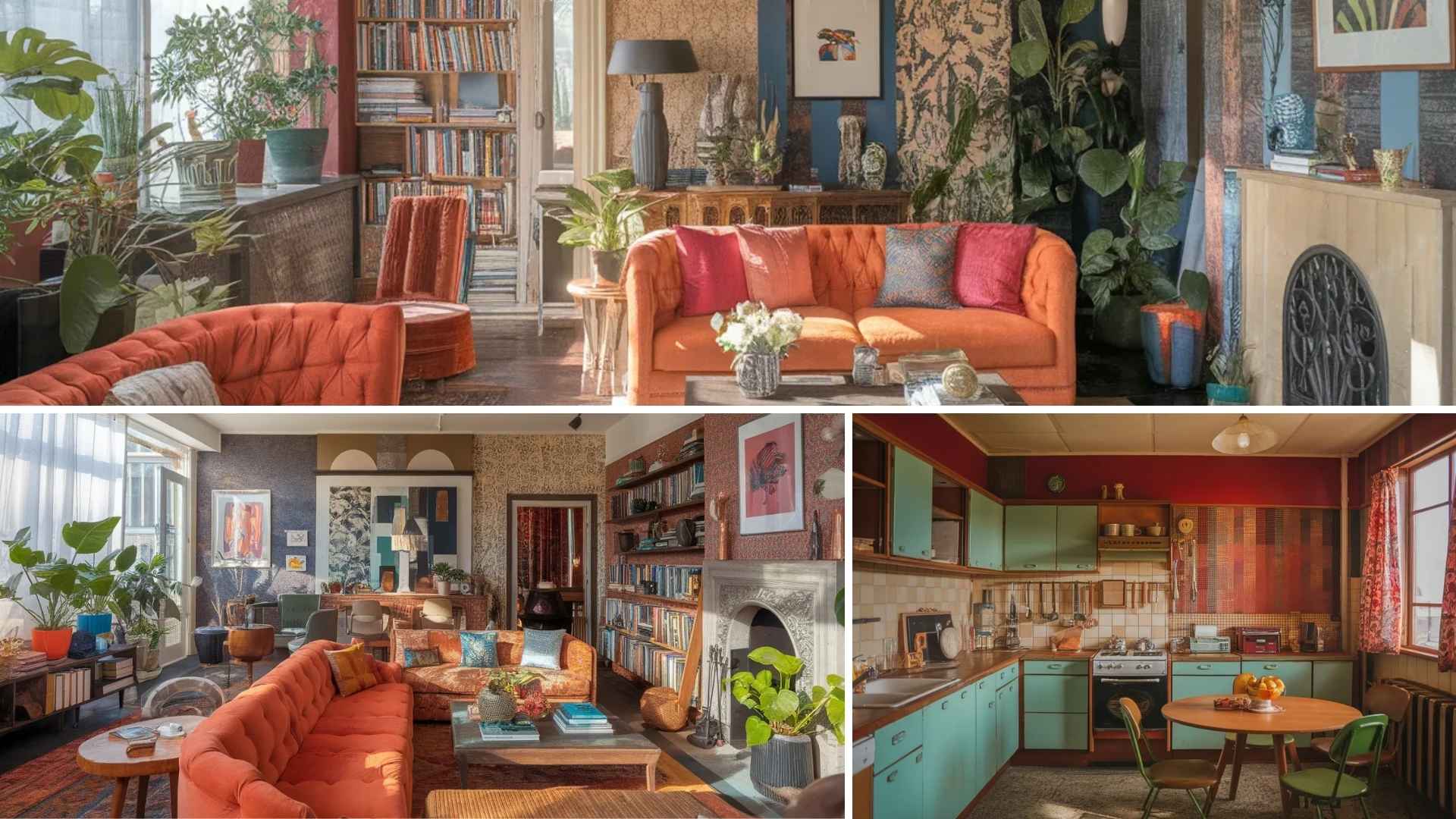
I have always believed that the best rooms feel like they grew with you. That is exactly what a retro 70s house interior does. It is warm, lived-in, and full of personality.
Picture earthy tones, curved furniture, soft lighting, and layered textures coming together to create a space that feels relaxed rather than rigid. You do not need a full renovation to achieve it.
In this blog, I will show you how to use color, texture, furniture, and lighting to bring 1970s style into your home, room by room, at any budget.
What Defines a Retro 70s House Interior?
Before buying a single item, it helps to understand what separates true 70s style from everything else.
The 1970s interior look is built on warmth and personality. Rooms from this era were never sparse. Every surface carried some visual weight: a patterned rug, layered cushions, a macramé wall hanging, a large leafy plant in an earthy ceramic pot. Nothing in a well-done 70s room looks like it came straight from a showroom.
Here is how it compares to two styles it is often confused with:
| Feature | Retro 70s | Mid-Century Modern | Boho |
|---|---|---|---|
| Color Palette | Warm, earthy, saturated | Muted neutrals, black | Mixed warm tones |
| Furniture Shape | Low, curved, modular | Angular, tapered legs | Eclectic, layered |
| Key Materials | Shag, velvet, chrome, rattan | Teak, leather, molded plastic | Rattan, linen, macramé |
| Wall Treatment | Bold wallpaper, paneling, art | Clean paint, minimal art | Macramé, prints, plants |
| Overall Mood | Cozy, bold, personal | Clean, structured, precise | Relaxed, informal |
The 70s version is the warmest of the three. It puts comfort and character first. A room done right looks like someone actually lives there and loves it.
The Best Color Palettes for a Retro 70s House Interior
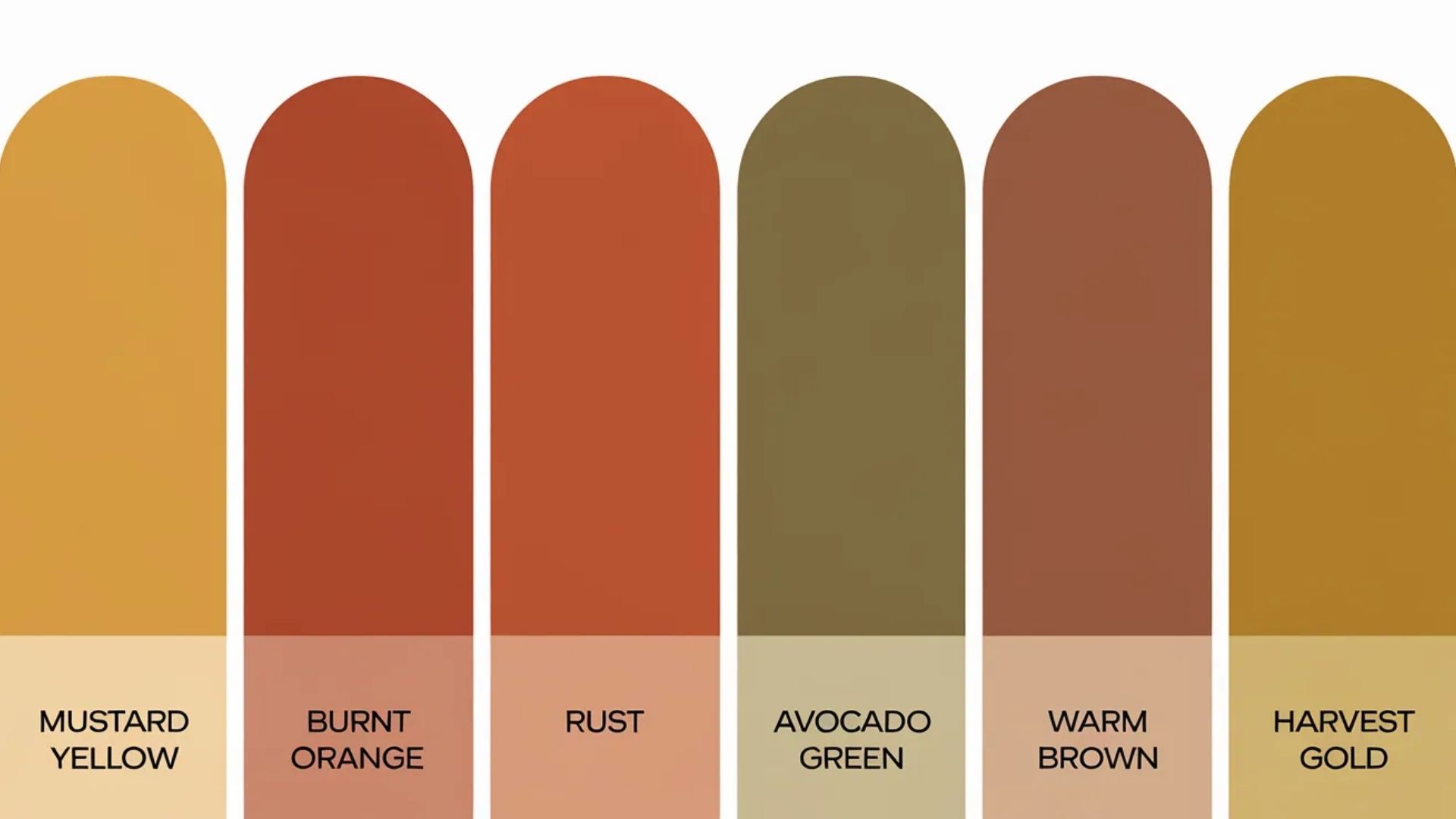
Color is where this style starts. Get the palette right, and everything else becomes much easier to pull together.
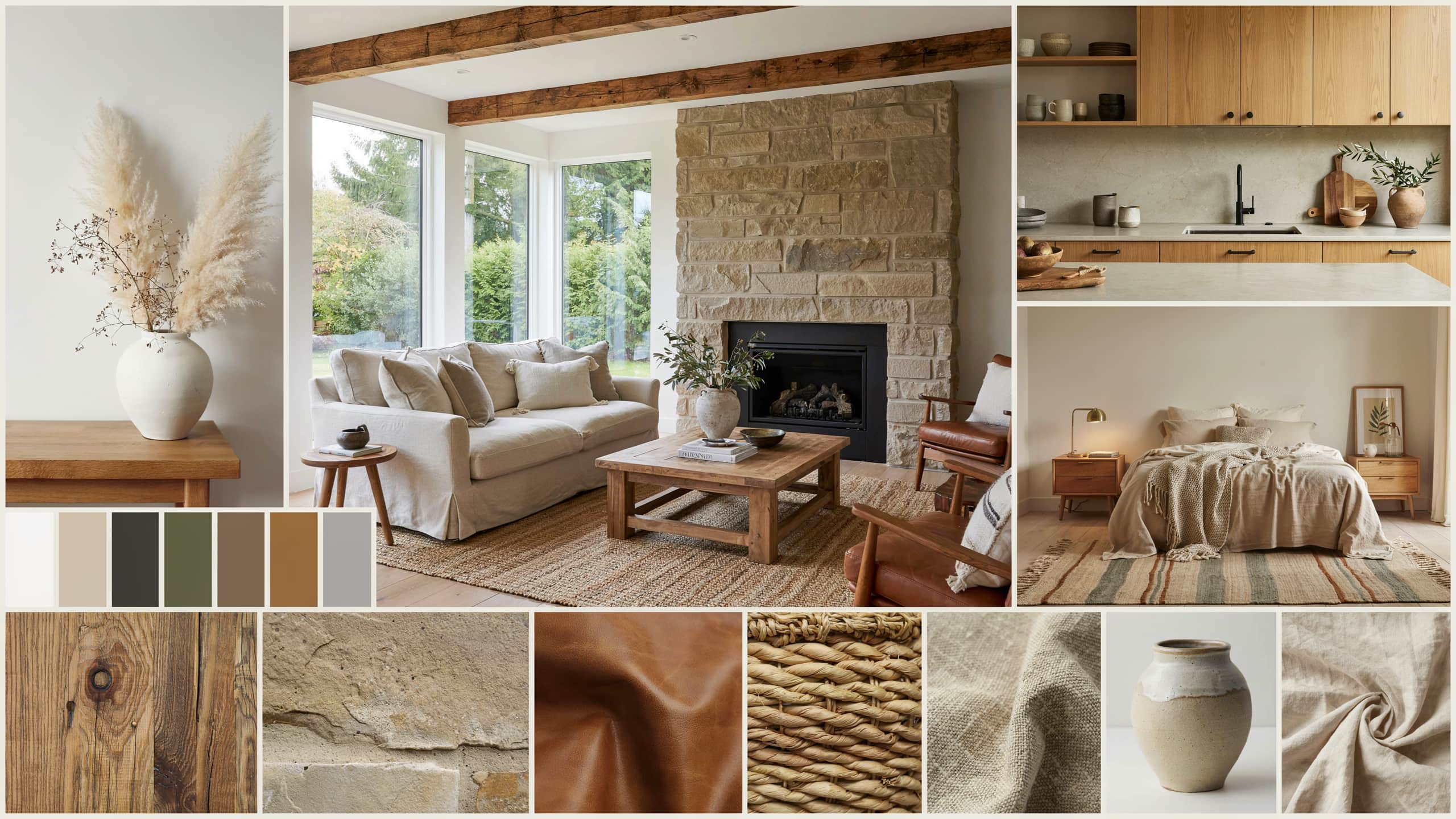
The 1970s leaned hard into earth tones, warm, saturated, and grounded. These were not timid colors. They covered whole walls, sofas, and kitchen cabinets.
The core shades to know:
- Mustard yellow: works on walls, cushions, curtains, and lamp shades
- Burnt orange: strong on accent walls and upholstered chairs
- Rust and terracotta: a natural fit for rugs, ceramics, and bathroom tile
- Avocado green: use in small doses; best in kitchens and bathrooms
- Warm brown and camel: a reliable neutral base for any room
- Harvest gold: a true 70s classic, especially in kitchens and dining spaces
- Chocolate brown: pairs well with orange and gold in dining and living areas
How to use these without going overboard:
Pair one or two bold shades with off-white or warm beige. Add walnut or teak wood tones to ground the space. One strong accent color per room is enough for most people. Two bold shades can work if one is used mostly in textiles and the other on a single wall or large furniture piece.
Signature Materials and Textures That Bring the Era to Life
The 70s look is not only about color. Texture is what gives the style real depth.
Rooms from this era were layered from top to bottom, with walls, floors, and furniture all carrying visual weight. The goal is not to match everything perfectly but to layer two or three complementary textures in each room.
| Material | Best Use in the Home |
|---|---|
| Shag or chunky pile rugs | Living rooms and bedroom floors |
| Velvet upholstery | Sofas, accent chairs, headboards |
| Walnut and teak wood | Furniture frames, shelving, and floors |
| Cane and rattan | Side chairs, room dividers, tables |
| Smoked glass | Coffee tables, shelving units, mirrors |
| Chrome metal | Lamps, bar carts, cabinet hardware |
| Boucle fabric | Armchairs, ottomans, throw pillows |
| Macramé | Wall hangings, plant holders, curtain panels |
| Exposed brick or stone | Fireplace surrounds, feature walls |
A shag rug under a velvet sofa with a walnut coffee table is a strong combination. Add one chrome lamp and a rattan side chair, and the space reads clearly as 70s-inspired without trying too hard.
Furniture Shapes in Retro 70s House Interiors
The furniture styles of the 1970s leaned toward soft, low, sculptural forms. This is what sets the era apart from other design periods. The shapes feel generous, made for people to actually sit in, not just look at.
What to look for:
- Low-slung sofas that sit close to the floor and feel relaxed
- Curved silhouettes on chairs, sofas, and side tables
- Modular sectionals that invite long conversations and casual lounging
- Round or oval coffee tables in glass, burl wood, or stone
- Hanging or suspended chairs made from wicker or heavy fabric, a distinctly 70s statement piece
- Mushroom-style accent chairs for reading corners
- Slim-leg credenzas with warm wood finishes and graphic hardware for stylish storage
- Sunburst mirrors as wall anchors, a signature of the era
You do not need original vintage pieces for every spot. Many furniture brands now produce 70s-inspired designs at fair prices. Look for curved backs, rounded arms, and warm wood finishes. That combination carries most of the visual weight.
A note on sourcing real vintage furniture: When hunting for authentic pieces, look to brands likeThayer Coggin (known for Milo Baughman’s chrome-framed designs), Lane Furniture, and Broyhill, which produced much of what defined American 70s interiors. These names are worth searching on Chairish, eBay, and Facebook Marketplace. Check the underside of furniture for maker’s marks, and look for wear patterns consistent with age rather than factory distressing. |
Room-by-Room Retro 70s House Interior Ideas
Each room carries the 70s style in its own way. Here is how to approach them one at a time.
1. Living Room
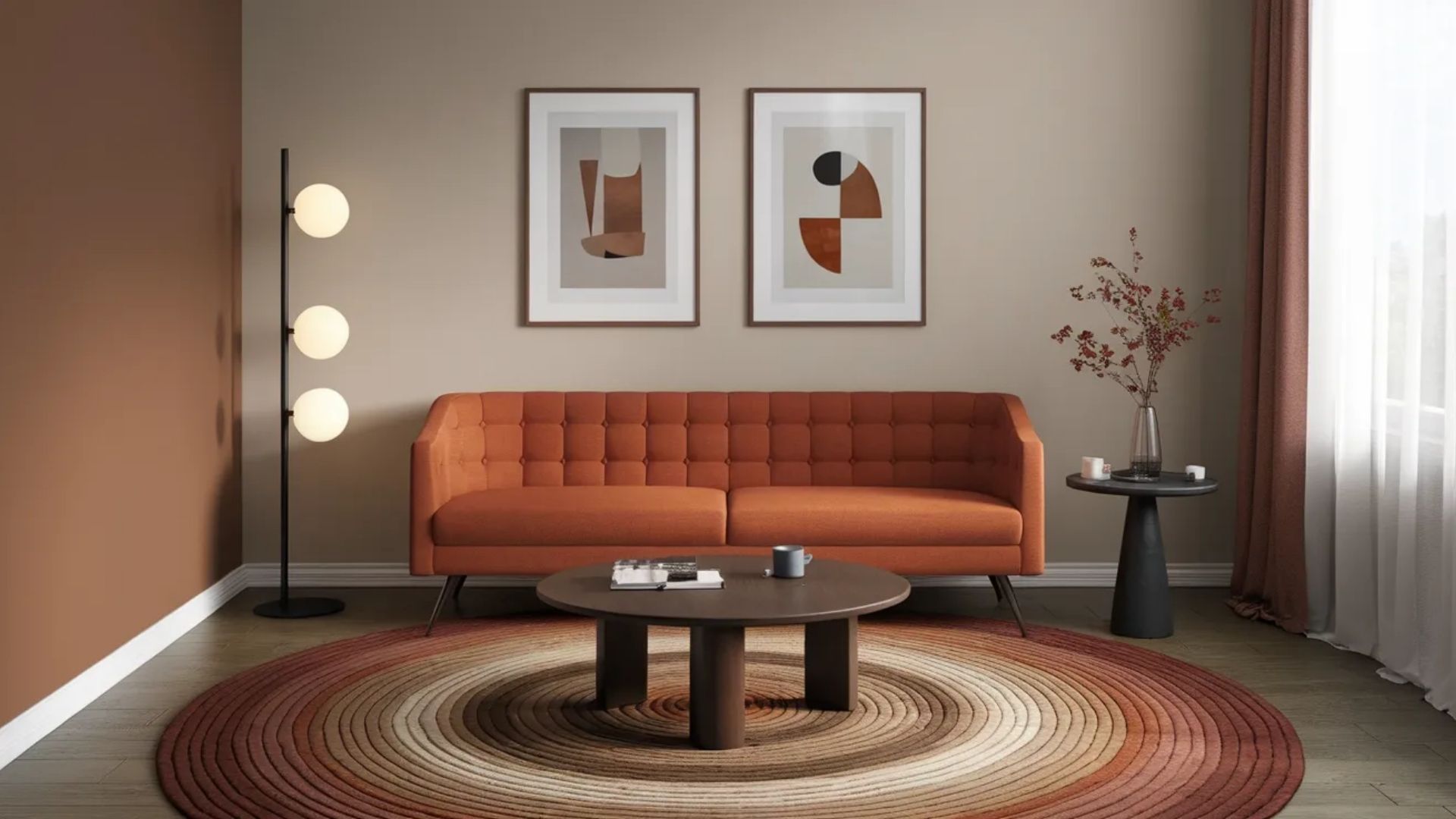
The living room is the best place to build a clear 70s look; it has the most surface area to work with.
Start with a low sofa in rust, mustard, or warm brown velvet. Place a shag rug under the seating area and add a round coffee table in smoked glass or burl wood. Use floor lamps with warm amber bulbs for soft, low light. A large graphic art print or sunburst mirror anchors the wall.
If you have the budget for one statement piece, a curved modular sectional in a deep earth tone does the most work. Build everything else around it.
2. Kitchen
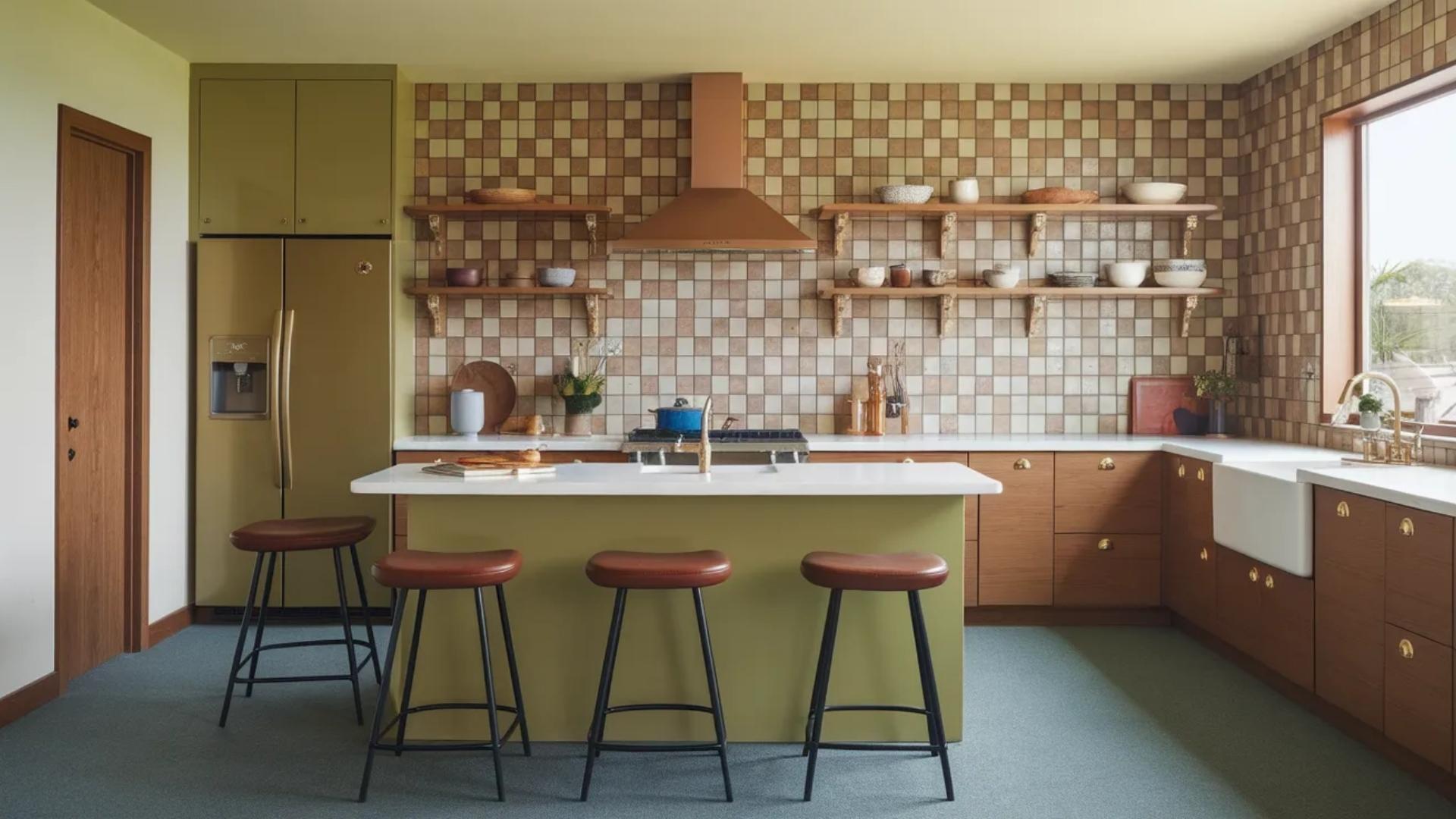
A 70s kitchen is earthy, playful, and very livable. Cabinet colors in avocado green, harvest gold, or warm walnut set the tone immediately.
Pair them with a geometric tile backsplash in terracotta or cream. Add curved bar stools at the island and open shelving with simple ceramic dishes in earthy glazes.
If a full-cabinet repaint isn’t realistic right now, start with the hardware. Swap out flat, modern pulls for warm brass or ceramic knobs. It shifts the mood faster than most people expect, and it costs very little.
Other quick 70s kitchen updates:
- Peel-and-stick backsplash tiles in a checkered or geometric pattern
- A hanging pendant light in a globe or sculptural shape over the island
- Open shelving styled with stoneware, woven baskets, and trailing plants
3. Bedroom
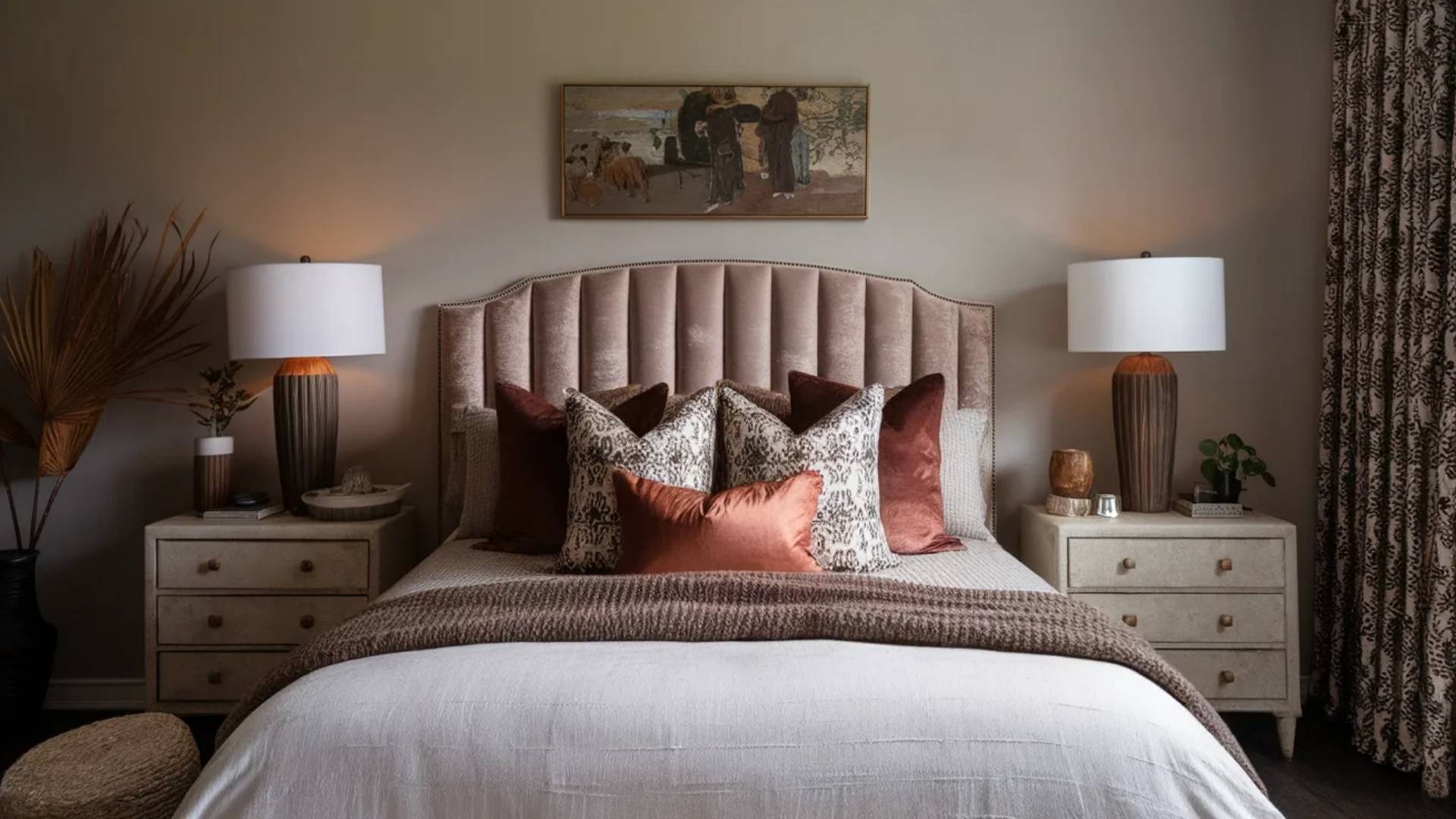
Bedrooms are where softer textures and moodier lighting really come through.
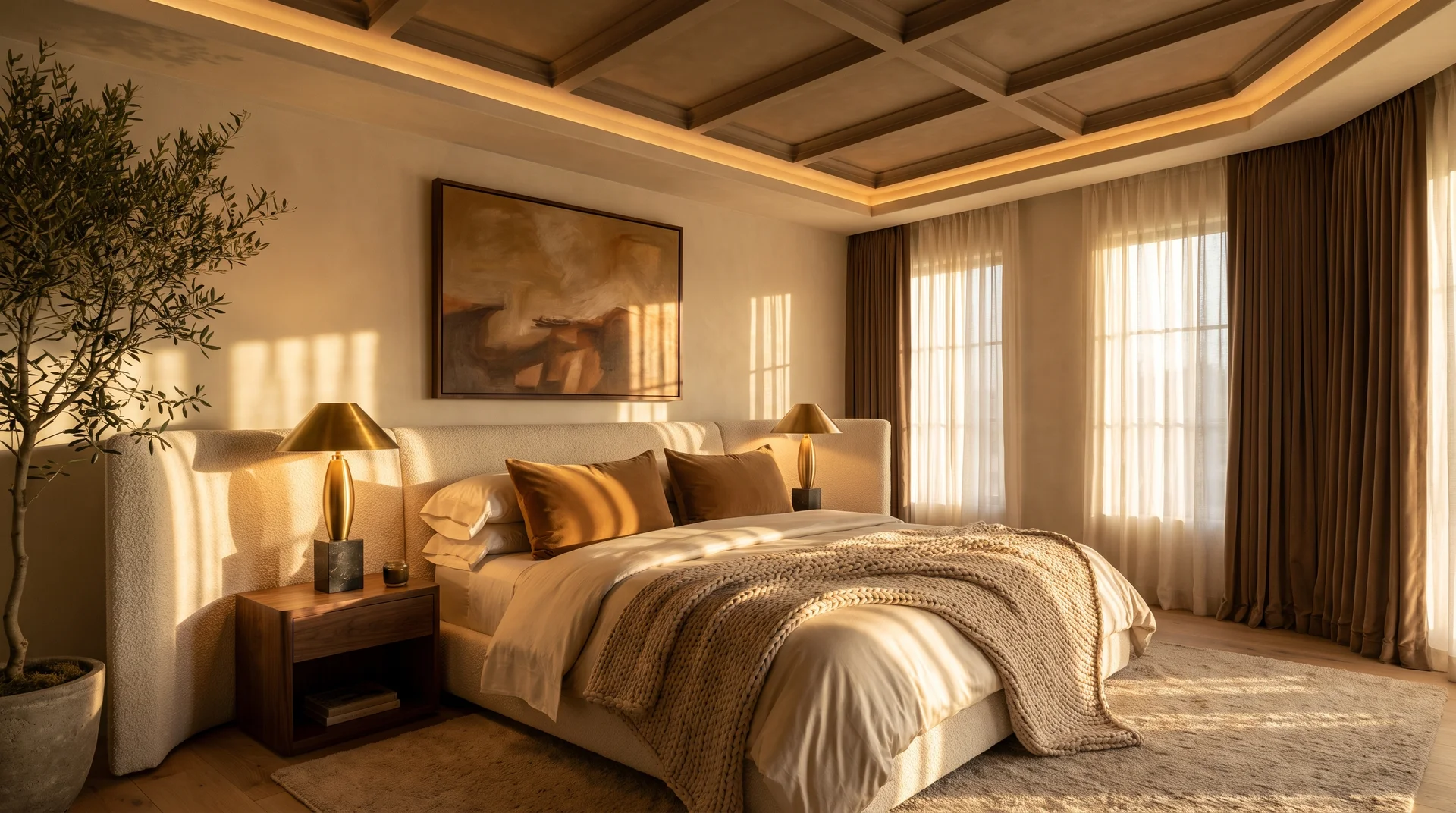
A statement headboard in velvet or boucle fabric sets the right tone from the start. Choose bedding in earthy prints or warm solid tones. Layer a chunky-knit throw and a few printed cushions for added depth.
Avoid perfectly matched bedroom sets. A mix of mismatched nightstands with eclectic lamps is far more true to the era. One vintage lamp, one modern bedside table, and a piece of original 70s wall art, that combination reads as curated rather than themed.
Don’t skip the plants. Large leafy varieties were a staple of 70s bedrooms and living spaces. Monstera, bird of paradise, and rubber trees all fit the era. Pair them with earthy ceramic or woven rattan planters.
4. Bathroom
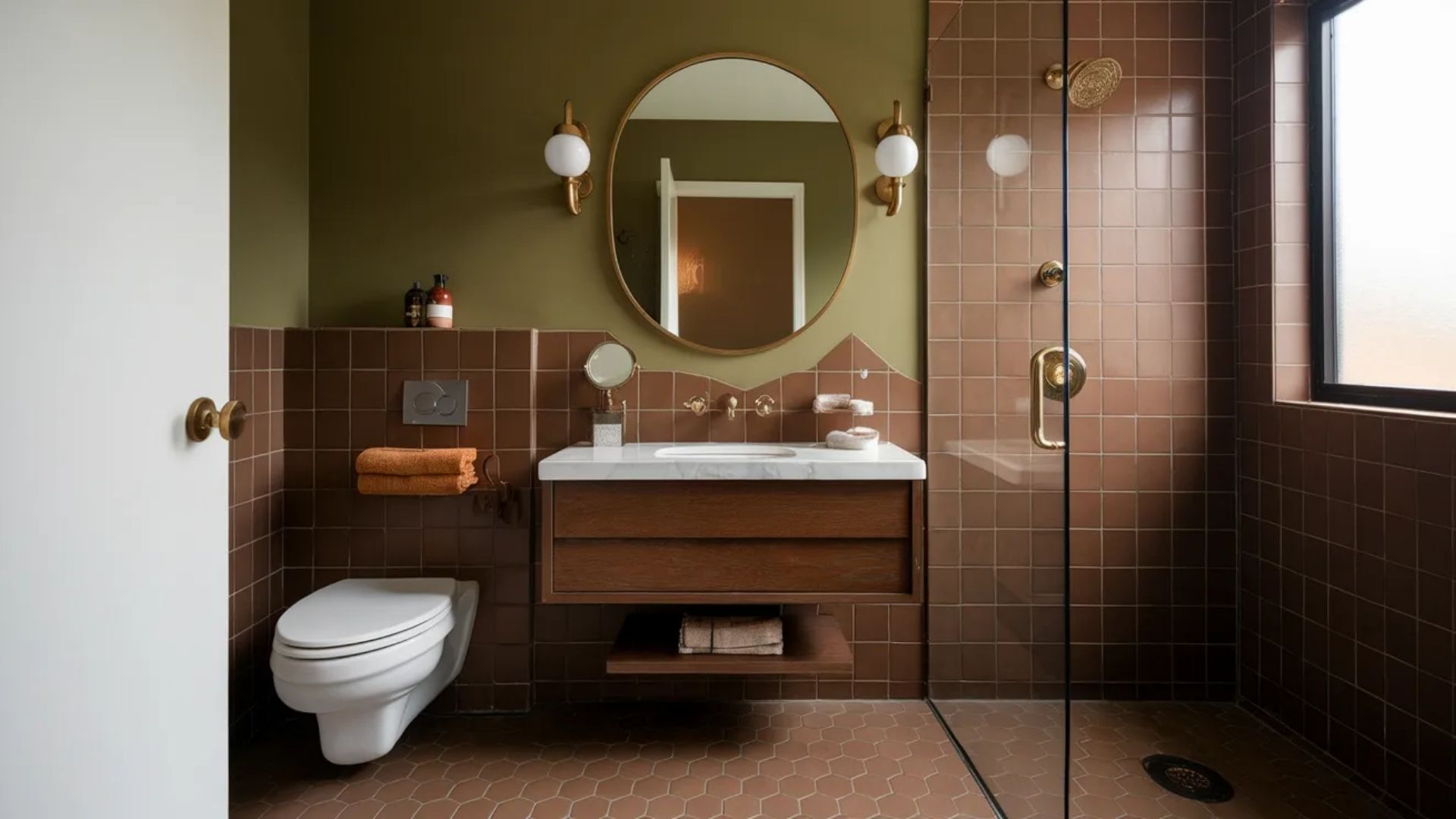
Bathrooms can be bold and very period-accurate without a gut renovation.
Olive green, warm brown, and harvest gold all read as authentically 70s in a bathroom. One detail people often miss: the 1970s were also the era of colored bathroom fixtures, sinks, tubs, and toilets in avocado green or harvest gold, which were standard in American homes.
You do not need to go that far today, but knowing this helps explain why colored tile on walls and floors feels so natural in a 70s-styled bathroom.
Hexagonal floor tiles or large terracotta tiles feel very period-accurate. Add a round or arched mirror with a brass or chrome frame. One vintage-style vanity light bar makes a clear difference without touching the tile.
Lighting Ideas for a Retro 70s House Interior
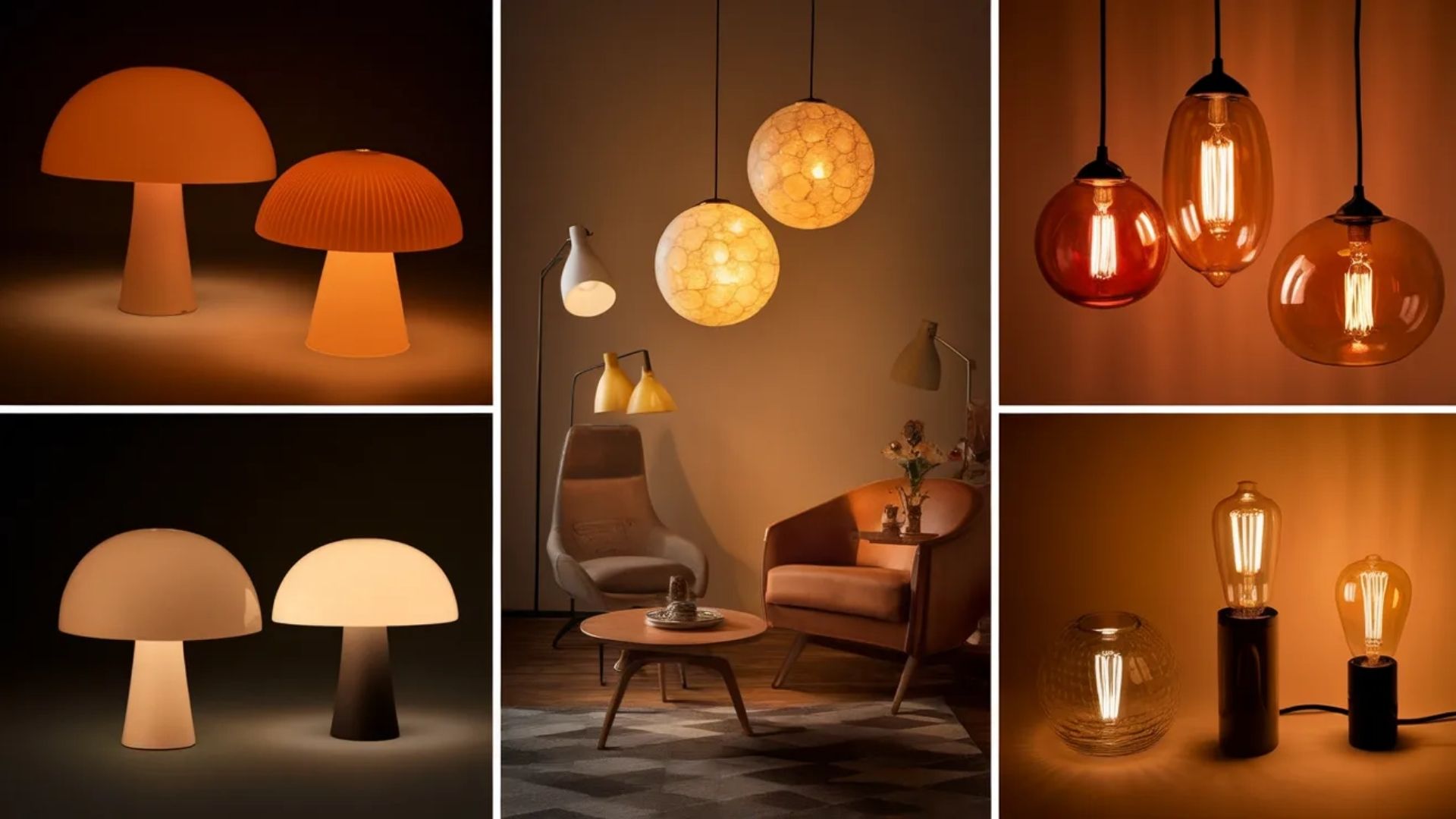
Lighting shifts a room from a generic vintage look to a clear 70s-specific look. The era favored warm, layered, low-set light rather than a single bright overhead fixture.
The goal is pools of light that feel intimate. Two or three light sources per room work better than one.
What works:
- Mushroom lamps on side tables and consoles are one of the most-searched retro lighting items right now
- Globe pendant lights over dining tables or kitchen islands
- Sculptural floor lamps that double as statement decor
- Warm amber or Edison-style bulbs across all fixtures
- Dimmer switches for full control of the mood in living and dining spaces
Avoid cool white bulbs entirely. They immediately cancel out a warm palette. This is one of the most common mistakes people make when trying to achieve a 70s look.
Budget Tips for Creating a Retro 70s House Interior
Great 70s style does not require a large budget. It requires smart priorities.
| Worth Spending More On | Easy to Save On |
|---|---|
| A quality curved sofa | Throw cushions and blankets |
| Shag or wool area rug | Ceramic vases and small decor |
| Statement floor lamp | Peel-and-stick backsplash tiles |
| One original vintage credenza | Open shelving and brackets |
| Burl wood or stone coffee table | Framed wall art and graphic prints |
Spend on the pieces that anchor a room: the sofa, the rug, and the main lamp. Save on everything that sits around them. A well-chosen vintage credenza will outlast a room full of budget props and look better doing it.
How to Mix a Retro 70s House Interior With Modern Style
Pick one bold 70s piece per room- a curved velvet sofa, a mushroom lamp, or a sunburst mirror- and keep everything around it clean and simple.
Warm white or beige walls let retro furniture stand out without making the space feel dated. Mix one vintage find with your existing modern pieces rather than replacing everything at once.
The key is to stop before the room looks themed. One or two strong 70s elements read as intentional; ten of them read as a costume.
Final Thoughts
A retro 70s house interior is about warmth, character, and personal style, not perfection. You do not need to redo every room at once, nor do you need a large budget to start.
Pick one room. Choose a color base, add one or two textures, and build slowly from there. The best 70s-inspired rooms are the ones that feel gathered over time rather than purchased all at once.
A lamp found at an estate sale, a rug discovered at a flea market, a credenza that belonged to someone’s grandmother- those pieces carry a story that no showroom can replicate.
The rooms that feel most alive are the ones that reflect the person living in them. That is the heart of 70s design, and it is just as true today.
What is your first step? A new rug, a lamp, or a bold accent wall? Share what you are working on in the comments.
Frequently Asked Questions
What is 1970s interior design called?
1970s interior design is commonly called retro or vintage 70s style, though it also falls under the broader label of Mid-Century Modern, referring to the furniture and earthy, organic aesthetics that defined homes of that decade.
What Type of Flooring Works Best with A 70s-Inspired Interior?
Warm hardwood, cork flooring, and terracotta tile all work well. If you have existing floors, a large shag or wool area rug in an earthy tone ties the look together.
How Do I Add 70s-Style to a Small Apartment?
Keep the furniture low and avoid heavy window treatments. One velvet accent chair, a warm rug, and amber-toned lighting create the mood without taking over the space.
Are There Specific Plant Types that Suit a Retro 70s Interior?
Yes. Large leafy plants like monstera, bird of paradise, and rubber trees were popular in the era. Pair them with earthy ceramic or woven planters for the right look.