A small crack in your driveway can double in repair cost in a single winter. Once water gets into the slab and freeze-thaw cycles begin, what costs $150 to fill today can turn into a $5,000 resurfacing job next year.
After more than 20 years working on residential driveways, I’ve seen the full range of concrete driveway repair costs, from a $100 crack fill to a $14,000 full replacement. The gap between those two numbers comes down to a few clear factors: the type of damage, how much surface area is affected, and where you live.
This guide breaks down real price ranges for every common repair type, explains what drives costs up or down, and helps you decide whether repair or replacement is the smarter financial move.
What Is the Average Concrete Driveway Repair Cost?
The national average sits at $1,812 for professional concrete driveway repairs, based on Angi’s 2026 project data. For most homeowners, the total falls between $830 and $2,838.
Here is a quick snapshot by repair type:
| Repair Type | DIY Cost | Professional Cost | Per Sq Ft |
|---|---|---|---|
| Hairline crack filling | $5–$15 | $100–$400 | $0.50–$3/linear ft |
| Pothole patching | $8–$30 | $100–$400 | $3–$5 |
| Edge/border repair | $15–$50 | $300–$650 | $3–$10 |
| Surface patching (spalling) | $5–$80 | $1,800–$4,200 | $3–$5 |
| Full resurfacing | Not recommended | $1,000–$3,500 | $3–$7 |
| Mudjacking (slab lifting) | Not recommended | $500–$1,500 | $3–$6 |
| Polyurethane foam lifting | Not recommended | $800–$2,500 | $5–$12 |
| Partial slab replacement | $500–$1,000 materials | $1,200–$4,200 | $6–$14 |
| Full driveway replacement | $500–$1,000 materials | $3,200–$14,400+ | $8–$18 |
How Do You Read the Damage Before Getting a Quote?
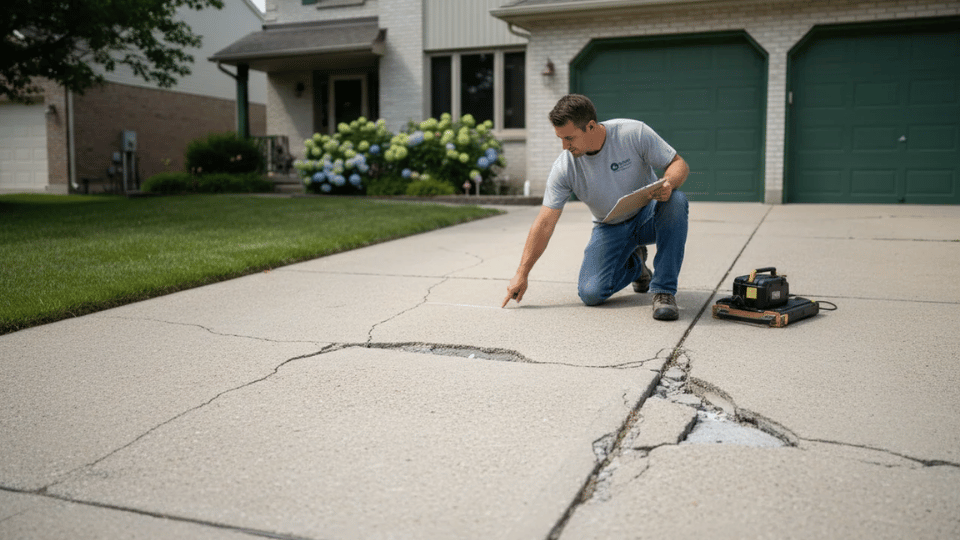
Understanding what type of damage you have is the first step toward an accurate estimate. The same “cracked driveway” can mean very different repairs depending on what is happening beneath the surface.
1. Surface Cracks and Spalling
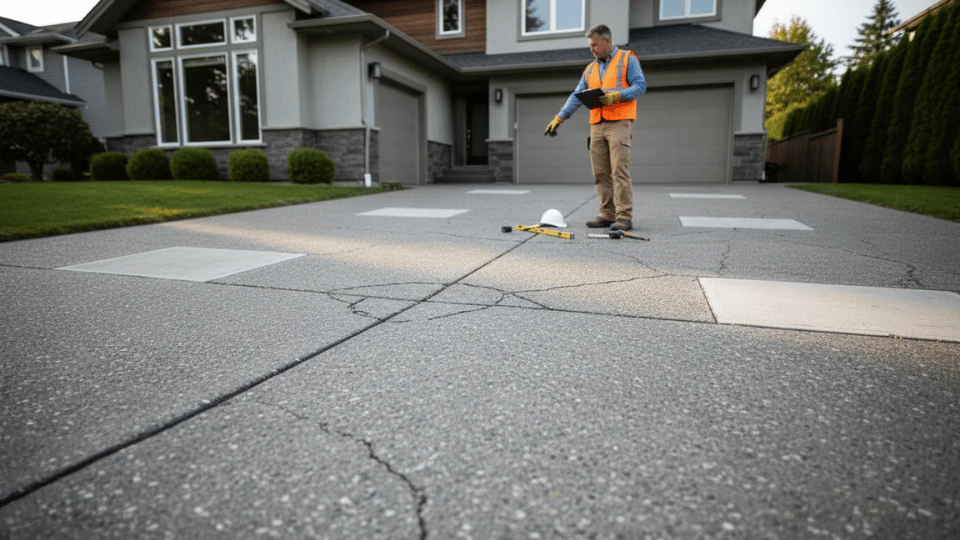
Hairline cracks and surface spalling (flaking) are the most common early-stage problems on concrete driveways. They are typically caused by freeze-thaw cycling, age-related wear, or prolonged exposure to de-icing salts, which break down the surface layer over time.
At this stage, repairs are affordable. A contractor can fill cracks or patch spalled areas for a fraction of what resurfacing costs.
- Hairline crack filling: $0.50 to $3 per linear foot
- Contractor minimum trip fee: $100 to $175 regardless of job size
- Surface patching: $3 to $5 per square foot
- Full resurfacing for widespread spalling: $3 to $7 per square foot
Address cracks wider than a quarter inch right away. Cracks of that width often indicate deeper structural issues, and filling alone will not prevent them from returning.
A structural engineer charges $100 to $220 per hour for an assessment, and that call is worth making before you commit to a repair method.
2. Sunken or Uneven Slabs
When one section of your driveway drops lower than the adjacent panel, it is almost always due to a soil issue beneath. Erosion or poor compaction leaves voids beneath the slab, and the concrete settles into them.
The slab itself is often still structurally sound. Two repair methods lift it without replacement:
- Mudjacking (stone slurry injection): $3 to $6 per square foot, or $500 to $1,500 for a typical sunken section
- Polyurethane foam lifting: $5 to $12 per square foot, or $800 to $2,500; cures faster and adds less weight to the subbase
These methods cost roughly 50-80% less than full replacement. If the concrete is structurally intact, lifting is almost always the better financial call. Foam lifting typically runs 10 to 20% more than mudjacking but is ready for traffic the same day.
3. Pothole and Edge Damage
Potholes form when freeze-thaw cycles push water beneath the surface, and the weakened concrete gives way. Filling a single pothole costs $100 to $400. If you have several, budget $50 to $200 for each additional pothole beyond the first.
Crumbling edges are another common problem. Edges and apron sections take the most wear and are often the first to break down. Patching crumbling edges costs $3 to $10 per square foot, or roughly $650 total if two or more sides are damaged.
4. Wide Structural Cracking and Severe Deterioration
When cracking runs deep, spans multiple slabs, or is accompanied by heaving, the structural integrity of the driveway is compromised. Patching over this level of damage is temporary at best.
- Partial slab replacement: $6 to $14 per square foot
- Full driveway replacement: $8 to $18 per square foot
- 400 sq ft driveway: $3,200 to $7,200
- 800 sq ft driveway: $6,400 to $14,400+
A rule worth following: if visible damage covers more than 25% of the total surface area, resurfacing or replacement delivers better long-term value than repeated patching.
Should You DIY or Hire a Pro?
DIY repairs make financial sense for small jobs. Filling hairline cracks under a quarter inch with a $15 tube of polyurethane filler, instead of paying a $100 minimum service call, is a clear savings. A DIY pothole patch kit runs about $8 to $30 at most hardware stores.
For anything beyond minor surface fixes, professional work almost always costs less over time. A failed DIY repair that needs professional correction will cost more than hiring a contractor upfront. Labor typically accounts for 40 to 60% of any concrete repair estimate.
| Repair Type | DIY OK? | Why |
|---|---|---|
| Hairline crack sealing | Yes | Simple prep, low-cost materials, low risk |
| Pothole patching (small) | Yes | Ready-mix kits work for surface-level damage |
| Surface cleaning/sealing | Yes | Pressure washer rental costs $60–$90/day |
| Full resurfacing | No | Requires professional prep and industrial compounds |
| Slab lifting | No | Specialized equipment; DIY methods rarely hold |
| Full replacement | No | Requires crew, forms, and proper cure timing |
Safety note: Concrete can cause chemical burns on skin. If you work with fresh concrete or patching compounds, wear long sleeves, waterproof gloves, safety goggles, and a face mask.
What Pushes Your Concrete Driveway Repair Cost Up?
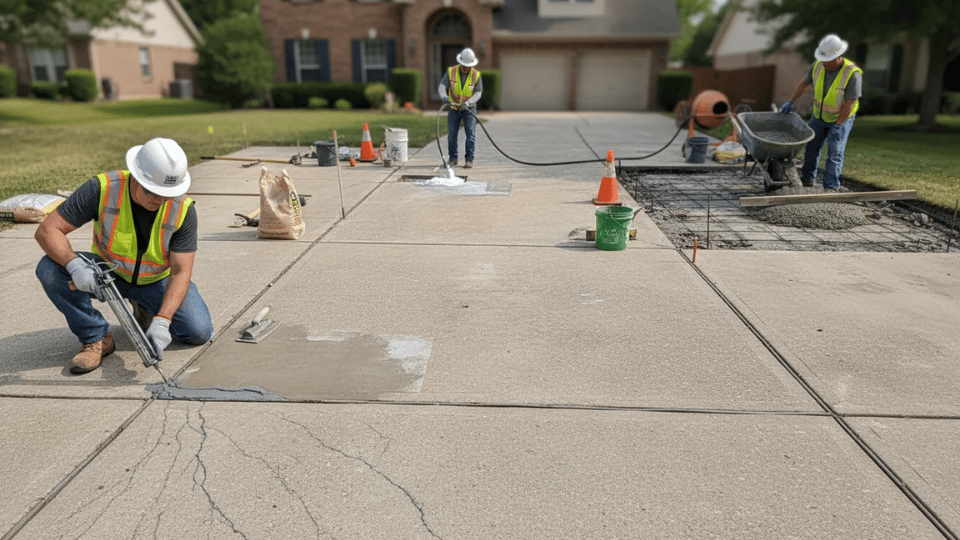
Two driveways with similar damage can produce quotes that differ by 30% or more. Here is what drives that gap.
1. Damage Coverage and Depth
Area and depth are the two biggest pricing variables. A 50 sq ft patch costs a fraction of a 200 sq ft repair, and surface-level damage is simpler than cracks that have penetrated the full slab thickness.
Delays make it worse. A $200 crack fill ignored through two winters can become a $2,000 resurfacing job once water infiltration widens the damage and undermines the surrounding concrete.
2. Driveway Thickness and Reinforcement
Standard residential concrete is poured to a depth of 4 inches. Thicker slabs for heavy vehicles or RVs cost more to remove and replace. Driveways reinforced with wire mesh or rebar require saw-cutting before removal, typically adding $1 to $3 per sq ft to any job that involves concrete removal.
3. Regional Labor Rates
Labor pricing varies significantly by market. Contractors in high-cost-of-living metros charge 20 to 40% more than the national average. In lower-cost regions, the same scope of work often comes in at 15-25% below average.
Local permit requirements are also worth checking. Some municipalities require a permit for driveway work, which can add $50 to $200 to your total before a single tool hits the surface.
4. Surface Finish and Decorative Options
A standard grey resurfacing overlay runs $3 to $5 per sq ft in materials. Decorative finishes increase that cost considerably:
- Stamped or stenciled overlay: $6 to $15 per sq ft
- Stained finish: $4 to $10 per sq ft
- Engraved finish: $16 or more per sq ft
5. Hidden Costs That Often Get Missed
- Concrete removal and disposal: $1 to $3 per sq ft added to replacement jobs
- Soil stabilization: $500 to $2,000 if the subbase is eroded or loose
- Drainage correction: $300 to $3,000. Poor drainage is one of the most overlooked cost drivers
- Tree root removal: $300 to $800 for professional landscaping services; $0 to $150 DIY for small roots
- Permit fees: $50 to $200 depending on your municipality
- Resealing after repair: $0.10 to $0.16 per sq ft for concrete; this is a required step, not optional
How Long Does Concrete Driveway Repair Take?
Knowing the timeline helps you plan traffic restrictions around your home.
| Repair Type | Typical Duration | Ready for Traffic |
|---|---|---|
| Crack sealing | 1–3 hours | Same day |
| Pothole patching | 1–4 hours | 24 hours |
| Resurfacing | 1–2 days | 24–48 hours after final coat |
| Mudjacking / foam lifting | 2–6 hours | Same day (foam) / 24 hours (mud) |
| Partial slab replacement | 1–2 days | 3–7 days cure time |
| Full driveway replacement | 3–7 days | 7 days minimum cure |
When Is Repair Enough and When Should You Replace?
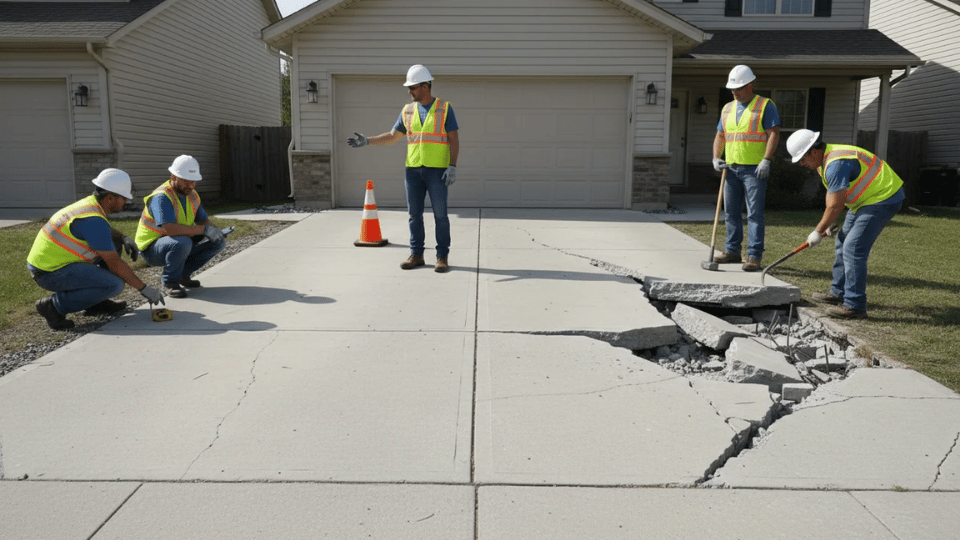
Repair is the right call when:
- Damage is limited to surface cracks or isolated patches
- The slab is structurally sound with no major heaving or shifting
- Less than 25 to 30% of the total surface is affected
- The driveway is under 20 years old
- No previous patches in the same area have already failed
A proper resurfacing or patch job can extend the driveway’s life by 8 to 15 years at a fraction of the cost of replacement.
Full replacement makes more financial sense when:
- Multiple slabs have shifted or sunk
- Cracks are wider than half an inch and run through the full depth
- The same area has been patched twice without lasting results
- The driveway is 25 to 30 years old and was never properly sealed
- Tree root damage has lifted or fractured several panels
- Standing water pools on the surface after rain, a sign that the grade or drainage design has failed
The benchmark to use: if the estimated repair cost exceeds 50% of the full replacement cost for the same area, replacement is the better investment. At that ratio, you are spending too much to hold together a surface that will keep breaking down.
How Can You Lower Concrete Repair Costs Without Cutting Corners?
- Get three quotes: Contractor pricing for the same repair scope can vary by 30-50%. Multiple bids show what is fair in your local market.
- Schedule in the off-season: Concrete work slows in late fall and early winter. Contractors often price jobs lower between October and March when workloads thin out. Avoid scheduling in peak summer heat or when a freeze is forecast, as both affect how concrete cures.
- Fill cracks before you resurface: Applying an overlay over unfilled cracks causes the new layer to fail within a season or two. Fix the cracks first, then resurface. Skipping this step wastes your investment.
- Ask about partial replacement: If only one section of a larger driveway is damaged beyond repair, replacing that section alone can save thousands compared to a full tear-out.
- Seal every two to three years: A quality concrete sealer costs $50 to $150 per application. Resealing on that schedule is one of the most cost-effective ways to prevent the cycle of repeated repairs.
- Fix drainage first: Resurfacing or replacing a driveway with a drainage problem is a short-term fix. Water will find its way back in. Correct the grade or install drainage before committing to any surface repair.
Does Concrete Driveway Repair Affect Your Home Value?
A well-maintained concrete driveway adds to curb appeal and can increase property value by 5 to 10%. The condition of the driveway sends a clear signal to buyers about how the rest of the property has been maintained.
If your driveway is visibly cracked or sunken, a repair or resurface before listing your home is worth factoring into your pre-sale budget. A $1,500 resurfacing job that removes visible surface damage can return far more at closing than it costs.
Final Word on Concrete Driveway Repair Costs
Concrete driveway repair costs in 2026 range from $100 for a basic crack fill to $14,000 or more for a full replacement. The right fix depends on the type of damage, the extent of the damage, and your driveway’s age.
Acting on minor damage early is almost always the cheapest move. Waiting costs more.
From experience, the homeowners who spend the least over time are the ones who act early, seal on schedule, fix drainage problems before they resurface, and get competitive bids before committing. Small damage ignored through one bad winter rarely stays small.
Before you call a contractor, walk the full length of your driveway and take stock of what you are actually dealing with. Use the cost ranges in this guide as your baseline, gather at least three local quotes, and always seal after repair work is done.
Getting the job right the first time is far cheaper than doing it twice.
Frequently asked questions
How Much Does Concrete Driveway Repair Cost per Square Foot?
Between $3 and $25 per square foot, depending on repair type. Crack filling starts at $0.50 per linear foot. Full resurfacing runs $3 to $7 per sq ft. Slab replacement costs $6 to $18 per sq ft.
How Long Does a Concrete Driveway Last After Repair?
Surface crack repairs last 2 to 5 years. Resurfacing lasts 8 to 15 years. Slab lifting lasts 10 to 20 years. A full replacement can last 30 to 50 years with proper sealing and maintenance.
What Chemicals Are Bad for Concrete Driveways?
Rock salt and chloride-based de-icers break down the surface layer over time, especially in cold climates with freeze-thaw cycles. Use sand for traction in winter, or switch to calcium magnesium acetate (CMA)-based products, which are less damaging to concrete.