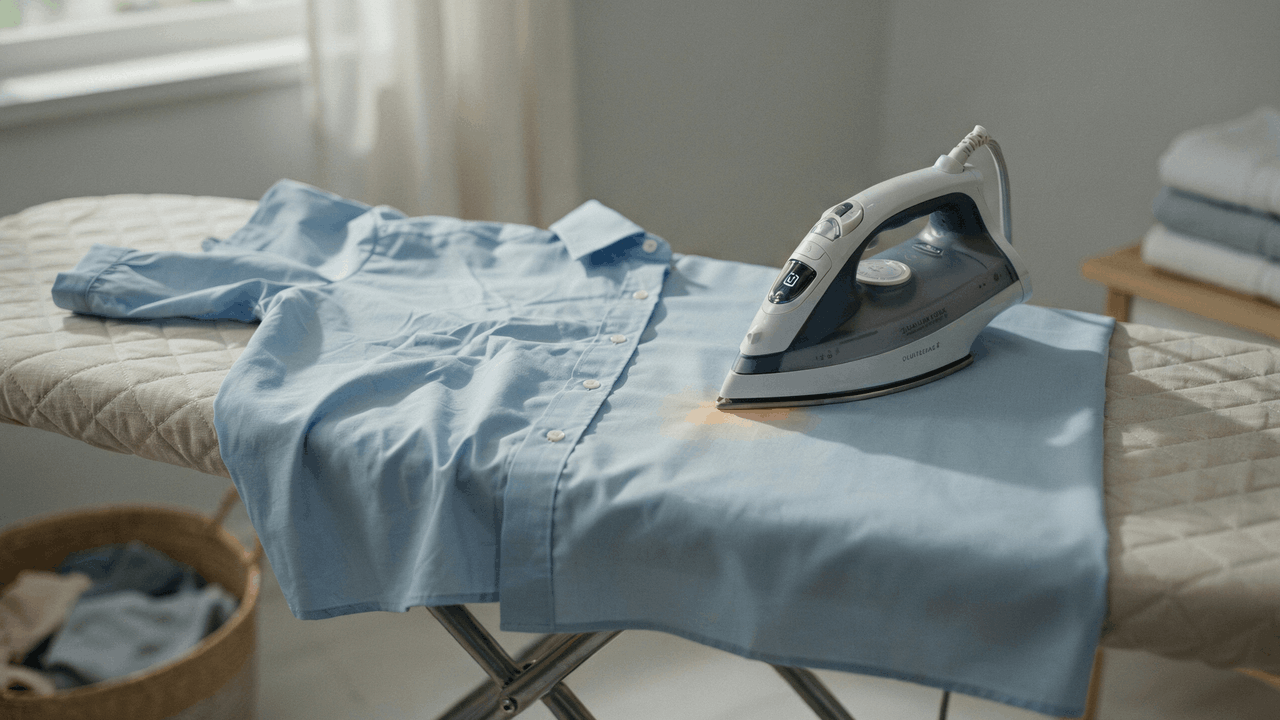
You pull out your favorite polyester shirt. It’s full of wrinkles. The iron is sitting right there. But you stop. Can you iron polyester without ruining it?
That’s a fair question, and one a lot of people get wrong.
Polyester is one of the most used fabrics in the world. It shows up in clothes, curtains, tablecloths, and more. But it also has a reputation for reacting badly to heat.
One wrong move with an iron, and you’re left with shiny scorch marks or a melted patch you can’t fix.
Here’s the truth: you can iron polyester safely. You need the right settings, the right technique, and a little patience.
This guide walks you through everything from why polyester reacts to heat to the exact steps for ironing it without damage to the best wrinkle-removal alternatives if you’d rather not iron at all.
Why Does Polyester React to Heat So Easily?
Polyester is a synthetic fabric made from plastic-based fibers, specifically a polymer called polyethylene terephthalate (PET).
Unlike natural fibers like cotton or linen, polyester does not absorb or release heat slowly. Instead, synthetic fibers conduct and trap heat quickly. Because they are thermoplastic, they soften and change shape when exposed to high temperatures.
This is why polyester wrinkles can be removed with gentle heat, but excessive heat can cause permanent damage.
Polyester reacts poorly to high heat because it begins to break down at around 148°C (300°F). When this happens, several types of damage can occur:
- Glazing or shine marks, where surface fibers flatten permanently
- Shrinkage or warping, where the fabric loses its original shape
- Melting or sticking, where fabric can bond to the iron soleplate, in severe cases
The risk is made worse by inconsistent iron temperatures. A setting labeled “medium” on one iron may be significantly hotter on another. For this reason, fabric care experts always recommend testing a hidden area first and never assuming the dial is accurate for polyester.
Can You Iron Polyester Safely?

Yes, you can iron polyester safely. But it requires a low heat setting, a protective cloth between the iron and the fabric, and short, careful passes. Skip any one of those steps, and you risk damaging the fabric.
The key is understanding that polyester does not need intense heat to release wrinkles. It responds well to low, consistent warmth, especially with a little steam.
Ironing polyester is generally safe when:
- The care label says “iron on low” or shows a one-dot iron symbol
- You use a pressing cloth to protect the surface
- The fabric is a blend (e.g., cotton-polyester) with a higher heat tolerance
- You keep the iron moving and never leave it sitting on the fabric
Ironing polyester is risky when:
- The care label says “do not iron” or shows a crossed-out iron symbol
- The fabric has a shiny or silky finish (like polyester satin)
- You’re working with a 100% polyester performance or athletic fabric
- The iron does not have a reliable low-heat or synthetic setting
When in doubt, use steam instead of ironing with direct contact. A garment steamer is always the safer choice for polyester.
What Heat Setting Should You Use for Polyester?
Use the lowest setting your iron offers, typically labeled “synthetic” or “polyester.”
The safest heat setting for polyester is low heat, typically between 110°C and 135°C (230°F–275°F).
Most modern irons label this clearly:
| Iron Setting | Dots on Dial | Approx. Temperature | Safe for Polyester? |
|---|---|---|---|
| Low | One dot (•) | 110°C / 230°F | Yes |
| Medium | Two dots (••) | 150°C / 300°F | Borderline |
| High | Three dots (•••) | 200°C / 390°F | No |
Always look for the “synthetic” or “polyester” setting on your iron’s dial; many modern irons include one. If yours doesn’t have it, use the lowest heat setting available.
Steam or Dry Ironing?
For polyester, steam is your friend with one important condition. Use low-pressure steam and do not hold the steam jet directly on the fabric for too long.
- Steam ironing helps relax the fibers faster with less heat. This reduces your risk of scorching.
- Dry ironing works too, but requires you to be more careful about temperature; there’s no moisture buffer.
If your iron produces heavy steam, hold it slightly above the fabric and let the steam do the work before pressing lightly.
Step-by-Step: How to Iron Polyester Without Damage
Follow these steps every time you iron a polyester garment. Skipping even one step raises your risk of damage.
Step 1: Turn the Garment Inside Out
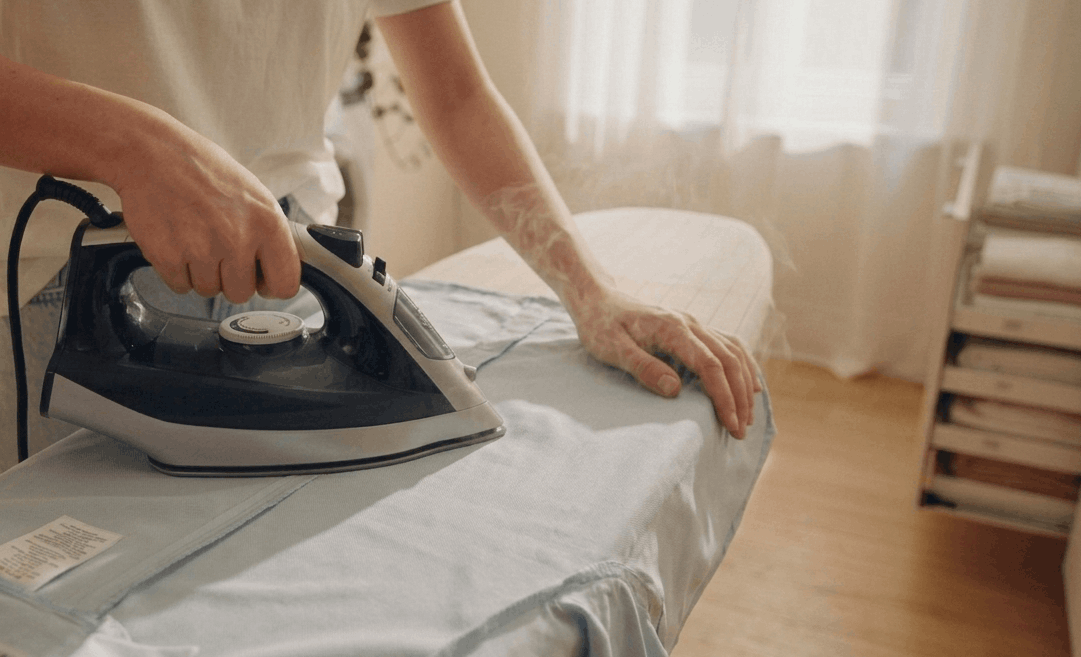
Always iron polyester on the wrong side (inside out). This protects the visible outer surface from:
- Direct heat contact
- Shine marks (glazing)
- Any accidental scorching
This one step alone prevents the most common ironing damage to polyester.
Step 2: Use a Pressing Cloth
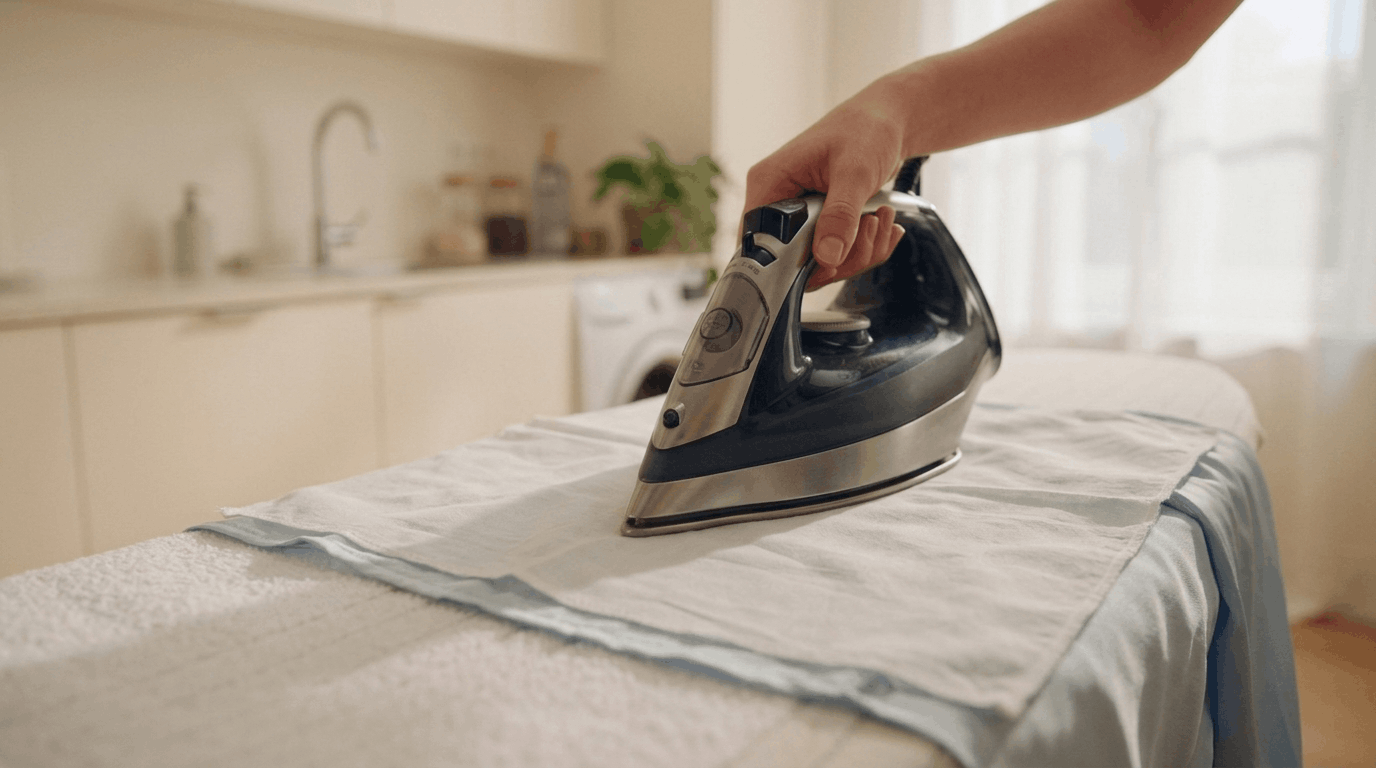
Place a clean, thin cotton cloth between the iron and the fabric. A white handkerchief or a piece of cotton muslin works well.
This acts as a heat buffer. The pressing cloth absorbs some of the direct heat before it reaches the polyester. It also tells you if the iron is too hot, if the cotton cloth starts to scorch, the polyester definitely would have.
Do not use colored clothes that might transfer dye or synthetic fabrics that would melt, too.
Step 3: Apply Short, Light Passes Only
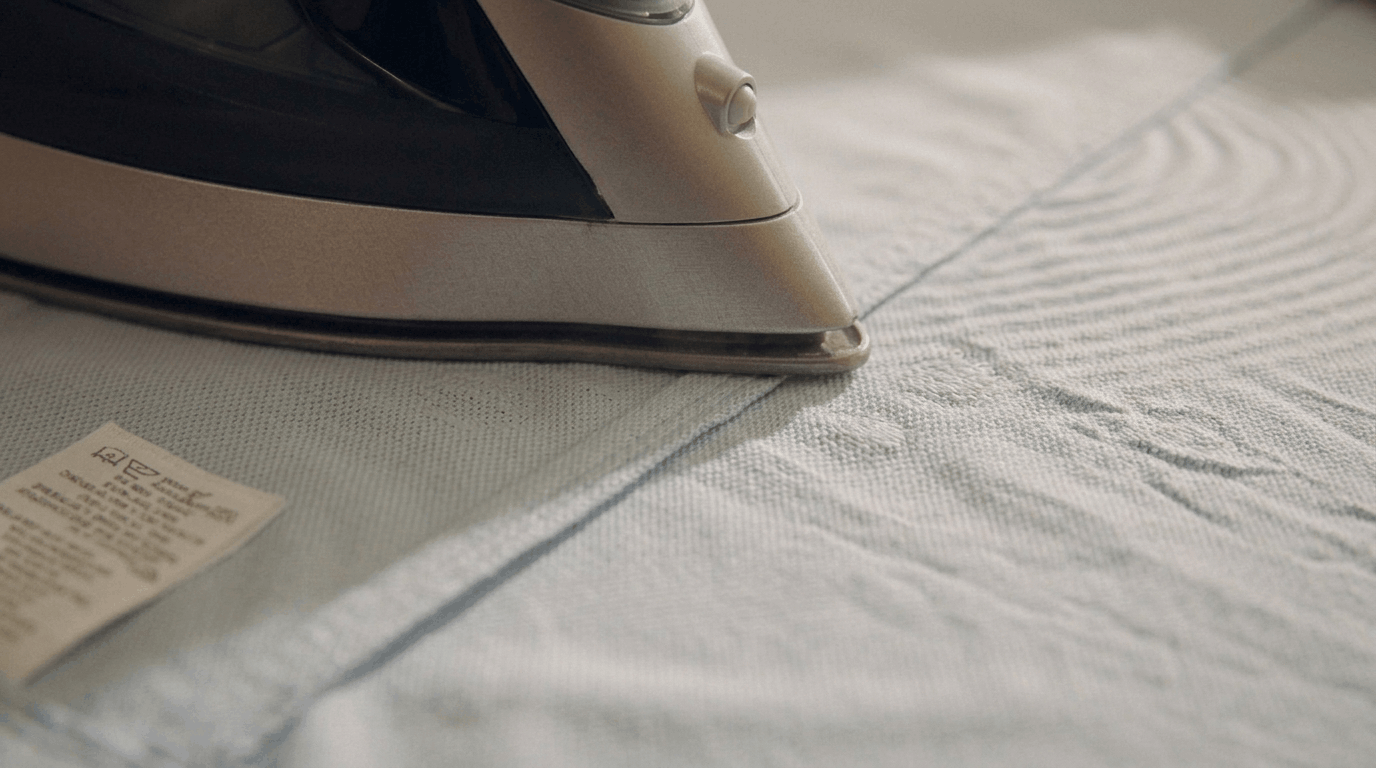
Keep the iron moving at all times. Do not press down hard or let the iron sit still on the fabric.
- Use quick, light gliding passes
- Work in the direction of the fabric grain
- Apply gentle pressure. Polyester doesn’t need force; it needs warmth
If one pass doesn’t fully remove the wrinkle, let the fabric cool slightly and repeat. Never press harder or add more heat.
Step 4: Let the Fabric Cool Before Moving
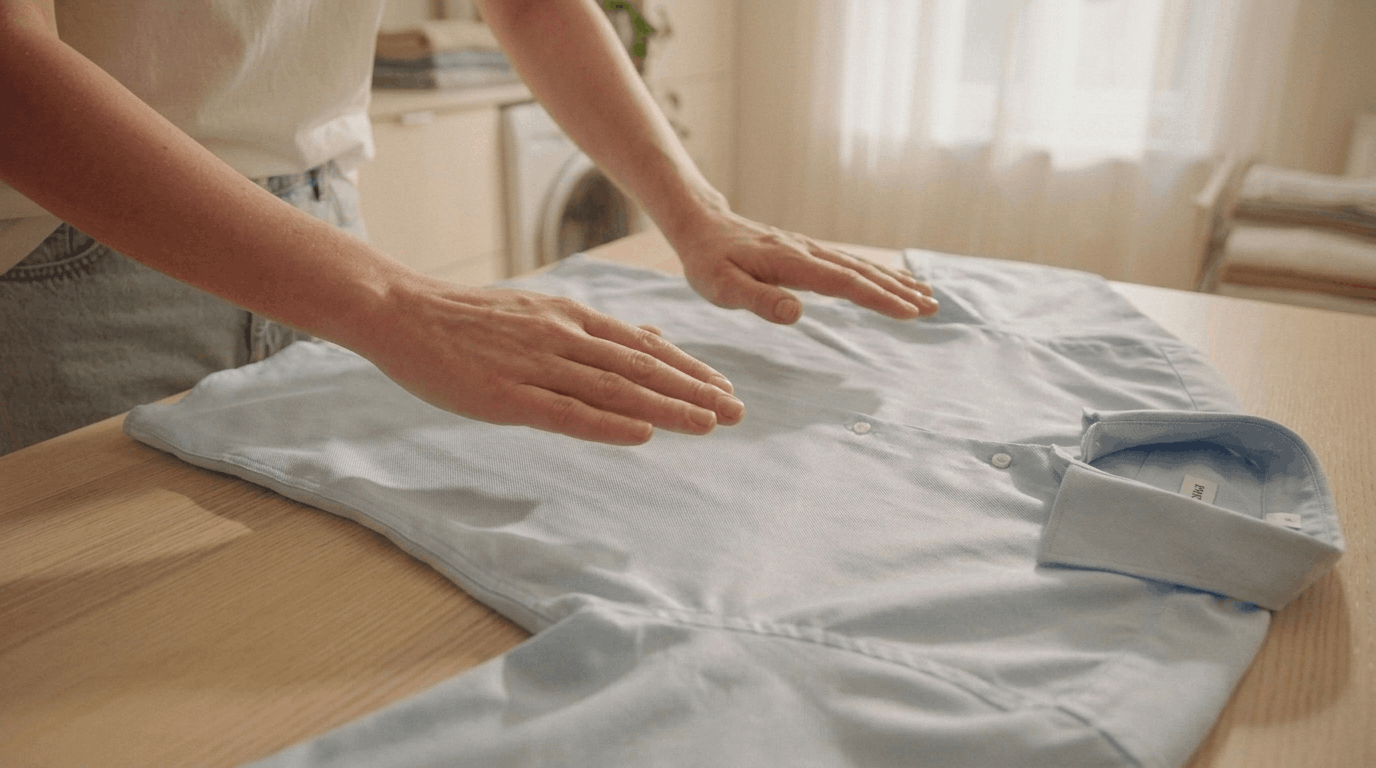
After ironing each section,let the fabric cool completely before folding, hanging, or wearing.
Polyester fibers remain soft and flexible even after ironing. Moving the garment while it’s still warm can create new wrinkles or cause the fabric to set in an uneven shape.
Lay it flat or hang it up immediately and wait at least 2–3 minutes before handling.
How to Handle Heat for Different Polyester Blends
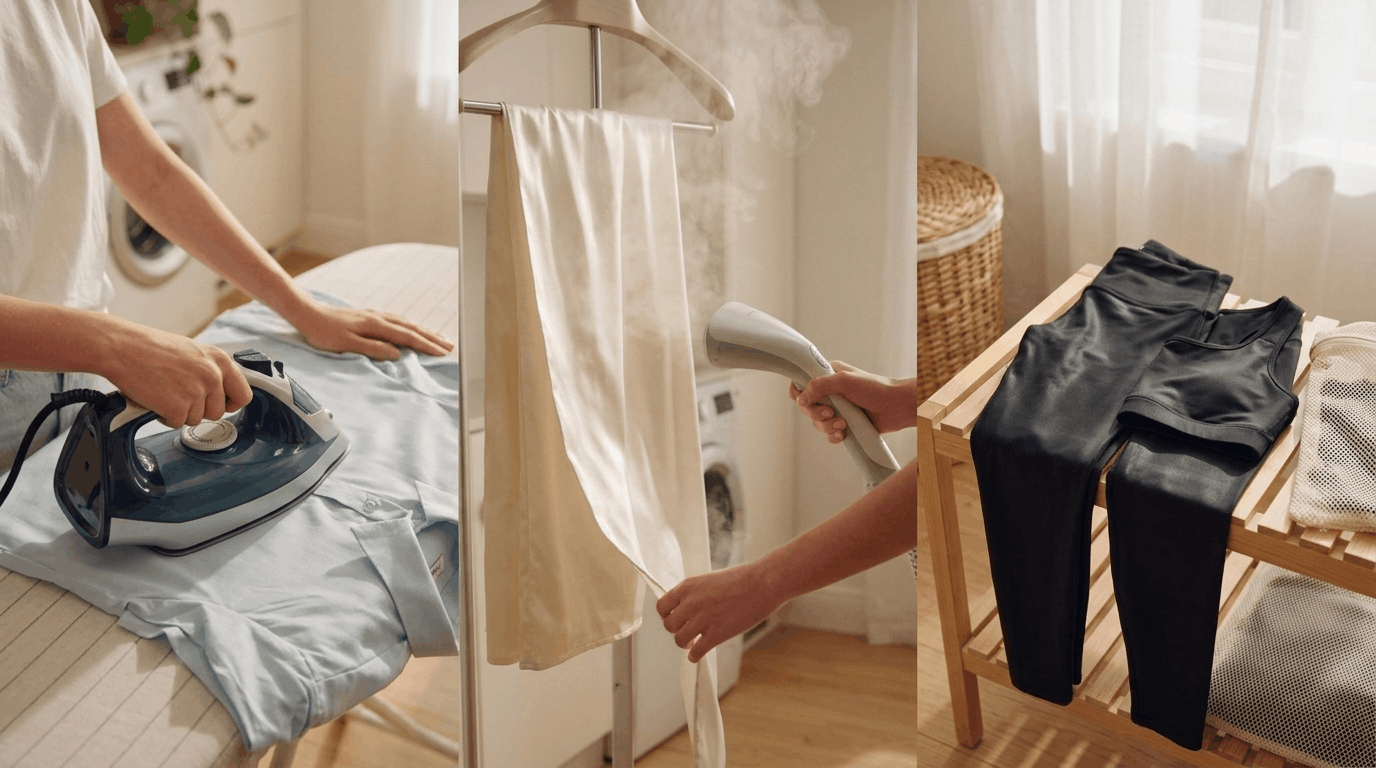
Not all polyester is the same. Blended fabrics behave differently depending on what they’re mixed with.
1. Cotton-Polyester Blends
Cotton-polyester blends (like 60/40 or 50/50 mixes) are the most forgiving polyester fabrics to iron.
The cotton content gives the fabric more heat resistance. You can generally use a medium-low setting. Still use a pressing cloth, but you have a slightly wider temperature margin.
Tip: The higher the polyester percentage, the more cautious you should be with heat.
2. Spandex or Elastane Blends
Polyester mixed with spandex or elastane (common in activewear, yoga pants, and leggings) isvery heat-sensitive.
Elastane starts to break down at very low temperatures. Ironing these fabrics can permanently destroy the stretch and elasticity. For spandex blends, avoid the iron entirely and use a steamer or the dryer method instead.
3. Polyester, Satin, and Silk-Like Fabrics
Polyester satin has a smooth, shiny surface finish. That finish is extremely vulnerable to iron marks. Any direct heat contact, even at low heat, can leave a permanent dull patch where the shine used to be.
How to Remove Wrinkles from Polyester Without Ironing

Wrinkled polyester doesn’t always need an iron to look fresh again. There are simple, safe methods that remove creases without risking heat damage.
1. Garment Steamer: Uses moist heat without direct contact to safely remove wrinkles from polyester, including blends and satin, with no scorch marks or pressing cloth needed.
2. Shower Steam Method: Hang the garment in a steamy bathroom during a shower to let wrinkles relax naturally without direct heat. Best for light wrinkles; then leave it hanging for 10 minutes to air-dry properly.
3. Dryer Refresh Method: Place the garment in a dryer with a damp cloth or ice cubes and run on low heat for 10 minutes. The steam inside helps release wrinkles.
4. Wrinkle Release Sprays:Lightly spray the fabric and smooth it out with your hands, then hang it up to dry. This method works best for removing surface wrinkles from polyester and gives quick, heat-free results.
Common Mistakes That Damage Polyester
Even experienced people make these errors. Knowing them in advance saves a garment.
- Using the wrong heat setting: The most common mistake. Always check the label and use the lowest appropriate setting.
- Leaving the iron in one spot: Even two seconds of stillness can cause glazing or melting. Keep it moving.
- Skipping the pressing cloth: The pressing cloth is not optional. It’s your main line of protection.
- Ironing the right side (outside) of the fabric: Always iron the inside out.
- Ironing damp polyester without protection: Wet polyester + direct heat = steam scorch. Use a pressing cloth if the fabric is still damp.
- Ignoring a “do not iron” label: If the label says no, use a steamer. The label exists for a reason.
- Using an iron that hasn’t cooled from a higher setting: If you just ironed cotton, let the iron cool down before switching to polyester.
Conclusion
So, can you iron polyester? Yes, you can. But it requires care, the right tools, and the right technique.
The key points to remember:
- Always use low heat,one dot on the iron dial
- Turn the garmentinside out before ironing
- Always place a pressing cloth between the iron and the fabric
- Keep the iron moving; never let it sit still on polyester
- When in doubt, use a steamer instead
Polyester is a durable, long-lasting fabric when treated correctly. The small effort of using the right technique pays off every time your clothes stay in better shape, and you avoid the frustration of permanent damage.
Got a polyester garment you’re not sure about? Check the care label first. If the label allows ironing, follow the steps above. If it says “do not iron,” a steamer will get the job done without any risk.
It’s also worth knowing how to remove stains from fabric before ironing, since heat can set stains permanently.
Frequently Asked Questions
What Happens if You Iron Polyester on High Heat?
High heat can permanently damage polyester, causing glazing, shrinking, warping, or even melting, where the fabric may stick to the iron. Most of this damage is irreversible.
Is Steaming Better than Ironing Polyester?
Yes, steam removes wrinkles from polyester without direct heat contact, preventing glazing, scorching, or fiber damage. A garment steamer or shower steam method is the safest choice for most polyester items.
Can you Iron Polyester Blends Safely?
It depends on the blend: cotton-polyester can handle more heat, while spandex or elastane blends are highly heat-sensitive and should be steamed rather than ironed. Always check the care label before applying heat.
Can You Fix Iron Scorch Marks on Polyester?
Light scorch marks can sometimes be reduced with white vinegar and a soft cloth. Melted or hardened fibers are permanent and cannot be repaired.
Should You Use Starch When Ironing Polyester?
No. Starch burns easily on synthetic fabric and can leave brown residue. Skip it entirely for polyester garments.
Can You Iron Polyester Curtains the Same Way as Clothes?
Yes, the same rules apply. Use low heat and a pressing cloth, then iron the back side. For large curtains, a garment steamer is faster and safer.