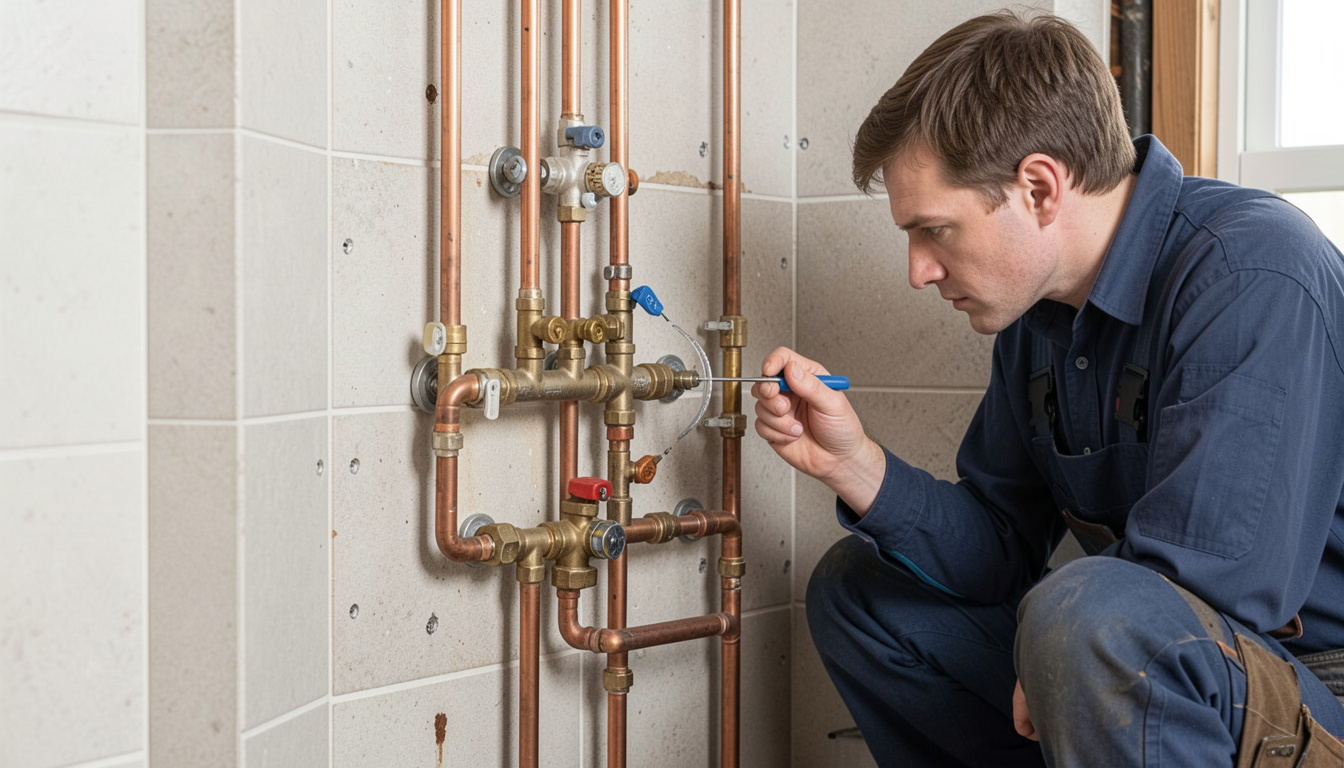
Most people know when their shower is broken. They just have no idea why.
The water goes scalding for no reason, the handle barely turns, or the showerhead keeps dripping long after it is off.
More often than not, the problem is not the showerhead.
It is the shower valve, a plumbing component hidden behind your wall that most homeowners have never thought about.
And a failing one is not cheap to ignore. The U.S. Environmental Protection Agency estimates the average household wastes nearly 10,000 gallons per year from leaks.
A worn shower valve is one of the most common sources. This guide covers what a shower valve is, how it works, and how to catch problems early.
What is a Shower Valve?
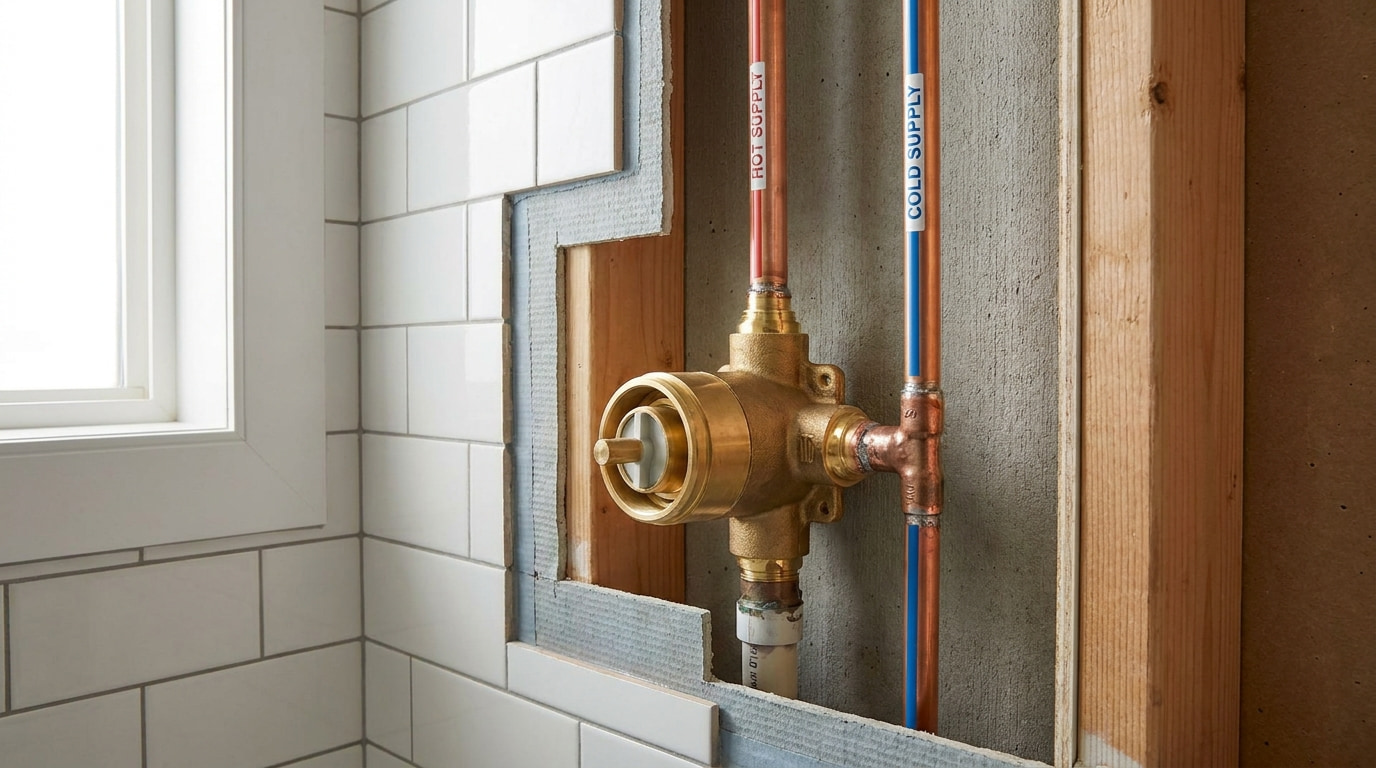
The shower valve is the plumbing device built into your wall that controls water temperature and flow every time you shower.
It connects directly to both the hot and cold supply lines in your home. When you move the handle, the valve mixes those two sources and sends the blended water up to your showerhead.
Without it, you have no control over temperature or pressure.
Most homeowners focus on the showerhead or handle when something feels off. The valve is the part making both of those work.
It sits hidden behind the trim plate and rarely gets any attention until something goes wrong.
How Does a Shower Valve Work?
The shower valve is both a mixing device and a pressure-management tool, built into a single unit in your wall.
Inside the valve body sits a cartridge, a ball mechanism, or a ceramic disc assembly.
When you turn the handle, you shift these internal components to allow more hot water, more cold water, or a blend of both. That mixed water travels to the showerhead.
Modern valves also monitor pressure on both supply lines at the same time.
If pressure drops on one side because a toilet flushes and draws cold water away from the shower, the valve compensates by restricting the flow on the other side.
That is why a properly functioning pressure-balancing valve keeps your shower temperature steady even when other fixtures are running.
What are the Types of Shower Valves?
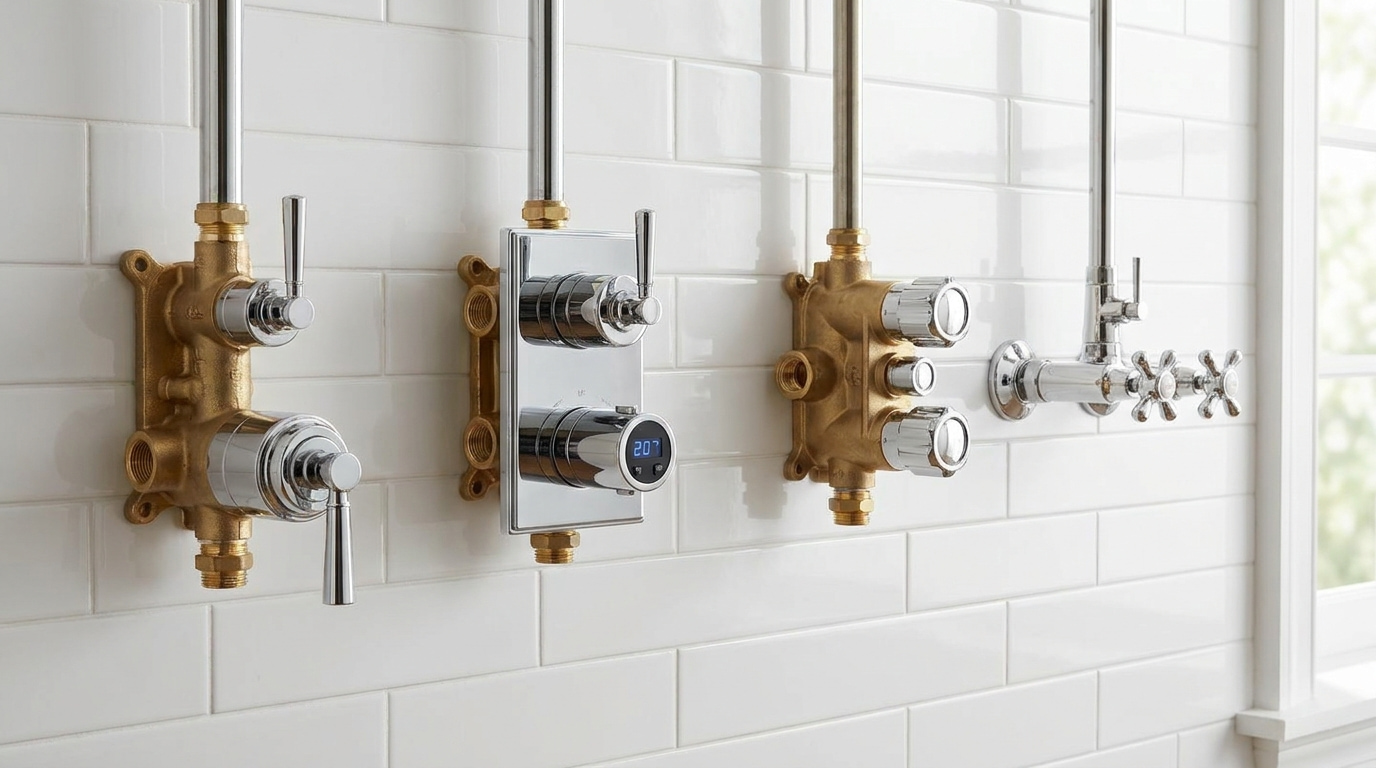
Not every shower valve works the same way. The type in your home determines how well your shower handles temperature shifts and pressure changes.
1. Pressure-Balancing Valves
Pressure-balancing valves are the most common type in U.S. homes. They use a single handle for both temperature and flow.
They keep the water temperature stable within 2 to 3 degrees when pressure shifts elsewhere. Most state building codes now require these in new construction.
2. Thermostatic Valves
Thermostatic valves appear in higher-end showers and multi-head setups. They have two handles: one for temperature, one for volume.
Once you set the temperature, it holds within one degree, even after the shower is turned off and back on.
3. Diverter Valves
Diverter valves redirect water between two outlets, such as a tub spout and a showerhead, or a fixed head and a handheld wand.
A diverter works alongside another valve type. It does not operate on its own.
4. Mixing Valves
Mixing valves are the oldest style, still found in homes built before the 1990s. They draw from the hot and cold taps without pressure regulation.
A toilet flush or a running tap elsewhere can spike your shower temperature without warning.
These valves do not meet current building codes and pose a real safety risk for young children and older adults.
Shower Valve vs. Shower Cartridge
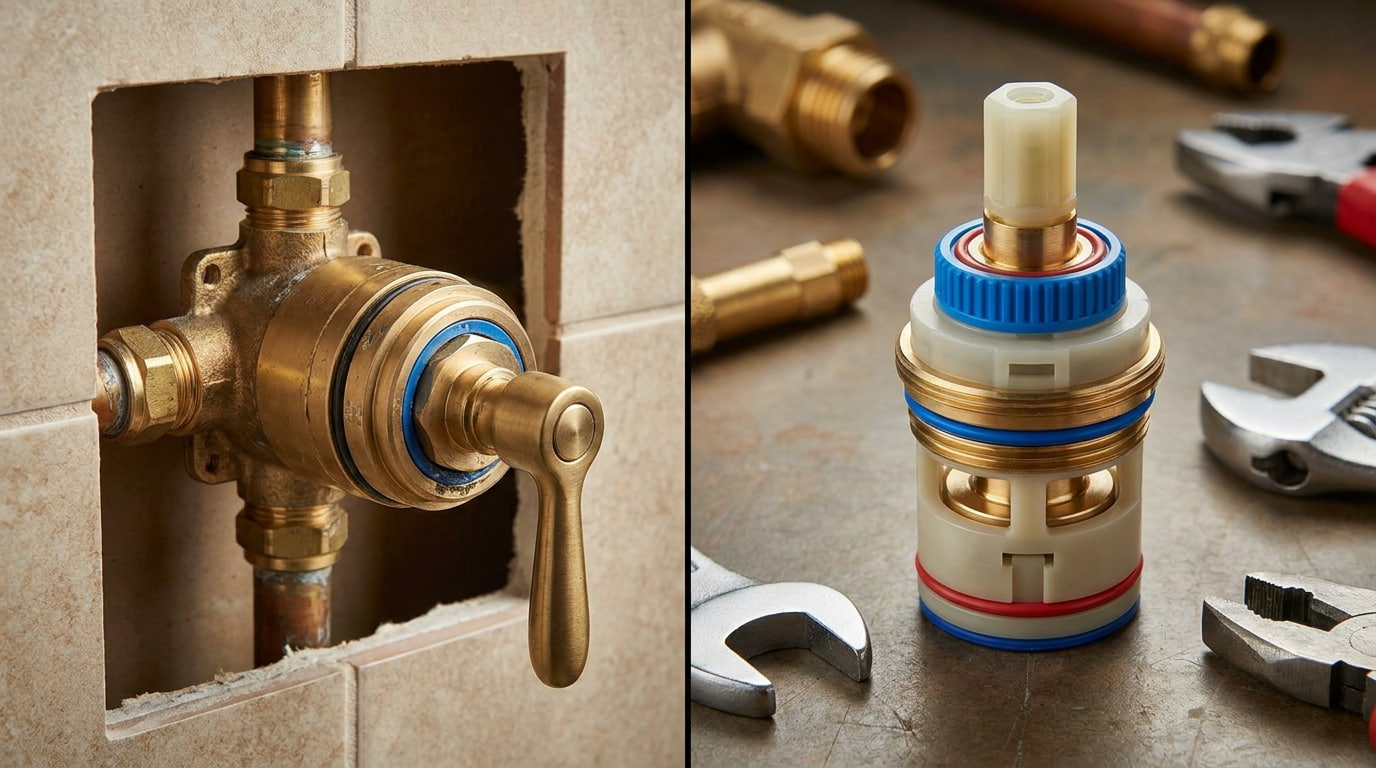
The valve is the housing unit inside your wall, connected to the supply lines.
The cartridge is the internal component inside the valve body that regulates flow and temperature. The valve is the container. The cartridge is the working part inside it.
This distinction matters for your wallet. When a shower acts up, the problem is often the cartridge, not the whole valve.
Replacing just the cartridge typically costs $100 to $350, including labor, far less than a full valve job. A plumber can often swap it in under an hour without opening the walls.
Signs that point to a cartridge problem: a handle that is hard to turn, water that runs too hot or cold regardless of handle position, and a showerhead that drips after the shower is off.
A full valve replacement is needed only when the valve body is corroded or cracked beyond repair.
Cartridges are not universal. They are brand and model-specific, so confirm compatibility before ordering any part.
Where is the Shower Valve Located?
The valve body sits inside your wall, directly behind the handle and trim plate.
You cannot see it without removing the trim. What is visible from outside is the handle and the escutcheon plate around it. The valve stays completely out of sight.
Most homes have an access panel on the wall behind the shower, often inside a hallway closet.
If your home does not have one, a plumber will need to cut through the wall or tile to reach the valve.
Some modern walk-in showers use an exposed valve system, in which the valve and supply lines are mounted directly on the shower wall.
This is common in spa-style bathrooms and makes future maintenance far less invasive.
Signs Your Shower Valve Needs Attention
Shower valves rarely fail all at once. They give signals first, and catching them early keeps repair costs manageable.
1. The showerhead drips when the shower is off. Often, the first sign is that the cartridge or valve seat has worn down. A steady drip wastes water and usually gets worse over time.
2. Temperature swings you cannot control. Water going hot or cold without warning, and the handle not correcting it, suggests the valve has lost its pressure regulation.
3. A stiff or hard-to-turn handle. Mineral buildup inside the cartridge is usually the cause. If cleaning does not fix it, a cartridge replacement is the next step.
4. Low water pressure that persists after cleaning the showerhead. A worn valve can restrict flow from the inside even when the head is clear.
5. Moisture, staining, or mold near the trim plate. Often points to a slow leak at the valve body behind the wall, which can quietly cause structural damage.
How Much Does Shower Valve Replacement Cost?
Costs depend on what needs replacing and how easy the valve is to reach.
A full valve replacement averages $150 to $575, with most homeowners paying around $350 for parts and labor, based on HomeGuide’s 2025 data.
Labor runs $45 to $150 per hour, and most jobs take one to three hours. A cartridge-only swap brings the total down from $100 to $350.
Costs go higher when the valve sits behind tile, the home has no access panel, or the valve is a premium brand like Kohler, Grohe, or Rohl.
A DIY cartridge swap is manageable. A full valve replacement usually means cutting into the wall, and a mistake there turns a $300 repair into a much bigger project.
Conclusion
The shower valve is the part most homeowners never see and rarely think about until something forces the issue.
Knowing what it does, what type sits behind your wall, and what the warning signs look like keeps you ahead of a problem before it gets expensive.
If your shower is more than 15 years old, or if any of the signs above sound familiar, get a plumber to take a look.
Catching a valve issue early almost always means a simple cartridge swap. Ignoring it usually means opening the wall.
Frequently Asked Questions
1. Do I Need a Plumber to Replace a Shower Valve?
Replacing a shower valve can be complex because it involves plumbing connections behind the wall. Experienced DIYers may handle it, but most homeowners are better off hiring a plumber.
2. Can You Replace a Shower Valve Without Turning off the Water?
No. You must shut off the water supply before replacing a shower valve to prevent flooding and allow safe removal and installation of components.
3. How Do I Know What Shower Valve to Buy?
Identify the valve brand, model, and configuration. Check the existing valve, trim kit compatibility, and plumbing setup to ensure the replacement fits correctly.