That shelf you put up last month. Is it still sitting straight?
Most wall mounting failures come down to one overlooked detail: the wrong fastener for the job.
Drywall anchors are small, but they carry serious responsibility. Pick the right one, and your fixtures stay put for years. Pick the wrong one and the results can be costly.
This post covers the main anchor types, how to match them to specific tasks, what to check before purchasing, and which errors most commonly catch homeowners off guard.
Ready to get this right the first time?
What Are Drywall Anchors and Why Do They Matter?
Hanging something on a wall sounds simple. But drywall is not as strong as it looks.
It’s made of gypsum plaster pressed between two sheets of paper. Gypsum crumbles when pressure concentrates on a single point, which means a bare screw has almost nothing to grab onto inside a hollow wall. Over time, gravity wins, and the screw pulls straight through.
What drywall anchors do:
- They are small fasteners that go into the wall before a screw
- They spread the load across a wider area of the drywall
- They give the screw something solid to grip
- Without an anchor, a screw can pull straight through the wall
Why drywall alone is weak:
- Gypsum crumbles when pressure is applied to a single point
- Standard screws have nothing to hold onto in hollow drywall
- The wrong anchor can cause shelves, frames, or mirrors to fall
When to use studs instead:
- Wall studs are wooden frames sitting behind the drywall
- Screwing into a stud gives the strongest possible hold
- Lowe’s recommends checking for a stud first before using any anchor
- Use an anchor only when a stud is not available at your desired spot
7 Main Types of Drywall Anchors
Not all drywall anchors are built the same. Here are the seven main types and what each one does best.
1. Plastic Expansion Anchors
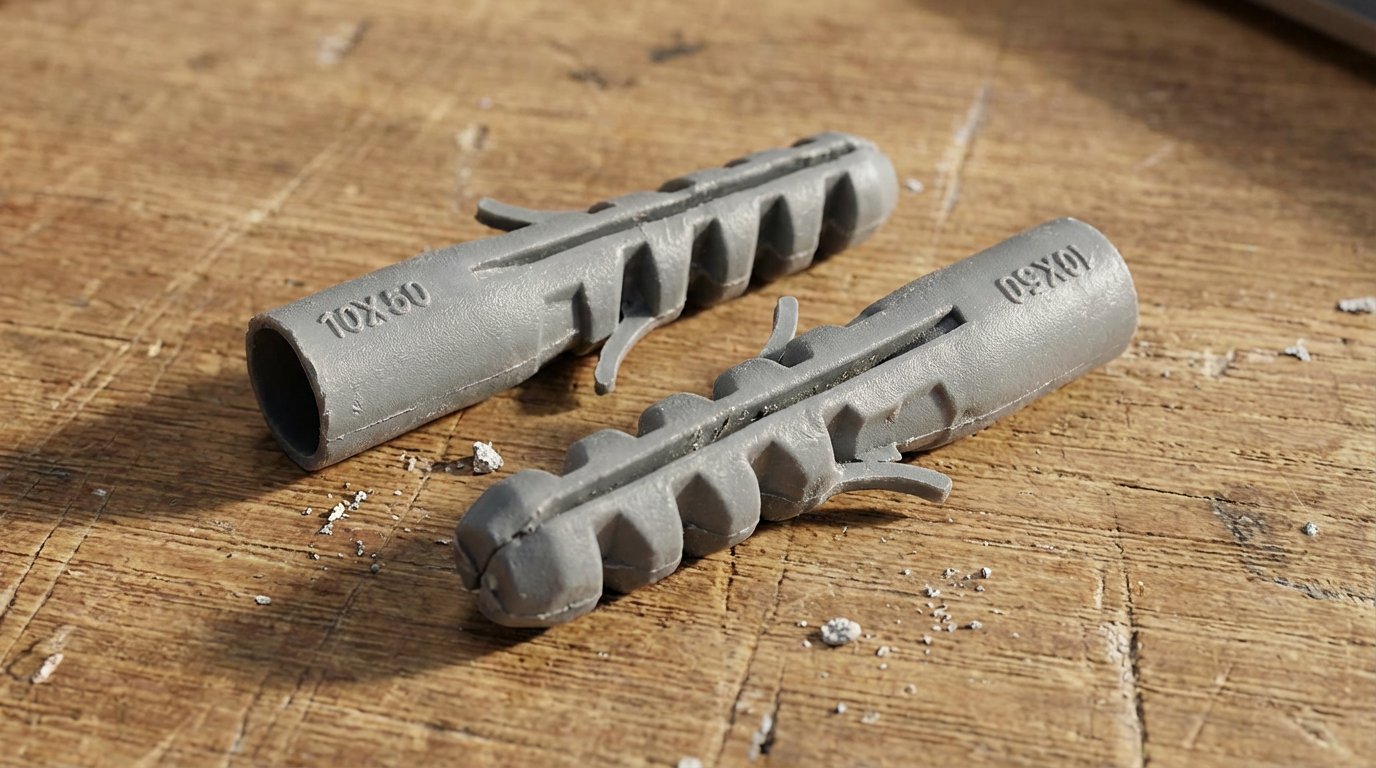
You drill a pilot hole, tap this ribbed plastic piece in with a hammer, then drive a screw into it. The plastic body splits and pushes outward, gripping the sides of the hole through friction.
They’re the cheapest option (a few cents each) and work fine for small frames or light décor under 20 lbs. The catch: friction weakens over time, especially with vibration. If you’ve noticed a towel bar slowly pulling away from the wall, an undersized expansion anchor was likely the culprit.
Worth noting: these also work in concrete, brick, and cinder block, which is why manufacturers package them with so many products.
When to use them: Small frames, light décor, smoke detector mounts. Anything under 20 lbs on a wall where failure would be annoying but not costly.
Skip them for Towel bars, shelves that carry weight, and anything with regular pulling or tugging.
2. Self-Drilling Threaded Anchors
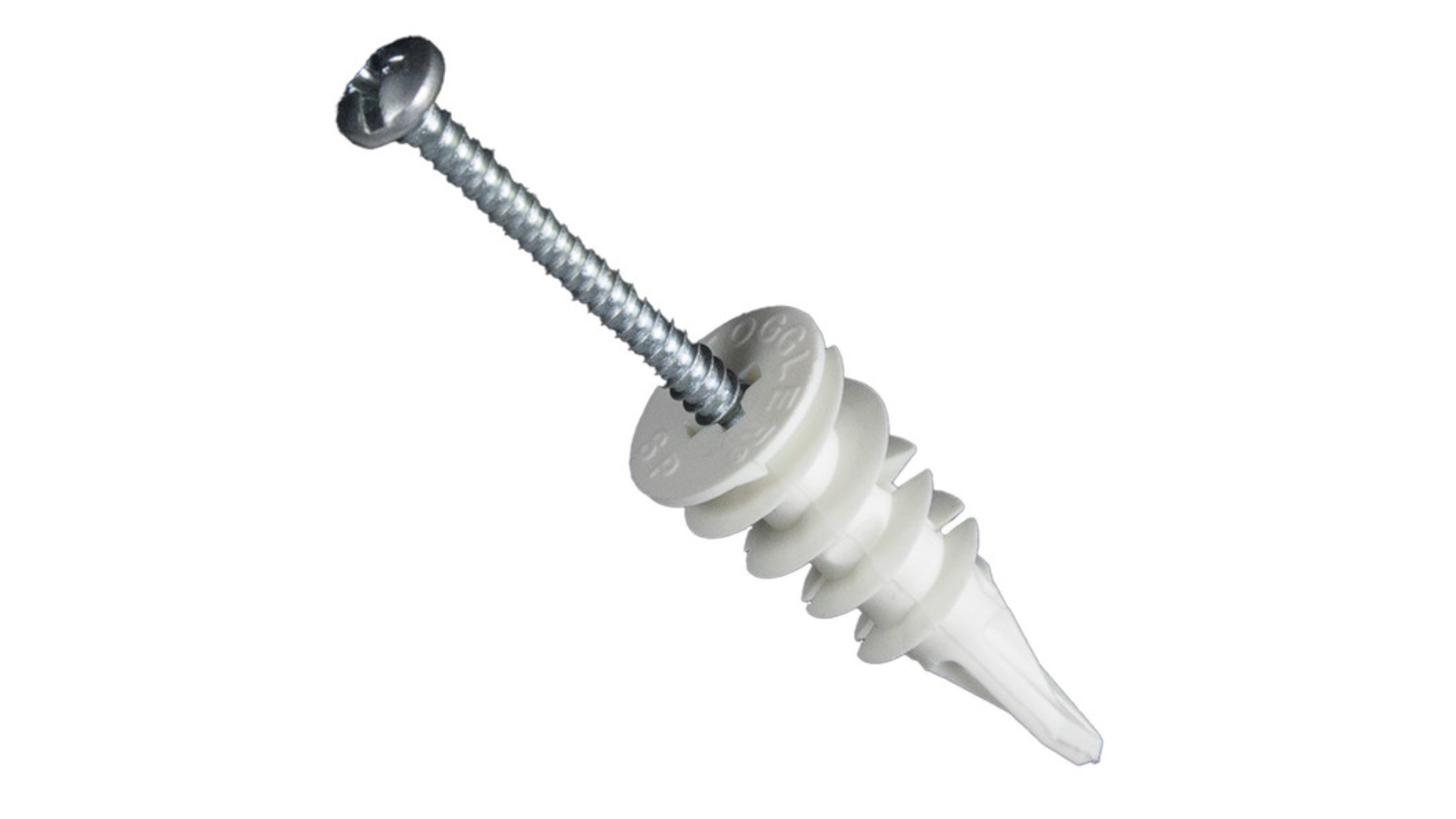
Sharp, pointed tip; aggressive threads; no pilot hole needed. Tap it in with a hammer to start, then twist with a Phillips screwdriver.
Available in plastic (25 to 30 lbs) and zinc metal (up to 75 lbs). The zinc version is the one worth buying. These are the everyday workhorse anchors, fast to install (about 15 seconds), under a dollar each, and strong enough for most medium-weight tasks.
They cut threads into the gypsum itself, so they struggle in old, soft walls. Family Handyman’s testing also confirmed that threaded anchors snap in plaster, so skip them if your home has plaster walls.
When to use them: Curtain brackets, towel rings, medium picture frames, lightweight shelving, bathroom fixture mounting.
Skip them for: Plaster walls, crumbly drywall, loads over 75 lbs, ceiling installations
3. Molly Bolts
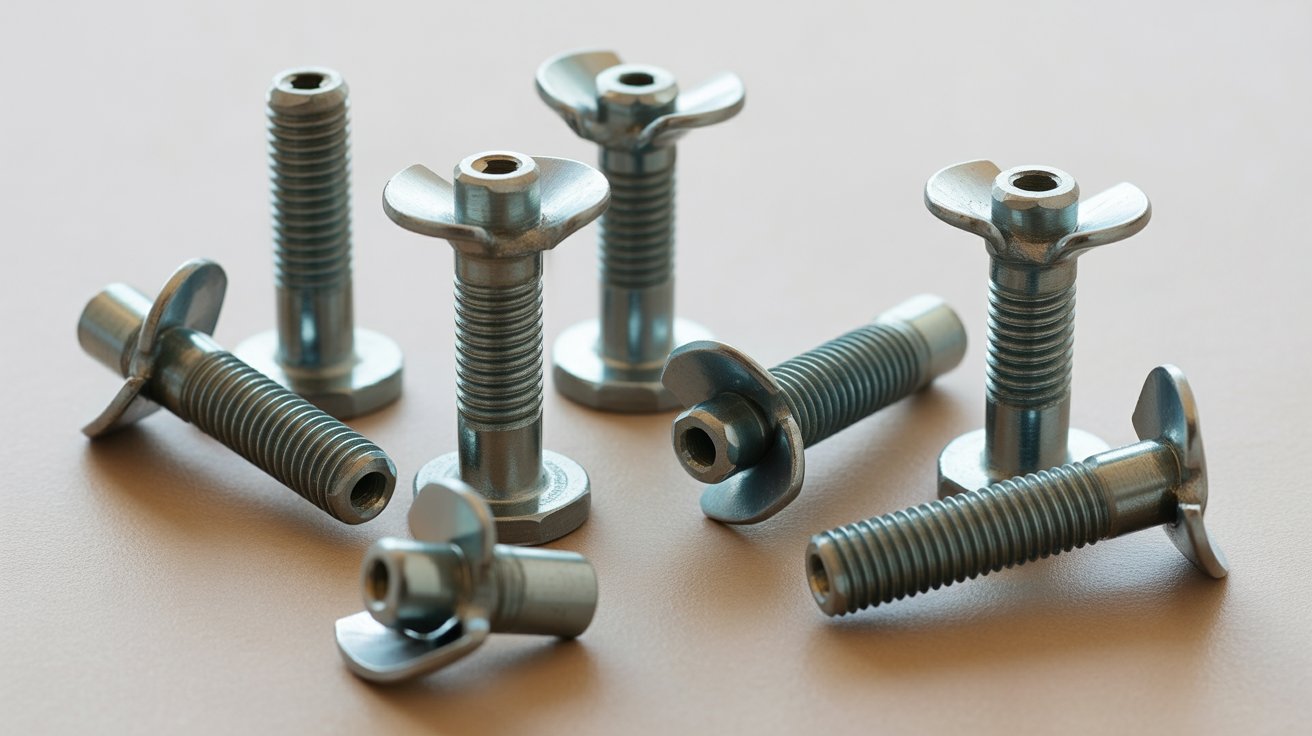
A metal sleeve with pre-cut slits goes into a pilot hole. Tightening the center screw causes the sleeve to collapse and flare outward behind the drywall, clamping the wall between the flared metal and the anchor’s front lip.
Smaller sizes (3/16-inch) support 25-30 lbs. Larger ones (1/4-inch and up) carry 50 to 100 lbs. Many guides underestimate this upper range. Bob Vila rates the bigger Molly bolts at up to 100 lbs.
A key advantage: you can remove and reinsert the screw without losing the anchor because the metal sleeve remains permanently set in the wall. The downside is a messy removal; you’ll need to cut around the sleeve or push it into the wall cavity, then patch the hole.
When to use them: Towel bars, toilet paper holders, heavier framed art, shelf brackets, and wall-mounted cabinet hardware.
Skip them for: Projects where clean removal matters, loads over 100 lbs (use a toggle), ceiling installs unless the specific model is rated for overhead use.
4. Winged Plastic Anchors
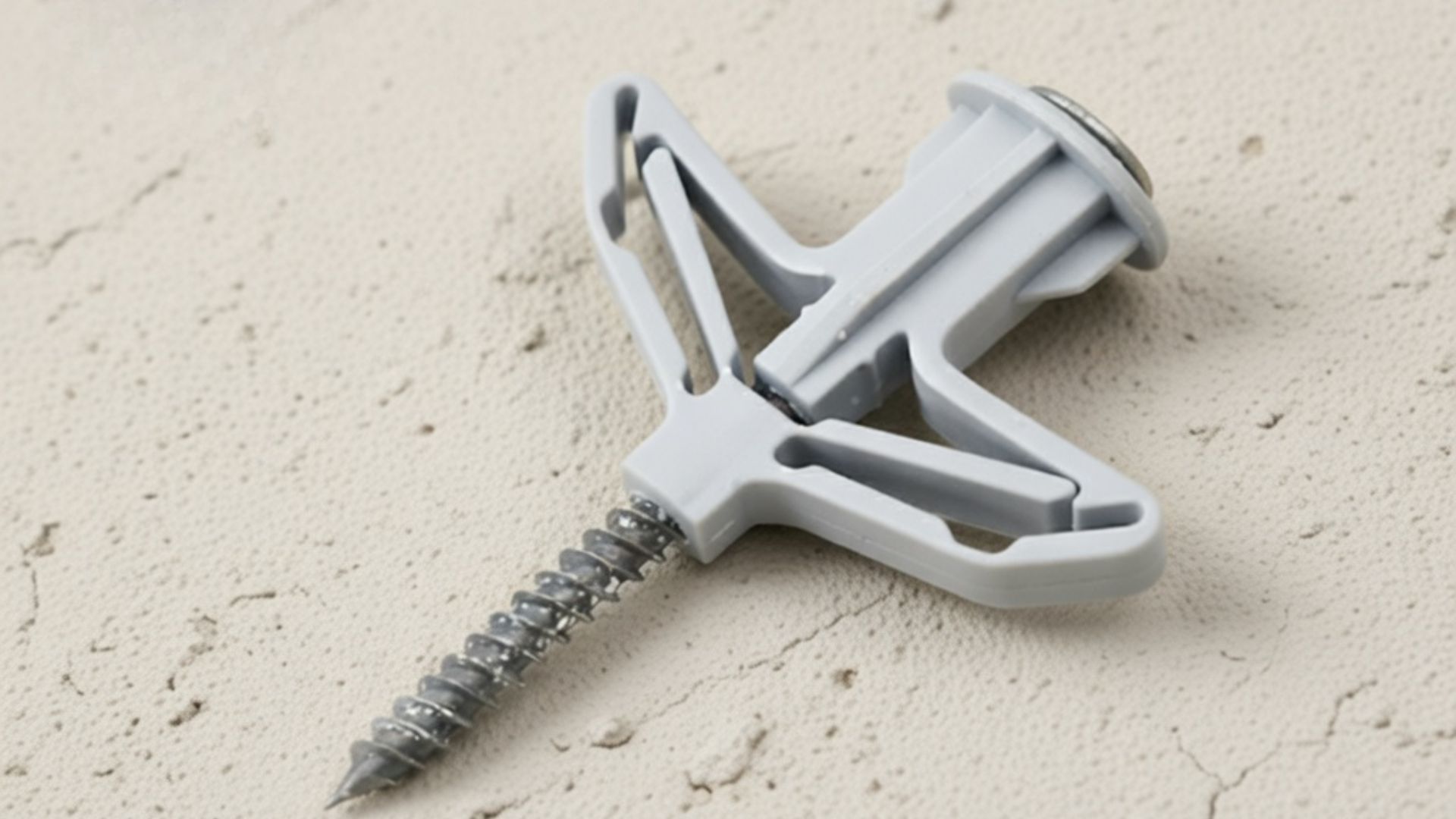
Two hinged plastic arms fold flat to pass through a pilot hole, then pop open behind the drywall. Tightening the screw pulls the wings snug against the back of the wall, giving a wider contact area than a basic expansion anchor.
Rated for 10 to 50 lbs, depending on size. Inexpensive, easy to install, and leave a smaller hole than toggle bolts. Not built for heavy loads or repeated stress, a towel bar that gets pulled daily needs a molly bolt, and a heavy mirror needs a toggle.
When to use them: Window blind brackets, coat hooks, smoke alarms, light wall shelves, decorative mirrors under 40 lbs.
Skip them for heavy mirrors, TV mounts, shelf systems that carry real weight, and ceiling installs.
5. Toggle Bolts
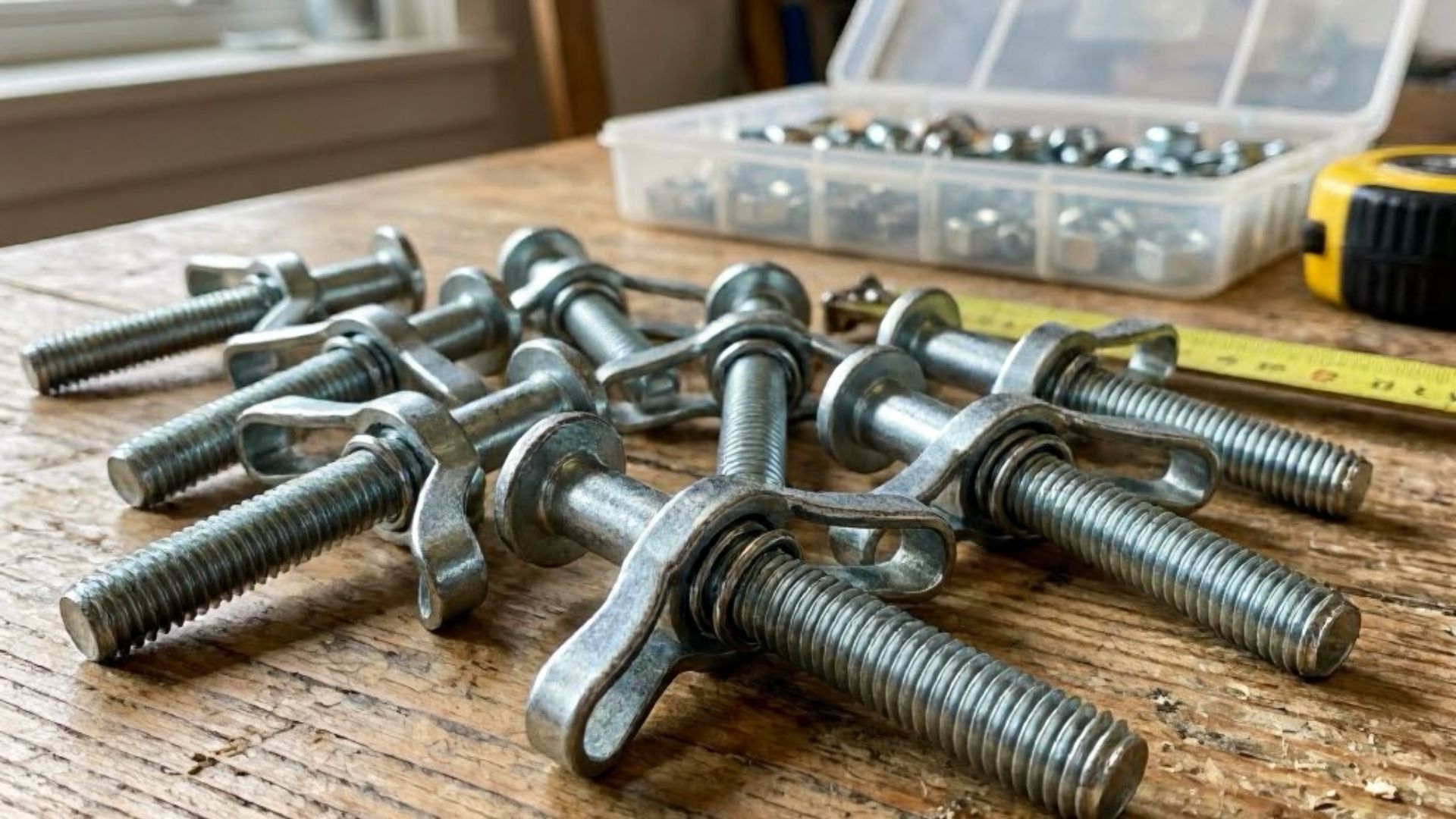
A machine screw with spring-loaded metal wings. Fold the wings flat, push through a pre-drilled hole (1/2 to 3/4 inch), and the springs snap them open behind the wall. Tightening the screw pulls the wings flat against the back surface, spreading force across a wide area.
A 3/16-inch toggle supports 80 to 100 lbs. A 1/4-inch toggle pushes 150 lbs. Family Handyman’s lab tests found some held 180 lbs before the drywall gave out.
Two catches: the drill hole is larger than with other anchors, and traditional spring-wing toggles are NOT reusable; unscrew the bolt, and the wings fall permanently into the wall cavity.
Assembly warning: Thread the bolt through your bracket or fixture BEFORE attaching the toggle wings. Once the wings are behind the wall, the bolt can’t come out without losing them. The bracket goes on the bolt first, always.
When to use them: heavy mirrors (30+ lbs), wall-mounted TV brackets, kitchen cabinets, bathrooms, ceiling-mounted plant hooks. Any situation where failure would be dangerous or expensive.
Skip them for projects that require frequent removal and remounting (use a strap toggle instead).
6. Strap Toggles
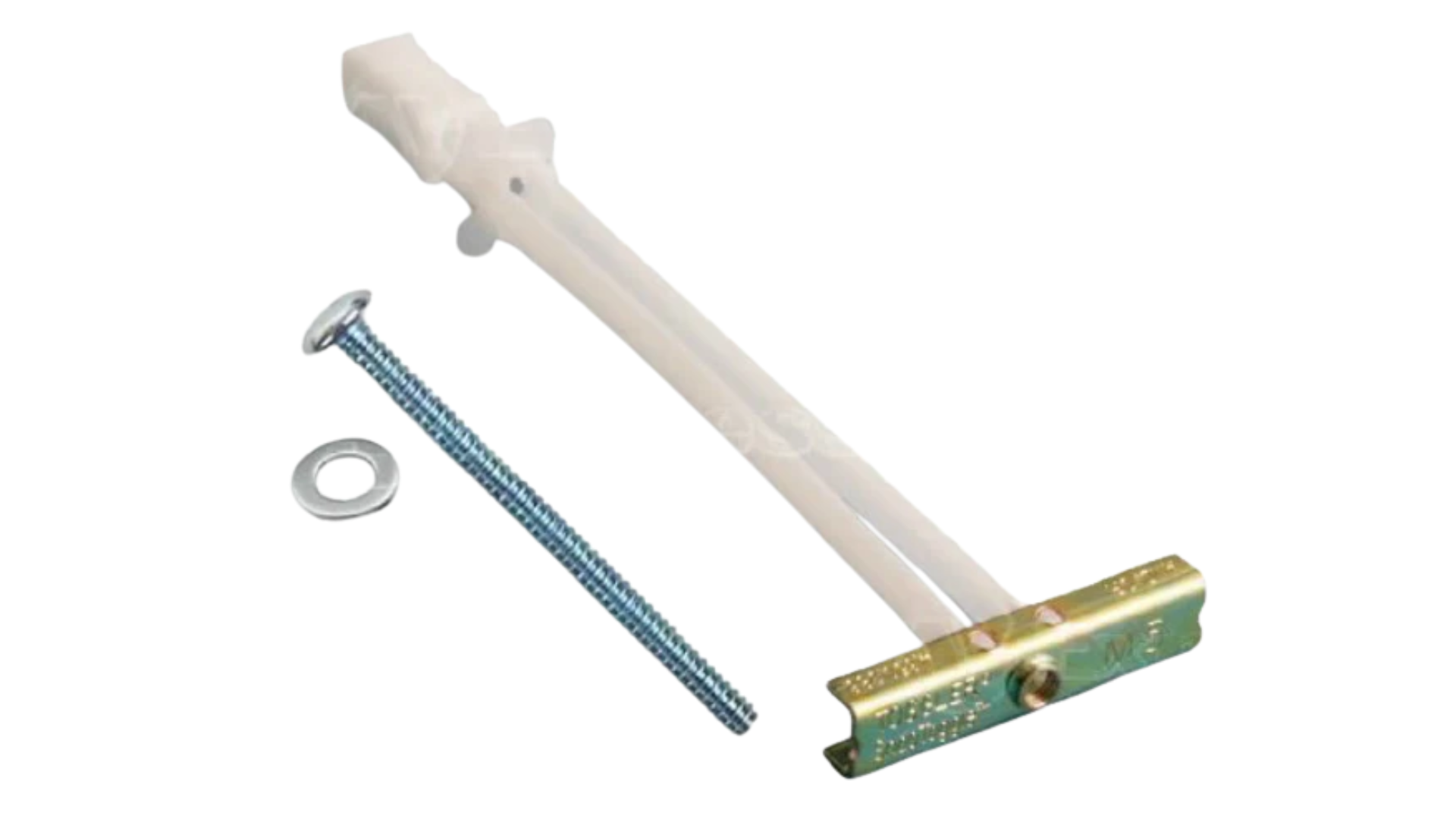
The modern upgrade to traditional toggle bolts, and what most professionals use when studs aren’t available. The most common brand is the Toggler SnapToggle.
A metal channel connects to two plastic straps. Push the channel through a 1/2-inch hole, pull the straps to seat it flat behind the wall, slide a retaining collar down to lock it, snap off the excess straps, then thread your bolt in.
Why professionals prefer them: they’re fully reusable (the channel stays in the wall when you remove the bolt), require a smaller hole than spring-wing toggles (50% less wall damage), and are rated for 238 lbs in 1/2-inch drywall. The stainless steel version handles 802 lbs in concrete.
They run $1 to $2 each, with a 30-pack costing about $22 at most hardware stores.
When to use them: TV mounts, large mirrors, floating shelf systems that carry real weight, grab bars, heavy wall cabinets, and any project where you need maximum strength plus the option to adjust later.
Skip them for light-duty tasks where a $0.10 expansion anchor would be fine. No reason to overspend on a small picture frame.
7. Self-Drilling Toggle Anchors
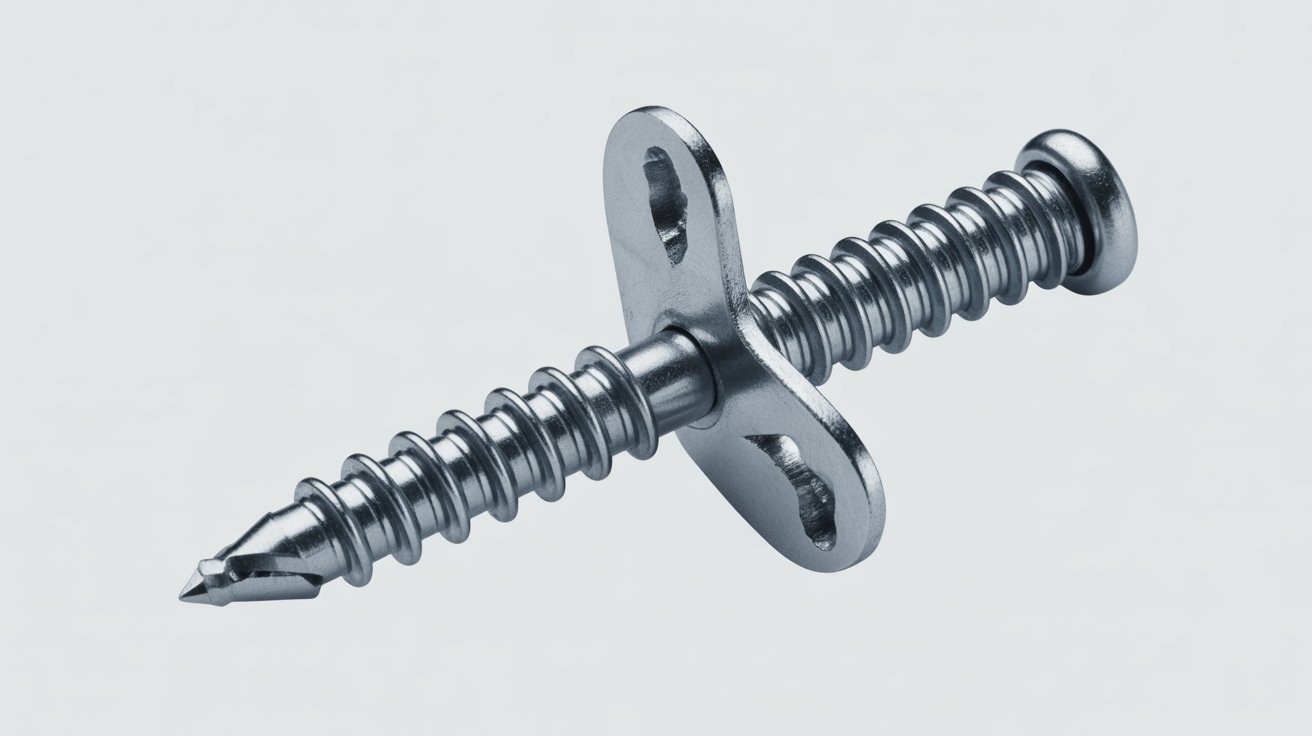
A self-tapping tip combined with a toggle-wing mechanism. Drive them directly into drywall with no pilot hole. The toggle deploys behind the wall as you insert the center screw.
The appeal is speed. Installing a long rail with eight anchor points goes much faster when you skip pre-drilling at every hole. Most are rated for 50-100 lbs.
Check the packaging for ceiling ratings; some are wall-only. Residential ceiling drywall is often thinner (1/4 inch vs. 1/2 inch on walls), which reduces the capacity of any anchor, regardless of its wall rating.
When to use them: Multi-anchor wall projects where speed matters: shelving systems, utility hook rows, garage organization rails, mounting bars.
Skip them for: ceiling work (unless specifically rated), plaster walls, and applications requiring the absolute maximum capacity (strap toggles and full toggle bolts are stronger).
How to Choose the Right Drywall Anchor?
The right anchor depends on more than just weight. Here is what to check before you make a decision.
Based on Weight
Weigh the item you’re mounting, then add the weight of whatever will sit on top of it. A bare floating shelf might weigh 6 lbs, but loaded with books and a plant, you could be looking at 40 lbs. Work from that total:
- Under 25 lbs: Plastic expansion anchor or a plastic self-drilling anchor. Cheap and fast.
- 25 to 50 lbs: Zinc self-drilling threaded anchor or a small Molly bolt. Both handle this range well for under a dollar per anchor.
- 50 to 100 lbs: Toggle bolt, strap toggle, or a large molly bolt. Don’t cut corners in this range.
- Over 100 lbs: Strap toggle (SnapToggle) or a large toggle bolt. For the past 150 lbs, use a stud or a mounting rail spanning multiple studs.
Family Handyman recommends picking an anchor rated for 25 to 50 percent more than your actual load. That margin of safety accounts for vibration, shifting weight, and wall imperfections.
Based on What You Are Hanging
| Item | Recommended Anchor |
|---|---|
| Small picture frames (under 15 lbs) | Plastic expansion anchor |
| Large framed art (15 to 40 lbs) | Zinc self-drilling threaded anchor |
| Floating shelves (loaded) | Molly bolt or strap toggle |
| Curtain rods | Self-drilling threaded anchor (zinc) |
| Towel bars | Molly bolt |
| Heavy mirrors (30+ lbs) | Toggle bolt or strap toggle |
| TVs | Strap toggle or toggle bolt (stud mount preferred) |
| Kitchen cabinets | Toggle bolt or direct stud mounting |
| Ceiling fixtures | Toggle bolt rated for ceiling use |
| Bathroom grab bars | Strap toggle or stud mount (stud always preferred) |
Based on Drywall Thickness and Wall Condition
Wall condition matters as much as weight.
Standard 1/2-inch or 5/8-inch drywall in good shape: Every anchor type works as rated.
Older, chalky drywall: Skip friction-based anchors (expansion, threaded). Use toggles or strap toggles that clamp to the wall, rather than relying on the gypsum’s integrity.
Plaster walls (common in pre-1960 homes): Plaster is harder than drywall and behaves differently. Self-drilling threaded anchors will snap into plaster. Toggle bolts and Molly bolts can work if you drill the correct pilot hole with a masonry bit. Knock on the wall: a hollow sound usually means drywall or plaster over lath. A solid thud may indicate masonry, which requires entirely different anchors.
Water-damaged or soft drywall: Repair the wall first. No anchor performs reliably in compromised material.
Thin drywall (1/4-inch): Common on residential ceilings. Reduces the capacity of every anchor type regardless of the anchor’s wall rating. An anchor rated for 100 lbs in 1/2-inch drywall might only manage 40 to 50 lbs in 1/4-inch ceiling board
Best Drywall Anchors for Household Projects
Different projects need different anchors. Here is the best option for each common household task.
- Best for Hanging Pictures: Use plastic expansion anchors for small frames weighing less than 20 lbs. For heavier-framed art, use a metal threaded anchor. Always check if a stud is nearby first.
- Best for Heavy Mirrors: Use toggle bolts or strap toggles. Mirrors can weigh 30 to 50 lbs or more. These anchors grip from behind the wall and hold firmly.
Best for Shelves: Use Molly bolts or metal self-drilling anchors. Shelves carry both their own weight and the items placed on them. A stronger anchor prevents sagging or falling. - Best for Curtain Rods: Use self-drilling threaded anchors. They install fast and hold well for medium loads. Metal versions work better for heavier rod styles.
- Best for TVs: Use strap toggles or heavy-duty toggle bolts. TV mounts need a secure, stable hold. Always check the combined weight of the TV and mount before making a choice.
- Best for Ceiling Fixtures: Use toggle bolts rated for ceiling use. Ceiling installations are constantly under downward pull. Never use plastic anchors for ceiling fixtures.
- Best for Bathroom Accessories: Use Molly bolts for towel bars and toilet paper holders. Bathrooms see regular pulling and tugging. Molly’s bolts grip firmly and handle repeated stress well.
How to Install Drywall Anchors Properly
Mark your mounting spot with a pencil and a level, then check for a stud behind the wall using a stud finder. If you hit wood framing, screw directly into it and skip the anchor entirely.
If no stud is available, match your drill bit to the exact hole diameter listed on the anchor packaging (too large and the anchor spins instead of biting; when in doubt, go one size smaller).
Insert the anchor according to its type: threaded anchors screw in by hand, expansion anchors tap into a pre-drilled hole, and toggle bolts need a wider hole for the folded wings to pass through.
Don’t over-tighten; Bob Vila warns that excess torque cracks the surrounding gypsum and weakens the connection, so stop when the fixture sits flush and snug.
Make sure your screw length matches the anchor depth, since a screw that’s too short won’t engage fully, and one that’s too long can contact wiring or plumbing behind the wall. After installation, give the screw a firm tug before hanging anything to confirm the seat is solid.
Quick Buyer’s Checklist Before You Choose an Anchor
Run through this before heading to the hardware store. Takes two minutes and prevents most buying mistakes.
- Item weight: Know the total load, item weight plus anything that will sit on it. Add 25% for a safety margin.
- Wall or ceiling: Ceiling installs need toggle-style anchors with a specific overhead rating. Nothing else is safe.
- Drywall thickness: Most interior walls are 1/2 inch. Some older homes have 3/8 inch. Ceilings can be 1/4 inch. Check the packaging for thickness compatibility.
- Wall condition: Soft, chalky, or water-damaged drywall reduces the performance of every anchor. Fix the wall first.
- Future removal plans: Strap toggles and threaded anchors come out cleanly. Traditional toggle bolts and molly bolts leave large holes or permanent metal sleeves.
- Screw size match: Anchors and screws are sold separately more often than you’d expect. Check for the correct screw gauge and length on the anchor packaging. A #8 screw won’t fit in a #6 anchor, and a screw that’s too long risks hitting wiring or pipes behind the wall.
- Tools needed: Expansion and threaded anchors need just a screwdriver. Molly bolts sometimes need a setting tool ($5 to $10). Toggles and strap toggles require a drill and the correct diameter bit.
Conclusion
Picking the right drywall anchor doesn’t have to be complicated. Match the anchor type to the total weight, check your wall condition, and always look for a stud first.
Small errors during selection or installation can bring fixtures down, sometimes taking a chunk of wall with them.
Whether you’re hanging a small frame or mounting a heavy TV, the right fastener keeps everything where it belongs. Use the comparison table and project guide above to narrow your choice before you put a single hole in the wall.
Got a specific project you’re unsure about? Drop it in the comments, and we’ll help you pick the right anchor.
Frequently Asked Questions
What Type of Drywall Anchor is The Strongest?
Toggle bolts and strap toggles are the strongest drywall anchors. They spread weight across a wider area, making them ideal for heavy items up to about 100 lbs.
How do I Know Which Drywall Anchor to Use?
Check the weight of the item and match it with the anchor’s rated capacity. Also consider the wall condition and use a nearby stud for extra support.
Can I Use Too Many Screws in Drywall?
Yes, using too many screws in one spot can weaken the drywall surface. It can cause crumbling or reduced grip strength, which makes the fixture less secure over time.