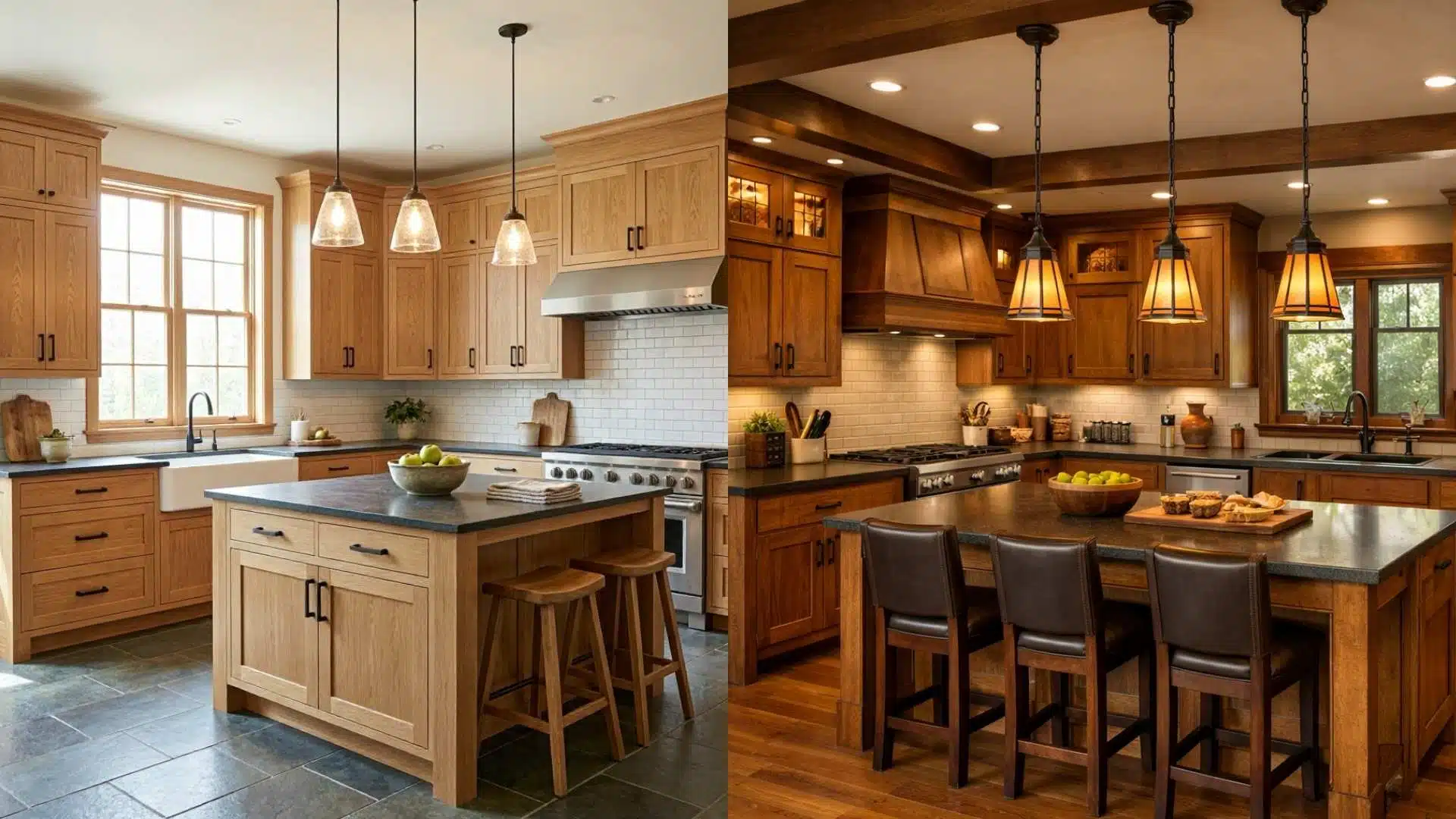
Walk into a well-designed craftsman-style kitchen, and you feel it immediately. The wood looks real because it is. The trim around the windows has actual weight.
The tile behind the range shows the slight surface variation that only comes from a human hand, not a factory press.
I have worked on enough of these kitchens to know that the style earns its appeal every time, because it is built around materials and details that hold up, not just photograph well.
The craftsman style grew out of the American Arts and Crafts movement in the early 1900s, a direct reaction against mass production.
That origin still shows in how these kitchens are designed today: visible joinery, honest materials, and hardware that looks like it belongs in a workshop rather than a catalog.
This guide covers the core elements that define the look, cabinet choices, color palettes, layout ideas, lighting, and how to add modern function without losing what makes the style worth building in the first place.
What Defines a Craftsman Style Kitchen
The craftsman style came out of the Arts and Crafts movement in the early 1900s. It was a direct reaction against mass production. Every material was meant to be honest, every joint visible, every detail purposeful.
In a kitchen, that translates to a few specific things. Natural wood cabinetry. Simple recessed panel doors. Hardware that looks like it belongs in a workshop, not a jewelry store. Surfaces that age well instead of chipping at the first sign of real use.
The craftsman style is not the same as a farmhouse or rustic kitchen. Farmhouse leans softer and more worn. Rustic emphasizes rough textures and raw edges. Craftsman stays structured.
There is still a clean line running through all that warmth, and that distinction matters when you are standing at the cabinet showroom making decisions.
The Core Elements That Make the Style Work
These are the details that show up in every well-executed craftsman-style kitchen, and the ones I always bring up early with clients.
1. Cabinet Style
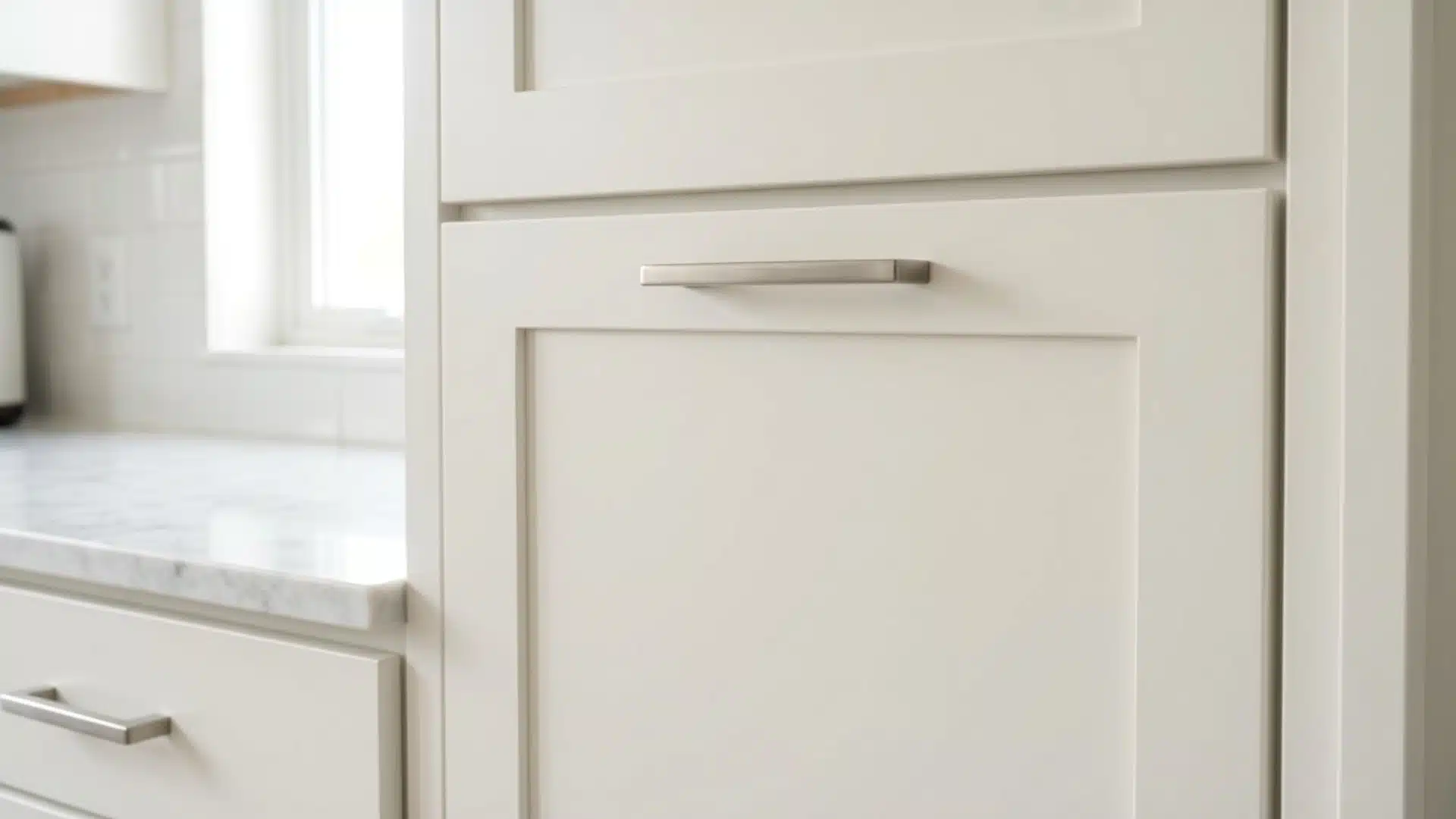
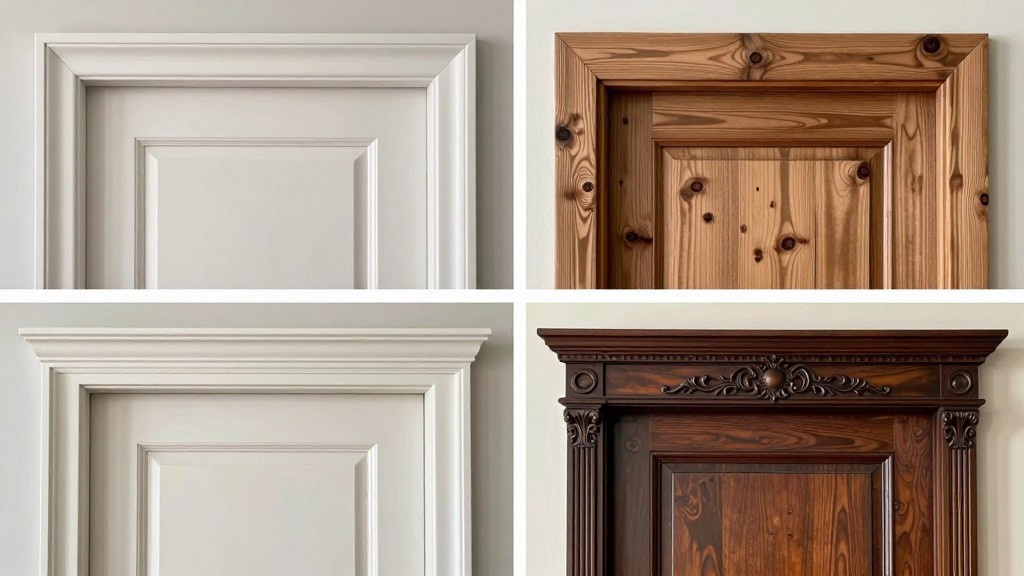
ALT TEXT: craftsman-kitchen-recessed-panel-cabinet-door-with-face-frame-detail
The door profile is the first thing that tells you a kitchen is Craftsman. A recessed panel door with a visible face frame is the standard. That frame around the door front is what separates this style from a flat slab contemporary cabinet.
Without it, the look does not land, no matter what else you do in the room.
2. Wood Type
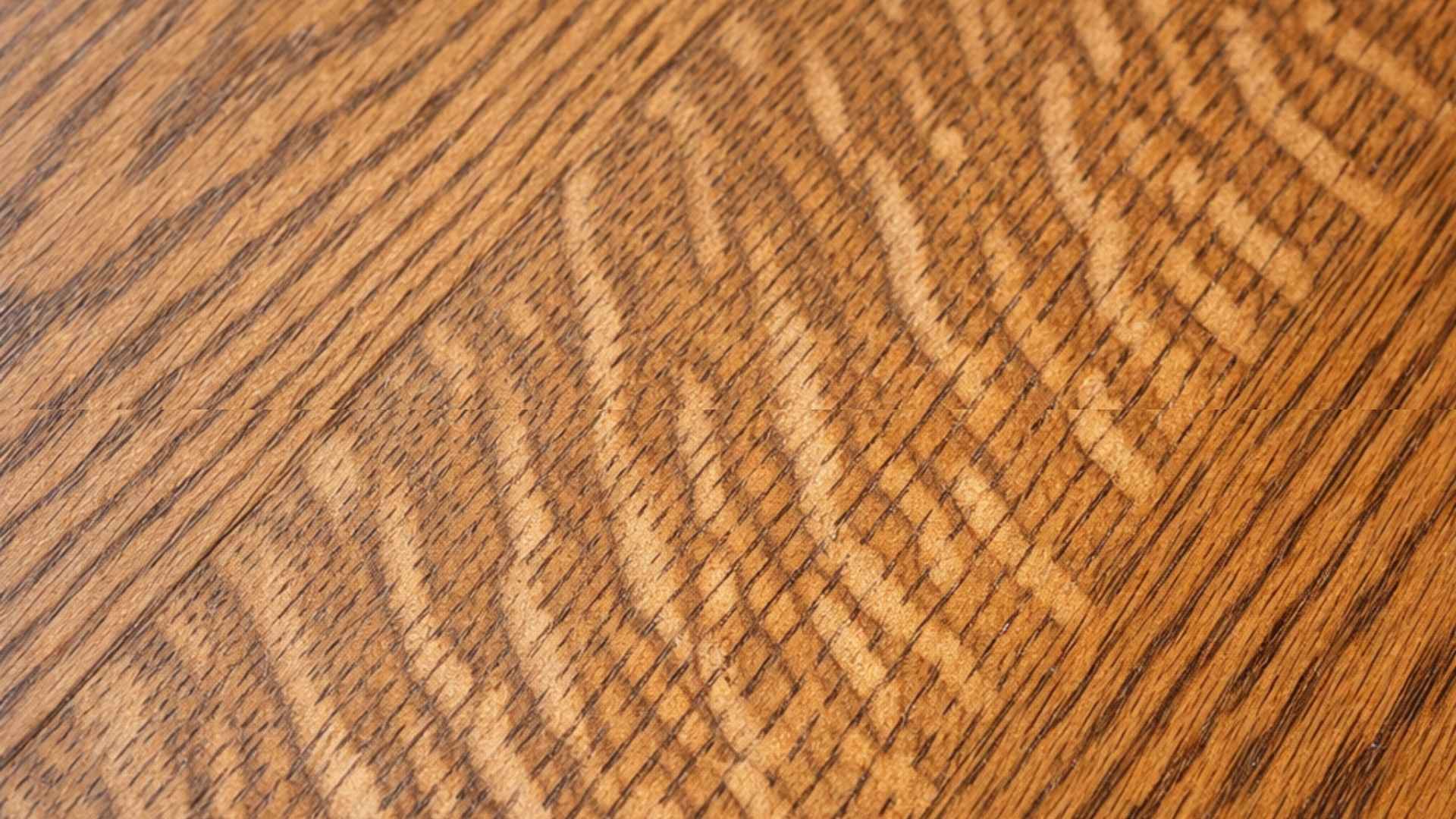
ALT TEXT: quarter-sawn-oak-grain-detail-on-craftsman-kitchen-cabinet
Quarter-sawn oak is the most historically accurate choice for this style. The wood has a visible ray pattern in the grain that stain cannot fake. Cherry and walnut bring more warmth. Maple works well for a slightly lighter finish.
Whatever species you choose, the grain should be visible, and the finish should stay matte or satin. If you are comparing your options across hardwood species, the differences in grain pattern, density, and stain behavior matter as much as cost when picking between them for kitchen cabinetry and furniture-grade work.
Also read: 12 Best Wood Types for Quality Furniture
3. Hardware
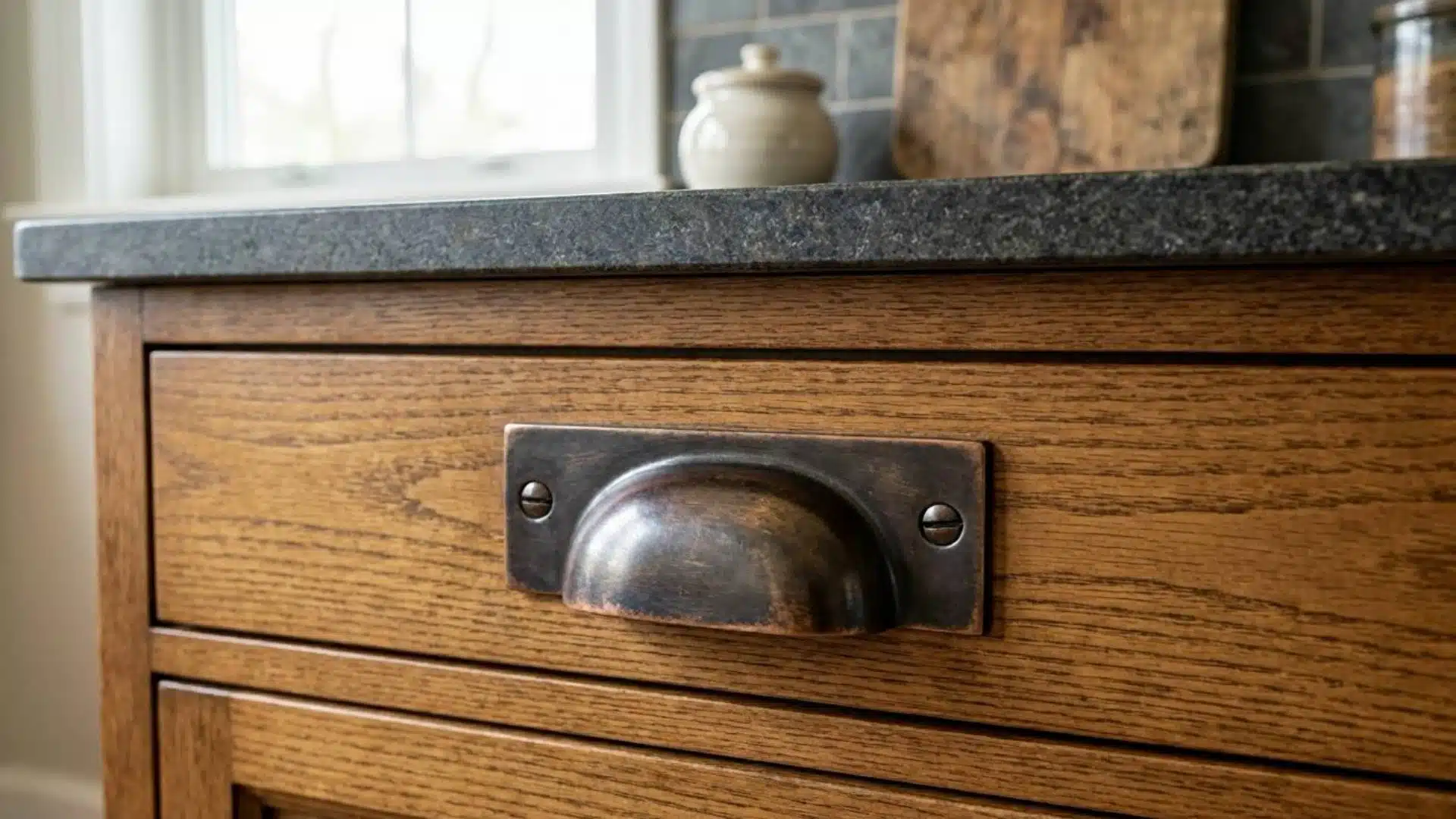
ALT TEXT: dark-bronze-bin-pull-on-craftsman-kitchen-cabinet-drawer
Hardware sets the tone fast, and it is often decided too quickly. Dark bronze, oil-rubbed black, and aged iron are the right directions. Bin pulls, cup handles, and simple bar pulls all fit the style well.
Anything polished or sculptural pulls the room in the wrong direction. If the hardware looks like it belongs in a contemporary kitchen catalog, put it back.
4. Backsplash
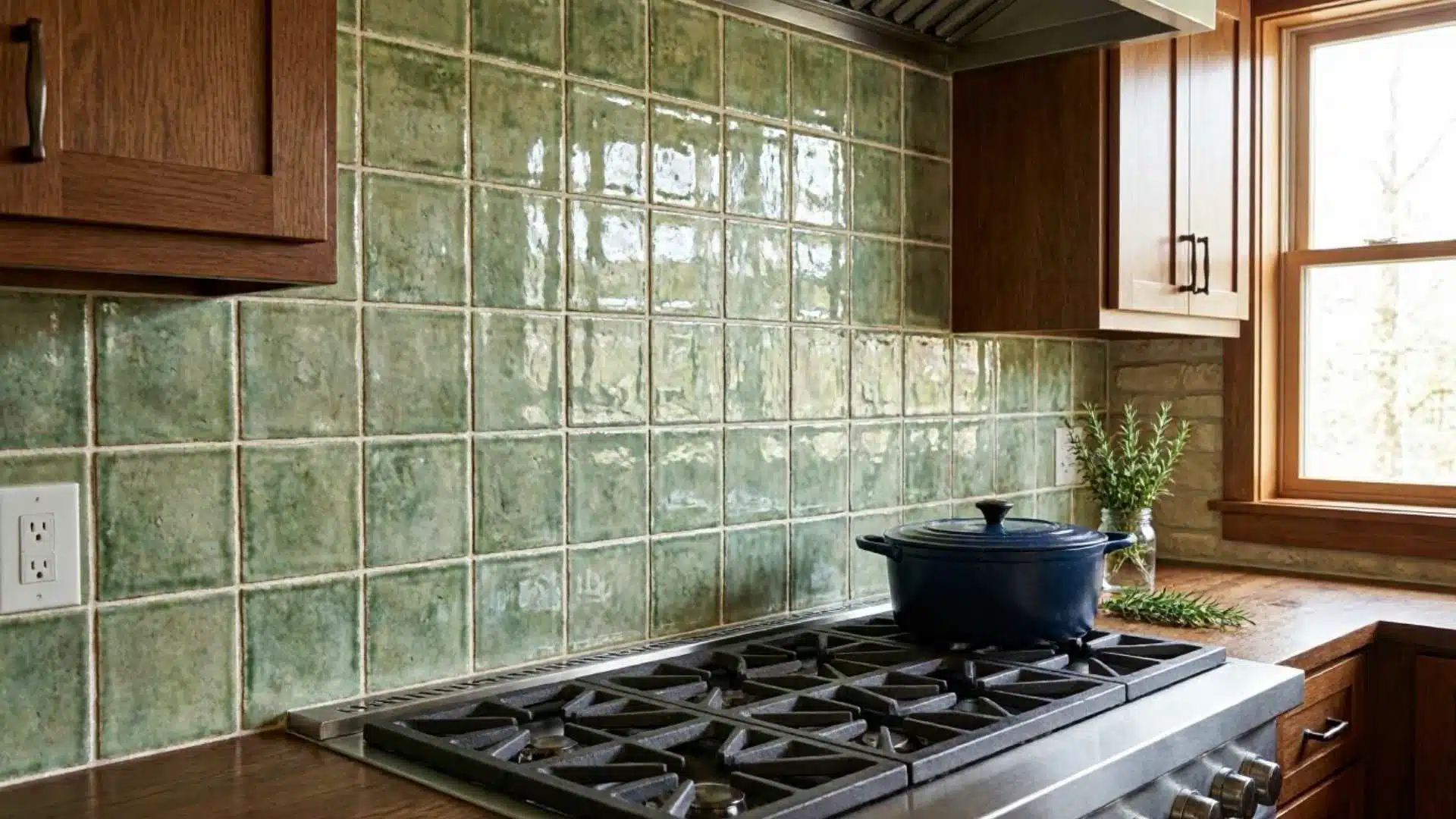
ALT TEXT: handmade-ceramic-tile-backsplash-with-glaze-variation-in-craftsman-kitchen
The backsplash is where handcrafted detail shows up most clearly. Handmade tile with slight surface variation and irregular edges is the most period-accurate choice. Classic subway tile in white or off-white also works, especially in a simpler kitchen.
Large-format porcelain slabs do not suit this style. The backsplash should look like someone chose each piece, not like it was installed for speed.
5. Countertops
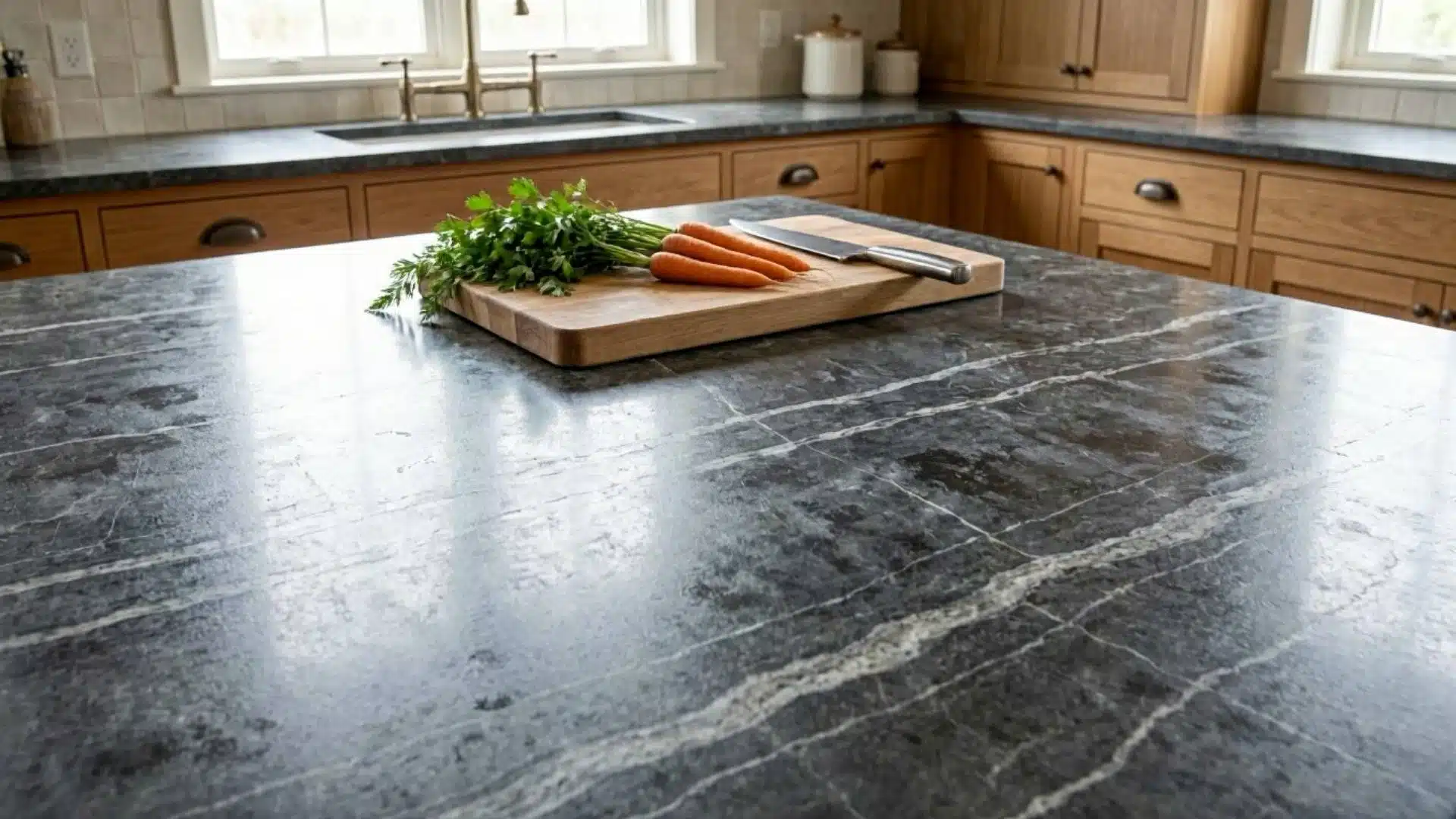
ALT TEXT: honed-soapstone-countertop-in-craftsman-style-kitchen
Soapstone is a strong first choice. It ages visibly over time and has a matte surface that suits the style well. Butcher block adds texture and warmth, especially when paired with stained cabinetry.
Honed granite and quartzite both perform well without the gloss that polished stone brings. Avoid anything with a high shine. The countertop should look like a working surface, not a showpiece.
6. Trim
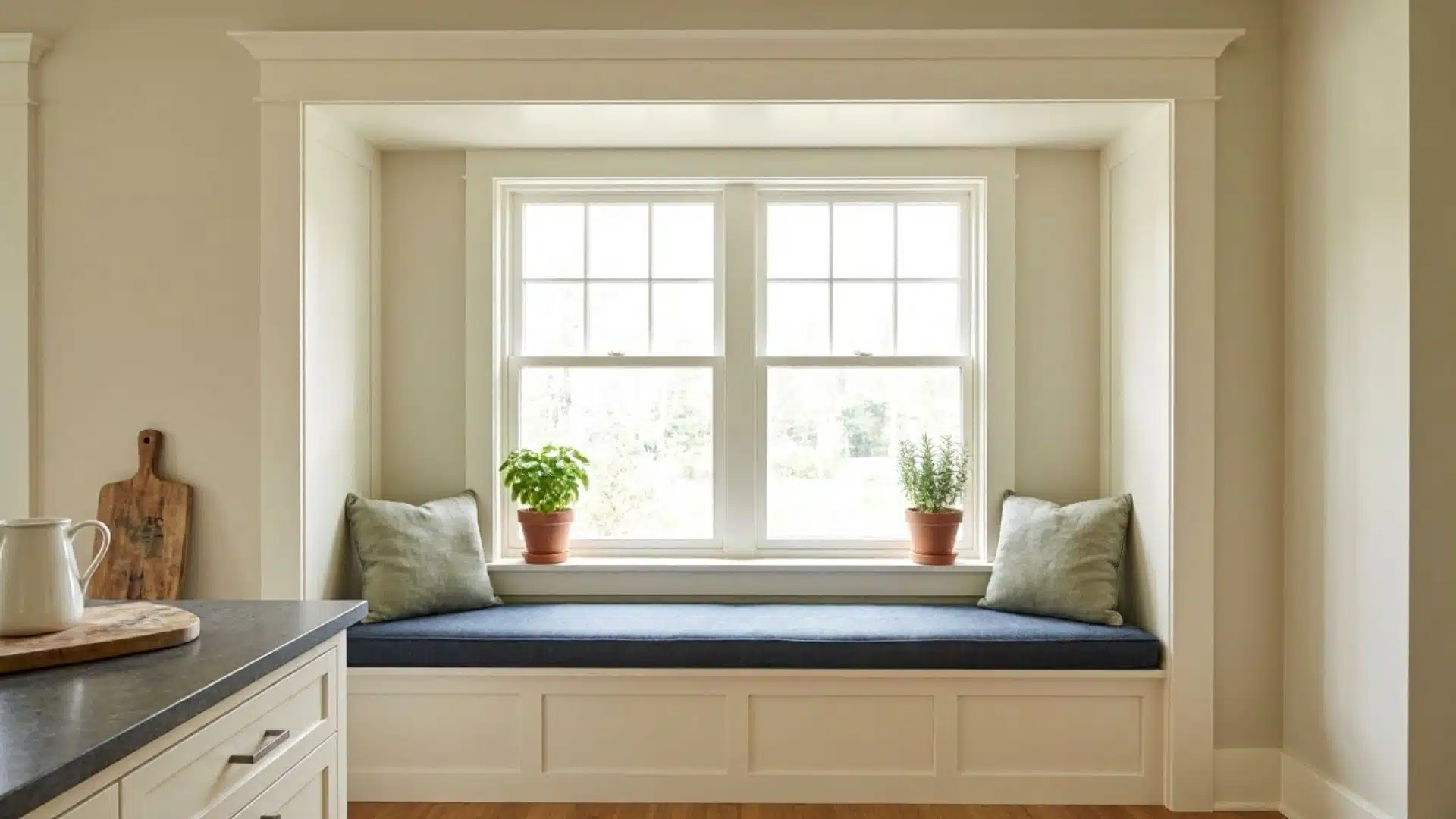
ALT TEXT: wide-wood-trim-casing-around-kitchen-window-in-craftsman-style-home
Trim is the most overlooked element in a craftsman-style kitchen, and skipping it shows. The wide painted casing around windows and doors adds architectural weight to the room.
Crown molding, exposed ceiling beams, and detailed range hood surrounds all add to that sense of structure. A craftsman kitchen without strong trim reads as unfinished, even if the cabinets and tile are exactly right.
Corbels are worth noting here as well. Small corbels used below countertop overhangs or in a molding stack around a wood hood are a period-accurate detail that competitors rarely mention.
An arched valance in the toe space below wall cabinets is another original Craftsman move that adds hand-built character without adding much cost.
7. Lighting
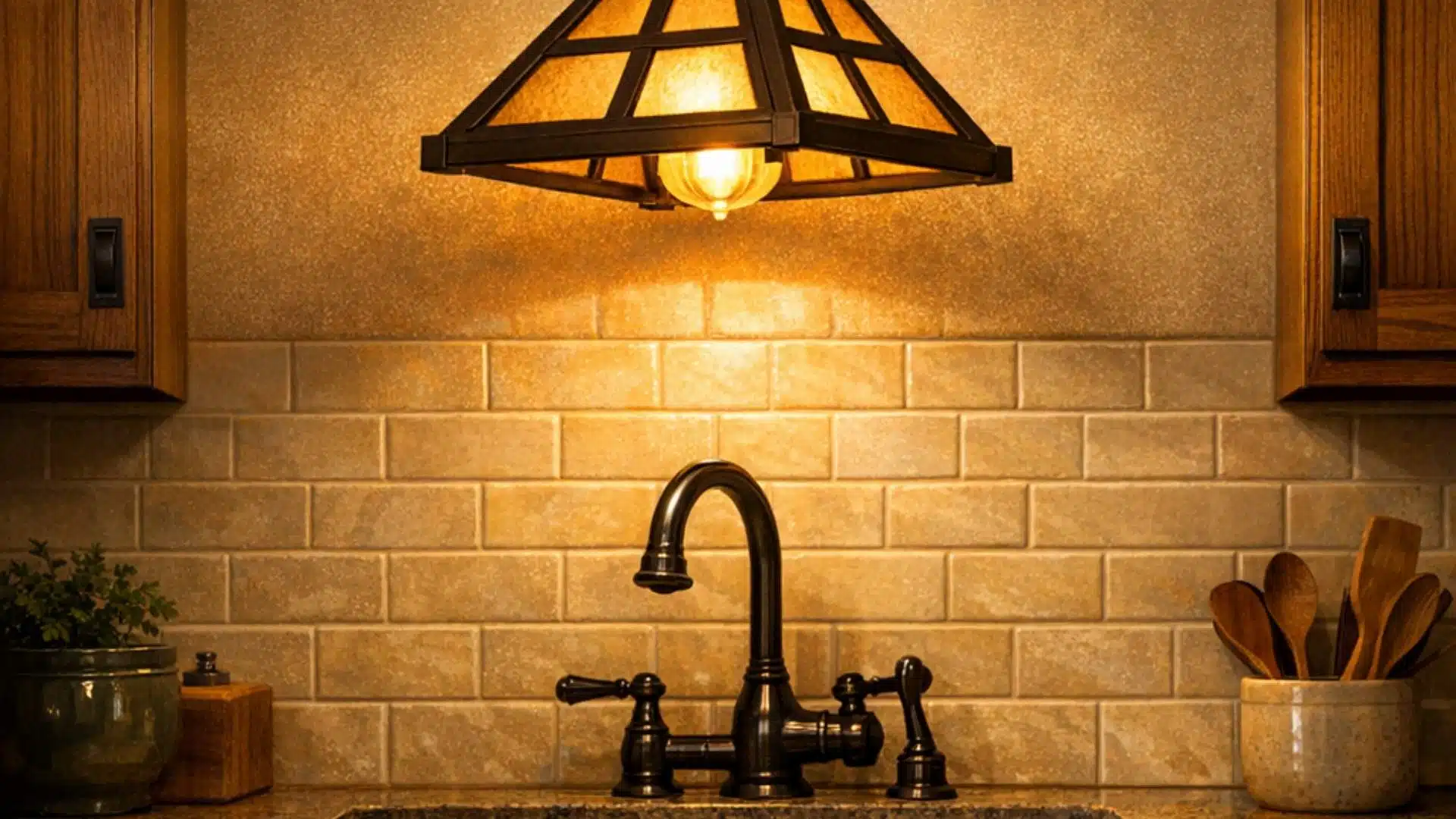
ALT TEXT: mission-style-pendant-light-over-craftsman-kitchen-sink
Lighting should look like it was always part of the room, not added as an afterthought. Mission-style pendants over an island or sink are the most recognizable craftsman fixture.
Lantern-shaped flush mounts and simple sconces in dark metal both work well throughout the space. Bulb temperature matters more than most people realize. Warm bulbs at 2700K to 3000K keep the wood looking rich. Cool white light makes it look flat.
Apron Sink
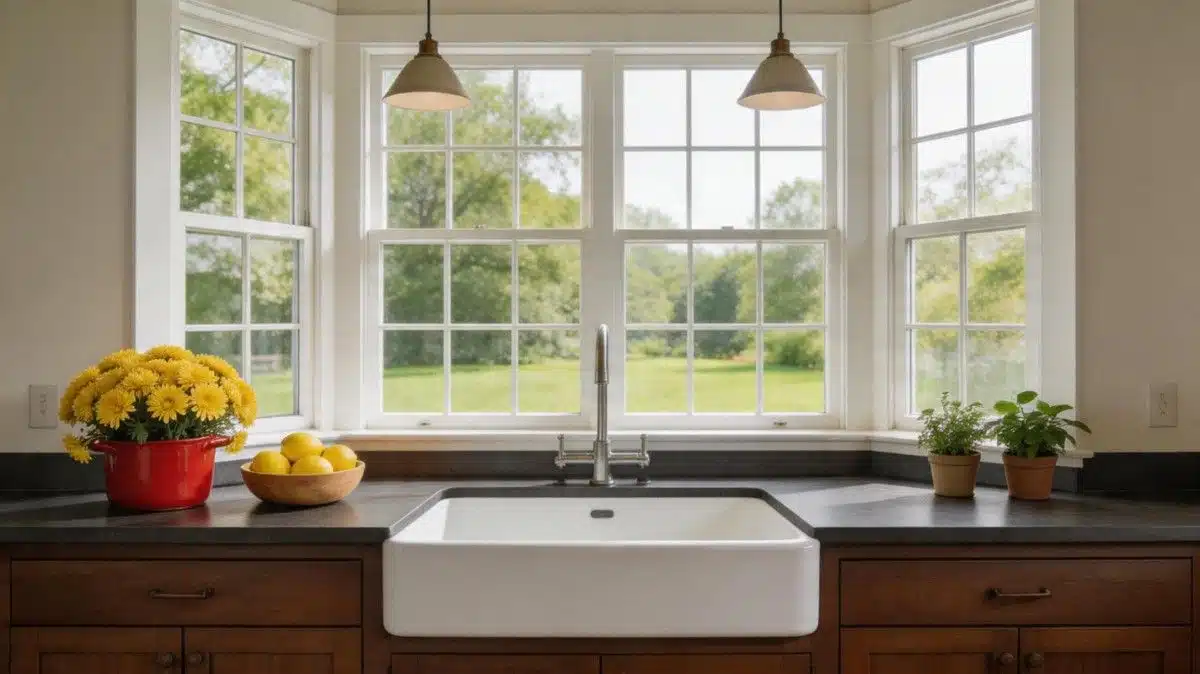
A farmhouse-style apron sink fits a craftsman kitchen the way quarter-sawn oak fits a cabinet door. The deep single basin reads as purposeful and well-made, which is exactly what this style is built around.
Fireclay and porcelain are the most common materials, both durable and easy to clean. A single-basin apron sink also gives you more room for washing large pots, which matters in a kitchen that is actually used.
I tell clients to confirm the sink cabinet dimensions early because retrofitting an apron sink into a standard base cabinet run is a more involved job than most people expect.
| One thing I tell every client: Do not treat this as a checklist to complete. Pick the elements that fit your home’s existing character. A 1920s bungalow naturally carries all of them. A newer build might need just three or four to get the feel right, and that is perfectly fine. |
Layout Ideas That Fit a Craftsman Kitchen
Layout shapes how a room feels before a single cabinet goes in. Here is what works best in homes with craftsman bones.
The L-shaped layout is the most natural fit. It keeps the kitchen open without letting it bleed into the next room. You get clear zones for prep, cooking, and clean-up without forcing everything into a line.
U-shaped kitchens suit older homes with more square footage. The extra wall space is perfect for built-in hutches, plate racks, and pantry cabinetry, all of which belong in this style anyway.
Galley kitchens are common in original Craftsman homes. They were designed for efficiency. Keep the cabinetry consistent on both walls and add a simple patterned tile floor to give it visual interest without changing the footprint.
Built-In Breakfast Nooks
A built-in breakfast nook is one of the most authentic layout choices for a craftsman kitchen. The style lends itself to seating that looks like it grew out of the wall rather than being placed against it.
A simple banquette with storage under the bench seat, trimmed in the same casing as the rest of the kitchen, seats four comfortably and uses corner or wall space that often goes wasted.
In smaller craftsman homes, a well-built nook can replace a formal dining room entirely. If your layout has even a modest alcove near a window, it is worth considering before you commit to a separate dining table.
On kitchen islands
They work in this style when the home has the room. An oversized island in a modest kitchen feels forced. A furniture-style island with turned legs, or one with a base that looks built-in, will always read more authentically craftsman than a large slab box sitting in the middle of the floor.
Craftsman Style Kitchen Cabinet Ideas
Cabinetry accounts for most of the design budget. In a craftsman-style kitchen, cabinets do the most visual work in the room.
Quarter-sawn oak is the most historically accurate choice. The wood has a visible ray pattern in the grain that no stain or finish can replicate. Walnut and cherry are warmer alternatives that still feel right for the style.
A note on Shaker cabinets: Shaker and Craftsman are not the same thing, though the two are often used interchangeably. Shaker doors have a flat center panel with a simple frame.
Craftsman cabinetry often features a recessed panel with a more detailed face frame and visible joinery. Dovetail drawer boxes and arched valances in the toe kicks are details you see in a true Craftsman build that a standard Shaker cabinet will not have.
Both are clean and period-appropriate, but if you are going for an accurate craftsman look, the construction details behind the door matter as much as the door profile itself.
Stained vs. painted cabinets:
- Stained wood keeps the grain visible and grounds the room in warmth
- Painted cabinets in off-white or soft sage read as craftsman when the door profile is correct
- Two-tone works well with painted uppers and stained lowers
- Avoid high-gloss finishes on either; they read as too contemporary for the style
Glass-front uppers with divided panes add a handcrafted feel. Leaded glass is the most period-accurate option. Simple, clear glass in a grid pattern is an easier, more affordable option that still fits.
Built-in pantry cabinets are worth prioritizing over a separate closet. They make the kitchen feel like the furniture grew out of the wall, which is exactly right for Craftsman design.
Color Palettes That Work With Craftsman Cabinetry
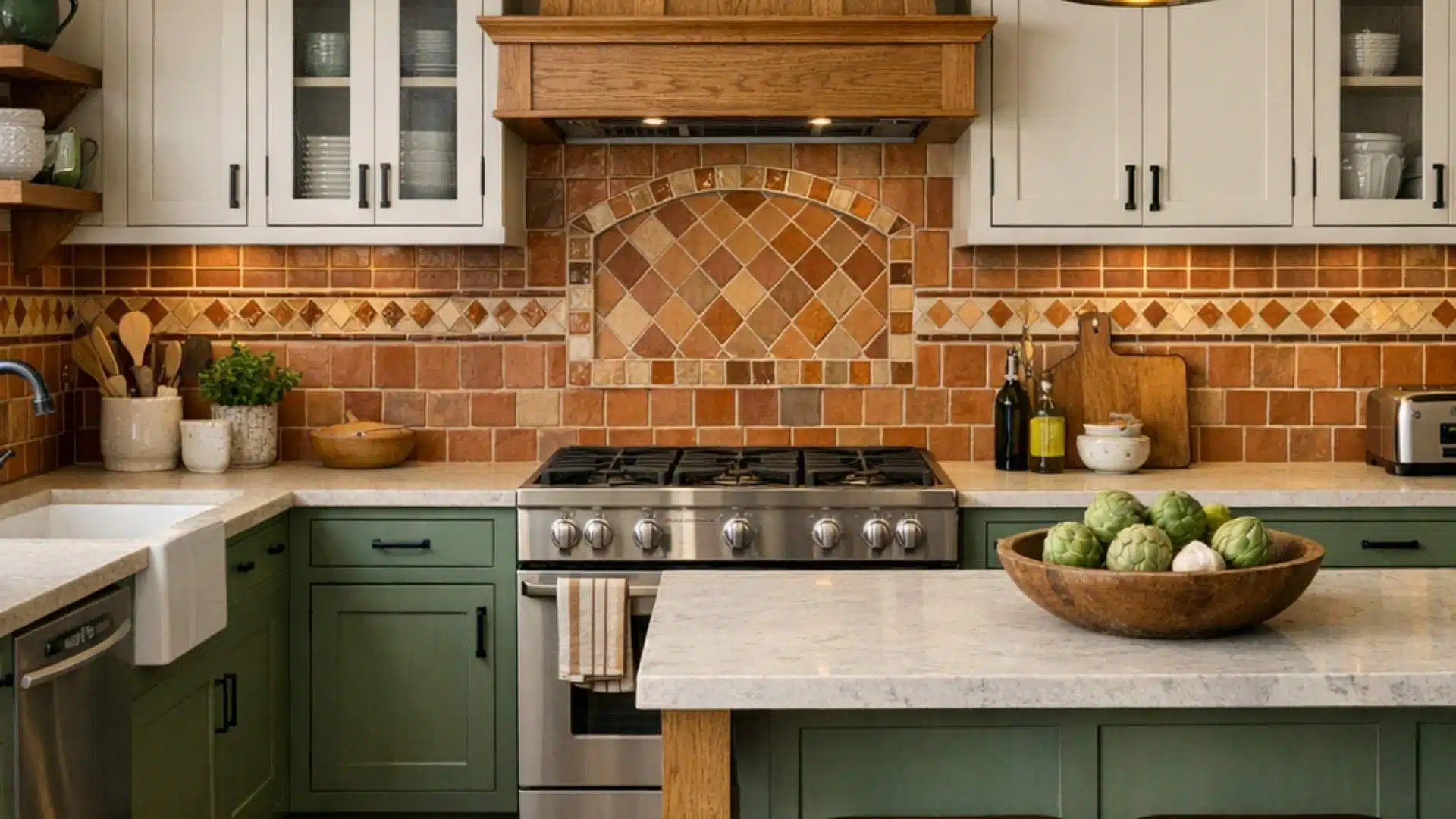
ALT TEXT:craftsman-kitchen-color-ideas-with-white-cabinets
The right colors support the wood. The wrong ones fight it. And the wood always wins.
The palette in a craftsman-style kitchen starts with the wood tone. Everything else responds to that.
| Wood Tone | Wall Color | Accent Option |
|---|---|---|
| Golden oak | Warm white, soft tan | Deep navy or forest green |
| Walnut | Sage, warm gray, stone | Charcoal or dark teal |
| Cherry | Creamy white, terracotta | Dark bronze-matched cabinetry |
| Painted white | Soft green, muted blue | Off-black or deep slate |
One thing to watch: Craftsman kitchens can go dark fast. If the room is small or north-facing, pull back on the stain depth for the upper cabinets and use a lighter wall color to balance the space.
Avoid cool-toned grays and anything with strong blue undertones as primary palette choices. They strip the warmth out of the wood, which is the whole point of the style in the first place.
Countertops and Backsplash Ideas
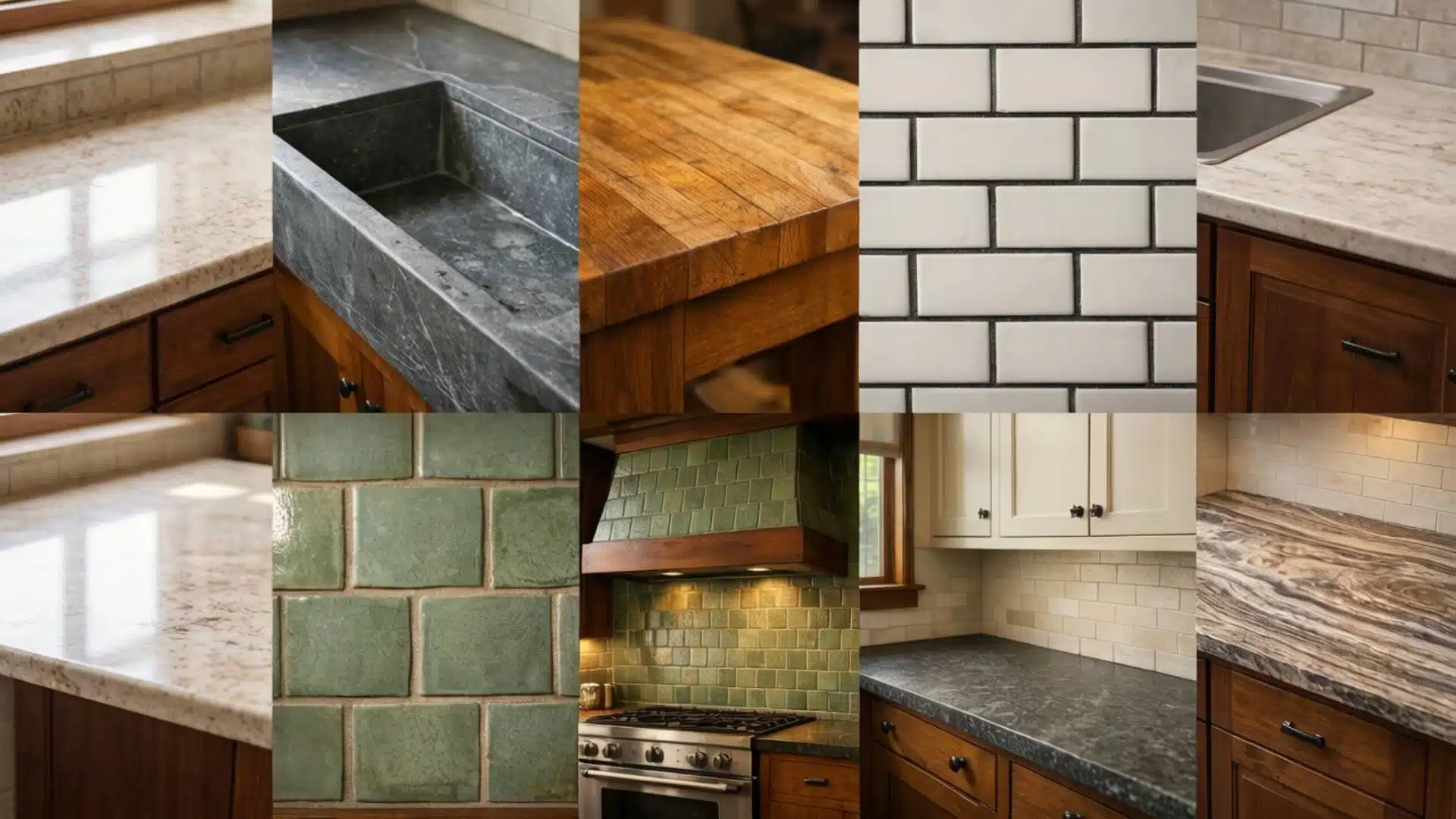
ALT TEXT: craftsman-style-kitchen-countertops-and-backsplash-ideas-collage
The surfaces carry a lot of the detail work in a craftsman-style kitchen. This is where the honest-materials approach really shows up.
Soapstone is a strong first choice. It ages visibly, develops a patina over time, and has a matte surface that suits the style well. Butcher block works in kitchens that already have warm wood cabinetry and need texture variation.
Honed granite and quartzite both perform well without the gloss that polished stone brings.
For backsplash, the two main directions are:
- Subway tile in a classic 3×6 white or off-white, set in a running bond pattern. Clean, honest, and straightforward.
- Handmade tile in an Arts and Crafts glaze. These tiles have slight surface variation, imperfect edges, and a texture that no machine tile can replicate. They cost more, but a small area, a range hood surround, or a simple band above the counter, goes a long way.
Avoid large-format porcelain slabs. They look sharp in contemporary kitchens. In a craftsman-style kitchen, they look like a mistake.
Lighting Ideas for a Craftsman Style Kitchen
Good lighting in a craftsman-style kitchen should feel like it was always there. Not like it was added later.
Mission-style pendants over an island or sink are the most recognizable craftsman fixture. Look for metal shades in bronze or black with simple geometric forms. No curves, no ornate detail.
For task lighting, under-cabinet strips with warm 2700K to 3000K bulbs handle the job without changing the look of the room. The bulb temperature matters more than most people realize.
Cool white light makes wood look flat and slightly greenish, which is the opposite of what you want.
A layered lighting plan for a craftsman kitchen:
- Ambient: Flush-mount or low-profile lantern ceiling fixture
- Task: Under-cabinet lighting over prep areas
- Accent: Pendant over island or sink position
- Natural: Maximize window openings, especially on the south or east wall
Sconces work well on either side of a range hood or along a dining nook wall. They add warmth without adding clutter.
Adding Modern Function Without Losing the Look
Most of my clients want a craftsman-style kitchen they can actually cook in. Here is how to update the kitchen without breaking the budget.
Panel-ready appliances are the most effective tool for this. A dishwasher or refrigerator with a wood panel front disappears into the cabinetry. The room stays cohesive without looking preserved.
Range hoods are trickier. A sleek stainless chimney hood looks out of place. A custom wood hood with trim details that match the cabinetry, or a painted plaster hood with craftsman-style casing, reads much better in the room.
Three updates that work invisibly:
- Deep drawer organizers behind cabinet fronts that look fully traditional on the outside
- Soft-close hinges and drawer slides, with period-accurate hardware on the exterior
- Integrated appliances behind matching cabinet doors for the refrigerator and dishwasher
Modern countertops like quartz are not automatically wrong in a craftsman kitchen. Choose a honed finish, pick a color that reads like stone rather than resin, and it will hold its place in the room.
One thing worth mentioning about the range hood: the wood hood surround is also the right place to add corbel details and a beveled crown molding stack. I have seen hoods that pulled together the whole room once the trim was right.
Get the hood casing wrong, and a well-built kitchen can look unfinished at its most prominent focal point.
Mistakes That Flatten the Style
I have seen many kitchens that aimed for craftsman and landed somewhere adjacent. Here is what usually goes wrong.
| Mistake | What It Does | Fix |
|---|---|---|
| High-gloss cabinet finish | Makes wood look plastic | Use satin or matte finish only |
| Too many wood tones | The room looks mismatched | Pick two maximum, tie together with hardware |
| Wrong door profile | Kitchen reads as farmhouse or contemporary | Stick to a recessed panel with a visible frame |
| Sleek stainless hardware | Pulls the eye toward modern | Switch to oil-rubbed bronze or aged iron |
| Large format tile backsplash | Feels too contemporary | Use subway or handmade tile instead |
| Missing trim | The room has no architectural weight | Add wide casing around windows and doors |
The most common mistake I see is rushing the hardware selection. Clients add craftsman cabinetry, then grab whatever pulls are on sale. The hardware is the handshake of the room. It either confirms the style or contradicts everything else.
Conclusion
A craftsman-style kitchen holds up because it is built around things that age well. Real wood. Honest materials. Details that reflect someone thinking carefully before picking up a tool.
The kitchens I have been most proud to work on were not the perfect ones. They had the right cabinets, the right tile, and a client who cooked in them, left dishes on the counter, and filled the shelves with things they actually used.
That is what craftsman design is built for. Not a showroom. A kitchen that holds up to real life and still looks good doing it. If you are starting from scratch or renovating an existing space, begin with the cabinetry and hardware.
Get those two right, and the rest of the room follows naturally. Have a question about your layout or color direction? Drop it in the comments below.
Frequently Asked Questions
How Do I Find a Contractor Who Understands Craftsman Kitchen Design?
Look for contractors who have worked on older homes built between 1910 and 1940. Ask to see photos of past kitchen work, specifically. A cabinet maker with experience in period styles is worth the extra research time before you commit.
Can I Mix Craftsman Cabinets with Open Shelving?
Yes, but use restraint. One or two open shelves in a specific zone, such as above a coffee bar or beside a window, can add warmth without making the room feel unfinished. Replacing all upper cabinets with open shelving does not suit this style.
Does Craftsman Style Work in A White Kitchen?
It can. The key is the door profile, hardware, and trim. A white kitchen with a shaker door, oil-rubbed bronze pulls, wide casing, and a handmade tile backsplash still reads clearly as craftsman. White does not cancel the style. Missing details do.
What is the Best Flooring for A Craftsman Style Kitchen?
Hardwood in a warm stain is the first choice. White oak with a satin finish works well without being too formal. For a high-traffic kitchen, porcelain tile in a wood-look finish or a classic hexagon pattern fits the style without competing with the cabinetry above it.