You grab the baking soda, sprinkle it on the carpet, wait a bit, and vacuum. Simple enough.
But then the smell comes back two days later, or your vacuum starts losing suction, and you wonder what went wrong.
Baking soda does work on carpets. It absorbs odors, pulls moisture from fibers, and loosens light surface dirt.
What it does not do is fix deep stains or smells that have soaked into the padding underneath.
This guide tells you exactly how to clean carpets with baking soda the right way. You will learn how long to leave it on, which stains it handles well, and what most guides forget to warn you about.
Does Baking Soda Actually Clean Carpets?
Yes, but only for certain things.
Baking soda (sodium bicarbonate) absorbs moisture and light oils from carpet fibers. It also neutralizes odor molecules rather than just covering them up.
A gentle abrasive quality helps loosen surface-level dirt so your vacuum can pull it out more easily.
That said, baking soda has clear limits. It does not remove deep stains that have already set into the carpet.
It cannot reach odors that have soaked through to the carpet padding. And it is not a replacement for a proper deep clean.
Think of it as a maintenance tool. It keeps your carpet fresher between bigger cleaning sessions. If a smell keeps coming back within a day or two of treatment, the source is deeper than baking soda can reach.
What You Need Before You Start
Before you sprinkle anything, take two minutes to gather what you need. Having everything ready means you won’t stop halfway through to hunt for a brush or run out of baking soda in the middle of the room.
Here is a quick list:
- Baking soda (at least one standard box for a medium-size room)
- A bagged vacuum (more on why this matters later)
- A soft-bristle brush
- Masking tape or old towels for baseboards
- Spray bottle with water (optional)
- White vinegar (optional, for stains)
- A dust mask and gloves
Baking soda is a fine powder. When you sprinkle it, some of it becomes airborne. If you have asthma or allergies, a dust mask is a good idea. Gloves protect your skin during application.
Before treating the entire carpet, mix 1/2 tablespoon of baking soda with 1/2 cup of water. Apply a small amount to a hidden corner of the carpet.
Let it dry, vacuum it off, and check for any color change. Some carpets, especially wool or older dyed rugs, can react unexpectedly.
How to Clean Carpet with Baking Soda Step by Step
Cleaning your carpet with baking soda is straightforward. But a few small details make the difference between a carpet that smells fresh and one that still smells of powder a week later. Follow these steps in order.
Step 1. Vacuum the Carpet First
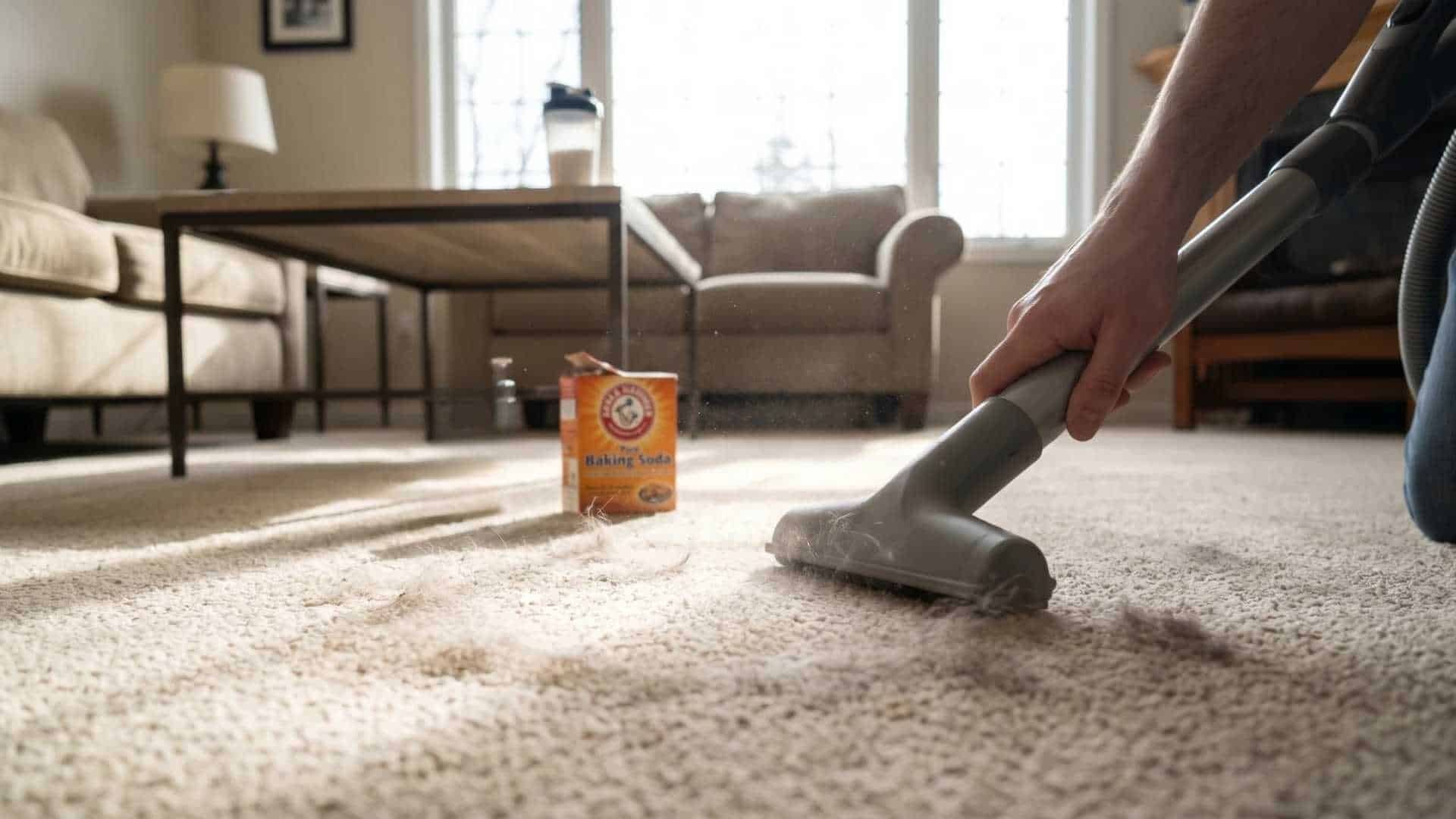
This is the most skipped step, and it matters more than people think. Surface dirt, pet hair, and loose debris will mix with the baking soda if you do not remove them first.
The powder ends up sitting on top of the mess instead of reaching the carpet fibers. Vacuum slowly and go over high-traffic areas twice. Once you are done, your carpet is ready for treatment.
Step 2. Protect the Edges of the Room
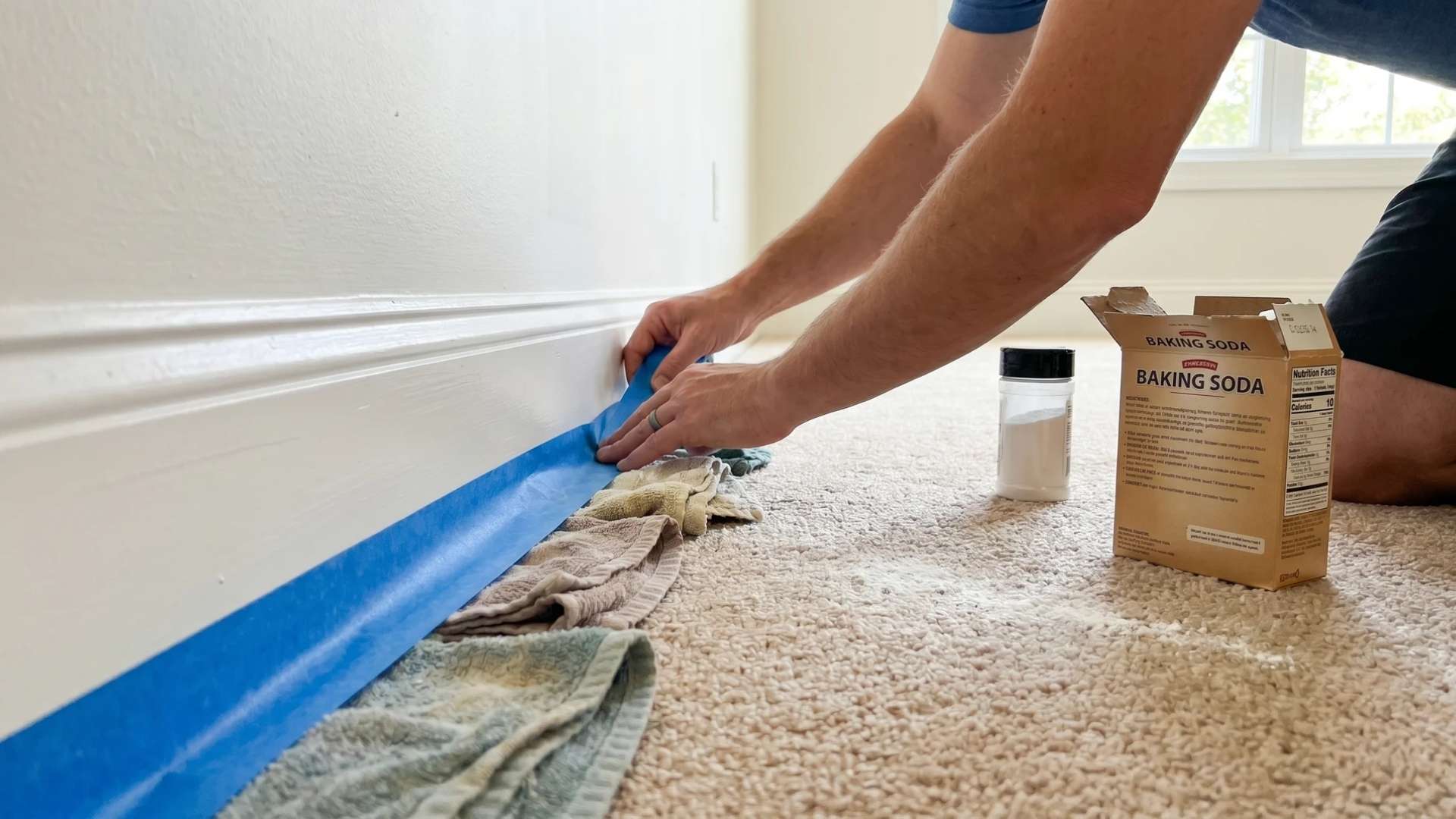
Press masking tape along your baseboards, or lay old towels flat against the walls.
Baking soda drifts toward edges and corners when you apply it, and it is surprisingly stubborn to remove from those tight spots later. This takes two minutes and saves you a lot of cleanup time afterward.
Step 3. Sprinkle an Even Layer of Baking Soda
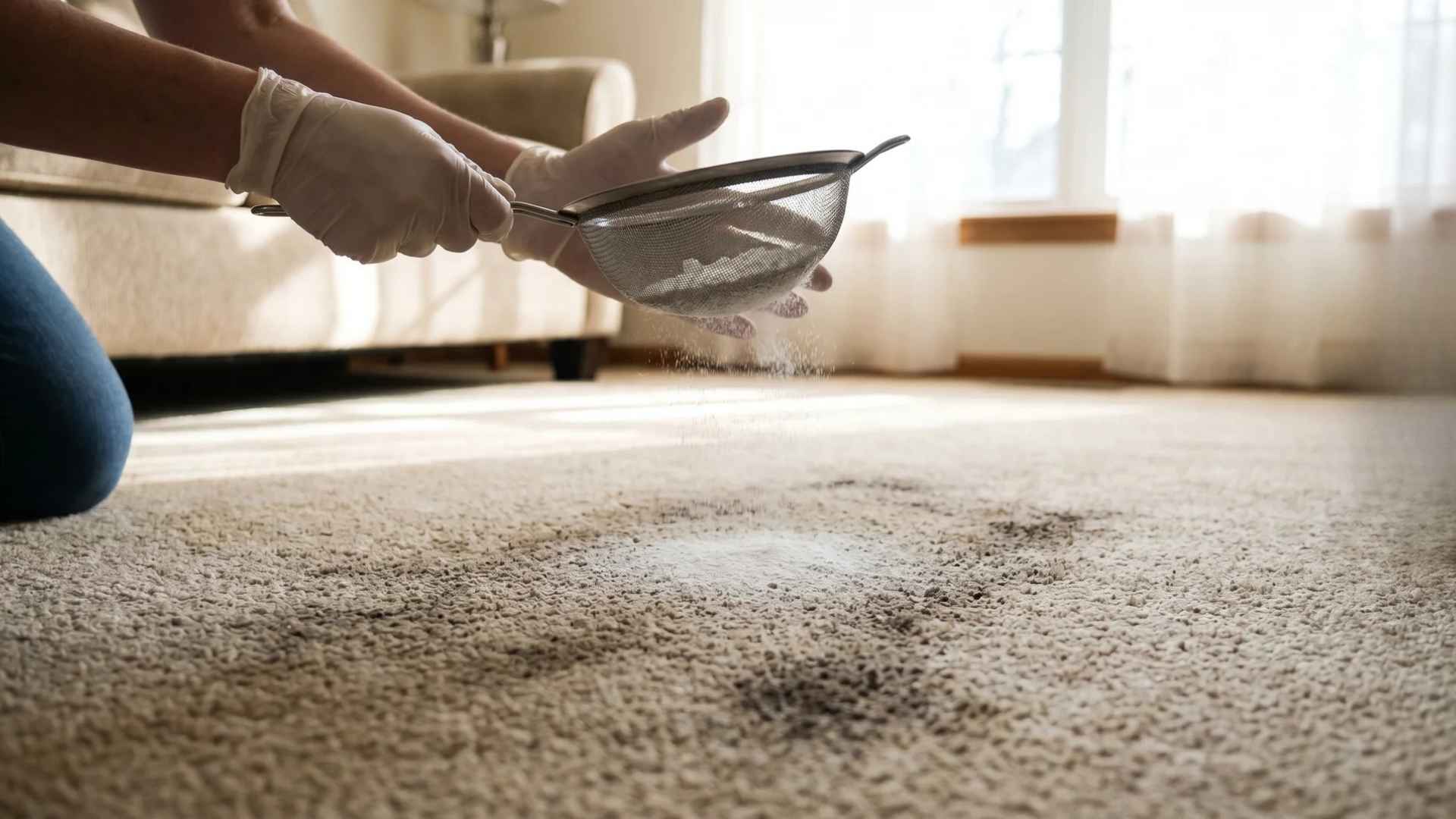
Use roughly one cup of baking soda per 10 square feet of carpet. A fine-mesh sifter or kitchen strainer gives you a much more even spread than pouring straight from the box.
Apply a slightly thicker layer over stained areas or the heaviest foot-traffic areas. You are not trying to bury the carpet. A light, even coat is all you need.
Step 4. Work It Gently Into the Fibers
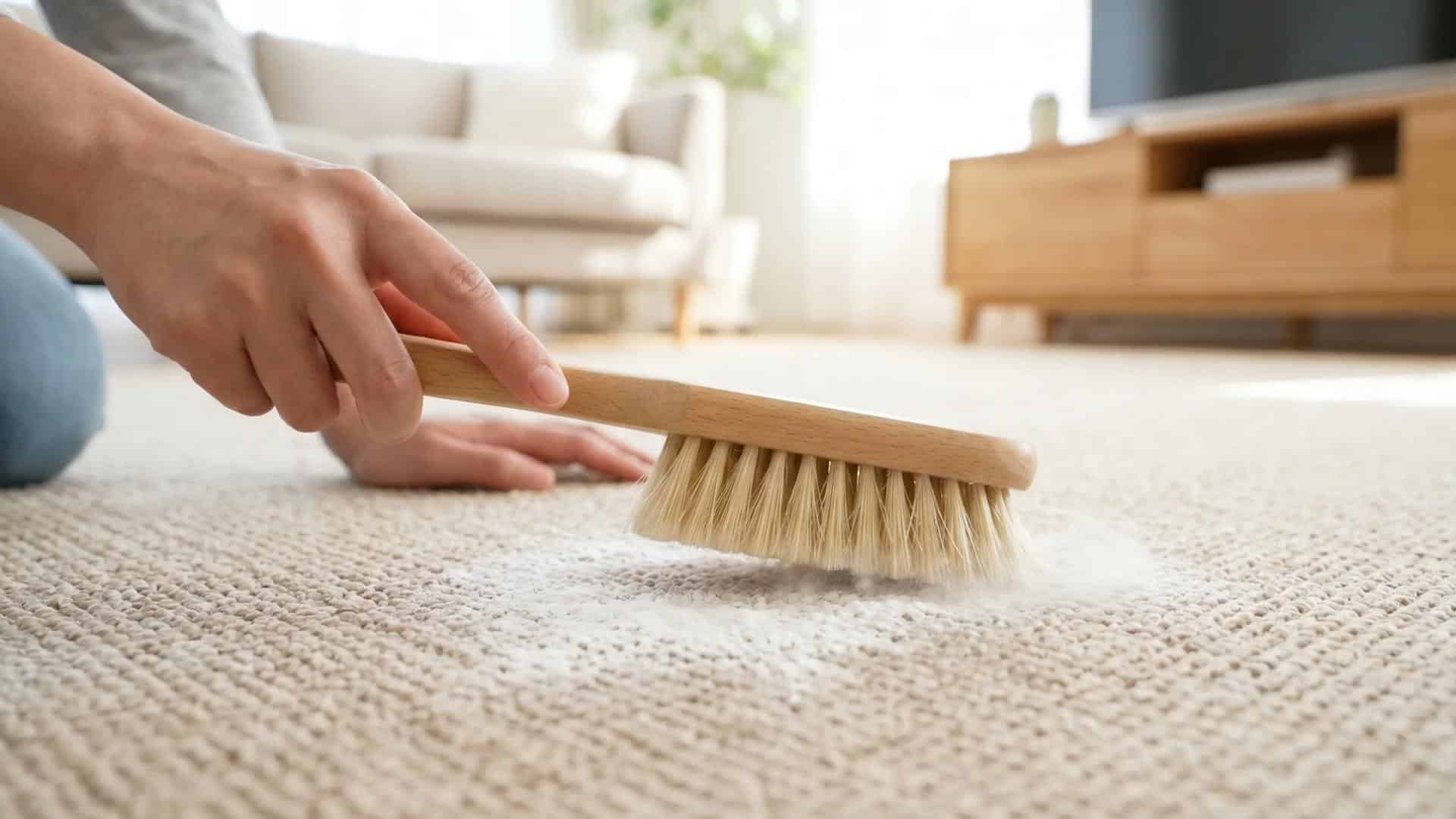
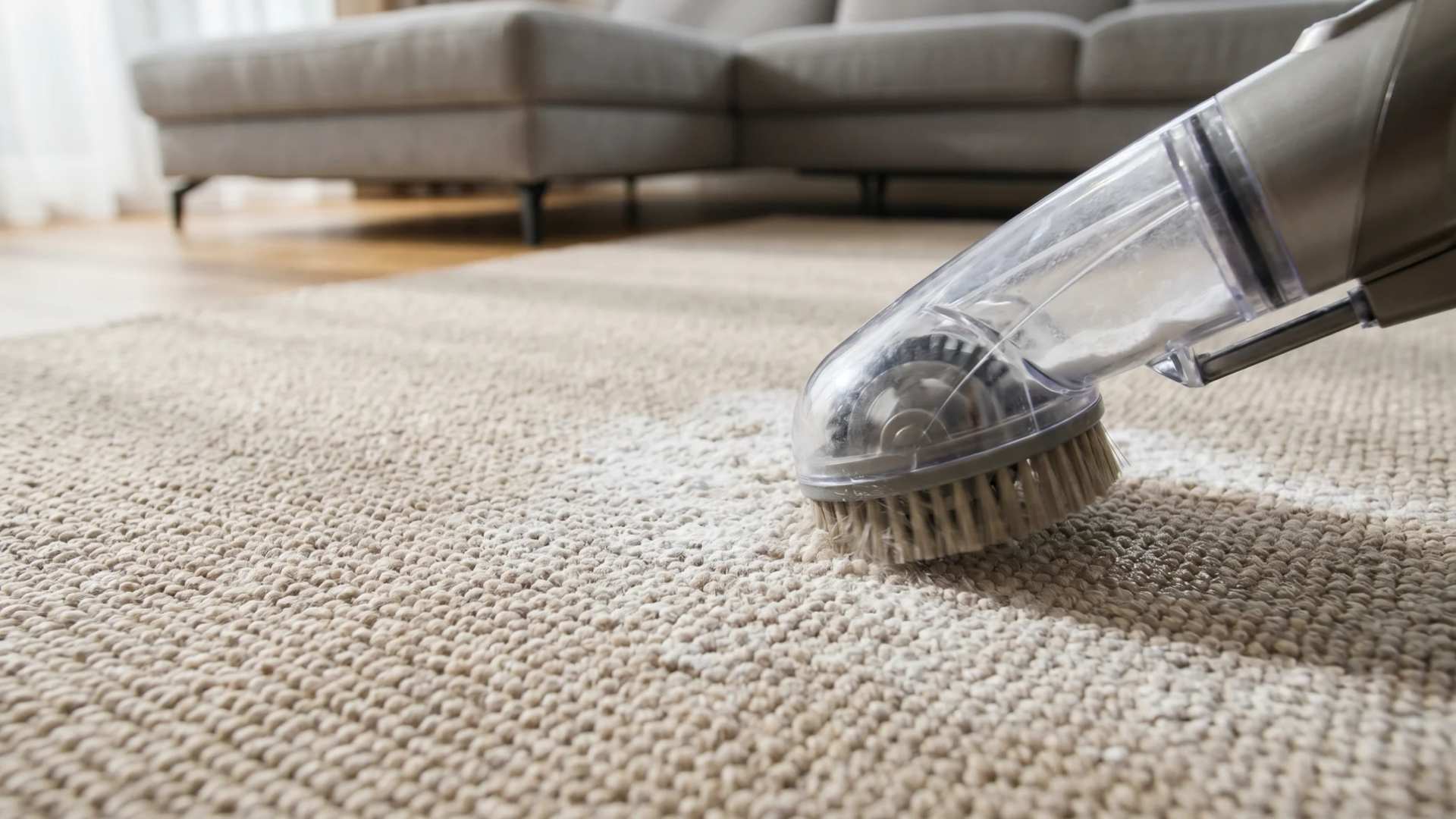
Use a soft-bristle brush to push the powder into the carpet lightly. Move in one direction first, then go back over it in the opposite direction.
This helps the baking soda get past the surface and into the fibers where odors and oils actually sit. You do not need to scrub hard. Light pressure is enough.
Step 5. Let It Sit Long Enough to Do Its Job
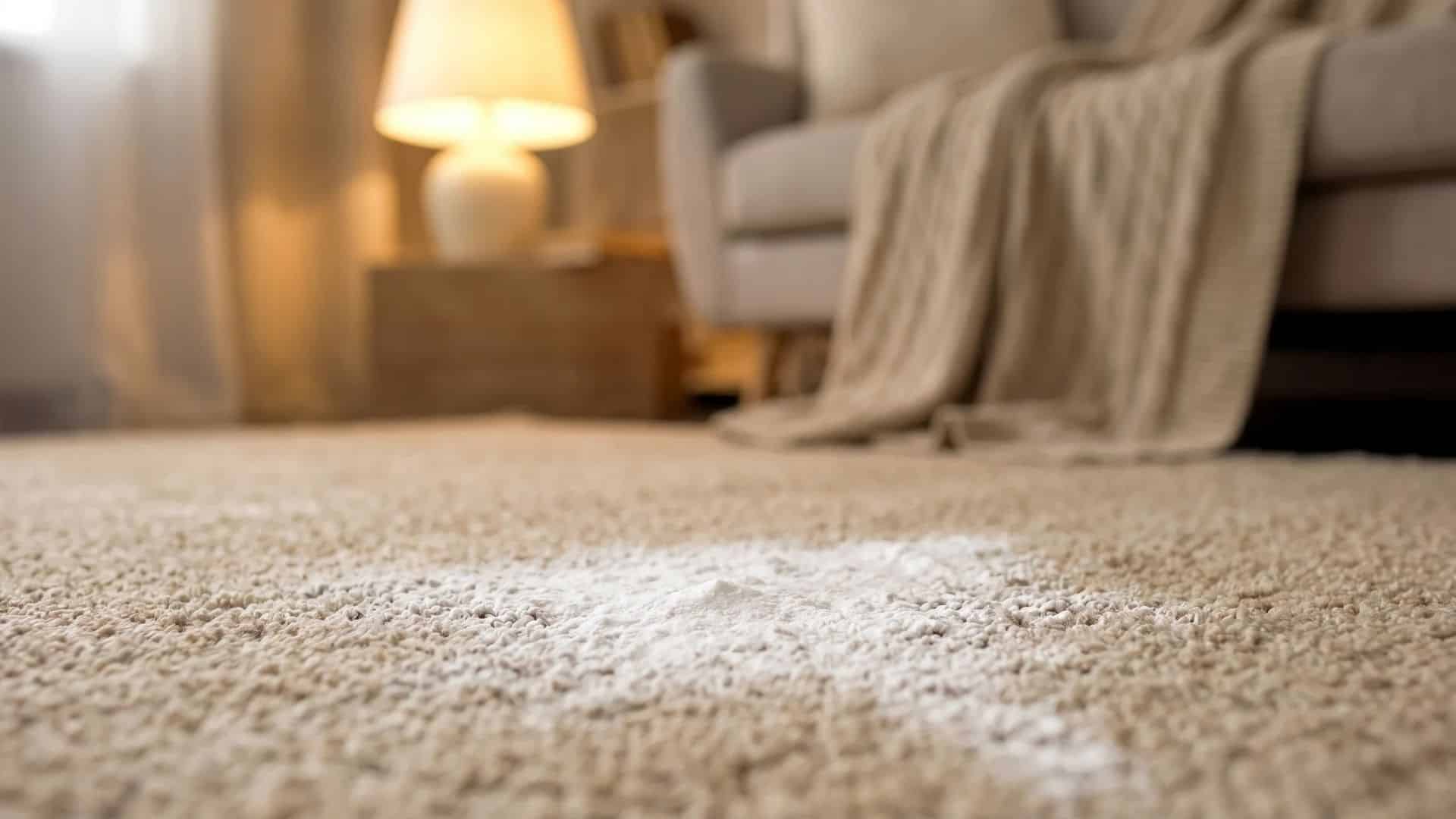
Do not rush this part. For a quick odor refresh, 30 minutes works. For pet smells or a room that hasn’t been deep cleaned in a while, 1 to 2 hours is better.
Overnight is ideal when you have the time. The baking soda keeps absorbing the longer it sits.
One firm rule: the carpet must be dry when you apply it, and the powder must be fully dry before you vacuum it up. Damp baking soda can turn into a paste inside your vacuum, making it difficult to clean out.
Step 6. Vacuum Slowly and Thoroughly
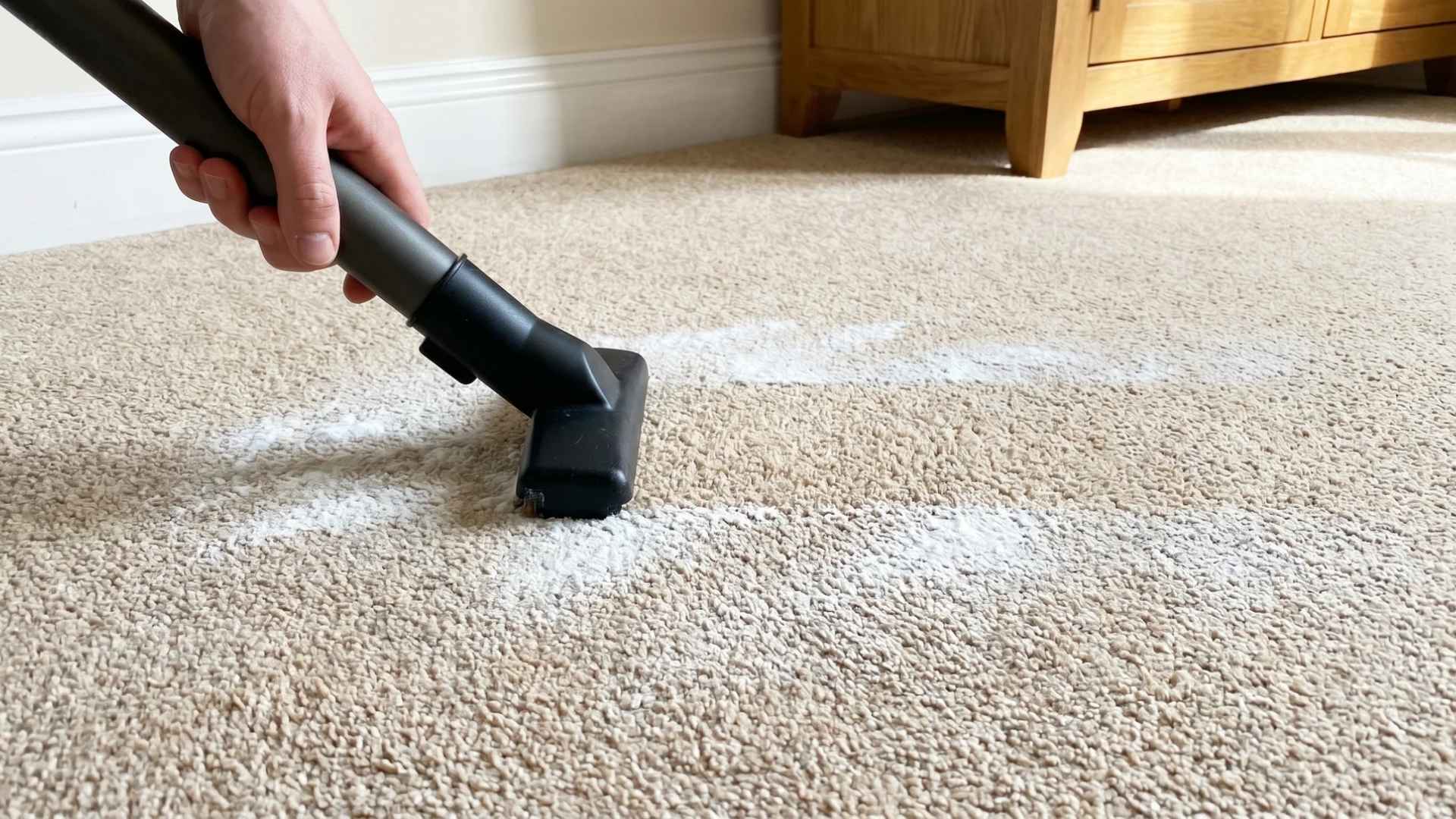
This step takes more time than most people expect. Go over the carpet with slow, overlapping passes. Vacuum in one direction, then vacuum again in the opposite direction.
The first pass removes most of the powder. The second pass pulls out what settled deeper into the fibers. Pay extra attention to edges once you remove your masking tape or towels.
Step 7. Clean Your Vacuum Filter Right After
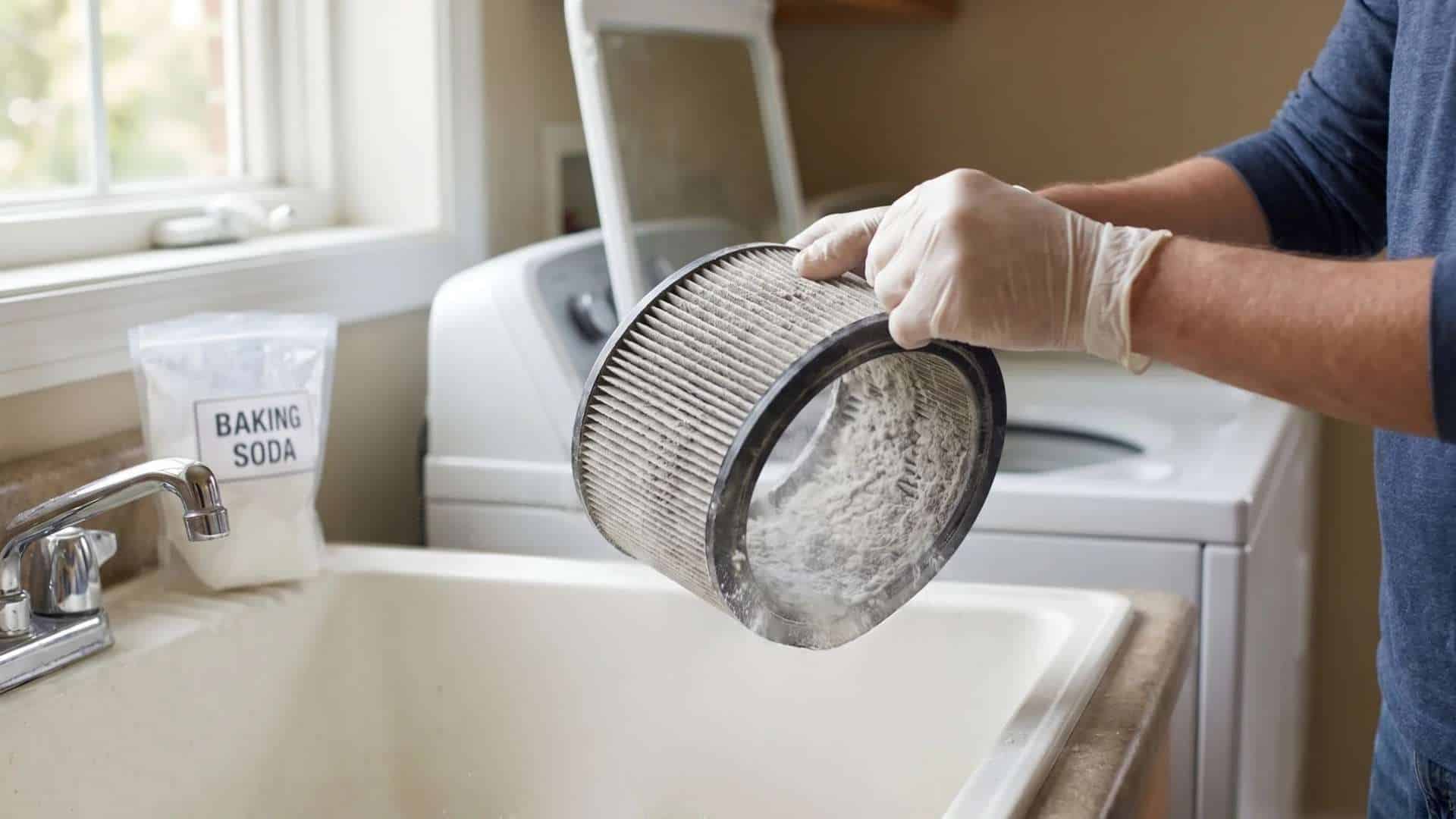
Do not skip this. Baking soda particles are fine enough to work through standard filters and build up near the motor over time.
Cleaning the filter immediately after each treatment keeps your vacuum working properly and extends its life.
How Long to Let Baking Soda Sit on Carpet
This is one of the most searched questions about this method, and the honest answer depends on what you are trying to fix.
| Goal | Minimum Time | Best Time |
|---|---|---|
| Light odor refresh | 15 to 30 minutes | 1 to 2 hours |
| Pet odors or smoke | 2 to 4 hours | Overnight (6 to 12 hours) |
| Fresh spill absorption | 15 minutes | 30 minutes |
| Grease stain paste | 2 to 3 hours | Until fully dry |
| General deep refresh | 1 to 2 hours | Overnight |
One rule applies to all of these: the carpet must be completely dry before you apply baking soda, and the powder must be fully dry before you vacuum it.
Vacuuming damp baking soda can pull paste-like residue into your machine, making it difficult to clean out.
The overnight approach works well for pet odors. Sprinkle before bed, vacuum in the morning. This gives the baking soda enough time to pull odors out of the fibers rather than just sitting on top of them.
Baking Soda on Carpet for Different Stain Types
Not every stain responds the same way. Here is how to handle the most common ones:
1. Fresh liquid spills: Blot up as much liquid as you can first. Do not rub. Apply dry baking soda directly onto the damp area. Wait 15 to 30 minutes. Vacuum.
2. Pet accidents: Blot the spot. Apply a generous layer of baking soda. Let it sit for at least two to four hours, or overnight if the odor is strong.
Vacuum, then spray a light mist of diluted white vinegar if the smell persists. Let it dry fully.
3. Greasy stains (butter, oil, pizza): Mix baking soda with a small amount of dish soap and water to make a paste. Apply it to the stain.
Leave it until the paste dries completely, which usually takes two to three hours. Vacuum off the dried paste.
4. Coffee, wine, or mud: Blot the stain. Pour baking soda directly onto it, then spray an equal mix of white vinegar and water on top. The fizzing is normal and part of how it works.
Let it sit for five minutes—Blot with a clean cloth. Apply more dry baking soda to absorb leftover moisture. Let it dry fully. Vacuum.
5. Old or set-in stains: Dampen the area lightly first. Apply a baking soda paste. Let it dry, then vacuum. You may need to repeat this two or three times.
For stains that have been there for months, a commercial cleaner or professional treatment will likely give better results. The same approach works for chocolate stains on fabric where baking soda alone is not enough.
Baking Soda with Other Ingredients
Baking soda works well on its own, but pairing it with the right ingredient can make a real difference on tougher stains or stronger odors.
1. Baking soda + white vinegar: Good for stains. Apply the baking soda first, then spray vinegar on top. Do not pre-mix them in a bowl; you want the reaction to happen on the stain itself.
2. Baking soda + hydrogen peroxide: Useful for tough stains on synthetic carpets (nylon, polyester). Mix 2 to 3 tablespoons of baking soda with one cup of hydrogen peroxide and two cups of water in a spray bottle.
Always spot-test first. Hydrogen peroxide can bleach some carpet fibers.
3. Baking soda + essential oils: Good for ongoing odor control. Mix one cup of baking soda with 15 to 20 drops of your preferred essential oil. Sprinkle, leave overnight, vacuum. This works particularly well in pet areas.
4. Do not mix baking soda with bleach: This creates a harmful chemical reaction. Keep these two completely separate.
Which Carpet Types Can You Use Baking Soda On?
Baking soda is safe for most carpets, but not all of them respond the same way. Checking your carpet type before you start saves you from a problem that is hard to fix after the fact.
| Carpet Type | Safe to Use? | Notes |
|---|---|---|
| Nylon or polyester (synthetic) | Yes | All methods work well |
| Wool | Use with caution | Test first, use less moisture |
| Berber | Yes | Vacuum thoroughly; powder can get stuck in loops |
| Shag or high pile | Yes | Work powder in carefully, vacuum multiple times |
| Silk or antique rugs | No | Risk of damage, consult a professional |
| Area rugs | Yes | Take outside if possible, shake before vacuuming |
How Often Should You Use Baking Soda on Carpet
How often you use this method depends on foot traffic and whether you have pets.
For high-traffic rooms like living areas, hallways, and entryways, once every two to four weeks keeps odors from building up. Homes with pets or kids may need it more often.
For low-traffic rooms like guest bedrooms or home offices, once every two to three months is plenty.
Avoid doing a full carpet treatment every week. Baking soda is a fine powder, and using it too frequently can leave residue that builds up in the carpet backing over time.
If you notice a gritty texture underfoot after repeated treatments, cut back on how often you apply it and run a few extra vacuum passes to clear out any leftover powder.
Spot treatments are different. You can use baking soda on a fresh spill or a single odor spot whenever you need to without worrying about buildup.
Conclusion
Cleaning carpets with baking soda is one of the most practical things you can do between deep cleans. It handles odors well, helps with fresh spills, and costs almost nothing.
Knowing how long to let baking soda sit on the carpet makes a real difference. For light odors, 30 minutes works. For pet smells, overnight is better.
The two things to remember: always apply it to dry carpet, and use a bagged vacuum to protect your machine.
If a smell or stain keeps coming back after treatment, it is time to call in a professional.
Have you tried baking soda on your carpet? Let us know in the comments what worked for you.
Frequently Asked Questions
Can baking soda damage my vacuum cleaner?
It can if you use a bagless vacuum with a dirty filter. The fine particles pass through and settle near the motor. Use a bagged vacuum or clean your filter before and after each treatment.
Does baking soda remove carpet stains or just odors?
It handles odors well and helps with fresh, surface-level stains. It will not remove old or deep-set stains on its own. For those, you need a paste treatment or a commercial cleaner.
Is it safe to use baking soda on carpet around pets and kids?
Yes. Baking soda is non-toxic. Keep pets and children off the treated area while the powder sits, then vacuum it up fully before letting them back on the carpet.
What if the baking soda does not come out of my carpet?
Run your vacuum on the highest suction setting with slow passes. If any powder remains, dampen a clean cloth and press it into the area to lift the residue, then let the spot dry, and then vacuum again.
Can I mix baking soda and vinegar together before applying?
No. Mixing them in a bowl cancels out both ingredients, leaving you with salt water. Apply baking soda to the carpet first, then spray vinegar over it so the reaction occurs on the stain.
Will baking soda bleach or discolor my carpet?
Not on most synthetic carpets. Wool, silk, and older dyed rugs can react unexpectedly. Always spot-test a hidden area first and let it dry before treating the full carpet.