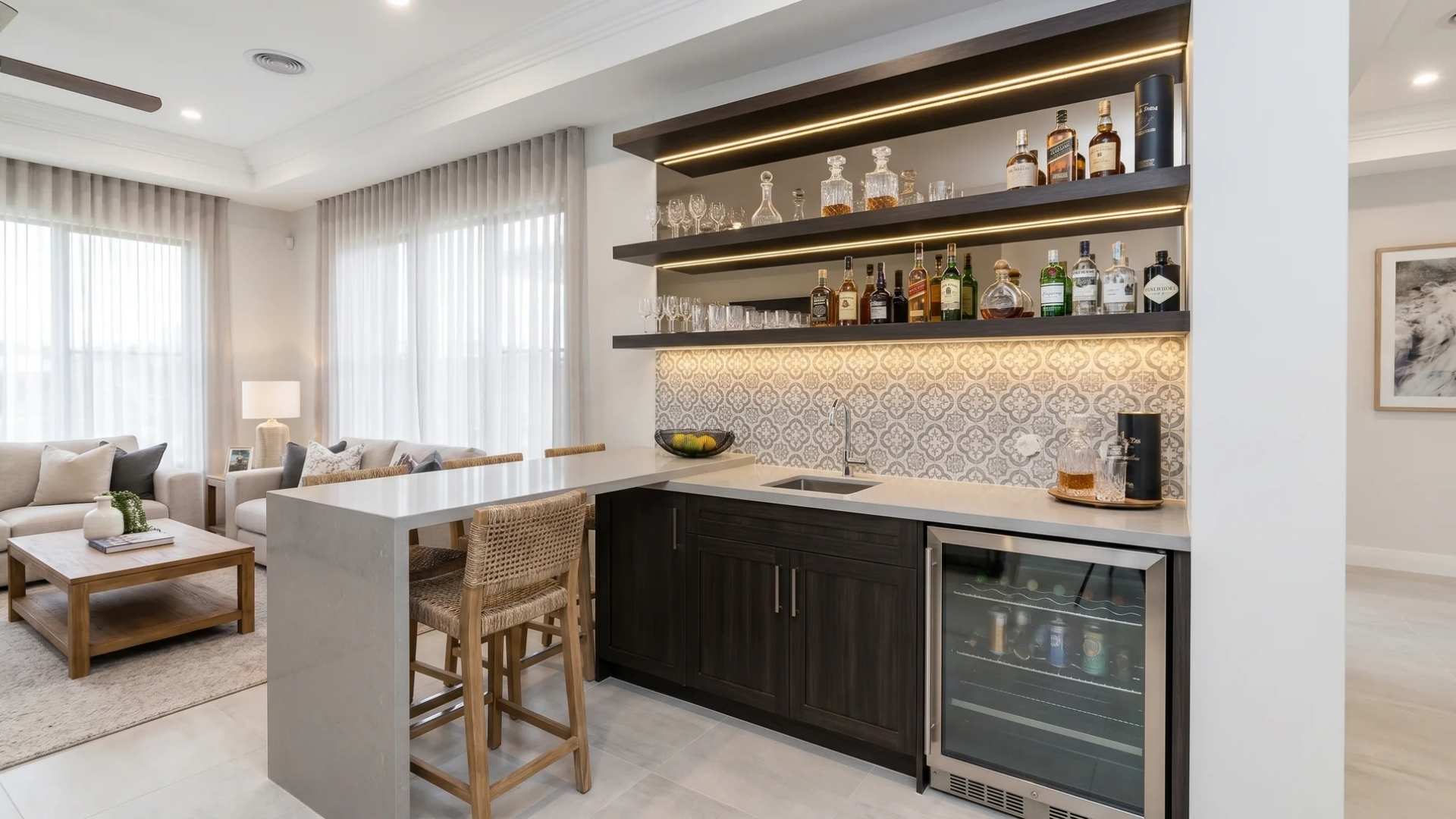
Every time I host, the kitchen turns into a bottleneck. Guests crowd around. The counter fills up fast. Trips back and forth from the living room feel nonstop.
That is when a wet bar starts to make real sense. So, what is a wet bar, exactly? It is a small, built-in bar with a sink, running water, and storage for glasses and drinks.
It sits outside your main kitchen and handles everything from mixing cocktails to rinsing glasses.
This post covers the meaning of a wet bar, what goes into one, how much it costs, and how to plan one that fits your home and hosting style.
What is a Wet Bar?
A wet bar is a dedicated drink-prep area with a sink connected to your home’s plumbing.
That single feature, running water, is what separates it from a dry bar. You can rinse glasses, prep cocktails with fresh juice or water, and clean up spills without walking to your kitchen.
Wet bars became popular in the 1970s when homeowners started finishing their basements for entertaining. The concept has not gone out of style since.
They show up in basements, living rooms, dining rooms, outdoor decks, and even master suites today.
Difference Between Wet Bar and Dry Bar
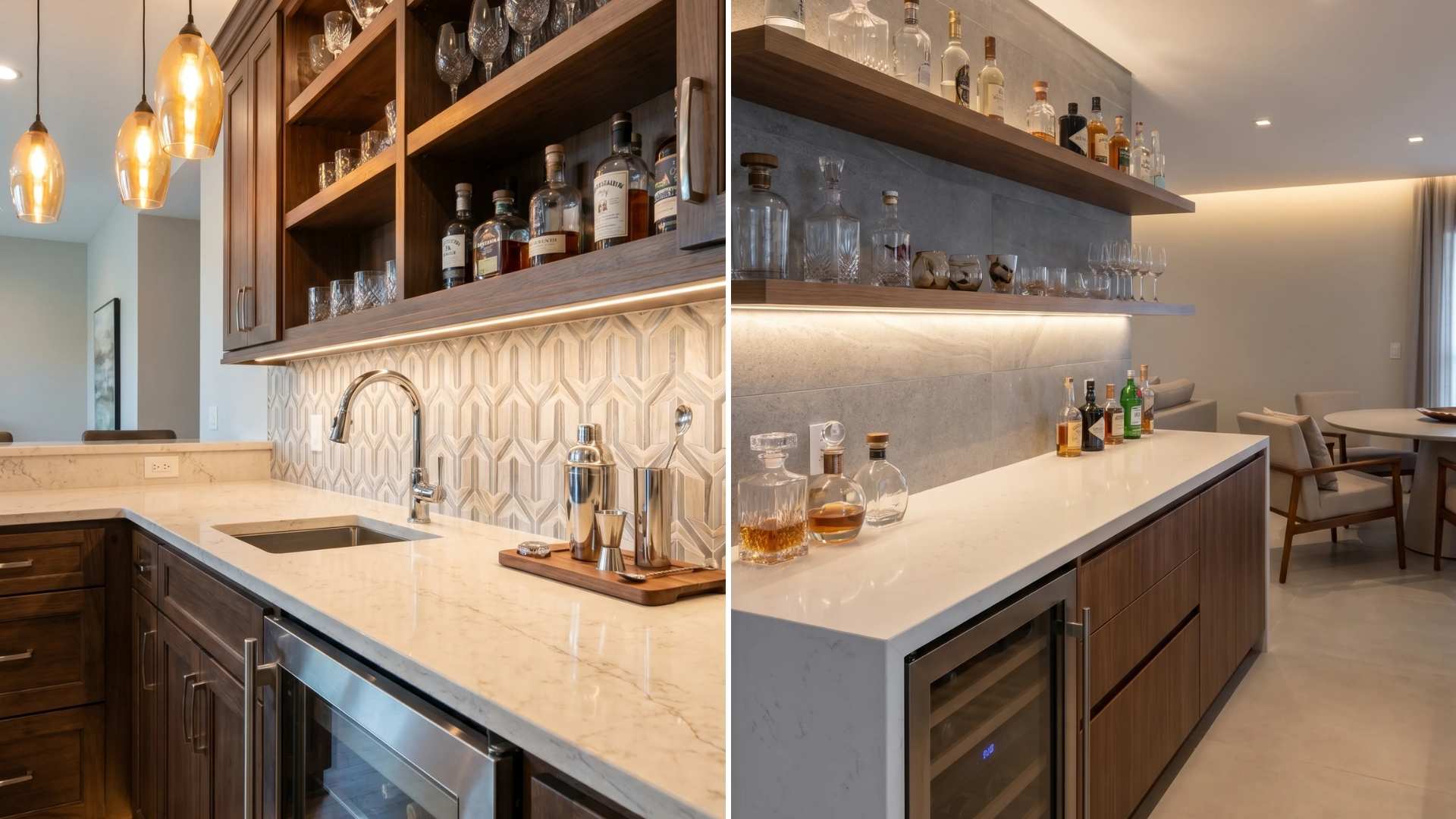
The meaning of ‘wet bar’ comes down to plumbing. A wet bar has a sink. A dry bar does not.
A dry bar provides storage and counter space for pouring and serving drinks. It works well when your kitchen is just a few steps away.
A wet bar adds the ability to prep, rinse, and clean up right at the bar, which matters most when your entertaining space is far from the main kitchen.
Here is a quick comparison between a wet bar and a dry bar:
| Feature | Wet Bar | Dry Bar |
|---|---|---|
| Sink with running water | Yes | No |
| Plumbing required | Yes | No |
| Installation cost | $2,000–$30,000 | $1,000–$15,000 |
| Best for | Basement, outdoor, large spaces | Living rooms near the kitchen |
| Permit likely needed | Yes | Rarely |
If your bar location is more than a few steps from the kitchen, a finished basement, or a covered patio, for example, the sink is worth the extra cost.
What Goes Into a Wet Bar
Understanding each component helps you plan a bar that works for real life, not just a showroom.
1. The Sink: This is the defining feature. A bar sink is compact, usually 15 inches wide, and designed for rinsing rather than full washing. Undermount sinks look cleaner; drop-in sinks are easier to install and more budget-friendly.
2. Countertop: Standard countertop options include quartz ($55–$165 per sq ft), natural stone, and laminate ($22–$88 per sq ft). Stone holds up well in high-use areas and resists stains from cocktail spills.
3. Cabinets and Storage: Upper glass-front cabinets let you display stemware. Lower cabinets keep bottles, tools, and bar supplies within reach. Custom cabinets run $500–$1,200 per linear foot.
4. Beverage Refrigerator: A 24-inch undercounter fridge fits neatly below the bar. It keeps mixers, wine, and canned drinks cold without taking up floor space.
5. Backsplash: The backsplash protects the wall from splashes and sets the tone for the space. Tile costs $11–$55 per sq ft. Marble adds a polished feel. Mirrored backsplashes bounce light, making small bars feel larger.
6. Lighting: Under-cabinet lights help with prep. Pendant lights or LED strips set the mood. This is one area where going a little bolder than the rest of the room actually works.
As for overall size,most wet bars run 6 to 8 feet long with a counter height of around 42 inches. A compact setup with a small sink and undercounter fridge can fit a 4-foot stretch of wall.
Wet Bar Design Ideas for Every Style
No matter your taste, the right wet bar can add both function and personality to a space.
The wet bar ideas showcase a range of styles, from sleek modern layouts to cozy rustic retreats, making it easy to find inspiration that fits your home.
1. Modern and Minimalist Wet Bar
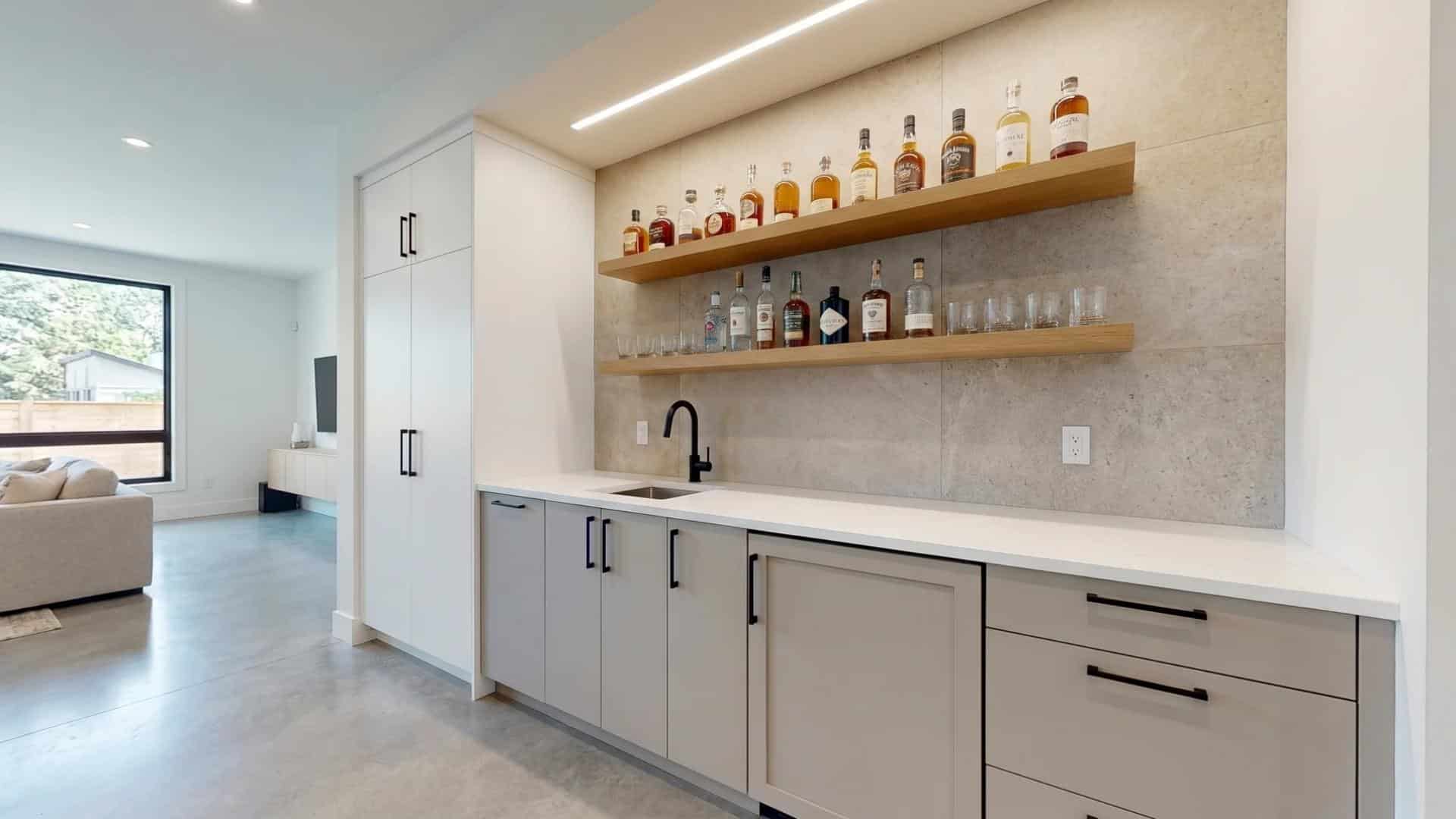
Flat-panel cabinets in white or greige, quartz countertops, and matte black hardware. Keep open shelving intentional, a few bottles, matching glasses, nothing more.
Integrated undercounter fridges with panel fronts help the bar blend into the wall. For the backsplash, large-format neutral tile keeps things cohesive without competing with the rest of the space.
2. Rustic and Industrial Wet Bar
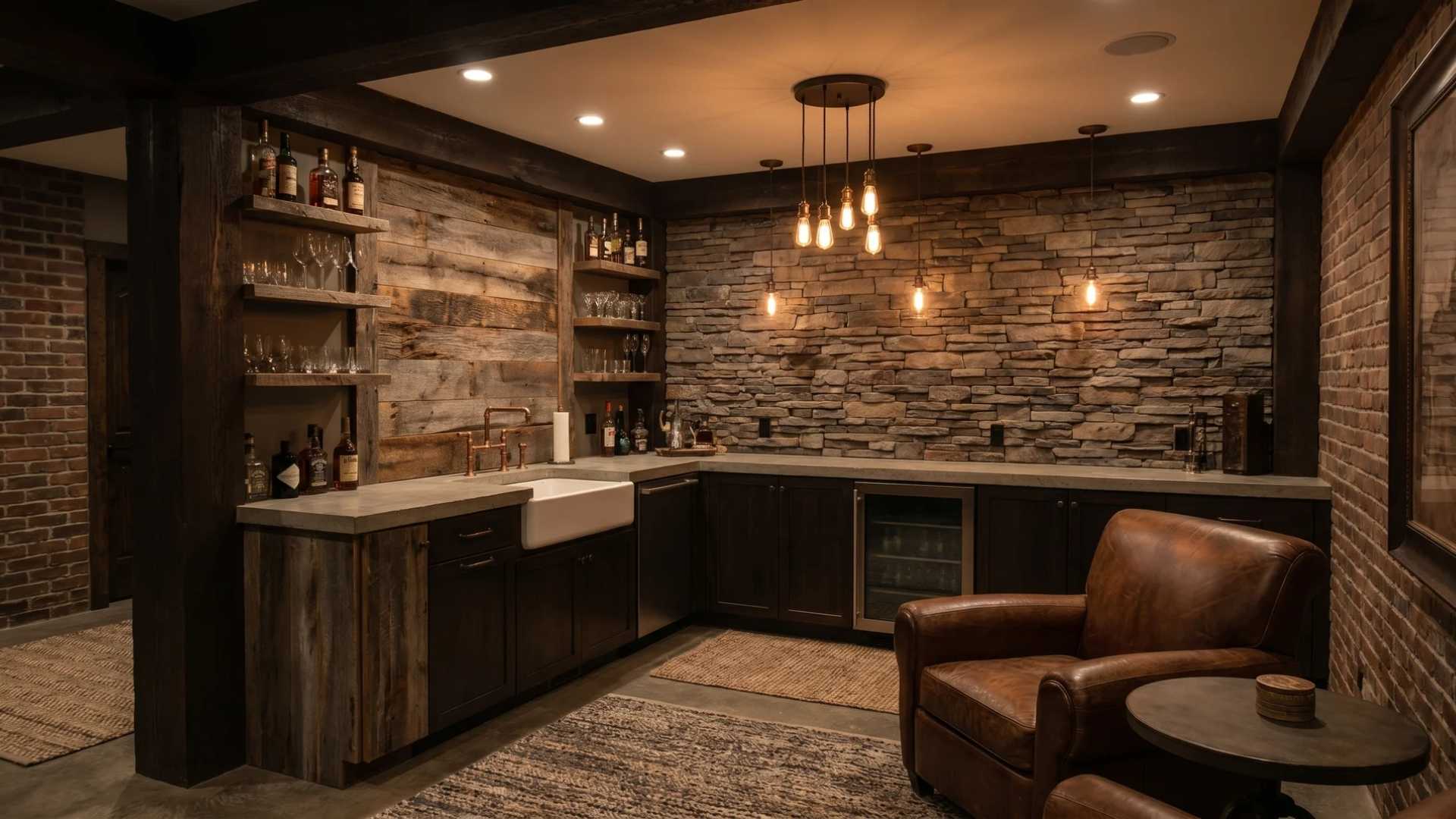
Reclaimed wood shelves, a concrete or butcher block countertop, and exposed pipe fixtures. This style fits well in finished basements with existing brick or stone walls.
A deep farmhouse sink and Edison bulb pendants reinforce the look. If the walls are drywall, a reclaimed wood accent panel behind the bar brings the texture that ties everything together.
3. Classic and Traditional Wet Bar
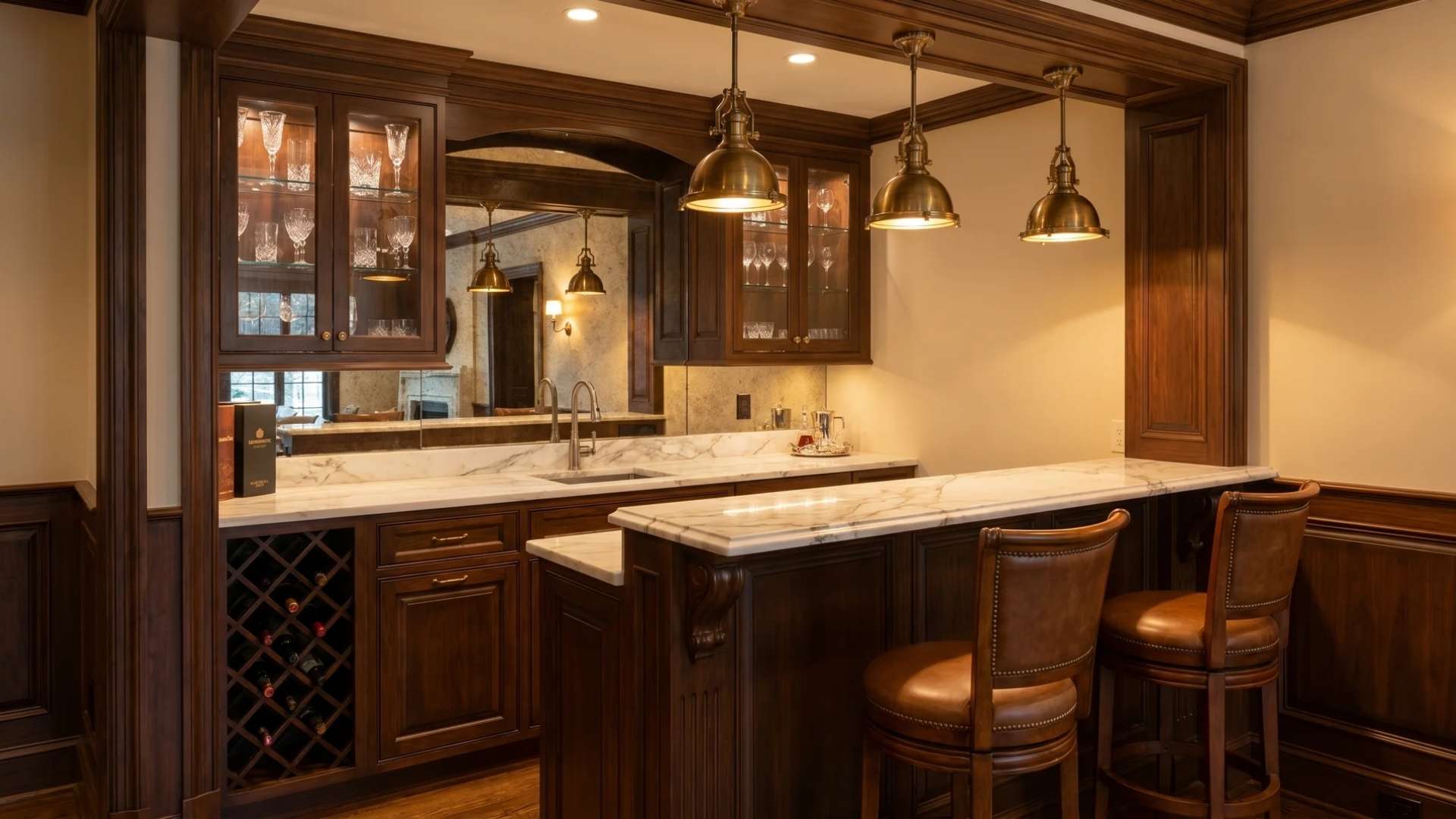
Dark wood cabinetry, a marble countertop, and a mirrored backsplash. The mirror reflects light, making a small footprint feel larger. Warm pendant lighting in antique brass or oil-rubbed bronze completes it.
Glass-front upper cabinets let you display barware without fully exposing it, and a small built-in wine rack on one end adds a polished, finished look.
4. Small-Space Wet Bar
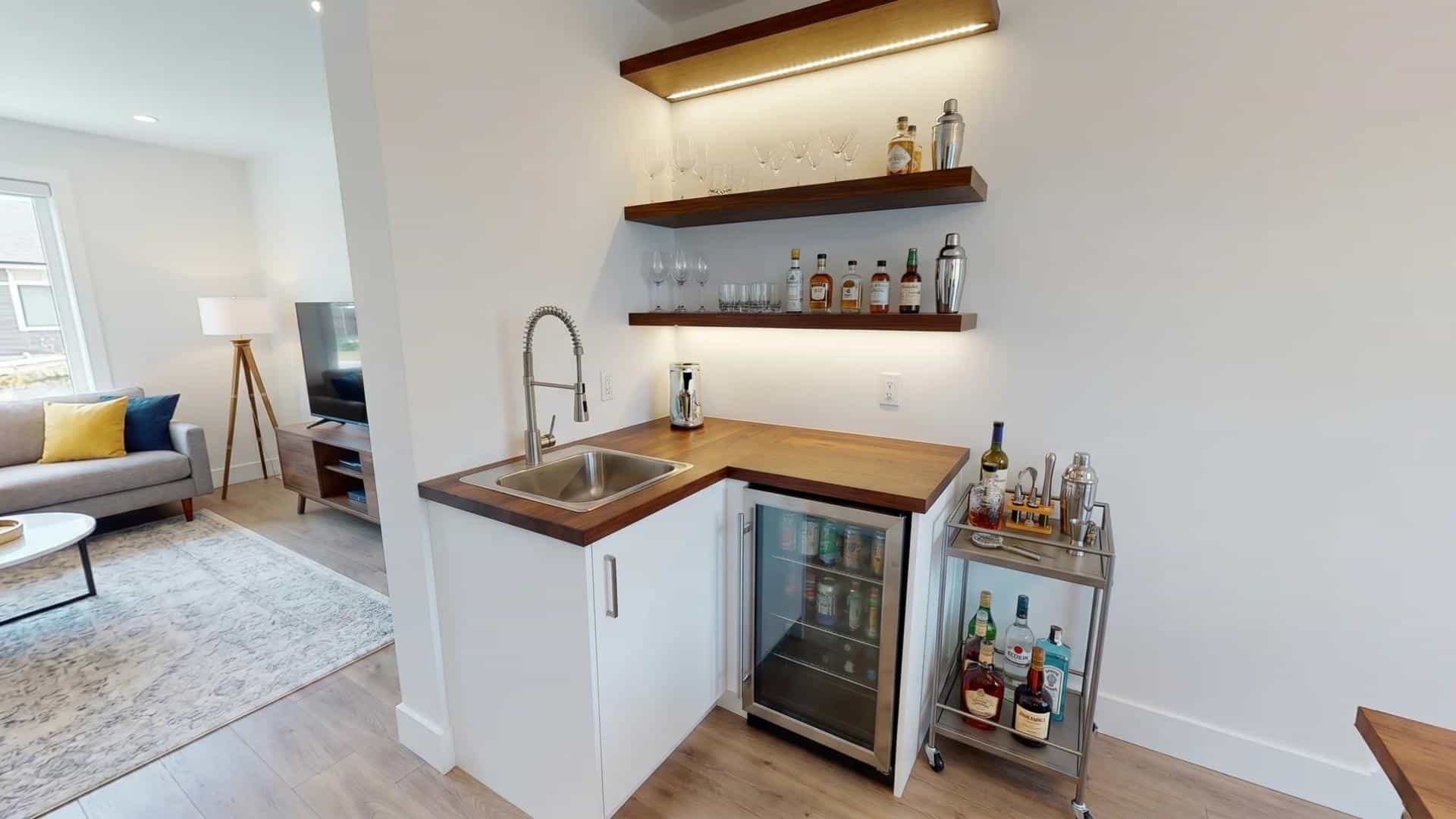
A corner sink, two floating shelves, and a compact undercounter fridge are all you need. Work vertically rather than horizontally stacked shelves hold glassware and bottles without eating up counter space.
A bar cart beside the setup handles overflow. Choose a high-arc faucet so the sink stays usable even with a small basin.
5. Outdoor Wet Bar
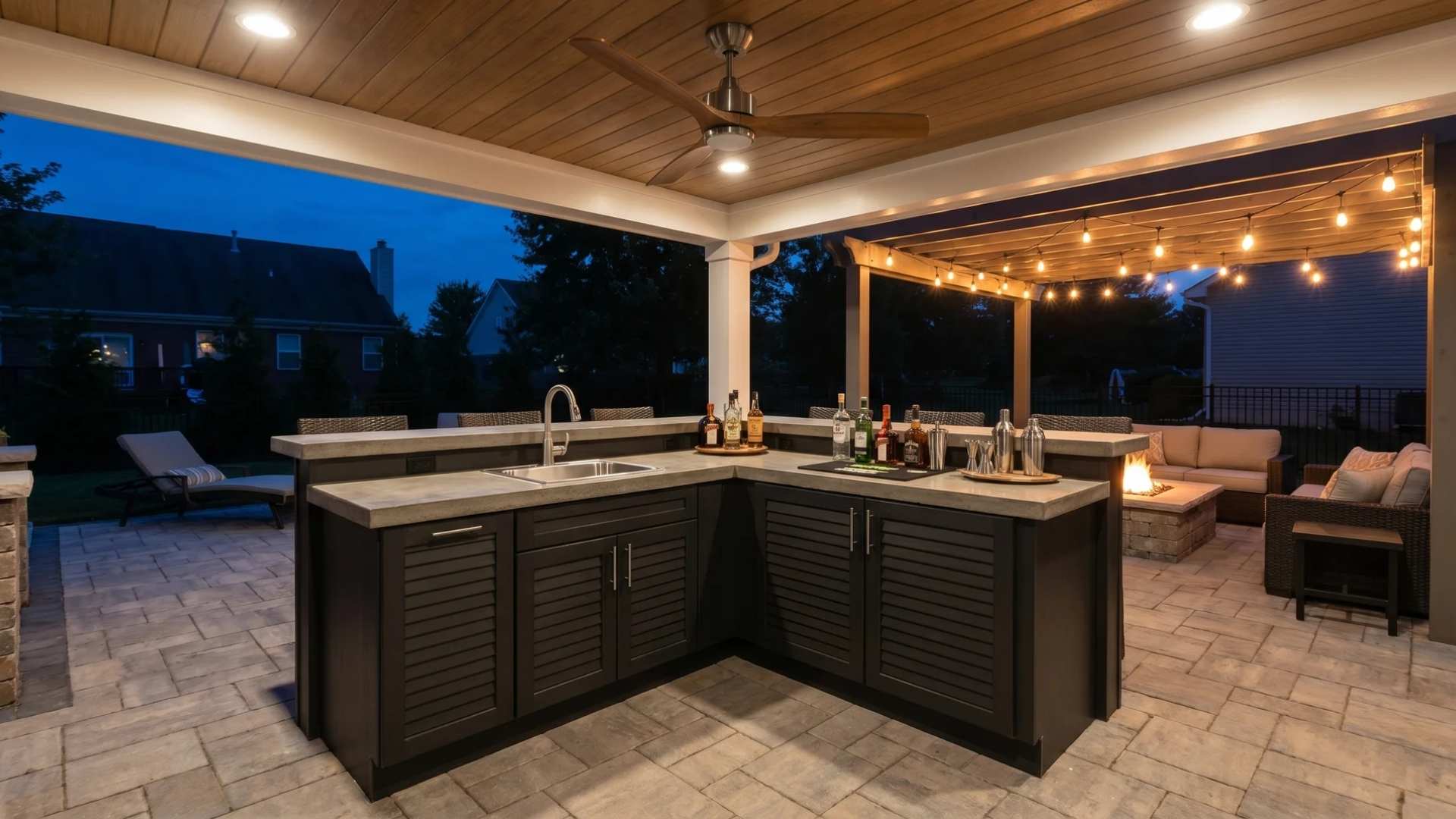
Stainless steel sink and faucet, sealed concrete or porcelain countertops, and weatherproof lower cabinets. Marine-grade polymer cabinets need almost no maintenance; teak works well, too, if sealed annually.
A ceiling fan helps in humid climates, and string lights or recessed soffit lighting shift the space from functional to inviting after dark.
Best Locations for a Wet Bar in Your Home
Where you put a wet bar affects both its usability and the total project cost. The closer it sits to existing plumbing, like a kitchen or laundry room above or nearby, the less you spend on running new water and drain lines.
1. Basement: The most common location. A basement wet bar keeps guests downstairs during parties, eliminating trips to the main kitchen.
2. Living Room or Family Room: Works well in open-plan homes. A built-in wet bar along one wall keeps the area functional without crowding the main living space.
3. Dining Room: Keeps beverages separate from the kitchen during dinner parties. It gives the space a more intentional, hosting-ready feel.
4. Outdoor Patio or Deck: Outdoor wet bars are increasingly popular. Before committing to a layout, it helps to think through whether a deck or patio is the right base for your outdoor space, since that choice shapes the materials and structure of the bar itself. They require weather-resistant materials, stainless steel fixtures, sealed stone or concrete countertops, and cabinets rated for outdoor use.
5. Main Suite or Home Theater: A smaller wet bar works well here for a coffee station, wine setup, or late-night drinks without leaving the room.
How Much Does a Wet Bar Cost to Install?
The cost varies based on size, materials, and how far the bar sits from existing plumbing.
- Prefab wet bar: $2,000–$12,000 installed
- Custom wet bar: $10,000–$30,000
- Plumbing (near existing lines): $800–$1,500
- Plumbing (new runs required): $3,000–$5,000
- Sink installation: $300–$1,400
- Electrician: $50–$130 per hour
- Bar stools: $50–$200 each
Labor makes up roughly 50% of the total cost. In cities with a higher cost of living, expect rates at the top of those ranges.
One cost line people forget: permits.Most cities require a permit for new plumbing or electrical work, and the bar drain must tie into your home’s vent system to pass inspection. Outlets near the sink also need GFCI protection. A licensed plumber or electrician usually files the permits for you, so ask about this when you collect quotes.
Does a Wet Bar Add Value to Your Home?
A well-designed wet bar adds real value, especially when it is part of a finished basement or an outdoor entertaining space. Return-on-investment estimates reach up to 70% in those settings.
The keyword is “well-designed.” A bar with quality cabinetry, durable countertops, and professional plumbing holds its value. A poorly built or dated setup can actually put buyers off.
Beyond resale, the day-to-day value is real. Hosting feels easier. Your kitchen stays cleaner. Guests have a natural place to gather. And the space gets used more often because it is set up specifically for that purpose.
A wet bar can also serve as a coffee station or beverage center. It does not have to be about alcohol at all. Many homeowners use theirs for morning routines, smoothie prep, or after-school drink stations for kids.
Do You Really Need a Wet Bar?
The honest answer depends on how you entertain and where the bar would go.
A wet bar makes sense if:
- You host often and your entertaining space sits far from the kitchen
- Plumbing already runs nearby, which keeps installation costs low
- You want one spot that handles cocktails, coffee, and kid drinks alike
A dry bar may serve you better if:
- Your kitchen is only a few steps away
- Your budget is tight, since skipping plumbing can cut the project cost roughly in half
- You plan to sell soon and would rather not commit to permanent plumbing changes
If you are stuck in the middle, here is a builder trick: install a dry bar now but rough in the water and drain lines behind the wall. You can add the sink later without tearing anything out.
Conclusion
A wet bar is one of those additions that changes how a space actually feels and functions. It keeps guests comfortable, keeps your kitchen free, and makes hosting a lot less stressful.
The wet bar meaning is simple a small bar with a real sink and running water but the impact on your home is anything but small.
Plan the location carefully, work with licensed professionals for plumbing and electrical, and choose materials that hold up over time.
Which room in your home would benefit most from a wet bar? Share your thoughts in the comments below.
Frequently Asked Questions
Why is it called a wet bar?
The name comes from the running water. A bar with a working sink is wet. A bar with only counter space and storage is dry.
Are wet bars outdated?
No. They faded after the 1980s but are back in new builds and remodels, often styled as coffee stations or beverage centers rather than liquor-only bars.
What is the standard size of a wet bar?
Most run 6 to 8 feet long and about 42 inches tall. A compact version with a small sink can fit a 4-foot wall.
Do I need a permit to install a wet bar?
Usually, yes. New plumbing and electrical work require permits in most cities. Your plumber or electrician typically files them, but confirm before work starts.
Can I add a wet bar where there is no plumbing nearby?
Yes, but expect $3,000 to $5,000 extra for new water and drain lines. On concrete slab floors, drainage may require cutting into the slab.